Photographic Thoughts — 01/23/2022 to 01/29/2022

“It’s weird that photographers spend years or even a whole lifetime, trying to capture moments that added together, don’t even amount to a couple of hours.” — James Lalropui Keivom

Thank you for all the new views and likes from last week, it helps keep me inspired.

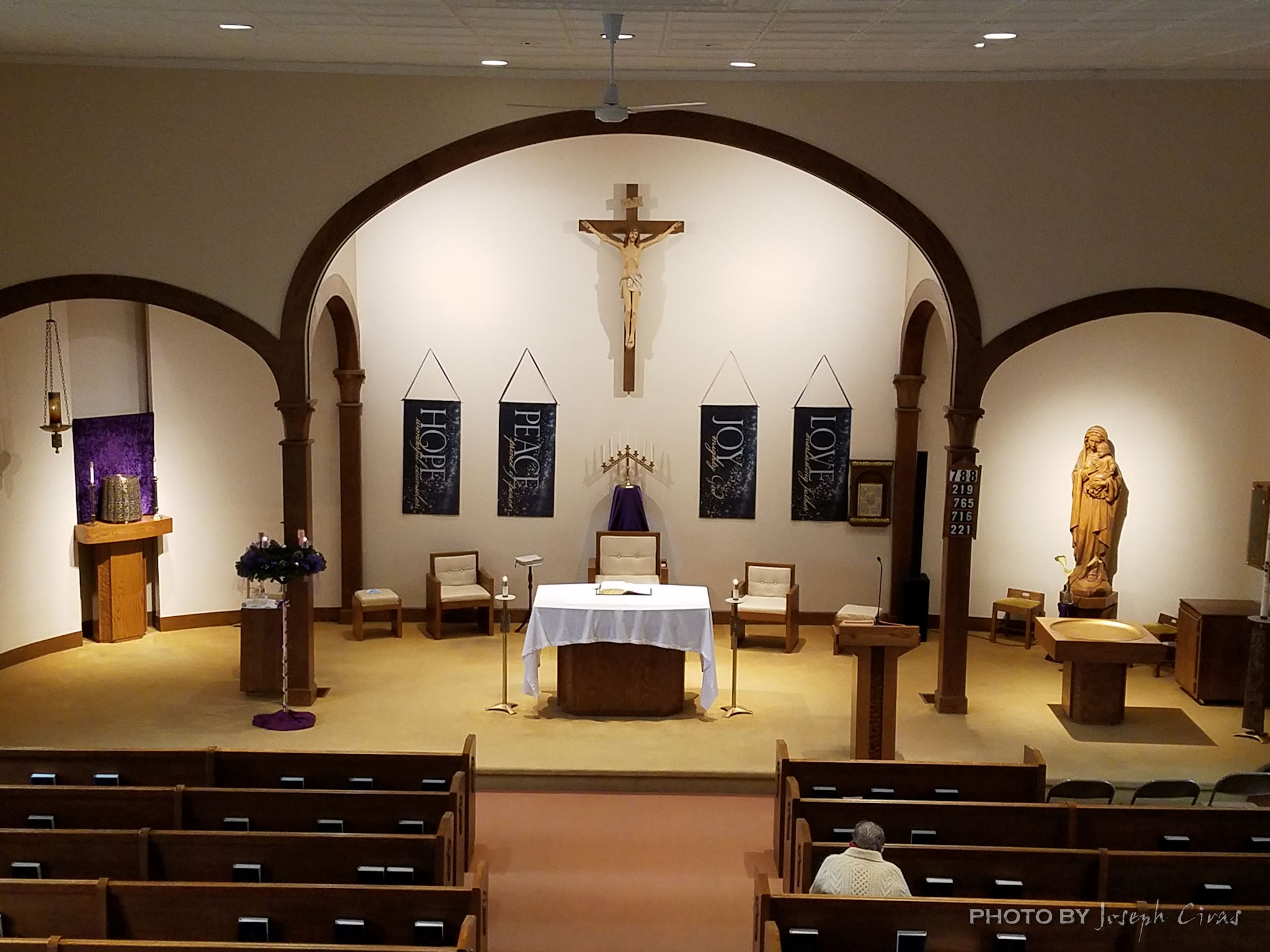
Sunday, 01/23/2022: Posted photo — Music.

Settings: Google Pixel 2, ISO 252, f/1.8, 1/120 s, 4 mm.

Psalm 23, The Lord is my shepherd…

This is best known psalm out of the 150 psalms in the Bible. There are five books and four literary styles in the psalms. The styles are hymns, prayers of thanksgiving and petition, religious lyrics, and didactic psalms. You can go online or ask your religious leader for more information on the psalms.

Songs, or hymns, at mass are used to enhance the service. I played the organ/keyboard during Mass when I was in college. My family still plays and sings in the choir during Mass today. A good song will lift your spirits.

I did not intend to use this photo today. I used it because it was one of the only photos that I took and it was the one that I liked the best.

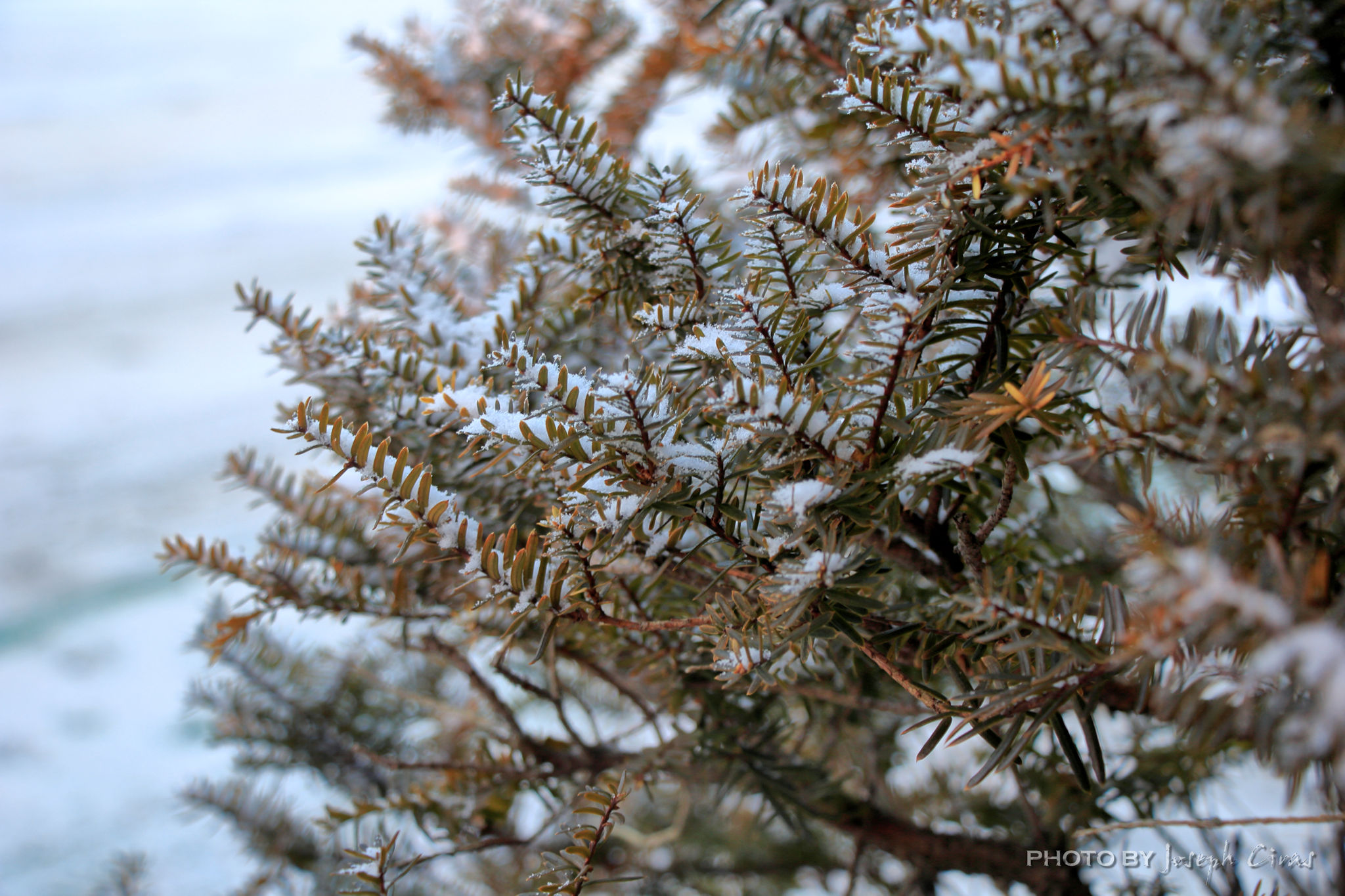
Monday, 01/24/2022: Posted photo — Dusting of Snow.

Settings: Canon EOS 60D, ISO 100, f/5, 1/15 s, 50 mm.

Last week we received heavy and wet snow. This week we received a dusting of snow.

In taking this photo, I was practicing depth of field (DOF) in my photos. I am in my 13 year of taking photos every day and I still need on practicing various techniques so my photos are of my liking. I am my own worst critic.

I did go on a great hike tonight. This is my normal Monday night hike on Wachusett Mountain. The trails were in great shape from all the people that have been hiking after the last snowstorm. Microspikes are needed. Some people say no to microspikes since there is no exposed ice on the trails. If I am leading a hike, I am requiring the use of microspikes, or other traction devices, since there is ice under the snow and the spikes give you better traction. I am cautions in a group situation.

Microspikes are great for hiking or in thick ice, nanospikes are good for walking the in areas where traction is needed, but they are not as aggressive as microspikes. I would not recommend the use of nonspikes while hiking since they do not have the grip you need on the snow or ice, or the inclines and declined on a hiking trail. A more aggressive means for traction is the use of crampons. I use my crampons in the higher elevations of the White Mountains, or on a very icy trail. When I hike in the winter, I carry two sets of microspikes: my inexpensive “rock” microspikes and my “good” microspikes and have my crampons with me. Occasionally I will also attach my snowshoes to my pack if there has been newly fallen snow and I know that trail that I will be hiking is an underutilized trail. The difference between my inexpensive “rock” microspikes and my “good” microspikes is the length of the spikes and the quality of the product.

Tuesday, 01/25/2022: Posted photo — Snow White.

Settings: Canon EOS 60D, ISO 800, f/36, 1/50 s, 93 mm.

Light dusting of snow received last night. This makes for a wonderful winter scene. When I was walking around yesterday, I was thinking of the challenge for the 52 frames project https://52frames.com/photographer/20931.  The challenge is for this week is to take a minimalistic photo. This is my first minimalistic photo of the week. Look for a different photo later in the week.

Wednesday, 01/26/2022: Posted photo — Colors.

Settings: Canon EOS 60D, ISO 100, f/7.1, 1/160 s, 115 mm.

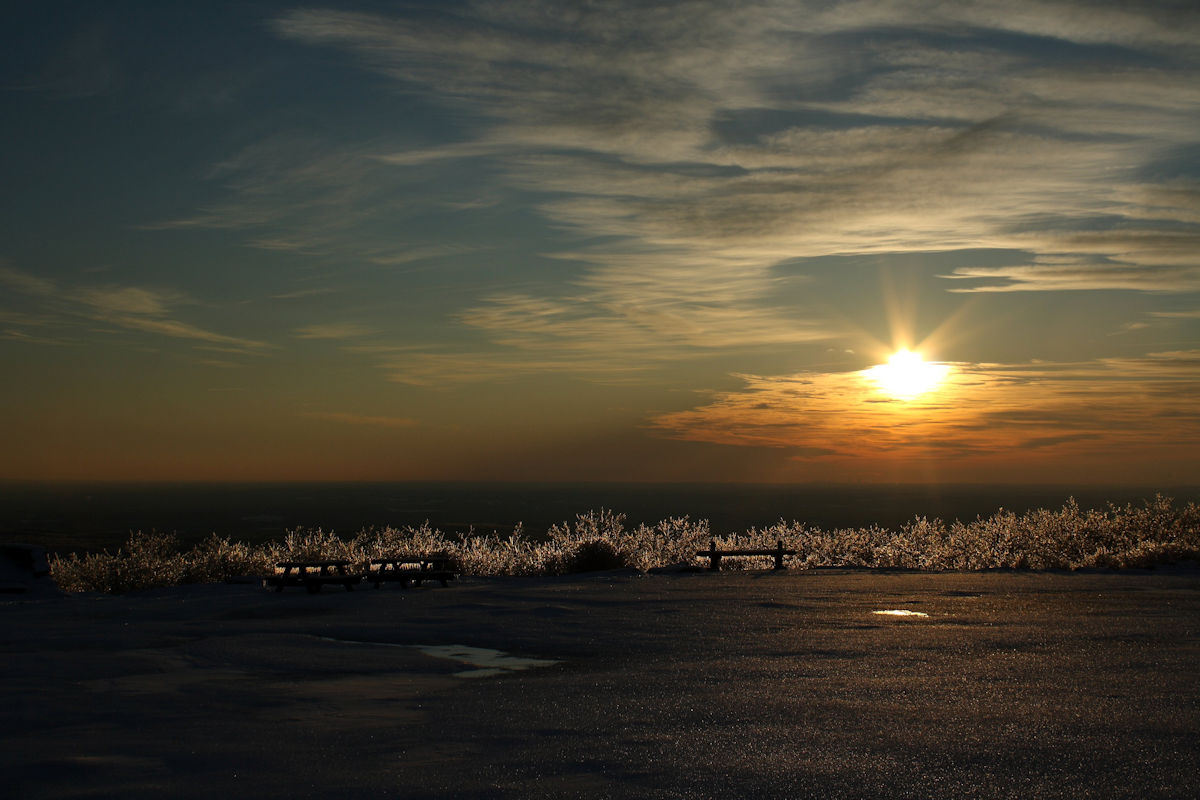
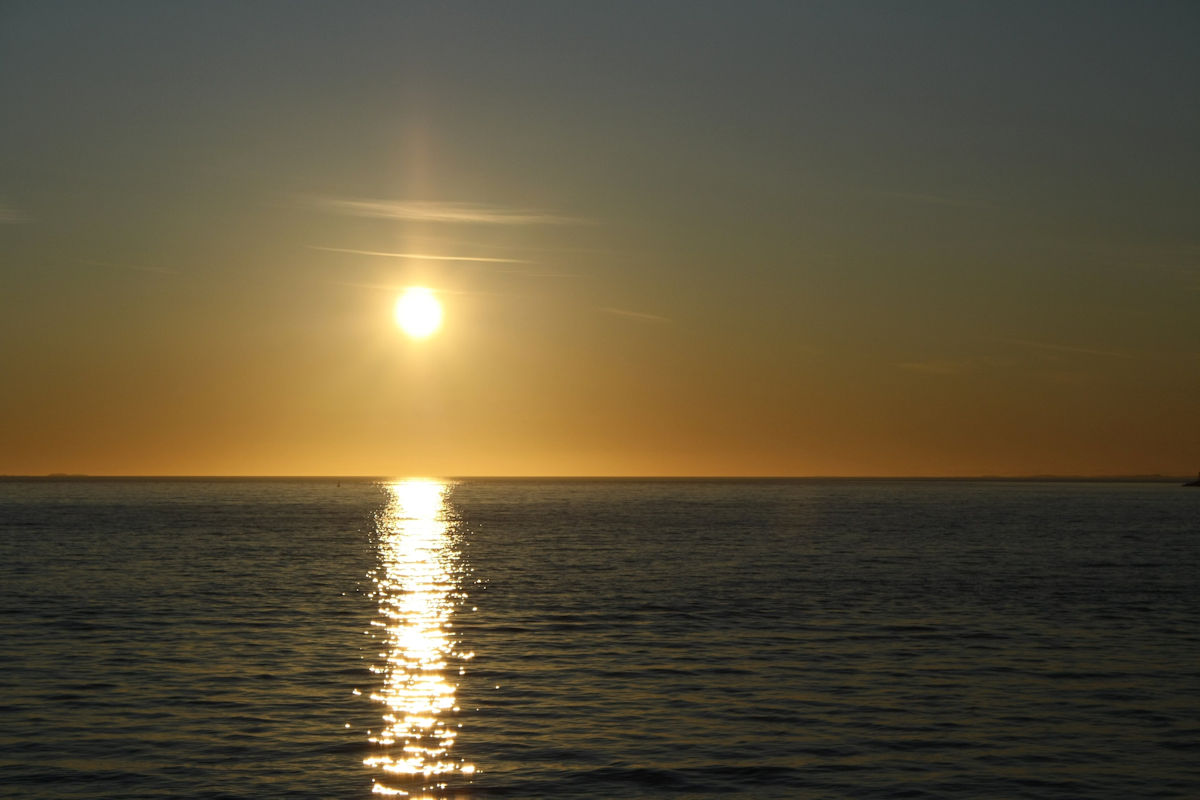
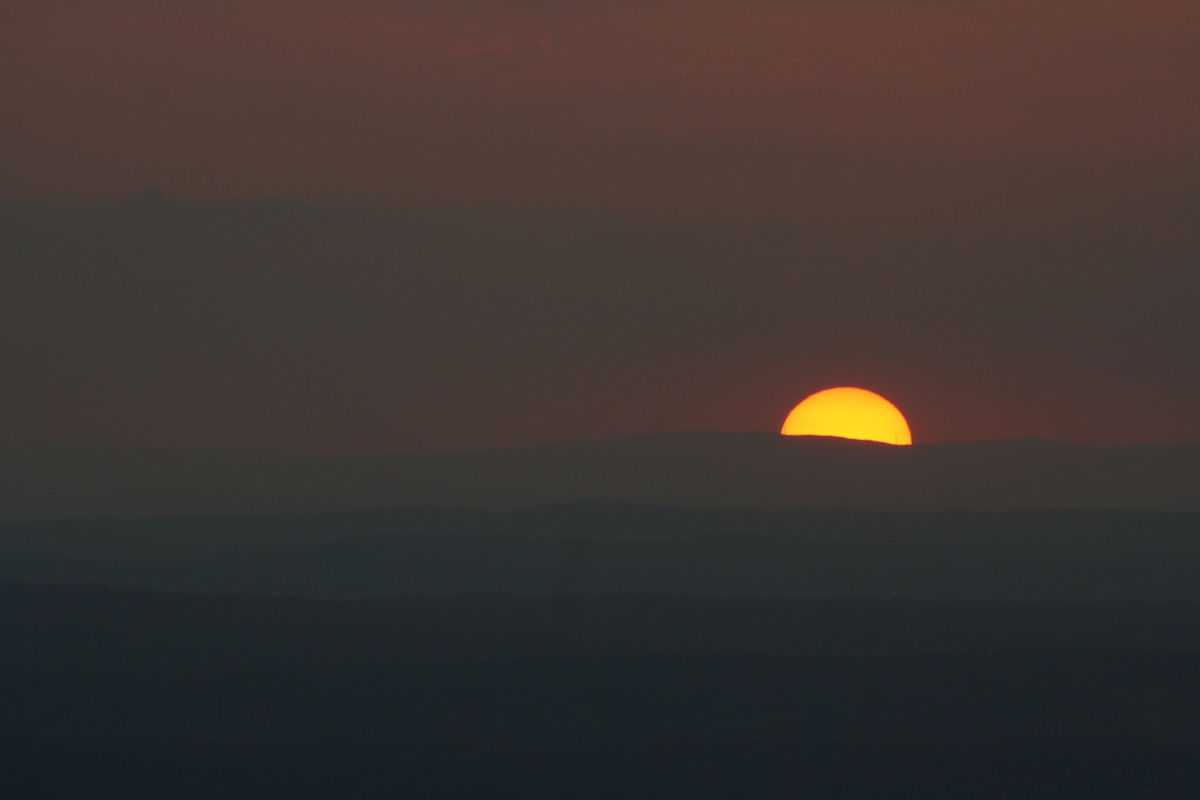
Last week at this time, I posted a sunrise photo. Today I did the same.

I would like to talk about the colors in a sunrise/sunset. When the sun is low on the horizon during sunrises and sunsets, the sunlight travels through more of the atmosphere. Shorter wavelength colors (blues and violets) get scattered out. This leaves more of the longer wavelength colors like yellow, orange, and red. Therefore, sunrises often take on such colors. Some of the colors of a sunrise or sunset are #95382c, #141b24, #4f3c54, #223444, and #9c4a44 for the more technical people that read my post. Sunrises and sunsets are also in the 1000–2000 K range. Other base settings for sunrise and sunset photos are f/6–f/16 and a shutter speed of 1/500 s. I also like to take my photos one step underexposed to bring out the colors. Shoot RAW so values can be adjusted post process if required.

As always, practice sunrise and sunset photos to find out the best settings for your camera.

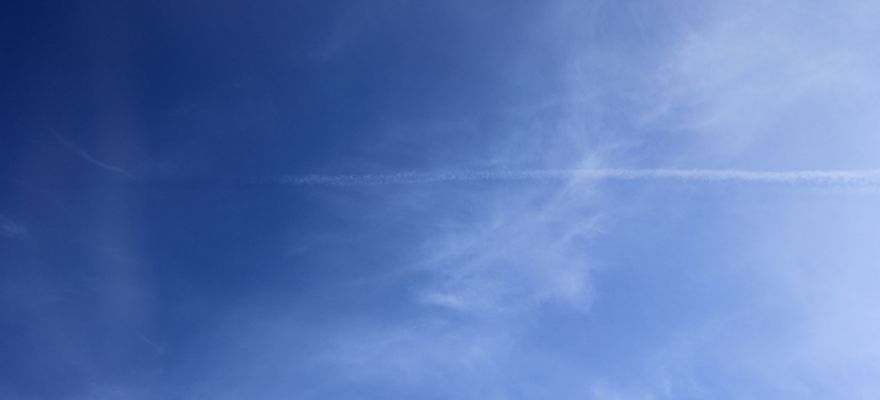
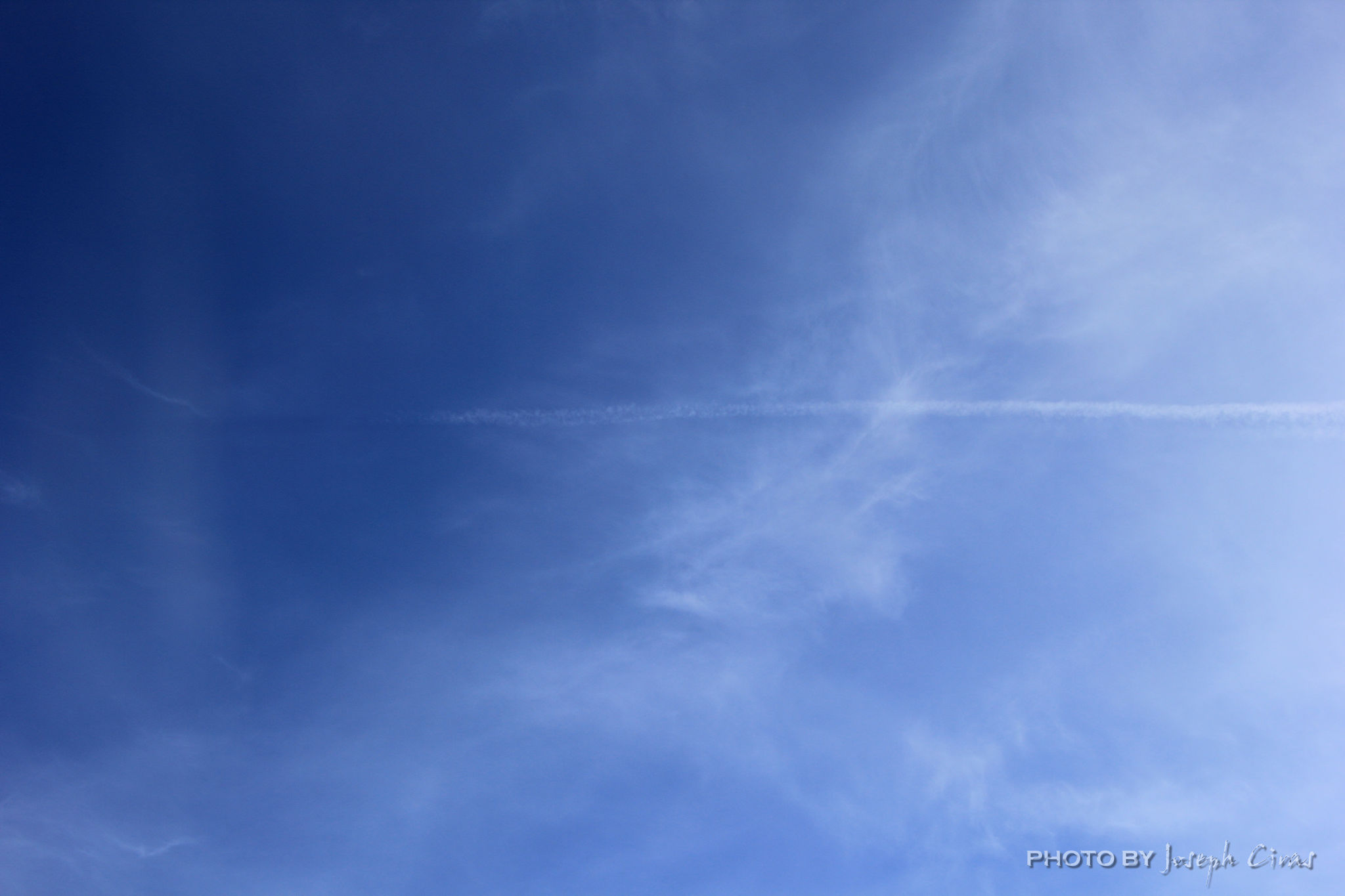
Thursday, 01/27/2022: Posted photo — Sky.

Settings: Canon EOS 60D, ISO 100, f/7.1, 1/640 s, 24 mm.

Here is another minimalistic photo for the week. I like this one better than the snow photo so this is the one that I may post for the 52 frames project.

Some of the elements of minimalistic photography are simplicity, negative space, powerful composition, isolation, color, and lines and shapes. Minimalist photography shows the power of a simple solo object. In this case, it is the contrail against the blue sky.

Looking at the simplicity of this photo, my watermark may be taking away some of its impact. Need to think about that next time. There is a debate whether to watermark photos. It does take away from the aesthetic quality of some photos. I watermark the photos that I post and not the ones that I display in gallery showings or the ones that I sell.

Friday, 01/28/2022: Post photo — Hook.

Settings: Canon EOS 60D, ISO 100, f/5, 1/15 s, 62 mm.

I see a hook, a needlenose shark, or a stitch puller. What do you see? This is another pareidolia photo.

Today I am not writing much about this photo since I need to prepare our house for the snow storm that will happen tomorrow.

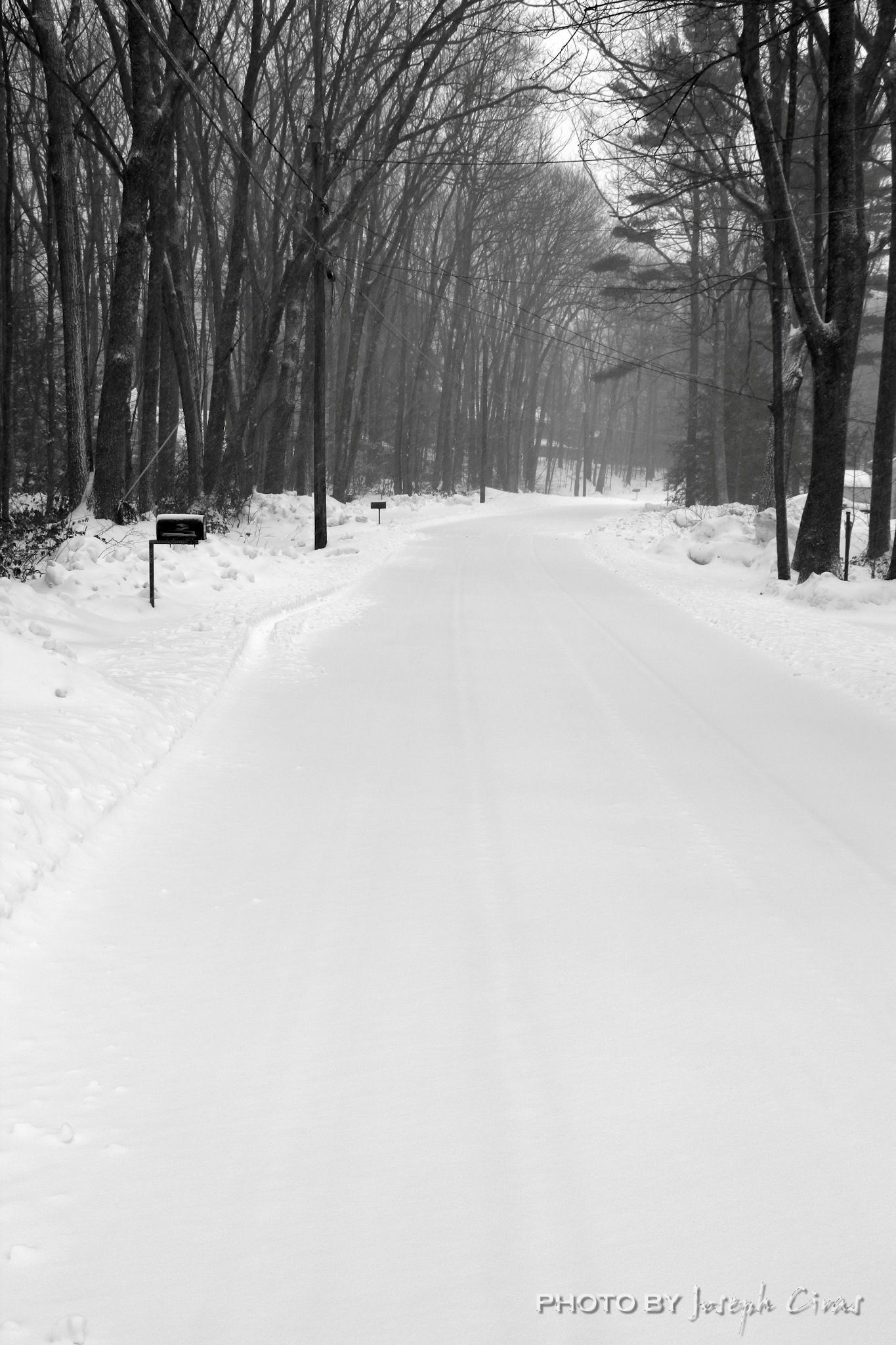
Saturday, 01/29/2022: Post photo — Looking Down the Street.

Settings: Canon EOS 60D, ISO 100, f/7.1, 1/80 s, 29 mm.

We received about 10 inches of snow out of today’s storm. It is much less than originally predicted. The storm moved out to sea, and we were on the outer edge of the storm.

I did go out every two hours today to shovel the snow. The first few times out there were a few inches of show to shovel. As the day went on, the shoveling was easier and quicker. Winter storm Kenan was another let down for us. Only 10 inches of snow. We are still waiting for the first big storm of the year.

Kenan was a bomb cyclone. A bomb cyclone is a storm that undergoes bombogenesis. Bombogenesis is a rapid intensification of a low-pressure system in which we measure in millibars. The lower the pressure is, the stronger the storm.

That is all for now. Until next week, be safe.

For more photo of other project I have work, visit my website: https://photobyjosephciras.weebly.com or visit me on Facebook at https://www.facebook.com/PhotobyJosephCiras/.

My Weebly website is back up and running. I am looking of suggestions on how to make it look better.

Photographic Thoughts — 12/05/2021 to 12/11/2021

“Most things in life are moments of pleasure and a lifetime of embarrassment; photography is a moment of embarrassment and a lifetime of pleasure.” — Tony Benn

Thank you for all the new views and likes from last week, it helps keep me inspired.

Sunday, 12/05/2021: Posted photo — Second Week of Advent.

Settings: Samsung SM-G930V (Galaxy S7), ISO 125, f/1.7, 1/60 s, 4 mm

Advent, (from Latin adventus, “coming”), in the Christian church calendar, the period of preparation for the celebration of the birth of Jesus Christ at Christmas and the beginning of the Christmas season.

The four weeks of Advent are broken down into the themes: Hope, Peace, Joy, and Love. The three purple candles on the Advent Wreath represent the preparation and repentance. During the third week of Advent, or Gaudete Sunday, a pink candle is lit to indicate rejoice, the time of waiting is almost over.

This photo was taken from the choir loft at our church. My wife and son sing with the folk group, and I joint them for the celebration of the Mass.

Monday, 12/06/2021: Posted photo — Color “fish” Photo.

Settings: Samsung SM-G930V (Galaxy S7), ISO 125, f/1.7, 1/60 s, 4 mm

I cancelled the Monday night hike, for safety reasons, due to the high winds and rain we were experiencing. Since there are inexperienced hikers in the group, it was not safe to be on the mountain. We would have hit the summit just at the bad weather was peaking. Because I did not hike tonight, I went grocery shopping tonight instead of my normal Tuesday evening.

When I am grocery shopping, I look for some food to photograph. I do this more in the winter since I do not have much opportunity to go outside in daylight to take my photo. Today, I saw these Goldfish crackers that are Goldfish Colors. I thought it would be punny to post a title of “Color ‘fish’ Photo”, instead of “Colorful Photo”.

https://www.campbellsoupcompany.com/newsroom/campbell-history/6-things-you-didnt-know-about-the-snack-that-smiles-back/

In 1962, Pepperidge Farm founder, Margaret Rudkin, launched Goldfish crackers in the United States.

Here are some things you didn’t know about Goldfish crackers:

  • While on vacation in Europe, Margaret visited a Swiss cookie manufacturer that had a similar product, and together they reached an agreement to bring the salty, fish-shaped crackers to the U.S.
  • Oscar J. Kambly, the original Swiss creator of the cracker, created them as a birthday present for his wife whose astrological sign was Pisces — which is often represented in Greek mythology as a fish.
  • The first five flavors of Goldfish that were launched were Lightly Salted (Original), Cheese, Barbecue, Pizza and Smoky, and it wasn’t until 1966, four years after the crackers were first launched, that the Cheddar Cheese flavor was introduced.
  • Willard, Ohio is the Goldfish capital of the world! Our bakery in Willard, a town of 6,000, can produce more than 50 million Goldfish crackers a day.
  • The Goldfish signature smiley face was added in 1997, and about 40% of the crackers feature the smile!

Tuesday, 12/07/2021: Posted photo — Anchor.

Settings: Canon EOS 60D, ISO 400, f/9, 1/1600 s, 18 mm.

“Yesterday, December 7, 1941— a date which will live in infamy— the United States of America was suddenly and deliberately attacked by the naval and air forces of the Empire of Japan.” — FDR. Thus started the United States entry into World War II.

This photo is from my second visit to Pearl Harbor. It still amazes me that there is oil floating out of the USS Arizona. Looking back, I posted the same photos a year ago. This is from that post — “’This anchor was recovered from the Arizona. The ship had three anchors. The crew used one in calm seas and two in foul weather, the third as a spare. Each weigh nearly 10 tons.’ This are the words on a placard near the USS Arizona Anchor at the World War II Valor in the Pacific National Monument in Hawaii. The sacrifice these men and women made to make our country the great country it is today.” See my original post on Pearl Harbor, and more photos from the National Monument, by clicking on this link, https://wordpress.com/post/photobyjosephciras.wordpress.com/568.

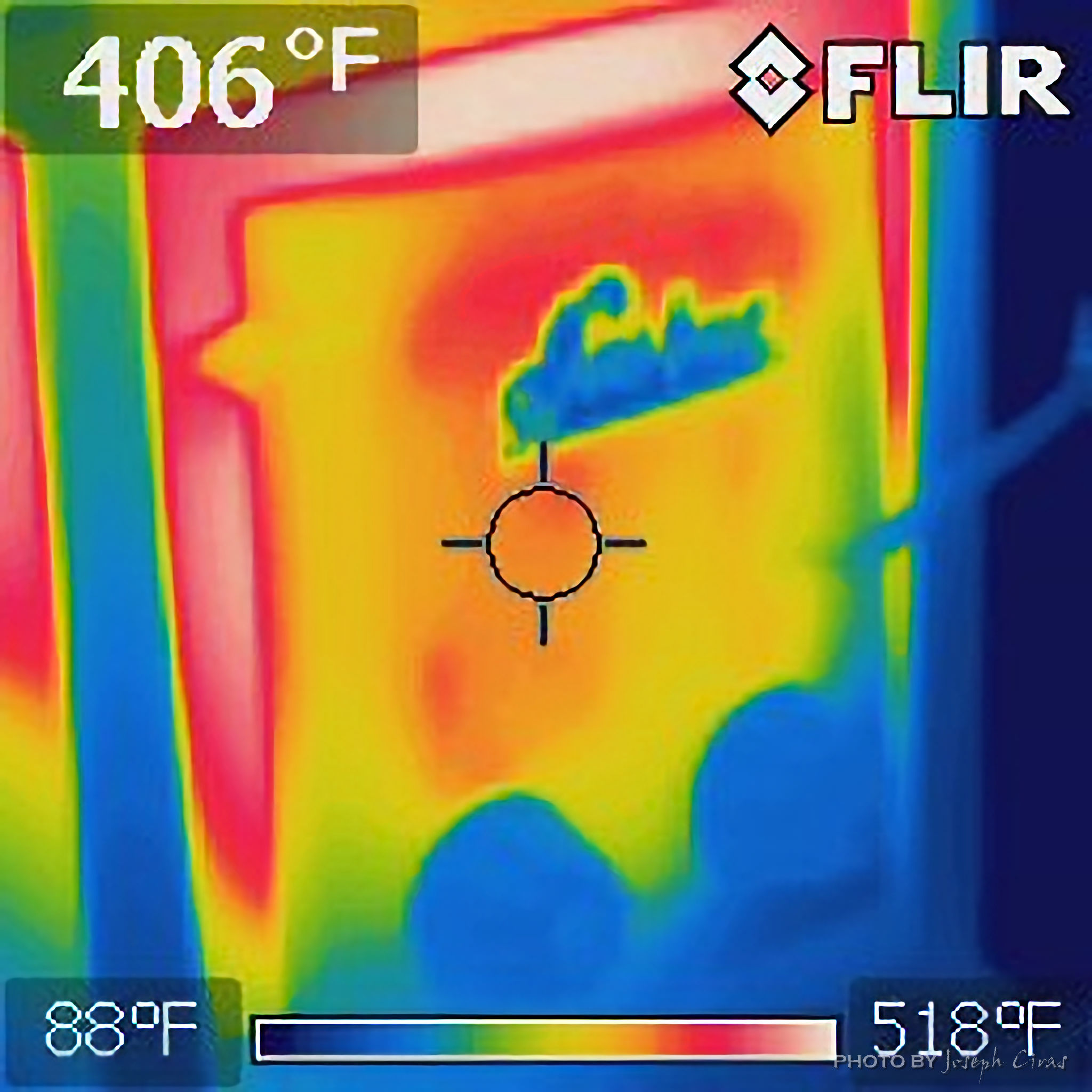
Wednesday, 12/08/2021: Posted photo — Wood Stove.

Settings: FLIR i5, ISO n/a, f/na, 1/30 s, 7 mm.

Some of you may know that I own an infrared camera. This camera takes photo of heat signatures of object. I use it to look at insulation in houses and efficiencies at power generating plants. Occasionally I use it to take artistic photos. Some of these photos are of footprints, handprints, car engines, warm tires, and even have used it as a stud finder.

Once or twice a year, I use it to check out my wood stove. My wood stove is old and not as efficient as some of the newer stoves. It is just a steel box with an exhaust pipe. One item that I often check is the temperature given on the stovepipe thermometer. This is a thermometer that has a magnetic backing and just sticks to the stove pipe. To my surprise, that thermometer and my thermal camera normally show the same temperature. The 518°F (250°C) temperature reading is the maximum temperature my camera can detect. The brand name of our stove is Nashua. You can just make out the name near the center of the photo next to the pointer.

Thursday, 12/09/2021: Posted photo — Footprints in the Snow.

Settings: Canon EOS 60D, ISO 100, f/5.6, 1/1000 s, 25 mm

It snowed last night. Well, I would not call it a storm, just a little more than a dusting. No need to shovel or plow. The roads were snow covered in the morning, so driving for some was not easy due to black ice. Black ice, sometimes called clear ice, is a thin coating of glaze ice on a surface, such as a road. As the name implies, you do not always know when it is present, and it is very dangerous.

I like footprints in the snow. They seem so mystical for me. I wonder where the footprints lead, where was the person going, or where did the person come from. I know this is not the first footprint photo that I have posted over the years. I liked the way the sun caused shadows in the prints.

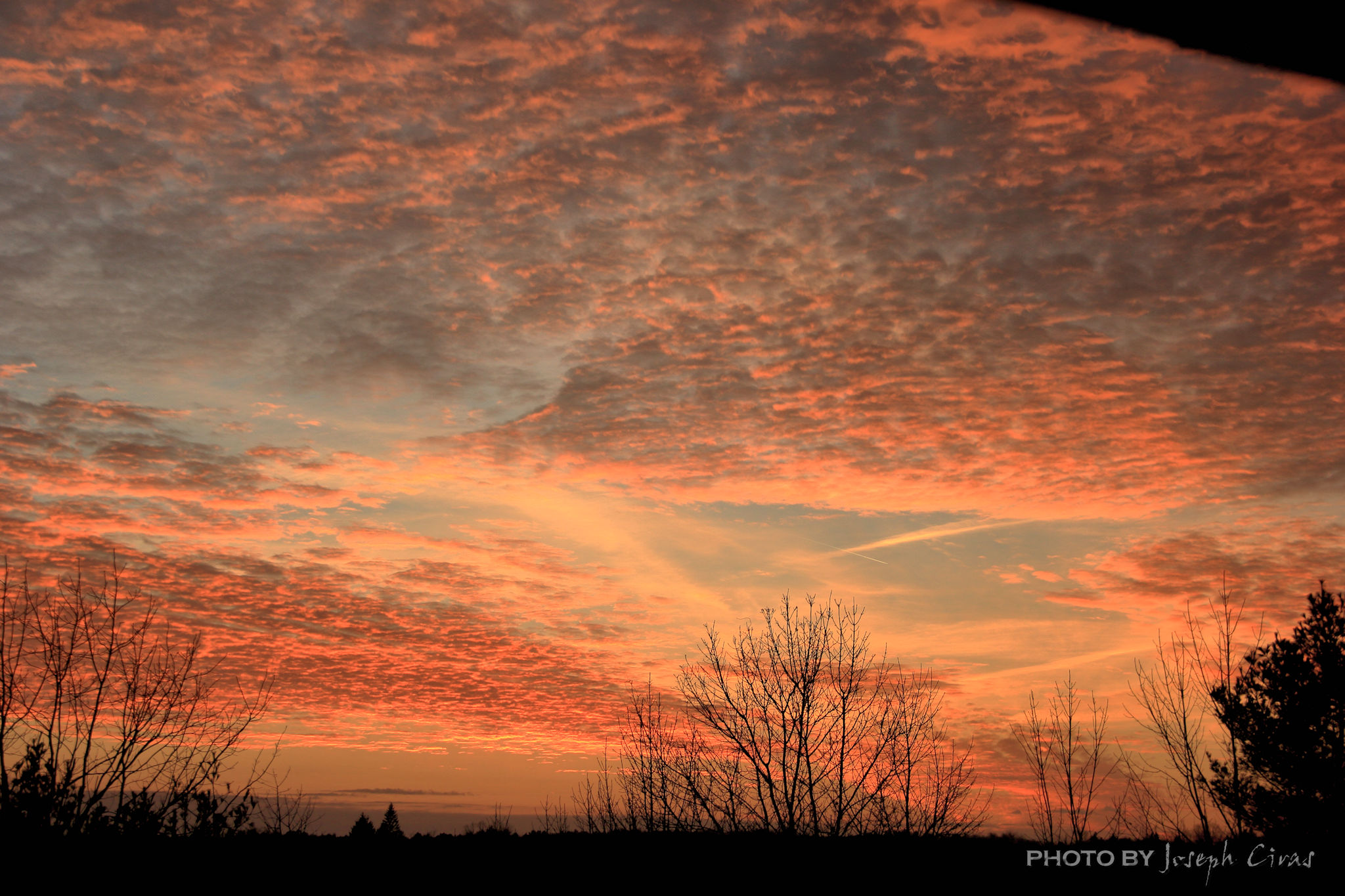
Friday, 12/10/2021: Post photo — Sunset from Office.

Settings: Canon EOS 60D, ISO 100, f/5.6, 1/80 s, 38 mm

Came out of a meeting to this. Took out my camera before it was past. The colors at sunset disappear quickly so I was quick to the camera. During the meeting, I could see the light through the windows was changing as it does at sunset. I did not expect much when I went back to my office. Then I saw the red clouds just getting end of the sunset. Reminds me of the saying of always have your camera with you, you never know want photo opportunity you might have.

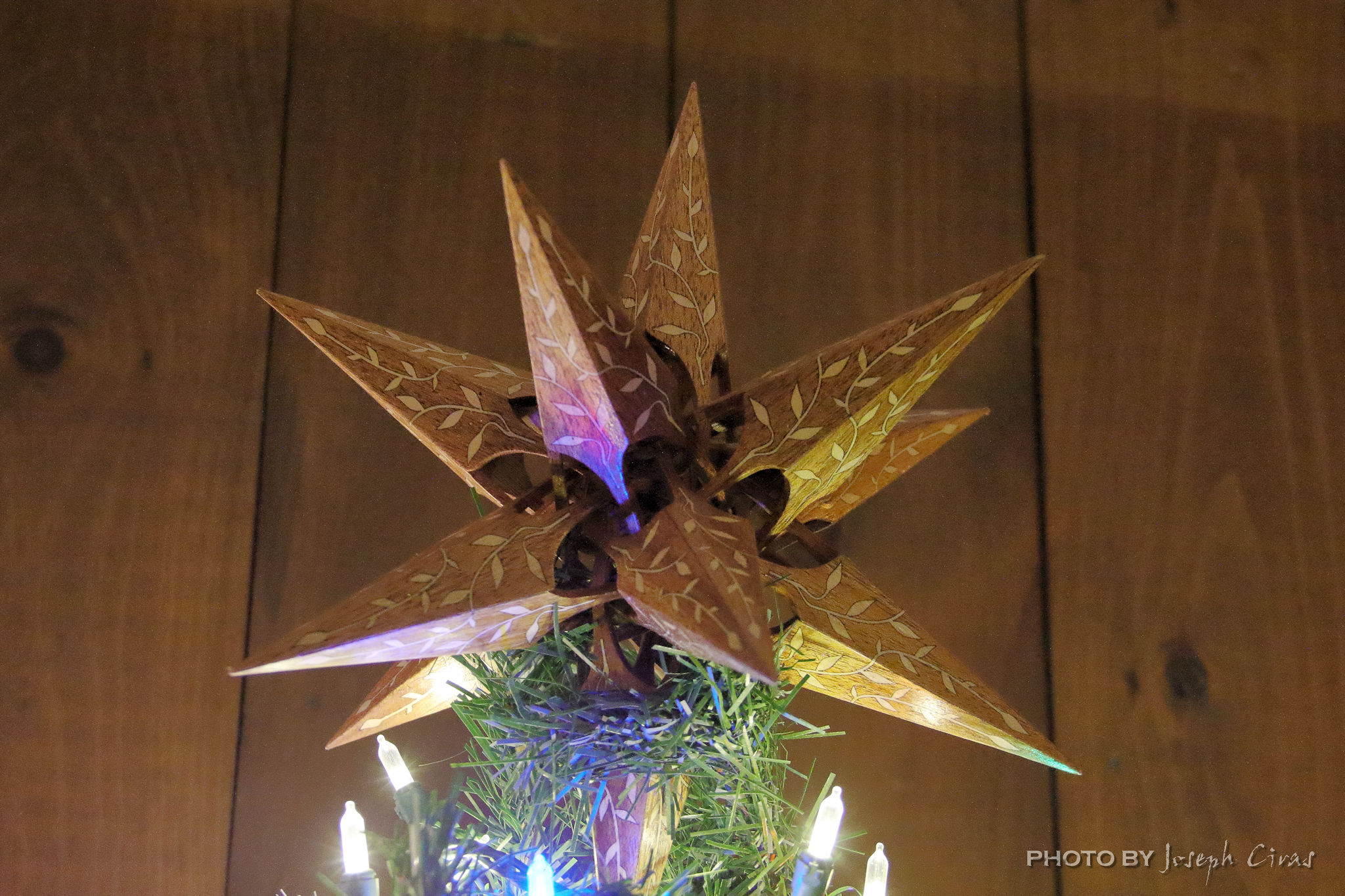
Saturday, 12/11/2021: Post photo — Star on Tree.

Settings: Canon EOS 60D, ISO 3200, f/5.6, 1/15 s, 33 mm.

The star on our Christmas tree. This star was created by my brother-in-law for our family. Check out more of his work at https://www.facebook.com/profile.php?id=100068315455341 or https://www.etsy.com/shop/PolyhedralPlayground.

That is all for now. Until next week, be safe.

For more photo of other project I have work, visit my website: https://photobyjosephciras.weebly.com or visit me on Facebook at https://www.facebook.com/PhotobyJosephCiras/.
Please note that I have not been able to post to my Weebly page for over a week, so the photos are a little behind there. Weebly technical support is still working on the issue.

Photographic Thoughts — 11/14/2021 to 11/20/2021

“When I say I want to photograph someone, what it really means is that I’d like to know them. Anyone I know I photograph.” — Annie Leibovitz

Thank you for all the new views and likes from last week, it helps keep me inspired.

Sunday, 11/14/2021: Posted photo — Turkeys.

Settings: Canon EOS 60D, ISO 400, f/7.1, 1/60 s, 39 mm.

I was going to post another photo today. I will post it at the end of today’s commentary.

I was getting ready to go on the hike I did not go on Saturday and looked out our window and saw some turkeys on the road. As I watch, more and more turkeys arrived. I was just watching, and since there were so many of them, I decided to take out my camera to attempt photographing them. At one time I counted a dozen turkeys on our front lawn and about six or seven turkeys across the street. It has been a while since I have seen a rafter of turkeys this large.

Sorry about the quality of this photo. It was taken through my front window. The window is dirty and there is a screen on it.

Now for the second photo. The photo that is did not post is one of a pile of backpacks. Why backpacks you may ask. Well, these backpacks are meant for the homeless. Our church has been collecting backpacks for the homeless for a few years now. The go to Our Father’s House, a shelter in Fitchburg, MA. Our Father’s House is a private, non-sectarian agency providing shelter and related services to homeless men, women, and children. These backpacks are filled with food, shelter, and love for those who are in need.

Monday, 11/15/2021: Posted photo — Clouds.

Settings: Canon EOS 60D, ISO 200, f/7.1, 1/640 s, 24 mm.

This is the time of year when it is getting harder to take photos. It is getting harder because I go to work in the dark and leave work in the dark, not leaving much opportunity to take photos.

One of my duties is as the company photographer. Normally I am a mechanical engineering, but they know that I am a semi-professional or advance amateur photographer, so I take photos of produce for various reasons. I am not a product photographer, and these photos leave the company or are used for promotional purposes. As I was walking between buildings, I saw the sun reflecting off the clouds. I was just going to take a photo of the clouds, but I decided to add the flag and flagpole into it for scale and to break up the monotony of a photo of just the clouds.

Always keep your eyes open for a photo opportunity.

Tuesday, 11/16/2021: Posted photo — Movies.

Settings: Settings: Canon EOS 60D, ISO 3200, f/5.6, 1/8 s, 62 mm.

The Twilight Zone was a television show that ran from 1959–1964. This show, created by Rod Serling, is about “ordinary people finding themselves in extraordinarily astounding situations, which they each try to solve in a remarkable manner”. The show won nine awards and was nominated for 14 more.

This was one of my favorite shows as I was growing up. It stopped airing the year I was born, but I would watch in in reruns. Some of the shows are silly to watch and some of them cause nightmares. They would always keep you guessing.

I saw these DVDs a while ago and purchased them so I could watch the episodes again. This was before all the stream services currently on the web. I like the first season of a show since you can see the development of the shows format.

Wednesday, 11/17/2021: Posted photo — What am I.

Settings: Samsung SM-G930V (Galaxy S7), ISO 64, f/1.7, 1/60 s, 4 mm

I am an Aloha pepper.

Also known as Enjoya and Aloha, Striped Holland bell peppers are a new variety that was discovered as a surprise variation in a garden in the Netherlands and have been developed over time to showcase the bi-colored traits. This pepper was developed by the Sunset company (https://www.sunsetgrown.com/our-produce/peppers/aloha-peppers/) and have only been shipped to select retailers since 2018.

I do not like peppers, so I cannot describe what they taste like. I took this photo since I thought the pepper had a personality crisis and I liked the look.

Thursday, 11/18/2021: Posted photo — Focus Test.

Settings: Canon EOS 60D, ISO 3200, f/5.6, 1/125 s, 135 mm.

I have a lens that is 18–135mm. Today it decided not to focus if I had it past 50 mm. Need to send it out to get fixed again. It was already repaired once. This is a test of the focus range. This was the one and only time it focused in at 135 mm. I think put pressure on the side of the lens to get it to focus.

Found out that the version of my lens is out of service life, there are no longer any repair options available for it. I can purchase a discounted lens using Canon’s Upgrade Program. Something I need to investigate doing soon so that I can have a lens for the upcoming holidays. I purchased the camera in 2014.

Friday, 11/19/2021: Post photo — Partial Lunar Eclipse.

Settings: Canon EOS 60D, ISO 250, f/16, 1/50 s, 300 mm.

The Beaver Moon was full at 3:58 a.m. Four minutes later, at 4:02 a.m., a partial lunar eclipse occurred. The Beaver Moon was a micromoon. A Micromoon is when a Full Moon or a New Moon coincides with apogee, the point in the Moon’s orbit farthest away from Earth.

The moon was in the Earth’s shadow for just over six hours this morning, the longest lasting partial lunar eclipse in 580 years. The moon was only visible for about a half hour during those six hours in my area due to cloud cover. The rule around here seems to be if there is an astronomical event, there would be cloud cover. Really, it seems, there is a clear sky for such an event.

I set my alarm for 3 a.m. to watch the eclipse moving to maximum. It was cloudy. I took a half hour nap to see if the clouds would clear. It was cloudy. Took another half hour nap and the moon was still hidden by the clouds. I went back to bed for another half hour to get up at my normal time. When I got out of bed, I looked in the direction of the moon expecting to see it in the clouds once more. This time I saw it. I gathered my photo equipment, jumped in my car, and then went to an area where I could see the moon clearly. My house is in a wooded area, so I saw the moon through the trees.

When I got to a photo spot, the clouds were moving in. I quickly setup my camera and took a few shots blind. Set my camera on my tripod and took some shots as the clouds were starting to cover the moon once more. Not the best-case scenario for taking a photo of this historic event. I would have liked to set up my camera and do some test shoots to get my settings correct. Not enough time to do so.

Photo tip of the week — Baseline setting for a photo of partial lunar eclipse: 14-1000 mm, f/5.6–f/8, ISO 100-800, 1/250 s. Set you camera on a tripod and turn off image stabilization.

This morning I attempted to use my “moon” lens at 1250 mm but it was too windy for the lens. None of the photos were too my liking so I posted this photo I took with my 300 mm lens.

Saturday, 11/20/2021: Post photo — Woodshed.

Settings: Canon EOS 60D, ISO 200, f/7.1, 1/10 s, 25 mm.

Last week I posted a photo of our last wood delivery. After I posted that photo, someone wanted me to post a photo of the wood all stacked up. Here it is.

For more photo of other project I have work, visit my website: https://photobyjosephciras.weebly.com or visit me on Facebook at https://www.facebook.com/PhotobyJosephCiras/.
That is all for now. Until next week, be safe.

Please note that I have not been able to post to my Weebly page for over a week, so the photos are a little behind there. Weebly technical support is still working on the issue.

Photographic Thoughts — 10/10/2021 to 10/16/2021

“Today everything exists to end in a photograph.” — Susan Sontag

Thank you for all the new views and likes from last week, it helps keep me inspired.

Sunday, 10/10/2021: Posted photo — Lakeside.

Settings: Canon EOS 60D, ISO 400, f/7.1, 1/125 s, 32 mm.

Today we took the dock out of the water at the cottage. The water was cold when first going into it, and then it did not feel so bad. We need to go into the water to lift part of the dock off its foundation to bring it in. Many years ago, the tires on the bottle of the support legs on the dock fell off so we manually need to lift the dock out of the water.

Before the dock was removed, I went out on it to enjoy the foliage from out in the water. I took this photo shortly before the dock was removed from the water.

The day is always a fun filled day with family and friends.

Monday, 10/11/2021: Posted photo — Trees in the Sun.

Settings: Canon EOS 60D, ISO 100, f/7.1, 1/125 s, 50 mm.

This is the backside, or inlet side, of the falls at Round Meadow Pond. You have seen a few photos of the water flowing over the dam since that is one of my favorite spots to photograph. I took this photo because of the bright colors of the foliage, and I liked the way the light was reflecting off the trees.

Tuesday, 10/12/2021: Posted photo — More Foliage.

Settings: Canon EOS 60D, ISO 100, f/7.1, 1/160 s, 50 mm.

Not much to say about this photo. The foliage is starting to get to peak in this area, so I am taking as many foliage photos as I can.

One thing I can say about this photo, and my other foliage photos, is that they look very bright. The histogram looks good for these photos, but the photos look bright when viewing on some screens. It might be because I use calibrate monitors to edit my photos and the other monitors are not calibrated.

Time to do some research into this issue. Maybe I should get one or two of them printed to see how the colors come out.

Wednesday, 10/13/2021: Posted photo — Morning Dew.

Settings: Canon EOS 60D, ISO 100, f/7.1, 1/250 s, 72 mm.

I was going to post another foliage photos today but decided to post a photo of the morning dew. This photo was meant to show the dew and to break up my trend of foliage photos. Too much of a good thing is not always good.

I attempted to capture the light off the dew on the grass. Please leave a comment to let me know how well I captured the light and to give me some tips to improve.

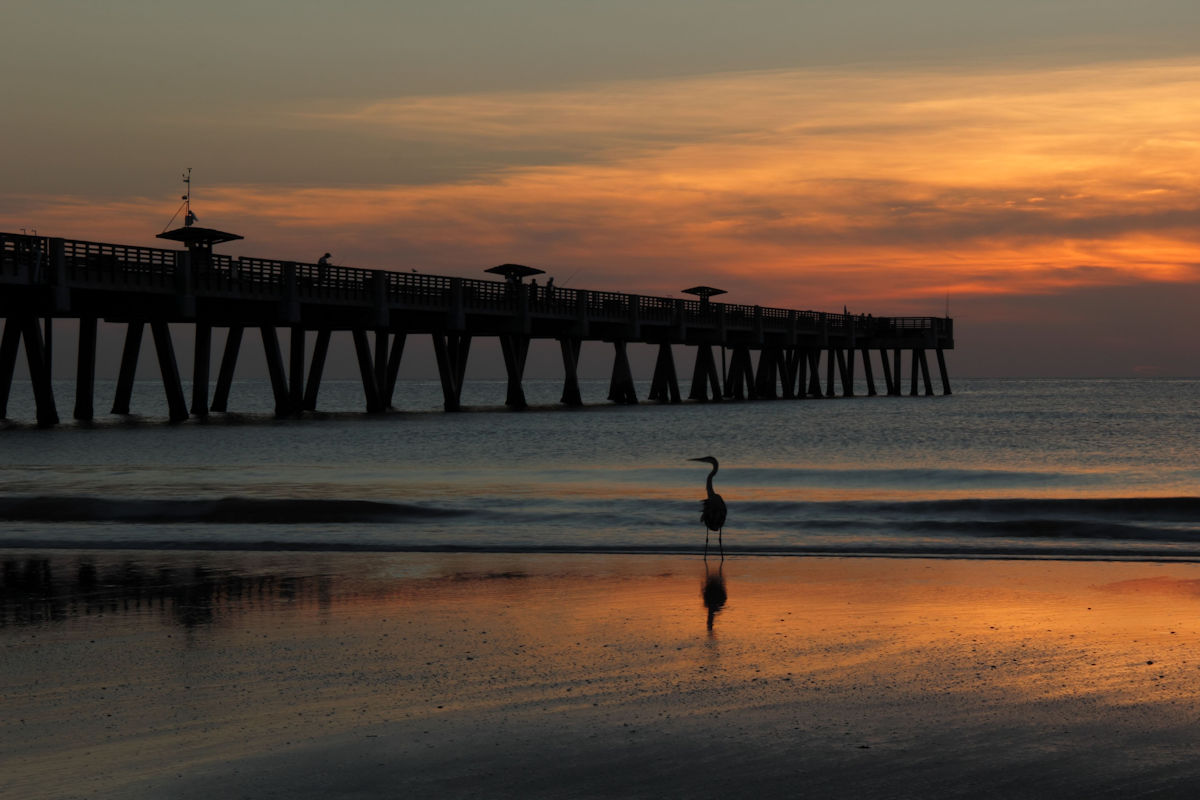
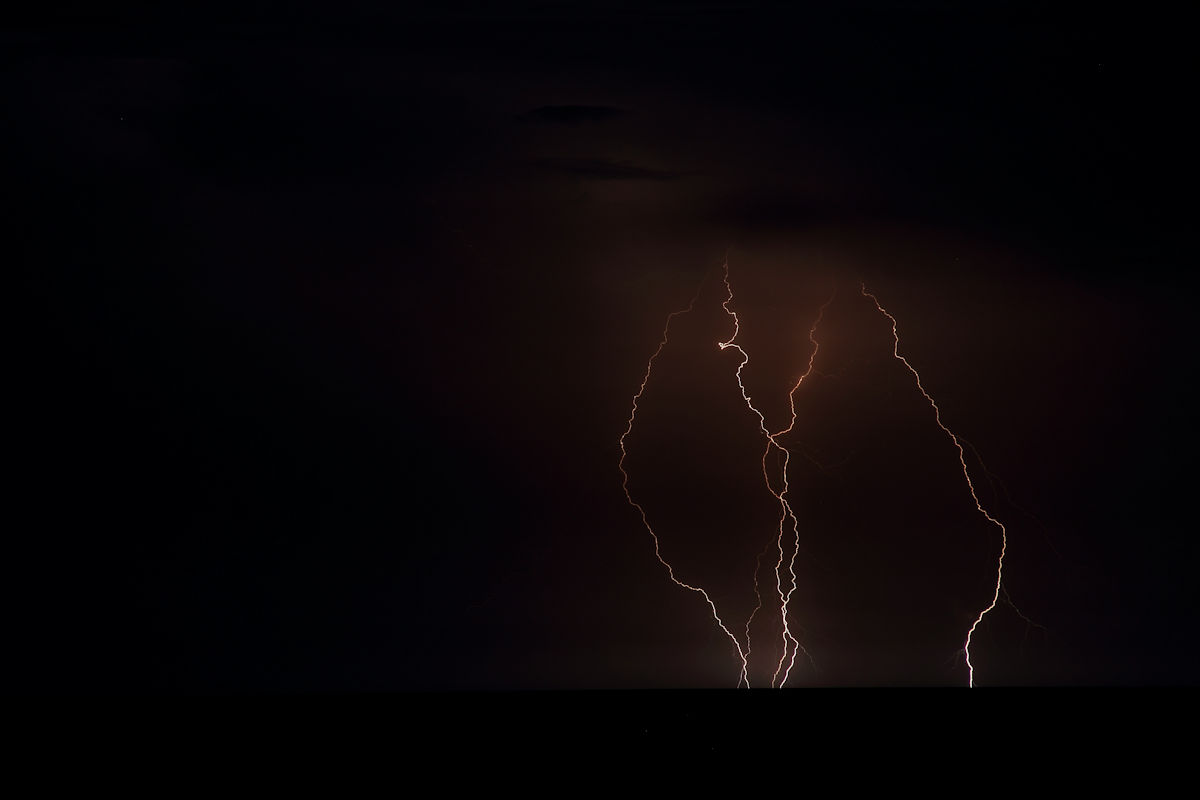
Thursday, 10/14/2021: Posted photo — Lightning at Sea.

Settings: Canon EOS 60D, ISO 100, f/5.6, 15 s, 48 mm.

15 second exposure looking out to see in Jacksonville Beach, FL a few years ago.

During a past vacation, my family rented a condominium on Jacksonville Beach. My wife has relatives that live in both Jacksonville Beach and Neptune Beach, so we travel to the area relatively often. Most of the time we rent a house or condo not on the beach.

A common occurrence in Florida is a storm out to sea at night. It is such a great sight to see the lightning in the distance. On this night, I decided to put my camera on my tripod, set the exposure time to 15 seconds, to capture the storm. After looking at the photos, my only regret was that I did not leave my shutter open for 30 seconds.

There will always be another trip back to the beach.

Here are a few camera settings for photographing daytime and nighttime lightning that I have picked up over the years:

Camera settings tips for photographing daytime lightning photos:

  • Set up camera on a sturdy tripod.
  • Turn off any image stabilization you might have. If image stabilization is on, the camera will think it is moving when the shutter engages, even though there is not camera movement.
  • Focus camera lens on infinity or on an object in the distance.
  • Set the aperture of the lens to f/16 or smaller. This will close the iris inside the lens, allowing a longer shutter speed to be used.
  • Set ISO to lowest it will go, for example use ISO 100.
  • Take a test exposure using the slowest shutter speed allowed to see if the image is exposed correctly and your focus is correct.
  • Set your camera on manual or bulb.
  • Use a remote timer/intervalometer to fire the shutter continuously.

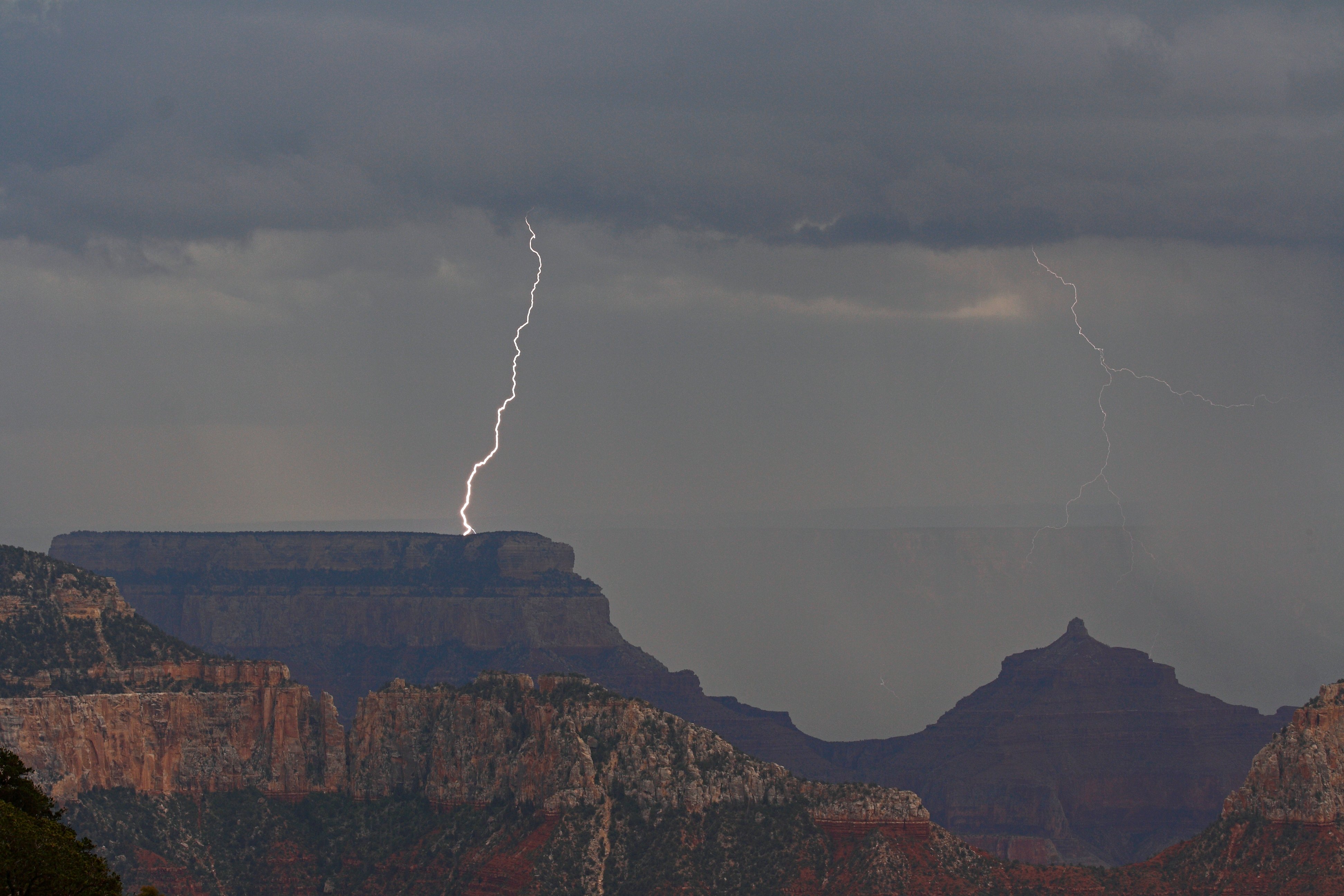
Here is an example of a daytime lightning photo. This photo was handheld since the storm arrived quickly. For your information, we did not hike down into the Grand Canyon that day.

Camera settings for photographing night-time lightning

  • Set up camera on a sturdy tripod.
  • Turn off any image stabilization you might have. If image stabilization is on, the camera will think it is moving when the shutter engages, even though there is not camera movement.
  • Focus camera lens on infinity or on an object in the distance.
  • Set the aperture of the lens to a medium value, such as f/5.6 or f/8. This will allow a longer shutter speed by bringing in more light and improve image quality at the same time by allowing the use of a lower ISO value.
  • Set ISO to lowest it will go, for example set your is to ISO 100. You may have to increase your ISO to ISO 200–ISO 400 depending on the lighting in the area. I prefer my ISO set at ISO 100 for all my lightning shots.
  • Set your camera on manual or bulb.
  • Set the shutter speed to between 5 and 20 seconds. You can set it up to 30 seconds if you are in a dark area.
  • Take a test shot to see if the scene is exposed correctly, remembering that if a strike does happen in the field of view it could light up the scene considerably, depending on how big the strike looks in the photo.
  • Use a remote timer/intervalometer to fire the shutter continuously.

Friday, 10/15/2021: Post photo — Clouds.

Settings: Canon EOS 60D, ISO 200, f/7.1, 1/1250 s, 37 mm.

Today I am posting a photo of a cloud. I took many photos today, but this one was the only one that I liked.

Saturday, 10/16/2021: Post photo — Aster.

Settings: Canon EOS 60D, ISO 200, f/5.6, 1/320 s, 106 mm.

I went to my mother’s house today to make sure everything was fine at the house. I also collected some of the wood from the tree that fell on her house about a year ago to bring home to burn. Earlier in the day, I took photos at Leominster State Forest. I went hiking at Leominster State Forest last night and went back today to get some more photos. I will be posting the photos I took in this blog for you to see what I did not post for my 365 project.

When I was at her house, I noticed a lot of asters. I also saw that there was an abundant number of bees flying around the asters. What a great photo opportunity. The aster flowers (Aster spp.) add color to the autumn landscape while offering beauty with little work when caring for asters.

That is all for now. Until next week, be safe.

For more photo of other project I have work, visit my website: https://photobyjosephciras.weebly.com/ or visit me on Facebook at https://www.facebook.com/PhotobyJosephCiras/.

Photographic Thoughts — 08/08/2021 to 08/14/2021

“The whole point of taking pictures is so that you don’t have to explain things with words.” — Elliott Erwitt

Thank you for all the new views and likes from last week, it helps keep me inspired.

Enjoy this week’s rambling mind of a mechanical engineer and photographer.

Sunday, 08/08/2021: Posted photo — Balancing the World.

Settings: Canon EOS 60D, ISO 400, f/7.1, 1/160 s, 106 mm.

My wife’s family have a reunion the first Saturday of August every year. Relatives from all around the country, and sometimes the world, come to visit. The reunion is only schedule for one day yet it occurs over the course of the week.

My brother-in-law likes to juggle. He juggles clubs, balls, boxes, fire clubs, fire balls, scarfs, and people. He also does tricks for the younger members of the family. People young and old look forward to his juggling act. In this picture, he is spinning the parasols to balance the world.

Monday, 08/09/2021: Posted photo — Backpack.

Settings: Samsung SM-G930V (Galaxy S7), ISO 80, f/1.7, 1/120 s, 4 mm

Monday night is hiking night, as some of you may know by now. We purchased a new backpack for my son since his is old and losing padding. I tried out his backpack tonight to see how comfortable it is to use. This photo was taken on the summit fire watch tower on Wachusett Mountain.

For your information, the backpack was comfortable for short hikes. I may not be so for the longer hikes we have planned so we will be purchasing another backpack for him.

Tuesday, 08/10/2021: Posted photo — Can You Hear Me.

Settings: Canon EOS 60D, ISO 1600, f/5.6, 1/1600 s, 135 mm.

Hearing protection is required when one is exposed to a sound level over 85 dB for 8 hrs. Some examples of how loud that is are: Garbage disposal, dishwasher, average factory, freight train (at 15 meters). Car wash at 20 ft (89 dB); propeller plane flyover at 1000 ft (88 dB); diesel truck 40 mph at 50 ft (84 dB); diesel train at 45 mph at 100 ft (83 dB). Food blender (88 dB); milling machine (85 dB); garbage disposal (80 dB). Manufacturing plants have sound levels that exceed the 85 dB threshold so hearing protection is required.

binary comment

Why did I take this photo? I took it since I liked the mixture of colors in the container. This is one of the photos that I took today for my photo project. I liked this one over the other once that I took today. I will not be posting the other photos I took. That should be telling you the quality of those photos.

Wednesday, 08/11/2021: Posted photo — Feed Me.

Settings: Canon EOS 60D, ISO 200, f/7.1, 1/125 s, 135 mm.

These birds were waiting for their mother to feed them. I have walked past then a few times over the last two weeks and decided to take their photo today. I took a similar photo last year. I like the way that one of the birds is looking for food and the other one is just looking like he is annoyed.

Thursday, 08/12/2021: Posted photo — Find the Meteor.

Settings: Canon EOS 60D, ISO 1600, f/4, 15 s, 28 mm.

The Perseids are a prolific meteor shower associated with the comet Swift–Tuttle. The meteors are called the Perseids because the point from which they appear to hail lies in the constellation Perseus. The meteor shower reached it peak this year at 4:01 a.m. today. The photo is dark because I had to adjust for the light pollution in the area. I look online and see these great photos of the meteor shower taken from dark sky areas. Someday I will travel to a dark sky area during a meteor shower. Last year I posted my first photo of the Milky Way from a dark sky reserve, Canyonland National Park. Dark Sky Reserves are designated by the International Dark-Sky Association (IDA). They are areas that offer exceptional starry nights and are specifically protected for scientific, natural, educational, cultural, heritage and/or public enjoyment.

Did you find it? Look northwest of the “Seven Sisters”. What are the “Seven Sisters”?

From space.com: “The Pleiades are a group of more than 800 stars located about 410 light-years from Earth in the constellation Taurus. Most skywatchers are familiar with the assembly, which looks something like a smaller, hazier version of the Big Dipper in the night sky.

Also known as the “Seven Sisters” and Messier 45, the object derives its English name from Greek legend. The Pleiades are the seven daughters of the Titan god Atlas and the ocean nymph Pleione. During an ancient war, Atlas rebelled against Zeus, the king of the gods, who sentenced his foe to forever hold up the heavens on his shoulders. The sisters were so sad that Zeus allowed them a place in the sky in order to be close to their father.”

Friday, 08/13/2021: Post photo — Sunflower.

Settings: Samsung SM-G930V (Galaxy S7), ISO 50, f/1.7, 1/287 s, 4 mm

Sunflowers have symbolic meanings in love, luck, spirituality, and dreams. Why did I post a photo a sunflower today? Today is Friday the 13.

From my web research I found out more information. This is from the CNN website: “From Scandinavia, Panati explains, the superstition then spread south throughout Europe, becoming well established along the Mediterranean by the start of the Christian era. It was here that the unsettling power of the numerals was cemented through the story of the Last Supper, which was attended by Jesus Christ and his disciples on Maundy Thursday. The 13th and most infamous guest to arrive, Judas Iscariot, was the disciple who betrayed Jesus, leading to his crucifixion on Good Friday.”

For you that follow FOX news: “According to the history website, the association of 13 being unlucky likely started in Western culture the Last Supper in the Bible. In the biblical story, 13 people sat at the Last Supper table – Jesus and his 12 disciples – and the next day, Jesus was crucified.”

Here is wishing you luck today.

Saturday, 08/14/2021: Post photo — Sunrise.

Settings: Canon EOS 60D, ISO 100, f/7.1, 1/160 s, 300 mm.

Saturday is my day to sleep in. I wake up around 4:30 a.m. every day so I look forward to sleeping in on Saturday mornings. Today I woke up at 4 a.m. to climb Wachusett Mountain to take a photo of the sunrise.

When I arrived at the summit, I was the only one there. The sky was clear until just about the time the sun was to rise, 5:42 a.m. There was a fog bank that rolled in. I could see the sun over the horizon since I knew the location that it was to rise. I was giving up hope of seeing the sunrise. Then the fog burned off just enough for me to take this photo.

I went back to bed for a few hours when I came back home from my hike.

That is all for now. Until next week, be safe.

For more photo of other project I have work, visit my website: https://photobyjosephciras.weebly.com/ or visit me on Facebook at https://www.facebook.com/PhotobyJosephCiras/.

COVID is real! Be safe out there, keep your social distance, and remember to always wear your mask and wash your hands. Get your vaccine!

Photographic Thoughts — 07/11/2021 to 07/17/2021

“Photography takes an instant out of time, altering life by holding it still.” — Dorothea Lange

Thank you for all the new views and likes from last week, it helps keep me inspired.

Enjoy this week’s rambling mind of a mechanical engineer and photographer.

Sunday, 07/11/2021: Posted photo — Rough Hermit Beetle.

Settings: Canon EOS 60D, ISO 200, f/5.6, 1/125 s, 135 mm.

The rough hermit beetle is a near threatened species with its population decreasing. The adult beetle lives two to three months. These beetles do not bite. They grow inside rotting, hollow trees. The larvae feed for three years on the wet, decaying wood. They are harmless and probably make great fish bait.

The beetle in my photo was at my in-law’s cottage. I did not see it at first and be wife pointed it out to me. I took out my Seek app to identify it.

I was going to post a photo of a hammock or a photo of water lilies before taking a photo of this beetle. Since I did not post these photos in my 365 project or on my website, I will post them here for you to enjoy as a bonus for reading my blog.

Monday, 07/12/2021: Posted photo — Wachusett Mountain Ski Area.

Settings: Samsung SM-G930V (Galaxy S7), ISO 50, f/1.7, 1/171 s, 4 mm

Mountain Stats:

Summit Elevation: 2006 ft
Vertical Drop: 1000 ft
Trails: 27
Lifts: 8
Uphill Capacity: 9200 skiers per hour
Snowmaking: 100%
Grooming: 2x per day
Times I have skied on the mountain: 1 or 2 times in my life.

As you can tell, I do not ski. I would rather hike the mountain than to ski the mountain.

Today I hiked 4.6 miles on the mountain. It has been a week since I hike Mount Isolation and just took my time to relax and stretch out my legs. I hike with a group on Monday nights which is a great motivator. Tonight, we hiked in the rain and fog and being with a group made the hike easier. You could not see the mountain much due to cloud covering so my gear was damp at the end of the hike.

This is a photo of the fountain at the base of the mountain. This location is used for many events, such as weddings, reunions, and other celebrations. The Midstate trail goes past this location giving my fellow hikers a great view to refresh their mind during a long hike.

Tuesday, 07/13/2021: Posted photo — Unicorn.

Settings: Canon EOS 60D, ISO 1600, f/5.6, 1/50 s, 135 mm.

A unicorn is a mythical, usually white animal generally depicted with the body and head of a horse with long flowing mane and tail and a single often spiraled horn in the middle of the forehead, or it is an animal mentioned in the Bible that is usually considered an aurochs, a one-horned rhinoceros, or an antelope.

Many people are into unicorns. My mother is one of those people. She is not a crazy unicorn woman by any means. She has a collection of unicorns in her China cabinet. This one is a Christmas unicorn as you can tell by the wreath around its neck.

Wednesday, 07/14/2021: Posted photo — Pillow Pattern.

Settings: Samsung SM-G930V (Galaxy S7), ISO 160, f/1.7, 1/30 s, 4 mm

Sitting at my mother’s house, I needed a photo (surprising is it not) and I saw these pillows. Pillows have some interesting pattern in them. I took this photo and did not think anything about it.

When I went to process it to post, the pattern looked to me to be either and alien spaceship, an alien, or one person doing a handstand on the hands of another person. Apophenia is a general term for interpreting patterns or meaning in meaningless data. This data may be meaningless, but the power of suggestion will make someone see something that is not there.

Thursday, 07/15/2021: Posted photo — Bench.

Settings: Canon EOS 60D, ISO 1600, f/8, 1/200 s, 41 mm.

At the intersection of Bicentennial Trail and High Meadow Trail is a bench for people to rest. This bench looks over high meadow and faces to the due south and has great views of the surrounding hills.

I meet a hiker there that told me that a local college was doing a snake study in the high meadow. I checked out the study one day only to find a snakeskin. I was going to look for a snake tonight, but I did not want to walk in the high grass in the study area because I did not want to get any ticks on me. I had my camera ready to take the photo, and my son with me to lift the board so I could get a photo of any snake that was resting.

I thought I knew everything that goes on at the mountain, but I am learning new things. You can teach and old dog something new!

Friday, 07/16/2021: Post photo — Sunrise.

Settings: Canon EOS 60D, ISO 400, f/7.1, 1/500 s, 135 mm.

What a wonderful sunrise this morning. The hazy sky made the reds jump out at me.

As I was driving into work, I saw this wonderful sunrise over Round Meadow Pond. I drove around the area of the pond to find a good location for taking a photo of the sunrise. I could not find a good location off the main road, so I stopped in the breakdown lane to take this one. Good thing I live in a town where there is not much traffic, especially at 5:40 a.m. when I was on my way to work.

Saturday, 07/17/2021: Post photo — Mother’s Hand.

Settings: Samsung SM-G930V (Galaxy S7), ISO 50, f/1.7, 1/167 s, 4 mm

My hand in the hand of an angel.

That is all for now. Until next week, be safe.

For more photo of other project I have work, visit my website: https://photobyjosephciras.weebly.com/ or visit me on Facebook at https://www.facebook.com/PhotobyJosephCiras/.
COVID is real! Be safe out there, keep your social distance, and remember to always wear your mask and wash your hands. Get your vaccine!

Photographic Thoughts — 06/27/2021 to 07/03/2021

“Taking pictures is savoring life intensely, every hundredth of a second.” — Marc Riboud

Thank you for all the new views and likes from last week, it helps keep me inspired.

Enjoy this week’s rambling mind of a mechanical engineer and photographer.

This is the last of the “catch up” series of blogs.

Sunday, 06/27/2021: Posted photo — Bridge.

Settings: Canon EOS 60D, ISO 400, f/7.1, 1/3 s, 18 mm.

This is one of the bridges in Watkins Glen State Park. This bridge is over Central Cascade, one of the 19 waterfalls that are in the park. We camped at the state park three nights, enjoying the Glen in-between storms.

Monday, 06/28/2021: Posted photo — Yahoo Arch.

Settings: Canon EOS 60D, ISO 100, f/7, 1/250 s, 24 mm

Yahoo Arch has a height of 17 feet and a base of 70 feet. It is in McCrary County, Kentucky. You get there by hiking 1.5 miles, one way, on a spur trail that brought you to Yahoo Falls. The height of Yahoo falls is 113 feet.

Tuesday, 06/29/2021: Posted photo — Clouds.

Settings: Canon EOS 60D, ISO 100, f/7.1, 1/1000 s, 44 mm

Now that we are back home, I needed a photo. The air was very humid, and clouds were forming near Round Meadow Pond.

Wednesday, 06/30/2021: Posted photo — St John’s Wort.

Settings: Canon EOS 60D, ISO 100, f/5.6, 1/25 s, 69 mm.

“St. John’s wort (Hypericum perforatum) is a flowering shrub native to Europe. It gets its name from the fact that it often blooms on the birthday of the biblical John the Baptist. The flowers and leaves of St. John’s wort contain active ingredients such as hyperforin. St. John’s wort is available as a supplement in teas, tablets, liquids and topical preparations. People use St. John’s wort to treat depression and menopausal symptoms.” — Mayo Clinic

binary comment

These wildflowers are in an area that I hike often. I stopped to take this photo since I was in a rush to take one for the day.

Thursday, 07/01/2021: Posted photo — Round Meadow Pond.

Settings: Canon EOS 60D, ISO 100, f/7.1, 1/25 s, 18 mm.

This is a new month, and I wanted a good photo for the first day of the month on my web page. This location is one that I photograph often and is one of the favorite locations for those who look at my photographs.

Friday, 07/02/2021: Post photo — Raindrops.

Settings: Canon EOS 60D, ISO 400, f/7.1, 1/200 s, 113 mm.

Rainy day today. No opportunity to get outside to take a photo. I took this when walking between buildings at work. This photo can also be used as a historic record of today’s weather.

binary comment

Saturday, 07/03/2021: Post photo — Mangos.

Settings: Samsung SM-G930V (Galaxy S7), ISO 64, f/1.7, 1/120 s, 4 mm

“A mango is a popular tropical fruit that is eaten in sweet and savory dishes around the world. It can be green, yellow, orange, red, or a combination of these colors, and has yellow or orange flesh surrounding a flat, hard pit. The fruit is typically peeled and cut away from the pit before use. A mango can be eaten raw unripe or ripe, or cooked into desserts, curries, and chutneys. It’s a moderately expensive piece of produce per fruit, but many varieties are large and heavy. It is also a popular dried fruit.” — The Spruce Eats

Back to a “normal” blog next week.

That is all for now. Until next week, be safe.

For more photo of other project I have work, visit my website: https://photobyjosephciras.weebly.com/ or visit me on Facebook at https://www.facebook.com/PhotobyJosephCiras/.
Photographic Thoughts — 06/13/2021 to 06/19/2021

“I don’t trust words. I trust pictures.” — Gilles Peress

Thank you for all the new views and likes from last week, it helps keep me inspired.

Enjoy this week’s rambling mind of a mechanical engineer and photographer.

Sunday, 06/13/2021: Posted photo — Star Trails.

Settings: Canon EOS 60D, ISO 1600, f/3.5, 16 s, 18 mm.

This photo is a stacked composite of 399 sixteen second exposed photos. It has been a while since I took a star trail photo. There are two different methods for taking star trails: one is by taking multiple shots and stacking them, the other is by doing long exposure shot. I have done star trails both ways. The longest exposer I took was a 45-minute exposure at Craters of the Moon National Monument and Reserve in Idaho a few years ago. The sky was very, very dark at this park. So dark, you had a difficult time seeing your outstretched hand. I the area I live, staking is the best way of doing star trails.

Here is how I prepare for my star trail photos. I setup my camera before I go to bed pointing in a northerly direction. Then when it gets to astronomical twilight, I turn the camera on to start taking photos and then go to bed.

Here are some definitions for your and my reference. All angles are the position of the Sun to the horizon:

  • Nighttime (below -18°)
  • Morning twilights (from -18° to 0°)
    • Astronomical Twilight (from -18° to -12°)
    • Nautical Twilight (from -12° to -6°)
    • Civil twilight (from -6° to 0°)
  • Morning magic hours
    • Blue hour (from -6° to -4°)
    • Golden hour (from -4° to 6°)
  • Daytime (above 6°)
  • Evening magic hours
    • Golden hour (from 6° to -4°)
    • Blue hour (from -4° to -6°)
  • Evening twilights (from 0° to -18°)
    • Civil twilight (from 0° to -6°)
    • Nautical Twilight (from -6° to -12°)
    • Astronomical Twilight (from -12° to -18°)
  • Nighttime (below -18°)

Why 16 seconds? Sixteen seconds is based on the aperture, pixel density, and focal length (NPF) rule. This considers the megapixels of your camera to make the stars still. With my camera and settings, a shot of 15.17 s or less will not show moment in the stars if you zoom into the picture. It is not necessary for star trails, but I use this rule for Milky Way shots. The better-known rule is the 500 rule. This is the classic rule for making the star stand still.

Monday, 06/14/2021: Posted photo — Sweet-Williams.

Settings: Samsung SM-G930V (Galaxy S7), ISO 50, f/1.7, 1/171 s, 4 mm

“Sweet William is an irresistible, colorful, biennial flower. It grows for two years, blooming in the second year. Native to Europe, this colorful, compact plant is grown all over the U.S.

Sweet William varieties include perennials and biennials. The perennials are often grown as biennials. Plants grow 7-18 inches tall, depending upon variety. Flowers blooms are produced in clusters in the spring. Colors include white, red, pink, crimson, scarlet, purple, and bi-colors.

The compact size of Sweet Williams make them great for containers and pots. Try them in a windowsill or vertical planter. In flower beds, put these small plants at the front of the garden. Despite their small size, they make good cut flowers. All they need for indoor splendor, is a small vase.

The Raging Name Debate — There is much debate over who Sweet William was named for. The list of honorees includes: William the Conqueror, Saint William of York, and Prince William Augustus, the Duke of Cumberland.

Plant Height: 12”–24”

How to Grow Sweet William Annual Flowers. For a better flower garden, follow The Gardener’s Network. (gardenersnet.com).

These Sweet-Williams were in a flower patch near one of the parking lots at the Wachusett Mountain ski area. I passed them on my way to my Monday night hike and stopped to take a photo of them on my way back from my hike. I did not have my DSLR with me, so I took this with my cellphone. I do not like the quality of this photo. Then again, I do not like many of my cellphone photos.

Here are some more photos of that flower patch.

Tuesday, 06/15/2021: Posted photo — Monkey HDR.

Settings: Canon EOS 60D, ISO 1600, f/5.6, 1/13 s, 52 mm.

This monkey is a trinket in my mother’s china cabinet. The definition of a trinket is a small ornament or item of jewelry that is of little value. The trinkets in my mother’s collection have emotional and sentimental value.

A china cabinet is a piece of dining room furniture, usually with glass fronts and sides, used to hold and display porcelain dinnerware. Her china cabinet is filled with unicorn trinkets and other trinkets that she has collected over the years with my father. He good china and silverware are also located in the cabinet.

This cabinet was “no-touch” in our house when I was younger. With six brothers, she did not want any of the items broken. We were able to go into the cabinet when company was coming over.

I edited this photo with as a High Dynamic Range (HDR) photo because the light was bad in the room, and I wanted to save this photo. It was one of the only photos I took today, and it was of the best quality.

Wednesday, 06/16/2021: Posted photo — Wildflowers.

Settings: Canon EOS 60D, ISO 100, f/5.6, 1/20 s, 52 mm.

These flowers are called purple crown vetch. According to my Seek app, Securigera varia (synonym Coronilla varia), commonly known as crownvetch or purple crown vetch, is a low-growing legume vine. It is native to Africa, Asia and Europe and is commonly used throughout the United States and Canada for erosion control, roadside planting and soil rehabilitation. It has become an invasive species in many states of the US.

binary comment

These were on a roadside. I passed them during one of my walks today. As written many times in different ones of my blogs, I take many photos during the day and pick out one to post.

Here is another photo I took today. My niece purchased these cookies for a party that did not happened today. She brought them to my mother’s house for all the aids to enjoy.

Thursday, 06/17/2021: Posted photo — Cookies.

Settings: N/A.

Some cookies left by one of my nieces at my mother’s house. She was going to have a party at work that did not happen. I do not know why. All I know is that there are many cookies around to be eaten.

Friday, 06/18/2021: Post photo — Feather.

Settings: N/A.

Some poor bird lost its feather. I took this photo since I was getting ready to travel from my vacation (holiday) and needed a quick photo.

Saturday, 06/19/2021: Post photo — Ordination or Holy Orders.

Settings: Samsung SM-G930V (Galaxy S7), ISO 200, f/1.7, 1/24 s, 4 mm

My wife’s cousin’s son was ordained a priest today for the Roman Catholic Diocese of Albany NY. We were invited ordination to the deaconate last year in Rome that did not happen due to COVID. We had planned to go to this ordination and glad that we could attend. Congratulation Fr. Matt Duclos!

Here are some more photos from the day.

I am not sure when I will post my blogs for the next two weeks due to commitments. I will see if I can post a partial blog later in the week and follow up with an update to that blog.

That is all for now. Until next week, be safe.

For more photo of other project I have work, visit my website: https://photobyjosephciras.weebly.com/ or visit me on Facebook at https://www.facebook.com/PhotobyJosephCiras/.
COVID is real! Be safe out there, keep your social distance, and remember to always wear your mask and wash your hands. Get your vaccine!

Photographic Thoughts — 05/23/2021 to 05/29/2021

“A tear contains an ocean. A photographer is aware of the tiny moments in a person’s life that reveal greater truths.” — Anonymous

Thank you for all the new views and likes from last week. It helps keep me going. Enjoy my blog post!

Enjoy this week’s rambling mind of a mechanical engineer and photographer.

Sunday, 05/23/2021: Posted photo — Get Out of my Tree.

Settings: Canon EOS 60D, ISO 200, f/5.6, 1/80 s, 135 mm

The photo I posted today was of two squirrels that were running around in our yard. These were two of five squirrels that were chasing after each other, knocking each other off trees, trying to hide from each other, and fighting each other. Most squirrels mate twice a year, once during the summertime and once towards the end of wintertime or early springtime. When one female is ready to mate, males will either chase after her or they will complete for the right to mate with her. What I was seeing was the competition to mate with her. There was one female squirrel on another tree watching the activity. Boys will be boys. It is very interesting to see nature at work.

A photo that I almost posted was at the other end of the spectrum. It was a photo of a statue of St. Anne reading to Mary. This statue was in front of St. Denis’ sister church that was in town. St. Anne’s church was torn down due to safety concerns a few years ago.  “St. Anne is the patron saint of unmarried women, housewives, women in labor, grandmothers, childless people, equestrians, lacemakers, miners, the poor, and seamstresses. The most well-known patronage of St. Anne is that of grandmothers. Certainly, as the mother of the Virgin Mary and the grandmother of Jesus Christ, St. Anne was a woman of great virtue and love.

St. Anne is often shown seated with a book on her lap. The child Mary stands against her, eager to listen. This depiction of St. Anne is a small explanation of what we know of this holy woman. God entrusted to St. Anne the task of raising Our Lady in a holy and virtuous home, and from a very young age Mary looked to St. Anne to learn about God and how He works in the lives of those who love and serve Him.” — Catholic Saint Metals, (https://catholicsaintmedals.com/saints/st-anne/)

Monday, 05/24/2021: Posted photo — Buttercups.

Settings: Canon EOS 60D, ISO 100, f/7.1, 1/400 s, 69 mm

Buttercup is a type of herbaceous plant that belongs to the Ranunculaceae family. There are nearly 2000 species of buttercups that mostly inhabit northern hemisphere. Buttercups are usually found in cold and temperate regions. They prefer moist habitats and live in the fields, meadows, near the roads, in the woodlands, swamps and bogs. Buttercups are widely distributed and abundant in the wild. Some species of buttercups are rare and endangered due to habitat destruction and introduction of new, invasive plant species. Reflexive properties of buttercup flowers are applied in children’s game aimed to determine fondness for the butter. If yellow reflection appears on the skin after placing buttercup under the chin – then child likes to eat butter. Signs of intoxication appear immediately after ingestion of the plant. They include bloody diarrhea, excessive salivation, colic and blistering of the intestines. They have acrid taste, so even animals cannot eat them fresh. (https://www.softschools.com/facts/plants/buttercup_facts)

These buttercups are in the lawn near were I park my car at work. I took this photo on my way home from work before tonight’s hike. I took this photo just in case I did not take any photos during my hike. On my hike, I just hiked with the group of hikers I met last week. Great to go hiking with a group of hikers that socialize and not a social group that hikes.

Tuesday, 05/25/2021: Posted photo — Rhododendron.

Settings: Canon EOS 60D, ISO 100, f/7.1, 1/200 s, 92 mm.

Short and sweet. We have a red rhododendron that blooms after our azaleas. They are such wonderful plants that attract bumble bees and other insects.

Wednesday, 05/26/2021: Posted photo — Pants.

Settings: Canon EOS 60D, ISO 400, f/7.1, 1/60 s, 35 mm.

Pants for Groot perhaps? Groot is a fictional character appearing in American comic books published by Marvel Comics. Created by Stan Lee, Larry Lieber and Jack Kirby, the character first appeared in Tales to Astonish #13. He is a man made out of wood.

Thursday, 05/27/2021: Posted photo — Rabbit.

Settings: Canon EOS 60D, ISO 3200, f/5.6, 1/50 s, 135 mm.

Imagine our two-year-old grandniece’s excitement every time this rabbit came out from under our deck. “There it is!!” She was so excited that she would run toward the rabbit and then it would hide. She would then sit down next to our son and wait and get excited repeatedly.

The wonders of youth. Why do we have to lose it?

Friday, 05/28/2021: Post photo — Clouds.

Settings: Canon EOS 60D, ISO 100, f/7.1, 1/250 s, 18 mm.

Needed a quick photo today since I was traveling north to go hiking. Took this one in the morning before the rains came in.

binary comment

Saturday, 05/29/2021: Post photo — Hiking.

Settings: FUGIFILM FinePix XP70, ISO 100, f/6.2, 1/240 s, 5 mm.

My son and his friend hiking in NH. This is from Wildcat D looking towards Mount Washington.

Hiking down the trail. Mount Washington in the distance

Five 4000-foot mountains, two official 4000 footers, wet river crossing to start the hike, 1600 feet of vertical gain in less than one-half mile, and hiking with your son and one of his friends. It was a great day. I feel in the river to start the hike. Not a great way to start, but I recovered quickly. Lucky, I brought a second pair of socks to change into. The first pair did not get very wet since I had on a good pair of hiking boots. I have my warm cloths on since the temperature was not to get above freezing in the mountains, so the wetness did not affect my hike.

That is all for now. Until next week, be safe.

For more photo of other project I have work, visit my website: https://photobyjosephciras.weebly.com/ or visit me on Facebook at https://www.facebook.com/PhotobyJosephCiras/.
COVID is real! Be safe out there, keep your social distance, and remember to always wear your mask and wash your hands.

Photographic Thoughts — 05/16/2021 to 05/22/2021

“The picture that you took with your camera is the imagination you want to create with reality.” — Scott Lorenzo

Thank you for all the new views and likes from last week. It helps keep me going. Enjoy my blog post!

Please answer the question posed in one of my days. I would like an opinion on how you like this blog and how I can improve it. Leave a comment below or on my Facebook page.

Enjoy this week’s rambling mind of a mechanical engineer and photographer.

Sunday, 05/16/2021: Posted photo — Stained Glass.

Settings: Samsung SM-G930V (Galaxy S7), ISO 50, f/1.7, 1/415 s, 4 mm

From the Stained Glass Association of America: “Stained glass possesses an aura of mystery and romance. It is the interplay between light and color that sparks the imagination. It is one of the most unchanged crafts, still taking, as it did centuries ago, time and patience, and an appreciation for color and line design.”

The term stained glass refers to colored glass as a material and to works created from it. Throughout its thousand-year history, the term has been applied almost exclusively to the windows of churches and other significant religious buildings. Although traditionally made in flat panels and used as windows, the creations of modern stained glass artists also include three-dimensional structures and sculpture.

From Classroom website: “Stained glass windows play games with the light in many modern churches. The tradition of making those windows goes back a long way. As early as the fourth century, colored glass was used to ornament church windows, though it was not until the 12th century that making stained glass became an art form like sculpture or painting. Yet stained glass was not just a decoration. It was a way of communicating scenes and episodes from the Bible to everybody — including those unable to read.

Ultimately, the most important reason that stained glass windows remain a staple in churches even now is a matter of the Bible, not beauty. Stained glass was not merely attractive, it created an ethereal experience with a material object, glass, making the earthly into the divine. More important, stained glass was useful for a practical reason. In the medieval period, many church-goers were illiterate. The intricate scenes depicted in stained glass were not just decorations; they were ways of delivering religious messages to all viewers, even those who could not read the Bible for themselves. Stained glass embedded religious beliefs into the very walls.”

Stained glass window

The stained glass in this photo is in the foyer of St. Denis Church. I liked the light coming through the window. There was also a vase with pussy willows in front of the window. In Chinese tradition, the white blossoms of the pussy willow resemble silk represents the coming of prosperity.

Monday, 05/17/2021: Posted photo — Cloud.

Settings: Canon EOS 60D, ISO 100, f/7.1, 1/800 s, 18 mm

I hiked with a different group today. This was the first time I hiked with this group. I am looking for a group of hikers that socialize and not a social group that hikes. After one hike, this group meets my needs. They still socialize but they keep up a good pace and are stronger hikers that the group that I joined a couple of weeks ago. This group hikes earlier in the evening, which is better for me.

What do you see in this cloud formation

Today it was warmer that it has been in the past and there was rain around the summit. This is a cloud that was forming near the summit of the mountain. I had to keep my eye on its growth since it was developing into a thunderhead, or cumulonimbus cloud. I enjoy watching a thunderhead grow. Once the anvil forms, it is time to get off the summit. This cloud did not fully develop and was still interesting to watch grow.

Tuesday, 05/18/2021: Posted photo — Seeds.

Settings: Canon EOS 60D, ISO 2000, f/5.6, 1/200 s, 135 mm.

Dandelion seeds

A dandelion seed is a tiny seed that rides on the wind. “A dandelion seed is the plant’s mature fruit, known as a cypsela to botanists, and its parachute-like structure is known as a pappus. The pappus develops as the calyx of each floret dries and matures, so it serves two important roles for the plant.” (West Coast Seeds) The seeds can be carried away as far as 5 miles from their original location. Other methods of travel include rain runoff and sticking to clothing and animal fur.

It is so interesting to see how many things a dandelion is used for. To me, they are just a weed that is in my lawn. This year they seem to be more abundant than in past years.

I liked photographing the cotton like puff of a dandelion seeds because I can practice macro photography and/or practice the use of different aperture settings on my camera.

Wednesday, 05/19/2021: Posted photo — I Have My Eyes on You.

Settings: Canon EOS 60D, ISO 3200, f/7.1, 1/160 s, 135 mm.

Once again, I was greeted by wildlife on my way into work today. This time it was a deer. There were four at the edge of the woods. Shortly after this, there were six running down the driveway. Over the years at work, I have seen deer, moose, turkey, black bear, red foxes, great blue herrings, ducks, and snapping turtles on the campus of where I work. I have not seen the snapping turtle for a few years, so I am somewhat concerned if it is still alive. There were two that I would see laying eggs next to the driveway that I would photograph every year. I know they were the same turtles since they have distinctive markings on their shell.

Doe keeping an eye on me

I like the quietness of my place of employment.

Thursday, 05/20/2021: Posted photo — Pink Azalea.

Settings: Canon EOS 60D, ISO 200, f/5.6, 1/80 s, 135 mm.

Last Saturday I posted a photo of some red azalea plants. As a reminder, I stated that azaleas are flowering shrubs in the genus Rhododendron. I noted that we also have pink azalea plants that bloom after the red ones. This week the pink azaleas are blooming.

Pink azalea bush

For this photo, I used a script that I wrote in Paint Shop Pro to duplicate the Dave Hill look as closely as possible. Do not know how to explain this technique clearly. Just search the internet for the Dave Hill look and see for yourself.

Friday, 05/21/2021: Post photo — Bluets.

Settings: Canon EOS 60D, ISO 100, f/7.1, 1/60 s, 62 mm.

From the Lady Bird Johnson Wildflower Center:

“Azure Bluet, Quaker Ladies, Bluets

Rubiaceae (Madder Family)

Synonym(s): Hedyotis caerulea, Houstonia caerulea var. faxonorum

USDA Symbol: hoca4

USDA Native Status: L48 (N), CAN (N), SPM (I)

This small, delicate perennial is found growing in compact tufts, 8 in. high. The plants may cover broad expanses. Tiny flowers are pale blue with yellow centers, tubular, four-lobed, solitary, and terminal. Spatula-shaped leaves occur in basal rosettes. Stem leaves are small, and the stems are unbranched.

This lovely, delicate, flowering plant is often found in striking patches of light blue. The Star Violet (H. pusilla), to 4” (10 cm) high, has a tiny purple flower and occurs in fields and open woods from South Dakota east to Maryland and south to Florida and Texas. A tall southern species, 6–16” (15–40 cm) high, Large Houstonia (H. purpurea), has 3–5, ribbed, opposite, ovate leaves, and white or pink flowers. It occurs from Nebraska northeast to Maine and south to Florida and Texas. These and certain other Houstonia species have sometimes been placed in the genus Hedyotis.”

Bluets

These bluets are in our yard. Well, they were there until I mowed the lawn this evening. They are such a delicate flower to look at.

Question: Do you think that I copy too much information off the internet and not put my own thoughts into some of the items in this blog or do you like the history and educational information that I post?

Saturday, 05/22/2021: Post photo — Pop Art.

Settings: Canon EOS 60D, ISO 3200, f/4, 1/8 s, 28 mm.

50 years ago, you give a teenager a paint brush and ask him to paint what he wanted in a room, this is what happens. Here are some interesting artwork that still hang on basement/cellar walls at my mother’s house. We when over there today to do some cleanup. These photos are to keep as memories of this artwork before the walls come down.

Pop art

I am very tired, so I am not writing much for today. Here are a couple more pieces of art.

That is all for now. Until next week, be safe.

For more photo of other project I have work, visit my website: https://photobyjosephciras.weebly.com/ or visit me on Facebook at https://www.facebook.com/PhotobyJosephCiras/.
COVID is real! Be safe out there, keep your social distance, and remember to always wear your mask and wash your hands.