“To me, photography is an art of observation. It’s about finding something interesting in an ordinary place… I’ve found it has little to do with the things you see and everything to do with the way you see them.” — Elliott Erwitt
Thank you for all the new views and likes from last week. It helps keep me going. Enjoy my blog post!
Enjoy this week’s rambling mind of a mechanical engineer and photographer.
Sunday, 05/09/2021: Posted photo — True North.
Settings: Samsung SM-G930V (Galaxy S7), ISO 50, f/1.7, 1/3320 s, 4 mm
Summit compass, or sometimes call the Wachusett Rose, is a compass set on a pedestal on the summit of Wachusett Mountain. It shows people the direction that they are looking. This compass was at a different location on the summit a few year ago. Some kids pried if from its base and then later returned it to a ranger in the Visitor’s Center. When it was in its previous location, I took out my compass to verify its orientation. I did the same thing at this location.
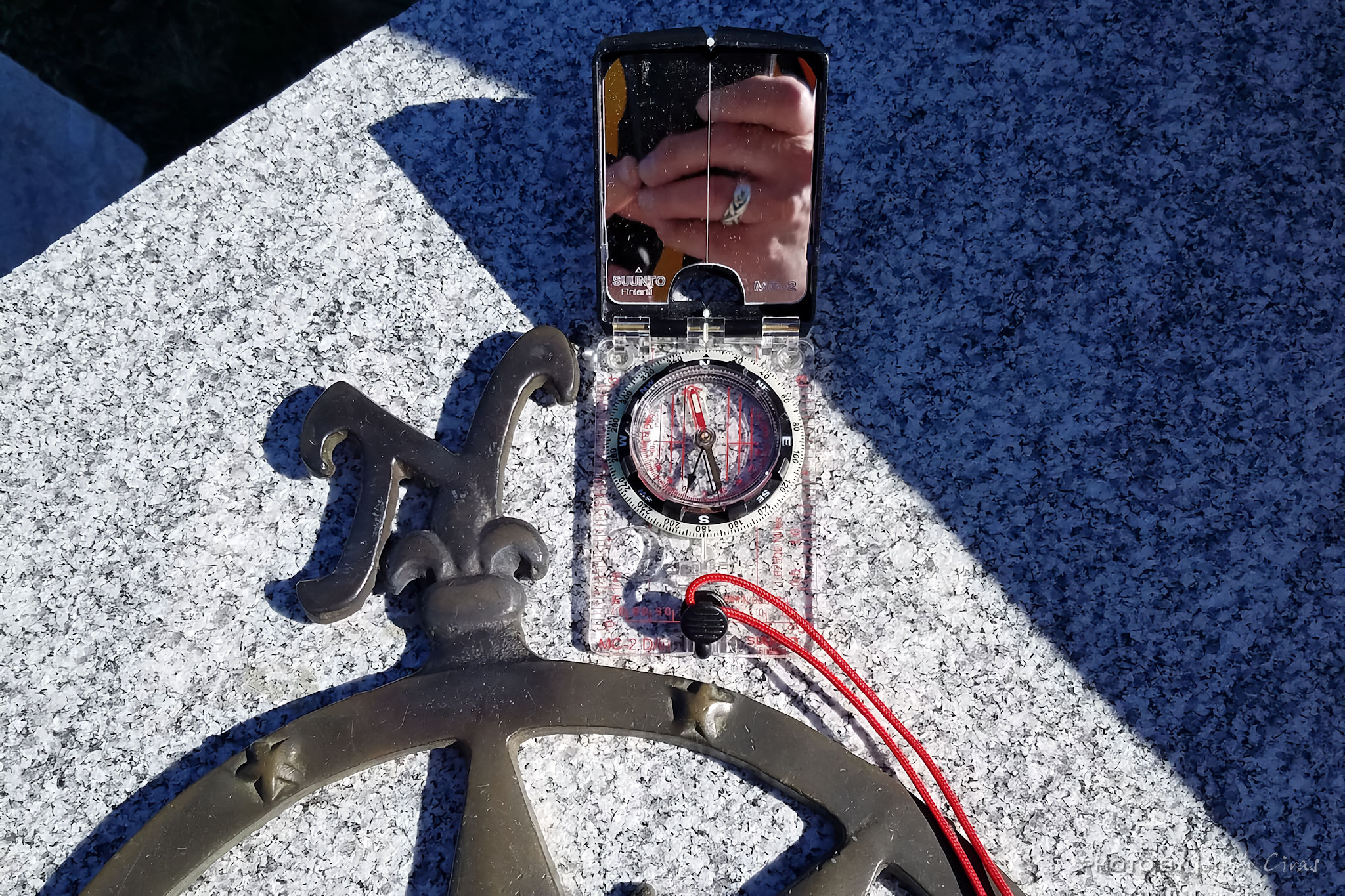
If you notice, the needle on my compass and the north direction do not line up. This is due to magnetic declination. The needle points to magnetic north so I needed to adjust the declination on my compass so that the needle was set to the declination angle of 14° West in our area at this time. The magnetic declination changes every year since the magnetic pole of the Earth is in constant motion.
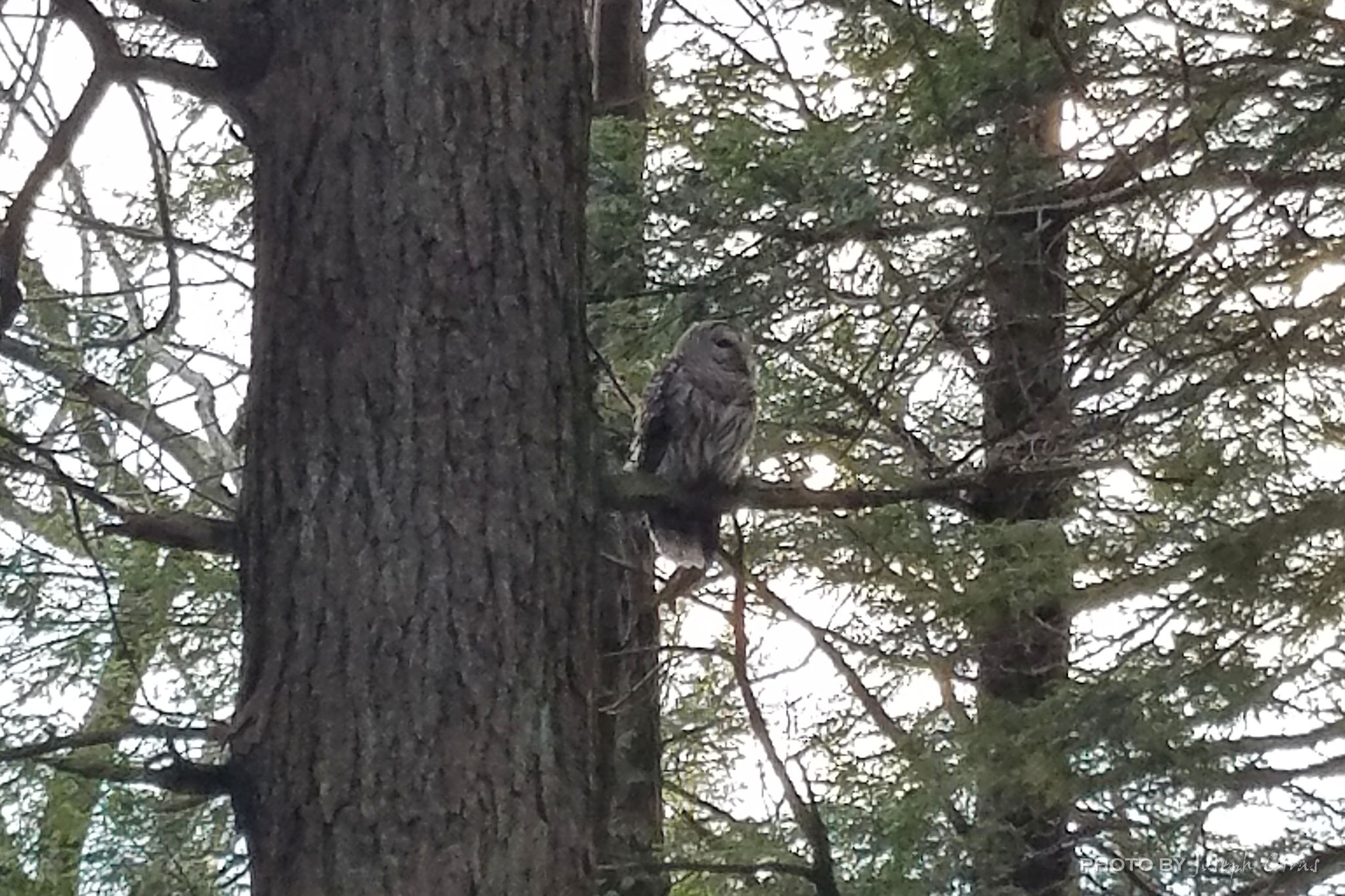
Monday, 05/10/2021: Posted photo — Owl.
Settings: Samsung SM-G930V (Galaxy S7), ISO 50, f/1.7, 1/179 s, 4 mm
During my hike this evening, I saw blue birds trying to knock something out of a tree. When I looked closer, it was this barred owl. I have seen one on the mountain a few years ago, and have heard them on the mountain many times, but have never seen one this close. I was going to bring my “good” camera on my hike and decided against it. I did not even have my backup camera. All I had with me was my cell phone. After many shots at bad angles, this owl just stayed on the branch allowing me to take this photo. Not bad for a cell phone camera.
Here is some information about barred owls:
Length: 15.7–24.8 in. (40–63 cm)
Diet: Carnivore (small mammals, birds, amphibians)
Wingspan: 37.8–49.2 in. (96–125 cm)
From National Geographic:
Barred Owls are easiest to find when they are active at night — they are a lot easier to hear than to see. Visit forests near water (big bottomland forest along a river is prime Barred Owl habitat) and listen carefully, paying attention for the species’ barking “Who cooks for you?” call. At great distance, this can sound like a large dog. Try imitating the call with your own voice and then wait quietly. If you are lucky, a territorial Barred Owl will fly in to investigate you. During the daytime, a quiet walk-through mature forest might reveal a roosting Barred Owl if you are very lucky.
This part of the trail on Wachusett Mountain is a mature forest. It is one of the oldest forests around since it was not clear cut for farming when this country was settled.
Facts about the Barred Owl from All About Birds:
- The Great Horned Owl is the most serious predatory threat to the Barred Owl. Although the two species often live in the same areas, a Barred Owl will move to another part of its territory when a Great Horned Owl is nearby.
- Pleistocene fossils of Barred Owls, at least 11,000 years old, have been dug up in Florida, Tennessee, and Ontario.
- Barred Owls do not migrate, and they do not even move around very much. Of 158 birds that were banded and then found later, none had moved farther than 6 miles away.
- Despite their generally sedentary nature, Barred Owls have recently expanded their range into the Pacific Northwest. There, they are displacing and hybridizing with Spotted Owls — their slightly smaller, less aggressive cousins — which are already threatened from habitat loss.
- Young Barred Owls can climb trees by grasping the bark with their bill and talons, flapping their wings, and walking their way up the trunk.
- The oldest recorded Barred Owl was at least 24 years, 1 month old. It was banded in Minnesota in 1986, and found dead, entangled in fishing gear, in the same state in 2010.
Wonder why I like to hike? One of many reasons is so I can see wild animals and birds and to just enjoy nature.
Tuesday, 05/11/2021: Posted photo — Fiddlehead.
Settings: Canon EOS 60D, ISO 100, f/5.6, 1/1000 s, 135 mm.
From some site off the web: Fiddleheads or fiddlehead greens are the furled fronds of a young fern, harvested for use as a vegetable. Left on the plant, each fiddlehead would unroll into a new frond. As fiddleheads are harvested early in the season before the frond has opened and reached its full height, they are cut close to the ground.
Fiddleheads have antioxidant activity, are a source of omega-3 and omega-6 fatty acids and are high in iron and fiber. The fiddlehead resembles the curled ornamentation (called a scroll) on the end of a stringed instrument, such as a fiddle. It is also called a crozier, after the curved staff used by bishops, which has its origins in the shepherd’s crook.
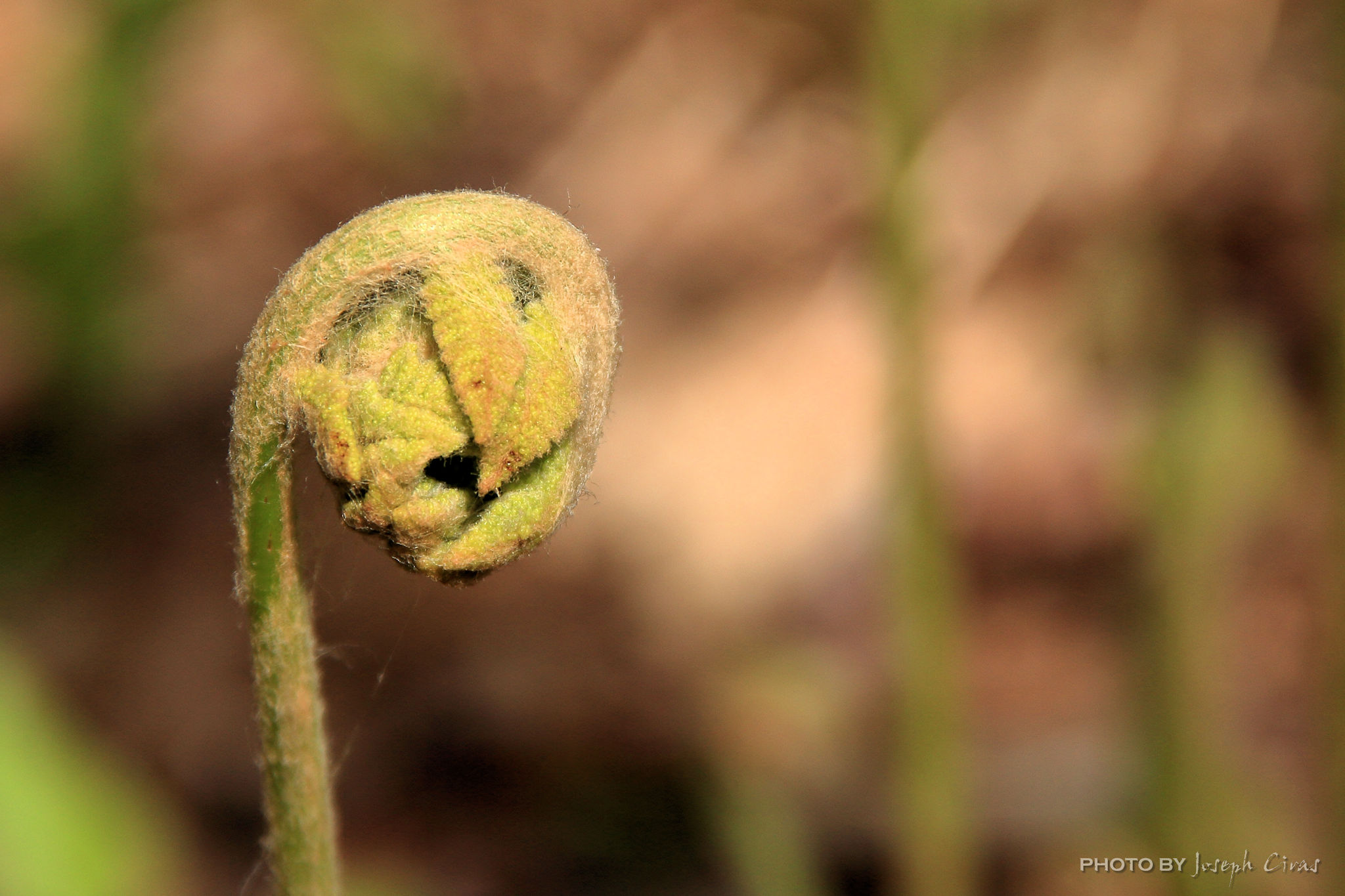
Fiddleheads grow around our property this time of year. If you were to look back at my photo history, you would see that photograph them every year. I have not ventured into eating one yet.
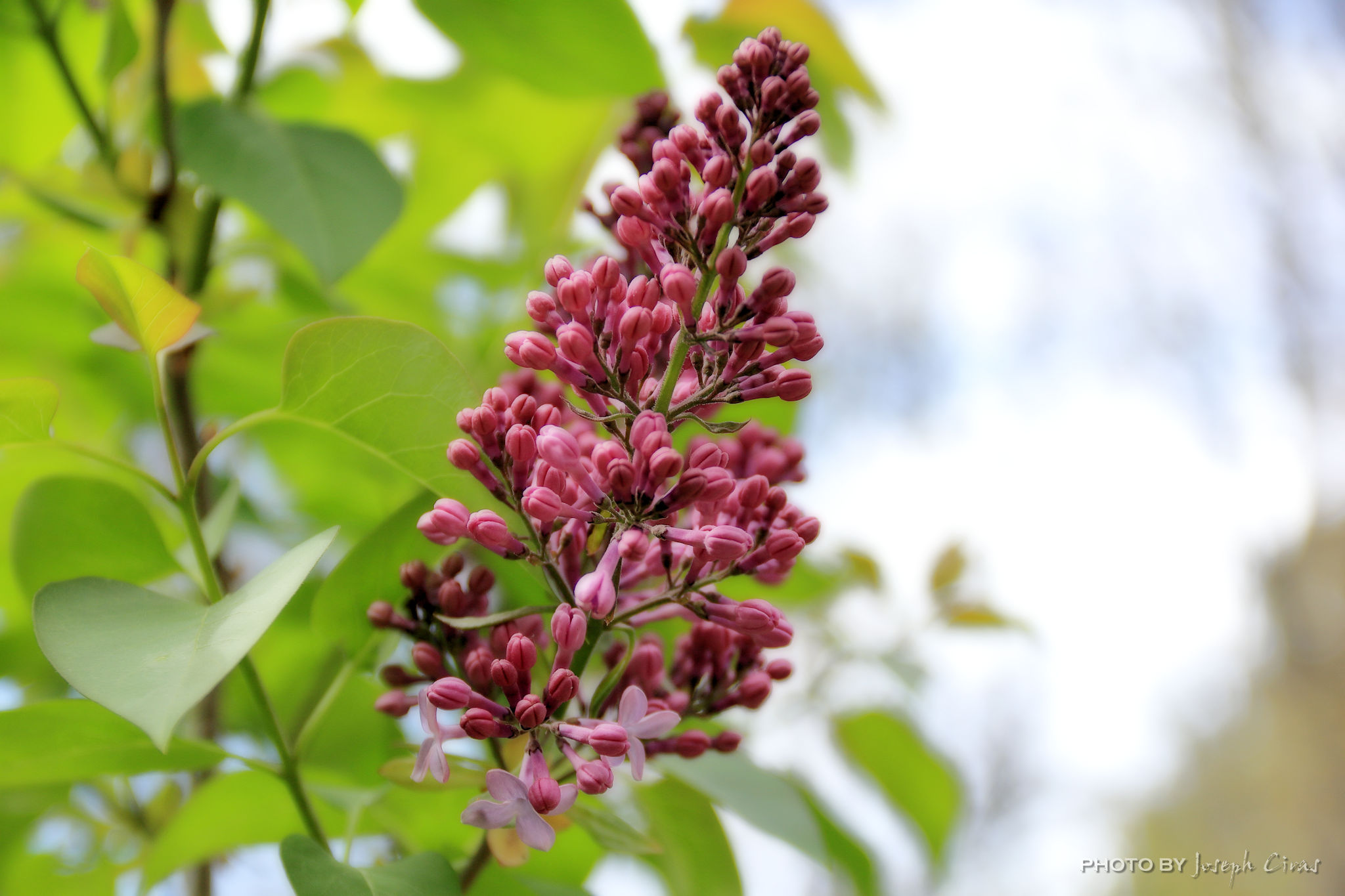
Wednesday, 05/12/2021: Posted photo — Lilac.
Settings: Canon EOS 60D, ISO 100, f/5, 1/250 s, 60 mm.
Lilacs are hardy, easy to grow, and low maintenance. They can grow from 5 to 15 feet tall, depending on the variety. The fragrant flowers are good for cutting and attractive to butterflies.
These lilacs are growing in our yard. The lilacs are growing on a plant that was transplanted from a friend’s house. They were moving and liked the plant. It was too big for their new location, so we split the plant. That was a few years ago and the plant is doing well.
Thursday, 05/13/2021: Posted photo — More Turkeys.
Settings: Canon EOS 60D, ISO 1250, f/5.6, 1/200 s, 135 mm.
Turkey, turkeys everywhere this year. This is the third time in just a couple of weeks when this rafter of turkeys has tried to stop me going to work. This was the first time the toms showed me their feathers.
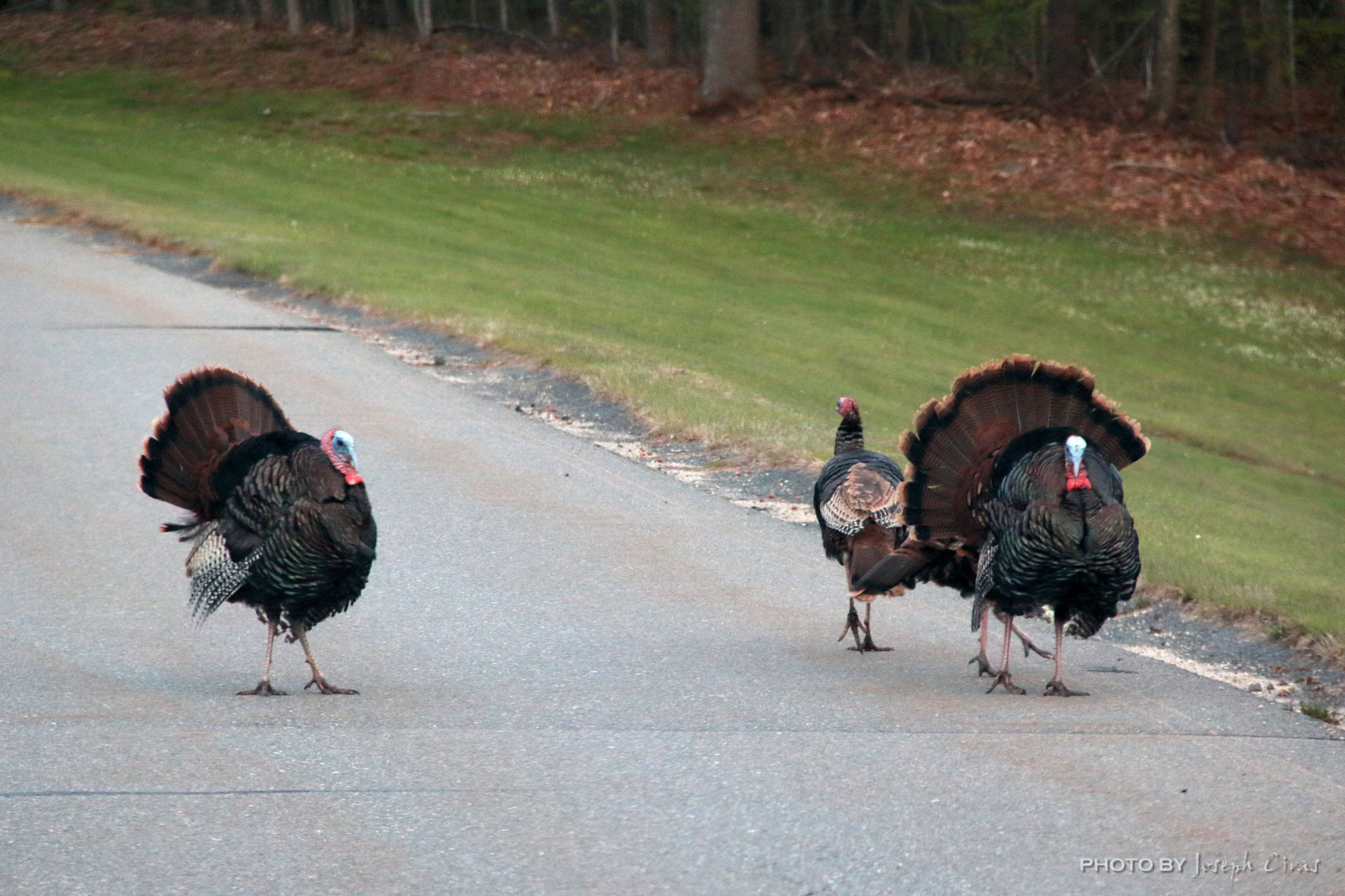
I had my “good” camera with me to take this photo through my windshield.
Friday, 05/14/2021: Post photo — Mesa Arch.
Settings: Canon EOS DIGITAL REBEL XS, ISO 200, f/11, 1/200 s, 48 mm.
Last week I posted a photo of the Milky Way from the Needles section of Canyonland National Park. Today I am posting a photo of the Mesa Arch from the Island in the Sky section of Canyonland National Park. I did not know that this arch was famous when I took this photo. I found out that photographers get up early to see the sunrise through the arch.
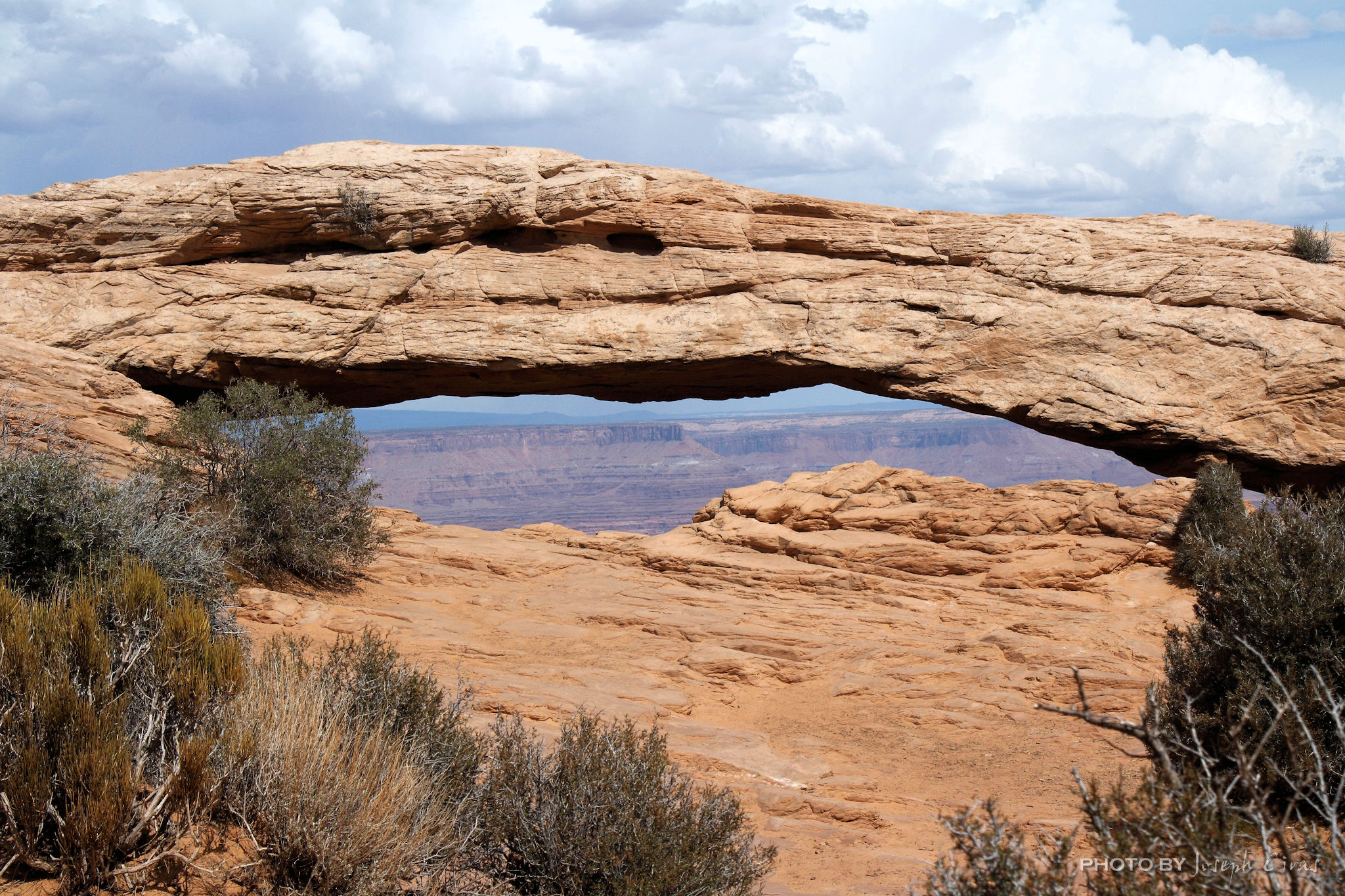
Mesa Arch is a spectacular stone arch perched at the edge of a cliff with vast views of canyons, rock spires, and the La Sal Mountains in the distance. Mesa Arch formed as surface water pooled and eventually eroded through bedrock at the mesa’s edge.
Saturday, 05/15/2021: Post photo — Azalea.
Settings: Samsung SM-G930V (Galaxy S7), ISO 50, f/1.7, 1/2808 s, 4 mm
Azaleas are flowering shrubs in the genus Rhododendron. Azaleas bloom in the spring, their flowers often lasting several weeks. Shade tolerant, they prefer living near or under trees.
We have two azalea shrubs in our yard, one read and one pink. The red on blooms first and then the pink one.

They are an easy subject to photograph when I need a quick photo.
That is all for now. Until next week, be safe.
For more photo of other project I have work, visit my website: https://photobyjosephciras.weebly.com/ or visit me on Facebook at https://www.facebook.com/PhotobyJosephCiras/.
COVID is real! Be safe out there, keep your social distance, and remember to always wear your mask and wash your hands.
 Photo by Joseph Ciras
Lovely pics! Great sharing!!
My pleasure.