Photographic Thoughts — 10/10/2021 to 10/16/2021

“Today everything exists to end in a photograph.” — Susan Sontag

Thank you for all the new views and likes from last week, it helps keep me inspired.

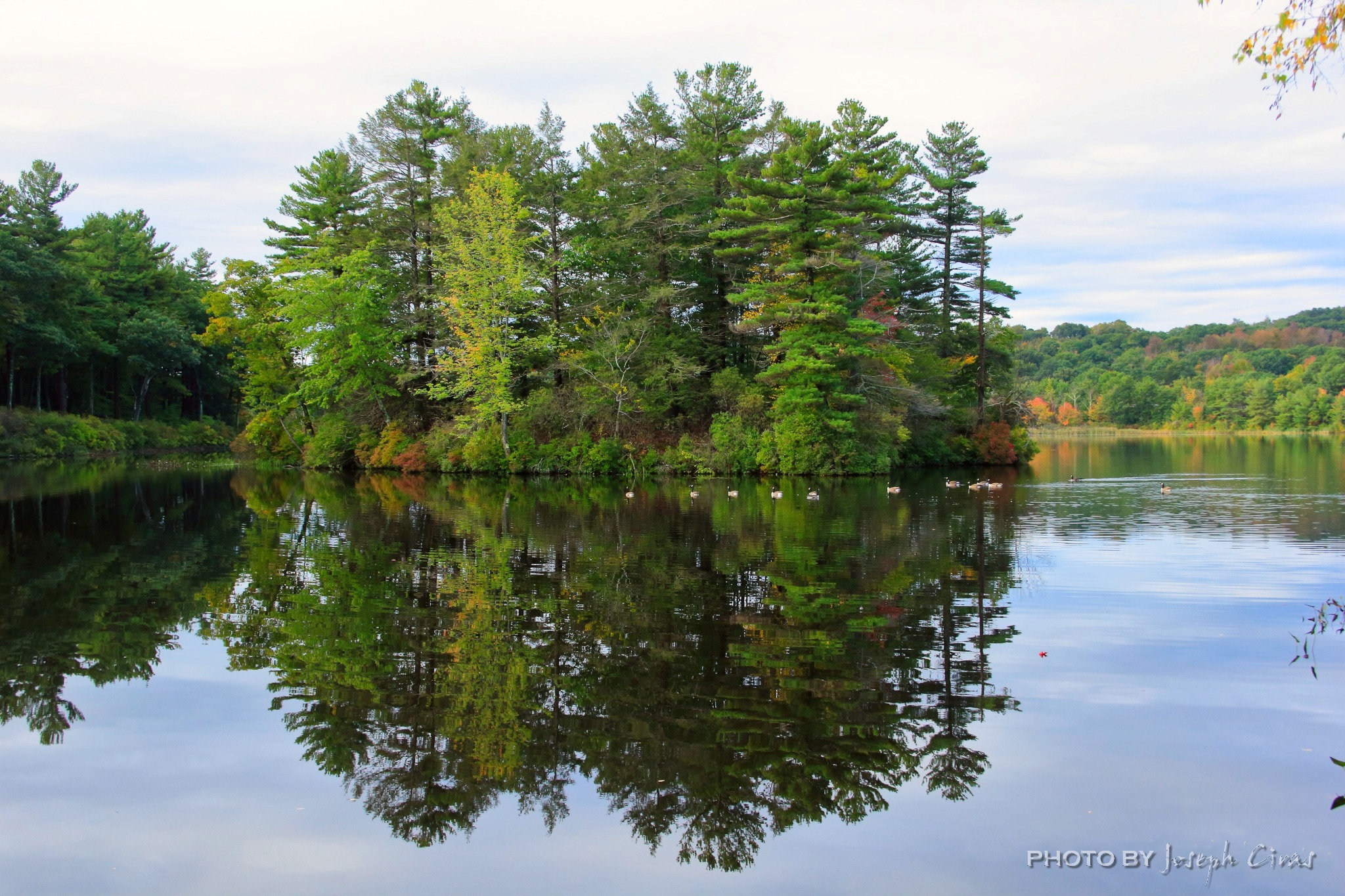
Sunday, 10/10/2021: Posted photo — Lakeside.

Settings: Canon EOS 60D, ISO 400, f/7.1, 1/125 s, 32 mm.

Today we took the dock out of the water at the cottage. The water was cold when first going into it, and then it did not feel so bad. We need to go into the water to lift part of the dock off its foundation to bring it in. Many years ago, the tires on the bottle of the support legs on the dock fell off so we manually need to lift the dock out of the water.
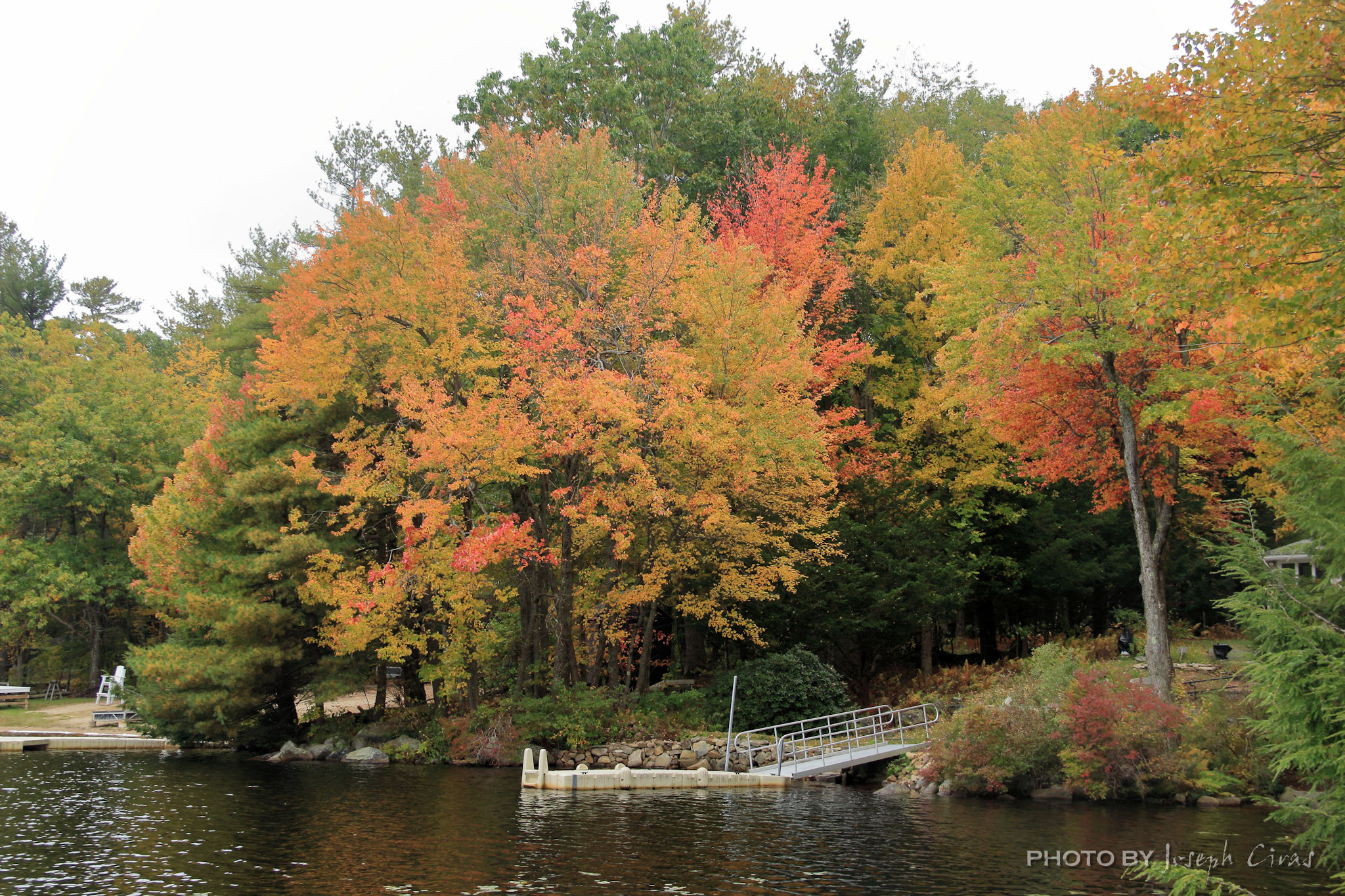
Before the dock was removed, I went out on it to enjoy the foliage from out in the water. I took this photo shortly before the dock was removed from the water.

The day is always a fun filled day with family and friends.

Monday, 10/11/2021: Posted photo — Trees in the Sun.

Settings: Canon EOS 60D, ISO 100, f/7.1, 1/125 s, 50 mm.
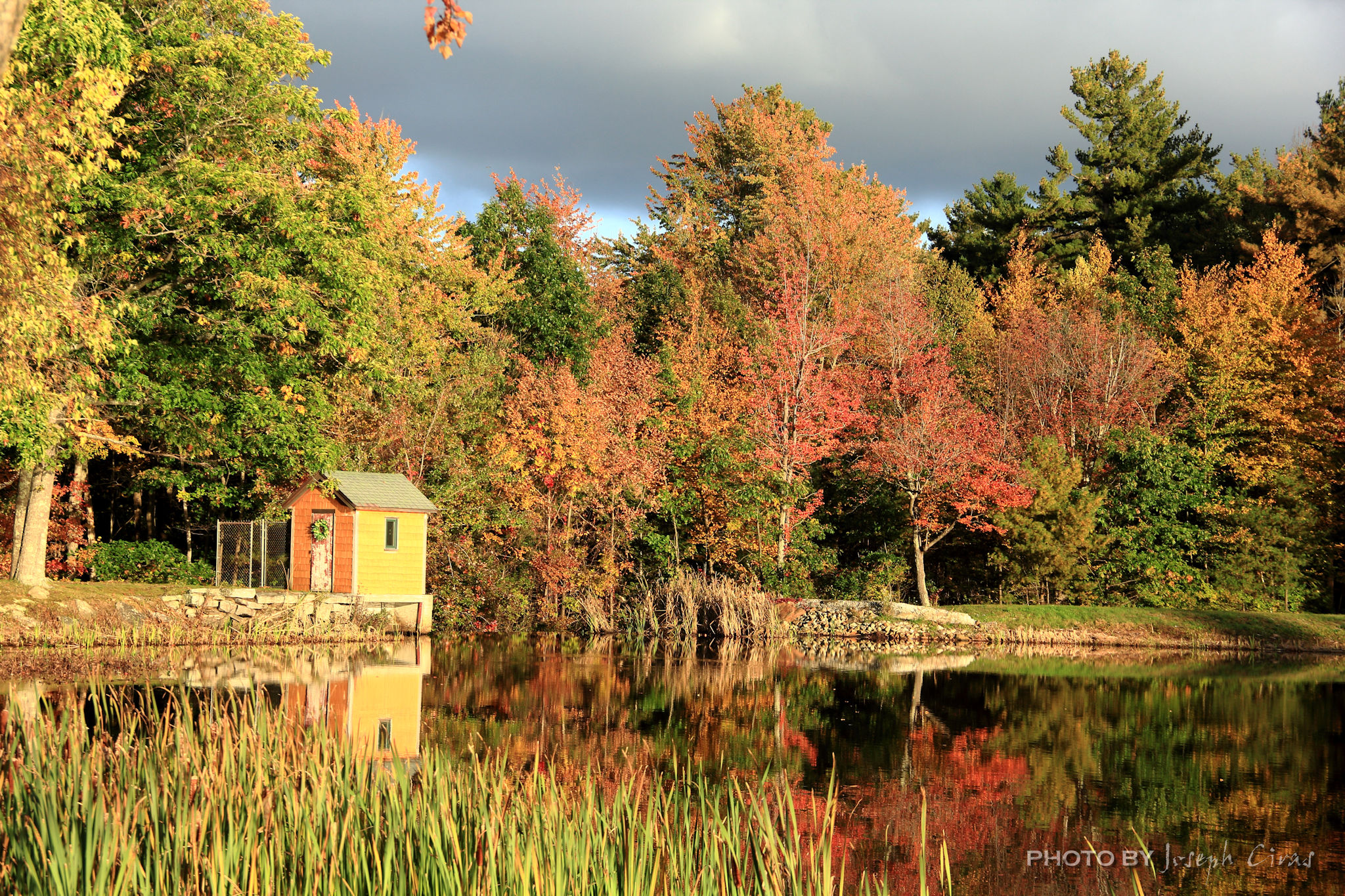
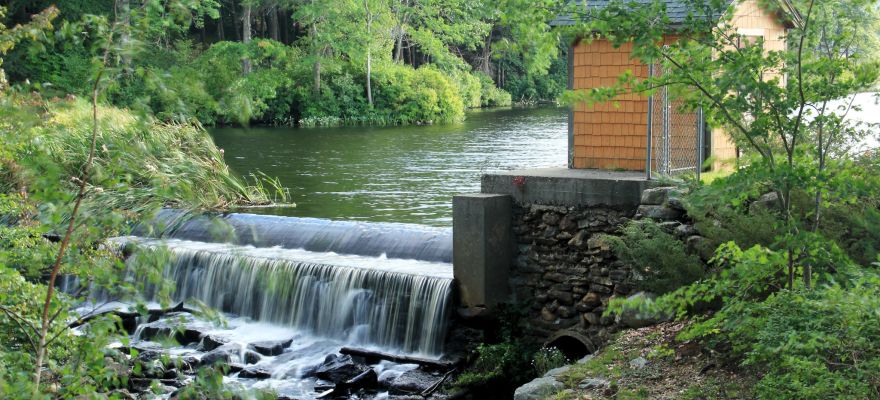
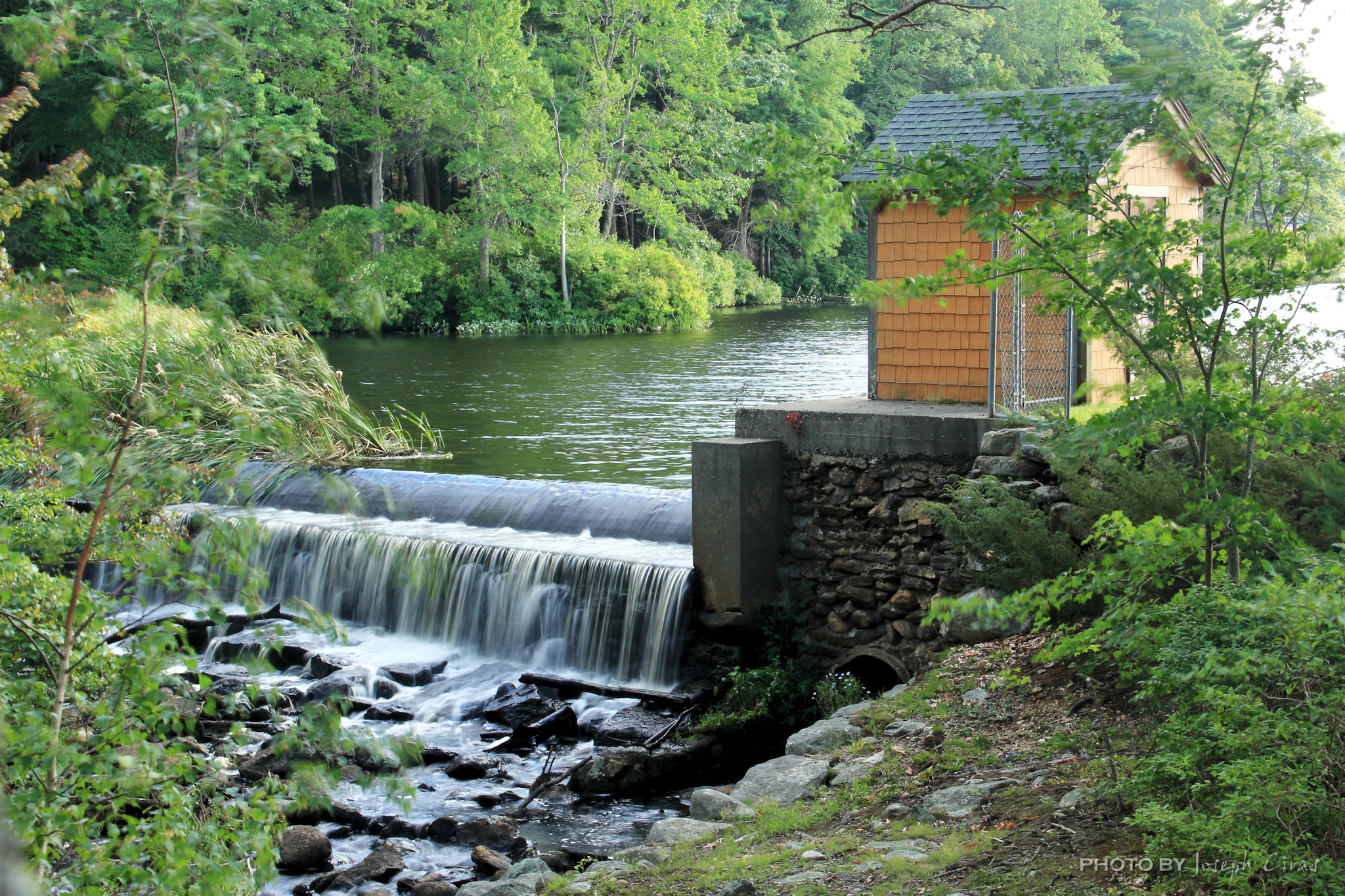
This is the backside, or inlet side, of the falls at Round Meadow Pond. You have seen a few photos of the water flowing over the dam since that is one of my favorite spots to photograph. I took this photo because of the bright colors of the foliage, and I liked the way the light was reflecting off the trees.

Tuesday, 10/12/2021: Posted photo — More Foliage.

Settings: Canon EOS 60D, ISO 100, f/7.1, 1/160 s, 50 mm.

Not much to say about this photo. The foliage is starting to get to peak in this area, so I am taking as many foliage photos as I can.

One thing I can say about this photo, and my other foliage photos, is that they look very bright. The histogram looks good for these photos, but the photos look bright when viewing on some screens. It might be because I use calibrate monitors to edit my photos and the other monitors are not calibrated.

Time to do some research into this issue. Maybe I should get one or two of them printed to see how the colors come out.

Wednesday, 10/13/2021: Posted photo — Morning Dew.

Settings: Canon EOS 60D, ISO 100, f/7.1, 1/250 s, 72 mm.

I was going to post another foliage photos today but decided to post a photo of the morning dew. This photo was meant to show the dew and to break up my trend of foliage photos. Too much of a good thing is not always good.
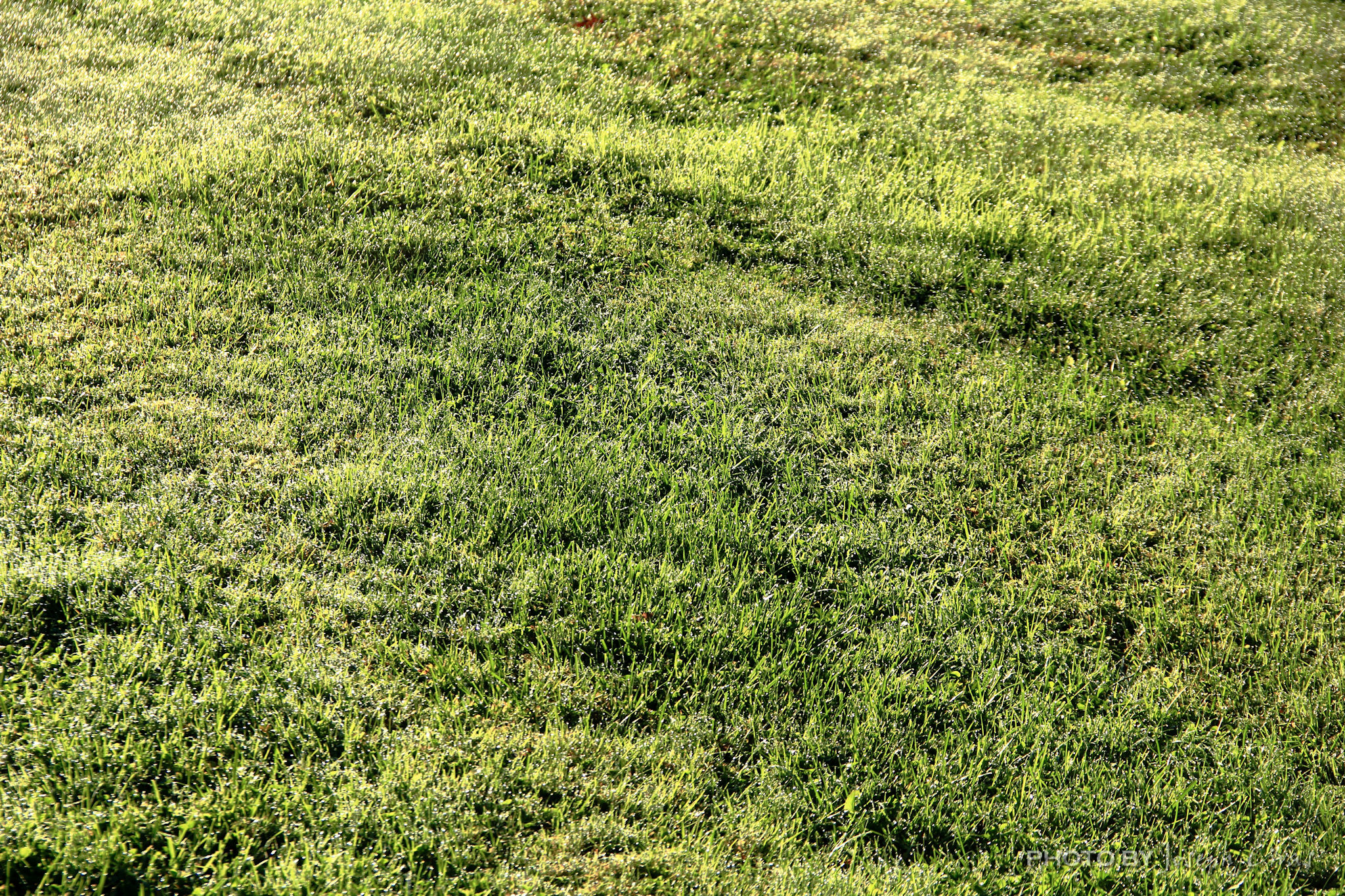
I attempted to capture the light off the dew on the grass. Please leave a comment to let me know how well I captured the light and to give me some tips to improve.

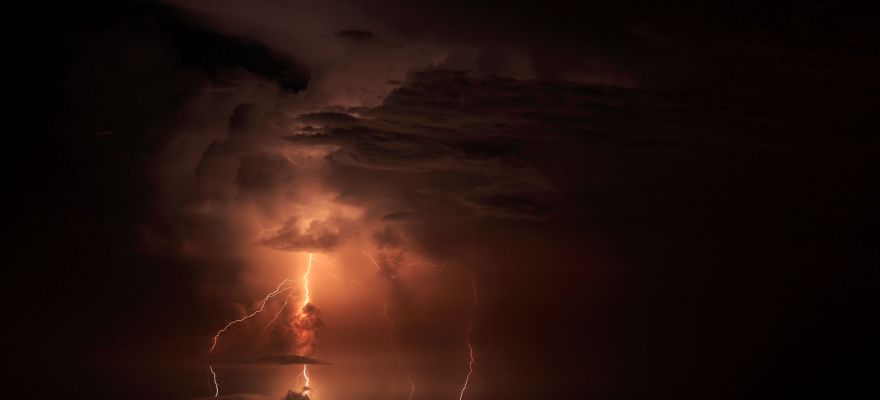
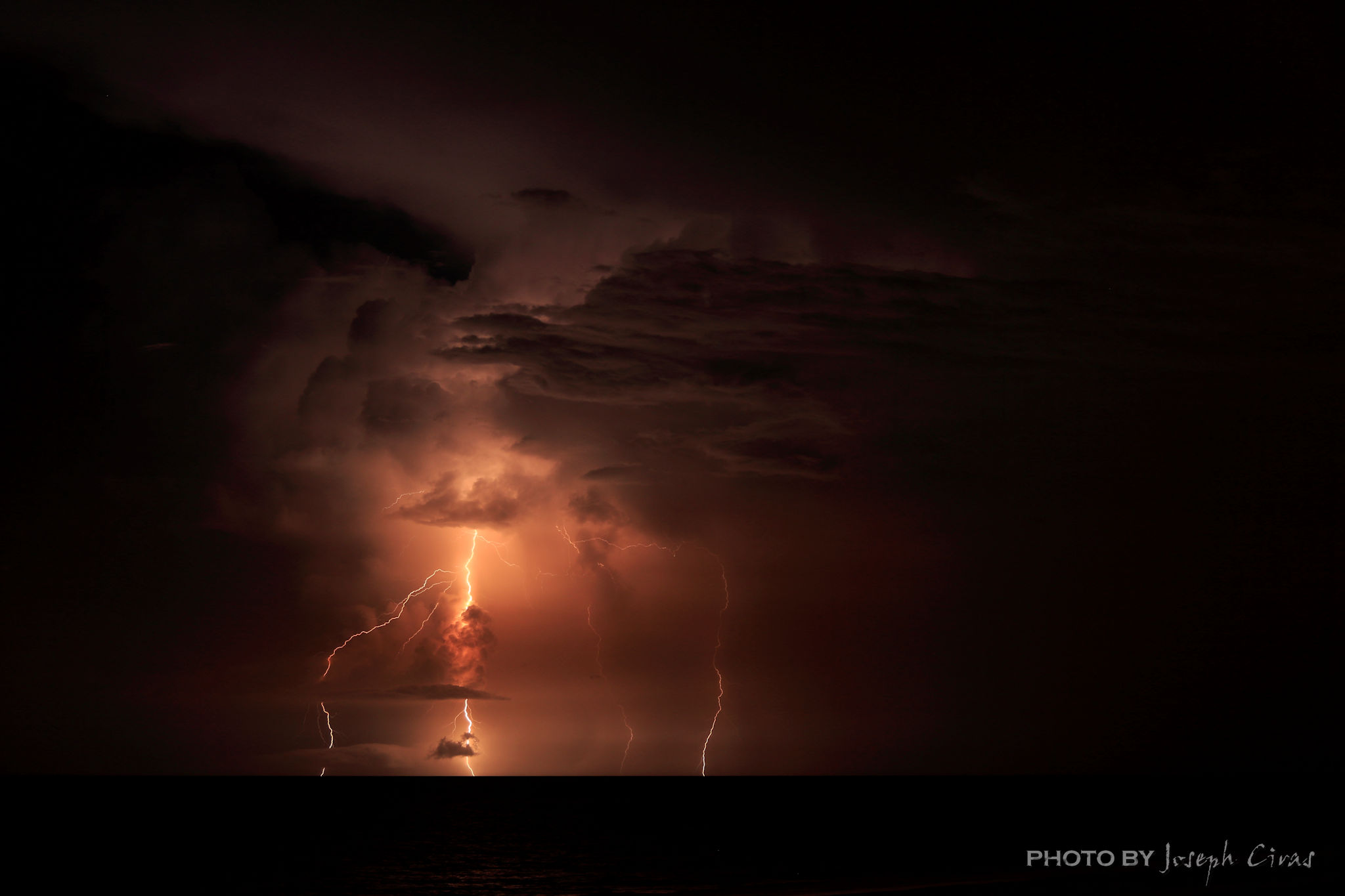
Thursday, 10/14/2021: Posted photo — Lightning at Sea.

Settings: Canon EOS 60D, ISO 100, f/5.6, 15 s, 48 mm.

15 second exposure looking out to see in Jacksonville Beach, FL a few years ago.

During a past vacation, my family rented a condominium on Jacksonville Beach. My wife has relatives that live in both Jacksonville Beach and Neptune Beach, so we travel to the area relatively often. Most of the time we rent a house or condo not on the beach.

A common occurrence in Florida is a storm out to sea at night. It is such a great sight to see the lightning in the distance. On this night, I decided to put my camera on my tripod, set the exposure time to 15 seconds, to capture the storm. After looking at the photos, my only regret was that I did not leave my shutter open for 30 seconds.

There will always be another trip back to the beach.
Here are a few camera settings for photographing daytime and nighttime lightning that I have picked up over the years:

Camera settings tips for photographing daytime lightning photos:

  • Set up camera on a sturdy tripod.
  • Turn off any image stabilization you might have. If image stabilization is on, the camera will think it is moving when the shutter engages, even though there is not camera movement.
  • Focus camera lens on infinity or on an object in the distance.
  • Set the aperture of the lens to f/16 or smaller. This will close the iris inside the lens, allowing a longer shutter speed to be used.
  • Set ISO to lowest it will go, for example use ISO 100.
  • Take a test exposure using the slowest shutter speed allowed to see if the image is exposed correctly and your focus is correct.
  • Set your camera on manual or bulb.
  • Use a remote timer/intervalometer to fire the shutter continuously.

Here is an example of a daytime lightning photo. This photo was handheld since the storm arrived quickly. For your information, we did not hike down into the Grand Canyon that day.

Camera settings for photographing night-time lightning

  • Set up camera on a sturdy tripod.
  • Turn off any image stabilization you might have. If image stabilization is on, the camera will think it is moving when the shutter engages, even though there is not camera movement.
  • Focus camera lens on infinity or on an object in the distance.
  • Set the aperture of the lens to a medium value, such as f/5.6 or f/8. This will allow a longer shutter speed by bringing in more light and improve image quality at the same time by allowing the use of a lower ISO value.
  • Set ISO to lowest it will go, for example set your is to ISO 100. You may have to increase your ISO to ISO 200–ISO 400 depending on the lighting in the area. I prefer my ISO set at ISO 100 for all my lightning shots.
  • Set your camera on manual or bulb.
  • Set the shutter speed to between 5 and 20 seconds. You can set it up to 30 seconds if you are in a dark area.
  • Take a test shot to see if the scene is exposed correctly, remembering that if a strike does happen in the field of view it could light up the scene considerably, depending on how big the strike looks in the photo.
  • Use a remote timer/intervalometer to fire the shutter continuously.

Friday, 10/15/2021: Post photo — Clouds.

Settings: Canon EOS 60D, ISO 200, f/7.1, 1/1250 s, 37 mm.

Today I am posting a photo of a cloud. I took many photos today, but this one was the only one that I liked.

Saturday, 10/16/2021: Post photo — Aster.

Settings: Canon EOS 60D, ISO 200, f/5.6, 1/320 s, 106 mm.

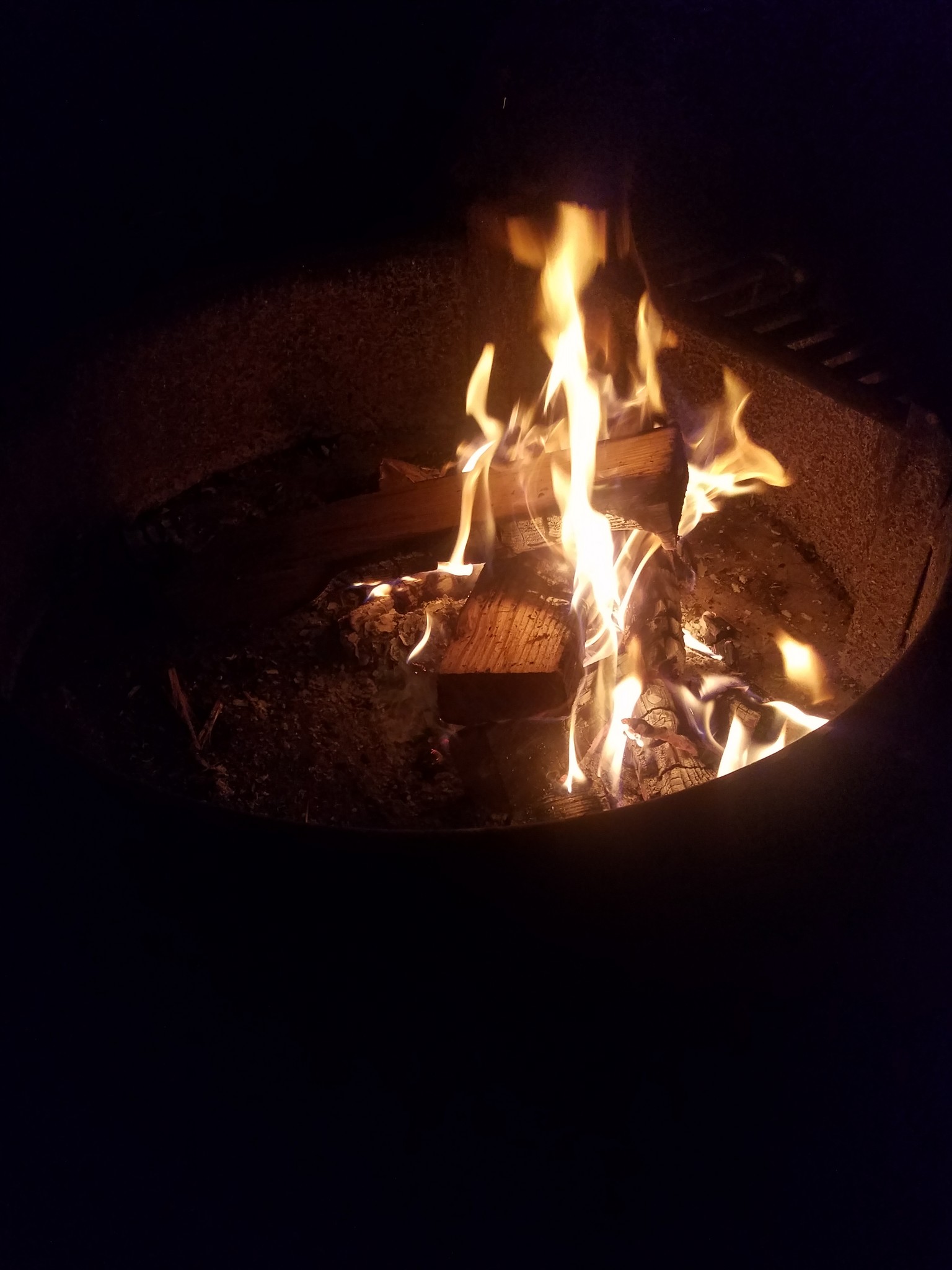
I went to my mother’s house today to make sure everything was fine at the house. I also collected some of the wood from the tree that fell on her house about a year ago to bring home to burn. Earlier in the day, I took photos at Leominster State Forest. I went hiking at Leominster State Forest last night and went back today to get some more photos. I will be posting the photos I took in this blog for you to see what I did not post for my 365 project.
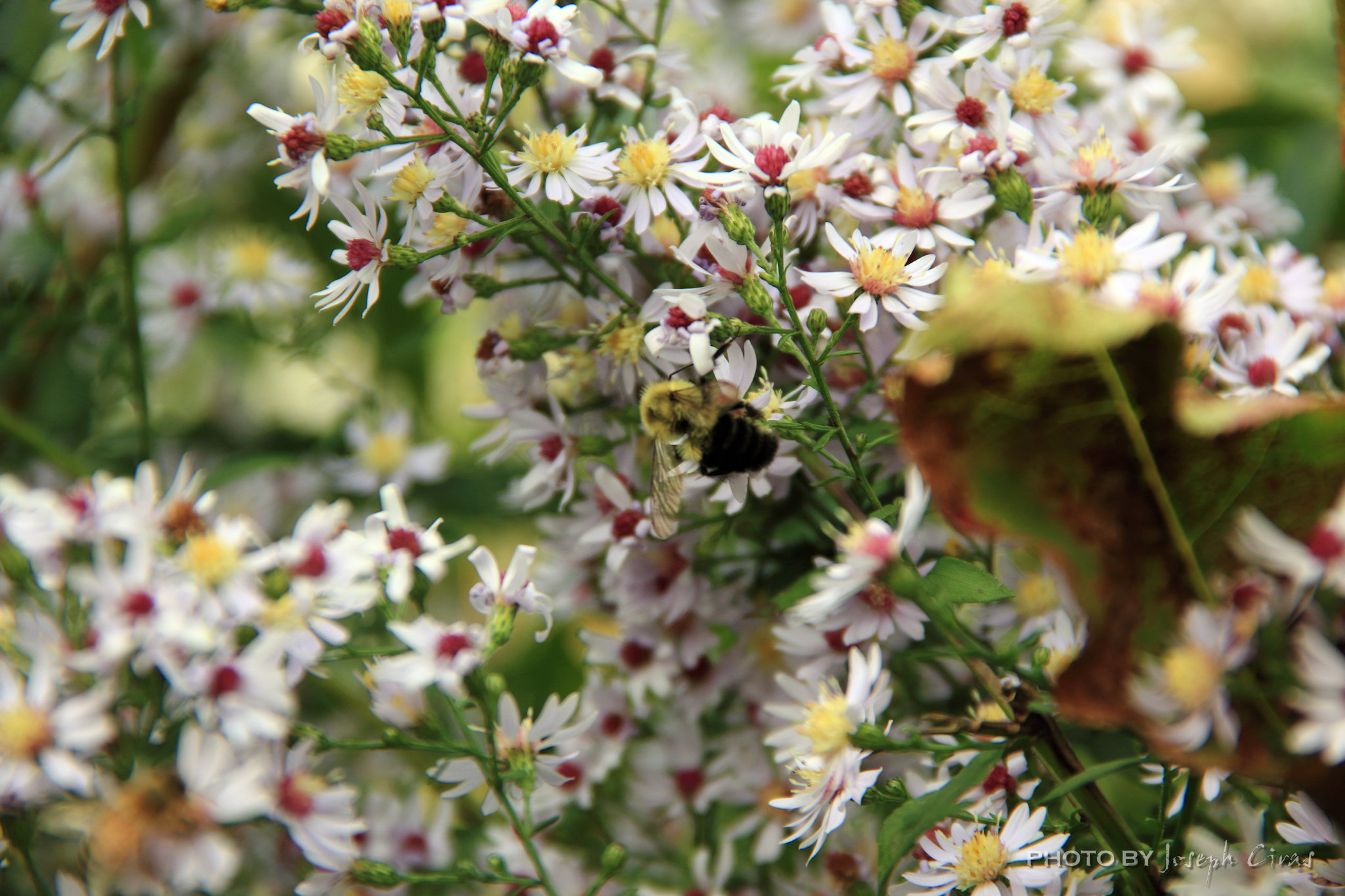
When I was at her house, I noticed a lot of asters. I also saw that there was an abundant number of bees flying around the asters. What a great photo opportunity. The aster flowers (Aster spp.) add color to the autumn landscape while offering beauty with little work when caring for asters.

That is all for now. Until next week, be safe.

For more photo of other project I have work, visit my website: https://photobyjosephciras.weebly.com/ or visit me on Facebook at https://www.facebook.com/PhotobyJosephCiras/.

Photographic Thoughts — 10/03/2021 to 10/09/2021

“I never have taken a picture I’ve intended. They’re always better or worse.” — Diane Arbus

Thank you for all the new views and likes from last week, it helps keep me inspired.

Sunday, 10/03/2021: Posted photo — Reflection in the Fog.

Settings: Canon EOS 60D, ISO 400, f/7.1, 1/80 s, 113 mm.

Driving into church this morning, I notice fog off the lakes in the area. The location of this photo is one in which I take many practice photos. It is a difficult location to take a photo since I needed to stop on the edge of a busy road.

My initial thought on this photo was to get a picture of the mist rising from the surface of the lake with the foliage behind it. When I arrived at this location, the mist was thicker than I would like. I did see the reflections of the trees on the water and thought that that would take a good photo.

Monday, 10/04/2021: Posted photo — Western Tanager.

Settings: Canon EOS DIGITAL REBEL XS, ISO 200, f/6.3, 1/320 s, 300 mm.

Fact from All About Birds: “The oldest Western Tanager on record—a male originally banded in Nevada in 1965—had lived at least 6 years and 11 months by the time he was recaptured and rereleased during banding operations in Oregon in 1971.”

We were walking the north rim at Grand Canyon National Park when I spotted this male Western Tanager in a conifer tree. The color contrast between the bird and the tree caught my eye.

The range of the Western Tanger is the western parts for the United States, Canada, and Mexico.

Again, from All About Birds: “A clear look at a male Western Tanager is like looking at a flame: an orange-red head, brilliant yellow body, and coal-black wings, back and tail. Females and immatures are a somewhat dimmer yellow-green and blackish. These birds live in open woods all over the West, particularly among evergreens, where they often stay hidden in the canopy. Nevertheless, they’re a quintessential woodland denizen in summertime, where they fill the woods with their short, burry song and low, chuckling call notes.” (https://www.allaboutbirds.org/guide/Western_Tanager/overview)

Tuesday, 10/05/2021: Posted photo — The Gathering.

Settings: Canon EOS 60D, ISO 3200, f/7.1, 1/100 s, 135 mm.

On my way home from work today I saw this rafter of turkey. I have seen them many times before on the property and did not feel the need to photograph them. Today was different.

When I was approaching them today, it looked like it was a group of workers getting ready to clock out of work and were planning what they were going to do tonight. Just the way they were gather in pairs and it looked like they were talking to each other.

Also, I thought it would be a good picture to take.

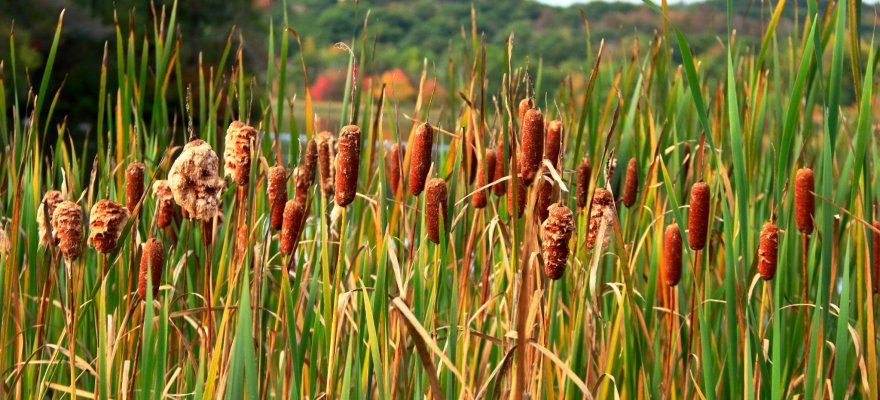
Wednesday, 10/06/2021: Posted photo — Cattails.

Settings: Canon EOS 60D, ISO 800, f/5, 1/800 s, 52 mm.

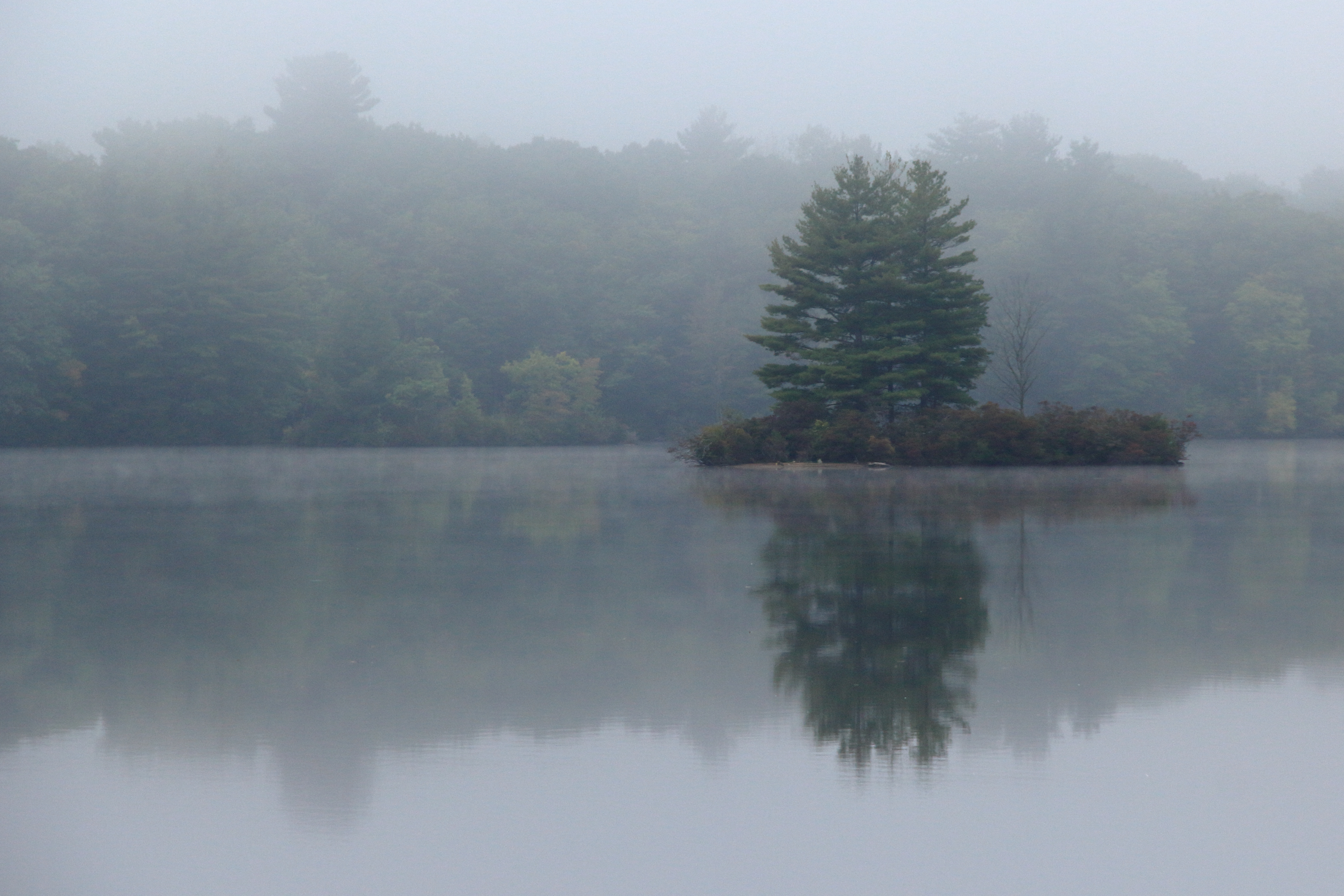
I had a choice of photos to post today — a photo of an island or a photo of cattails. I decided on the cattails for the photo to put in my 365 project because I liked it just a little bit better than the photo of the island. I will be posting both in this blog for you to compare.

Cattails are a type of aquatic plant, approximately 5-10 feet tall. These plants have long, slender, branchless, and upward-growing leaves and a distinguishable brown, cylindrical flowering head at their apex. The grow around ponds and other wetland areas.

What is the difference between a pond and a lake? Here is something I found in my research: “To help determine the difference, both the depth and surface area must be considered. Lakes are normally much deeper than ponds and have a larger surface area. All the water in a pond is in the photic zone, meaning ponds are shallow enough to allow sunlight to reach the bottom. This causes plants (sometimes too many) to grow at the bottom of ponds as well as on their surface. However, sunlight can’t reach the bottom of all areas of lakes. Lakes have aphotic zones, which are deep areas of water that receive no sunlight, preventing plants from growing.” (https://lakes.grace.edu/ponds-vs-lakes-whats-the-difference/)

I took the cattail photo with a shallow depth of field (DOF) to blur the background and the make the cattails “pop”. As you can tell by this photo, the cattails are starting to spread their seeds.

Here is the photo of the island that I took and did not like as much as the cattail photo.

Thursday, 10/07/2021: Posted photo — Sunset Through Trees.

Settings: Canon EOS 60D, ISO 100, f/5.6, 1/160 s, 100 mm.

After a week and a half, I was back on the hiking trail today. It felt good to get back. I hiked 4.3 miles on Wachusett Mountain after work with some colleagues. I took a series of photos along the way to determine what one to post. I decided on this sunset photo. I had another sunset photo that I took from the summit, but I accidently deleted it. Rookie mistake.

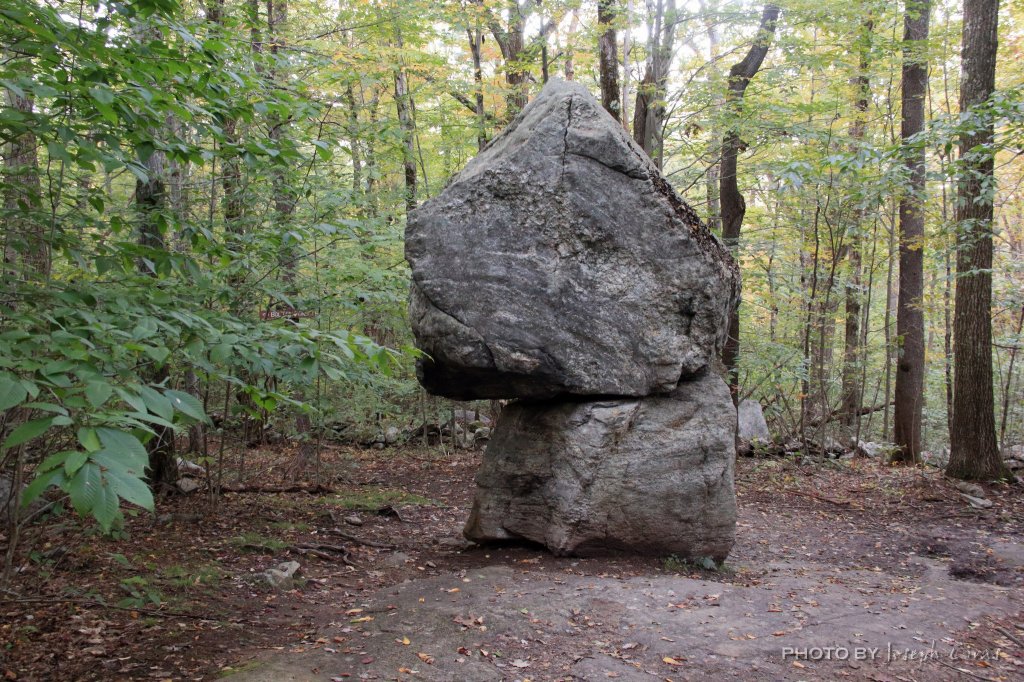
The other choices of photos were a glacial erratic called Balanced Rock or a burl on a tree at a trail junction. Just a reminder that a glacial erratic is glacially deposited rock differing from the size and type of rock native to the area in which it rests. And a burl is a strange-looking collection of tree cells, which are called callus tissue. Normally, callus tissue is formed by a tree in response to an environmental injury such as a pruning cut, disease, or insect damage. If you have a piece of wooden furniture, such as an end table, it was most likely made with a burl.

These are the photos that I did not post for my 365 project.
Friday, 10/08/2021: Post photo — Pareidolia.

Settings: Canon EOS 60D, ISO 100, f/10, 1/250 s, 21 mm.

Pareidolia is the defined by Merriam-Webster as the tendency to perceive a specific, often meaningful image in a random or ambiguous visual pattern. I have posted about this tendency in the past.

Today I am posting a photo of a cloud. I see a couple items in this photo. I see an opera singer hitting a high note and I also see a ships figurehead. It is amazing how one can see an object when one is not there.

What to you see? Do you see what I see, due to the power of suggestion, or do you see something else. Please respond in the comment section.

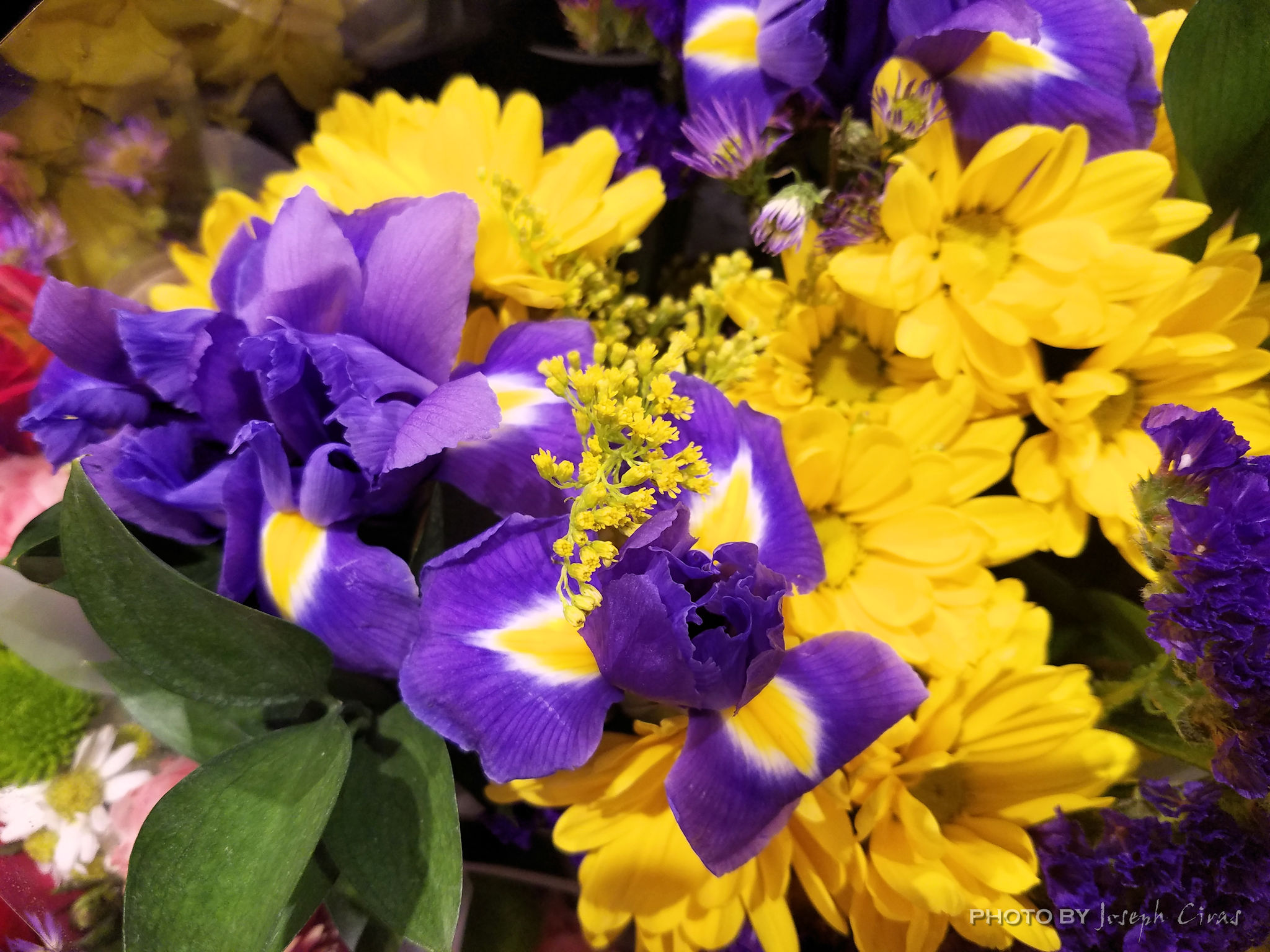
Saturday, 10/09/2021: Post photo — Iris Bouquet.

Settings: Samsung SM-G930V (Galaxy S7), ISO 100, f/1.7, 1/60 s, 4 mm

From The Old Farmer’s Almanac: “The tall, beautiful iris, named after the Greek goddess who rode rainbows, comes in many magical colors. Despite its divine origins, this June bloomer is rugged, reliable, and easy to grow. Learn all about planting, growing, and caring for iris flowers.” (https://www.almanac.com/plant/irises)

Today was a shopping day from me. Saw this iris bouquet in one of the stores that I shopped. I like the colors.

Saturday’s posts are normally short because of the time between I take the photo and the time that I post my blog.

That is all for now. Until next week, be safe.

For more photo of other project I have work, visit my website: https://photobyjosephciras.weebly.com/ or visit me on Facebook at https://www.facebook.com/PhotobyJosephCiras/.
Photographic Thoughts — 09/05/2021 to 09/11/2021

“Beauty can be seen in all things, seeing and composing the beauty is what separates the snapshot from the photograph.” — Matt Hardy

Thank you for all the new views and likes from last week, it helps keep me inspired.

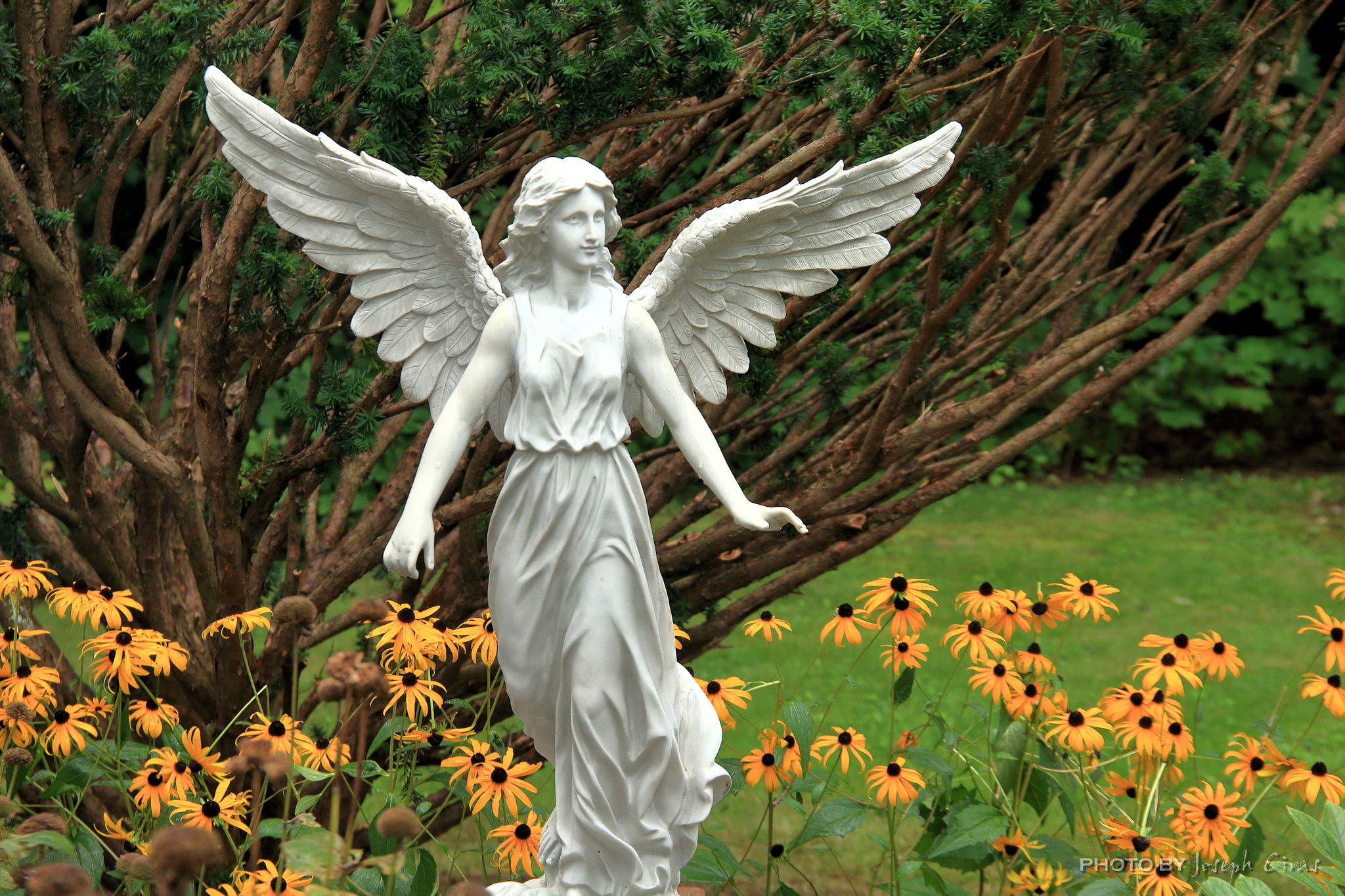
Sunday, 09/05/2021: Posted photo — Angel.

Settings: Canon EOS 60D, ISO 200, f/7.1, 1/100 s, 67 mm.

This is a statue in the flower garden near the rectory of the church I attend. I have never noticed this angel before, so the new priest could have put it in. It is a welcome addition to the grounds.

I like the black-eye Susan’s that blanket the statue making the statue stand out.

Monday, 09/06/2021: Posted photo — Playthings.

Settings: Canon EOS 60D, ISO 200, f/7.1, 1/60 s, 24 mm.

Today is a holiday, Labor Day. Labor Day is an annual celebration of workers and their achievements, originated during one of American labor history’s most dismal chapters. “In the wake of this massive unrest and to repair ties with American workers, Congress passed an act making Labor Day a legal holiday in the District of Columbia and the territories. On June 28, 1894, President Grover Cleveland signed it into law.” according to the History Channel.

Even though today is a holiday, I still planned on going on my Monday night hike. My in-laws called me and wanted to know if I wanted to go to the cottage to visit and to have some food. I only had a couple of hours between the call and the hike, so I went over. I noticed a new picnic table for my grandniece and liked the color contrast with the wet ground. The slide in this photo was in the water for many years, until she wanted to play on it. We took it out of the water and cleaned it the best that we could for her to play on.

Tuesday, 09/07/2021: Posted photo — Cannon.

Settings: Canon EOS 60D, ISO 100, f/7.1, 1/125 s, 25mm.

This cannon at the Westminster town common. The plaque states: “Dedicated to the memory of all the men and women from Westminster who have served their country in time of war and peace.” This cannon is not on display year-round.

I ran a few errands today and drove by town common on the way back looking for something to photograph. I saw the cannon and took this photo. The town common is being cleaned up with old trees being removed and new trees being planted.

Wednesday, 09/08/2021: Posted photo — Handheld Falls.

Settings: Canon EOS 60D, ISO 100, f/20, 1/4 s, 36 mm.

It was getting late today, and I was trying to decide what to photograph today. As I have stated many times in my blogs, I take photos of items during the day and decide later what photo to post. When I drove by one of my favorite locations to photograph, I wanted to test out how steady my hand can be. I practice long exposure photography a few times a month. During some of my hikes, I see flowing water and need to practice holding still while taking photos.

I did take many other photos today and liked this one the best. This is one of my favorite spots to photograph and it is one of the favorite locations for people looking at my photos.

Thursday, 09/09/2021: Posted photo — That Time of Year.

Settings: Canon EOS 60D, ISO 400, f/7.1, 1/15 s, 135 mm.

Some trees are changing, some trees are not changing. Our sugar maple is one of the first trees on our property to change colors in the fall. Because of changes in the length of daylight and changes in temperature, leaves stop their food-making process. The chlorophyll breaks down, the green color disappears, and the yellow to orange colors become visible.

Friday, 09/10/2021: Post photo — Red-Tailed Hawk.

Settings: Canon EOS 60D, ISO 800, f/5.6, 1/800 s, 135 mm.

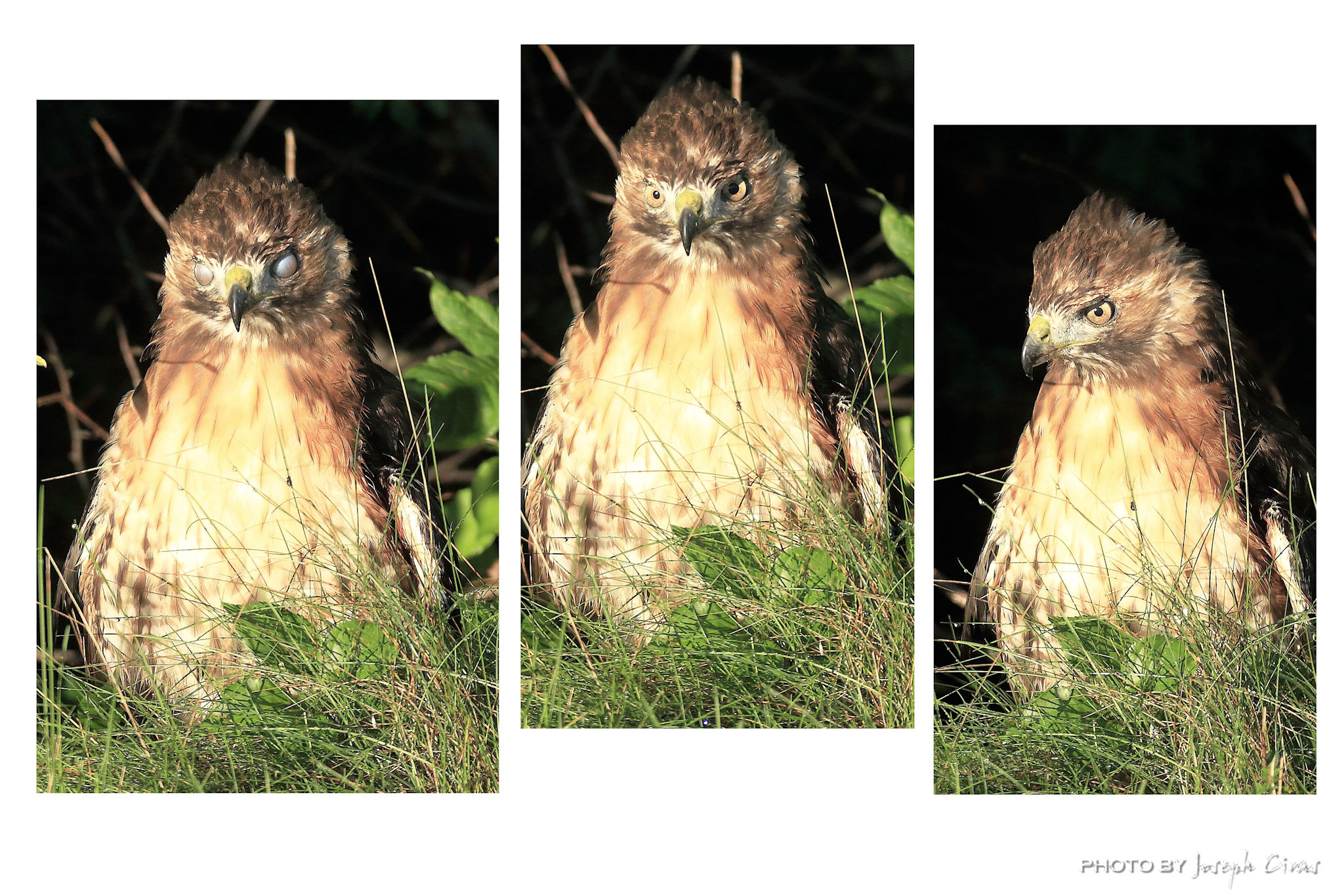
This morning this red-tailed hawk was spotted on campus at work. First, we thought it was a rabbit and then an owl. I took my camera out to get a closer look at it and to photograph it. I was surprised to see that it was a red-tailed hawk. The hawk did not move from its position and allowed me to walk very close to it. I kept my eyes open and was very alert that the mother of this hawk could have been around, and I did not want to be attacked by her. It did not look like it was injured but it stayed in the same location for over an hour. Someone saw it walk across the lawn so I could have been injured.

I took many photos if it and like these the best. I did not know what one to post so I made a collage out of them to post as one photo. I liked the look of the closed eyes showing its eyelids and I like the profile of the hawk.

Saturday, 09/11/2021: Post photo — Flags on the 48.

Settings: Canon EOS 60D, ISO 800, f/7.1, 1/500 s, 18 mm.

Not much room on Mount Willey for a group photo. Here is the group squeezed into the overlook for a photo. This hike was for the annual Flags on the 48 event.

“We in the hiking community continue to honor the deceased with a tribute: flying the American flag atop all 48 four-thousand foot and higher mountains in New Hampshire on the Saturday closest to September 11. By demonstrating our steadfast unity in this challenging endeavor, we also hope to express our unwavering support to the families, friends, and communities whose losses are beyond comprehension and whose suffering we remember in our hearts.” — Flags on the 48 website.

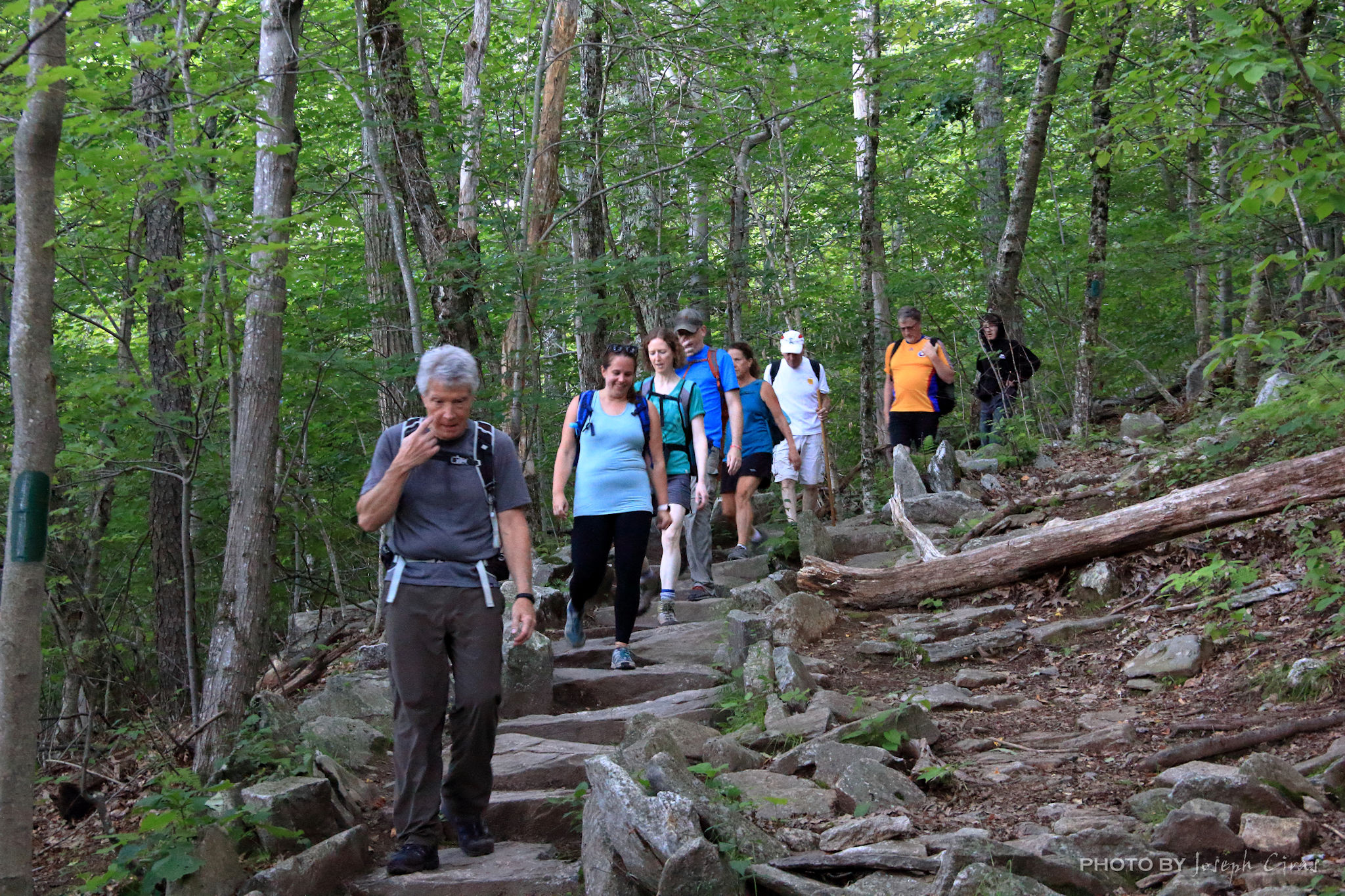
I have been doing the Flags for the last 10 years mostly with the same core of people. There are two of us that have been doing if for all 10 years with various other people joining us. Out of all the people in this photo, nine of them have been hiking with us for several years. This group has not done the same peak twice.

A member of our group does a great tribute to all that passed away from that day 20 years ago to the day of the hike. The names are placed at the base of our flag.

Thank you again for having faith and my abilities. Now I need to go through the photo and pick some out.

That is all for now. Until next week, be safe.

For more photo of other project I have work, visit my website: https://photobyjosephciras.weebly.com/ or visit me on Facebook at https://www.facebook.com/PhotobyJosephCiras/.

COVID is real! Be safe out there, keep your social distance, and remember to always wear your mask and wash your hands. Get your vaccine!

Photographic Thoughts — 08/29/2021 to 09/04/2021

“A good photograph is one that communicates a fact, touches the heart and leaves the viewer a changed person for having seen it. It is, in a word, effective.” — Irving Penn

Thank you for all the new views and likes from last week, it helps keep me inspired.

Sunday, 08/29/2021: Posted photo — Hobblebush.

Settings: Samsung SM-G930V (Galaxy S7), ISO 125, f/1.7, 1/60 s, 4 mm

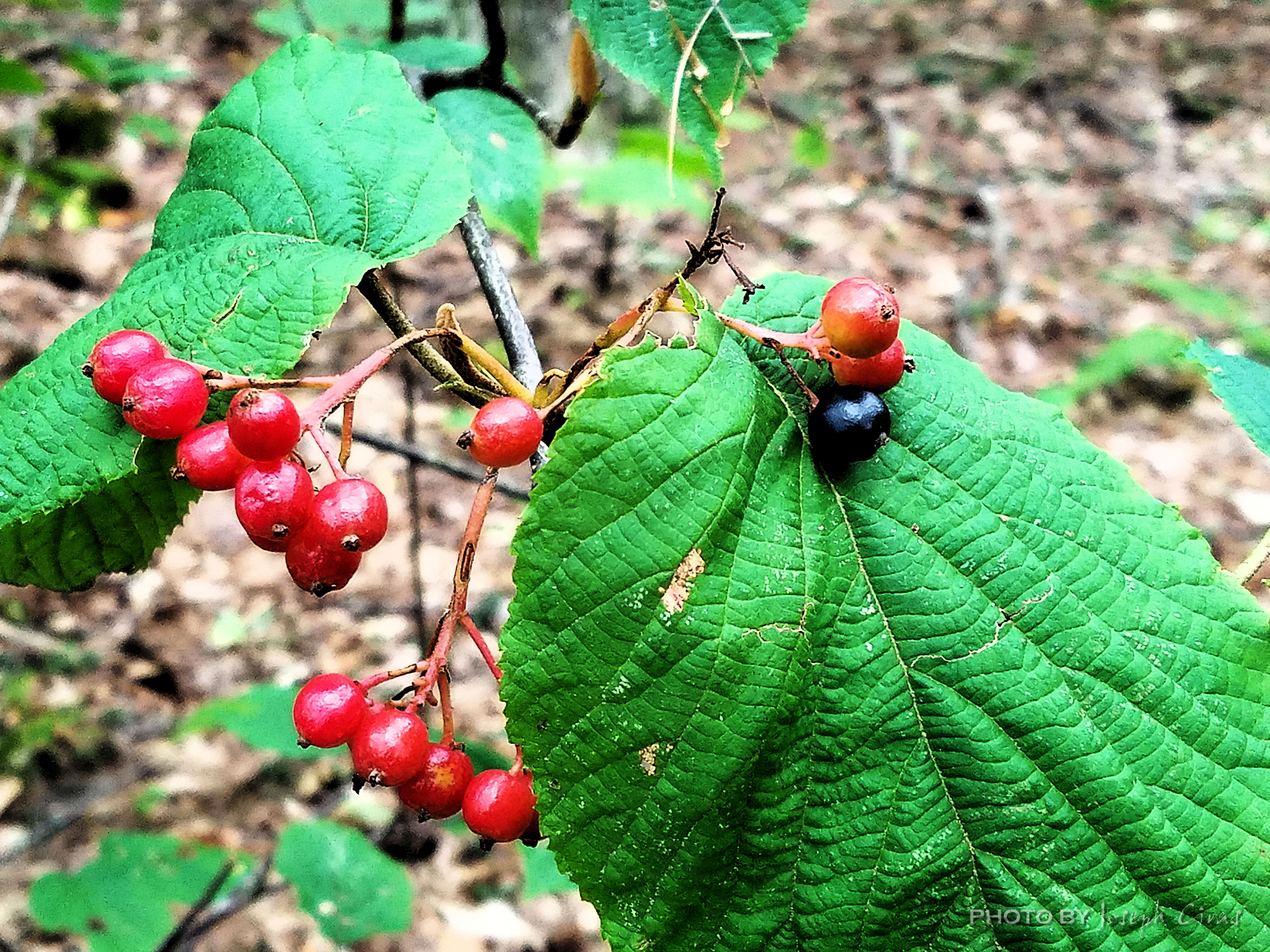
“The fruit of the Hobblebush reportedly may be eaten raw or cooked and is said to taste somewhat like raisins or dates. Hobblebush has a number of medicinal uses. The Algonquin Indians reportedly rubbed its mashed leaves on the head to treat migraines. Iroquois Indians are said to-have used a decoction of roots as a blood medicine. The plant was also used to treat chest and breathing problems.” — Adirondacks Forever Wild website.

Hobblebush on Wachusett Mountain

These Hobblebush berries are growing on Wachusett Mountain. I took this photo during a hike I took today. I have seen them during my weekly hikes and thought that they would look good in a photo. I was glad to see that one of the berries had turned blue.

Monday, 08/30/2021: Posted photo — Mushrooms.

Settings: Canon EOS 60D, ISO 400, f/7.1, 1/80 s, 62 mm.

According to the University of New Hampshire Agricultural department and Better Homes and Garden: “Mushrooms grow from spores (not seeds) that are so tiny you can’t see individual spores with the naked eye. Rather than soil, these spores rely on substances like sawdust, grain, straw, or wood chips for nourishment. A blend of the spores and these nutrient sources is called spawn. Mushrooms like dark, cool, and humid growing environments. Prolonged periods of wet, humid weather, such as we have had over the past few weeks, cause fungi to send up fruiting structures. Fungi disperse to new areas via windblown spores. When the spores land in a suitable location they develop into new fungi which will grow mushrooms given enough time.

Mushrooms in our yard

Mushrooms will go away on their own once the weather dries out. Keep in mind that although these fruiting bodies have disappeared, the fungal mycelia is still growing in the soil. The fungus will continue to grow and persist as long as there is plenty of organic matter to feed upon.”

These mushrooms were growing in my front yard. They are in the same spot each time they grow. We have had many days of rain, so it is a great growing condition for mushrooms.

Tuesday, 08/31/2021: Posted photo — Rose for an Angel.

Settings: Canon EOS 60D, ISO 800, f/5.6, 1/125 s, 79mm.

Our daughter had a rare disorder, Triploidy. I did have the medical definition of this disorder in this post. I removed that part of my post since it would be too sensitive to some people.

Pink rose

Almost every year I go and visit her to sing her Happy Birthday and to say a prayer with her. It is not easy losing a child. We have had this rose since she was born and it means a lot to me.

Wednesday, 09/01/2021: Posted photo — Bouquet.

Settings: Samsung SM-G930V (Galaxy S7), ISO 125, f/1.7, 1/60 s, 4 mm

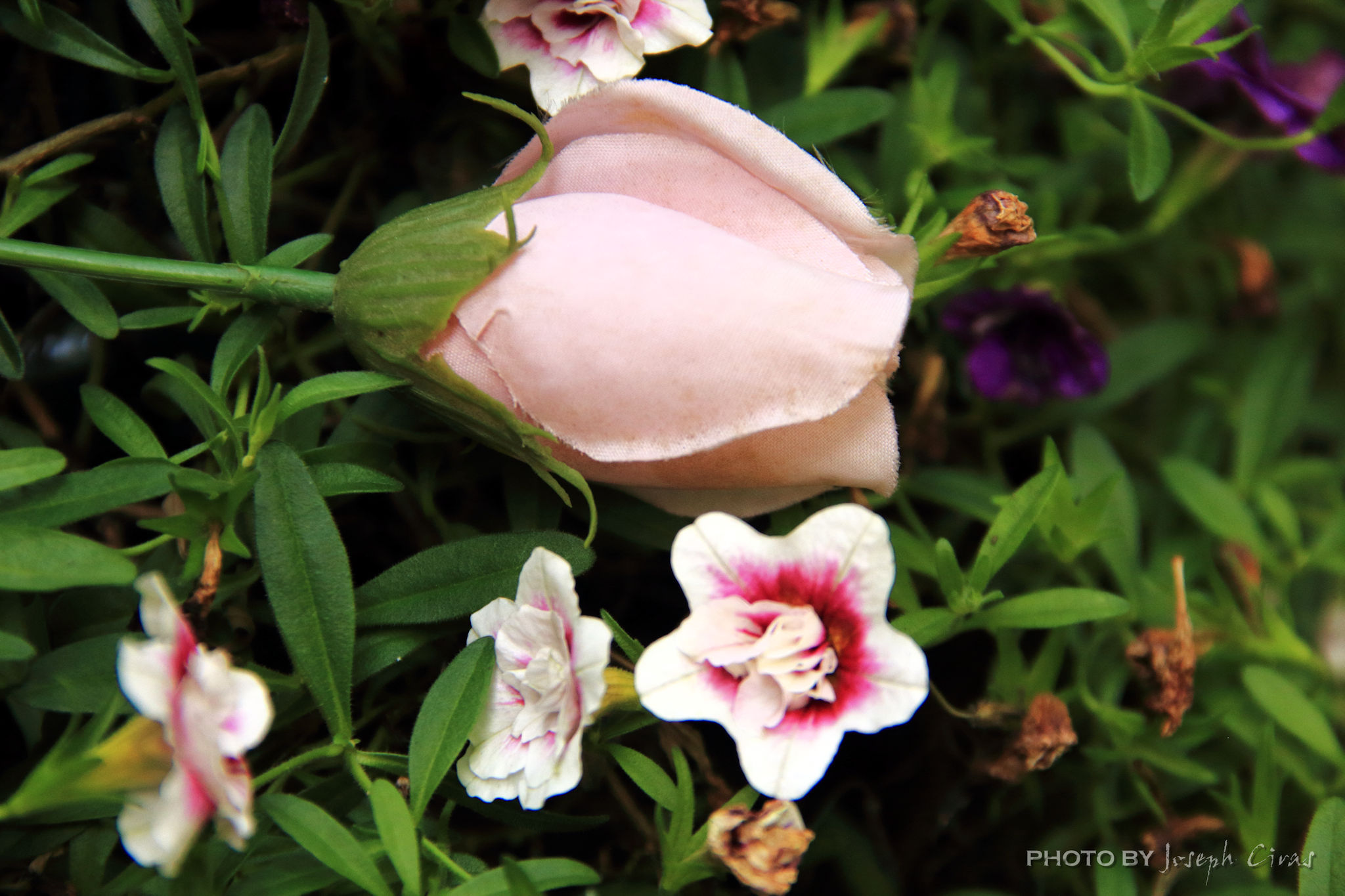
To continue my two-day flower series, I took a photo of this bouquet. I liked the colors in the bouquet.

Flower bouquet

Once again this photo was taking during the day just in case, I did not take another photo that day.

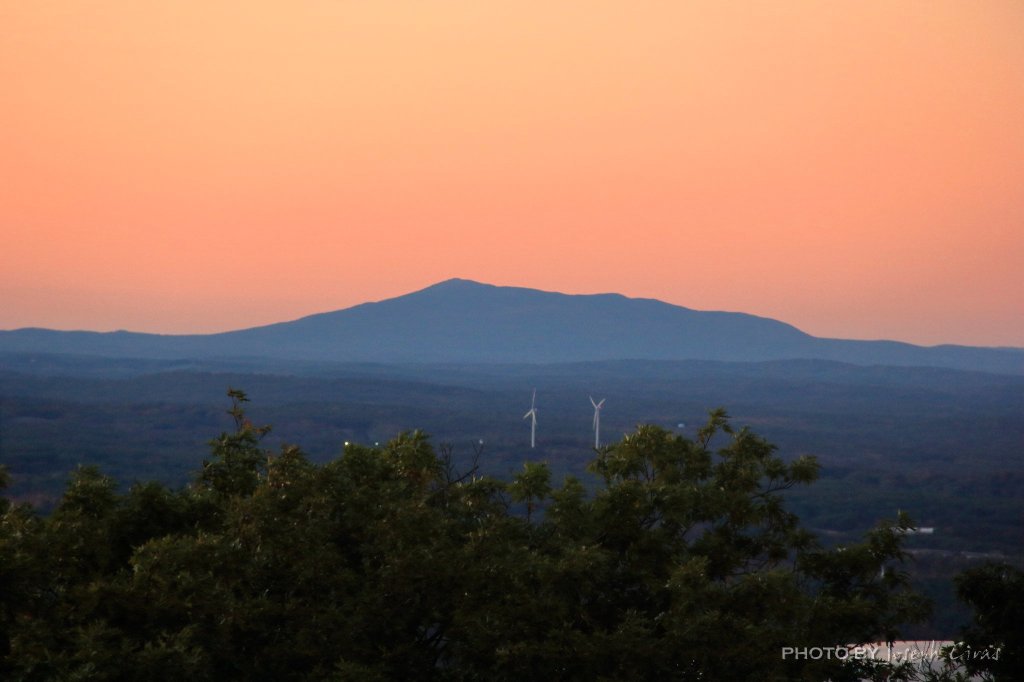
Thursday, 09/02/2021: Posted photo — Mount Monadnock.

Settings: Canon EOS 60D, ISO 400, f/7.1, 1/15 s, 135 mm.

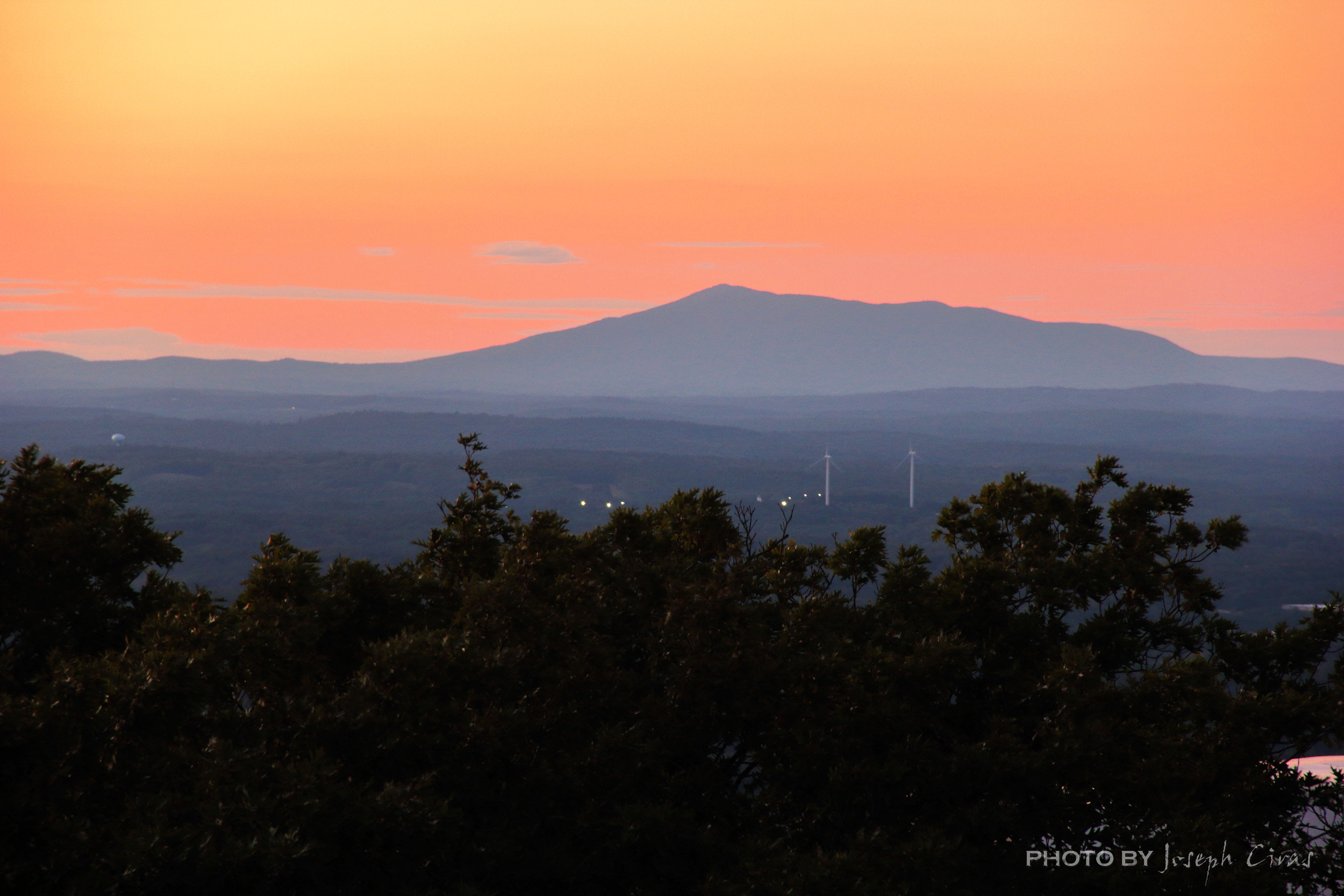
Mount Monadnock at sunset

I summited Wachusett Mountain twice today. The first time was with colleagues from work, the second time was with a hiking group. During the first hike of the day, I took the photo of the flowing water. During the second hike of the day, I arrived at the summit just after sunset. I looked to the north and saw the great colors of the sunset around Mount Monadnock in New Hampshire.

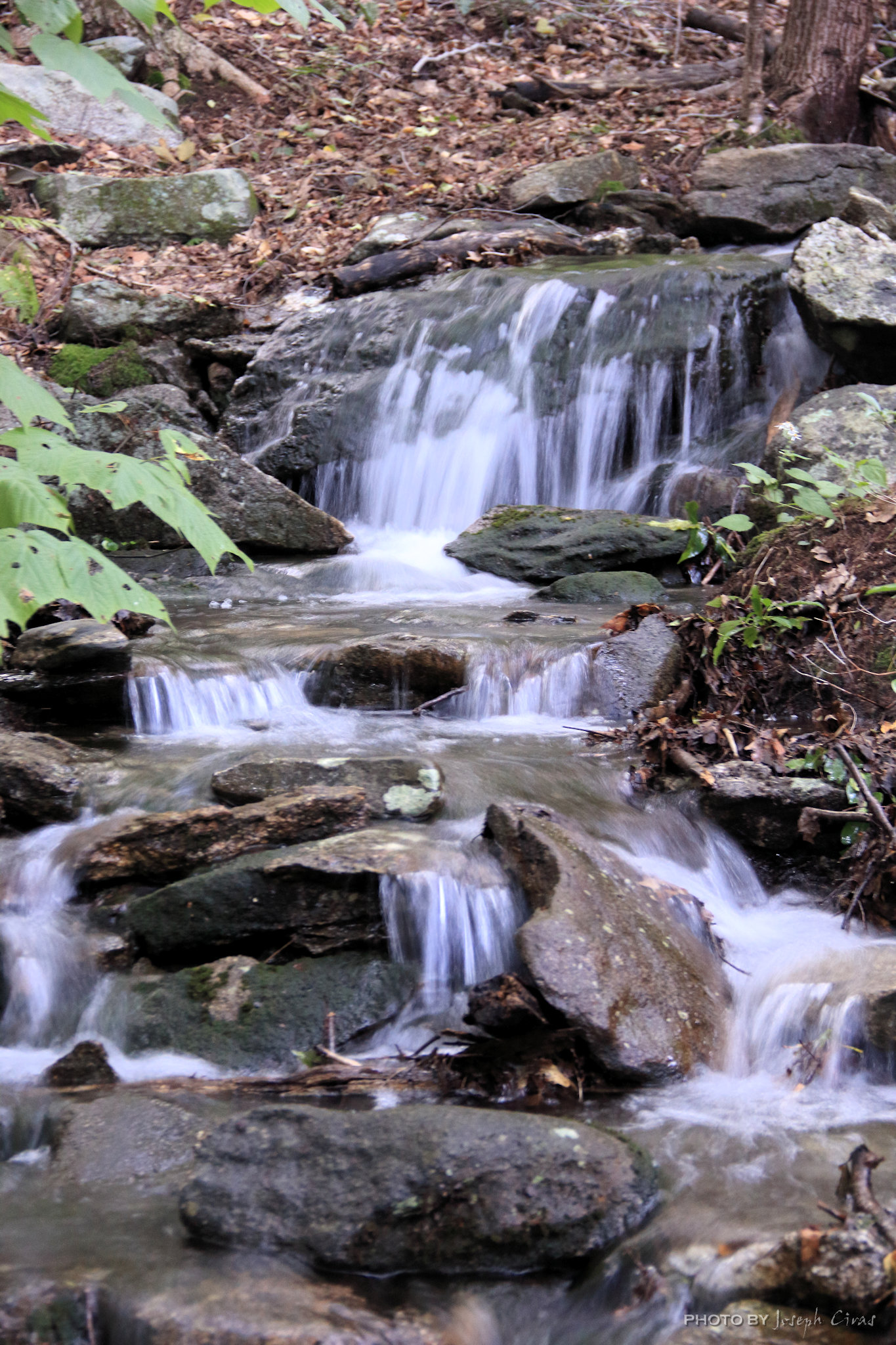
Flowing stream along the Bicentennial Trail on Wachusett Mountain

Friday, 09/03/2021: Post photo — Petroglyphs.

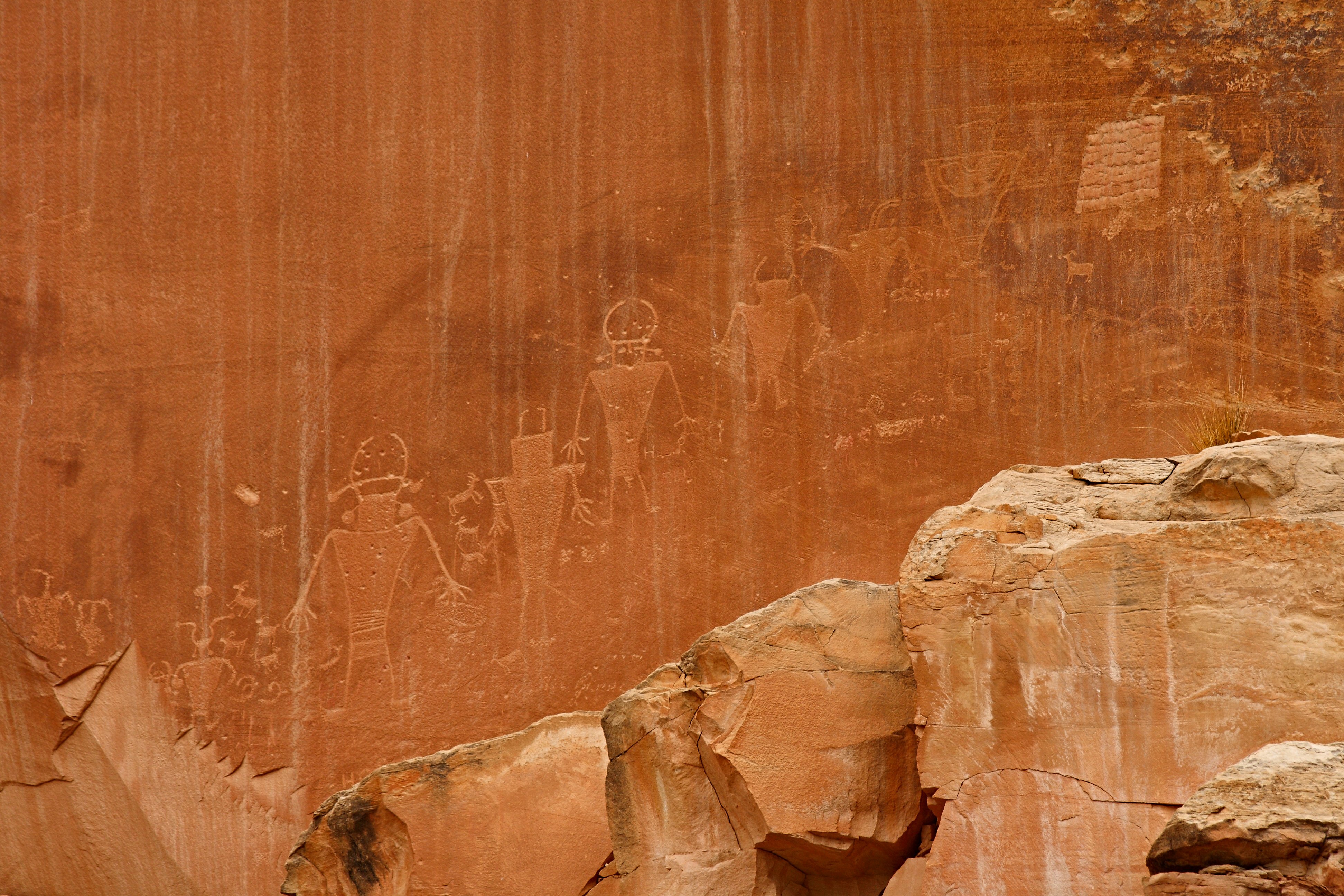
Settings: Canon EOS DIGITAL REBEL XS, ISO 200, f/8, 1/400 s, 190 mm.

These Petroglyphs are in Capital Reef National Park.

Petroglyph in Capital Reef National Park

A pictograph is an image or designs made by painting on rocks or in cave. A petroglyph is an image created by removing part of a rock surface by incising, picking, carving, or abrading, as a form of rock art. Petroglyphs tell stories of events that have happened. They are like the newspapers of today. There is one petroglyph outside the Needles section of Canyonlands National Park that the experts still have not deciphered.

Saturday, 09/04/2021: Post photo — Mount Whiteface.

Settings: Canon EOS 60D, ISO 200, f/7.1, 1/320 s, 50 mm.

I decided to take a warmup hike today before the Flags on the 48 event next weekend.

I chose a mountain that I need for my repeat 48 4,000 footers and that was close to home. I decided on Mount Whiteface since I have not done it as one of my repeat 48 and it was only two and a half hours from home. People normally hike Mount Passaconway with Mount Whiteface but today I did not do both since this was a warmup hike and I have some things that I needed to do at home tonight.

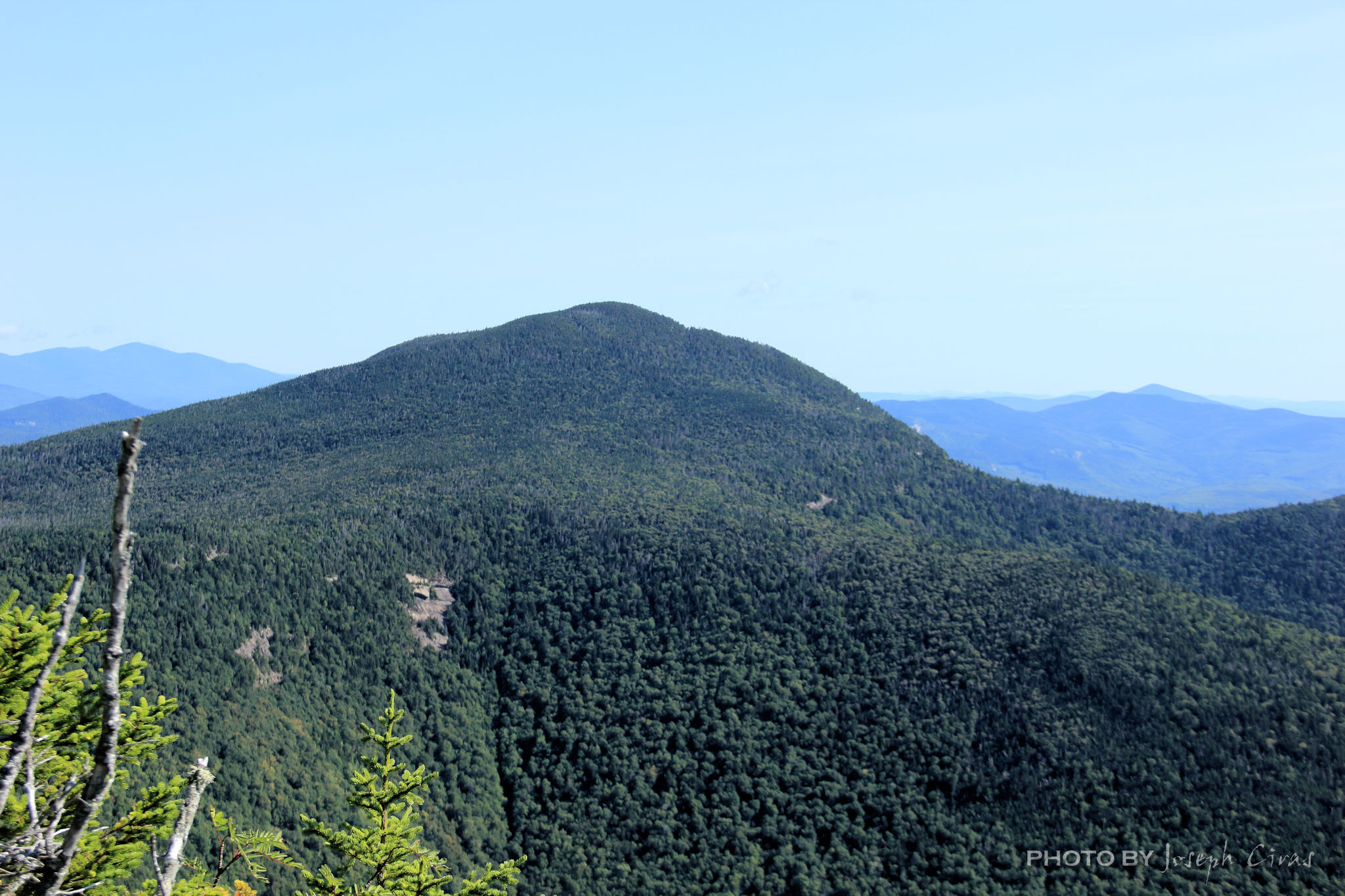
Mount Whiteface

Mount Whiteface is a 4,019 ft mountain located in Grafton County, New Hampshire. The mountain is part of the Sandwich Range of the White Mountains. Whiteface is flanked to the northwest by Mount Tripyramid, and to the northeast by Mount Passaconaway. Mount Passaconaway is a 4,043 ft mountain about three miles from Mount Whiteface.

Mount Passaconaway

Thank you again for having faith and my abilities. Now I need to go through the photo and pick some out.

That is all for now. Until next week, be safe.

For more photo of other project I have work, visit my website: https://photobyjosephciras.weebly.com/ or visit me on Facebook at https://www.facebook.com/PhotobyJosephCiras/.

COVID is real! Be safe out there, keep your social distance, and remember to always wear your mask and wash your hands. Get your vaccine!

Photographic Thoughts — 08/22/2021 to 08/28/2021

“What I like about photographs is that they capture a moment that’s gone forever, impossible to reproduce.” — Karl Lagerfeld

Thank you for all the new views and likes from last week, it helps keep me inspired.

Sunday, 08/22/2021: Posted photo — Stained Glass.

Settings: Canon EOS 60D, ISO 400, f/5.6, 1/80 s, 32 mm.

This stained glass shows the initial for Ava Maria. Ava Maria is a prayer to the Virgin Mary used in Catholic worship. The first line is adapted from Luke 1:28. Ave Maria is also called Hail Mary.

Ave Maria in stained glass

“Ave Maria, gratia plena, Dominus tecum. Benedicta tu in mulieribus, et benedictus fructus ventris tui, Iesus. Sancta Maria, Mater Dei, ora pro nobis peccatoribus, nunc, et in hora mortis nostrae. Amen.”

Why did I take this photo — I took this photo because last week I took a photo of some stained glass windows with my cell phone and I wanted to take a better photo. I took my DSLR with me into church this morning, saw the glimmer of light amongst the rain, and took this photo.

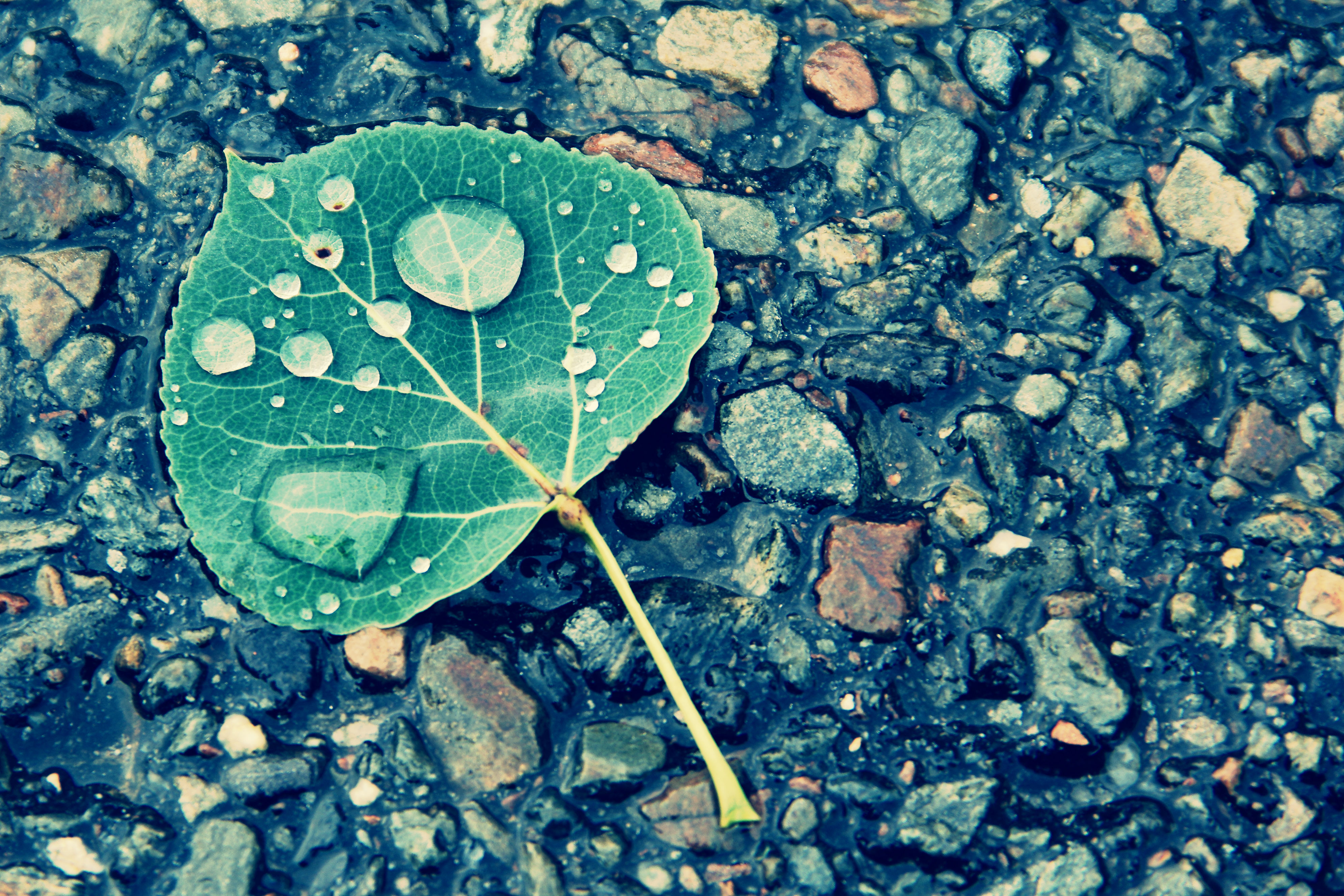
Monday, 08/23/2021: Posted photo — Wet Leaf.

Settings: Canon EOS 60D, ISO 100, f/5.6, 1/40 s, 135 mm.

Tropical Storm Henri just paid a visit to the area. Yesterday there were some gusts of wind and a little rain in this area. Some other areas around me received more wind damage and rain.

Today I was walking around and say the water beading off this leaf, so I took a photo of it. Always keep your eyes open to the wonders of nature.

Water drops on a leaf

Later in the day, I took my normal Monday night hike up Wachusett Mountain. There was only two of us this week because of the heavy rain that came in this afternoon. It was wet and rainy on the way to the summit, and it was very wet and heavy rain on the way down. When I hike, I just keep wiping the water from my eyes and just follow the tail. You need to take all your steps very carefully. Hiking is still fun in the rain.

Tuesday, 08/24/2021: Posted photo — Web.

Settings: Canon EOS 60D, ISO 1600, f/5.6, 1/20 s, 135 mm.

Is it just me, or are there many more spiders this year that there have been in the past? I keep seeing webs and the light shining off the webs. Today I stopped and attempted to take a photo of a web in the sunlight.

Spider web

Looking at the photo, it looks like my ISO was set too high since the web looks blown out to me.

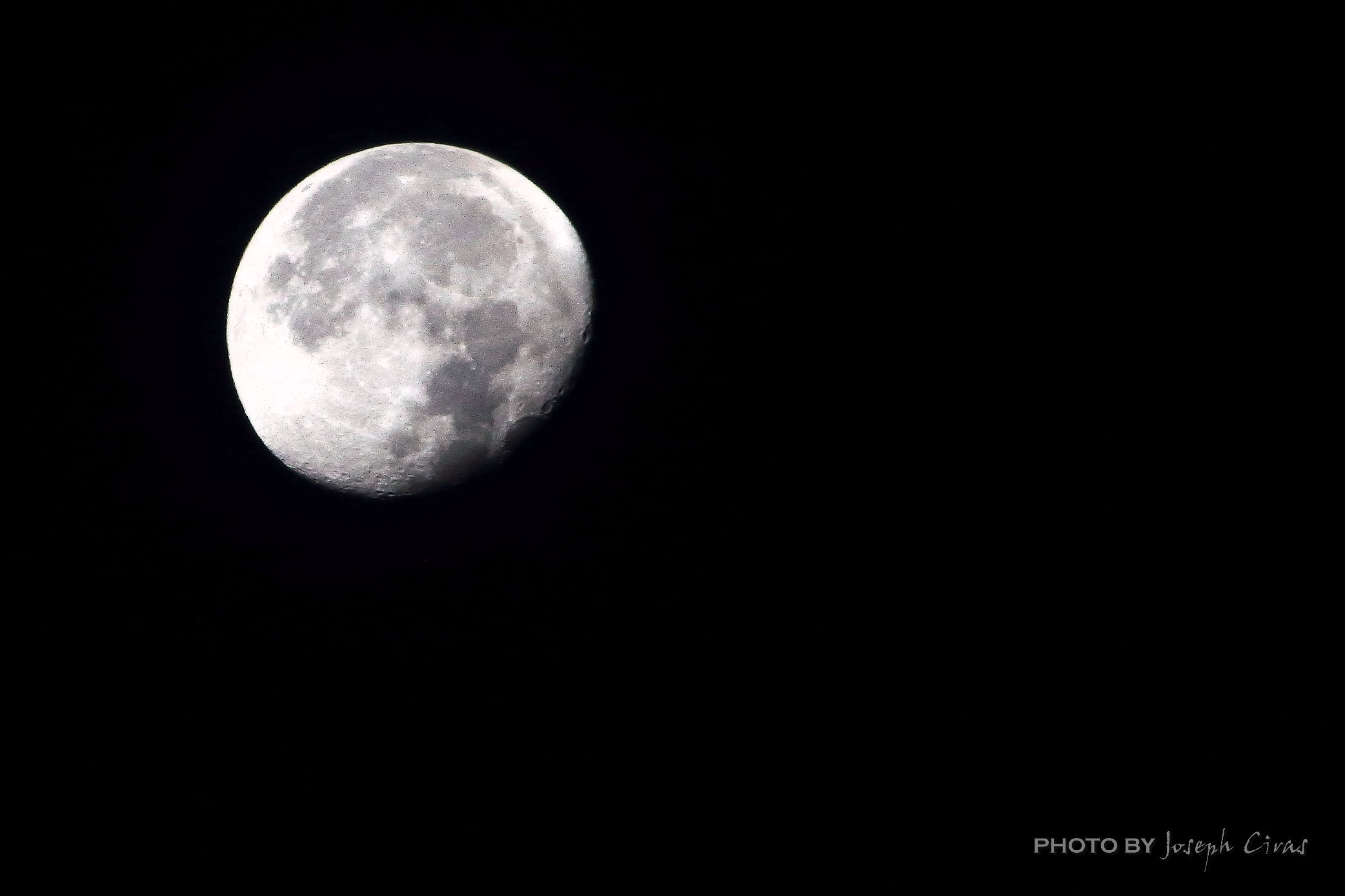
Wednesday, 08/25/2021: Posted photo — Moon.

Settings: Canon EOS 60D, ISO 400, f/16, 1/125 s, 300 mm.

Look, Joe took another moon photo!

Just another moon shot

This morning, as the moon does many times, I was just called to take a photo of the moon.

Thursday, 08/26/2021: Posted photo — Hike.

Settings: N/A.

This is not a photo. I took many photos today and did not like any of them good enough to post.

Thursday night hike

This is a photo of the trail I took tonight on Wachusett Mountain in the heat. The hike was 3.5 miles long, it started in the light, and ended in the dark. The air was very moist and heavy. When you hike in situation similar to this, you must drink plenty of water.

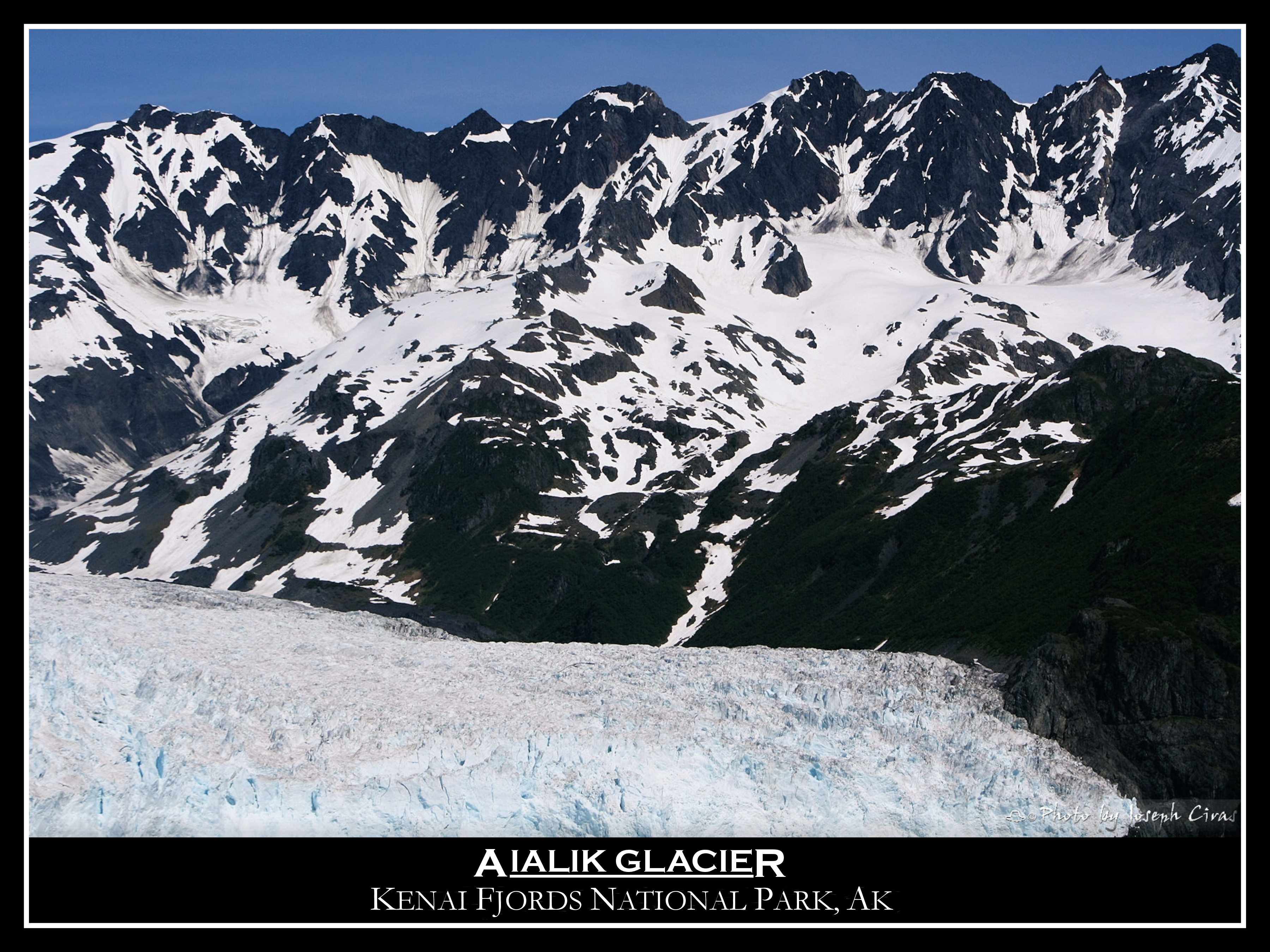
Friday, 08/27/2021: Post photo — Aialik Glacier.

Settings: N/A.

Aialik Glacier is the largest glacier in Aialik Bay, located in Kenai Fjords National Park. While stable, the glacier calves most actively in May and June. We say the glacier in June and saw the calves.

We went to Alaska in 2016 for our 25th wedding anniversary with my son and niece. Alaska is a great place to visit. If you have an opportunity to visit, please do so.

Poster created from my photo of the Aialik Glacier

About the photo. I took some of my travel photos and made posters of them to remember were the photo was taken. It was a fun process to learn a new photo editing technique. I made a photo script to help me do this for my photos. The script will resize the photos and add the text and boarder.

Saturday, 08/28/2021: Post photo — Mr. and Ms.

Settings: Canon EOS 60D, ISO 200, f/7.1, 1/125 s, 24 mm.

I would like to thank Doug and Vicky for allowing me to photograph there special day. This was my first official wedding that I photographed. They had faith in me do this knowing that I am primarily a landscape photographer.

Mr. and Ms. Chase-Dame

I have worked with Doug’s father for many years. He asked me if I was comfortable enough to take photos as his son’s wedding, I said I would love to do so. As you can see from the photo, they are a fun couple. When I was told that there were wearing Hawaiian shirts for the wedding, I thought that just Doug was going to wear one. When I went to their house and saw that everyone in the family had one on, I went home to put my shirt from Hawaii on to fit in with the crowd. My house was on the way from the morning photoshoot to the wedding.

Thank you again for having faith and my abilities. Now I need to go through the photo and pick some out.

That is all for now. Until next week, be safe.

For more photo of other project I have work, visit my website: https://photobyjosephciras.weebly.com/ or visit me on Facebook at https://www.facebook.com/PhotobyJosephCiras/.

COVID is real! Be safe out there, keep your social distance, and remember to always wear your mask and wash your hands. Get your vaccine!

Photographic Thoughts — 08/01/2021 to 08/07/2021

“A photograph is a secret about a secret. The more it tells you the less you know.” — Diane Arbus

Thank you for all the new views and likes from last week, it helps keep me inspired.

Enjoy this week’s rambling mind of a mechanical engineer and photographer.

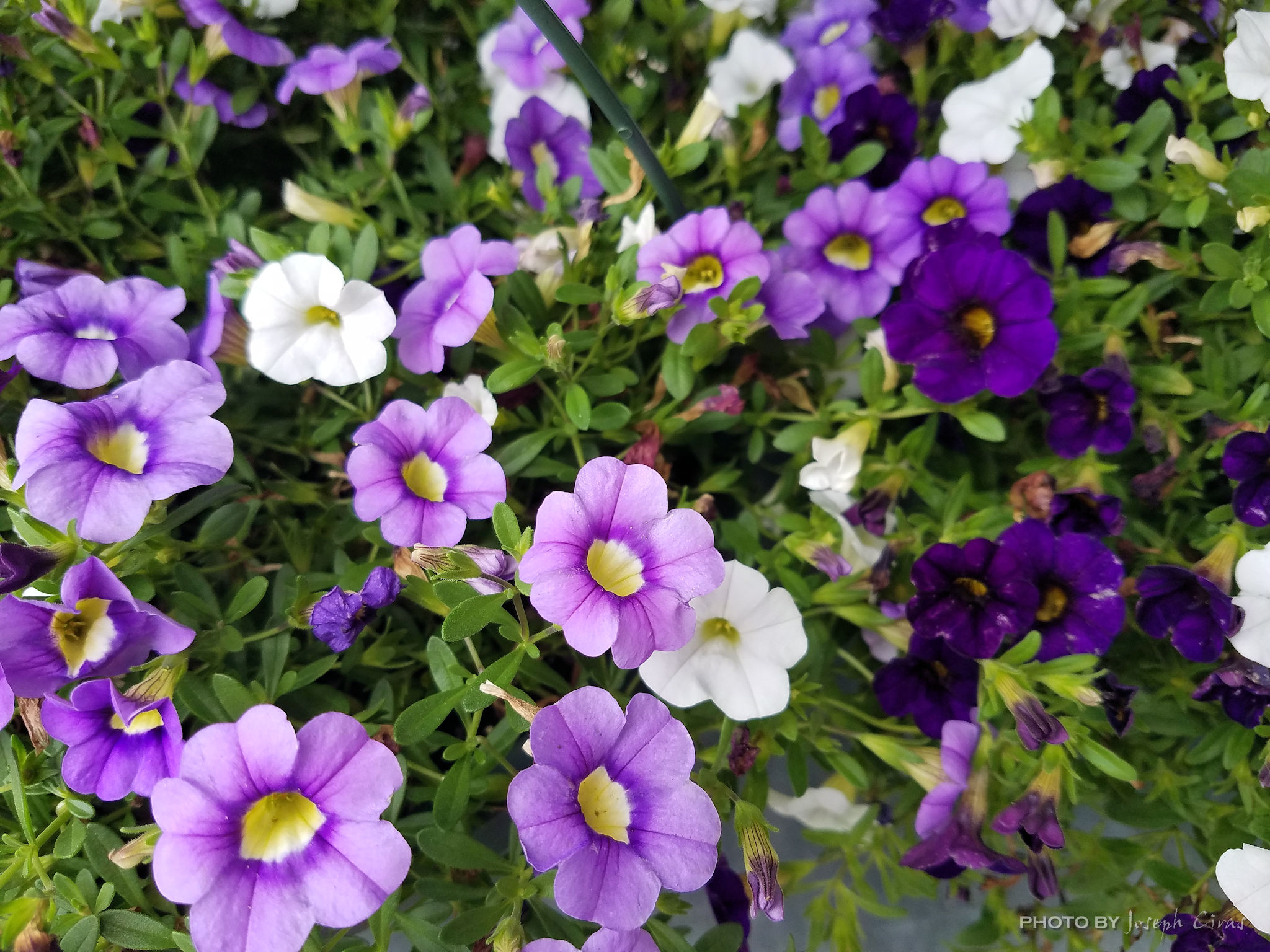
Sunday, 08/01/2021: Posted photo — Calibrachoa.

Settings: Samsung SM-G930V (Galaxy S7), ISO 50, f/1.7, 1/258 s, 4 mm

Calibrachoa, commonly called million bells or trailing petunia, is a tender perennial that produces mounds of foliage, growing only 3 to 9 inches (7.5-23 cm.) tall, along trailing stems and flowers in shades of violet, blue, pink, red, magenta, yellow, bronze and white.

Read more at Gardening Know How: Growing Calibrachoa Million Bells: Growing Information and Calibrachoa Care https://www.gardeningknowhow.com/ornamental/flowers/million-bells/calibrachoa-million-bells.htm

Today when I went shopping, I saw these flowers and took this photo. As always, I take many photos as I can during the day, so I have a photo for this project.

Monday, 08/02/2021: Posted photo — Hiking Group.

Settings: Canon EOS 60D, ISO 3200, f/7.1, 1/50 s, 44 mm.

Monday night hike. I joined a Monday night hiking group a few months ago and like this group. They are a group of hikers of different abilities, yet the hikes are safe and challenging. I have tried other hiking groups during the week. I like this one the best, so I plan on hiking with them every week.

I am one of the faster hikers in this group. I hiked ahead of the group to take this photo as they were hiking done the Pine Hill Trail on Wachusett Mountain.

Tuesday, 08/03/2021: Posted photo — Boat.

Settings: Canon EOS 60D, ISO 1600, f/14, 1/800 s, 79 mm.

Pontoon boats are a type of recreational boat that relies on structures called “pontoons” to float. A pontoon is a type of floating device used to add buoyancy to a structure. These tubes are airtight and hollow, making them water resistant and virtually unsinkable. Pontoon boats utilize two or more pontoon tubes to float effortlessly on the water.

This pontoon boat belongs to the neighbor at my in-law’s cottage. They go out in it every evening to watch the sunset from the lake. The neighbor has had many different style boats over the years and now have this one to leisurely float in the lake.

Wednesday, 08/04/2021: Posted photo — Flight.

Settings: Canon EOS 60D, ISO 100, f/5, 1/400 s, 50 mm.

I was taking photos of purple loosestrife today. When I was taking photos, this bumble bee flew into the loosestrife giving me the opportunity to capture it in flight. I am always glad when a bee flies into my flower photos. Most of the time the bee is too quick for my camera settings. I was very happy with this photo.

I was going to title this photo The Flight of the Bumble Bee towards the Purple Loosestrife, but that would be too long.

Thursday, 08/05/2021: Posted photo — Mammoth Hot Springs.

Settings: Canon EOS DIGITAL REBEL XS, ISO 100, f/10, 1/200 s, 55 mm.

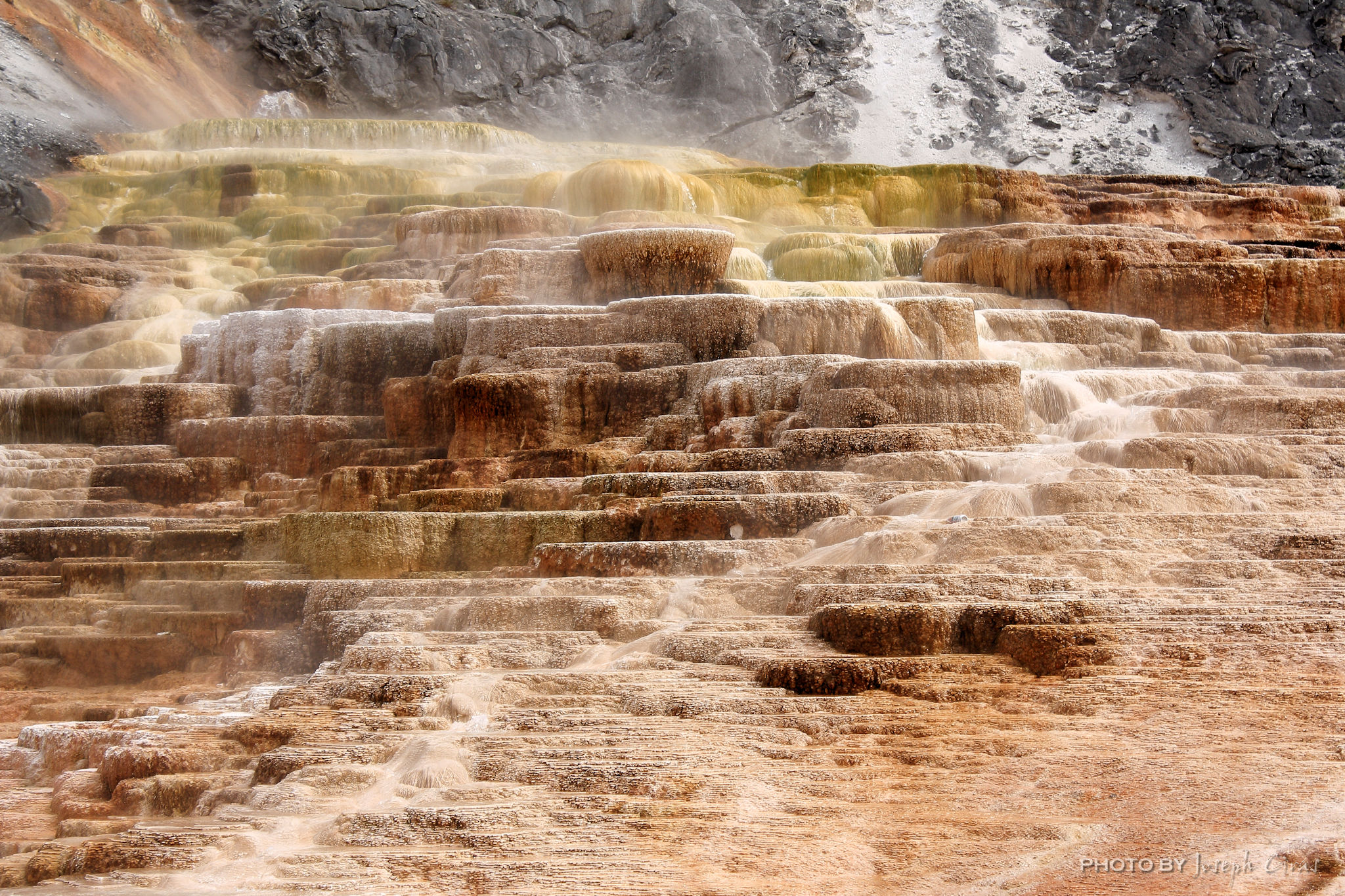
“Mammoth Hot Springs is a large complex of hot springs on a hill of travertine in Yellowstone National Park adjacent to Fort Yellowstone and the Mammoth Hot Springs Historic District. It was created over thousands of years as hot water from the spring cooled and deposited calcium carbonate.” (Wikipedia) The springs are incredible to see. Hot springs in volcanic areas are often at or near the boiling point. People have been seriously scalded and even killed by accidentally or intentionally entering these springs.

This photo was taken a few years ago during one of our National Park tours. Yellowstone is a great National Park with many different features. One day my family will get back to the park and visit the less know areas of the park and more of the lesser visited geysers.

Friday, 08/06/2021: Post photo — Wych Elm.

Settings: Canon EOS 60D, ISO 100, f/7.1, 1/80 s, 60 mm.

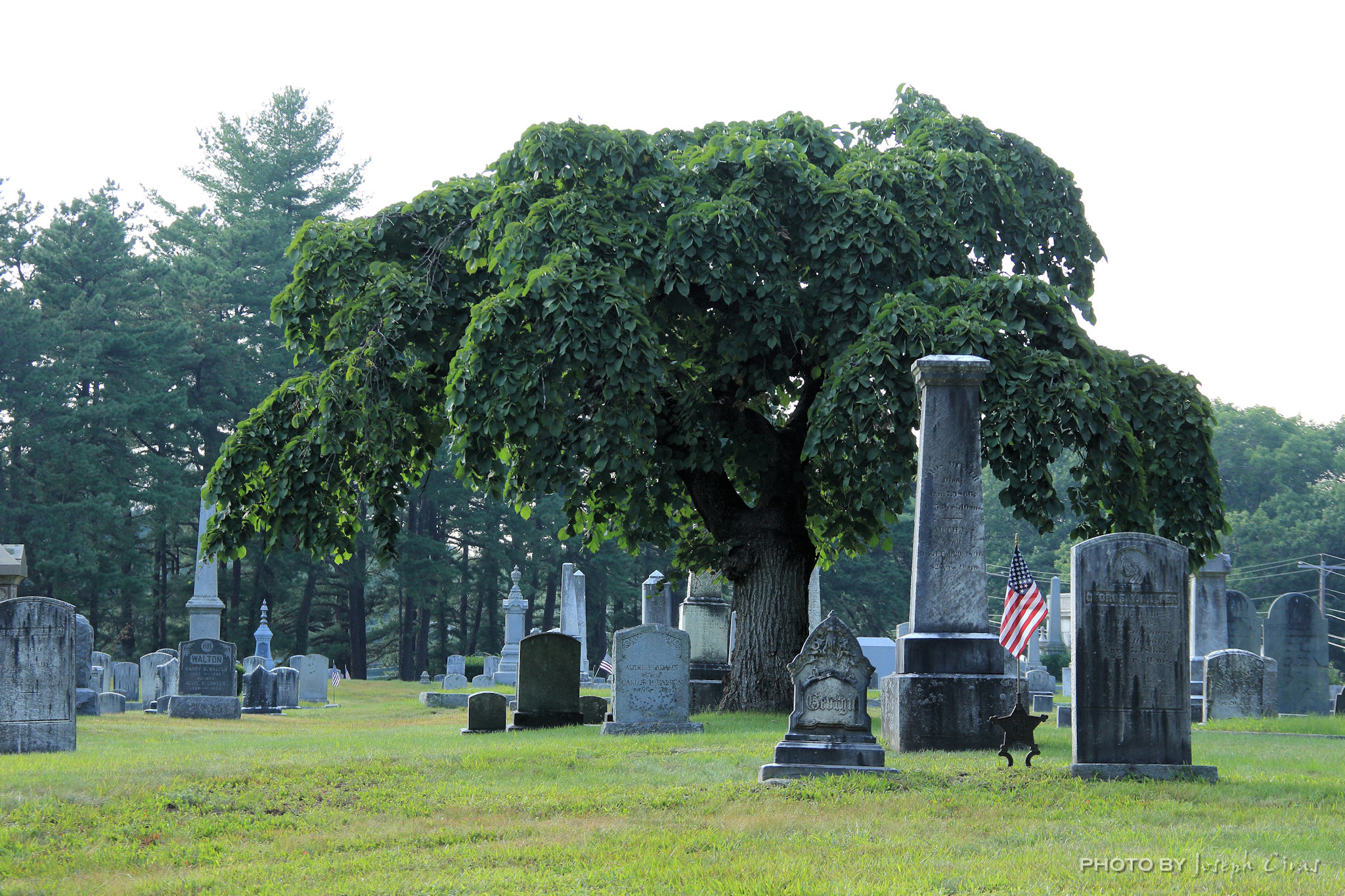
“The Wych Elm tree is a hardy specimen that has evolved into a popular landscaping addition over the years. Its towering appearance, pretty purple flowers and winged fruit are just some of its many attributes. In addition to its natural beauty, the Wych Elm is not terribly challenging to propagate, which is why growers of varying experience choose to plant the tree on their property.” Wych Elm Tree | LoveToKnow

Some of you may recognize this location and this tree. It is the cemetery near my house that I photograph a few times a year. I just like the majesty of this tree. I always wanted to know what type of tree it was, so I took out my Seek app and the app identified the tree as a Wych Elm.

If you know it by another name, let me know in the comments.

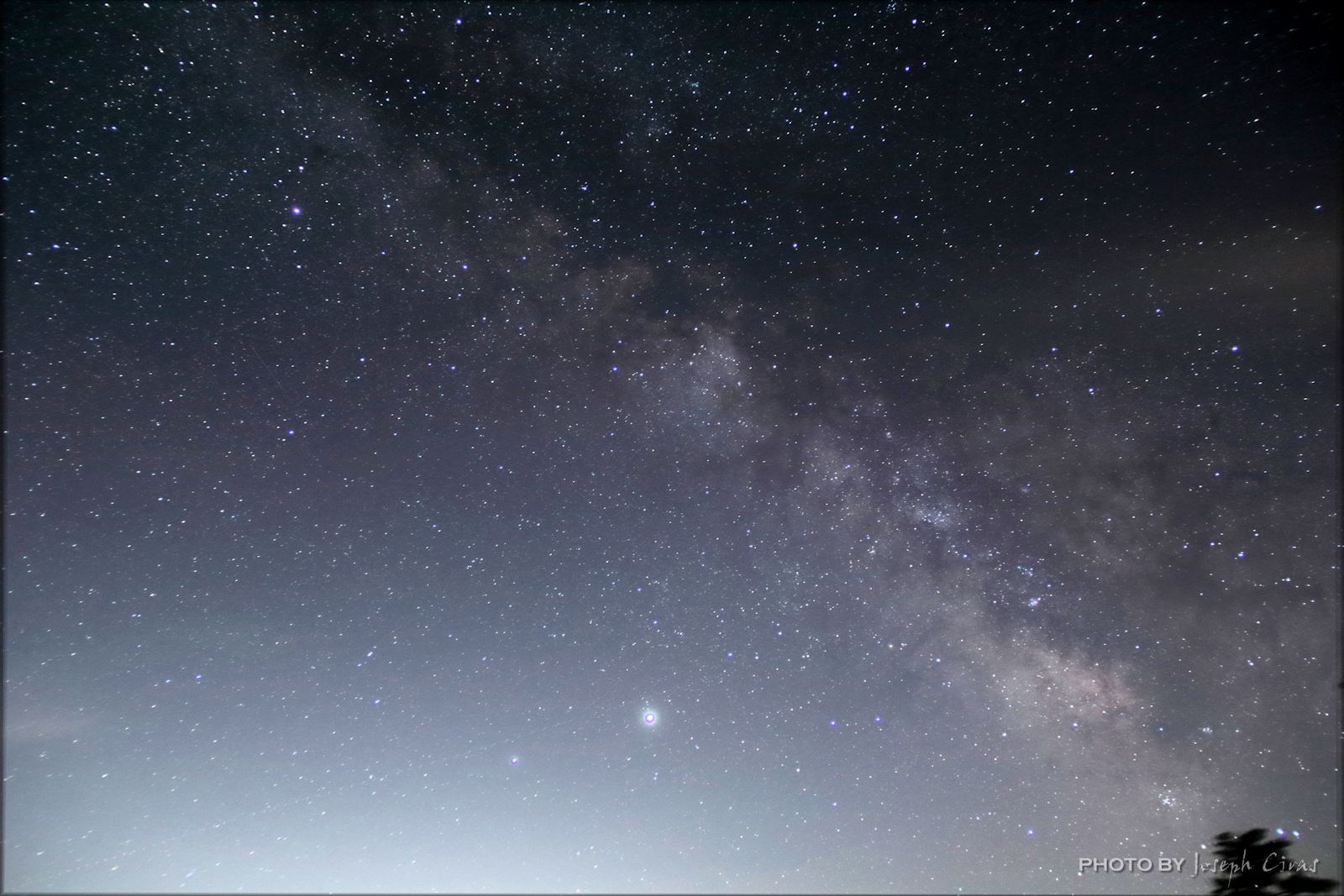
Saturday, 08/07/2021: Post photo — Milky Way in Light Pollution.

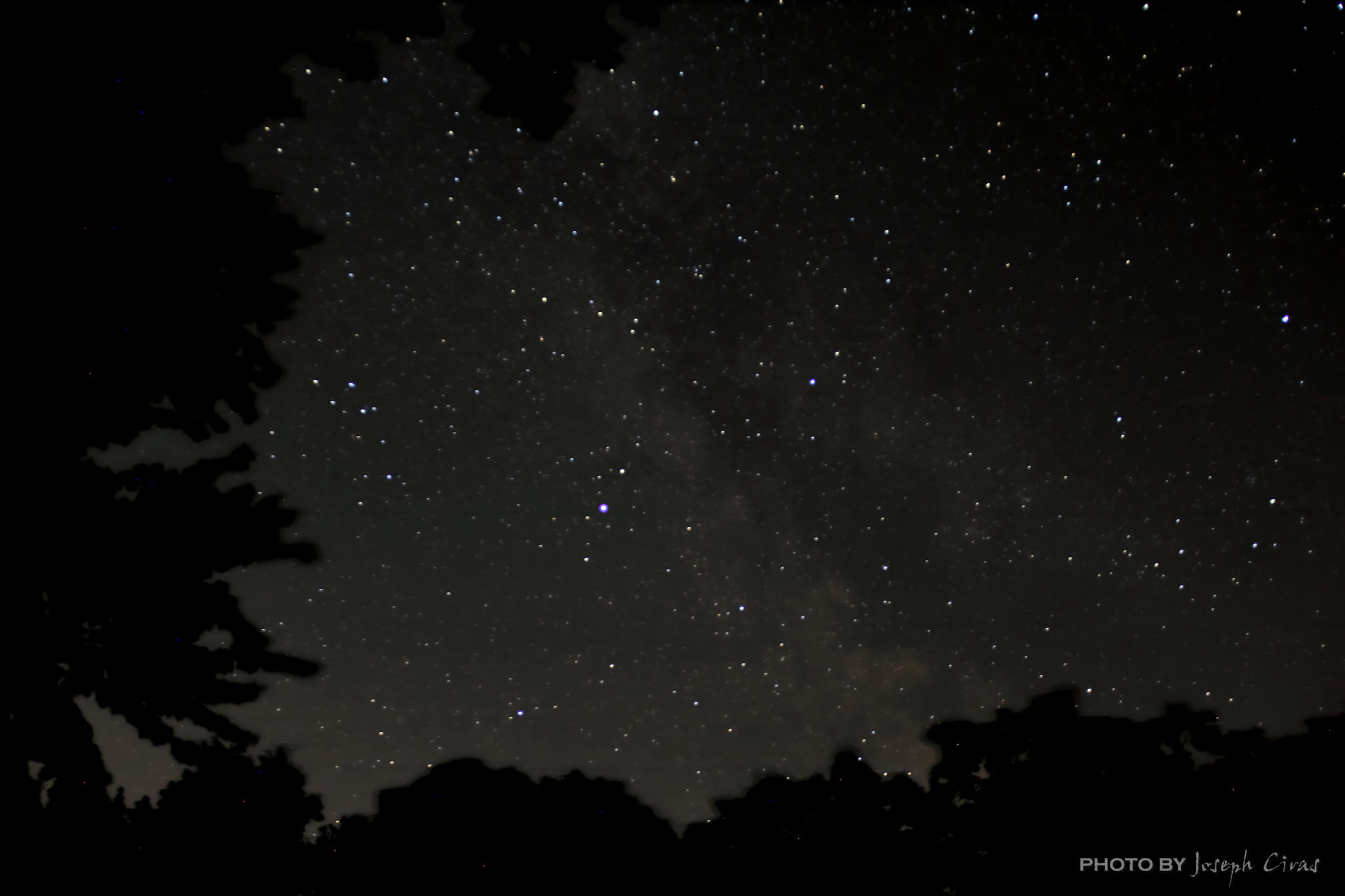
Settings: Canon EOS 60D, ISO 1600, f/3.5, 15 s, 18 mm.

Photographing the Milky Way is not easy. I live in an area were there is some light pollution from the surrounding towns and the rehab place down the street.

I came home from my wife’s family reunion and took this shot. The moon was low, and the stars were bright. Besides the light pollution in the area, I may have forgotten to take the image stabilization off on my lens when it was on my tripod when taking this photo.

After 4237 days in a row of taking photos, I still make rookie mistakes occasionally.

That is all for now. Until next week, be safe.

For more photo of other project I have work, visit my website: https://photobyjosephciras.weebly.com/ or visit me on Facebook at https://www.facebook.com/PhotobyJosephCiras/.
COVID is real! Be safe out there, keep your social distance, and remember to always wear your mask and wash your hands. Get your vaccine!

Photographic Thoughts — 06/20/2021 to 06/26/2021

“Photograph: a picture painted by the sun without instruction in art.” — Ambrose Bierce

Thank you for all the new views and likes from last week, it helps keep me inspired.

Enjoy this week’s rambling mind of a mechanical engineer and photographer.

Sunday, 06/20/2021: Posted photo — Mass of Thanksgiving.

Settings: N/A.

Today was the Mass of Thanksgiving for Fr. Matt Duclos. What a great turn out for the mass. The reception following was full of family and friends. You could see how proud my wife’s cousin and her husband were of their newly ordained son.

Now off to Watkins Glen State Park.

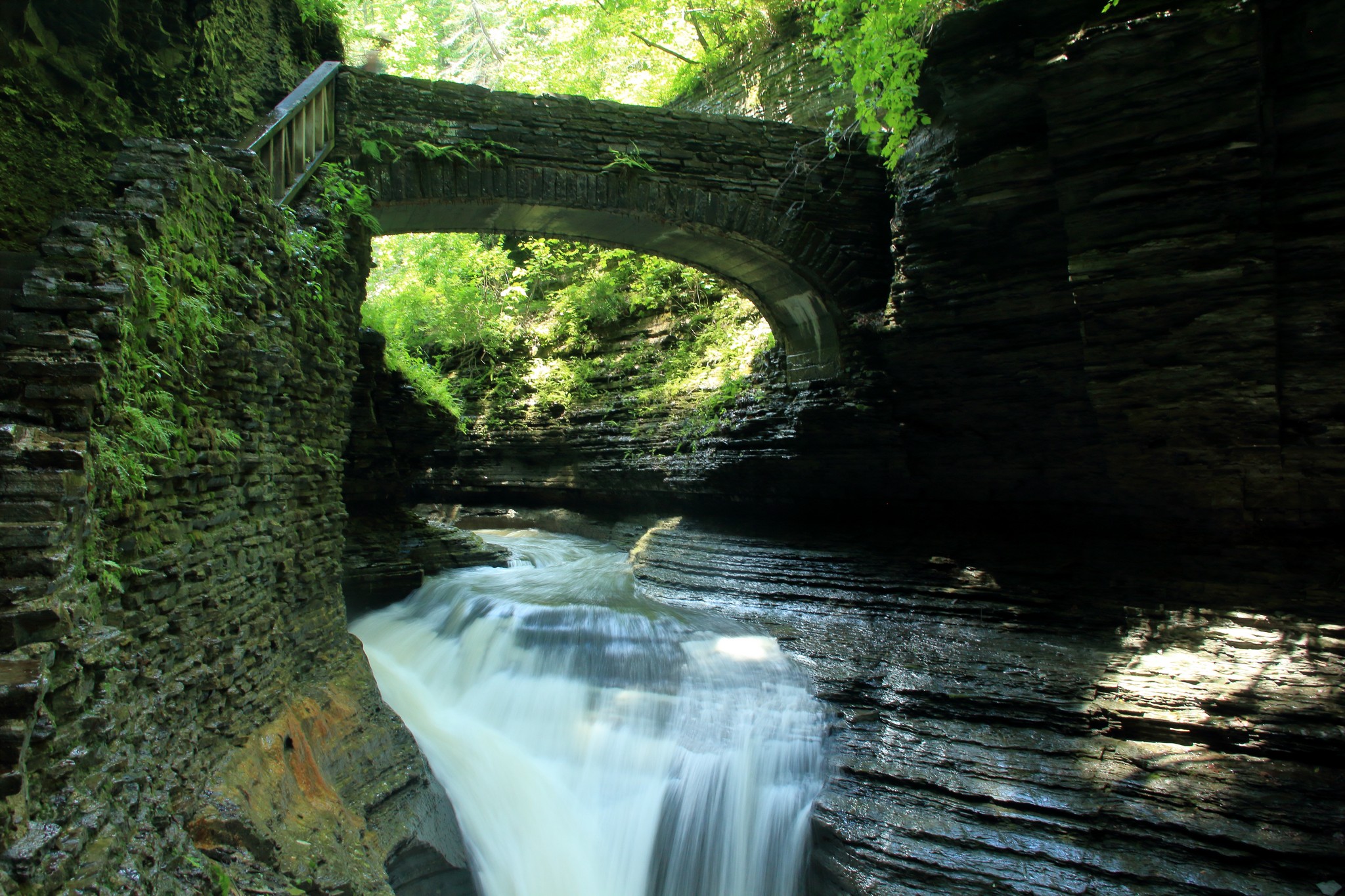
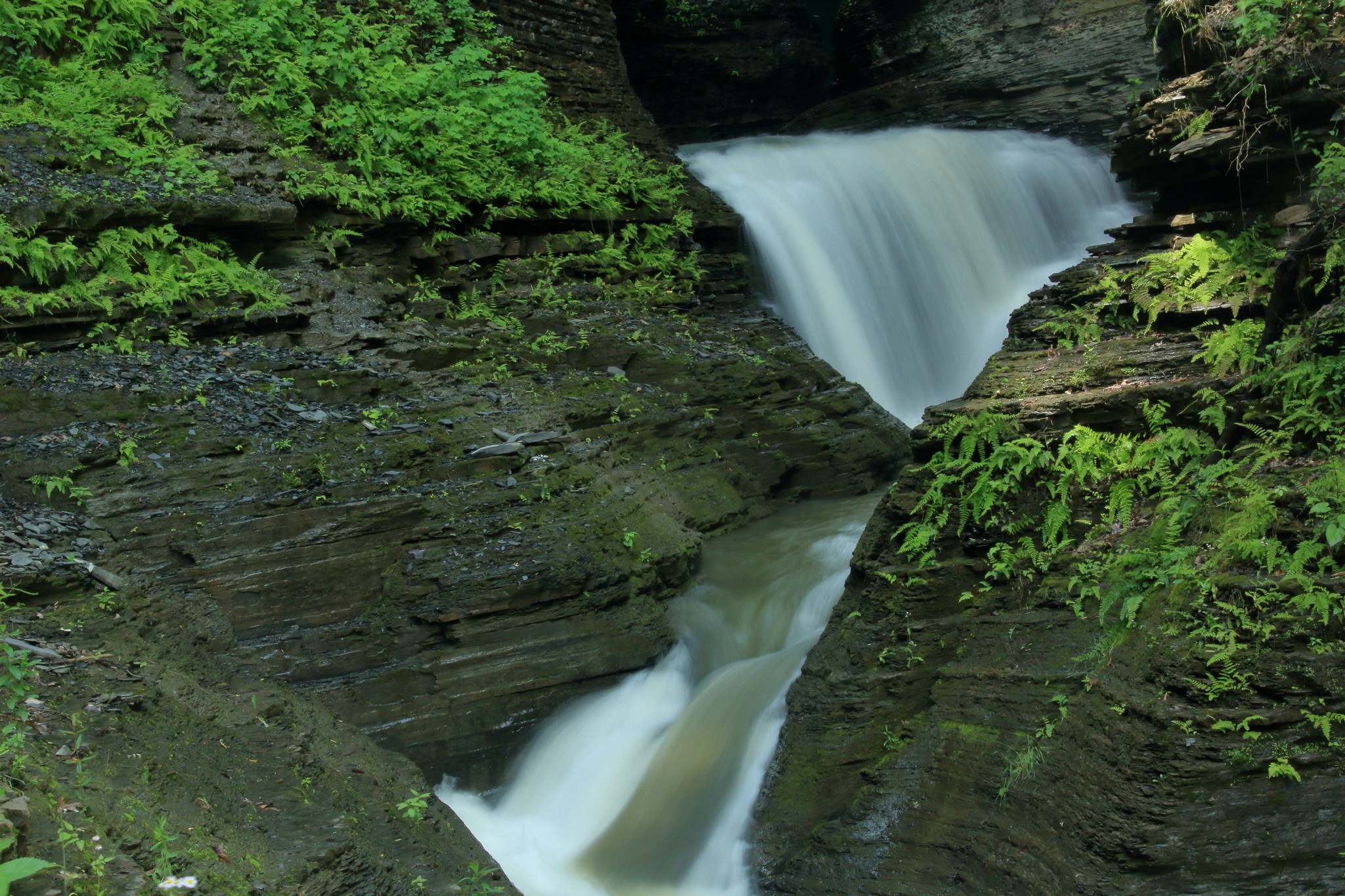
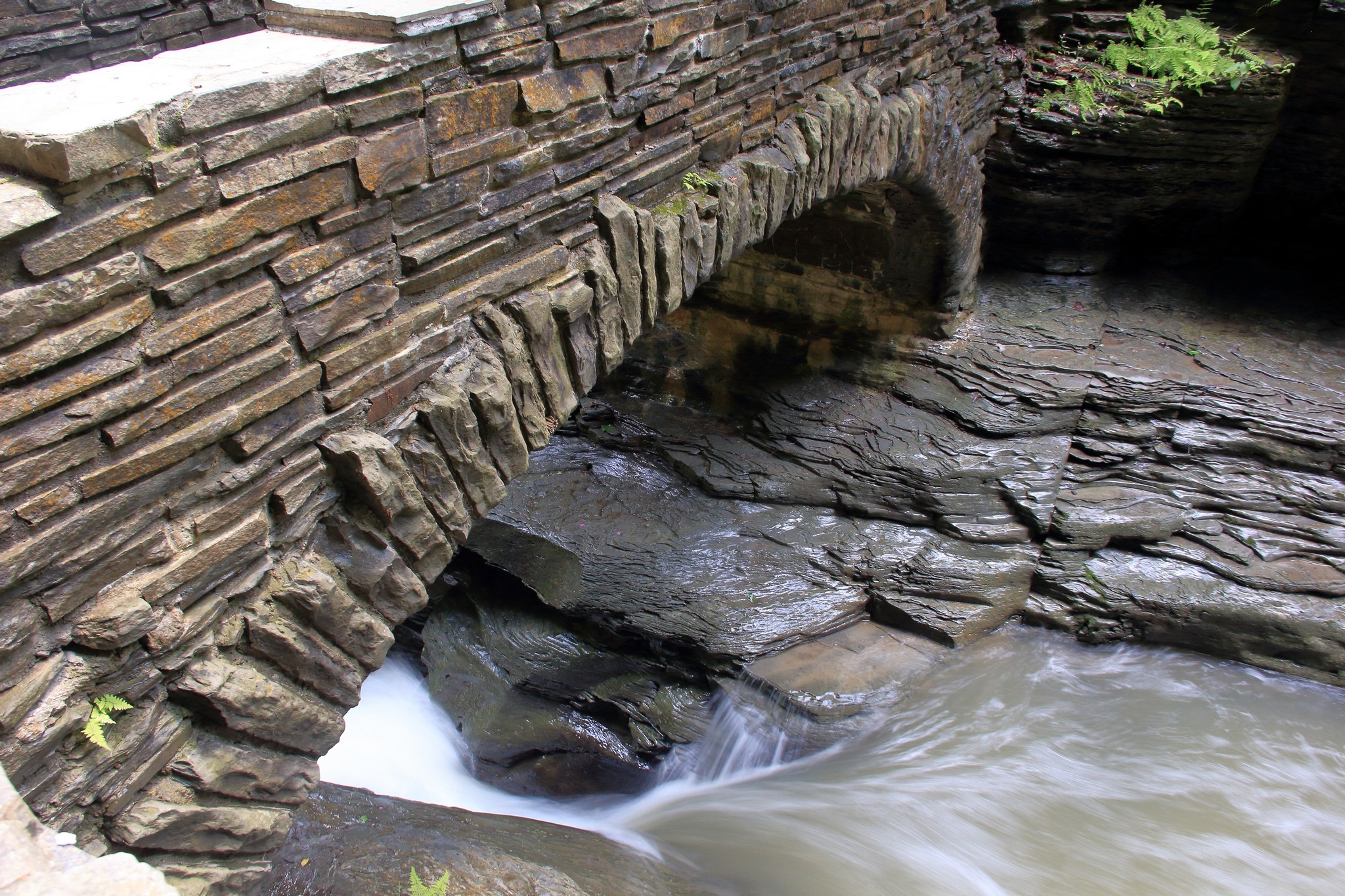
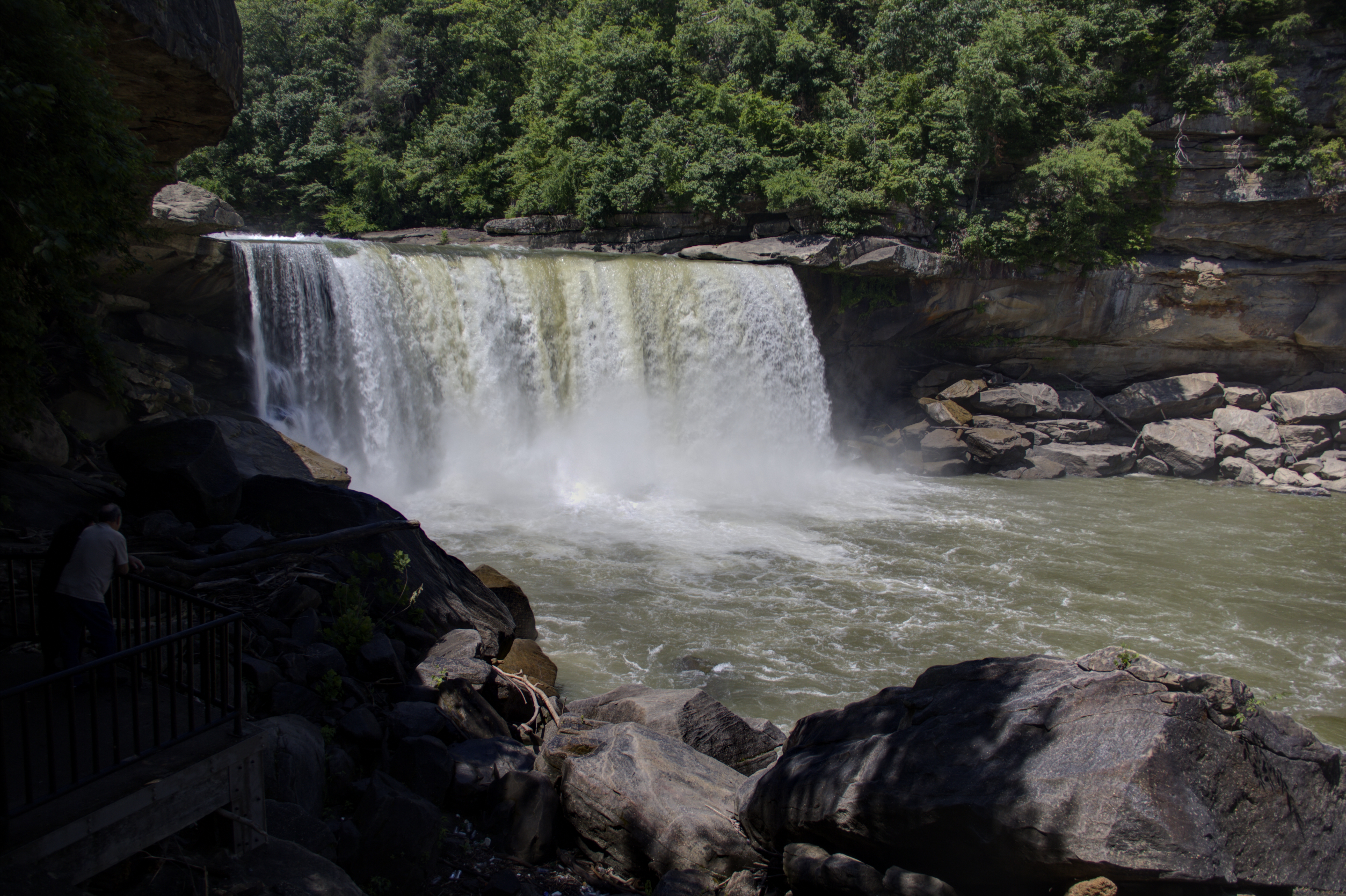
Monday, 06/21/2021: Posted photo — Watkins Glen.

Settings: Canon EOS 60D, ISO 400, f/9, 1/3 s, 18 mm

“Watkins Glen State Park is the most famous of the Finger Lakes State Parks, with a reputation for leaving visitors spellbound. Within two miles, the glen’s stream descends 400 feet past 200-foot cliffs, generating 19 waterfalls along its course. The gorge path winds over and under waterfalls and through the spray of Cavern Cascade. Rim trails overlook the gorge. Campers and daytime visitors can enjoy the Olympic-size pool, modern playground, scheduled summer tours through the gorge, tent and trailer campsites, picnic facilities, and excellent fishing in nearby Seneca Lake or in Catherine Creek, which is renowned for its annual spring run of rainbow trout.” From the park website.

Here are the photos from day one.

Tuesday, 06/22/2021: Posted photo — Watkins Glen Day Two.

Settings: Canon EOS 60D, ISO 400, f/6.3, 1/2 s, 47 mm.

More photos from Watkins Glen before traveling to Cumberland Falls, Kentucky.

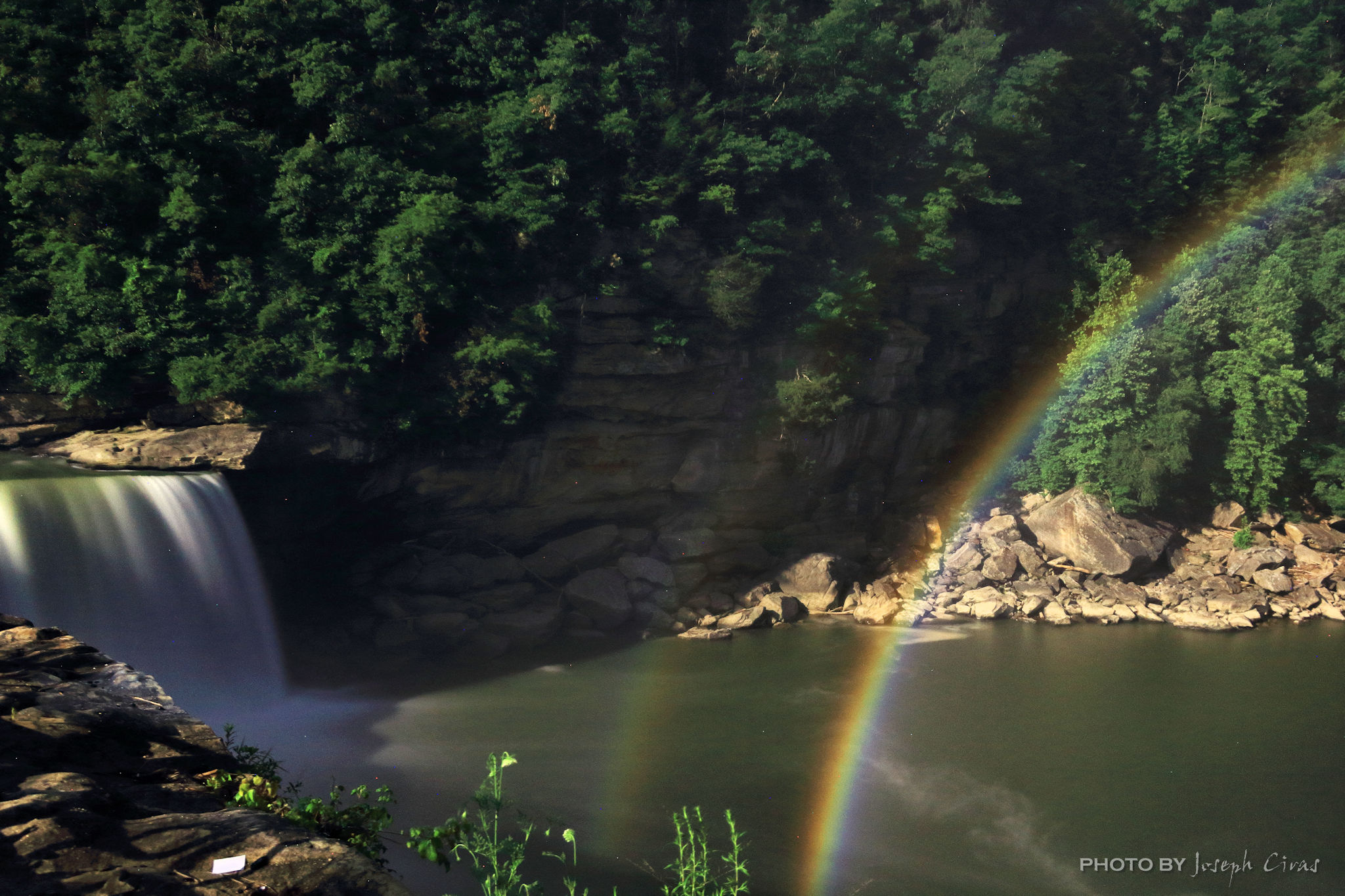
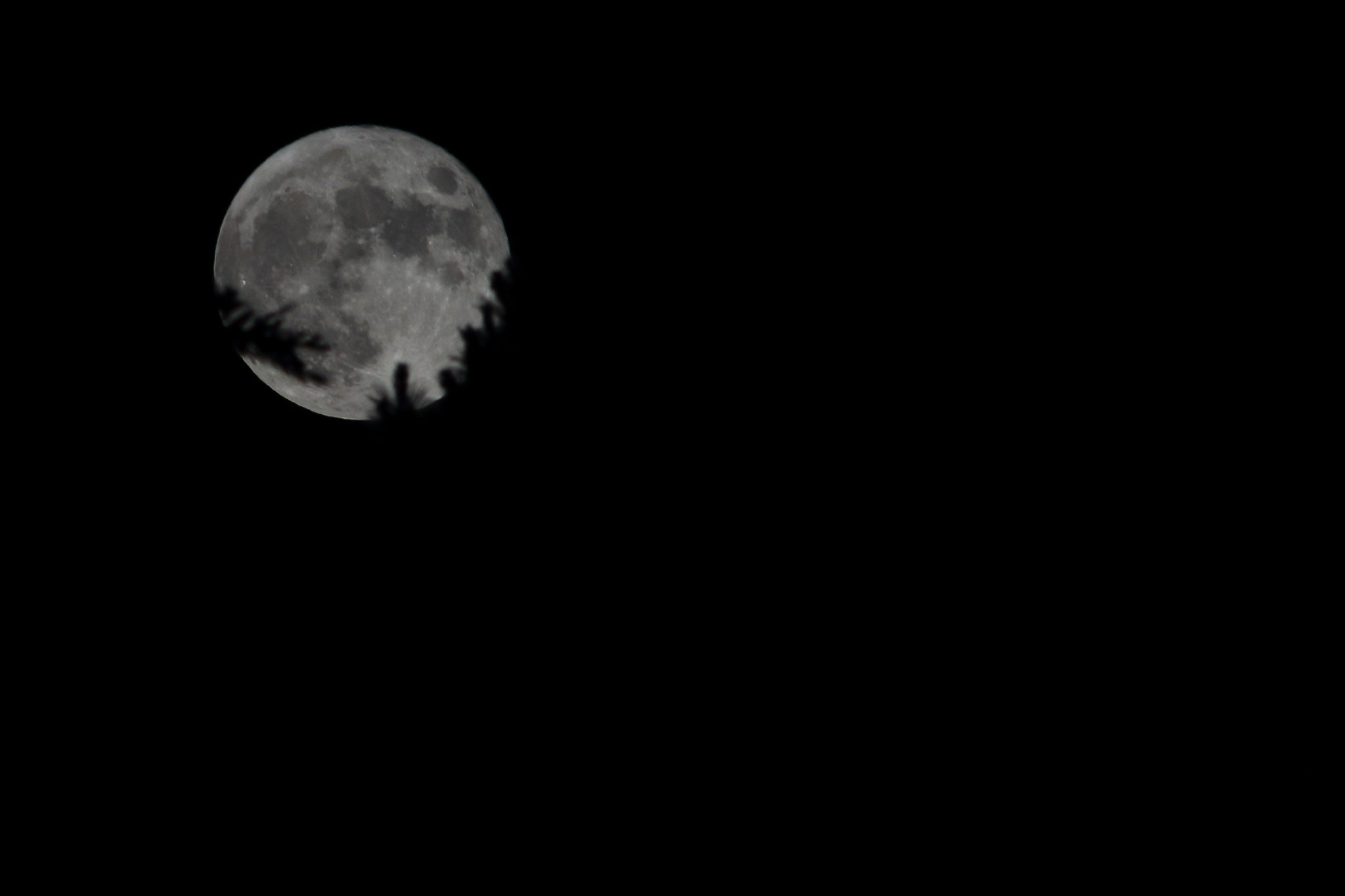
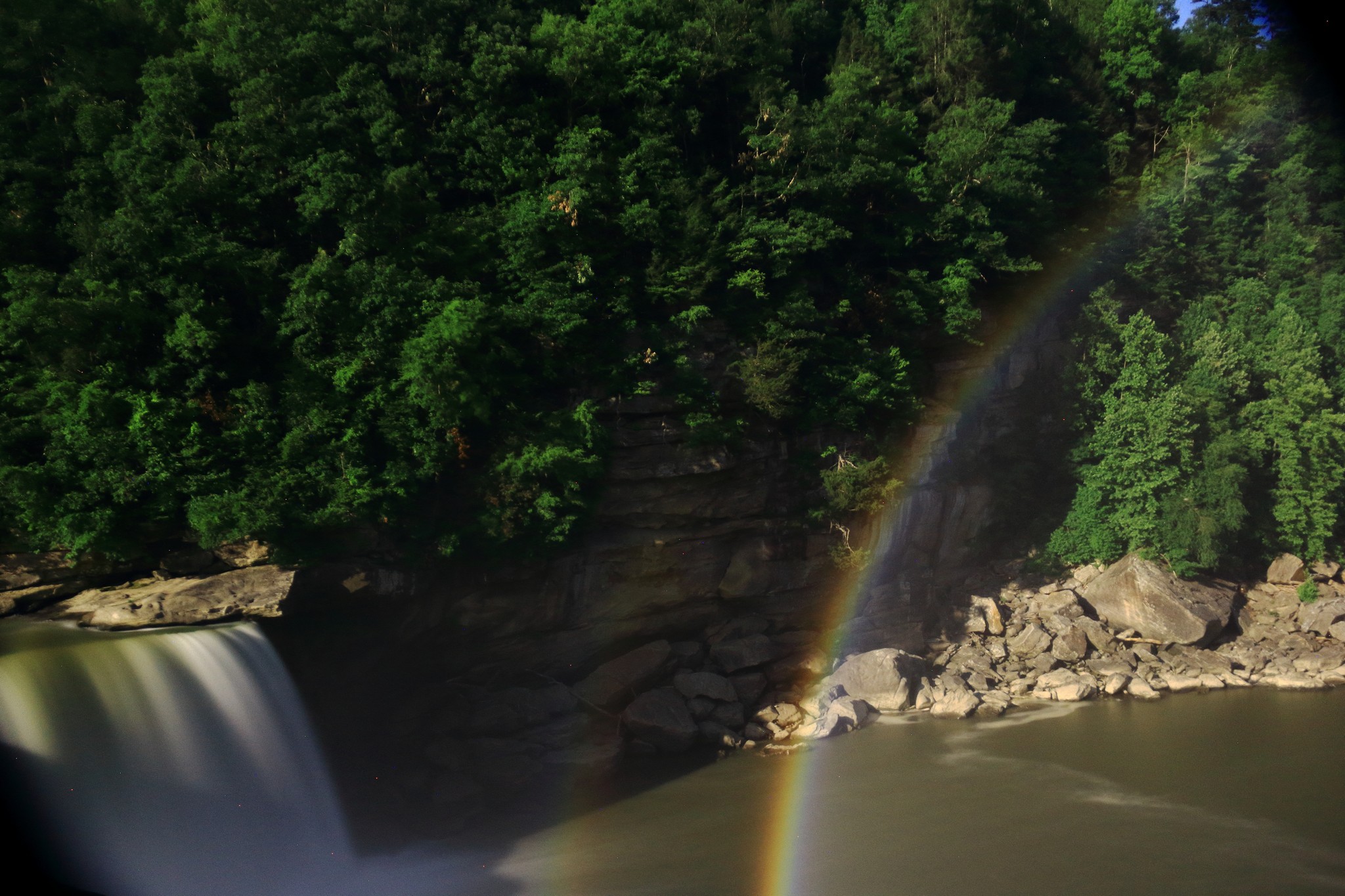
Wednesday, 06/23/2021: Posted photo — Moonbow.

Settings: Canon EOS 60D, ISO 800, f/5, 44 s, 18 mm.

Cumberland Falls is one of the few places in the world that regularly produces a moonbow. The “moonbow,” also called a white rainbow or lunar rainbow, is formed just like a rainbow—light is refracted in tiny water droplets—and appears for the two or so days, as long as the sky is clear, on either end of the full moon.  The other place in the world that a moonbow occurs regularly is Victoria Falls.

This photo was taken at 11:30 p.m. on a great moonlit night.

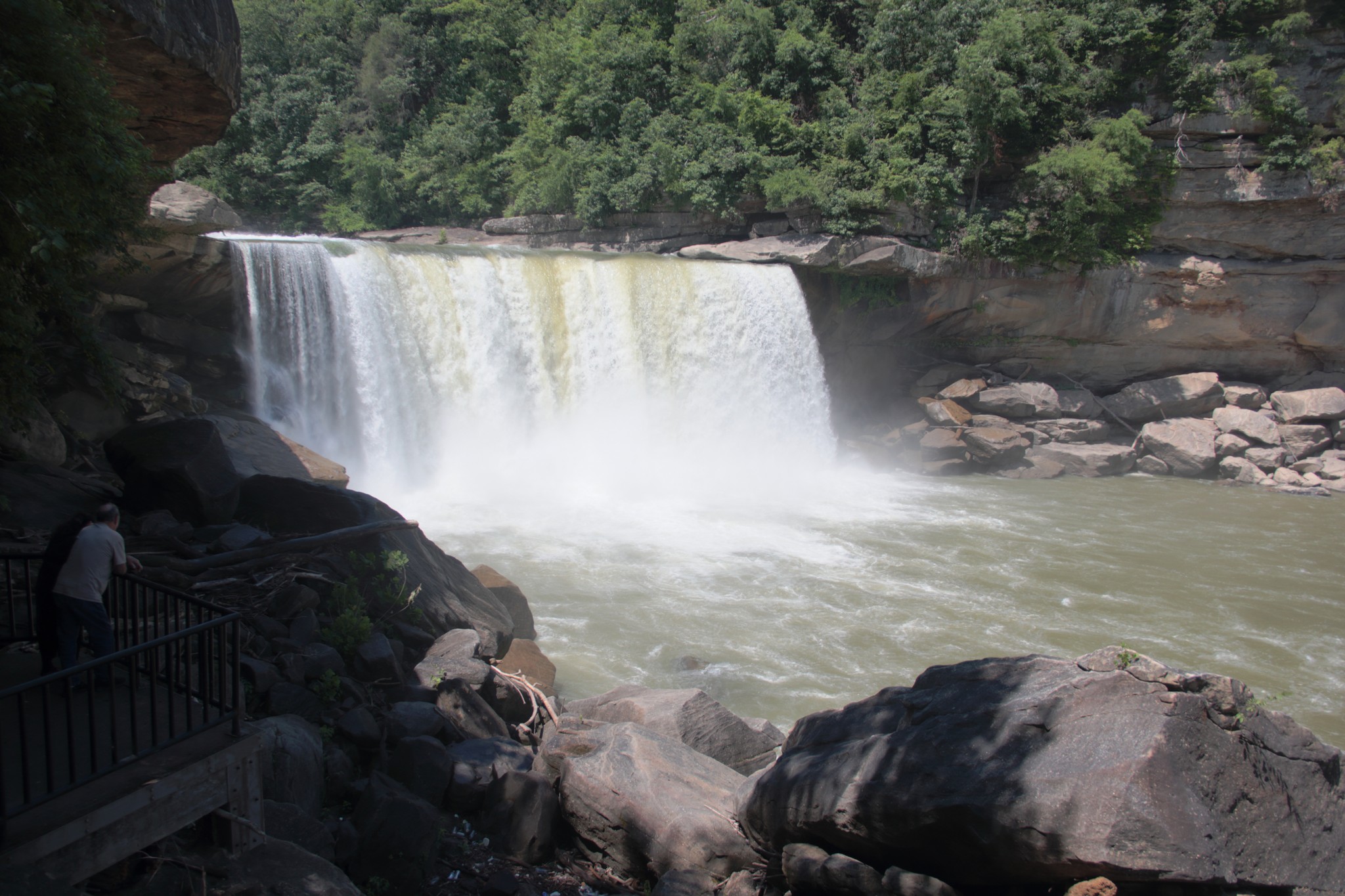
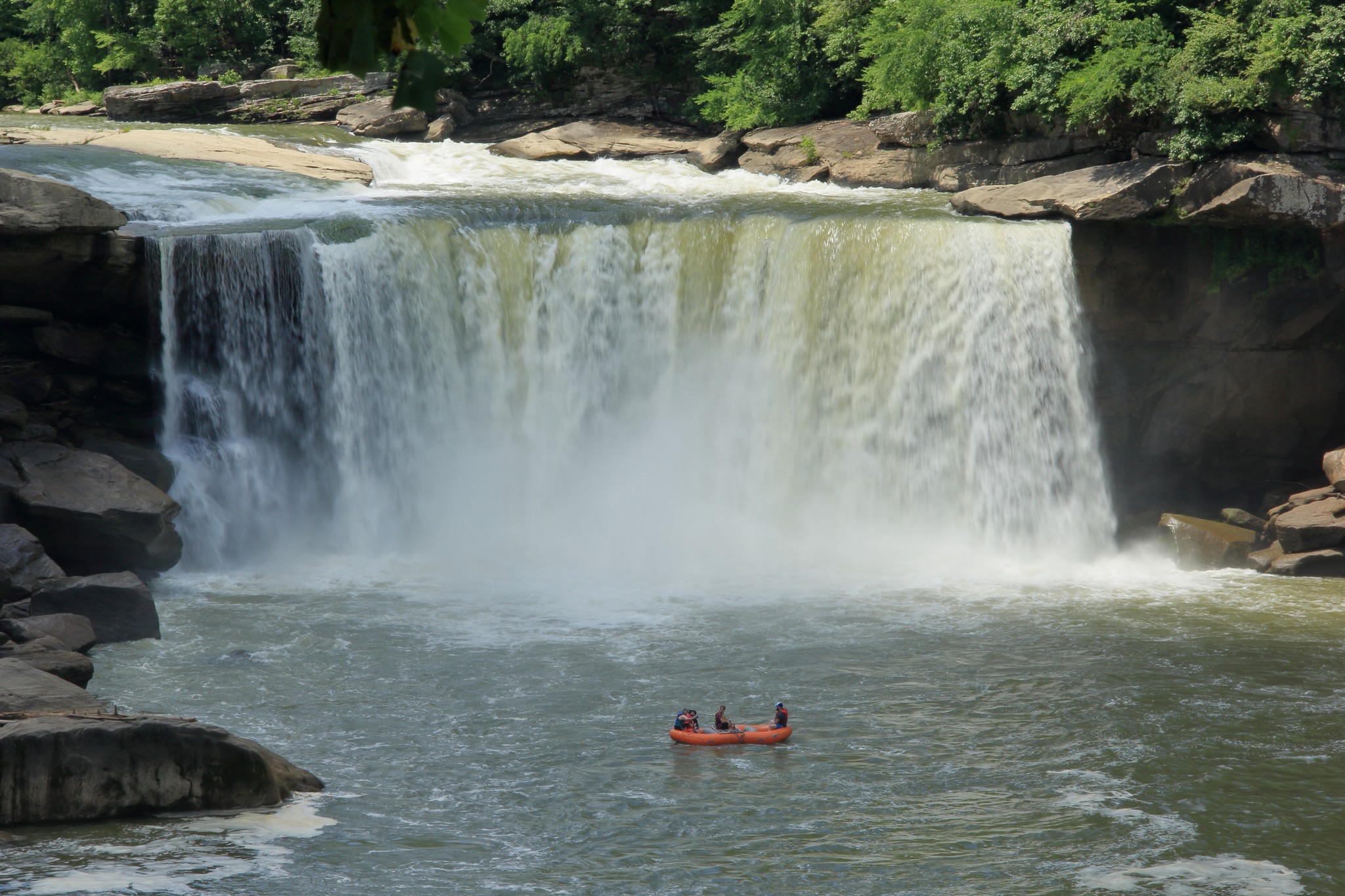
Thursday, 06/24/2021: Posted photo — Cumberland Falls.

Settings: Canon EOS 60D, ISO 100, f/4.6, 1/83 s, 18 mm.

Enjoy more photos from the park.

Friday, 06/25/2021: Post photo — Yahoo Falls.

Settings: Canon EOS 60D, ISO 200, f/7.1, 1/6 s, 55 mm.

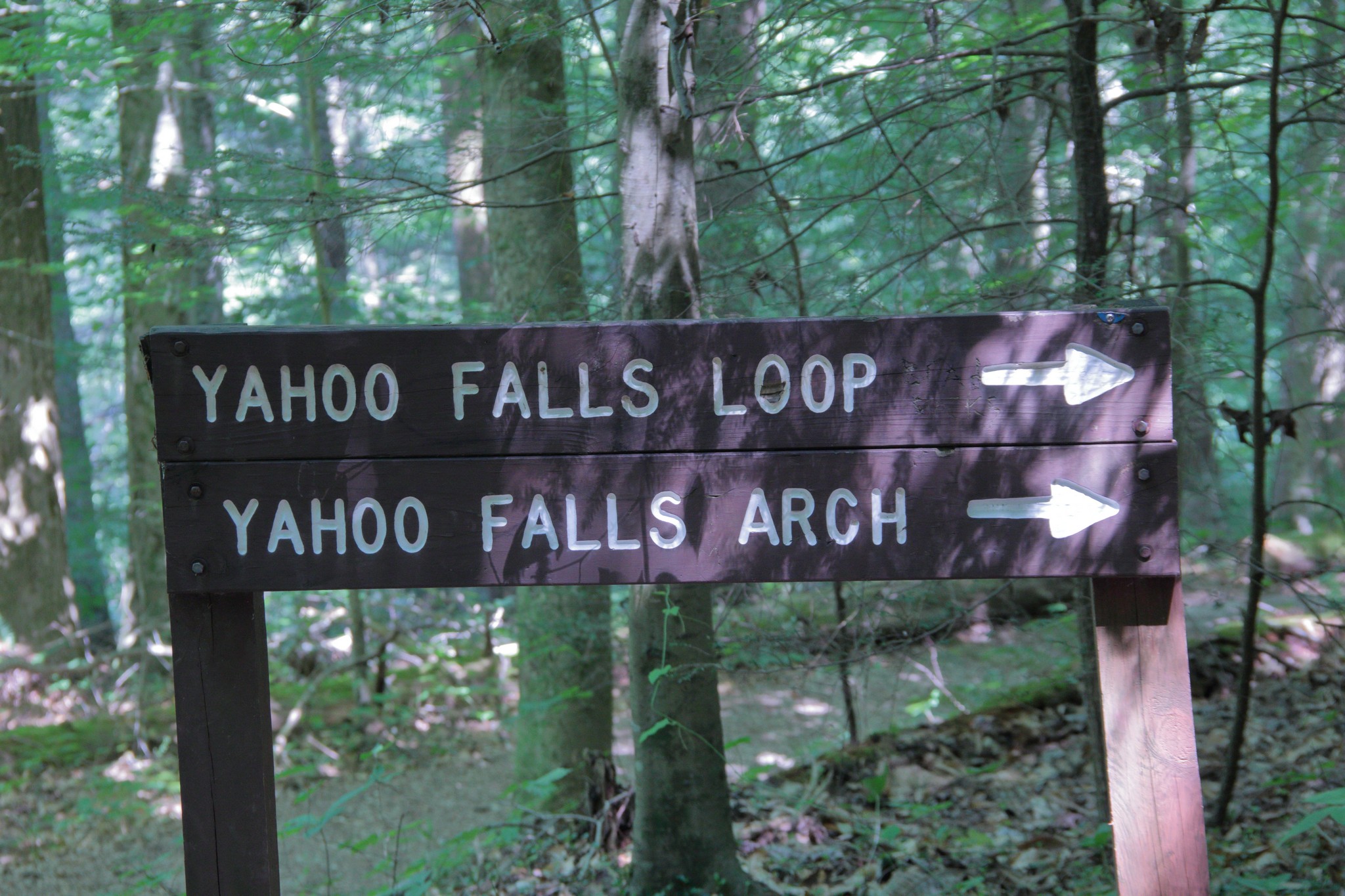
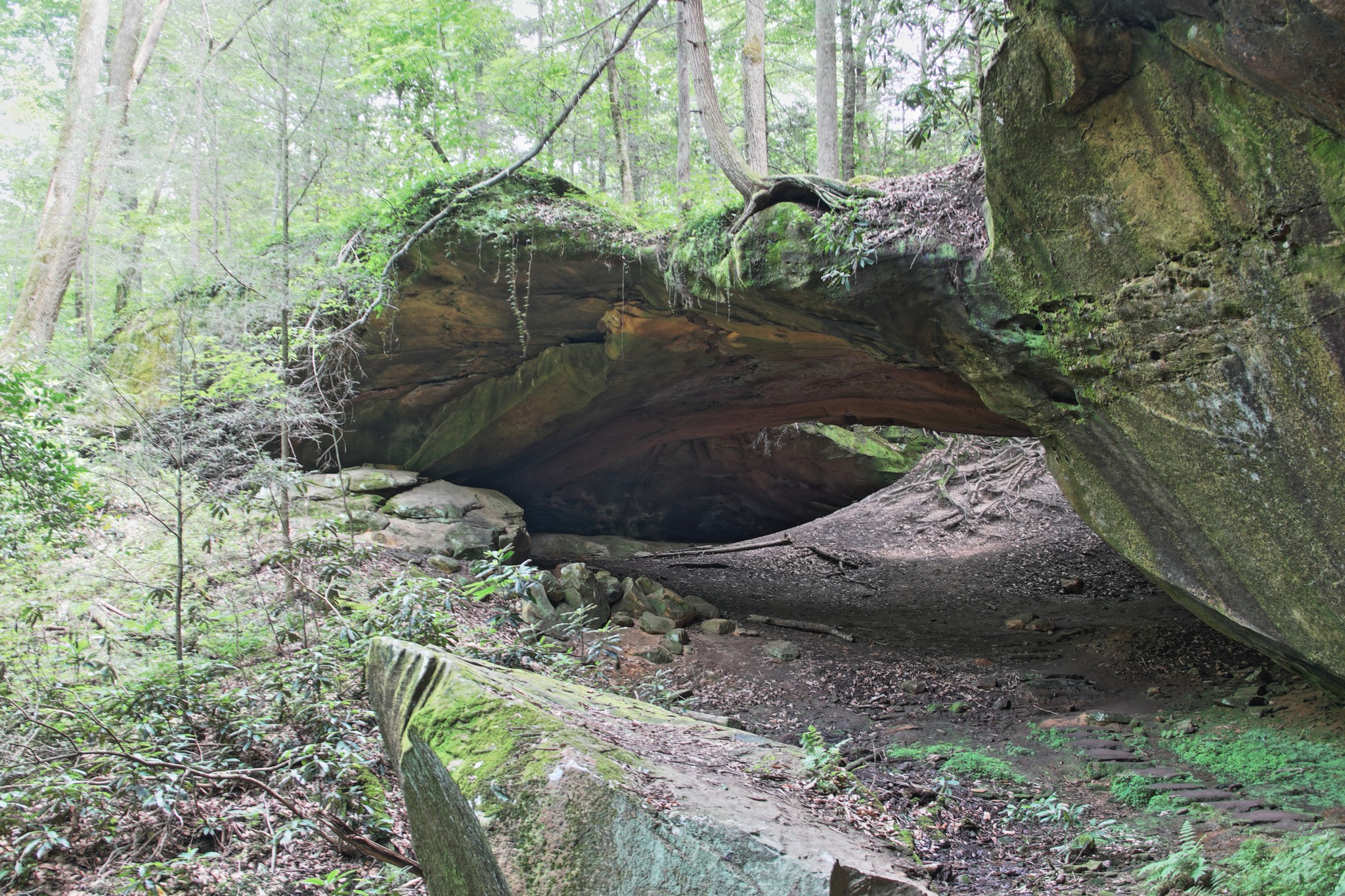
Today we left the park to hike to Yahoo Falls and Yahoo Arch. Enjoy the photos.

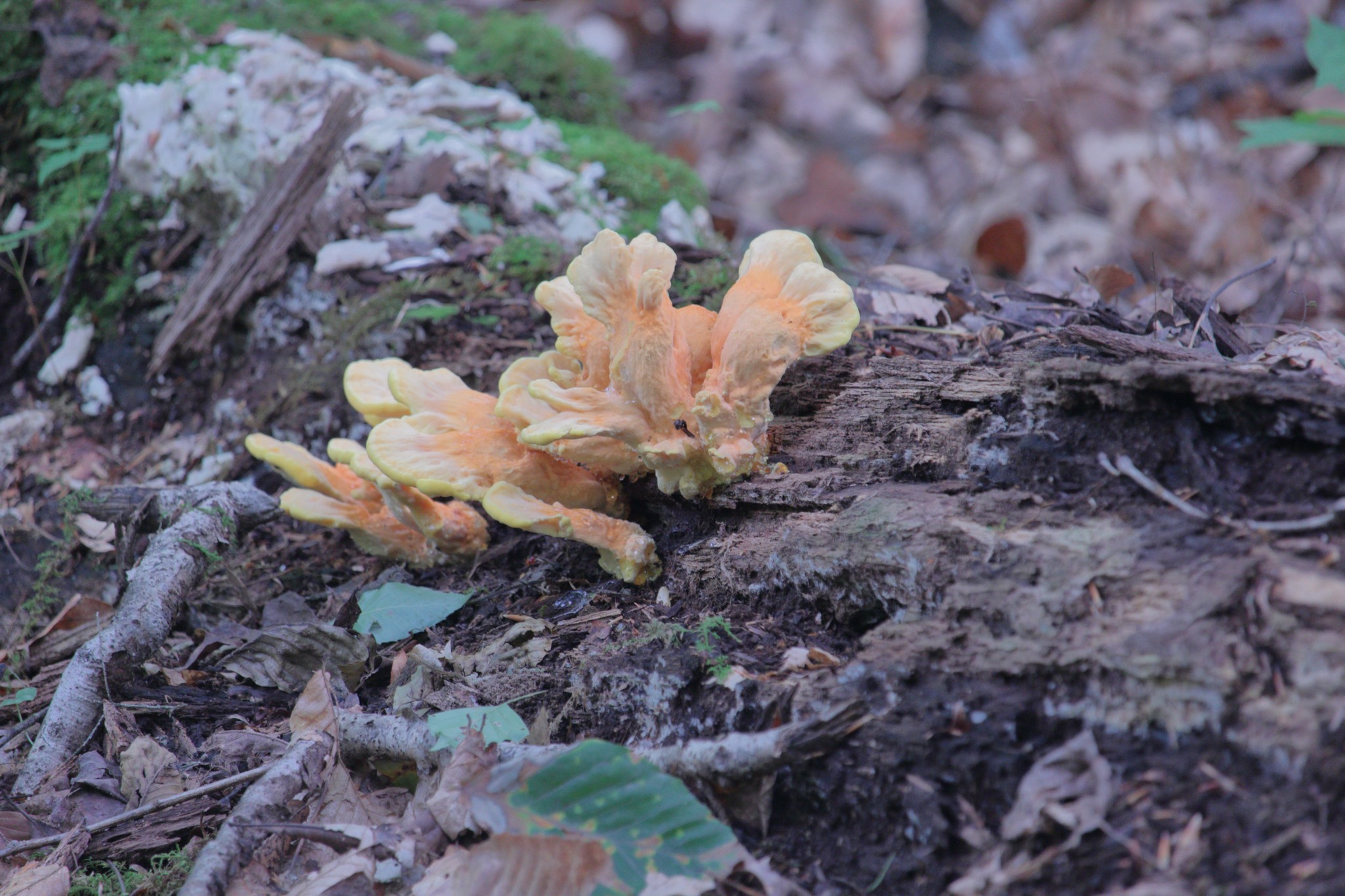
Here are more photos on our hike out to Yahoo Arch.

When we came back to the park, we watch nature at work. Here is what happens when a grasshopper gets caught in a spider web. The grasshopper did put up a good fight.

Saturday, 06/26/2021: Post photo — Hanger.

Settings: Samsung SM-G930V (Galaxy S7), ISO 50, f/1.7, 1/238 s, 4 mm

There is a black bear that frequented the campground at Cumberland Falls. The sites have hooks on there posts to have garbage so the bear could not get at it.

Today we travel back home.

Next week’s blog will be the same as this week. They it will be back to normal.

That is all for now. Until next week, be safe.

For more photo of other project I have work, visit my website: https://photobyjosephciras.weebly.com/ or visit me on Facebook at https://www.facebook.com/PhotobyJosephCiras/.

COVID is real! Be safe out there, keep your social distance, and remember to always wear your mask and wash your hands. Get your vaccine!

Photographic Thoughts — 05/23/2021 to 05/29/2021

“A tear contains an ocean. A photographer is aware of the tiny moments in a person’s life that reveal greater truths.” — Anonymous

Thank you for all the new views and likes from last week. It helps keep me going. Enjoy my blog post!

Enjoy this week’s rambling mind of a mechanical engineer and photographer.

Sunday, 05/23/2021: Posted photo — Get Out of my Tree.

Settings: Canon EOS 60D, ISO 200, f/5.6, 1/80 s, 135 mm

The photo I posted today was of two squirrels that were running around in our yard. These were two of five squirrels that were chasing after each other, knocking each other off trees, trying to hide from each other, and fighting each other. Most squirrels mate twice a year, once during the summertime and once towards the end of wintertime or early springtime. When one female is ready to mate, males will either chase after her or they will complete for the right to mate with her. What I was seeing was the competition to mate with her. There was one female squirrel on another tree watching the activity. Boys will be boys. It is very interesting to see nature at work.

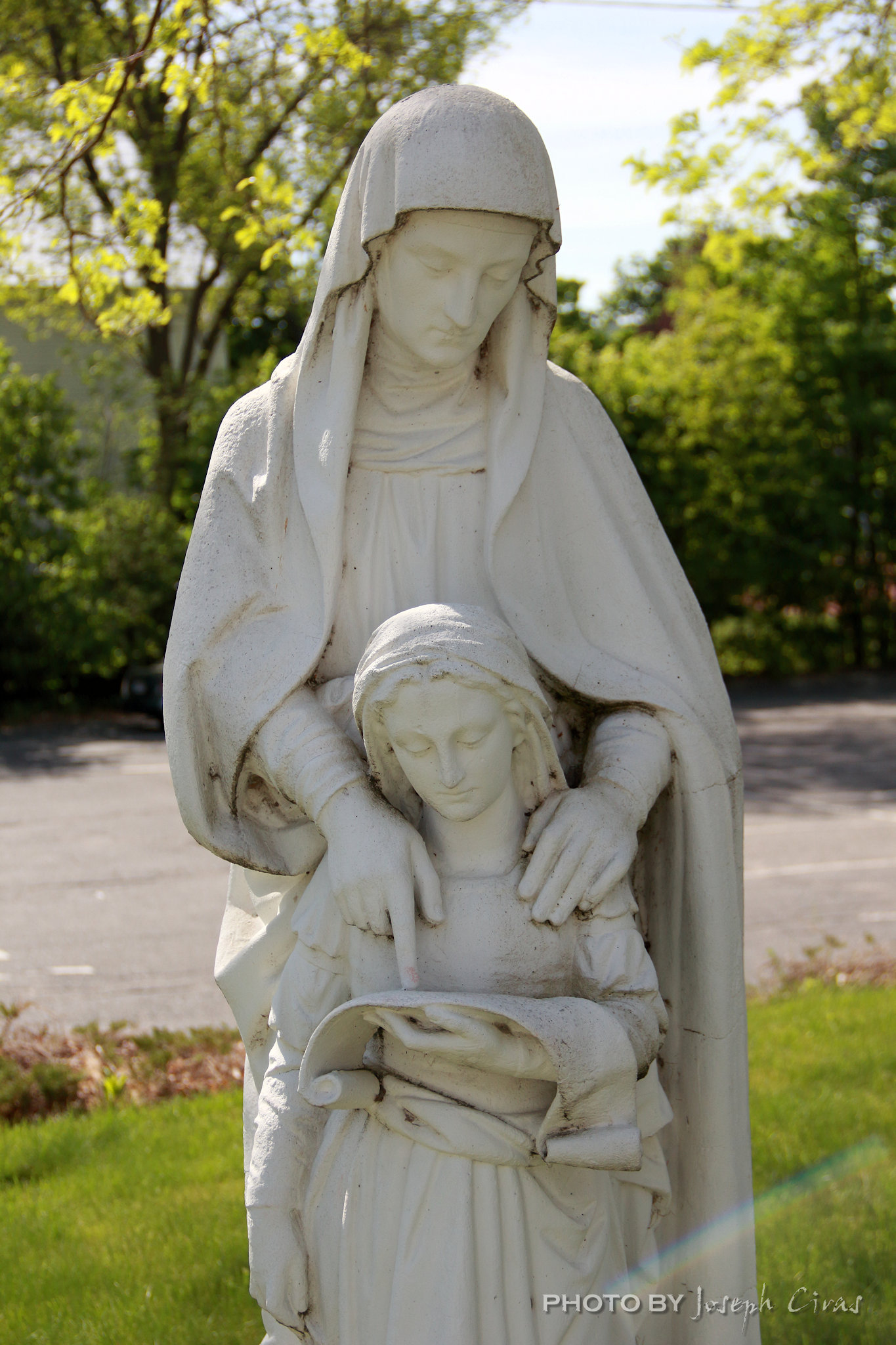
A photo that I almost posted was at the other end of the spectrum. It was a photo of a statue of St. Anne reading to Mary. This statue was in front of St. Denis’ sister church that was in town. St. Anne’s church was torn down due to safety concerns a few years ago.  “St. Anne is the patron saint of unmarried women, housewives, women in labor, grandmothers, childless people, equestrians, lacemakers, miners, the poor, and seamstresses. The most well-known patronage of St. Anne is that of grandmothers. Certainly, as the mother of the Virgin Mary and the grandmother of Jesus Christ, St. Anne was a woman of great virtue and love.

St. Anne is often shown seated with a book on her lap. The child Mary stands against her, eager to listen. This depiction of St. Anne is a small explanation of what we know of this holy woman. God entrusted to St. Anne the task of raising Our Lady in a holy and virtuous home, and from a very young age Mary looked to St. Anne to learn about God and how He works in the lives of those who love and serve Him.” — Catholic Saint Metals, (https://catholicsaintmedals.com/saints/st-anne/)

Monday, 05/24/2021: Posted photo — Buttercups.

Settings: Canon EOS 60D, ISO 100, f/7.1, 1/400 s, 69 mm

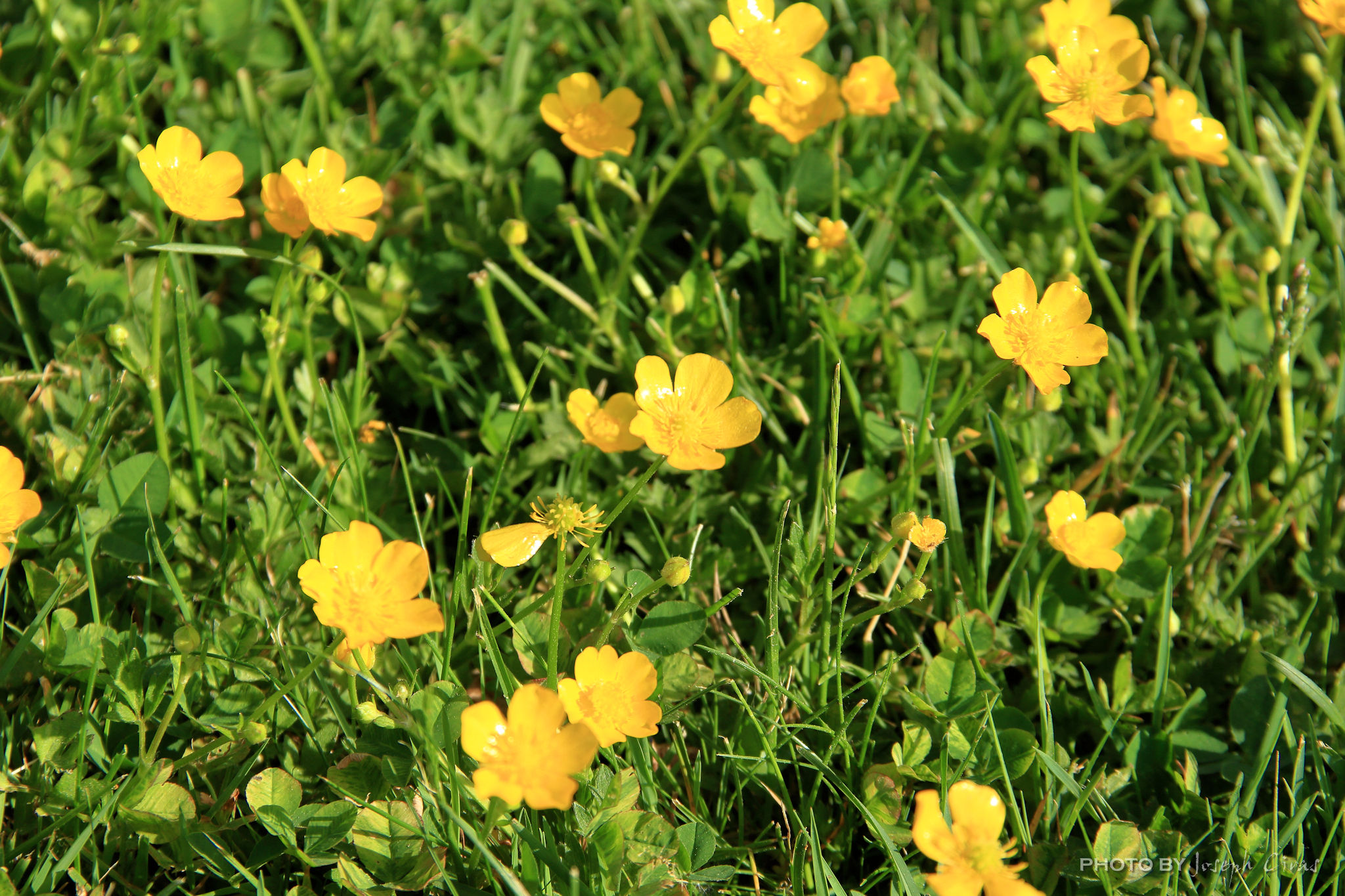
Buttercup is a type of herbaceous plant that belongs to the Ranunculaceae family. There are nearly 2000 species of buttercups that mostly inhabit northern hemisphere. Buttercups are usually found in cold and temperate regions. They prefer moist habitats and live in the fields, meadows, near the roads, in the woodlands, swamps and bogs. Buttercups are widely distributed and abundant in the wild. Some species of buttercups are rare and endangered due to habitat destruction and introduction of new, invasive plant species. Reflexive properties of buttercup flowers are applied in children’s game aimed to determine fondness for the butter. If yellow reflection appears on the skin after placing buttercup under the chin – then child likes to eat butter. Signs of intoxication appear immediately after ingestion of the plant. They include bloody diarrhea, excessive salivation, colic and blistering of the intestines. They have acrid taste, so even animals cannot eat them fresh. (https://www.softschools.com/facts/plants/buttercup_facts)

These buttercups are in the lawn near were I park my car at work. I took this photo on my way home from work before tonight’s hike. I took this photo just in case I did not take any photos during my hike. On my hike, I just hiked with the group of hikers I met last week. Great to go hiking with a group of hikers that socialize and not a social group that hikes.

Tuesday, 05/25/2021: Posted photo — Rhododendron.

Settings: Canon EOS 60D, ISO 100, f/7.1, 1/200 s, 92 mm.

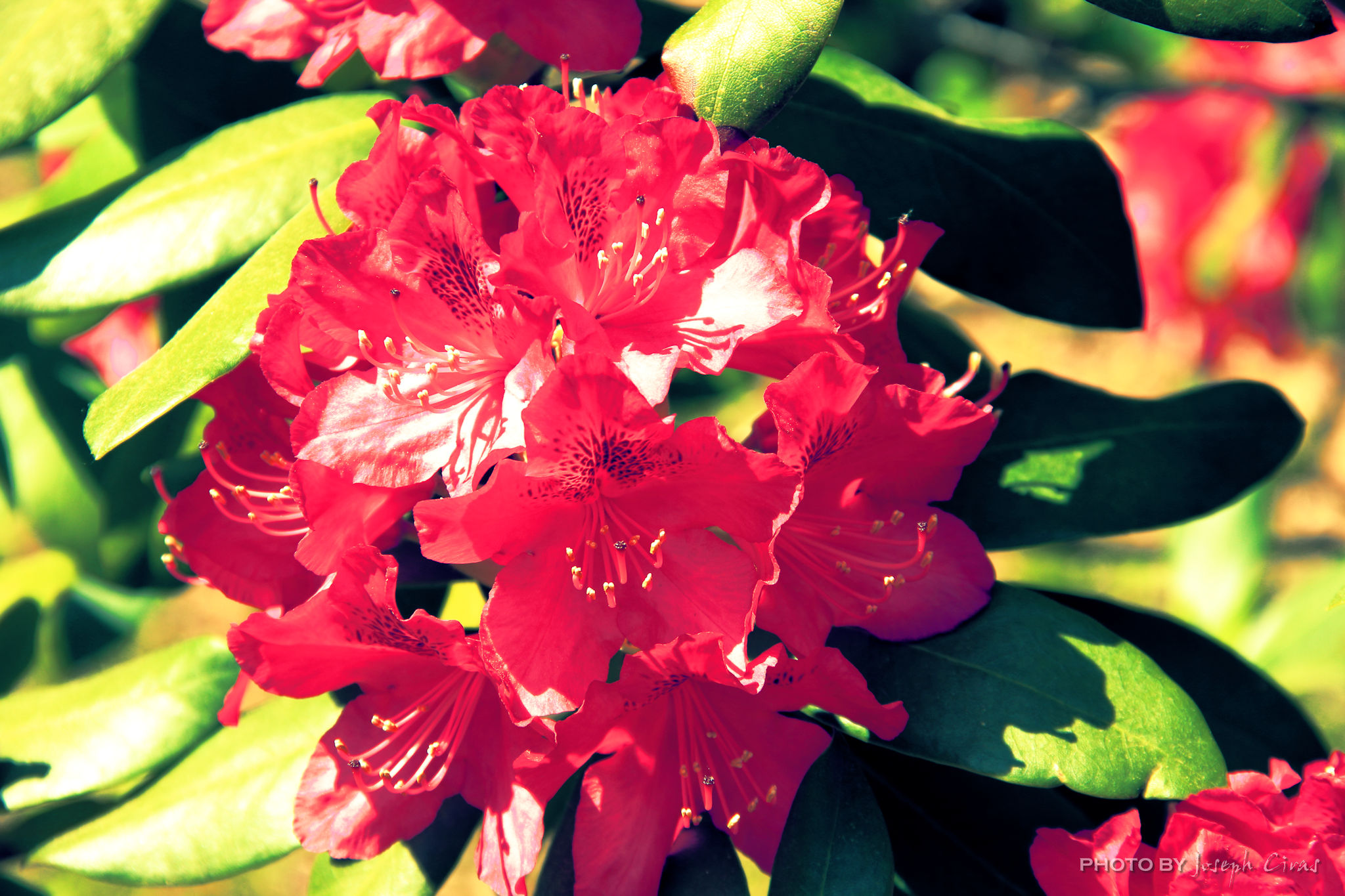
Short and sweet. We have a red rhododendron that blooms after our azaleas. They are such wonderful plants that attract bumble bees and other insects.

Wednesday, 05/26/2021: Posted photo — Pants.

Settings: Canon EOS 60D, ISO 400, f/7.1, 1/60 s, 35 mm.

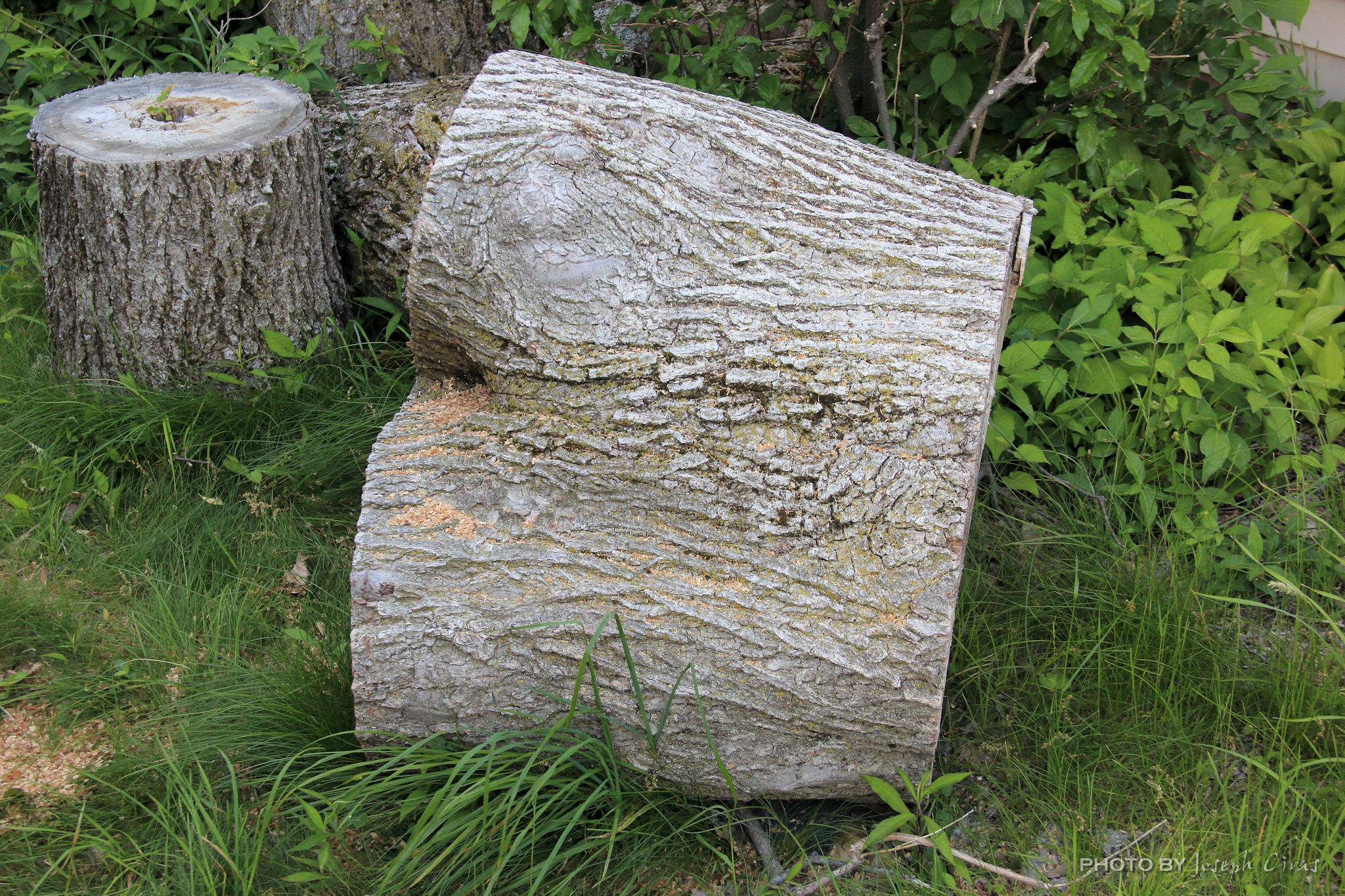
Pants for Groot perhaps? Groot is a fictional character appearing in American comic books published by Marvel Comics. Created by Stan Lee, Larry Lieber and Jack Kirby, the character first appeared in Tales to Astonish #13. He is a man made out of wood.

Thursday, 05/27/2021: Posted photo — Rabbit.

Settings: Canon EOS 60D, ISO 3200, f/5.6, 1/50 s, 135 mm.

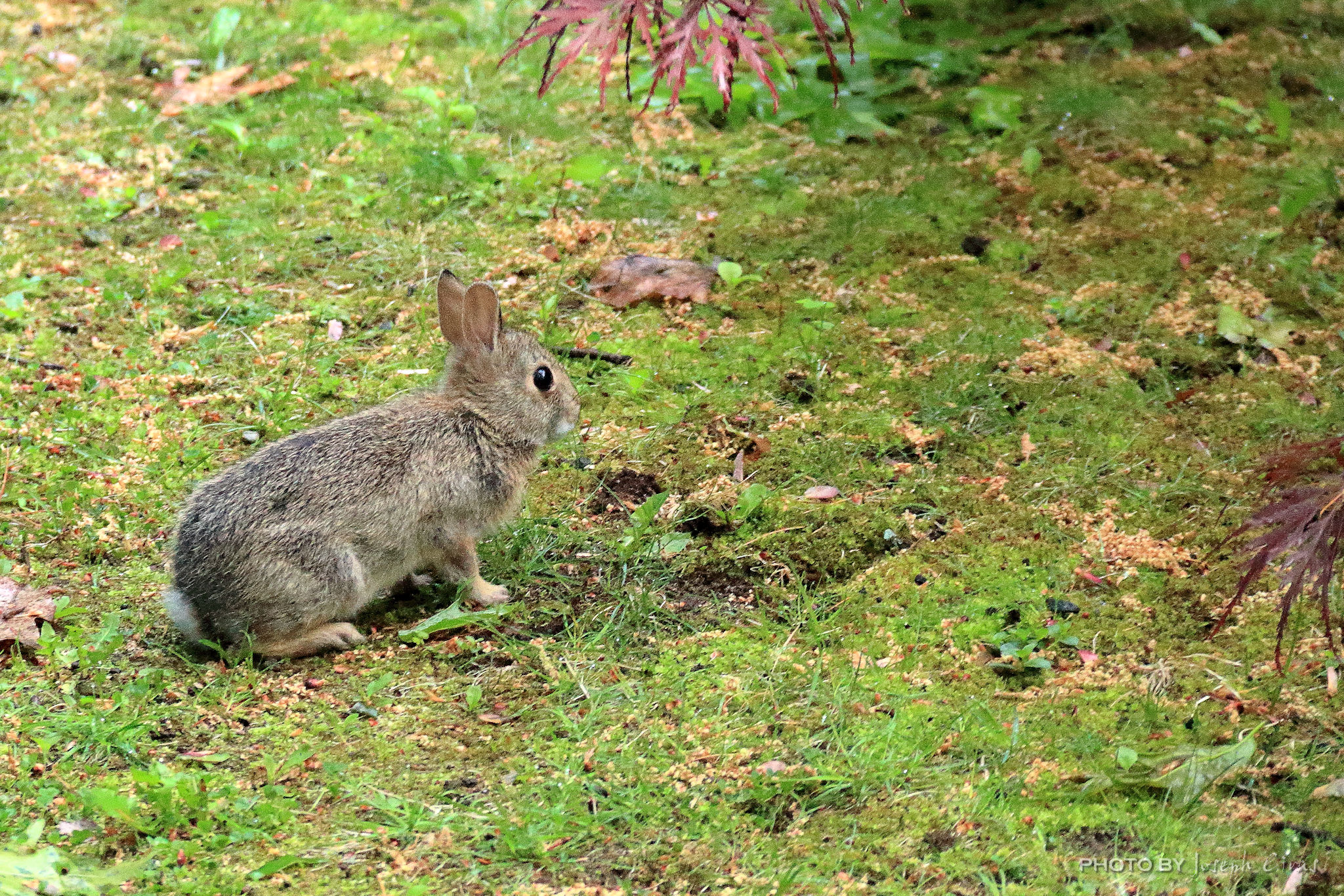
Imagine our two-year-old grandniece’s excitement every time this rabbit came out from under our deck. “There it is!!” She was so excited that she would run toward the rabbit and then it would hide. She would then sit down next to our son and wait and get excited repeatedly.

The wonders of youth. Why do we have to lose it?

Friday, 05/28/2021: Post photo — Clouds.

Settings: Canon EOS 60D, ISO 100, f/7.1, 1/250 s, 18 mm.

Needed a quick photo today since I was traveling north to go hiking. Took this one in the morning before the rains came in.

binary comment

Saturday, 05/29/2021: Post photo — Hiking.

Settings: FUGIFILM FinePix XP70, ISO 100, f/6.2, 1/240 s, 5 mm.

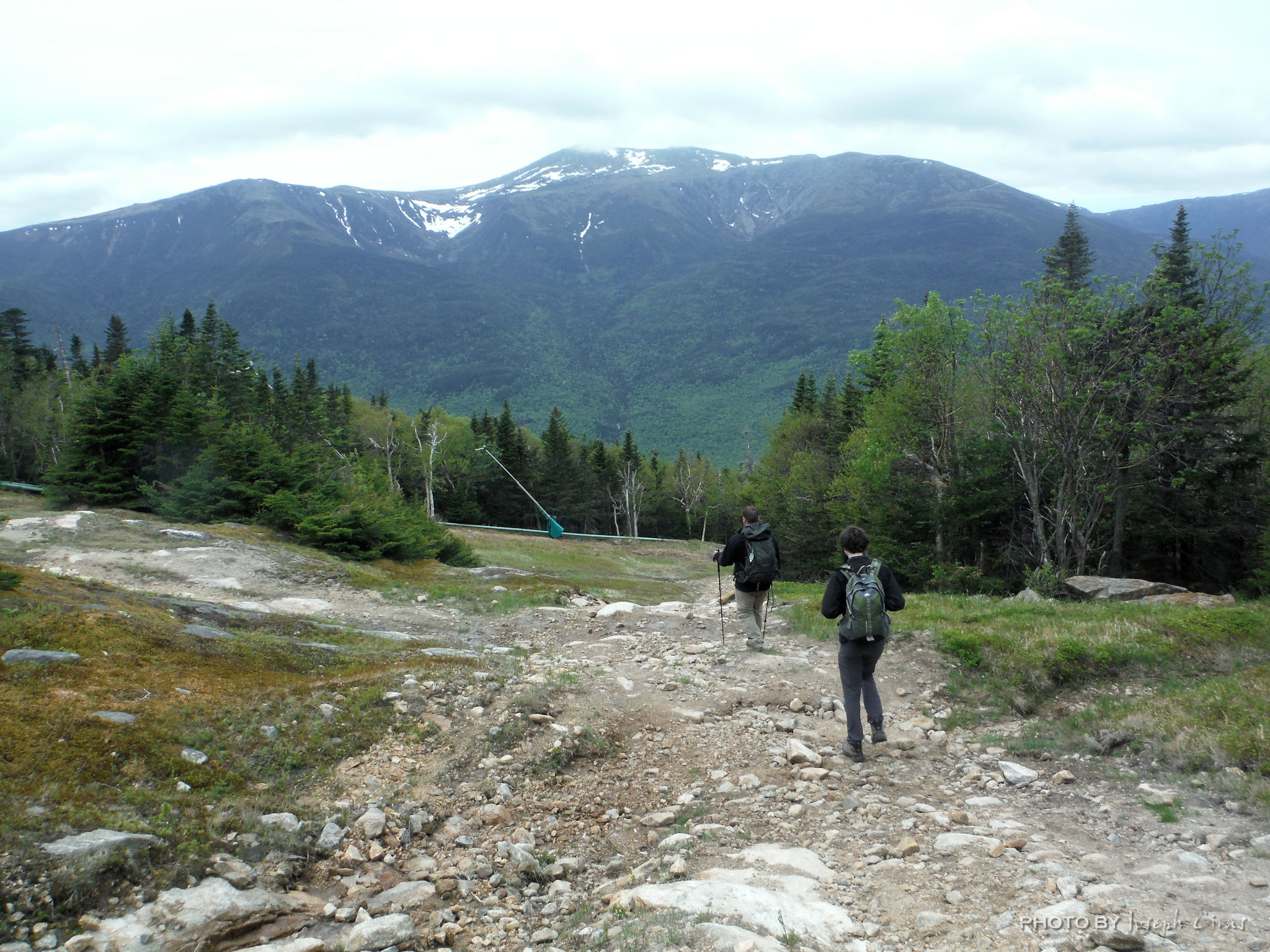
My son and his friend hiking in NH. This is from Wildcat D looking towards Mount Washington.

Hiking down the trail. Mount Washington in the distance

Five 4000-foot mountains, two official 4000 footers, wet river crossing to start the hike, 1600 feet of vertical gain in less than one-half mile, and hiking with your son and one of his friends. It was a great day. I feel in the river to start the hike. Not a great way to start, but I recovered quickly. Lucky, I brought a second pair of socks to change into. The first pair did not get very wet since I had on a good pair of hiking boots. I have my warm cloths on since the temperature was not to get above freezing in the mountains, so the wetness did not affect my hike.

That is all for now. Until next week, be safe.

For more photo of other project I have work, visit my website: https://photobyjosephciras.weebly.com/ or visit me on Facebook at https://www.facebook.com/PhotobyJosephCiras/.
COVID is real! Be safe out there, keep your social distance, and remember to always wear your mask and wash your hands.

Photographic Thoughts — 05/02/2021 to 05/08/2021

“Taking pictures is like tiptoeing into the kitchen late at night and stealing Oreo cookies.” — Diane Arbus

Thank you for all the new views and likes from last week. It helps keep me going. Enjoy my blog post!

Enjoy this week’s rambling mind of a mechanical engineer and photographer.

Sunday, 05/02/2021: Posted photo — Seeds.

Settings: Canon EOS 60D, ISO 200, f/5.6, 1/1600 s, 62 mm

These are the pods of one of the sweet birches, or cheery birch, trees in our yard. This is a wonderful time of year when the trees and flowers are starting to bloom. They bloom later in our area because of elevation. Some locations, such as Worcester and Boston, have their trees and plants in full bloom.

Sweet birch pods

Information section of this blog. There are four Common Birch Species according to the Treehuggers website. The four most common birch species in North America are:

Paper birch (Betula papyrifera): Also known as canoe birch, silver birch, or white birch, this is the species more widely recognized as the iconic birch. In its native environment, it can be found in forest borders across the northern and central U.S. Its bark is dark when the tree is young, but quickly develops the characteristic bright white bark that peels so readily in thick layers that it was once used to make bark canoes. The species grows to about 60 feet tall but is relatively short-lived. It is susceptible to borer insects and is no longer used widely in landscape design due to its susceptibility to damage.

River birch (Betula nigra): Sometimes called black birch, this species has a much darker trunk than the paper birch, but still has the characteristic flaky surface. In its native environment, it is common to the eastern third of the U.S. Its trunk has a much rougher, coarser appearance than most of the other birches, and it is bigger than the paper birch, sometimes growing to 80 feet or more. It prefers moist soil, and although short-lived, it is relatively immune to most diseases. It is a common choice in residential landscape design.

Yellow birch (Betula alleghaniensis): This tree is native to forests of the northeast U.S. and is also known as the swamp birch since it is often found in marshy areas. It is the largest of the birches, easily growing to 100 feet in height. It has silvery-yellow bark that peels in very thin layers. Its bark does not have the thick layers seen in paper birches nor the very rough texture seen in river birches.

Sweet birch (Betula lenta): This species, also known in some areas as the cherry birch, is native to the eastern U.S., especially the Appalachian region. Growing to 80 feet, its bark is dark in color, but unlike the dark river birch, the skin is relatively tight and smooth, with deep vertical scores. From a distance, the impression is of a smooth, silver bark marked by irregular vertical black lines.

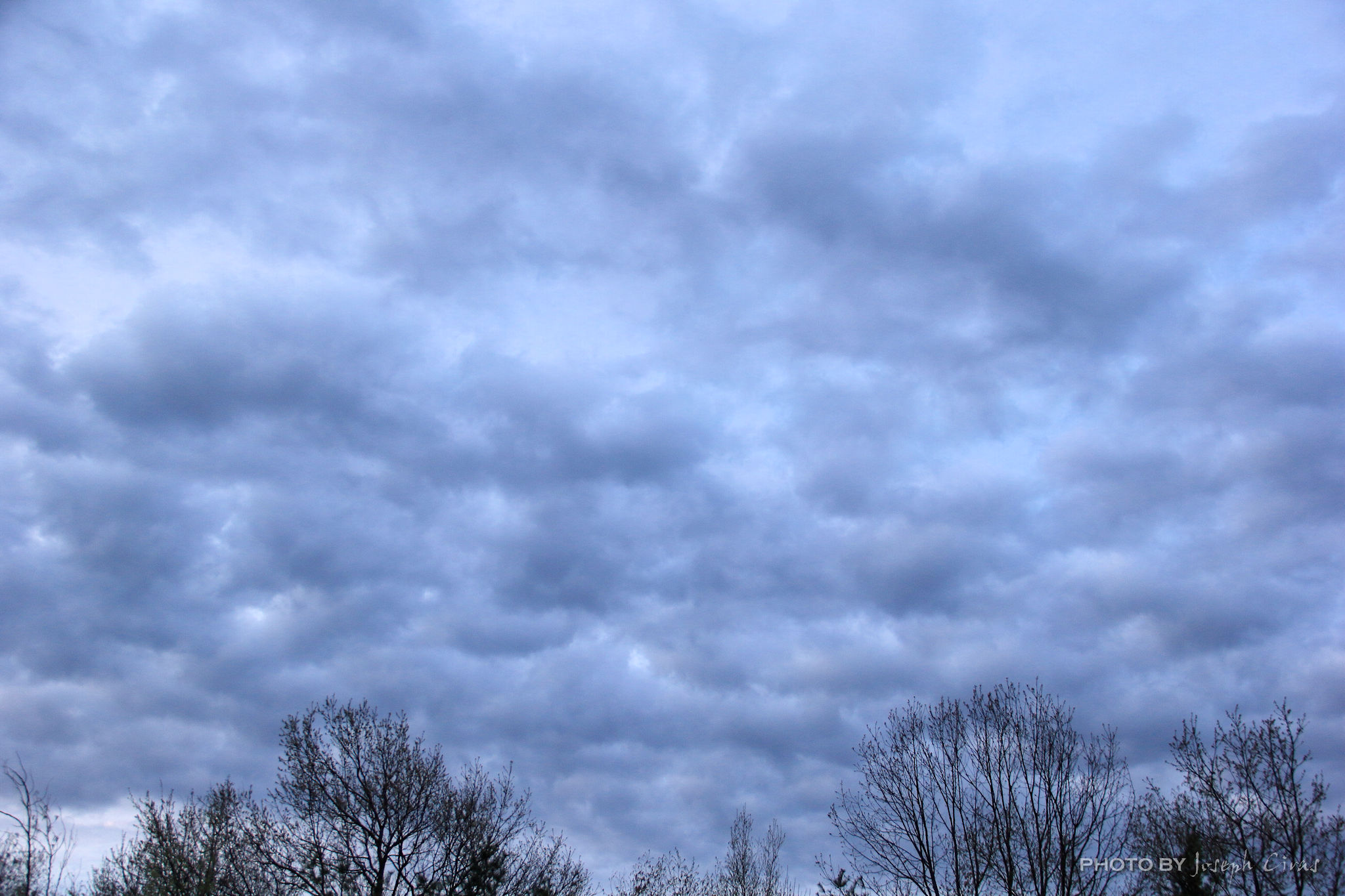
Monday, 05/03/2021: Posted photo — Clouds.

Settings: Canon EOS 60D, ISO 200, f/4, 1/125 s, 25 mm.

Here are some clouds I saw this morning before the rain. I liked the texture and colors in the clouds, so I took the photo. Here is a little information about clouds.

Clouds

While it is true that clouds contain water, they are not made of water vapor. If they were, you would not be able to see them. The air around us is partially made up of invisible water vapor. The cooler air causes the water droplets to start to stick to things like bits of dust, ice, or sea salt. It is only when that water vapor cools and condenses into liquid water droplets or solid ice crystals that visible clouds form. Clouds are important for many reasons. Rain and snow are two of those reasons. At night, clouds reflect heat and keep the ground warmer. During the day, clouds make shade that can keep us cooler.

Tuesday, 05/04/2021: Posted photo — Maple Growth.

Settings: Canon EOS 60D, ISO 400, f/7.1, 1/160 s, 106 mm.

Like the photo I took on Sunday, trees are budding in our yard. These are the leaves on one of the many sugar maples in our year. I have posted photos of these trees in the fall with their colorful leaves and during the winter/spring with they are tapped to make maple syrup.

How do I know this is a sugar maple and not a red maple? What is the difference between a sugar maple and a red maple? A Red maple has red twigs and buds (and red leaves in the fall and red flowers in the spring). The leaves of sugar maple, on the other hand, generally turn yellow or golden in the fall, and sugar maples have brown twigs and buds.

Sugar maple leaves starting to bud

The look great when they are in bloom. They do not look so great when I must rake the leaves in the fall. I would not have it any other way. I enjoy living in an area with many trees.

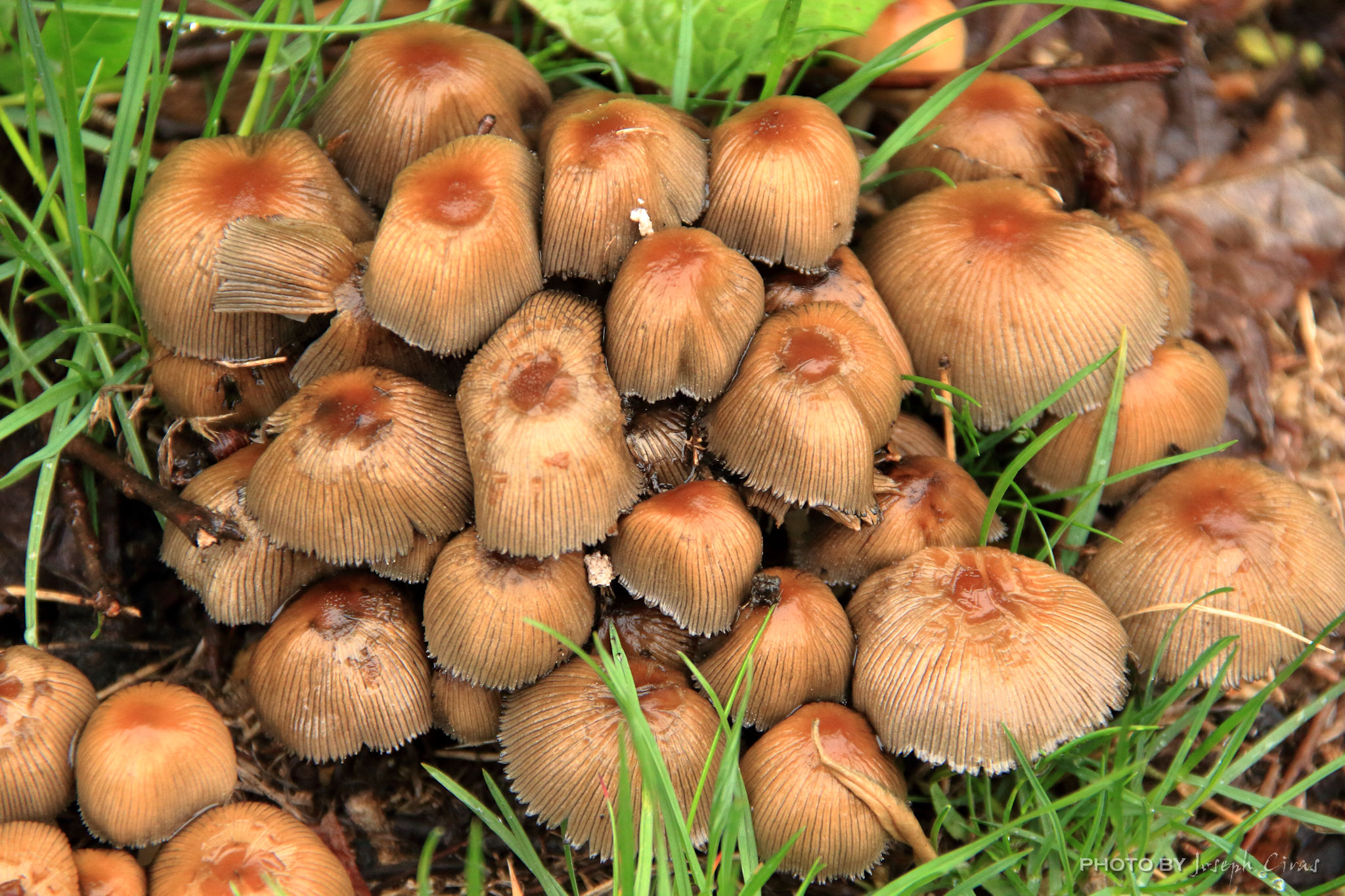
Wednesday, 05/05/2021: Posted photo — Mushrooms.

Settings: Canon EOS 60D, ISO 1000, f/5.6, 1/125 s, 100 mm.

These are mushroom that grew almost overnight due to the rain in recent days. I just like the clustering of them.

Although mushrooms are classified as vegetables, technically they are not plants, but part of the kingdom called fungi. Mushrooms are low in calories, have virtually no fat and no cholesterol, and are very low in sodium. Fungus, plural fungi, any of about 144,000 known species of organisms of the kingdom Fungi, which includes the yeasts, rusts, smuts, mildews, molds, and mushrooms. There are also many funguslike organisms, including slime molds and oomycetes (water molds), that do not belong to kingdom Fungi but are often called fungi. Mushrooms with white gills are often poisonous. So are those with a ring around the stem and those with a volva. Because the volva is often underground, it is important to dig around the base of a mushroom to look for it. Mushrooms with a red color on the cap or stem are also either poisonous or strongly hallucinogenic.

Mushrooms after the rains

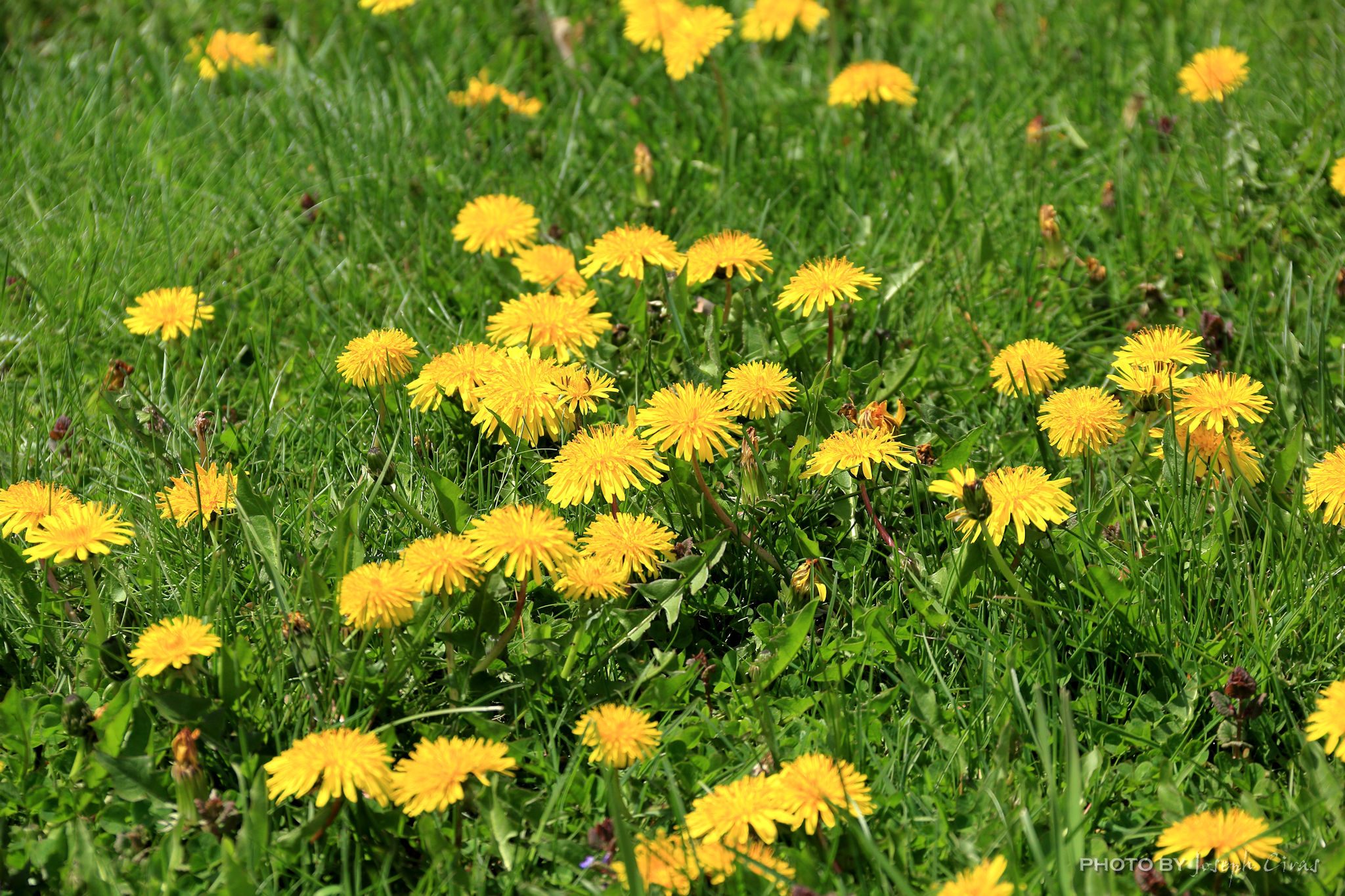
Thursday, 05/06/2021: Posted photo — Dandelions.

Settings: Canon EOS 60D, ISO 100, f/7.1, 1/320 s, 87 mm.

Dandelion is a plant with yellow flowers. Taraxacum officinale is the most common variety of this plant, and it grows in many parts of the world. Botanists consider dandelions to be herbs. People use the leaves, stem, flower, and root of the dandelion for medicinal purposes.

There are five ways to eat dandelions according to Michigan State University:

  1. Dandelion green salad: This is the simplest way to use dandelion greens. Simply pick young greens (older ones are more bitter) and add them to a tossed salad. While you can make a salad out of just the dandelion greens, it tends to be too bitter for many people, especially kids.
  2. Sauteed greens: Cooking dandelions eliminates some of the bitterness. First boil the greens for about 5 minutes, then transfer to a pan with hot olive oil and garlic, and sauté for 3-5 minutes. Eat as is or add to other dishes like pasta or scrambled eggs.
  3. Dandelion fritters: Collect flower heads and wash them. Then batter in a flour, egg, and milk batter mix. Add to a pan with hot oil and cook until brown, just like pancakes. Serve with a drizzle of honey or applesauce.
  4. Baking with dandelion petals: The petals of the flower are extremely versatile. Collect flower heads and then remove the petals from the heads. These can be stored in a plastic bag in the freezer for longer keeping. Add petals to just about anything you can bake like muffins, bread, cookies, or quiche. They can also be added to things like hamburgers. The amount to use varies on your personal liking. Try adding a cup of petals to the mix the next time you make muffins or burgers.
  5. Dandelion root coffee/tea: This by far the most labor-intensive use of dandelion but some say it is worth the effort. Collect and wash dandelion roots. Chop or food process the roots and dry in a food dehydrator or the oven at 250 degrees Fahrenheit until thoroughly dry. Once dry, roast them in the oven at 350 F until they turn brown (but not burnt). Put roots and water in a pan and bring to boil (2 Tbs root to 16 oz water), then simmer for 20 minutes. Strain and drink.

People either use chemicals to kill them or they pull up the dandelions to get them off their lawns. According to Bob Vila, to dig up the dandelions, as any plant is more easily pulled from the ground if the soil is moist, first use the watering can to dampen the soil around the dandelion, and wait a few minutes for the moisture to settle in. Then, work a weeding knife down along the base of the dandelion in two or three places. Push the soil away from the root of the plant by wiggling the knife. Finally, grasp the base of the plant between your fingers and gently pull. If it still feels stuck, work the weeding knife around some more, and then gently pull out the entire taproot with the dandelion.

Here is a way to kill dandelions without using chemicals. Simply pouring vinegar over the dandelions changes the acidity in the soil for long enough to kill the weeds. For a faster punch, mix pickling vinegar with boiling water in equal parts for your dandelion killer. Pickling vinegar has more acid that distilled white vinegar, so it makes a more effective herbicide.

Dandelion

There is much information in this week’s blog. Wonder if I will be keeping it up for the remainder of the week.

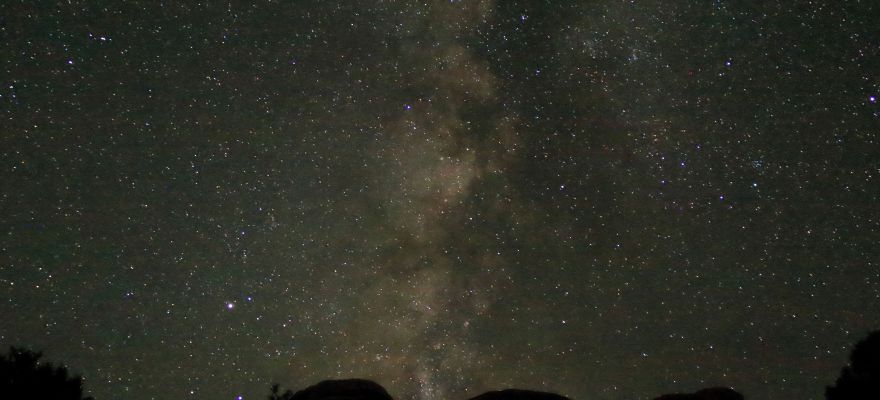
Friday, 05/07/2021: Post photo — Milky Way.

Settings: Canon EOS 60D, ISO 3200, f/3.5, 1/20 s, 18 mm.

These are some of the first “good” photos that I have taken of the Milky Way. The vertical Milky Way was taken at the Needles section of Canyonland National Park. This was the first photo of the Milky Way that I liked. I learned much about my settings and techniques while taking this photo. I made may rookie errors, such as incorrect camera settings and not taking a series of photos to stake. The Needles section of Canyonland National Park is one of the dark sky areas in the Unites States. This photo was taken very early in the morning, 2 a.m., after the moon had set. The second, or diagonal photo, was taken last year when we were observing the Comet Neowise.

The Milky Way is the galaxy that contains our Solar System, with the name describing the galaxy’s appearance from Earth: a hazy band of light seen in the night sky formed from stars that cannot be individually distinguished by the naked eye.

The Milky Way from Canyonlands National Park

This photo has been included in my blog at the request of another blogger. Thank you for the request. Posting this photo is incentive for me to get out and make the adjustments to my camera settings and post processing to get a better photo of the Milky Way. As with my moon photos, I need to get out and practice more.

Milky Way during my comet observation

Quick starting camera setting: ISO 2500, Shutter Speed 25 sec, and Aperture f/2.8 (or as wide as possible). A good steady tripod and a dark sky are also needed. There are many websites and books on how to photograph the Milky Way. And as a reminder when your camera is on a tripod, turn off image stabilization, or vibration stabilization, on your camera. With these settings on your photos will not be in focus.

Saturday, 05/08/2021: Post photo — Double Falls.

Settings: Canon EOS 60D, ISO 100, f/22, 1/10 s, 18 mm.

These falls are located at the end of Snows Millpond and lead into Whitman River. The building above the falls is a papermill. There are still a few papermills operating in the nearby town.

Snows Millpond is a reservoir located just 2.8 miles from Fitchburg. Fishermen will find a variety of fish including largemouth bass and others here. Alternate names for this reservoir include Snow Mill Pond and Snows Mill Pond.

Double falls

The Whitman River is an 8.4-mile-long (13.5 km) river in Massachusetts that flows through Ashburnham, Westminster, and Fitchburg. It arises from Lake Wampanoag in Ashburnham, travels through a couple of ponds in Westminster, and ultimately joins Phillips Brook in Fitchburg to form the North Nashua River. The North Nashua River flows 19.9 miles (32.0 km), generally southeastward, past Fitchburg and joins the South Nashua River, about 5 miles (8.0 km) below its issuance from the Wachusett Reservoir, to form the Nashua River. The Nashua River is 37.5 miles (60.4 km) long and is a tributary of the Merrimack River. The Merrimack River is a 117-mile-long (188 km) river that rises at the confluence of the Pemigewasset and Winnipesaukee rivers in Franklin, New Hampshire, flows southward into Massachusetts, and then flows northeast until it empties into the Gulf of Maine at Newburyport.

That is all for now. Until next week, be safe.

For more photo of other project I have work, visit my website: https://photobyjosephciras.weebly.com/ or visit me on Facebook at https://www.facebook.com/PhotobyJosephCiras/.
COVID is real! Be safe out there, keep your social distance, and remember to always wear your mask and wash your hands.

Photographic Thoughts—04/04/2021 to 04/10/2021

“You don’t take a photograph. You ask quietly to borrow it.” — Unknown

Thank you for all the new views and likes from last week. It helps keep me going. Enjoy my blog post!

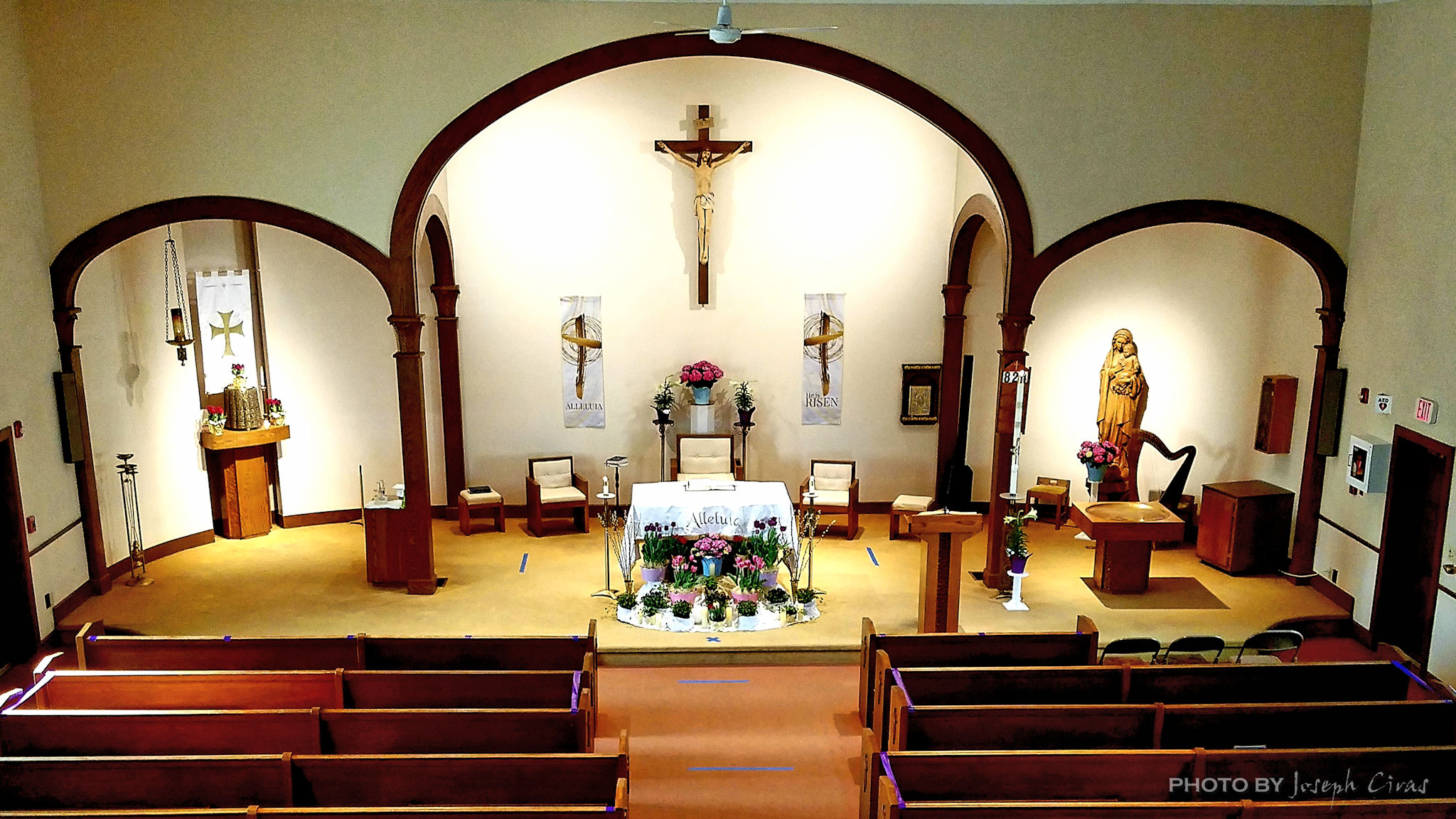
Sunday, 04/04/2021: Posted photo—Easter Mass.

Settings: Samsung SM-G930V, ISO 125, f/1.7, 1/60 s, 4 mm

Easter Sunday is one of the most festive events among Christians worldwide. It commemorates Jesus Christ’s resurrection from death, as written in the Christian bible. Easter Sunday commemorates Jesus’ resurrection from death.

Holy Week is most definitely a very sacred time of the year. It is the time that we will commemorate and remember the last week of Jesus’ life on this earth. Holy Week starts out with Palm Sunday. On this day, the crowds welcomed Jesus by waving palm branches and shouting praise to Him. These are the days leading up to the great Easter Feast.  Especially important for Catholics is the Easter Triduum. This is the three days just before Easter. On Holy Thursday, we reenact the Lord’s Last Supper, which He shared with His apostles on the night He was betrayed and arrested. On Good Friday, the day of the crucifixion and death of our Lord, we have the veneration of the Cross. Holy Saturday is a vigil, we keep watch for the expectant rising of Our Savior. Then comes the glory of Easter Sunday when He rose from the dead.

Easter Sunday changes every year. It is the first Sunday after the first full moon after the spring equinox. The earliest possible date for Easter is March 22 and the latest possible date for Easter is April 25. Easter can never come as early as March 21 because of ecclesiastical rules in which the vernal equinox has a fixed date of March 21. This is what happened last year.

St. Denis Church dressed up for Easter Sunday

This is a photo of St. Denis Church prior to Easter Mass looking down from the choir loft. Happy and blessed Easter to all.

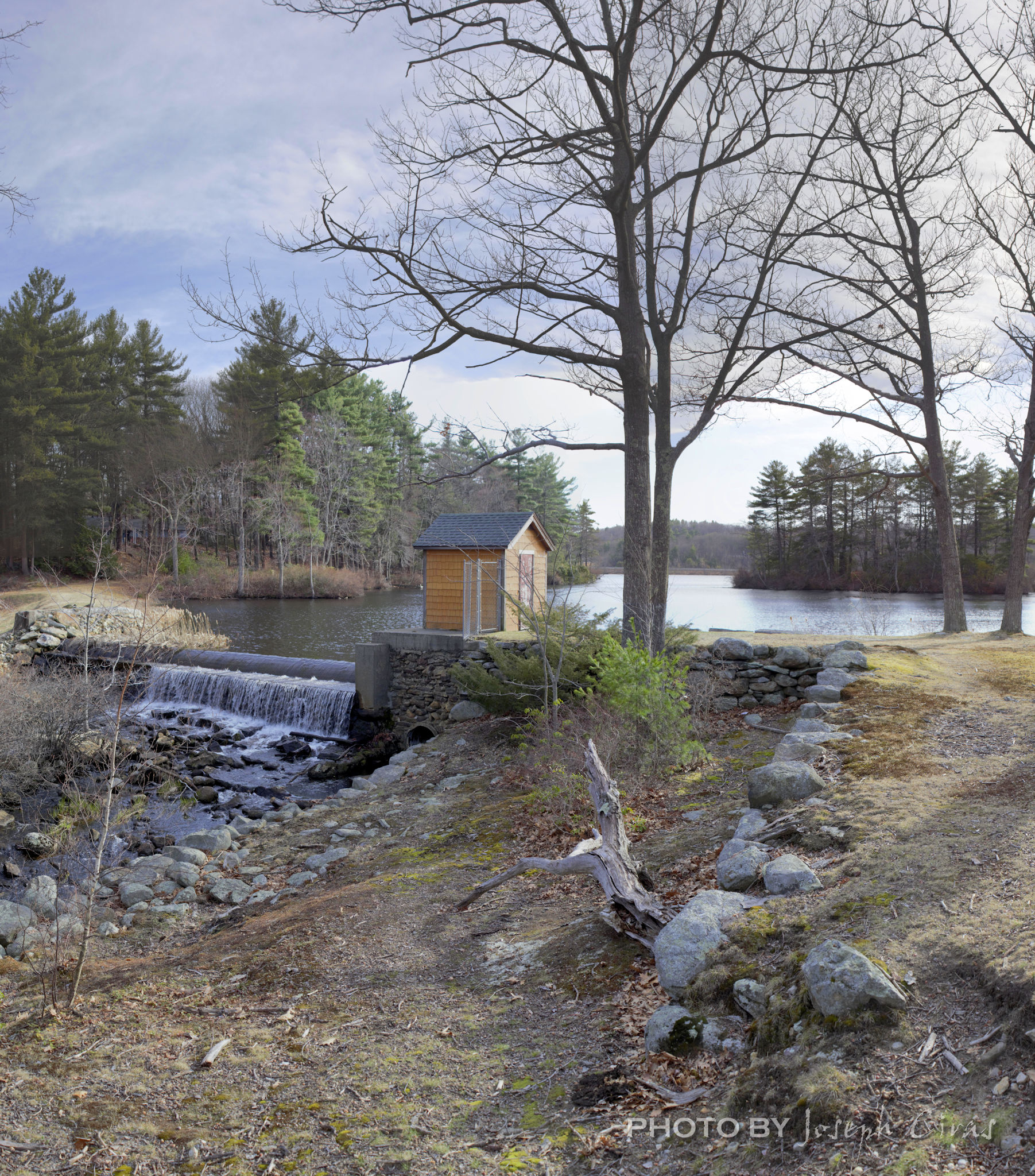
Monday, 04/05/2021: Posted photo—Brenizer Method.

Settings: Canon EOS 60D, ISO 100, f/7.1, 1/160 s to 1/1600 s, 34 mm (16 photos).

The Brenizer Method, sometimes referred to as Bokeh Panorama or Bokehrama, is a photographic technique characterized by the creation of a digital image exhibiting a shallow depth of field in tandem with a wide angle of view. The Brenizer Method is named after wedding photographer, Ryan Brenizer. He invented the method (but did not name it) and made it popular by using it with his wedding clients, and teaching others how to do it as well. This is a method of stitching together a series of photos taken in a particular pattern.

Brenizer stack of the dam at Round Meadow Pond in Westminster

This photo is a series of 16 photos that I stitch together. I used this technique today since it has been a while since I used it. As time goes on, I look at my old photos and tell myself to get pack to practice techniques. This is a great location to practice different photographic techniques.

Tuesday, 04/06/2021: Posted photo—What is it.

Settings: Canon EOS 60D, ISO 1600, f/5.6, 1/160 s, 55 mm.

Occasionally I like to post a photo to see if someone can guess what it is. Today is one of those days. I saw this object and wanted to do such a photo. I thought that this one would be easier than most of them. I was not. Some people were close with their guess and second guessed themselves. These are always a fun challenge.

What is this object?

What is the object? It is a stack of Styrofoam cups. I took this photo since I like the way the grains in the Styrofoam looked. As done with many things, such as Coke or Duck tape or Scotch tape, we use a trademarked name as a general description of a product. Styrofoam is a trademarked brand of closed-cell extruded polystyrene foam, or XPS. This foam is also referred to as “Blue Board” and is used for building insulation, thermal insulation, and water barriers. Styrofoam is owned and manufactured by The Dow Chemical Company.

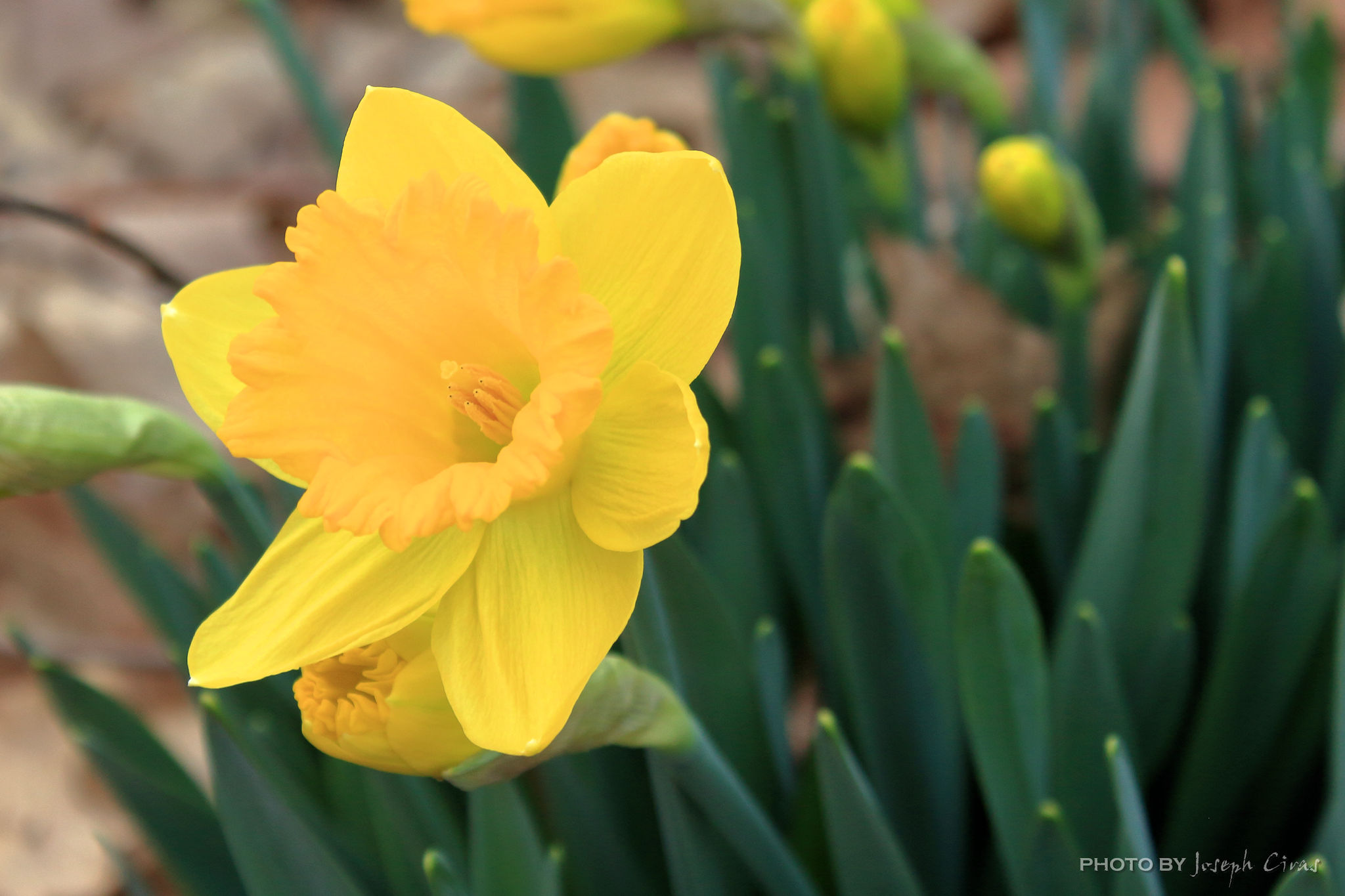
Wednesday, 04/07/2021: Posted photo—First Daffodil.

Settings: Canon EOS 60D, ISO 160, f/7.1, 1/80 s, 55 mm

This is one of the first signs that spring has arrived. The daffodils in our yard are starting to bloom. I have been watching the flower sprout over the last few days and today was the first time that I have seen it flower. We have multiple patches of daffodils in our yard. This year there seems to be many more blooming than in past years. Maybe someone that reads this can tell me why this is the case.

Daffodils are a fall-planted bulb, so plant them in autumn and they will bloom in late winter or early spring. The traditional daffodil flower may be a showy yellow or white, with six petals and a trumpet-shape central corona, but many cultivated varieties (“cultivars”) exist today.

First daffodil of the year

Thursday, 04/08/2021: Posted photo—Roses.

Settings: Canon EOS 60D, ISO 400, f/7.1, 1/100 s, 64 mm

“The Presence of the Rose by Angela Morgan

From out imprisoning petals—velvet, red—
Thy soul slips forth in fragrance wondrous sweet—
A silent subtle presence—never fled,
That makes thy mastery over me complete.”

During my visit with my mother today, she wanted me to water all her flowers and plants. She has been getting flowers from many people over the past few weeks. I had already taken photos of different subjects to post today and then I saw these roses. I asked her who gave them to her, and she could not remember. Flowers are a favorite subject of mine throughout the spring, summer, and fall seasons because of their colors and textures.

Roses for a sweet lady

No matter how old you are, your mother is your mother, so listen to her and be kind and helpful to her. My mother is 95 years old and still treats us as her young children.

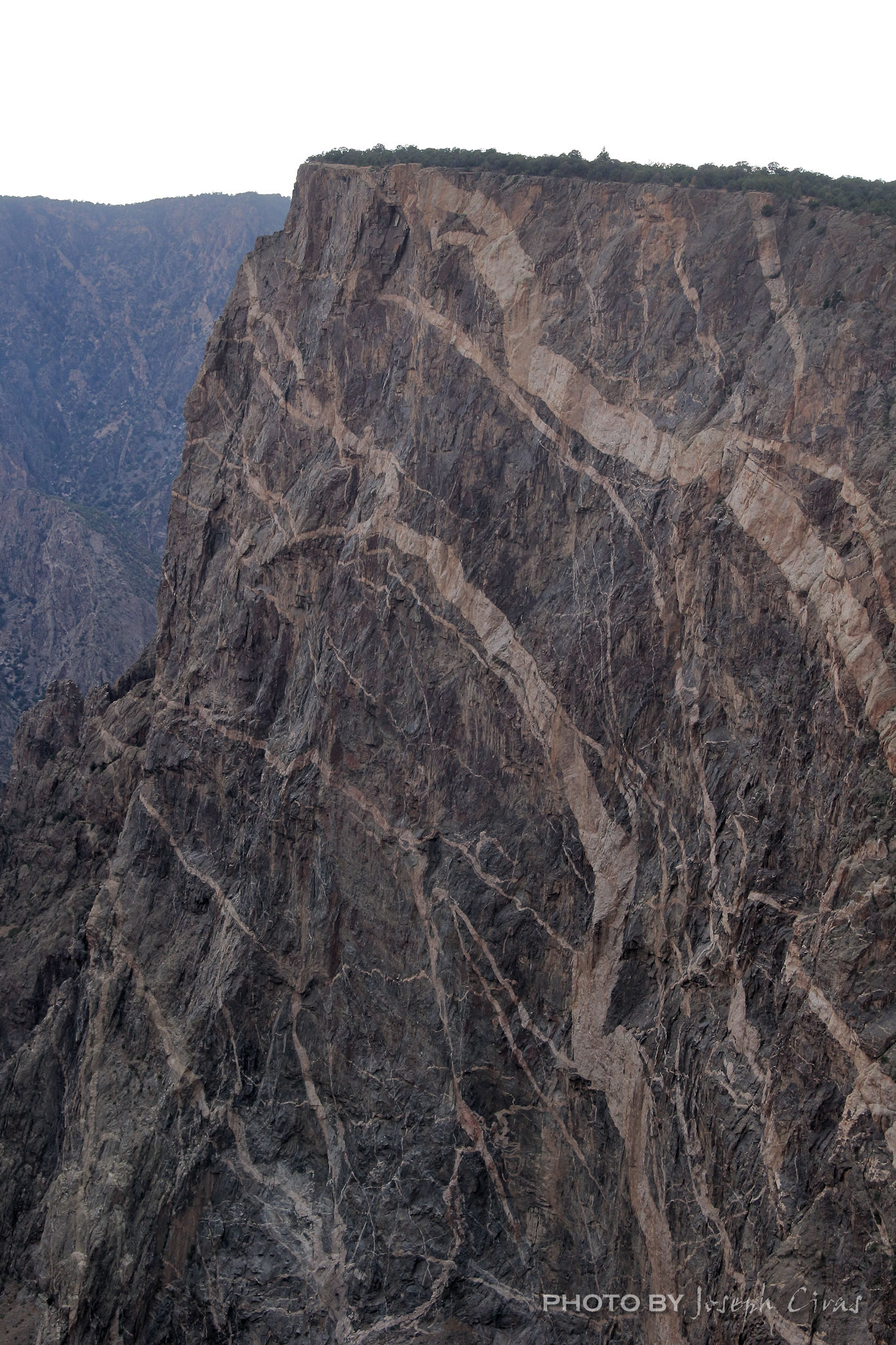
Friday, 04/09/2021: Post photo—Painted Wall.

Settings: Canon EOS 60D, ISO 400, f/8, 1/125 s, 39 mm

Black Canyon of the Gunnison National Park is a park I never heard about before visiting. It is a small park, but one that should be explored. We camped at the park and did some hiking around the rim of the canyon. Night skies were dark and the sound of the Gunnison River running through the canyon was very relaxing.

Some facts from the Uncover Colorado website:

  1. The Gunnison River drops an average of 43 feet per mile through the canyon, SIX times more than the Colorado River through the Grand Canyon.
  2. Colorado’s biggest cliff is the Black Canyon’s Painted Wall. Standing 2,250 feet tall from river to rim, Black Canyon’s Painted Wall is the tallest cliff in Colorado and the third tallest in the lower 48, after El Cap and Notch Peak. For comparison, the Washington Monument stands at a measly 555 feet and the Empire State Building stands at just 1,250 feet.
  3. Black Canyon gets its name because some parts of the gorge receive only 33 total minutes of sunlight per day.
  4. It has some of the world’s oldest exposed rock. the rocks exposed at the bottom of the canyon are nearly 2 billion years old, dating from the Precambrian era.
  5. It is the least-visited national park in Colorado, and one of the lesser visited parks overall.
Painted Wall at Black Canyon of the Gunnison National Park

Explore the National Parks. I have been to only 30 of the 59 National Parks and would like to get out and see more of them. In total, I have been to 87 other National Monuments, National Historical Parks, and other entities of the national park system.

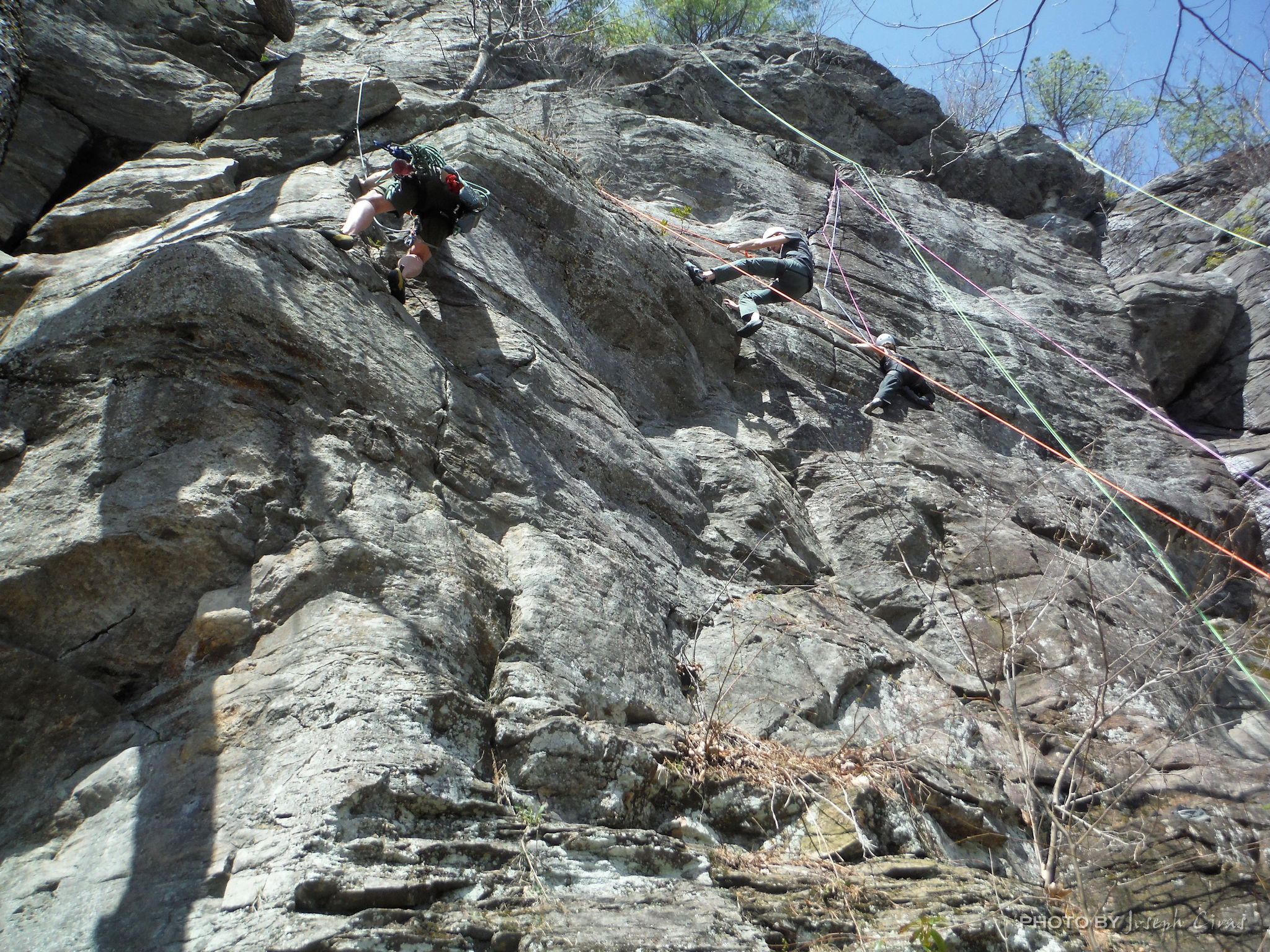
Saturday, 04/10/2021: Post photo—Rock Climbing.

Settings: FinePix XP70, ISO 100, f/4.1, 1/420 s, 6 mm.

The Crow Hills, located in Massachusetts’ Leominster State Forest 2.5 miles northeast of Mount Wachusett, are a single monadnock with a twin summit, 1,234 feet and 1,220 feet, and a high eastern cliff. The hills are a popular rock climbing, bouldering, and hiking destination. In my younger years I did some rock climbing there myself.

Rock climbing on Crow Hills

To get to the Crow Hills, I hiked the Midstate Trail. Round trip from my house to the cliffs is about eight miles. It was a great day for a hike. I stayed away from Wachusett Mountain today since it is overcrowded. My son and his friend hiked earlier today, mid-morning, and told me to say away because of all the people. On a nice day, such as today, people with no experience are out hiking making it not very enjoyable. Everyone has to start out sometime, I know, but because of COVID people are taking too many risks on the mountain.

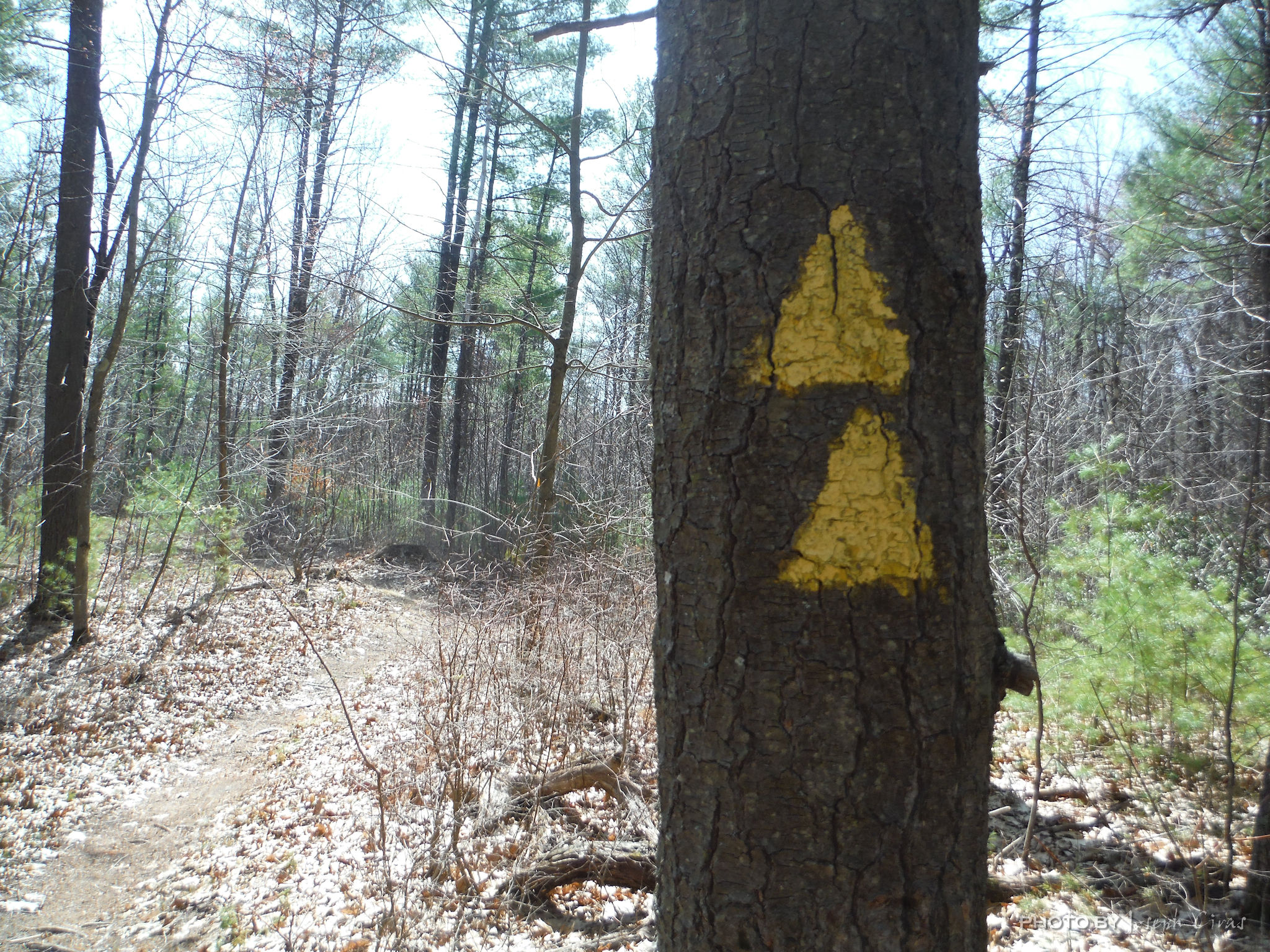
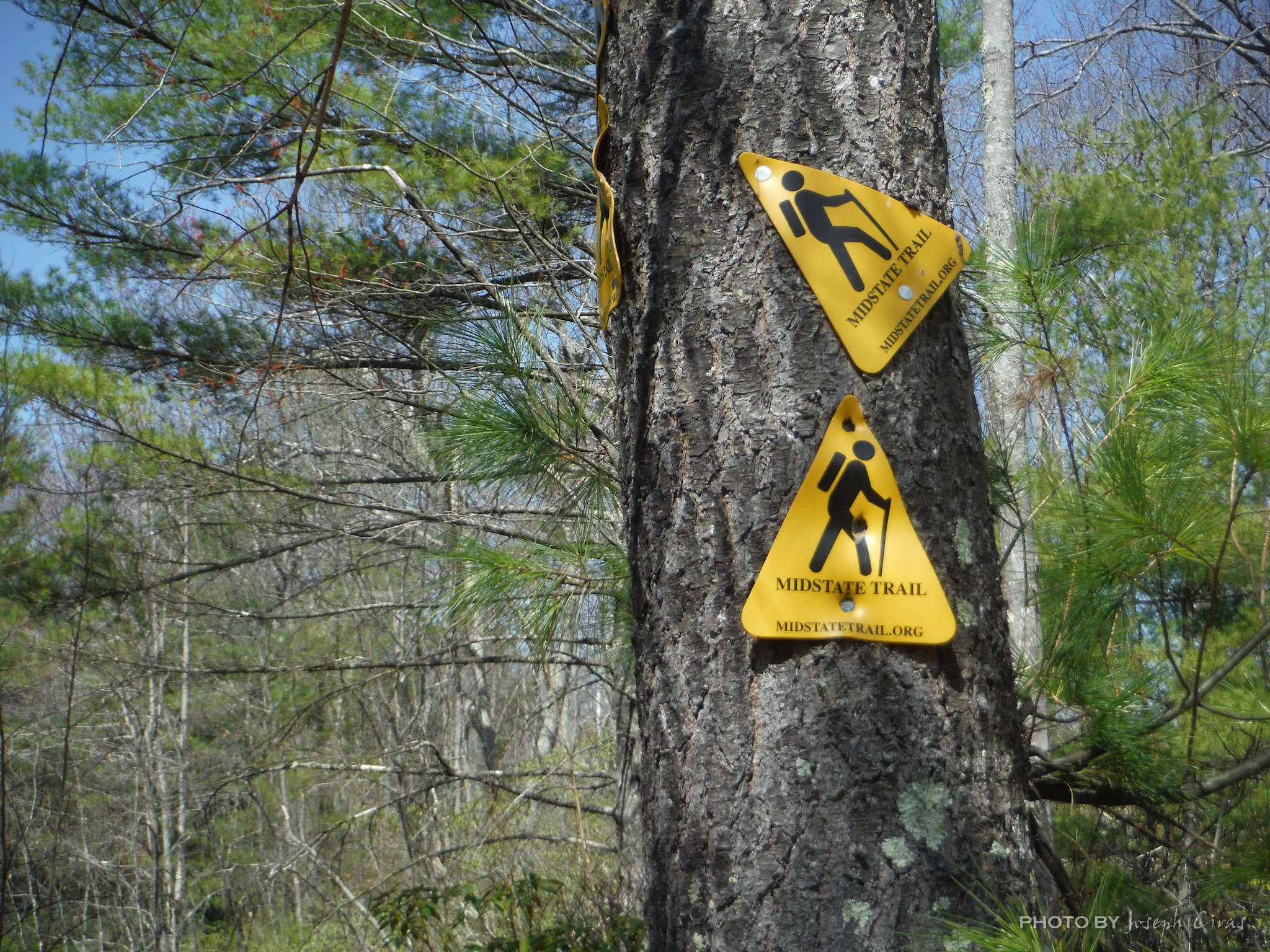
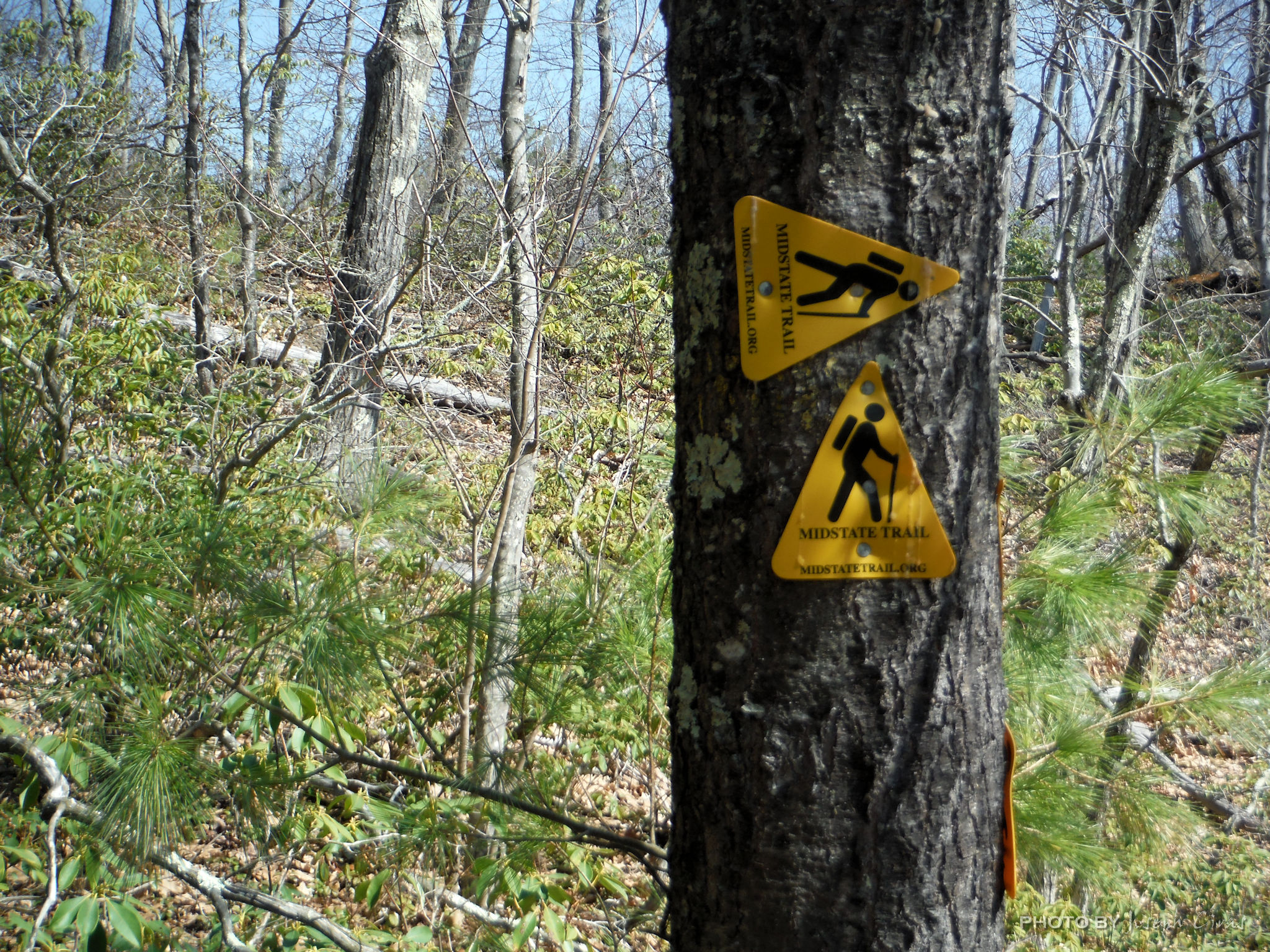
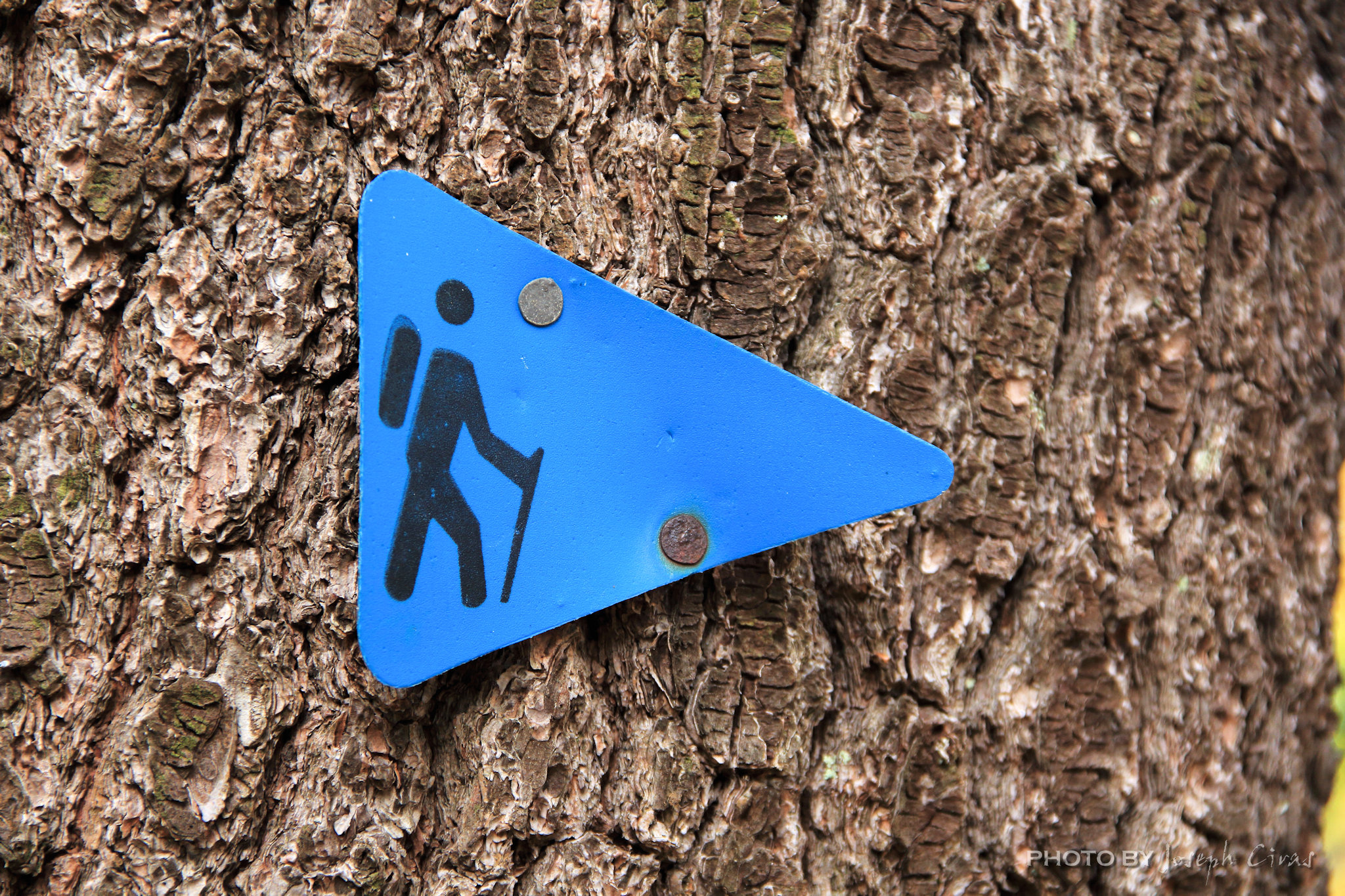
On the trail there are trail markers. Now here is a short lesson on trail markers. First of all, they mark the trail. They tell you when to go straight or when the trail turns. If there are two makers in the same direction on top of themselves, go straight. If there is a marker pointing to the right, turn right. If there is a marker pointing to the left, turn left. Simple as that. Markers are very useful if you are not familiar with the trail. Just look for the next marker. A Leave No Trace principle is to travel and camp on durable surfaces. This means if the trail is through a mud puddle, go through that mud puddle. Lesson over.

Here are some photos of the different trail markings that I encountered during my hike today.

For more photo of other project I have work, visit my website: https://photobyjosephciras.weebly.com/ or visit me on Facebook at https://www.facebook.com/PhotobyJosephCiras/.

COVID is real! Be safe out there, keep your social distance, and remember to always wear your mask and wash your hands.