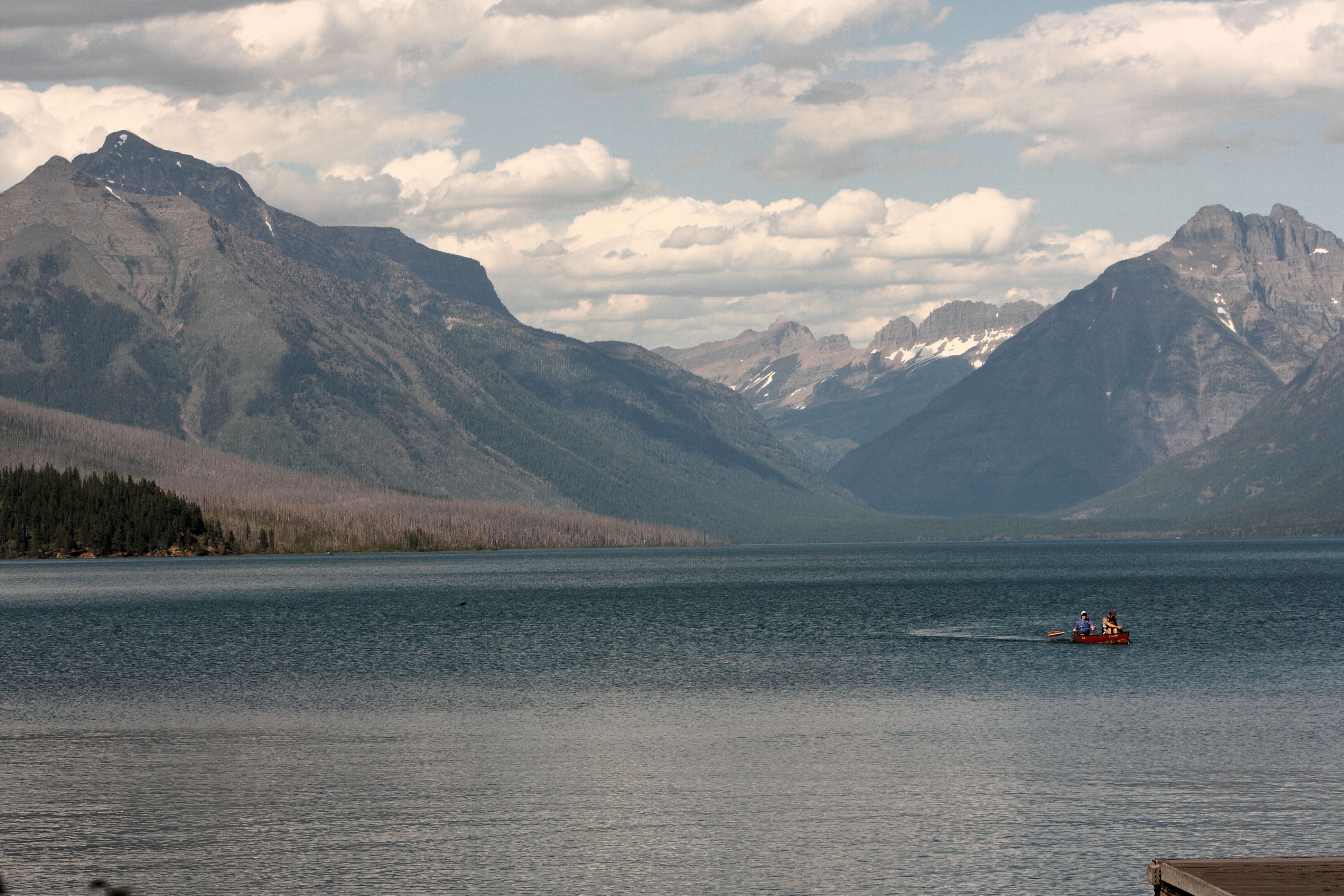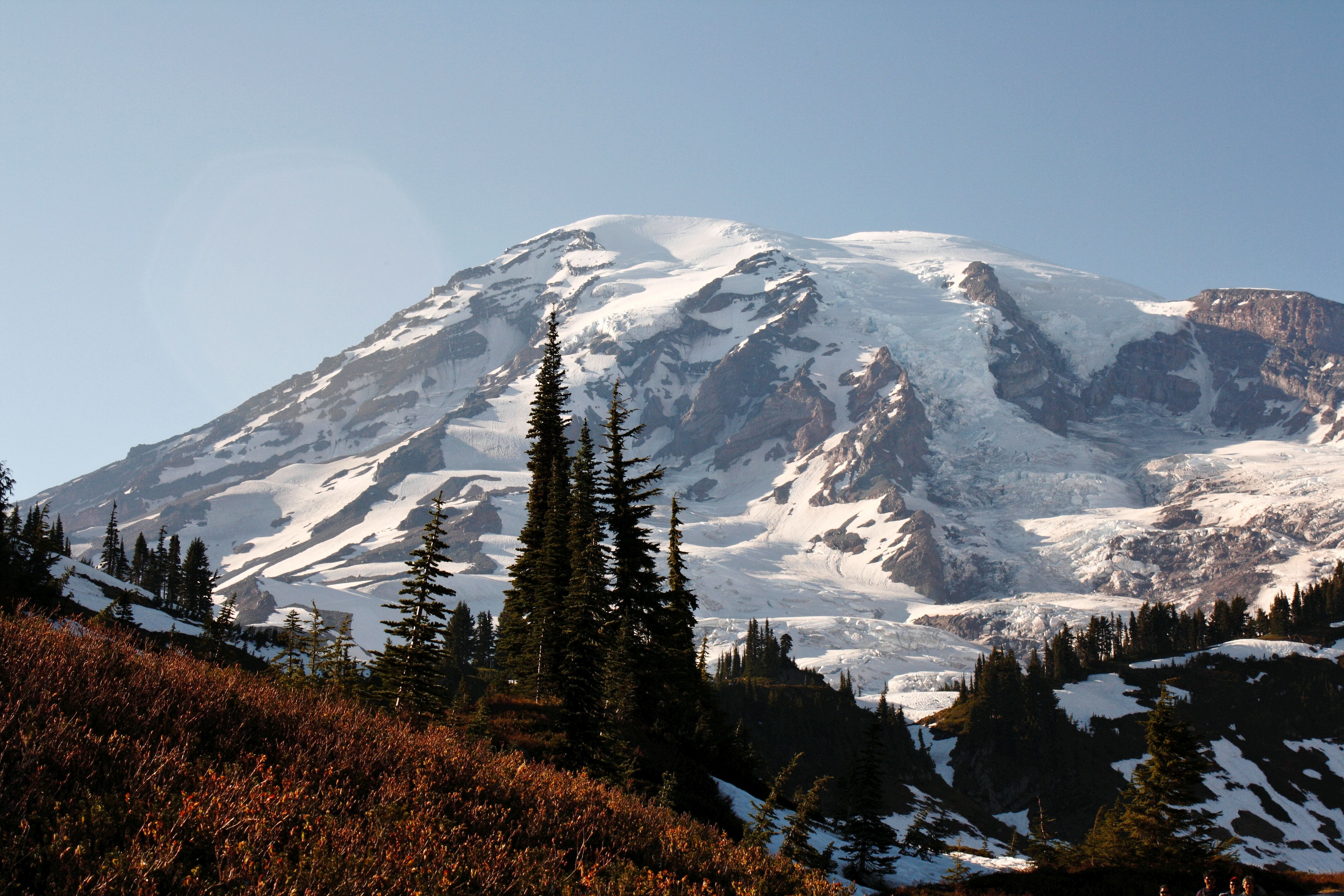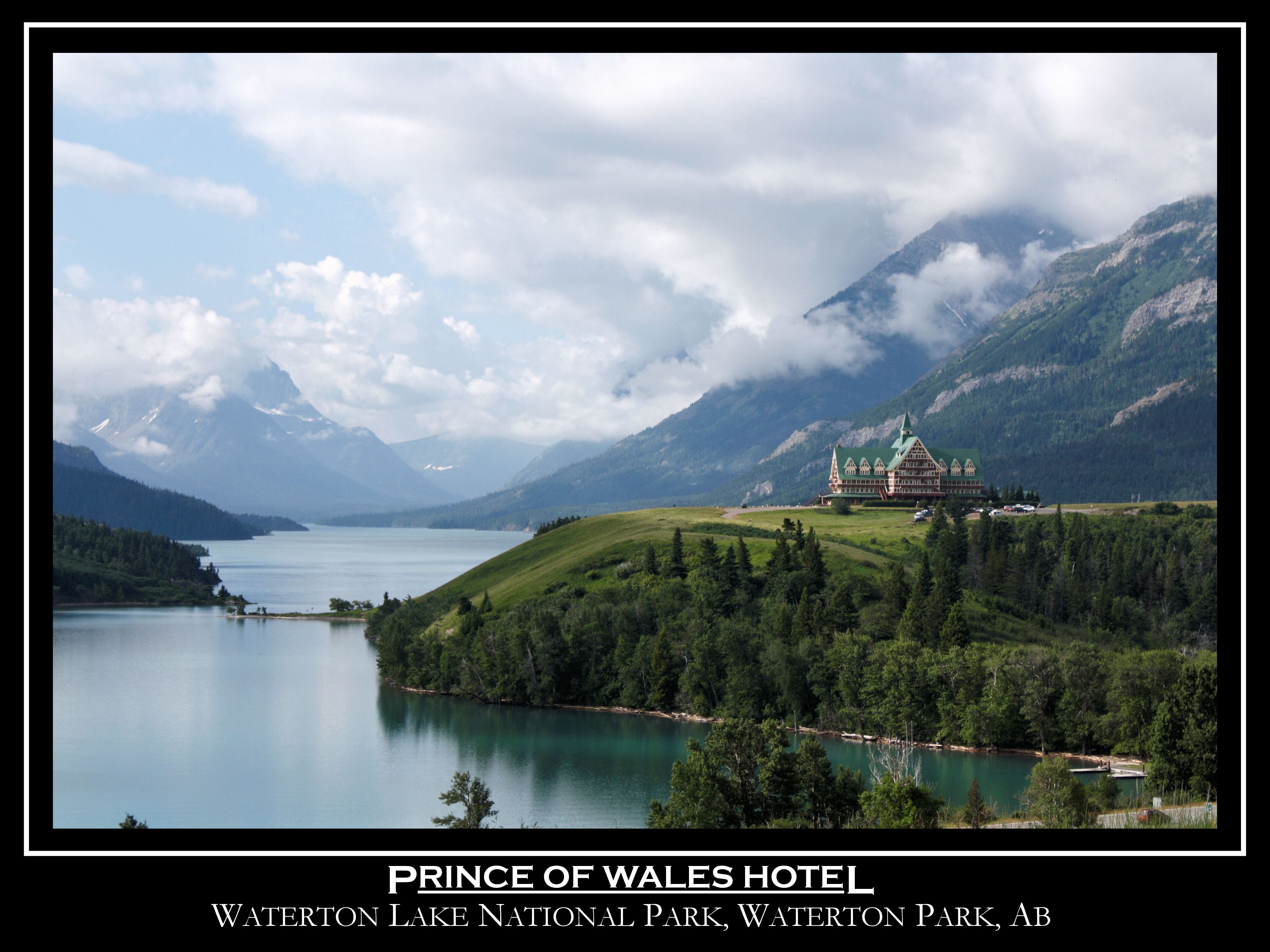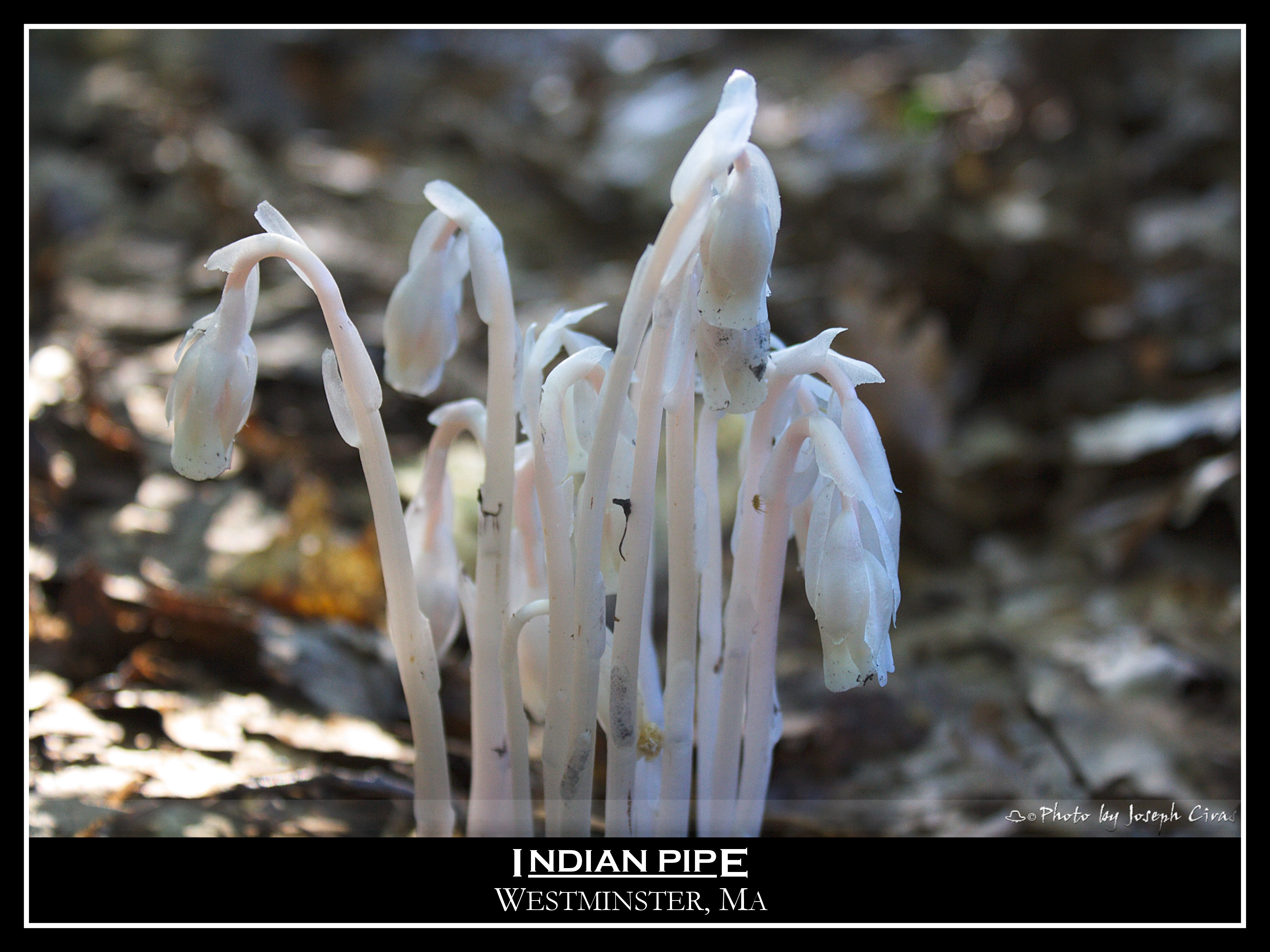
Photographic Thoughts — 03/13/2022 to 03/19/2022

“In photography there is a reality so subtle that it becomes more real than reality.” — Alfred Stieglitz

Thank you for all the new views and likes from last week, it helps keep me inspired.

Starting to take more photos. Still will be posting photos from past trips for a little while longer. Sill a long recovery ahead of me.

Enjoy some more travel photos from past trips.

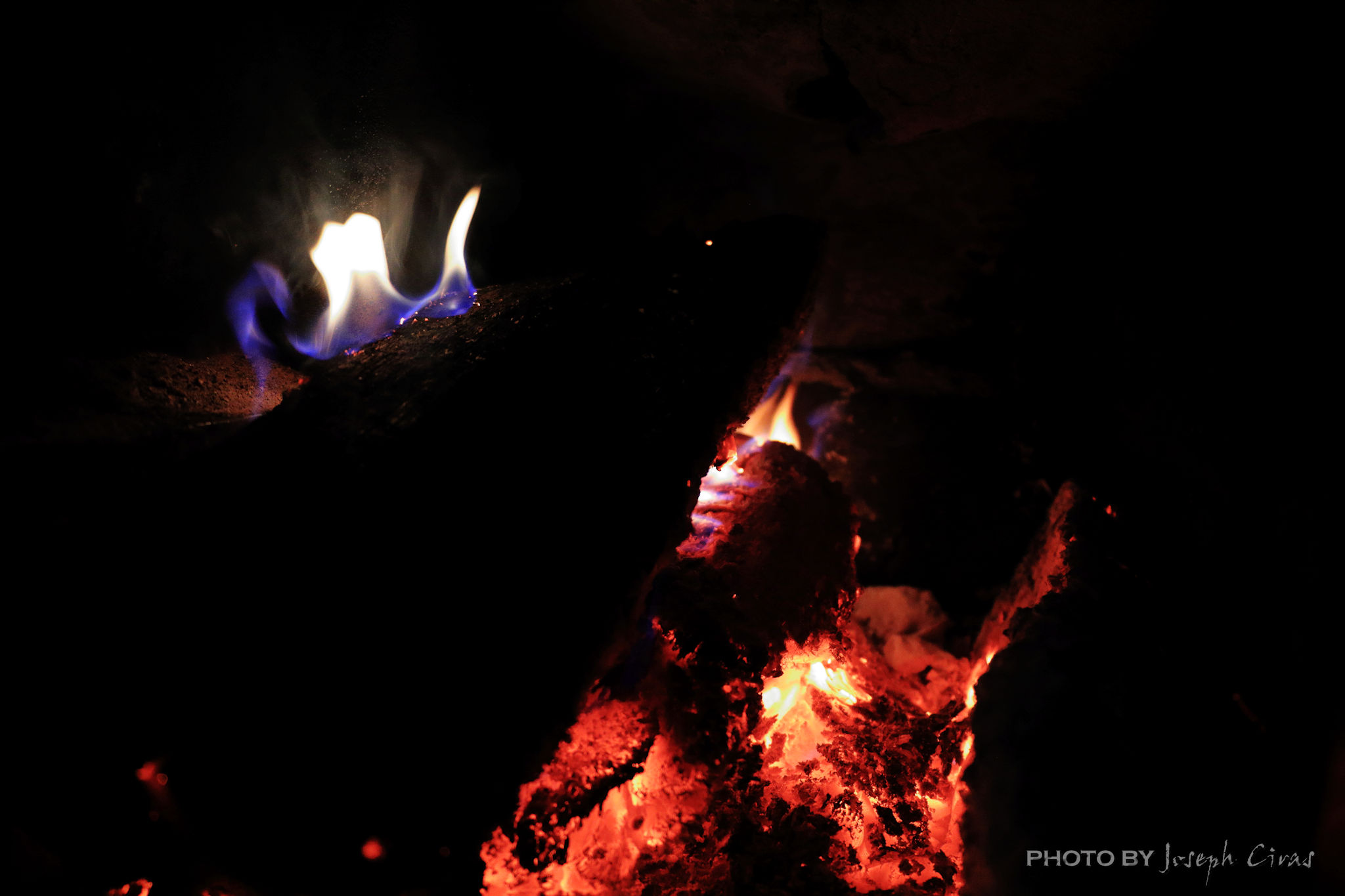
Sunday, 03/13/2022: Posted photo — Low Key.

Settings: Canon EOS 60D, ISO 2500, f/3.5, 1/40 s, 18 mm.

A low key image is one that contains predominantly dark tones and colors. Low key photography conveys atmosphere and mood. One of my photo projects had a low key image challenge this week. I was thinking about what photo to take to meet this challenge. I would have had many options if I had not just been operated on. With limited mobility, I thought about what there might be around the house. Since low key images contain predominantly dark tones and colors, I took a photo of the fire in our wood stove.

Monday, 03/14/2022: Posted photo — Cameron Falls.

Settings: Canon EOS DIGITAL REBEL XS, ISO 100, f/22, 10 s, 28 mm.

Cameron Falls, Waterton Lakes National Park, Alberta.

Cameron Falls is a very uniquely shaped waterfall of about 75 feet in height found in the heart of the Waterton townsite in Waterton Lakes National Park. After heavy rainfall, the waters upriver from the falls get stirred up with a red mudstone called argillite. As the water flows towards the falls, it turns to a beautiful pink hue when light reflects on the mineral water. We did not see the pink falls since the weather was dry when we visited Waterton Lakes National Park just after we visited Glacier National Park in Montana.

Tuesday, 03/15/2022: Posted photo — New Boot.

Settings: Google Pixel 2, ISO 195, f/1.8, 1/60 s, 4 mm.

I had a post op follow-up today a week and a half after surgery. My recovery is going as planned. I was fitted with this very uncomfortable boot. I still cannot put pressure on my ankle for another four weeks. Need to go back on Tuesday for another follow-up since the first one was close to my surgical date and the doctor would like to see my progress and remove some items from my ankle.

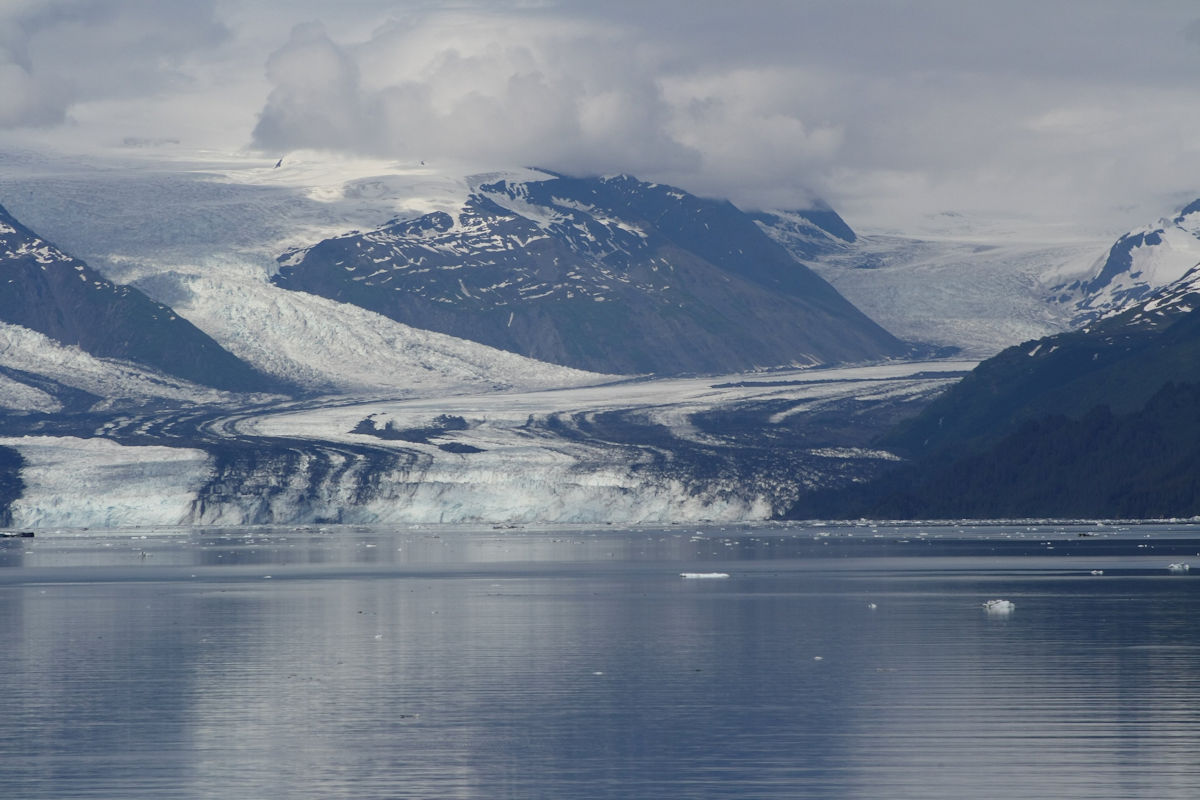
Wednesday, 03/16/2022: Posted photo — Harvard Glacier.

Settings: Canon EOS DIGITAL REBEL XS, ISO 200, f/8, 1/2000 s, 160 mm.

Harvard Glacier, College Fjord, Alaska.

The glacier has a 1.5-mile (2 km) wide face where it calves into the College Fjord. It is 300 ft thick and covers 120,000 acres of Chugach National Forest. The Harvard Glacier is the second largest glacier in the Prince William Sound, after the Columbia Glacier.

It is amazing to see how large a glacier is when you look at it from a distance. In this photo, we were about a mile from the glacier.

The names of the glaciers in College Fjord are: Amherst, Barnard, Bryn Mawr, Harvard, Smith, Vassar, and Yale. The glaciers of the northwest side feature the names of women’s colleges, and the glaciers of the fork and the southeast side sport the names of men’s colleges. What of Princeton? According to my research on the names, the scholars that named the glaciers took delight in ignoring it since none of them were Princeton alum.

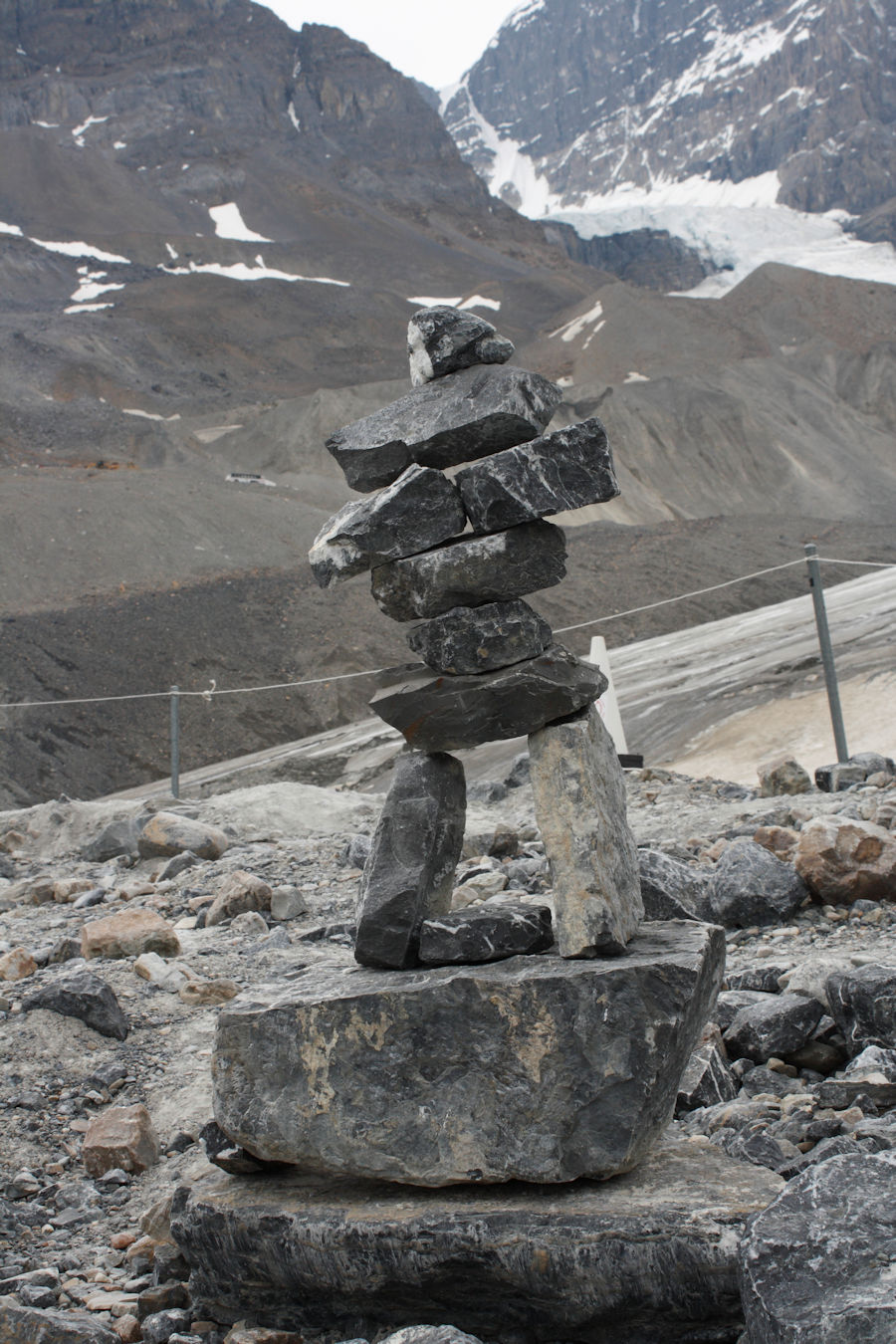
Thursday, 03/17/2022: Posted photo — Cairn.

Settings: Canon EOS DIGITAL REBEL XS, ISO 200, f/11, 1/200 s, 34 mm.

On the trail near the Athabasca Glacier, Jasper National Park, Alberta.

A cairn is a mound of rough stones built as a memorial or landmark, typically on a hilltop or skyline. This cairn is shaped like a person. In Canada this is called an Inuksuk.

The Athabasca Glacier is one of the six principal ‘toes’ of the Columbia Icefield, located in the Canadian Rockies. The glacier currently loses depth at a rate of about 16.4 feet (5 meters) per year and has receded more than 1 mile (1.5 km) and lost over half of its volume in the past 125 years.

From the Canadian Encyclopedia: “Inuksuk (also spelled inukshuk, plural inuksuit) is a figure made of piled stones or boulders constructed to communicate with humans throughout the Arctic. Traditionally constructed by the Inuit, inuksuit are integral to Inuit culture and are often intertwined with representations of Canada and the north.”https://www.thecanadianencyclopedia.ca/en/article/inuksuk-inukshuk

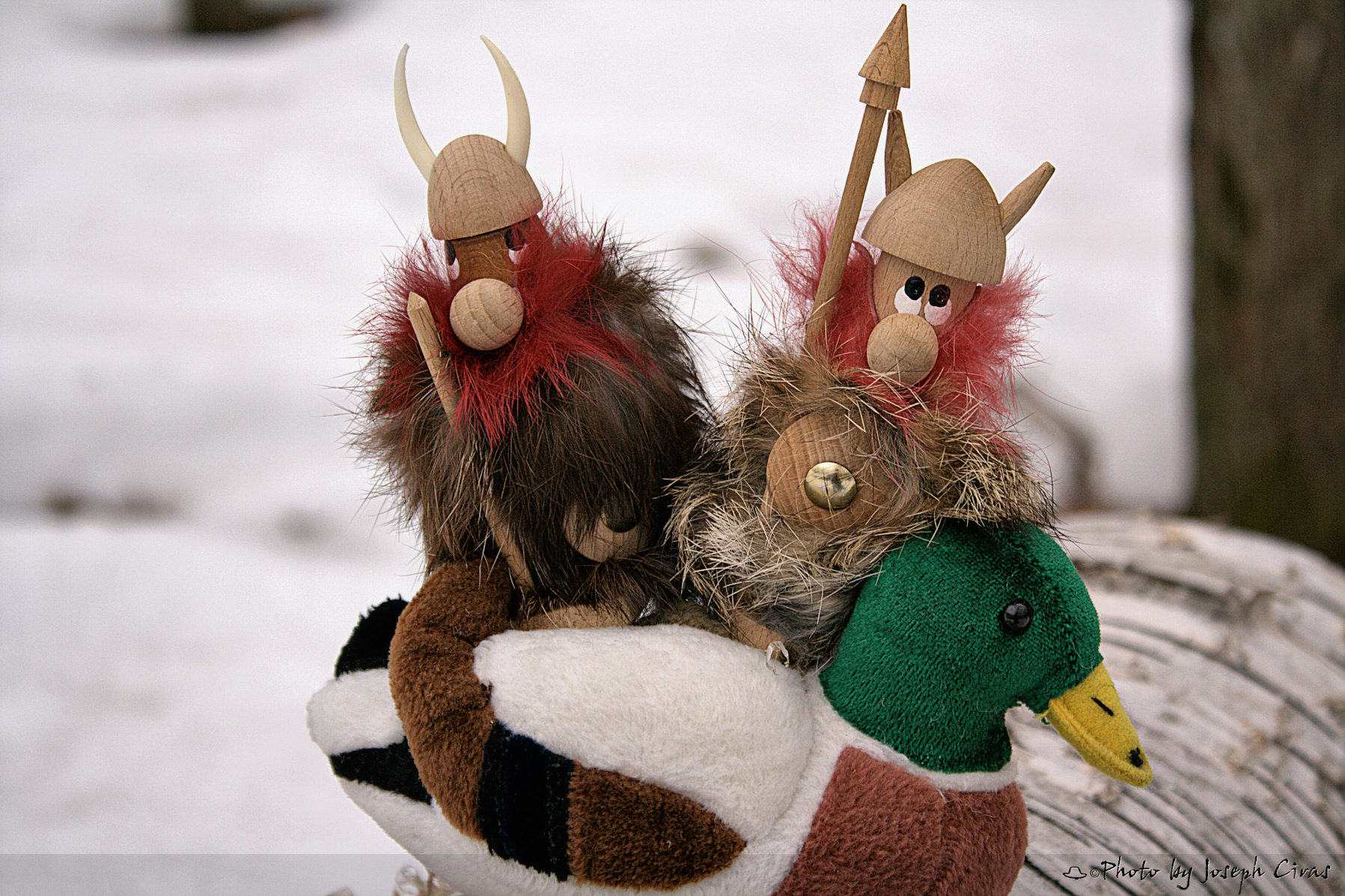
Friday, 03/18/2022: Post photo — Pall (and Rekard).

Settings: Canon EOS DIGITAL REBEL XS, ISO 200, f/5.6, 1/160 s, 55 mm.

These are my two buddied from Denmark. Earlier on in my photo projects, I featured Pall every week with Pall telling a story about his life. When I went back to Denmark, I picked up Rekard. They ventured together for next year or two. Might be time to bring their adventures back.

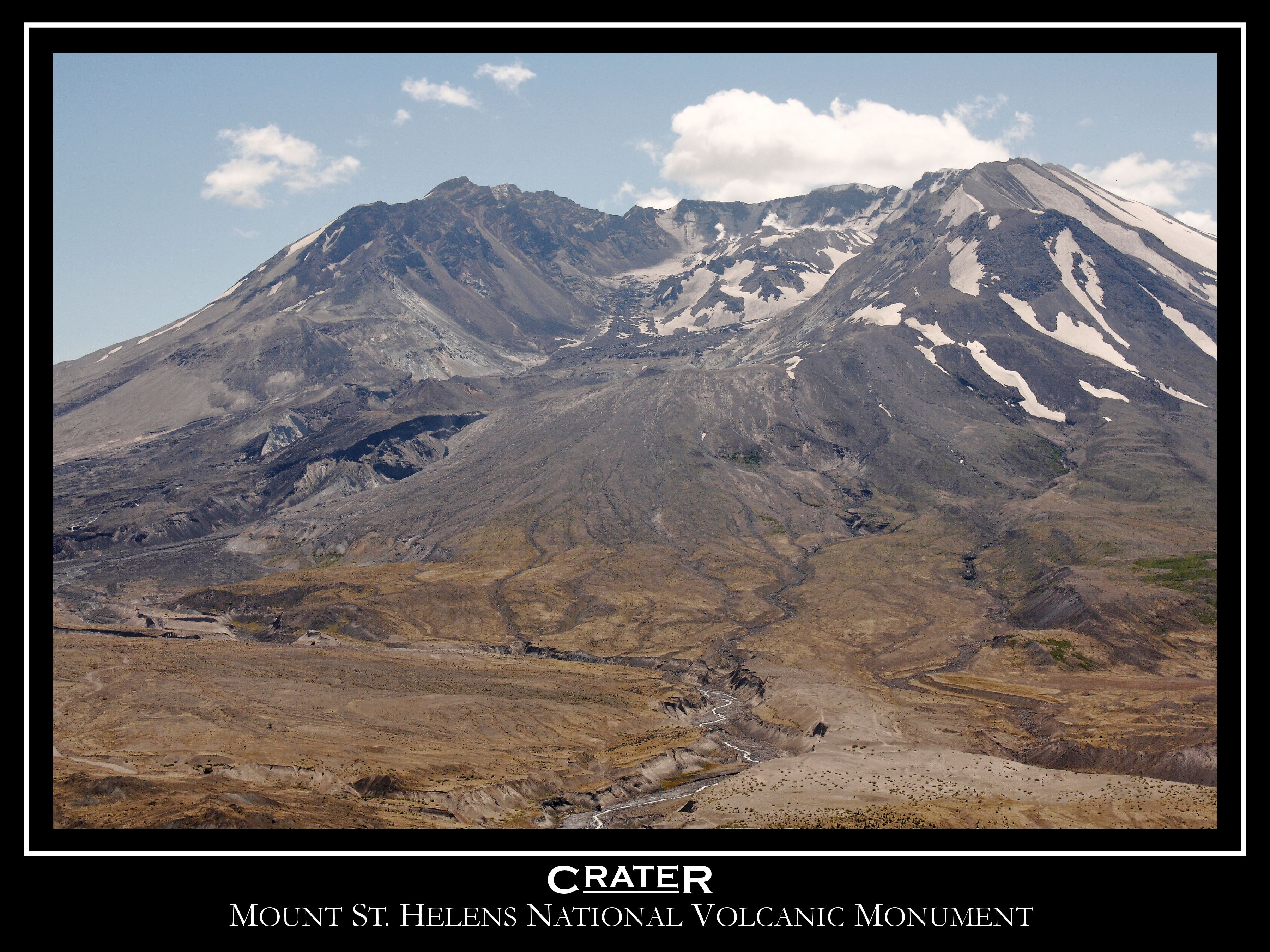
Saturday, 03/19/2022: Post photo — Crater.

Settings: N/A.

Mount St. Helens National Volcanic Monument

From the USGS:

“Prior to 1980, Mt. St. Helens had the shape of a conical volcano sometimes referred to as the Mount Fuji of America. During the 1980 eruption the upper 400 m (1,300 ft) of the summit was removed by a huge debris avalanche, leaving a 2 x 3.5 km horseshoe-shaped crater now partially filled by a lava dome and a glacier. It is primarily an explosive dacite volcano.”

Quick Facts:

Location: Washington, Skamania County
Latitude: 46.2° N
Longitude: 122.18° W
Elevation: 2,539 (m) 8,330 (f)
Volcano type: Stratovolcano
Composition: Basalt to Rhyodacite
Most recent eruption: 1980, 2004-2008
Nearby towns: Castle Rock, WA; Olympia, WA; Vancouver, WA; Yakima, WA; Portland, OR
Threat Potential: Very High

Dacite: Volcanic rock (or lava) that characteristically is light in color and contains 62 to 69 percent silica and moderate amounts of sodium and potassium.

Stratovolcano: Steep, conical volcanoes built by the eruption of viscous lava flows, tephra, and pyroclastic flows. They are usually constructed over tens to hundreds of thousands of years and may erupt a variety of magma types (basalt to rhyolite). They typically consist of many separate vents. Synonym is composite volcano.

I have been to Mt. St. Helens a few times over the years. The first time was about ten years after the eruption, and we saw the logs floating in Sprit Lake. I just pictured Harry Truman looking up at the mountain from his lodge and wondering why he did not leave. Then again, there were may false alarms in the past. I am amazed on how nature is recovering in the area. I can still remember the first time that I drove into the blast zone. Very lush, dense forest along the road, turn the corner and nothing. Trees looking like toothpicks laying down in the direction of the blast. There were some cars left for visitors to see how powerful the eruption was.

That is all for now. Until next week, be safe. For more photo of other project I have work, visit my website: https://photobyjosephciras.weebly.com or visit me on Facebook at https://www.facebook.com/PhotobyJosephCiras/.

Photographic Thoughts — 03/06/2022 to 03/12/2022

“When I have a camera in my hand, I know no fear” — Alfred Eisenstaedt

Thank you for all the new views and likes from last week, it helps keep me inspired.

Surgery went well last Friday. I have plenty of hardware in my ankle. It will be a while until I am able to hit the mountains again in full force. My goal to finish my second round of hiking the 48 highest peaks in New Hampshire will be delayed for at least a year until my ankle fully recovers. Thank you all for your words of encouragement and for all your support.

Enjoy some more travel photos from past trips.

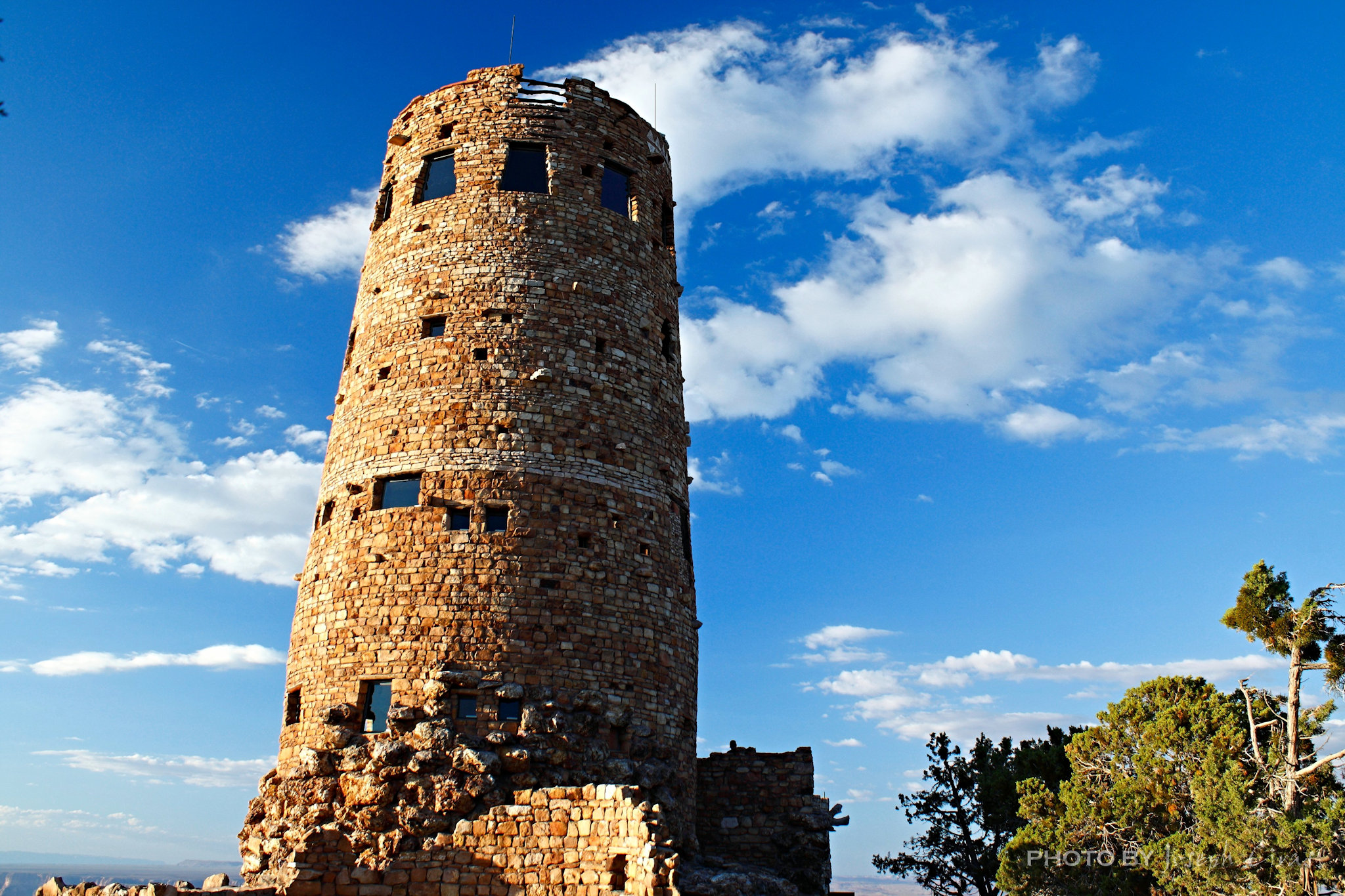
Sunday, 03/06/2022: Posted photo — Desert View Watchtower.

Settings: Canon EOS DIGITAL REBEL XS, ISO 200, f/5.6, 1/100 s, 20 mm.

Desert View Watchtower, South Rim Grand Canyon National Park.

Desert View Watchtower, Grand Canyon National Park

We arrived at the South Rim of the Grand Canyon just before sunset. We spent the last couple of nights camping and hiking along the North Rim of the Grand Canyon and would be spending time on the South Rim. I have been to the Canyon before, but never from this entrance.

From the National Parks Service: “A National Historic Landmark, the Watchtower was constructed in 1932.The design by Mary Colter, is based on the architecture of the Ancestral Puebloan people of the Southwest. This particular tower was patterned after those found at Hovenweep and the Round Tower of Mesa Verde.”

We have been to Hovenweep and to Mesa Verde and agree with that statement.

Monday, 03/07/2022: Posted photo — Four Corners Monument Navajo Tribal Park.

Settings: Canon EOS DIGITAL REBEL XS, ISO 200, f/16, 1/400 s, 49 mm.

The Four Corners Monument marks the quadripoint in the Southwestern United States where the states of Arizona, Colorado, New Mexico, and Utah meet. It is the only point in the United States shared by four states.

Four Corners USGS monument

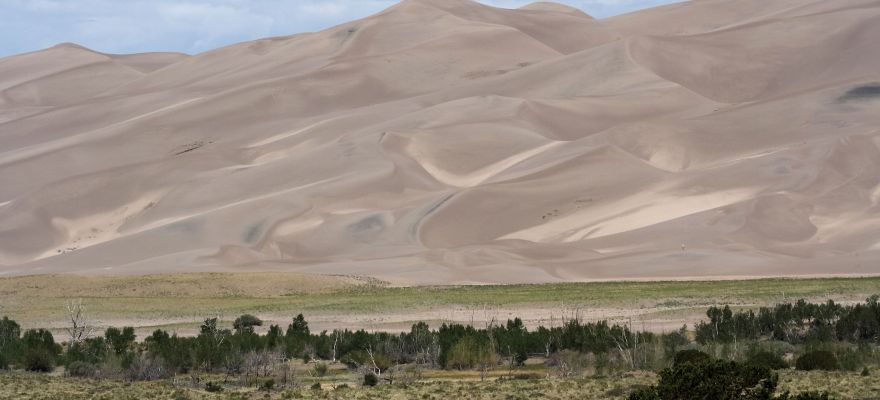
Tuesday, 03/08/2022: Posted photo — Great Sand Dunes National Park and Preserve.

Settings: Canon EOS DIGITAL REBEL XS, ISO 200, f/13, 1/800 s, 90 mm.

Great Sand Dunes National Park and Preserve, Mosca, CO.

One of the amazing things about the Great Sand Dunes is that you can see them from miles away. As you turn off the main road and head towards the dunes, they are right in front of you. We spent the day hiking the dunes pretending we were in a desert. When you look at this photo, you see a couple of dots in the sand. Those are people. The sand was hot. According to Park Service, the sand surface can reach 150 degrees F (65 degrees C) on a summer afternoon or drop to minus 20 degrees F (minus 29 degrees C) on a winter night. It was close to the 150 degrees when we were walking on the sand.

Sand Dunes with the Sangre de Cristo Mountains as a backdrop

From the National Parks Service: The tallest dunes in North America are the centerpiece in a diverse landscape of grasslands, wetlands, forests, alpine lakes, and tundra. Great Sand Dunes National Park is a complex geologic story going back millions of years. Intense volcanic activity built the San Juan mountain range to the west of the modern day dunes and tectonic activity raised the Sangre de Cristo Mountains to the north and east.”

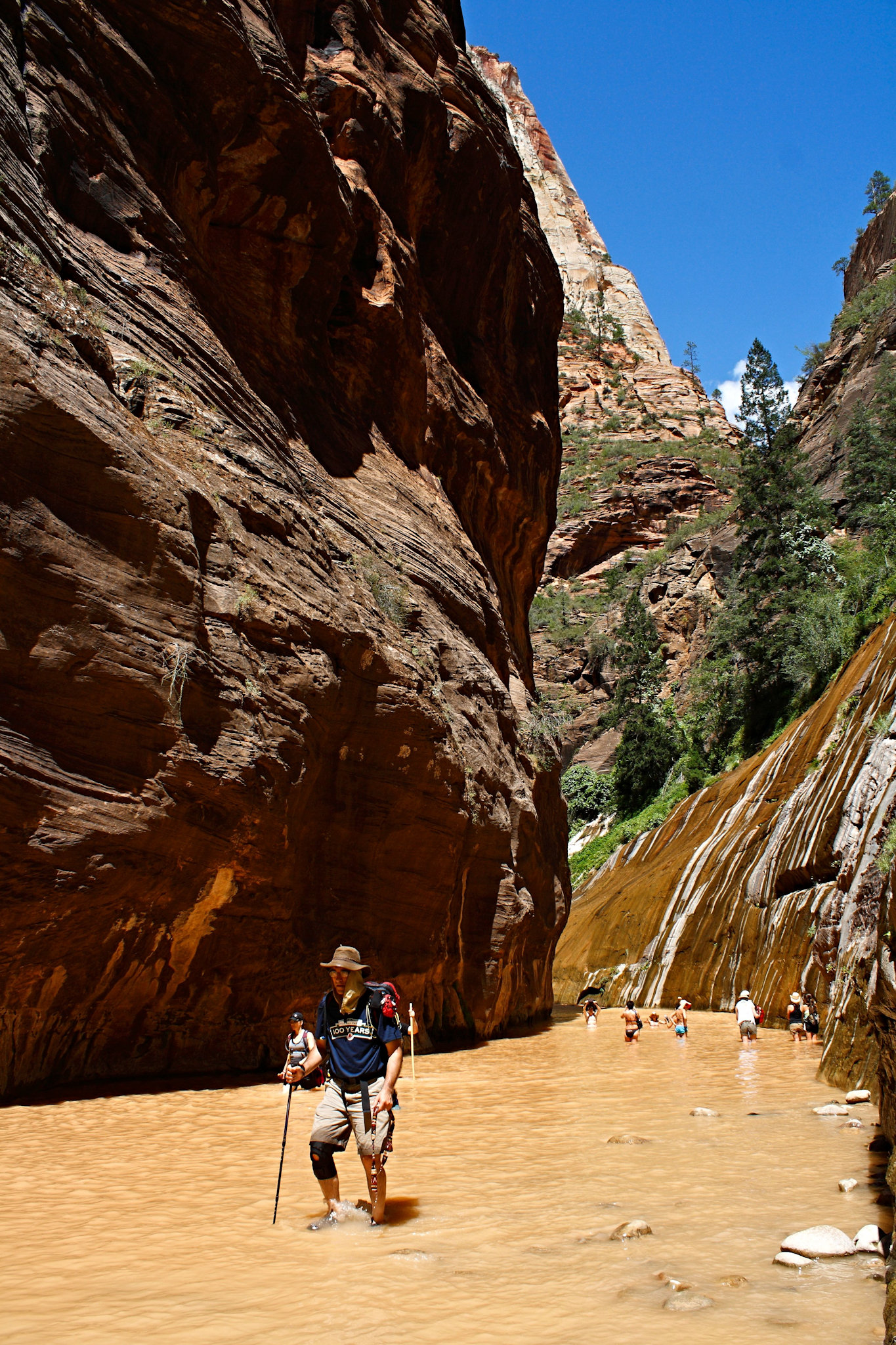
Wednesday, 03/09/2022: Posted photo — Hiking the Narrows.

Settings: Canon EOS DIGITAL REBEL XS, ISO 200, f/9, 1/2050 s, 18 mm.

Zion National Park Springdale, UT.

This is a photo my wife took of me as we were hiking the Narrows in Zion National Park. It was a refreshing hike on a hot summer day. When you hike the Narrows, you need to be very aware of the weather. Because it is so narrow, there is no escape route if there happens to be a flash flood.

Hiking in the murky waters of the Narrows in Zion National Park

From the National Parks Service: “The Narrows is the narrowest section of Zion Canyon. This gorge, with walls a thousand feet tall and the river sometimes just twenty to thirty feet wide, is one of the most popular areas in Zion National Park. You can see The Narrows by hiking along the paved, wheelchair accessible Riverside Walk for one mile from the Temple of Sinawava. If you wish to see more, you will be walking in the Virgin River. This can involve wading upstream for just a few minutes or it can be an all day hike.”

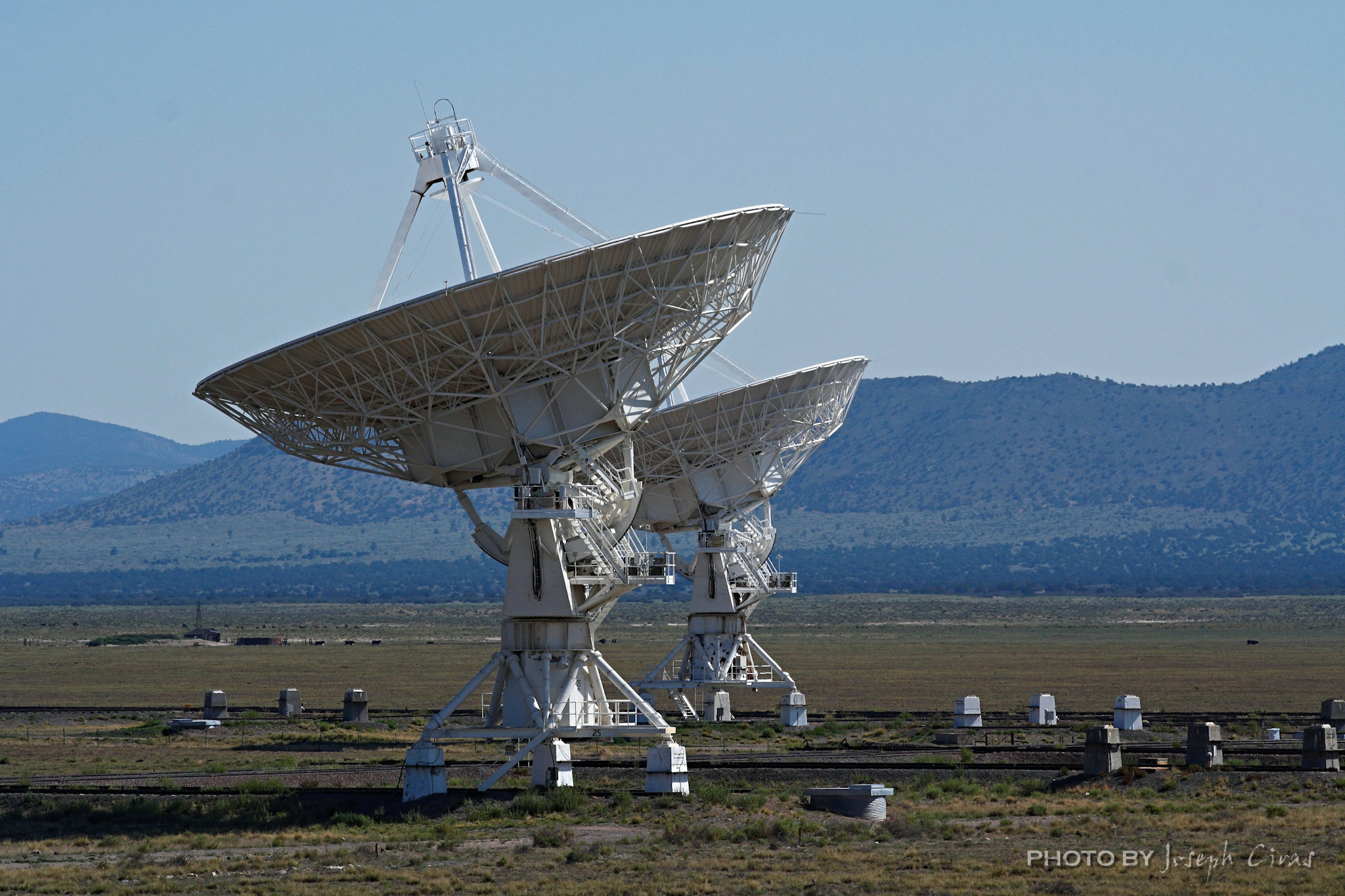
Thursday, 03/10/2022: Posted photo — NRAO Very Large Array.

Settings: Canon EOS DIGITAL REBEL XS, ISO 200, f/10, 1/800 s, 165 mm.

NRAO Very Large Array, Magdalena, NM.

Radio Antennas in the Very Large Array

One of the most interesting places to visit. As you can see from the description below, the array can be very large. When we visited, there were 26 radio antennas pointing in one direction and one pointing in an opposite direction. We thought that was strange. They told up that the odd one was scanning the sky.

“The Very Large Array, one of the world’s premier astronomical radio observatories, consists of 27 radio antennas in a Y-shaped configuration on the Plains of San Agustin fifty miles west of Socorro, New Mexico. Each antenna is 25 meters (82 feet) in diameter. The data from the antennas is combined electronically to give the resolution of an antenna 36 km (22 miles) across, with the equivalent sensitivity of a dish 130 meters (422 feet) in diameter.”http://www.vla.nrao.edu/

Friday, 03/11/2022: Post photo — Owachamo Bridge.

Settings: Canon EOS DIGITAL REBEL XS, ISO 100, f/7.1, 1/125 s, 18 mm.

Owachamo Bridge, Natural Bridges National Monument, UT.

Owachomoa Bridge looking from below

Owachomo is the smallest and thinnest of the three natural bridges in the National Monument and is commonly thought to be the oldest. We had a great hike out to the bridge.

We like to travel to the lesser know parks. These parks are lesser know mostly because of location. They are not close to any major city or town. We like to say it is great to have a park to ourselves.

Dimensions

Height: 106 feet (32 meters)
Span: 180 feet (55 meters)
Width: 27 feet (8 meters)
Thickness: 9 feet (3 meters)

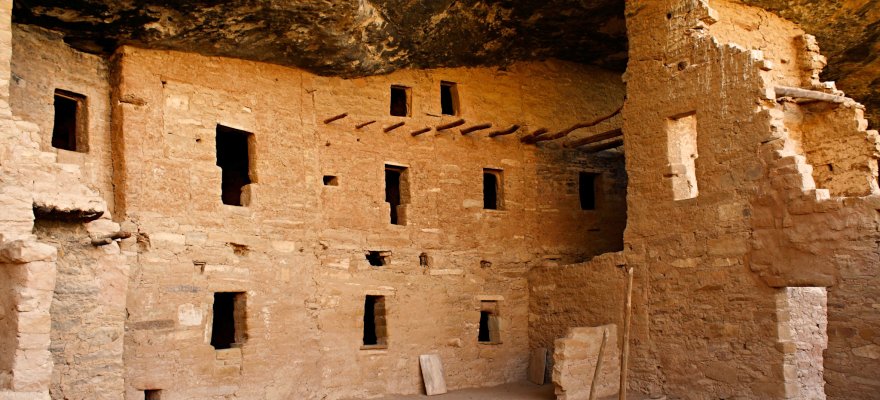
Saturday, 03/12/2022: Post photo — Spruce Tree House.

Settings: Canon EOS DIGITAL REBEL XS, ISO 200, f/5, 1/50 s, 20 mm.

Spruce Tree House, Mesa Verde National Park, CO.

From the National Park Service: “Spruce Tree House, the third largest cliff dwelling (Cliff Palace and Long House are larger), was constructed between about 1211 and 1278 CE by the ancestors of the Pueblo peoples of the Southwest. The dwelling contains about 130 rooms and 8 kivas (kee-vahs), or ceremonial chambers, built into a natural alcove measuring 216 feet (66 meters) at greatest width and 89 feet (27 meters) at its greatest depth. It is thought to have been home for about 60 to 80 people.”

Spruce Tree House cliff dwelling

We were lucky enough to get to the park prior to 2012 during one of our northern National Park tours. We were able to explore the Spruce Tree House. We went into some of the rooms and into the kivas. Due to the unstable cliff about the Spruce Tree House, the entire site was closed to the public in October 2015. We have visited the park since then since I have a relative that works at the park. We were able to obtain permits to do some backcountry hiking with my relative guide to some dwellings that are off limits to the public.

That is all for now. Until next week, be safe.

For more photo of other project I have work, visit my website: https://photobyjosephciras.weebly.com or visit me on Facebook at https://www.facebook.com/PhotobyJosephCiras/.
Photographic Thoughts — 01/09/2022 to 01/15/2022

“When I photograph, what I’m really doing is seeking answers to things.” — Wynn Bullock

Thank you for all the new views and likes from last week, it helps keep me inspired.

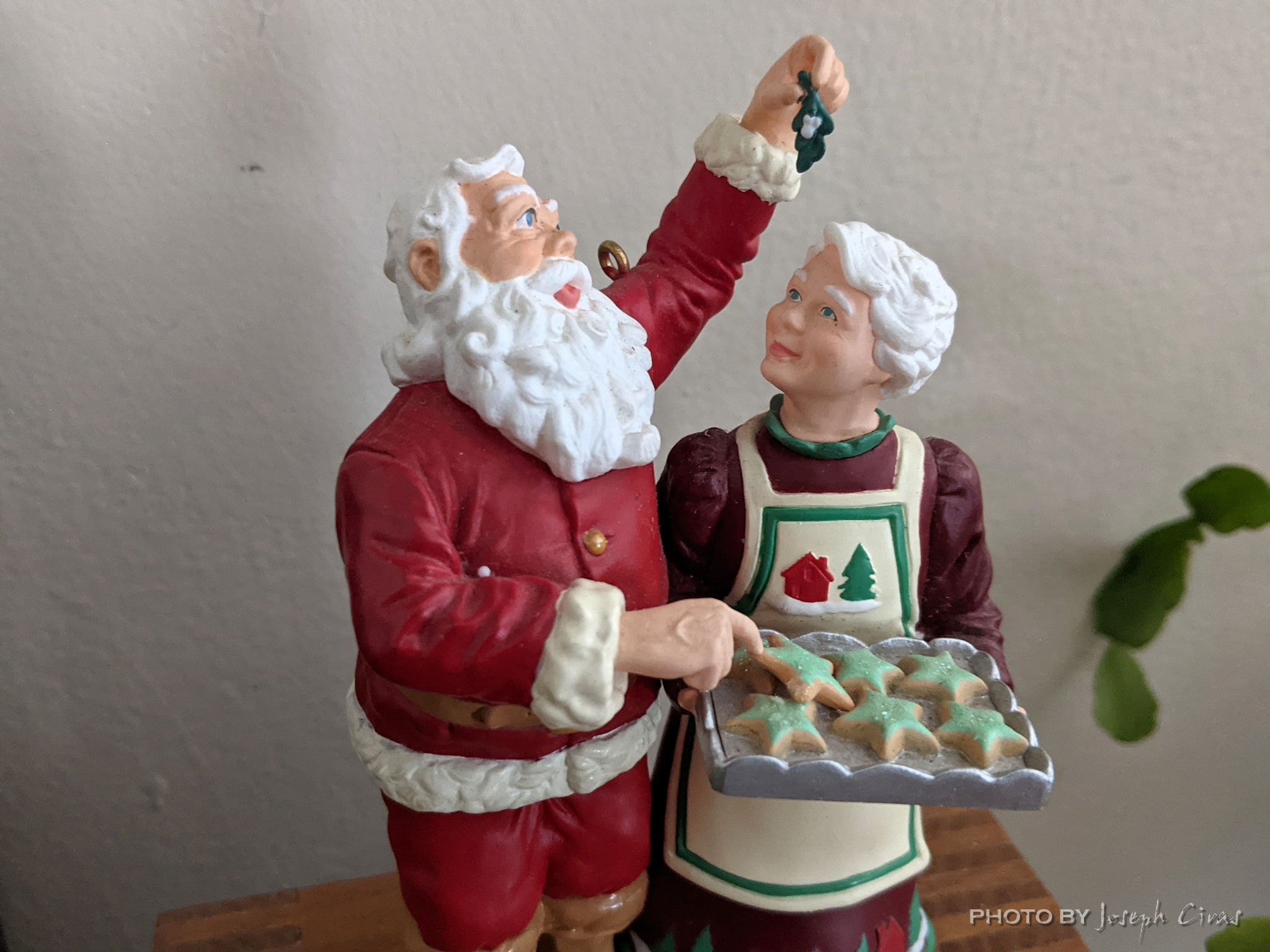
Sunday, 01/09/2022: Posted photo — Tricky Santa.

Settings: Google Pixel 2, ISO 193, f/1.8, 1/125 s, 4 mm.

This figurine looks like my in-laws. My father-in-law is Santa to many people during the holidays. He goes to many parties and events as Santa. Before Covid, he took calls from children on the local cable channel. He likes to eat cookies.

My mother-in-law bakes cookies around the holiday. Some of the cookies she bakes look the cookies on this tray. She is Mrs. Clause to some people since my father-in-law is Santa. Tricking Mrs. Clause to sneak cookies is something my father-in-law would do.

I took this photo today because it is a figurine that I often photograph during the holiday season. We took our tree and decorations down today, so I wanted to post it this year since I have not done so.

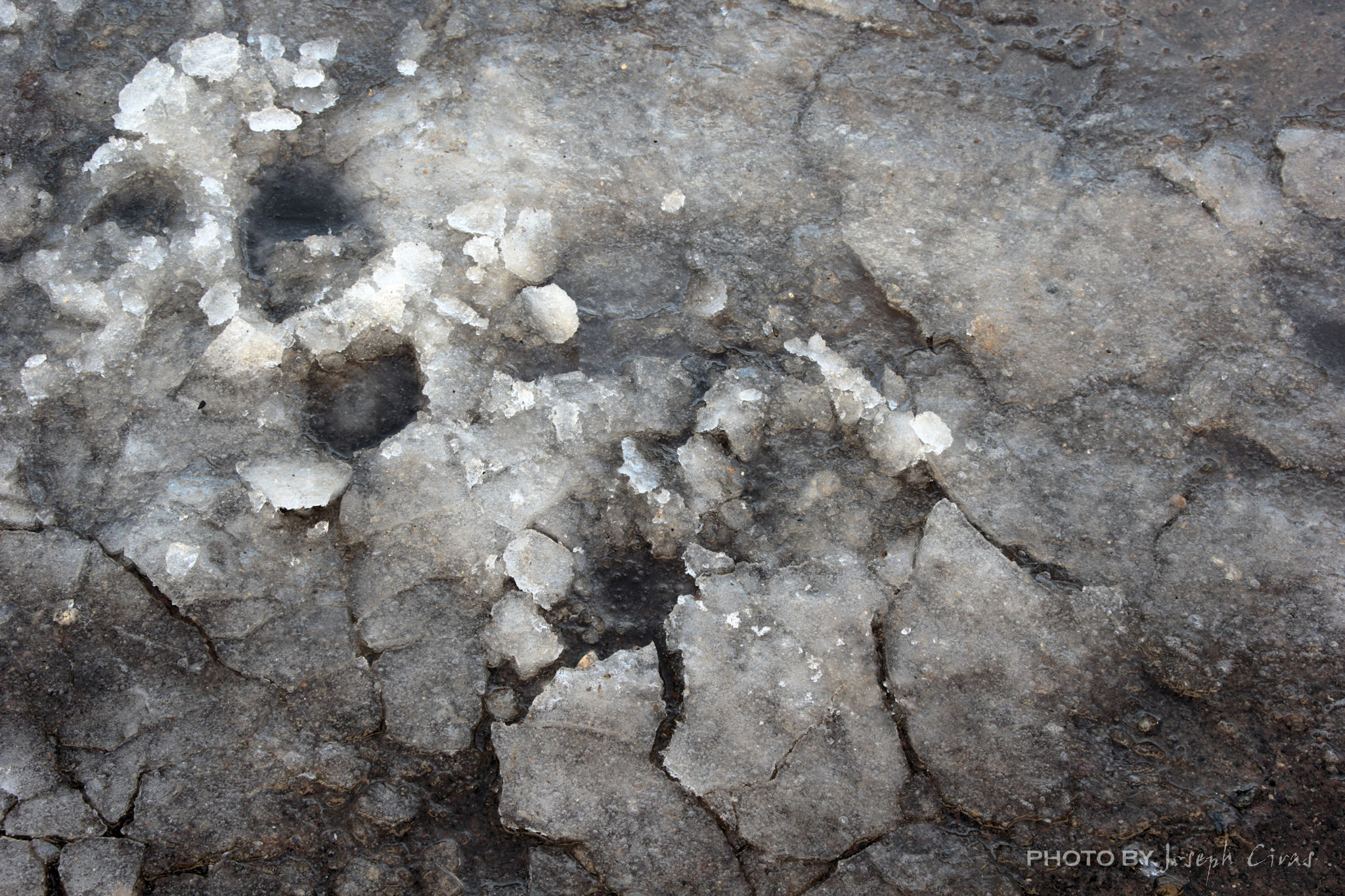
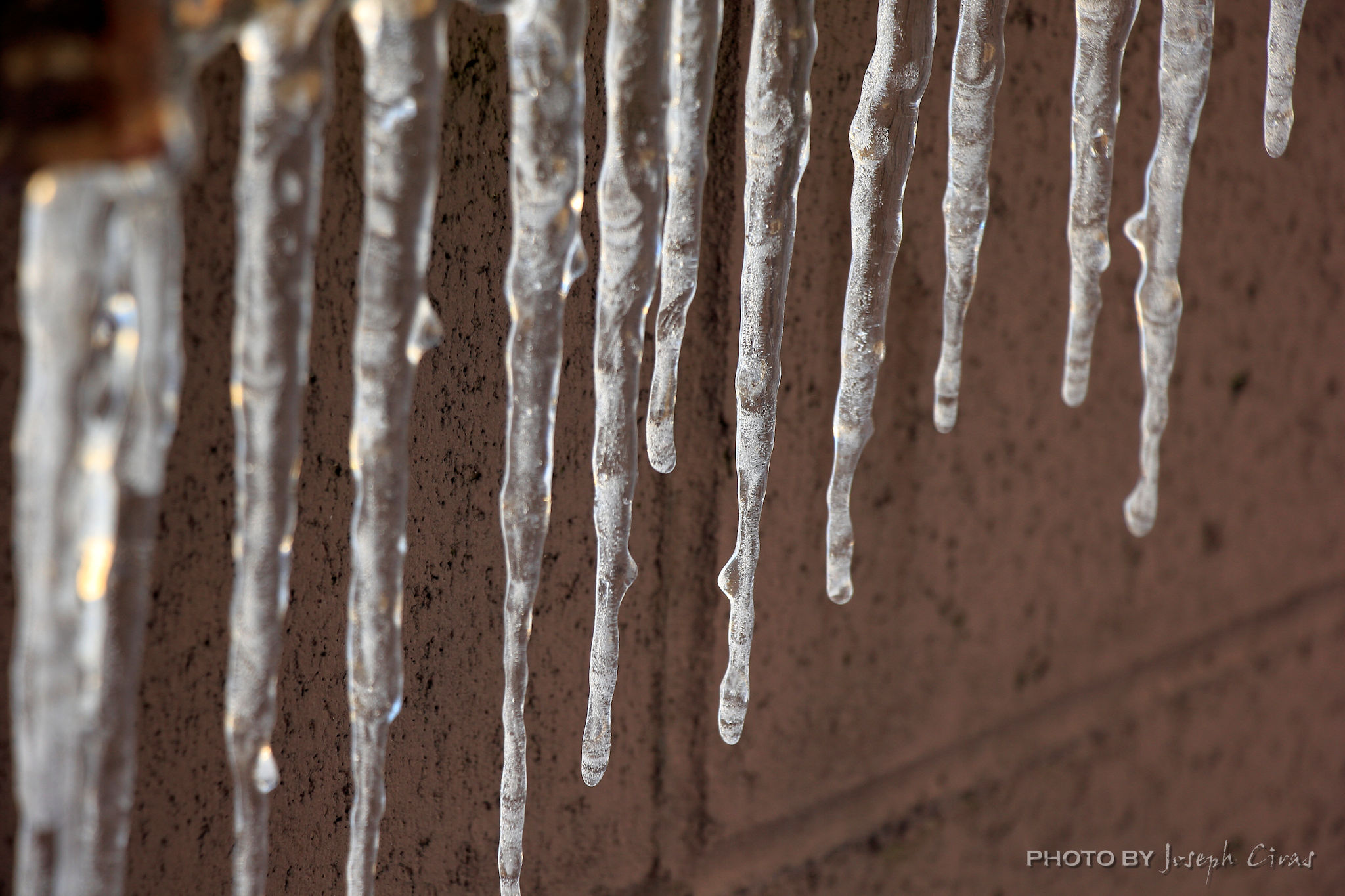
Monday, 01/10/2022: Posted photo — Ice.

Settings: Canon EOS 60D, ISO 100, f/7.1, 1/60 s, 42 mm.

Not one of my best shots. I took this photo to show how cold it is her today and will be for the remainder of the week. I was hoping the photo came out better than it did. After posting photo for 4393 days in a row, there are a few you do not like.

Tuesday, 01/11/2022: Posted photo — Cold.

Settings: Canon EOS 60D, ISO 100, f/5.6, 1/60 s, 106 mm.

Yesterday it was cold. Today it was frigid. The temperature did not get out of the single digits (°F) and it was windy. The wind chill was well below 0° F. Last night’s hike was very cold, but it was 10–20° F warmer than today. The cold and the wind do not bother me since I know how to dress for it. Dress in layers.

Your layering system is as follows: a base layer that wicks sweat off your skin, a middle layer that is an insulating layer to retain your body heat and protect you from the cold, and an outer layer that shields you from wind and rain.

“The wind chill temperature is how cold people and animals feel when outside. Wind chill is based on the rate of heat loss from exposed skin caused by wind and cold. As the wind increases, it draws heat from the body, driving down skin temperature and eventually the internal body temperature. Therefore, the wind makes it FEEL much colder. If the temperature is 0°F and the wind is blowing at 15 mph, the wind chill is -19°F. At this wind chill temperature, exposed skin can freeze in 30 minutes.” — From the National Weather Service.

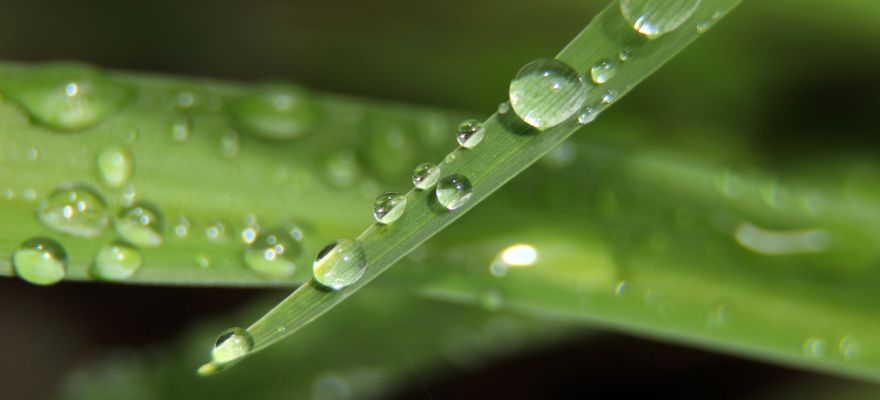
Wednesday, 01/12/2022: Posted photo — Droplets.

Settings: Canon EOS 60D, ISO 100, f/0, 1/125 s, 50 mm.

This is one of my favorite photos. I took this during the summer when the grass in our yard was tall and needed cutting. I saw the water droplets glistering in the sun and wanted to capture it.

I was very happy with the way this turned out.

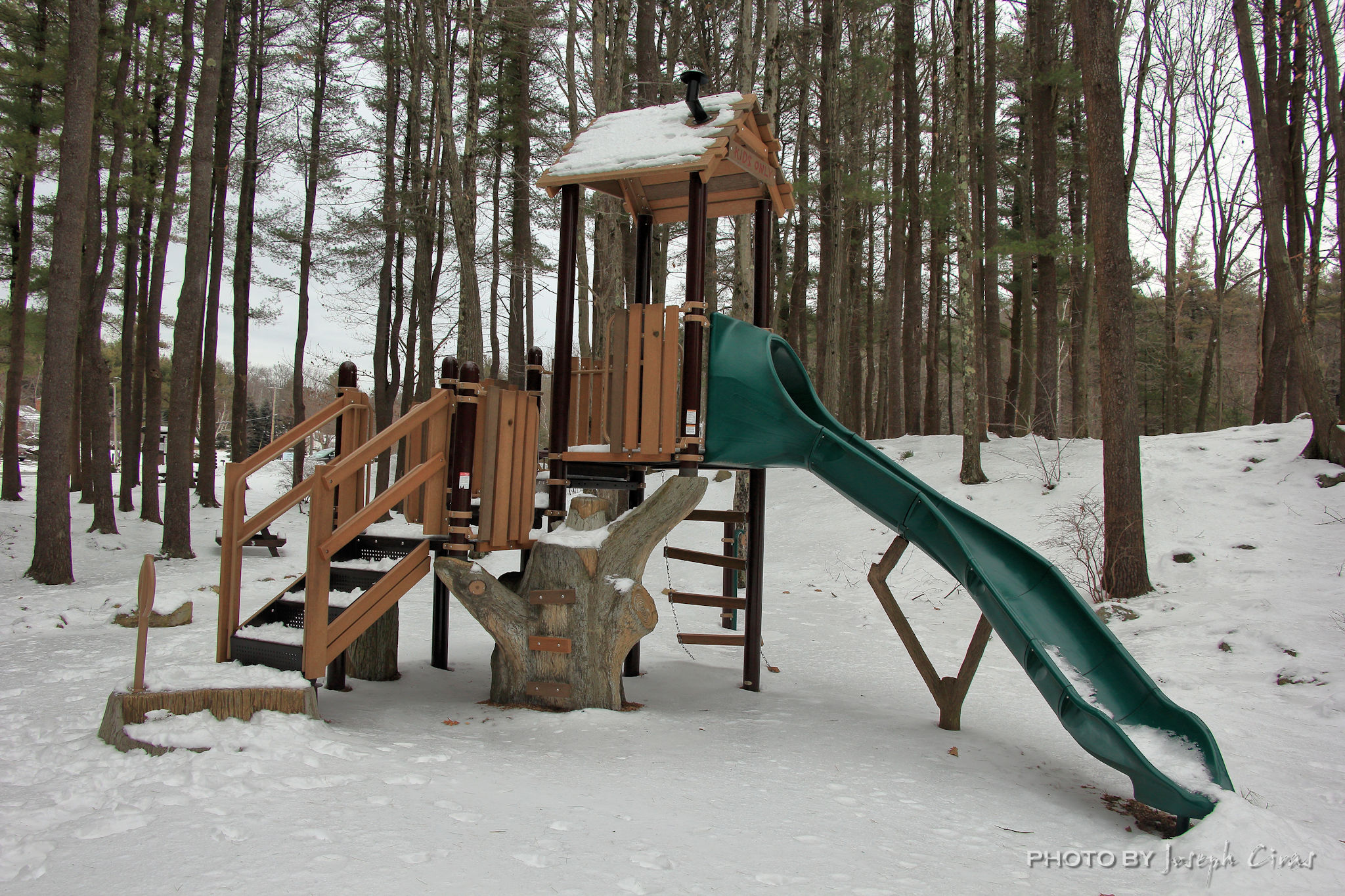
Thursday, 01/13/2022: Posted photo — Playground.

Settings: Canon EOS 60D, ISO 125, f/7.1, 1/100 s, 18 mm.

I had a follow up appointment today and took my camera to take a photo in the daylight. The appointment was near Dunn State Park, so I decided to take my photo there. Hiking, canoeing and kayaking, boating (non-motorized), fishing, and cross-country skiing can all be done at Dunn State Park. Sometimes there is a great shot of the water, trees, snow, and blue sky. The sky was gray, so I did not get that shot. What I did see was one of the play areas in the park. It looked to be a great photo that would tell a story about how cold it has been around this area in the last few days. I have hiked the easy one mile trail around Dunn Pond a few time, just hiking it and looking for Geocaches.

“Dunn State Park is named after its benefactor, John Ainsworth Dunn (1831- 1915) who had a lifelong career in the chair manufacturing industry, eventually founding the John A. Dunn Company with a large factory in Gardner and offices across the country. Dunn was seen by the people of Gardner as a man of strong personality who made the city known in the woodworking/chair industry. He was also very involved in the civic life of Gardner. In his will, Dunn gave this park property to the city of Gardner. At that time, a picnic area, 7-acre pond, field for baseball games, tennis courts and horseshoe pits were added. Over the years, Dunn Park grew to the current 120-acre day area that includes a 20-acre pond, playground, beach, picnic area and trails for us all to enjoy.” — From the Dunn State Park Trail Map.

Friday, 01/14/2022: Post photo — Fan.

Settings: FLIR i5, ISO N/A, N/A, 1/30 s, 7 mm.

This is a thermal photo of the fan on our wood stove. The heat of the stove makes the fan blades turn. The faster the turning, the hotter the fire.

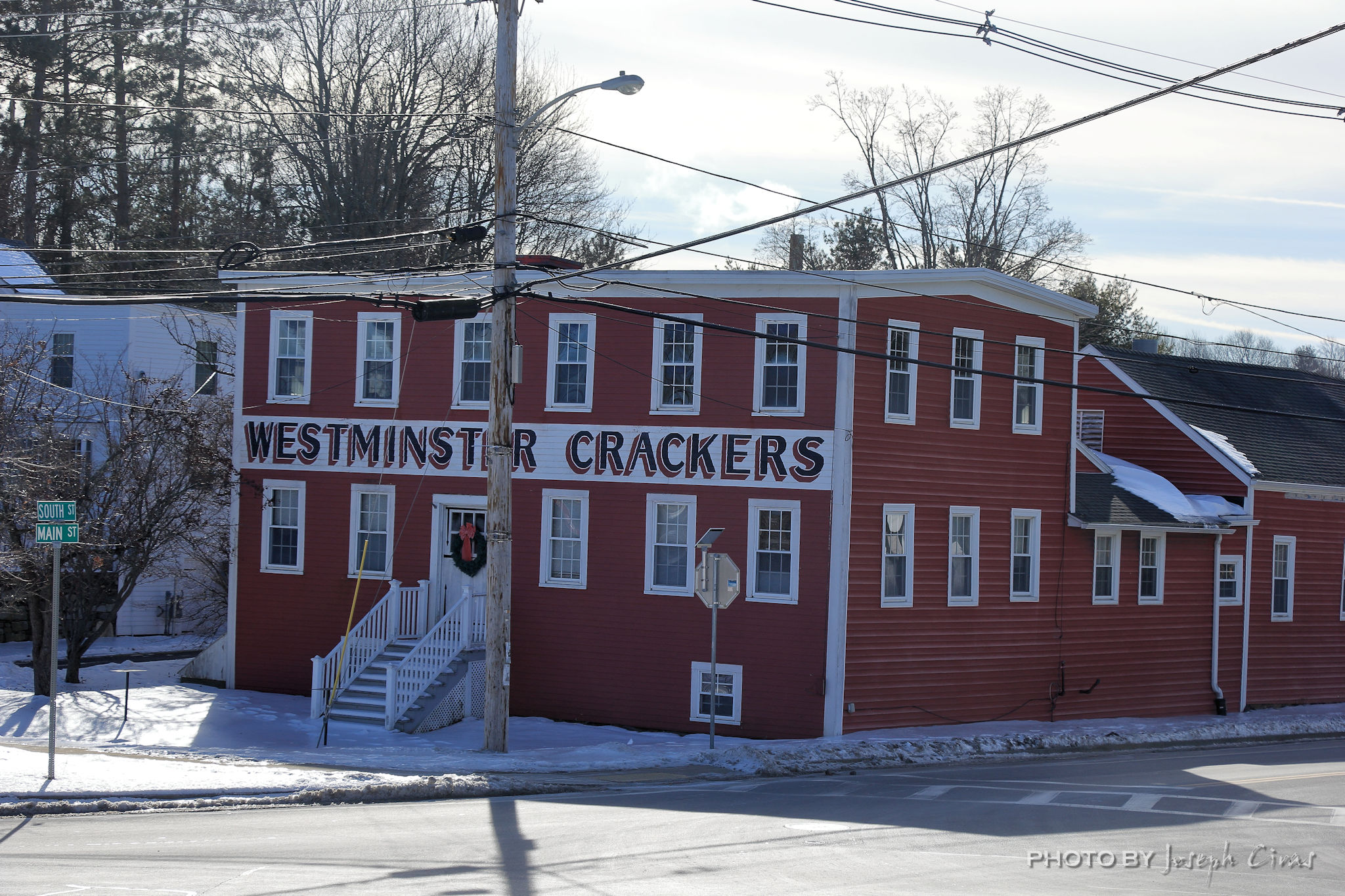
Saturday, 01/15/2022: Post photo — Westminster Crackers.

Settings: Canon EOS 60D, ISO 100, f/7.1, 1/320 s, 56 mm.

In my town is the original Westminster Cracker factory. If you ever had oyster crackers, you may have seen this building. The old locals tell me that they use to put out the defective crackers for people to scoop up.

“Not so many years after the American Revolution, at the hearth of a colonial house in Westminster, Massachusetts, our first Master Baker pulled a batch of warm crackers from the oven, and a New England tradition was born. Back then, the bakery’s power came from a horse and treadmill; dough was mixed and rolled by hand, then individually stamped into crackers and baked in a wood-fired brick oven. Neighbors and passers-by delighted in the fresh-baked, hearty goodness of our breads and crackers.” Read more at https://www.westminstercrackers.com/about-wbc.

That is all for now. Until next week, be safe.

For more photo of other project I have work, visit my website: https://photobyjosephciras.weebly.com or visit me on Facebook at https://www.facebook.com/PhotobyJosephCiras/.
My Weebly website is back up and running. I am looking of suggestions on how to make it look better.

Photographic Thoughts — 12/26/2021 to 01/01/2022

“If I could tell the story in words, I wouldn’t need to lug around a camera.” — Lewis Hine

Thank you for all the new views and likes from last week, it helps keep me inspired.

This week’s post will have short descriptions each day since I am getting ready for Christmas.

Sunday, 12/26/2021: Posted photo — Ice on Mountain Laurel.

Settings: Canon EOS 60D, ISO 200, f/5.6, 1/25 s, 78 mm.

Another day of freezing rain today. The good news is that it was only in the morning. We postponed our Christmas gathering until today because of the bad weather we had yesterday.

When I went out to clear off the driveway and to warm up the car, I decided to take a photo of the ice off the mountain laurel that is in our yard.

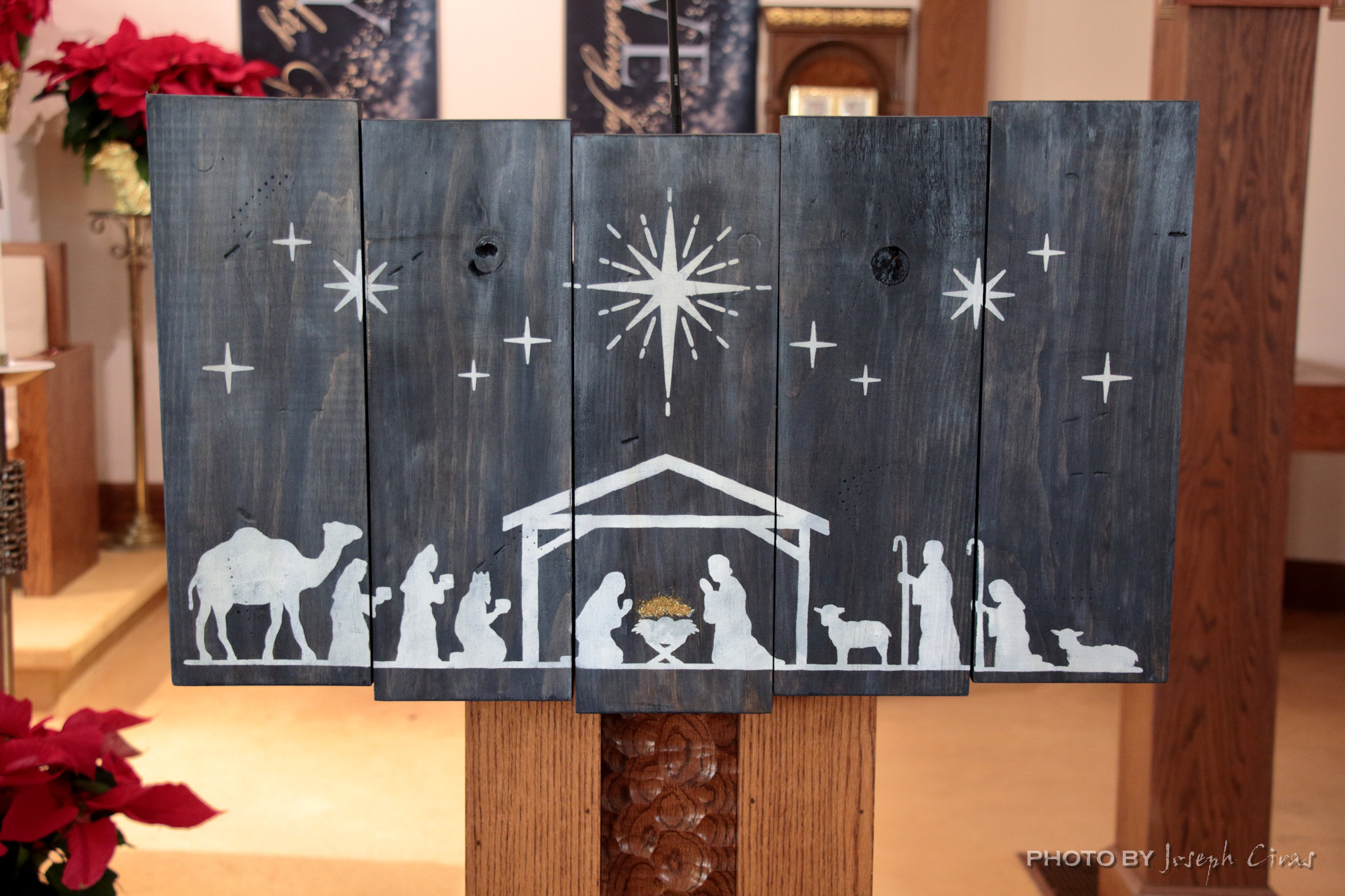
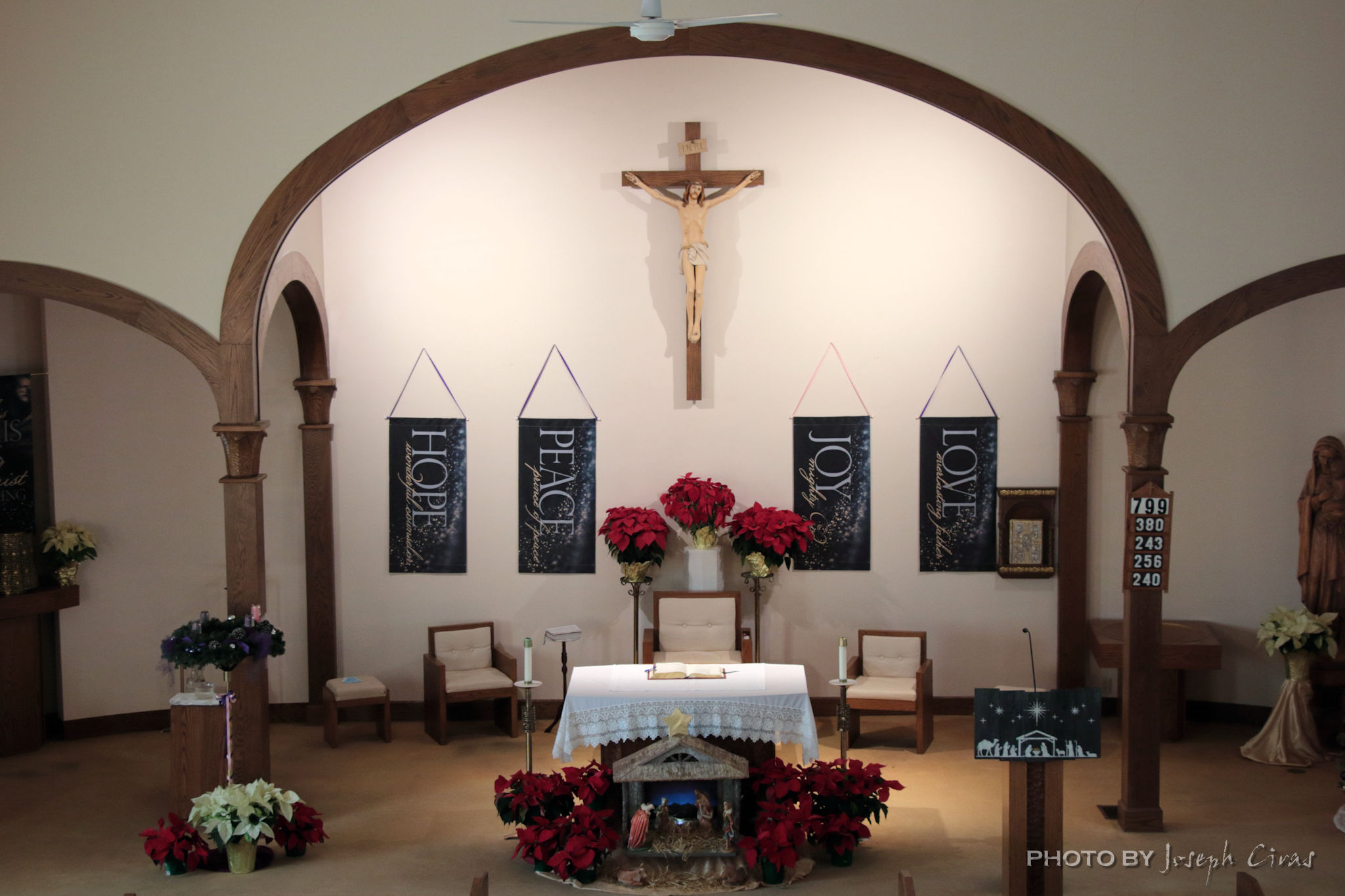
The other possible post for today was that of the nativity seen at church. Before mass today, I took photos of the crèche and the wooden hanging on the lectern. I have also taken a photo of the altar from the choir loft.

Monday, 12/27/2021: Posted photo — Y12 D361 Wachusett Mountain.

Settings: Canon EOS 60D, ISO 800, f/5.6, 1/1250 s, 91 mm.

Tonight’s challenge, hike Wachusett Mountain on ice covered trails.

Usually not a challenge for me and my experienced hiking partners, it is more challenging when you hike with a group of various abilities. Some of the people in the group have not hiked in the winter.

During the hike, I had on my “rock” microspikes because of the ice cover and not much snow. These spikes are inexpensive, so I do not mind if they get damaged during the hike. That is what happened tonight. One of the chains broke on them so I need to order a new pair. I use my “rock” spikes so that I do not damage my “good” microspikes on the trail. It is less costly for me to replace the “rock” spikes than the “good” spikes. My inexpensive spikes were purchased off Amazon and my “good” spikes are Hillsound Trail Crampon.

Tuesday, 12/28/2021: Posted photo — That Spot Again.

Settings: Canon EOS 60D, ISO 200, f/22, 1/10 s, 35 mm.

Had to run out and do some errands today. I went shopping during the day since it was a day off for me. Because it was daytime, I wanted to take a photo of the dam at Round Meadow Pond. This is a usual spot for me to take during the year and it is many people’s favorite location to see in my photos.

Wednesday, 12/29/2021: Posted photo — Top of the Cascade.

Settings: Canon EOS 60D, ISO 200, f/14, 1/10 s, 62 mm.

A few weeks ago, I did a hike with the AMC leaders and we went past this Cascade in Worcester, MA. Today I was in the city go do some cleaning at my mother’s house when I decided to stop by the cascade with my good camera to take a photo of the falls. This photo was a handheld photo by leaning on the bridge that overlooks the falls.

Thursday, 12/30/2021: Posted photo — Sand Dunes.

Settings: Canon EOS DIGITAL REBEL XS, ISO 200, f/13, 1/800 s, 95 mm.

Great Sand Dunes National Park and Preserve, Mosca, CO

The tallest dunes in North America are the centerpiece in a diverse landscape of grasslands, wetlands, forests, alpine lakes, and tundra. Elevations within the park and preserve range from 8,200 feet to 13,604 feet and keep changing due to the weather. In summer months during mid-day, sand temperatures can reach 150 degrees F. Hike during the morning or evening to avoid heat exhaustion and/or burned feet. Wear closed-toe shoes. This is something that we experienced in the park. We were there in the summer of 2012 and could feel the heat through our shoes.

An amazing thing about the park is that you can see the dunes and the Sangre de Cristo mountains from miles away. When you turn off the main road to the access road, there they are.

Our national parks are wonderful, and everyone should have the opportunity to explore them all.

Friday, 12/31/2021: Post photo — Mom.

Settings: N/A

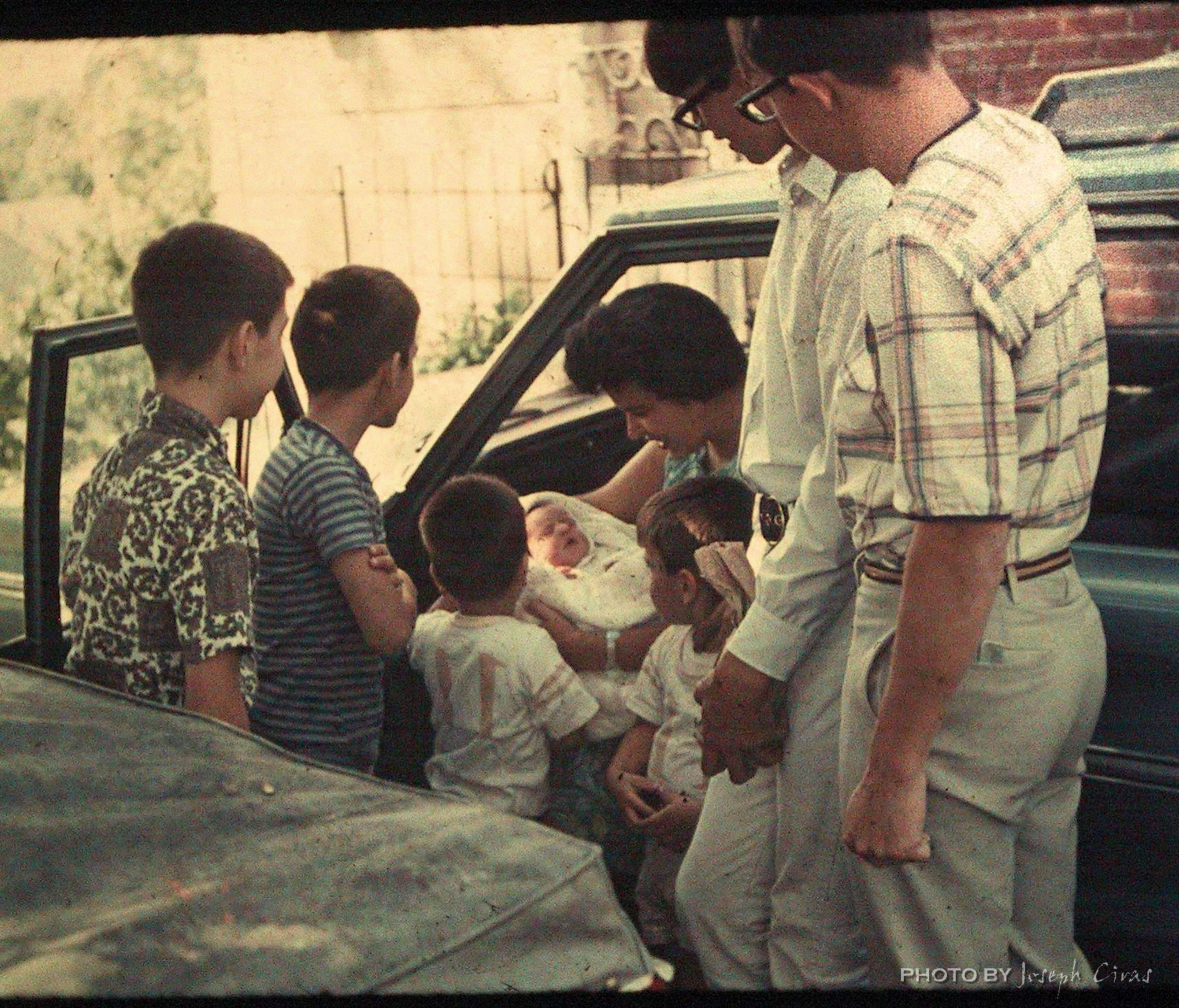
This year my mother passed at age 95. I did not know what photo to post for the last one of the year, saw a photo of my mother, and posted the photo of her with all her boys.

For your information, here are the final count of photos for the year 2021:

Total
Portrait6
Still Life82
Landscape105
Food8
Sports9
Wildlife25
Macro5
Event11
Documentary1
Weather35
Architectural22
Long exposure8
Flowers48

Saturday, 01/01/2022: Post photo — Cushion.

Settings: Google Pixel 2, ISO 556, f/1.8, 1/120 s, 4 mm.

Happy New Year! The start of year 13 of my project. I started on January 1, 2010 and have been taking and posting a photo a day.

The seat cushion on my wife’s aunt’s couch. We had our annual gathering at her house. I normally post a photo of the sunrise on New Year’s morning, but the weather had something to say about that.

That is all for now. Until next week, be safe.

For more photo of other project I have work, visit my website: https://photobyjosephciras.weebly.com or visit me on Facebook at https://www.facebook.com/PhotobyJosephCiras/.
Please note that my Weebly page will be working soon.

Photographic Thoughts — 12/19/2021 to 12/25/2021

“I like to photograph anyone before they know what their best angles are.” — Ellen Von Unwerth

Thank you for all the new views and likes from last week, it helps keep me inspired.

This week’s post will have short descriptions each day since I am getting ready for Christmas.

Sunday, 12/19/2021: Posted photo — Totem.

Settings: Samsung SM-G930V (Galaxy S7), ISO 50, f/1.7, 1/346 s, 4 mm

This totem is in one of the rest areas in Pennsylvania. It has a plaque that is inscribed: “Dedicated to the American Indians (Seneca) …but they won’t be forgotten, but will be remembered in the minds and in our hearts. Love is life.” Peter Toth June 30, 1973

Totem

I took this photo on my way back from watching my nephew’s dance performance in Columbus, OH this weekend. It was a great show, and he did wonderful. He was one of the main dancers in this new ballet called Wonderland. He is a typical 14-year-old boy that enjoys what he is doing.

A totem is a natural object or animal that is believed by a particular society to have spiritual significance and that is adopted by it as an emblem. I took this photo today on our drive home. I took other photos during the trip and decided to use this one for my photo of the day.

Monday, 12/20/2021: Posted photo — Icicles on Yew.

Settings: Canon EOS 60D, ISO 100, f/5.6, 1/200 s, 135 mm.

We had some rain and ice overnight. It is dangerous to drive on but looks great to photograph.

Icicles on a Yew

I also went on my weekly Monday night hike and took this photo of the ice on the trees on the summit being light up by the lights of the ski trail.

Ice covered tress on the summit.

Tuesday, 12/21/2021: Posted photo — Hockey Ornament.

This is an ornament that I have had for a while. I played hockey for almost 45 years. I have not played in a few years and would like to get back on the ice to play.

My Hockey Ornament

Wednesday, 12/22/2021: Posted photo — Sunrise HDR.

Settings: Canon EOS 60D, ISO 400, f/7.1, 1/1250 s, 135 mm.

The lighting was of interest this morning, so I took this photo. I did not like the way the original photo looked so I made it into an HDR photo. Good thing that I always photograph in RAW format.

Sunrise in HDR format

Thursday, 12/23/2021: Posted photo — Road Treatment.

Settings: Canon EOS 60D, ISO 400, f/7.1, 1/40 s, 29 mm

Treated Road

Getting ready for a storm. Most of the streets in town have this treatment on it. Sodium chloride (salt), magnesium chloride, calcium chloride, calcium magnesium acetate and potassium acetate are chemicals used to prevent and remove snow and ice from roadways.

Friday, 12/24/2021: Post photo — Driveway.

Settings: Canon EOS 60D, ISO 200, f/7.1, 1/80 s, 35 mm

We did get a dusting of snow last night so yesterday’s road treatment worked.

Snow down the Driveway

This is a photo of our neighbors’ driveway. I just like the way it looks in the snow, lined with the trees and the driveway being a dirt driveway.

Saturday, 12/25/2021: Post photo — Christmas Lights.

Settings: Canon EOS 60D, ISO 3200, f/7.1, 1/8 s, 33 mm.

Merry Christmas to all!

Christmas is the celebration of the birth of Jesus. Christmas means “mass on Christ’s day”. The placement of lights on a tree goes back to when Christmas trees were decorated with candles, which symbolized Christ being the light of the world. The Christmas trees were brought by Christians into their homes in early modern Germany. Here is a page I found with the history of lights on a tree: https://www.christmas-light-source.com/pages/history-of-christmas-lights.

Christmas Lights

On another note, we have freezing rain today so we went to church and then postponed a family event until tomorrow. When I was clearing off my car this morning, I saw some tracks in the snow and took these photos.

That is all for now. Until next week, be safe.

For more photo of other project I have work, visit my website: https://photobyjosephciras.weebly.com or visit me on Facebook at https://www.facebook.com/PhotobyJosephCiras/.
Please note that I have not been able to post to my Weebly page for over a month, so the photos are a little behind there. Weebly technical support is still working on the issue.

Photographic Thoughts — 12/12/2021 to 12/18/2021

“It is more important to click with people than to click the shutter.” — Alfred Eisenstaedt

Thank you for all the new views and likes from last week, it helps keep me inspired.

Sunday, 12/12/2021: Posted photo — Stream.

Settings: Samsung SM-G930V (Galaxy S7), ISO 50, f/1.7, 1/154 s, 4 mm

“The Cascades is made up of several parcels of land: Boynton Park, Cascades West, Cascades East, Cascades Park, and Cascading Waters. Most of the area is wooded, but there is a meadow in Cascades West that has been enlarged to expand the opportunities for wildlife habitat. Several trails follow along streams and there are vernal pools that can be explored in the Spring. Views of the falls are spectacular in the Spring or after a heavy rain.” https://www.gwlt.org/lands-and-trails/four-town-greenway/cascades/

When I was growing up in the city of Worcester, this trail system did not exist. It was established in 1991 and completed in 2005 by the Greater Worcester Land Trust. What a great trail to have in the city and a great location for families to get outdoors and explore nature and the hidden wonders of the city.

This was my first time hiking in the Cascades. I passed the trailheads many times when I was driving home from my mother’s house and have wondered how long the trail system was and why was it called the Cascades. The Appalachian Mountain Club (AMC) had a leadership meeting on the trail ending with a four mile hike on the trail system. At one of the trailheads is the AMC equipment hut. Part of the leadership trailing was to learn about the equipment hut and how to access its resources. It is place that equipment can be borrowed by families or individuals that are just starting out with outdoor activities and need to borrow equipment. It is a great way for those in the city who cannot afford the proper equipment to borrow some to be used in a guided hike or camping trip.

This photo is one of the many cascades along the trail. I only had my cell phone with me so please excuse the quality of this photo. I will be going back with my good camera to take better photos.

Monday, 12/13/2021: Posted photo — Ornament.

Settings: Canon EOS 60D, ISO 3200, f/7.1, 1/20 s, 98 mm.

This is the first photo I took with my new lens. My old lens was having issues focusing past 35 mm so I needed to replace it.

Thought to have originated in 16th century Germany, the first ornaments were nothing like what we know today. The ‘modern’ Christmas tree tradition is thought to have originated in 16th century Germany, where small evergreen trees were decorated with the likes of candles, apples, nuts, and berries as “Paradise trees” in church plays. Over time, devout Christians integrated these decorated trees into their homes during the holiday season. The tradition, which became a Christian ritual, began to spread across Europe. (https://theculturetrip.com/europe/germany/articles/a-brief-history-of-the-christmas-ornament-3/)

There is nothing particularly interesting about these ornaments. I just took my camera, pointed it at the tree, and took this photo.

Tuesday, 12/14/2021: Posted photo — Geminids.

Settings: Canon EOS 60D, ISO 3200, f/9, 14 s, 18 mm.

“The Geminids are considered one of the best meteor showers every year because the individual meteors are bright, and they come fast and furious. The Geminid meteor shower is nearly 200 years old, according to known records — the first recorded observation was in 1833 from a riverboat on the Mississippi River — and is still going strong. In fact, it’s growing stronger. That’s because Jupiter’s gravity has tugged the stream of particles from the shower’s source, the asteroid 3200 Phaethon, closer to Earth over the centuries.” https://www.space.com/34921-geminid-meteor-shower-guide.html

I was up this morning at 2:30 ET to watch the Geminids. What a spectacular show! I was planning on being outside for an hour before going back to bed. I was watching the show until 4 a.m. before taking a short nap to get up for work at 4:30 a.m. I did see some of the meteors during last night’s hike. They were not very bright since the moon did not set until 2:41 a.m. with the peak of the Geminids at 2:40 a.m.

One of the questions was were to direct my camera. I placed it heading north, then heading south, and then to the east. I was pointing it in the direct of the greatest activity at the time. The photo that I posted, the one where the meteor underlines the Big Dipper, was with my camera pointing north. The other photo, the one with the roofline of my house, was with the camera pointing east. There were no bright meteors in the photos with my camera facing south. This is the east facing photo.

Wednesday, 12/15/2021: Posted photo — Sunrise.

Settings: Canon EOS 60D, ISO 400, f/5.6, 1/400 s, 50 mm.

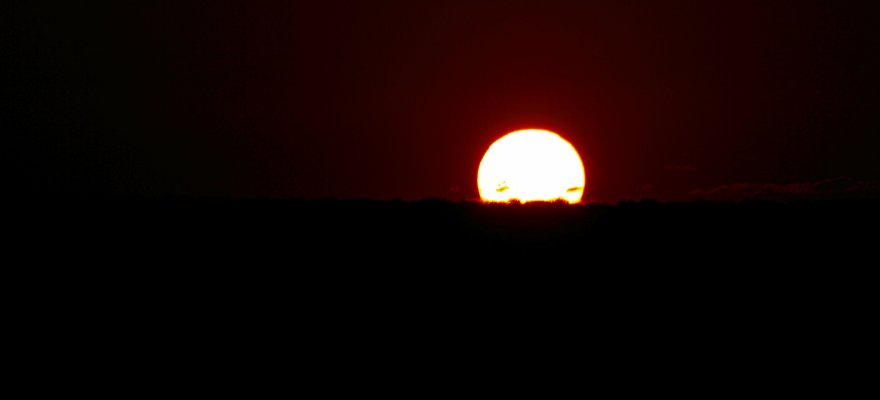
Last week I posted a photo of the sunset from my office. Today I am posting a photo of the sunrise.

I was going between buildings this morning and watching the sunrise. I saw different colors in the woods around the property and was looking at the clouds changing color. When I got back to my office, I went to an eastern facing window and looked at the clouds.

This photo is what I saw when looking out the window.

Thursday, 12/16/2021: Posted photo — Waterton Lake Sunset Alberta.

Settings: Canon EOS 60D, ISO 100, f/5.6, 1/1000 s, 25 mm

Waterton Lakes National Park is in southern Alberta, Canada, bordering Montana’s Glacier National Park. We camped there a few years ago after sending time in Glacier.

I took this photo the first night we were at the park. I took it at the blue hour. You need to search my previous blogs for the definition of blue hour as it pertains to sunsets. I was able to post edit this photo to make it look like what I saw. Most times the camera will wash out photos or make them look different that that you see. This proves the adage that you can never justify the colors that you can see with a photograph.

Friday, 12/17/2021: Post photo — Off We Go.

Settings: Canon EOS 60D, ISO 100, f/7.1, 1/1000 s, 121 mm

Off to Chicago Midway we go!

I was driving around this afternoon and stopped by an airport to watch the planes. It is very relaxing to see the plans take-off and land. Even after studying aerodynamics, I am still in wonder to see a plane fly. I know the time that I took this photo and then went to the airports website to see were that flight was heading. I took photos of the plans to practice AI Servo focusing.

The focus modes on my camera are:

  • ONE SHOT : One-Shot AF
  • AI FOCUS : AI Focus AF
  • AI SERVO : AI Servo AF

[One-Shot AF] for Still Subjects: Suited for still subjects. When you press the shutter button halfway, the camera will focus only once.

[AI Servo AF] for Moving Subjects: This AF mode is for moving subjects when the focusing distance keeps changing. While you hold down the shutter button halfway, the subject will be focused continuously. When you use this focus mode, the camera does not “beep” when the object is in focus, so you need to trust your skills.

[AI Focus AF] for AI Focus AF switches the AF mode from One-Shot AF to AI Servo AF automatically if the still subject starts moving. AI Focus AF mode is one that I do not use, and do not recommend using. It does not work very well.

Saturday, 12/18/2021: Post photo — Statehouse

Settings: Samsung SM-G930V (Galaxy S7), ISO 50, f/1.7, 1/154 s, 4 mm

The statehouse in Columbus OH. My nephew was the lead male in a ballet across the street today. He is 14 years old and is a great dancer. We saw the show twice. Great show.

Photographic Thoughts — 11/28/2021 to 12/04/2021

“The camera is an excuse to be someplace you otherwise don’t belong. It gives me both a point of connection and a point of separation.” — Susan Meiselas

Thank you for all the new views and likes from last week, it helps keep me inspired.

Sunday, 11/28/2021: Posted photo — Summit of Mt Norwottuck.

Settings: Samsung SM-G930V (Galaxy S7), ISO 50, f/1.7, 1/268 s, 4 mm

Mount Norwottuck or Mount Norwottock, 1,106 feet above sea level, is the highest peak of the Holyoke Range. It was the first stop today. The second one was Long Mt at 920 feet. Not tall mountains, but the hike was 9 miles in length. Mount Norwottuck received its name from Edward Hitchcock, a former professor of geology at Amherst College. Hitchcock coined the term “Scenographical Geology” in 1841 to describe the dramatic geologic landscape of the Holyoke Range. Originally called Hilliard Knob, Hitchcock applied the Native American name Norwottuck to the mountain. Norwottuck is the Indian name of the village of Hadley.

Reference mark at on the summit of Mount Norwottock. The reference mark points to the summit.

An interesting fact about the Holyoke Range is that it is a Transverse Range. The mountain range runs east to west. There are two other major mountain ranges that are transverse in the United States. They are the Transverse Ranges in California and the Uinta Mountains in Utah.

Today would have been my mother’s 96th birthday. She passed away July 17 this year, so this is the first birthday without her. She is with my father who passed in 1993 and my daughter who passed in 1992. They get to meet their granddaughter together and celebrate their birthdays together for the first time in 28 years. My father would have turned 99 a few days ago.

Hiking clears your mind. Hiking with friends is very therapeutic.

Monday, 11/29/2021: Posted photo — Poles Against a Tree.

Settings: Samsung SM-G930V (Galaxy S7), ISO 1000, f/1.7, 1/10 s, 4 mm

Monday nights is hiking night. I hike with a Meetup group on Mondays for a few months now. It is a good group to hike with since the pace is a little faster than other groups that I have hiked with in the past.

My poles at the junction of the Jack Frost and High Meadow Trails on Wachuestt Mountain

Tonight’s hike was in the cold and dark. The temperature was in the high 20s (F). It was the first time that I used my microspikes to hike with this year. I did not need to use them, but I did not know the trail conditions on one of the hills on the hike and I wanted to get ready for possible ice. We did get snow last week and the trails were snow covered the ground was frozen.

Why do I hike at night? I hike at night for the peacefulness of it. Even with a group, your senses are challenged, and you are more aware of your surroundings. As a leader for the hike, I keep my eyes and ears open for the less experienced people in the group.

As you can see from the photo, it was cold. I wore my gloves and not my -30 F mittens for this hike. Dressing is layers for winter hiking is also important, so you do not overheat or become too cold. You should have at least three layers. A base layer (underwear layer) that wicks sweat off your skin, a Middle layer (insulating layer) that retains body heat to protect you from the cold, and an outer layer (shell layer) that shields you from wind and rain. Here is a website that describes layering, https://www.rei.com/learn/expert-advice/layering-basics.html.

Tuesday, 11/30/2021: Posted photo — Yes, We Have No….

Settings: Samsung SM-G930V (Galaxy S7), ISO 80, f/1.7, 1/120 s, 4 mm

“Yes! We Have No Bananas” was written by Frank Silver and Irving Cohn and was published March 23, 1923. “The story goes that one day in 1922, songwriting duo Frank Silver and Irving Cohn were on their way to work in New York City when they stopped for a snack. At a greengrocer’s, the Greek immigrant owner told the tunesmiths in his broken English, “Yes! We have no bananas today.” The reason the grocer had no bananas? A blight in Central America had caused a shortage.” (https://www.mentalfloss.com/article/31253/music-history-3-yes-we-have-no-bananas)

Bannanas

I thought about titling this photo “Going …” after the expression that has its roots on American college campuses in the 1960s. It is believed that the term going bananas is a term that evolved from the idiom going ape, which also means to go crazy, to explode with anger or to erupt with enthusiasm.

Wednesday, 12/01/2021: Posted photo — Just a Cloud or is it?

Settings: Canon EOS 60D, ISO 200, f/22, 1/6 s, 35 mm.

This could be just a cloud. Or it could be a winged buffalo tilting down to the left.

Cloud formation

I have posted in the past what seeing objects in clouds is called. Pareidolia is a sign of creativity. I took this photo today, not because I saw an object in it, it was because I needed a photo for today. I did not see the object until I was post processing the photos.

What do you see?

Thursday, 12/02/2021: Posted photo — American Bison.

Settings: Samsung SM-G930V (Galaxy S7), ISO 80, f/1.7, 1/120 s, 4 mm

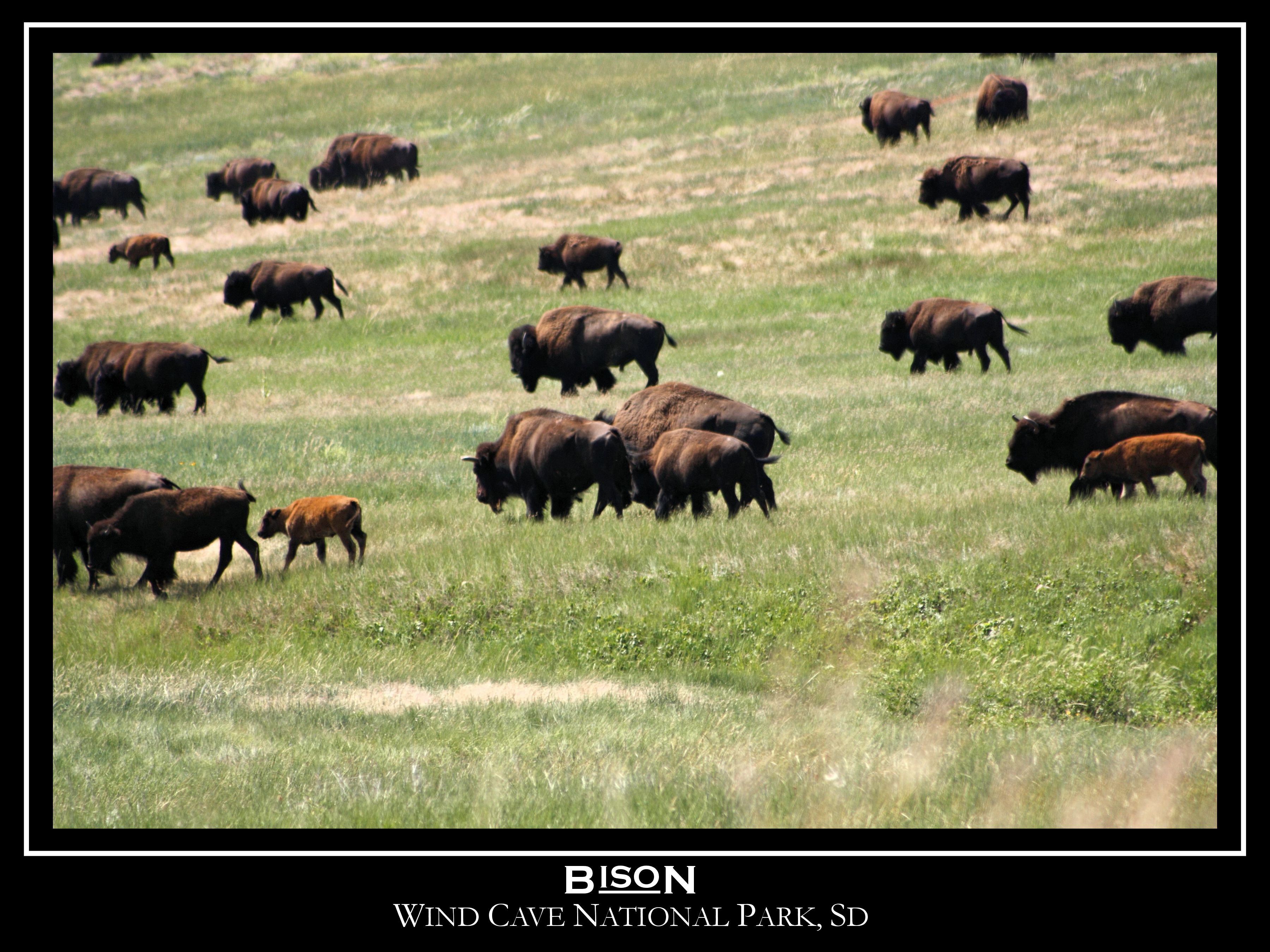
This photo was taking at Wind Cave National Park in South Dakota. I have a feeling that I have posted this photo in a previous post. If I did, I am sorry for the repeat. I like this photo.

American Bison

Wind Cave, one of the longest and most complex caves in the world. Named for barometric winds at its entrance, this maze of passages is home to boxwork, a unique formation rarely found elsewhere.

Here are a few more photos from Wind Cave National Park.

Friday, 12/03/2021: Post photo — Star Trail.

Settings: Canon EOS 60D, ISO 3200, f/3.5, 9 s, 18 mm

I took a star trail photo today. It was great to take a star trail photo earlier in the evening and not after 10 p.m. The photo I posted was a composite of 437 photos stacked together. The secondary photo that I am posting in this post is a composite of 637 photos.

437 composite photo start trail

There is a lot of airplane activity north of my house at night.

637 composite photo start trail

Saturday, 12/04/2021: Post photo — Sunrise at the Pier.

Settings: Canon EOS 60D, ISO 100, f/22, 1/4 s, 62 mm.

I took this photo a few years ago on Jacksonville Beach. This pier was damaged by a hurricane a few years after I took this photo. This is one of my favorite photos that I took that morning. I took this because I liked the way the heron was silhouetted against the pier and the ocean.

Jacksonville Beach Pier

That is all for now. Until next week, be safe.

For more photo of other project I have work, visit my website: https://photobyjosephciras.weebly.com or visit me on Facebook at https://www.facebook.com/PhotobyJosephCiras/.
Please note that I have not been able to post to my Weebly page for over a week, so the photos are a little behind there. Weebly technical support is still working on the issue.

Photographic Thoughts — 11/21/2021 to 11/27/2021

“Look and think before opening the shutter. The heart and mind are the true lens of the camera.” — Yousuf Karsh

Thank you for all the new views and likes from last week, it helps keep me inspired.

Sunday, 11/21/2021: Posted photo — Snow on the Trail.

Settings: Canon EOS 60D, ISO 200, f/7.1, 1/1000 s, 26 mm.

When on a hike this afternoon to complete my mapping of Wachusett Mountain. I am taking the bearing, elevation, and GPS location of all the trail intersections on the mountain. There are 23 marked routes on the mountain. This includes 18 hiking trails and the five internal service roads with close to 60 trail junctions. Some trail junctions have multiple readings, that is way I said close to 60 trail junctions.

This section of Old Indian Trail is closed during the winter since it crosses for ski trails. There were making snow on the mountain so I did not know if I could cross. This was one of the last two trails I needed to triple verify.

The mountain tries each year to open on the Friday after the Thanksgiving holiday. Most of the years the do so. Snowmaking is the production of snow by forcing water and pressurized air through a “snow gun”, also known as a “snow cannon”. Snowmaking is mainly used at ski resorts to supplement natural snow. They just might make the desired opening date this year.

Here are a couple more photos from the hike. One is Balance Rock, a glacial erratic that I may have posted a photo of previously, and the other is a bridge over a brook on Old Indian Trail.

Monday, 11/22/2021: Posted photo — The John F. Kennedy Eternal Flame.

Settings: Canon EOS 60D, ISO 400, f/11, 1/500 s, 18 mm.

President John F. Kennedy, the 35th president of the Unites States was assassinated on November 11, 1963, less than a year before I was born.

The eternal flame at the burial site of John F. Kennedy was First Lady Jackie’s idea, supposedly inspired by a similar grave flame that she’d seen in fashionable Paris. She lit the flame herself, with a gas-soaked rag on a stick, at the conclusion of JFK’s burial. Read more about the eternal flame here: https://www.arlingtoncemetery.mil/Explore/Monuments-and-Memorials/President-John-F-Kennedy-Gravesite.

When I first entered Arlington National Cemetery, it brought tears to my eyes. I could just feel the patriotism and the honor of those entomb there. Going to the eternal flame and watching the changing of the guard are the Tomb of the Unknown Soldier are two things, among many, that everyone should experience. Here is a photo of the Tomb of the Unknown.

Tuesday, 11/23/2021: Posted photo — Christmas Cactus.

Settings: Settings: Canon EOS 60D, ISO 3200, f/5.6, 1/8 s, 62 mm.

Christmas Cactus (Schlumbergera bridgesii) is a popular, winter-flowering houseplant makes a great addition to nearly any indoor setting. It is not only easy to care for but propagates easily too, making it an exceptional candidate for holiday gift giving. (https://www.gardeningknowhow.com/ornamental/cacti-succulents/christmas-cactus/advice-for-christmas-cactus-care.htm)

This plant is in an office at work. I was looking for some information and I was drawn to the flower. I know a few people with this plant and know how hardy of a plant it is. Not much more to say about this photo today.

Wednesday, 11/24/2021: Posted photo — Round Meadow Pond.

Settings: Canon EOS 60D, ISO 200, f/22, 1/6 s, 35 mm.

We were let out of work early today because of the holiday tomorrow. This gave me the opportunity to take a photo in daylight. I like this location, so I took this photo.

Thursday, 11/25/2021: Posted photo — Sweet Potatoes.

Settings: Samsung SM-G930V (Galaxy S7), ISO 80, f/1.7, 1/120 s, 4 mm

The terms “yam” and “sweet potato” are used interchangeably, but they are completely different vegetables. Yams are starchy and have a rough, brown exterior. They can grow up to 45 feet long and are eaten in parts of Latin America, West Africa, the Caribbean, and Asia. Sweet potatoes are a New World root vegetable, have a softer, reddish skin, a creamier interior, and often, a darker interior.

Friday, 11/26/2021: Post photo — After Thanksgiving Hike.

Settings: Samsung SM-G930V (Galaxy S7), ISO 100, f/1.7, 1/120 s, 4 mm

I am currently an Appalachian Mountain Club (AMC) leader and today was an AMC after Thanksgiving hike. The hike was six miles long from Crow Hill to Wachusett Mountain along the Midstate Trail.

Saturday, 11/27/2021: Post photo — Snow Fall.

Settings: Canon EOS 60D, ISO 200, f/7.1, 1/160 s, 20 mm.

We had the first measurable snowfall of the year. Here are some photos.

We also did a 4.5-mile hike with relatives this afternoon. Here are some photos.

Now much to say about the photos the last couple of day since relatives were in the area. Spent more time with family and friends then with writing this blog.

That is all for now. Until next week, be safe.

For more photo of other project I have work, visit my website: https://photobyjosephciras.weebly.com or visit me on Facebook at https://www.facebook.com/PhotobyJosephCiras/.
Please note that I have not been able to post to my Weebly page for over a week, so the photos are a little behind there. Weebly technical support is still working on the issue.

Photographic Thoughts — 10/24/2021 to 10/30/2021

“You can look at a picture for a week and never think of it again. You can also look at a picture for a second and think of it all your life.” — Joan Miro

Thank you for all the new views and likes from last week, it helps keep me inspired.

Sunday, 10/24/2021: Posted photo — Ashburnham Community Church.

Settings: Canon EOS 60D, ISO 100, f/7.1, 1/640 s, 18 mm.

The Ashburnham Community Church is now home to the New Dawn Arts Center.

Information off the New Dawn Arts Center website (www.newdawnarts.org). The church was constructed in 1834, the steeple houses a church bell cast by a former apprentice of Paul Revere, and the 1886 pipe organ was installed by Boston organ builder George Hutchings. The church was part of The Underground Railroad.

The Community Church was sold to the Arts Center a few months ago. The congregation of the church was getting smaller so they could not afford to keep the church in operation. The Arts Center is allowing the church to hold services there and all other outreach services are still running at the church, such as a food pantry.

New Dawn Arts Center at the Ashburnham Community Church

I just like the look of churches with their steeples and stained glass. When I was going to church, I was drawn to the contrasting white church and the clear blue sky. The foliage looked to be past, but it did show well in this photo. The church that I belong to is across the street from the Community Church. I have taken photo of this church before and will again since I like its architecture.

Monday, 10/25/2021: Posted photo — Mountain View.

Settings: Canon EOS 60D, ISO 100, f/6.3, 1/80 s, 39 mm.

What a great view from the summit today! As you can see, the summited was fogged in. I had to use my map and compass to find my way down part of the trail. Using a map and compass on Wachusett Mountain is not very common since the fog has not been this dense in a very long time and people look at me strangely when I use them in good weather. I could see the trail ahead of me tonight. I was just verifying the bearings at each trail junction just so I did not head back up the mountain. It was good practice for me.

Fog on the mountain

Over the past few months, I have been taken the bearings at each junction and verifying elevations and coordinate locations with my trail map program and with the paper trail map of the mountain. I am in the process of putting together a detailed map of the mountain to help new and experienced hikers. Map and compass skills are essential to survival. Using these tools on a well hiked mountain is great for learning this skill.

The error most people will make is not accounting for magnetic declination (14° West on Wachusett Mountain). Magnetic declination is the angle between true north and magnetic north. Remember “West is best and East is least.” You add the declination to your reading if the declination is to the West or subtract the declination from the reading if it is to the East. I can adjust my compass for declination prior to use so I do not have to do the math if I am in a dangerous situation. Not all compasses can be adjusted. I would suggest spending a little more money on a compass that can be adjusted. It could save your life. Remember to always practice this skill in a known location prior to any “big” hike. Do not rely on the GPS on your phone.

Tuesday, 10/26/2021: Posted photo — Flowers.

Settings: Samsung SM-G930V (Galaxy S7), ISO 80, f/1.7, 1/60 s, 4 mm

Part of the opening paragraph from the novel “Paul Clifford” by Edward Bulwer-Lytton states, “It was a dark and stormy night; the rain fell in torrents …” It was a dark and stormy day today. Heavy rain, high winds and fog were the norm. I was going to post the following photo for today, a photo of wet foliage.

Bouquet to cheer up the day

I went grocery shopping before I posted my photo and saw the flowers that I posted. I thought of how flowers put smiles on people’s faces and wanted to brighten up this gloomy day. Here is another photo of some more flowers that I took today during my shopping trip to brighten your day.

Secondary post of flowers for the day
The photo that I did not post

Wednesday, 10/27/2021: Posted photo — Reflection.

Settings: Canon EOS 60D, ISO 200, f/3.5, 1/25 s, 18 mm.

I was not intending to take this photo. I was intending to post a photo from either my trip to Alaska, or my trip to Hawaii, since the weather still is a little gloomy.

While on my way home from work, the reflection of the trees on Round Meadow Pond caught my eye. The lighting was iffy, but I made the quick decision to go to one of my favorite photographic locations and see if there was an opportunity for a reflection photo in the smooth water.

Reflections on the shoreline

I first took a photo of the island and its reflection. I did not quite like it lack leaves on the tree. It made the island look unattractive and scraggly. Then I took a photo of the trees along the shoreline. Trees along the shore usually take a good photo. I was happier with this photo. I was not excited about this photo, just happier than I was with the island photo.

The island shot I did not like

Sometimes it is better to post a bad photo from that day, then a good photo from the past for historical reference.

Thursday, 10/28/2021: Posted photo — Weather Front.

Settings: Canon EOS 60D, ISO 200, f/7.1, 1/800 s, 36 mm.

Weather front in the morning

A weather front is the transitional zone between two different air masses. An air mass a body of air with horizontally uniform temperature, humidity, and pressure. The high-pressure side of the front is the side with no clouds. In a high-pressure system, the warmer air is flowing downward. The low-pressure side of the front is the one with the clouds. In a low-pressure system, cold air is flowing upward causing condensation around dust particles in the sky, forming clouds and often precipitation. In this photo, the low-pressure system is moving out of the area. As the high-pressure system is moving in, the air temperature will be slightly higher that it was yesterday. A simple fact in physics is that if air pressure increases, the temperature must increase and if the air pressure decreases, the temperature will decrease. This explains why the air gets colder at higher altitudes, where pressure is lower.

Friday, 10/29/2021: Post photo — Footbridge Over the Virgin River.

Settings: Canon EOS DIGITAL REBEL XS, ISO 200, f/9, 1/200 s, 18 mm.

“In the summer of 1909, President of the United States William Taft declared the area as federally protected and officially named it Mukuntuweap National Monument, deciding to go with the Paiute name rather than the one chosen by Utah’s early pioneers. State residents were not pleased, to say the least, with President Taft passing over the name they had originally chosen for the area. In 1918, after almost a decade of grievances, the assistant director of the recently formed National Park Service, Horace Albright, changed the name of the park to Zion National Monument.” (https://zionnationalpark.com/zion-national-park/zion-national-park-history/)

Footbridge over the Virgin River in Zion National Park

Here is some information about the Virgin River. The Virgin River and its tributaries run through Zion National Park causing the erosion that continues to carve and shape Zion National Park. The North Fork of the Virgin River begins north of Zion National Park at Cascade Falls, near Cedar City, Utah, where it drains out of Navajo Lake in Dixie National Forest at 9,000 feet above sea level. The East Fork of the Virgin River originates above Long Valley in western Kane County, Utah. Both the North and East Forks of the Virgin River run through the park and empty into Lake Mead at about 1,000 feet above sea level, where it joins the Colorado River.

Our time at Zion National Park included camping and hiking. We also had one of the better star filled night skies on our trip. One of the hikes we did was in The Narrows. A great place to hike in the heat of the summer. The Narrows is the narrowest section of Zion Canyon. The gorge has walls up to a thousand feet tall and the Virgin River is just twenty to thirty feet wide in some locations. The hike through The Narrows requires hiking in the Virgin River. The river when we hiked was a milky color so you did not know how deep the water would be in your next step. You need to be very careful of flash flooding in The Narrows since there is little to no room of escape due the height of the gorge walls.

Saturday, 10/30/2021: Post photo — Maple Leaf.

Settings: Canon EOS 60D, ISO 200, f/5.6, 1/60 s, 100 mm.

Last week an oak leaf, today it is a maple leaf. A sugar maple leaf to be precise.

Sugar maple leaf in our driveway

More rain today. I took this photo in my driveway while I was on my way to do some shopping.

Once again, a short and sweet Saturday post.

That is all for now. Until next week, be safe.

For more photo of other project I have work, visit my website: https://photobyjosephciras.weebly.com or visit me on Facebook at https://www.facebook.com/PhotobyJosephCiras/.

Photographic Thoughts — 10/17/2021 to 10/23/2021

“I think good dreaming is what leads to good photographs.” — Wayne Miller

Thank you for all the new views and likes from last week, it helps keep me inspired.

Sunday, 10/17/2021: Posted photo — Gear Shifter.

Settings: Canon EOS 60D, ISO 200, f/5.6, 1/160 s, 135 mm.

Not much to say about today’s photo. I have not taken an abstract, or still life, photo in a while so I took a photo of the gear shifter in one of our cars.

For your information, the “B” of the shifter is for breaking. It is an electronic means for mimicking engine braking in a traditional transmission.

Monday, 10/18/2021: Posted photo — Ready to Hike.

Settings: Samsung SM-G930V (Galaxy S7), ISO 200, f/1.7, 1/16 s, 4 mm

Monday night is my main hiking night. There is a hiking group that I joined a few months ago that I hike with on Mondays, and I try not to miss a hike. I call this group a group of hikers that like to socialize versus another group that I call a social group that hikes. I do not hike with the social group very often. Only when I need a hike for the week.

I set a goal this year to hike 100 peaks. I set the same goal last year, but I fell well short of that goal last year due to COVID an the many people that were on the peaks. I did not want to hike with a great number of people because they just did not follow any protocols. Last year I took many hikes along the Mid State Trail since there is a trailhead about a quarter mile from my house. I obtained my goal of 100 peaks earlier in the year, so I am just adding on to my peak count. Next year’s goal is to finish my 48 four-thousand-foot mountains in New Hampshire. That is an achievable goal, weather permitting.

I took this photo at the start of tonight’s hike. I did not take any photos for myself yet today and took this photo. The group was hiking around sunset time and I was hoping to get a photo of the sunset. Unfortunately, I did not get a sunset photo tonight since the group was still on the trail in the woods at the time of sunset. We made it to the summit between Nautical twilight and Astronomical twilight.

Tuesday, 10/19/2021: Posted photo — Blue Sky.

Settings: Canon EOS 60D, ISO 100, f/7.1, 1/320 s, 52 mm.

I did not realize that today’s information would be so educational.

What a beautiful blue sky we had today. Why is the sky blue? It has to do with wavelengths of light. Here is some information that has been backed up by NASA (https://spaceplace.nasa.gov/blue-sky/en/).

As white light passes through our atmosphere, tiny air molecules cause it to ‘scatter’. The scattering caused by these tiny air molecules (known as Rayleigh scattering) increases as the wavelength of light decreases. Violet and blue light have the shortest wavelengths and red light has the longest. Therefore, blue light is scattered more than red light and the sky appears blue during the day. When the Sun is low in the sky during sunrise and sunset, the light must travel further through the Earth’s atmosphere. We don’t see the blue light because it gets scattered away, but the red light isn’t scattered very much – so the sky appears red.

Now, why did I take this photo. I liked the blue sky and I wanted to do my periodic senor check for dust.

A camera’s sensor dictates the quality of the images it can produce — the larger the sensor, the higher the image quality. Bigger image sensors have bigger pixels, which means better low-light performance, reduced noise, good dynamic range, and the ability to obtain more information.

You can quickly spot dust on your camera’s sensor by doing the following:

  1. Set your camera on Aperture Priority Mode.
  2. Set your metering mode to Matrix/Evaluative Metering.
  3. Set your camera ISO to the lowest number such as ISO 100.
  4. Turn off Auto ISO.
  5. Turn off autofocus and set your lens on manual focus.
  6. Set your aperture to the largest number available for your lens. For example, the minimum aperture on my Canon 60D is f/22, so I set my aperture to f/22.
  7. If you are outside, point your camera up at the clear blue sky and take a picture (purpose of his post). If you are indoors, find plain white paper, zoom in all the way so that the paper fits the whole frame, then make sure that the lens is completely out of focus and take a picture. If you are in front of a computer, open a text editor such as Notepad, maximize it to the screen and then get as close to the monitor as possible so that only the white color is visible in the frame. Make sure that your focus is way off (completely out of focus) – that way only dust particles will be visible.
  8. Zoom in on the image (rear camera LCD), scroll from left to right and top to bottom all over the image and see if you can find any dark spots. Sometimes it is hard for me to see the dust in the LCD screen, so I look for dust when I zoom into the photo on my computer.
  9. If you cannot see any, your sensor is clean. If you see dark spots like in the above example, then your sensor has dust on it.
  10. If you see dust, you can either purchase a senor cleaning kit (if you are brave enough to clean your sensor, I am) or send your camera out to get your sensor professionally cleaned.

Enough for the education. Thank you for reading today’s information and hope that you learned something this week.

Wednesday, 10/20/2021: Posted photo — Hunter’s Moon.

Settings: Canon EOS 60D, ISO 125, f/11, 1/125 s, 300 mm.

Once again, I am posting a photo of the full moon. This one is handheld, and I used the Loony 11 rule to capture it. I can never take enough photos of the moon. It is very difficult to capture because it is moving so fast, and it is very bright. Some people criticize my moon photos since they are just photos of the moon with nothing in the foreground. I challenge those people to show me their moon photos. I have been taking photos of the moon for over 12 years and am still experimenting with my settings. The moon is my primary subject matter, and I am still learning how to do it. I did mean to ramble on and to criticize others. It just upsets me when people criticize my photos and do not give me any tips to improve. Sorry for that.

This is October’s full moon. The name of this moon is the Hunter’s Moon. According to popular belief, the moon was named the Hunter’s Moon because it signaled the time to go hunting in preparation for cold winter months.

This chart shows the initial settings for using the Loony 11 rule.

Moon PhaseLight from the MoonAperture ValueISOShutter Speed
Full MoonMoon is 100% litf/111001/100 second
Half MoonMoon reflects off less light – about 50% compared to full moonf/81001/100 second
Quarter MoonMoon reflects off even lesser light – about 25% compared to full moonf/5.61001/100 second
Thin Crescent MoonVery less light reflected off the moonf/41001/100 second
Fully Eclipsed MoonMoon is shadowedf/2.81001/100 second

Enjoy my moon photos, there will be more.

Thursday, 10/21/2021: Posted photo — Wachusett Mountain from Echo Lake.

Settings: Canon EOS 60D, ISO 400, f/7.1, 1/30 s, 18 mm.

Today was my biweekly hike with colleagues from work. It was a wonderful day for a hike.

We started the hike about a half hour before sunset and I took a trail that I was faster to summit. We did not make the summit at sunset. The hike normally takes about 45 minutes to complete to get to the summit and we hiked as fast a safely possible. Before the hike, I thought about changing the trail we hiked to a quicker way up the mountain. The trial was already choosing and Hike Safe and Leave No Trace both say that once a route was picked, you should not veer from the plan. On the way to the summit, the trail passed Echo Lake along the Echo Lake Trail and I saw this great view of the side of the mountain. The light was hitting the mountain in a way that I wanted to stop and take this photo.

The hill is not the summit of the mountain but the intersection of two or the trails, High Meadow Trail and Jack Frost Trail. I like the foliage on the hill in the background and Echo Lake on the foreground.

Friday, 10/22/2021: Post photo — Yew.

Settings: Canon EOS 60D, ISO 100, f/5.6, 1/320 s, 113 mm.

This Yew is at the entrance to work. I keep passing it and wanting to take a photo of it. Today I did. Here is some information about the Common Yew.

The Common Yew is an ornamental tree. While they are considered conifers, yew trees and shrubs don’t produce typical cones but rather modified versions of cones that look more like small red fruit. The taxine alkaloids contained in yew berries, needles or bark are poisonous. The lethal dose for an adult is reported to be 50 g of yew needles. Patients who ingest a lethal dose frequently die due to cardiogenic shock.

Saturday, 10/23/2021: Post photo — Oak.

Settings: Canon EOS 60D, ISO 100, f/5.6, 1/50 s, 92 mm.

Peak time for foliage: The color and intensity change quickly, but your best bet to see peak colors is from mid-October to early November. This oak leaf is past peak along with most of the other foliage in my area. I took this photo today when I was raking my lawn today.

That is all for now. Until next week, be safe.

For more photo of other project I have work, visit my website: https://photobyjosephciras.weebly.com or visit me on Facebook at https://www.facebook.com/PhotobyJosephCiras/.