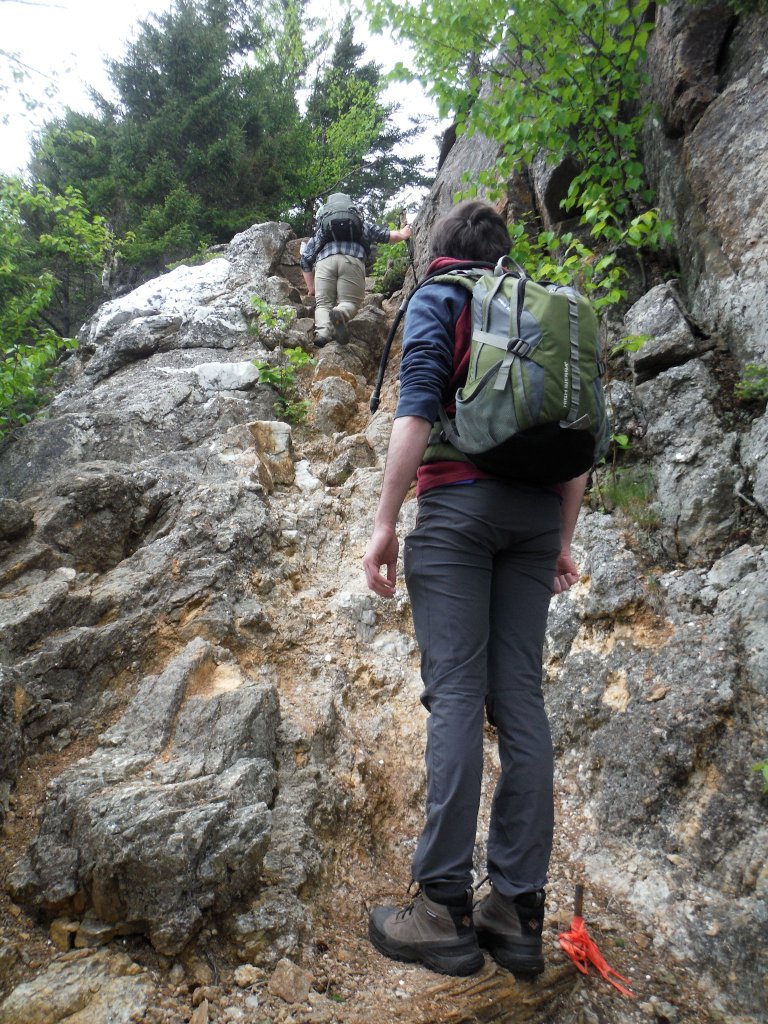
Photographic Thoughts — 11/14/2021 to 11/20/2021

“When I say I want to photograph someone, what it really means is that I’d like to know them. Anyone I know I photograph.” — Annie Leibovitz

Thank you for all the new views and likes from last week, it helps keep me inspired.

Sunday, 11/14/2021: Posted photo — Turkeys.

Settings: Canon EOS 60D, ISO 400, f/7.1, 1/60 s, 39 mm.

I was going to post another photo today. I will post it at the end of today’s commentary.

I was getting ready to go on the hike I did not go on Saturday and looked out our window and saw some turkeys on the road. As I watch, more and more turkeys arrived. I was just watching, and since there were so many of them, I decided to take out my camera to attempt photographing them. At one time I counted a dozen turkeys on our front lawn and about six or seven turkeys across the street. It has been a while since I have seen a rafter of turkeys this large.
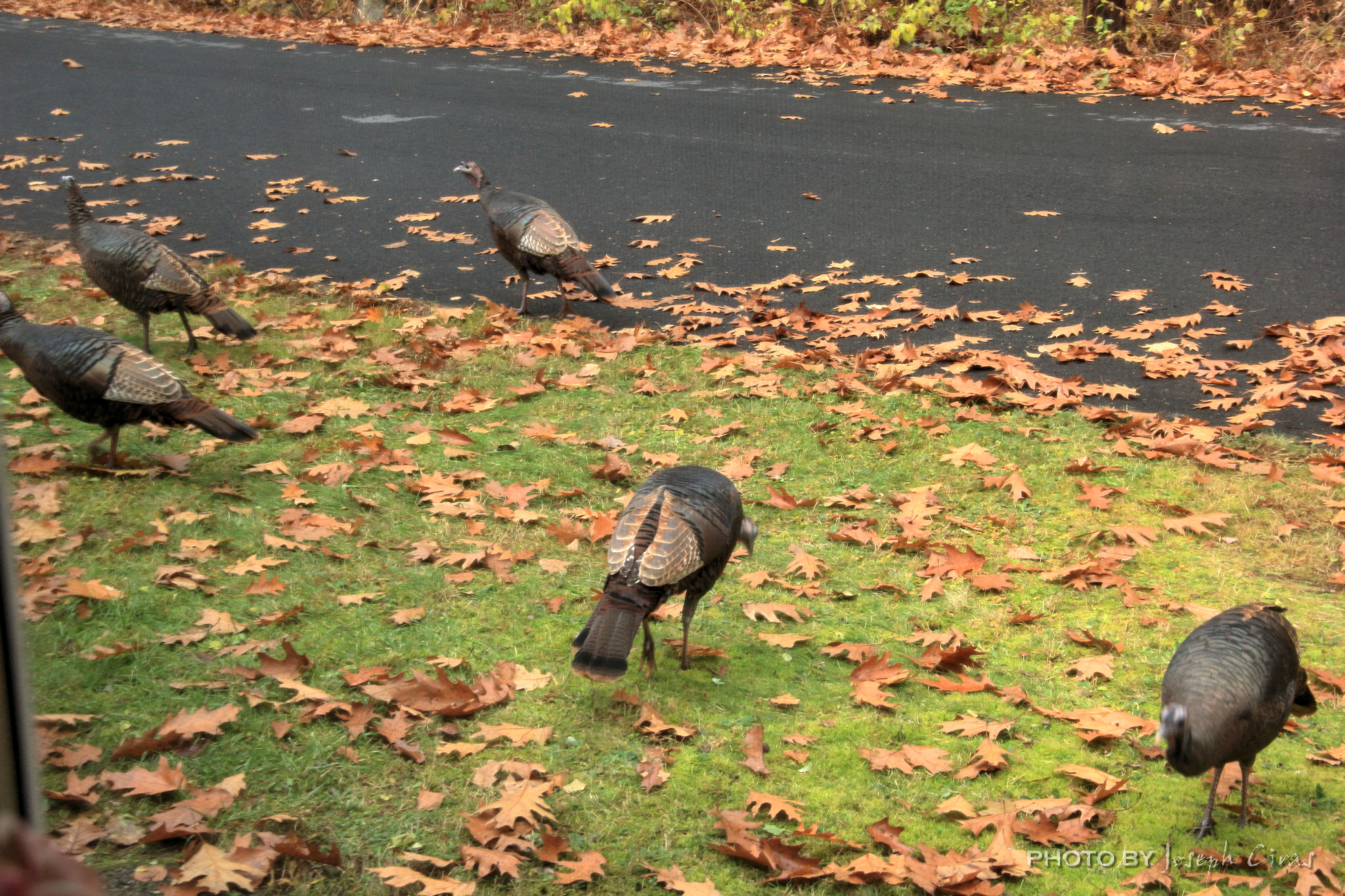
Sorry about the quality of this photo. It was taken through my front window. The window is dirty and there is a screen on it.

Now for the second photo. The photo that is did not post is one of a pile of backpacks. Why backpacks you may ask. Well, these backpacks are meant for the homeless. Our church has been collecting backpacks for the homeless for a few years now. The go to Our Father’s House, a shelter in Fitchburg, MA. Our Father’s House is a private, non-sectarian agency providing shelter and related services to homeless men, women, and children. These backpacks are filled with food, shelter, and love for those who are in need.

Monday, 11/15/2021: Posted photo — Clouds.

Settings: Canon EOS 60D, ISO 200, f/7.1, 1/640 s, 24 mm.

This is the time of year when it is getting harder to take photos. It is getting harder because I go to work in the dark and leave work in the dark, not leaving much opportunity to take photos.

One of my duties is as the company photographer. Normally I am a mechanical engineering, but they know that I am a semi-professional or advance amateur photographer, so I take photos of produce for various reasons. I am not a product photographer, and these photos leave the company or are used for promotional purposes. As I was walking between buildings, I saw the sun reflecting off the clouds. I was just going to take a photo of the clouds, but I decided to add the flag and flagpole into it for scale and to break up the monotony of a photo of just the clouds.

Always keep your eyes open for a photo opportunity.

Tuesday, 11/16/2021: Posted photo — Movies.

Settings: Settings: Canon EOS 60D, ISO 3200, f/5.6, 1/8 s, 62 mm.

The Twilight Zone was a television show that ran from 1959–1964. This show, created by Rod Serling, is about “ordinary people finding themselves in extraordinarily astounding situations, which they each try to solve in a remarkable manner”. The show won nine awards and was nominated for 14 more.

This was one of my favorite shows as I was growing up. It stopped airing the year I was born, but I would watch in in reruns. Some of the shows are silly to watch and some of them cause nightmares. They would always keep you guessing.
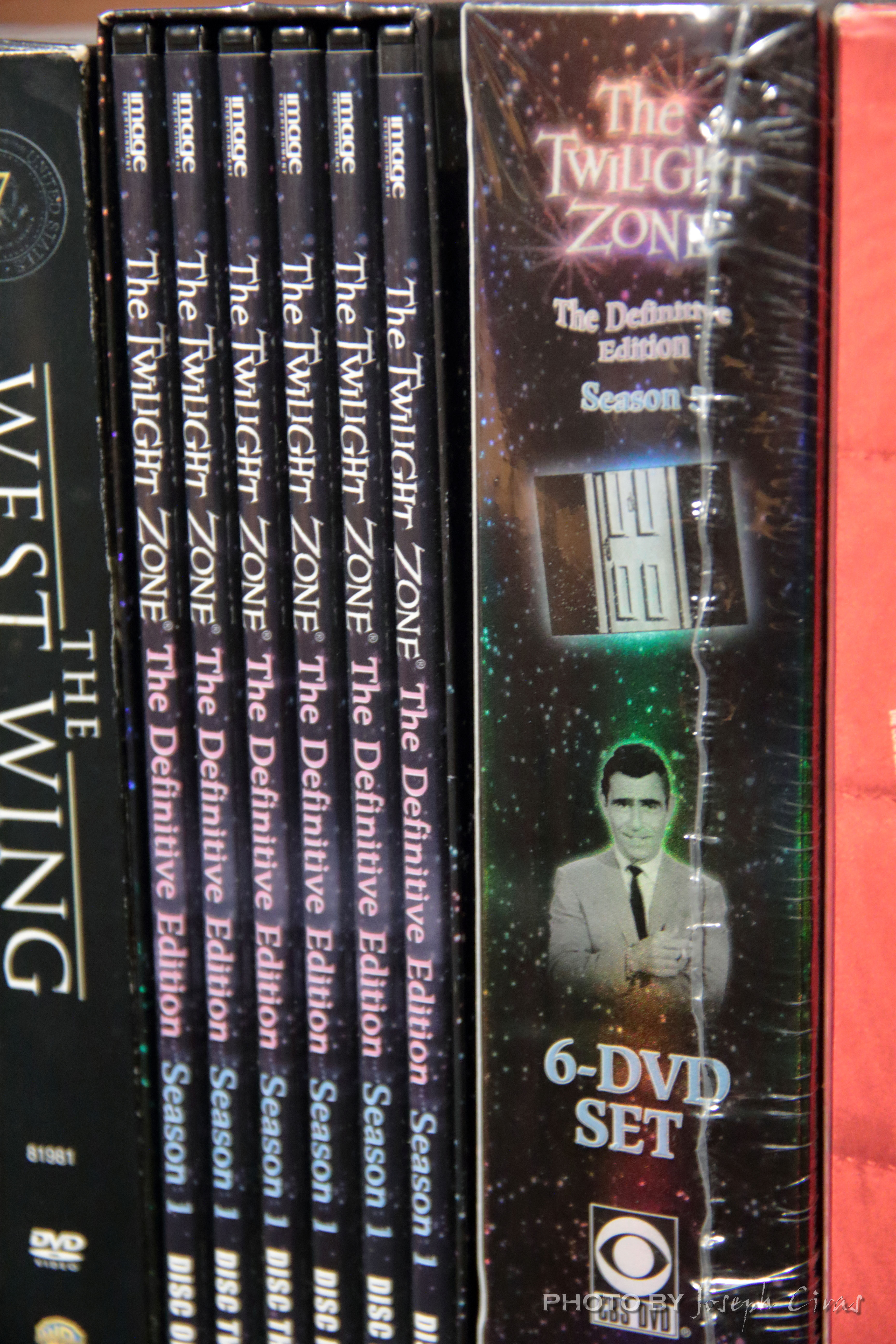
I saw these DVDs a while ago and purchased them so I could watch the episodes again. This was before all the stream services currently on the web. I like the first season of a show since you can see the development of the shows format.

Wednesday, 11/17/2021: Posted photo — What am I.

Settings: Samsung SM-G930V (Galaxy S7), ISO 64, f/1.7, 1/60 s, 4 mm

I am an Aloha pepper.
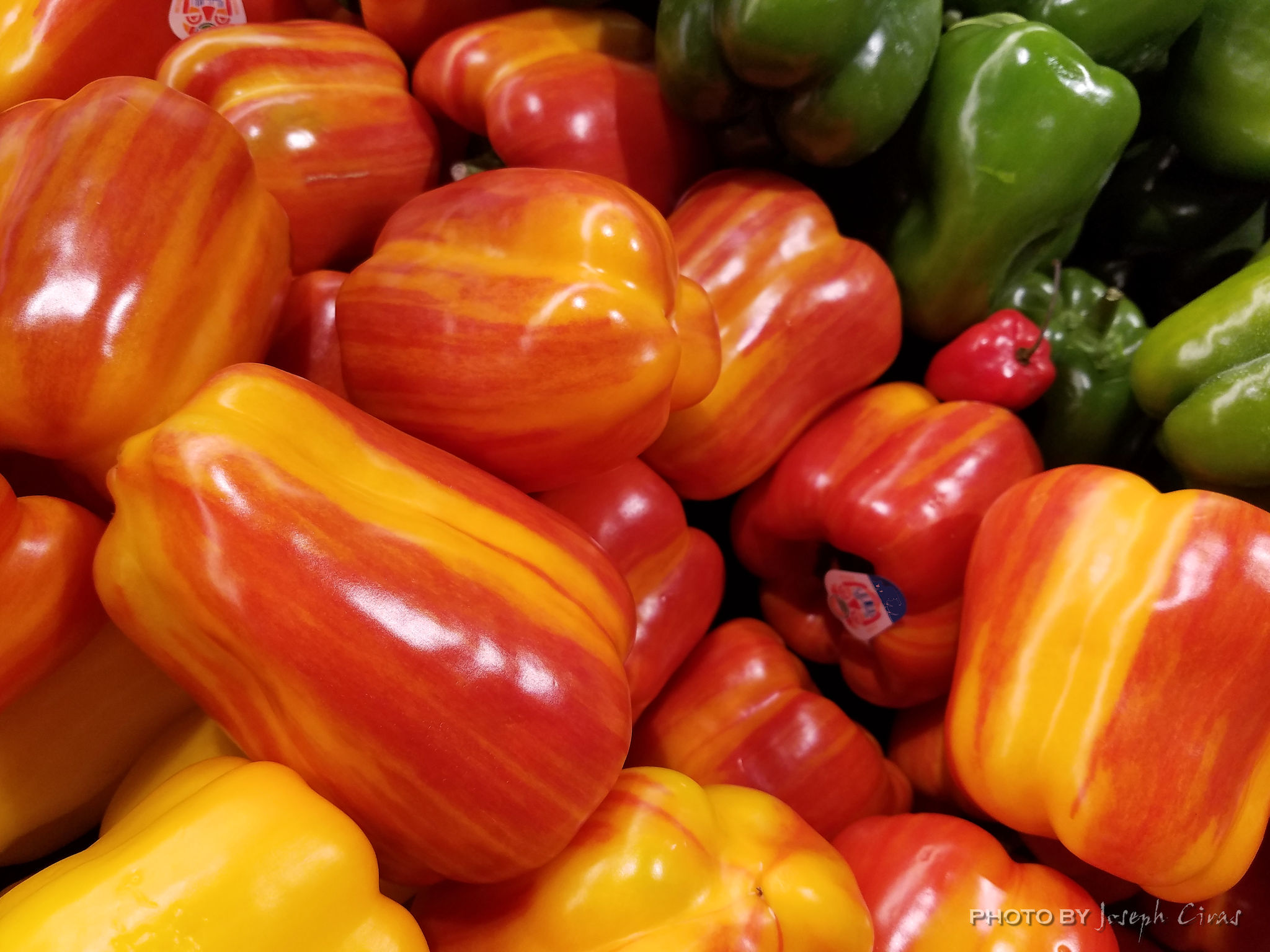
Also known as Enjoya and Aloha, Striped Holland bell peppers are a new variety that was discovered as a surprise variation in a garden in the Netherlands and have been developed over time to showcase the bi-colored traits. This pepper was developed by the Sunset company (https://www.sunsetgrown.com/our-produce/peppers/aloha-peppers/) and have only been shipped to select retailers since 2018.

I do not like peppers, so I cannot describe what they taste like. I took this photo since I thought the pepper had a personality crisis and I liked the look.

Thursday, 11/18/2021: Posted photo — Focus Test.

Settings: Canon EOS 60D, ISO 3200, f/5.6, 1/125 s, 135 mm.

I have a lens that is 18–135mm. Today it decided not to focus if I had it past 50 mm. Need to send it out to get fixed again. It was already repaired once. This is a test of the focus range. This was the one and only time it focused in at 135 mm. I think put pressure on the side of the lens to get it to focus.

Found out that the version of my lens is out of service life, there are no longer any repair options available for it. I can purchase a discounted lens using Canon’s Upgrade Program. Something I need to investigate doing soon so that I can have a lens for the upcoming holidays. I purchased the camera in 2014.

Friday, 11/19/2021: Post photo — Partial Lunar Eclipse.

Settings: Canon EOS 60D, ISO 250, f/16, 1/50 s, 300 mm.

The Beaver Moon was full at 3:58 a.m. Four minutes later, at 4:02 a.m., a partial lunar eclipse occurred. The Beaver Moon was a micromoon. A Micromoon is when a Full Moon or a New Moon coincides with apogee, the point in the Moon’s orbit farthest away from Earth.

The moon was in the Earth’s shadow for just over six hours this morning, the longest lasting partial lunar eclipse in 580 years. The moon was only visible for about a half hour during those six hours in my area due to cloud cover. The rule around here seems to be if there is an astronomical event, there would be cloud cover. Really, it seems, there is a clear sky for such an event.

I set my alarm for 3 a.m. to watch the eclipse moving to maximum. It was cloudy. I took a half hour nap to see if the clouds would clear. It was cloudy. Took another half hour nap and the moon was still hidden by the clouds. I went back to bed for another half hour to get up at my normal time. When I got out of bed, I looked in the direction of the moon expecting to see it in the clouds once more. This time I saw it. I gathered my photo equipment, jumped in my car, and then went to an area where I could see the moon clearly. My house is in a wooded area, so I saw the moon through the trees.

When I got to a photo spot, the clouds were moving in. I quickly setup my camera and took a few shots blind. Set my camera on my tripod and took some shots as the clouds were starting to cover the moon once more. Not the best-case scenario for taking a photo of this historic event. I would have liked to set up my camera and do some test shoots to get my settings correct. Not enough time to do so.

Photo tip of the week — Baseline setting for a photo of partial lunar eclipse: 14-1000 mm, f/5.6–f/8, ISO 100-800, 1/250 s. Set you camera on a tripod and turn off image stabilization.

This morning I attempted to use my “moon” lens at 1250 mm but it was too windy for the lens. None of the photos were too my liking so I posted this photo I took with my 300 mm lens.

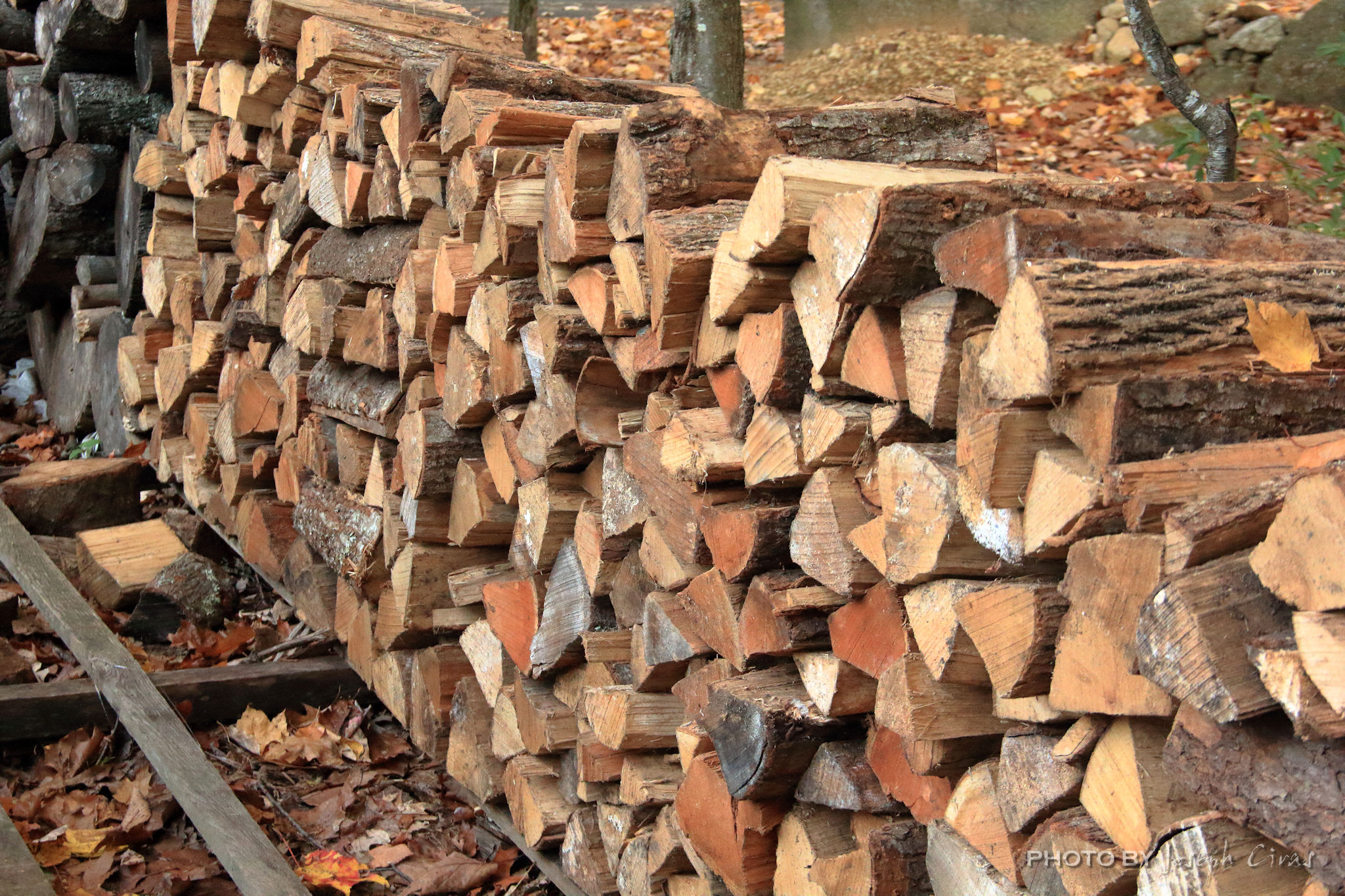
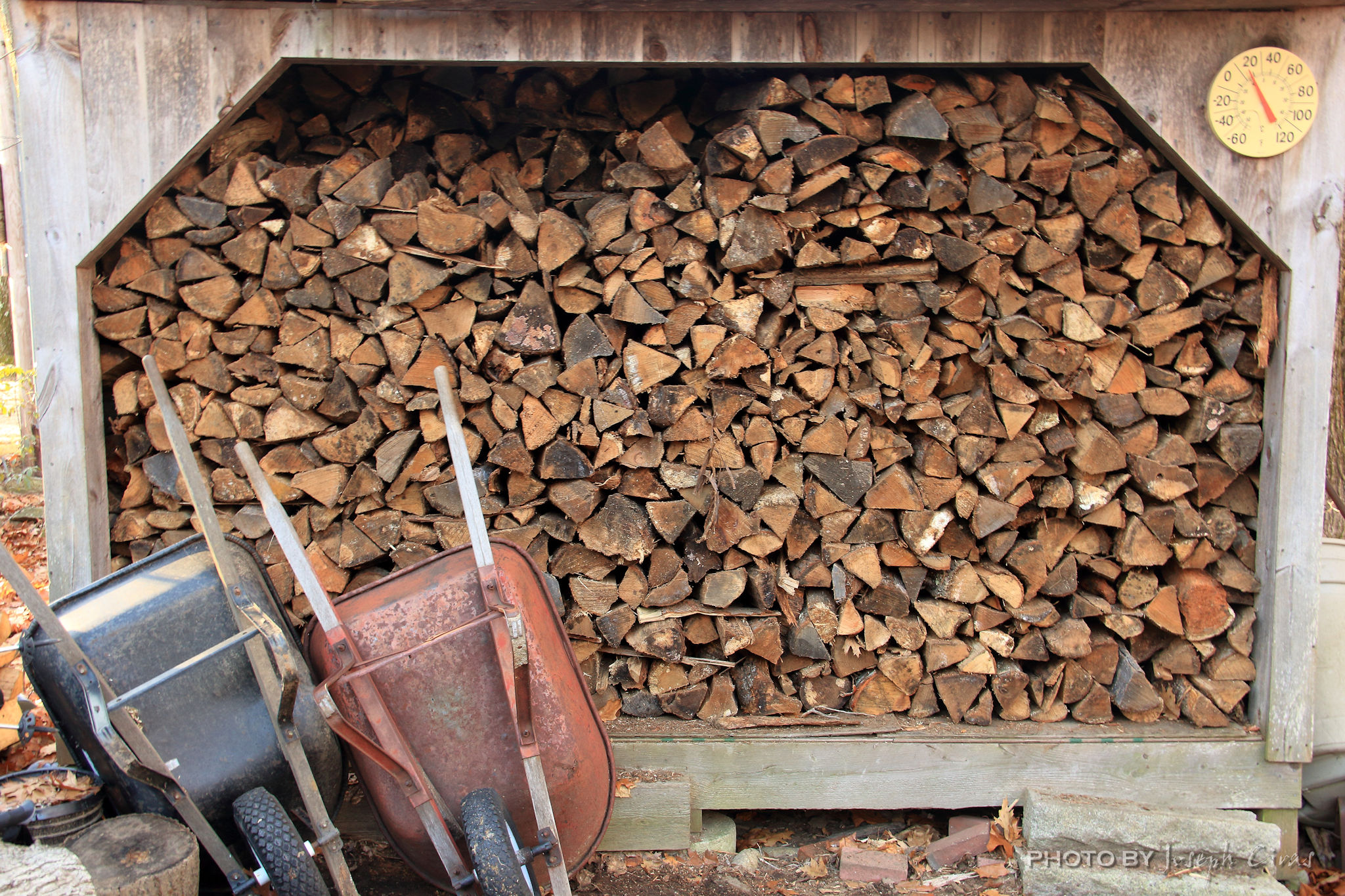
Saturday, 11/20/2021: Post photo — Woodshed.

Settings: Canon EOS 60D, ISO 200, f/7.1, 1/10 s, 25 mm.

Last week I posted a photo of our last wood delivery. After I posted that photo, someone wanted me to post a photo of the wood all stacked up. Here it is.
For more photo of other project I have work, visit my website: https://photobyjosephciras.weebly.com or visit me on Facebook at https://www.facebook.com/PhotobyJosephCiras/.

That is all for now. Until next week, be safe.

Please note that I have not been able to post to my Weebly page for over a week, so the photos are a little behind there. Weebly technical support is still working on the issue.
Photographic Thoughts — 11/07/2021 to 11/13/2021

“If you want to be a better photographer, stand in front of more interesting stuff.” — Jim Richardson

Thank you for all the new views and likes from last week, it helps keep me inspired.

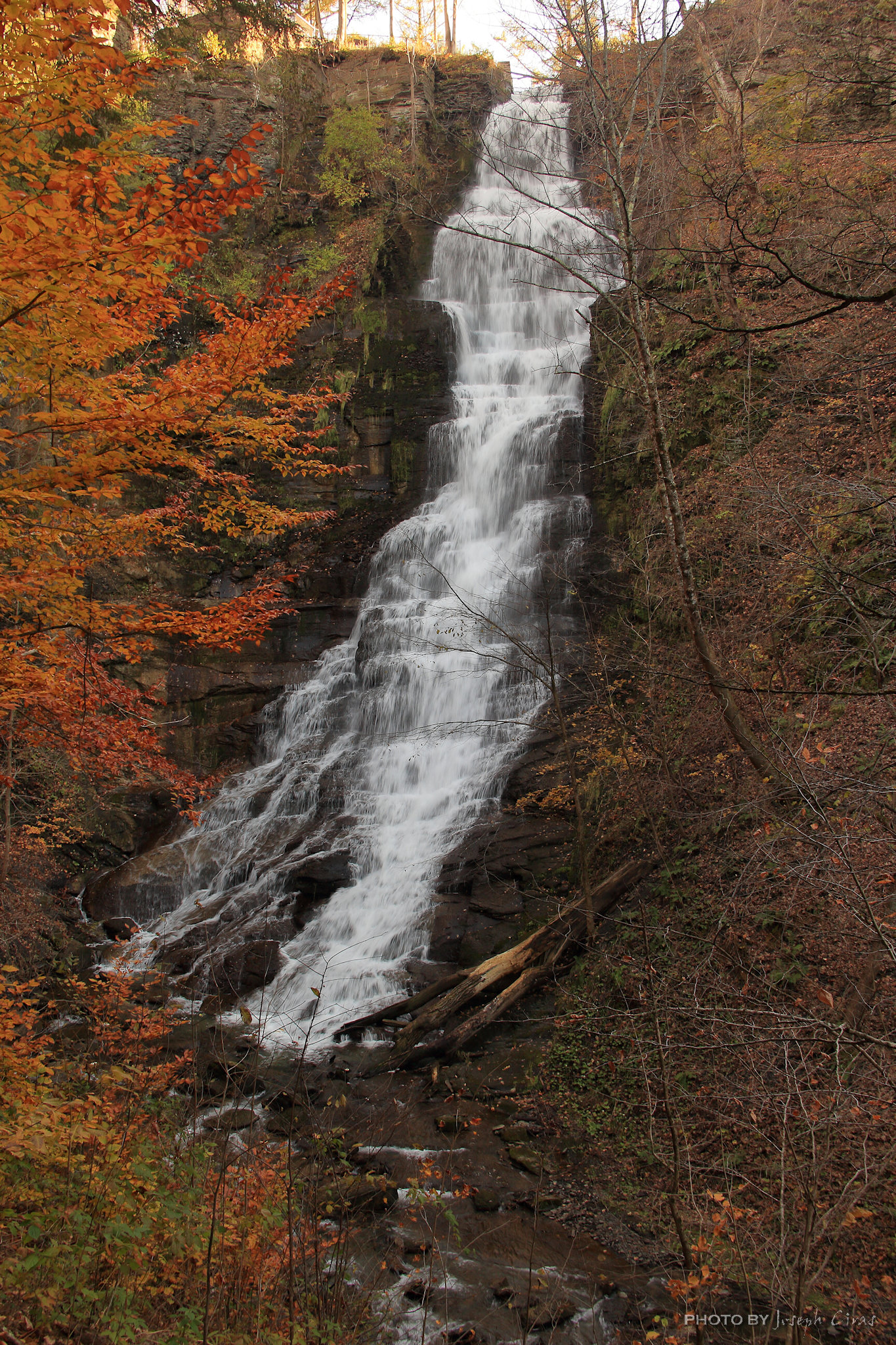
Sunday, 11/07/2021: Posted photo — Pratt’s Falls.

Settings: Canon EOS 60D, ISO 100, f/7.1, 1/15 s, 22 mm.

Pratt’s Falls, a 137 ft ribbon or cascade style waterfall located in Manlius, NY. The site was originally a sawmill and was the site of Onondaga County’s first mill operation in 1796. The hike out to the falls is only a half mile long (one-mile round trip) and could be step for some. There are stairs that take you down to the lower viewing location.

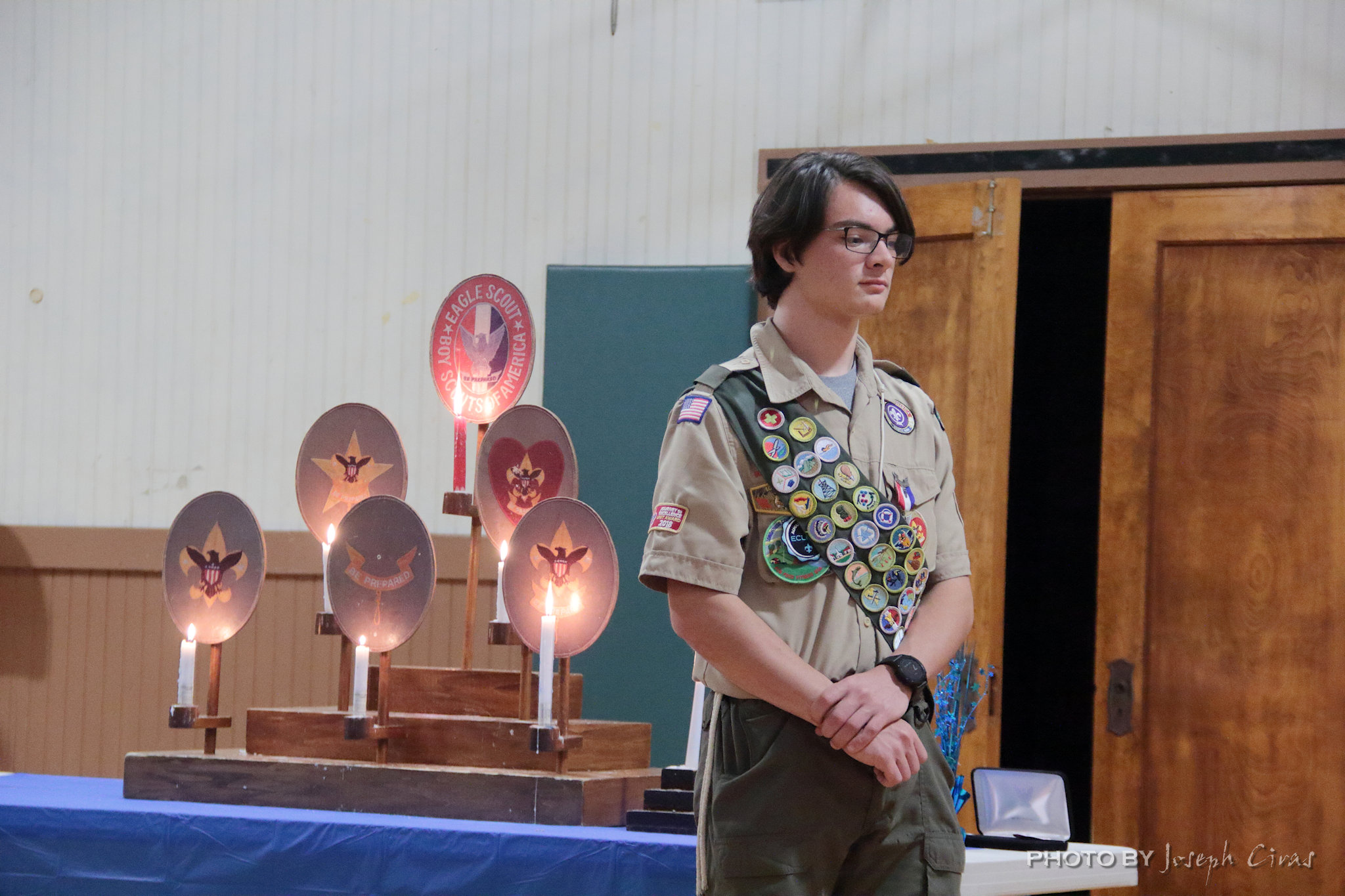
We stopped by the falls on the way to my nephew’s Eagle Scout Court of Honor.

Photo tip of the week — Lessons learned from taking waterfall photos.

  1. Set you camera to manual with a slow shutter speed. I use between 1/4 sec to 10 sec depending on the lighting.
  2. Set your aperture to a value between f/16 and f/22. I sometimes open up, or close up, my aperture depending on the light and how I am taking the photo (with a tripod or handheld).
  3. Use a tripod with image stabilization off. If you do not have a tripod, find a tree or other object to hold yourself steady.
  4. Turn you ISO to the lowest setting. I use ISO 100 for my shots.
  5. Use a ND filter if you have one. I use from a ND3 to a ND10, depending on the lighting.
  6. Take time to get your composition the way you would like to have it. Try both portrait and landscape photos of the falls.
  7. Pick a focal point, such as a rock or a tree near the falls. It is difficult to focus on the water.
  8. Lighting is important. Take your photo in the morning or in the evening when the light is not on the waterfall. If it is on the waterfall, use the appropriate ND filter.
  9. Use a remote, or your camera’s timer, for your shot to cut down on camera shake.

Monday, 11/08/2021: Posted photo — Tinkers Falls.

Settings: Canon EOS 60D, ISO 100, f/32, 1/6 s, 79 mm.

Tinkers Falls in the Labrador Hollow Unique Area and is about 50 feet tall. The Labrador Hollow Unique Area is a 1,474-acre (5.97 km2) conservation area located in Cortland and Onondaga counties, New York, and was the first property to be designated as a Unique Area by New York. A unique area, according to the state New York Department of Environmental Conservation, is “land owned by the state that was acquired due to its special natural beauty, wilderness character, or for its geological, ecological or historical significance.”

When I took the photo of these falls, I did not use my tripod. I was practicing my handheld long exposure photography. I was either leaning against a tree, sitting on a log, or using long exposure breathing techniques. The hike to these falls is very short, only about a quarter mile, and the trail is relatively flat.

Bonus photo tip — how to breathe and hold your camera for long exposures.

The way you hold your camera can have a big effect on the amount of blur caused by your own movement. Hold the camera with two hands close to your body and make sure your feet are shoulder-width apart. Being conscious of your breathing can further minimize shake. Inhale or exhale and then take a gentle half breath in and hold it there in a relaxed way.

Tuesday, 11/09/2021: Posted photo — Peas.

Settings: Samsung SM-G930V (Galaxy S7), ISO 125, f/1.7, 1/60 s, 4 mm

A pea is a cultivated climbing vine having compound leaves and edible seeds enclosed in a green, elongated pod. The seed of this plant is used as a vegetable.

Shopping night tonight. Instead of taking photos of flowers, I took a photo of some peas. Why did I do that? I did it for variety. I often wonder who the first person was to eat peas and how they knew that they could open the pod to get the seeds out.

Some information about the health benefits of peas according to WebMD (https://www.webmd.com/diet/health-benefits-peas#1) are:

  • Eye Health
  • Digestive Health
  • Immune Health and Anti-Inflammatory Properties
  • Blood Sugar Control
  • Heart Health
  • Nutrition

You can look up the health benefits yourself for details on each of these benefits.

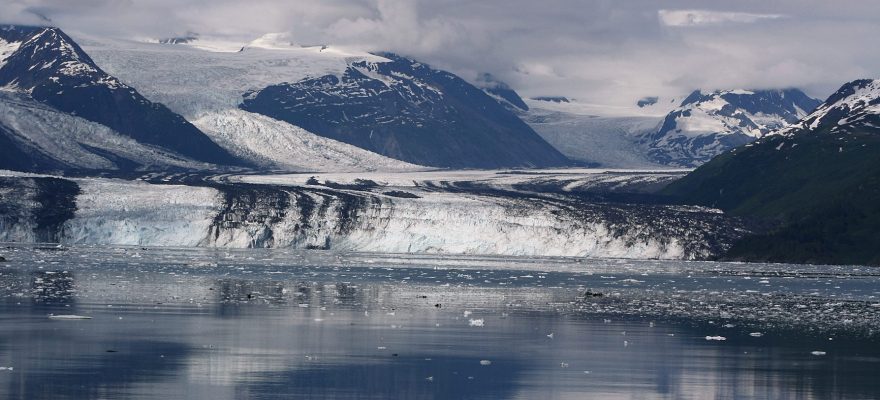
Wednesday, 11/10/2021: Posted photo — Bryn Mawr Glacier.

Settings: Canon EOS DIGITAL REBEL XS, ISO 200, f/25, 1/30 s, 48 mm.

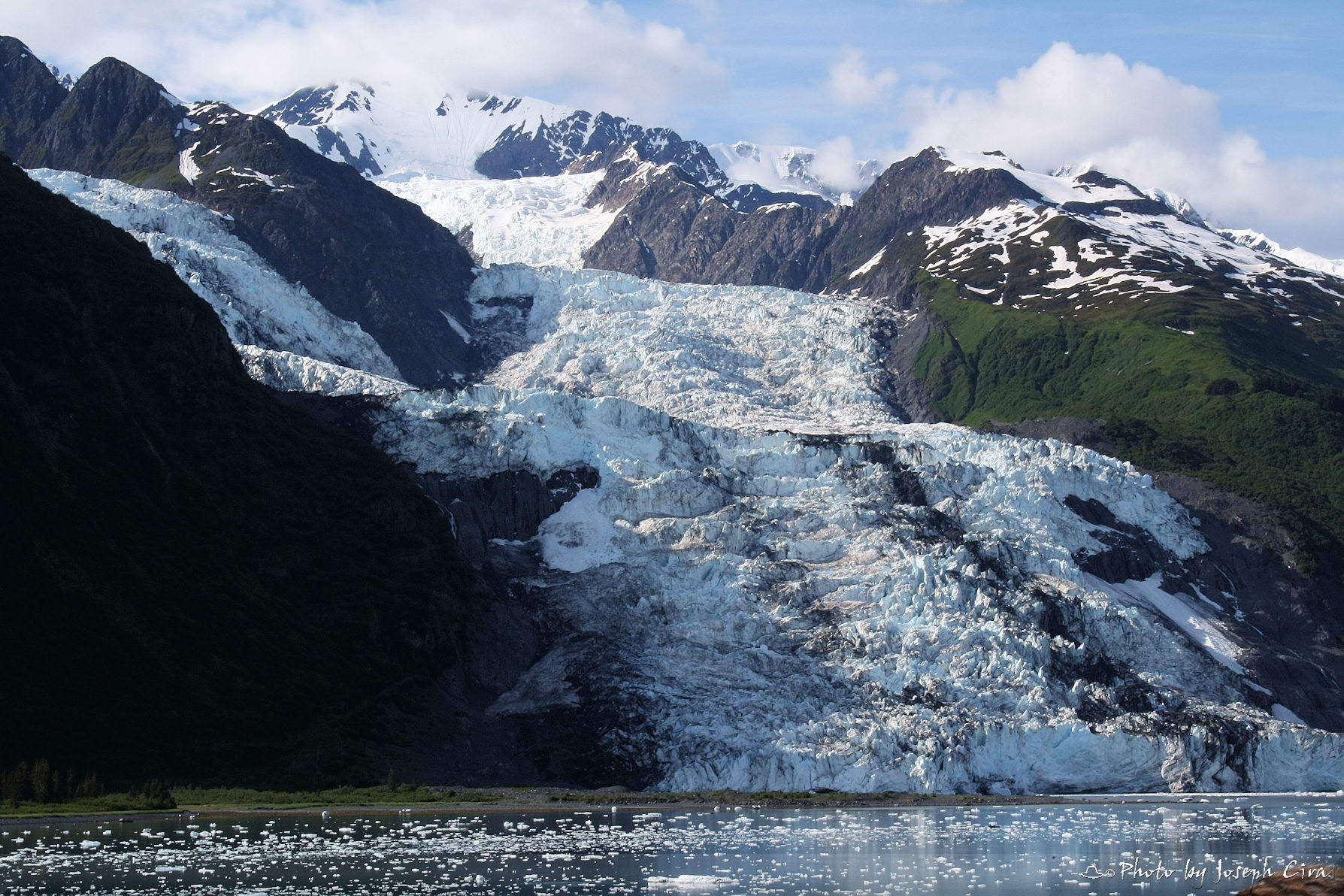
Bryn Mawr Glacier flows southeast for about 4.5 miles (7 km) to Harvard Arm of College Fjord in northwestern Prince William Sound, about 45 miles west of Valdez and 44 miles northeast of Whittier, Alaska (61° 15′ 13″ N, 147° 49′ 29″ W). As you travel into College Fjord, the glaciers on the left are named for women’s colleges and those on the right are named for men’s colleges. The names are Amherst, Barnard, Bryn Mawr, Harvard, Smith, Vassar, and Yale). Harvard Glacier is the biggest – its face is a mile and a half across.

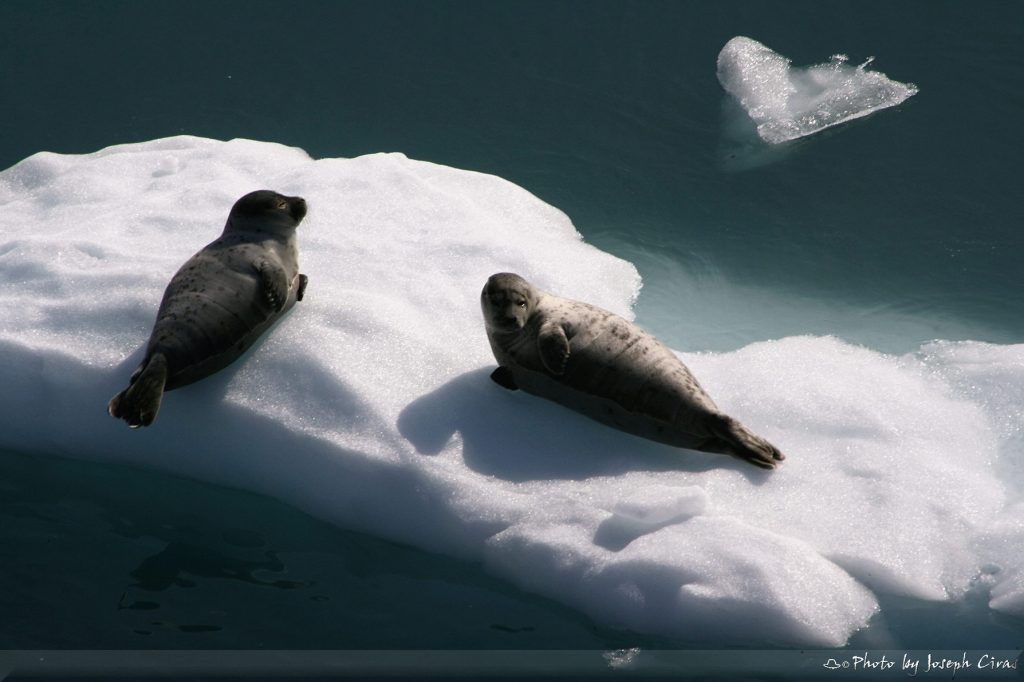
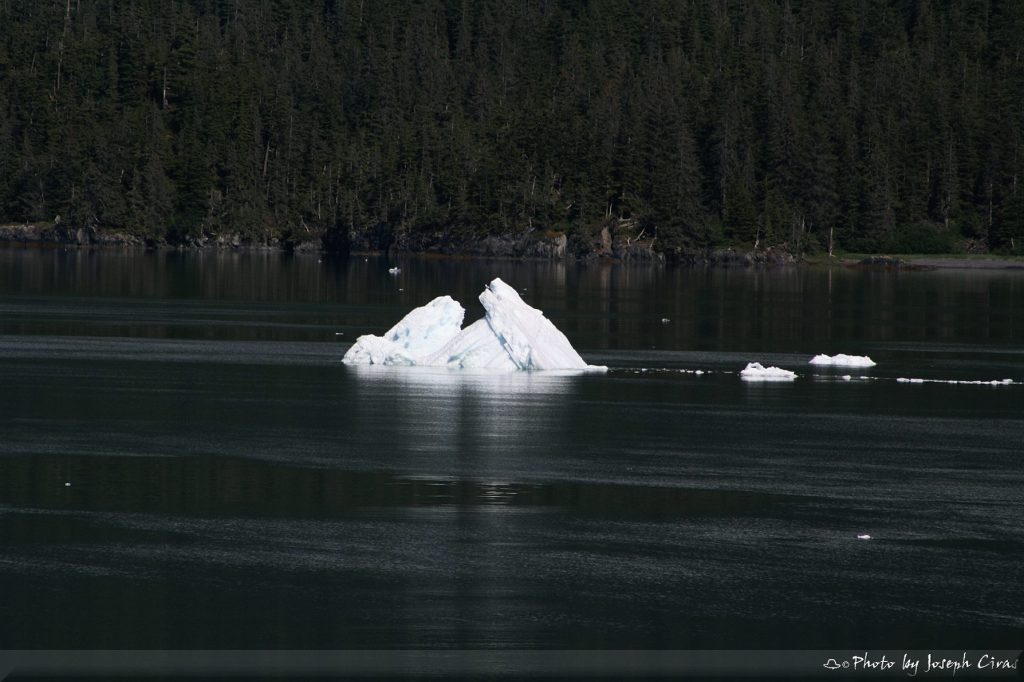
Alaska is such an amazing place to visit. The landscape keeps getting better and better as we headed north from Vancouver on our cruise. Here are a few more photos taken in College Fjord.

Thursday, 11/11/2021: Posted photo — Veterans Day.

Settings: N/A, scanned photo.

The Allied powers signed a ceasefire agreement with Germany at Compiégne, France, at 11:00 a.m. on November 11, 1918, bringing the war now known as World War I to a close. President Wilson proclaimed the first Armistice Day the following year on November 11, 1919, with these words: “To us in America, the reflections of Armistice Day will be filled with solemn pride in the heroism of those who died in the country’s service and with gratitude for the victory, both because of the thing from which it has freed us and because of the opportunity it has given America to show her sympathy with peace and justice in the councils of the nations…”

In 1954, Congress passed the bill that President Eisenhower signed proclaiming November 11 as Veterans Day, changing the name from Armistice Day. Veterans Day is the day set aside to thank and honor all who have served, living, or deceased, but particular the living veterans among us.

In the past, I have posted photos of Arlington National Cemetery, American flags, and other memorials for Veterans Day. Today am posting a photo of my father from 1944 when he was serving in the Navy during World War II. My father entered service in the Navy on November 30, 1943 and was received his Honorary Discharge on February 26, 1946. He was discharged as a Fireman First Class. He was stationed at NTS, Sampson, New York; NTS, NOB, Norfolk, Virginia, and the University of South Carolina Columbia South Carolina.

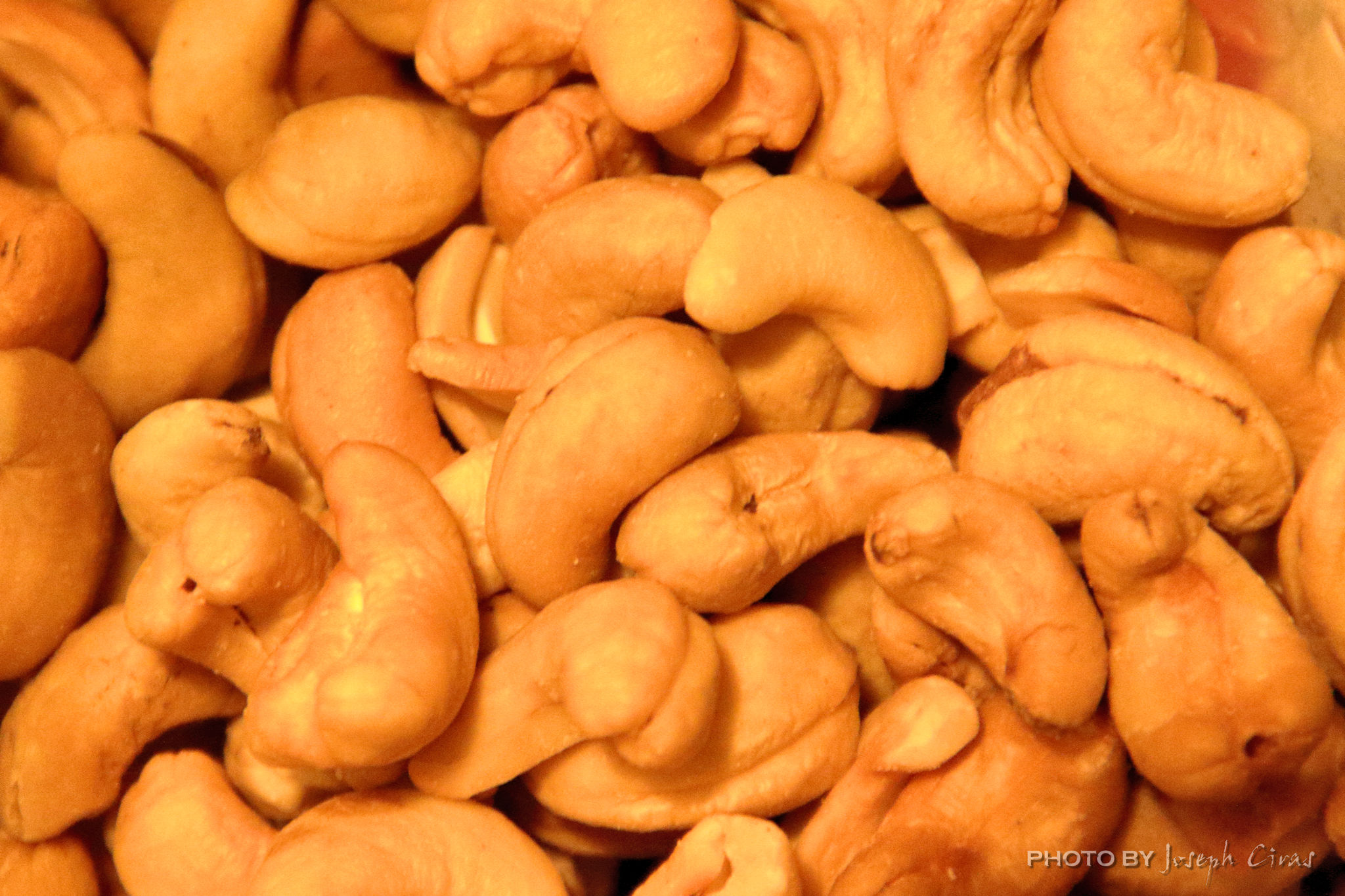
Friday, 11/12/2021: Post photo — Cashews.

Settings: Canon EOS 60D, ISO 3200, f/5.6, 1/20 s, 106 mm.

Cashews are low in sugar and rich in fiber, heart-healthy fats, and plant protein. They’re also a good source of copper, magnesium, and manganese — nutrients important for energy production, brain health, immunity, and bone health.

I needed a photo; I had some cashews in the house, so I took this photo.

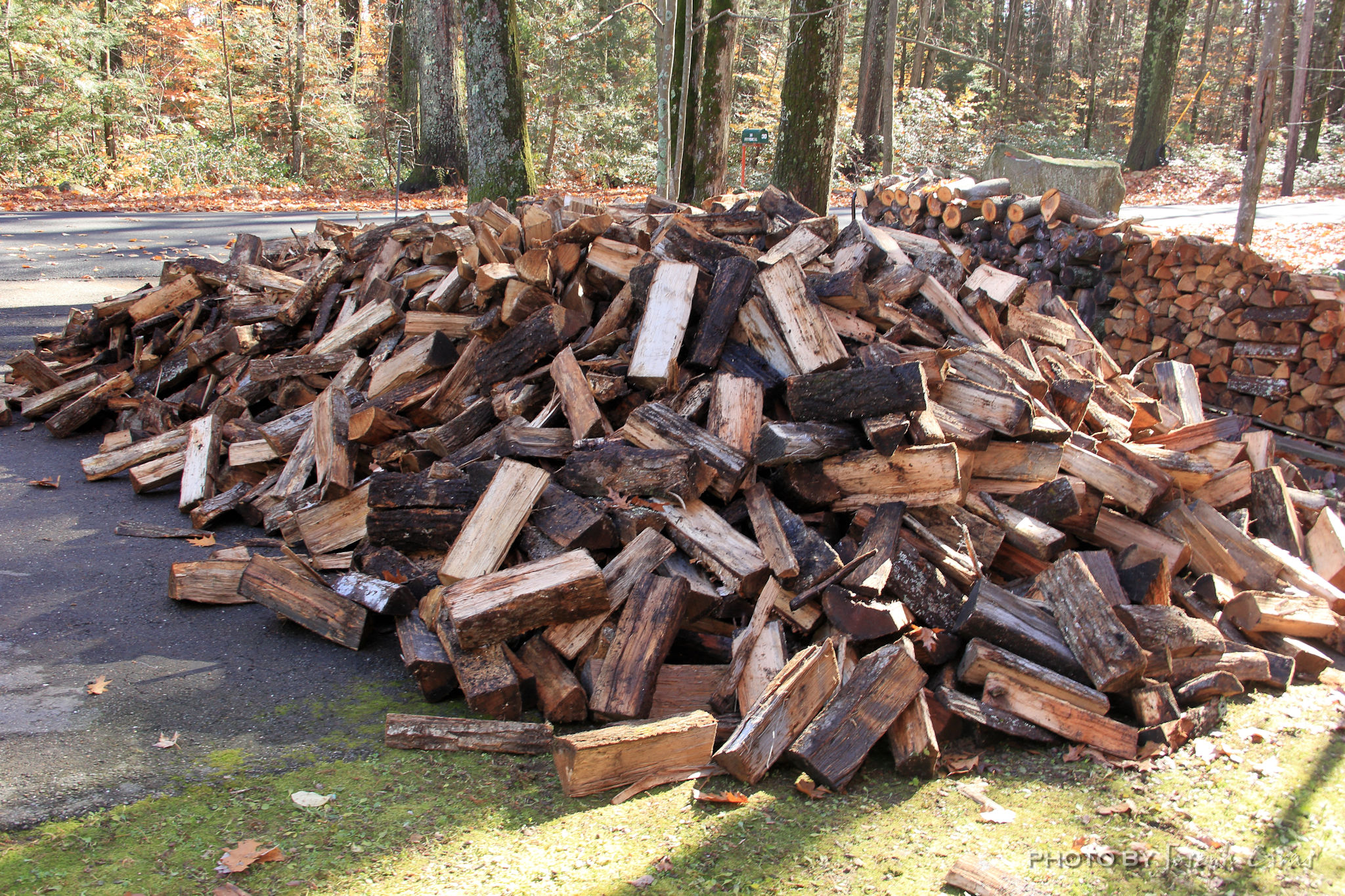
Saturday, 11/13/2021: Post photo — Last Wood Delivery.

Settings: Canon EOS 60D, ISO 100, f/7.1, 1/13 s, 24 mm.

The last three cords of wood arrived this morning. No hiking today, just yard work. My son stacked some of the wood. He has friends coming over later tonight if the rain stops. Five cords total for the winter.

It was a great day for a hike, but I did not go just in case we did receive our wood. Also, the yard need raking. All the rain we had lately took most of them down.

That is all for now. Until next week, be safe.

For more photo of other project I have work, visit my website: https://photobyjosephciras.weebly.com or visit me on Facebook at https://www.facebook.com/PhotobyJosephCiras/.

Please note that I have not been able to post to my Weebly page since last Monday, so the photos are a little behind there. Weebly technical support is working on the issue.

Photographic Thoughts — 10/31/2021 to 11/06/2021

“I love the people I photograph. I mean, they’re my friends. I’ve never met most of them or I don’t know them at all, yet through my images I live with them.” — Bruce Gilden

Thank you for all the new views and likes from last week, it helps keep me inspired.

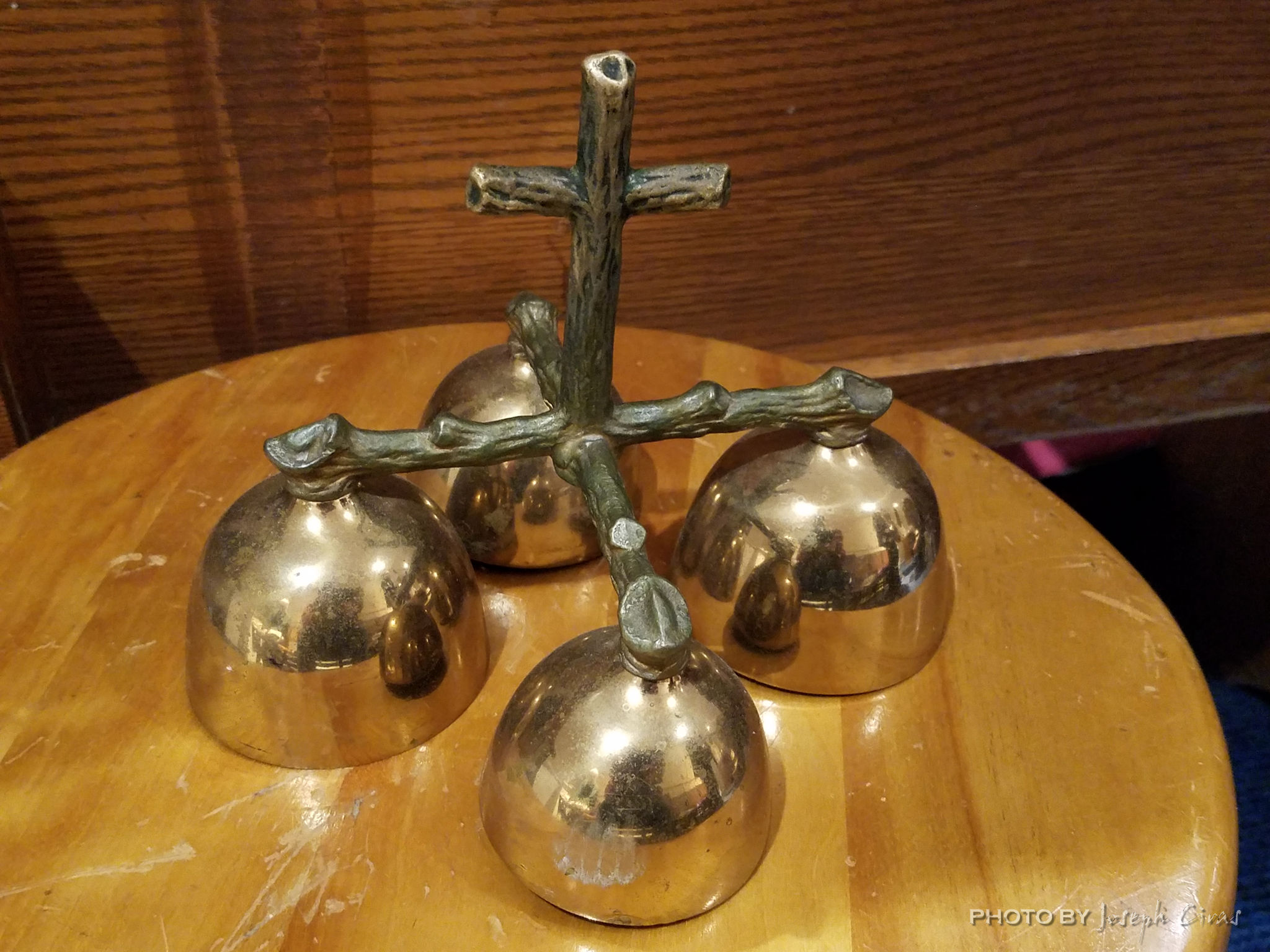
Sunday, 10/31/2021: Posted photo — Bells.

Settings: Samsung SM-G930V (Galaxy S7), ISO 320, f/1.7, 1/10 s, 4 mm

These are the bells that are rung at Saint Denis Church. I rang the bells this week since the deacon was on vacation. Brought me back to the days when I was and altar boy.

Bells were rung to alert the people to what they could not easily see or hear, so that they could attend to the important and solemn action at the altar. In the past, due to the architecture of a church, the people were physically separated from the altar by the choir — and in some cases a significant number of faithful were impeded from seeing the altar during Mass. So, a little before the consecration a server rings a bell as a signal to the faithful.

Monday, 11/01/2021: Posted photo — Pu’u’ula’ula.

Settings: Canon EOS 60D, ISO 100, f/9, 1/100 s, 32 mm.

Pu’u’ula’ula (Red Summit Hill) at Haleakalā National Park Makawao, HI on the island of Maui. This is the highest peak on the island at 10,023 feet. “The road to the cinder cone is paved and holds the world record for climbing to the highest elevation in the shortest distance. Starting from Kekaulike Avenue, the ascent is 34.11km (21.2 miles) long via 28 hairpin turns. Over this distance the elevation gain is 2.011 meters. The average gradient is 5.89%.” (https://www.dangerousroads.org/north-america/usa/3509-pu-u-ula-ula-red-hill.html) I did not mind the ride. I think the crazy people were the ones that rented bicycles and drove down the hill.
We attempted to get to the peak for sunrise since our initial plan was to spend the night on Maui. We had our tickets in hand to get into the park before it officially opened. Due to Hurricane Lane, we were only on Maui for one day since our cruise ship left Honolulu two days late due to the port being closed. We were able to drive up to the summit later in the day to take in the view. The view was wonderful. It was great to be above the clouds.

If you go to Maui, you should go to Haleakalā National Park for the sunrise. I hear it is spectacular.

Tuesday, 11/02/2021: Posted photo — Foliage Again.

Settings: Canon EOS 60D, ISO 100, f/7.1, 1/320 s, 32 mm.

I took a photo of these set of trees a few weeks ago. I did so since I liked the brightness of the sun against the past colors of the tree. We are now past the colorful foliage season and into the fall browns.

Before long, all those leaves will “fall”, and someone will need to rake them up. Fortunately, it will not be me since these trees are not on my property.

If you cannot tell, this photo was done with an HDR, or High Dynamic Range, process. This is a single photo that I made into an HDR photo. I took the photo and processed it by stepping up and stepping down the exposure to blend into an HDR photo. The proper way of creating a HDR photo is to take three or more consecutive shot with your camera at the different exposure levels and then blending them together. HDR is a technique used to reproduce a greater range of luminosity than that which is possible with standard photographic techniques. This is done when the lighting is not that great for a single photo.

Wednesday, 11/03/2021: Posted photo — Stacked Wood.

Settings: Canon EOS 60D, ISO 3200, f/7.1, 1/50 s, 42 mm.

We had two of the five cords of wood I ordered delivered to the house on Monday. My son did a great job stacking over a cord in the woodshed. I stacked the remaining wood in the woodshed last night. This stack of wood is what is remaining from last year’s supply. We have been burning some in the last weeks to get the chill out of the house. When we get into the burning season, we will be mixing the old with the new wood to get a more efficient heat output.

This photo is a yearly photo that I take of our wood. It serves as documentation to when wood was ordered each year. It just happened that this wood was delivered 364 days after my last wood delivery.

Three cords of wood will be delivered to the house sometime soon and I will all need to be stacked in the woodshed. My woodshed is designed to hold four cords. A cord of wood is four feet wide, 4 feet high, and eight feet long. It has a volume of 128 cubic feet. The wood that I get is cut at 18 inches long to fit in out wood stove.

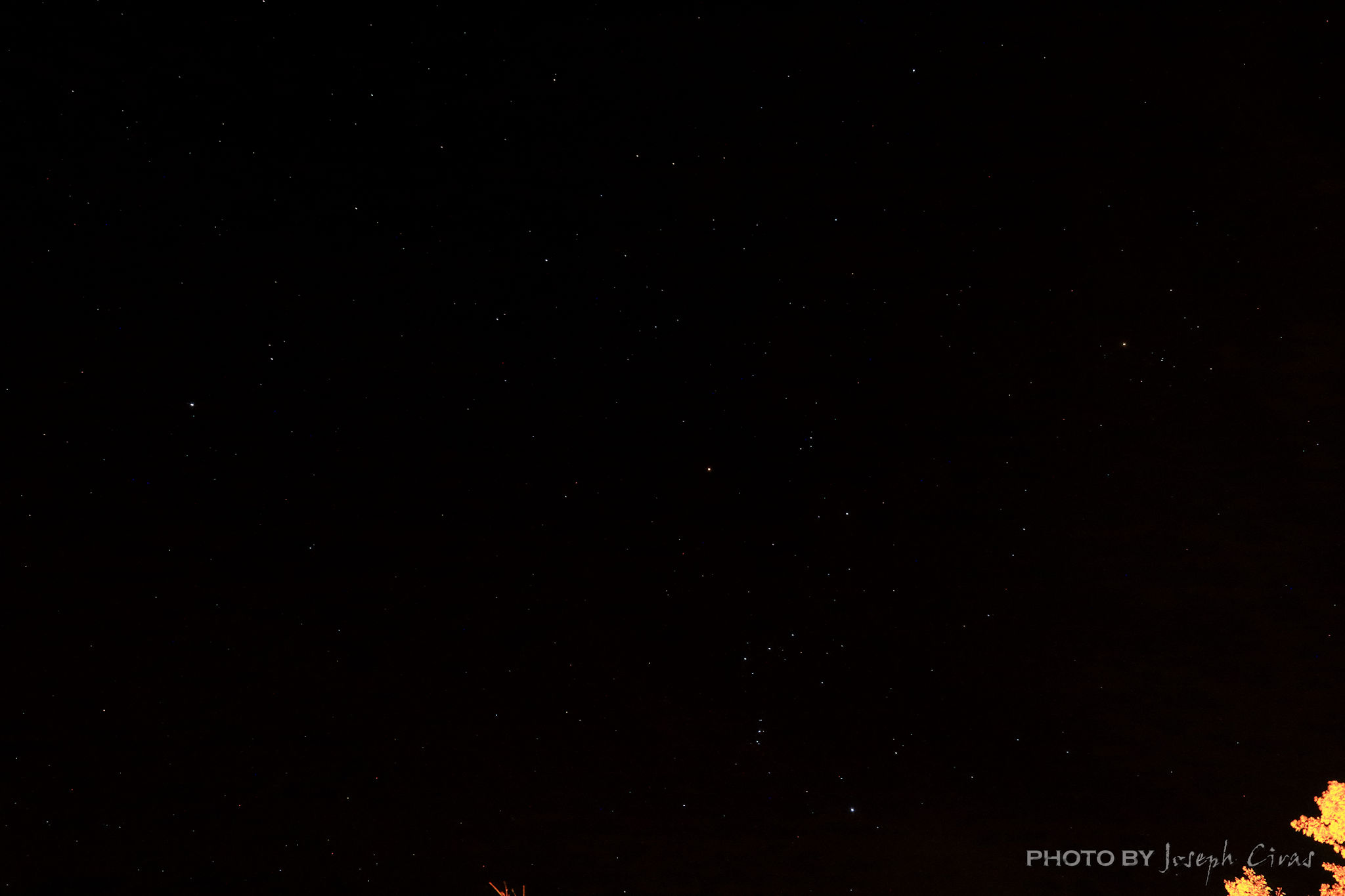
Thursday, 11/04/2021: Posted photo — Orion.

Settings: Canon EOS 60D, ISO 3200, f/11, 15 s, 18 mm.

Orion is the brightest and most beautiful of the winter constellations. Some of its stars, including Betelgeuse and Rigel, are among the brightest stars.

Orion is clearly visible in the night sky from November to February. Orion is in the southwestern sky if you are in the Northern Hemisphere or the northwestern sky if you are in the Southern Hemisphere. It is best seen between latitudes 85 and minus 75 degrees. Its right ascension is 5 hours, and its declination is 5 degrees.

There are several versions of the myth of Orion, but one of the more common iterations is that Orion proclaimed himself to be the greatest hunter in the world, much to the dismay of Hera, the wife of Zeus. She had a scorpion kill him, and Zeus put Orion into the sky as consolation. In another version, Orion is blinded for raping Merope, a granddaughter of the god Dionysus. He has to travel East to seek the sun’s rays to recover his sight.” (https://www.space.com/16659-constellation-orion.html)

I saw Orion yesterday morning when I was going into work. Today I decided to take a photo of the constellation. I knew at the time that I took this photo that I would not be the best one of a constellation since I was going to take it in the parking lot at work. (For your information, this is the third constellation photo that I have taken.) Today is the new moon so the conditions would be better to take this photo. I should have taken it in a darker location. Look in the bottom near the center. You can see the belt clearly.

Looking at the setting for my shot, it seems that I did not change the aperture setting that I used from my last moon photo. The f/11 setting is too small. I should have used a setting of f/3.5 to get more light in my photo. With a larger aperture setting, I could have reduced my ISO value taking noise out of the photo.

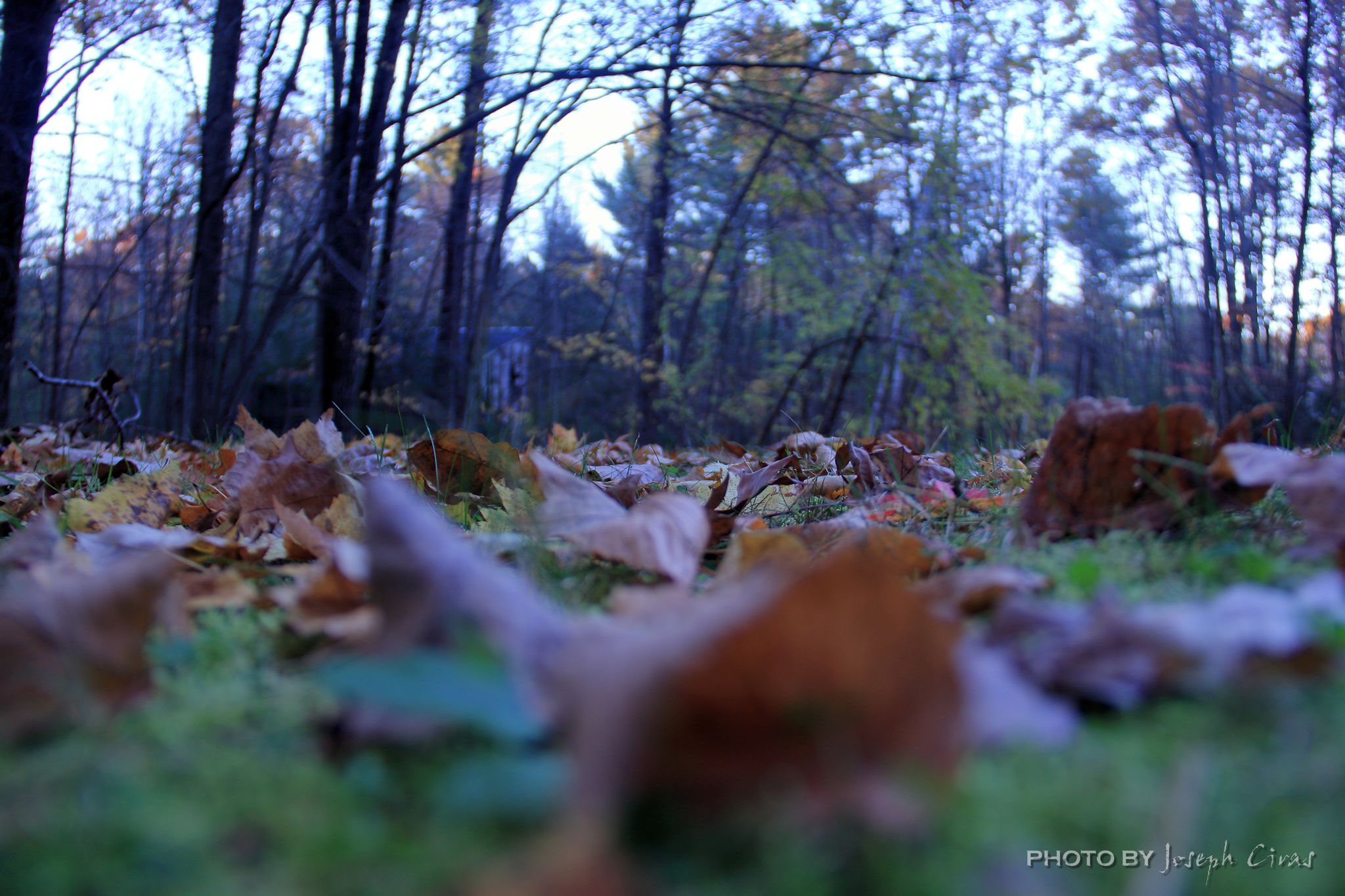
Friday, 11/05/2021: Post photo — Mouse Eye View.

Settings: Canon EOS 60D, ISO 100, f/3.5, 1/13 s, 18 mm.

This is what our yard might look to a mouse. I put my camera down in our lawn and took this shot. I will be cleaning up these leaves soon. There are still more to fall, so I just wait a day or two.

Saturday, 11/06/2021: Post photo — TBD.

Settings: TBD.

I have not decided what to post today. Come back later today or tomorrow to see my updated post.

That is all for now. Until next week, be safe.

For more photo of other project I have work, visit my website: https://photobyjosephciras.weebly.com or visit me on Facebook at https://www.facebook.com/PhotobyJosephCiras/.

Photographic Thoughts — 05/30/2021 to 06/05/2021

“Photography has nothing to do with cameras.” — Lucas Gentry

Sorry about the late post last week. With the hike and Memorial Day, I did not find the time to post on time. Thank you for understanding.

Thank you for all the new views and likes from last week. It helps keep me going. Enjoy my blog post!

Enjoy this week’s rambling mind of a mechanical engineer and photographer.

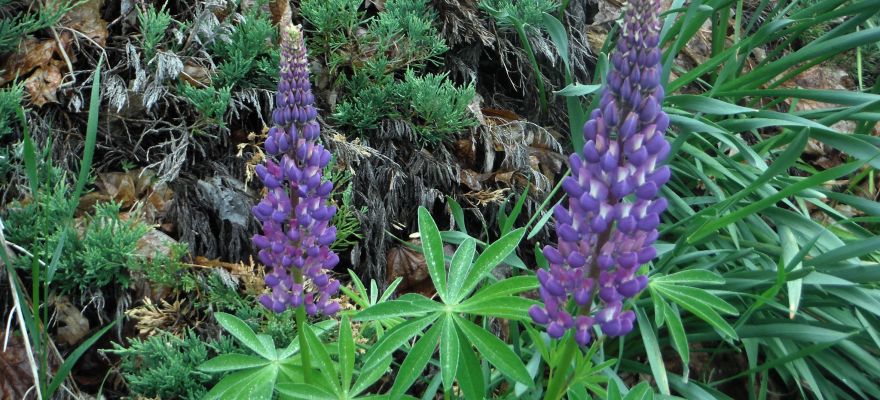
Sunday, 05/30/2021: Posted photo — Lupine.

Settings: FUGIFILM FinePix XP70, ISO 100, f/4.5, 1/100 s, 9 mm.

From the Garden Design website: “If you’re looking for a showy summer-flowering perennial that will stand out from the crowd, lupine is a sure front-runner. The tall, lush spires of vividly colored flowers are like floral traffic cones, compelling you to slow down and take notice. In addition to their irresistible beauty, lupines are also valued for their ability to flourish in challenging environments, including sandy nutrient-poor soils, high elevations, and areas with cool summers.”

Lupines grow wild in this area. They are tall in this area and make fields look very colorful. I saw lupine in Colorado, and they were not as tall as New England because of the altitude that they grow. These lupines are in the parking lot of the church. I have seen them year after year and have photographed them yearly. There does not seem to be as many as in the past for some reason. Maybe someone who reads this can educate me.

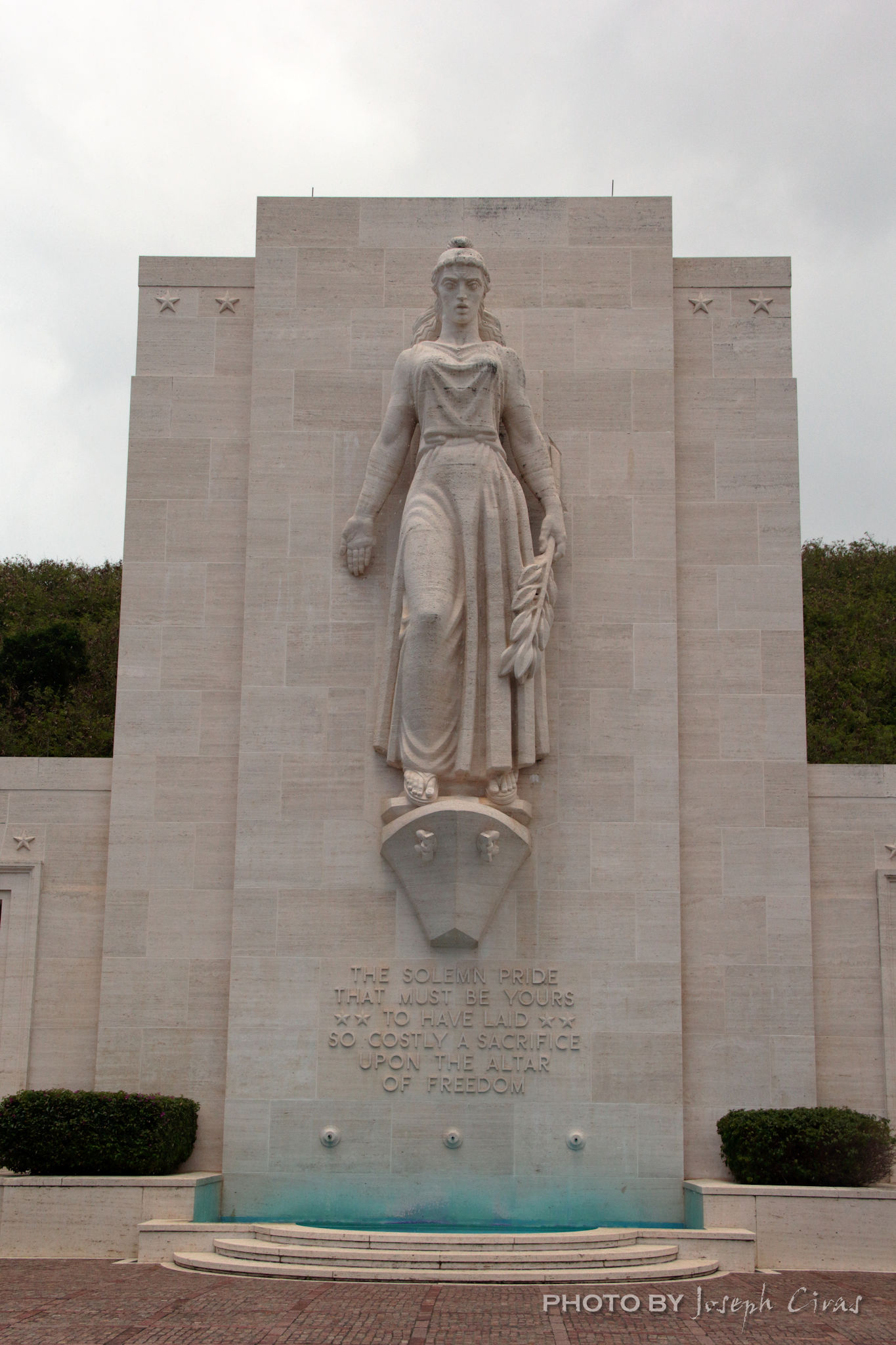
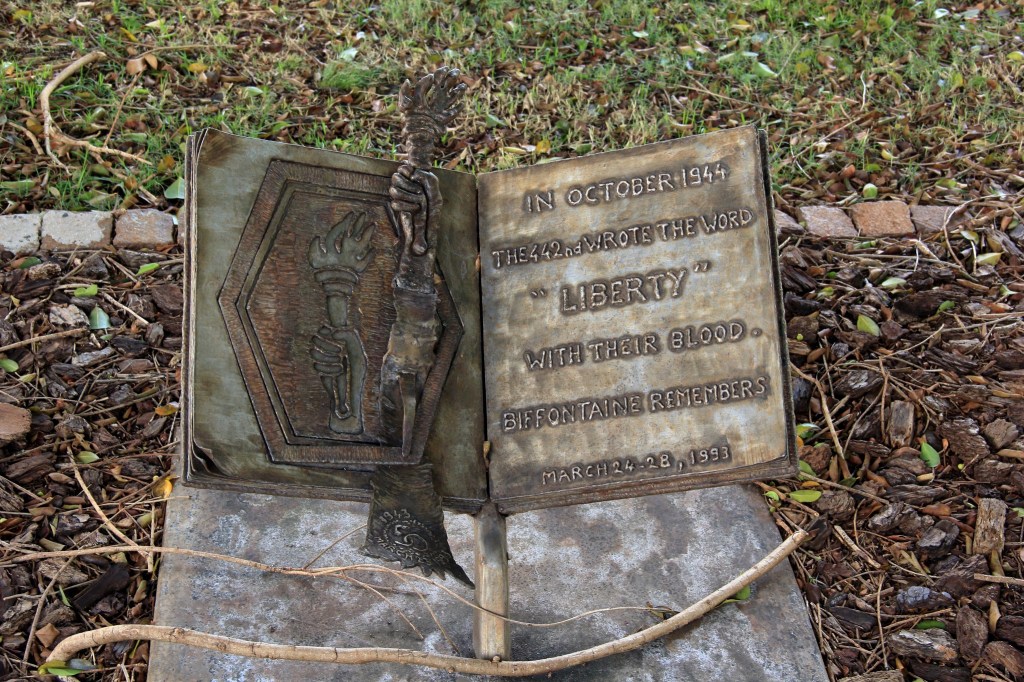
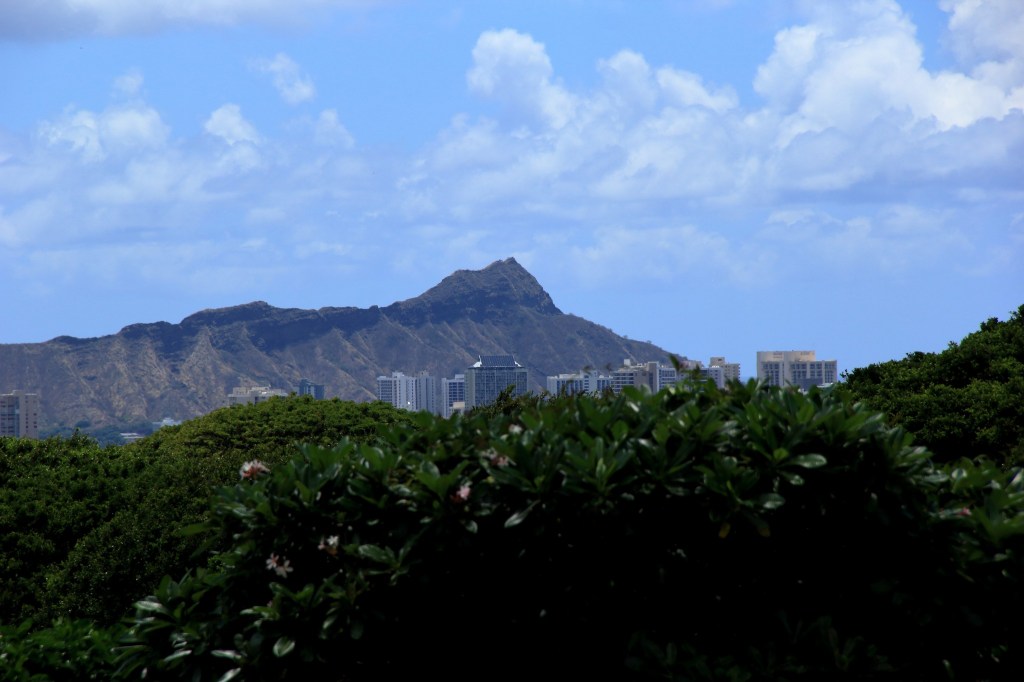
Monday, 05/31/2021: Posted photo — National Memorial Cemetery of the Pacific.

Settings: Canon EOS 60D, ISO 400, f/9, 1/1600 s, 31 mm

“Few national cemeteries can compete with the dramatic natural setting of the National Memorial Cemetery of the Pacific. The “Punchbowl” was formed some 75,000 to 100,000 years ago during the Honolulu period of secondary volcanic activity. A crater resulted from the ejection of hot lava through cracks in the old coral reefs which, at the time, extended to the foot of the Koolau Mountain Range.

In August 2001, about 70 generic unknown markers for the graves of men known to have died during the attack on Pearl Harbor were replaced with markers that included “USS Arizona” after it was determined they perished on this vessel. In addition, new information that identified grave locations of 175 men whose graves were previously marked as unknown resulted in the installation of new markers in October 2002. The National Memorial Cemetery of the Pacific was placed on the National Register of Historic Places in 1976.” National Memorial Cemetery of the Pacific.

When I took this photo, it was the second time that I visited the National Memorial Cemetery of the Pacific. I have been to both Arlington National Cemetery and this one. Arlington has a feel that overtakes you emotionally. This one also does in a different way. It does not have all the “famous” people there since Hawaii is new to this country. There are no headstones, so everyone is equal. The National Cemetery is a must visit if you get the opportunity to visit Hawaii. When we visited, there was a memorial wreath for the late Senator John McCain in the Vietnam War section laid there by Senator Brian Schatz of Hawaii.

People post photos of Arlington National Cemetery for Memorial Day. I posted this photo since most people to not have the opportunity to see the National Cemetery in person.

The quote is from the Bixby Letter. Mrs. Lydia Bixby, a widow believed to have lost five sons during the Civil War.

“Executive Mansion,
Washington, Nov. 21, 1864.

Dear Madam,–

I have been shown in the files of the War Department a statement of the Adjutant General of Massachusetts that you are the mother of five sons who have died gloriously on the field of battle.

I feel how weak and fruitless must be any word of mine which should attempt to beguile you from the grief of a loss so overwhelming. But I cannot refrain from tendering you the consolation that may be found in the thanks of the Republic they died to save.

I pray that our Heavenly Father may assuage the anguish of your bereavement, and leave you only the cherished memory of the loved and lost, and the solemn pride that must be yours to have laid so costly a sacrifice upon the altar of freedom.

Yours, very sincerely and respectfully,

A. Lincoln” (http://www.abrahamlincolnonline.org/lincoln/speeches/bixby.htm)

Here are more photos from the cemetery.

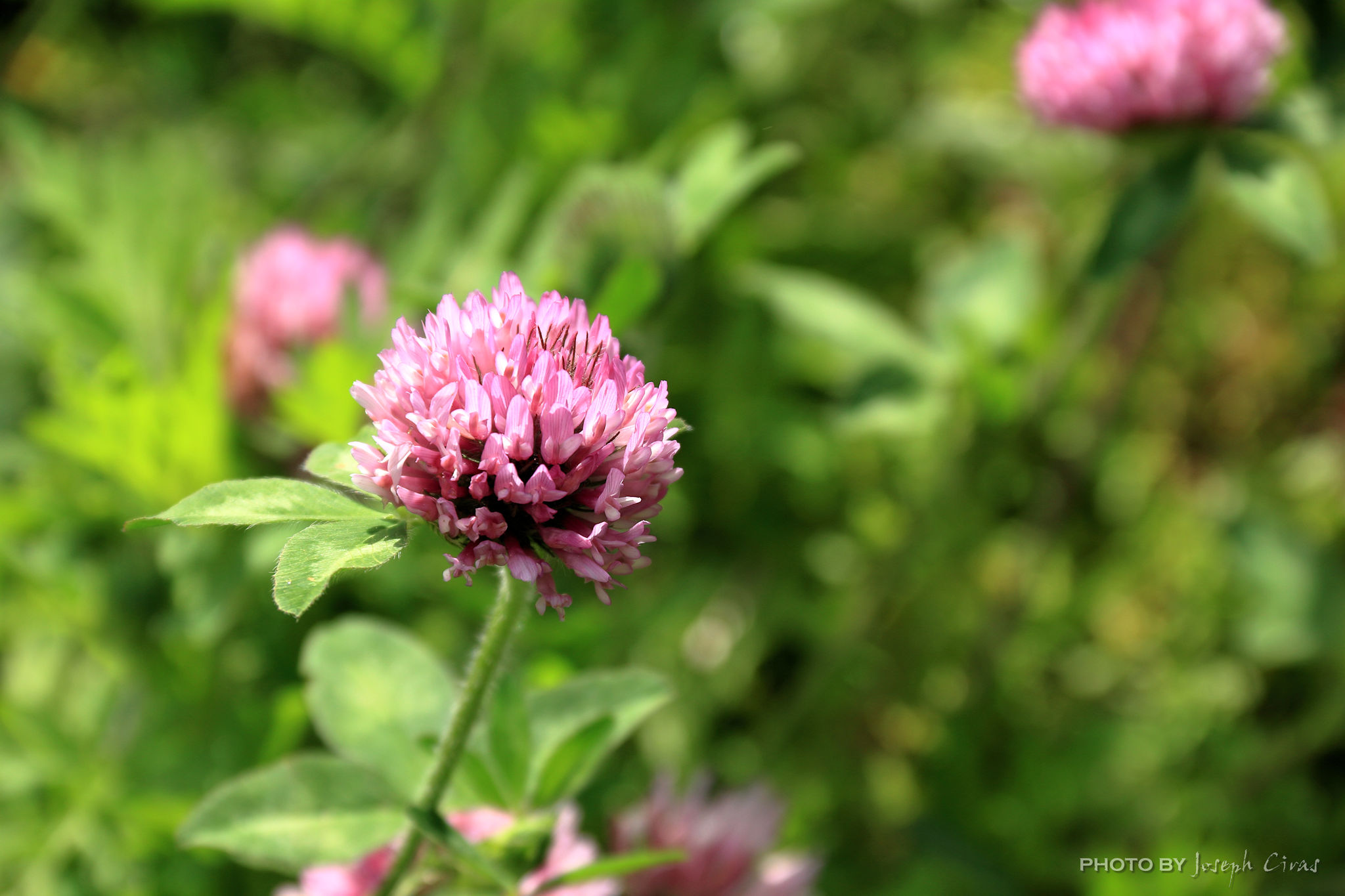
Tuesday, 06/01/2021: Posted photo — Thistle.

Settings: Canon EOS 60D, ISO 100, f/7.1, 1/250 s, 135 mm.

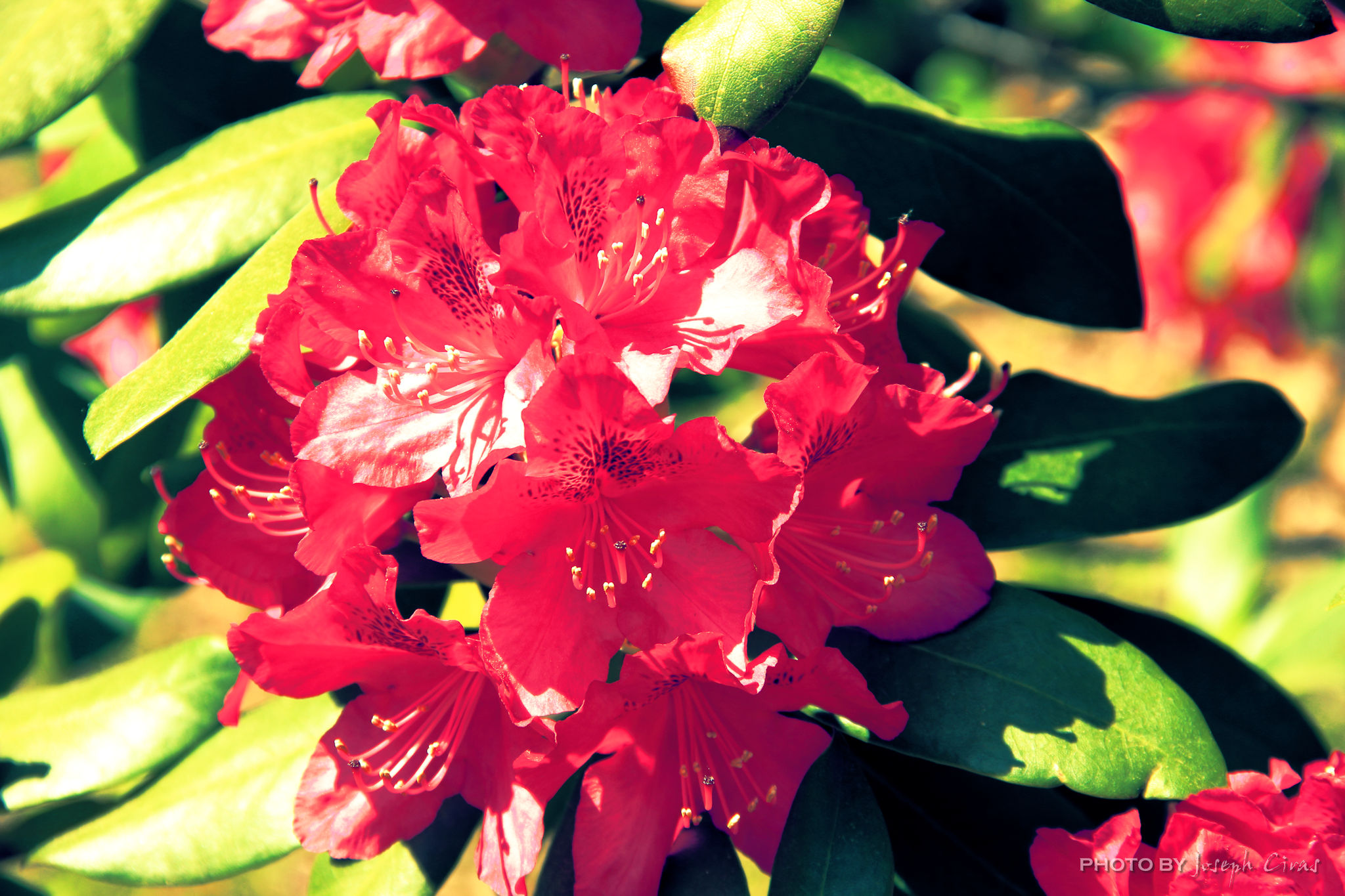
Short and sweet. We have a red rhododendron that blooms after our azaleas. They are such wonderful plants that attract bumble bees and other insects.

Wednesday, 06/02/2021: Posted photo — Mothering.

Settings: Canon EOS 60D, ISO 100, f/7.1, 1/250 s, 135 mm.

Birds incubate their eggs to keep them at the proper temperature to ensure normal development. Female songbirds usually begin incubation after they have finished laying all their eggs so that they will hatch at approximately the same time.

These are smart birds. The mother has made the nest under shelter in a protected area. There is little chance that the nest will be washes away, or that a predator will disturb the nest.

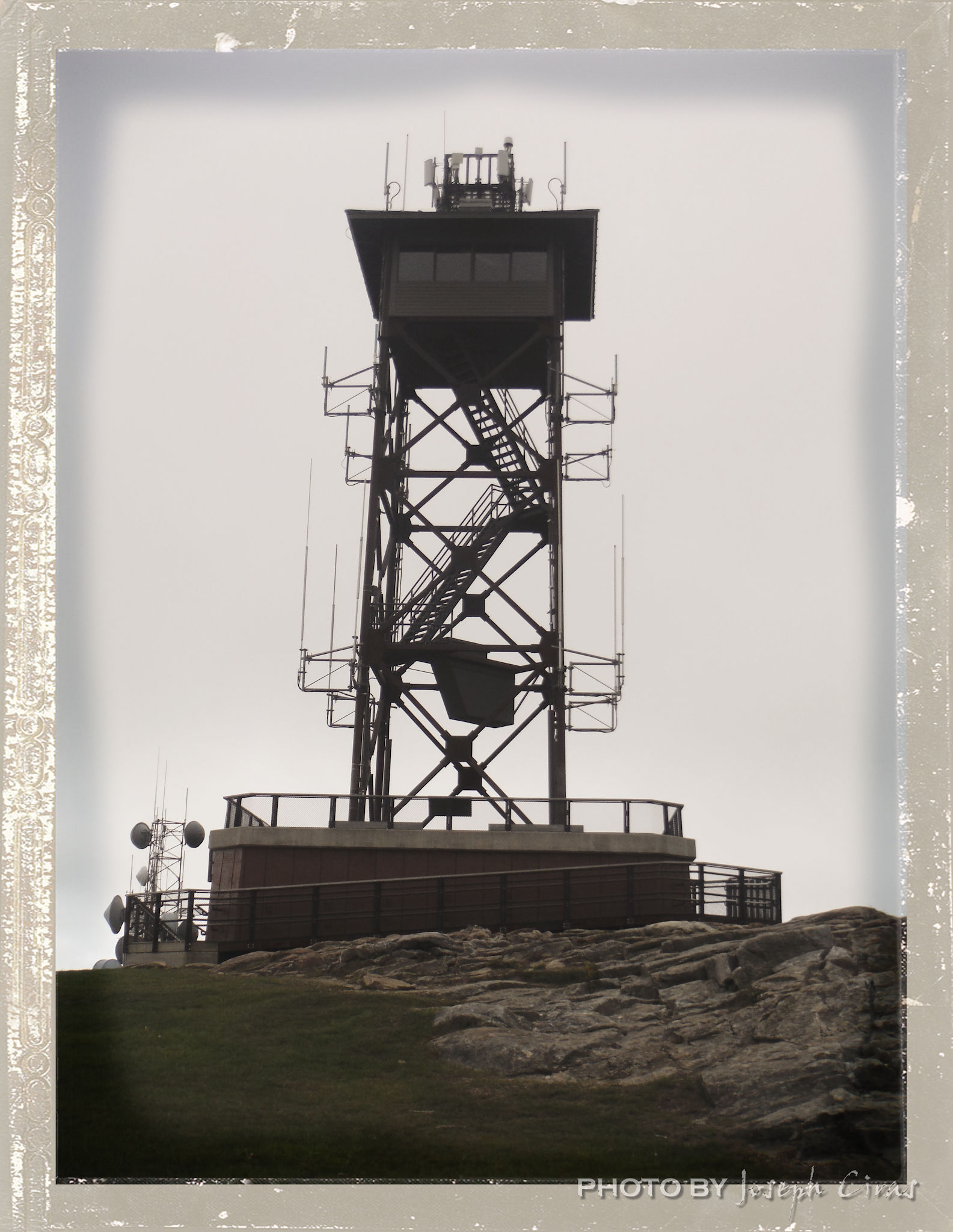
Thursday, 06/03/2021: Posted photo — Fire Tower.

Settings: FUGIFILM FinePix XP70, ISO 100, f/4.5, 1/110 s, 9 mm.

I took one of my work colleagues up Wachusett Mountain today. It was his first time up the mountain. When I hike, I see the same people most of the time. Today these people stopped and introduced themselves to me. I know a few more hikers now and my colleague just thinks that I talk to everyone when I hike. Not the case.

I needed a photo for today and like the way the fire tower looked against the clouds. There was a low ceiling since there was rain in the area. We were dry but the trails were very muddy due to the rain over the weekend.

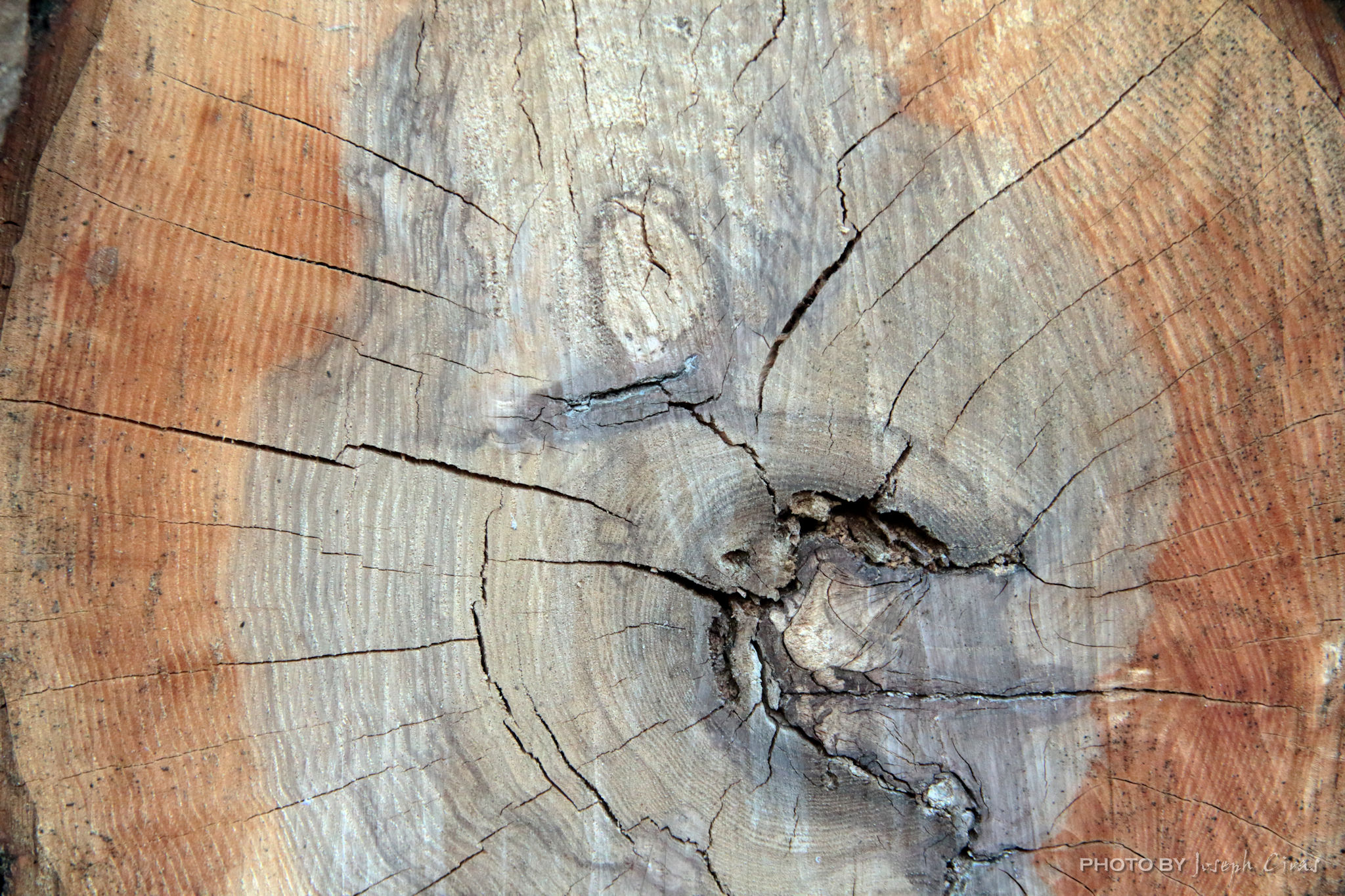
Friday, 06/04/2021: Post photo — Wood.

Settings: Canon EOS 60D, ISO 1600, f/8, 1/200 s, 60 mm.

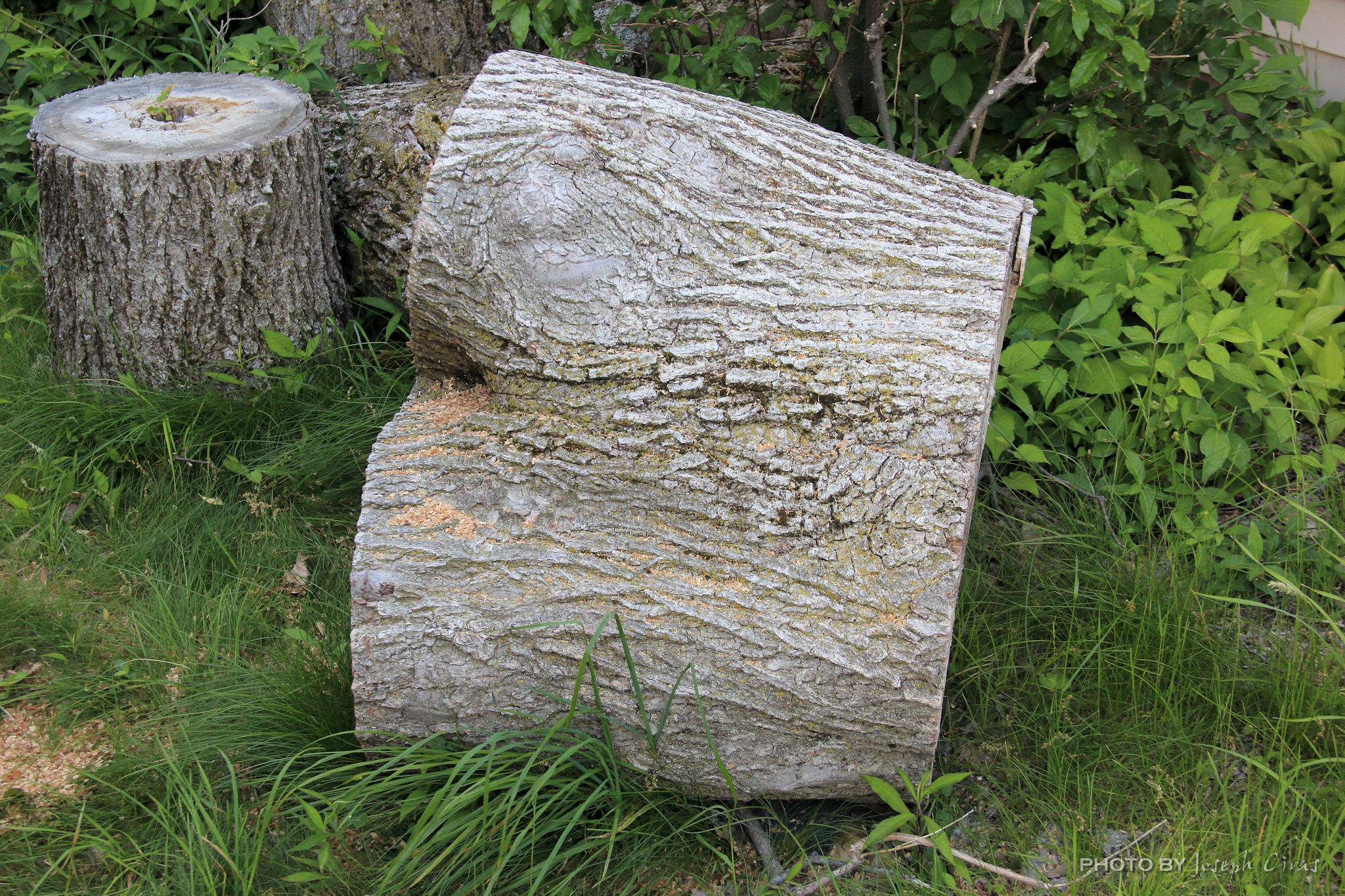
Quick photo Friday. I took a photo of this piece of wood to see how well the wood is drying. You can tell how well the wood is drying, or seasoning, by the way the wood is changing color.

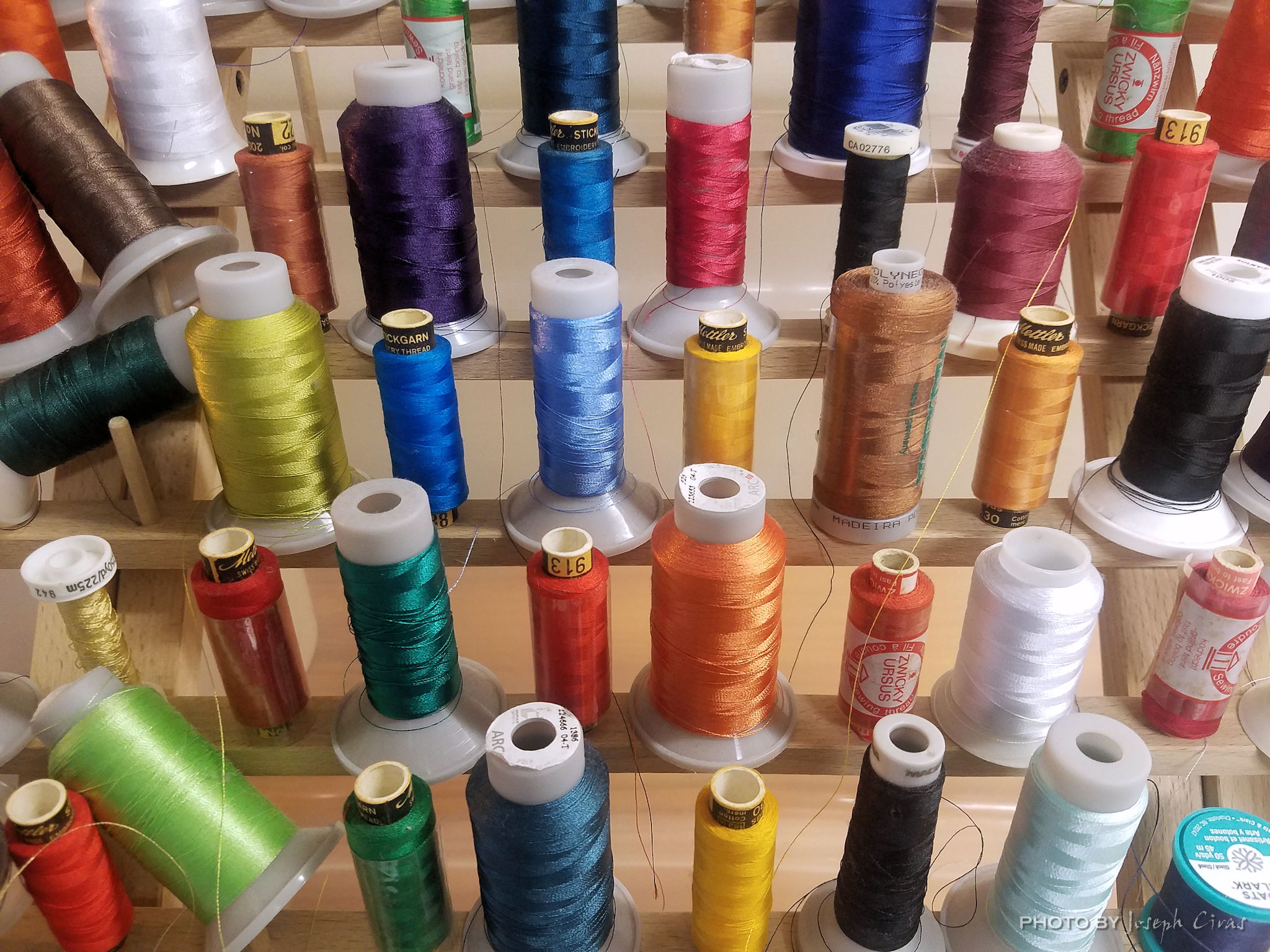
Saturday, 06/05/2021: Post photo — Spools of Thread.

Settings: Samsung SM-G930V (Galaxy S7), ISO 160, f/1.7, 1/24 s, 4 mm

One of my wife’s friend is the owner of a new consignment shop. It is a women own company. Today was the opening day for the shop. My wife’s friend was very surprised to see her at the shop since it is about an hour away from our house.

I took a photo of these spools of threads since I liked the colors of the threads and the pattern they were in. The shop is in North Andover, MA. If you would like to know the location of this shop, please message me and I will send it to you.

That is all for now. Until next week, be safe.

For more photo of other project I have work, visit my website: https://photobyjosephciras.weebly.com/ or visit me on Facebook at https://www.facebook.com/PhotobyJosephCiras/.

COVID is real! Be safe out there, keep your social distance, and remember to always wear your mask and wash your hands. Get your vaccine!

Photographic Thoughts — 05/23/2021 to 05/29/2021

“A tear contains an ocean. A photographer is aware of the tiny moments in a person’s life that reveal greater truths.” — Anonymous

Thank you for all the new views and likes from last week. It helps keep me going. Enjoy my blog post!

Enjoy this week’s rambling mind of a mechanical engineer and photographer.

Sunday, 05/23/2021: Posted photo — Get Out of my Tree.

Settings: Canon EOS 60D, ISO 200, f/5.6, 1/80 s, 135 mm

The photo I posted today was of two squirrels that were running around in our yard. These were two of five squirrels that were chasing after each other, knocking each other off trees, trying to hide from each other, and fighting each other. Most squirrels mate twice a year, once during the summertime and once towards the end of wintertime or early springtime. When one female is ready to mate, males will either chase after her or they will complete for the right to mate with her. What I was seeing was the competition to mate with her. There was one female squirrel on another tree watching the activity. Boys will be boys. It is very interesting to see nature at work.

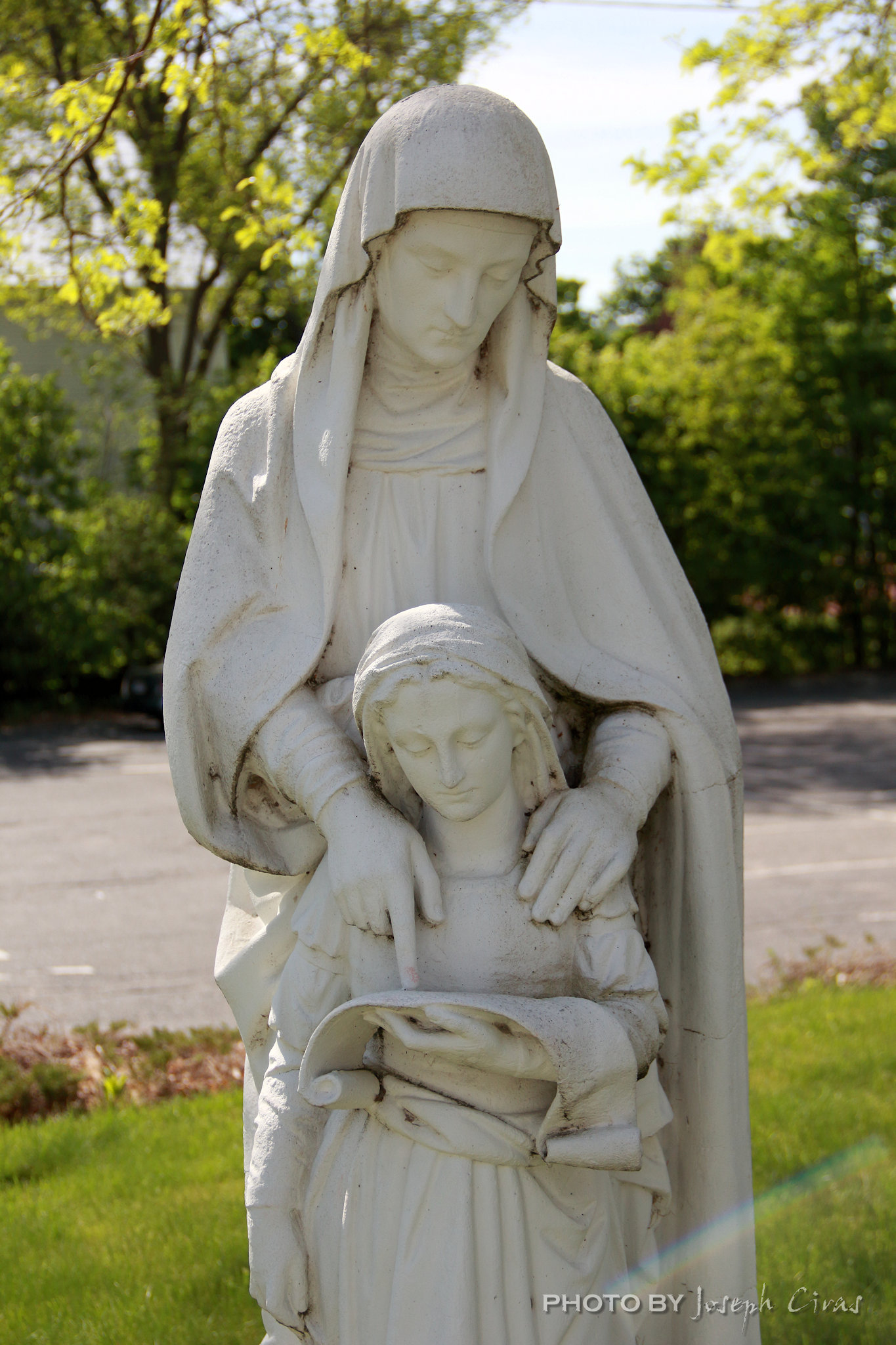
A photo that I almost posted was at the other end of the spectrum. It was a photo of a statue of St. Anne reading to Mary. This statue was in front of St. Denis’ sister church that was in town. St. Anne’s church was torn down due to safety concerns a few years ago.  “St. Anne is the patron saint of unmarried women, housewives, women in labor, grandmothers, childless people, equestrians, lacemakers, miners, the poor, and seamstresses. The most well-known patronage of St. Anne is that of grandmothers. Certainly, as the mother of the Virgin Mary and the grandmother of Jesus Christ, St. Anne was a woman of great virtue and love.

St. Anne is often shown seated with a book on her lap. The child Mary stands against her, eager to listen. This depiction of St. Anne is a small explanation of what we know of this holy woman. God entrusted to St. Anne the task of raising Our Lady in a holy and virtuous home, and from a very young age Mary looked to St. Anne to learn about God and how He works in the lives of those who love and serve Him.” — Catholic Saint Metals, (https://catholicsaintmedals.com/saints/st-anne/)

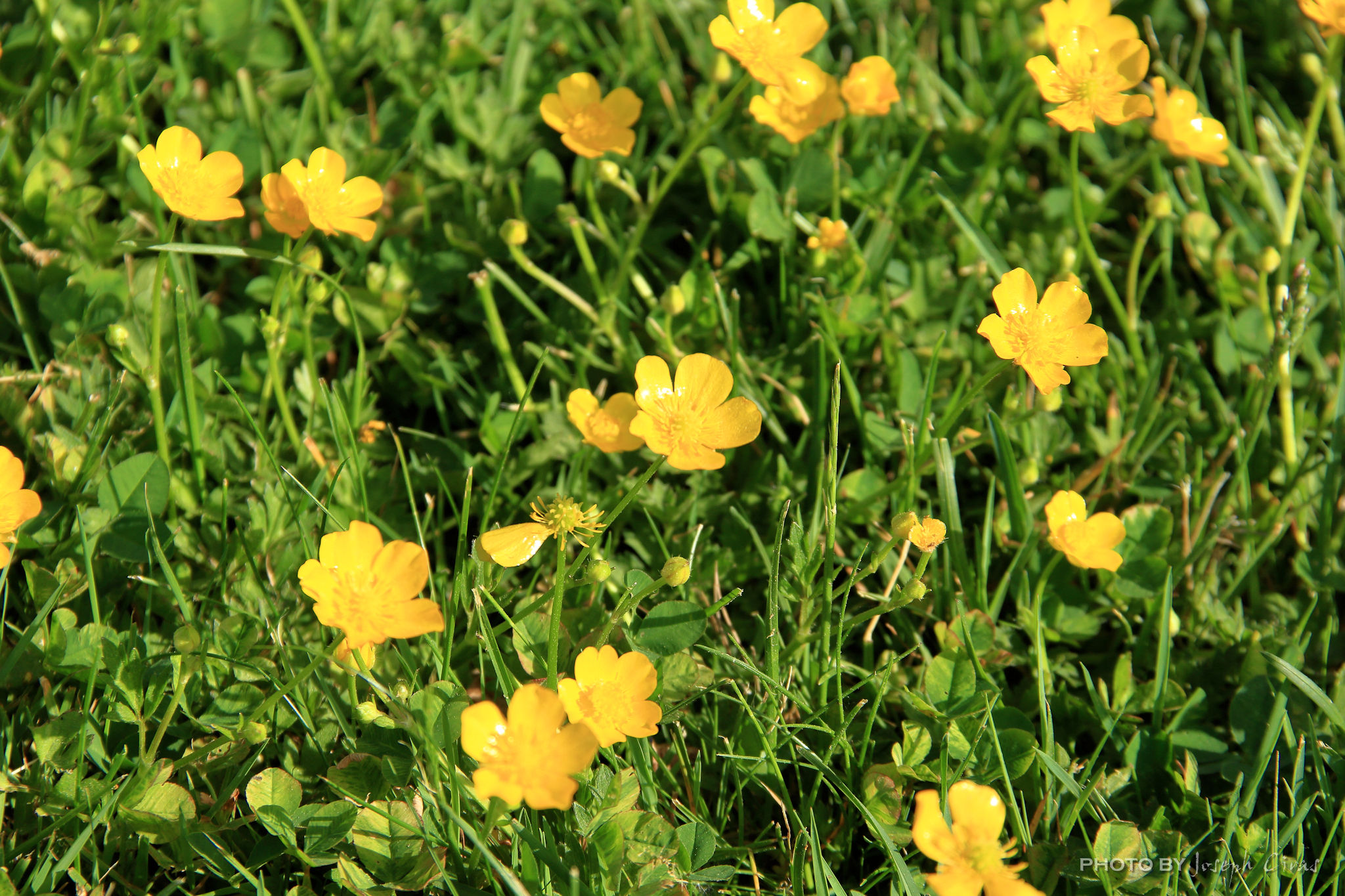
Monday, 05/24/2021: Posted photo — Buttercups.

Settings: Canon EOS 60D, ISO 100, f/7.1, 1/400 s, 69 mm

Buttercup is a type of herbaceous plant that belongs to the Ranunculaceae family. There are nearly 2000 species of buttercups that mostly inhabit northern hemisphere. Buttercups are usually found in cold and temperate regions. They prefer moist habitats and live in the fields, meadows, near the roads, in the woodlands, swamps and bogs. Buttercups are widely distributed and abundant in the wild. Some species of buttercups are rare and endangered due to habitat destruction and introduction of new, invasive plant species. Reflexive properties of buttercup flowers are applied in children’s game aimed to determine fondness for the butter. If yellow reflection appears on the skin after placing buttercup under the chin – then child likes to eat butter. Signs of intoxication appear immediately after ingestion of the plant. They include bloody diarrhea, excessive salivation, colic and blistering of the intestines. They have acrid taste, so even animals cannot eat them fresh. (https://www.softschools.com/facts/plants/buttercup_facts)

These buttercups are in the lawn near were I park my car at work. I took this photo on my way home from work before tonight’s hike. I took this photo just in case I did not take any photos during my hike. On my hike, I just hiked with the group of hikers I met last week. Great to go hiking with a group of hikers that socialize and not a social group that hikes.

Tuesday, 05/25/2021: Posted photo — Rhododendron.

Settings: Canon EOS 60D, ISO 100, f/7.1, 1/200 s, 92 mm.

Short and sweet. We have a red rhododendron that blooms after our azaleas. They are such wonderful plants that attract bumble bees and other insects.

Wednesday, 05/26/2021: Posted photo — Pants.

Settings: Canon EOS 60D, ISO 400, f/7.1, 1/60 s, 35 mm.

Pants for Groot perhaps? Groot is a fictional character appearing in American comic books published by Marvel Comics. Created by Stan Lee, Larry Lieber and Jack Kirby, the character first appeared in Tales to Astonish #13. He is a man made out of wood.

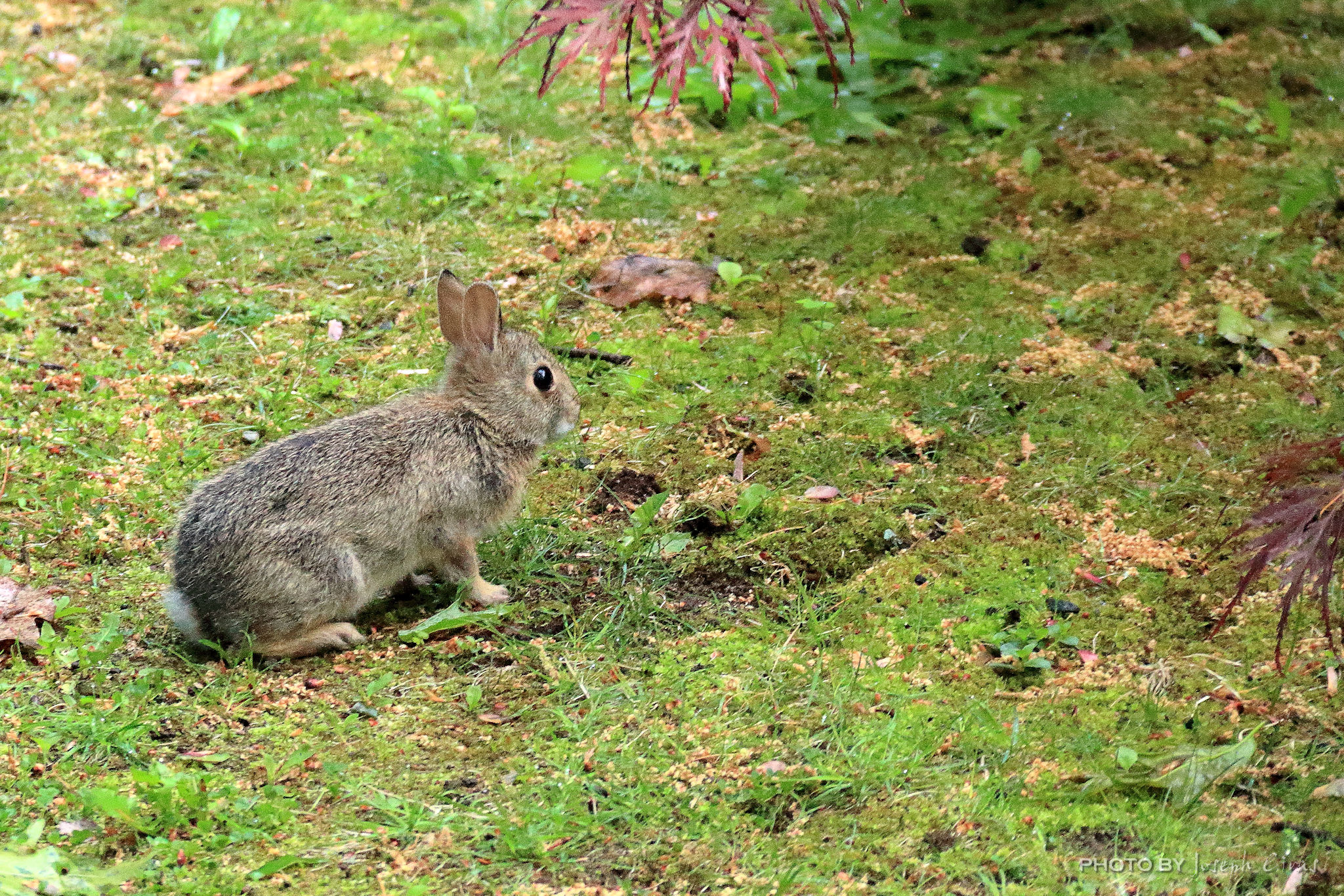
Thursday, 05/27/2021: Posted photo — Rabbit.

Settings: Canon EOS 60D, ISO 3200, f/5.6, 1/50 s, 135 mm.

Imagine our two-year-old grandniece’s excitement every time this rabbit came out from under our deck. “There it is!!” She was so excited that she would run toward the rabbit and then it would hide. She would then sit down next to our son and wait and get excited repeatedly.

The wonders of youth. Why do we have to lose it?

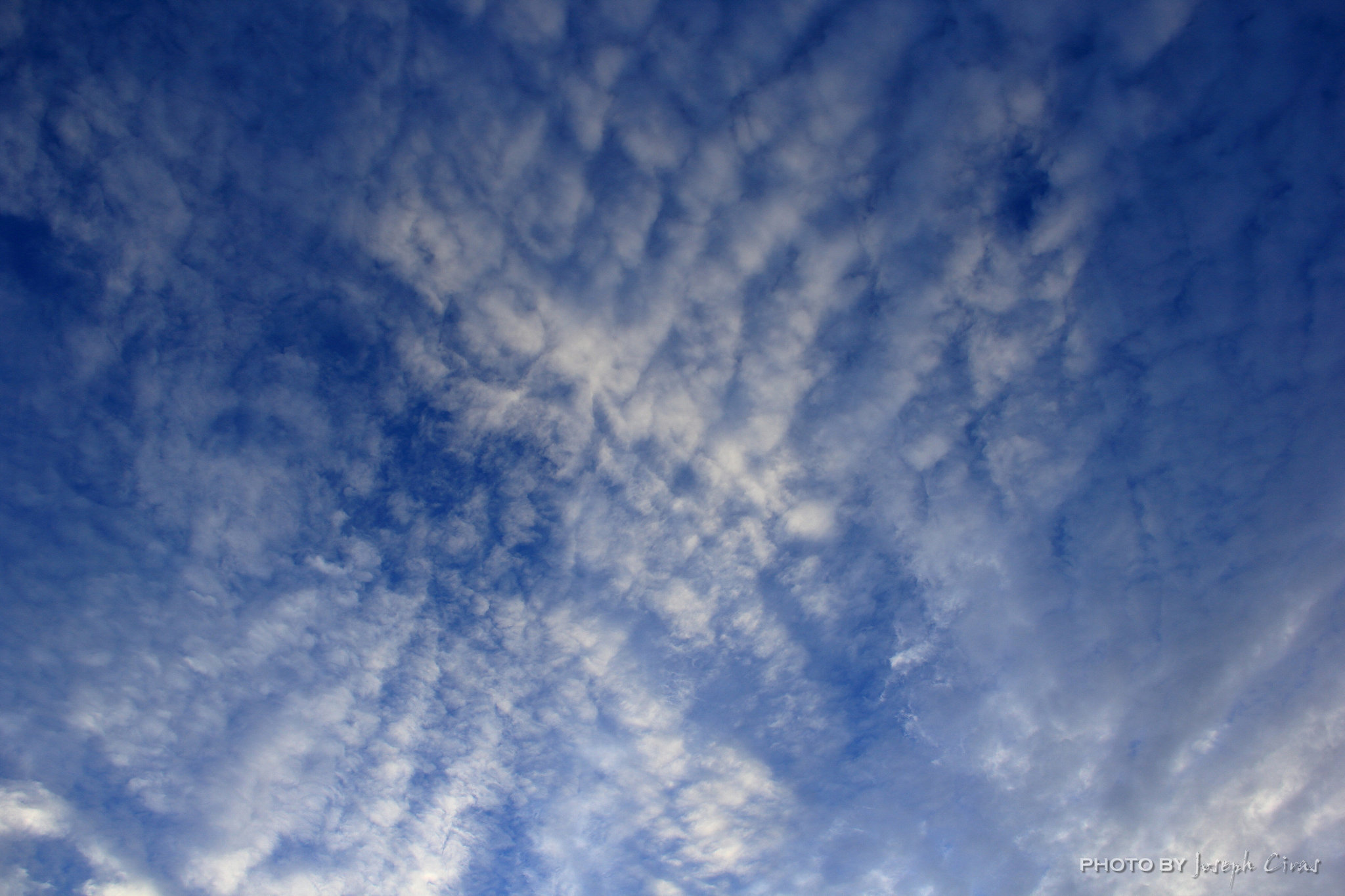
Friday, 05/28/2021: Post photo — Clouds.

Settings: Canon EOS 60D, ISO 100, f/7.1, 1/250 s, 18 mm.

Needed a quick photo today since I was traveling north to go hiking. Took this one in the morning before the rains came in.

binary comment

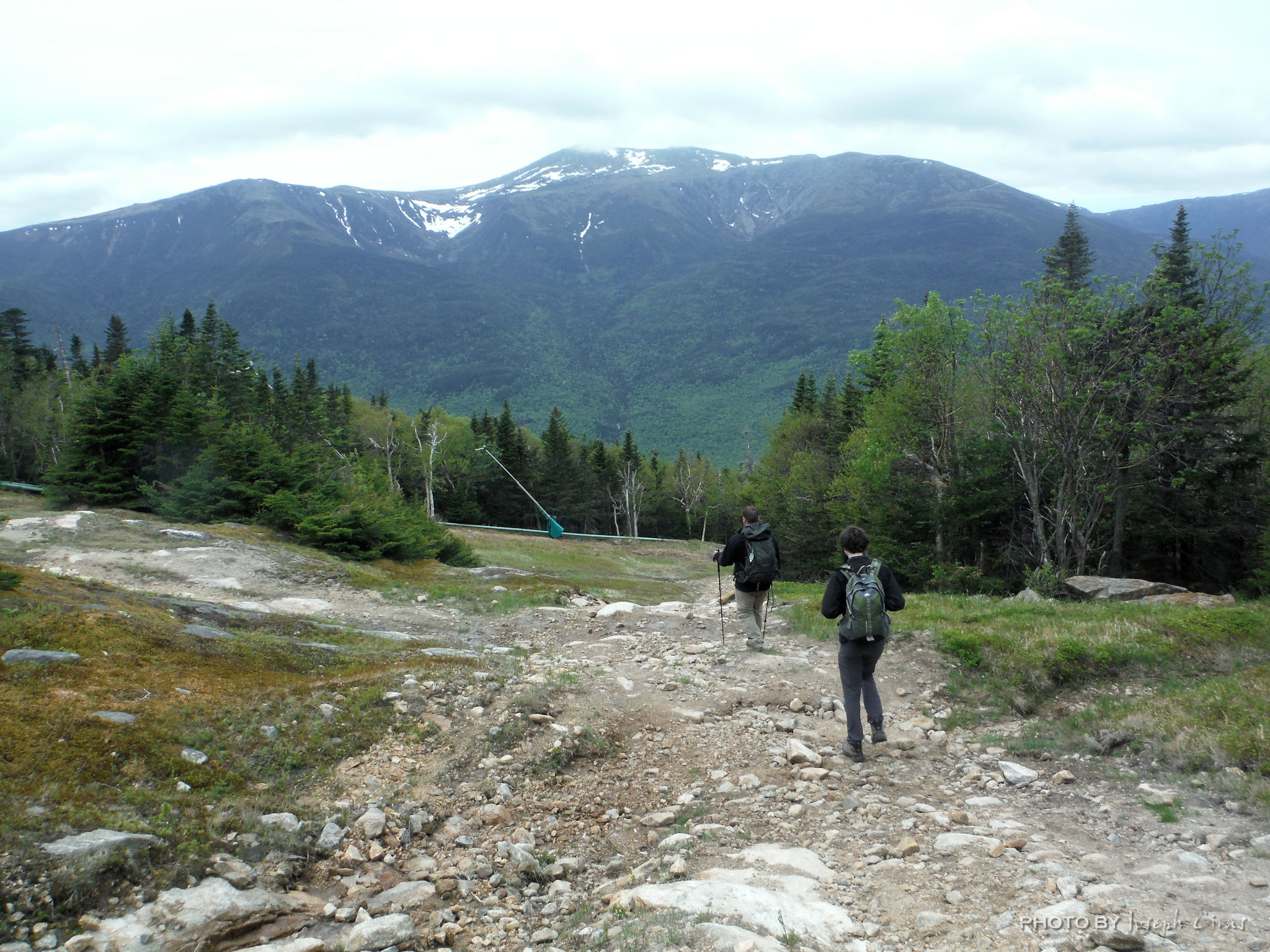
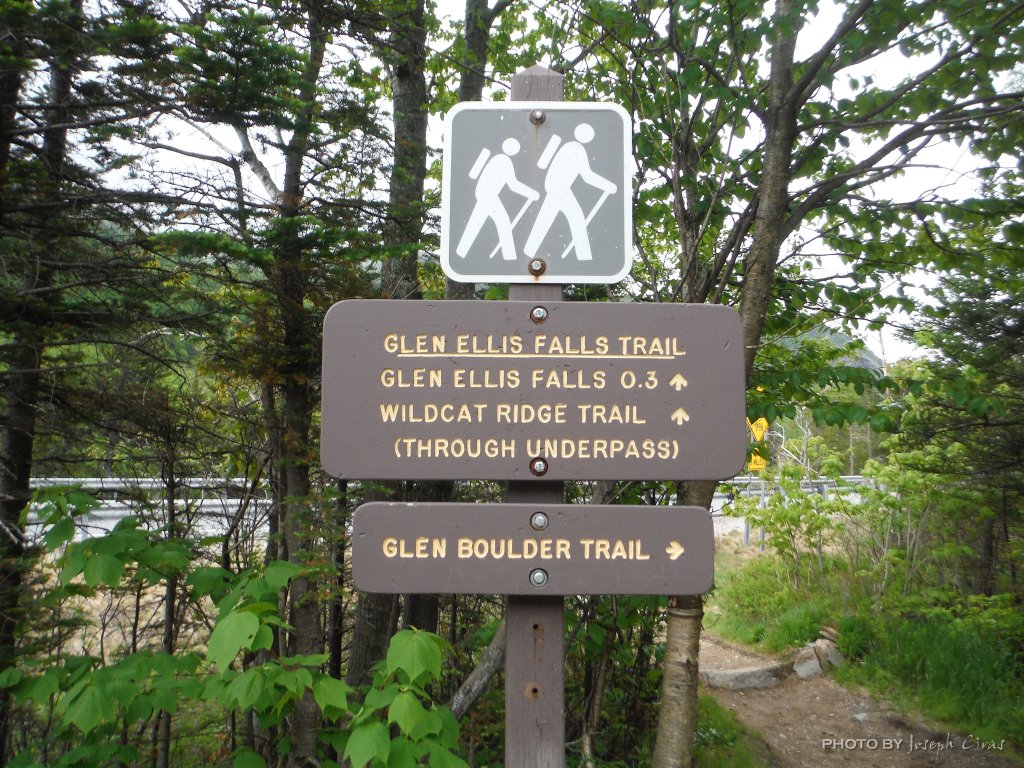
Saturday, 05/29/2021: Post photo — Hiking.

Settings: FUGIFILM FinePix XP70, ISO 100, f/6.2, 1/240 s, 5 mm.

My son and his friend hiking in NH. This is from Wildcat D looking towards Mount Washington.

Hiking down the trail. Mount Washington in the distance

Five 4000-foot mountains, two official 4000 footers, wet river crossing to start the hike, 1600 feet of vertical gain in less than one-half mile, and hiking with your son and one of his friends. It was a great day. I feel in the river to start the hike. Not a great way to start, but I recovered quickly. Lucky, I brought a second pair of socks to change into. The first pair did not get very wet since I had on a good pair of hiking boots. I have my warm cloths on since the temperature was not to get above freezing in the mountains, so the wetness did not affect my hike.

That is all for now. Until next week, be safe.

For more photo of other project I have work, visit my website: https://photobyjosephciras.weebly.com/ or visit me on Facebook at https://www.facebook.com/PhotobyJosephCiras/.

COVID is real! Be safe out there, keep your social distance, and remember to always wear your mask and wash your hands.