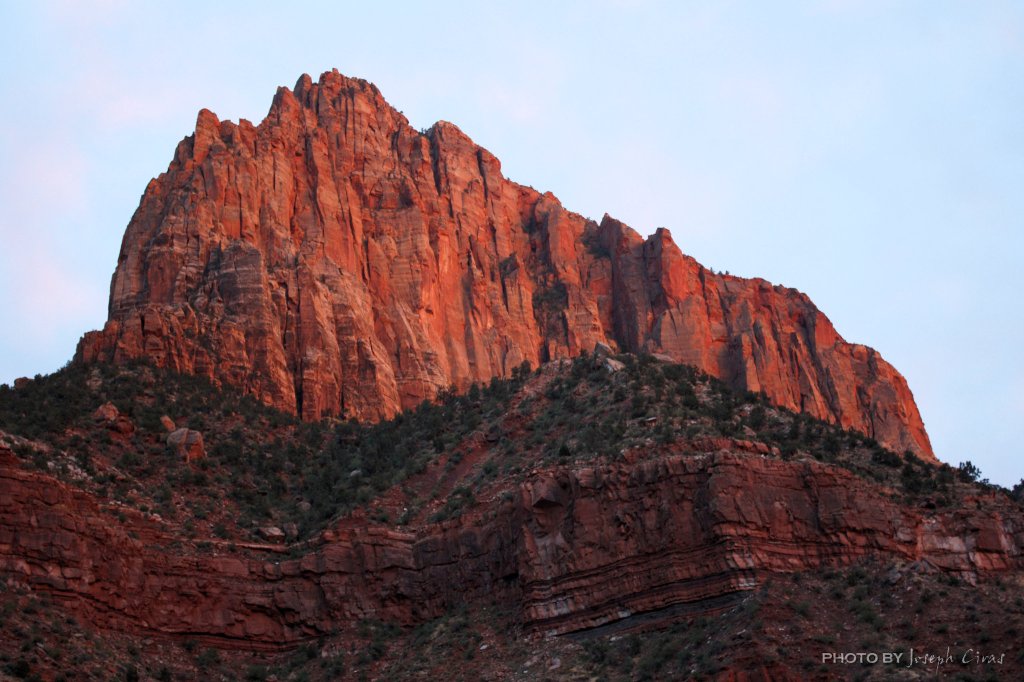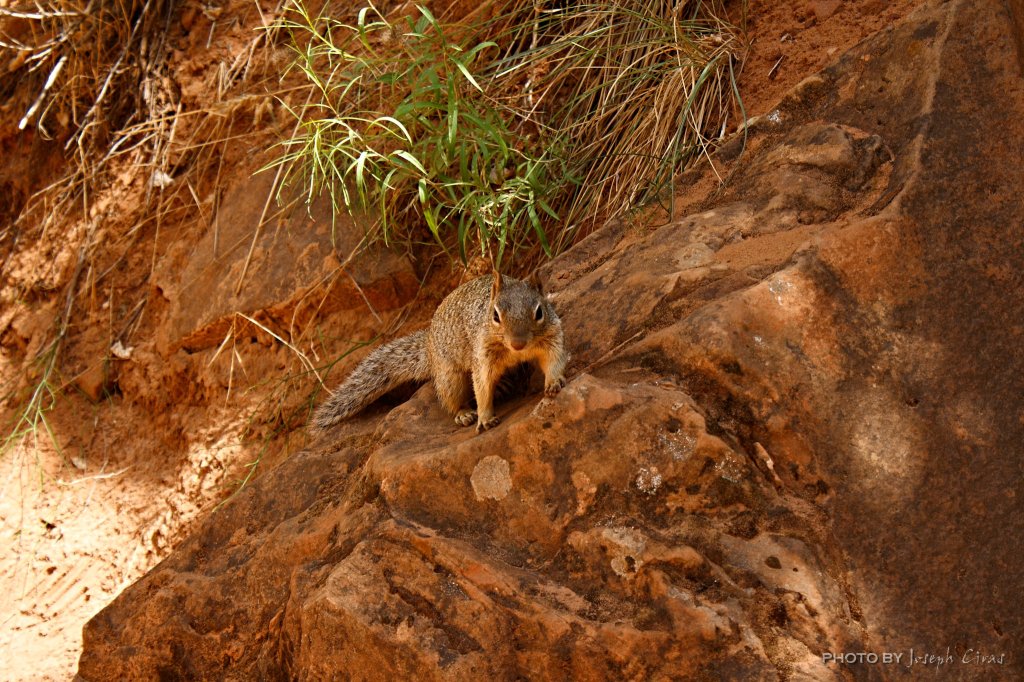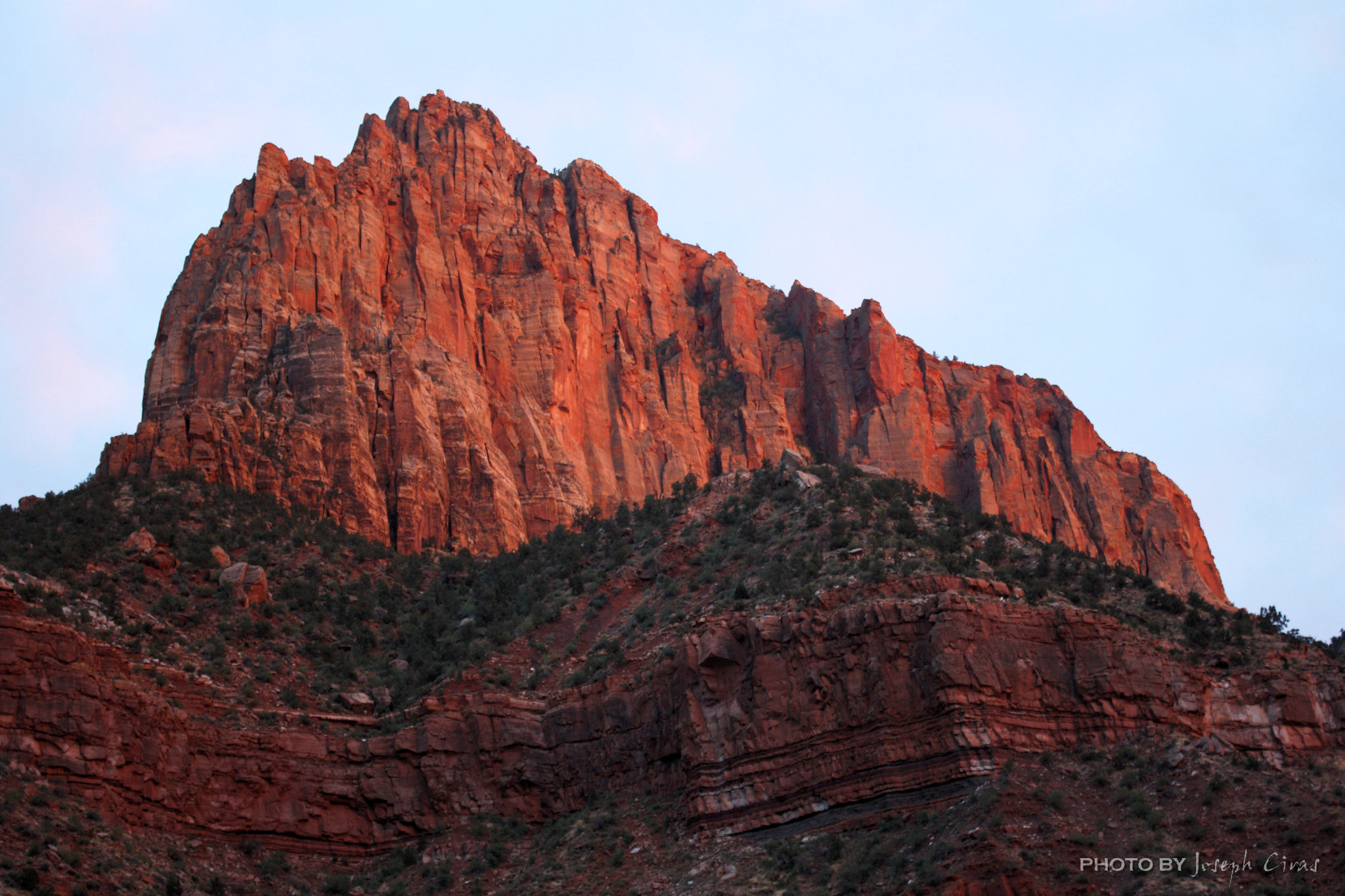
Photographic Thoughts — 10/24/2021 to 10/30/2021

“You can look at a picture for a week and never think of it again. You can also look at a picture for a second and think of it all your life.” — Joan Miro

Thank you for all the new views and likes from last week, it helps keep me inspired.

Sunday, 10/24/2021: Posted photo — Ashburnham Community Church.

Settings: Canon EOS 60D, ISO 100, f/7.1, 1/640 s, 18 mm.

The Ashburnham Community Church is now home to the New Dawn Arts Center.

Information off the New Dawn Arts Center website (www.newdawnarts.org). The church was constructed in 1834, the steeple houses a church bell cast by a former apprentice of Paul Revere, and the 1886 pipe organ was installed by Boston organ builder George Hutchings. The church was part of The Underground Railroad.

The Community Church was sold to the Arts Center a few months ago. The congregation of the church was getting smaller so they could not afford to keep the church in operation. The Arts Center is allowing the church to hold services there and all other outreach services are still running at the church, such as a food pantry.
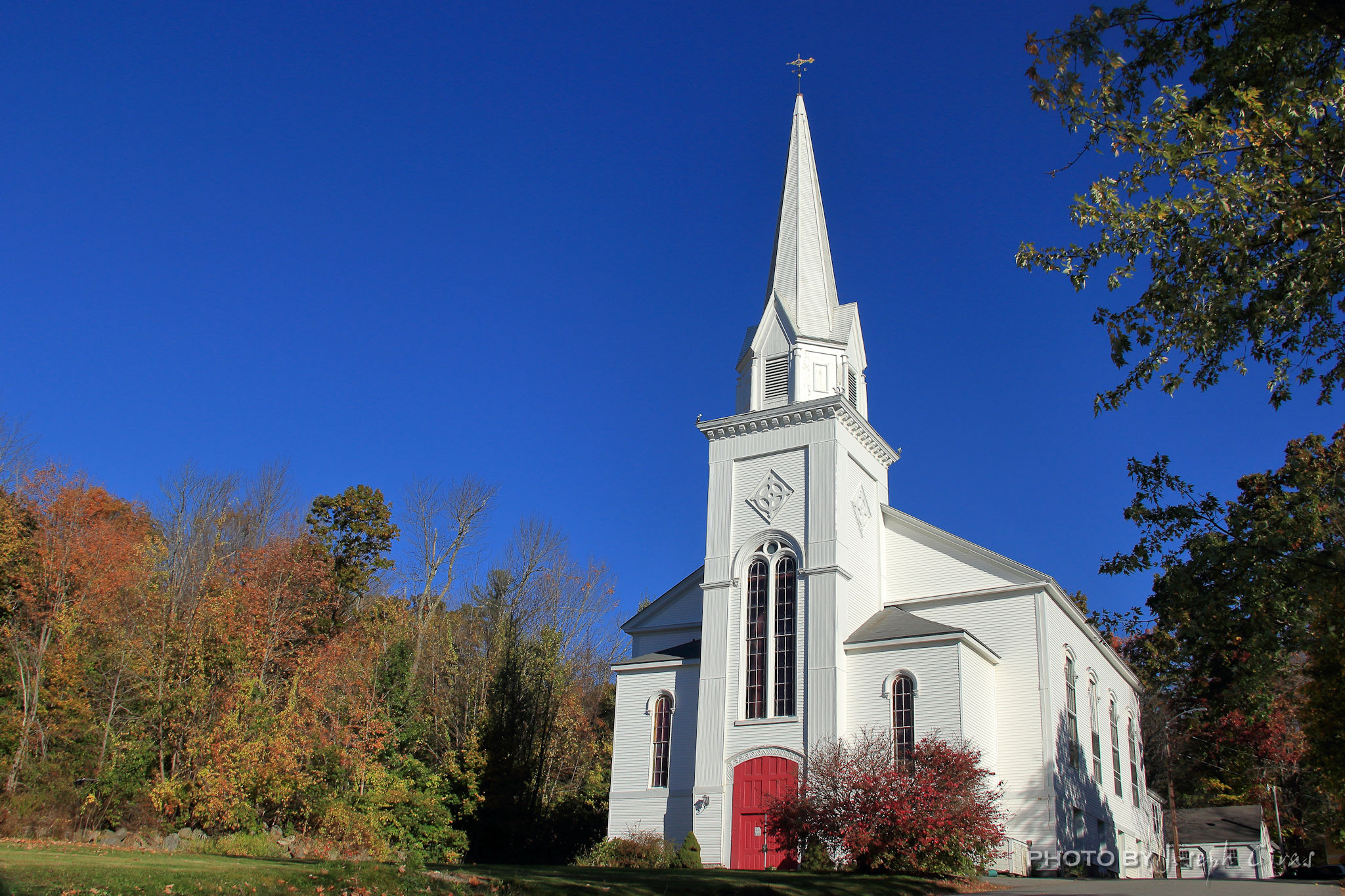
New Dawn Arts Center at the Ashburnham Community Church

I just like the look of churches with their steeples and stained glass. When I was going to church, I was drawn to the contrasting white church and the clear blue sky. The foliage looked to be past, but it did show well in this photo. The church that I belong to is across the street from the Community Church. I have taken photo of this church before and will again since I like its architecture.

Monday, 10/25/2021: Posted photo — Mountain View.

Settings: Canon EOS 60D, ISO 100, f/6.3, 1/80 s, 39 mm.

What a great view from the summit today! As you can see, the summited was fogged in. I had to use my map and compass to find my way down part of the trail. Using a map and compass on Wachusett Mountain is not very common since the fog has not been this dense in a very long time and people look at me strangely when I use them in good weather. I could see the trail ahead of me tonight. I was just verifying the bearings at each trail junction just so I did not head back up the mountain. It was good practice for me.

Fog on the mountain

Over the past few months, I have been taken the bearings at each junction and verifying elevations and coordinate locations with my trail map program and with the paper trail map of the mountain. I am in the process of putting together a detailed map of the mountain to help new and experienced hikers. Map and compass skills are essential to survival. Using these tools on a well hiked mountain is great for learning this skill.

The error most people will make is not accounting for magnetic declination (14° West on Wachusett Mountain). Magnetic declination is the angle between true north and magnetic north. Remember “West is best and East is least.” You add the declination to your reading if the declination is to the West or subtract the declination from the reading if it is to the East. I can adjust my compass for declination prior to use so I do not have to do the math if I am in a dangerous situation. Not all compasses can be adjusted. I would suggest spending a little more money on a compass that can be adjusted. It could save your life. Remember to always practice this skill in a known location prior to any “big” hike. Do not rely on the GPS on your phone.

Tuesday, 10/26/2021: Posted photo — Flowers.

Settings: Samsung SM-G930V (Galaxy S7), ISO 80, f/1.7, 1/60 s, 4 mm

Part of the opening paragraph from the novel “Paul Clifford” by Edward Bulwer-Lytton states, “It was a dark and stormy night; the rain fell in torrents …” It was a dark and stormy day today. Heavy rain, high winds and fog were the norm. I was going to post the following photo for today, a photo of wet foliage.
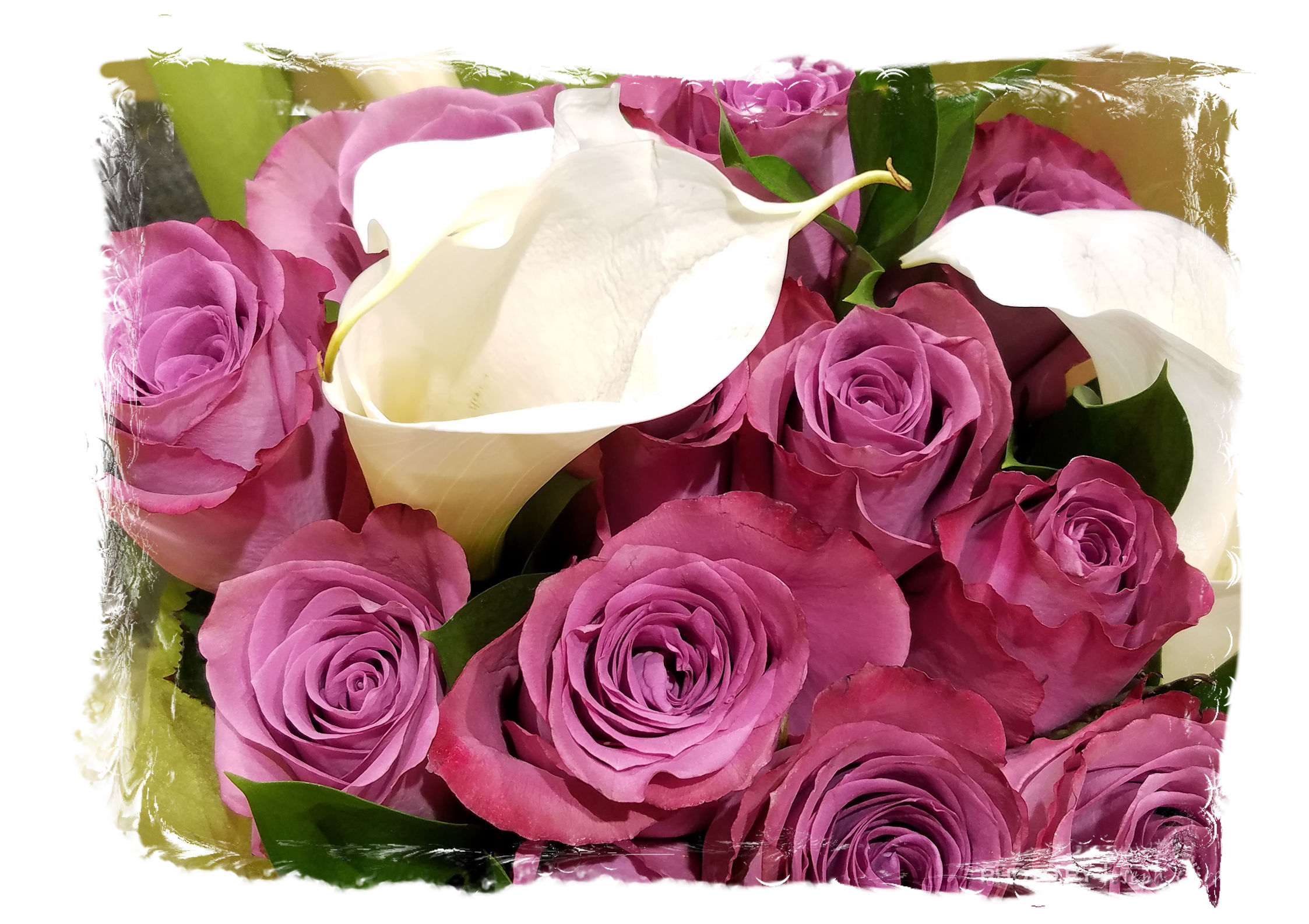
Bouquet to cheer up the day

I went grocery shopping before I posted my photo and saw the flowers that I posted. I thought of how flowers put smiles on people’s faces and wanted to brighten up this gloomy day. Here is another photo of some more flowers that I took today during my shopping trip to brighten your day.

Secondary post of flowers for the day
The photo that I did not post

Wednesday, 10/27/2021: Posted photo — Reflection.

Settings: Canon EOS 60D, ISO 200, f/3.5, 1/25 s, 18 mm.

I was not intending to take this photo. I was intending to post a photo from either my trip to Alaska, or my trip to Hawaii, since the weather still is a little gloomy.

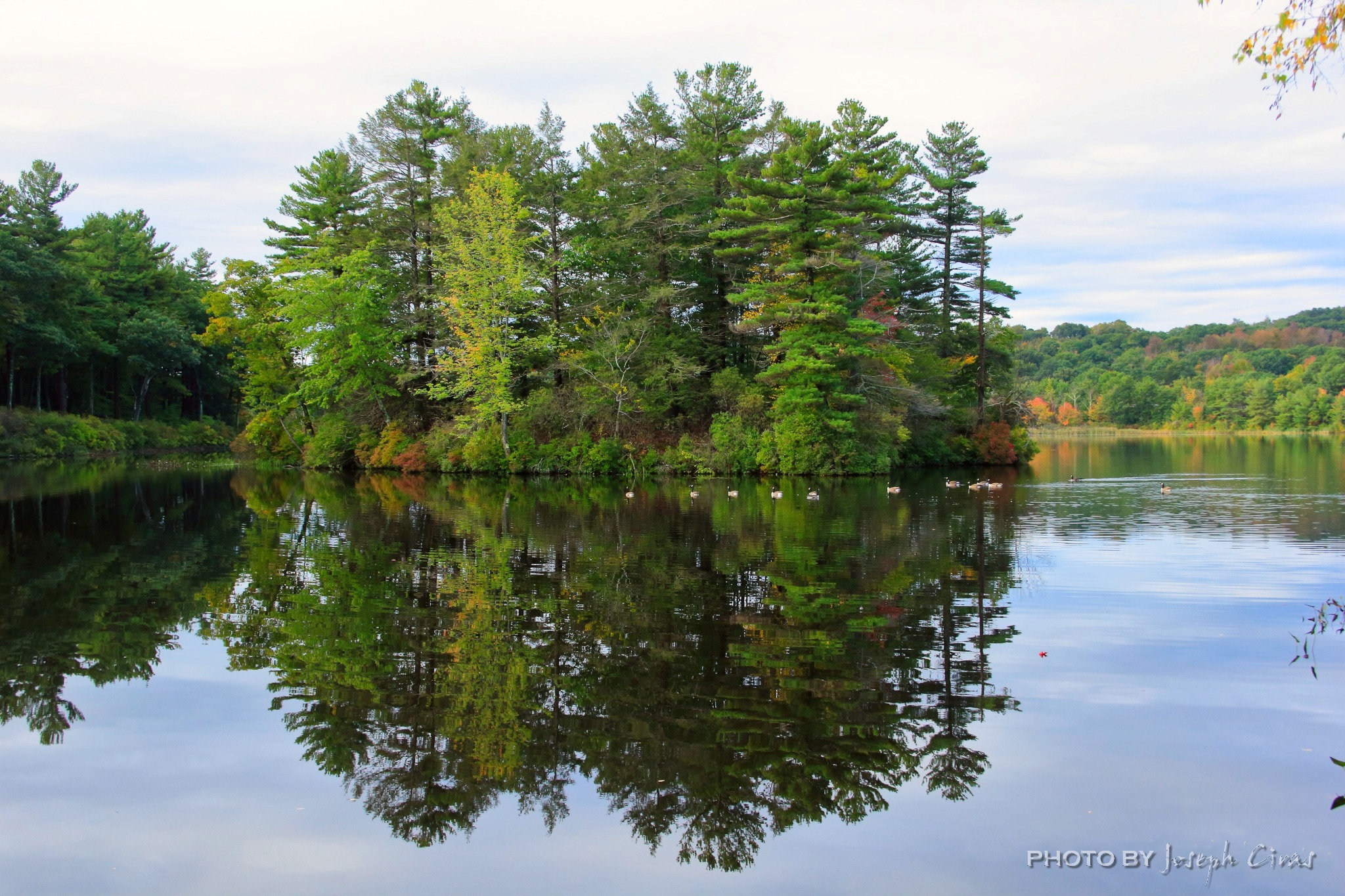
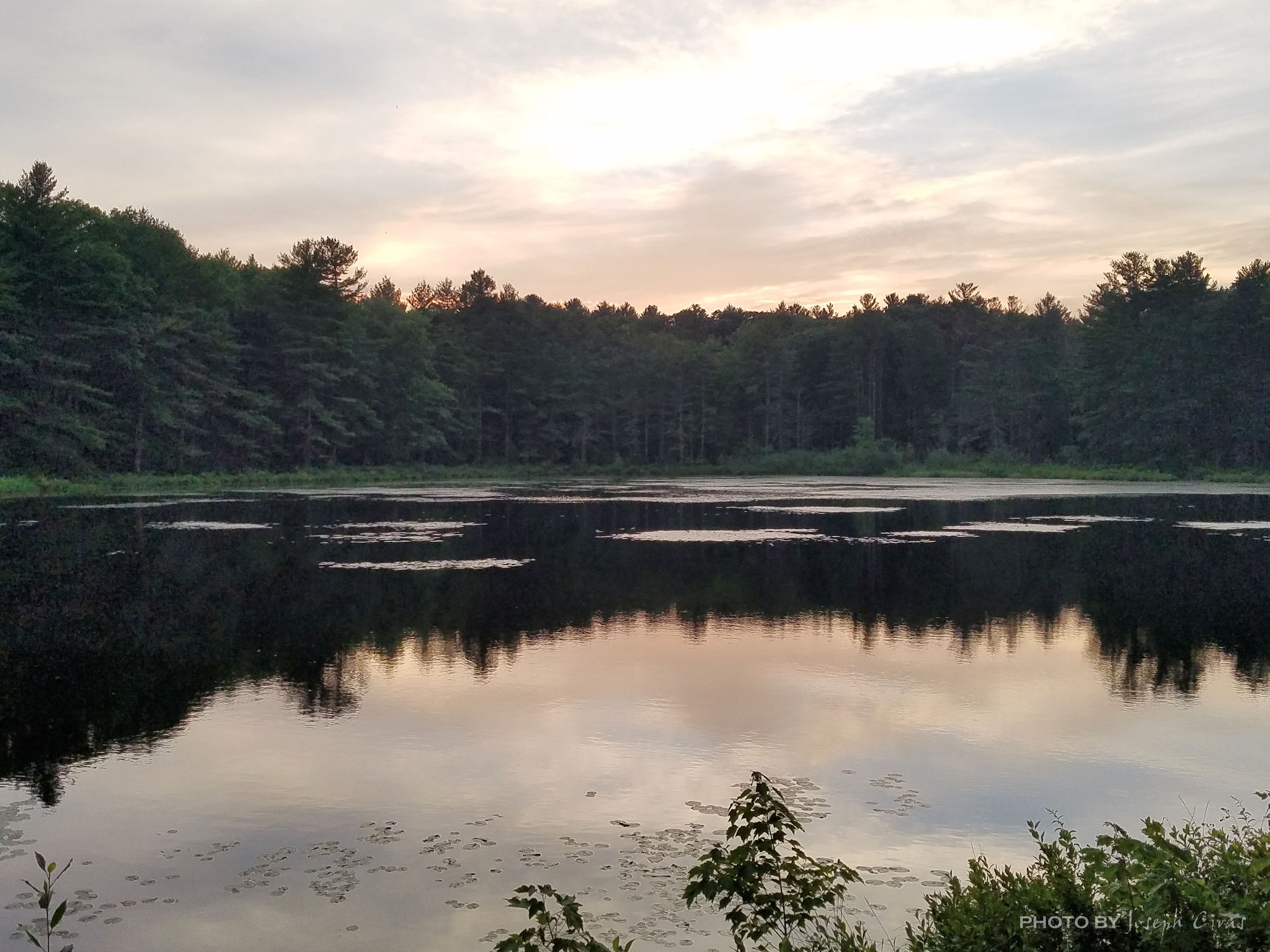
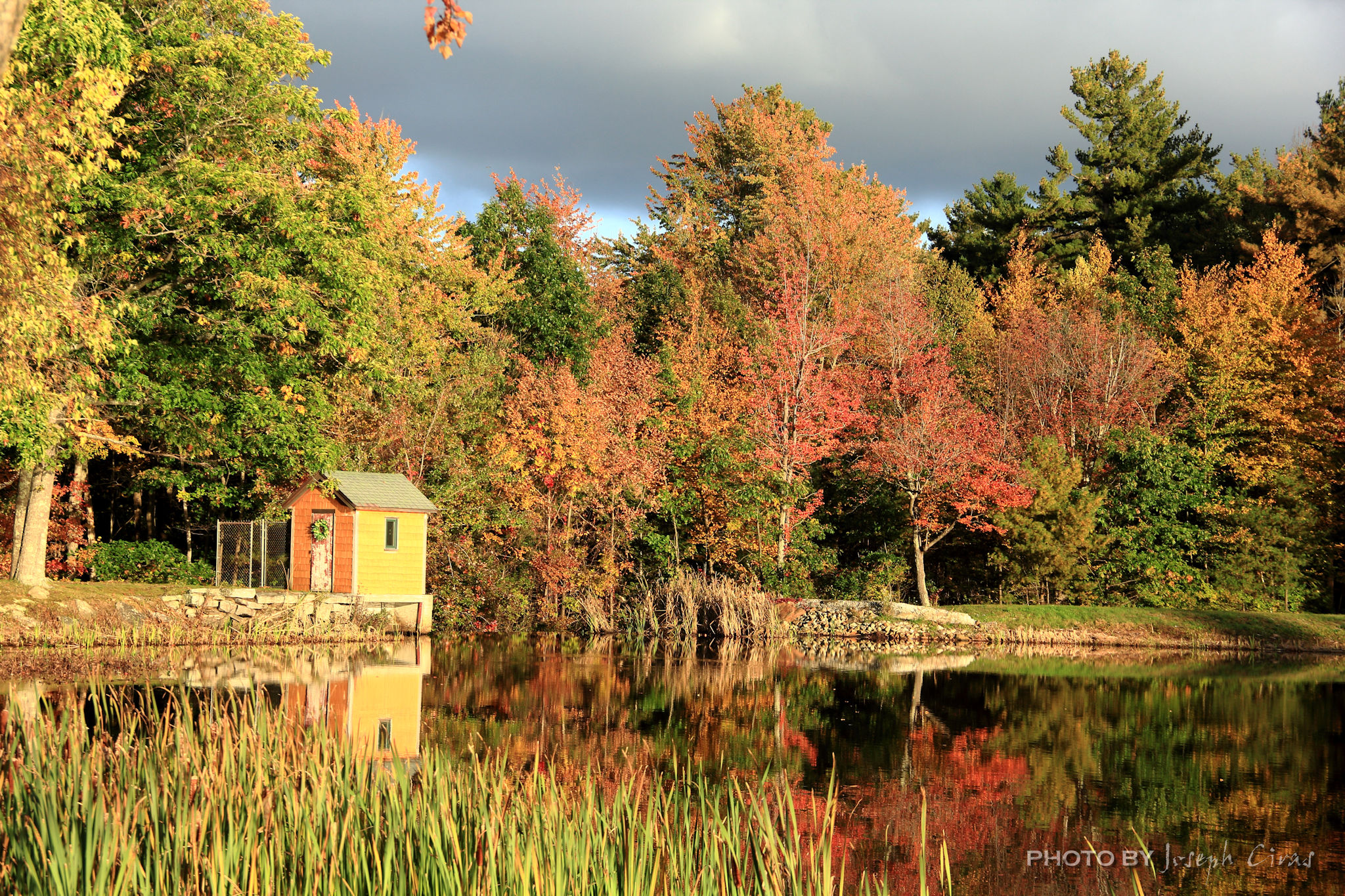
While on my way home from work, the reflection of the trees on Round Meadow Pond caught my eye. The lighting was iffy, but I made the quick decision to go to one of my favorite photographic locations and see if there was an opportunity for a reflection photo in the smooth water.
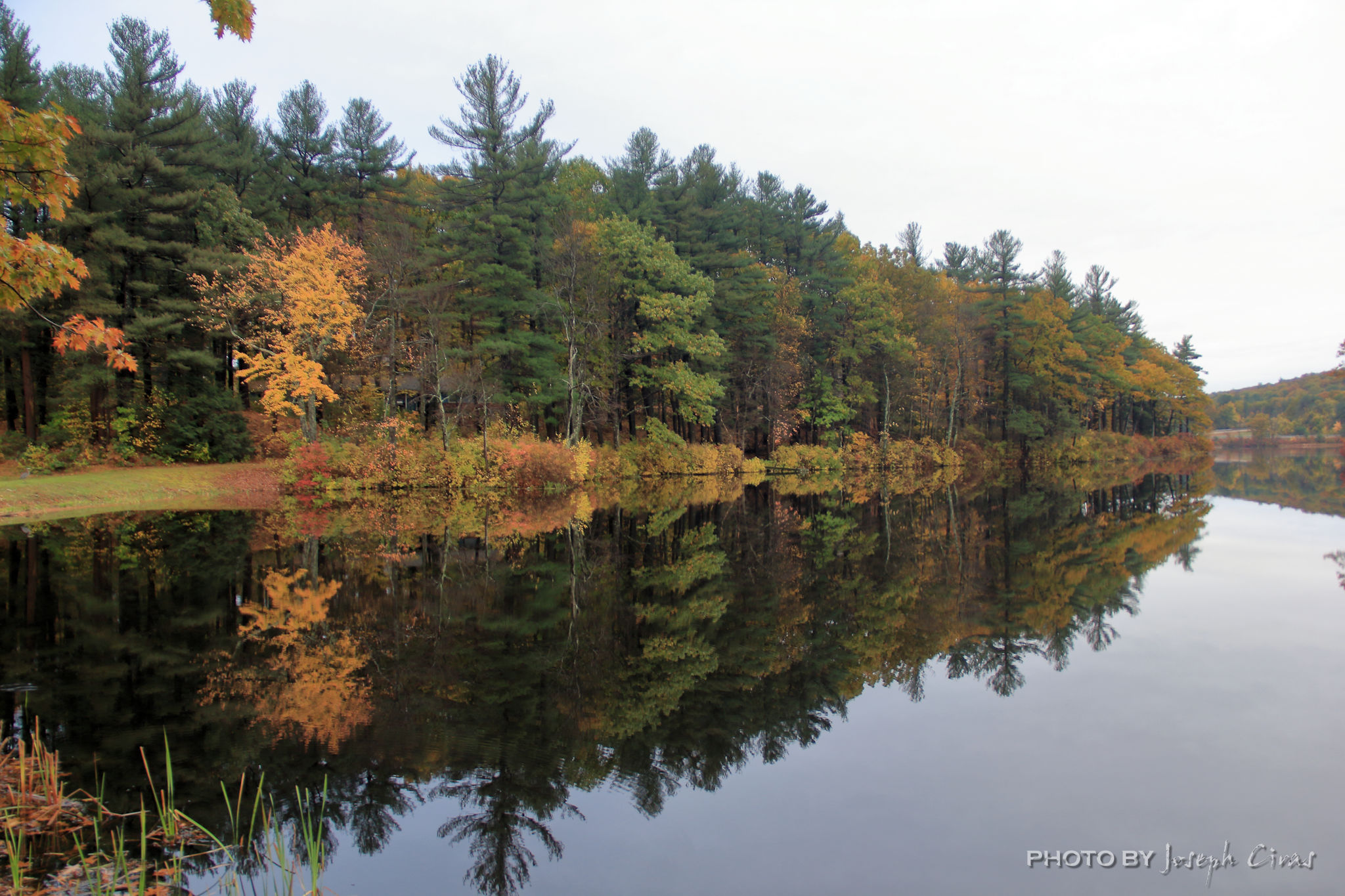
Reflections on the shoreline

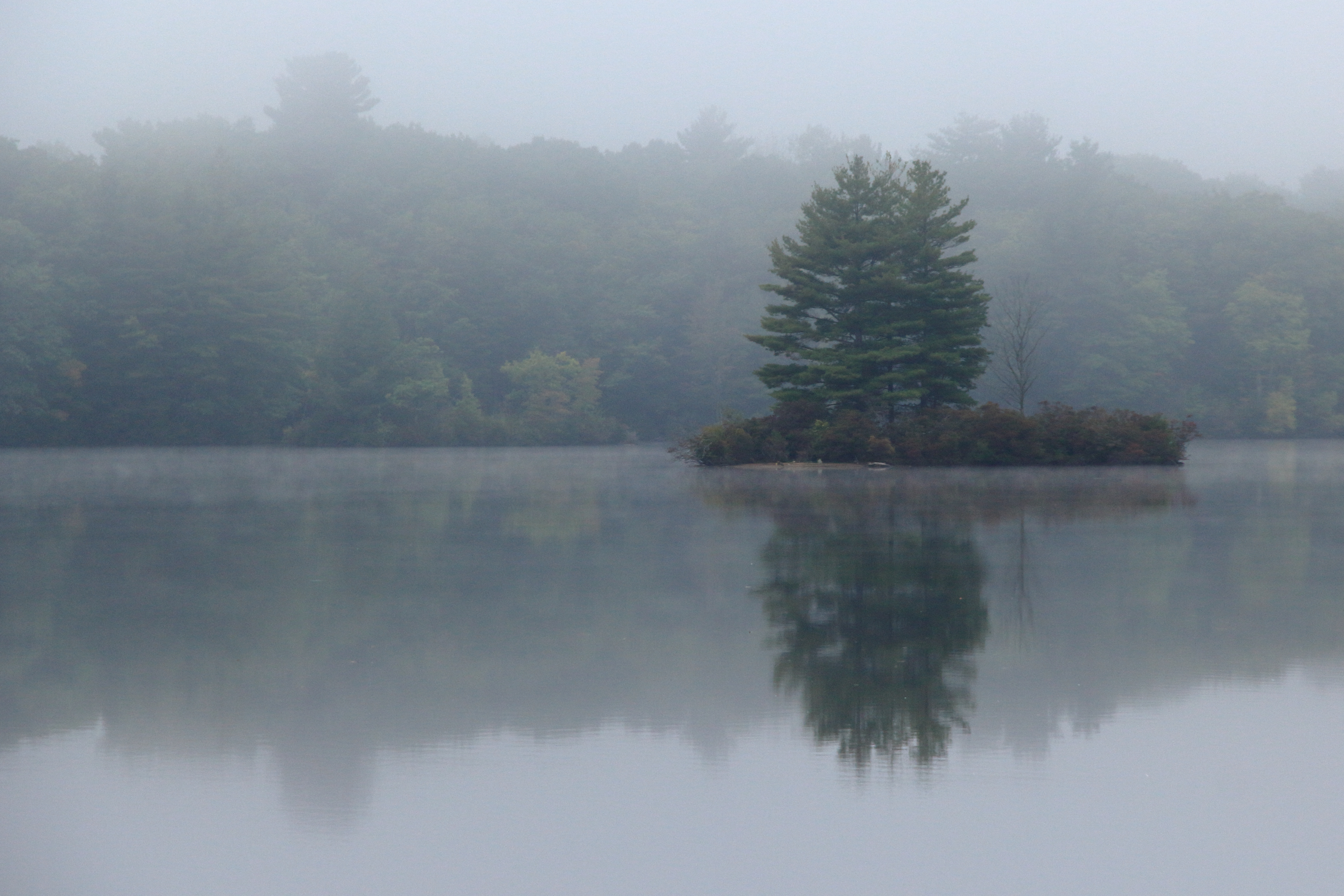
I first took a photo of the island and its reflection. I did not quite like it lack leaves on the tree. It made the island look unattractive and scraggly. Then I took a photo of the trees along the shoreline. Trees along the shore usually take a good photo. I was happier with this photo. I was not excited about this photo, just happier than I was with the island photo.
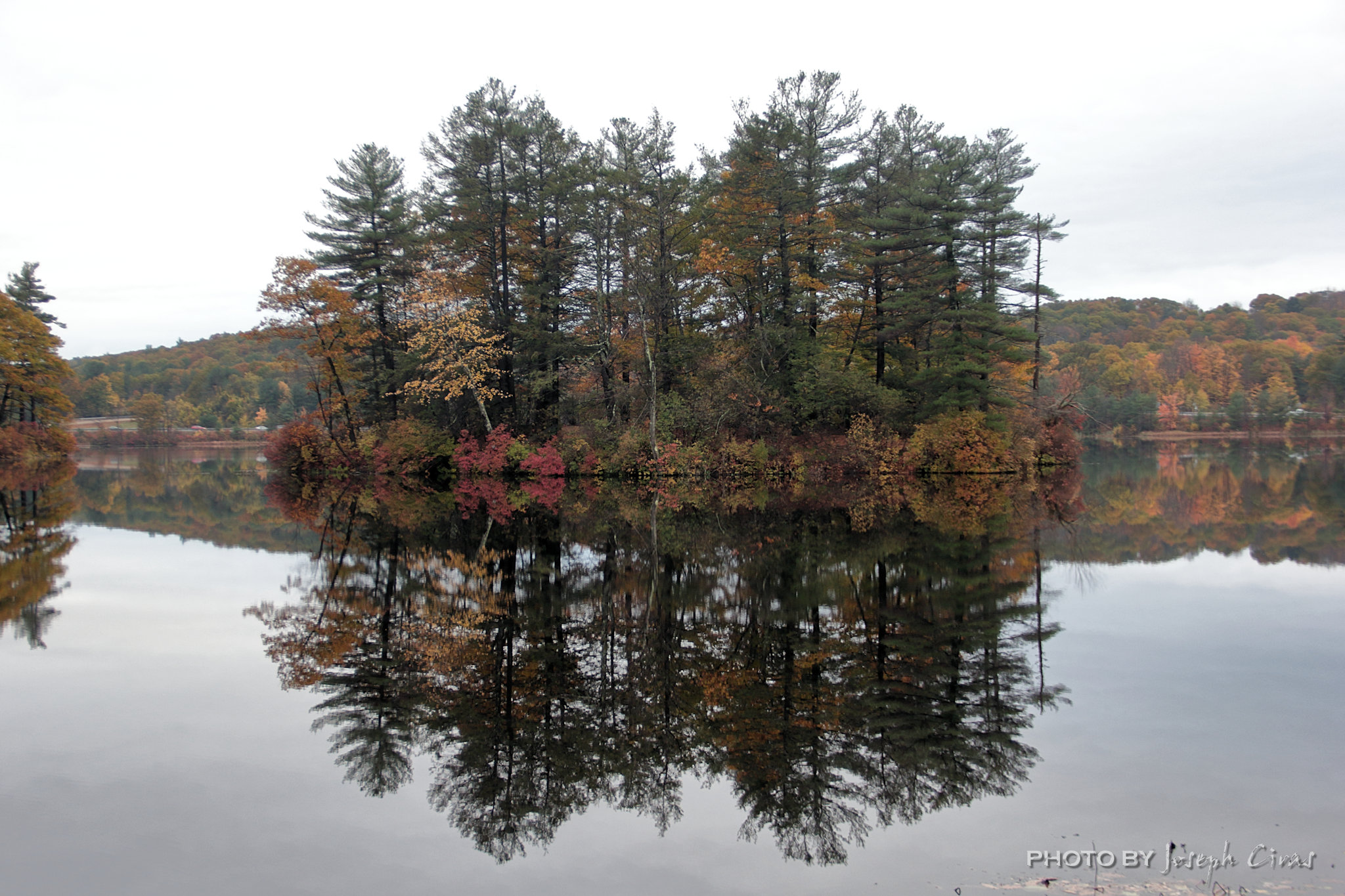
The island shot I did not like

Sometimes it is better to post a bad photo from that day, then a good photo from the past for historical reference.

Thursday, 10/28/2021: Posted photo — Weather Front.

Settings: Canon EOS 60D, ISO 200, f/7.1, 1/800 s, 36 mm.
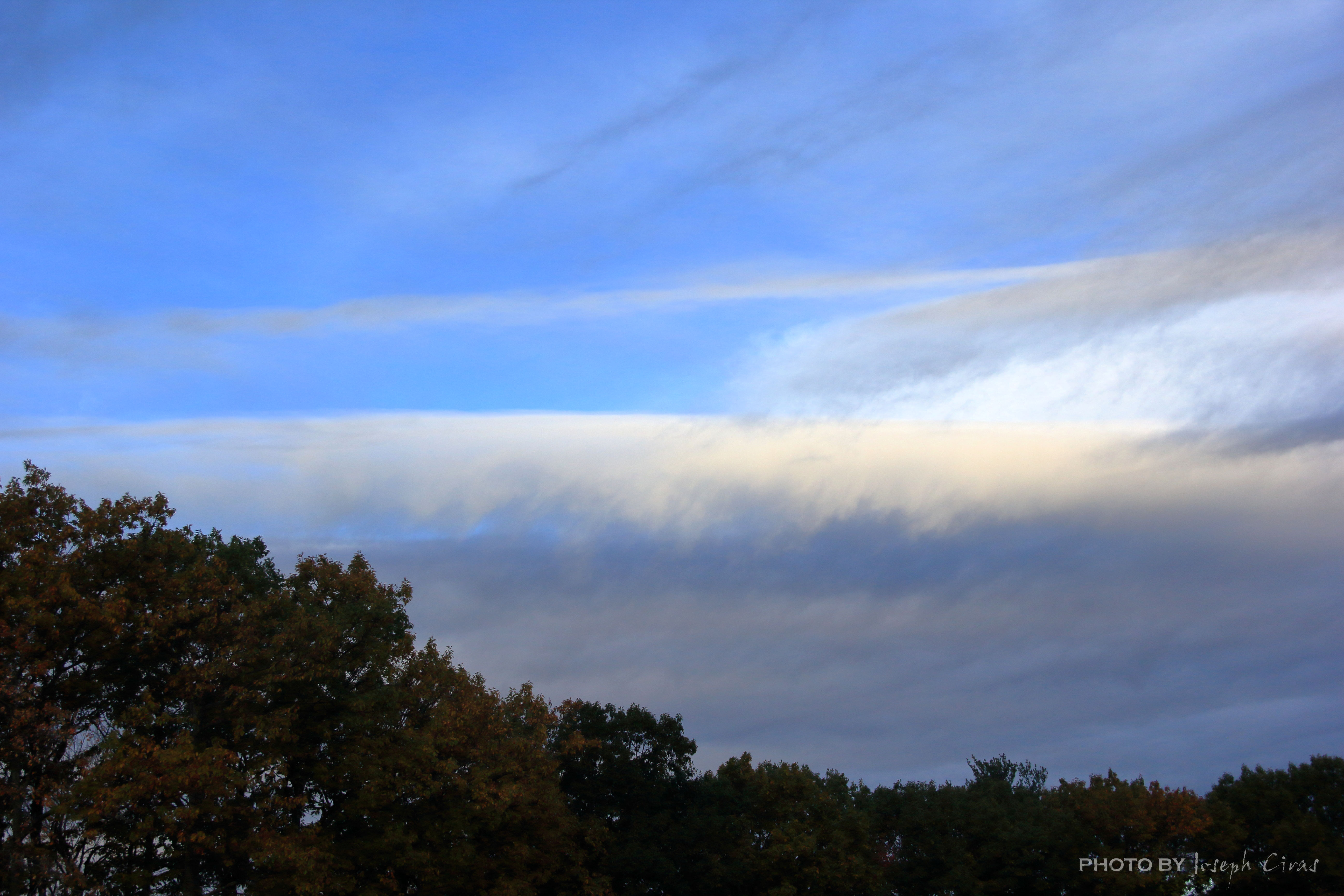
Weather front in the morning

A weather front is the transitional zone between two different air masses. An air mass a body of air with horizontally uniform temperature, humidity, and pressure. The high-pressure side of the front is the side with no clouds. In a high-pressure system, the warmer air is flowing downward. The low-pressure side of the front is the one with the clouds. In a low-pressure system, cold air is flowing upward causing condensation around dust particles in the sky, forming clouds and often precipitation. In this photo, the low-pressure system is moving out of the area. As the high-pressure system is moving in, the air temperature will be slightly higher that it was yesterday. A simple fact in physics is that if air pressure increases, the temperature must increase and if the air pressure decreases, the temperature will decrease. This explains why the air gets colder at higher altitudes, where pressure is lower.

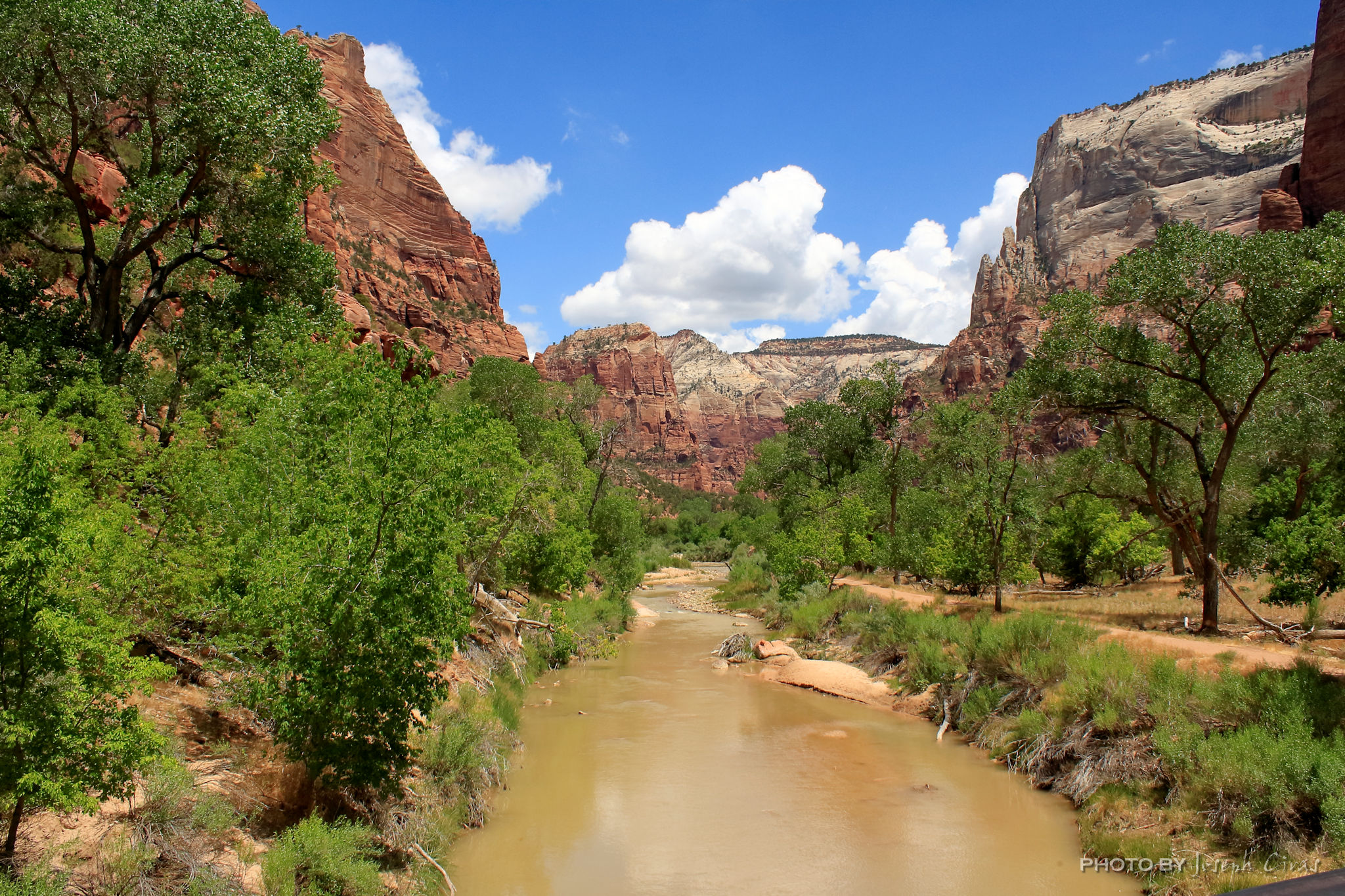
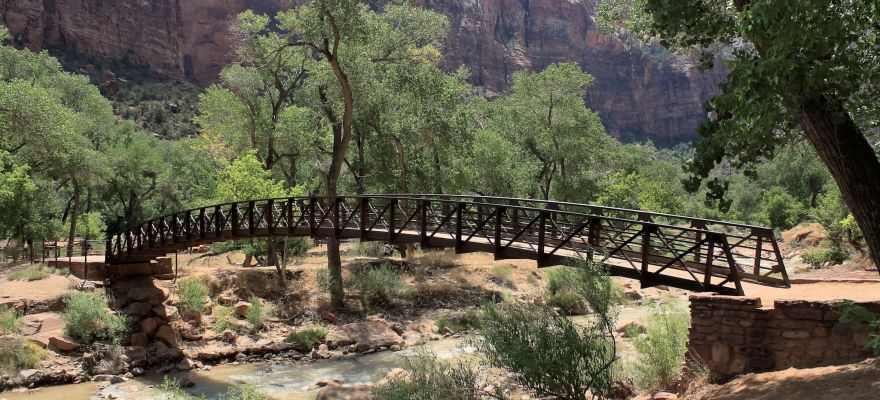
Friday, 10/29/2021: Post photo — Footbridge Over the Virgin River.

Settings: Canon EOS DIGITAL REBEL XS, ISO 200, f/9, 1/200 s, 18 mm.

“In the summer of 1909, President of the United States William Taft declared the area as federally protected and officially named it Mukuntuweap National Monument, deciding to go with the Paiute name rather than the one chosen by Utah’s early pioneers. State residents were not pleased, to say the least, with President Taft passing over the name they had originally chosen for the area. In 1918, after almost a decade of grievances, the assistant director of the recently formed National Park Service, Horace Albright, changed the name of the park to Zion National Monument.” (https://zionnationalpark.com/zion-national-park/zion-national-park-history/)
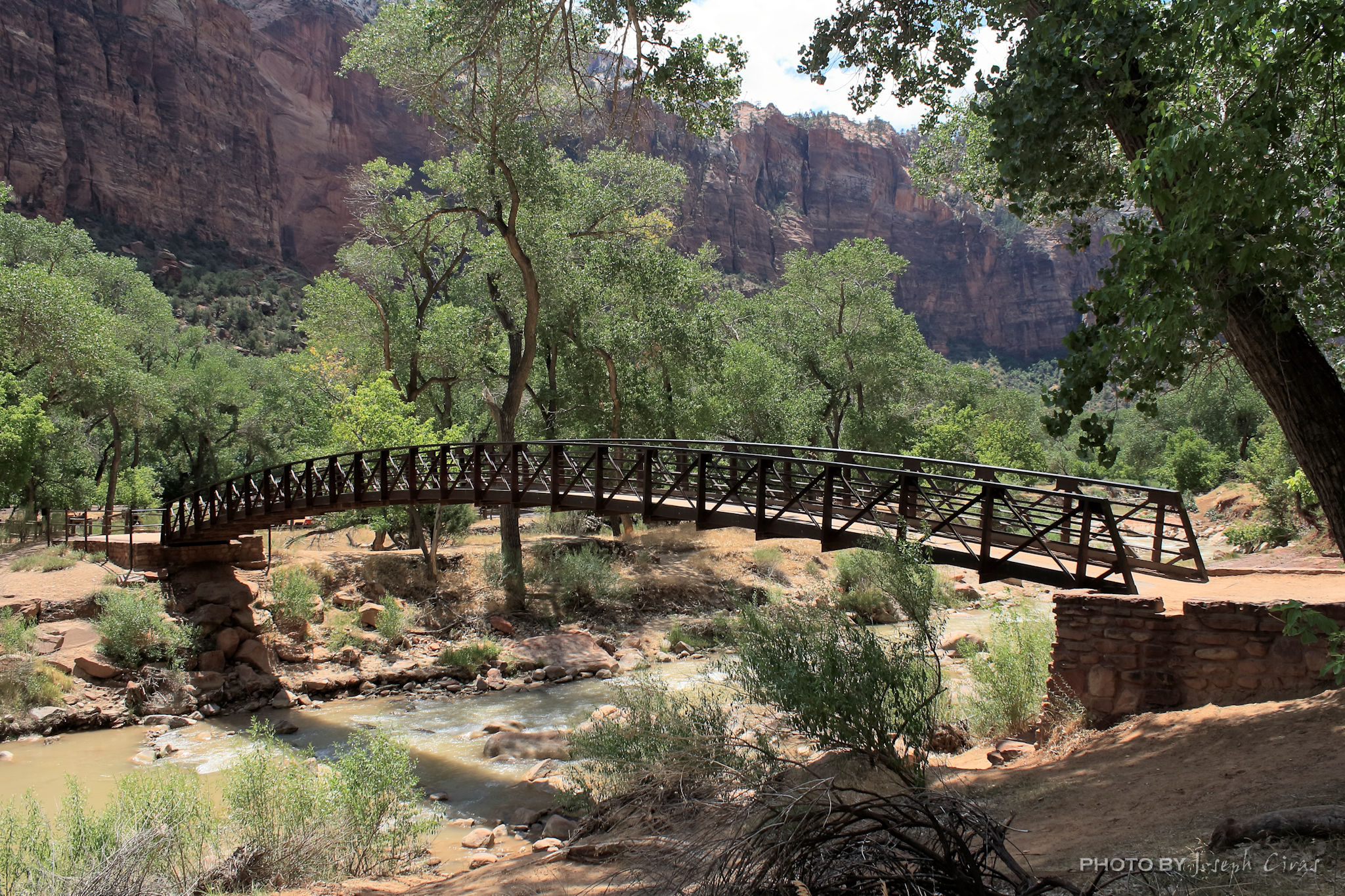
Footbridge over the Virgin River in Zion National Park

Here is some information about the Virgin River. The Virgin River and its tributaries run through Zion National Park causing the erosion that continues to carve and shape Zion National Park. The North Fork of the Virgin River begins north of Zion National Park at Cascade Falls, near Cedar City, Utah, where it drains out of Navajo Lake in Dixie National Forest at 9,000 feet above sea level. The East Fork of the Virgin River originates above Long Valley in western Kane County, Utah. Both the North and East Forks of the Virgin River run through the park and empty into Lake Mead at about 1,000 feet above sea level, where it joins the Colorado River.

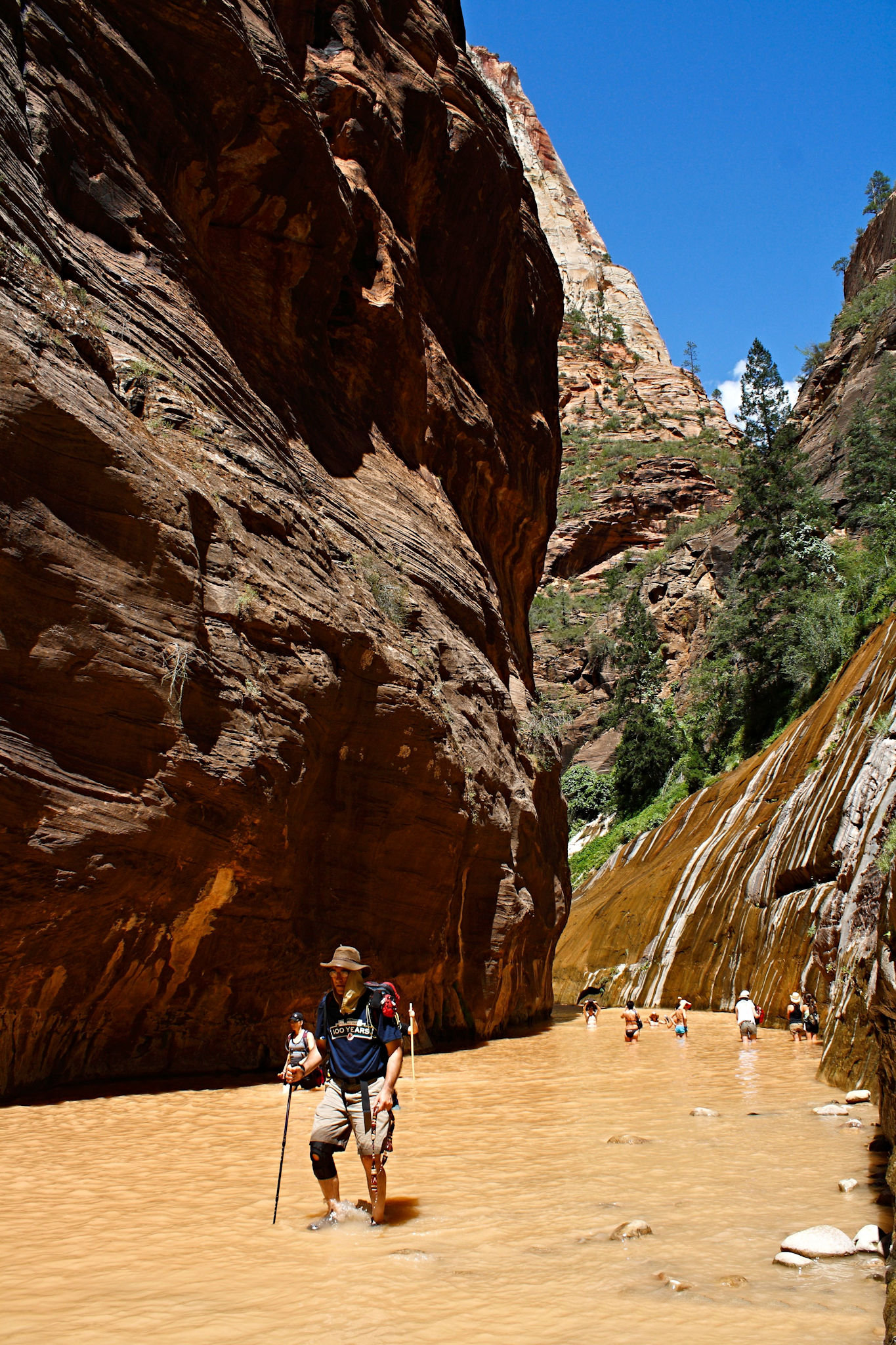
Our time at Zion National Park included camping and hiking. We also had one of the better star filled night skies on our trip. One of the hikes we did was in The Narrows. A great place to hike in the heat of the summer. The Narrows is the narrowest section of Zion Canyon. The gorge has walls up to a thousand feet tall and the Virgin River is just twenty to thirty feet wide in some locations. The hike through The Narrows requires hiking in the Virgin River. The river when we hiked was a milky color so you did not know how deep the water would be in your next step. You need to be very careful of flash flooding in The Narrows since there is little to no room of escape due the height of the gorge walls.

Saturday, 10/30/2021: Post photo — Maple Leaf.

Settings: Canon EOS 60D, ISO 200, f/5.6, 1/60 s, 100 mm.

Last week an oak leaf, today it is a maple leaf. A sugar maple leaf to be precise.
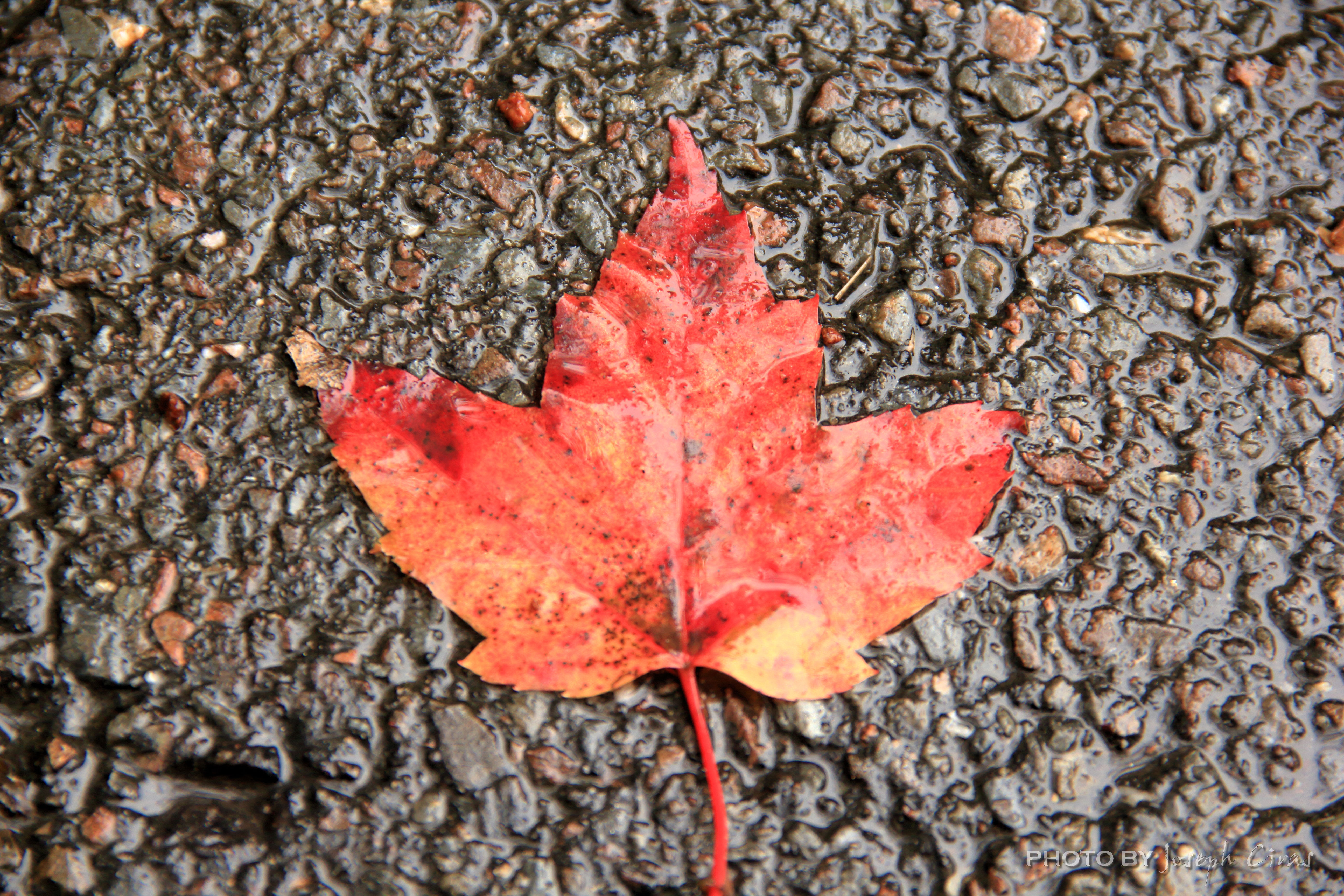
Sugar maple leaf in our driveway

More rain today. I took this photo in my driveway while I was on my way to do some shopping.

Once again, a short and sweet Saturday post.

That is all for now. Until next week, be safe.

For more photo of other project I have work, visit my website: https://photobyjosephciras.weebly.com or visit me on Facebook at https://www.facebook.com/PhotobyJosephCiras/.
Photographic Thoughts — 10/10/2021 to 10/16/2021

“Today everything exists to end in a photograph.” — Susan Sontag

Thank you for all the new views and likes from last week, it helps keep me inspired.

Sunday, 10/10/2021: Posted photo — Lakeside.

Settings: Canon EOS 60D, ISO 400, f/7.1, 1/125 s, 32 mm.

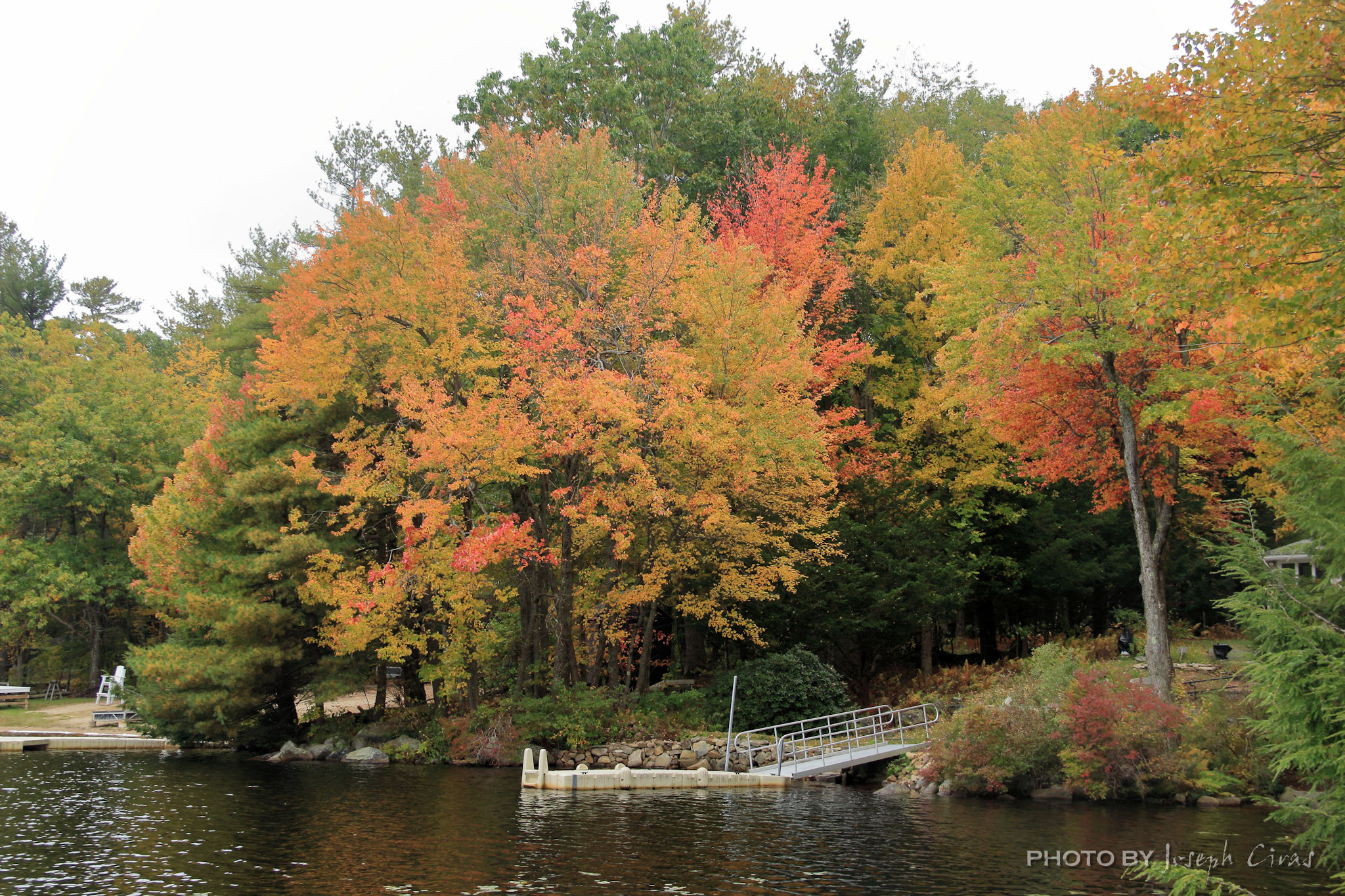
Today we took the dock out of the water at the cottage. The water was cold when first going into it, and then it did not feel so bad. We need to go into the water to lift part of the dock off its foundation to bring it in. Many years ago, the tires on the bottle of the support legs on the dock fell off so we manually need to lift the dock out of the water.

Before the dock was removed, I went out on it to enjoy the foliage from out in the water. I took this photo shortly before the dock was removed from the water.

The day is always a fun filled day with family and friends.

Monday, 10/11/2021: Posted photo — Trees in the Sun.

Settings: Canon EOS 60D, ISO 100, f/7.1, 1/125 s, 50 mm.

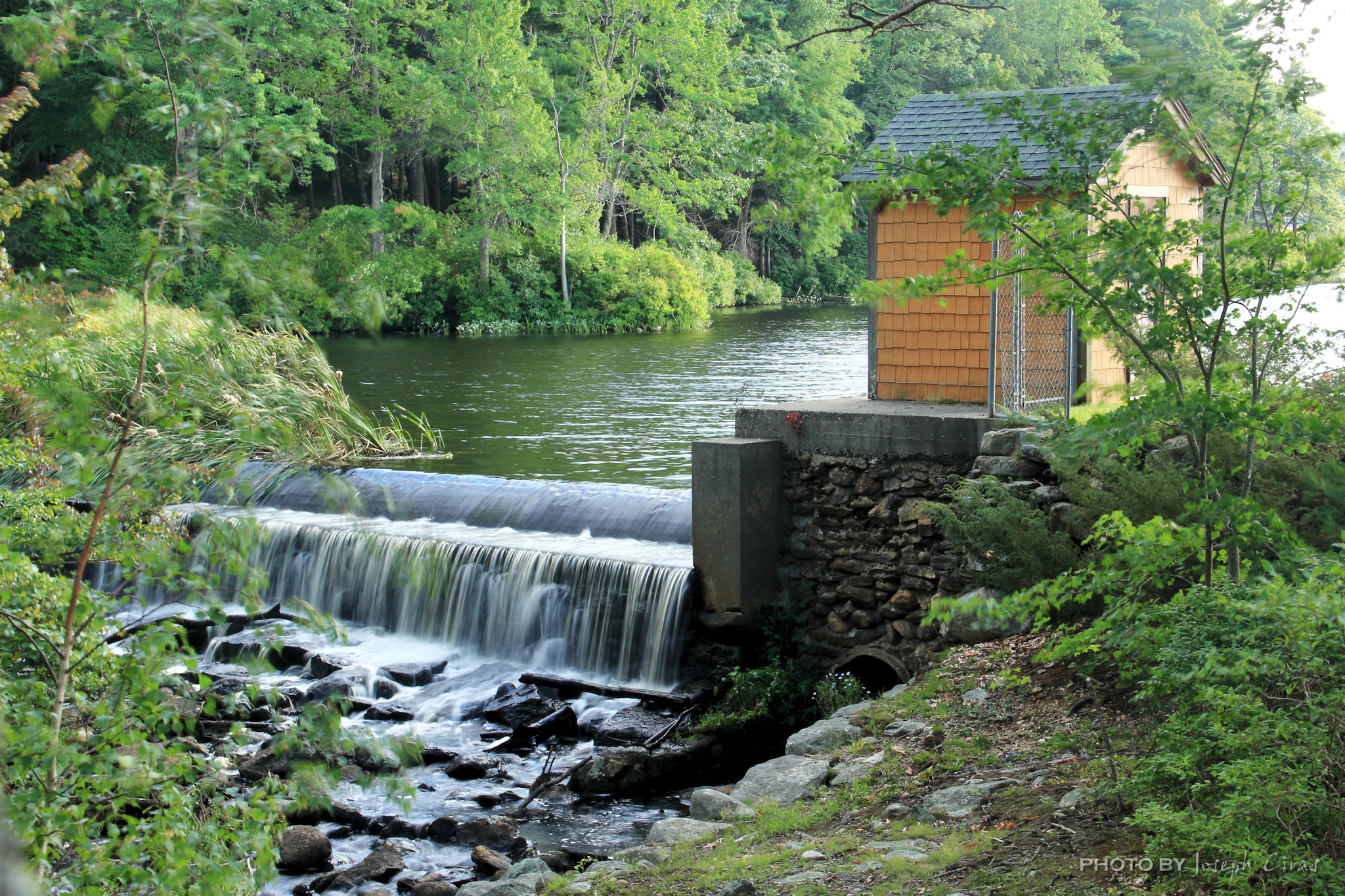
This is the backside, or inlet side, of the falls at Round Meadow Pond. You have seen a few photos of the water flowing over the dam since that is one of my favorite spots to photograph. I took this photo because of the bright colors of the foliage, and I liked the way the light was reflecting off the trees.

Tuesday, 10/12/2021: Posted photo — More Foliage.

Settings: Canon EOS 60D, ISO 100, f/7.1, 1/160 s, 50 mm.

Not much to say about this photo. The foliage is starting to get to peak in this area, so I am taking as many foliage photos as I can.

One thing I can say about this photo, and my other foliage photos, is that they look very bright. The histogram looks good for these photos, but the photos look bright when viewing on some screens. It might be because I use calibrate monitors to edit my photos and the other monitors are not calibrated.

Time to do some research into this issue. Maybe I should get one or two of them printed to see how the colors come out.

Wednesday, 10/13/2021: Posted photo — Morning Dew.

Settings: Canon EOS 60D, ISO 100, f/7.1, 1/250 s, 72 mm.

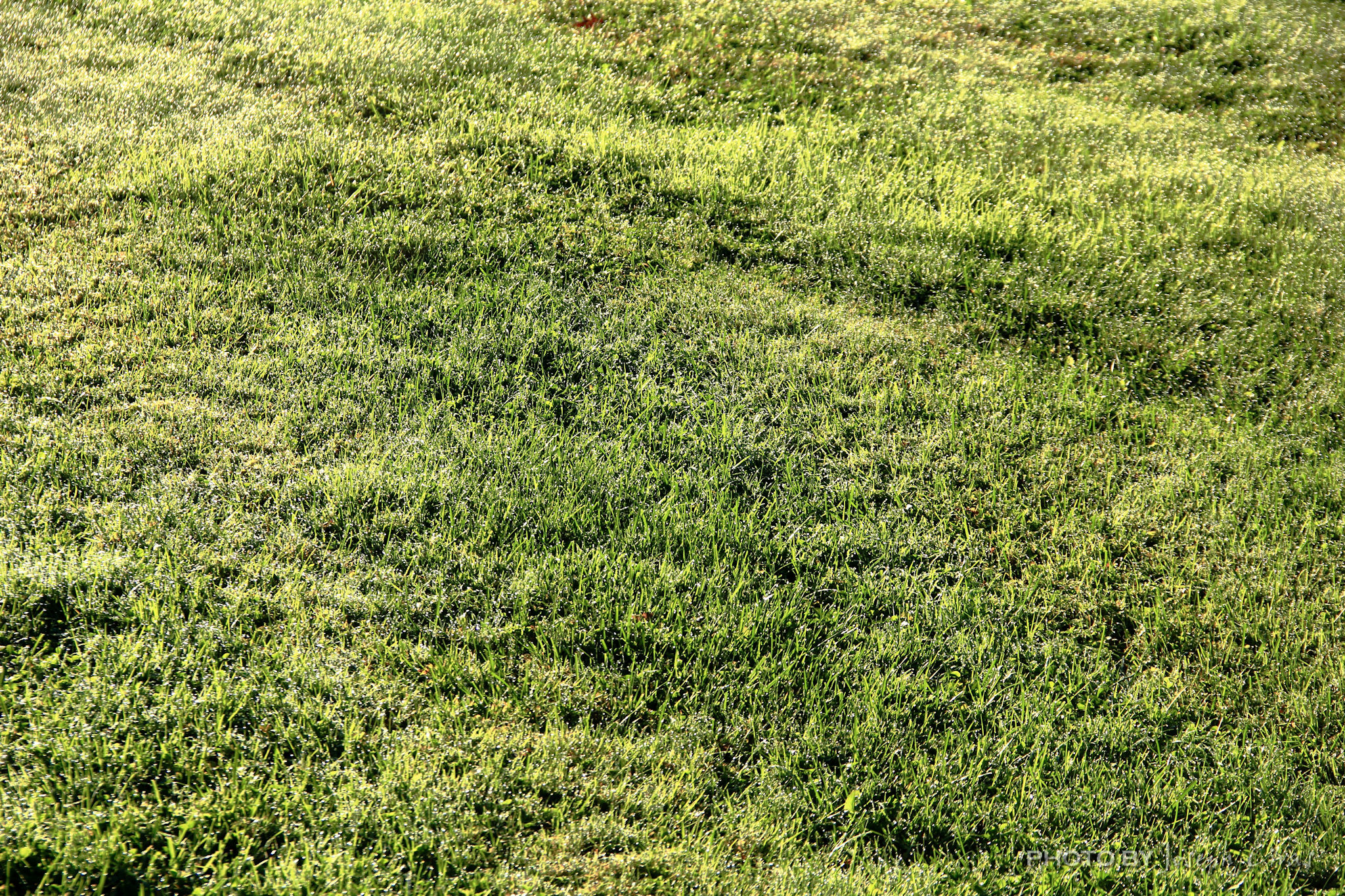
I was going to post another foliage photos today but decided to post a photo of the morning dew. This photo was meant to show the dew and to break up my trend of foliage photos. Too much of a good thing is not always good.

I attempted to capture the light off the dew on the grass. Please leave a comment to let me know how well I captured the light and to give me some tips to improve.

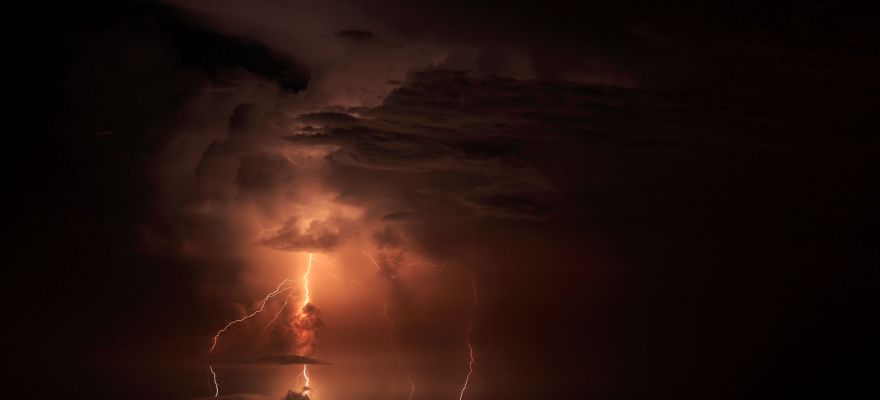
Thursday, 10/14/2021: Posted photo — Lightning at Sea.

Settings: Canon EOS 60D, ISO 100, f/5.6, 15 s, 48 mm.

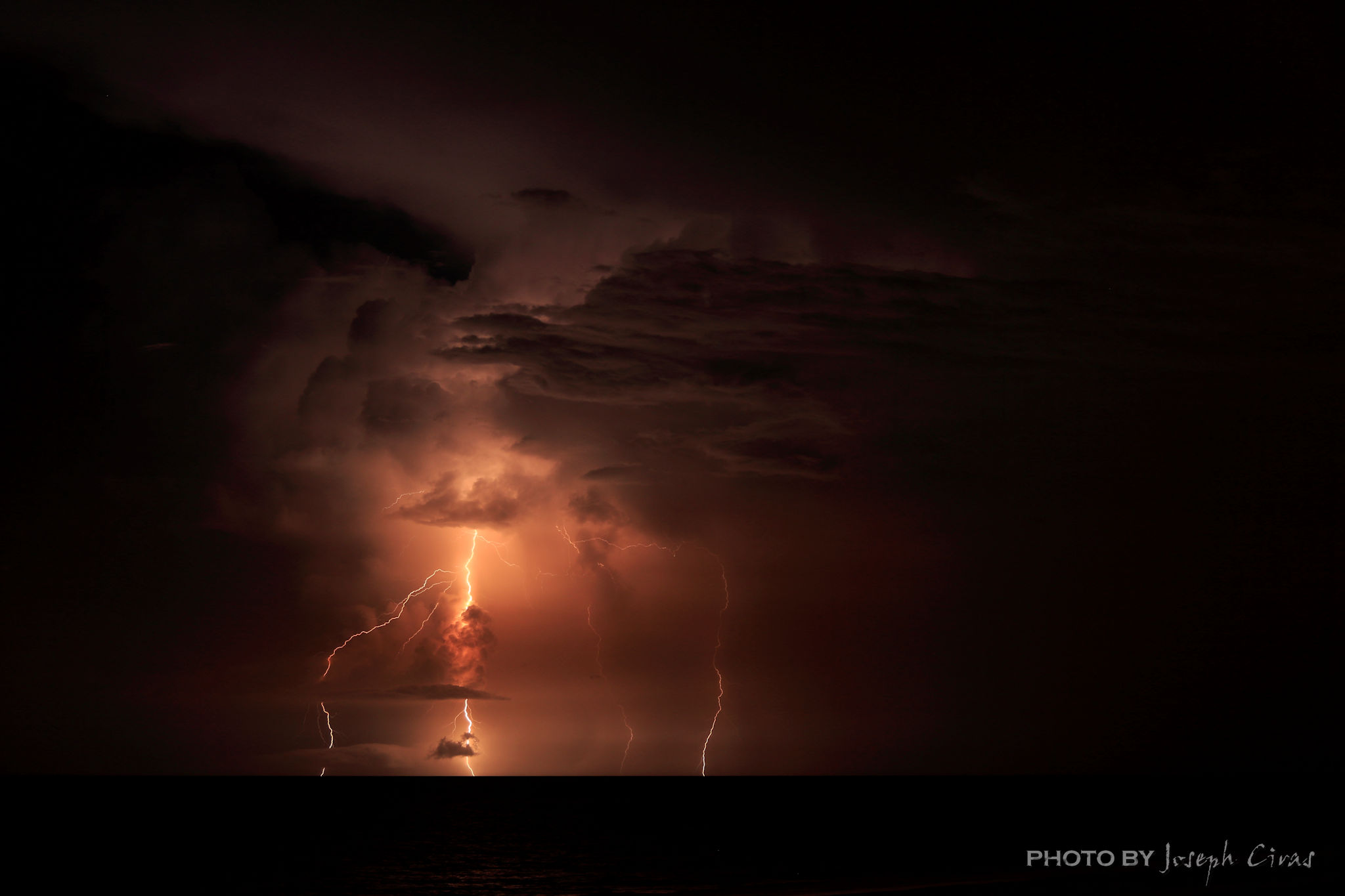
15 second exposure looking out to see in Jacksonville Beach, FL a few years ago.

During a past vacation, my family rented a condominium on Jacksonville Beach. My wife has relatives that live in both Jacksonville Beach and Neptune Beach, so we travel to the area relatively often. Most of the time we rent a house or condo not on the beach.

A common occurrence in Florida is a storm out to sea at night. It is such a great sight to see the lightning in the distance. On this night, I decided to put my camera on my tripod, set the exposure time to 15 seconds, to capture the storm. After looking at the photos, my only regret was that I did not leave my shutter open for 30 seconds.

There will always be another trip back to the beach.

Here are a few camera settings for photographing daytime and nighttime lightning that I have picked up over the years:

Camera settings tips for photographing daytime lightning photos:

  • Set up camera on a sturdy tripod.
  • Turn off any image stabilization you might have. If image stabilization is on, the camera will think it is moving when the shutter engages, even though there is not camera movement.
  • Focus camera lens on infinity or on an object in the distance.
  • Set the aperture of the lens to f/16 or smaller. This will close the iris inside the lens, allowing a longer shutter speed to be used.
  • Set ISO to lowest it will go, for example use ISO 100.
  • Take a test exposure using the slowest shutter speed allowed to see if the image is exposed correctly and your focus is correct.
  • Set your camera on manual or bulb.
  • Use a remote timer/intervalometer to fire the shutter continuously.

Here is an example of a daytime lightning photo. This photo was handheld since the storm arrived quickly. For your information, we did not hike down into the Grand Canyon that day.

Camera settings for photographing night-time lightning

  • Set up camera on a sturdy tripod.
  • Turn off any image stabilization you might have. If image stabilization is on, the camera will think it is moving when the shutter engages, even though there is not camera movement.
  • Focus camera lens on infinity or on an object in the distance.
  • Set the aperture of the lens to a medium value, such as f/5.6 or f/8. This will allow a longer shutter speed by bringing in more light and improve image quality at the same time by allowing the use of a lower ISO value.
  • Set ISO to lowest it will go, for example set your is to ISO 100. You may have to increase your ISO to ISO 200–ISO 400 depending on the lighting in the area. I prefer my ISO set at ISO 100 for all my lightning shots.
  • Set your camera on manual or bulb.
  • Set the shutter speed to between 5 and 20 seconds. You can set it up to 30 seconds if you are in a dark area.
  • Take a test shot to see if the scene is exposed correctly, remembering that if a strike does happen in the field of view it could light up the scene considerably, depending on how big the strike looks in the photo.
  • Use a remote timer/intervalometer to fire the shutter continuously.

Friday, 10/15/2021: Post photo — Clouds.

Settings: Canon EOS 60D, ISO 200, f/7.1, 1/1250 s, 37 mm.

Today I am posting a photo of a cloud. I took many photos today, but this one was the only one that I liked.

Saturday, 10/16/2021: Post photo — Aster.

Settings: Canon EOS 60D, ISO 200, f/5.6, 1/320 s, 106 mm.

I went to my mother’s house today to make sure everything was fine at the house. I also collected some of the wood from the tree that fell on her house about a year ago to bring home to burn. Earlier in the day, I took photos at Leominster State Forest. I went hiking at Leominster State Forest last night and went back today to get some more photos. I will be posting the photos I took in this blog for you to see what I did not post for my 365 project.

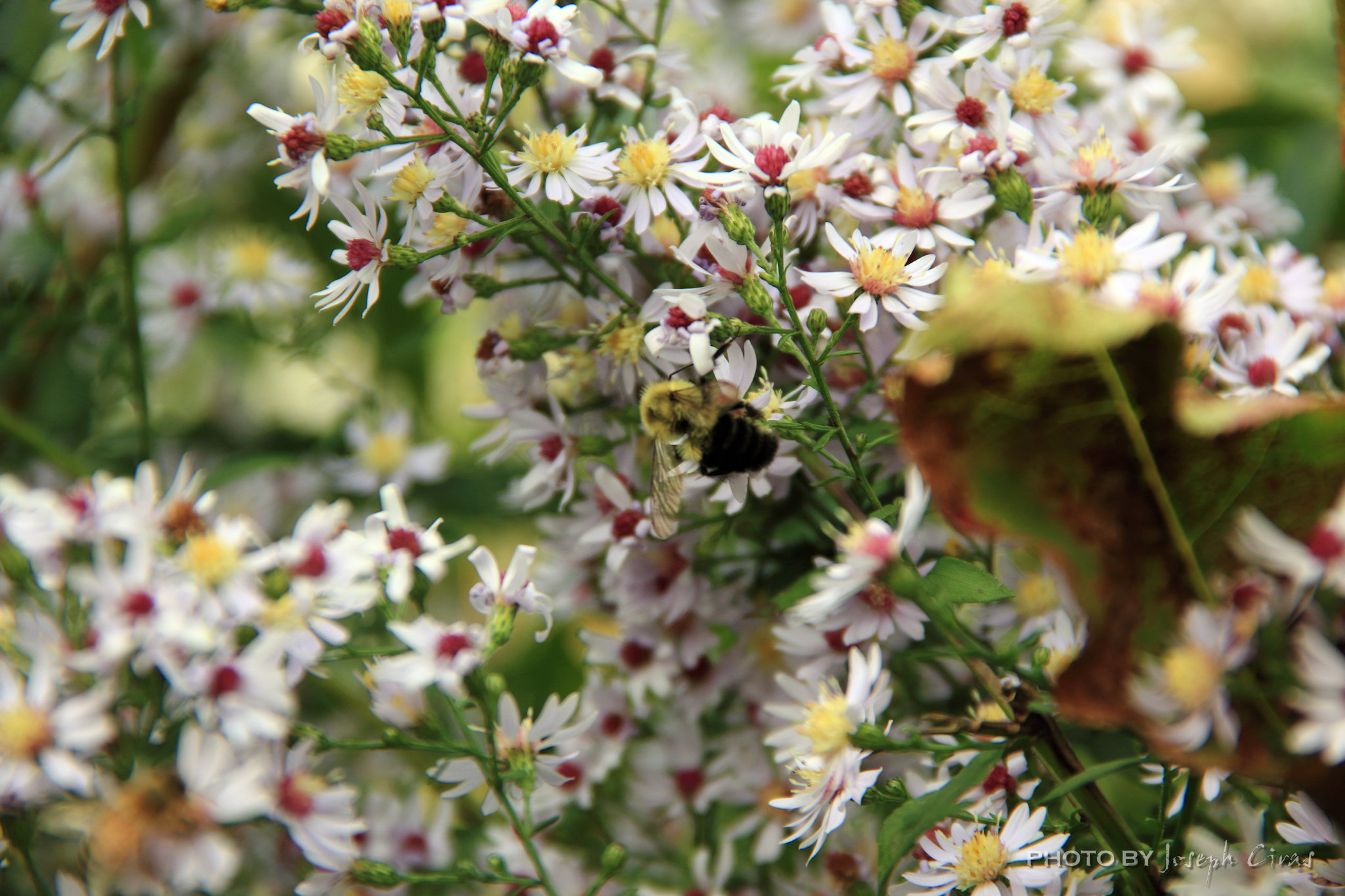
When I was at her house, I noticed a lot of asters. I also saw that there was an abundant number of bees flying around the asters. What a great photo opportunity. The aster flowers (Aster spp.) add color to the autumn landscape while offering beauty with little work when caring for asters.

That is all for now. Until next week, be safe.

For more photo of other project I have work, visit my website: https://photobyjosephciras.weebly.com/ or visit me on Facebook at https://www.facebook.com/PhotobyJosephCiras/.
Photographic Thoughts — 10/03/2021 to 10/09/2021

“I never have taken a picture I’ve intended. They’re always better or worse.” — Diane Arbus

Thank you for all the new views and likes from last week, it helps keep me inspired.

Sunday, 10/03/2021: Posted photo — Reflection in the Fog.

Settings: Canon EOS 60D, ISO 400, f/7.1, 1/80 s, 113 mm.

Driving into church this morning, I notice fog off the lakes in the area. The location of this photo is one in which I take many practice photos. It is a difficult location to take a photo since I needed to stop on the edge of a busy road.

My initial thought on this photo was to get a picture of the mist rising from the surface of the lake with the foliage behind it. When I arrived at this location, the mist was thicker than I would like. I did see the reflections of the trees on the water and thought that that would take a good photo.

Monday, 10/04/2021: Posted photo — Western Tanager.

Settings: Canon EOS DIGITAL REBEL XS, ISO 200, f/6.3, 1/320 s, 300 mm.

Fact from All About Birds: “The oldest Western Tanager on record—a male originally banded in Nevada in 1965—had lived at least 6 years and 11 months by the time he was recaptured and rereleased during banding operations in Oregon in 1971.”

We were walking the north rim at Grand Canyon National Park when I spotted this male Western Tanager in a conifer tree. The color contrast between the bird and the tree caught my eye.

The range of the Western Tanger is the western parts for the United States, Canada, and Mexico.

Again, from All About Birds: “A clear look at a male Western Tanager is like looking at a flame: an orange-red head, brilliant yellow body, and coal-black wings, back and tail. Females and immatures are a somewhat dimmer yellow-green and blackish. These birds live in open woods all over the West, particularly among evergreens, where they often stay hidden in the canopy. Nevertheless, they’re a quintessential woodland denizen in summertime, where they fill the woods with their short, burry song and low, chuckling call notes.” (https://www.allaboutbirds.org/guide/Western_Tanager/overview)

Tuesday, 10/05/2021: Posted photo — The Gathering.

Settings: Canon EOS 60D, ISO 3200, f/7.1, 1/100 s, 135 mm.

On my way home from work today I saw this rafter of turkey. I have seen them many times before on the property and did not feel the need to photograph them. Today was different.

When I was approaching them today, it looked like it was a group of workers getting ready to clock out of work and were planning what they were going to do tonight. Just the way they were gather in pairs and it looked like they were talking to each other.

Also, I thought it would be a good picture to take.

Wednesday, 10/06/2021: Posted photo — Cattails.

Settings: Canon EOS 60D, ISO 800, f/5, 1/800 s, 52 mm.

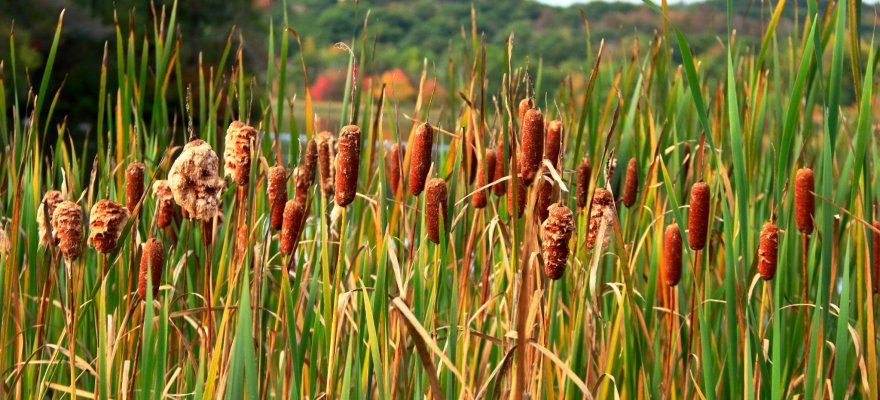
I had a choice of photos to post today — a photo of an island or a photo of cattails. I decided on the cattails for the photo to put in my 365 project because I liked it just a little bit better than the photo of the island. I will be posting both in this blog for you to compare.

Cattails are a type of aquatic plant, approximately 5-10 feet tall. These plants have long, slender, branchless, and upward-growing leaves and a distinguishable brown, cylindrical flowering head at their apex. The grow around ponds and other wetland areas.

What is the difference between a pond and a lake? Here is something I found in my research: “To help determine the difference, both the depth and surface area must be considered. Lakes are normally much deeper than ponds and have a larger surface area. All the water in a pond is in the photic zone, meaning ponds are shallow enough to allow sunlight to reach the bottom. This causes plants (sometimes too many) to grow at the bottom of ponds as well as on their surface. However, sunlight can’t reach the bottom of all areas of lakes. Lakes have aphotic zones, which are deep areas of water that receive no sunlight, preventing plants from growing.” (https://lakes.grace.edu/ponds-vs-lakes-whats-the-difference/)

I took the cattail photo with a shallow depth of field (DOF) to blur the background and the make the cattails “pop”. As you can tell by this photo, the cattails are starting to spread their seeds.

Here is the photo of the island that I took and did not like as much as the cattail photo.

Thursday, 10/07/2021: Posted photo — Sunset Through Trees.

Settings: Canon EOS 60D, ISO 100, f/5.6, 1/160 s, 100 mm.

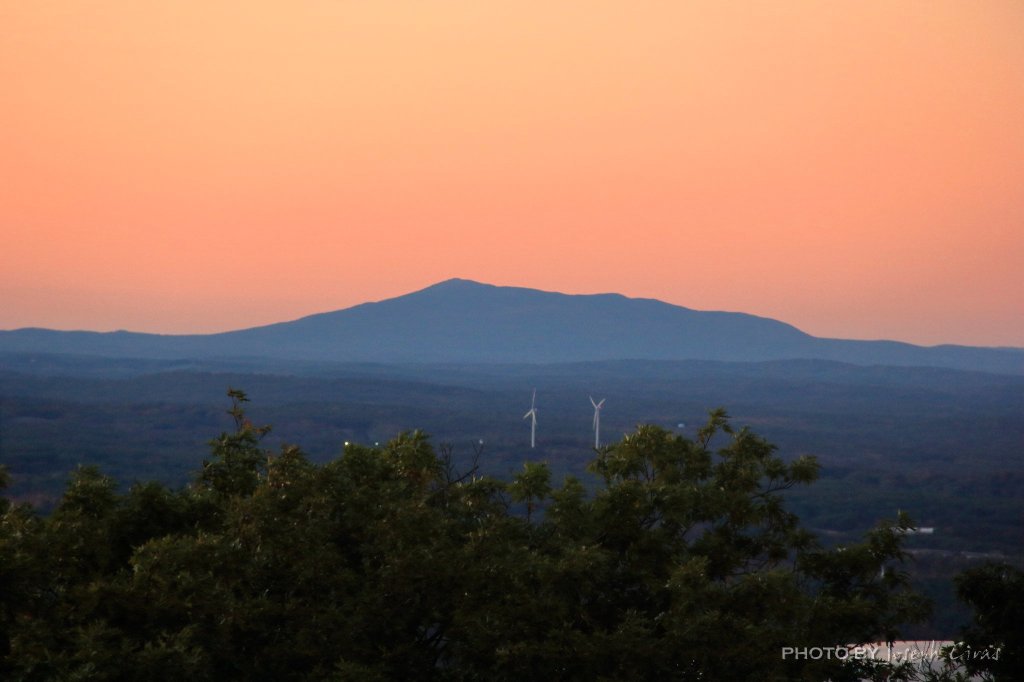
After a week and a half, I was back on the hiking trail today. It felt good to get back. I hiked 4.3 miles on Wachusett Mountain after work with some colleagues. I took a series of photos along the way to determine what one to post. I decided on this sunset photo. I had another sunset photo that I took from the summit, but I accidently deleted it. Rookie mistake.

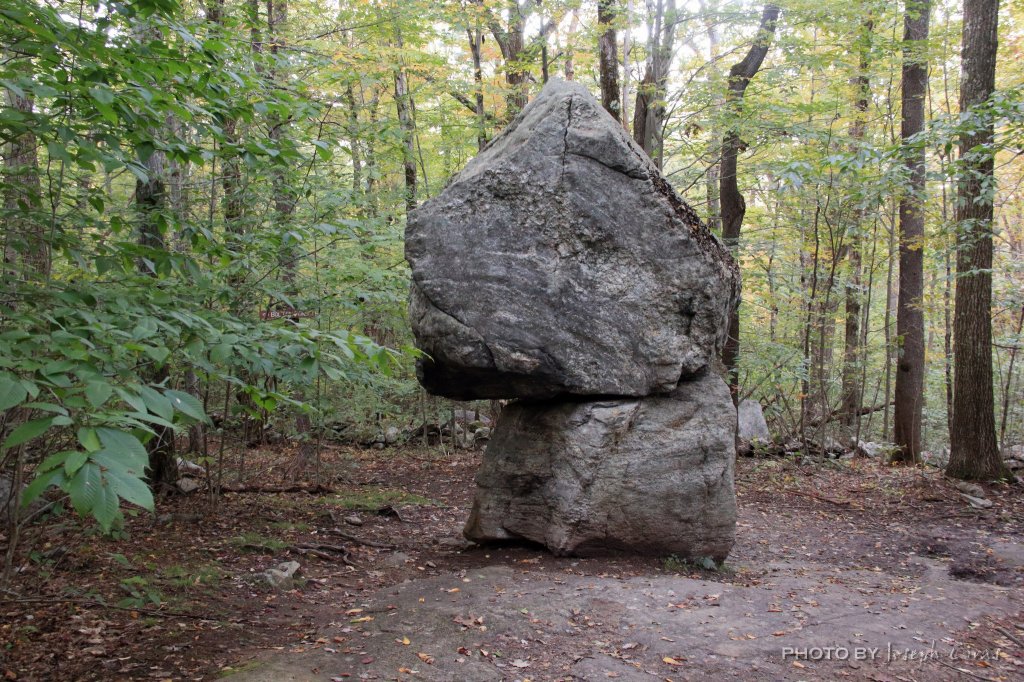
The other choices of photos were a glacial erratic called Balanced Rock or a burl on a tree at a trail junction. Just a reminder that a glacial erratic is glacially deposited rock differing from the size and type of rock native to the area in which it rests. And a burl is a strange-looking collection of tree cells, which are called callus tissue. Normally, callus tissue is formed by a tree in response to an environmental injury such as a pruning cut, disease, or insect damage. If you have a piece of wooden furniture, such as an end table, it was most likely made with a burl.

These are the photos that I did not post for my 365 project.

Friday, 10/08/2021: Post photo — Pareidolia.

Settings: Canon EOS 60D, ISO 100, f/10, 1/250 s, 21 mm.

Pareidolia is the defined by Merriam-Webster as the tendency to perceive a specific, often meaningful image in a random or ambiguous visual pattern. I have posted about this tendency in the past.

Today I am posting a photo of a cloud. I see a couple items in this photo. I see an opera singer hitting a high note and I also see a ships figurehead. It is amazing how one can see an object when one is not there.

What to you see? Do you see what I see, due to the power of suggestion, or do you see something else. Please respond in the comment section.

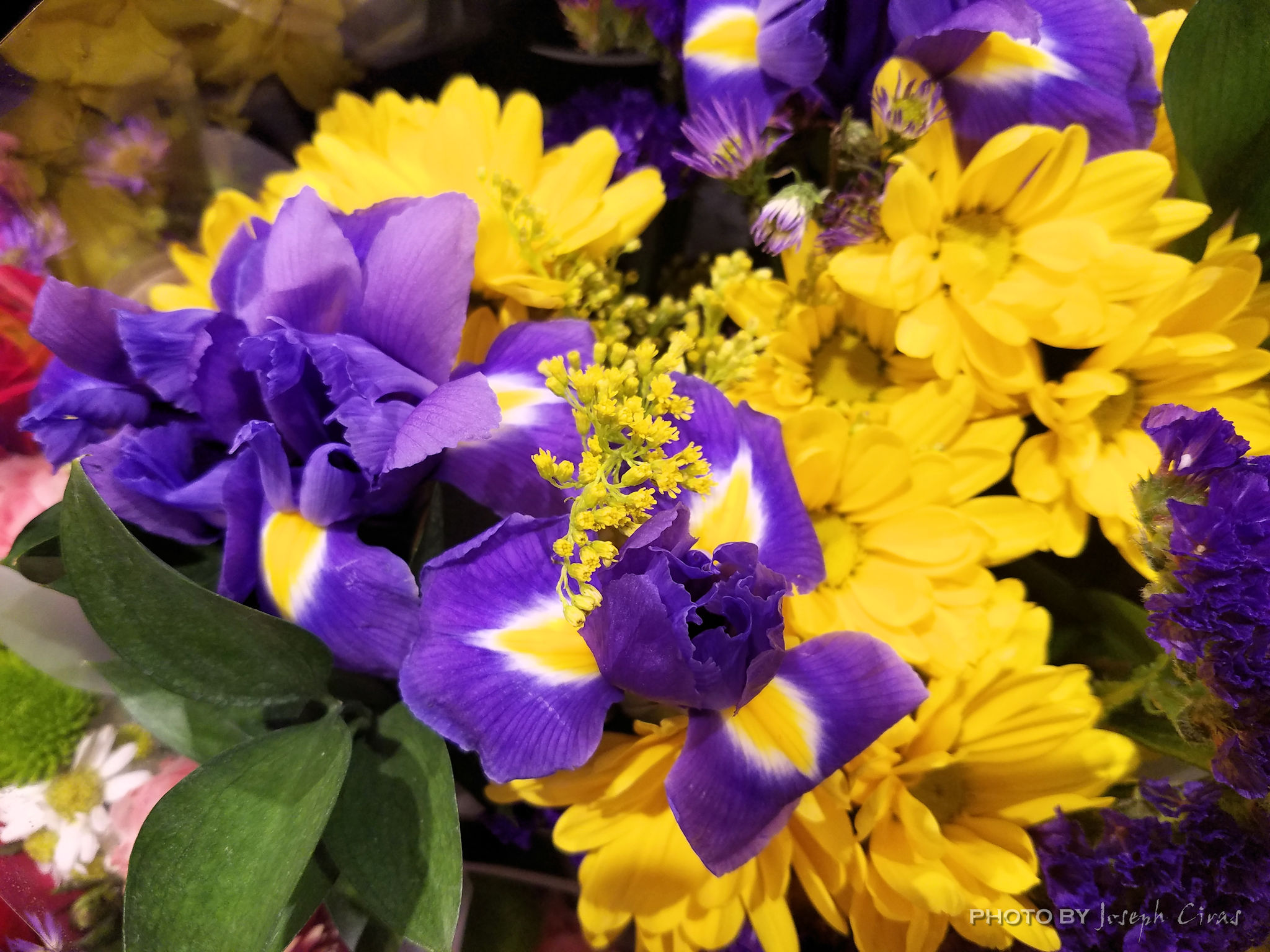
Saturday, 10/09/2021: Post photo — Iris Bouquet.

Settings: Samsung SM-G930V (Galaxy S7), ISO 100, f/1.7, 1/60 s, 4 mm

From The Old Farmer’s Almanac: “The tall, beautiful iris, named after the Greek goddess who rode rainbows, comes in many magical colors. Despite its divine origins, this June bloomer is rugged, reliable, and easy to grow. Learn all about planting, growing, and caring for iris flowers.” (https://www.almanac.com/plant/irises)

Today was a shopping day from me. Saw this iris bouquet in one of the stores that I shopped. I like the colors.

Saturday’s posts are normally short because of the time between I take the photo and the time that I post my blog.

That is all for now. Until next week, be safe.

For more photo of other project I have work, visit my website: https://photobyjosephciras.weebly.com/ or visit me on Facebook at https://www.facebook.com/PhotobyJosephCiras/.

Photographic Thoughts — 09/05/2021 to 09/11/2021

“Beauty can be seen in all things, seeing and composing the beauty is what separates the snapshot from the photograph.” — Matt Hardy

Thank you for all the new views and likes from last week, it helps keep me inspired.

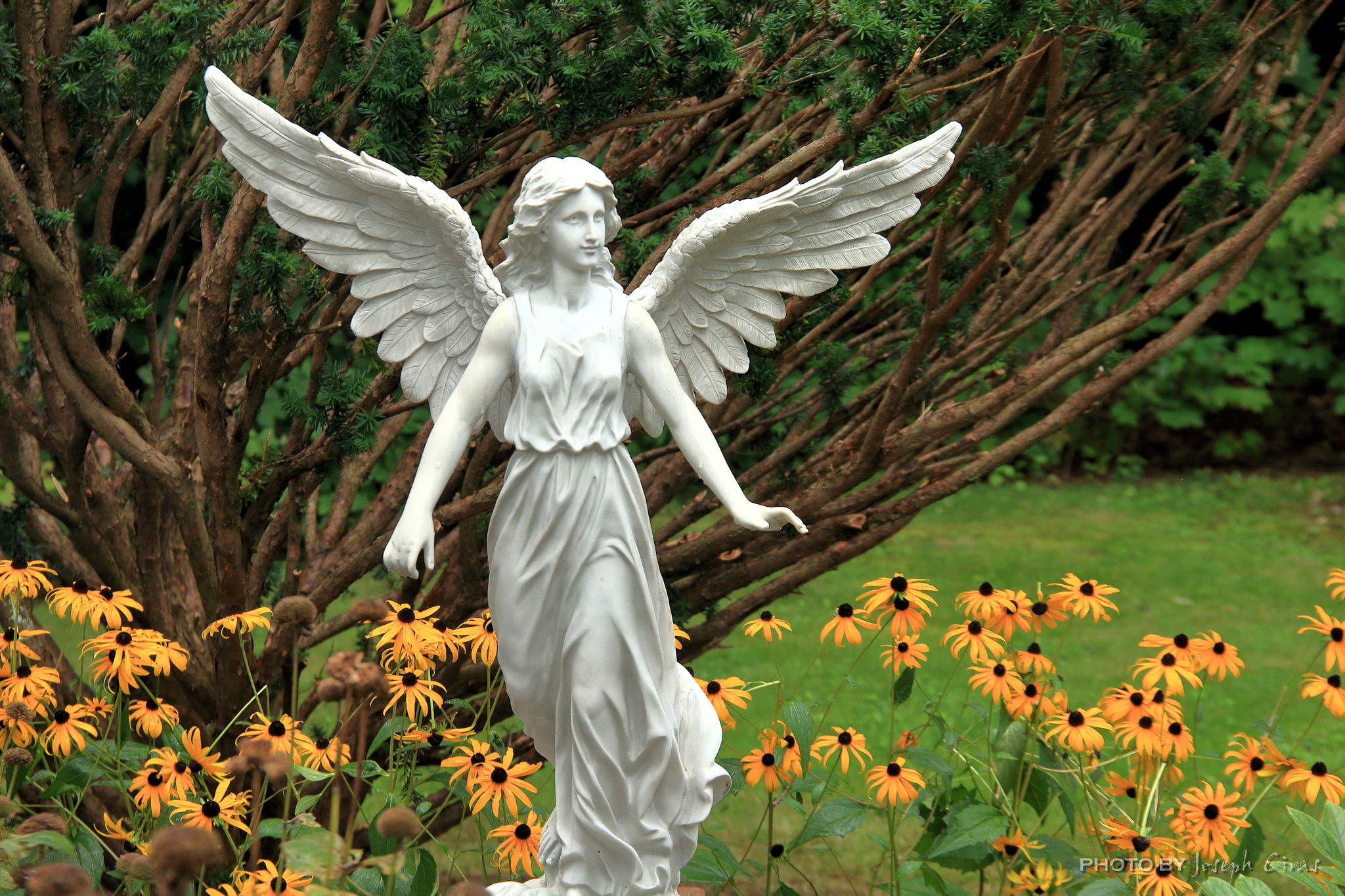
Sunday, 09/05/2021: Posted photo — Angel.

Settings: Canon EOS 60D, ISO 200, f/7.1, 1/100 s, 67 mm.

This is a statue in the flower garden near the rectory of the church I attend. I have never noticed this angel before, so the new priest could have put it in. It is a welcome addition to the grounds.

I like the black-eye Susan’s that blanket the statue making the statue stand out.

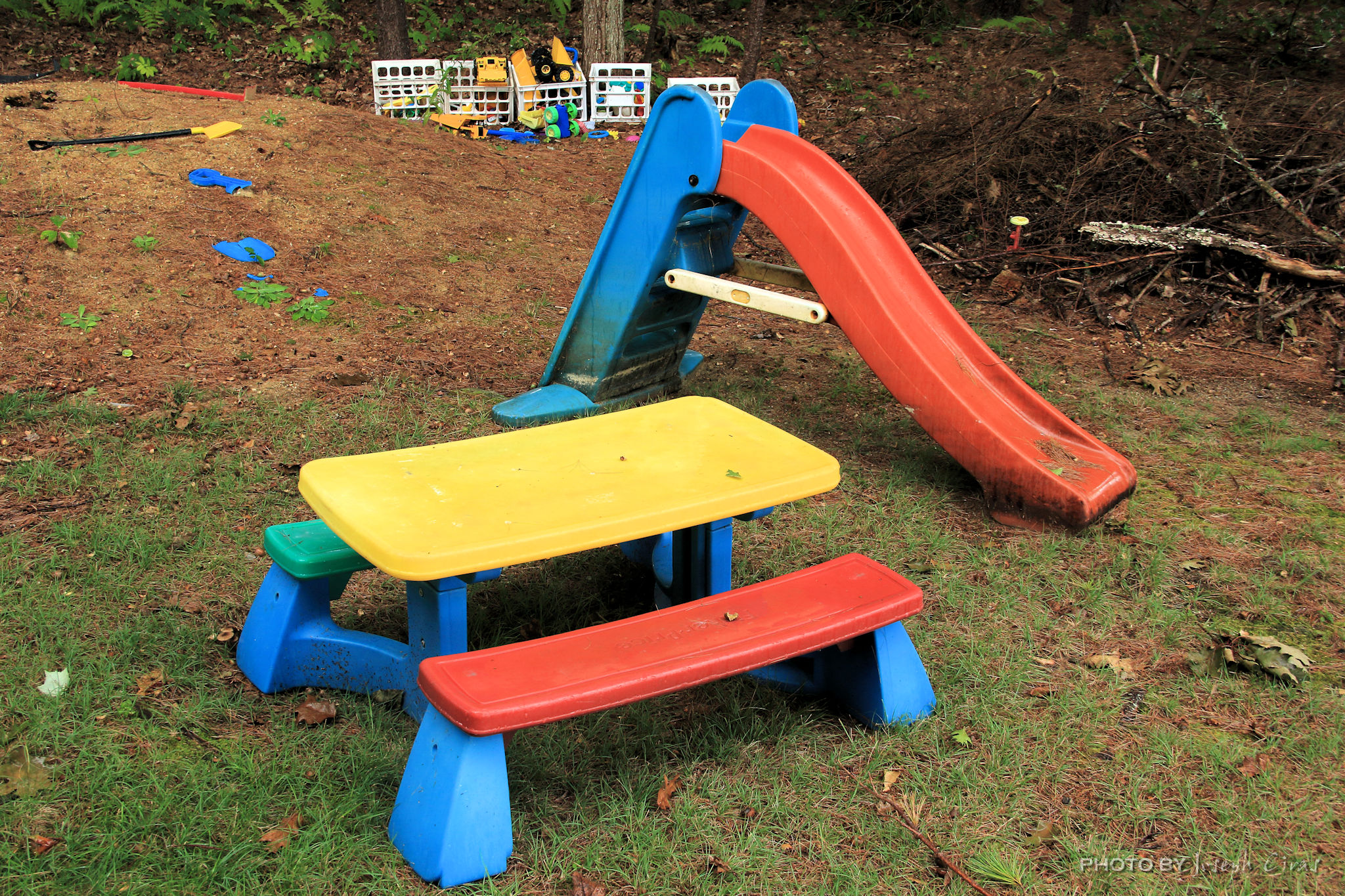
Monday, 09/06/2021: Posted photo — Playthings.

Settings: Canon EOS 60D, ISO 200, f/7.1, 1/60 s, 24 mm.

Today is a holiday, Labor Day. Labor Day is an annual celebration of workers and their achievements, originated during one of American labor history’s most dismal chapters. “In the wake of this massive unrest and to repair ties with American workers, Congress passed an act making Labor Day a legal holiday in the District of Columbia and the territories. On June 28, 1894, President Grover Cleveland signed it into law.” according to the History Channel.

Even though today is a holiday, I still planned on going on my Monday night hike. My in-laws called me and wanted to know if I wanted to go to the cottage to visit and to have some food. I only had a couple of hours between the call and the hike, so I went over. I noticed a new picnic table for my grandniece and liked the color contrast with the wet ground. The slide in this photo was in the water for many years, until she wanted to play on it. We took it out of the water and cleaned it the best that we could for her to play on.

Tuesday, 09/07/2021: Posted photo — Cannon.

Settings: Canon EOS 60D, ISO 100, f/7.1, 1/125 s, 25mm.

This cannon at the Westminster town common. The plaque states: “Dedicated to the memory of all the men and women from Westminster who have served their country in time of war and peace.” This cannon is not on display year-round.

I ran a few errands today and drove by town common on the way back looking for something to photograph. I saw the cannon and took this photo. The town common is being cleaned up with old trees being removed and new trees being planted.

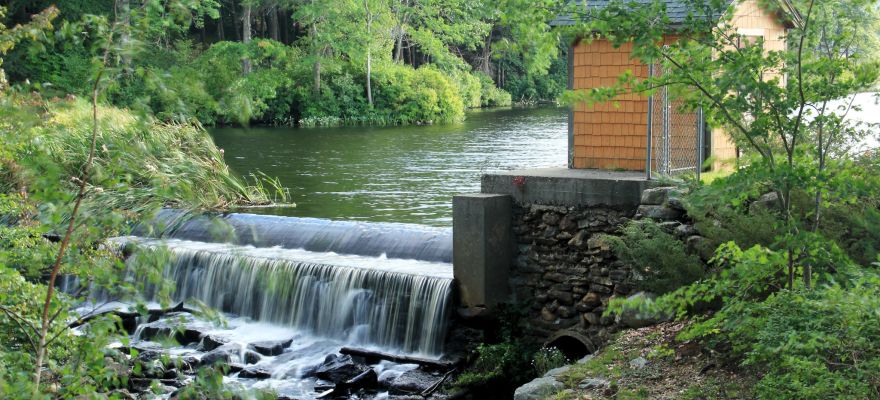
Wednesday, 09/08/2021: Posted photo — Handheld Falls.

Settings: Canon EOS 60D, ISO 100, f/20, 1/4 s, 36 mm.

It was getting late today, and I was trying to decide what to photograph today. As I have stated many times in my blogs, I take photos of items during the day and decide later what photo to post. When I drove by one of my favorite locations to photograph, I wanted to test out how steady my hand can be. I practice long exposure photography a few times a month. During some of my hikes, I see flowing water and need to practice holding still while taking photos.

I did take many other photos today and liked this one the best. This is one of my favorite spots to photograph and it is one of the favorite locations for people looking at my photos.

Thursday, 09/09/2021: Posted photo — That Time of Year.

Settings: Canon EOS 60D, ISO 400, f/7.1, 1/15 s, 135 mm.

Some trees are changing, some trees are not changing. Our sugar maple is one of the first trees on our property to change colors in the fall. Because of changes in the length of daylight and changes in temperature, leaves stop their food-making process. The chlorophyll breaks down, the green color disappears, and the yellow to orange colors become visible.

Friday, 09/10/2021: Post photo — Red-Tailed Hawk.

Settings: Canon EOS 60D, ISO 800, f/5.6, 1/800 s, 135 mm.

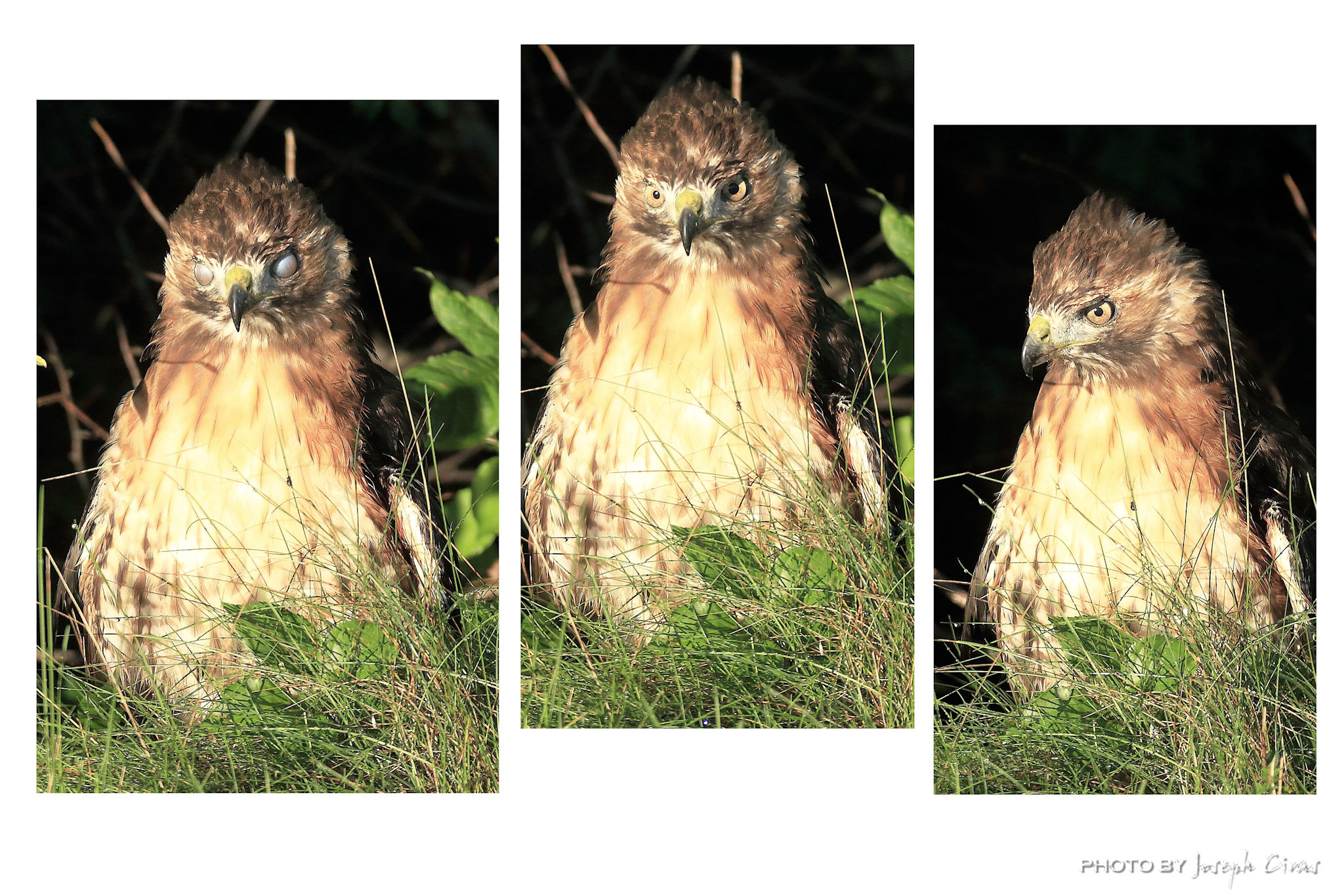
This morning this red-tailed hawk was spotted on campus at work. First, we thought it was a rabbit and then an owl. I took my camera out to get a closer look at it and to photograph it. I was surprised to see that it was a red-tailed hawk. The hawk did not move from its position and allowed me to walk very close to it. I kept my eyes open and was very alert that the mother of this hawk could have been around, and I did not want to be attacked by her. It did not look like it was injured but it stayed in the same location for over an hour. Someone saw it walk across the lawn so I could have been injured.

I took many photos if it and like these the best. I did not know what one to post so I made a collage out of them to post as one photo. I liked the look of the closed eyes showing its eyelids and I like the profile of the hawk.

Saturday, 09/11/2021: Post photo — Flags on the 48.

Settings: Canon EOS 60D, ISO 800, f/7.1, 1/500 s, 18 mm.

Not much room on Mount Willey for a group photo. Here is the group squeezed into the overlook for a photo. This hike was for the annual Flags on the 48 event.

“We in the hiking community continue to honor the deceased with a tribute: flying the American flag atop all 48 four-thousand foot and higher mountains in New Hampshire on the Saturday closest to September 11. By demonstrating our steadfast unity in this challenging endeavor, we also hope to express our unwavering support to the families, friends, and communities whose losses are beyond comprehension and whose suffering we remember in our hearts.” — Flags on the 48 website.

I have been doing the Flags for the last 10 years mostly with the same core of people. There are two of us that have been doing if for all 10 years with various other people joining us. Out of all the people in this photo, nine of them have been hiking with us for several years. This group has not done the same peak twice.

A member of our group does a great tribute to all that passed away from that day 20 years ago to the day of the hike. The names are placed at the base of our flag.

Thank you again for having faith and my abilities. Now I need to go through the photo and pick some out.

That is all for now. Until next week, be safe.

For more photo of other project I have work, visit my website: https://photobyjosephciras.weebly.com/ or visit me on Facebook at https://www.facebook.com/PhotobyJosephCiras/.
COVID is real! Be safe out there, keep your social distance, and remember to always wear your mask and wash your hands. Get your vaccine!

Photographic Thoughts — 08/22/2021 to 08/28/2021

“What I like about photographs is that they capture a moment that’s gone forever, impossible to reproduce.” — Karl Lagerfeld

Thank you for all the new views and likes from last week, it helps keep me inspired.

Sunday, 08/22/2021: Posted photo — Stained Glass.

Settings: Canon EOS 60D, ISO 400, f/5.6, 1/80 s, 32 mm.

This stained glass shows the initial for Ava Maria. Ava Maria is a prayer to the Virgin Mary used in Catholic worship. The first line is adapted from Luke 1:28. Ave Maria is also called Hail Mary.

Ave Maria in stained glass

“Ave Maria, gratia plena, Dominus tecum. Benedicta tu in mulieribus, et benedictus fructus ventris tui, Iesus. Sancta Maria, Mater Dei, ora pro nobis peccatoribus, nunc, et in hora mortis nostrae. Amen.”

Why did I take this photo — I took this photo because last week I took a photo of some stained glass windows with my cell phone and I wanted to take a better photo. I took my DSLR with me into church this morning, saw the glimmer of light amongst the rain, and took this photo.

Monday, 08/23/2021: Posted photo — Wet Leaf.

Settings: Canon EOS 60D, ISO 100, f/5.6, 1/40 s, 135 mm.

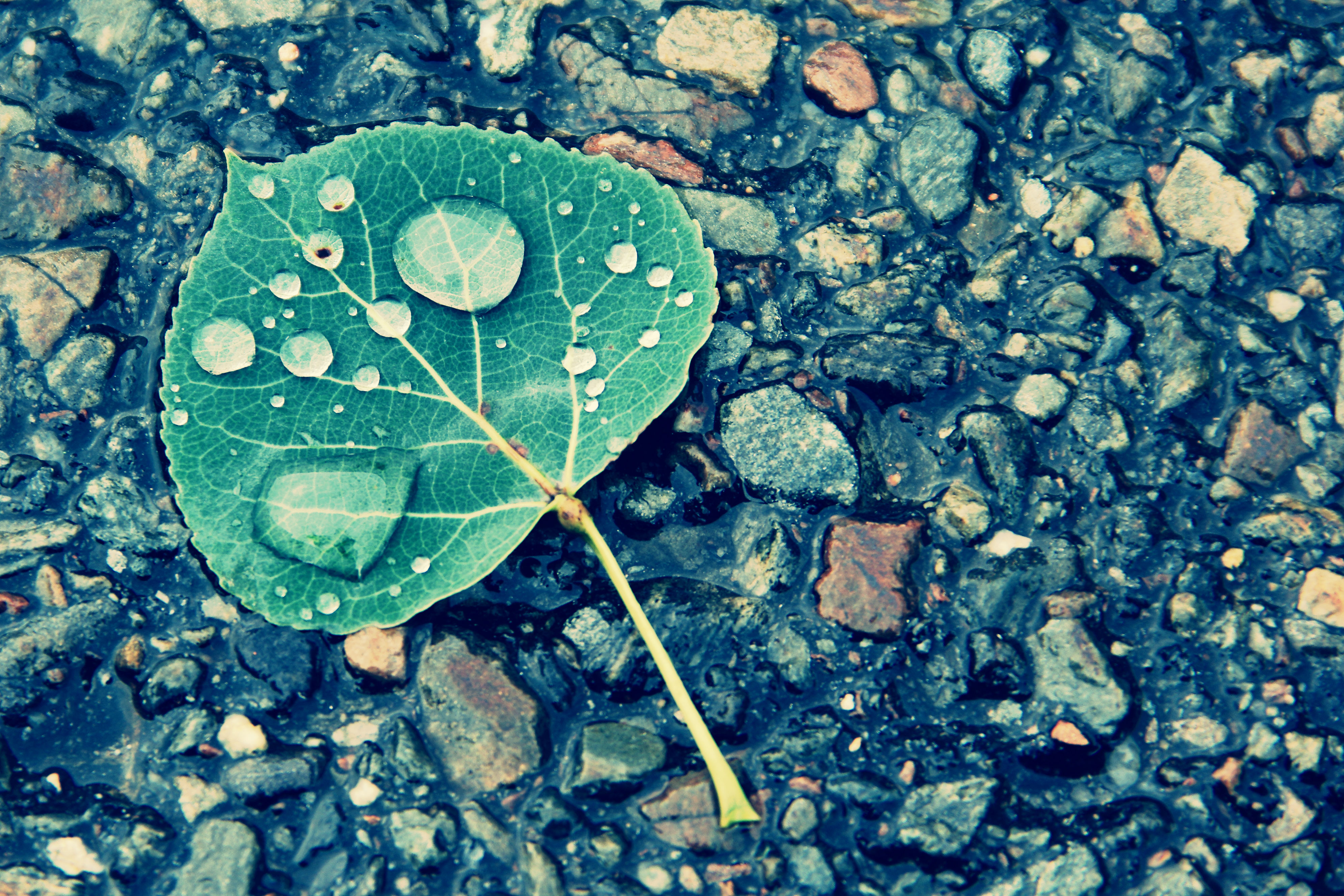
Tropical Storm Henri just paid a visit to the area. Yesterday there were some gusts of wind and a little rain in this area. Some other areas around me received more wind damage and rain.

Today I was walking around and say the water beading off this leaf, so I took a photo of it. Always keep your eyes open to the wonders of nature.

Water drops on a leaf

Later in the day, I took my normal Monday night hike up Wachusett Mountain. There was only two of us this week because of the heavy rain that came in this afternoon. It was wet and rainy on the way to the summit, and it was very wet and heavy rain on the way down. When I hike, I just keep wiping the water from my eyes and just follow the tail. You need to take all your steps very carefully. Hiking is still fun in the rain.

Tuesday, 08/24/2021: Posted photo — Web.

Settings: Canon EOS 60D, ISO 1600, f/5.6, 1/20 s, 135 mm.

Is it just me, or are there many more spiders this year that there have been in the past? I keep seeing webs and the light shining off the webs. Today I stopped and attempted to take a photo of a web in the sunlight.

Spider web

Looking at the photo, it looks like my ISO was set too high since the web looks blown out to me.

Wednesday, 08/25/2021: Posted photo — Moon.

Settings: Canon EOS 60D, ISO 400, f/16, 1/125 s, 300 mm.

Look, Joe took another moon photo!

Just another moon shot

This morning, as the moon does many times, I was just called to take a photo of the moon.

Thursday, 08/26/2021: Posted photo — Hike.

Settings: N/A.

This is not a photo. I took many photos today and did not like any of them good enough to post.

Thursday night hike

This is a photo of the trail I took tonight on Wachusett Mountain in the heat. The hike was 3.5 miles long, it started in the light, and ended in the dark. The air was very moist and heavy. When you hike in situation similar to this, you must drink plenty of water.

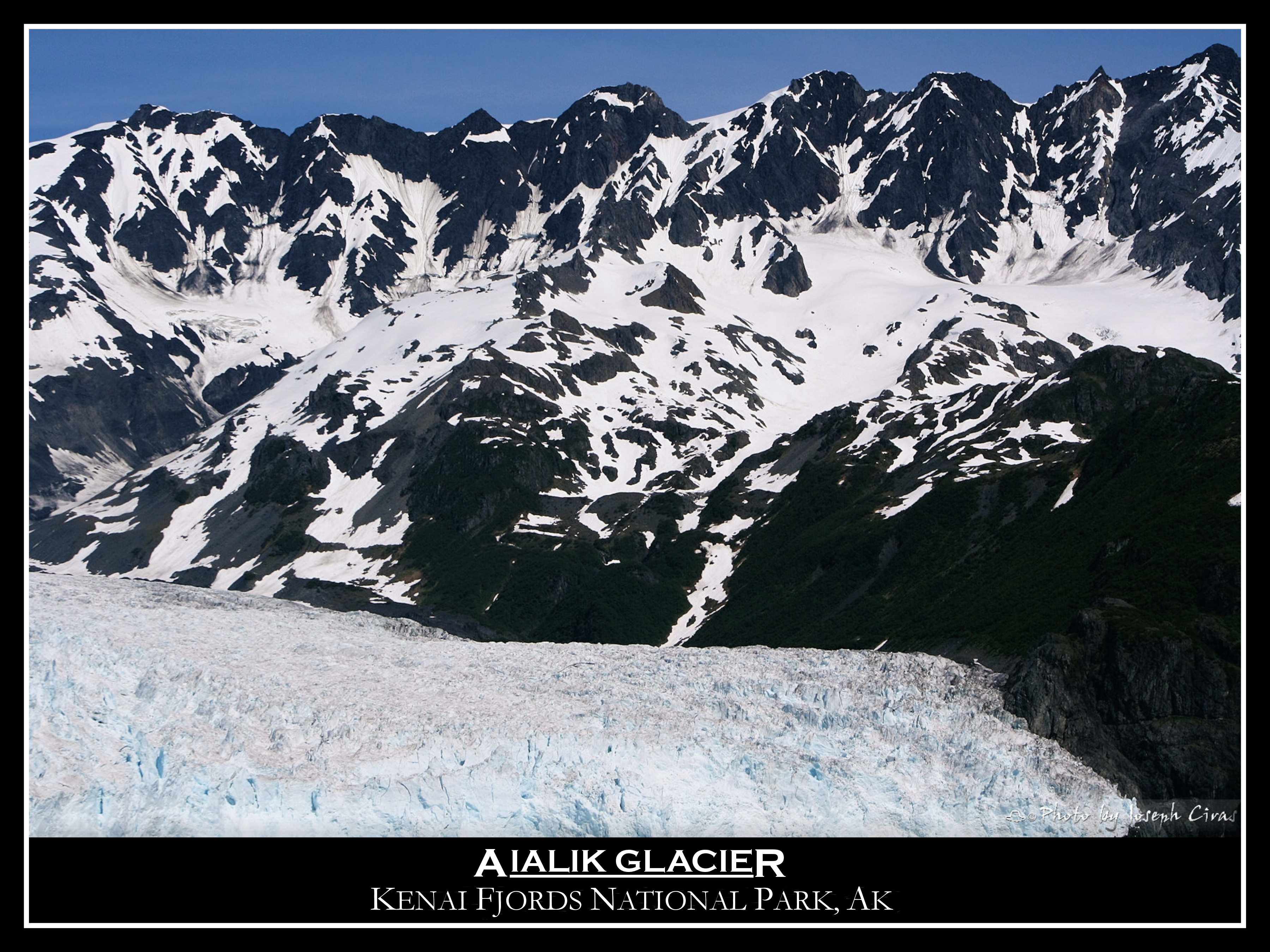
Friday, 08/27/2021: Post photo — Aialik Glacier.

Settings: N/A.

Aialik Glacier is the largest glacier in Aialik Bay, located in Kenai Fjords National Park. While stable, the glacier calves most actively in May and June. We say the glacier in June and saw the calves.

We went to Alaska in 2016 for our 25th wedding anniversary with my son and niece. Alaska is a great place to visit. If you have an opportunity to visit, please do so.

Poster created from my photo of the Aialik Glacier

About the photo. I took some of my travel photos and made posters of them to remember were the photo was taken. It was a fun process to learn a new photo editing technique. I made a photo script to help me do this for my photos. The script will resize the photos and add the text and boarder.

Saturday, 08/28/2021: Post photo — Mr. and Ms.

Settings: Canon EOS 60D, ISO 200, f/7.1, 1/125 s, 24 mm.

I would like to thank Doug and Vicky for allowing me to photograph there special day. This was my first official wedding that I photographed. They had faith in me do this knowing that I am primarily a landscape photographer.

Mr. and Ms. Chase-Dame

I have worked with Doug’s father for many years. He asked me if I was comfortable enough to take photos as his son’s wedding, I said I would love to do so. As you can see from the photo, they are a fun couple. When I was told that there were wearing Hawaiian shirts for the wedding, I thought that just Doug was going to wear one. When I went to their house and saw that everyone in the family had one on, I went home to put my shirt from Hawaii on to fit in with the crowd. My house was on the way from the morning photoshoot to the wedding.

Thank you again for having faith and my abilities. Now I need to go through the photo and pick some out.

That is all for now. Until next week, be safe.

For more photo of other project I have work, visit my website: https://photobyjosephciras.weebly.com/ or visit me on Facebook at https://www.facebook.com/PhotobyJosephCiras/.
COVID is real! Be safe out there, keep your social distance, and remember to always wear your mask and wash your hands. Get your vaccine!

Photographic Thoughts — 07/04/2021 to 07/10/2021

“Photography is truth.” — Jean-Luc Godard

Thank you for all the new views and likes from last week, it helps keep me inspired.

Enjoy this week’s rambling mind of a mechanical engineer and photographer.

Sunday, 07/04/2021: Posted photo — Planter.

Settings: Canon EOS 60D, ISO 400, f/7.1, 1/50 s, 52 mm.

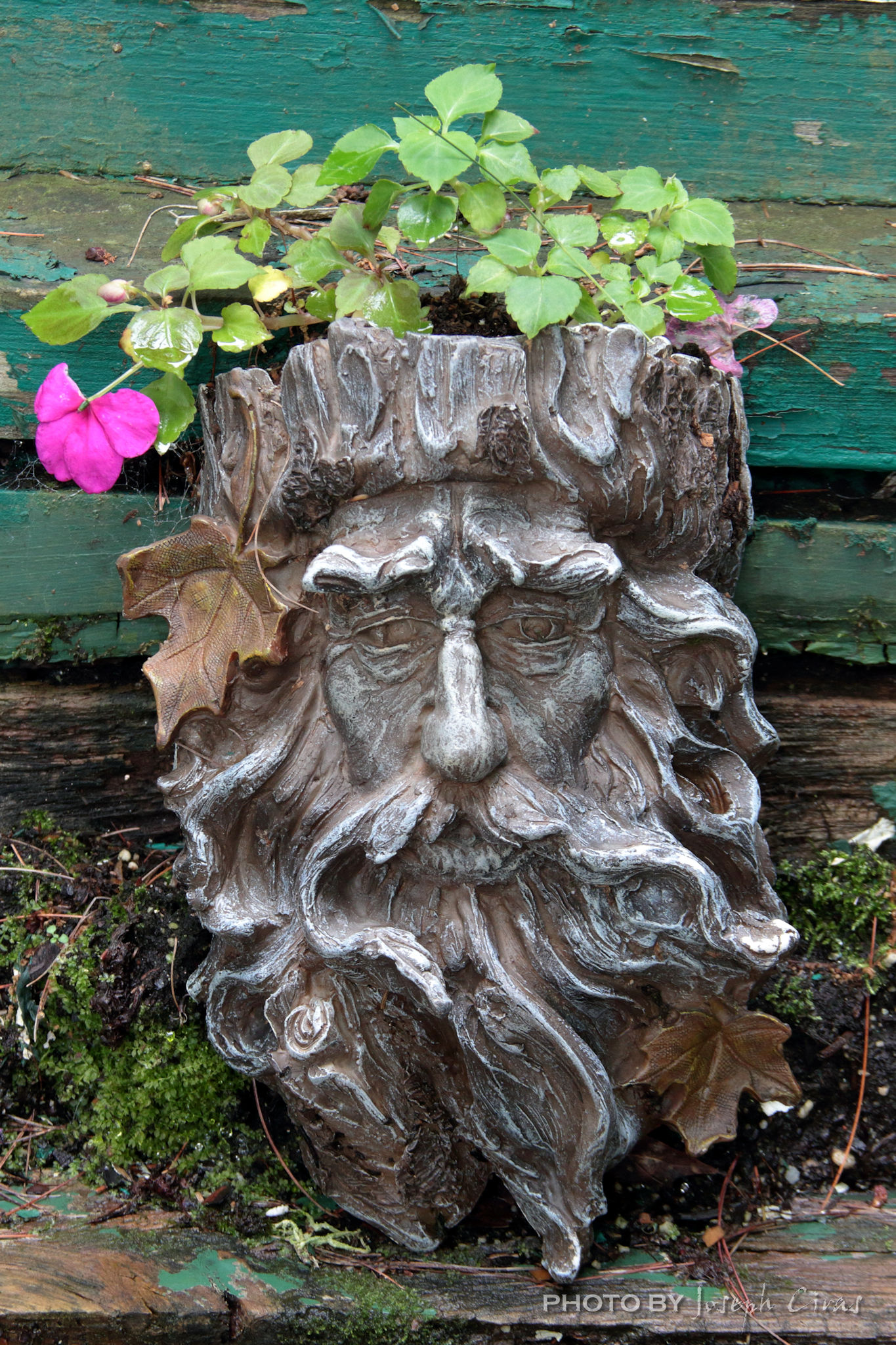
Planters are used on houses and cottages for plants. A planter is a decorative container in which plants are grown. This planter is located at my in-law’s cottage. I like the look of this, very rustic. A few of the leaves on this planter looked real to me when looking at it quickly.

Planter

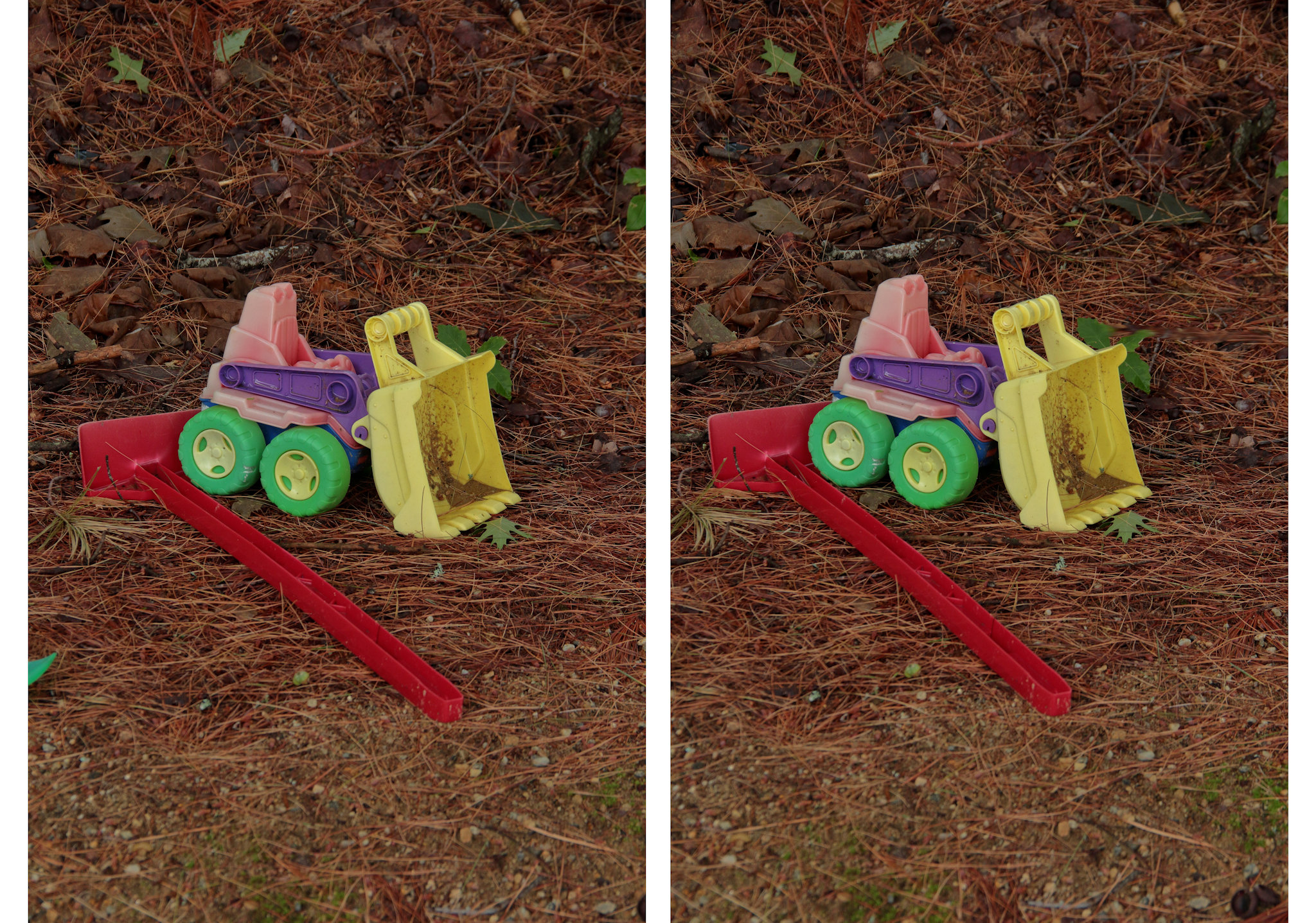
Just for fun, I am posting a photo that I took today and that you should be able to see in 3D.

See if you can view this photo in three dimensions. Use the techniques below and a middle photo will appear.

Go to this page to see the instructions on how to view this photo. “How to See 3D: Magic Eye 3D and more” (vision3d.com)

Monday, 07/05/2021: Posted photo — Inversion.

Settings: Canon EOS 60D, ISO 100, f/6.3, 1/500 s, 45 mm

A cloud inversion, or temperature inversion is when the normal temperature distribution of air – warm at the bottom, colder as you go up – becomes inverted or flipped upside down. This means you have a cold layer of air trapped at ground level, overlain by warm air. I know that information may not be useful to you, but it may be useful to some.

Cloud inversion from the Glen Boulder Trail

This photo was taken on a 14-mile round trip hike to the summit of Mount Isolation in NH. I did this hike with my son and two of his friends. Mount Isolation is one of the 48 4,000-foot mountains in New Hampshire. The path we took was Glen Boulder Trail to Davis Path to Isolation Trail to Rocky Branch Trail. Mount Isolation is only 4,003 feet tall. To get to it we hiked over Gulf Peak (4,774 feet) and North Isolation (4,291 feet). Both mountains are not official 4,000 footers because they do not meet the official criteria to be counted. A 4,000-footer is a mountain that has an elevation of at least 4,000 feet and a minimum of 200 feet prominence. Today turned out to be the best day of the holiday weekend.

Here are some more photos of our hike.

Tuesday, 07/06/2021: Posted photo — Reflection.

Settings: Samsung SM-G930V (Galaxy S7), ISO 50, f/1.7, 1/385 s, 4 mm

I was on my way home from my mother’s house and was thinking about what photo I would be posting today. As it was much if the weekend, it was rainy and overcast. I drive past the Holden Reservoirs. The Holden Reservoirs supply the city of Worcester, Mass, and the surrounding communities.

Sunset reflection from one of the Holden Reservoirs

As I passed the last of the reservoirs, I say some color in the sky, so I took to take a photo of this. I took this photo not knowing if there was anything else to photograph for the remainder of the day. Cell phone photos do not do any justice to the beauty of sunsets.

Wednesday, 07/07/2021: Posted photo — More Clouds.

Settings: Canon EOS 60D, ISO 100, f/6.3, 1/1000 s, 25 mm.

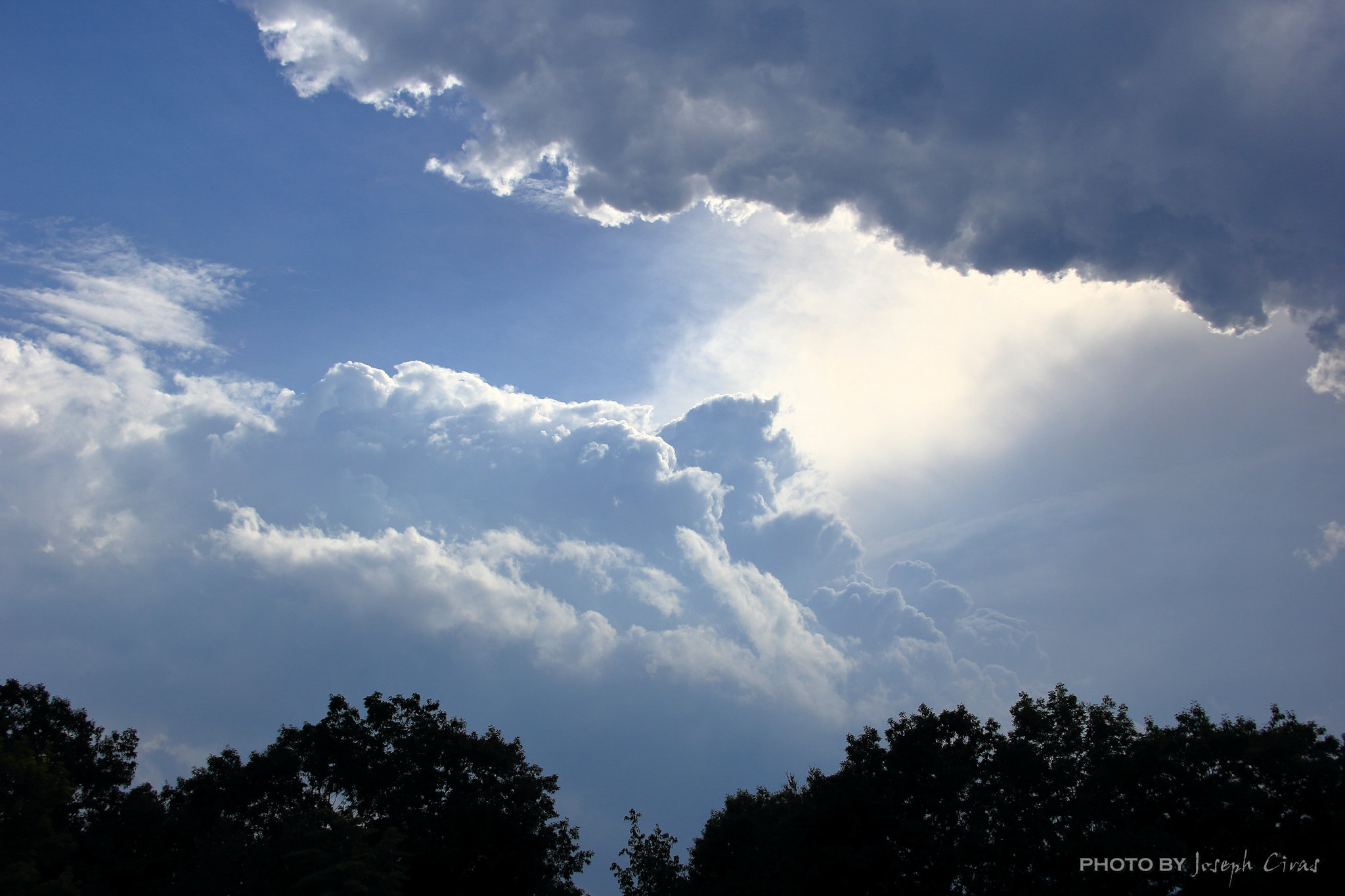
One word for today, humid. It was not raining and very humid, with a severe weather warning. One of the things I like about a day like today is watching the clouds grow as the storm develops. I like the contrast between the white clouds and the blue sky. I also like when the sun rays seem to jump from cloud to cloud.

Storm clouds building

I took this photo with treetops in the foreground to have some contrast between the sky, trees, and clouds. There were better clouds to photograph down the road, but I decided to use this photo because it seemed dramatic to me.

Thursday, 07/08/2021: Posted photo — Calculator.

Settings: Samsung SM-G930V (Galaxy S7), ISO 400, f/1.7, 1/10 s, 4 mm

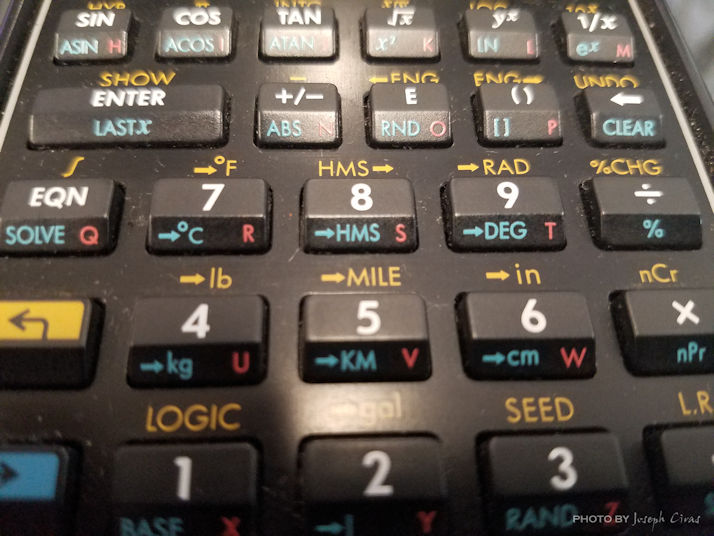
These are some of the keys on my HP 35s Scientific Calculator. It is an older RPN calculator and is one that is allowed into the professional engineering examination. I am not taking the examination for a little while longer since I need to study for it. Being a mechanical engineer for over 35 years, I need to get back to study topics that I do not use every day.

Key on my HP 35s calculator

Reverse Polish Notation (RPN) is a system of representing mathematical and logical operations in which the operands precede the operator, and which does not require the use of parentheses. I find RPN much faster to use and I now find it difficult at times to use regular, or normal, notation when using a calculator.

Friday, 07/09/2021: Post photo — Mushroom.

Settings: Canon EOS 60D, ISO 400, f/5.6, 1/320 s, 113 mm.

Rained today. Heavy rain today due to Tropical Storm Elsa. The storm brought very heavy rains in flooding to some towns in the area. Once the sun came out, the sky was a great blue.

Mushroom in our yard

On my way home from work, I was just going on settling on posting a photo from the past because the rain put a damper on taking a photo outside. When I arrived home, I saw some mushrooms growing in our front lawn. Great photo opportunity for me. A mushroom is the fleshy, spore-bearing fruiting body of a fungus, typically produced above ground, on soil, or on its food source. Some people eat mushrooms, some people can tell if it is poisonous or not. I am neither of these people. I do not eat mushrooms and cannot tell if one is poisonous or not. I should work on identifying edible and non-edible mushrooms since I see many on them on my hikes.

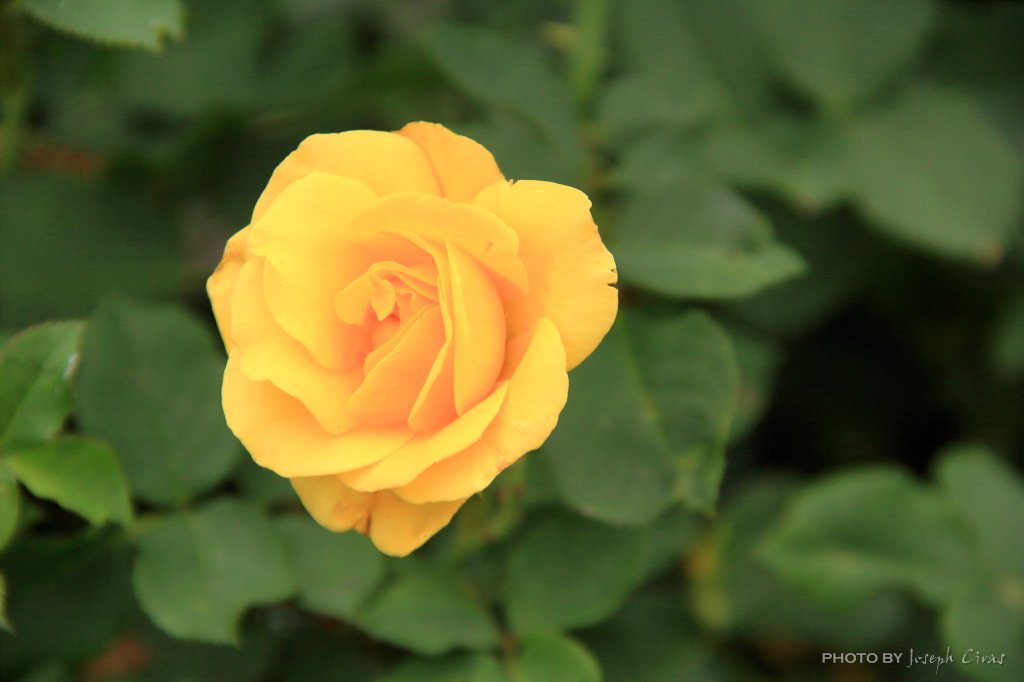
Saturday, 07/10/2021: Post photo — Rose.

Settings: Canon EOS 60D, ISO 400, f/5.6, 1/2500 s, 113 mm.

“A rose by any other name would smell as sweet” — William Shakespeare’s play Romeo and Juliet.

Yellow rose

Red roses are often considered the universal symbol of love.
Pink roses symbolize gratitude, grace, and joy.
White roses are a symbol of purity, innocence and in some cases, chastity.
Purple roses are not nearly as common, they indicate a fascination or adoration.
Yellow roses are a symbol of friendship and caring.
Orange roses indicate enthusiasm and passion, making them a creative substitute for Valentine’s Day roses and other holidays when people typically buy red roses.

That is all for now. Until next week, be safe.

For more photo of other project I have work, visit my website: https://photobyjosephciras.weebly.com/ or visit me on Facebook at https://www.facebook.com/PhotobyJosephCiras/.

COVID is real! Be safe out there, keep your social distance, and remember to always wear your mask and wash your hands. Get your vaccine!

Photographic Thoughts—03/28/2021 to 04/03/2021

“What makes photography a strange invention is that the primary raw materials are light and time.” — John Berger

Thank you for all the new views and likes from last week. It helps keep me going. Enjoy my blog post!

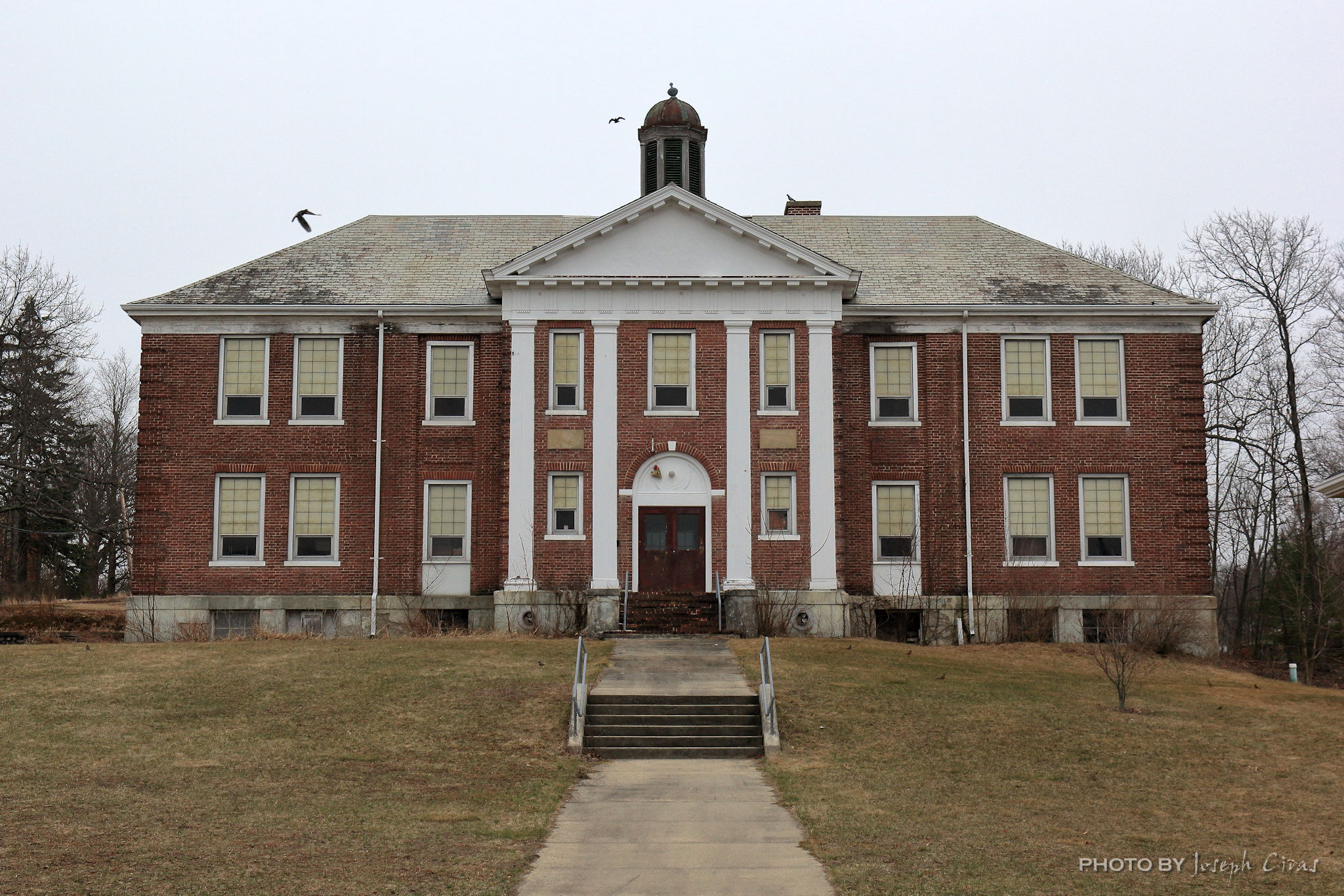
Sunday, 03/28/2021: Posted photo—Upton School.

Settings: Canon EOS 60D, ISO 400, f/5.6, 1/500 s, 32 mm

Part of the National Register of Historic Places, the Upton School was used as a high school from 1912 to 1960, and as an elementary school until 1994 when a new elementary school was built. The Westminster Historical Society purchased the building in 1997. It is in the Westminster Village-Academy Hill Historic District. The building is now vacant and there has been much discussion around town as to what to do with it.

Upton School, Westminster, MA

Interesting fact: Under Federal Law, the listing of a property in the National Register places no restrictions on what a non-federal owner may do with their property up to and including destruction, unless the property is involved in a project that receives Federal assistance, usually funding or licensing/permitting. However, before this occurs, you can, or the property owner should contact the State historic preservation office (SHPO.) The SHPO is the state agency that oversees historic preservation efforts in their state. There may be state or local preservation laws that the owner should be aware of before they undertake a project with a historic property.

Monday, 03/29/2021: Posted photo—Drive By Falls.

Settings: Canon EOS 60D, ISO 100, f/36, 1/10 s, 55 mm.

I have driven by the Steamline Trail Park in West Fitchburg several times, not thinking anything of it. It is not a spectacular park or a very big park from what I have seen from the road. As I was driving past it today, I noticed a dam with water flowing over the dam. It might be because there are not any leaves on the trees yet. I stopped in to take this photo.

I found out that the park is 4.15 acre and is located at 465 Westminster Street, and includes a parking lot and walking trail along the Nashua River and Flag Brook. This park is the first implementation of the City of Fitchburg’s plans to develop a network of trails along the Nashua River, connecting to trails in Leominster and Westminster.

A steam line is a pipe that carries steam from one building to another. The steam was used to run turbines and other industrial equipment in factories. Fitchburg was a factory town. Many of the factories are no longer in operation and the steam distribution lines are still visible and are being taken down due to safety concerns.

The falls at Steamline Trail Park

Time to go exploring.

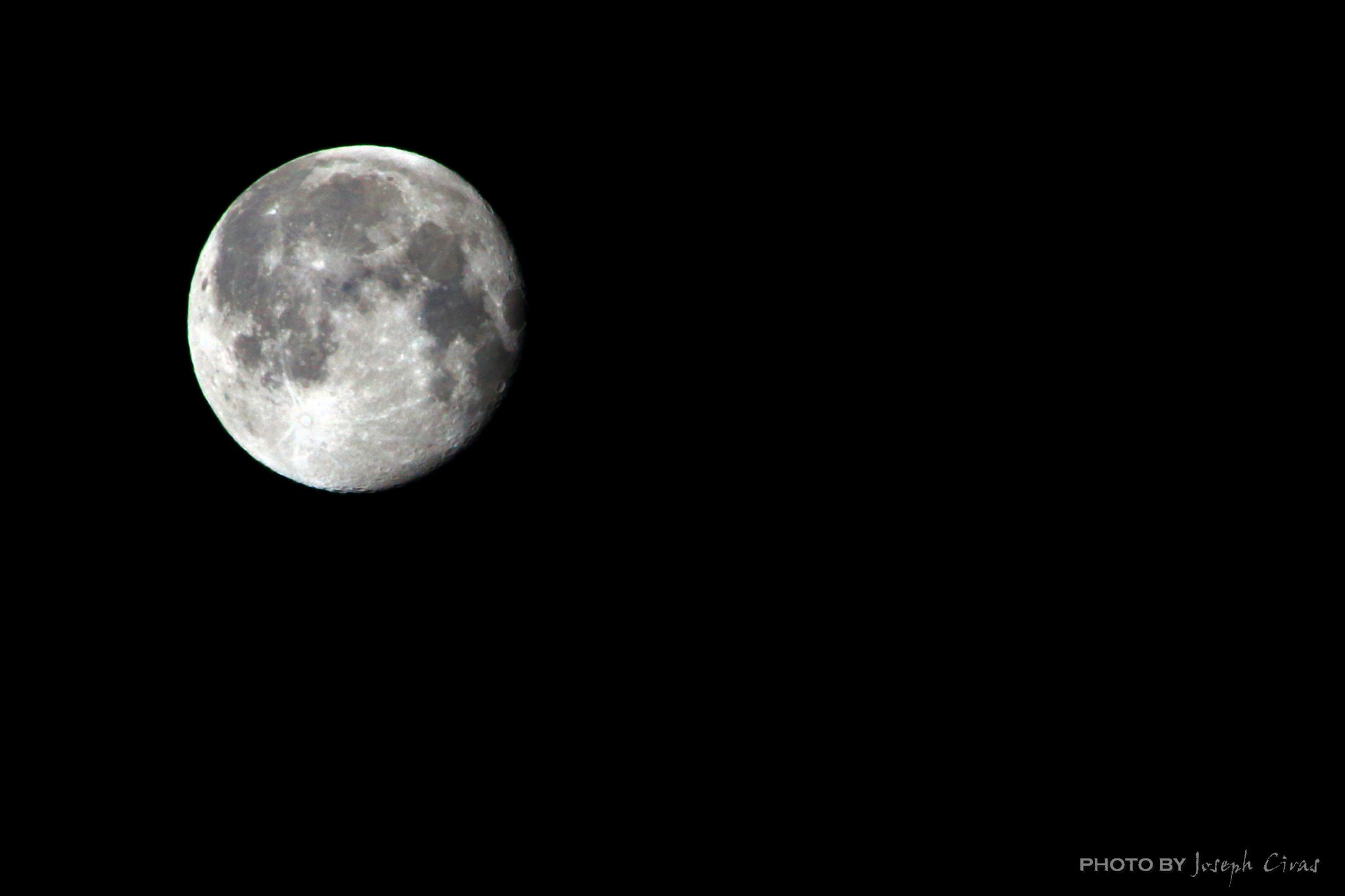
Tuesday, 03/30/2021: Posted photo—Waning Gibbous Moon.

Settings: Canon EOS 60D, ISO 200, f/16, 1/125 s, 300 mm.

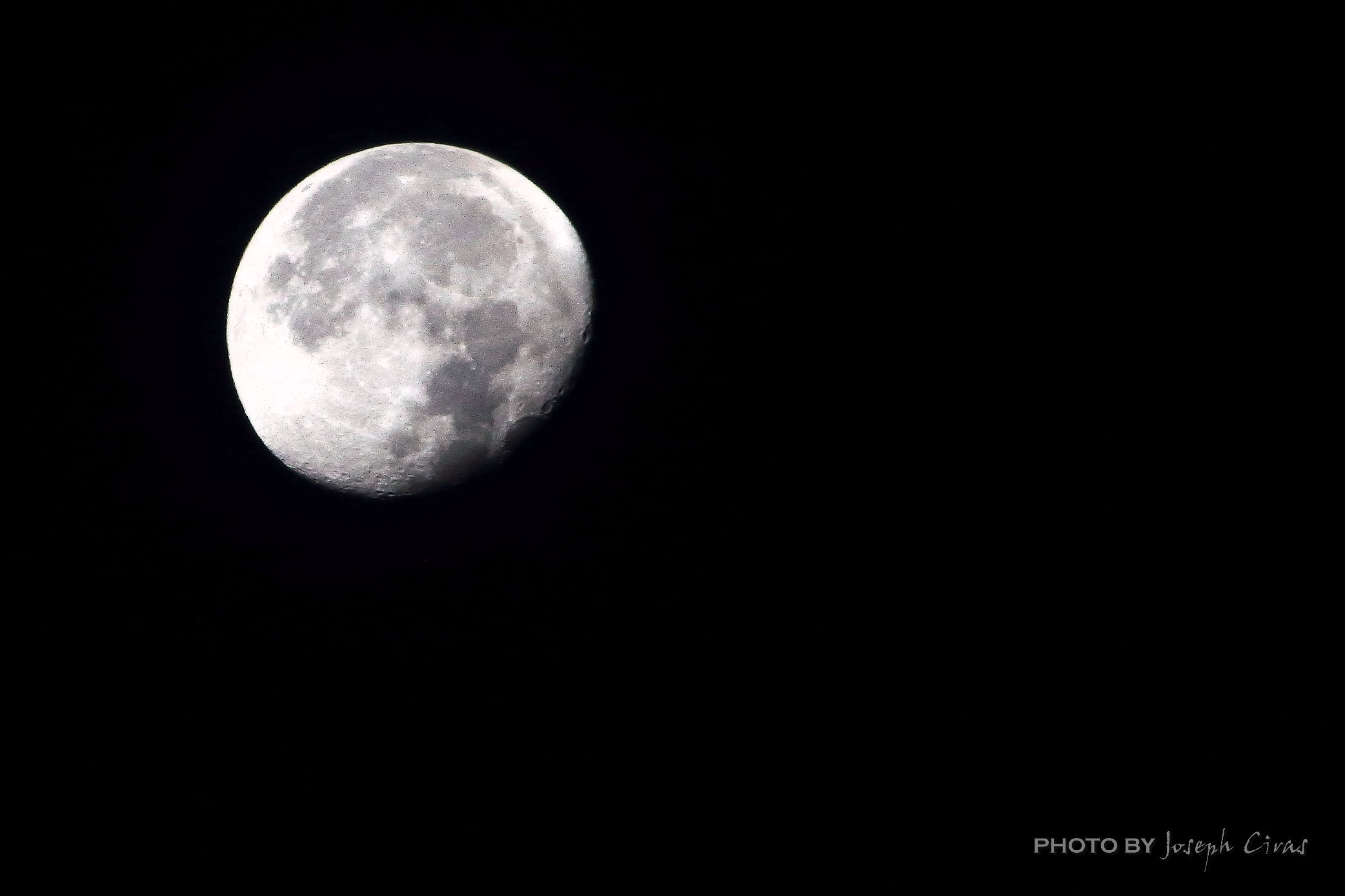
A waning gibbous moon at 95.3% this morning. I saw the moon rise last night. It was large and reddish and a wonderful site. On my ride into work today, the moon was lighting my way calling to me to take its photo. I have taken many photos of the moon. Some with my “moon” lens and some with my 300 mm lens. This one was taken handheld with my 300 mm lens as I was getting out of my car to go into work.

Morning moon

Sometimes the subject of a photograph just calls to you.

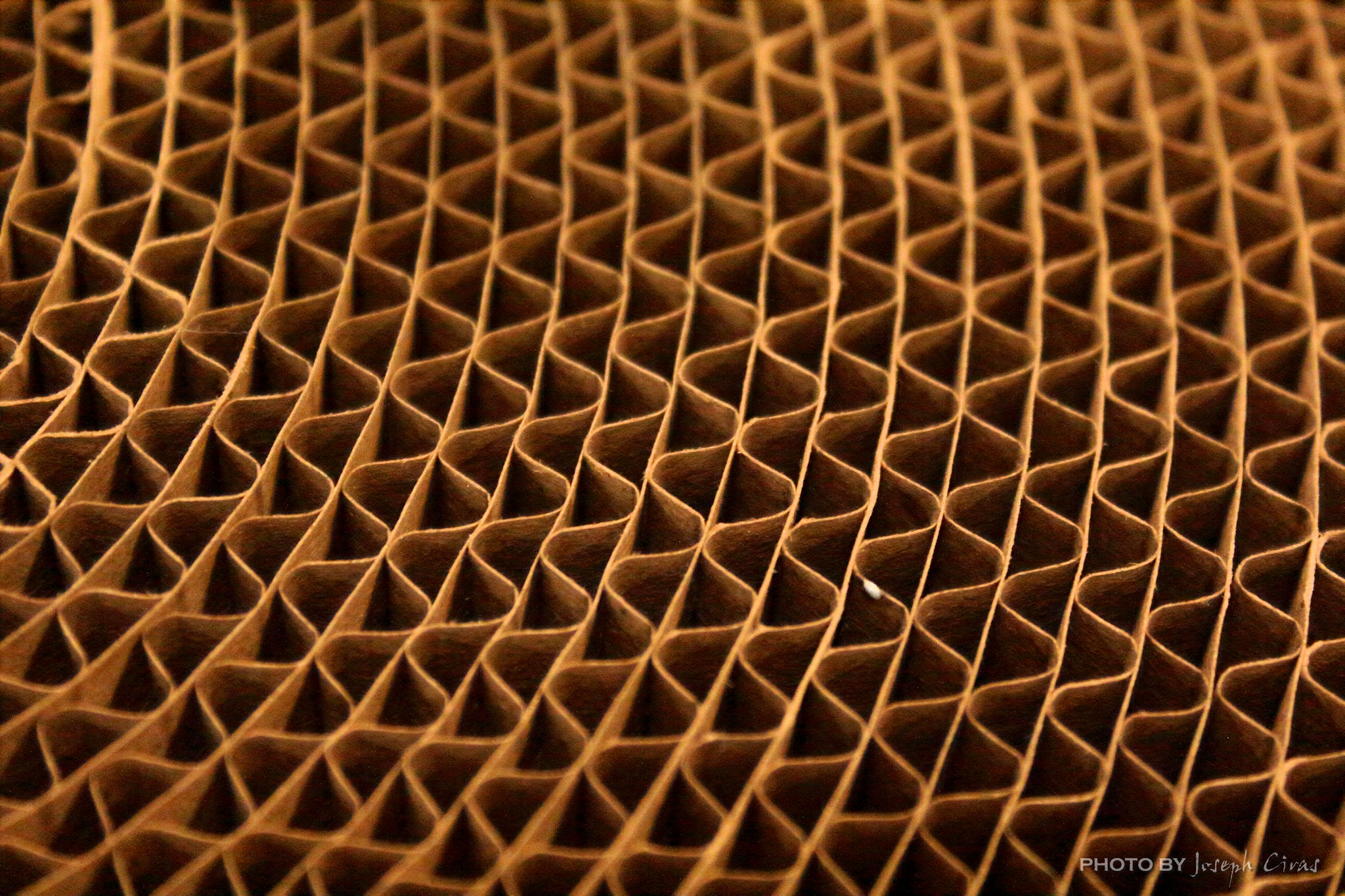
Wednesday, 03/31/2021: Posted photo—Corrugation.

Settings: Canon EOS 60D, ISO 800, f/5.6, 1/40 s, 49 mm

According to the dictionary: “corrugation — the act of shaping into parallel ridges and grooves. change of shape — an action that changes the shape of something.”

Corrugated paper

If you look closely at a piece of corrugated cardboard, you will see a wavy texture in between. This creates the strength and rigidness that prevents the cardboard from folding on itself like paper would. Cardboard boxes have been around for a very long time, as early as 1817, when the first commercial box was invented from paperboard in England. But it was not until the 1890s that a cardboard box with layers of corrugated cardboard was first developed and used for shipping. A decade later, these corrugated boxes were starting to replace the traditional wooden crates and boxes.

This photo was taking of a roll of corrugated paper that I came across in my travels today. This photo is an example of the subject just calling on me to take its photo. I just love when a subject corporates at this roll of corrugated paper did.

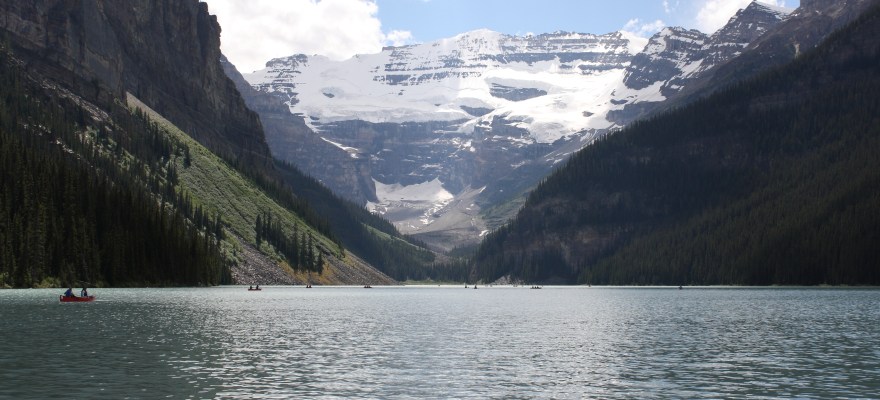
Thursday, 04/01/2021: Posted photo—Lake Louise.

Settings: Canon EOS DIGITAL REBEL XS, ISO 200, f/13, 1/250 s, 29 mm

“Lake Louise is a hamlet in Banff National Park in the Canadian Rockies, known for its turquoise, glacier-fed lake ringed by high peaks and overlooked by a stately chateau. Hiking trails wind up to the Lake Agnes Tea House for bird’s-eye views. There is a canoe dock in summer, and a skating rink on the frozen lake in winter. The Lake Louise Ski Resort features a wildlife interpretive center at the top of a gondola.” ― Google

Elevation: 5,249’

Area: 222 acres

Province: Alberta

Lake Louise, Alberta Canada

We had a great visit to Lake Louise a few years ago when we were on our Northern National Park tour. That trip too us to, ready: Glacier National Park, MT; Waterton-Glacier Lakes National Park, Alberta, Canada; Banff National Park, Alberta, Canada; Jasper National Park, Jasper, Canada; Northern Cascades National Park, WA; Olympic National Park, WA; Mount St. Helens National Volcanic Monument, WA; Mt. Rainier National Park, WA; Craters of the Moon National Monument and Preserve, ID; Grand Tetons National Park, WY; Yellowstone National Park, WY; Devils Tower National Monument, WY; Wind Cave National Park, SD; Crazy Horse Memorial, SD; Mount Rushmore National Memorial, SD; Badlands National Park, SD; Mall of America, Bloomington, MN; and the Field of Dreams Movie Site, Dyersville, IA.

Friday, 04/02/2021: Post photo—Worcester City Hall.

Settings: Samsung SM-G930V, ISO 50, f/1.7, 1/5040 s, 4 mm

City Hall is located on the western end of City Hall Common has been the center of Worcester’s government for many years. In colonial days, the meetinghouse was situated here, and in 1825, a plain Greek Revival style town hall was built here. After Worcester became a city in 1848, this building served as City Hall for another 50 years, until it was finally replaced on April 28, 1898 by a much larger and more elaborate building on the same spot.

Designed by the prominent Boston firm of Peabody & Stearns, it reflects the Renaissance Revival architecture that was gaining popularity in public buildings at the turn of the 20th century. City Hall bears some resemblance to the Boston Public Library, which had been completed several years earlier, but it also includes a 205-foot tower in the center of the Main Street facade.

City Hall was not quite 10 years old when the first photo was taken, and not much has changed to its exterior appearance since then. Nearly 120 years after its completion, it remains the fourth tallest building in the city, and it remains in use as the seat of the city government. Along with the Worcester Common, the building is listed on the National Register of Historic Places.

On July 4, 1776, Worcester publisher Isaiah Thomas gave the first public reading of the Declaration of Independence from the steps of the Old South Meeting House, which was on what is now Worcester Common.

City Hall, Worcester, MA

Worcester is my hometown and I happily return when I can. Worcester is also the second most populated city in New England with Boston being the first.

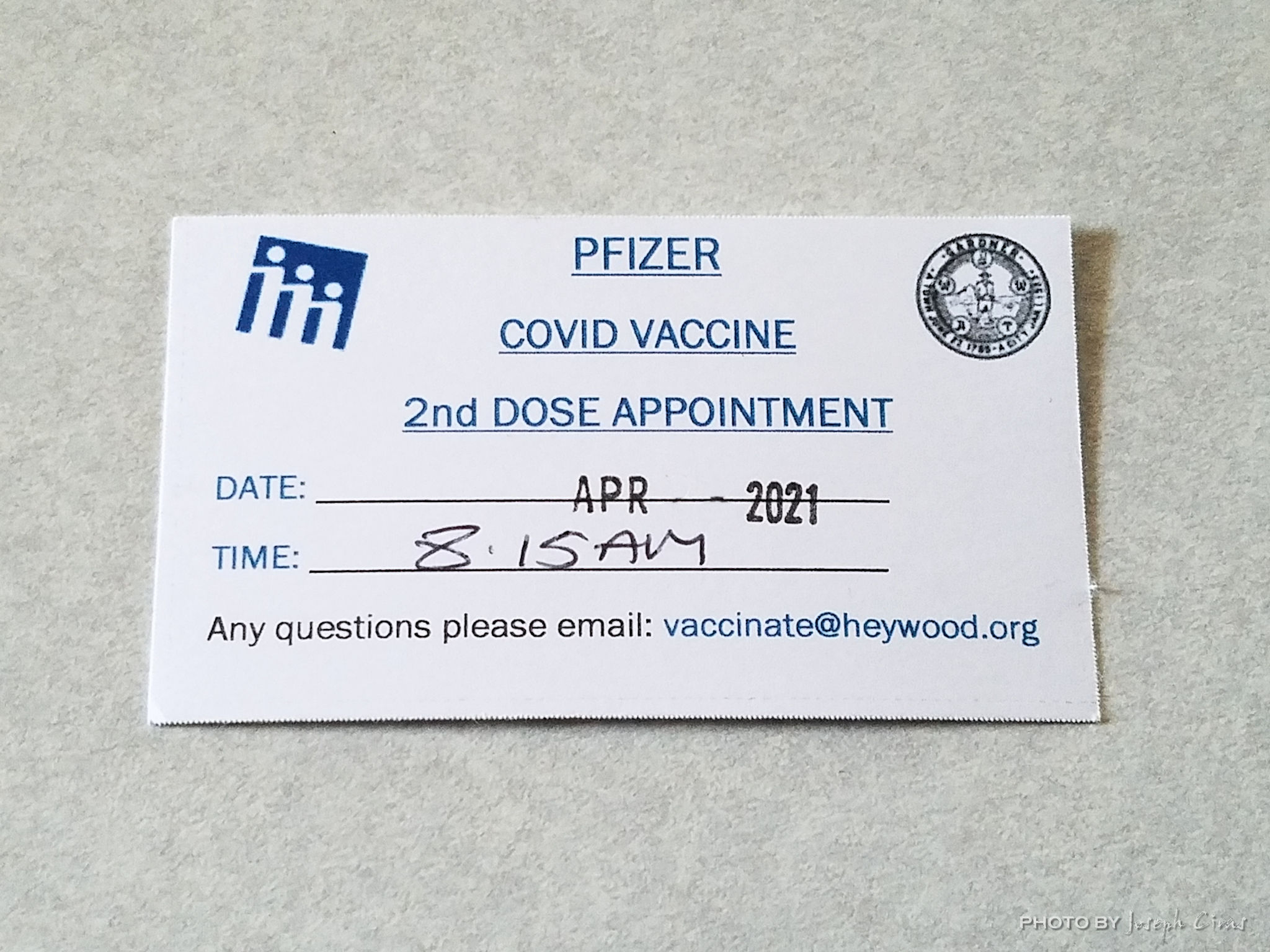
Saturday, 04/03/2021: Post photo—Second Appointment.

Settings: Samsung SM-G930V, ISO 160, f/1.7, 1/30 s, 4 mm.

BioNTech, Fosun Pharma, Pfizer vaccine is a COVID-19 vaccine authorized by FDA and recommended by the CDC for use in the US for a limited population. From the CDC website: “Based on evidence from clinical trials, the Pfizer-BioNTech vaccine was 95% effective at preventing laboratory-confirmed COVID-19 illness in people without evidence of previous infection.” For this vaccine to fully protect you, a second shot must be given 21 days after the first shot.

Getting vaccinated is easy. The signup for the vaccination is the hardest part. Due to a high demand for the vaccines, it may be difficult to get an appointment. Keep trying. It will save lives. Remember my footer: COVID is real! Be safe out there, keep your social distance, and remember to always wear your mask and wash your hands. I have lost an aunt to COVID and I know others that have died from it. I also know people that did not know that they had it or had very mild symptoms. Please take it seriously and get vaccinated when you can.

Vaccine appointment card

For more photo of other project I have work, visit my website: https://photobyjosephciras.weebly.com/ or visit me on Facebook at https://www.facebook.com/PhotobyJosephCiras/.

COVID is real! Be safe out there, keep your social distance, and remember to always wear your mask and wash your hands.