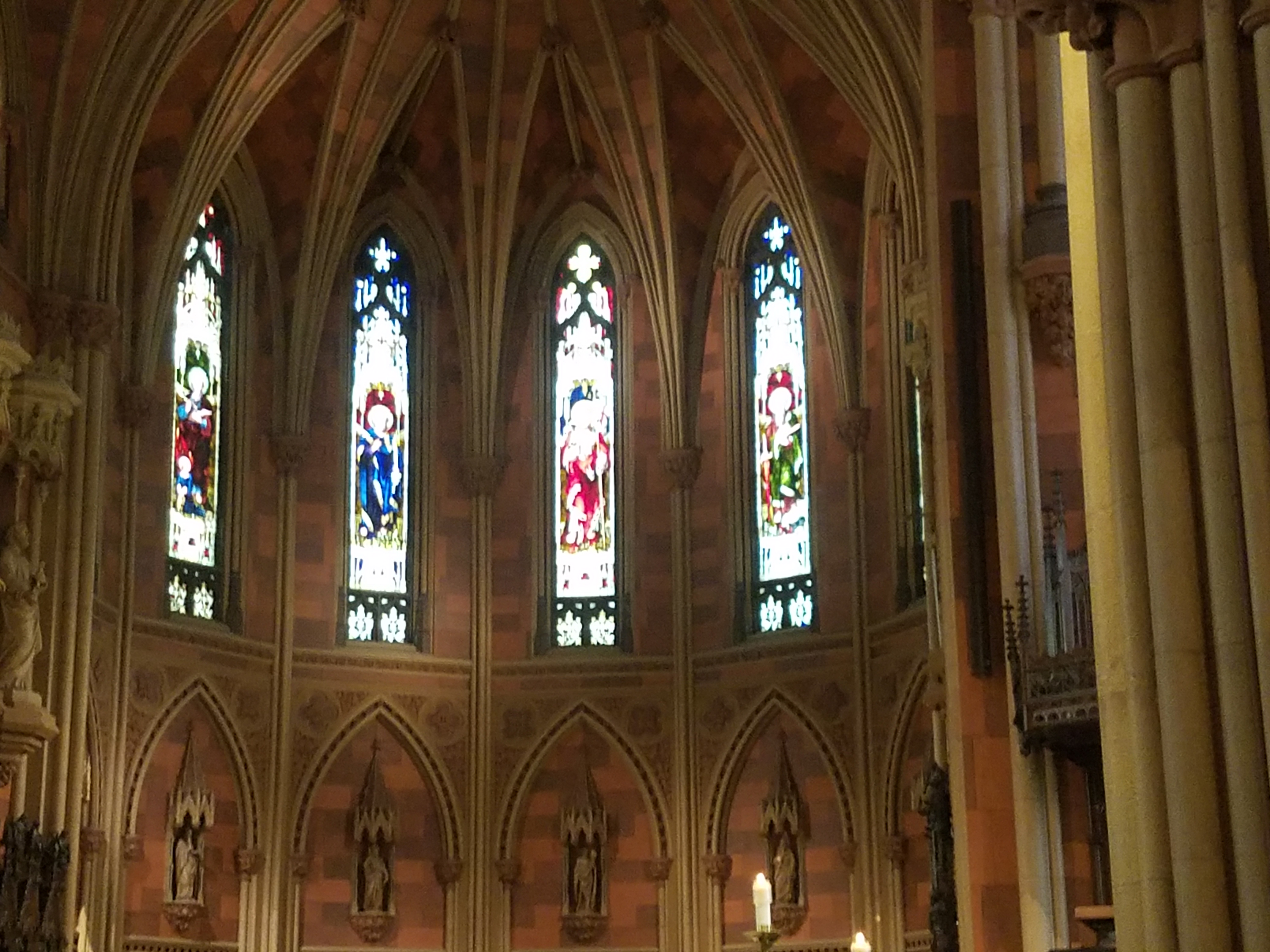
Photographic Thoughts — 11/28/2021 to 12/04/2021

“The camera is an excuse to be someplace you otherwise don’t belong. It gives me both a point of connection and a point of separation.” — Susan Meiselas

Thank you for all the new views and likes from last week, it helps keep me inspired.

Sunday, 11/28/2021: Posted photo — Summit of Mt Norwottuck.

Settings: Samsung SM-G930V (Galaxy S7), ISO 50, f/1.7, 1/268 s, 4 mm

Mount Norwottuck or Mount Norwottock, 1,106 feet above sea level, is the highest peak of the Holyoke Range. It was the first stop today. The second one was Long Mt at 920 feet. Not tall mountains, but the hike was 9 miles in length. Mount Norwottuck received its name from Edward Hitchcock, a former professor of geology at Amherst College. Hitchcock coined the term “Scenographical Geology” in 1841 to describe the dramatic geologic landscape of the Holyoke Range. Originally called Hilliard Knob, Hitchcock applied the Native American name Norwottuck to the mountain. Norwottuck is the Indian name of the village of Hadley.

Reference mark at on the summit of Mount Norwottock. The reference mark points to the summit.

An interesting fact about the Holyoke Range is that it is a Transverse Range. The mountain range runs east to west. There are two other major mountain ranges that are transverse in the United States. They are the Transverse Ranges in California and the Uinta Mountains in Utah.

Today would have been my mother’s 96th birthday. She passed away July 17 this year, so this is the first birthday without her. She is with my father who passed in 1993 and my daughter who passed in 1992. They get to meet their granddaughter together and celebrate their birthdays together for the first time in 28 years. My father would have turned 99 a few days ago.

Hiking clears your mind. Hiking with friends is very therapeutic.

Monday, 11/29/2021: Posted photo — Poles Against a Tree.

Settings: Samsung SM-G930V (Galaxy S7), ISO 1000, f/1.7, 1/10 s, 4 mm

Monday nights is hiking night. I hike with a Meetup group on Mondays for a few months now. It is a good group to hike with since the pace is a little faster than other groups that I have hiked with in the past.
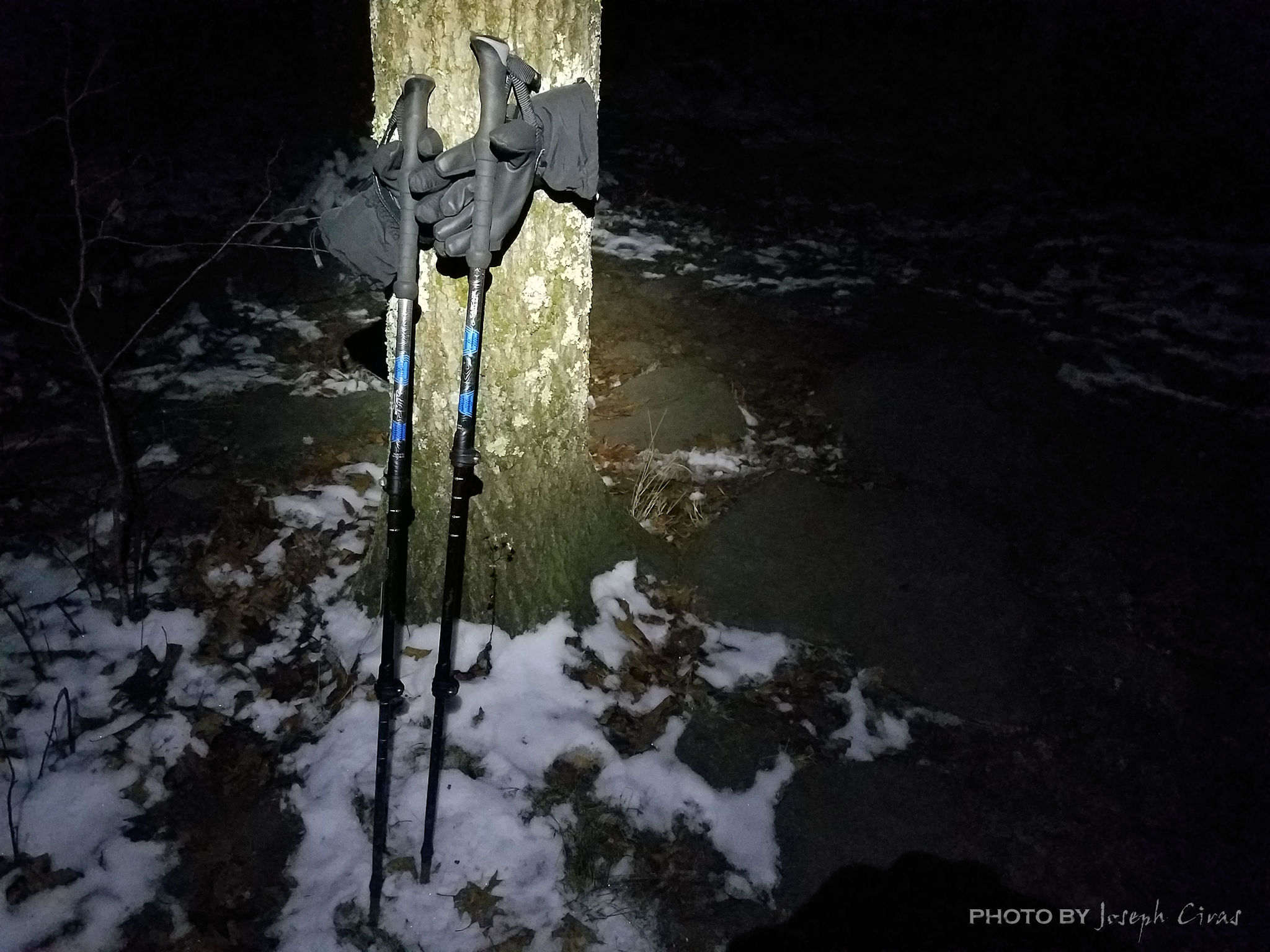
My poles at the junction of the Jack Frost and High Meadow Trails on Wachuestt Mountain

Tonight’s hike was in the cold and dark. The temperature was in the high 20s (F). It was the first time that I used my microspikes to hike with this year. I did not need to use them, but I did not know the trail conditions on one of the hills on the hike and I wanted to get ready for possible ice. We did get snow last week and the trails were snow covered the ground was frozen.

Why do I hike at night? I hike at night for the peacefulness of it. Even with a group, your senses are challenged, and you are more aware of your surroundings. As a leader for the hike, I keep my eyes and ears open for the less experienced people in the group.

As you can see from the photo, it was cold. I wore my gloves and not my -30 F mittens for this hike. Dressing is layers for winter hiking is also important, so you do not overheat or become too cold. You should have at least three layers. A base layer (underwear layer) that wicks sweat off your skin, a Middle layer (insulating layer) that retains body heat to protect you from the cold, and an outer layer (shell layer) that shields you from wind and rain. Here is a website that describes layering, https://www.rei.com/learn/expert-advice/layering-basics.html.

Tuesday, 11/30/2021: Posted photo — Yes, We Have No….

Settings: Samsung SM-G930V (Galaxy S7), ISO 80, f/1.7, 1/120 s, 4 mm

“Yes! We Have No Bananas” was written by Frank Silver and Irving Cohn and was published March 23, 1923. “The story goes that one day in 1922, songwriting duo Frank Silver and Irving Cohn were on their way to work in New York City when they stopped for a snack. At a greengrocer’s, the Greek immigrant owner told the tunesmiths in his broken English, “Yes! We have no bananas today.” The reason the grocer had no bananas? A blight in Central America had caused a shortage.” (https://www.mentalfloss.com/article/31253/music-history-3-yes-we-have-no-bananas)
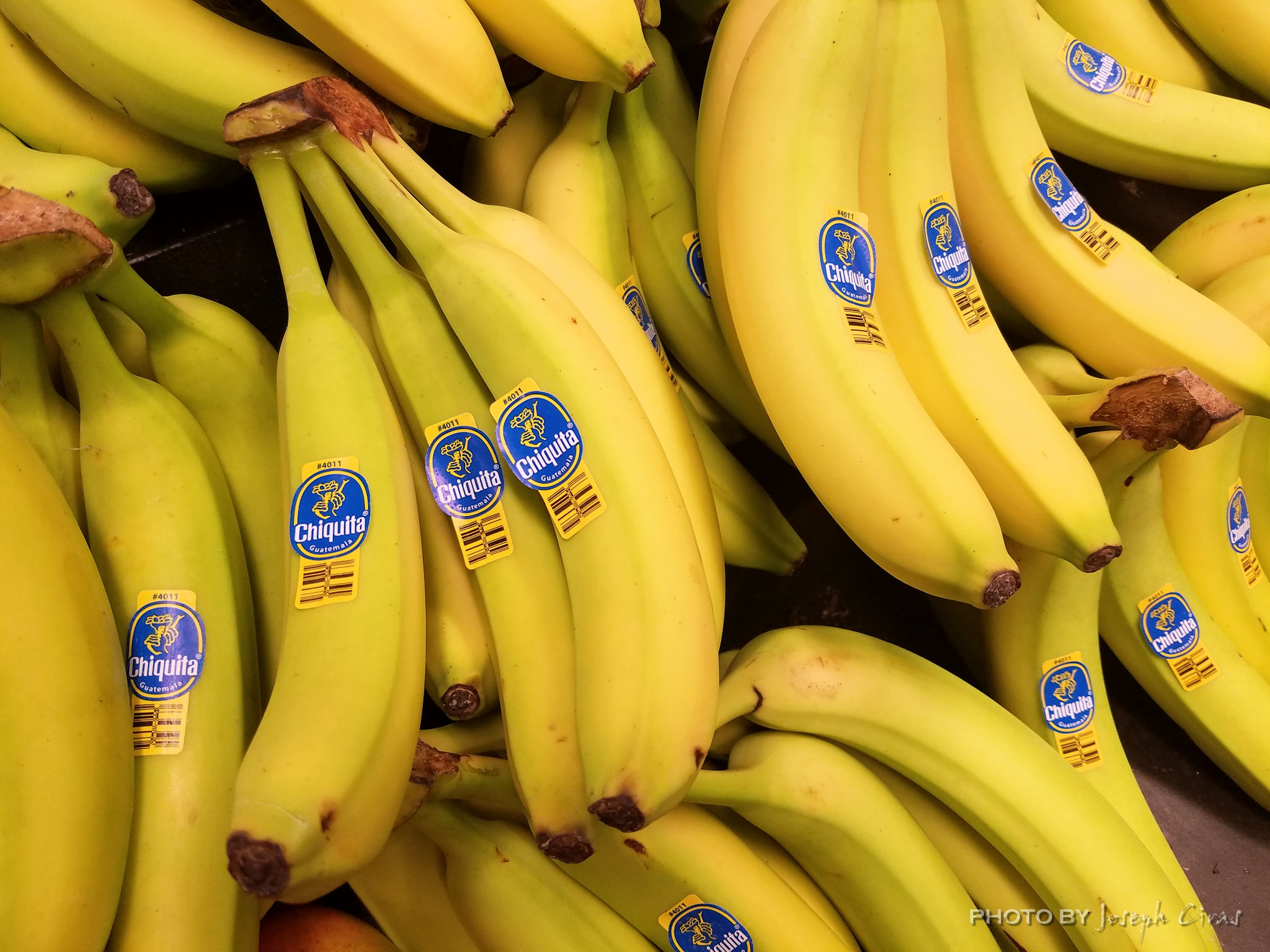
Bannanas

I thought about titling this photo “Going …” after the expression that has its roots on American college campuses in the 1960s. It is believed that the term going bananas is a term that evolved from the idiom going ape, which also means to go crazy, to explode with anger or to erupt with enthusiasm.

Wednesday, 12/01/2021: Posted photo — Just a Cloud or is it?

Settings: Canon EOS 60D, ISO 200, f/22, 1/6 s, 35 mm.

This could be just a cloud. Or it could be a winged buffalo tilting down to the left.
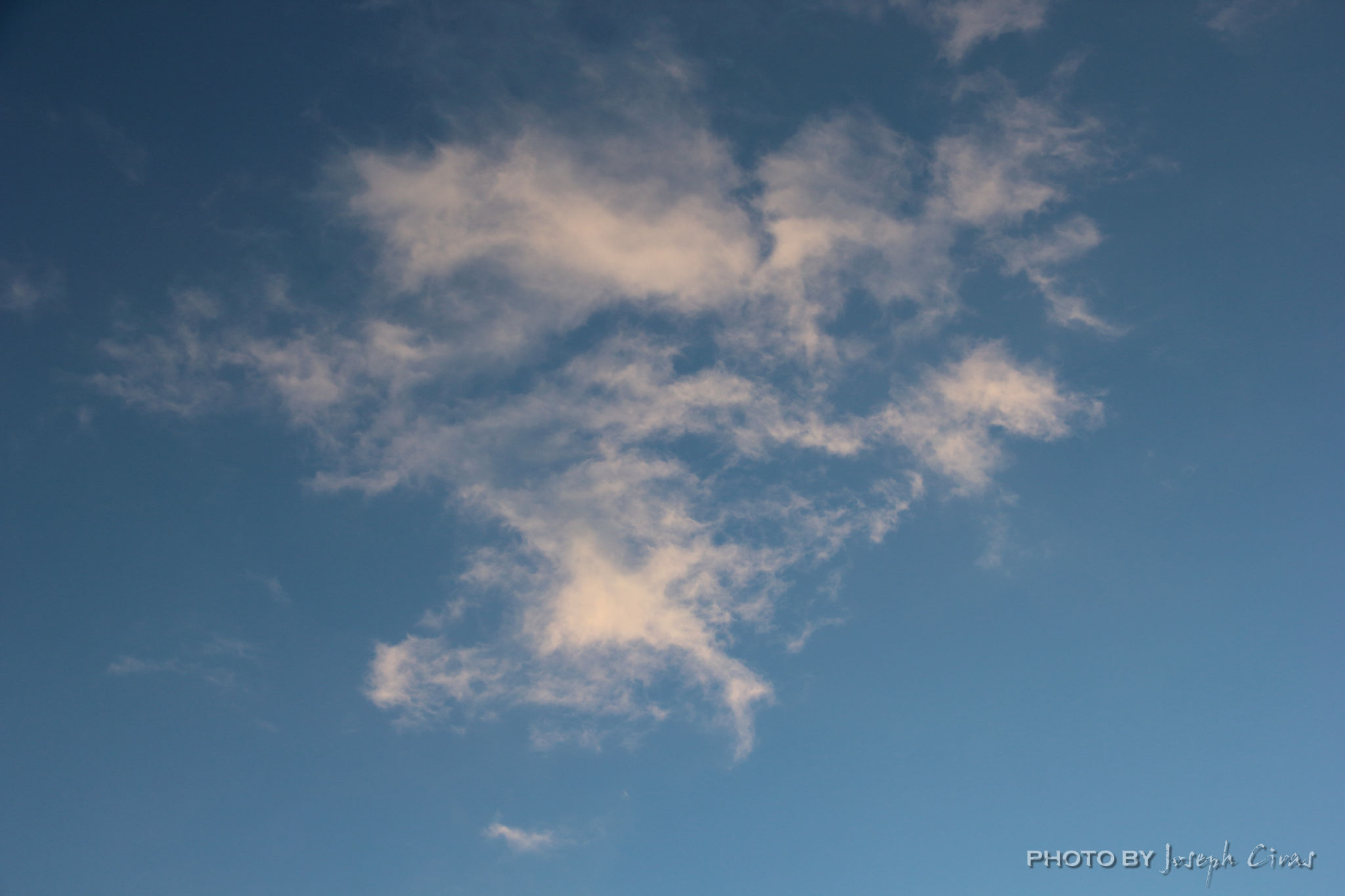
Cloud formation

I have posted in the past what seeing objects in clouds is called. Pareidolia is a sign of creativity. I took this photo today, not because I saw an object in it, it was because I needed a photo for today. I did not see the object until I was post processing the photos.

What do you see?

Thursday, 12/02/2021: Posted photo — American Bison.

Settings: Samsung SM-G930V (Galaxy S7), ISO 80, f/1.7, 1/120 s, 4 mm

This photo was taking at Wind Cave National Park in South Dakota. I have a feeling that I have posted this photo in a previous post. If I did, I am sorry for the repeat. I like this photo.
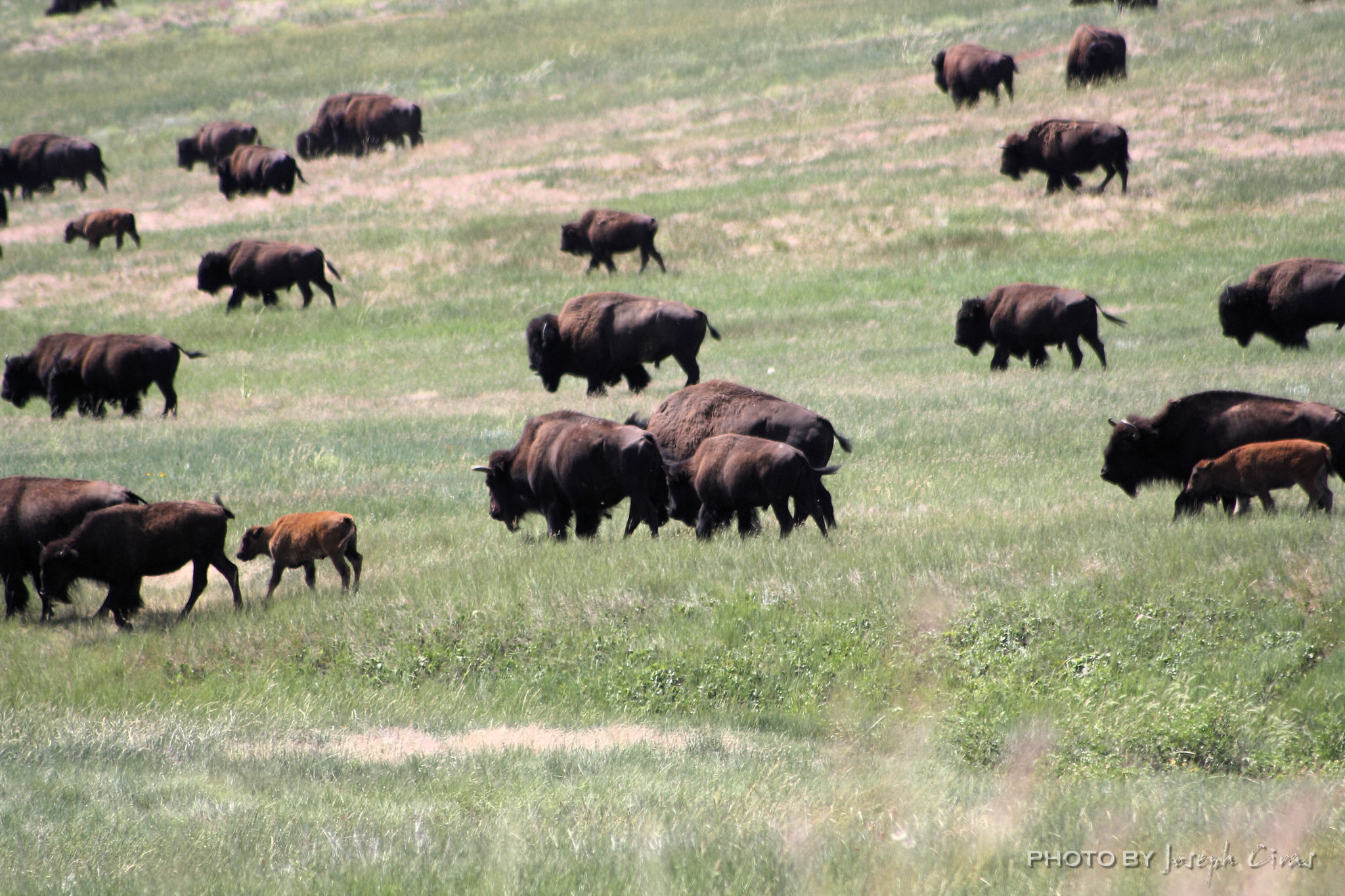
American Bison

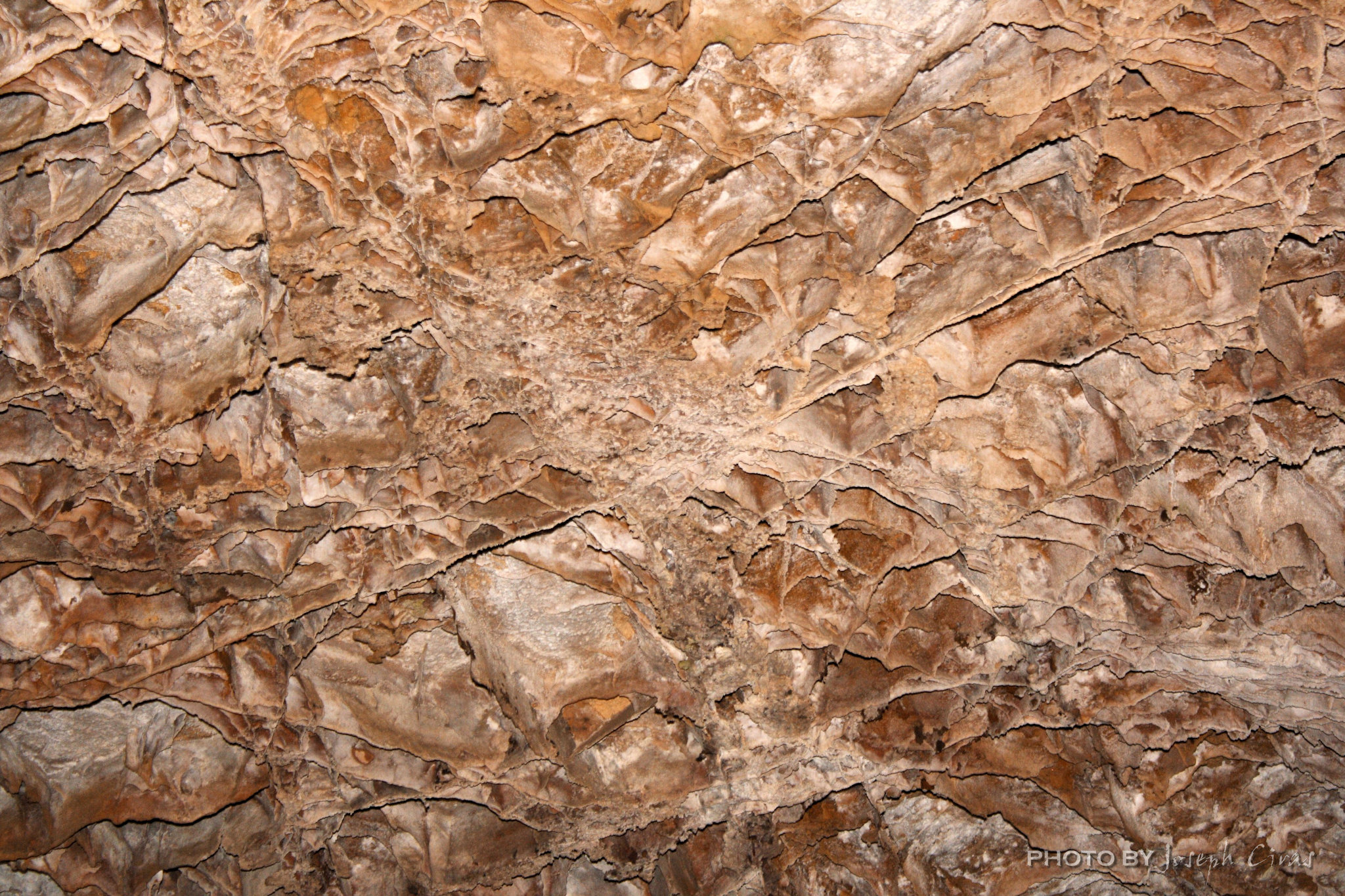
Wind Cave, one of the longest and most complex caves in the world. Named for barometric winds at its entrance, this maze of passages is home to boxwork, a unique formation rarely found elsewhere.

Here are a few more photos from Wind Cave National Park.
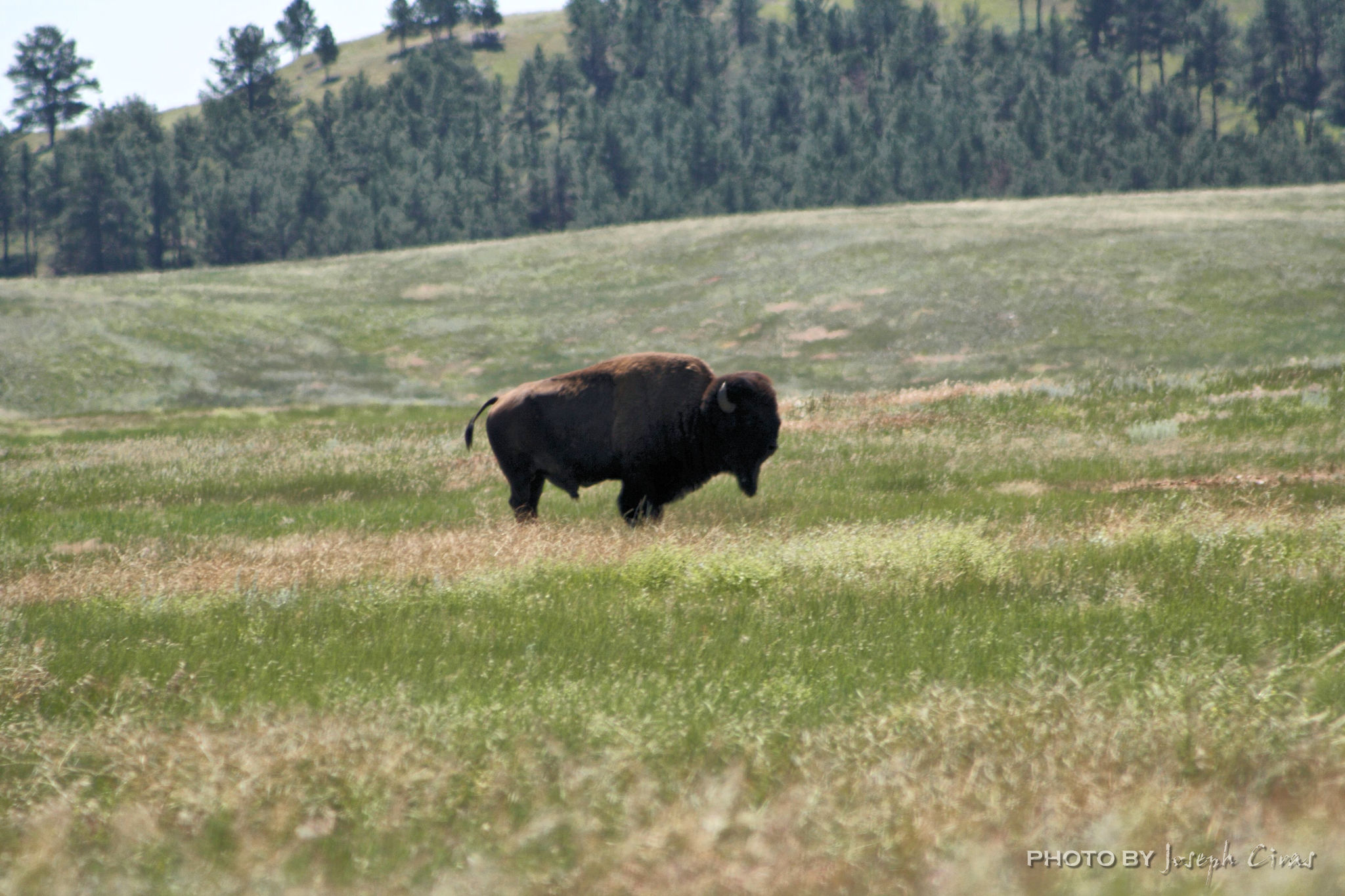
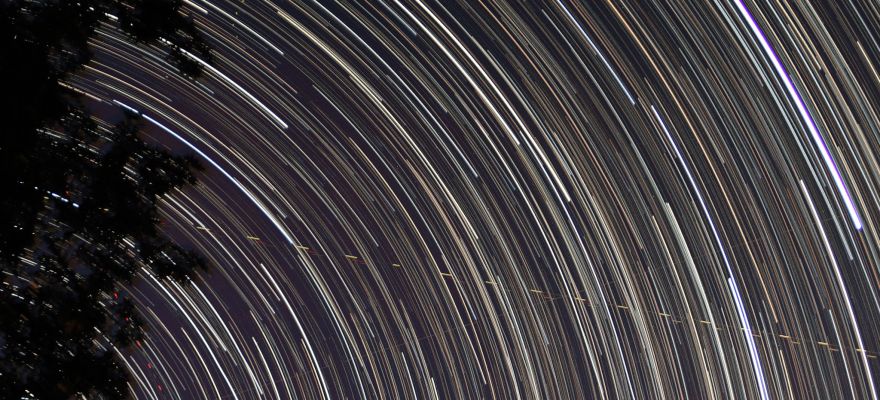
Friday, 12/03/2021: Post photo — Star Trail.

Settings: Canon EOS 60D, ISO 3200, f/3.5, 9 s, 18 mm

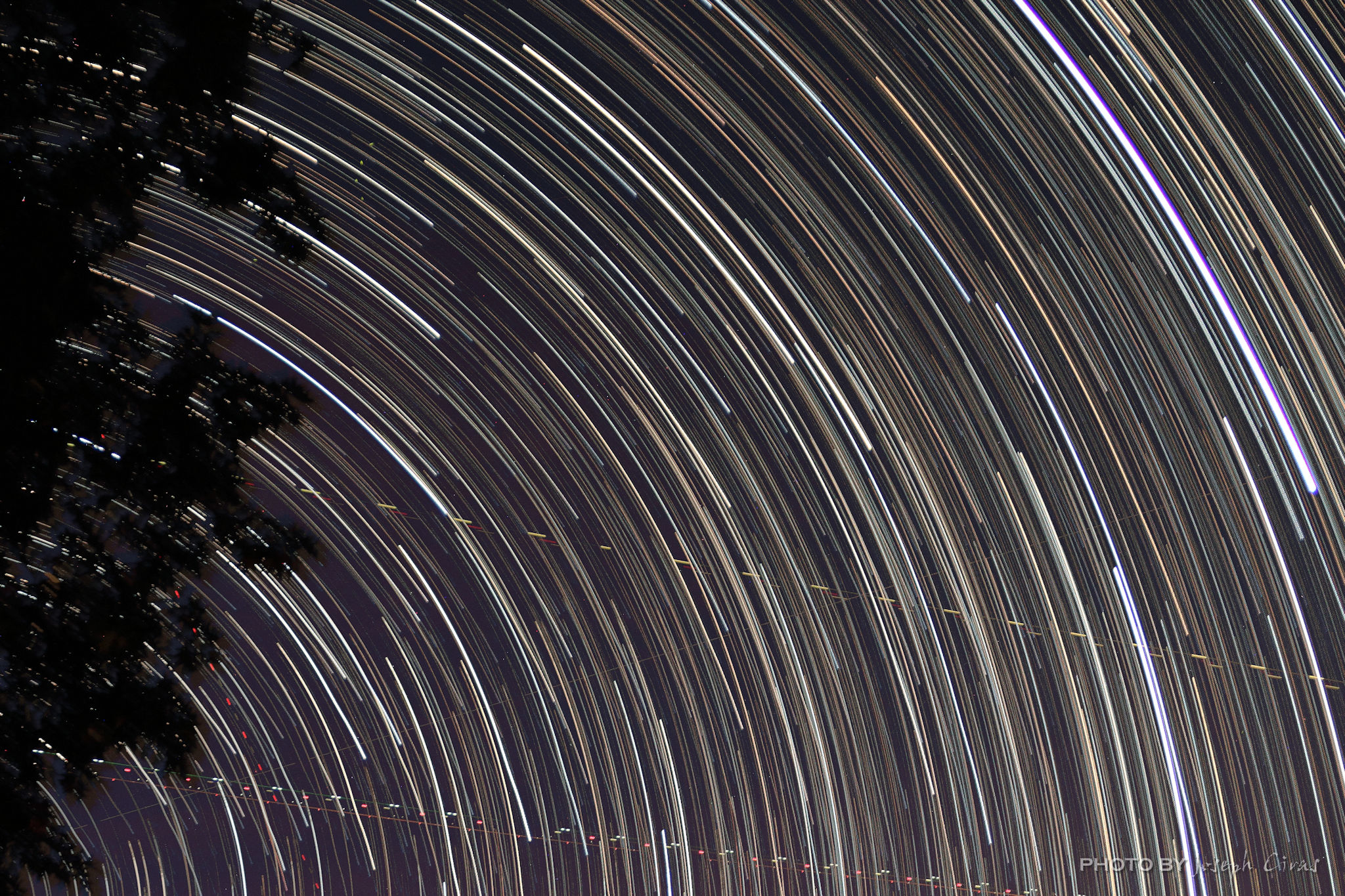
I took a star trail photo today. It was great to take a star trail photo earlier in the evening and not after 10 p.m. The photo I posted was a composite of 437 photos stacked together. The secondary photo that I am posting in this post is a composite of 637 photos.
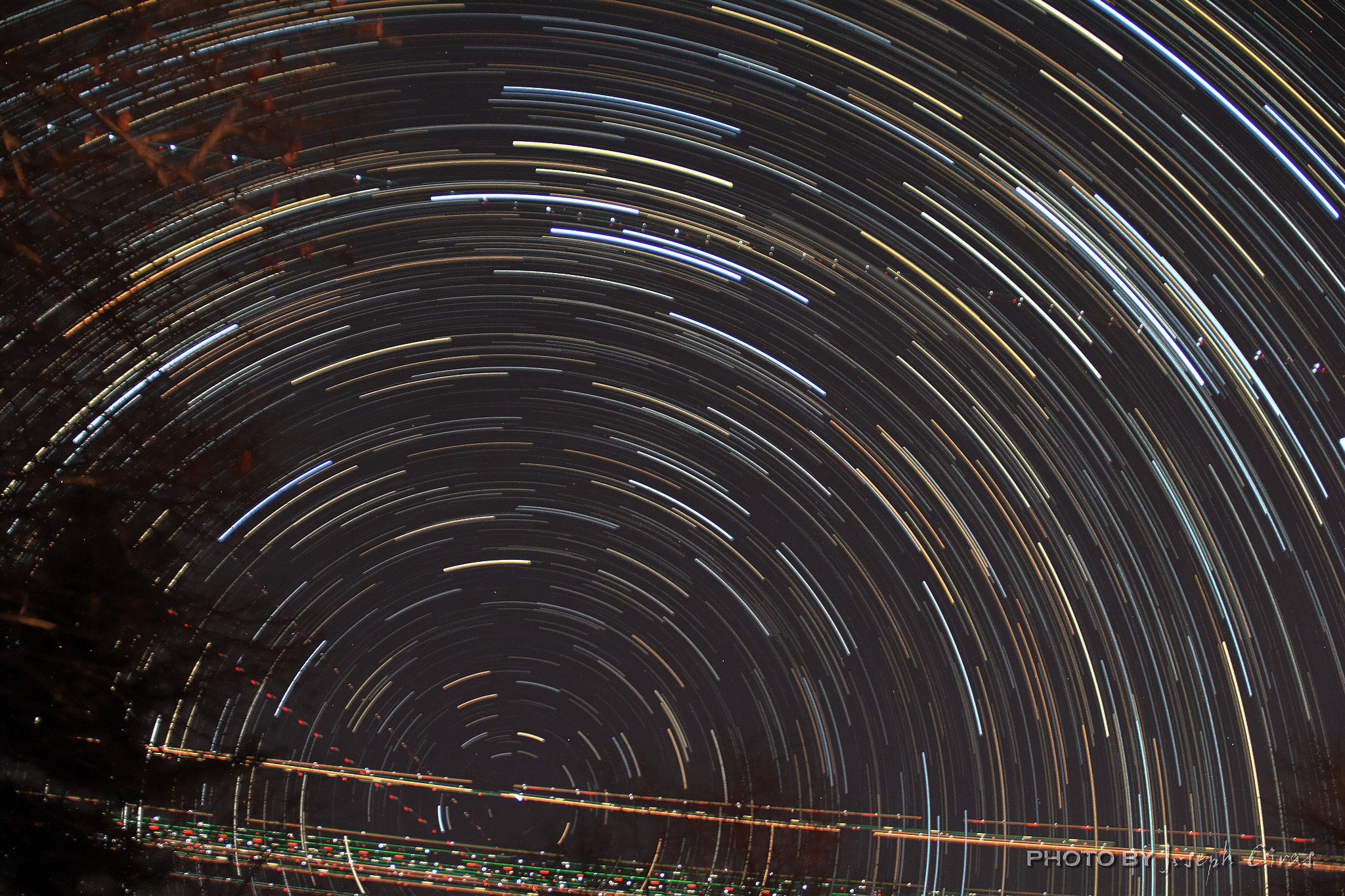
437 composite photo start trail

There is a lot of airplane activity north of my house at night.
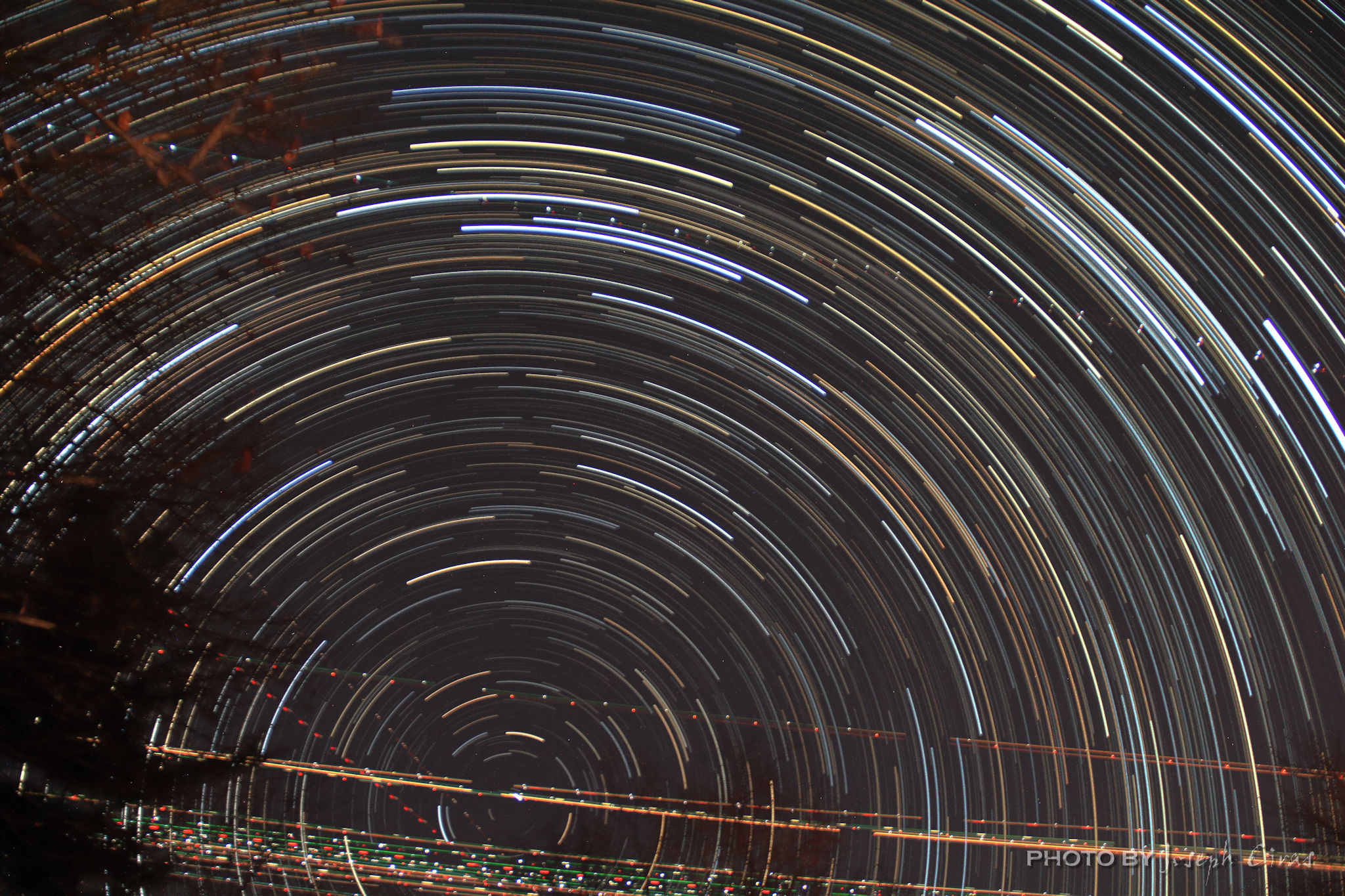
637 composite photo start trail

Saturday, 12/04/2021: Post photo — Sunrise at the Pier.

Settings: Canon EOS 60D, ISO 100, f/22, 1/4 s, 62 mm.

I took this photo a few years ago on Jacksonville Beach. This pier was damaged by a hurricane a few years after I took this photo. This is one of my favorite photos that I took that morning. I took this because I liked the way the heron was silhouetted against the pier and the ocean.

Jacksonville Beach Pier

That is all for now. Until next week, be safe.

For more photo of other project I have work, visit my website: https://photobyjosephciras.weebly.com or visit me on Facebook at https://www.facebook.com/PhotobyJosephCiras/.

Please note that I have not been able to post to my Weebly page for over a week, so the photos are a little behind there. Weebly technical support is still working on the issue.
Photographic Thoughts — 06/13/2021 to 06/19/2021

“I don’t trust words. I trust pictures.” — Gilles Peress

Thank you for all the new views and likes from last week, it helps keep me inspired.

Enjoy this week’s rambling mind of a mechanical engineer and photographer.

Sunday, 06/13/2021: Posted photo — Star Trails.

Settings: Canon EOS 60D, ISO 1600, f/3.5, 16 s, 18 mm.

This photo is a stacked composite of 399 sixteen second exposed photos. It has been a while since I took a star trail photo. There are two different methods for taking star trails: one is by taking multiple shots and stacking them, the other is by doing long exposure shot. I have done star trails both ways. The longest exposer I took was a 45-minute exposure at Craters of the Moon National Monument and Reserve in Idaho a few years ago. The sky was very, very dark at this park. So dark, you had a difficult time seeing your outstretched hand. I the area I live, staking is the best way of doing star trails.

Here is how I prepare for my star trail photos. I setup my camera before I go to bed pointing in a northerly direction. Then when it gets to astronomical twilight, I turn the camera on to start taking photos and then go to bed.

Here are some definitions for your and my reference. All angles are the position of the Sun to the horizon:

  • Nighttime (below -18°)
  • Morning twilights (from -18° to 0°)
    • Astronomical Twilight (from -18° to -12°)
    • Nautical Twilight (from -12° to -6°)
    • Civil twilight (from -6° to 0°)
  • Morning magic hours
    • Blue hour (from -6° to -4°)
    • Golden hour (from -4° to 6°)
  • Daytime (above 6°)
  • Evening magic hours
    • Golden hour (from 6° to -4°)
    • Blue hour (from -4° to -6°)
  • Evening twilights (from 0° to -18°)
    • Civil twilight (from 0° to -6°)
    • Nautical Twilight (from -6° to -12°)
    • Astronomical Twilight (from -12° to -18°)
  • Nighttime (below -18°)

Why 16 seconds? Sixteen seconds is based on the aperture, pixel density, and focal length (NPF) rule. This considers the megapixels of your camera to make the stars still. With my camera and settings, a shot of 15.17 s or less will not show moment in the stars if you zoom into the picture. It is not necessary for star trails, but I use this rule for Milky Way shots. The better-known rule is the 500 rule. This is the classic rule for making the star stand still.

Monday, 06/14/2021: Posted photo — Sweet-Williams.

Settings: Samsung SM-G930V (Galaxy S7), ISO 50, f/1.7, 1/171 s, 4 mm

“Sweet William is an irresistible, colorful, biennial flower. It grows for two years, blooming in the second year. Native to Europe, this colorful, compact plant is grown all over the U.S.

Sweet William varieties include perennials and biennials. The perennials are often grown as biennials. Plants grow 7-18 inches tall, depending upon variety. Flowers blooms are produced in clusters in the spring. Colors include white, red, pink, crimson, scarlet, purple, and bi-colors.

The compact size of Sweet Williams make them great for containers and pots. Try them in a windowsill or vertical planter. In flower beds, put these small plants at the front of the garden. Despite their small size, they make good cut flowers. All they need for indoor splendor, is a small vase.

The Raging Name Debate — There is much debate over who Sweet William was named for. The list of honorees includes: William the Conqueror, Saint William of York, and Prince William Augustus, the Duke of Cumberland.

Plant Height: 12”–24”

How to Grow Sweet William Annual Flowers. For a better flower garden, follow The Gardener’s Network. (gardenersnet.com).

These Sweet-Williams were in a flower patch near one of the parking lots at the Wachusett Mountain ski area. I passed them on my way to my Monday night hike and stopped to take a photo of them on my way back from my hike. I did not have my DSLR with me, so I took this with my cellphone. I do not like the quality of this photo. Then again, I do not like many of my cellphone photos.

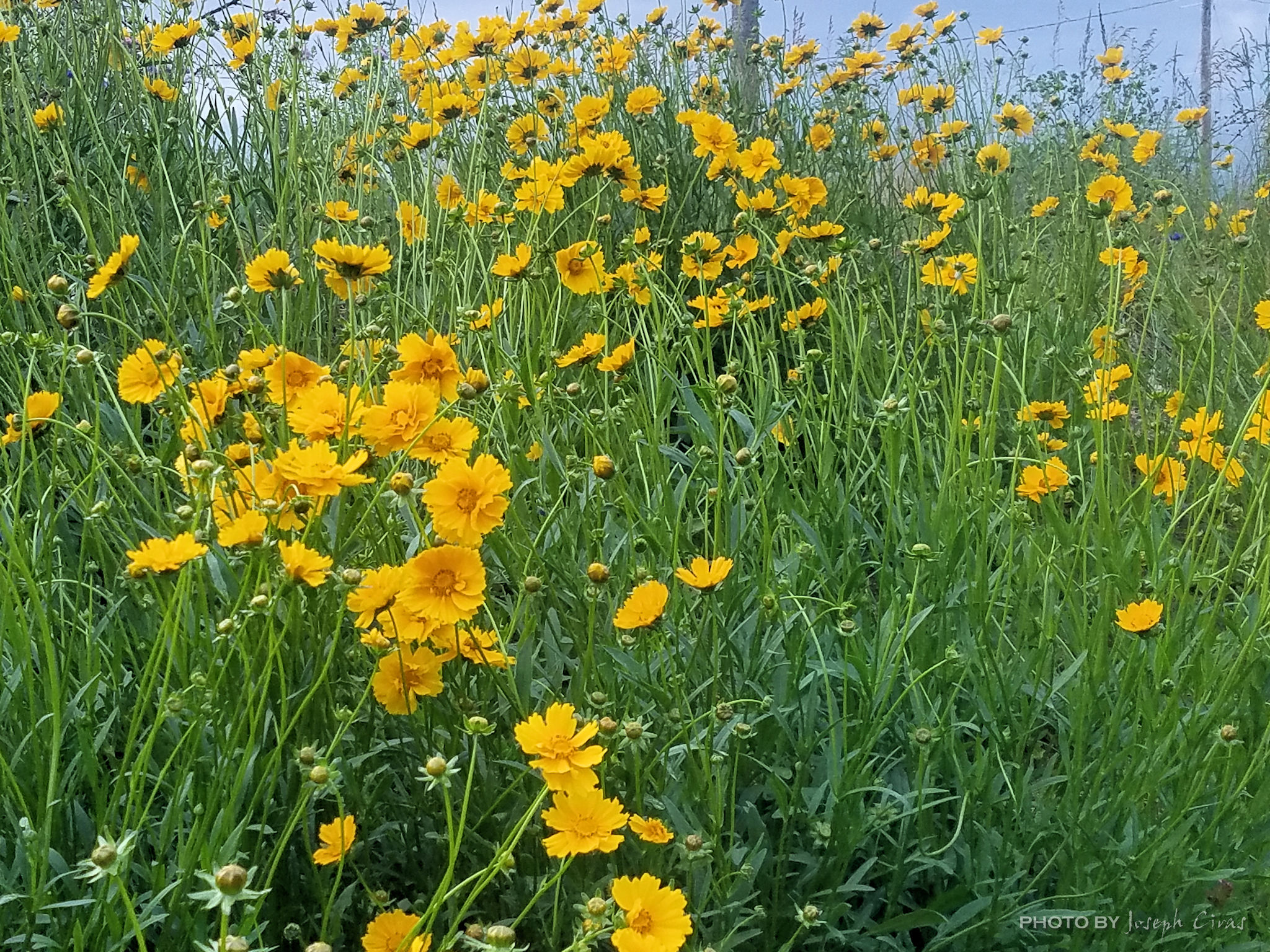
Here are some more photos of that flower patch.

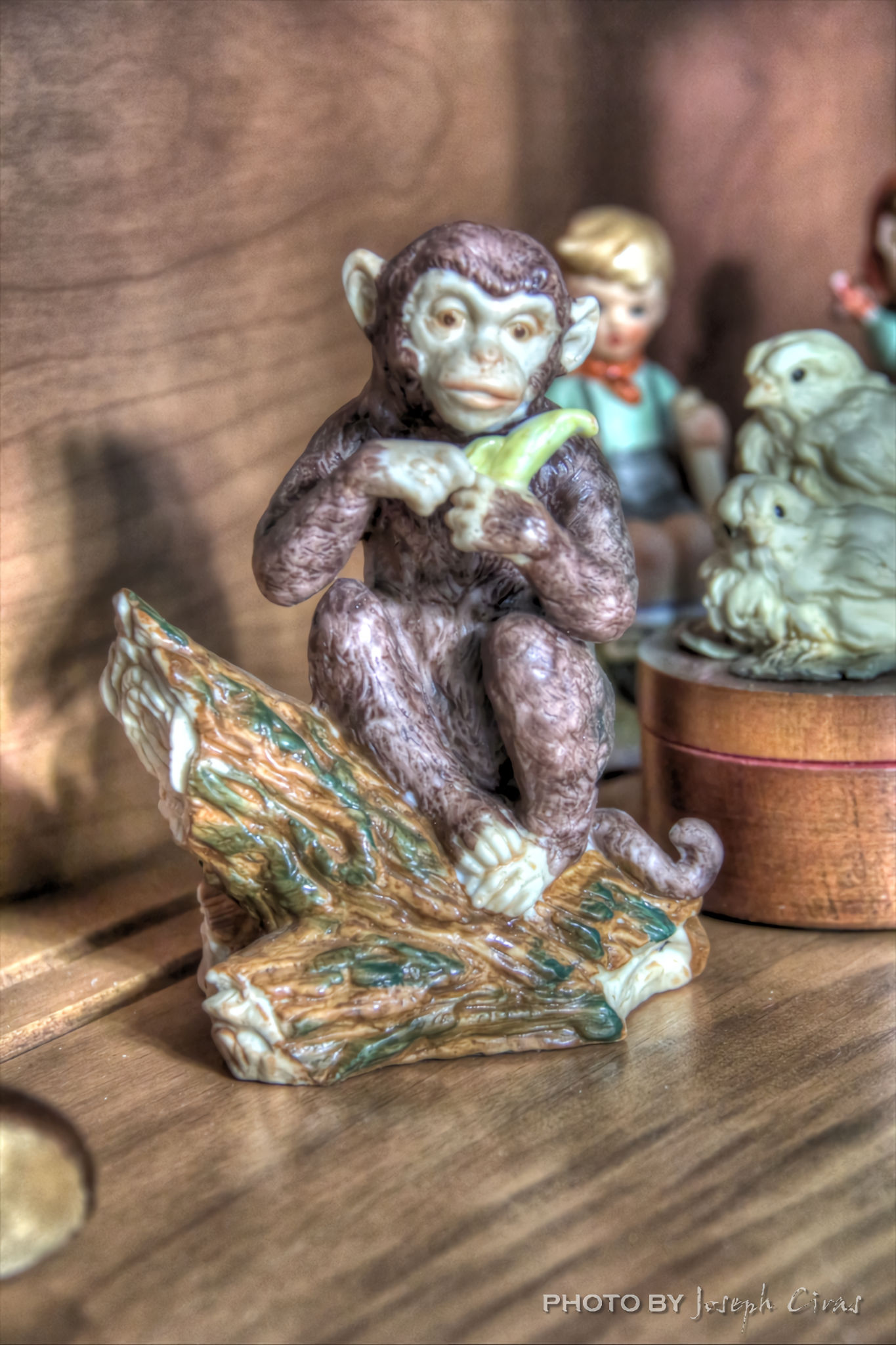
Tuesday, 06/15/2021: Posted photo — Monkey HDR.

Settings: Canon EOS 60D, ISO 1600, f/5.6, 1/13 s, 52 mm.

This monkey is a trinket in my mother’s china cabinet. The definition of a trinket is a small ornament or item of jewelry that is of little value. The trinkets in my mother’s collection have emotional and sentimental value.

A china cabinet is a piece of dining room furniture, usually with glass fronts and sides, used to hold and display porcelain dinnerware. Her china cabinet is filled with unicorn trinkets and other trinkets that she has collected over the years with my father. He good china and silverware are also located in the cabinet.

This cabinet was “no-touch” in our house when I was younger. With six brothers, she did not want any of the items broken. We were able to go into the cabinet when company was coming over.

I edited this photo with as a High Dynamic Range (HDR) photo because the light was bad in the room, and I wanted to save this photo. It was one of the only photos I took today, and it was of the best quality.

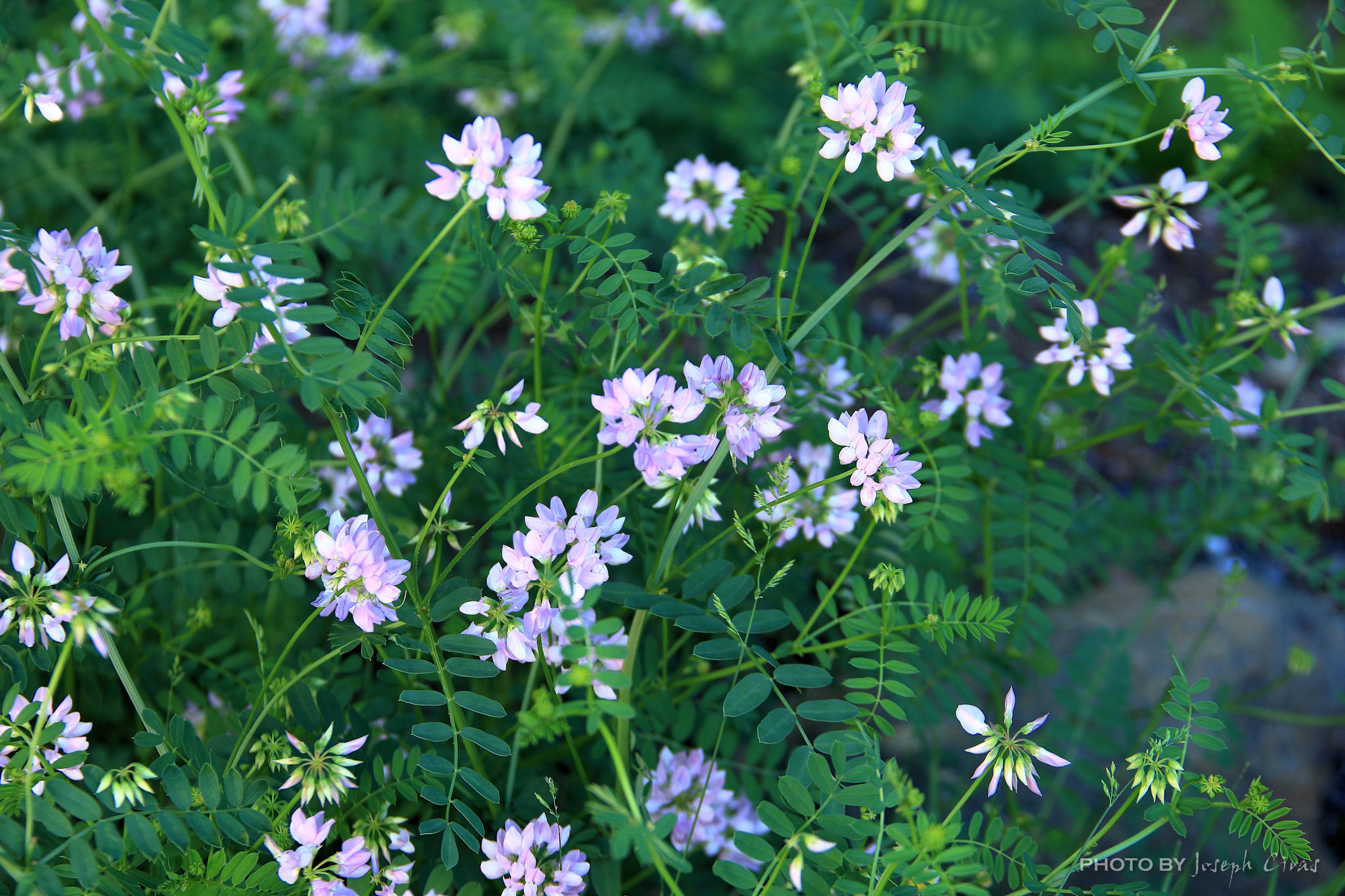
Wednesday, 06/16/2021: Posted photo — Wildflowers.

Settings: Canon EOS 60D, ISO 100, f/5.6, 1/20 s, 52 mm.

These flowers are called purple crown vetch. According to my Seek app, Securigera varia (synonym Coronilla varia), commonly known as crownvetch or purple crown vetch, is a low-growing legume vine. It is native to Africa, Asia and Europe and is commonly used throughout the United States and Canada for erosion control, roadside planting and soil rehabilitation. It has become an invasive species in many states of the US.

binary comment

These were on a roadside. I passed them during one of my walks today. As written many times in different ones of my blogs, I take many photos during the day and pick out one to post.

Here is another photo I took today. My niece purchased these cookies for a party that did not happened today. She brought them to my mother’s house for all the aids to enjoy.

Thursday, 06/17/2021: Posted photo — Cookies.

Settings: N/A.

Some cookies left by one of my nieces at my mother’s house. She was going to have a party at work that did not happen. I do not know why. All I know is that there are many cookies around to be eaten.

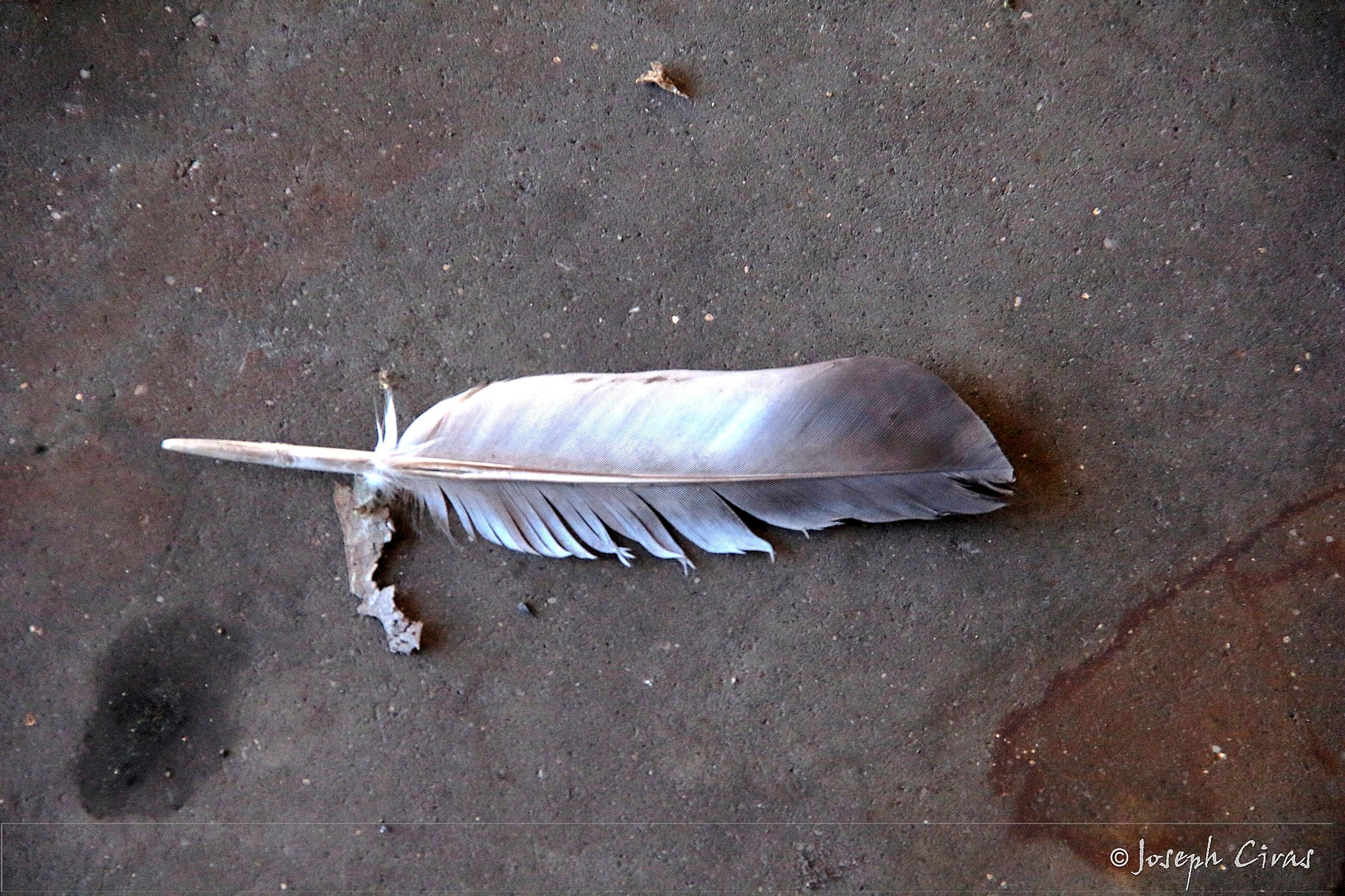
Friday, 06/18/2021: Post photo — Feather.

Settings: N/A.

Some poor bird lost its feather. I took this photo since I was getting ready to travel from my vacation (holiday) and needed a quick photo.

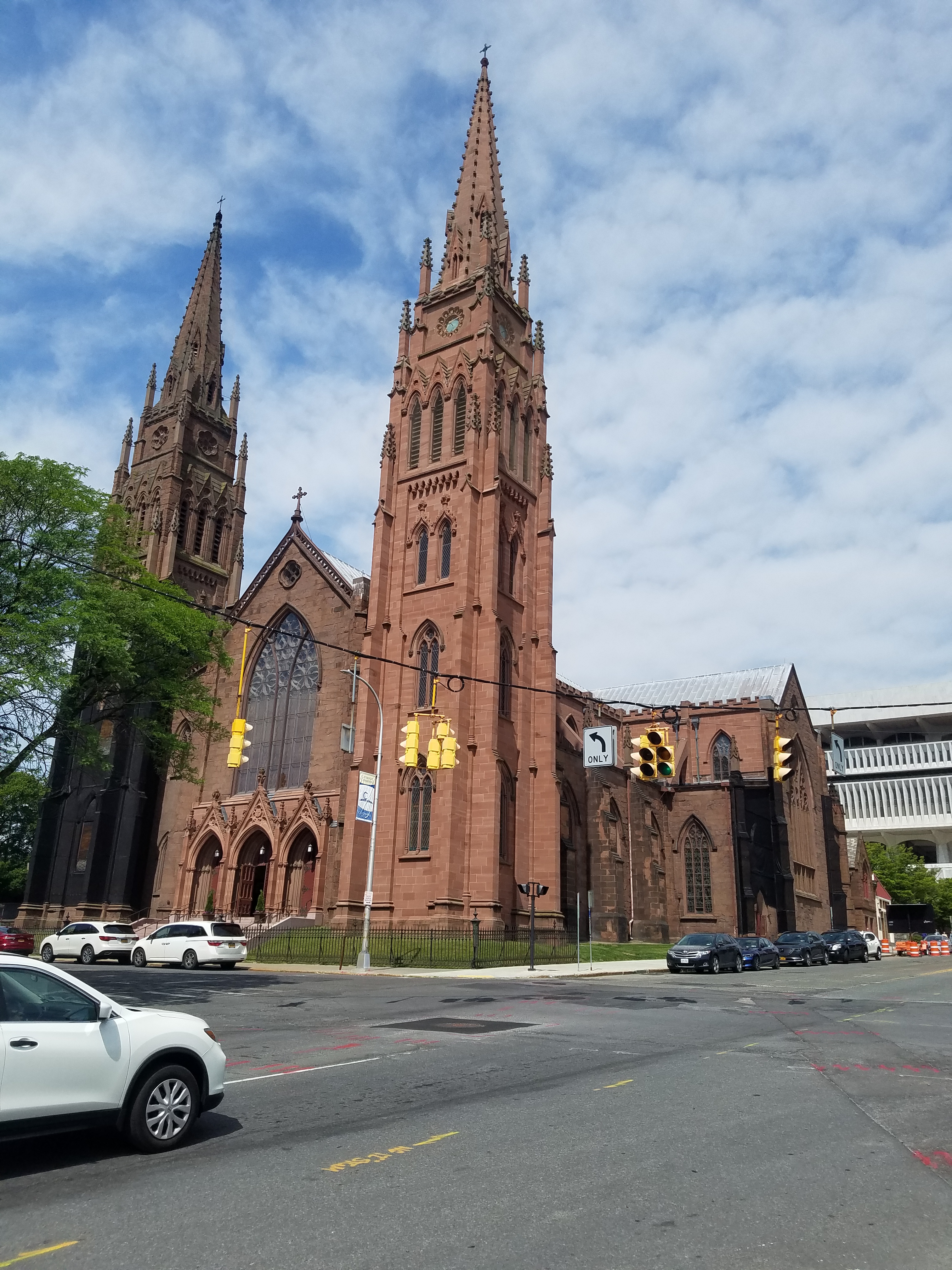
Saturday, 06/19/2021: Post photo — Ordination or Holy Orders.

Settings: Samsung SM-G930V (Galaxy S7), ISO 200, f/1.7, 1/24 s, 4 mm

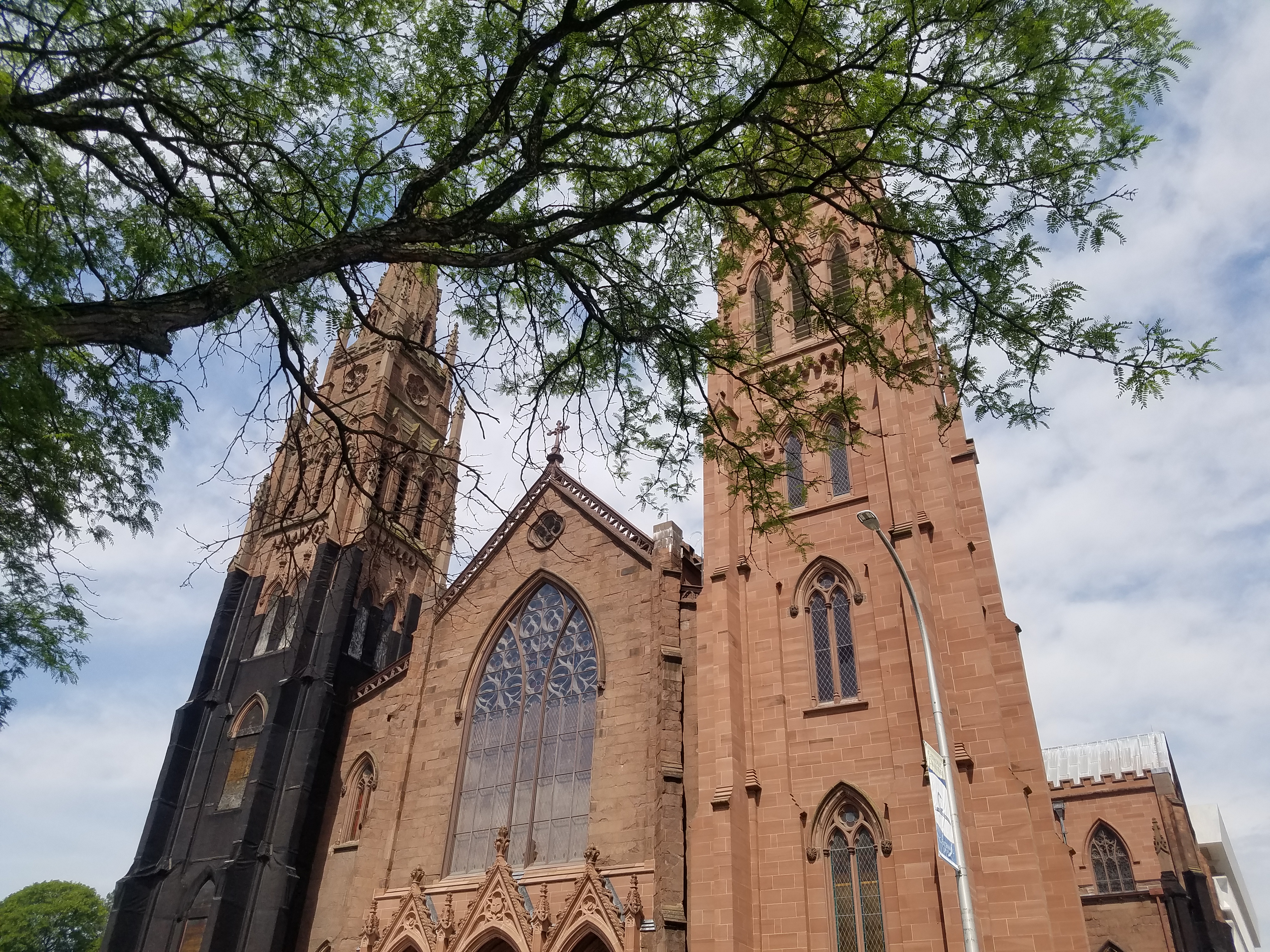
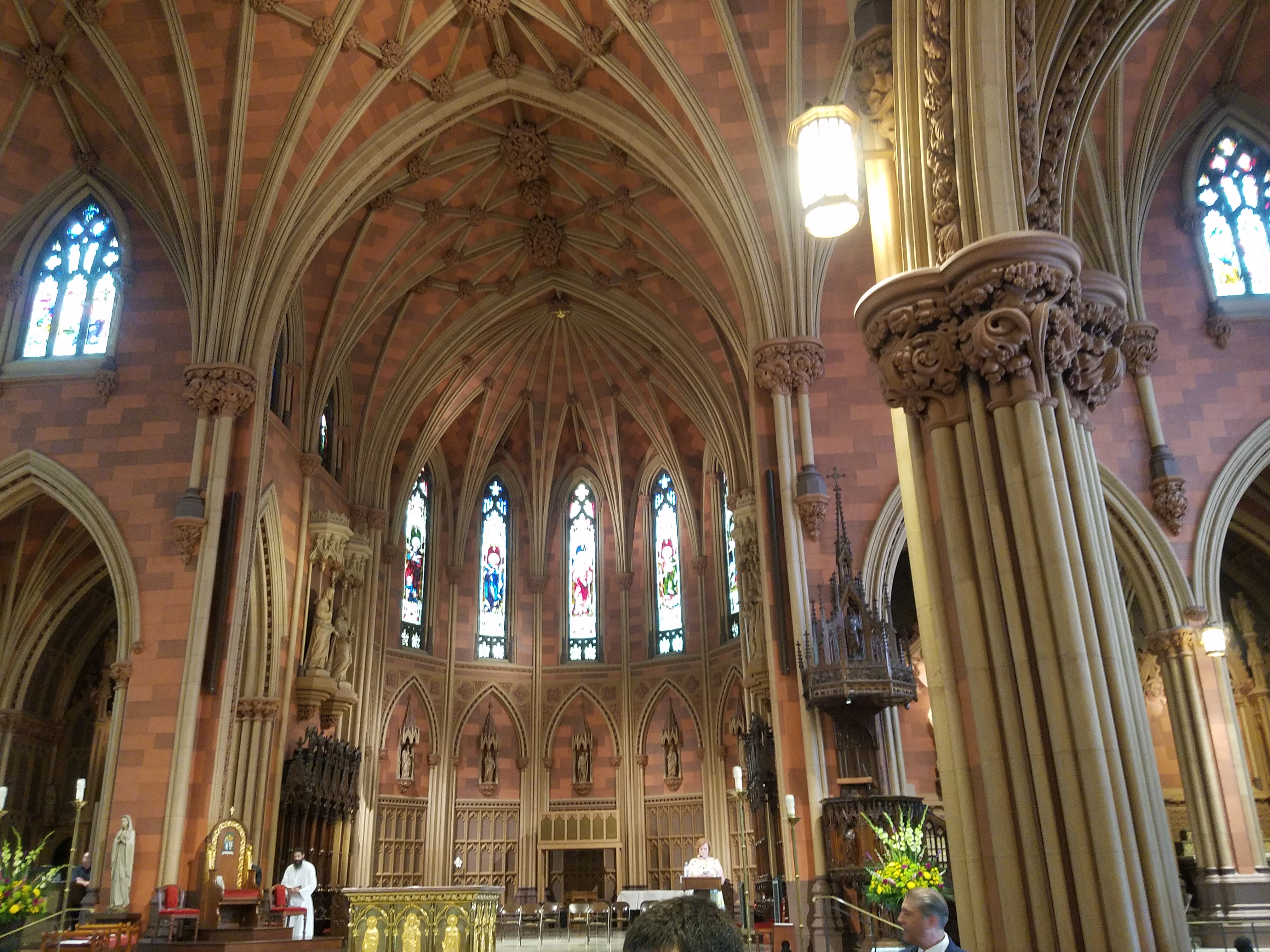
My wife’s cousin’s son was ordained a priest today for the Roman Catholic Diocese of Albany NY. We were invited ordination to the deaconate last year in Rome that did not happen due to COVID. We had planned to go to this ordination and glad that we could attend. Congratulation Fr. Matt Duclos!

Here are some more photos from the day.

I am not sure when I will post my blogs for the next two weeks due to commitments. I will see if I can post a partial blog later in the week and follow up with an update to that blog.

That is all for now. Until next week, be safe.

For more photo of other project I have work, visit my website: https://photobyjosephciras.weebly.com/ or visit me on Facebook at https://www.facebook.com/PhotobyJosephCiras/.

COVID is real! Be safe out there, keep your social distance, and remember to always wear your mask and wash your hands. Get your vaccine!