Settings: Canon EOS 60D, ISO 100, f/7.1, 1/30 s, 113 mm.
Last week I wrote about how cold it was in this area. Here is a photo of this morning’s temperature. As you can see, it is still cold in this area. The temperature will warm up tomorrow since we are expecting eight inches of snow. Looks like I will be snowshoeing to work tomorrow.
From AccuWeather:
A question meteorologist get asked all the time during the cold winter months is “can it ever be too cold to snow”? Well, the short answer is no.
The ingredients for snow are:
1. A temperature profile that allows snow to reach the surface 2. Saturated air 3. Enough lifting of that saturated air to allow snow to develop aloft and fall to reach the surface
The phrase “it’s too cold to snow” probably originated as a misapplication of the relationship between temperature and the maximum amount of water vapor that can be in the air. When temperature decreases, the maximum capacity of water vapor that can be in the air decreases. Therefore, the colder it gets the less water vapor there will be in the air.
Monday, 01/17/2022: Posted photo — My Commute.
Settings: Google Pixel 2, ISO 186, f/1.8, 1/60 s, 4 mm.
It snowed last night, and it was snowing during my morning commute. I like to say that my commute took longer that usual to get to work. What normally takes me five minutes, took me 45 minutes. It is much safer for me to walk to work in the snow than it is for me to drive in the snow. A little more than half of my hike is on the Midstate Trail. It is nice to live so close to a trail junction or trailhead.
During my three mile hike to work, I may see one or two cars and a half dozen plows. On my way home from work, there will be some more cars, depending on the road conditions. People stay home from work when it is snowing. The funny thing about that is that I live in north central Massachusetts, in a snowy part of New England, so people should be used to driving in the snow.
I did not go on my normal Monday night hike on Wachusett Mountain today. If I were to hike it, I would have to leave work a little early, take the three mile, 45 minute hike home; get in my car; and then hike three to four more miles on the mountain.
Walking generally occurs on flat paths, while hiking often occurs in areas of high elevation. It can include hills and mountains. Some people think of hiking as anything that has above a 500 foot change in elevation.
Settings: Canon EOS 60D, ISO 100, f/16, 1/250 s, 300 mm.
The full moon was yesterday. It was snowing yesterday so I did not have the opportunity to do my full moon without a headlamp nighttime hike on Wachusett Mountain. As written yesterday, I walked to and from work because of the weather.
This morning I saw the moon and wanted to take a photo of it for this month.
From the Old Farmer’s Almanac: “It’s thought that January’s full Moon came to be known as the Wolf Moon because wolves were more likely to be heard howling at this time. It was traditionally believed that wolves howled due to hunger during winter, but we know today that wolves howl for different reasons. Howling and other wolf vocalizations are generally used to define territory, locate pack members, reinforce social bonds, and coordinate hunting.”
Wednesday, 01/19/2022: Posted photo — Sunrise.
Settings: Canon EOS 60D, ISO 200, f/7.1, 1/30 s, 50 mm.
The sky caught my eye this morning, so I took a photo of it. The photo itself will explain why. What great colors. Too bad a photo does not do it justice.
Settings: Canon EOS DIGITAL REBEL XS, ISO 200, f/11, 1/640 s, 75 mm.
The Aialik Glacier is a glacier in the Kenai Peninsula Borough of Alaska. It drains into Aialik Bay. Part of Kenai Fjords National Park, it drains the Harding Icefield. Aialik Glacier, a little over 15 miles from Seward, is the largest glacier in Aialik Bay.
Icefields are expanses of glacial ice flowing in multiple directions. Like ice caps, icefields usually cover less than 50,000 square kilometers (19,300 square miles), so they are much smaller than the ice sheets blanketing Greenland and Antarctica. In contrast to ice caps, icefields are interrupted by peaks of the underlying mountain ridges, and those mountains influence the flow of the icefield.
This is one of the amazing sites in Alaska.
Friday, 01/21/2022: Post photo — Morning View.
Settings: Canon EOS 60D, ISO 100, f/7.1, 1/160 s, 101 mm.
What a great view this morning. As I walk around, I am seeing the sunrise more since the sun is rising earlier in the day. The colors this week on the sunrises have been spectacular.
Saturday, 01/22/2022: Post photo — Colors.
Settings: Google Pixel 2, ISO 124, f/1.8, 1/125 s, 4 mm.
I am posting to another website weekly, https://52frames.com/photographer/20931. This week’s theme is Complementary Colors. I had to go to the store today to get somethings to repair my roof and took this photo of the color samples. There are many sets of Complementary Colors in this shot.
Thank you for all the new views and likes from last week, it helps keep me inspired.
Happy New Year to all!
Sunday, 01/02/2022: Posted photo — Boot Scraper.
Settings: Google Pixel 2, ISO 193, f/1.8, 1/125 s, 4 mm.
Have you ever walked around a historic district and noted a metal “H” shaped object on the sides of stairways? Those are boot scrapers.
Before roads were paved, people walked, or rode horsed to their destination. When they did, their boots became muddy. To keep the insides of their houses clean, boot scrapers were place on the stairway leading to the entrances of the dwellings. Modern boot scrapers use a brush. You might have seen them at golf courses or visitor centers at national park or other hiking trails since they do a better job cleaning boots. They can get into the groves of the treads much better than just scraping boot on a metal rod.
Monday, 01/03/2022: Posted photo — Academy Hill.
Settings: Canon EOS 60D, ISO 200, f/7.1, 1/80 s, 35 mm.
Westminster Village–Academy Hill Historic District encompasses the historic first town center of my town, Westminster, MA. It was the commercial core of the town in the early-19th century. Centered at the junction Main and South Streets with Academy Hill Road, it contains fine examples of Colonial, Federal, and Greek Revival architecture, including the 1839 town hall. The district was listed on the National Register of Historic Places in 1983.
Shown in this photo is the gazebo that hosts events, such as band concerts, during the warmer weather and in the background is the Rev. Cyrus Mann House that was built in 1815.
Tuesday, 01/04/2022: Posted photo — Xylophone.
Settings: Canon EOS 60D, ISO 800, f/7.1, 1/13 s, 50 mm.
This toy xylophone belongs to my son. He used it just over 20 years ago. It is now being used by my almost three year old grandniece. She had a great time this afternoon playing with it, naming the colors on it, and just making up songs.
How do I know it is a xylophone and not a glockenspiel? They both have bars. They’re both melodic pieces of percussion. You hit them with a stick. There is one notable difference: A Glockenspiel is made from metal and a xylophone is made with wood. Glock in German is Bell, ergo the Glockenspiel. The Xylophone is made of Xylos, aka wood. Metal bars and Wooden bars. Glock and Xylos.
Wednesday, 01/05/2022: Posted photo — Off to Play.
Settings: Canon EOS 60D, ISO 800, f/7.1, 1/25 s, 64 mm.
This compass is pointing to the direction of the mountains in the area. It is the direction that I do most of my playing or hiking and mountain climbing.
Historians think China may have been the first civilization to develop a magnetic compass that could be used for navigation. Chinese scientists may have developed navigational compasses as early as the 11th or 12th century. Western Europeans soon followed at the end of the 12th century.
“The First compass was invented in China during the Han Dynasty between the 2nd century BC and 1st century AD, (we don’t know precisely when). At first, it was used for divination, fortune-telling and geomancy, for finding precious gems and in Feng Shui but in time people discovered that it can be used for navigation and orientation. People knew about magnetite even before then, but it took centuries for it to get at least some purpose.” (http://www.historyofcompass.com/)
The compass in this photo does not work very well. It does not always point in the correct direction, so I use it only for demonstration purposes. It was defective from the first time I received it. REI was very nice to me and sent me a new working compass at no cost to replace this one.
Thursday, 01/06/2022: Posted photo — Sunrise.
Settings: Canon EOS 60D, ISO 400, f/7.1, 1/640 s, 85 mm.
Some day I take many photos for myself, other days I do not. Today was one of those days that I did not take many photos for myself. I took this photo at work. Not the best sunrise to photograph. I took it just incase I did not take another one for myself during the day. I was correct, I did not. This just proves that you should take a photo of anything during the day just incase you do not have the opportunity to take another.
Friday, 01/07/2022: Post photo — Tree in Snow.
Settings: Canon EOS 60D, ISO 200, f/7.1, 1/250 s, 50 mm.
Today it snowed. We did not get much, many five inches in this area, but it snowed all day. I walked into work and home from work. A great five mile round trip hike from my house to work and back. I am luck to live within walking distance of work with most of it being through the Midstate Trail. I did not bring my snowshoes since there was not going to be enough snow to use them so I only had my microspikes with me, just in case I needed them.
This photo was taken during the day while it was still snowing. There was going to be not much of an opportunity to take outside photos today and I did not want to take an indoor photo because I wanted to show the day as a snowy day for historical purposes.
Saturday, 01/08/2022: Post photo — Motor.
Settings: Google Pixel 2, ISO 332, f/1.8, 1/60 s, 4 mm.
This motor is off my father’s lathe. My father passed almost 29 years ago so the lathe has not been turned on for at least 25 years. Not that I have it, I plan on cleaning it up to use. The motor was made in 1952 by the name plate. It will be great to get it working and to turn some wood on my father’s old lathe.
“If I could tell the story in words, I wouldn’t need to lug around a camera.” — Lewis Hine
Thank you for all the new views and likes from last week, it helps keep me inspired.
This week’s post will have short descriptions each day since I am getting ready for Christmas.
Sunday, 12/26/2021: Posted photo — Ice on Mountain Laurel.
Settings: Canon EOS 60D, ISO 200, f/5.6, 1/25 s, 78 mm.
Another day of freezing rain today. The good news is that it was only in the morning. We postponed our Christmas gathering until today because of the bad weather we had yesterday.
When I went out to clear off the driveway and to warm up the car, I decided to take a photo of the ice off the mountain laurel that is in our yard.
The other possible post for today was that of the nativity seen at church. Before mass today, I took photos of the crèche and the wooden hanging on the lectern. I have also taken a photo of the altar from the choir loft.
Settings: Canon EOS 60D, ISO 800, f/5.6, 1/1250 s, 91 mm.
Tonight’s challenge, hike Wachusett Mountain on ice covered trails.
Usually not a challenge for me and my experienced hiking partners, it is more challenging when you hike with a group of various abilities. Some of the people in the group have not hiked in the winter.
During the hike, I had on my “rock” microspikes because of the ice cover and not much snow. These spikes are inexpensive, so I do not mind if they get damaged during the hike. That is what happened tonight. One of the chains broke on them so I need to order a new pair. I use my “rock” spikes so that I do not damage my “good” microspikes on the trail. It is less costly for me to replace the “rock” spikes than the “good” spikes. My inexpensive spikes were purchased off Amazon and my “good” spikes are Hillsound Trail Crampon.
Tuesday, 12/28/2021: Posted photo — That Spot Again.
Settings: Canon EOS 60D, ISO 200, f/22, 1/10 s, 35 mm.
Had to run out and do some errands today. I went shopping during the day since it was a day off for me. Because it was daytime, I wanted to take a photo of the dam at Round Meadow Pond. This is a usual spot for me to take during the year and it is many people’s favorite location to see in my photos.
Wednesday, 12/29/2021: Posted photo — Top of the Cascade.
Settings: Canon EOS 60D, ISO 200, f/14, 1/10 s, 62 mm.
A few weeks ago, I did a hike with the AMC leaders and we went past this Cascade in Worcester, MA. Today I was in the city go do some cleaning at my mother’s house when I decided to stop by the cascade with my good camera to take a photo of the falls. This photo was a handheld photo by leaning on the bridge that overlooks the falls.
Thursday, 12/30/2021: Posted photo — Sand Dunes.
Settings: Canon EOS DIGITAL REBEL XS, ISO 200, f/13, 1/800 s, 95 mm.
Great Sand Dunes National Park and Preserve, Mosca, CO
The tallest dunes in North America are the centerpiece in a diverse landscape of grasslands, wetlands, forests, alpine lakes, and tundra. Elevations within the park and preserve range from 8,200 feet to 13,604 feet and keep changing due to the weather. In summer months during mid-day, sand temperatures can reach 150 degrees F. Hike during the morning or evening to avoid heat exhaustion and/or burned feet. Wear closed-toe shoes. This is something that we experienced in the park. We were there in the summer of 2012 and could feel the heat through our shoes.
An amazing thing about the park is that you can see the dunes and the Sangre de Cristo mountains from miles away. When you turn off the main road to the access road, there they are.
Our national parks are wonderful, and everyone should have the opportunity to explore them all.
Friday, 12/31/2021: Post photo — Mom.
Settings: N/A
This year my mother passed at age 95. I did not know what photo to post for the last one of the year, saw a photo of my mother, and posted the photo of her with all her boys.
For your information, here are the final count of photos for the year 2021:
Total
Portrait
6
Still Life
82
Landscape
105
Food
8
Sports
9
Wildlife
25
Macro
5
Event
11
Documentary
1
Weather
35
Architectural
22
Long exposure
8
Flowers
48
Saturday, 01/01/2022: Post photo — Cushion.
Settings: Google Pixel 2, ISO 556, f/1.8, 1/120 s, 4 mm.
Happy New Year! The start of year 13 of my project. I started on January 1, 2010 and have been taking and posting a photo a day.
The seat cushion on my wife’s aunt’s couch. We had our annual gathering at her house. I normally post a photo of the sunrise on New Year’s morning, but the weather had something to say about that.
“I like to photograph anyone before they know what their best angles are.” — Ellen Von Unwerth
Thank you for all the new views and likes from last week, it helps keep me inspired.
This week’s post will have short descriptions each day since I am getting ready for Christmas.
Sunday, 12/19/2021: Posted photo — Totem.
Settings: Samsung SM-G930V (Galaxy S7), ISO 50, f/1.7, 1/346 s, 4 mm
This totem is in one of the rest areas in Pennsylvania. It has a plaque that is inscribed: “Dedicated to the American Indians (Seneca) …but they won’t be forgotten, but will be remembered in the minds and in our hearts. Love is life.” Peter Toth June 30, 1973
Totem
I took this photo on my way back from watching my nephew’s dance performance in Columbus, OH this weekend. It was a great show, and he did wonderful. He was one of the main dancers in this new ballet called Wonderland. He is a typical 14-year-old boy that enjoys what he is doing.
A totem is a natural object or animal that is believed by a particular society to have spiritual significance and that is adopted by it as an emblem. I took this photo today on our drive home. I took other photos during the trip and decided to use this one for my photo of the day.
Monday, 12/20/2021: Posted photo — Icicles on Yew.
Settings: Canon EOS 60D, ISO 100, f/5.6, 1/200 s, 135 mm.
We had some rain and ice overnight. It is dangerous to drive on but looks great to photograph.
Icicles on a Yew
I also went on my weekly Monday night hike and took this photo of the ice on the trees on the summit being light up by the lights of the ski trail.
Ice covered tress on the summit.
Tuesday, 12/21/2021: Posted photo — Hockey Ornament.
This is an ornament that I have had for a while. I played hockey for almost 45 years. I have not played in a few years and would like to get back on the ice to play.
Settings: Canon EOS 60D, ISO 400, f/7.1, 1/1250 s, 135 mm.
The lighting was of interest this morning, so I took this photo. I did not like the way the original photo looked so I made it into an HDR photo. Good thing that I always photograph in RAW format.
Settings: Canon EOS 60D, ISO 400, f/7.1, 1/40 s, 29 mm
Treated Road
Getting ready for a storm. Most of the streets in town have this treatment on it. Sodium chloride (salt), magnesium chloride, calcium chloride, calcium magnesium acetate and potassium acetate are chemicals used to prevent and remove snow and ice from roadways.
Friday, 12/24/2021: Post photo — Driveway.
Settings: Canon EOS 60D, ISO 200, f/7.1, 1/80 s, 35 mm
We did get a dusting of snow last night so yesterday’s road treatment worked.
Snow down the Driveway
This is a photo of our neighbors’ driveway. I just like the way it looks in the snow, lined with the trees and the driveway being a dirt driveway.
Saturday, 12/25/2021: Post photo — Christmas Lights.
Settings: Canon EOS 60D, ISO 3200, f/7.1, 1/8 s, 33 mm.
Merry Christmas to all!
Christmas is the celebration of the birth of Jesus. Christmas means “mass on Christ’s day”. The placement of lights on a tree goes back to when Christmas trees were decorated with candles, which symbolized Christ being the light of the world. The Christmas trees were brought by Christians into their homes in early modern Germany. Here is a page I found with the history of lights on a tree: https://www.christmas-light-source.com/pages/history-of-christmas-lights.
Christmas Lights
On another note, we have freezing rain today so we went to church and then postponed a family event until tomorrow. When I was clearing off my car this morning, I saw some tracks in the snow and took these photos.
Please note that I have not been able to post to my Weebly page for over a month, so the photos are a little behind there. Weebly technical support is still working on the issue.
“Most things in life are moments of pleasure and a lifetime of embarrassment; photography is a moment of embarrassment and a lifetime of pleasure.” — Tony Benn
Thank you for all the new views and likes from last week, it helps keep me inspired.
Sunday, 12/05/2021: Posted photo — Second Week of Advent.
Settings: Samsung SM-G930V (Galaxy S7), ISO 125, f/1.7, 1/60 s, 4 mm
Advent, (from Latin adventus, “coming”), in the Christian church calendar, the period of preparation for the celebration of the birth of Jesus Christ at Christmas and the beginning of the Christmas season.
The four weeks of Advent are broken down into the themes: Hope, Peace, Joy, and Love. The three purple candles on the Advent Wreath represent the preparation and repentance. During the third week of Advent, or Gaudete Sunday, a pink candle is lit to indicate rejoice, the time of waiting is almost over.
This photo was taken from the choir loft at our church. My wife and son sing with the folk group, and I joint them for the celebration of the Mass.
Monday, 12/06/2021: Posted photo — Color “fish” Photo.
Settings: Samsung SM-G930V (Galaxy S7), ISO 125, f/1.7, 1/60 s, 4 mm
I cancelled the Monday night hike, for safety reasons, due to the high winds and rain we were experiencing. Since there are inexperienced hikers in the group, it was not safe to be on the mountain. We would have hit the summit just at the bad weather was peaking. Because I did not hike tonight, I went grocery shopping tonight instead of my normal Tuesday evening.
When I am grocery shopping, I look for some food to photograph. I do this more in the winter since I do not have much opportunity to go outside in daylight to take my photo. Today, I saw these Goldfish crackers that are Goldfish Colors. I thought it would be punny to post a title of “Color ‘fish’ Photo”, instead of “Colorful Photo”.
In 1962, Pepperidge Farm founder, Margaret Rudkin, launched Goldfish crackers in the United States.
Here are some things you didn’t know aboutGoldfish crackers:
While on vacation in Europe, Margaret visited a Swiss cookie manufacturer that had a similar product, and together they reached an agreement to bring the salty, fish-shaped crackers to the U.S.
Oscar J. Kambly, the original Swiss creator of the cracker, created them as a birthday present for his wife whose astrological sign was Pisces — which is often represented in Greek mythology as a fish.
The first five flavors of Goldfish that were launched were Lightly Salted (Original), Cheese, Barbecue, Pizza and Smoky, and it wasn’t until 1966, four years after the crackers were first launched, that the Cheddar Cheese flavor was introduced.
Willard, Ohio is the Goldfish capital of the world! Our bakery in Willard, a town of 6,000, can produce more than 50 million Goldfish crackers a day.
The Goldfish signature smiley face was added in 1997, and about 40% of the crackers feature the smile!
Tuesday, 12/07/2021: Posted photo — Anchor.
Settings: Canon EOS 60D, ISO 400, f/9, 1/1600 s, 18 mm.
“Yesterday, December 7, 1941— a date which will live in infamy— the United States of America was suddenly and deliberately attacked by the naval and air forces of the Empire of Japan.” — FDR. Thus started the United States entry into World War II.
This photo is from my second visit to Pearl Harbor. It still amazes me that there is oil floating out of the USS Arizona. Looking back, I posted the same photos a year ago. This is from that post — “’This anchor was recovered from the Arizona. The ship had three anchors. The crew used one in calm seas and two in foul weather, the third as a spare. Each weigh nearly 10 tons.’ This are the words on a placard near the USS Arizona Anchor at the World War II Valor in the Pacific National Monument in Hawaii. The sacrifice these men and women made to make our country the great country it is today.” See my original post on Pearl Harbor, and more photos from the National Monument, by clicking on this link, https://wordpress.com/post/photobyjosephciras.wordpress.com/568.
Wednesday, 12/08/2021: Posted photo — Wood Stove.
Settings: FLIR i5, ISO n/a, f/na, 1/30 s, 7 mm.
Some of you may know that I own an infrared camera. This camera takes photo of heat signatures of object. I use it to look at insulation in houses and efficiencies at power generating plants. Occasionally I use it to take artistic photos. Some of these photos are of footprints, handprints, car engines, warm tires, and even have used it as a stud finder.
Once or twice a year, I use it to check out my wood stove. My wood stove is old and not as efficient as some of the newer stoves. It is just a steel box with an exhaust pipe. One item that I often check is the temperature given on the stovepipe thermometer. This is a thermometer that has a magnetic backing and just sticks to the stove pipe. To my surprise, that thermometer and my thermal camera normally show the same temperature. The 518°F (250°C) temperature reading is the maximum temperature my camera can detect. The brand name of our stove is Nashua. You can just make out the name near the center of the photo next to the pointer.
Thursday, 12/09/2021: Posted photo — Footprints in the Snow.
Settings: Canon EOS 60D, ISO 100, f/5.6, 1/1000 s, 25 mm
It snowed last night. Well, I would not call it a storm, just a little more than a dusting. No need to shovel or plow. The roads were snow covered in the morning, so driving for some was not easy due to black ice. Black ice, sometimes called clear ice, is a thin coating of glaze ice on a surface, such as a road. As the name implies, you do not always know when it is present, and it is very dangerous.
I like footprints in the snow. They seem so mystical for me. I wonder where the footprints lead, where was the person going, or where did the person come from. I know this is not the first footprint photo that I have posted over the years. I liked the way the sun caused shadows in the prints.
Friday, 12/10/2021: Post photo — Sunset from Office.
Settings: Canon EOS 60D, ISO 100, f/5.6, 1/80 s, 38 mm
Came out of a meeting to this. Took out my camera before it was past. The colors at sunset disappear quickly so I was quick to the camera. During the meeting, I could see the light through the windows was changing as it does at sunset. I did not expect much when I went back to my office. Then I saw the red clouds just getting end of the sunset. Reminds me of the saying of always have your camera with you, you never know want photo opportunity you might have.
Saturday, 12/11/2021: Post photo — Star on Tree.
Settings: Canon EOS 60D, ISO 3200, f/5.6, 1/15 s, 33 mm.
Please note that I have not been able to post to my Weebly page for over a week, so the photos are a little behind there. Weebly technical support is still working on the issue.
“Look and think before opening the shutter. The heart and mind are the true lens of the camera.” — Yousuf Karsh
Thank you for all the new views and likes from last week, it helps keep me inspired.
Sunday, 11/21/2021: Posted photo — Snow on the Trail.
Settings: Canon EOS 60D, ISO 200, f/7.1, 1/1000 s, 26 mm.
When on a hike this afternoon to complete my mapping of Wachusett Mountain. I am taking the bearing, elevation, and GPS location of all the trail intersections on the mountain. There are 23 marked routes on the mountain. This includes 18 hiking trails and the five internal service roads with close to 60 trail junctions. Some trail junctions have multiple readings, that is way I said close to 60 trail junctions.
This section of Old Indian Trail is closed during the winter since it crosses for ski trails. There were making snow on the mountain so I did not know if I could cross. This was one of the last two trails I needed to triple verify.
The mountain tries each year to open on the Friday after the Thanksgiving holiday. Most of the years the do so. Snowmaking is the production of snow by forcing water and pressurized air through a “snow gun”, also known as a “snow cannon”. Snowmaking is mainly used at ski resorts to supplement natural snow. They just might make the desired opening date this year.
Here are a couple more photos from the hike. One is Balance Rock, a glacial erratic that I may have posted a photo of previously, and the other is a bridge over a brook on Old Indian Trail.
Monday, 11/22/2021: Posted photo — The John F. Kennedy Eternal Flame.
Settings: Canon EOS 60D, ISO 400, f/11, 1/500 s, 18 mm.
President John F. Kennedy, the 35th president of the Unites States was assassinated on November 11, 1963, less than a year before I was born.
The eternal flame at the burial site of John F. Kennedy was First Lady Jackie’s idea, supposedly inspired by a similar grave flame that she’d seen in fashionable Paris. She lit the flame herself, with a gas-soaked rag on a stick, at the conclusion of JFK’s burial. Read more about the eternal flame here: https://www.arlingtoncemetery.mil/Explore/Monuments-and-Memorials/President-John-F-Kennedy-Gravesite.
When I first entered Arlington National Cemetery, it brought tears to my eyes. I could just feel the patriotism and the honor of those entomb there. Going to the eternal flame and watching the changing of the guard are the Tomb of the Unknown Soldier are two things, among many, that everyone should experience. Here is a photo of the Tomb of the Unknown.
This plant is in an office at work. I was looking for some information and I was drawn to the flower. I know a few people with this plant and know how hardy of a plant it is. Not much more to say about this photo today.
Settings: Canon EOS 60D, ISO 200, f/22, 1/6 s, 35 mm.
We were let out of work early today because of the holiday tomorrow. This gave me the opportunity to take a photo in daylight. I like this location, so I took this photo.
Settings: Samsung SM-G930V (Galaxy S7), ISO 80, f/1.7, 1/120 s, 4 mm
The terms “yam” and “sweet potato” are used interchangeably, but they are completely different vegetables. Yams are starchy and have a rough, brown exterior. They can grow up to 45 feet long and are eaten in parts of Latin America, West Africa, the Caribbean, and Asia. Sweet potatoes are a New World root vegetable, have a softer, reddish skin, a creamier interior, and often, a darker interior.
Friday, 11/26/2021: Post photo — After Thanksgiving Hike.
Settings: Samsung SM-G930V (Galaxy S7), ISO 100, f/1.7, 1/120 s, 4 mm
I am currently an Appalachian Mountain Club (AMC) leader and today was an AMC after Thanksgiving hike. The hike was six miles long from Crow Hill to Wachusett Mountain along the Midstate Trail.
Saturday, 11/27/2021: Post photo — Snow Fall.
Settings: Canon EOS 60D, ISO 200, f/7.1, 1/160 s, 20 mm.
We had the first measurable snowfall of the year. Here are some photos.
We also did a 4.5-mile hike with relatives this afternoon. Here are some photos.
Now much to say about the photos the last couple of day since relatives were in the area. Spent more time with family and friends then with writing this blog.
Please note that I have not been able to post to my Weebly page for over a week, so the photos are a little behind there. Weebly technical support is still working on the issue.
“In photography there is a reality so subtle that it becomes more real than reality.” — Alfred Stieglitz
Thank you for all the new views and likes from last week. It helps keep me going. Enjoy my blog post!
Sunday, 02/28/2021: Posted photo—Winter Hike.
Settings: FujiFilm FinePix XP70, ISO 100, f/4.6, 1/60 s, 10 mm
Some people think that I am crazy hiking year-round. I have been hiking year-round for many years now and I enjoy hiking in the off seasons. I like hiking with few people around, less bugs, and fewer rocks to contend with. I consider the off season to be after the foliage and before the ground dries after the spring thaw. Winter hiking has its own challenges. These challenges include snow, ice, cold weather, snowy weather, short daylight periods, and trailheads that you need to snowshoe to get to.
Today, like many other days this year, I hiked with my son and one of his friends. We have been attempting to hike three times a week. Sometimes my son and his friend do not meet that goal. I obtain this goal more times than not. Today we summited once, and I wanted to summit again to keep on pace to summit 100 times by the end of the year. We were on our assent and we came to a trail junction. I wanted to summit again, and they did not. So, we set up a challenge. I will summit again and then attempt to beat them back to the trailhead. The section of trail that I ascended is very steep and icy and they took a safe way down. I summited and made my way down another steep and icy trail. On the descent I ran into a few people that were not prepared for winter hiking on ice and snow. They did not have any microspikes and were only hiking in boot. I had to watch them as they ascended steep inclines. I stayed back to help if any one of them fell. Because of this, my son and his friend made it back to the trailhead a few minutes before me.
Hike distance totals: me—3.5 miles, the kids half my age —3.2 mile. I almost made it back before them after giving them about a half a mile head start. They only had to descend, and I had to ascend and then descend. For your information, after two months, I have 20 out of my 100 summits completed.
Monday, 03/01/2021: Posted photo—Falls at the Old Mill.
Settings: Canon EOS 60D, ISO 200, f/11, 1/10 s, 32 mm.
Last week at this time, I posted a photo of the falls at Round Meadow Pond. Today I traveled about a quarter mile down the road to The 1761 Old Mill Restaurant. The Old Mill has a duck pond that I like to use as a shooting location to photograph ducks and geese when there is daylight after work. I also will photograph the waterfall and the covered bridges that are on the property. I stop in on Mondays since the restaurant is closed and the ducks and geese are easier to photograph.
As you can see by this photo, the ducks and geese are in the pond year-round. They are fed well when the restaurant is open. There is a duck feeder on the side of the pond in which people can purchase food for the ducks and geese. When I go on Mondays, they gather around me looking for food.
From their webpage: “The Old Mill, from its earliest beginning, has served a useful purpose in the community. Originally a sawmill where logs were processed for the new homes of the neighborhood, the Old Mill and its whirling saw sang a song of progress and industry through five generations of ownership in the same family (the Foster Family), before its wheels were stilled and it fell into disrepair.
Today, the Old Mill is noted for tempting foods served in a setting of rare charm. Voices of diners mingle with the merry music of water rushing gaily over the mill dam as it dances its way to the sea. Thus, the Old Mill is reborn — its attractive vistas doubled in splendor by their reflection in the mill pond. It has become a shrine to the epicure for its delicious food … to the art lover for its rustic beauty.”
It is wonderful to have great locations to photograph so close to home.
Tuesday, 03/02/2021: Posted photo—Sunset at the Cemetery.
Settings: Canon EOS 60D, ISO 400, f/7.1, 1/125 s, 45 mm.
The tree in this photo is one of my favorite trees to photograph. I do it often but do not post a photo of it often. It looks like a great tree to have in a cemetery, very spooky at night because of its willowing branches.
I took an alternative way home from work today to check out how this tree looked in the winter. The alternative way was not any longer for me to get home and it gave me this photo opportunity. I was looking for a different location to take a photo of the sunset. When I was approaching this location in the cemetery, I saw the sun setting behind the trees. I positioned myself to a better look of the setting sun and liked the way this scene was composed.
Since the light was low, I decided to take bracketed shots of this tree to make it into a High Dynamic Range (HDR) photo. I bracketed this photo at -2, 0, and +2. When I was processing the photo in the Photomatix software, I went through the different tones and decided on the painterly tone. I liked the feeling of this photo once processed. Someone commented that this looks like a scene from a horror movie. I agree with that statement.
Settings: Canon EOS 60D, ISO 100, f/7.1, 1/1250 s, 55 mm.
On this day in 1931, President Herbert Hoover signed a bill designating “The Star-Spangled Banner” as the official national anthem of the United States. The anthem had been recognized for official use by the United States Navy in 1889, and by President Woodrow Wilson in 1916. Francis Scott Key had written the lyrics in a poem in 1814 during the British siege of Fort McHenry in Baltimore Harbor. On April 15, 1929, Rep. John Linthicum (D-Md.) (1867-1932) introduced legislation that would make the song the national anthem.
The first time it is recorded that the song was played at a baseball game was on May 15, 1862, at the Union Grounds in Brooklyn, NY. The baseball game was led off by a band concert that included the tune.
On September 5, 1918 at Comiskey Park, the Boston Red Sox and Chicago Cubs were playing the opening game of the World Series, which started earlier than usual due to World War I. During the 7th-inning stretch, a military band played “The Star Spangled Banner” and Fred Thomas, a player for the Boston Red Sox, on leave from the Navy, snapped to attention. From then on, the song has been played at every World Series game, every season opener, and whenever a band is present to play it. The custom of playing it before every game began during World War II, when the installation of public address systems made it practical.
Until 1931, there was no officially proclaimed anthem of the United States, however, the song “Hail Columbia!” was used quite often in the capacity of a national anthem. “Hail Columbia!” is used today in the United States as an entrance song for the Vice President (much like “Hail to the Chief” is for the President.)
That is your history lesson for the week.
Thursday, 03/04/2021: Posted photo—See You Tonight.
Settings: Canon EOS 60D, ISO 100, f/7.1, 1/125 s, 55 mm.
People have asked me why I hike at night. People have asked me why I hike in the winter. I hike at night just to listen to nature and I hike in the winter because of the solitude. While I hike, I like to think about the day, week, month, or year and I usually have a song stuck in my head for the entire hike. Yes, a song in my head for the entire hike, whether it is a two-mile hike or a 15-mile hike.
I hike after getting bad news, such as a family member passing. I do a longer memorial hike every year on the anniversary of a passing. I hike after good news and I hike after no news at all. I have set a goal for myself to summit mountains 100 times this year. I may have noted that a few times in the past. Wachusett Mountain will be my main mountain to hike since it is so close to my house. It may not be very tall at 2,006 feet at its current age (it was over 20,000 feet when it was young) but some of the trails can be very challenging and are good training trails for hiking in the White Mountains in New Hampshire. Three times a week I take the short drive to one of the various trailheads and hike. Tonight, was one of those night that I hike.
It is still very icy on the trails. There are more rocks being exposed yet the trails are still challenging. This was the second time I summitted in three days and I did notice a change in the trail conditions. There was also less ice on the summit because of the high winds. The trails themselves are still very dangerous and you still need microspike to hike them.
Get out there and enjoy nature and the mountains.
Friday, 03/05/2021: Post photo—Collection Time.
Settings: Canon EOS 60D, ISO 400, f/7.1, 1/50 s, 32 mm
The Massachusetts maple production season usually starts in mid/late February in the eastern part of the state and at the lower elevations in the western parts of the state. At higher elevations in western Massachusetts boiling may not start until the first week in March, or later in cold years. The season lasts 4–6 weeks, all depending on the weather. Most all producers are done boiling by mid-April when the nighttime temperatures remain above freezing and the tree buds begin to swell.
The tree’s sap flow mechanisms depend on temperatures which alternate back and forth past the freezing point (32 degrees F). The best sap flows come when nighttime temperatures are in the low 20s and daytime temperatures are in the 40s. The longer it stays below freezing at night, the longer the sap will run during the warm day to follow. If the weather gets too cold and stays cold, sap flow will stop. If the weather gets too warm and stays warm, sap flow will stop. The cold weather at night allows the tree to cool down and absorb moisture from the ground via the roots. During the day, the tree warms up, the tree’s internal pressure builds up, and the sap will run from a taphole or even a broken twig or branch. For good sap production, maple producers must have the alternating warm/cold temperatures. Therefore, it is so impossible to predict the outcome of the maple crop from year to year.
It always surprises me when my neighbor taps our trees and other trees around his property. It seems to be earlier each year, but it is not. He starts in March, just after we have had a few very cold evenings. He goes out every night during sap season, collects his buckets, and makes his syrup. He purchased a new evaporator a few years ago that makes it easier to make the syrup. He gives us some and he sells some at the church fair in the fall.
HOW TO DO IT
Be sure your trees are maples. A tree should be at least 12” in diameter for one tap hole and bucket. Trees more than 24” in diameter can have two taps.
Drill the hole 2” deep at a convenient height. Look for unblemished bark and do not bore directly over or under a former tap hole or closer than 4” from the side of an old tap hole. The hole should be straight into the tree, parallel with the ground.
Drive the spout in so that it is tight and cannot be pulled out by hand, but do not over-drive and split the tree.
Hang your bucket or container on the hook of the spout if it is a purchased one, or, if you have made your own, fashion a length of wire to serve as a hanger. Be sure to cover the bucket to keep out rain, snow, and foreign material.
Make sure your fireplace is ready, wood at hand, and pan ready for the sap.
When you have enough in your buckets to fill your pan for boiling, you are ready for the fire. Do not fill your pan to the top as it will boil over. As the water boils away keep adding more sap to the pan. Do not have less than an inch in the pan or it may burn down. You can pour the cold sap right into the boiling sap. It will take a lot of boiling to get it to syrup as it takes about 10 gallons of sap to make one quart of maple syrup. A chimney of brick or stove pipe (4 to 6 feet long) on your arch or fireplace will be helpful in keeping the smoke away from the boiling sap so that the syrup will not darken or have an off taste from the smoke.
Do not leave an accumulation of sap in the collecting buckets, especially in warm weather. Sap is like milk and will sour if left in the sun. Try to keep the sap in storage as cold as possible. Boil it as soon as you can.
Finished maple syrup will be 7° F above the temperature of boiling water at your elevation. Your syrup or candy thermometer will tell you this. If you have a larger operation you may get a syrup hydrometer and testing cup which will tell you when the syrup is done. The cup will require two or three cupful’s of syrup in order to make the test. Proper syrup will weigh at least 11 pounds per gallon. Do not get it beyond 11-1/4 pounds per gallon or it may form crystals in the bottom of the storage container.
Pour the hot syrup through a felt syrup filter or a special strainer as carried by equipment dealers. If you have neither one, a double layer of outing flannel may be used, or you may put the syrup in a container and let it cool for 12 hours or more. Sediment will settle to the bottom of the container and the clearer syrup may be carefully poured off. This syrup should then be reheated to at least 180° F or almost to boiling before it is poured into containers for final storage.
Pour the hot syrup into the clean, sterile canning jars and seal. Fill them full so that very little air remains in the jar. If laid on the side while cooling a better seal will result.
Store syrup in a cool place. A freezer is ideal. Properly prepared syrup will not freeze, and a poor seal will not be as important when stored in a freezer.
Soon I will have fresh maple syrup from my trees on my pancakes, waffles, sausages, ice cream, or anything else the will taste good with fresh homemade maple syrup.
Saturday, 03/06/2021: Post photo—Trail.
Settings: Canon EOS 60D, ISO 100, f/7.1, 1/400 s, 21 mm
Today I went on a leisurely 4.1 mile hike on Wachusett Mountain. This was my third hike on the mountain this week. Today’s goal was one of distance and checking out trail conditions more than it was attempting another quick summit. I hiked on a different one of the difficult trails since it was daytime and I had plenty of time to do this hike. The trail did not disappoint with the difficult section, being steep and very, very icy. As I was ascending, I kept telling myself to trust my experience and my equipment. That the top of the steep incline, I was asked by a couple of women about the trail conditions, I told them, and they wisely decided to take a safer way down. It is better to ascend a step icy trail than it is to decent a step icy trail.
Today’s photo was taken along the Harrington Trail. The Harrington Trail is also a part of the Midstate Trail. The Midstate Trail is marked with the yellow triangles.
Tomorrow is another day, another week, and another hike.


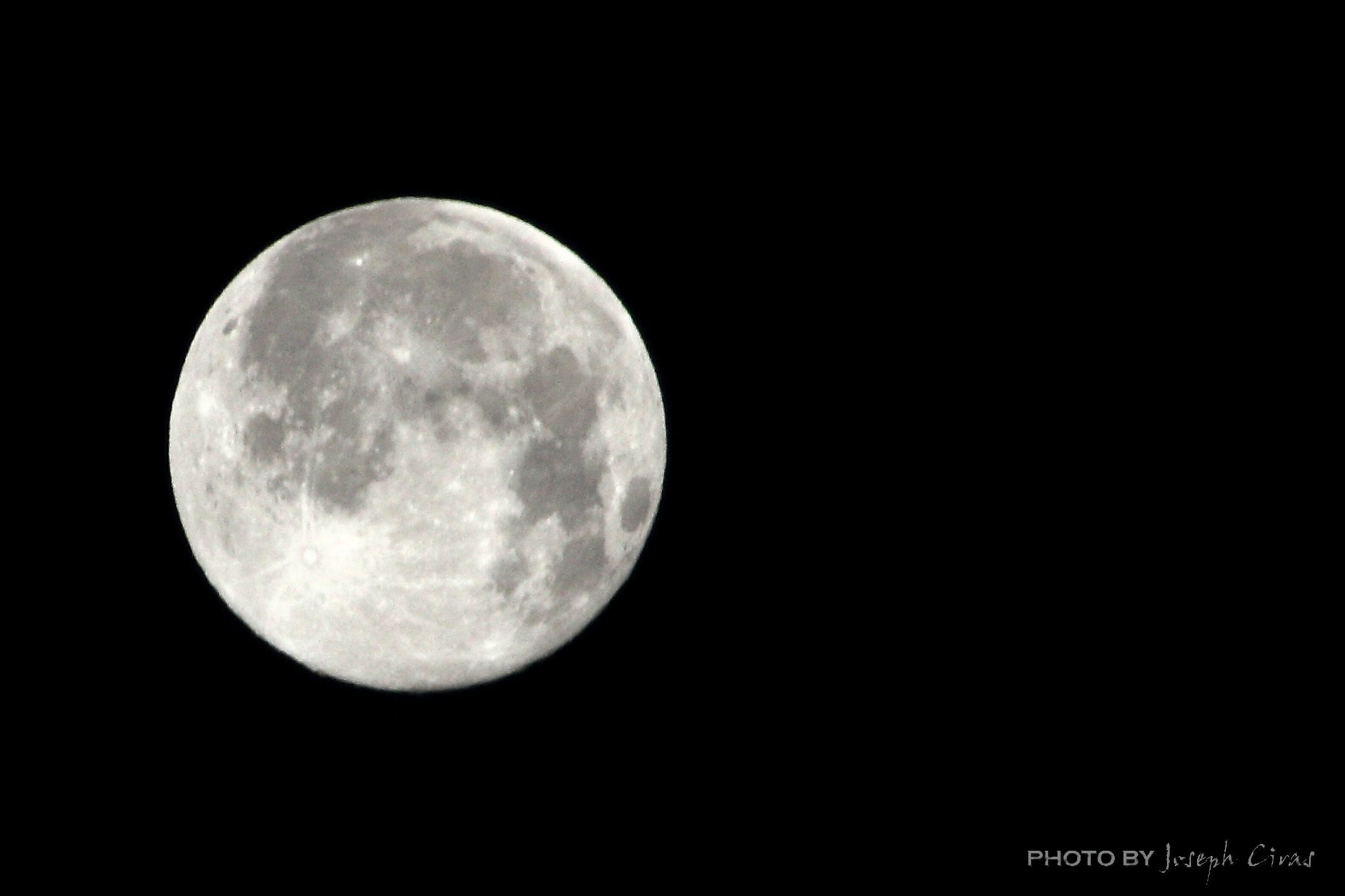
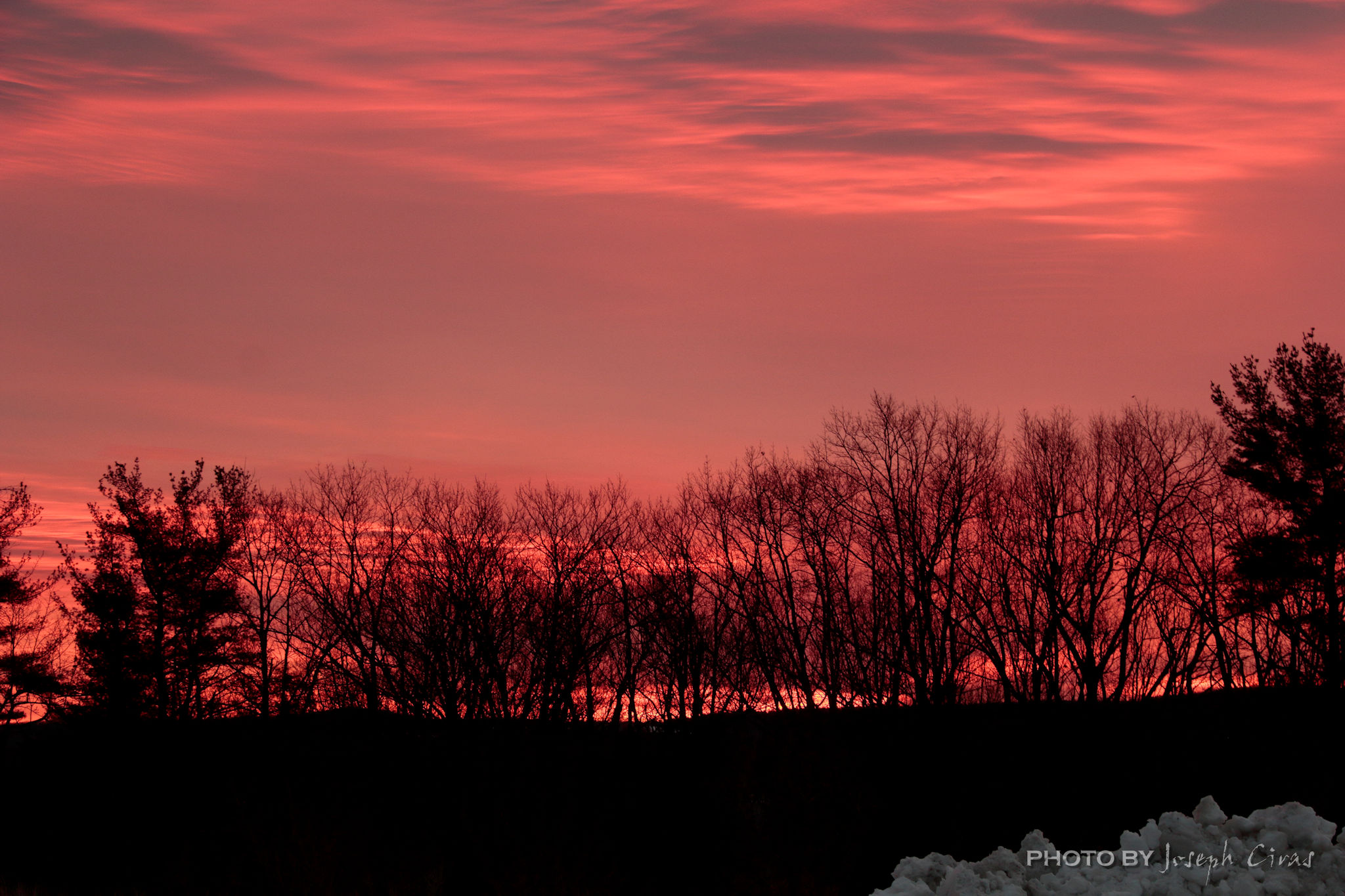


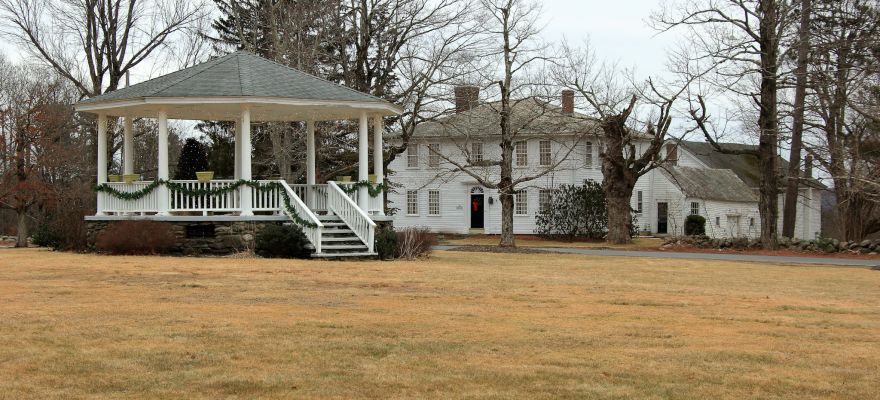
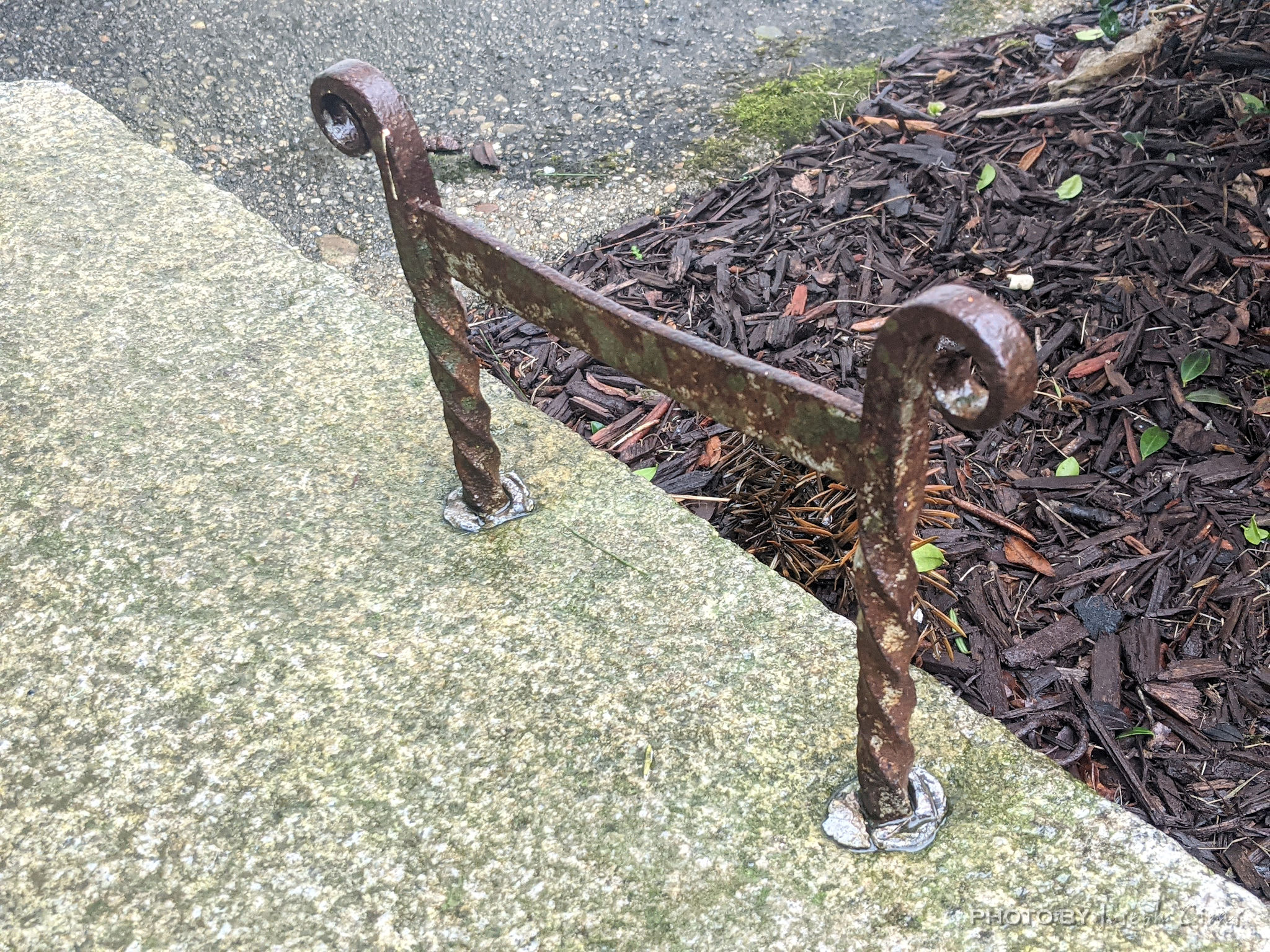

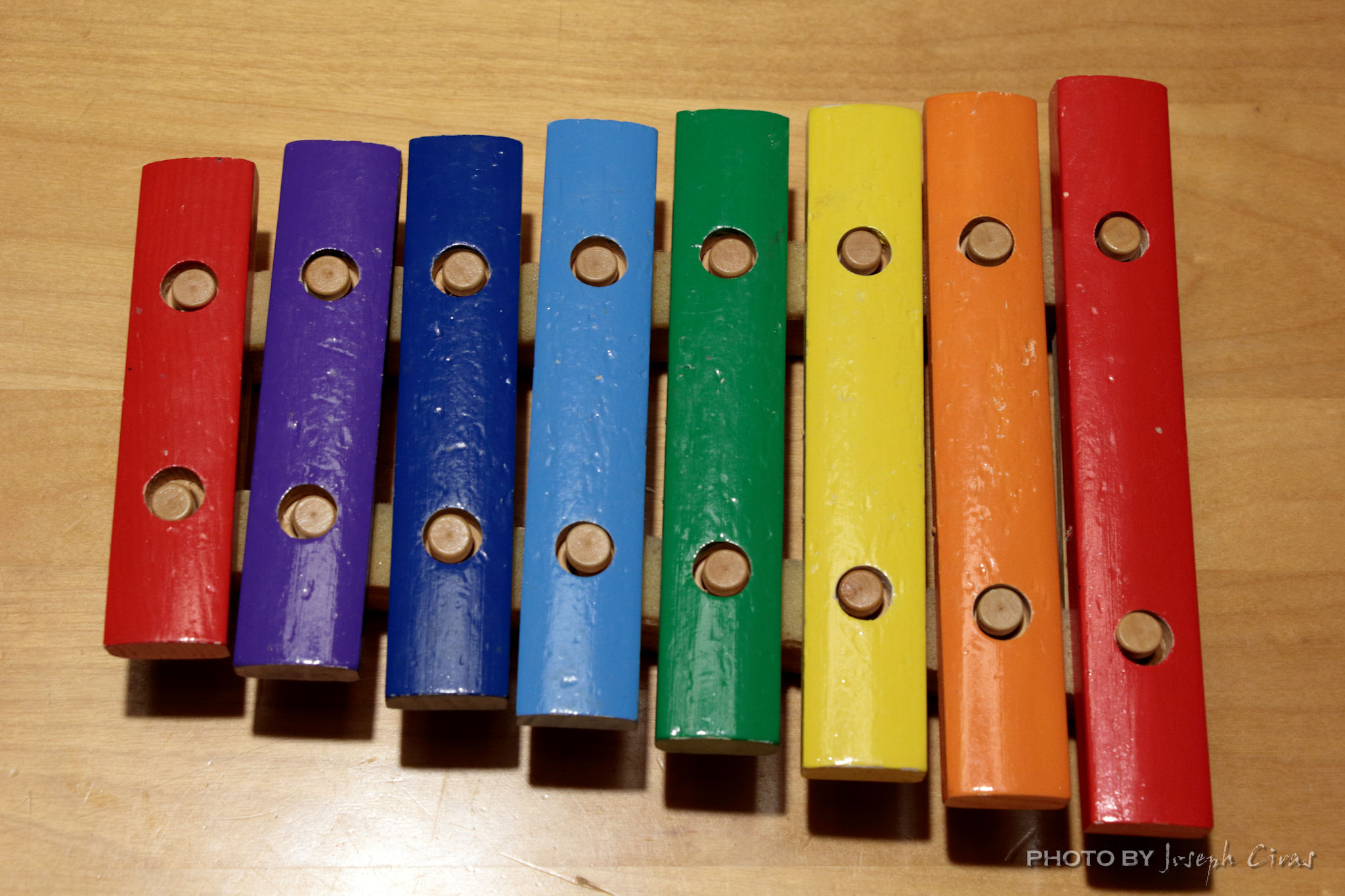

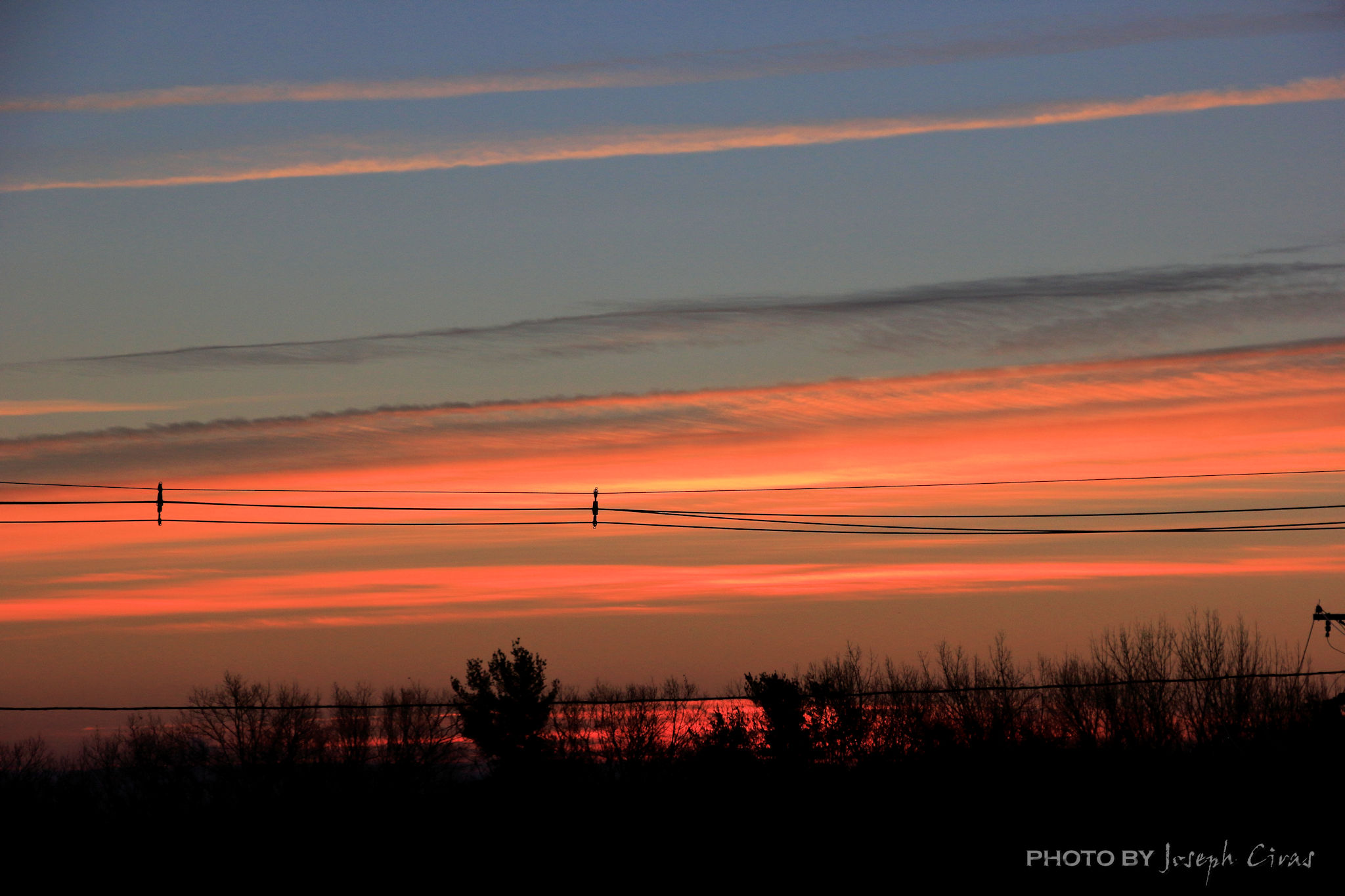
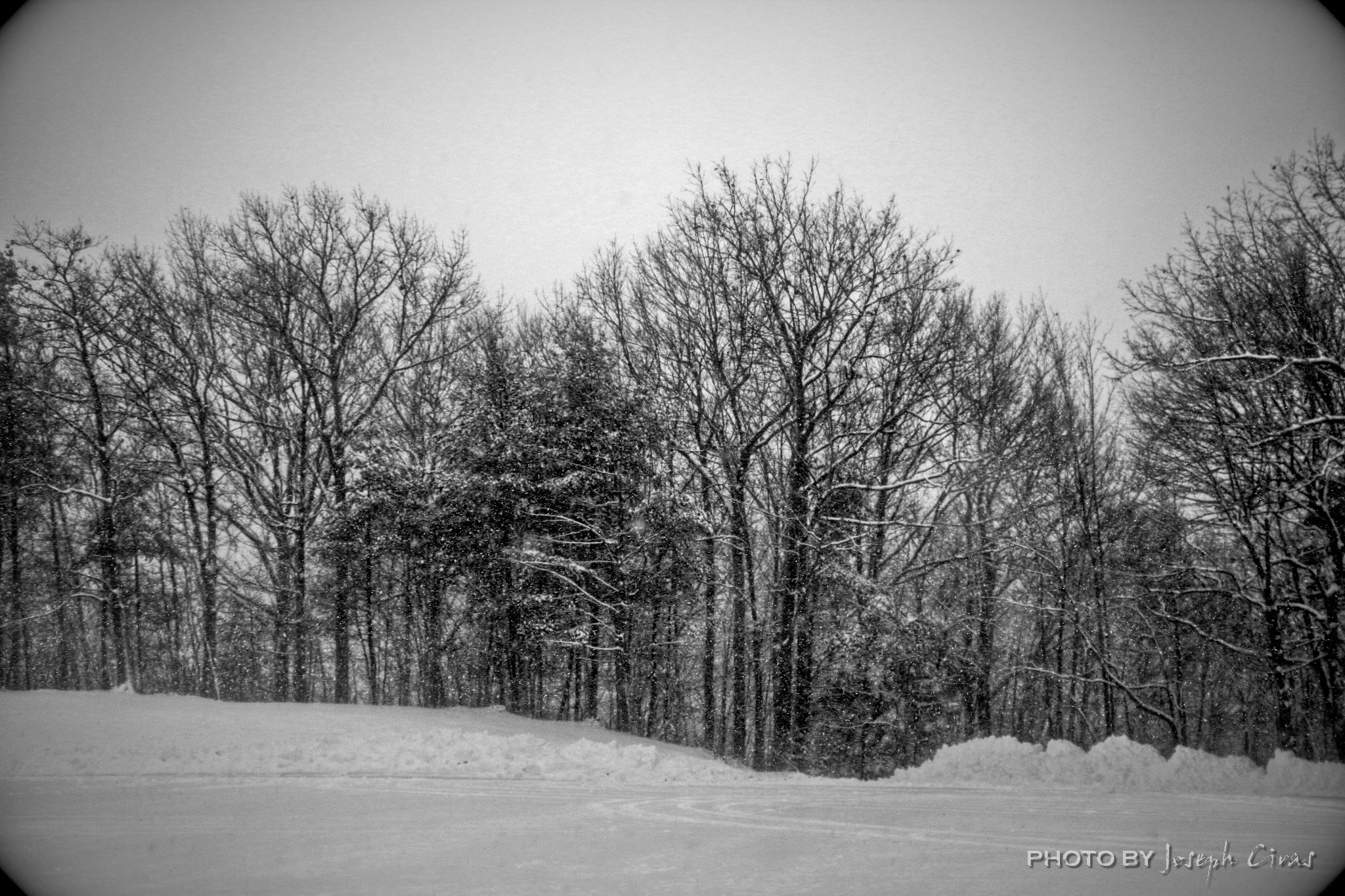

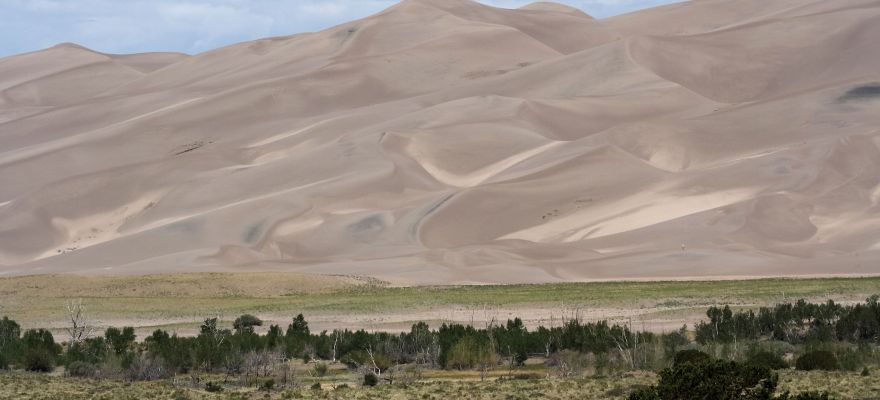

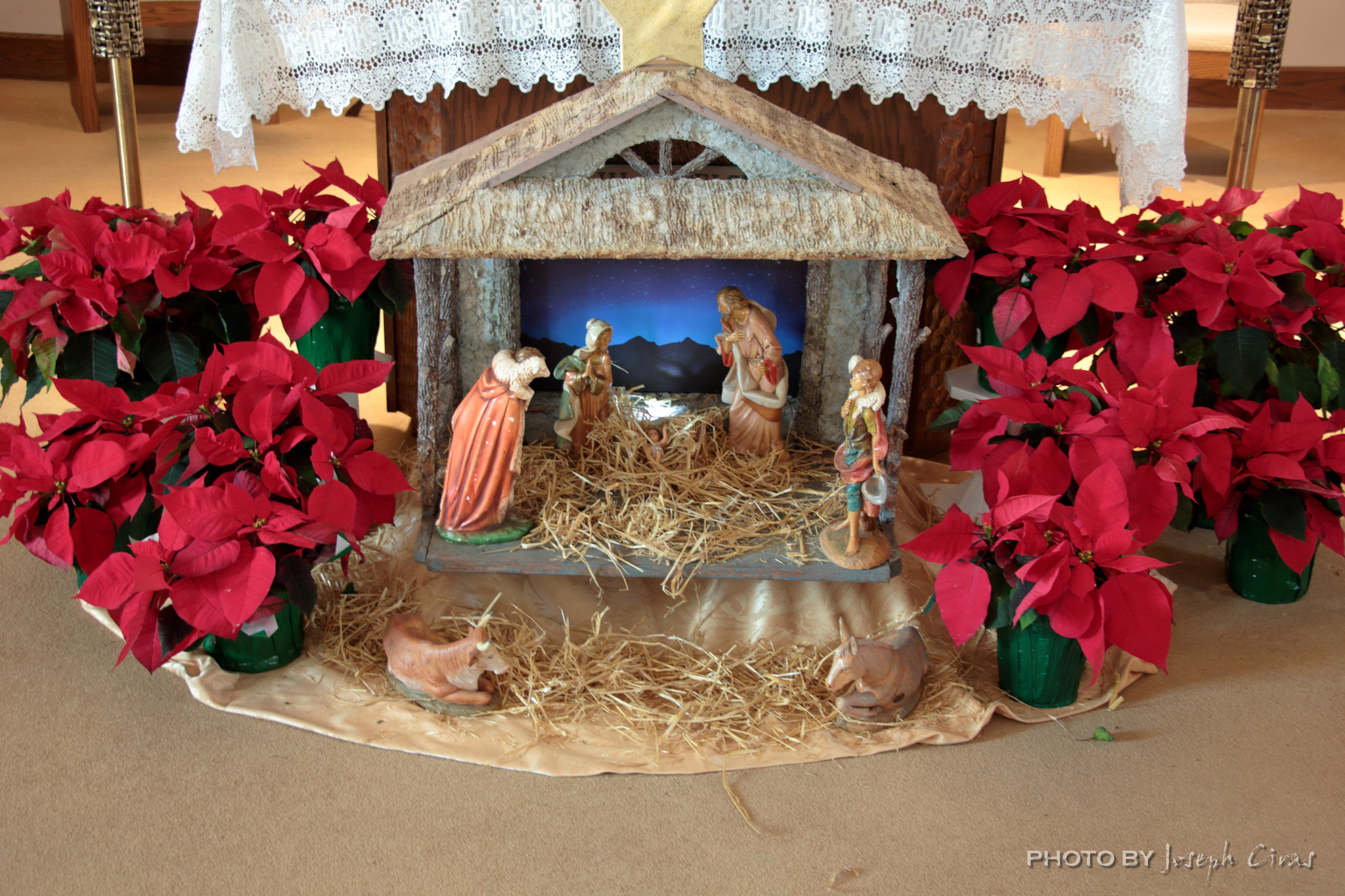
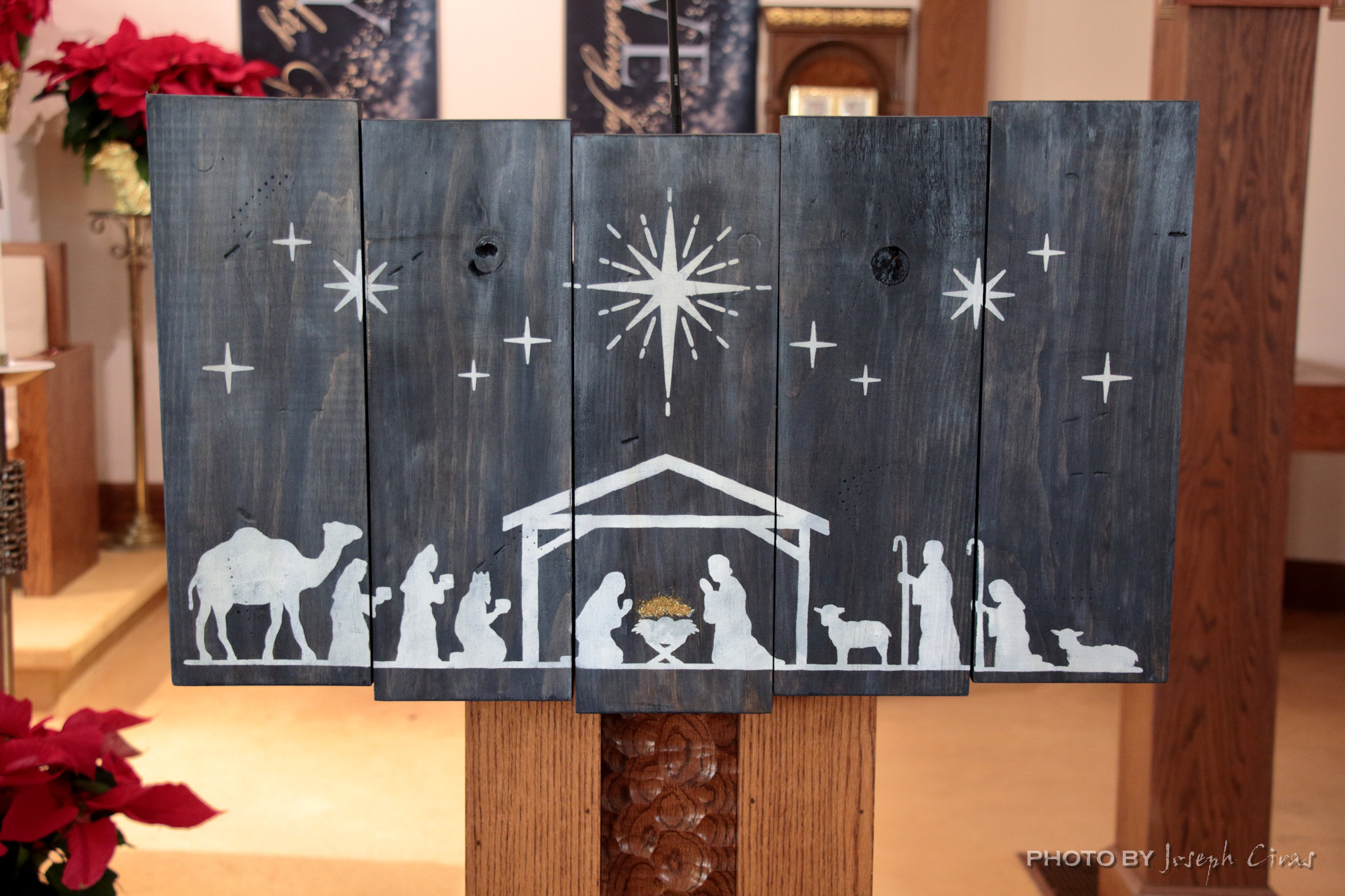
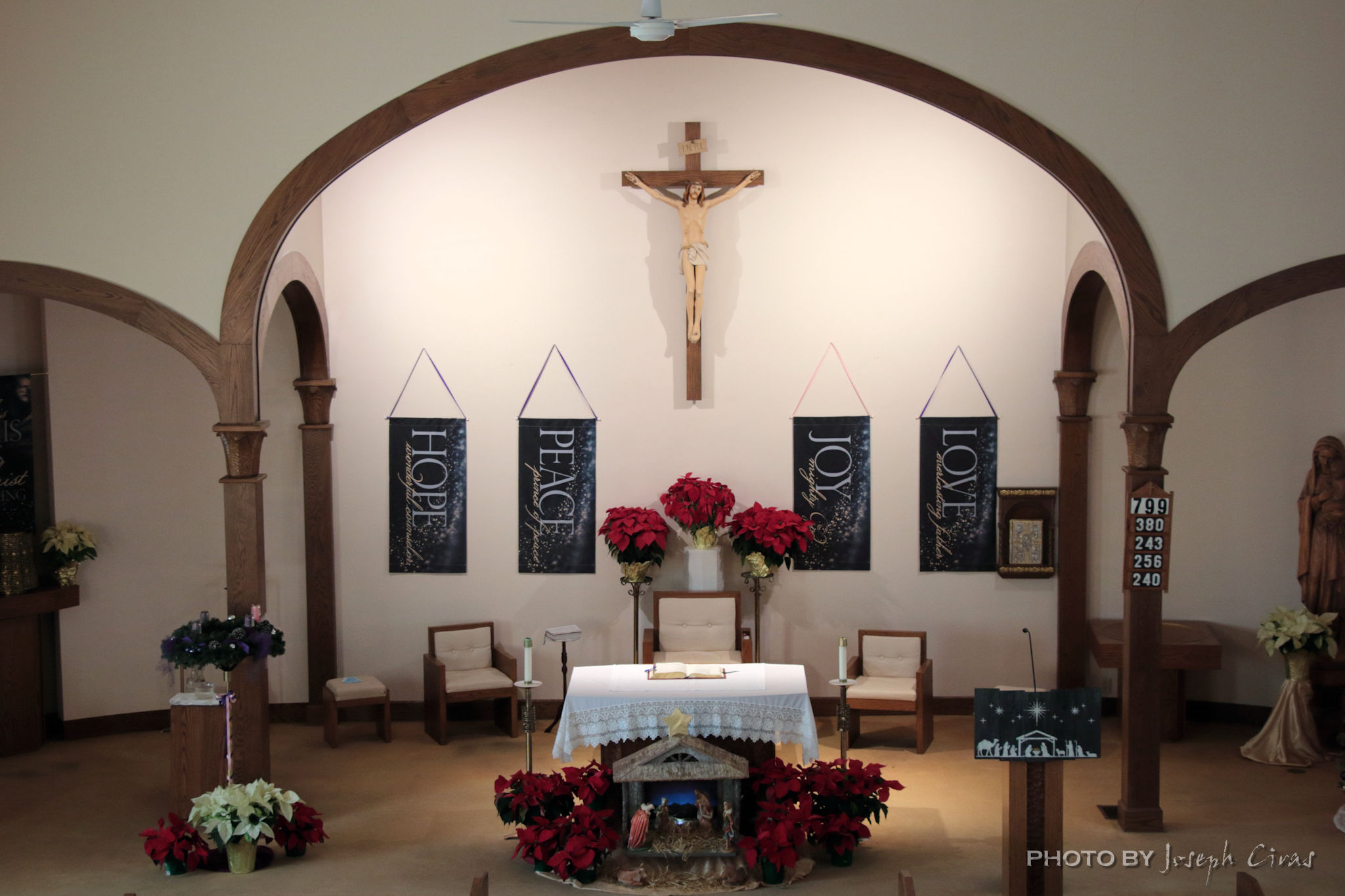


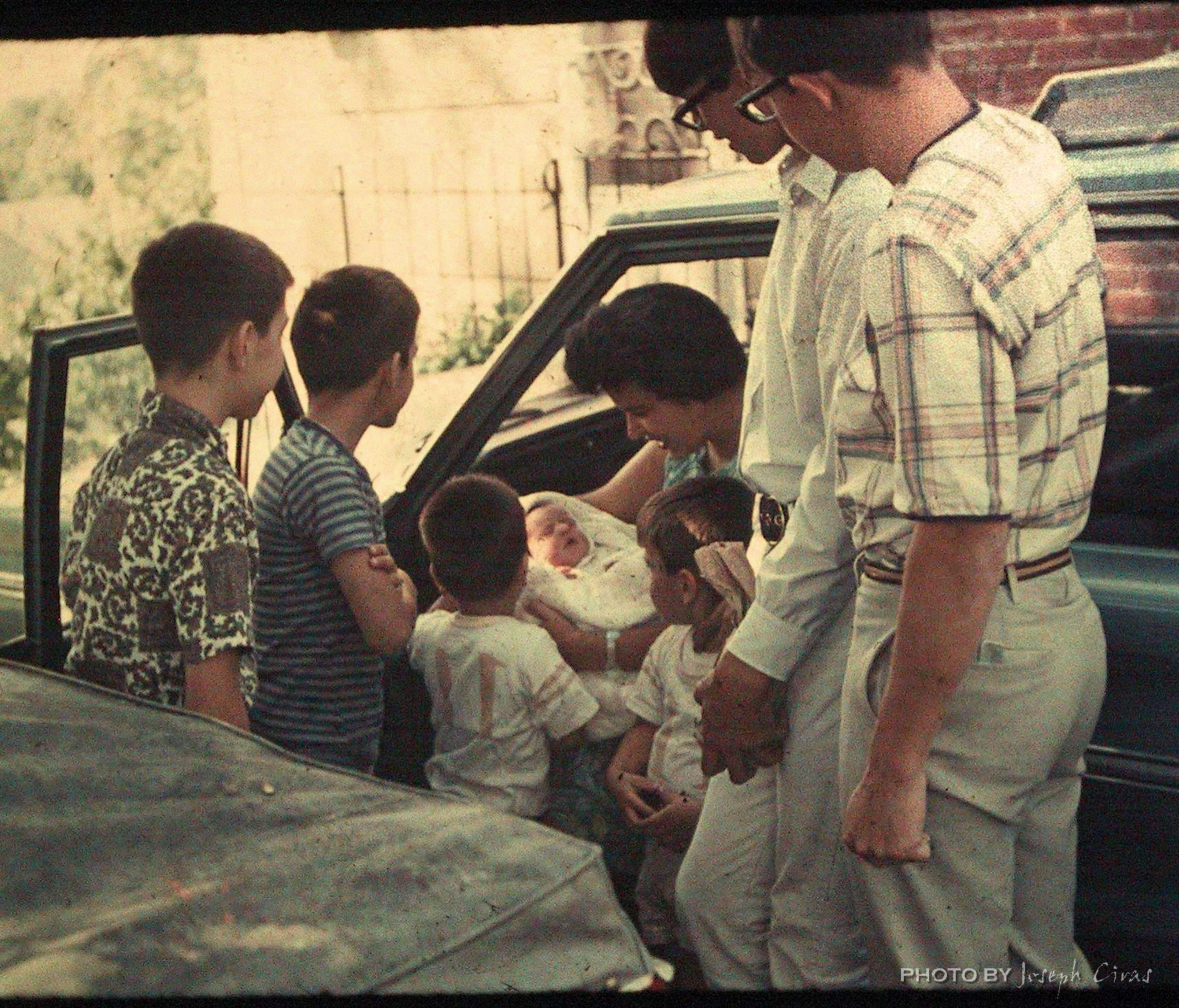

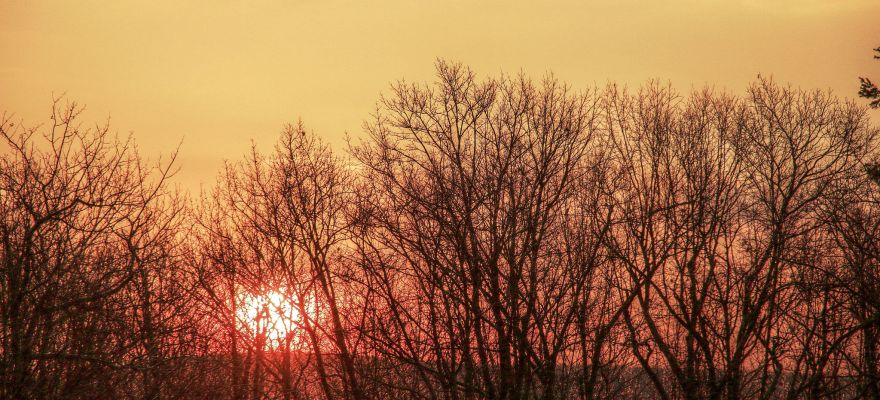
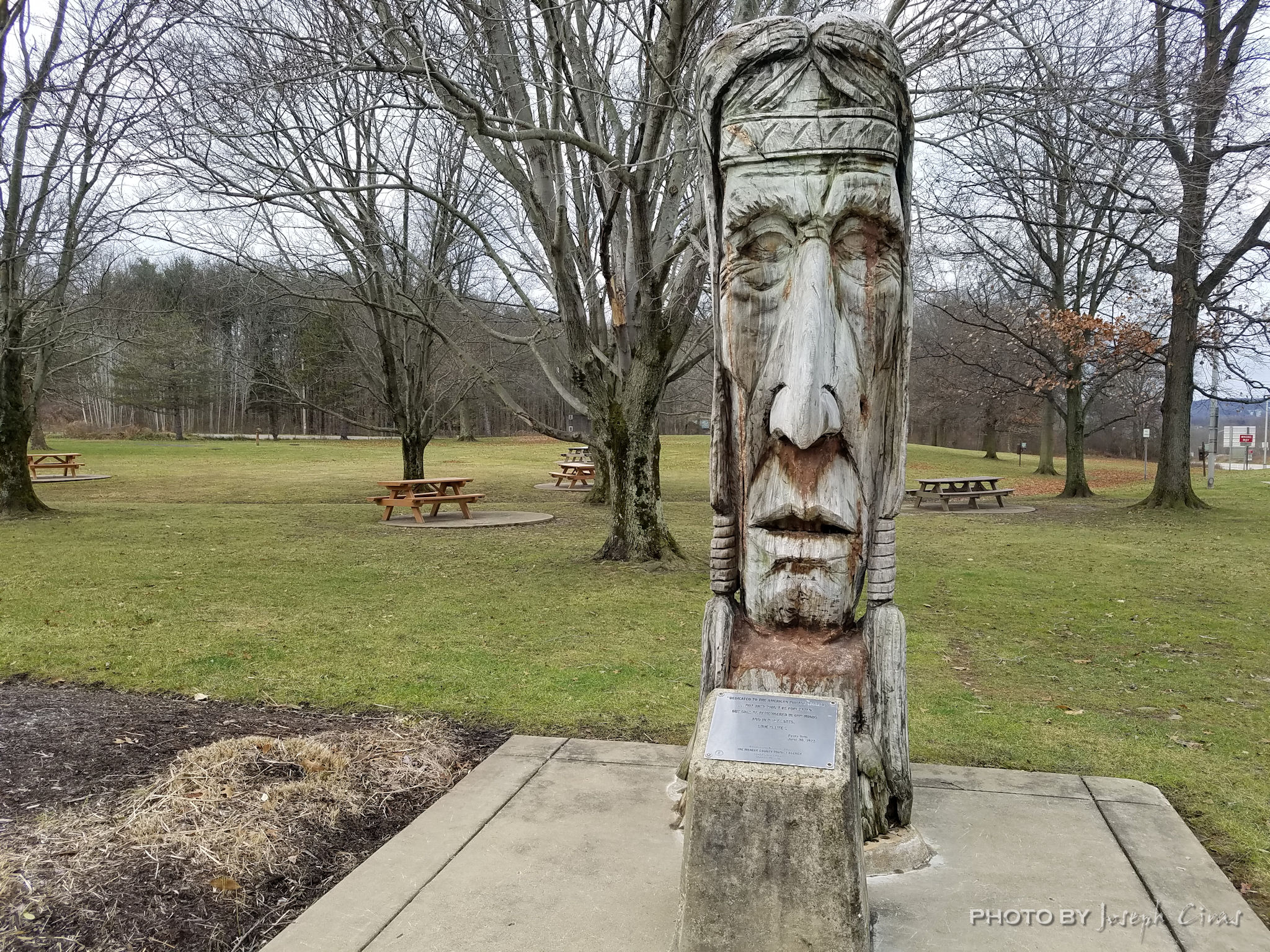

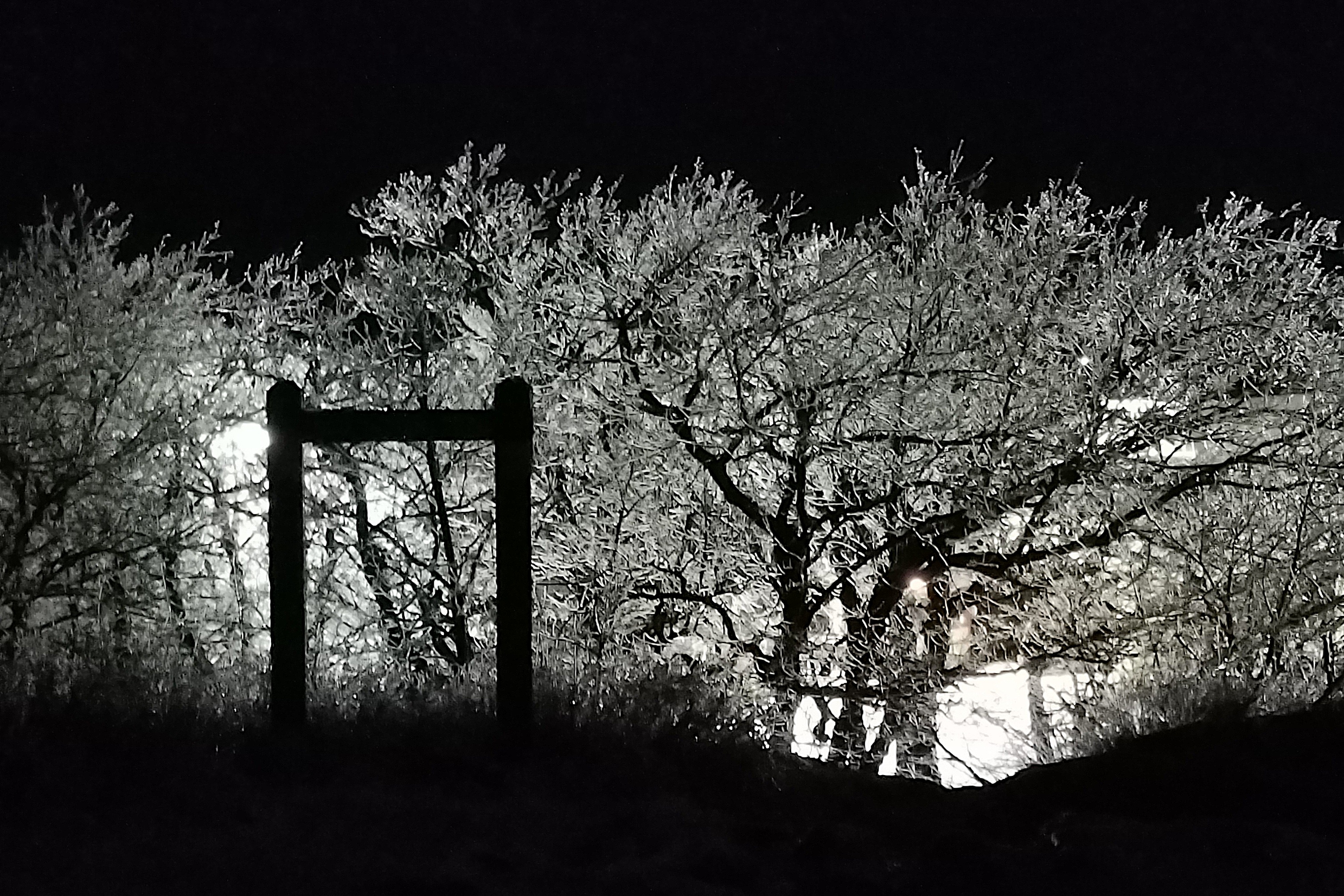
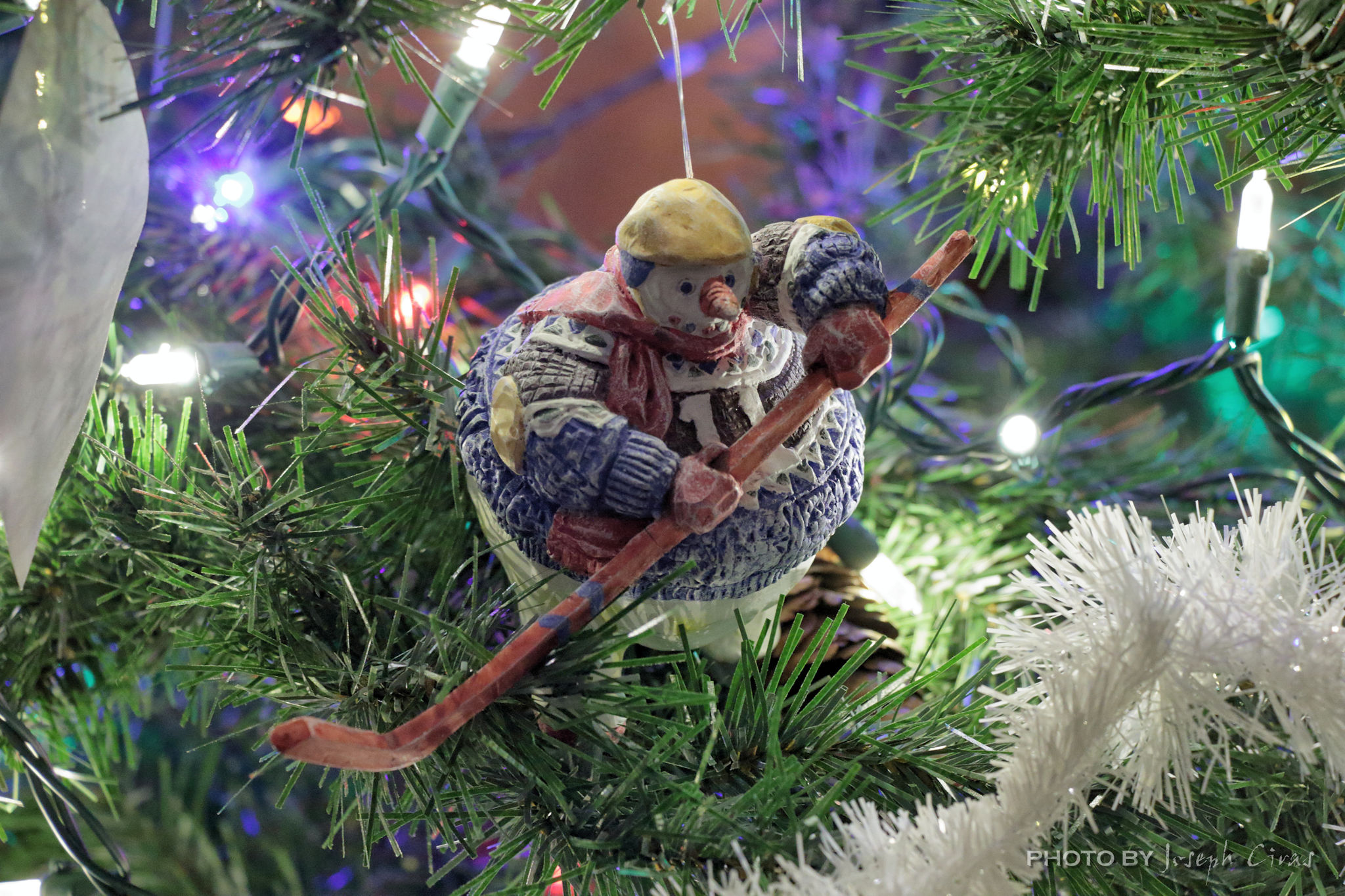


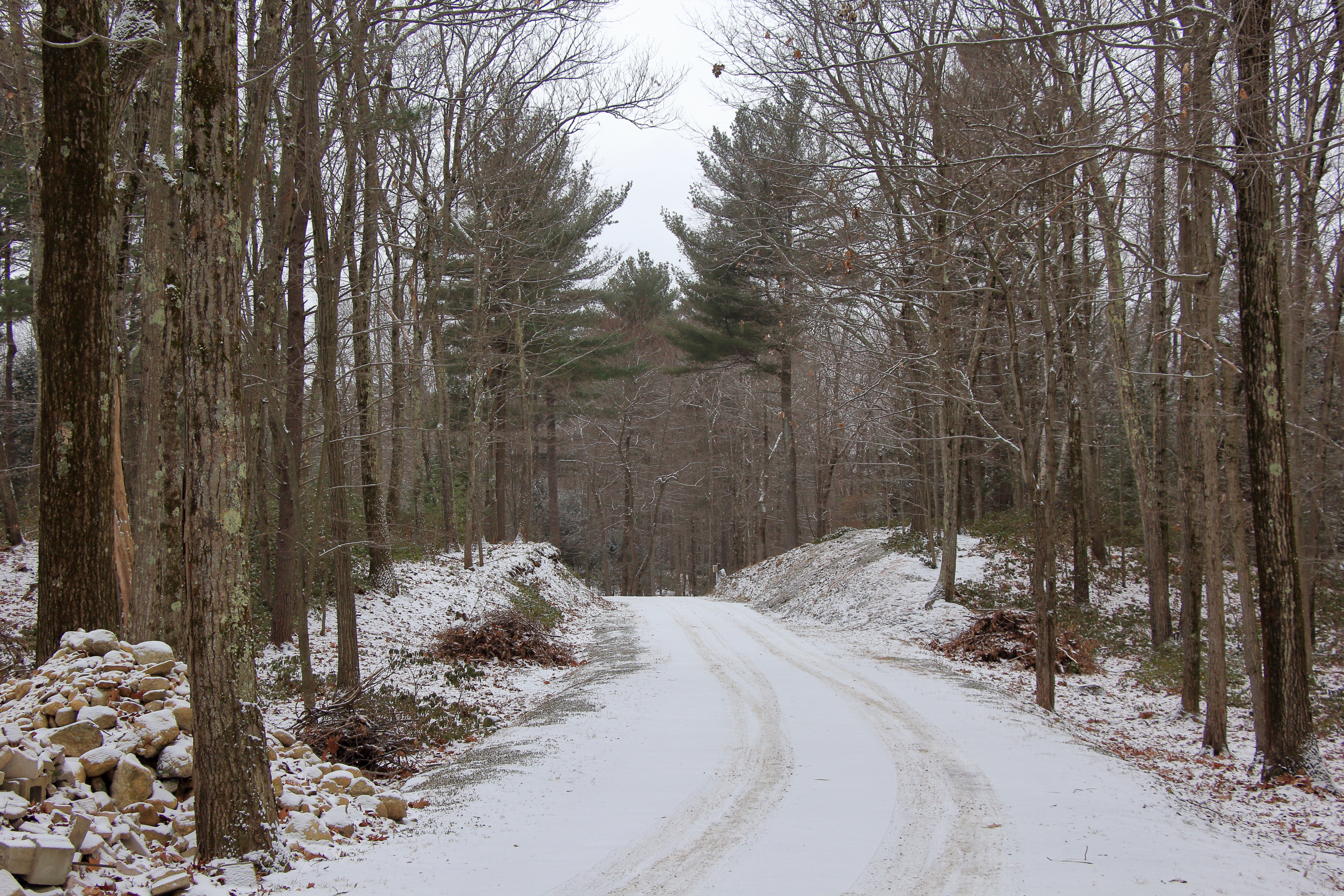
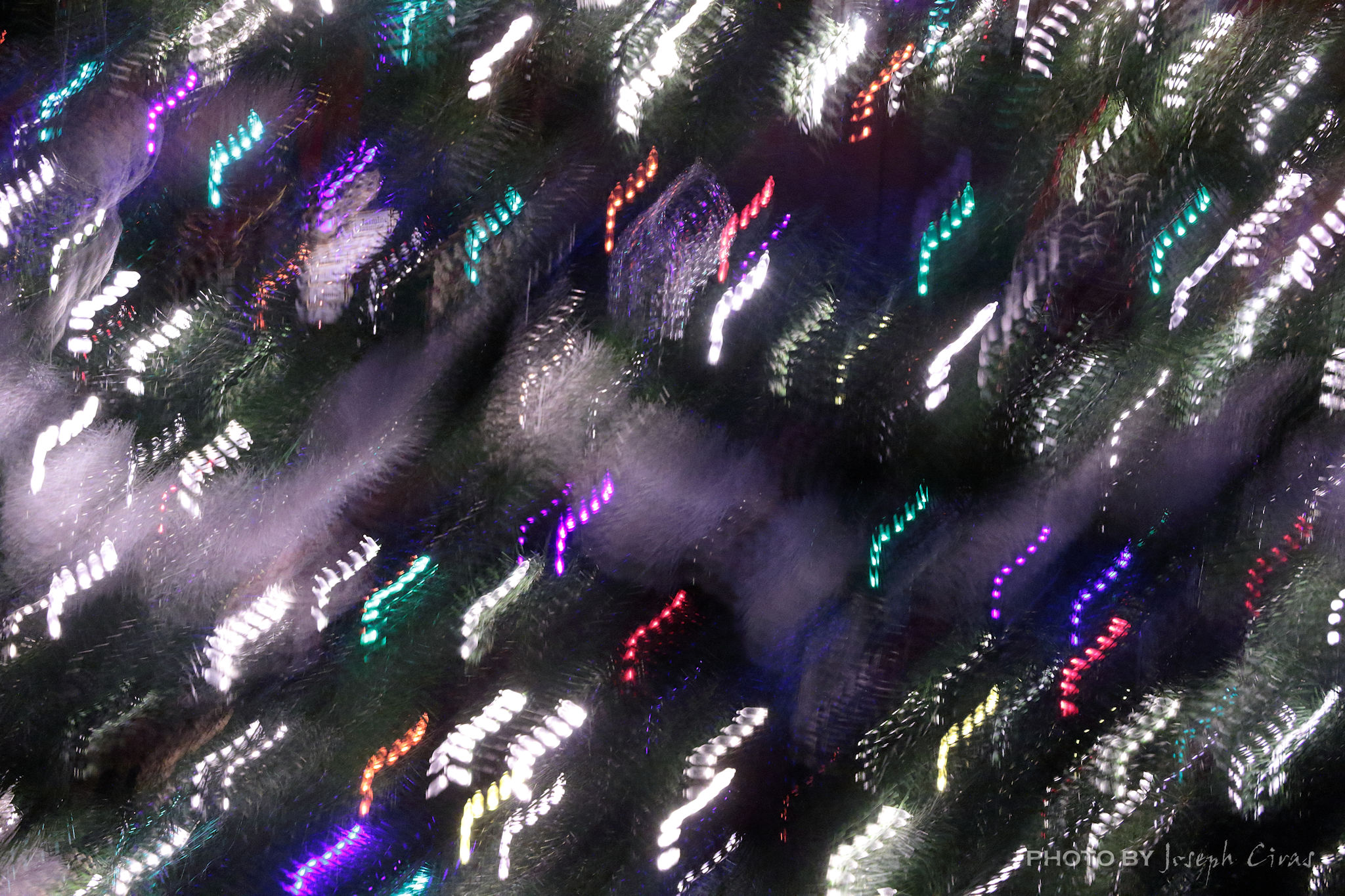

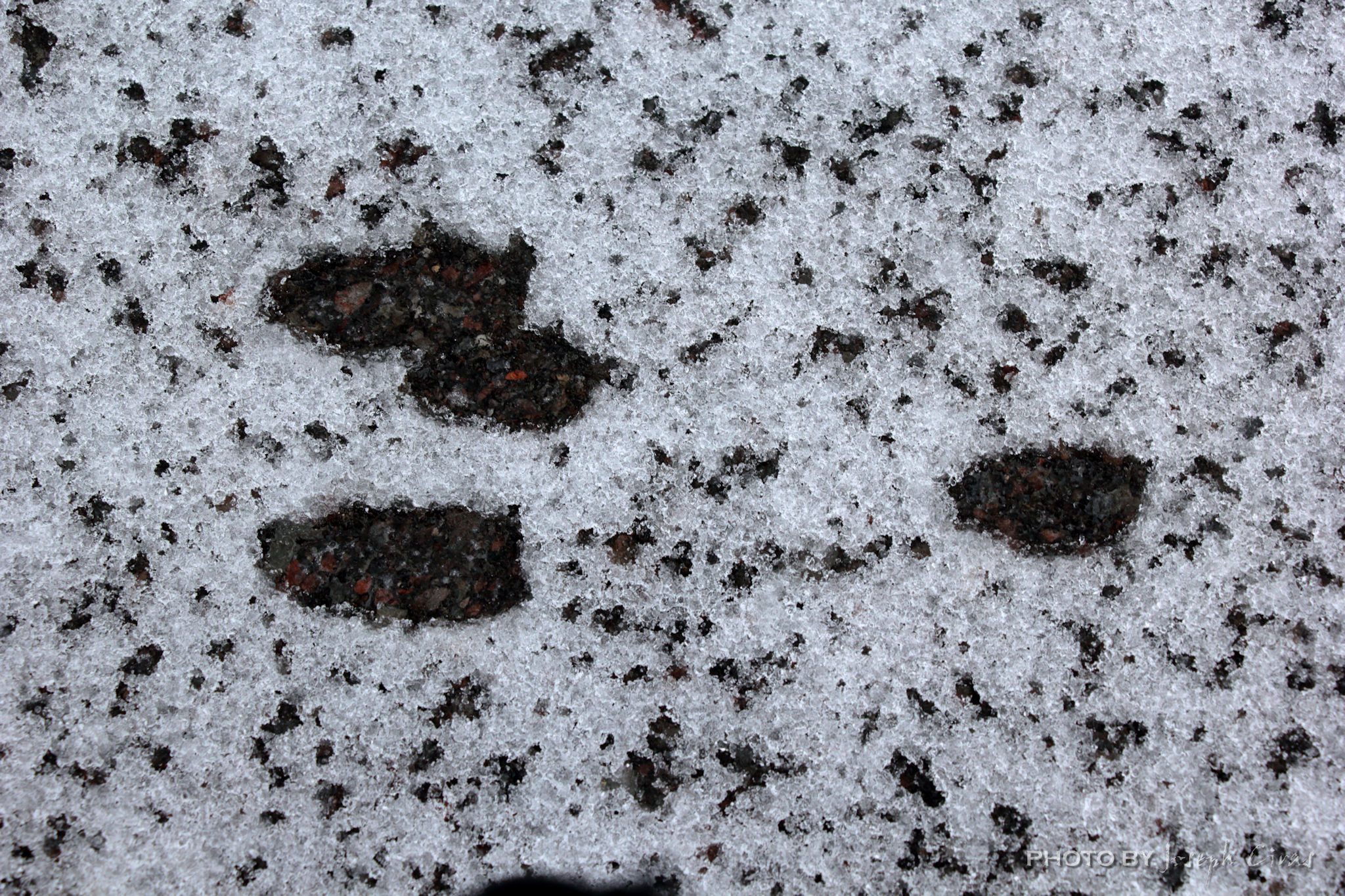
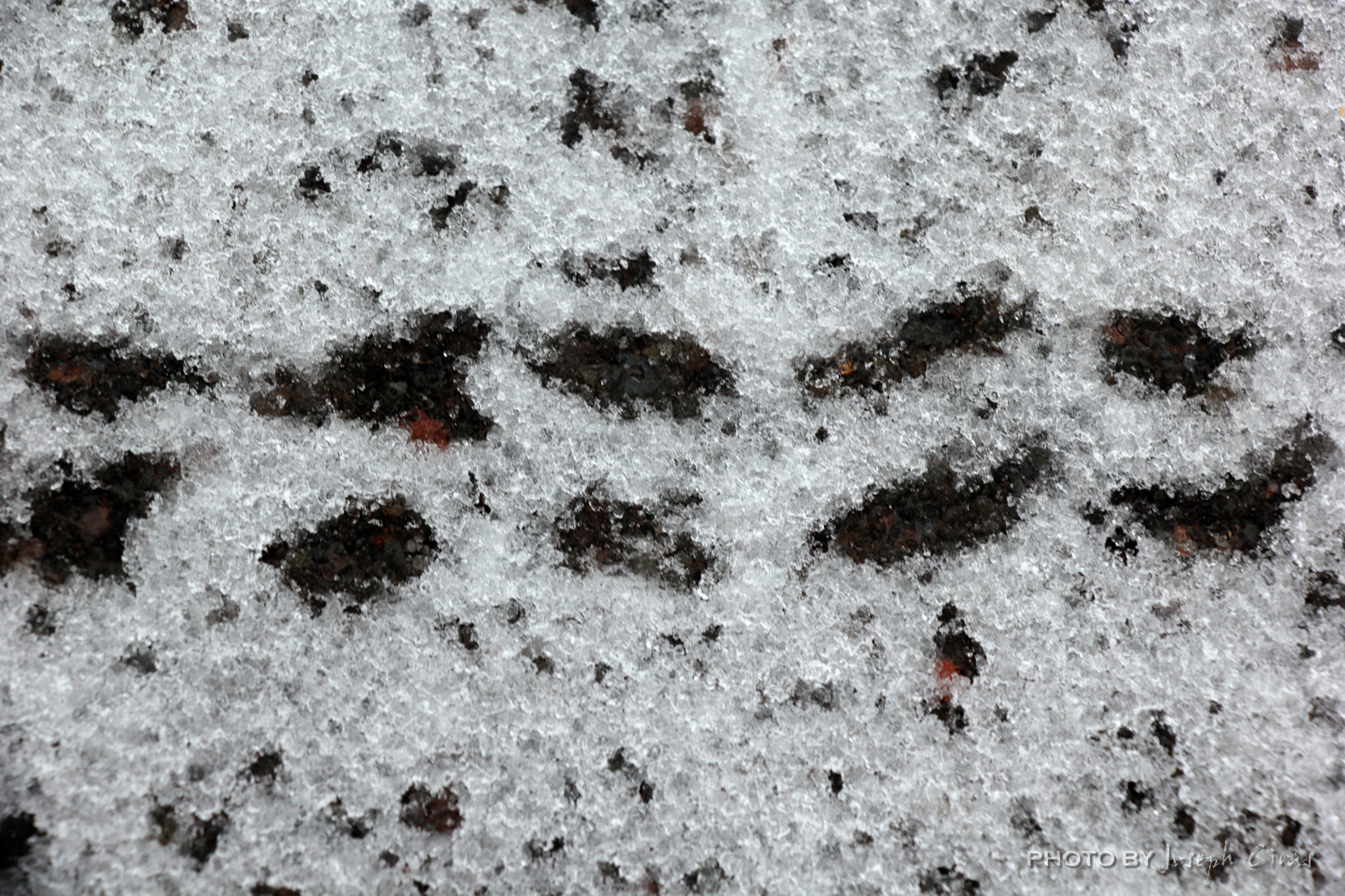
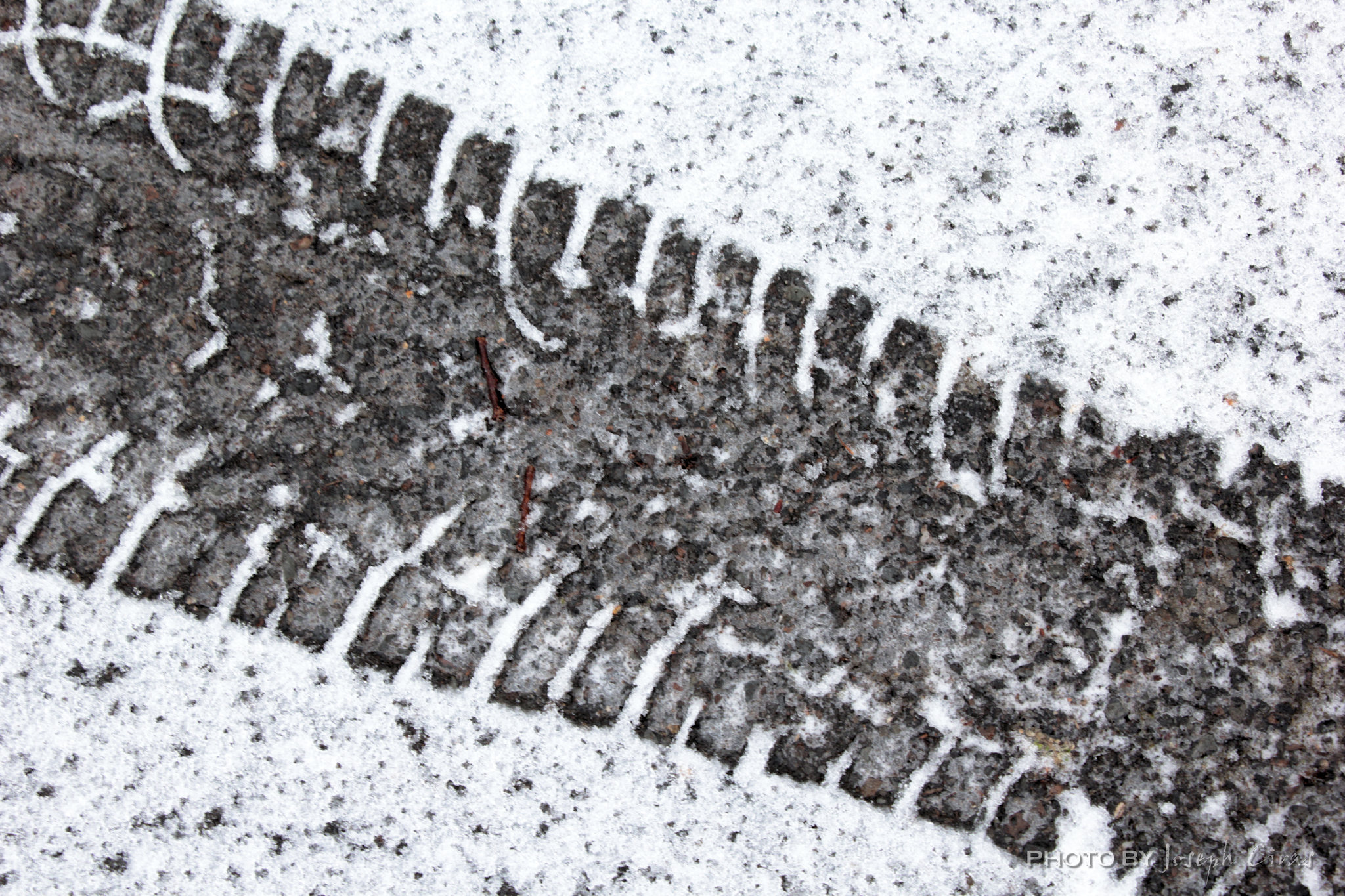
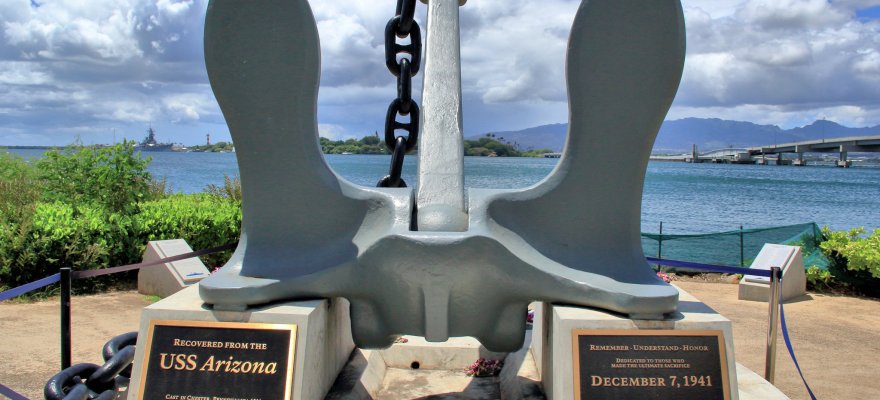
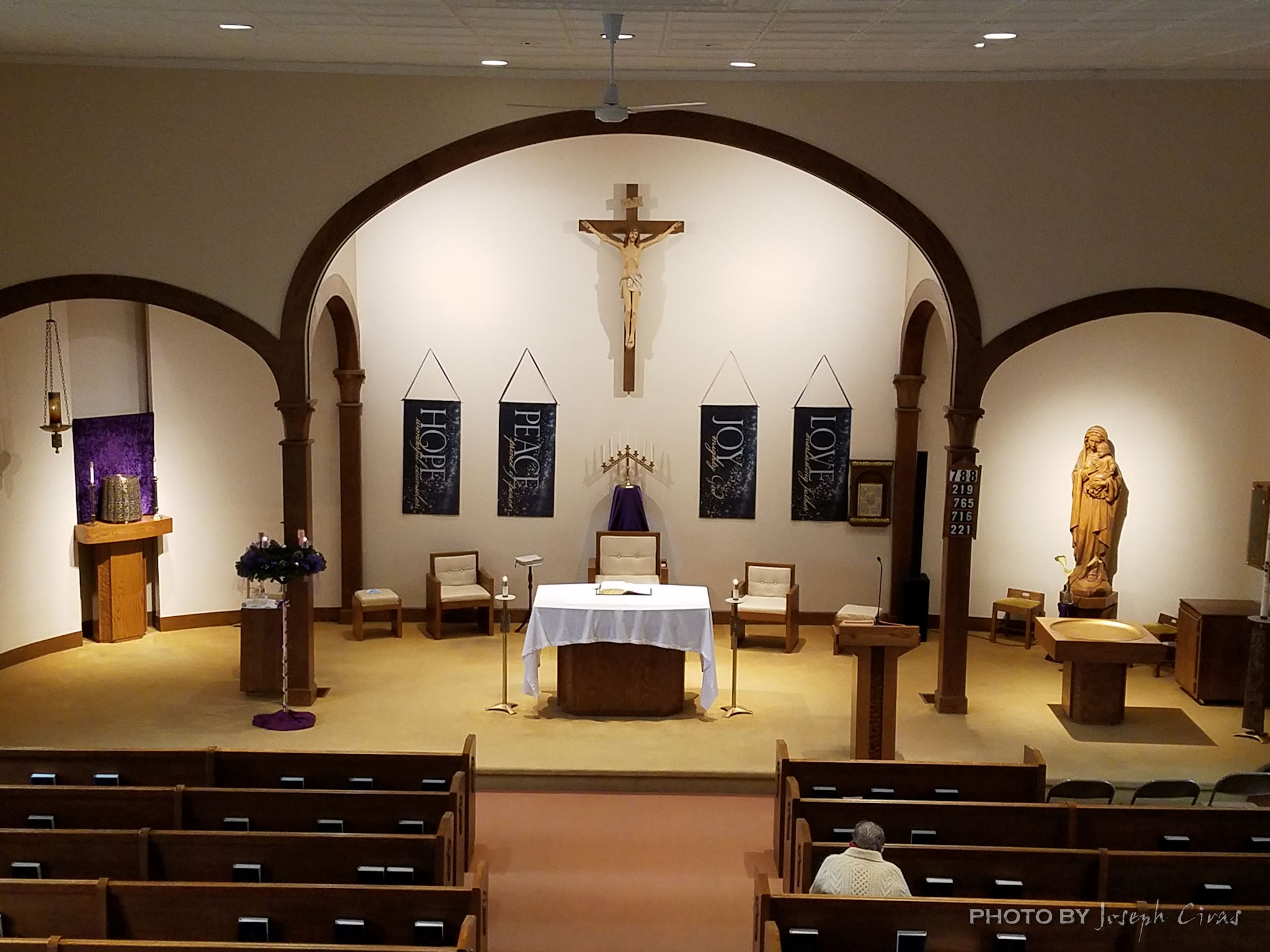


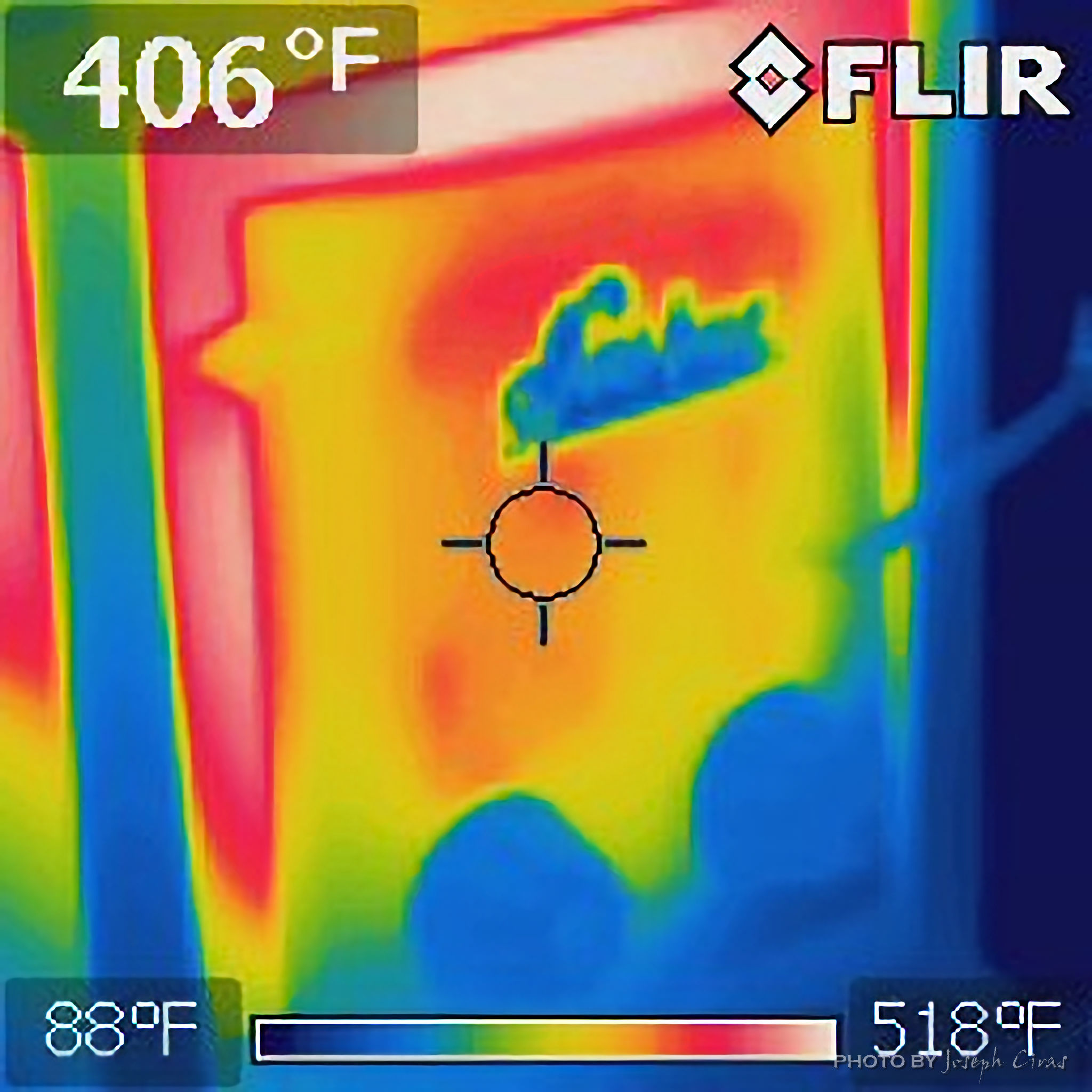

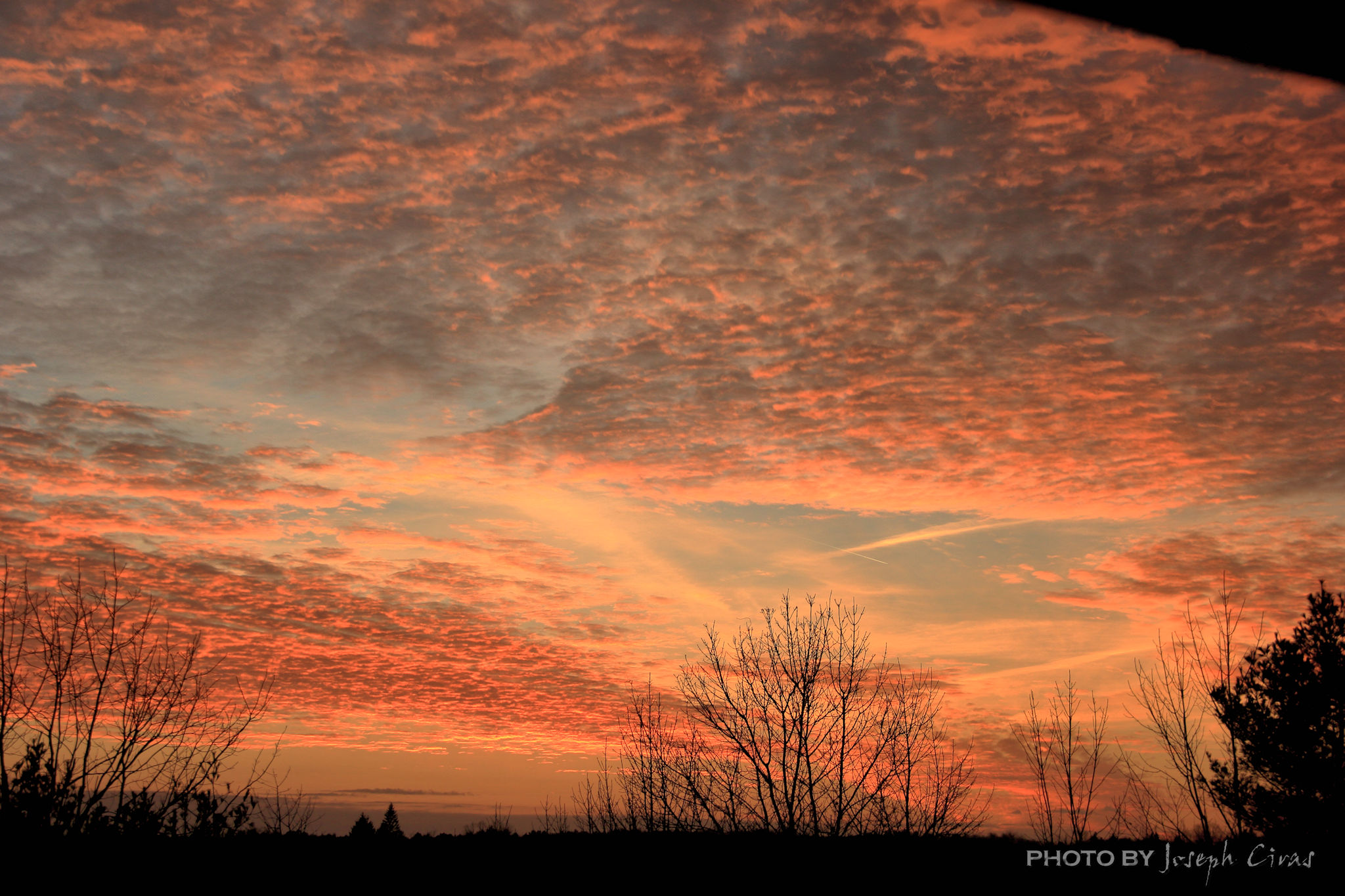
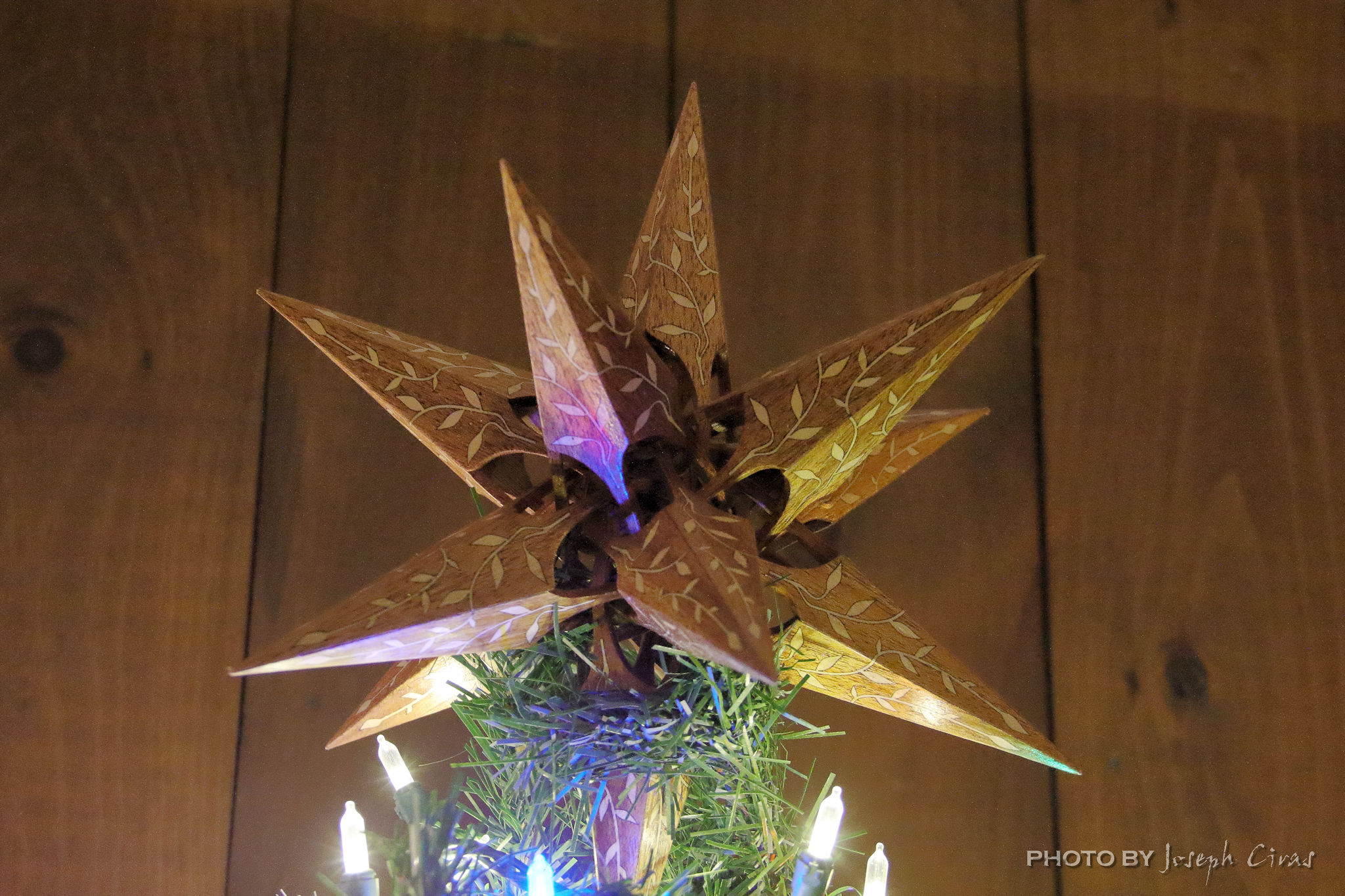
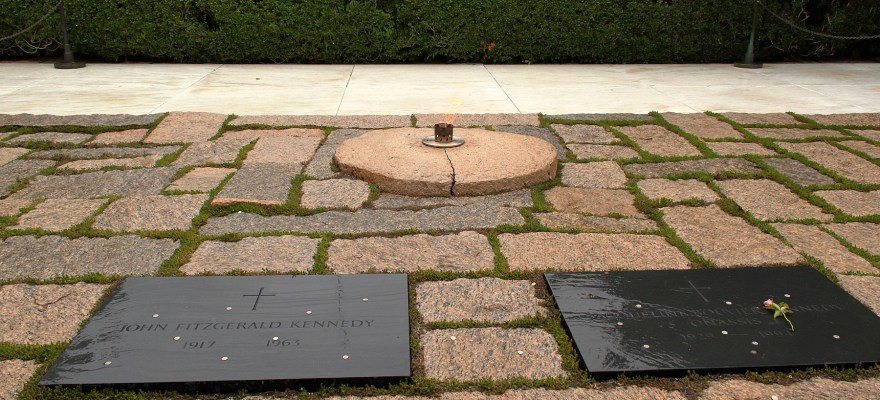
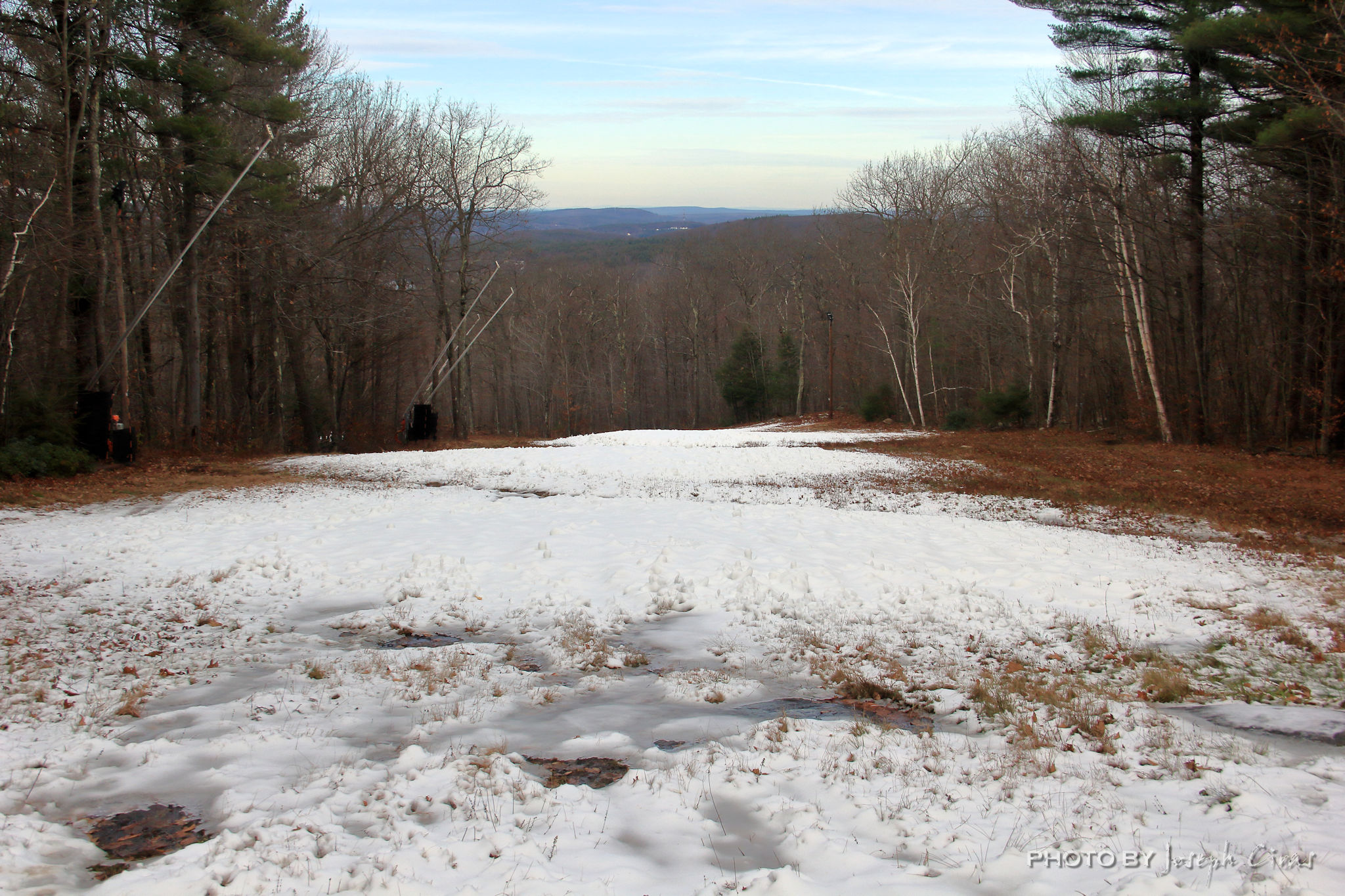
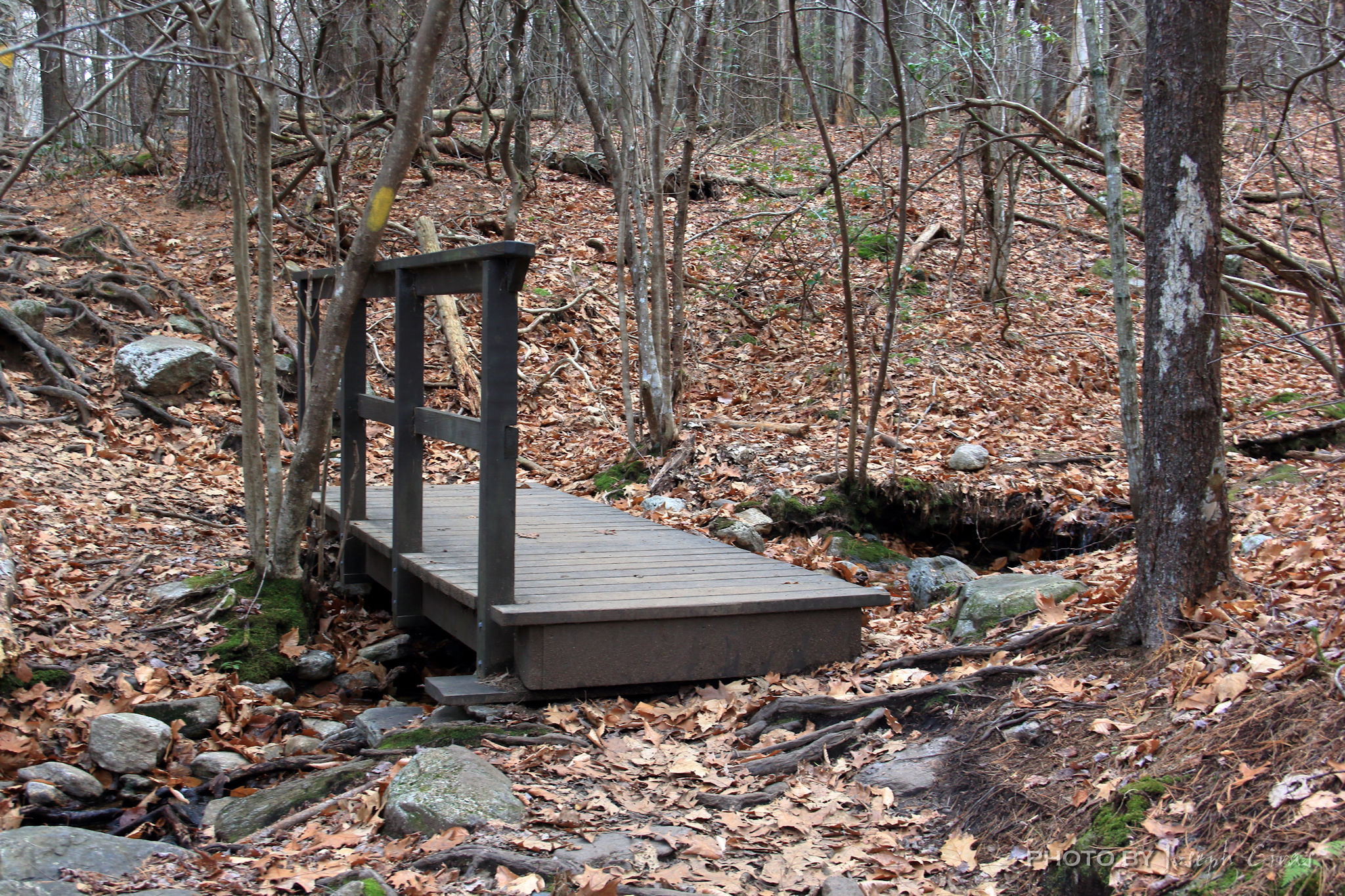

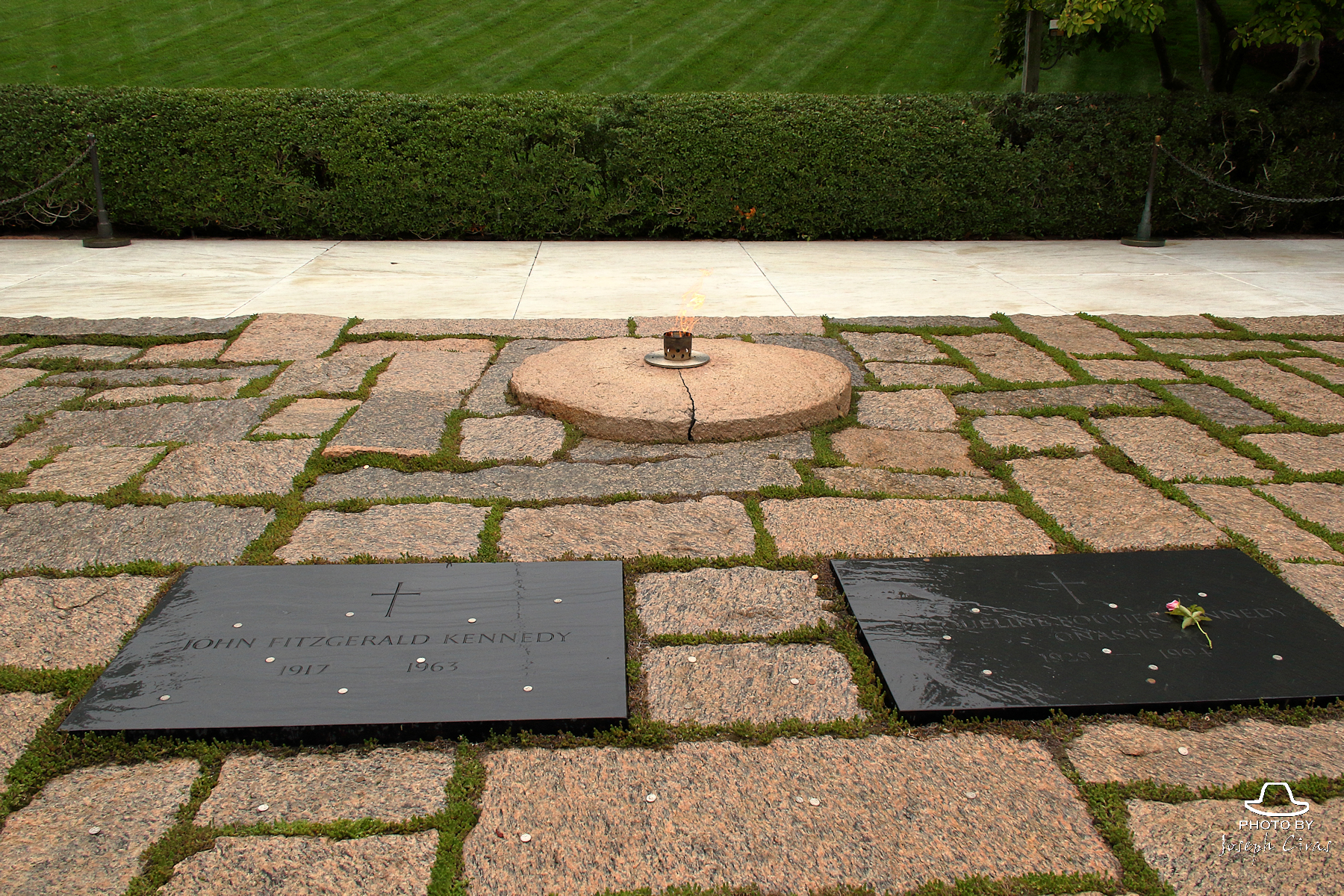
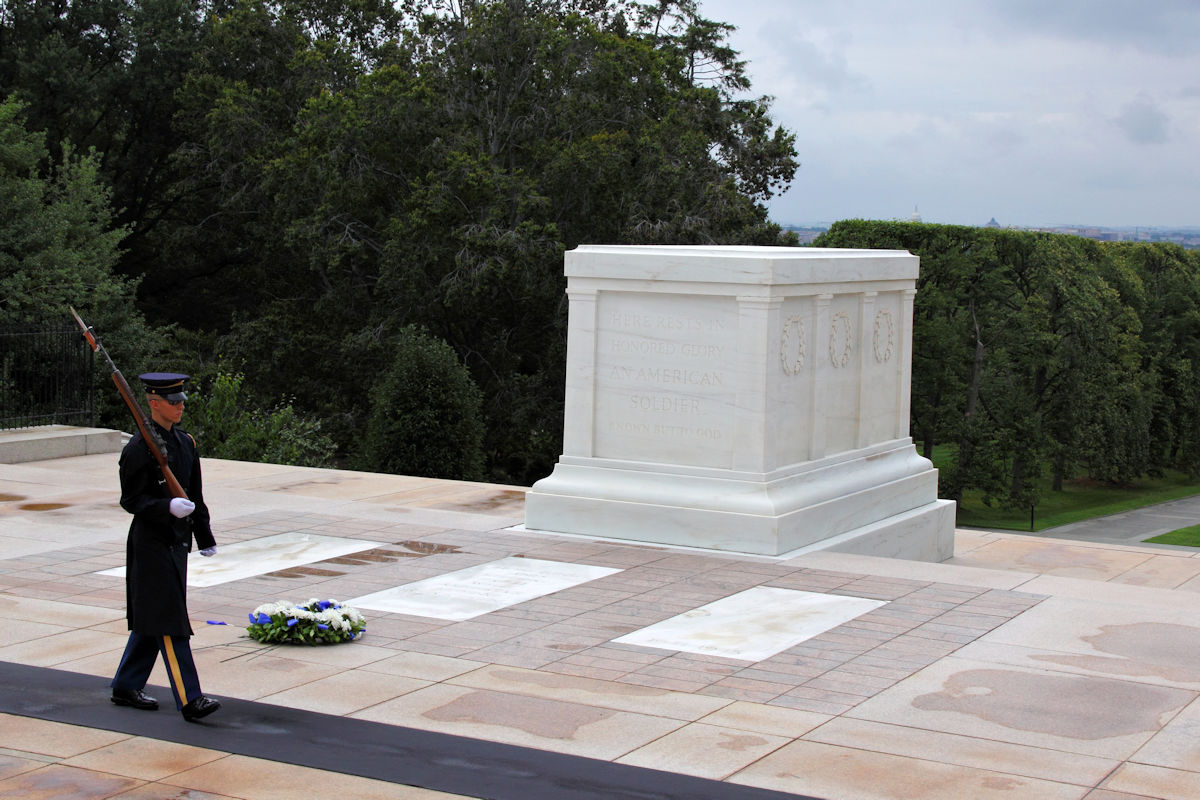
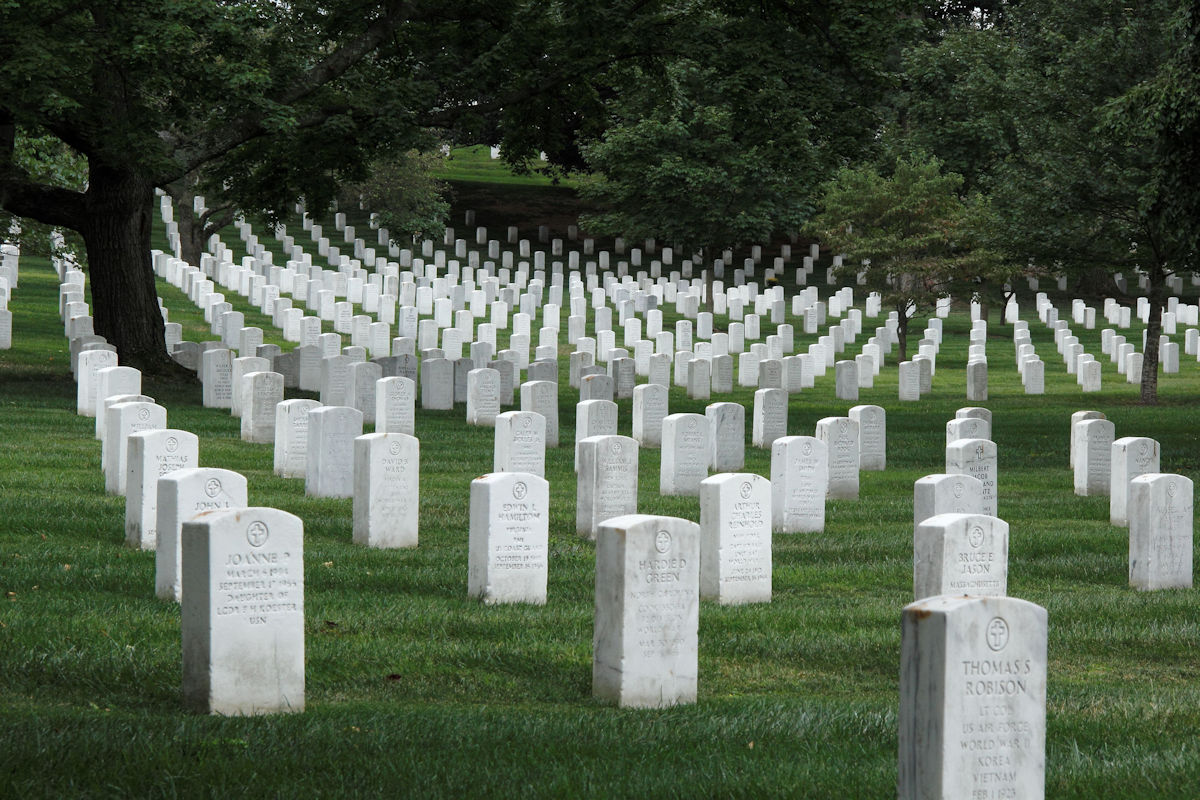


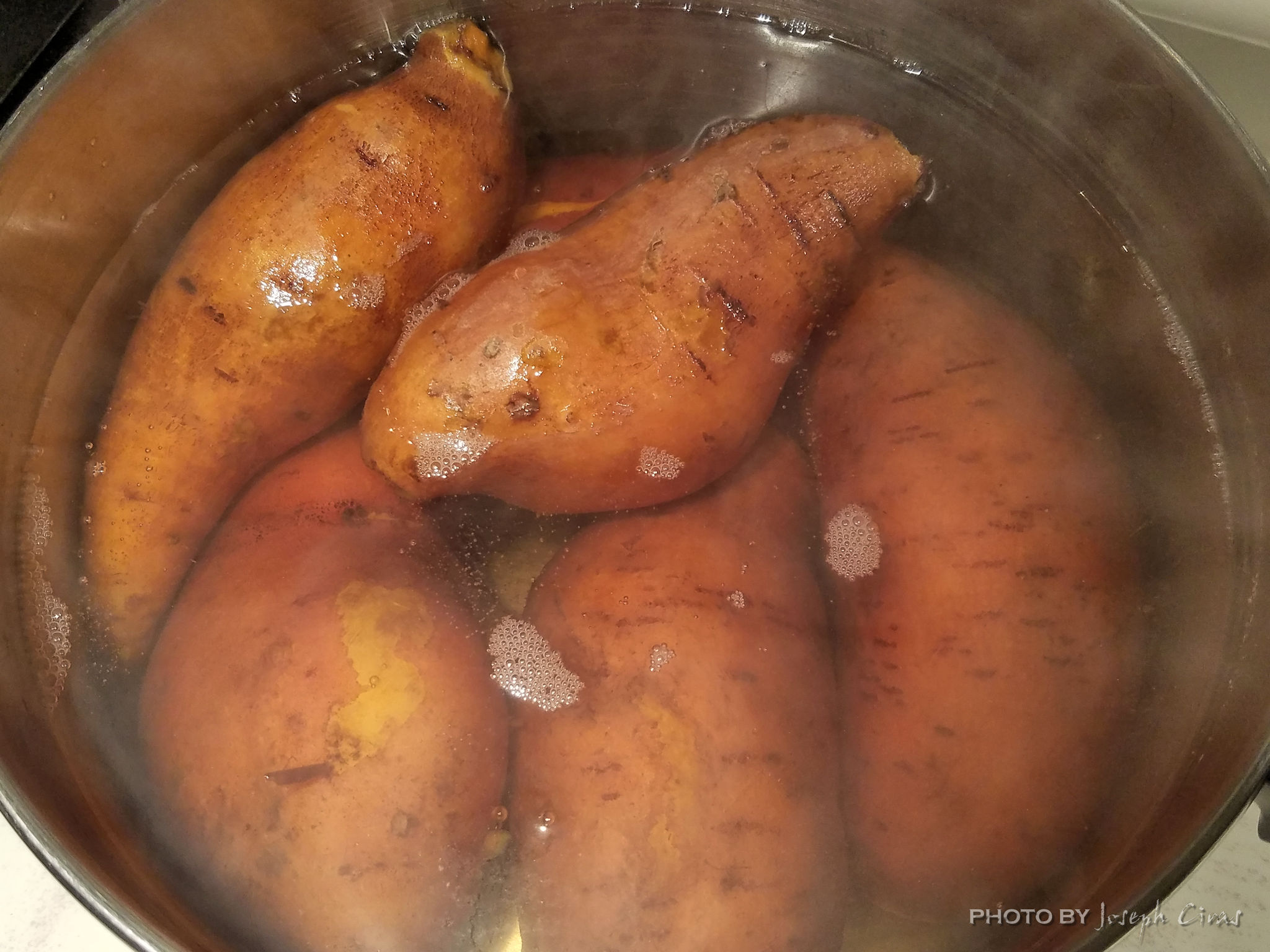
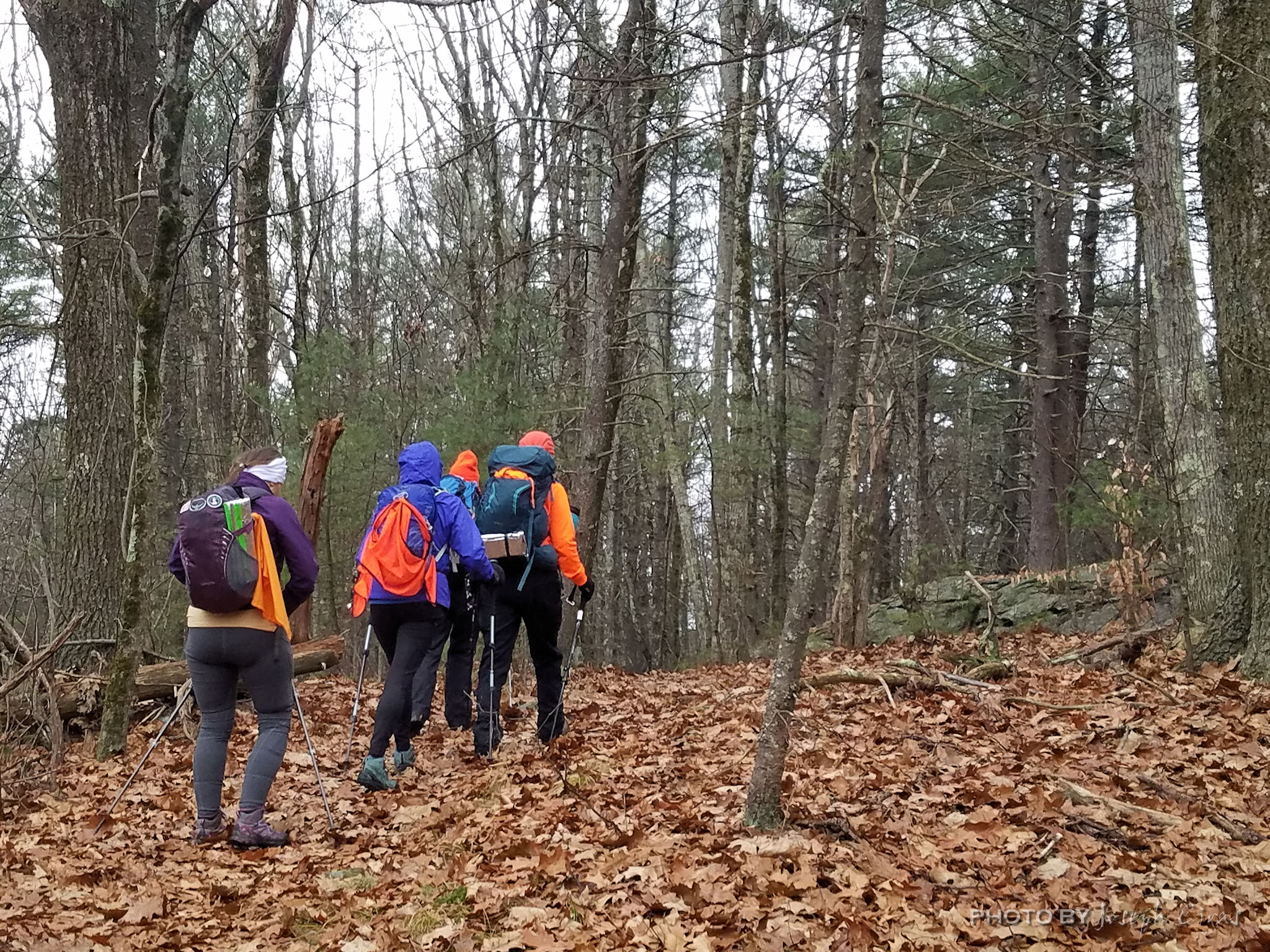

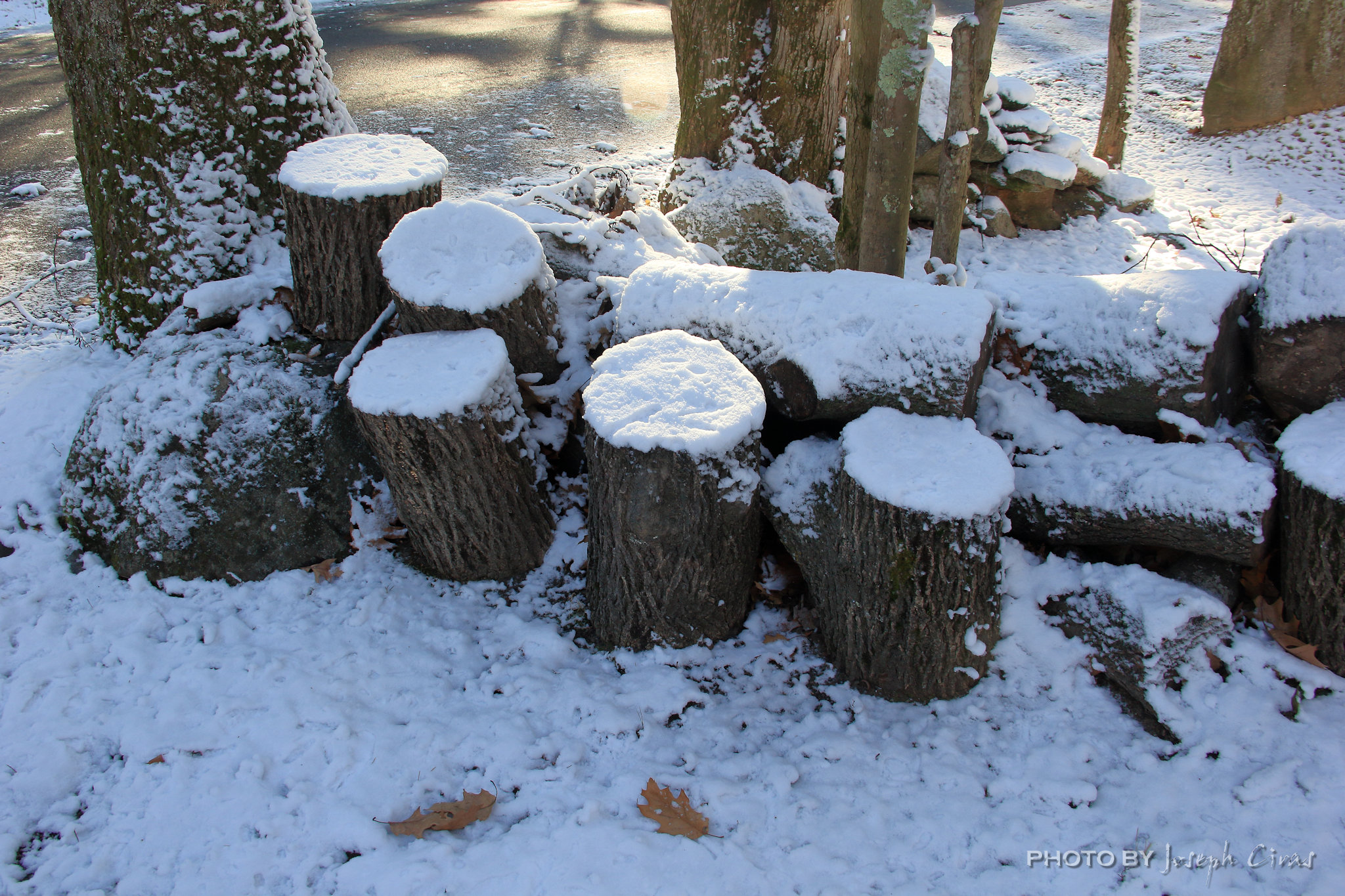
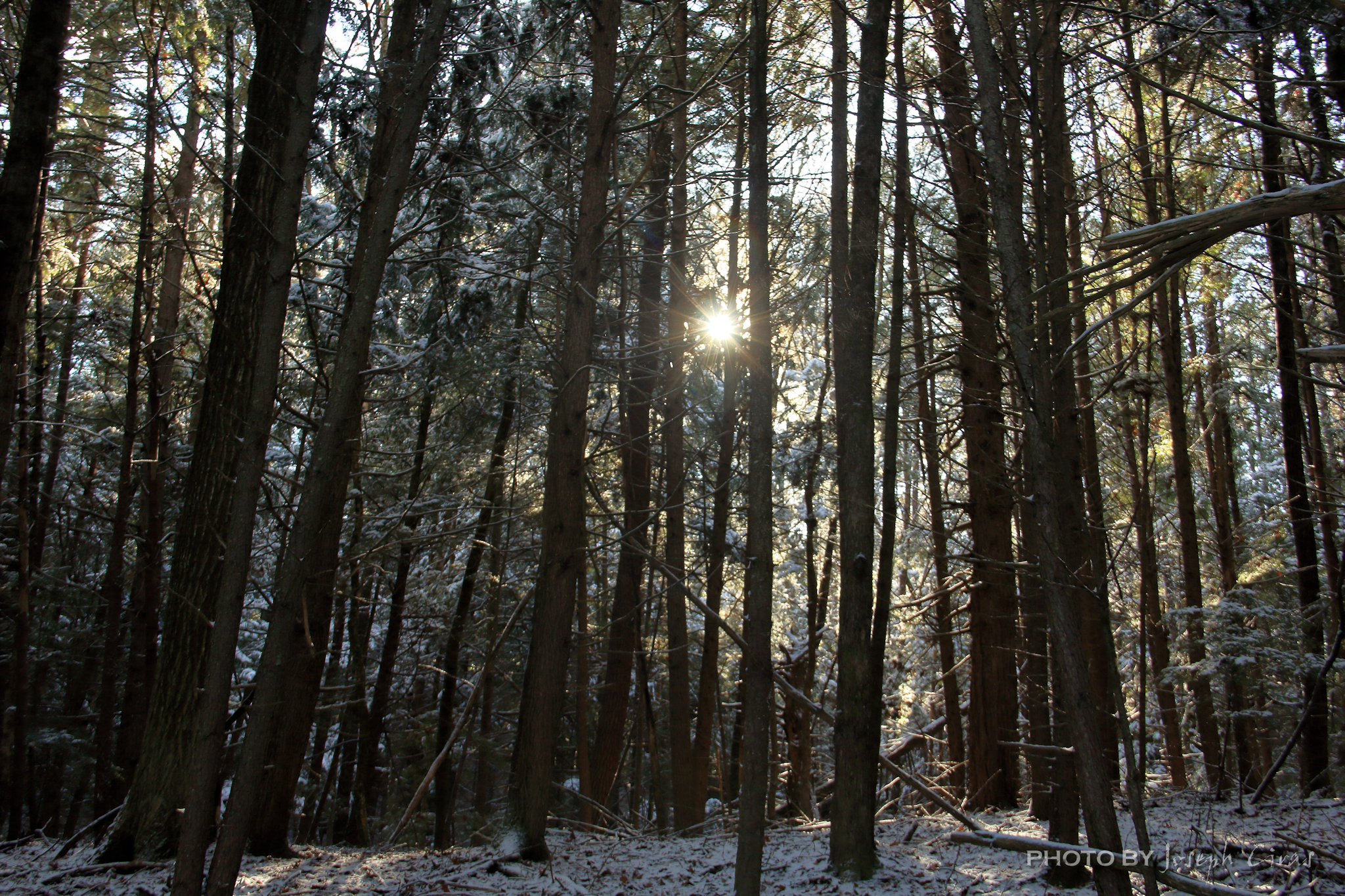

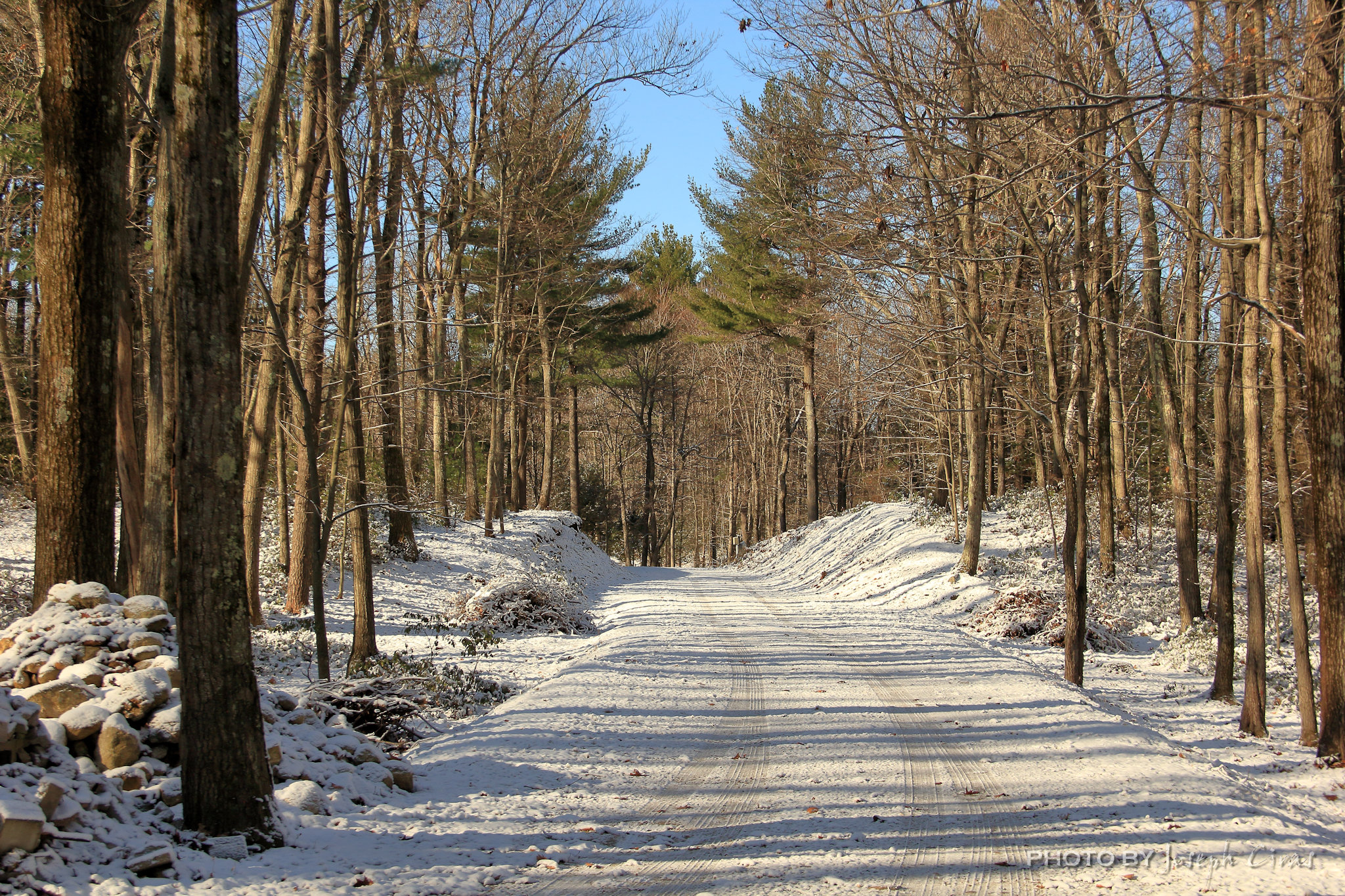

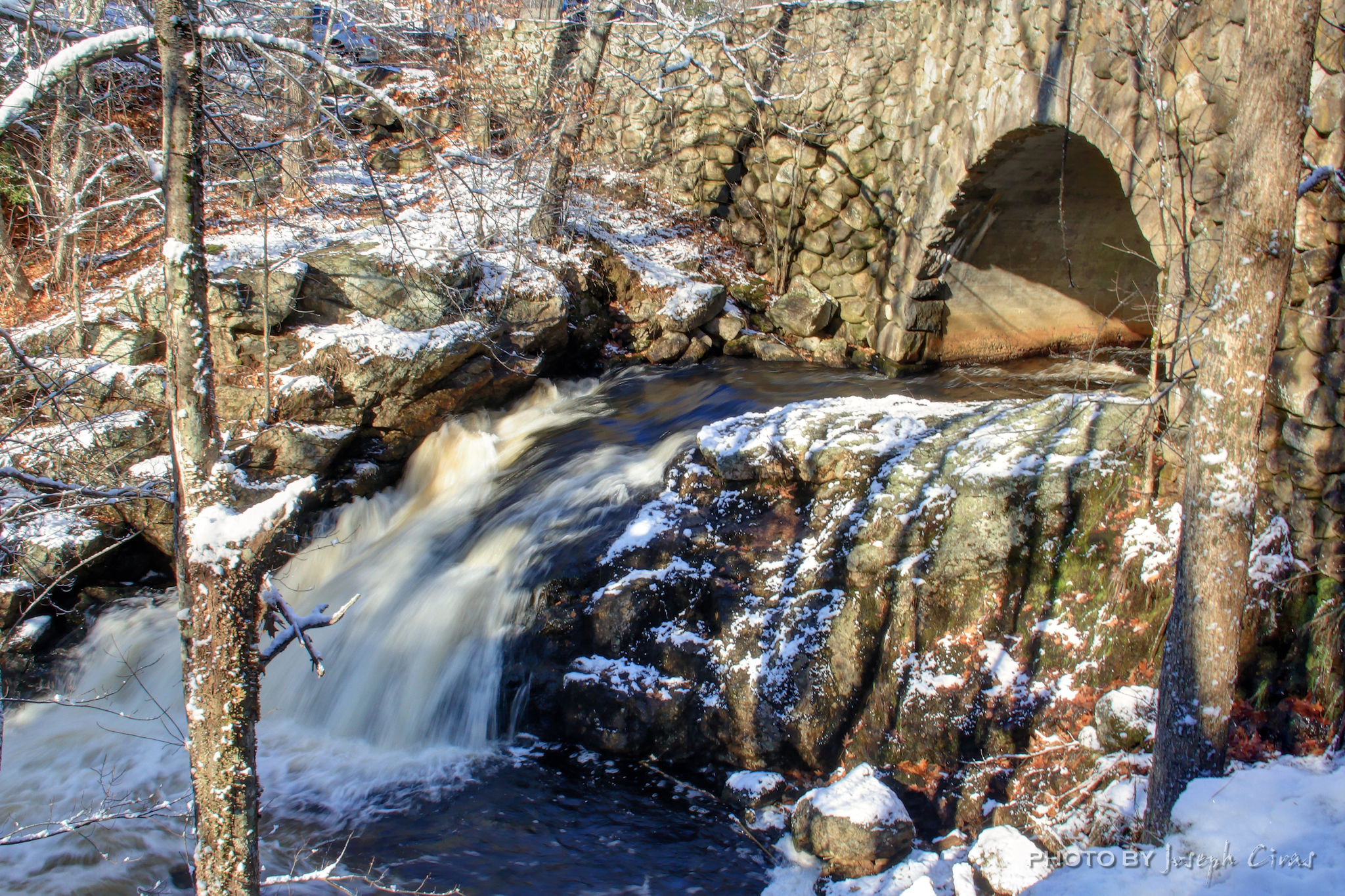

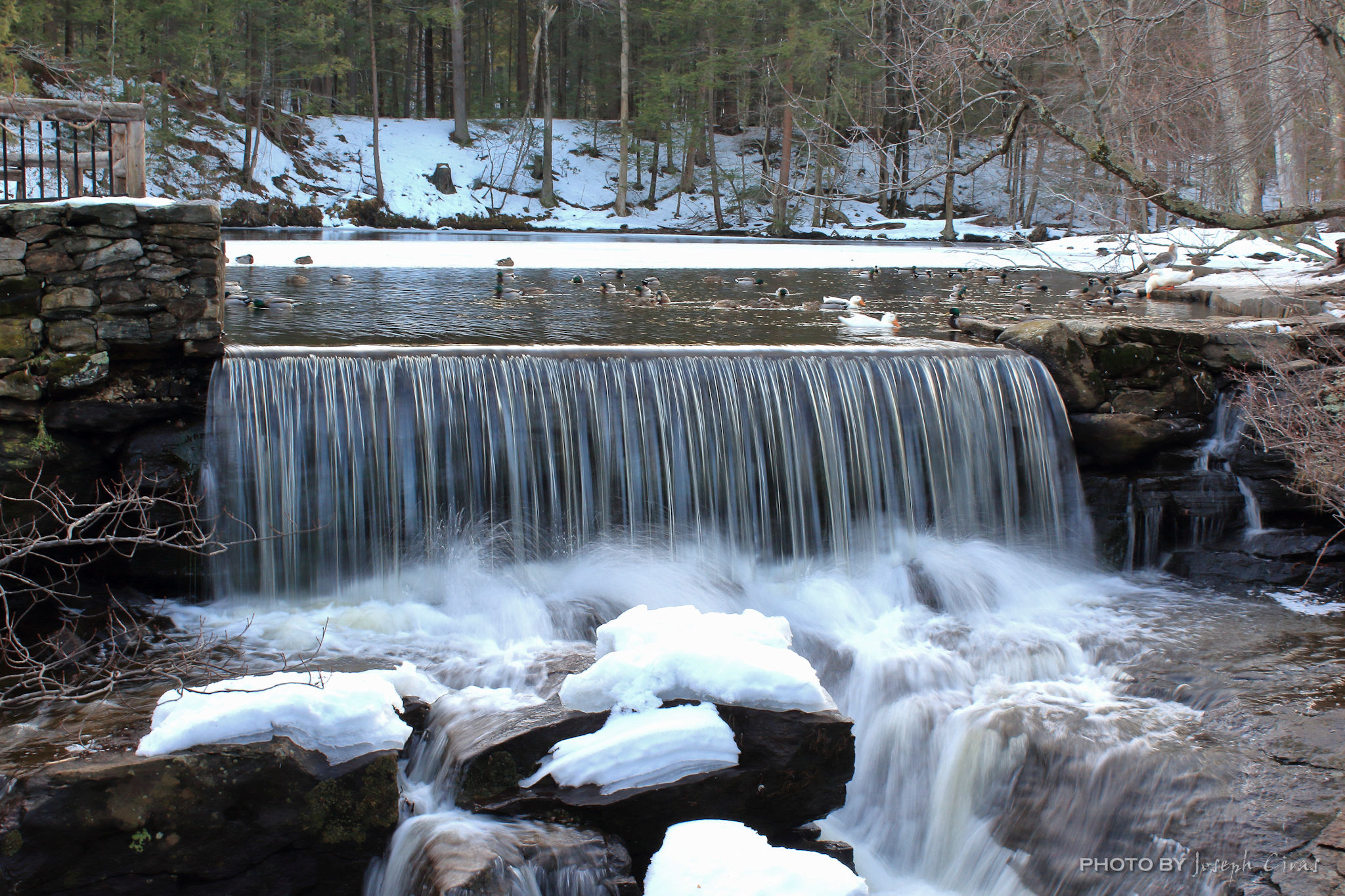
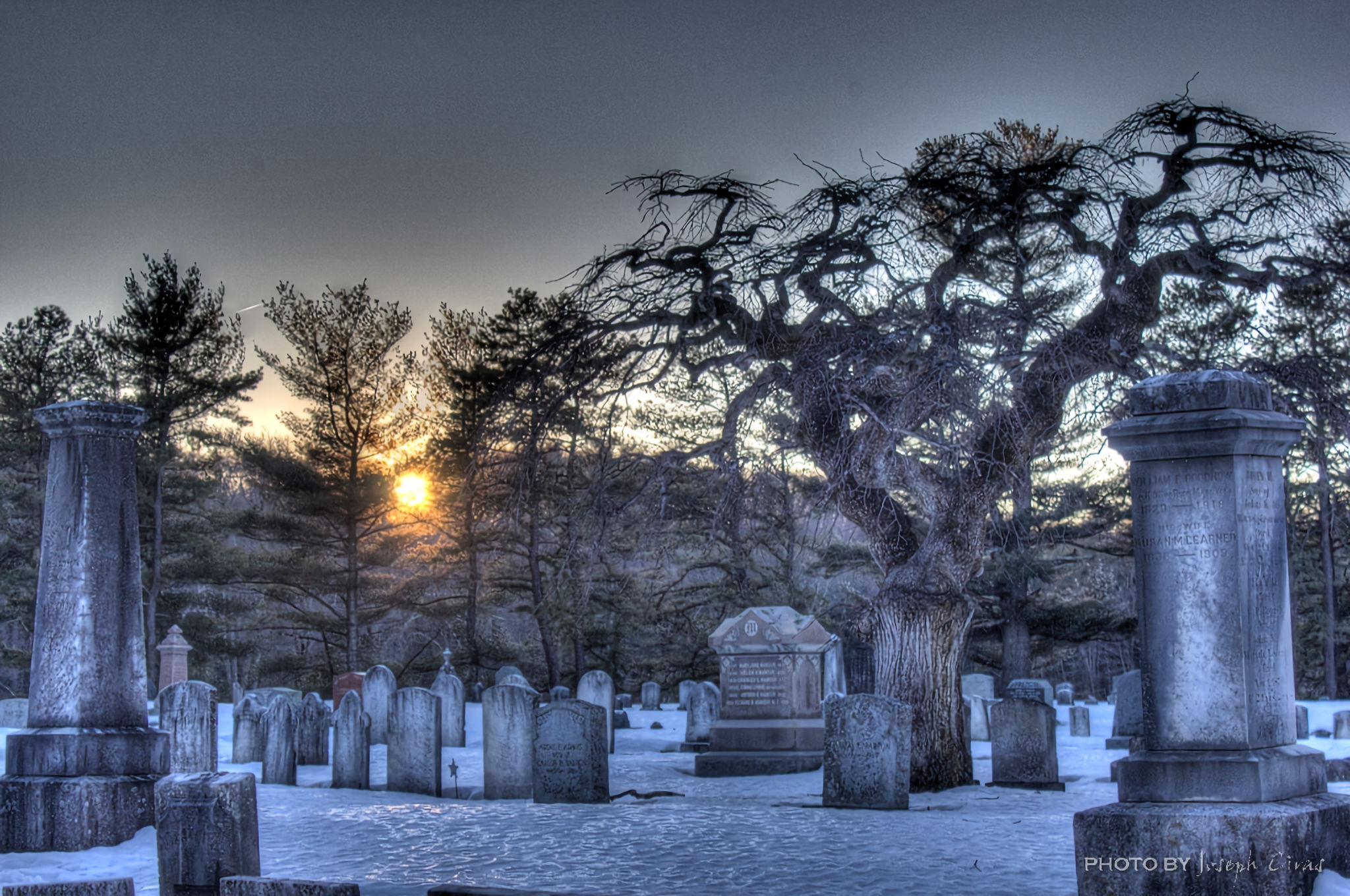



 Photo by Joseph Ciras