Photographic Thoughts — 04/07/2024 to 04/13/2024

“An eclipse is one phenomenon that is actually more impressive from the ground.” — Leroy Chiao

This week’s blog will feature photos of one of nature’s wonders, a total solar eclipse.

Sunday, 04/07/2024: Posted photo — Moose.

Today was a travel day to Houlton ME to see the eclipse. We were looking to go to either western Ohio, northern New York, or Vermont to see the eclipse. We have relatives and friends in those areas. Looking at the weather for tomorrow’s eclipse, it was decided to head to Houlton ME. There is a Walmart in Houlton. Since we saw the last total solar eclipse seven years ago in a Walmart in TN, we thought it would be a good idea to go to one in Houlton. Walmart had a big open space and there would be many people. We also though we could sleep in the parking lot. This did not happen, we slept in a rest area on the way. Houlton ME was predicted to have the best weather in the country along the path of totality. It did not disappoint.
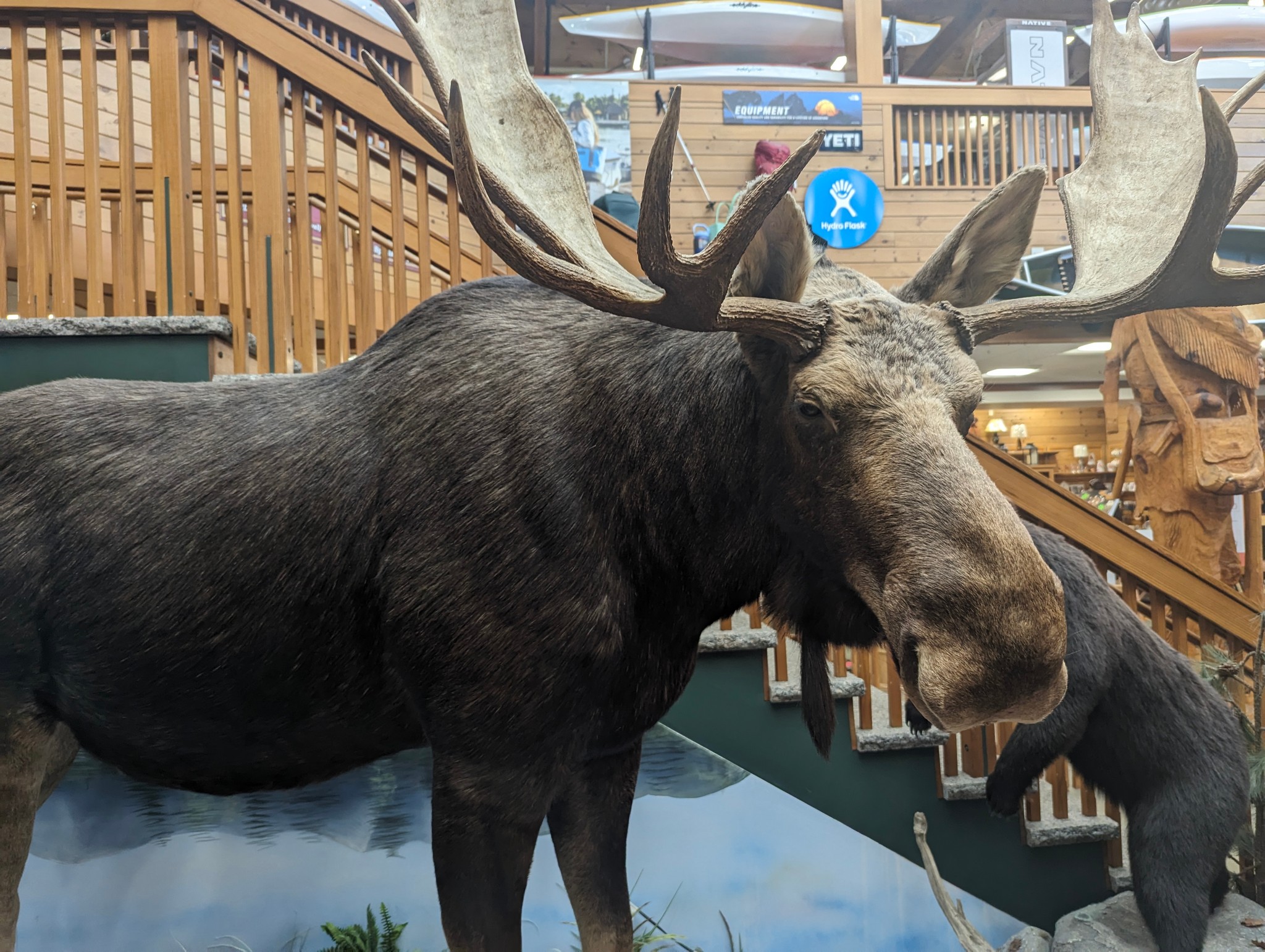
This moose is at the Kittery Trading Post. We stopped in Kittery to get candy and to go to the Trading Post. I needed another fuel can for my camping stove. If the weather was cold, we were going to have hot chocolate while we waited, and I did not want to run out of fuel. We also stopped in Freeport to go to LL Bean. We shop the outlet store and did not go to the main campus this trip.

The ride to ME was uneventful. There were signs in both NH and ME warning people about the traffic and not to stop on the side of the road to see the eclipse. We did not see many vehicles on the road.

Monday, 04/08/2024: Posted photo — Sundog.

While waiting for the eclipse, I saw a sundog and took a photo of it with my cell phone. I adjusted by camera setting for the eclipse and did not want to change them.
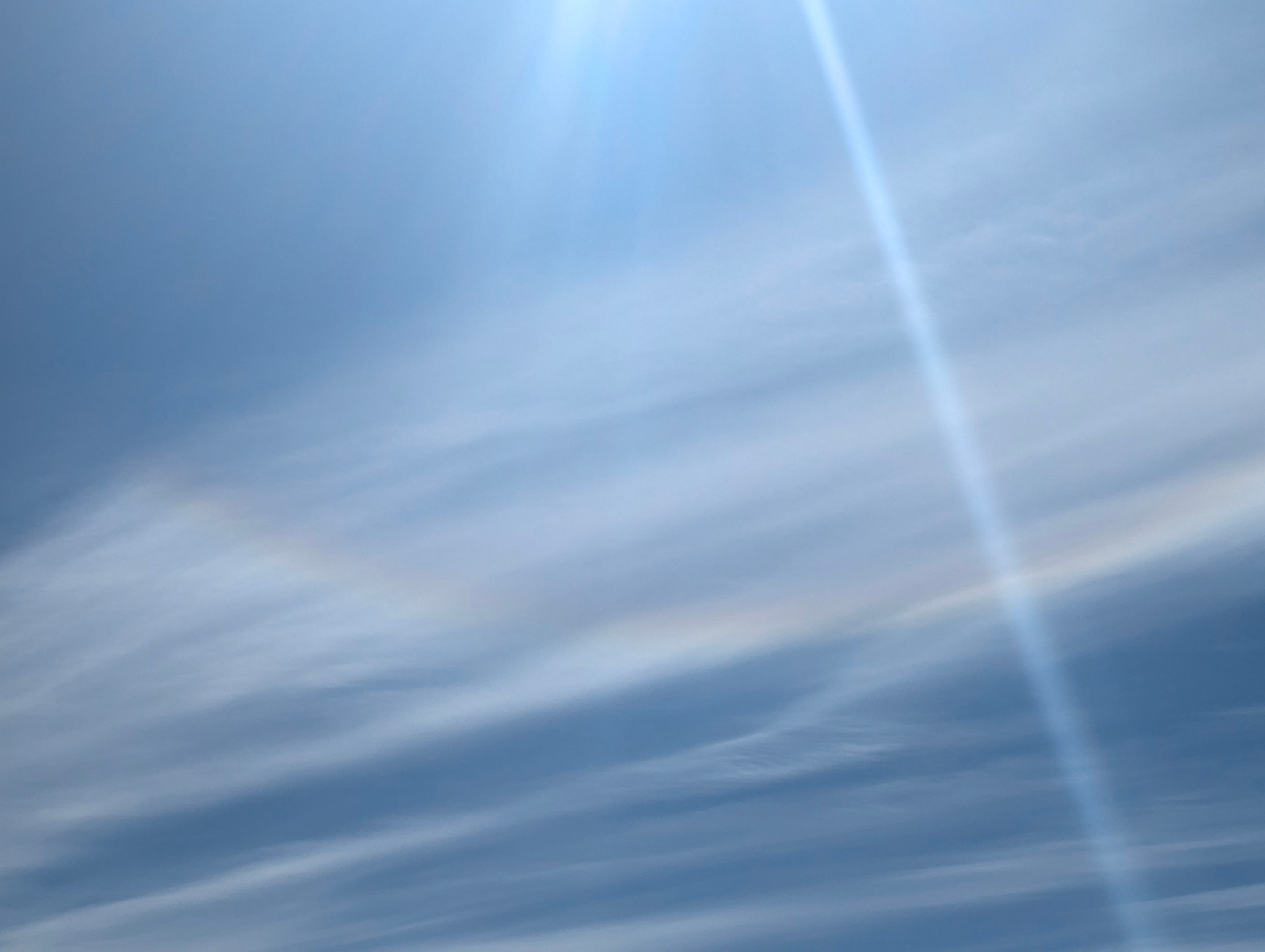
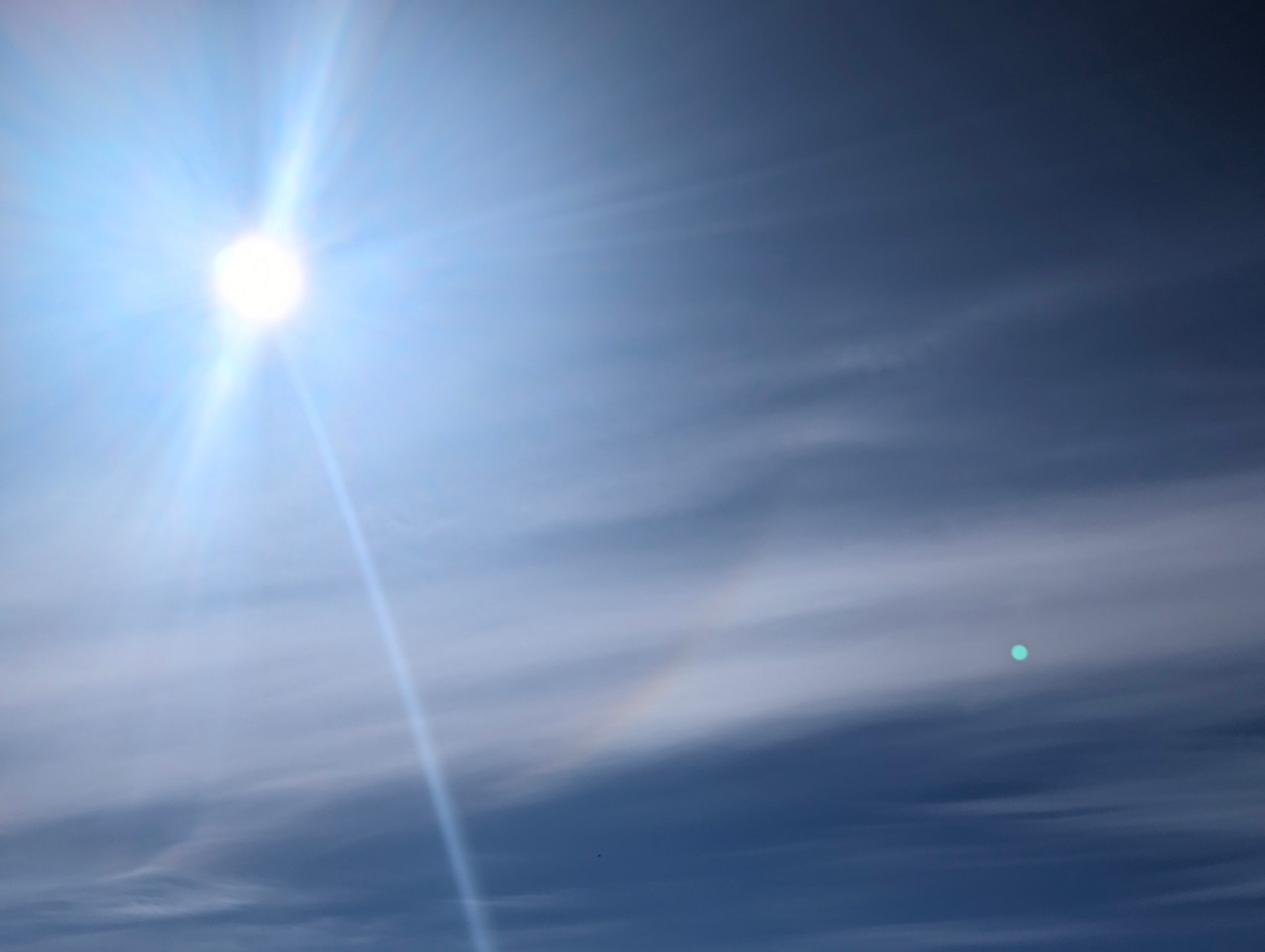
Sundogs are colored spots of light that develop due to the refraction of light through ice crystals. They are located approximately 22 degrees either left, right, or both, from the sun, depending on where the ice crystals are present. This sundog was in the little clouds there were.

Tuesday, 04/09/2024: Posted photo — Second Contact.

Second contact is the start of totality. First contact is when the eclipse starts, second is the start of totality, third is when totality ends, and fourth is when the eclipse ends. Between first contact and second contact, a special solar filter needs to be put on your camera. It is the same type of filter that are in solar glasses.
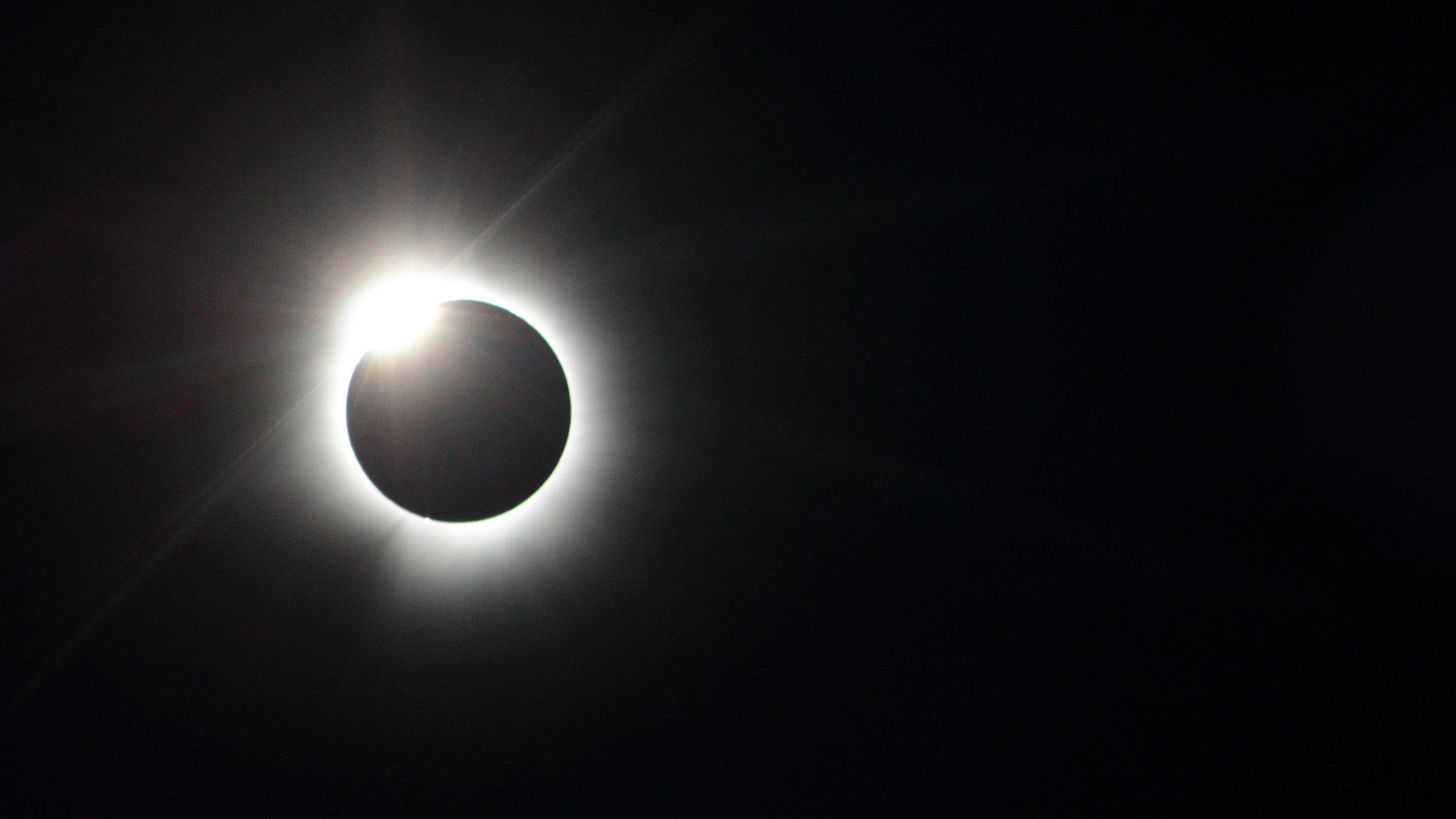
Just before totality, a single bright spot will remain, resembling a diamond in a ring. I missed taking a photo of this phenomenon during the eclipse seven years ago and was fully prepared for it this time.

Wednesday, 04/10/2024: Posted photo — Totality or Maximum Eclipse.

Totality lasted 3 minutes and 18 seconds in Houlton. It was very close to the maximum totality line. Three minutes and 18 seconds is not a long time, but it was worth it. Looking at the horizon and seeing sunset/sunrise. Seeing Jupiter and Venus on either side of the eclipse was another bonus. I was looking for comet 12P/Pons-Brooks near the eclipse but it was too bright to see.

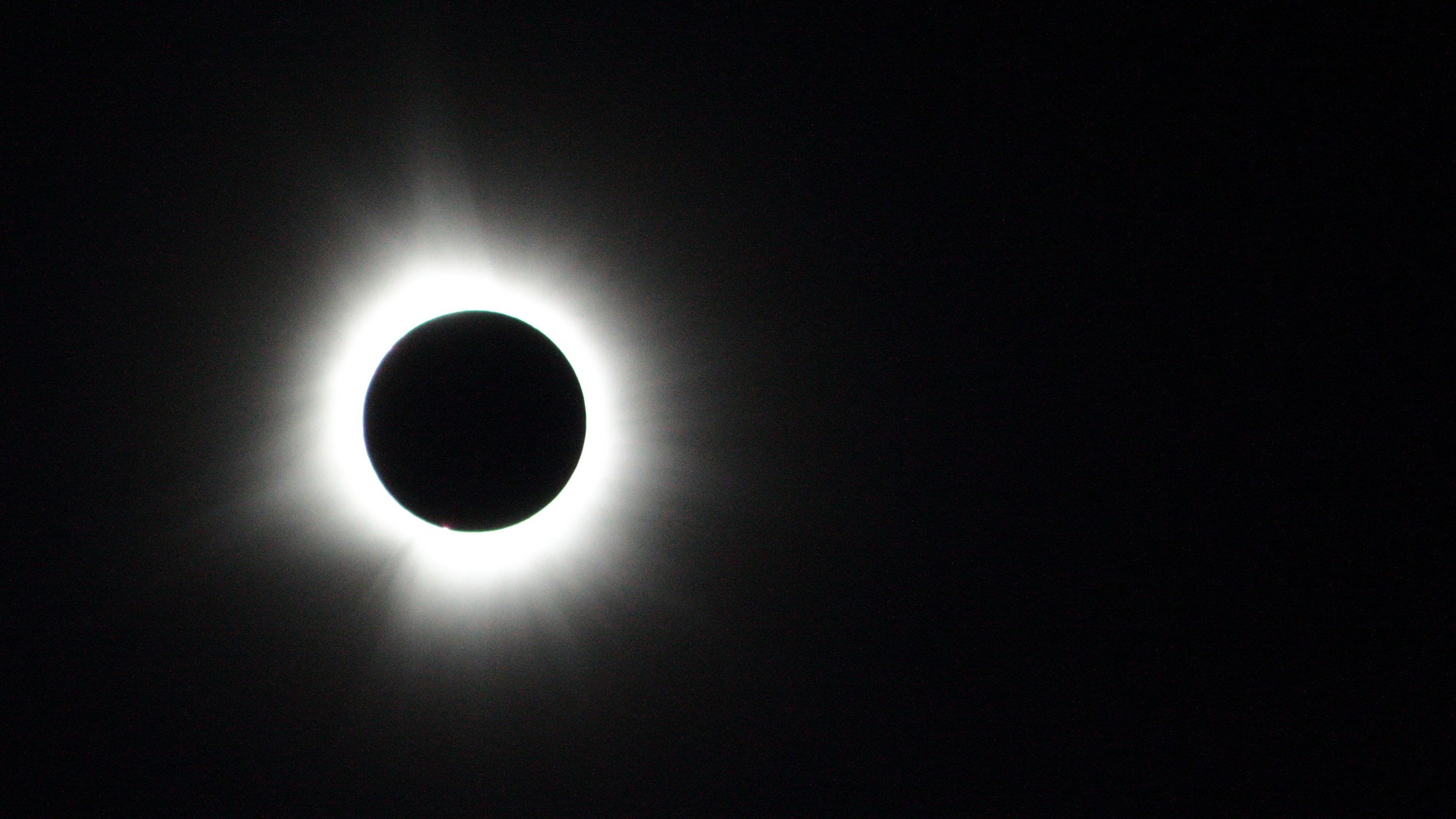
Here are a few photos of totality. Unlike seven years ago in TN, the sky was cloud free and the eclipse as spectacular.

Thursday, 04/11/2024: Posted photo — Third Contact.

This is Baily’s beads just as third contact starts, or totality ends. During the last few seconds before totality, the crescent Sun breaks up to form Baily’s beads (those are typically only visible through a telescope with a solar filter attached). At the end of totality, this sequence happens in the reverse order, starting with Baily’s beads until the returning burst of sunlight becomes too bright to view with the naked eye. I also missed this during the eclipse seven years ago and did not want to miss it again.
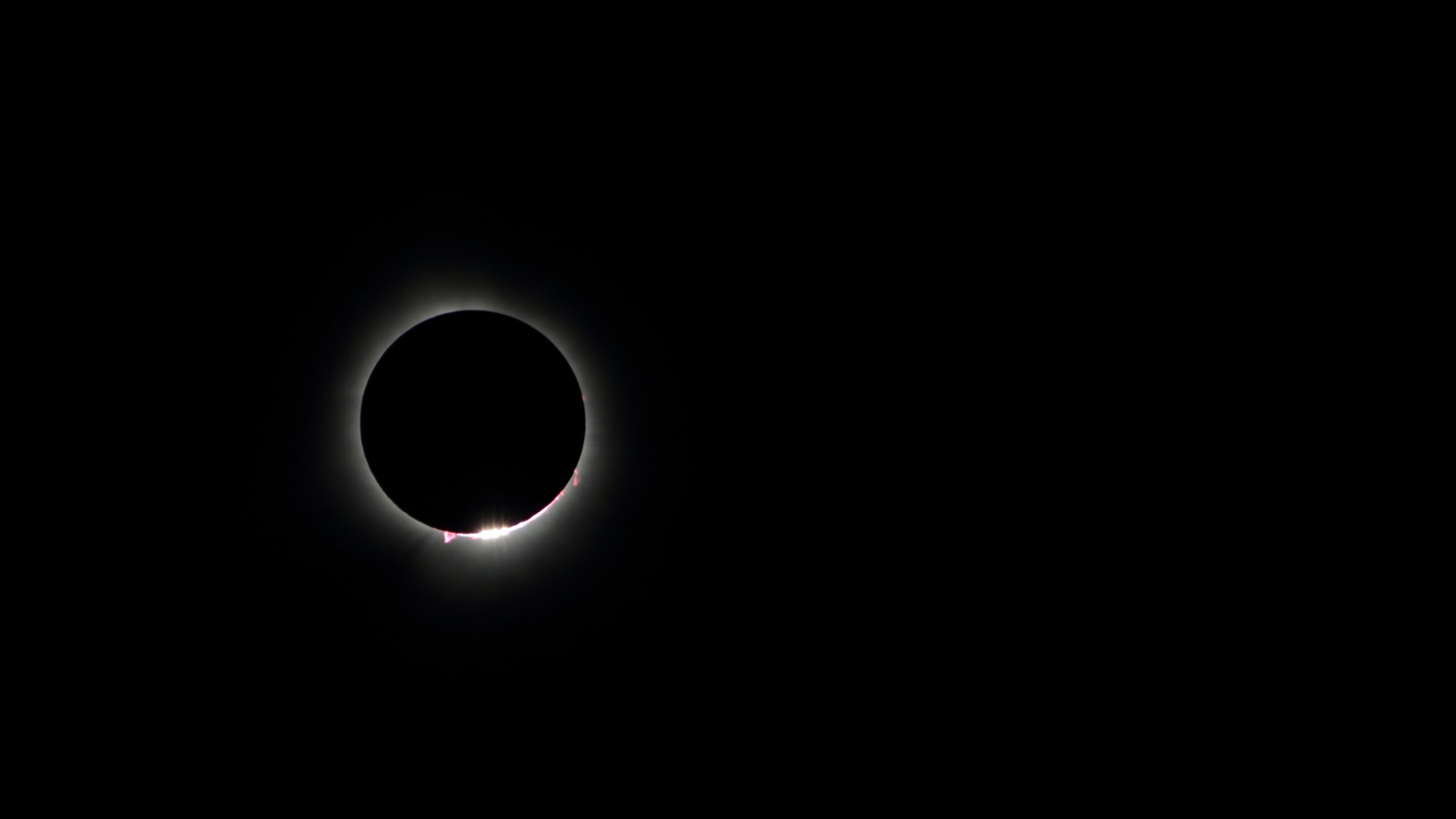
When looking at this photo, you can see some solar prominences. Though they look like they could be made of fire, they are eruptions of plasma, known as coronal mass ejections (CMEs). They are a hot gas made of electrically charged hydrogen and helium, extending outward from the sun’s surface.

Friday, 04/12/2024: Post photo — Collage.

Here is a composite photo of different phases of the eclipse.

The timing for these photos were taken from the Partial Phase Images area in my Solar Eclipse Timer app. This was a great app to use since it gave verbal instructions and information on what was happening during the eclipse. It would tell you want to look for on ground level and it would count down to the different contacts.

Saturday, 04/13/2024: Post photo — Daffodil.

The daffodils are starting to bloom in our yard. This is a sign of spring. The cold and damp weather did not stop their growth.

That is all for now. Until next week, be safe.
Photographic Thoughts — 01/23/2022 to 01/29/2022

“It’s weird that photographers spend years or even a whole lifetime, trying to capture moments that added together, don’t even amount to a couple of hours.” — James Lalropui Keivom

Thank you for all the new views and likes from last week, it helps keep me inspired.

Sunday, 01/23/2022: Posted photo — Music.

Settings: Google Pixel 2, ISO 252, f/1.8, 1/120 s, 4 mm.

Psalm 23, The Lord is my shepherd…

This is best known psalm out of the 150 psalms in the Bible. There are five books and four literary styles in the psalms. The styles are hymns, prayers of thanksgiving and petition, religious lyrics, and didactic psalms. You can go online or ask your religious leader for more information on the psalms.

Songs, or hymns, at mass are used to enhance the service. I played the organ/keyboard during Mass when I was in college. My family still plays and sings in the choir during Mass today. A good song will lift your spirits.

I did not intend to use this photo today. I used it because it was one of the only photos that I took and it was the one that I liked the best.

Monday, 01/24/2022: Posted photo — Dusting of Snow.

Settings: Canon EOS 60D, ISO 100, f/5, 1/15 s, 50 mm.

Last week we received heavy and wet snow. This week we received a dusting of snow.

In taking this photo, I was practicing depth of field (DOF) in my photos. I am in my 13 year of taking photos every day and I still need on practicing various techniques so my photos are of my liking. I am my own worst critic.

I did go on a great hike tonight. This is my normal Monday night hike on Wachusett Mountain. The trails were in great shape from all the people that have been hiking after the last snowstorm. Microspikes are needed. Some people say no to microspikes since there is no exposed ice on the trails. If I am leading a hike, I am requiring the use of microspikes, or other traction devices, since there is ice under the snow and the spikes give you better traction. I am cautions in a group situation.

Microspikes are great for hiking or in thick ice, nanospikes are good for walking the in areas where traction is needed, but they are not as aggressive as microspikes. I would not recommend the use of nonspikes while hiking since they do not have the grip you need on the snow or ice, or the inclines and declined on a hiking trail. A more aggressive means for traction is the use of crampons. I use my crampons in the higher elevations of the White Mountains, or on a very icy trail. When I hike in the winter, I carry two sets of microspikes: my inexpensive “rock” microspikes and my “good” microspikes and have my crampons with me. Occasionally I will also attach my snowshoes to my pack if there has been newly fallen snow and I know that trail that I will be hiking is an underutilized trail. The difference between my inexpensive “rock” microspikes and my “good” microspikes is the length of the spikes and the quality of the product.

Tuesday, 01/25/2022: Posted photo — Snow White.

Settings: Canon EOS 60D, ISO 800, f/36, 1/50 s, 93 mm.

Light dusting of snow received last night. This makes for a wonderful winter scene. When I was walking around yesterday, I was thinking of the challenge for the 52 frames project https://52frames.com/photographer/20931.  The challenge is for this week is to take a minimalistic photo. This is my first minimalistic photo of the week. Look for a different photo later in the week.

Wednesday, 01/26/2022: Posted photo — Colors.

Settings: Canon EOS 60D, ISO 100, f/7.1, 1/160 s, 115 mm.

Last week at this time, I posted a sunrise photo. Today I did the same.

I would like to talk about the colors in a sunrise/sunset. When the sun is low on the horizon during sunrises and sunsets, the sunlight travels through more of the atmosphere. Shorter wavelength colors (blues and violets) get scattered out. This leaves more of the longer wavelength colors like yellow, orange, and red. Therefore, sunrises often take on such colors. Some of the colors of a sunrise or sunset are #95382c, #141b24, #4f3c54, #223444, and #9c4a44 for the more technical people that read my post. Sunrises and sunsets are also in the 1000–2000 K range. Other base settings for sunrise and sunset photos are f/6–f/16 and a shutter speed of 1/500 s. I also like to take my photos one step underexposed to bring out the colors. Shoot RAW so values can be adjusted post process if required.

As always, practice sunrise and sunset photos to find out the best settings for your camera.

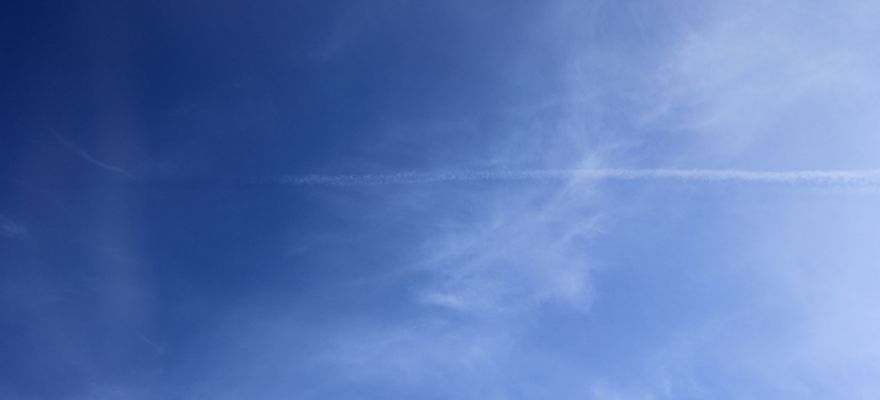
Thursday, 01/27/2022: Posted photo — Sky.

Settings: Canon EOS 60D, ISO 100, f/7.1, 1/640 s, 24 mm.

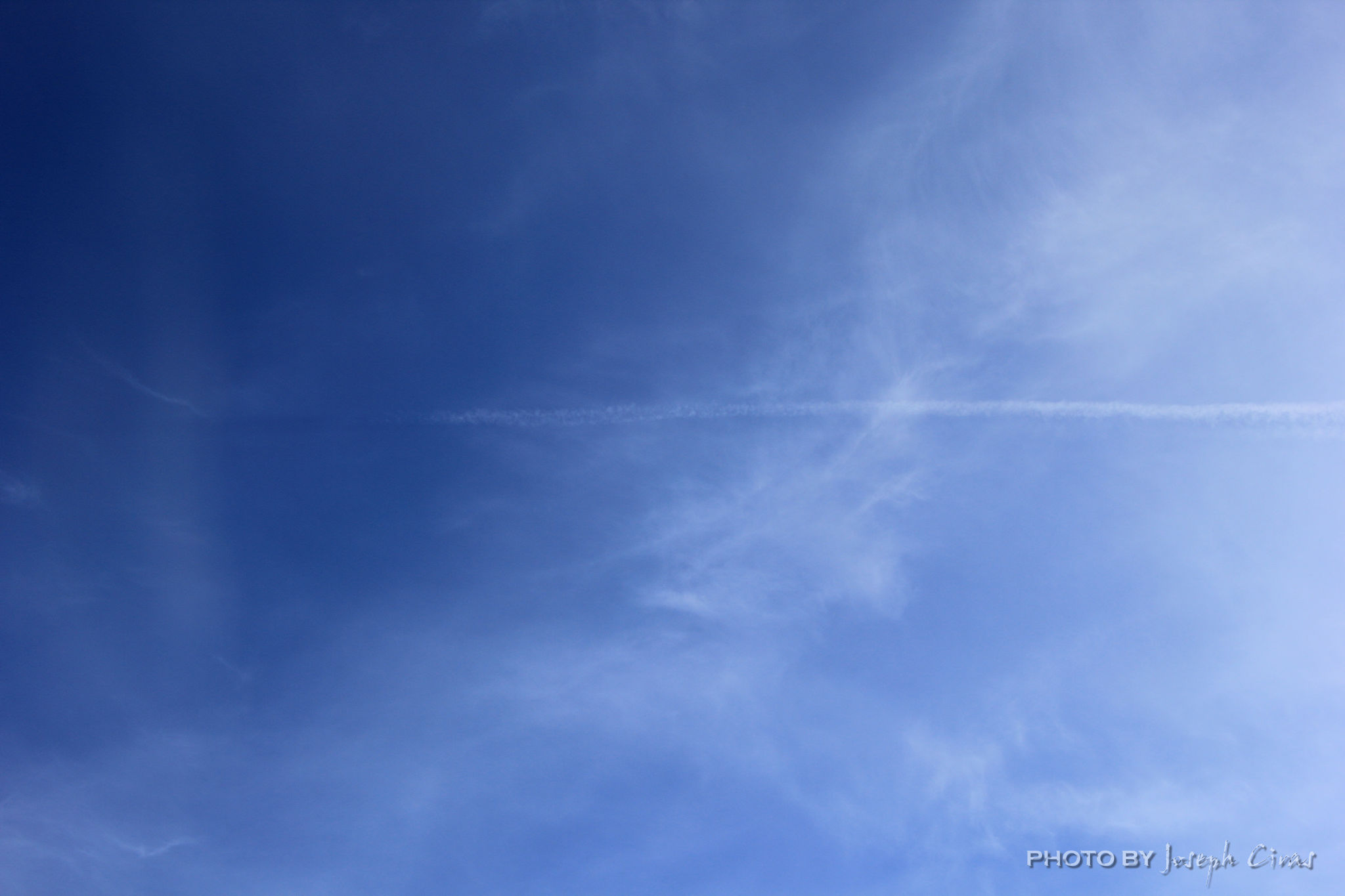
Here is another minimalistic photo for the week. I like this one better than the snow photo so this is the one that I may post for the 52 frames project.

Some of the elements of minimalistic photography are simplicity, negative space, powerful composition, isolation, color, and lines and shapes. Minimalist photography shows the power of a simple solo object. In this case, it is the contrail against the blue sky.

Looking at the simplicity of this photo, my watermark may be taking away some of its impact. Need to think about that next time. There is a debate whether to watermark photos. It does take away from the aesthetic quality of some photos. I watermark the photos that I post and not the ones that I display in gallery showings or the ones that I sell.

Friday, 01/28/2022: Post photo — Hook.

Settings: Canon EOS 60D, ISO 100, f/5, 1/15 s, 62 mm.

I see a hook, a needlenose shark, or a stitch puller. What do you see? This is another pareidolia photo.

Today I am not writing much about this photo since I need to prepare our house for the snow storm that will happen tomorrow.

Saturday, 01/29/2022: Post photo — Looking Down the Street.

Settings: Canon EOS 60D, ISO 100, f/7.1, 1/80 s, 29 mm.

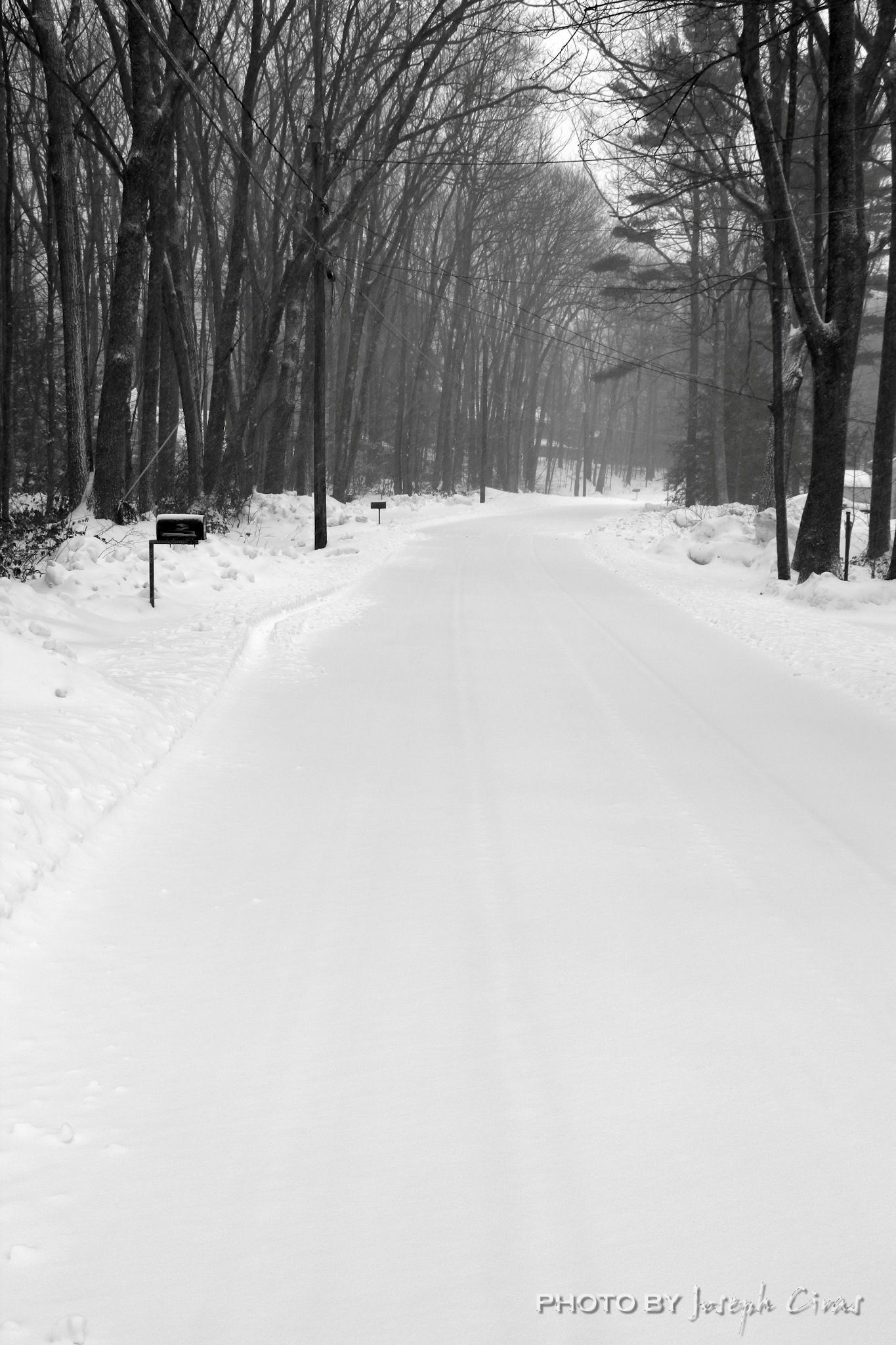
We received about 10 inches of snow out of today’s storm. It is much less than originally predicted. The storm moved out to sea, and we were on the outer edge of the storm.

I did go out every two hours today to shovel the snow. The first few times out there were a few inches of show to shovel. As the day went on, the shoveling was easier and quicker. Winter storm Kenan was another let down for us. Only 10 inches of snow. We are still waiting for the first big storm of the year.

Kenan was a bomb cyclone. A bomb cyclone is a storm that undergoes bombogenesis. Bombogenesis is a rapid intensification of a low-pressure system in which we measure in millibars. The lower the pressure is, the stronger the storm.

That is all for now. Until next week, be safe.
For more photo of other project I have work, visit my website: https://photobyjosephciras.weebly.com or visit me on Facebook at https://www.facebook.com/PhotobyJosephCiras/.

My Weebly website is back up and running. I am looking of suggestions on how to make it look better.