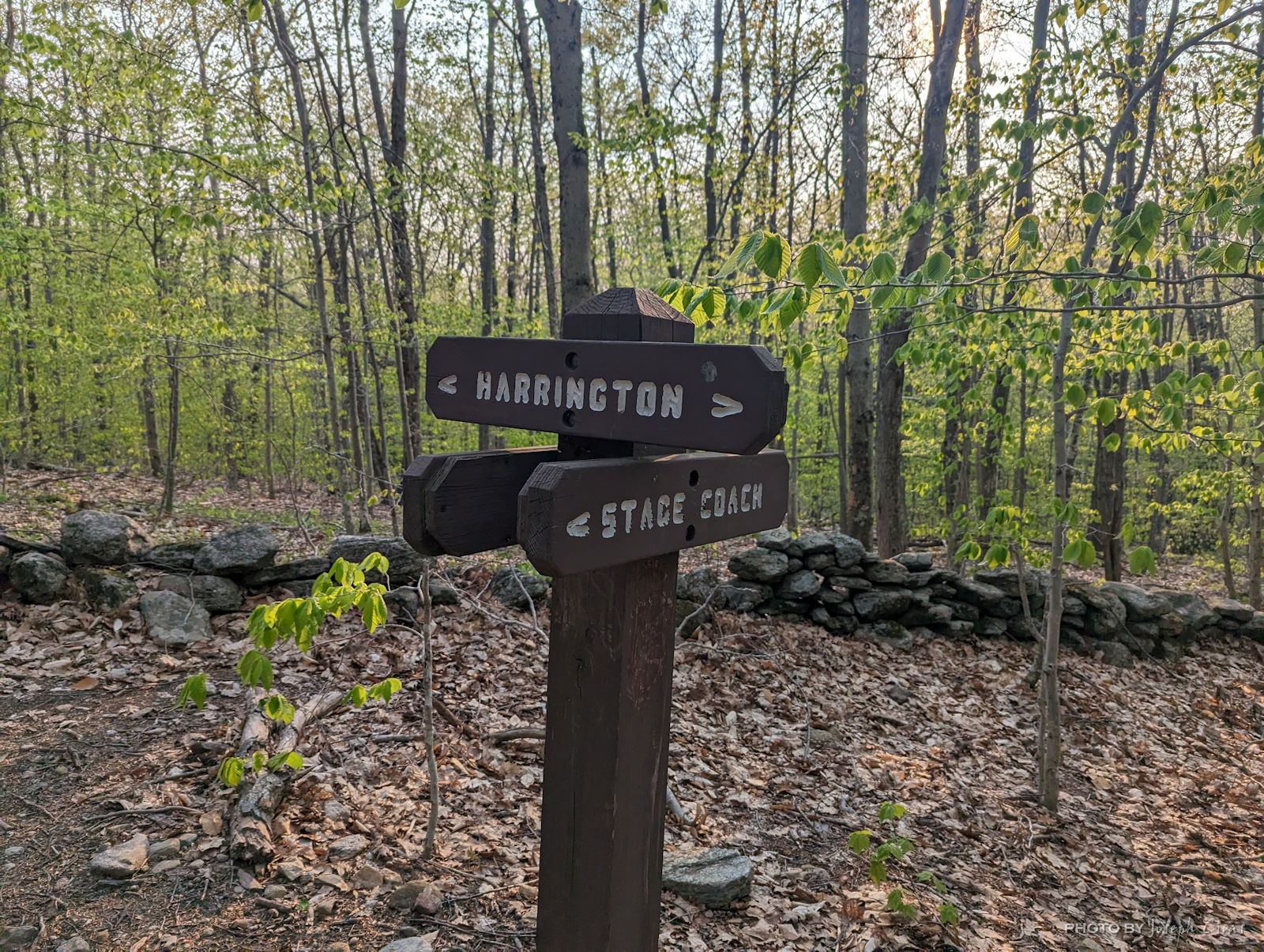
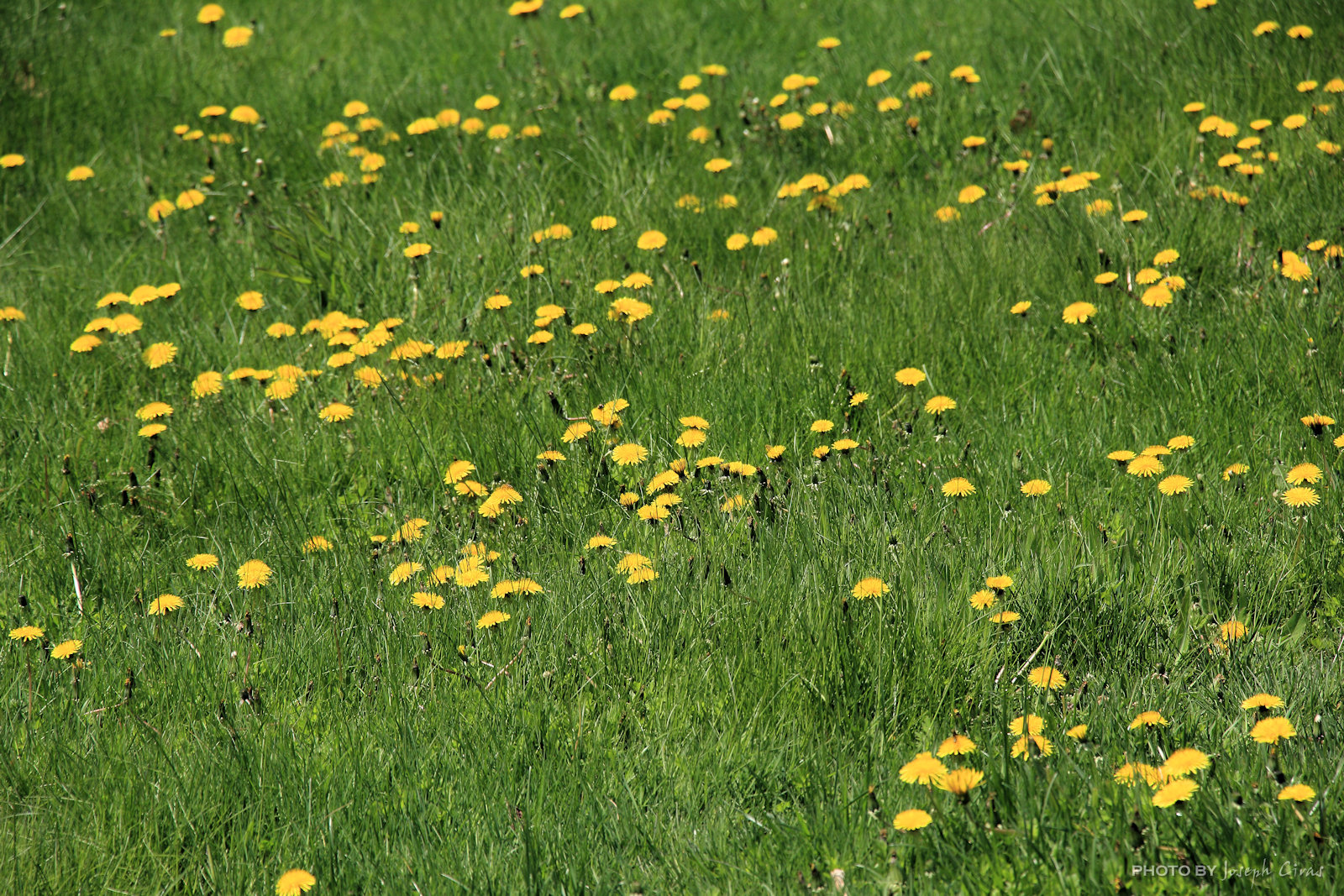
“Taking pictures is like tiptoeing into the kitchen late at night and stealing Oreo cookies.” — Diane Arbus
In honor of Groundhog Day, I will be posting a previous post.
Thank you for all the new views and likes from last week, it helps keep me inspired.
These next few posts will be photos only that I have taken over my vacation. This week will show you some of the animals that I encountered.
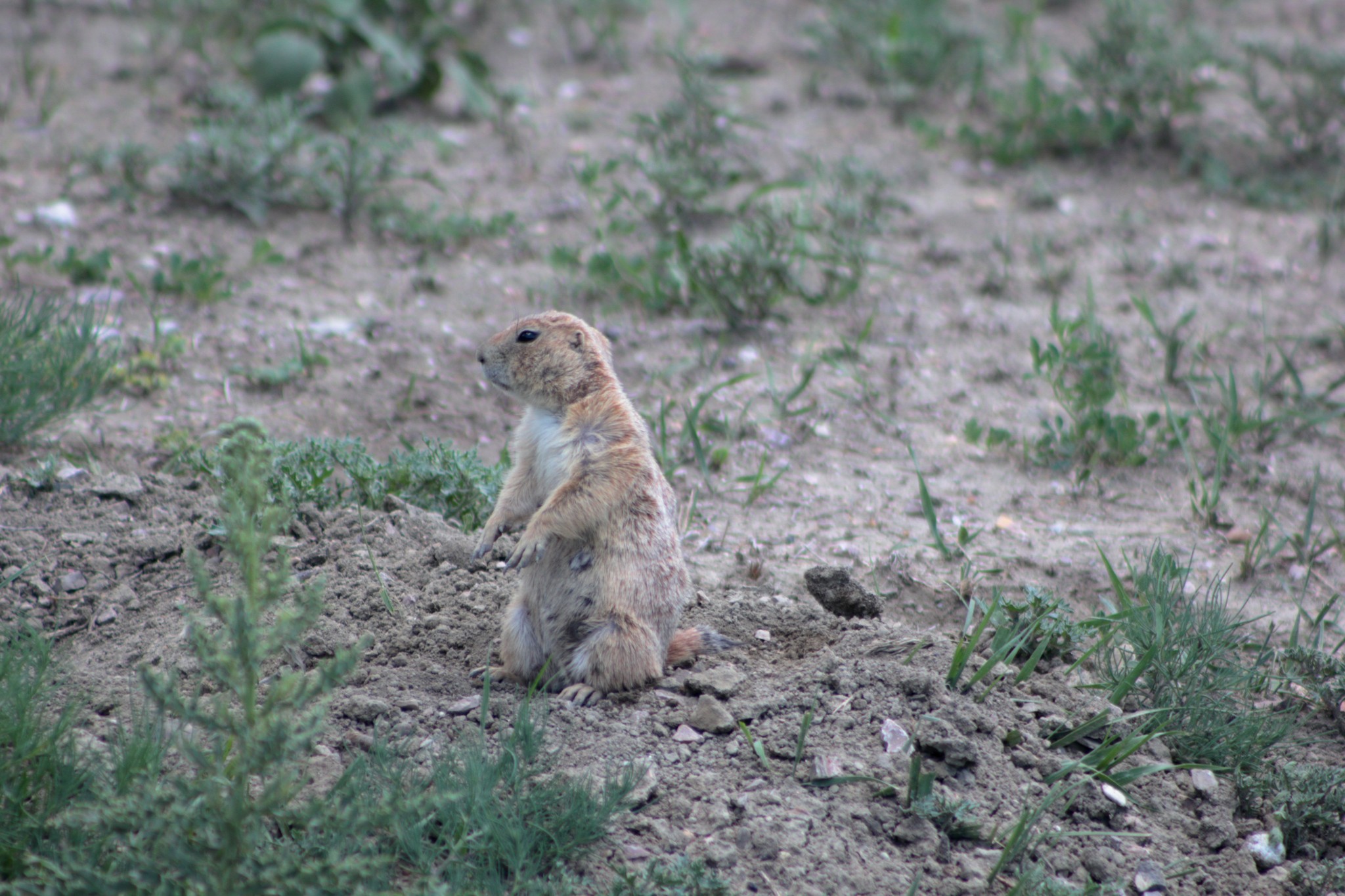
Sunday, 01/28/2024: Posted photo — Prairie Dog.
One of the campsites we were camped, was a remote campground in Badlands National Park. In this campground and the surrounding area, there USGA was doing a study on Prairie Dogs. These were some that were near my tent.
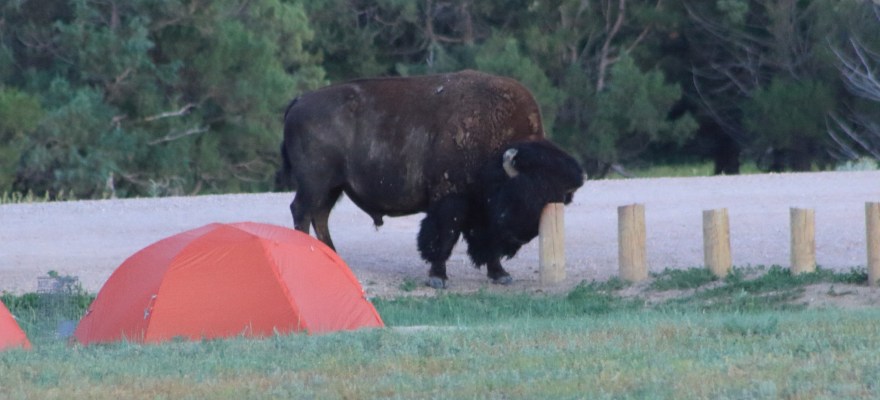
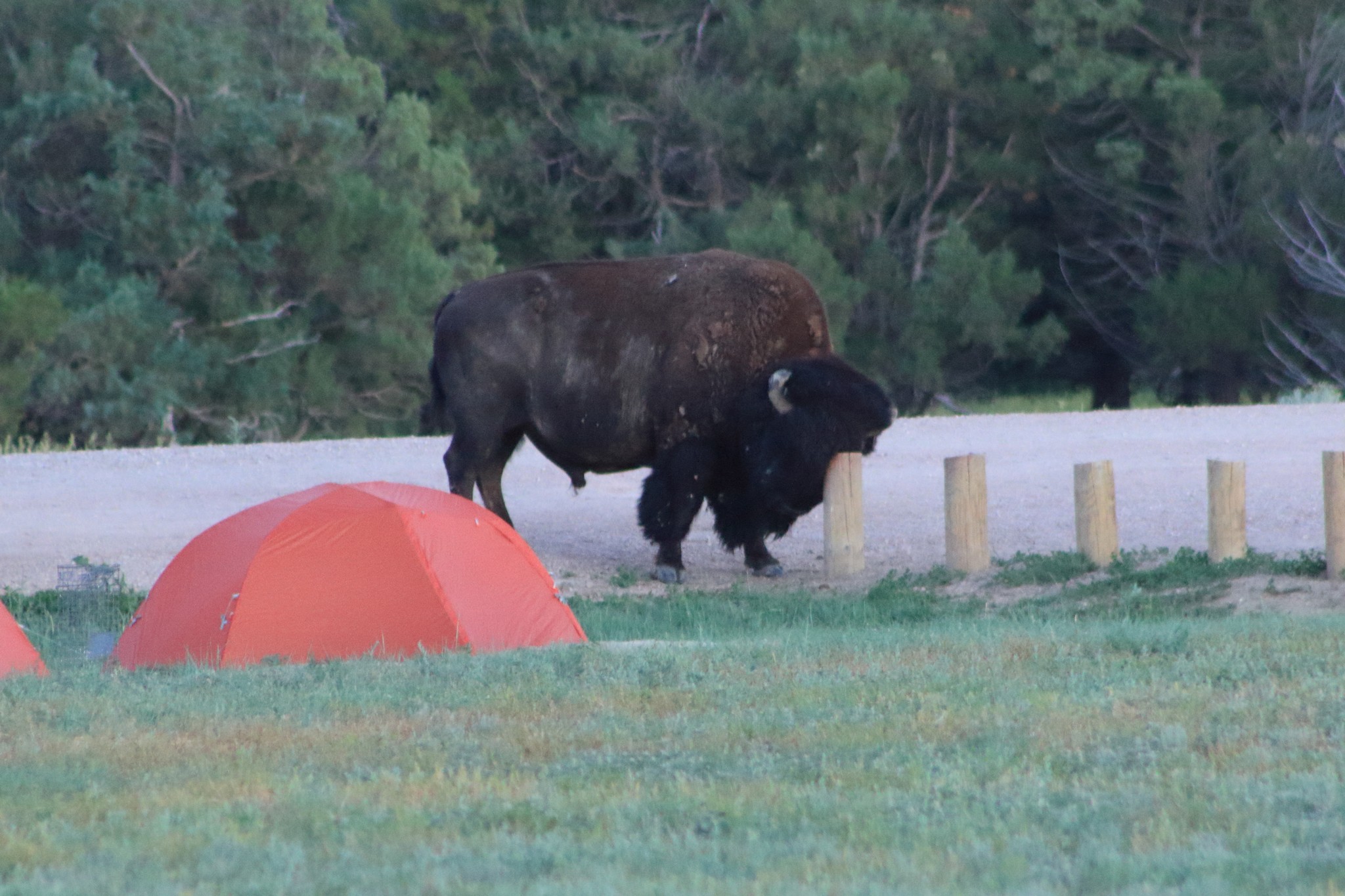
Monday, 01/29/2024: Posted photo — Camping Bison.
In the same campground, there was a bison that used the site markers as scratching posts. This bison also showed up in the morning. The remote campground had only 10 sites. All eyes were on the bison. People did come out of these tents as the bison moved away.
Tuesday, 01/30/2024: Posted photo — Ducks.
These ducks were in one of the rivers at Yellowstone National Park. I did look up the type of ducks these are but did not write it down.
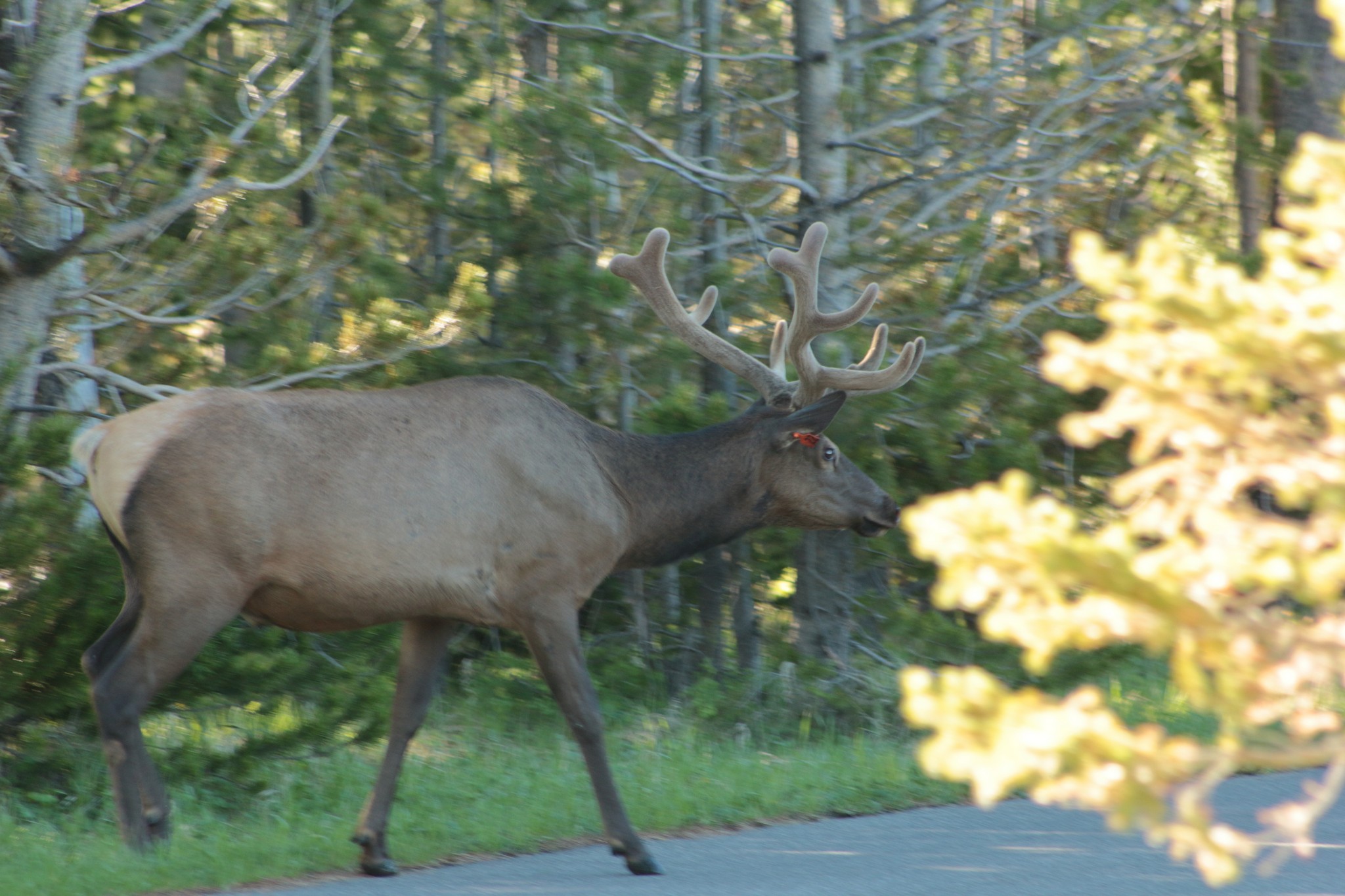
Wednesday, 01/31/2024: Posted photo — Elk.
This elk came to visit us at the first campground we had in Yellowstone.
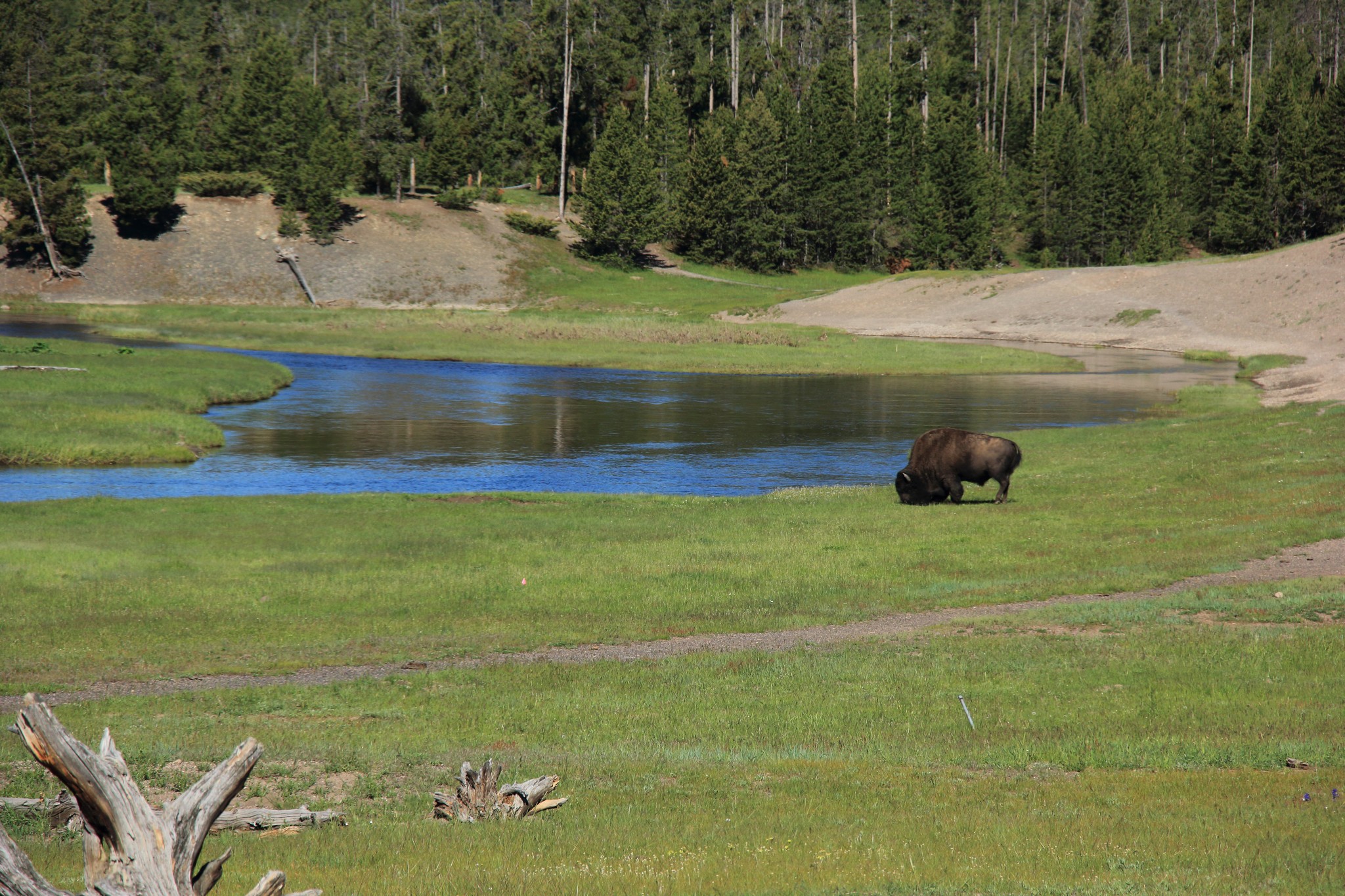
Thursday, 02/01/2024: Posted photo — Bison by River.
At the second campground in Yellowstone, we took a walk in the morning and saw this bison by the river. There was a plaque at this location that stated that this was the exact location that the idea to make Yellowstone a national park was born.
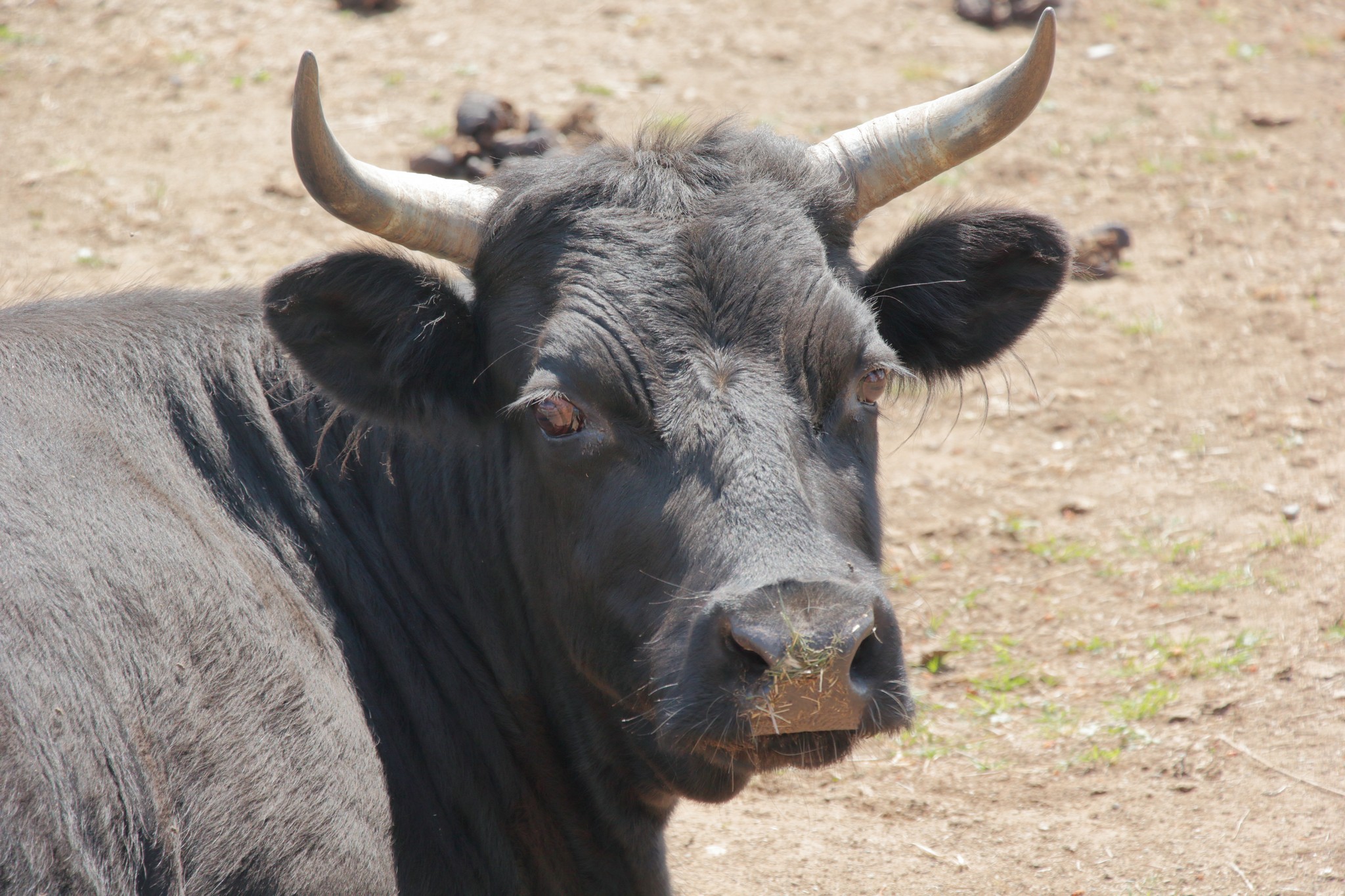
Friday, 02/02/2024: Post photo — Mini Cow.
One of my sister-in-law’s animals. It is always great to take the trip to visit them.
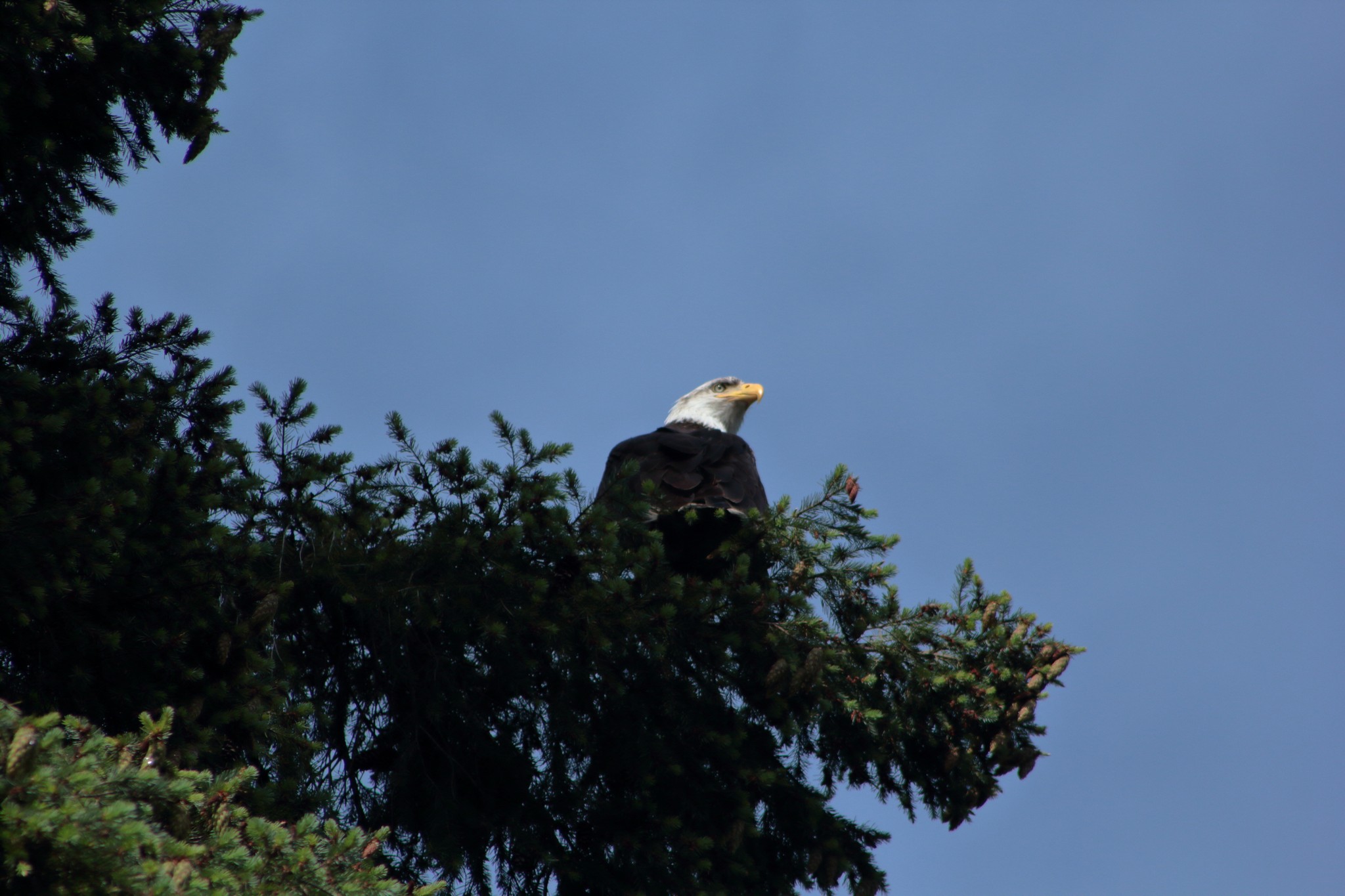
Saturday, 02/03/2024: Post photo — Feasting Bald Eagle.
This Bald Eagle just caught a fish, brought it to the top of this tree, and had its dinner.
“Photography takes an instant out of time, altering life by holding it still.” — Dorothea Lange
Thank you for all the new views and likes from last week, it helps keep me inspired.
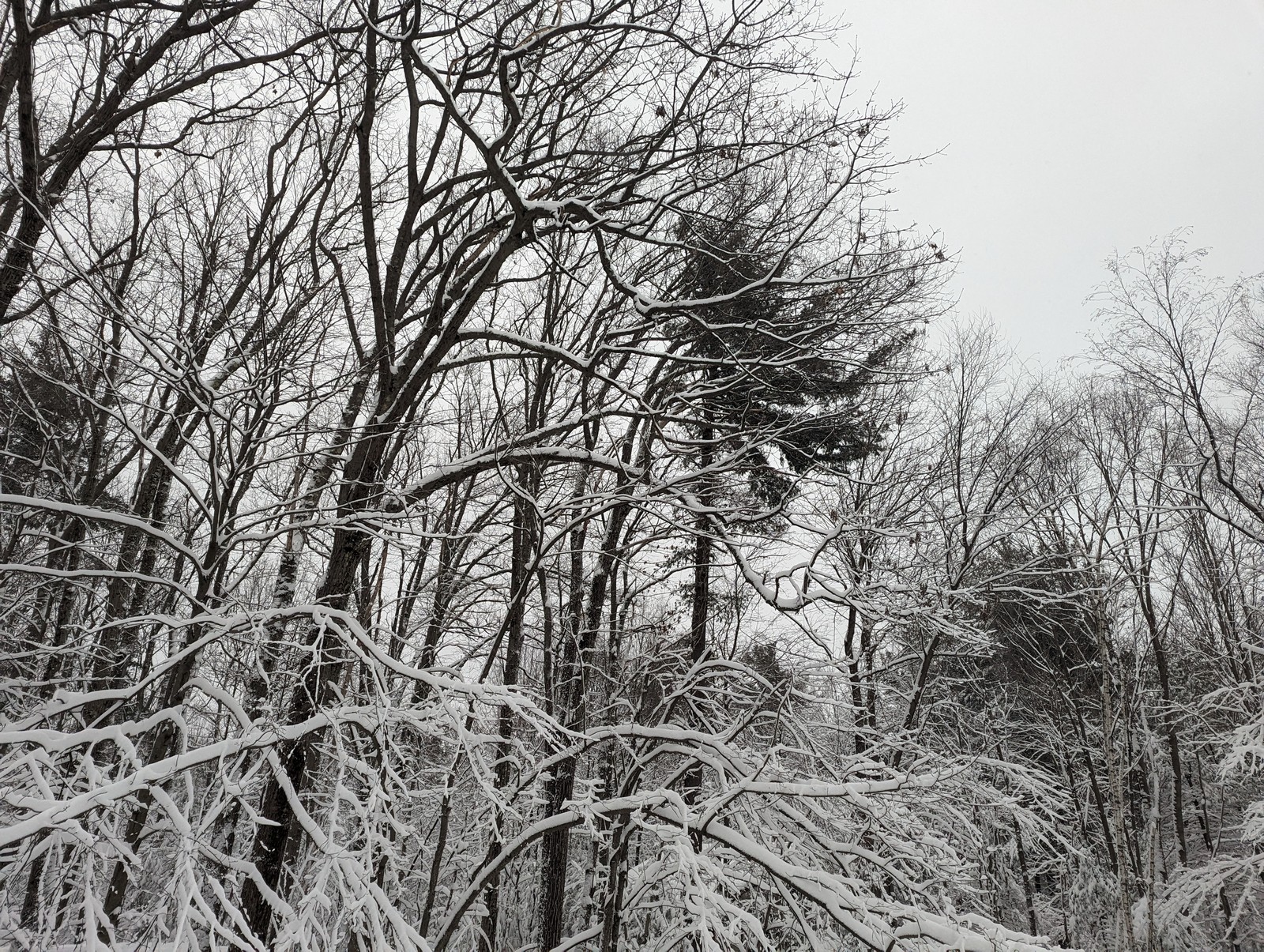
Sunday, 01/07/2024: Posted photo — Snow.
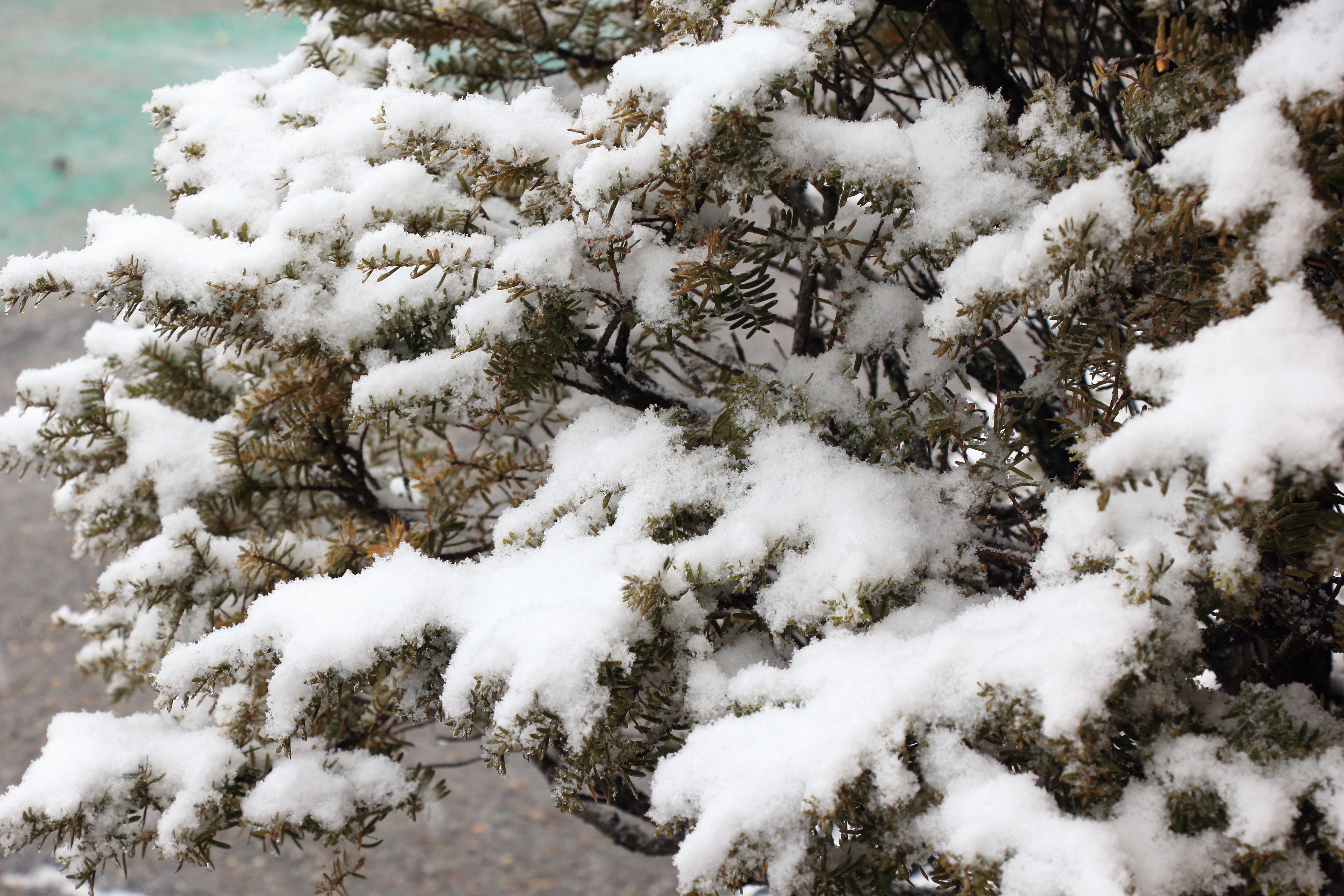
The first snow of the year happened overnight and throughout the day. When I went out to shovel in the morning, there was 10 inches of snow on the ground. When I went out later in the day, there was an additional 6.5 inches of snow on the ground. Although the photo shows what looks like heavy snow on the trees, the snow was light when I shoveled. It took me a few hours in the morning and not as long in the afternoon to clear the snow in our yard.
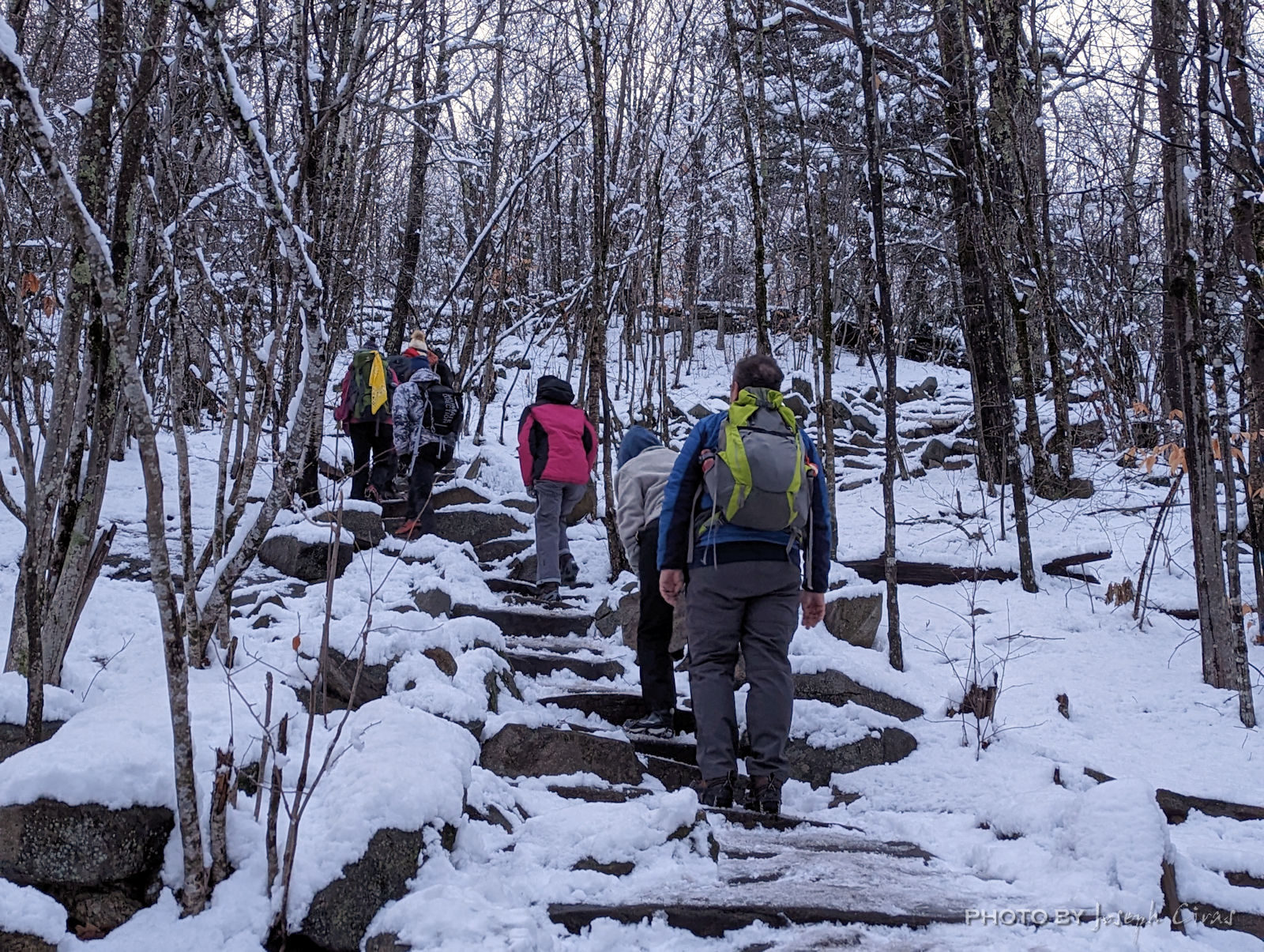
Monday, 01/08/2024: Posted photo — Snowshoe Hike.
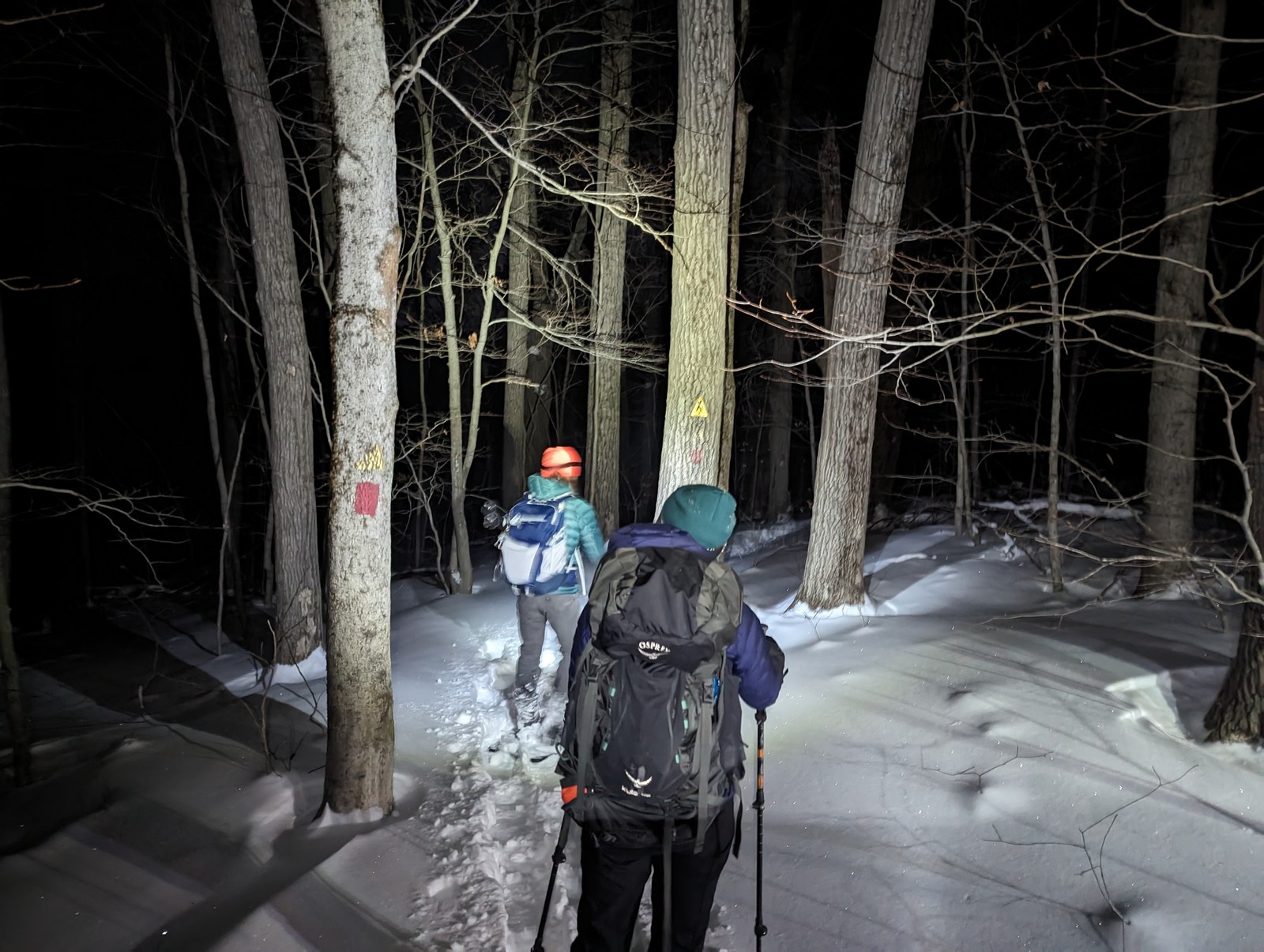
What do you do when you have over a foot and a half of snow? Snowshoe on the mountain! My usual Monday night group did not schedule a hike for this week. The group I sometimes hike with on Tuesday nights, switched their night to Monday night to take advantage of the newly fallen snow.
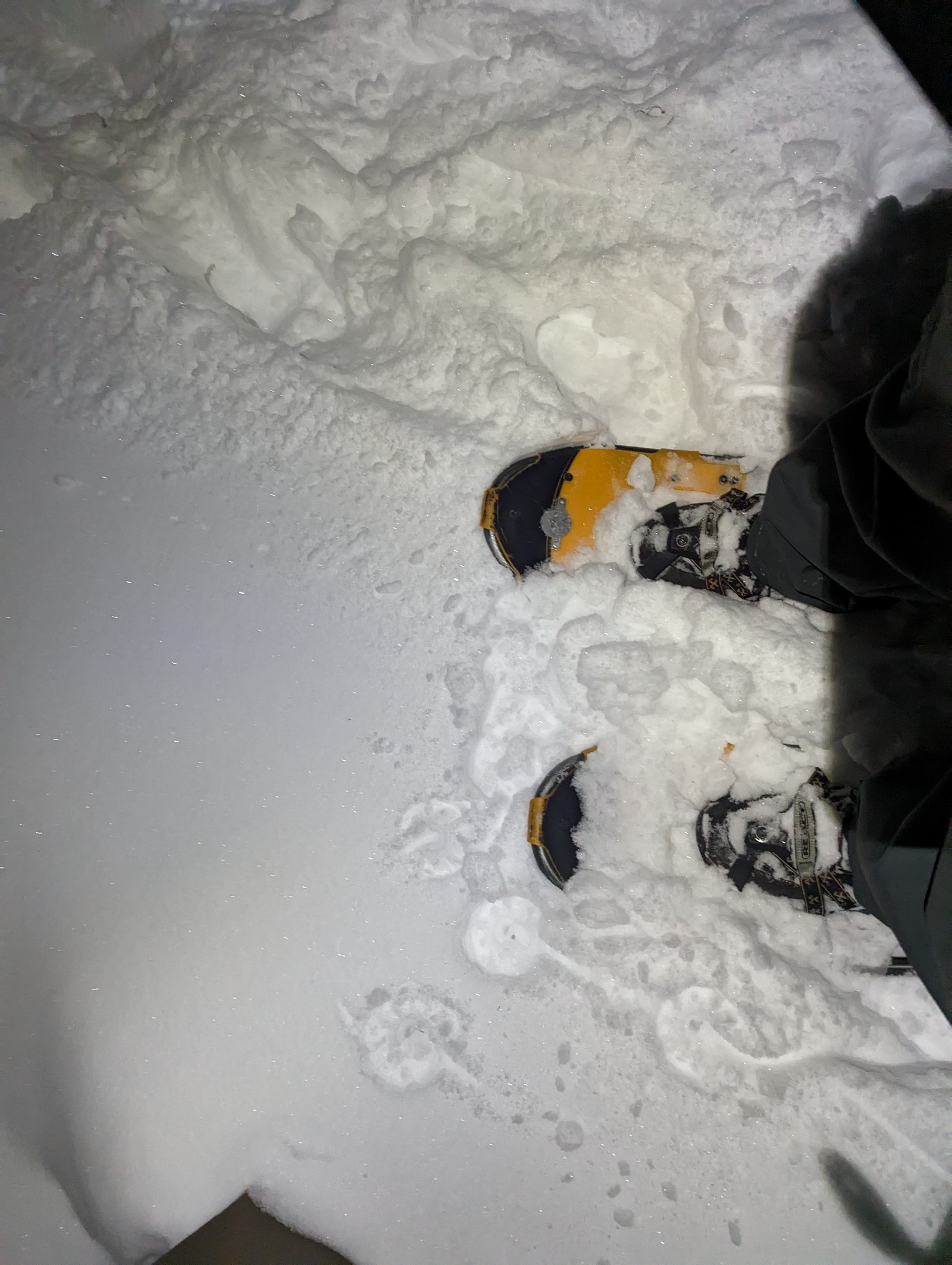
We hiked over three miles on the mountain at a slow pace. There were a couple of trails that had to be broken in since no one else used them. I also had to fill in some “post holes” from people that hiked in the deep snow without using snowshoes. “Post-holing” is a term in winter hiking that refers to someone sinking their entire leg into new snow. It makes for exhaustive and agonizingly slow walking. It also can make the trail dangerous for anyone following you. It is why people wear snowshoes.
Tuesday, 01/09/2024: Posted photo — Snowshoes.
This was a great week to snowshoe. I went out today before the rain. We are expected to get heavy rains this evening. Tonight’s storm started out with light snow, then the heavy snow, then rain.
I was out shopping tonight, and the roads were not cleared. Driving was a little dangerous during the heavy snow.
Wednesday, 01/10/2024: Posted photo — Selfie.
The first week of my 52-week photo project is a self-portrait. This is a selfie I took the hiking trail this week. I needed a photo for today, so I am using this photo I took on Monday.
Thursday, 01/11/2024: Posted photo — Tracks in the Snow.
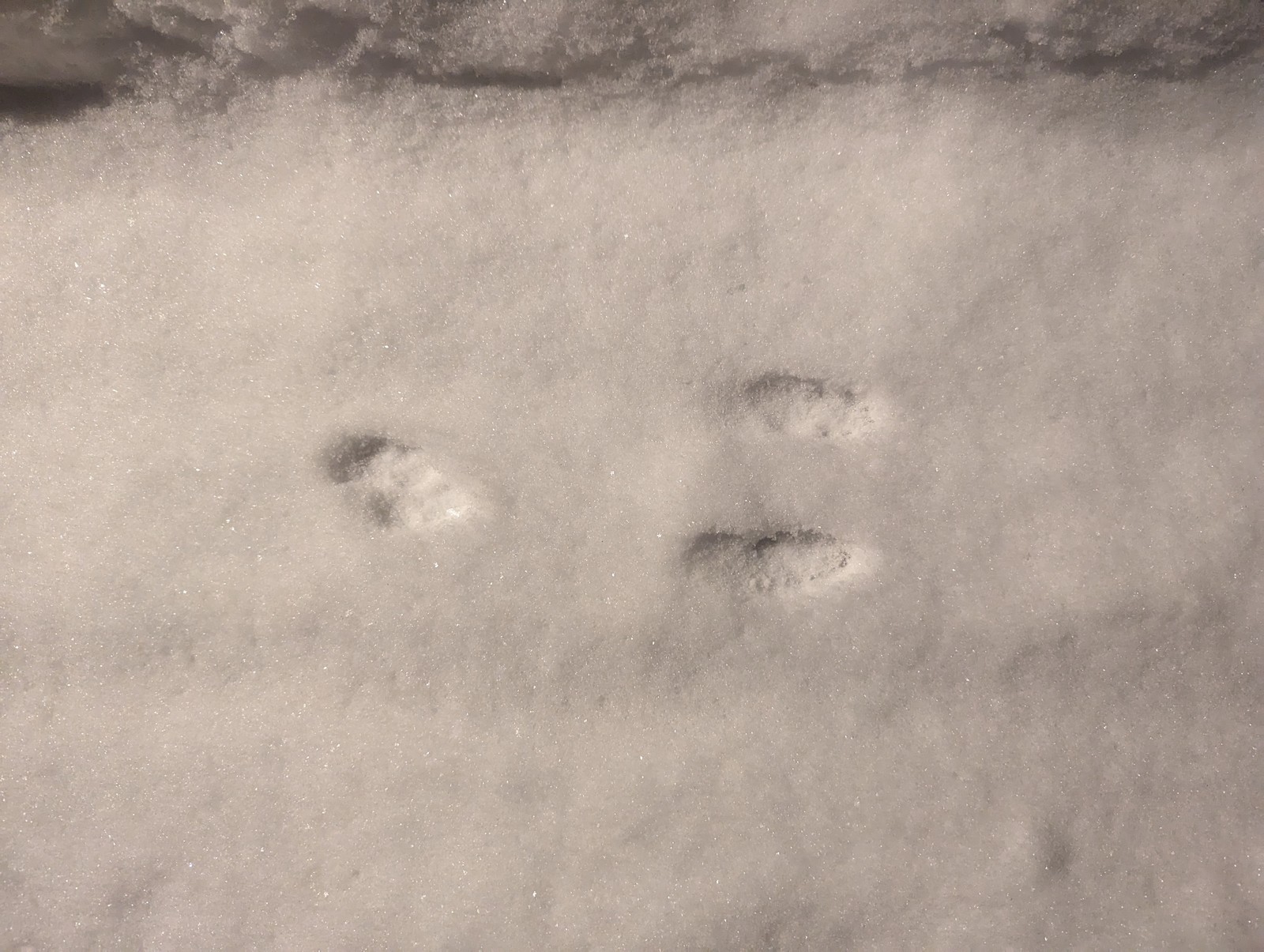
Here are some tracks in the snow. The tracks were made by either a squirrel or the rabbit that lives on our property. The animal traveled under the eves of my roof to stay out of the snow. Could someone help me identify the tracks please?
Friday, 01/12/2024: Post photo — Banana.
Information off the Chiquita banana website: Bananas are hailed as the best superfood because they have a good level of fiber and heart healthy fats. The fiber is also a special kind of fiber – soluble fiber – that drives down bad cholesterol and reduces the risk of coronary heart disease and type 2 diabetes. Bananas can aid digestion and help beat gastrointestinal issues (thanks to a helpful amount of soluble fiber) and their natural sugars that provide a long-lasting boost of energy.
I started eating bananas more to reduce my bad cholesterol and to help me with my weight loss.
Saturday, 01/13/2024: Post photo — Fire.
On a cold day like today, a nice warm fire in the wood stove feels great. The temperature in this area is dropping to below freezing so we like to keep a fire going in our wood stove. The room that the stove is in has brick wall and concrete floors under the rugs. When the fire gets going, we need to open up the doors and windows to cool down the house. The brick and the concrete hold the heat very well. The problem is when we start to feel chilly, the fire most likely has gone out.
“Once you learn to care, you can record images with your mind or on film. There is no difference between the two.” — Anonymous
Thank you for all the new views and likes from last week, it helps keep me inspired.
Sunday, 11/19/2023: Posted photo — Moxie.
Distinctively Different since 1884. Moxie is the oldest continually produced soft drink in the United States. It is a New England tradition. Moxie was designated as the official soft drink of the State of Maine in 2005.
I like Moxie. Most of my friends and family do not like the taste. We had Moxie when I was younger since my father also liked it. “Live your Life with a little Moxie.”
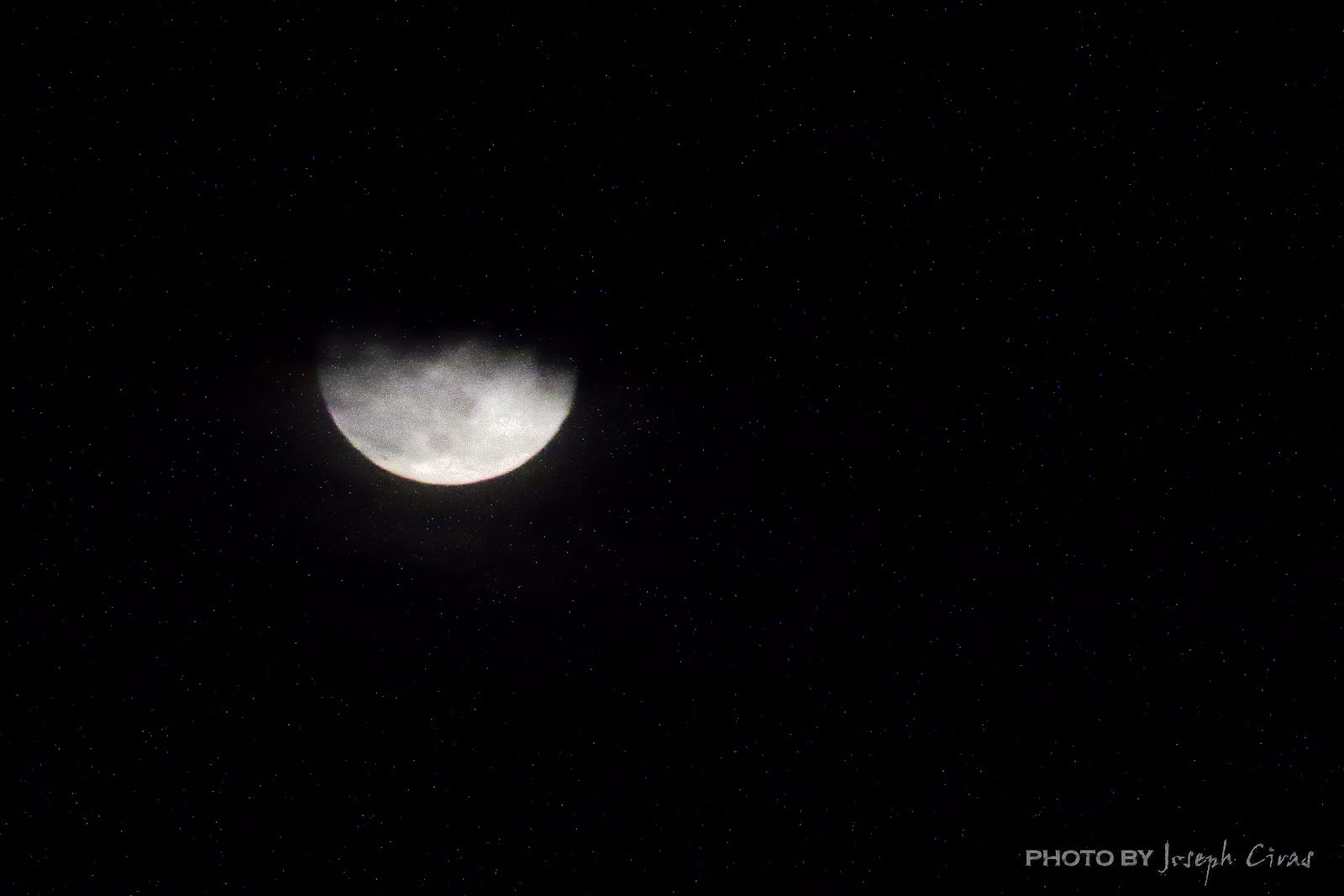
Monday, 11/20/2023: Posted photo — Stars.
Today would have been my father’s 101 birthday. Miss you dad.
Nice hike tonight. The temperature was cool, and the air was brisk. Hiking keeps you warm and if you dress properly, you stay warm.
When the group was at the summit, I put my phone on a handrail and took a photo of the sky.
Tuesday, 11/21/2023: Posted photo — Compass.
During my map and compass course, I talked about the difference between a fixed declination compass and an adjustable declination compass. I have been putting together my slides for the advanced map and compass class and took a photo of the two of my compasses. The fixed declination compass (Suunto A-10) has the declination scale in the North while the adjustable declination compass (Suunto M-3) has the declination scale in the South.
I am also discussing the principle of back bearing. Back bearing is the way to backtrack to find your way back to your original location. The fixed declination compass is taking a back bearing without taking into account magnetic declination.
Wednesday, 11/22/2023: Posted photo — Flowers.
During my shopping trip, I took another photo of flowers. Always good to take photos of flowers when there is more darkness than light during the day.
Thursday, 11/23/2023: Posted photo — Desert.
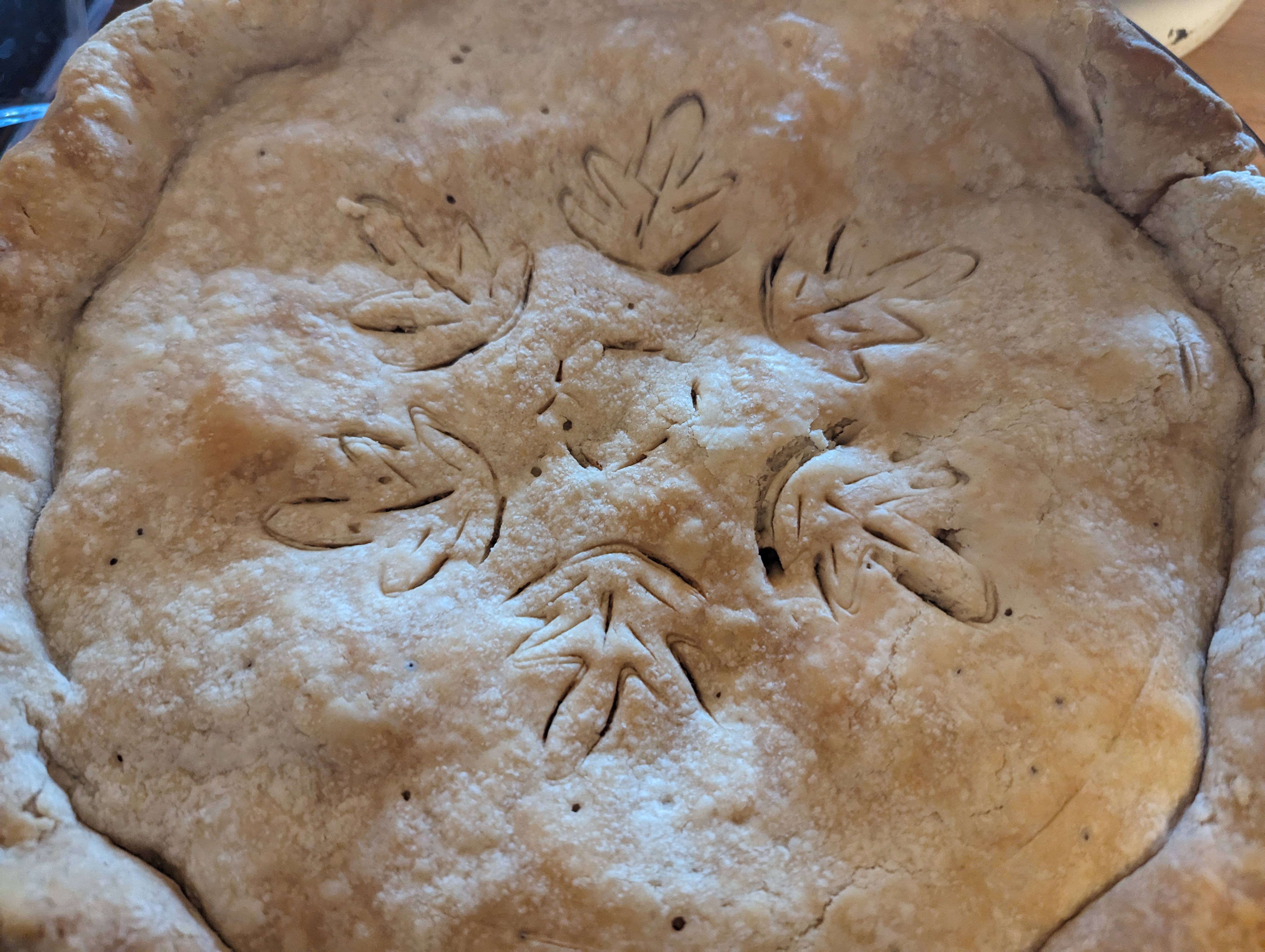
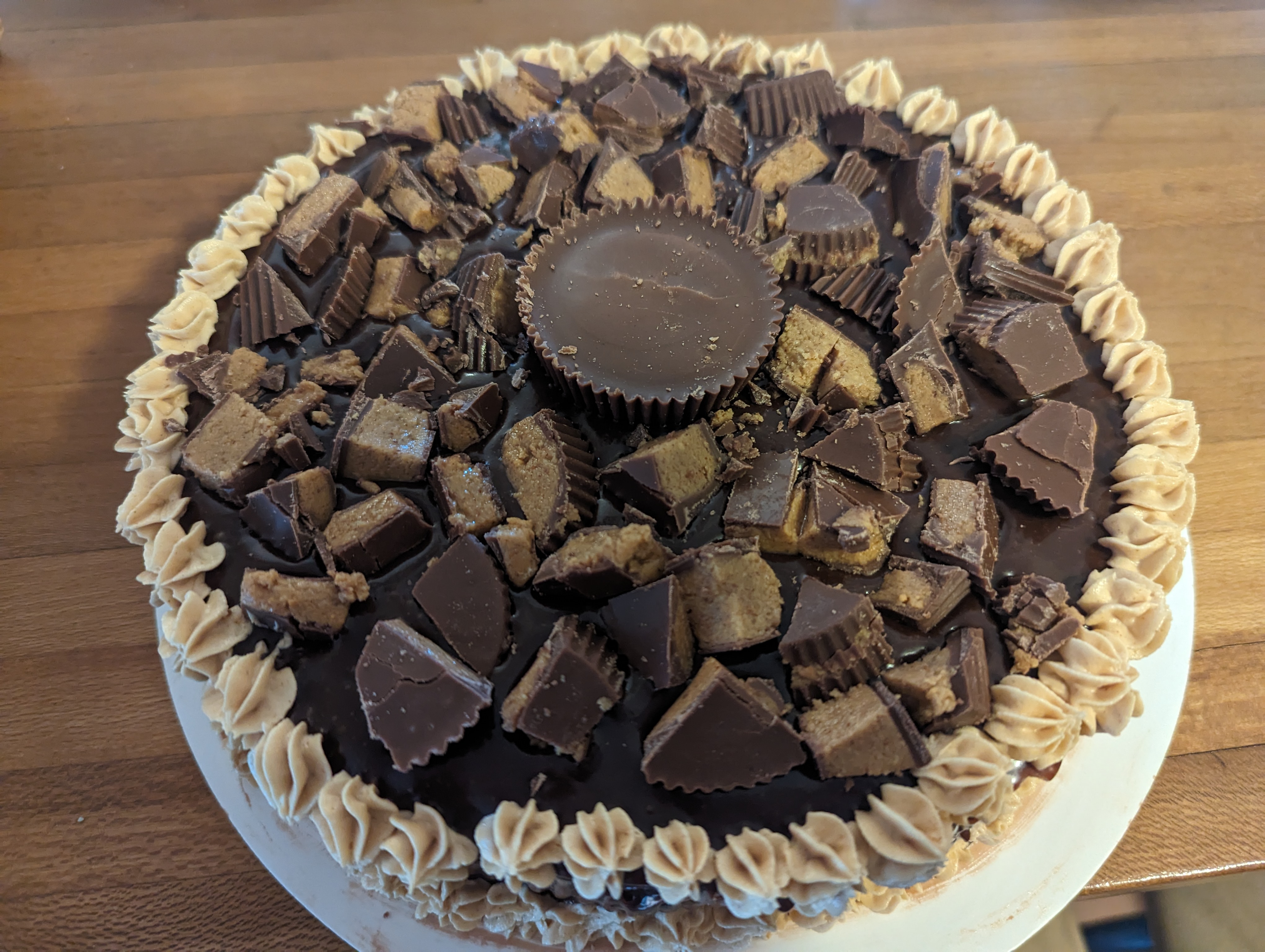
Today is Thanksgiving Day. On this day we give thanks to what we have, have family gatherings, and large meals that include desert. This year we had a small dinner with my family my niece and here husband (one of my son’s friends). After dinner we invited the family over to our house for dessert.
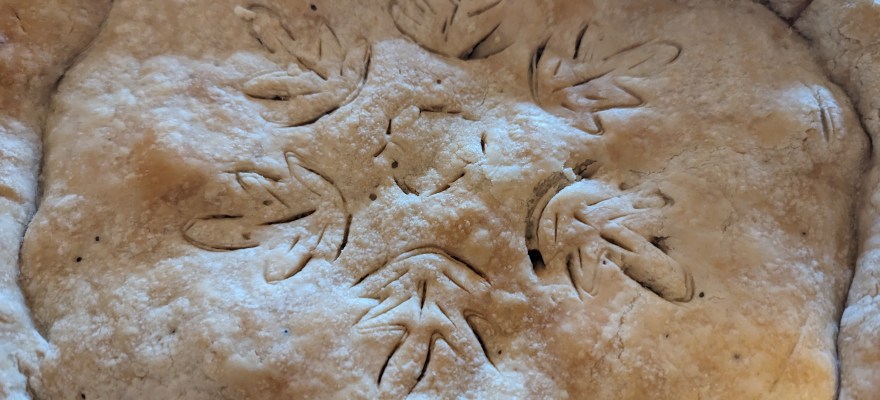
Here are photos of a traditional apple pie, a wonderful chocolate and peanut butter pie, and the frosting on a pumpkin and chocolate chip cake. These desserts go well with ice cream and homemade whipped cream.
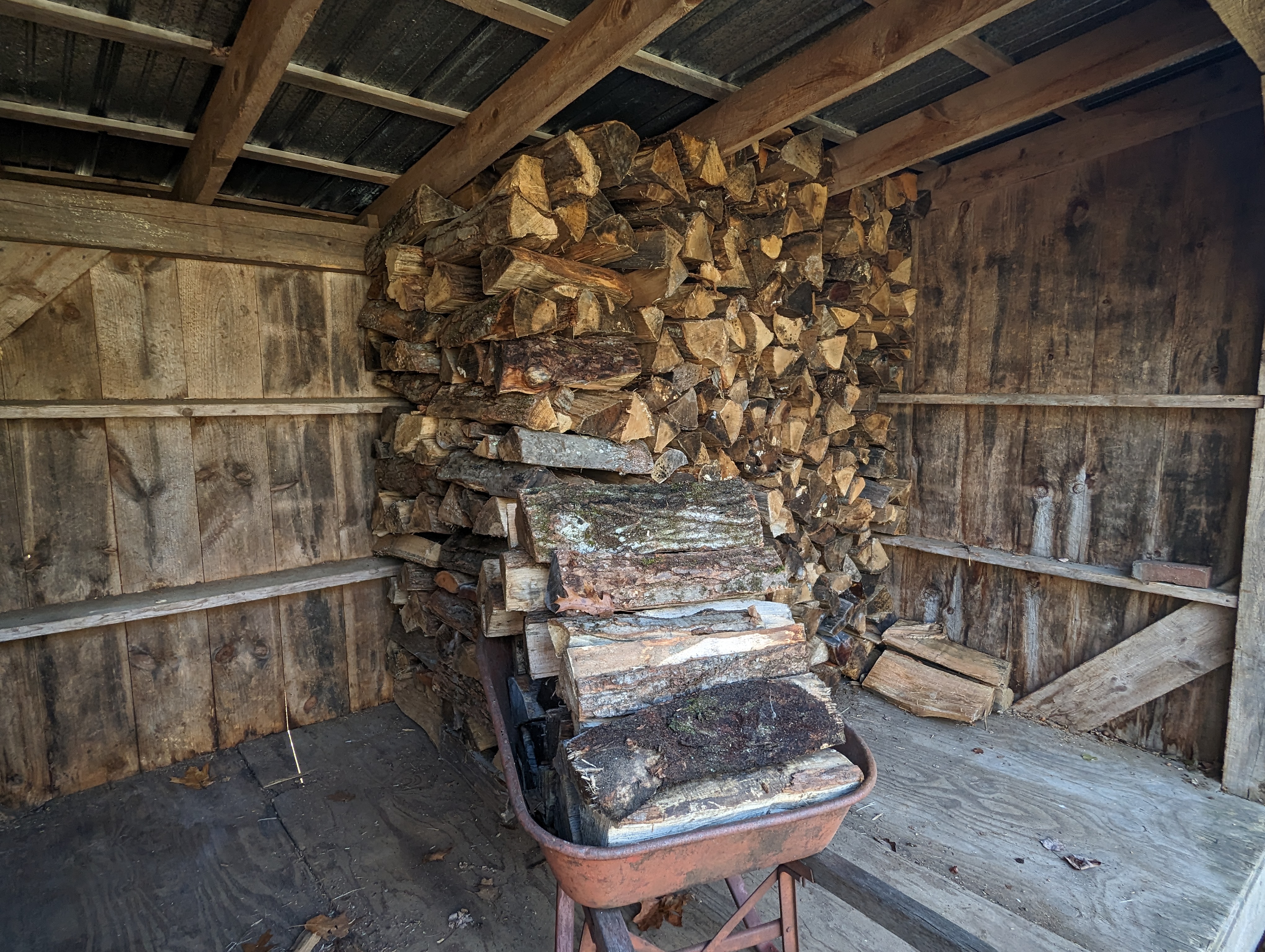
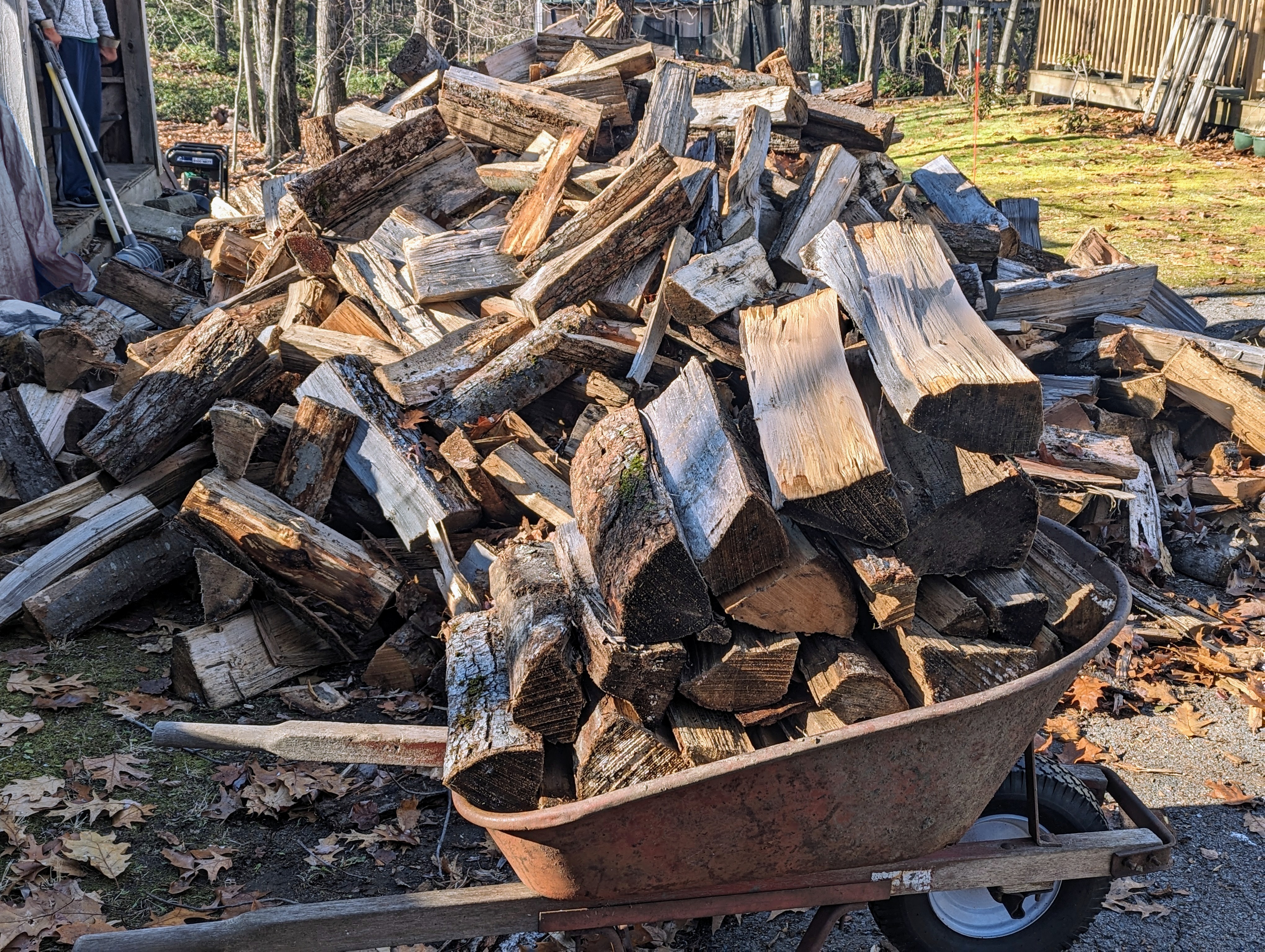
Friday, 11/24/2023: Post photo — Wood Delivery.
This morning we received the first of two wood deliveries. The normal length of wood we order was flooded out due to all the rain we had this summer, so we needed to purchase some wood that is longer than we do and some shorter. We received two cords of the longer pieces this morning and had them stacked in our woodshed by early afternoon. Firewood is sold by a measurement called a “cord.” A cord must equal 128 cubic feet.
In the next week or so, I will be ordering the three cords of shorter wood for us to stack in our woodshed. The woodshed can only handle four cords, so we will have to stack some outside the shed in our uncovered racks.
Saturday, 11/25/2023: Post photo — Book.
Was out blowing leaves today since the leaves were dry. Some of the leaves were, and still are, frozen to the ground. What does this have to do with the book photo? Well, I needed a photo for today and I am still putting together my advanced map reading course for the spring. This is one of the best books to get to learn navigation. I have been using it for many years now.
“Your first 10,000 photographs are your worst.” — Henri Cartier-Bresson
Random thoughts and ideas for this week.
I have a flower of day this week. I am attempting to change the format of this blog to have one or more educational items per day to make reading my blog more interesting.
Sunday, 05/07/2023: Posted photo — Pyx.
A pyx is vessel containing the consecrated bread used in the service of Holy Communion. Although pyxes were made in various shapes, the most common form was that of a small cylindrical box fitted with a cover, which is generally conical. The pyx in this photo is the one that I use every week to give Holy Communion to the choir.
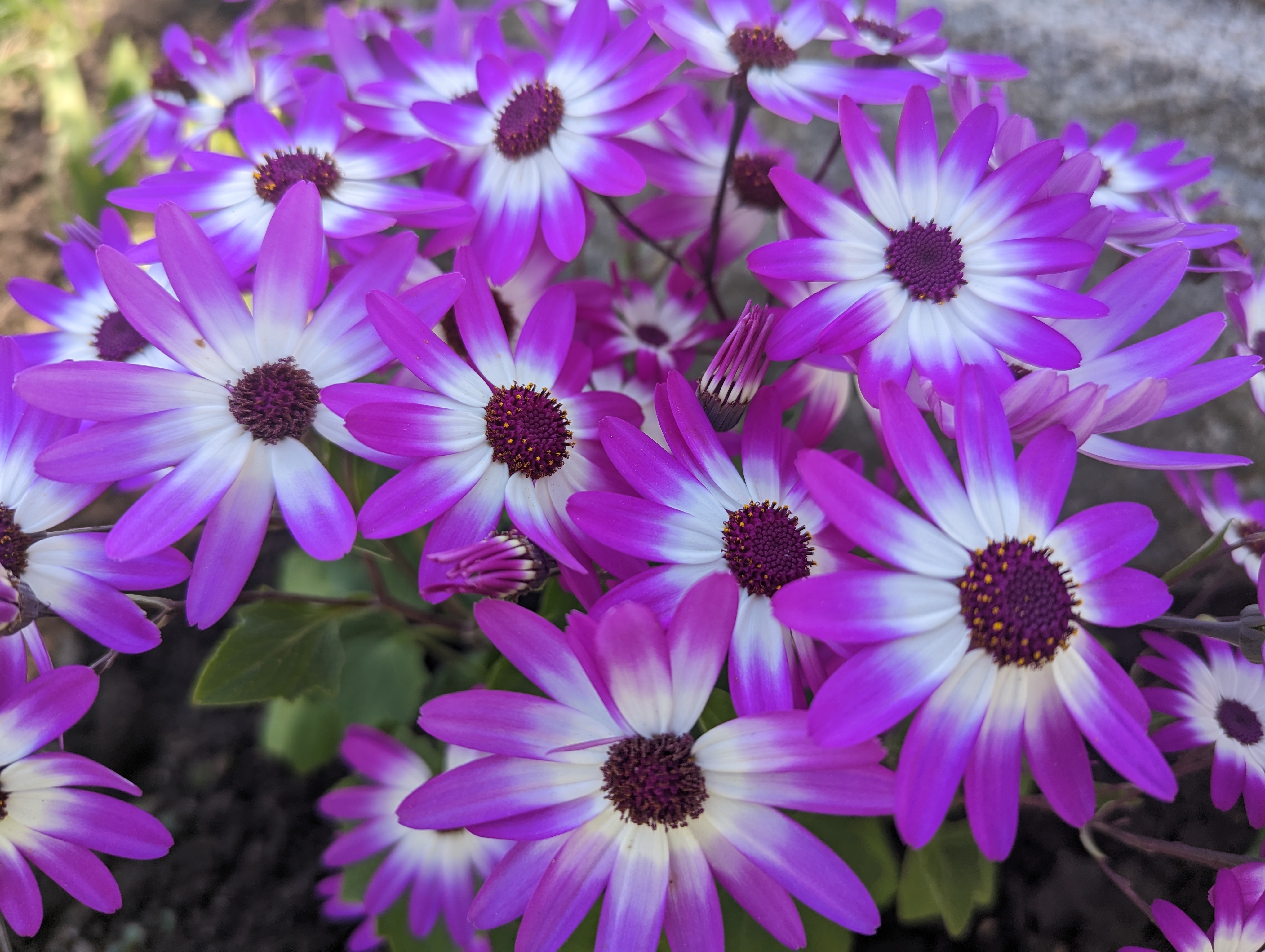
Flower of the day: Pericallis
Pericallis senetti provides daisy-like blooms in early spring when the weather is cool. They produce vibrant blues, magentas, violets, and can be bi-colored. They can tolerate low temperatures but are sensitive to frost. These are located outside our church.
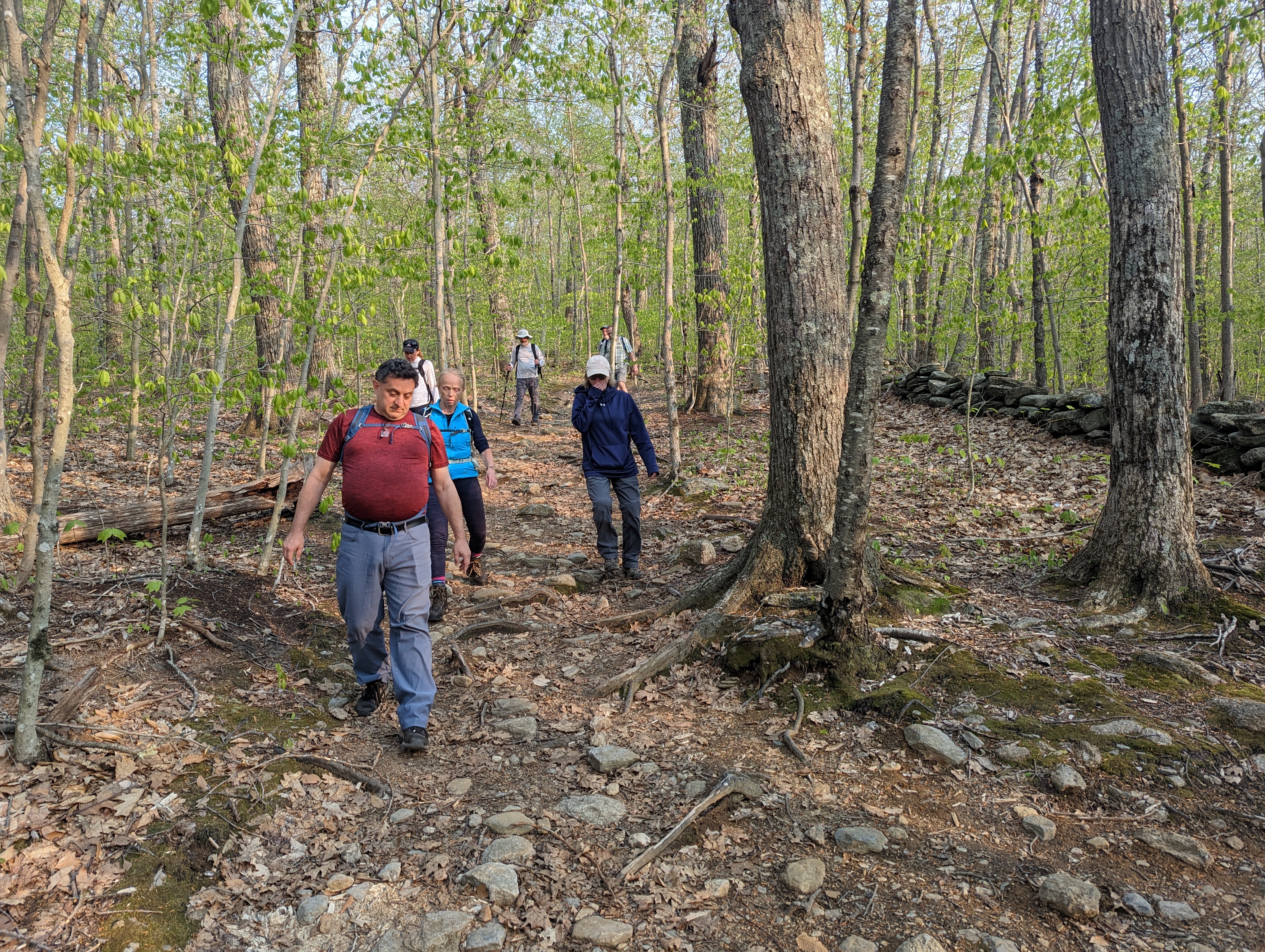
Monday, 05/08/2023: Posted photo — On the Trail.
What would Monday night be without a hike? Don’t know. Every Monday that I hike does not happen is a disappointment. The good thing about missing a Monday night hike is that I can spend more time with my family. Today was a wonderful day to hike. The temperature was in the goldilocks zone, not to hot and not to cold. The black bugs were not bothering me as much as other members of the hiking group.
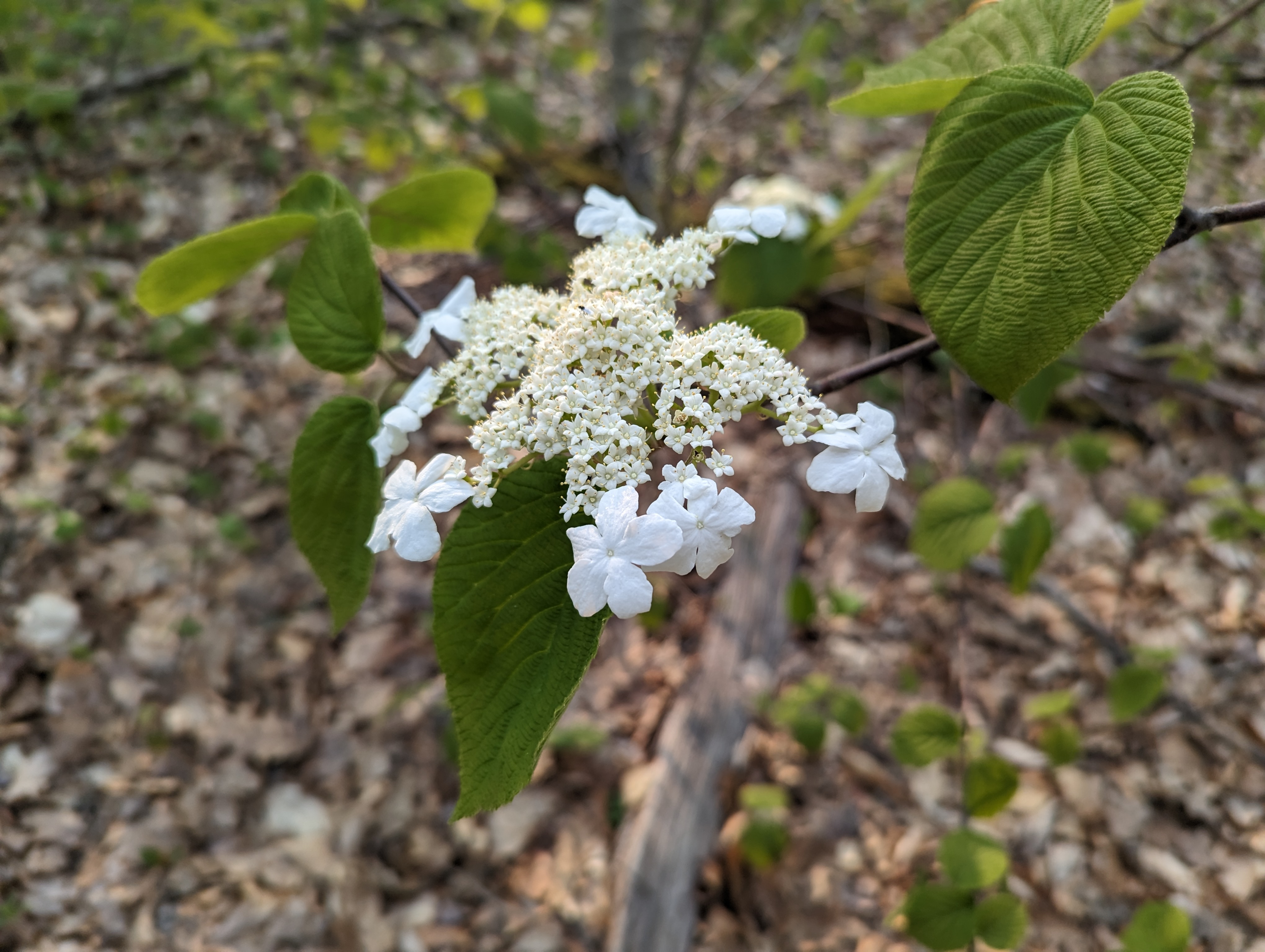
Flower of the day: Hobblebush
“Viburnum lantanoides, hobblebush (also known as moosebush, witch-withy, witch-hobble, witch-tangle and tangle legs) can grow more than ten feet tall, and often at least as wide, in its sprawling, errant, fashion. Branches extend outward, arch and descend, re-rooting where they touch the ground, forming a small copse. This lissome habit is most evident in winter when the hobblebush is leafless and the shrub’s structure can be traced. What appears to be a solitary shrub is usually an aggregate of clonal offspring called ramets.” https://wildseedproject.net/2015/06/viburnum-lantanoides-hobblebush-adoxaceae/
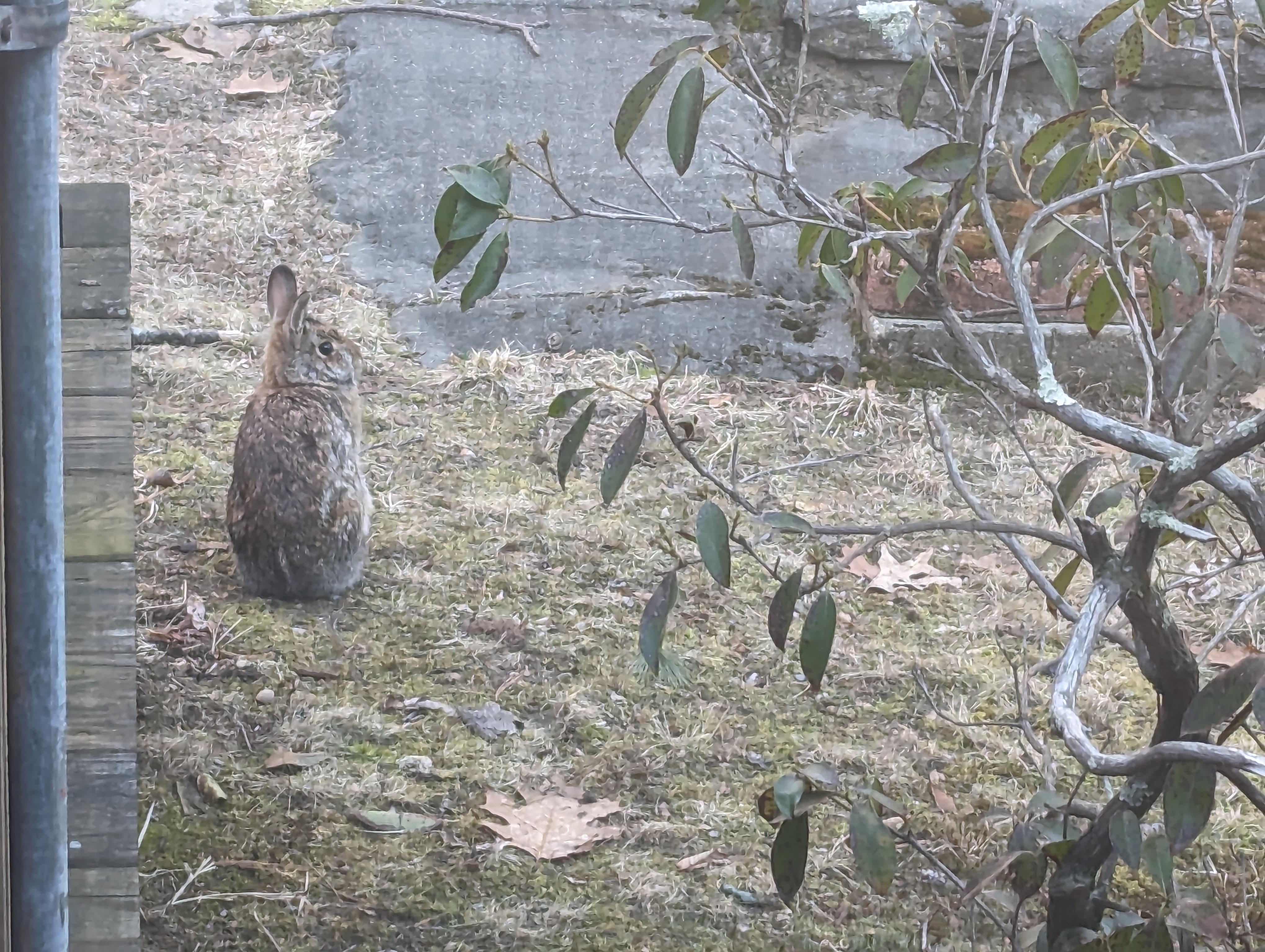
Came home from shopping tonight and saw this rabbit in our yard. I took out my phone to take this photo. I took this photo from a distance so that I did not disturb the rabbit. It looks like my camera went into the digital zoom range causing this abstract effect. You can see the tree debris that I still need to clean up in this photo.
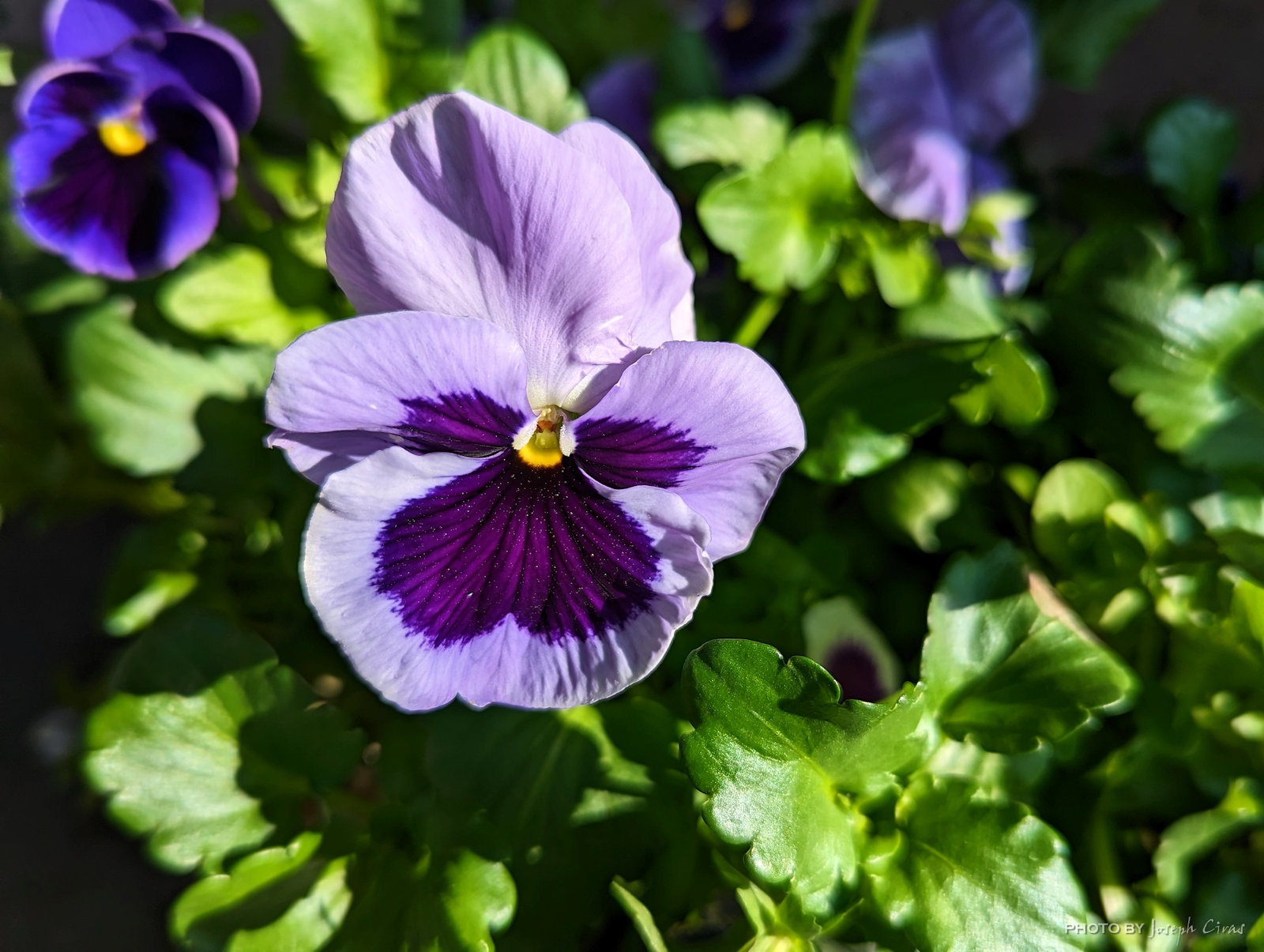
Flower of the day: Pansy
Pansies are the cheerful flowers with upturned “faces.” They love cool weather and are popular to grow in spring and fall. They’re also edible, adding color to salads, drinks, and cakes. Here’s how to plant pansies and keep them growing and blooming.
Wednesday, 05/10/2023: Posted photo — Start of Third Leg.
I am leading a mystery hike in a few weeks. The group is meeting at a trailhead, and I am giving them direction at trail junctions. The directions will only consist of bearings and distances. This is the location of the third leg of my trip.
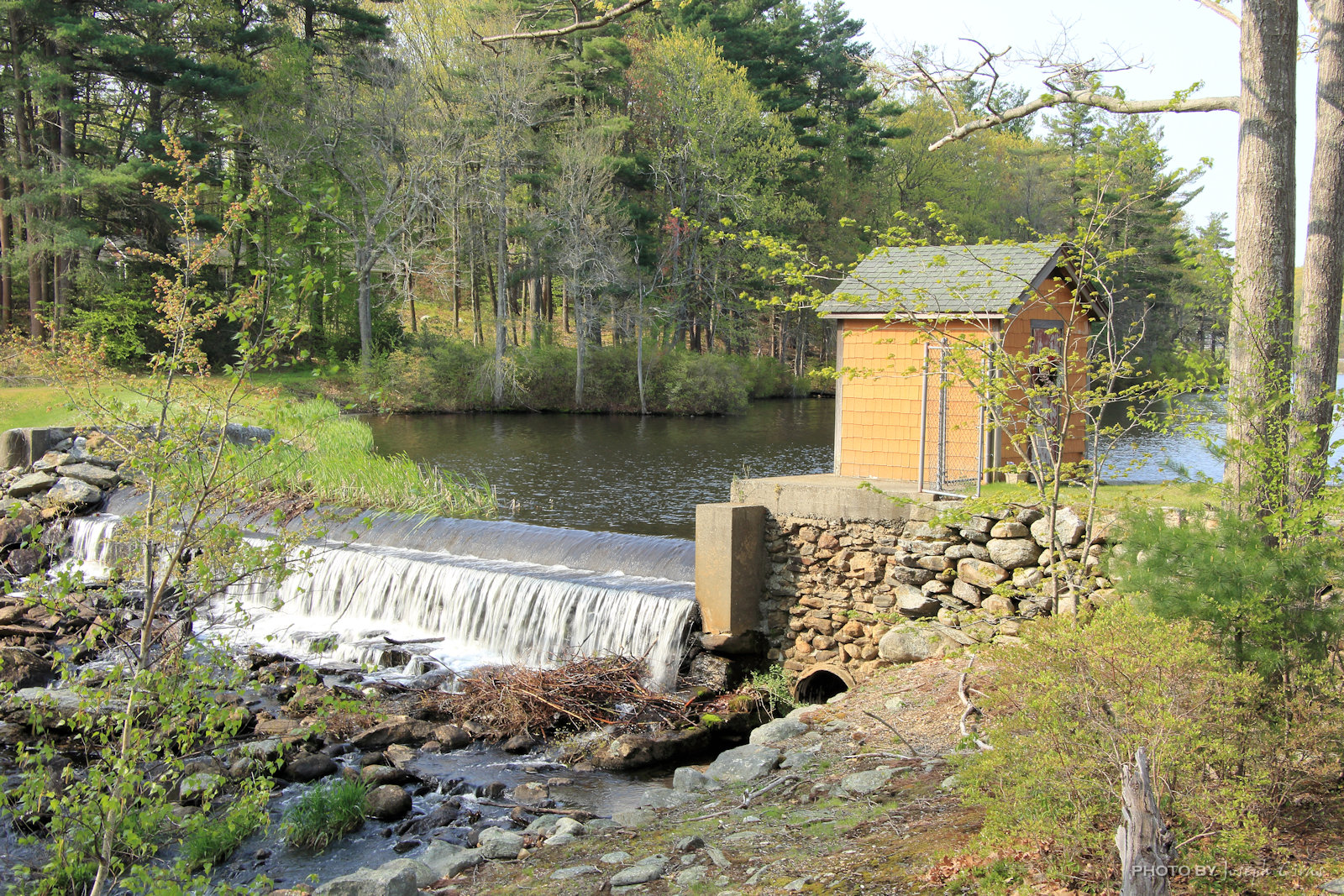
Thursday, 05/11/2023: Posted photo — Dam at Round Meadow Pond.
Here is a photo of the dam at Round Meadow Pond. This is a location that I photograph often.
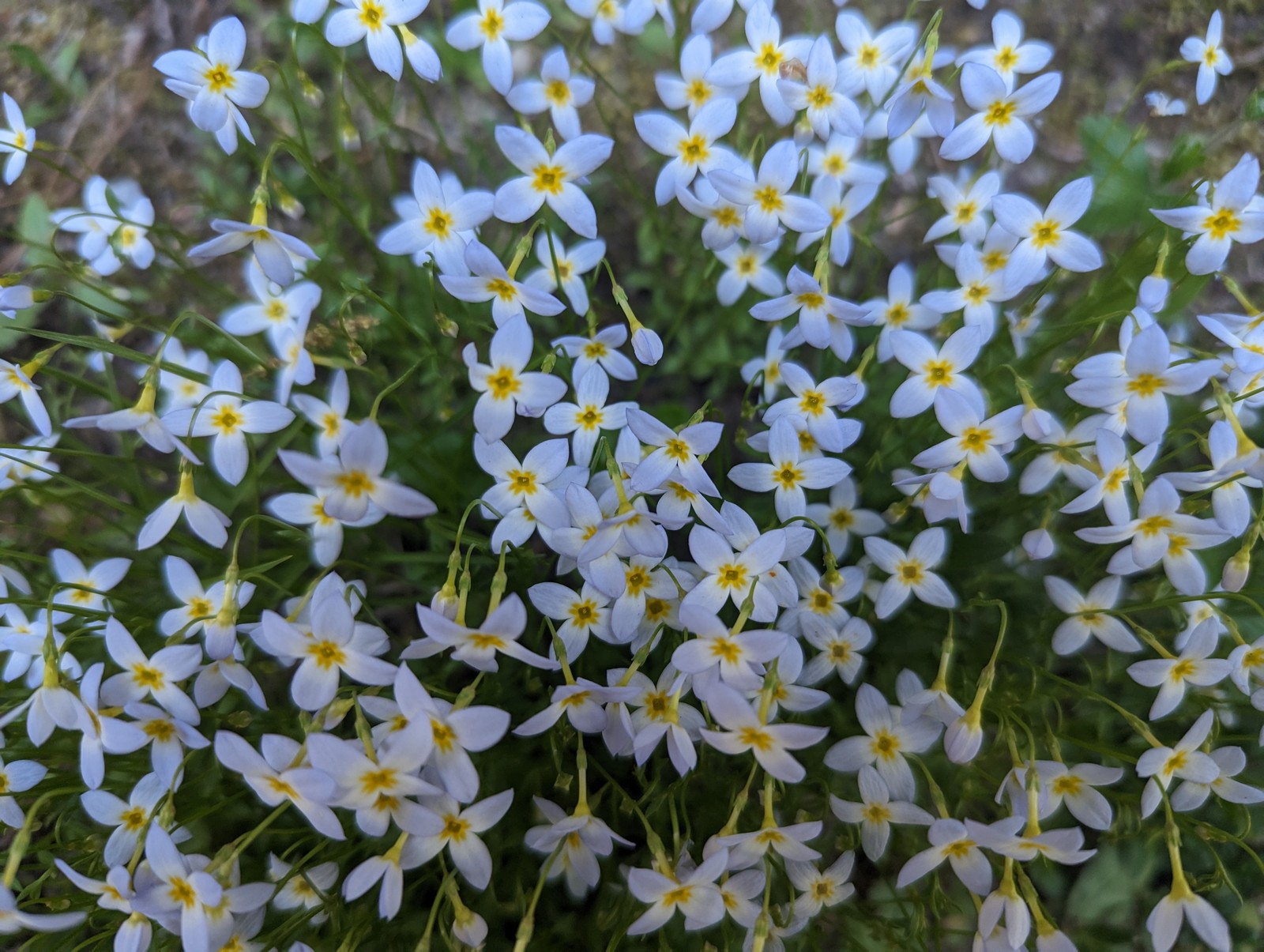
Flower of the day: Bluets
Common bluets produce both nectar and pollen. Their short flower tubes make their nectar accessible to our short-tongued native bees. Quite a few species of native bees including small carpenter bees and some of our sweat bees will visit common bluets. Several of our smaller species of early butterflies will also visit common bluets.
Friday, 05/12/2023: Post photo — Hitting Off the Tee.
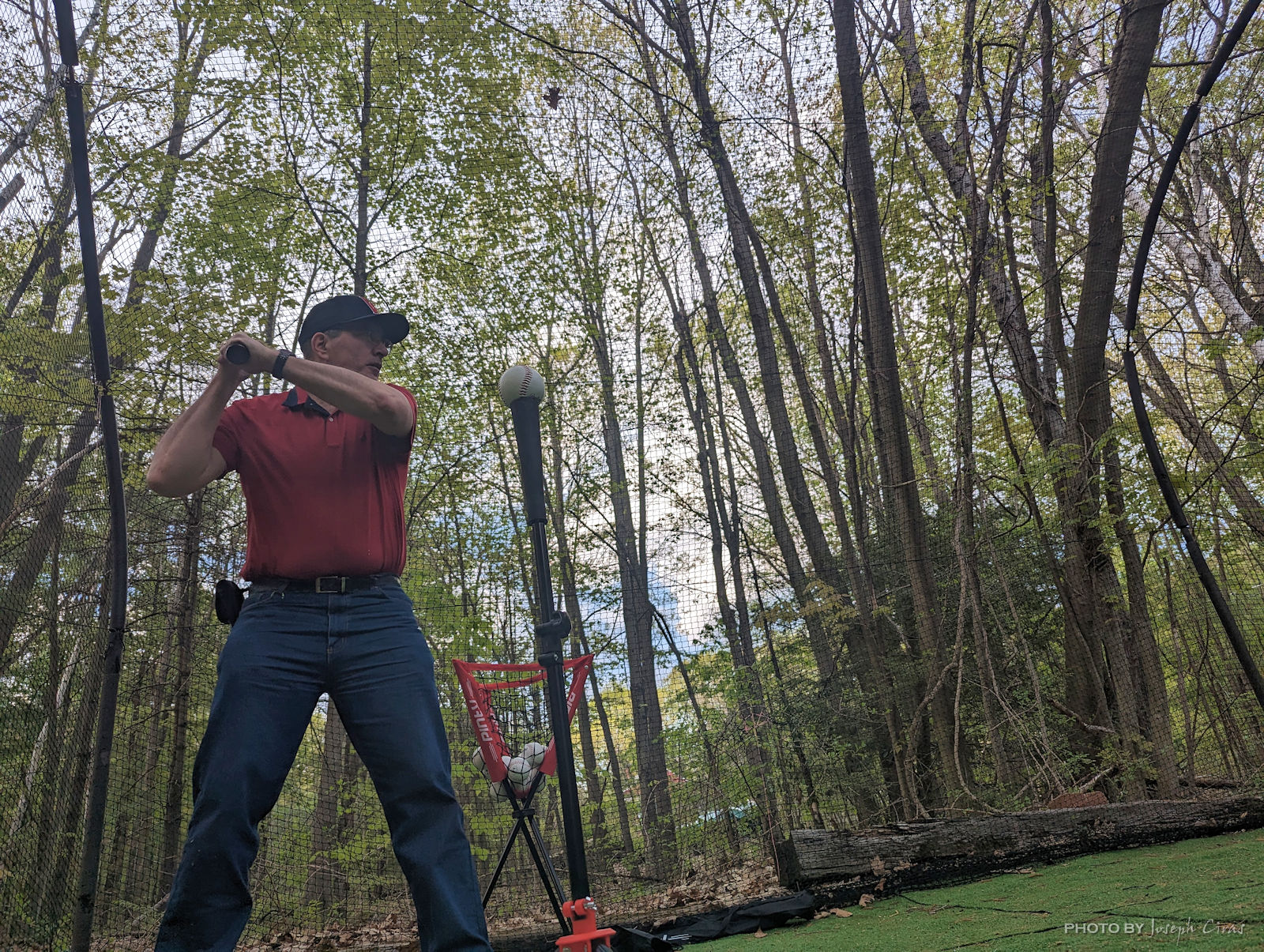
My son purchased a hitting tee for the junior high baseball team he coached. I did some hitting practice. Have not swung a bat in a while. I swung the old way with two hands on the bat as Ted Williams did. He attempted to coach me by having me remove my top hand off the bat as the modern hitters do. I like the old way of hitting.
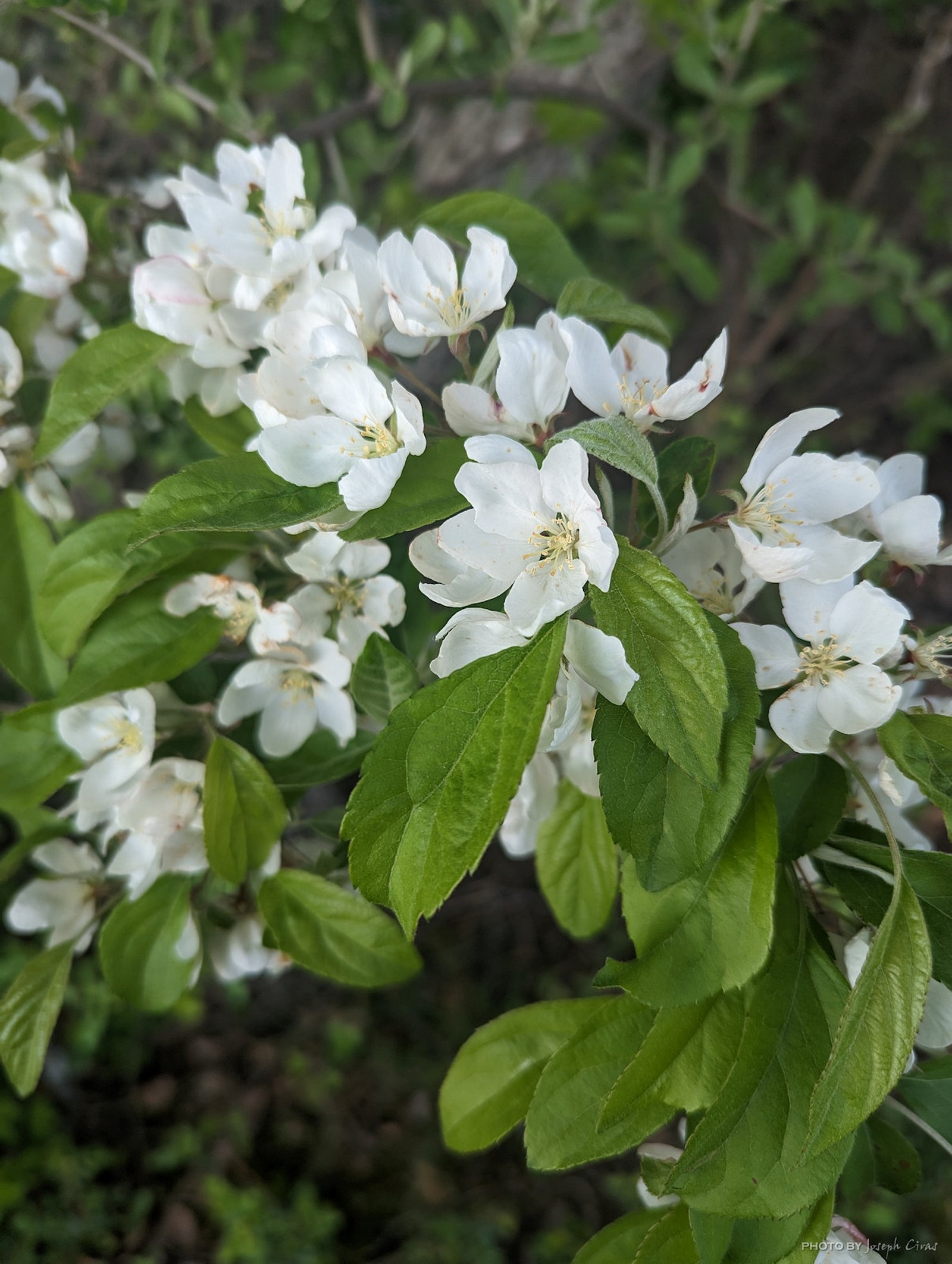
Flower of the day: Malus baccata (Siberian crab apple)
Siberian crab apple inhabits northerly areas of New England, although certain cultivars grow as far south as Florida. The tree produces white-pink, non-hairy (glabrous) flowers in spring along glabrous branches. With a pleasing, rounded crown, abundant flowers and small, edible fruits, this crabapple has been introduced widely as an ornamental tree.
Saturday, 05/13/2023: Post photo — Lilac.
I have a photo challenge this week that is titled detail. Chances. Details are having your eyes instinctively lock on to a small part of the image before looking at the whole picture. I attempted this by putting a mononuclear on my cell phone and taking this photo.
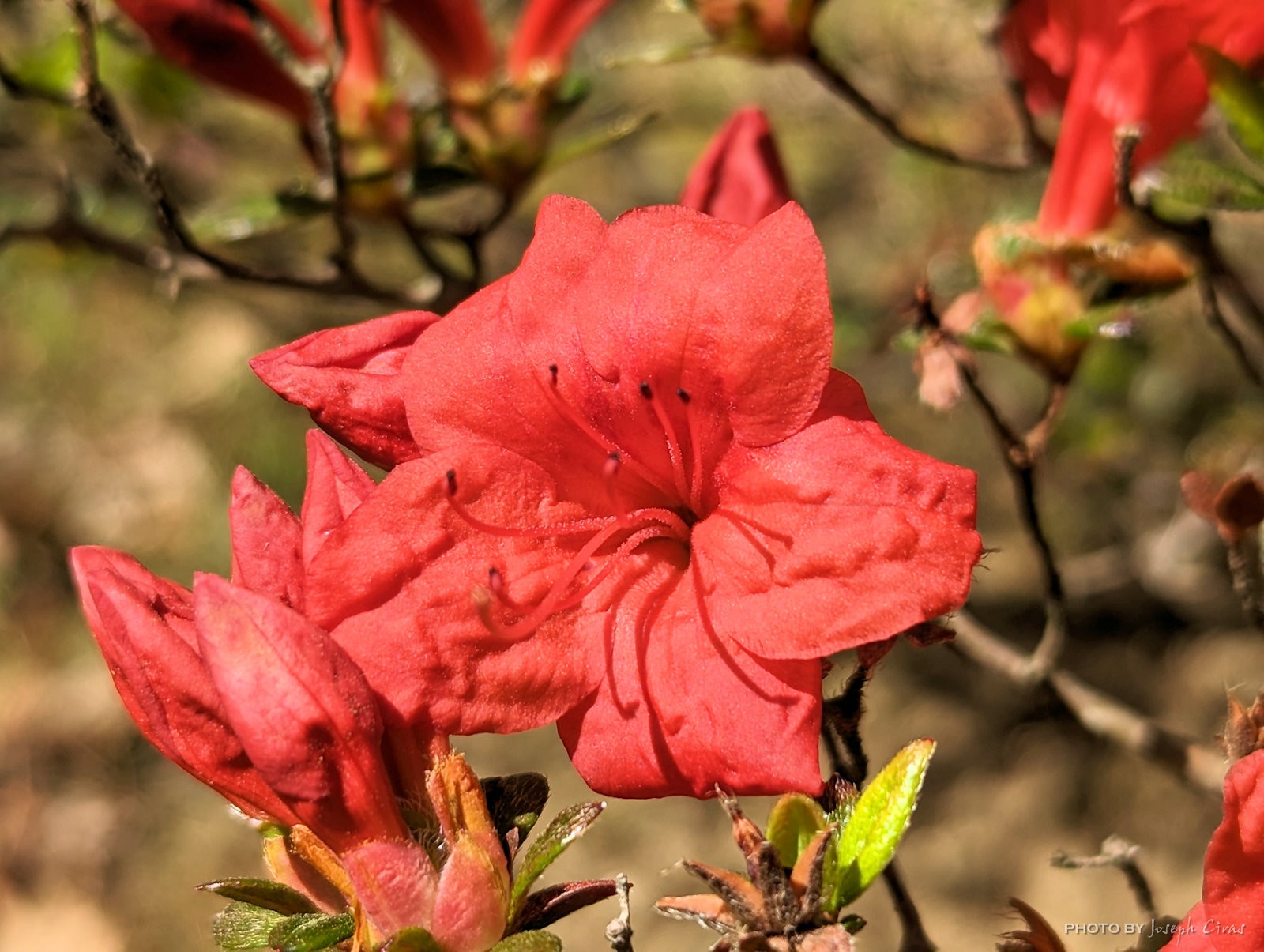
Flower of the day: Azaleas
Azaleas are typically deciduous while other rhododendrons are evergreen. Azalea flowers are funnel-shaped, somewhat two-lipped, and often fragrant. These azaleas in our yard have survived the last heavy snow that fell. The bush was heavily loaded with snow. There is still a large area of the bush that has not yet bloomed.
“The world I was trying to show was one where I felt good, where people were nice, where I found the tenderness I needed. My photos were like a proof that such a world could exist.” — Robert Doisneau
Random thoughts and ideas for this week.
John sent me another quote to use. Thank you, John.
Sunday, 04/09/2023: Posted photo — Easter Sunday.
The following information was taken from the History Channel.
Easter is a Christian holiday that celebrates the belief in the resurrection of Jesus Christ. In the New Testament of the Bible, the event is said to have occurred three days after Jesus was crucified by the Romans and died in roughly A.D. 30. The holiday concludes the “Passion of Christ,” a series of events and holidays that begins with Lent—a 40-day period of fasting, prayer and sacrifice—and ends with Holy Week, which includes Holy Thursday (the celebration of Jesus’ Last Supper with his 12 Apostles, also known as “Maundy Thursday”), Good Friday (on which Jesus’ crucifixion is observed) and Easter Sunday. (https://www.history.com/topics/holidays/history-of-easter)
Woke up this morning to see the Easter bunny outside of my window.
According to some sources, the Easter bunny first arrived in America in the 1700s with German immigrants who settled in Pennsylvania and transported their tradition of an egg-laying hare called “Osterhase” or “Oschter Haws.” Their children made nests in which this creature could lay its colored eggs. Eventually, the custom spread across the United States and the fabled rabbit’s Easter morning deliveries expanded to include chocolate and other types of candy and gifts, while decorated baskets replaced nests. Additionally, children often left out carrots for the bunny in case he got hungry from all his hopping.
From a Christian perspective, Easter eggs are said to represent Jesus’ emergence from the tomb and resurrection. Decorating eggs for Easter is a tradition that dates back to at least the 13th century, according to some sources. One explanation for this custom is that eggs were formerly a forbidden food during Lent, so people would paint and decorate them to mark the end of the period of penance and fasting, then eat them on Easter as a celebration. (https://www.history.com/topics/holidays/easter-symbols)
Monday, 04/10/2023: Posted photo — Summit Photo.
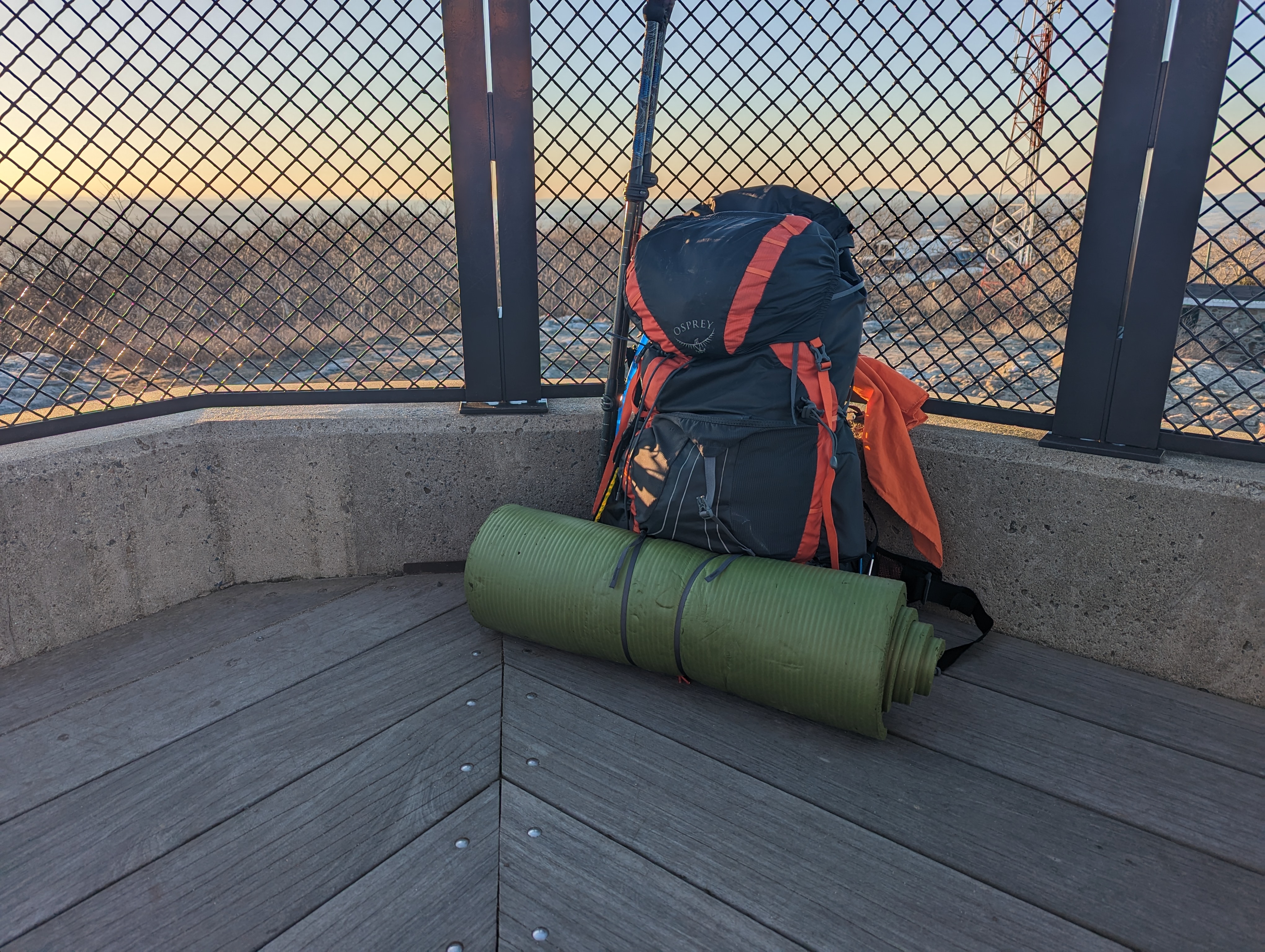
What would Monday be without a hiking photo. Here is a photo of my pack on the fire tower on top of Wachusett Mountain.
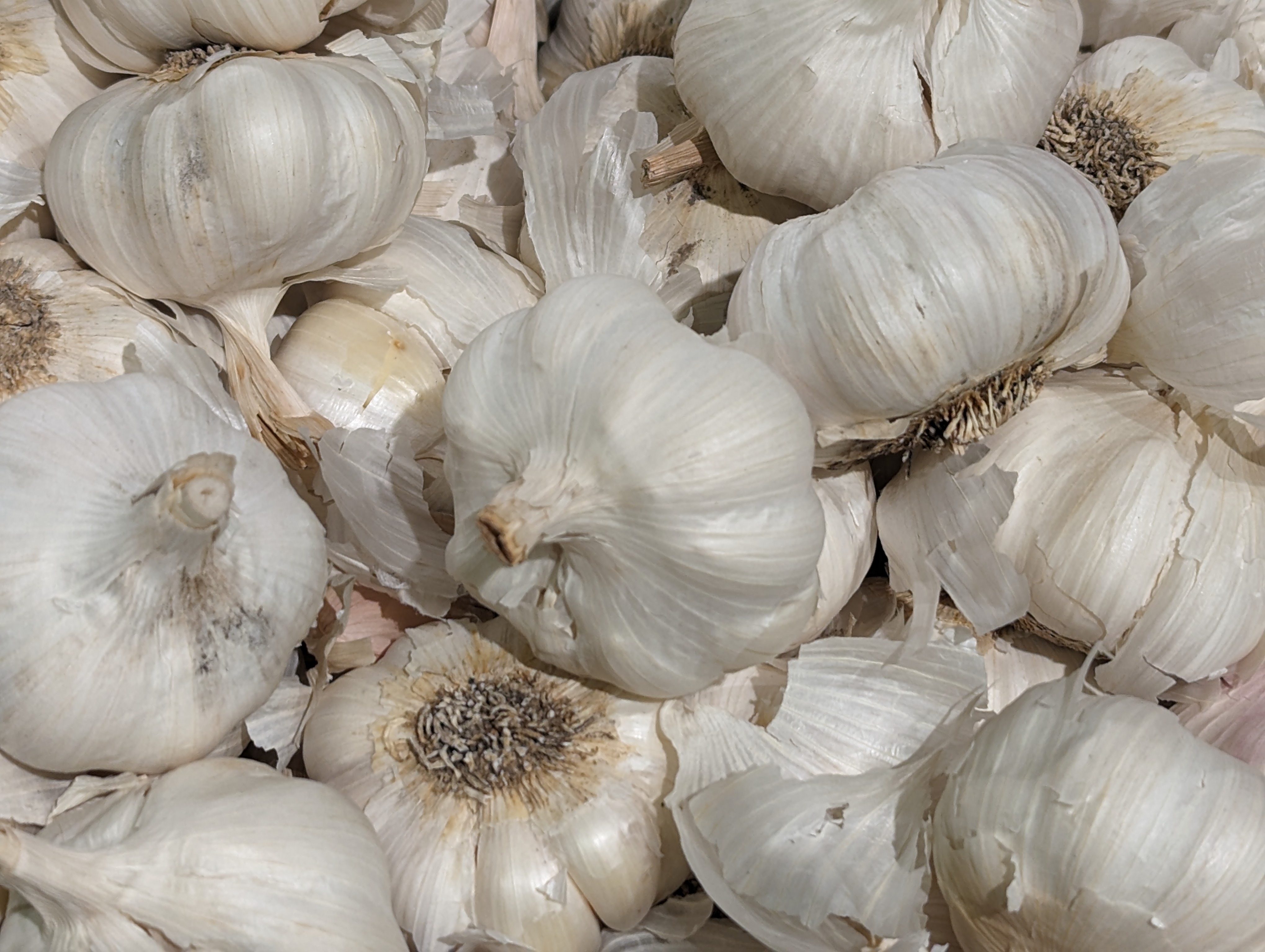
Tuesday, 04/11/2023: Posted photo — Garlic.
Garlic is the edible bulb from a plant in the lily family. It was traditionally used for health purposes by people in many parts of the world, including the Egyptians, Greeks, Romans, Chinese, and Japanese. Currently, garlic is most promoted as a dietary supplement for conditions related to the heart and blood vessels, including high blood cholesterol and high blood pressure. Fresh garlic, garlic powder, and garlic oil are used to flavor foods. Garlic may be used topically (applied to the skin).
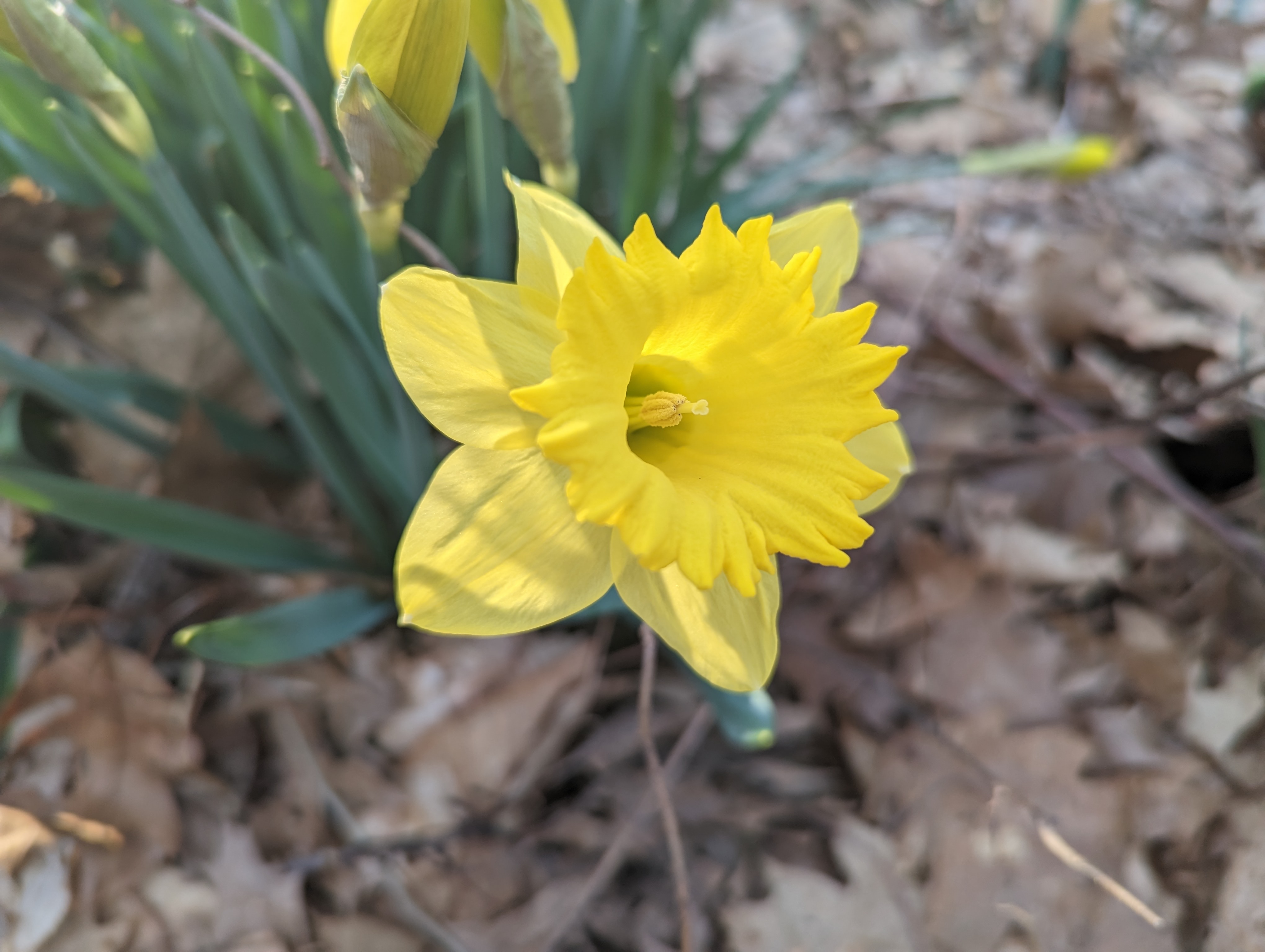
Wednesday, 04/12/2023: Posted photo — Daffodil.
Daffodils are a hardy perennials that come back year after year, spreading and often naturalizing. They are one of the first signs of spring. These just seem to appear overnight in our yard. The snow is almost clear and the daffodils are starting to blossom.
Thursday, 04/13/2023: Posted photo — Aunt Leona.
Today is the 30th anniversary of my father’s passing. It is also a day that I went to my aunt’s wake. She was my mother’s oldest sister and passed away at the age of 98. There is only one more sibling on my mother’s side. She is in here early 90s. All the siblings that passed due to natural causes passed into their 90s. One of her brothers was lost at sea.
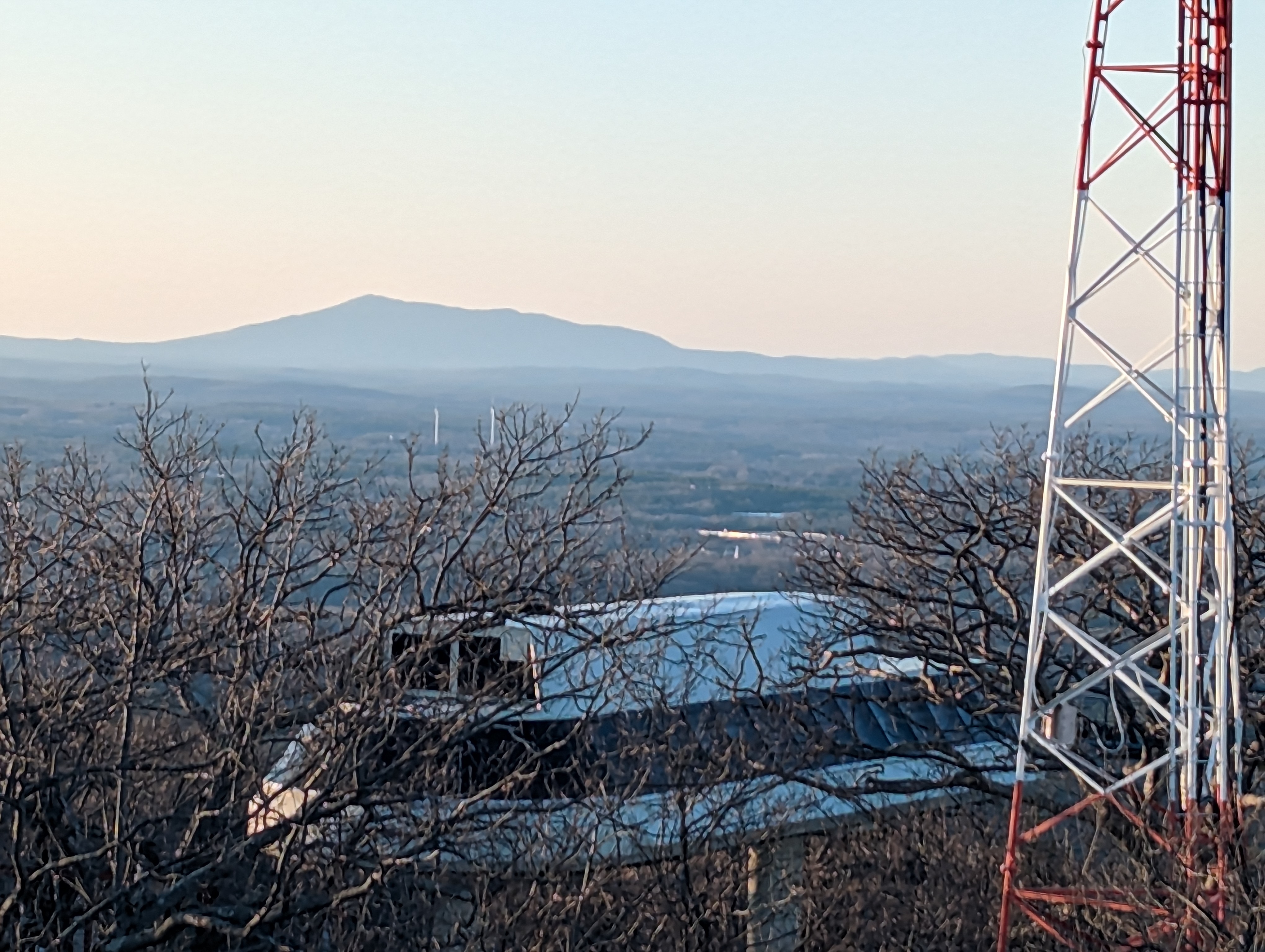
Friday, 04/14/2023: Post photo — Mount Monadnock.
Mount Monadnock at sunset is such a great thing to see.
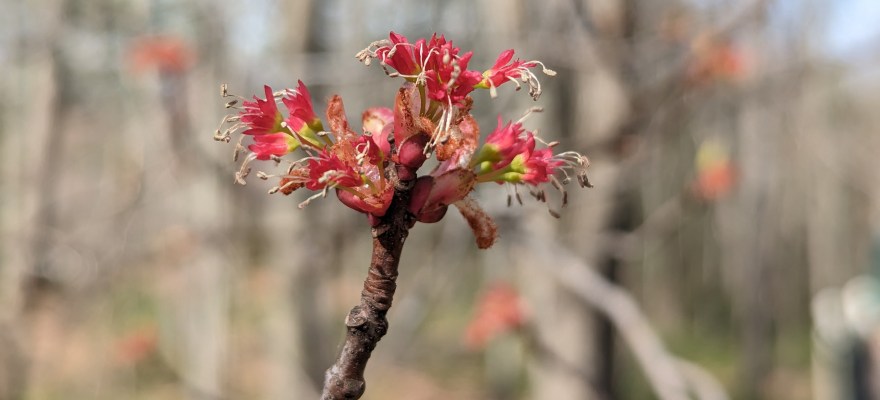
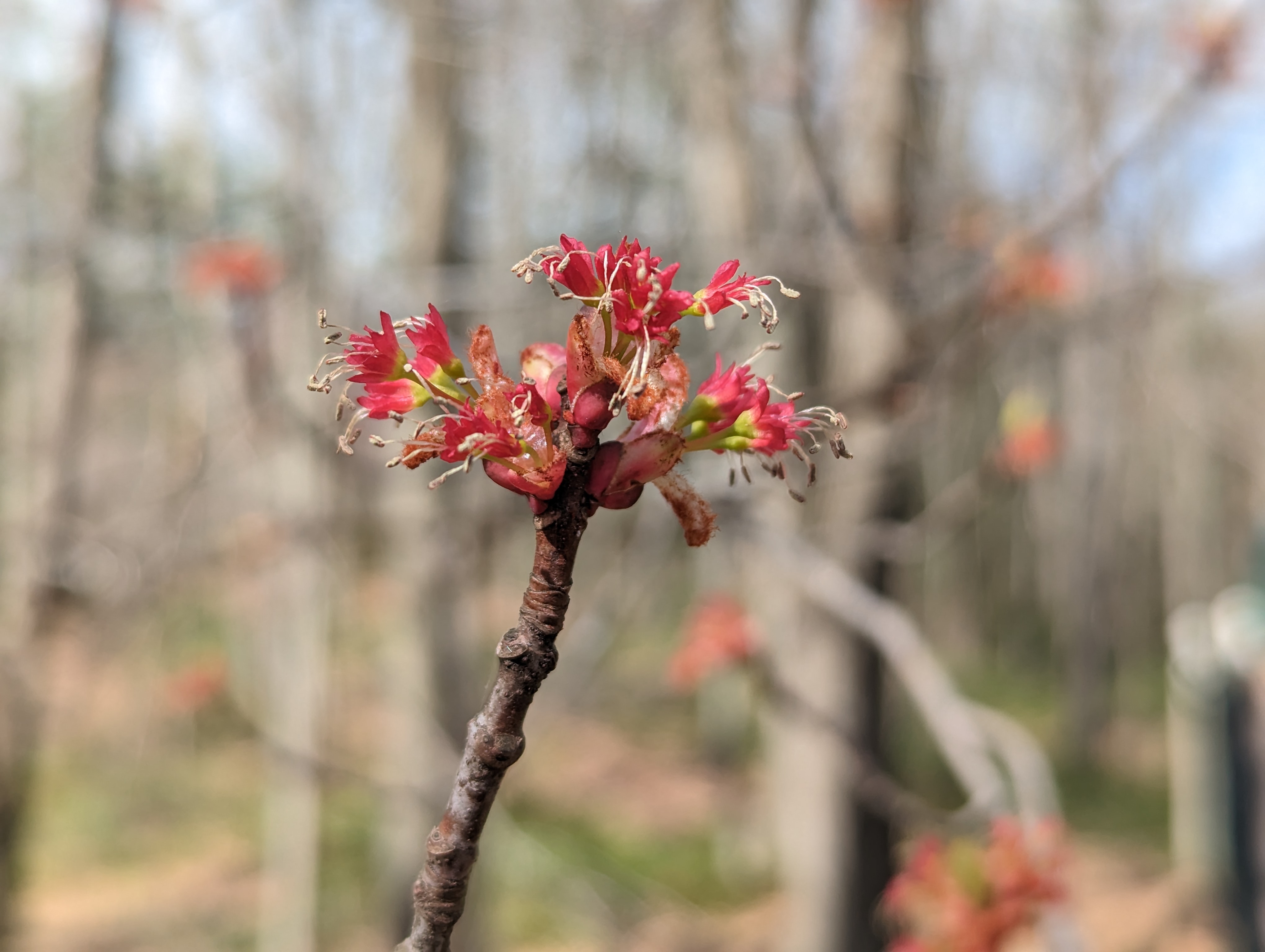
Saturday, 04/15/2023: Post photo — Buds.
The sugar maple plants are starting to bud in this nice weather.
On a side note: now that the snow has melted, it is time to get out into the yard and clean up all the broken branches and cut down some damaged trees.
Settings: Google Pixel 7, ISO 62, f/1.8, 1/678 s, 7 mm.
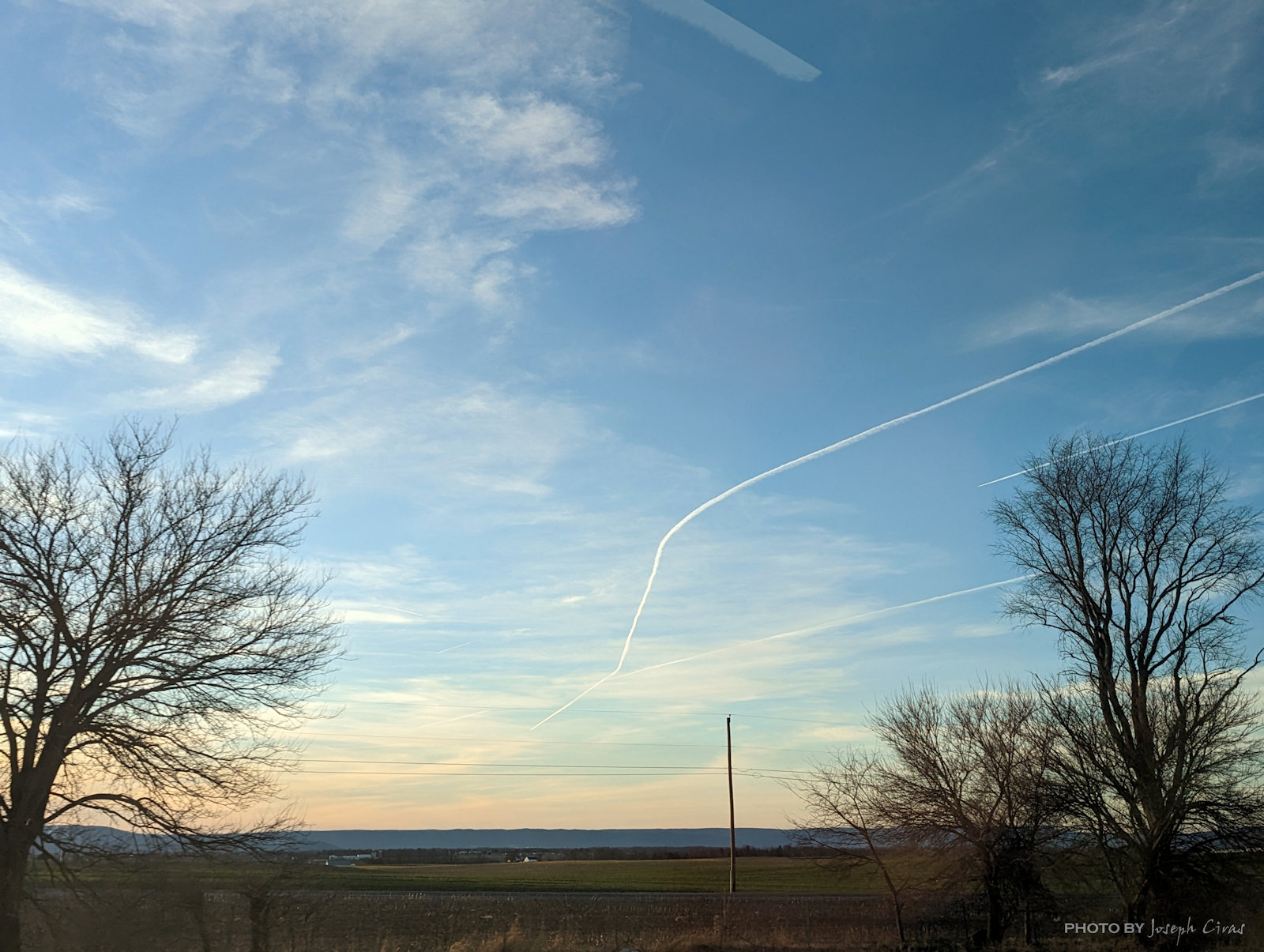
During the ride down to our vacation destination, I noticed the contrail left by at plane as it was turning. Contrails or vapor trails are line-shaped clouds produced by aircraft engine exhaust or changes in air pressure, typically at aircraft cruising altitudes several miles above the Earth’s surface. A little later, I noticed that a plane took a turn and flew in front of another plane. I took my phone out, since I was the navigator at this time, and took a photo.
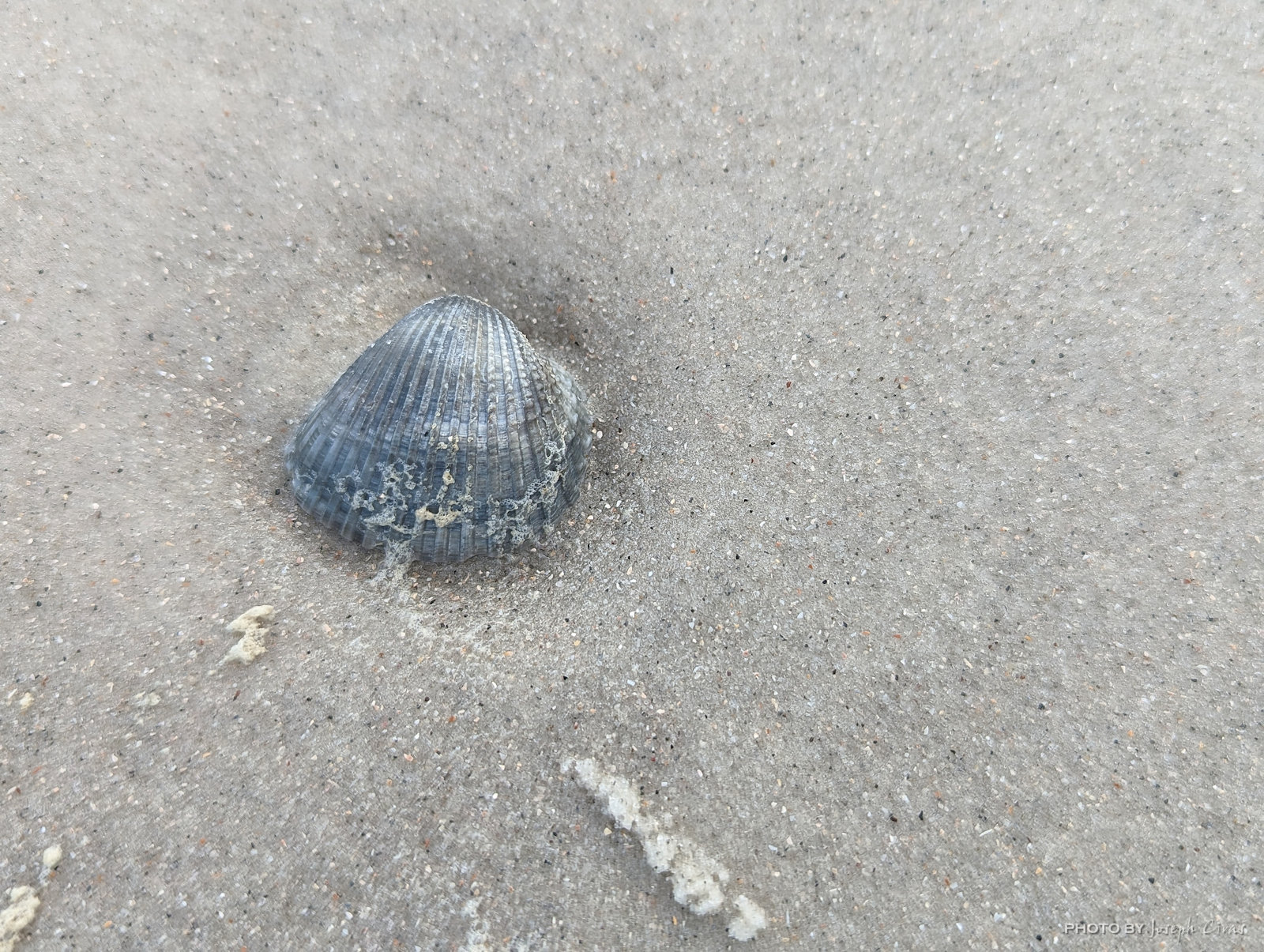
Monday, 02/20/2023: Posted photo — Shell.
Settings: Google Pixel 7, ISO 66, f/1.8, 1/593 s, 7 mm.
We reached our destination and took a walk on the beach. I took a photo of this shell because of its color. The beach was full of white shells. I did not see many shells that were dark. This shell is a common cockle shell. The common cockle (Cerastoderma edule) is a species of edible saltwater clam.
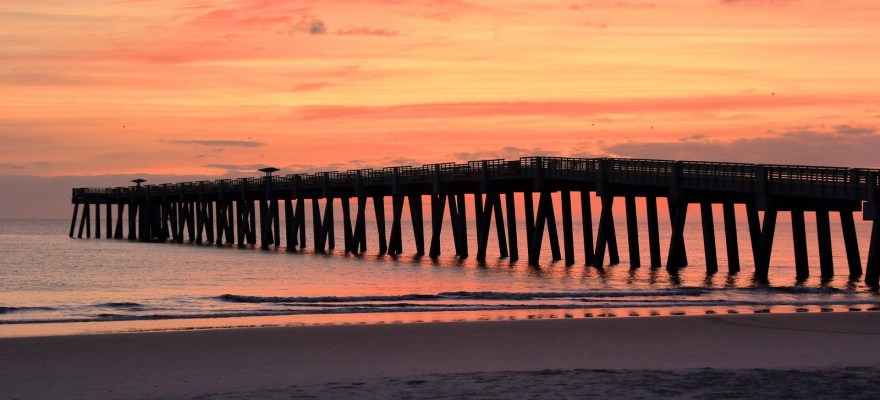
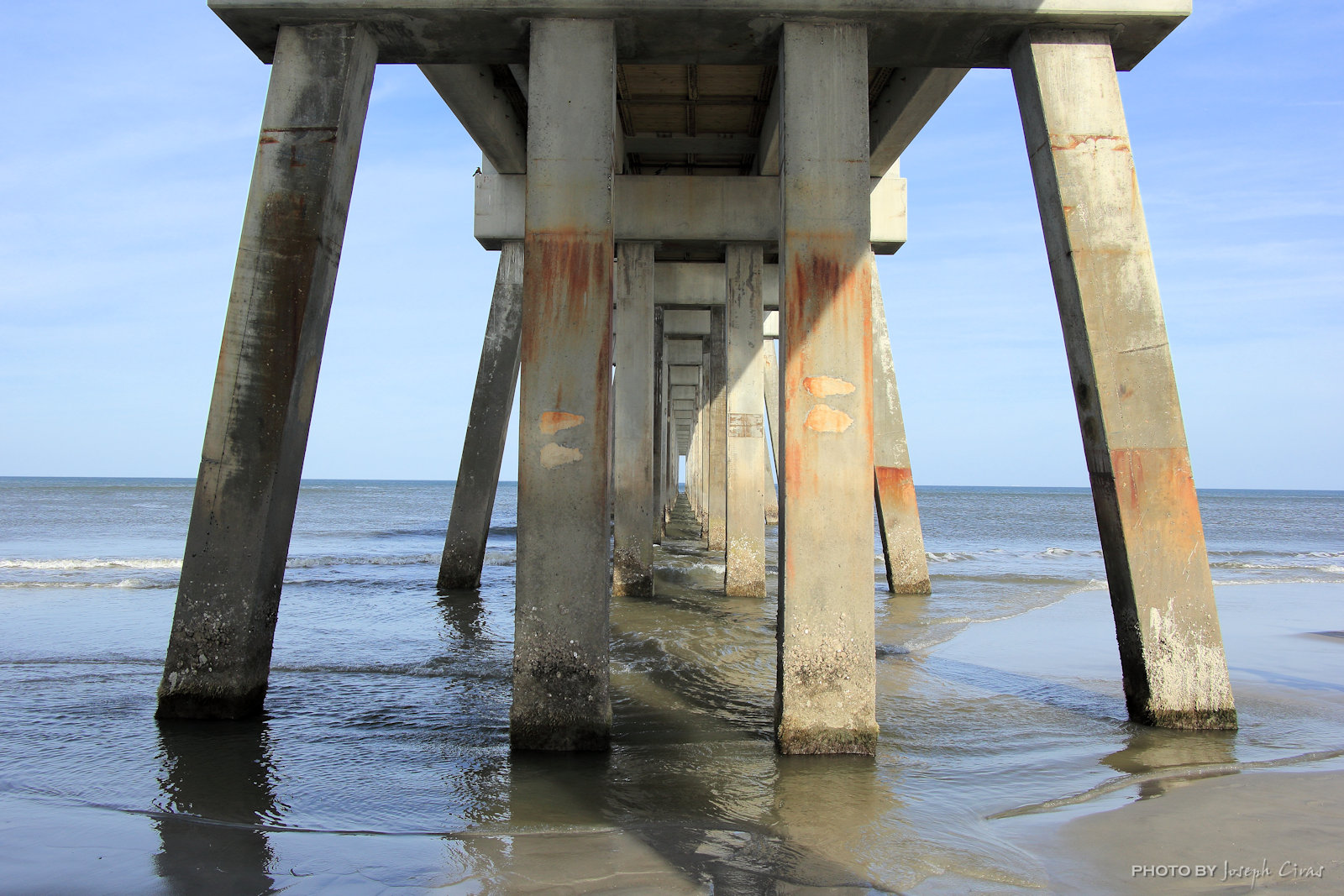
Tuesday, 02/21/2023: Posted photo — Under the Pier.
Settings: Canon EOS 60D, ISO 100, f/7.1, 1/320 s, 22 mm.
The Jacksonville Beach Fishing Pier is nearly a quarter of a mile long and offers visitors close-up views of the Atlantic Ocean. The pier was closed for years because Hurricane Matthew wiped out part of the pier in 2016, then Hurricane Irma damaged it some more in 2017. Unfortunately the pillions on the pier do not make a good of a photo as the last pier did. At least this one might hold up to hurricanes.
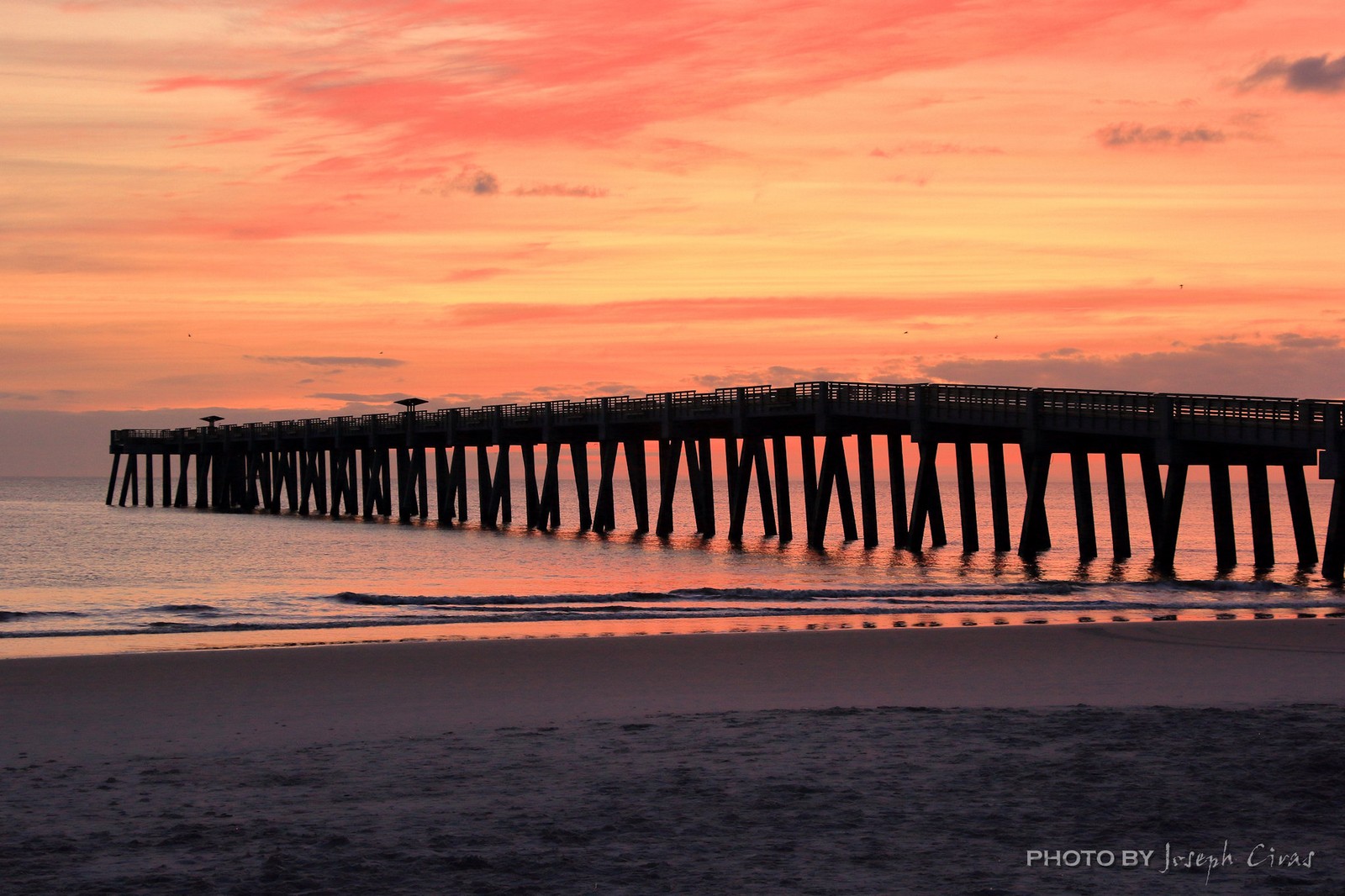
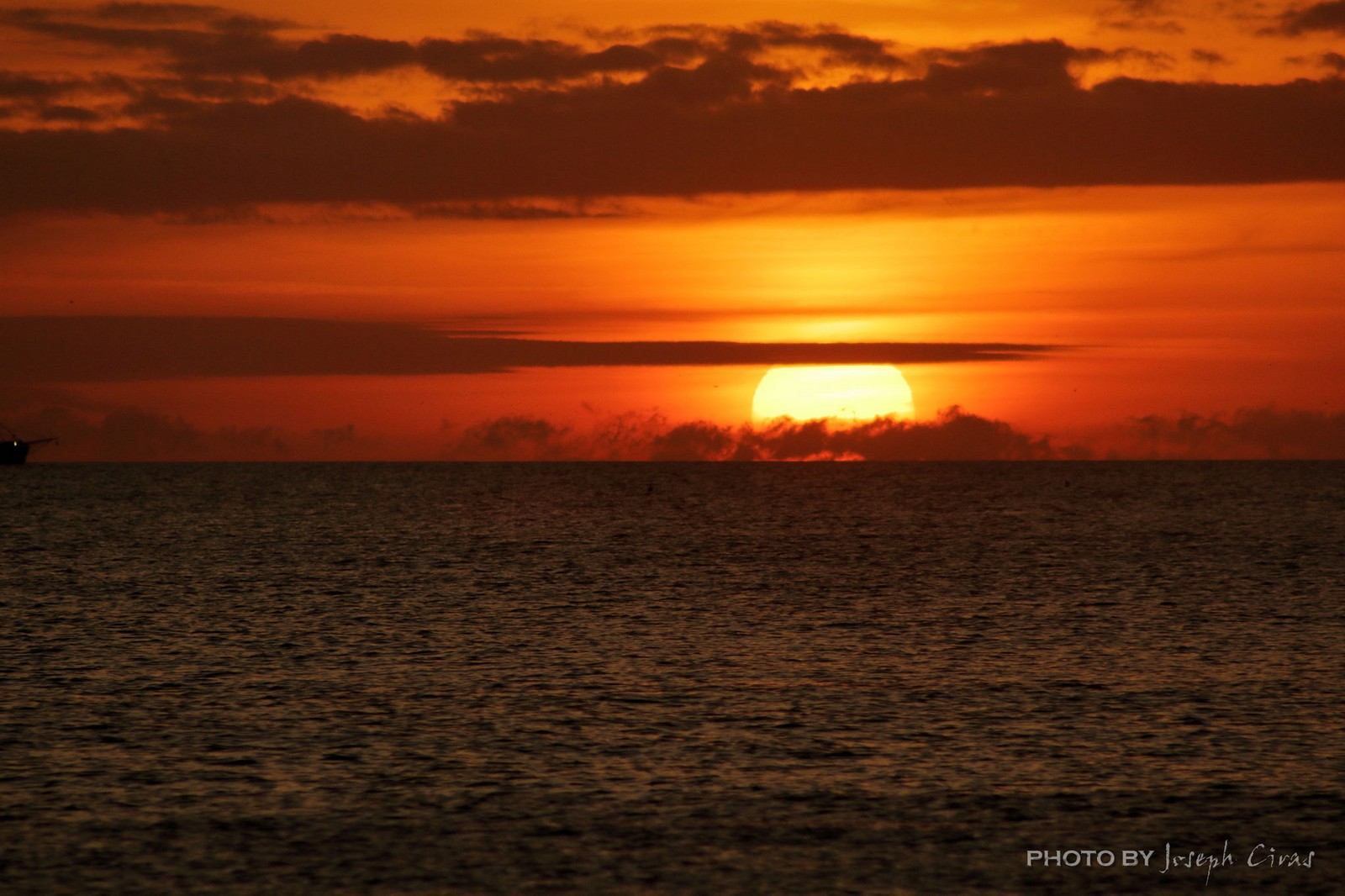
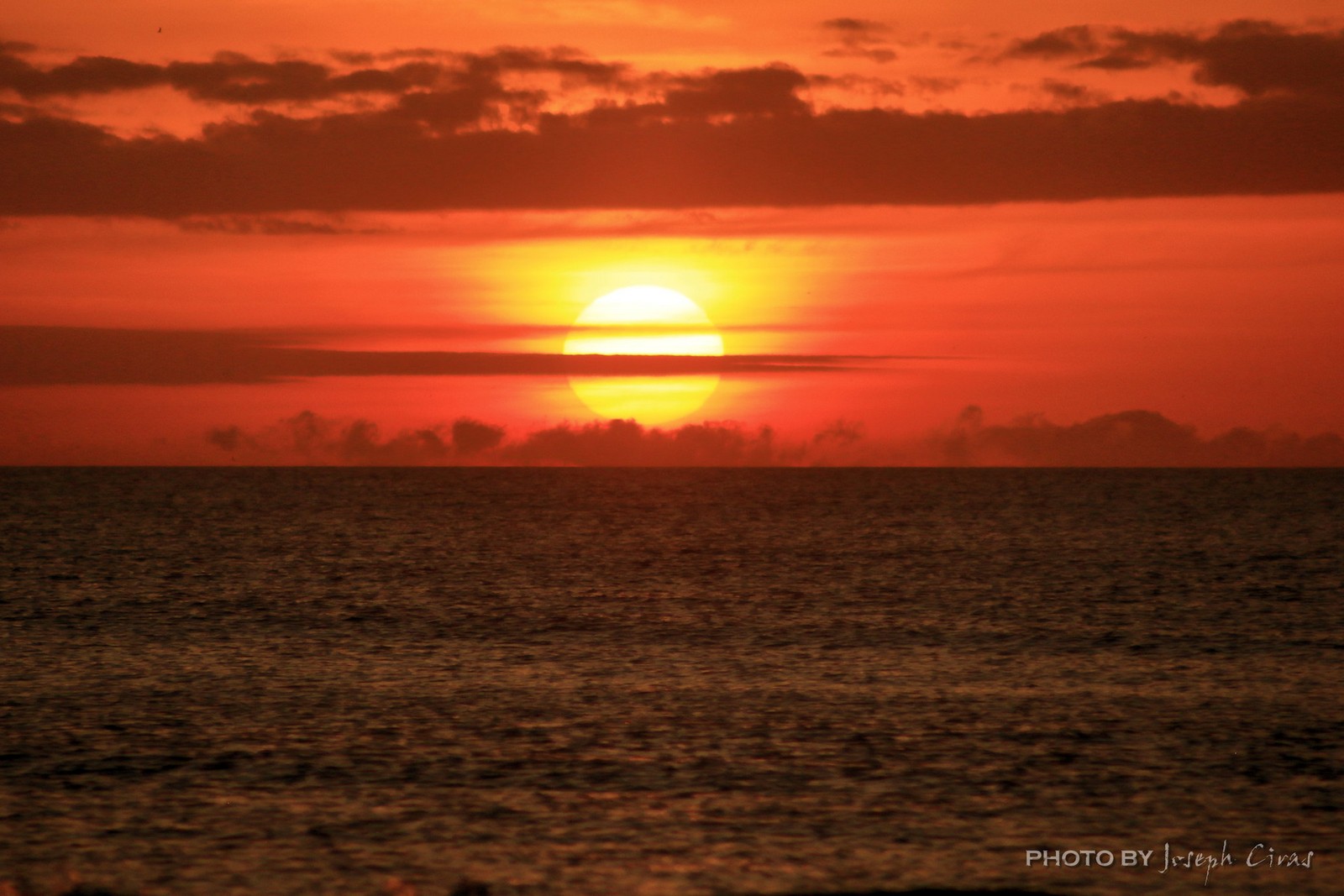
Wednesday, 02/22/2023: Posted photo — Sunrise.
Settings: Canon EOS 60D, ISO 400, f/7, 1/8000 s, 300 mm.
Woke up early this morning to take a photo of the sunrise. Drove down to the pier to get this photo. The cloud cover was sparse, but the sunrise was wonderful. Each sunrise is different.
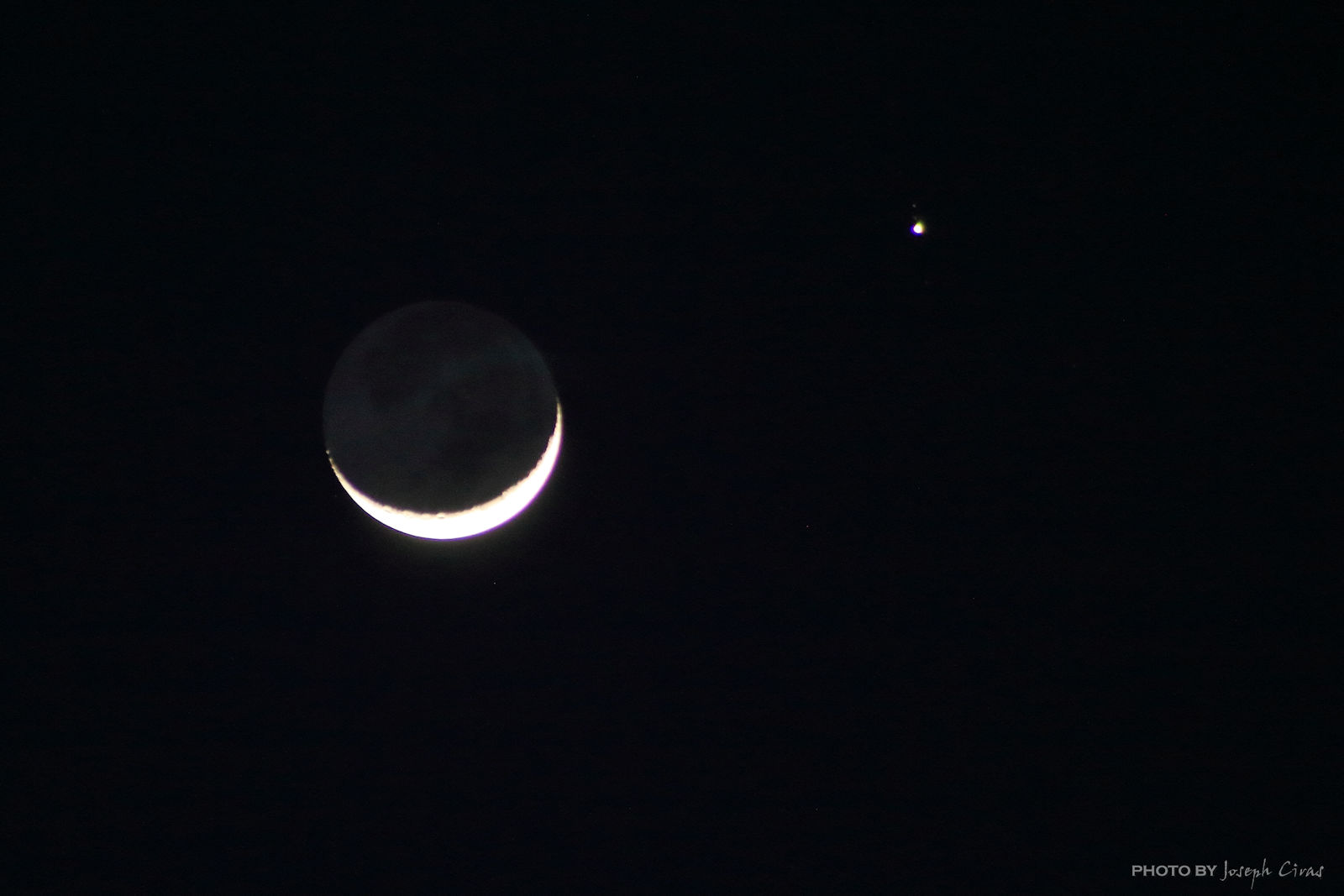
Tonight, while visiting family members, I saw the moon and Jupiter. Later on, I saw the moon, Jupiter, and Venus. I took out my camera and took a series of shots just after sunset. These photos are ones I took a little later at night at night time. These photos are handheld photos.
Thursday, 02/23/2023: Posted photo — Lizard.
Settings: Google Pixel 7, ISO 42, f/1.8, 1/234 s, 7 mm.
Don’t know if it is a brown anole or a Florida scrub lizard. Someone can tell me. All I know is that this little guy wanted to go with us to the beach today.
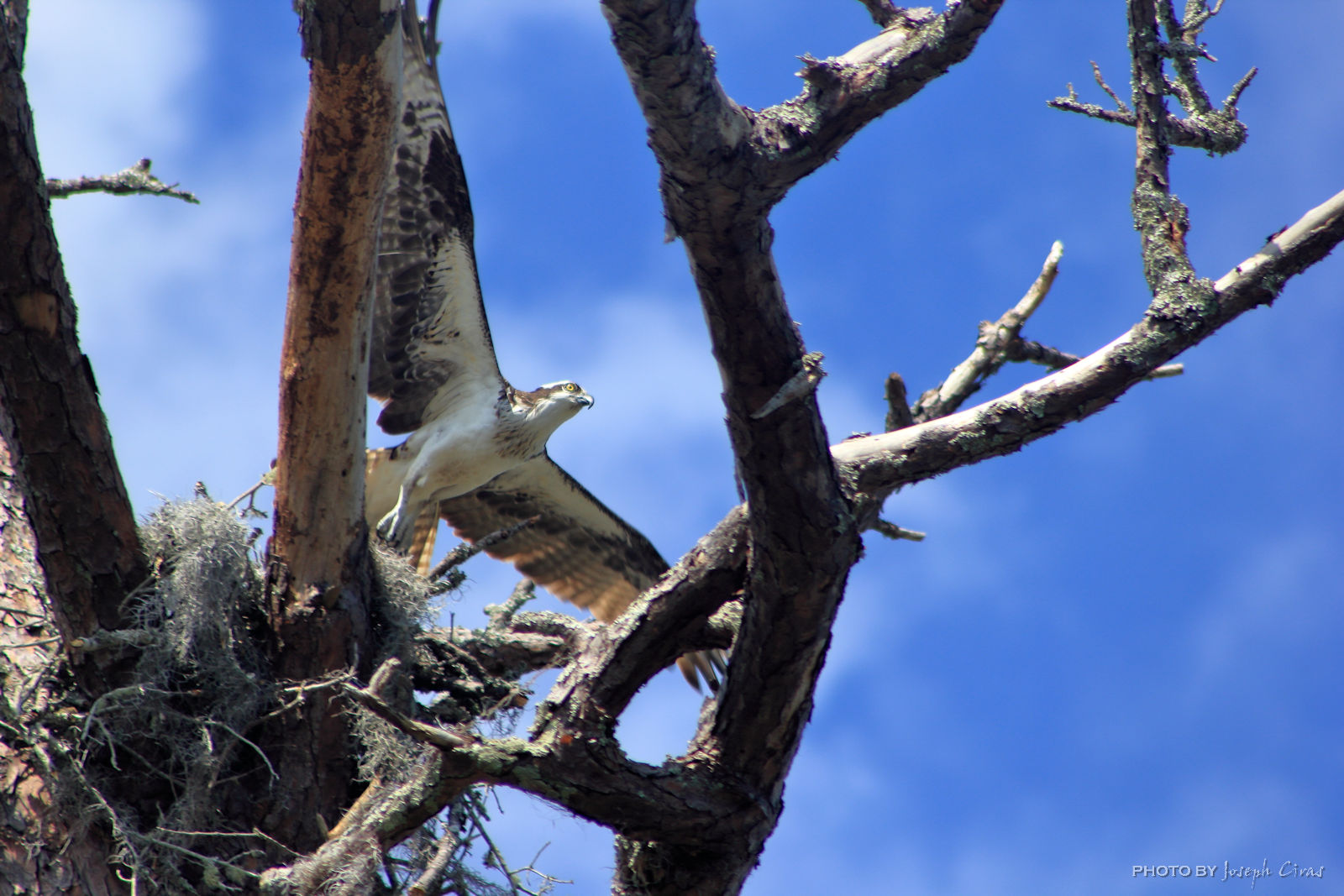
Friday, 02/24/2023: Post photo — Leaving the Nest.
Settings: Canon EOS 60D, ISO 100, f/7.1, 1/320 s, 300 mm.
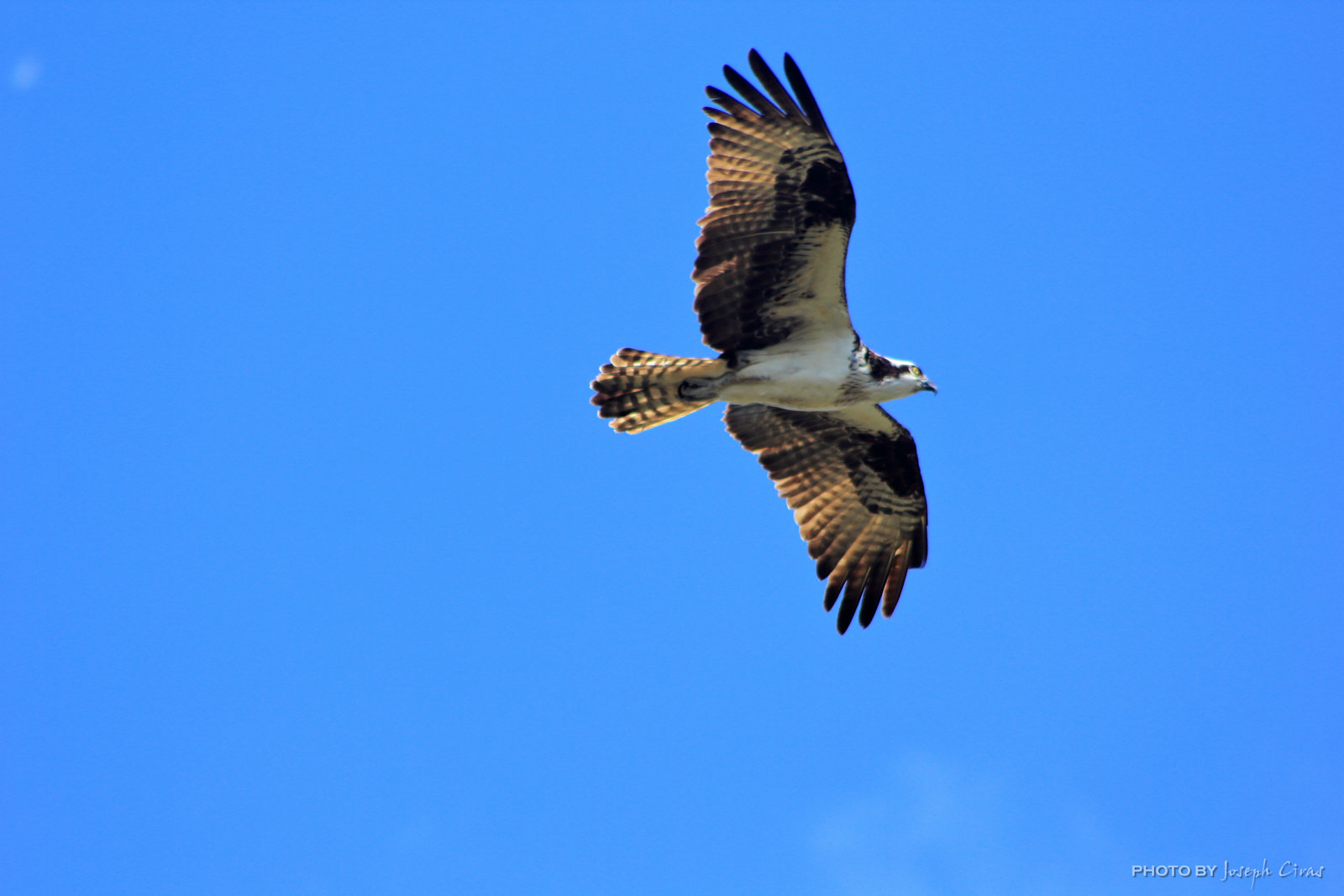
We watched this osprey flying around and gathering sticks for its nest. They move so quickly. This was the best photo that I got of the osprey. This photo was taken in Cradle Creek Preserve. Cradle Creek Preserve consists of 36 acres, purchased on August 9, 2001 by the City of Jacksonville Beach and the city of Jacksonville. The City of Jacksonville Beach holds title to the property. It a very peaceful place in the middle of the hustle of the beaches.
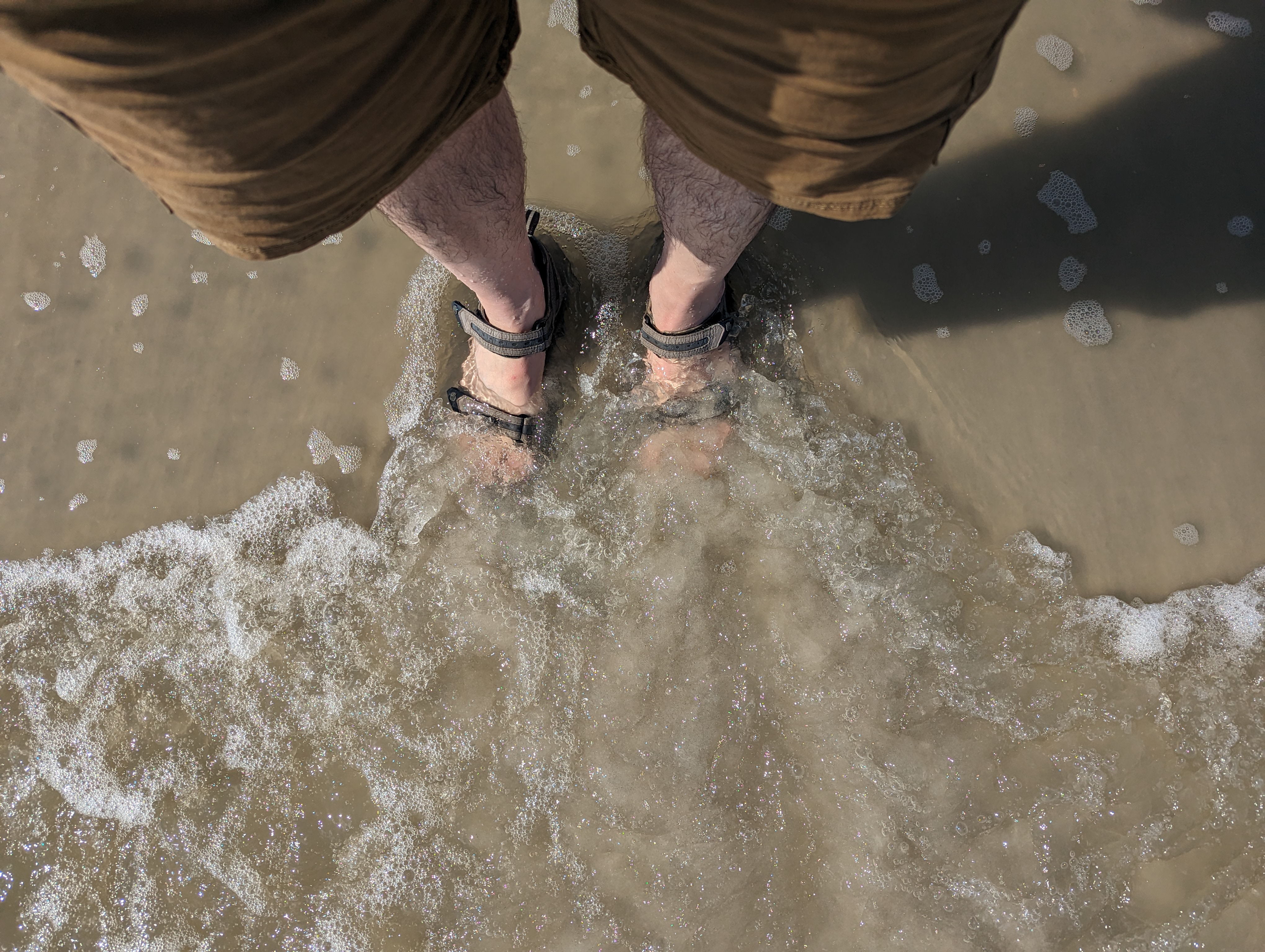
Saturday, 02/25/2023: Post photo — Feet in Ocean.
Settings: Google Pixel 7, ISO 42, f/1.8, 1/4049 s, 7 mm.
As my vacation winds down, and the snow and ice falling up north, I took this opportunity to put my feet in the ocean. With temperatures in the 80s F here and in the teens up north, just relaxing for one more day.
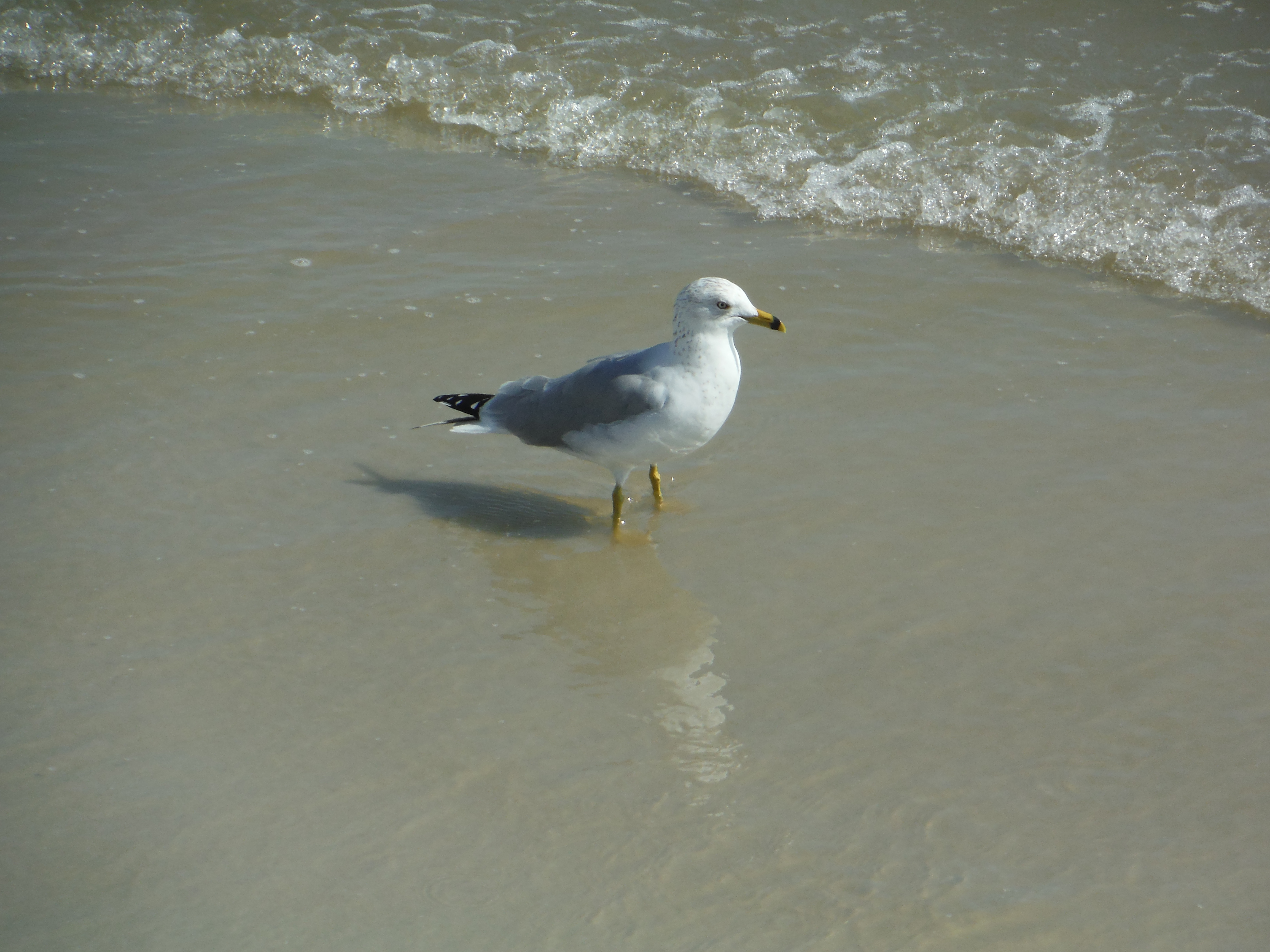
Here is a gull and a Royal Tern that was hanging out with us on the beach.
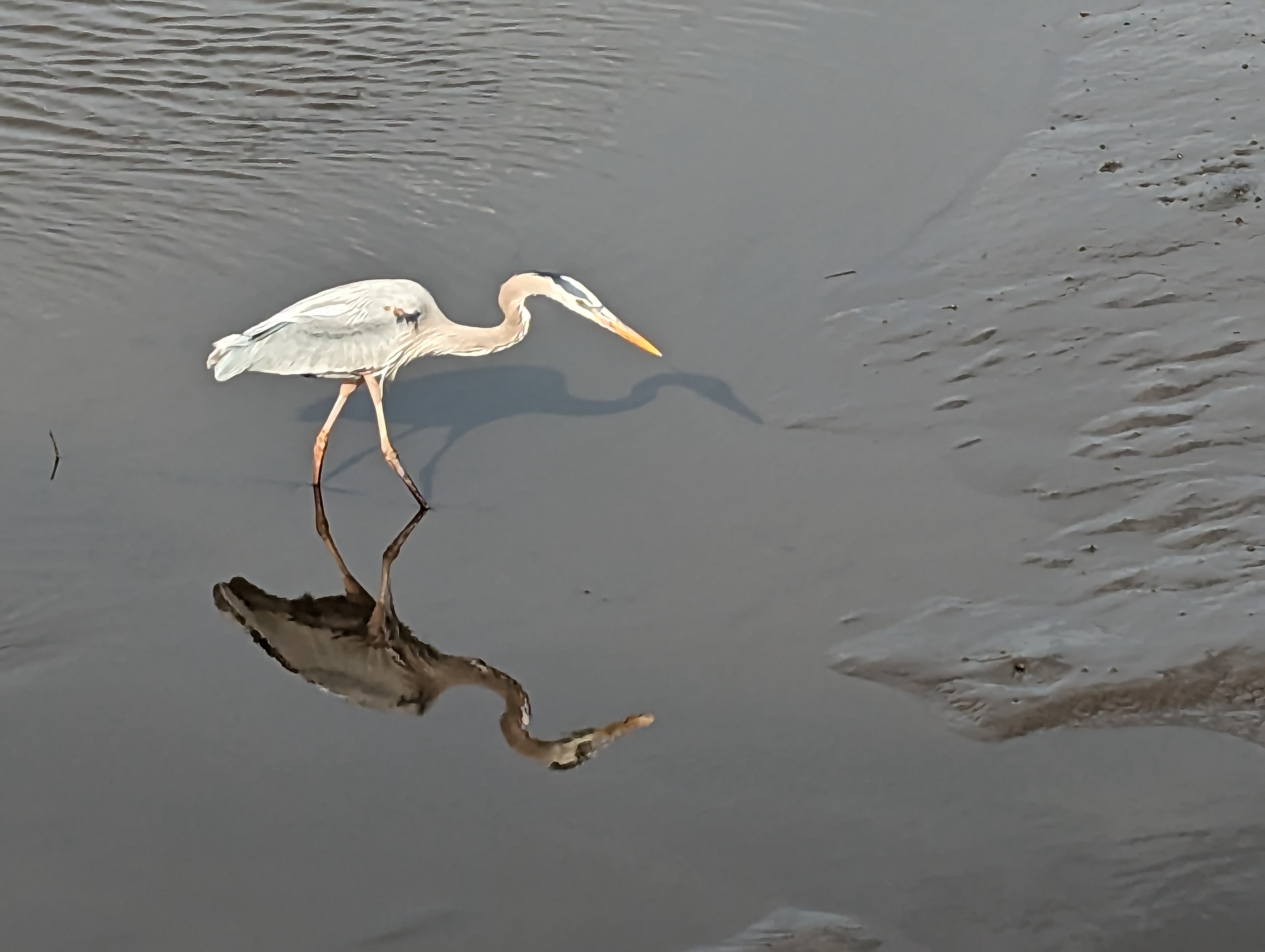
I also took a walk in a nature preserve and saw this great blue heron. It was going to be a quick walk so I only had my cell phone. Watched it for about 15 minutes and it did not catch a fish. I do like the reflection and the shadow.
Back to the cold weather and reality.
Went back the next day and this egret fished successfully caught a fish, a small fish, but a fish none the less.
“When people ask me what equipment I use – I tell them my eyes.” — Anonymous
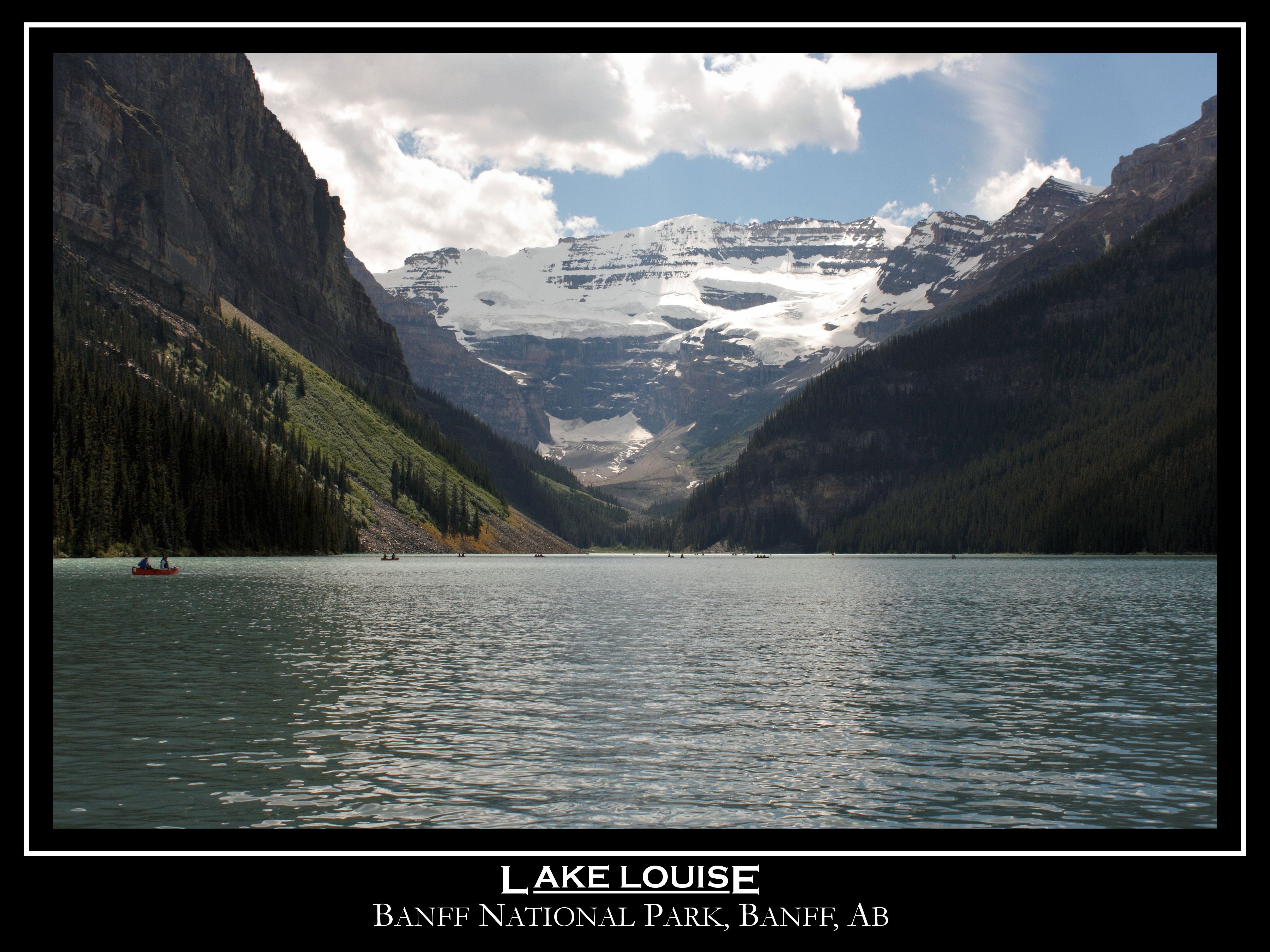
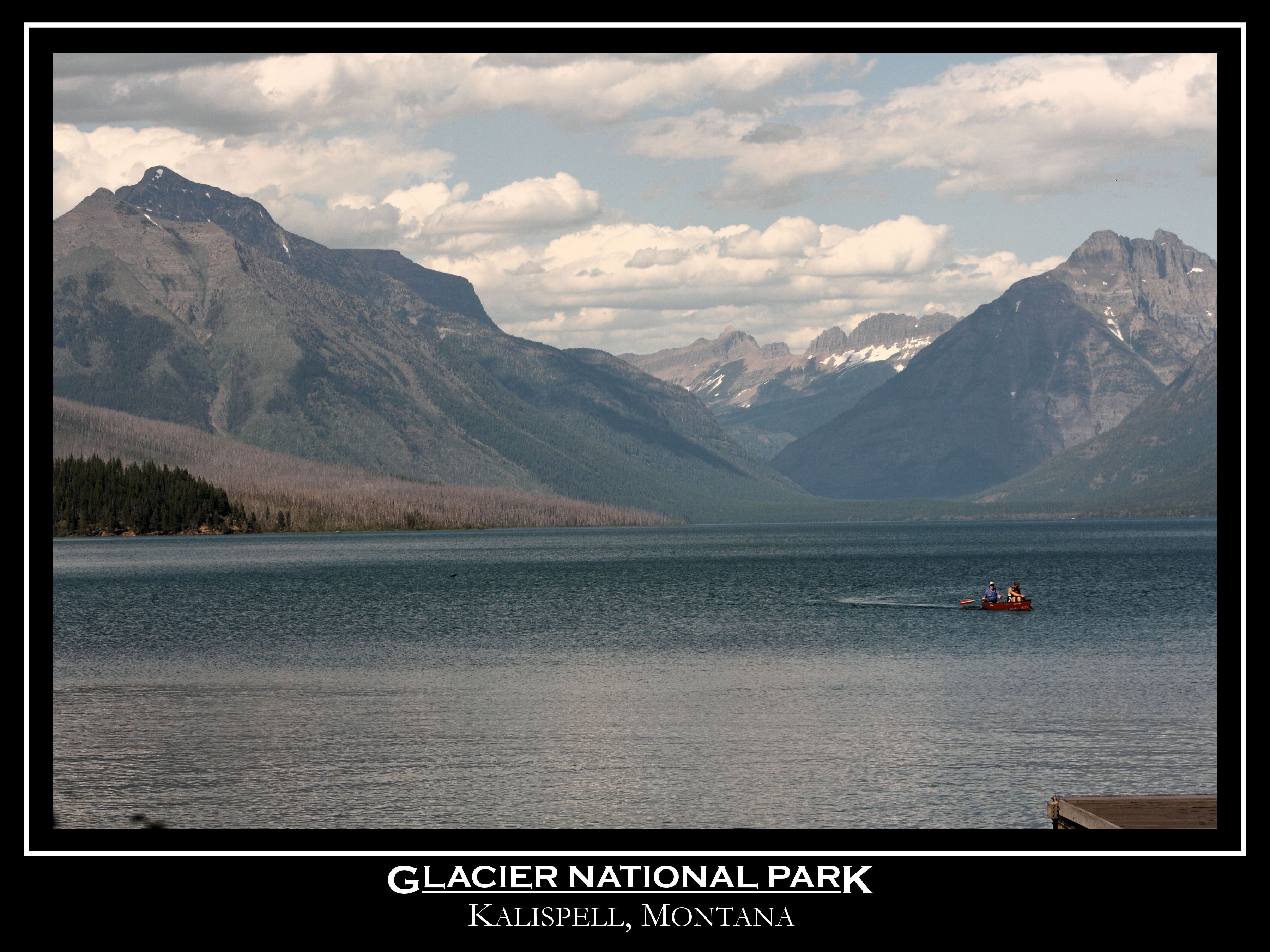
One of the things that I like to do is to turn some of my photos into posters. Here is a few of the photos that I have turned into posters over the years.
Sunday, 01/08/2023: Posted photo — Lake Louise.
Lake Louise is located in Banff National Park, Canada’s oldest national park, in the Canadian province of Alberta. It sits at an elevation of 5,679 ft (1,731 m) making it Canada’s highest permanent settlement. The lake extends northeast for around 1.5 mi (2.4 km) and is around 0.75 mi (1.2 km) at its widest point. The Lake Louise area is separated in two – the larger community is known as Lake Louise Village and is directly accessible via the Trans-Canada Highway, while Upper Lake Louise is directly next to the lake itself and contains the famous Lake Louise Chateau, along with a host of incredible hiking, biking, and horse-riding trails. https://adventures.com/canada/attractions/lakes/lake-louise/
Monday, 01/09/2023: Posted photo — Bubble Net Feeding.
Bubble-net feeding is a cooperative hunting strategy that occurs within a group of whales. It is a complex, highly synchronized set of behaviors that involve communication and cooperation, demonstrating signs of high social intelligence.
How it works
To bubble-net feed, whales dive deep below schools of fish and use bubbles blown from their blowholes to stun and trap fish closer to the surface. One whale generally leads the effort followed by the rest of the group. The leader will usually be responsible for blowing the bubbles and the other members will surround the fish, following them to the surface by swimming in spiral patterns to keep the fish trapped.
Humpback whales are known as “gulpers”, which means they feed by leaving their mouths open, swallowing everything in their paths before closing their mouths, pushing water out through their baleen plates and swallowing the critters (usually fish and small crustaceans) they caught. During bubble net feeding, the whales swimming toward the surface will have their mouths open and gulp fish from the school they have corralled.
Wellesley Glacier is a 4-mile long glacier in the U.S. state of Alaska. It trends east for 4 mi to a lagoon on the west bank of College Fjord, 3.7 mi southwest of College Point and 54 mi west of Valdez. It was named for Wellesley College in Wellesley, Massachusetts by members of the 1899 Harriman Alaska Expedition. https://alaska.guide/glacier/wellesley-glacier
For over a century, five generations of the Kunde family have farmed our 1,850-acre estate in the heart of Sonoma Valley. Our winemaking mission is to carry on that tradition by crafting elegant, estate-grown, sustainably-farmed wines with a real sense of place—beautifully balanced and expressive of our dramatic vineyard landscape. https://www.kunde.com/
I took this photo when we attended a wedding at the winery. The couple rented out the vineyard for the occasion.
Thursday, 01/12/2023: Posted photo — Glacier National Park.
Glacier National Park is a 1,583-sq.-mi. wilderness area in Montana’s Rocky Mountains, with glacier-carved peaks and valleys running to the Canadian border. It’s crossed by the mountainous Going-to-the-Sun Road. Among more than 700 miles of hiking trails, it has a route to photogenic Hidden Lake. Other activities include backpacking, cycling and camping. Diverse wildlife ranges from mountain goats to grizzly bears. https://www.nps.gov/glac/index.htm
Friday, 01/13/2023: Post photo — Bear at Curry Village.
Curry Village is a resort in Mariposa County, California in Yosemite National Park within the Yosemite Valley. A rockfall in 2008 damaged a number of structures, and about one third of visitor units were closed because of risk. https://www.nps.gov/places/000/curry-village.htm
There was a fisher cat next to our tent site. It hid when this bear walked by. The ranger asked up if we were able to get a look at the number on the bear’s tag. Yosemite National Park is the only park that I know of that a bear will open the door of your car for you if they see something shinny in it or if they smell anything that might be food.
Saturday, 01/14/2023: Post photo — Royal Arches.
The Royal Arches refers to a cliff containing natural occurring granite exfoliation arches, located below North Dome and rising above Yosemite Valley, in Yosemite National Park, California. The Royal Arches are located on the north side of the valley, northeast of the Ahwahnee Hotel. http://www.supertopo.com/rock-climbing/Yosemite-Valley-Royal-Arches-Area-Royal-Arches
Happy New Year’s to all. For the last 15 or so years, I have been starting off the new year by hiking a local mountain to see the first sunrise of the year. This year’s hike was a wonderful hike. There had been snow and ice on the trails for most of December. Just after Christmas, we had a warm and rainy spell so there was not ice and snow. I did have to use my microspikes in areas near the trailhead and the mountain was clear of snow and ice at the summit.
Settings: Canon EOS 60D, ISO 3200, f/3.5, 20 s, 18 mm.
On the second day of the new year, I hiked the 7 Sisters in Mt. Holyoke Range. The 3,000-acre Mount Holyoke Range State Park features a 7-mile mountain ridge line. The park also includes streams, wetlands, woods, and thickets. Visitors can explore more than 30 miles of blazed trails.
The range may be on a ridge line, but during the first three miles of the hike, there were ten different peaks. Looking at my gps tracking, I agree with someone I was hiking with, the tracking looks like the EKG of ones heartbeat. Not and easy hike, but fun. Again, now snow and ice. The range is at lower elevations that near my house. The highest peak in the range is lower than the elevation of my house. The difference is that you start just above sea leave because the range starts near on the of major rivers in the area. The Mount Holyoke Range is unique because it runs east to west, not north to south as most of the ranges. The Metacomet Ridge runs mostly north to south.
Tuesday, 01/03/2023: Posted photo — Mount Holyoke.
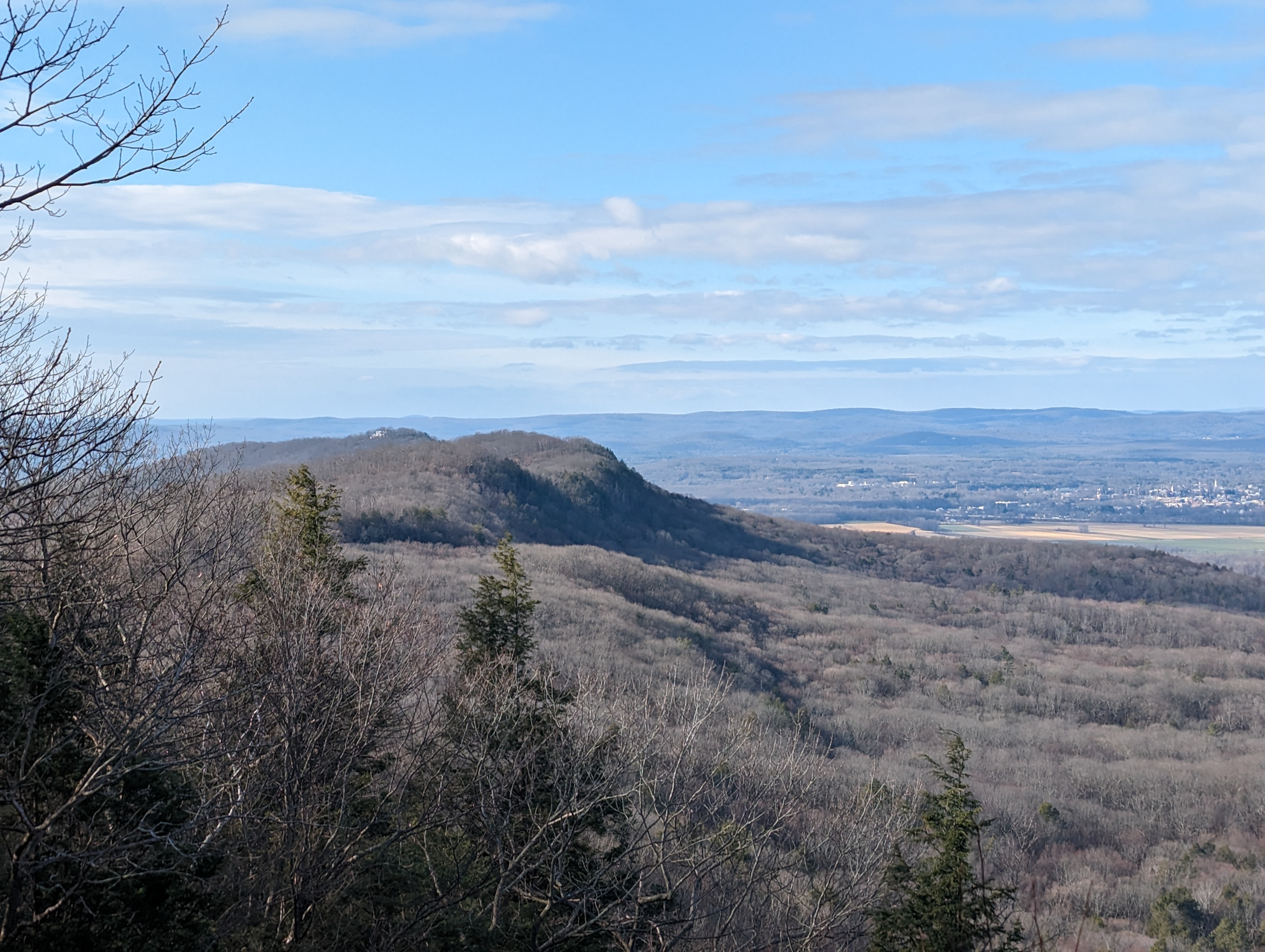
This is a photo of Mount Holyoke from the high point of the range, Mount Hitchcock at 1,005 feet. This is 1,001 feet lower than the mountain that frequent, Wachusett Mountain.
Mount Holyoke, a traprock mountain, elevation 935 feet, is the westernmost peak of the Holyoke Range and part of the 100-mile Metacomet Ridge. The mountain is in the Connecticut River Valley of western Massachusetts.
Wednesday, 01/04/2023: Posted photo — Ladder.
One of the hills on the 7 Sister’s hike required the use of this ladder. As I noted a few days ago, the hills were very steep on the trail. The route I took had about 1,092 feet in elevation gain. As you can see, the elevation gain was more that the height of the tallest peak on the hike.
Thursday, 01/05/2023: Posted photo — Snow.
Starting to snow around here. Great to see the ground covered in snow again. This snow is a wet snow, so I need to keep up with the shoveling so that it does not get too heavy.
Friday, 01/06/2023: Post photo — During the Storm.
Happy Epiphany. Epiphany, also known as Three Kings’ Day, is a Christian feast day that celebrates the revelation of God in His Son as human in Jesus Christ.
About this photo: one thing about snow is it does make for some great photos.
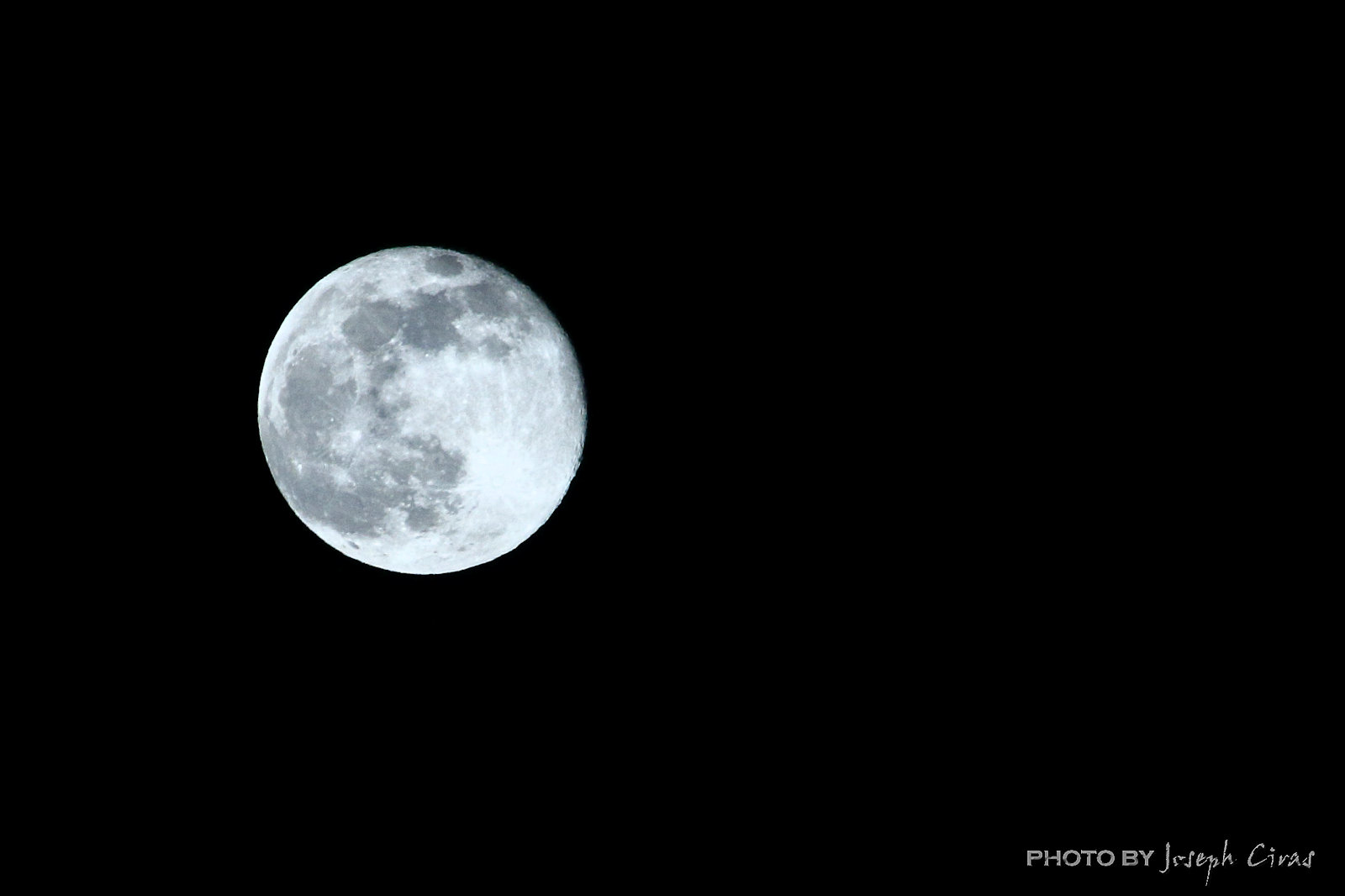
Saturday, 01/07/2023: Post photo — Full Moon.
Settings: Canon EOS 60D, ISO 100, f/7.1, 1/250 s, 135 mm.
Today I went on a full moon hike with the members of my hiking group. We are re-starting group hikes with the group. When the group was founded eleven years ago next week my four of my friends and myself, the goal was to do group hikes. It lasted for a while, then the group grew exponentially. Now we are back to schedule group hikes to get back to our roots.
Full moon at the end of the hikeHiking to the summitMoon from the summit still in the clouds
“I really believe there are things nobody would see if I didn’t photograph them.” — Diane Arbus
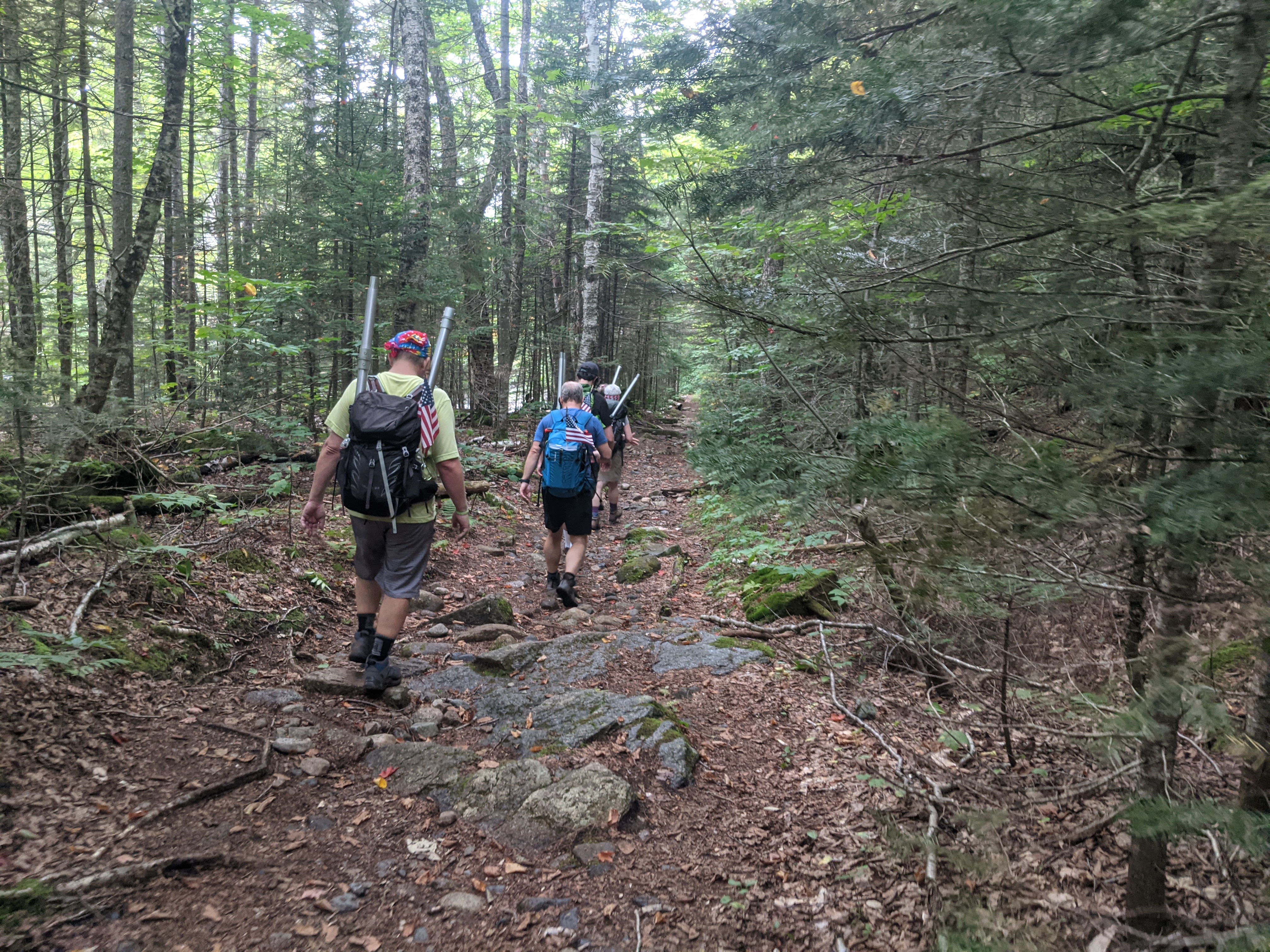
From the Flags on the 48 website: “On September 11th, 2001 the consciousness of United States of America was undeniably altered by overwhelming and devastating acts of terrorism, so far reaching in their intensity that our country will forever carry the scars. Thousands of lives were lost in a fleeting moment, immeasurable families shattered, and countless hearts broken.
We in the hiking community continue to honor the deceased with a tribute: flying the American flag atop all 48 four-thousand foot and higher mountains in New Hampshire on Sunday, September 11. By demonstrating our steadfast unity in this challenging endeavor, we also hope to express our unwavering support to the families, friends, and communities whose losses are beyond comprehension and whose suffering we remember in our hearts.”
This event is the highlight of my year. One that I was training for after breaking my ankle. My goal was to get back in shape after an almost five-month period to be able to hike in this event.
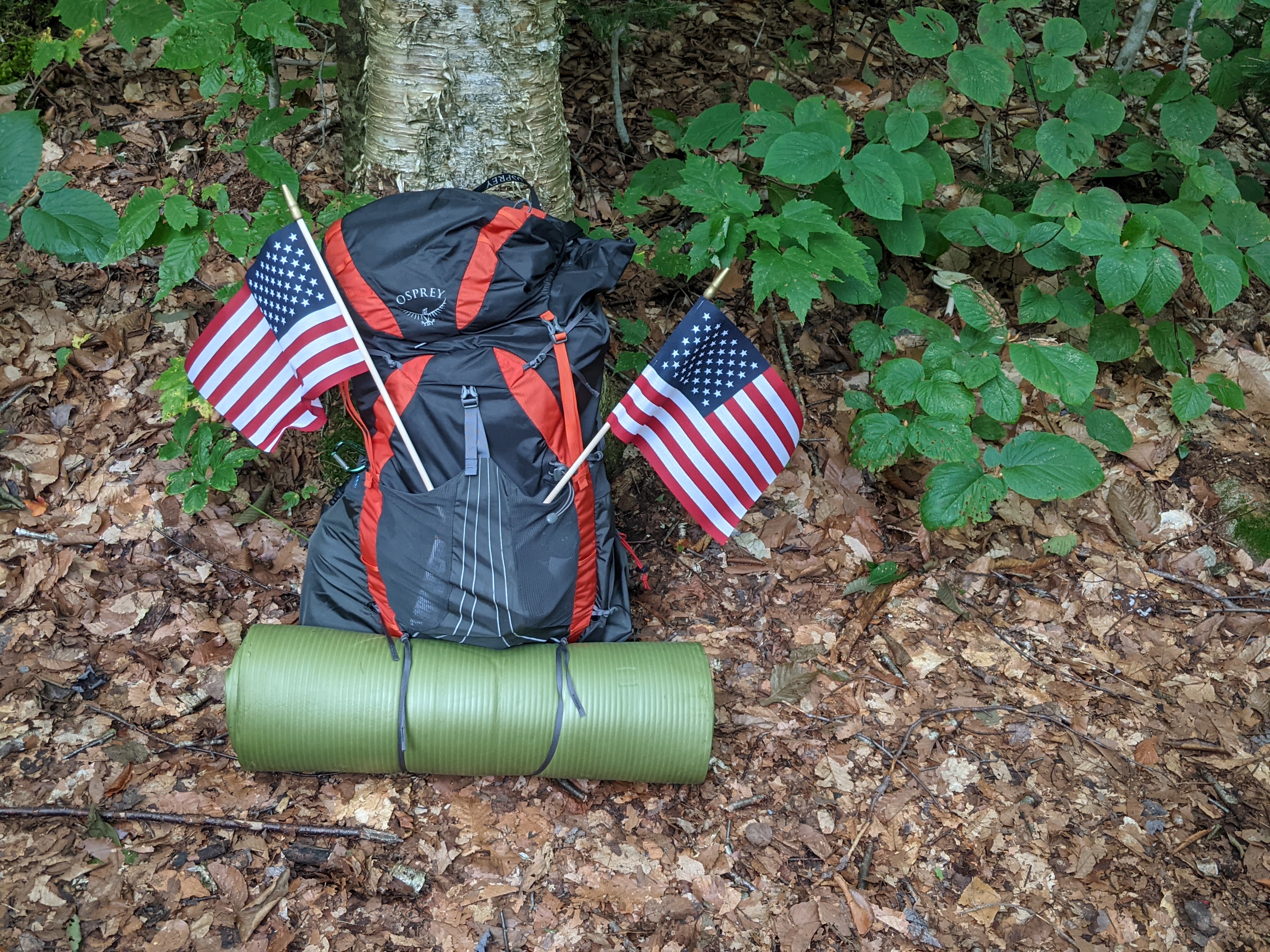
My pack, ready to go on the hike.
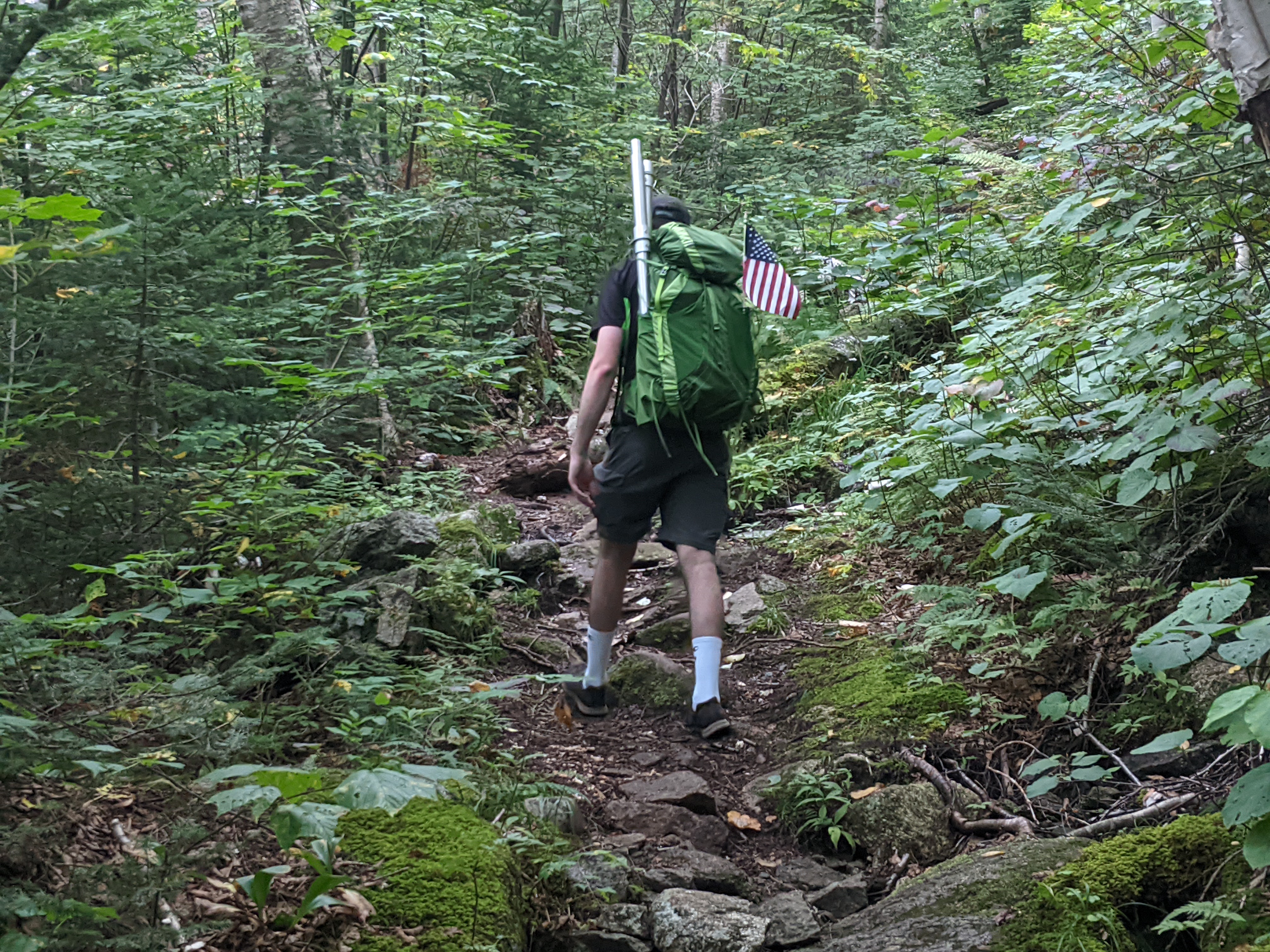
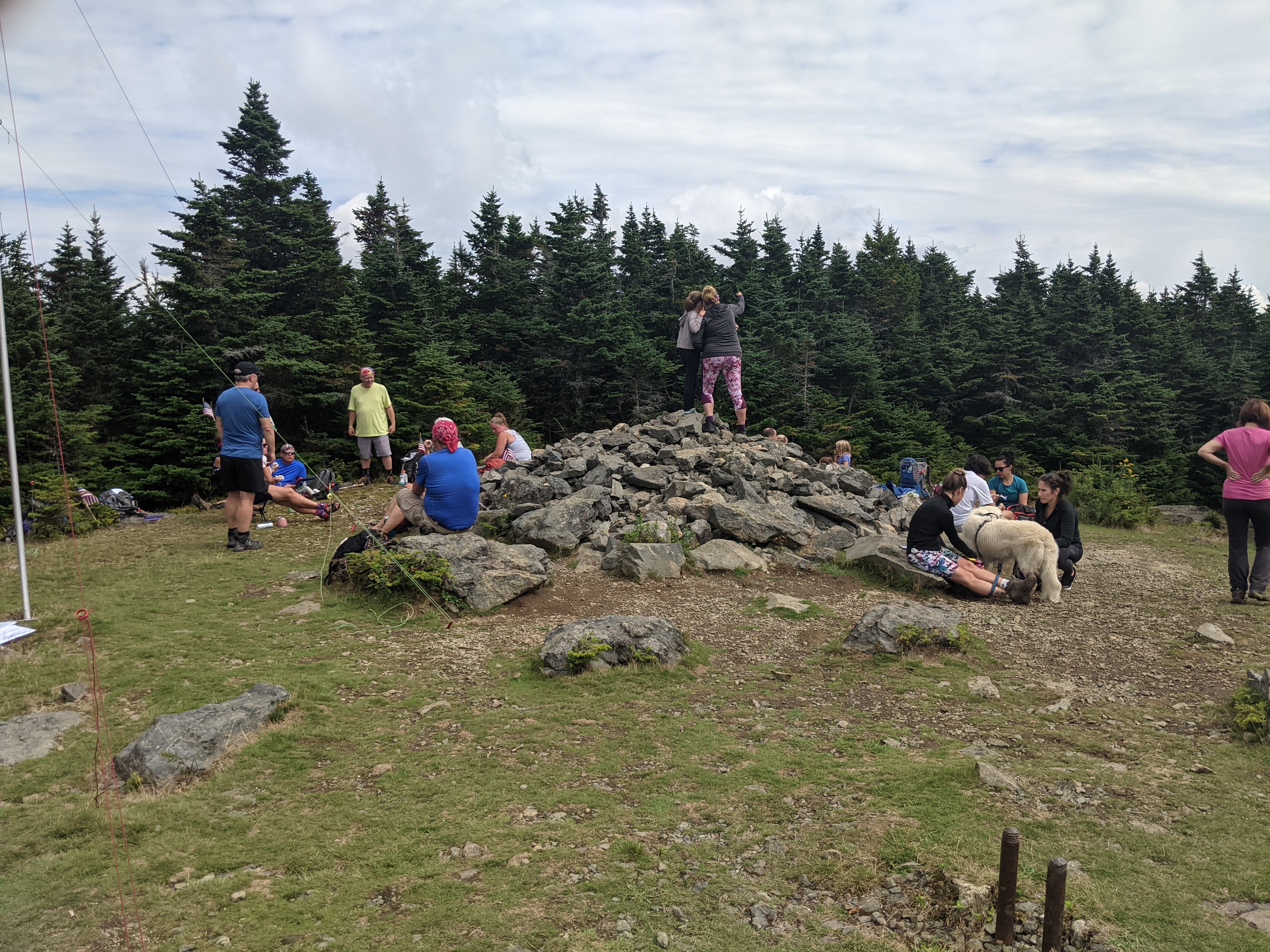
This year marks the 13th year that I have been doing this hike. Good weather, bad weather, heat, cold, rain, and wind could not stop our group from doing this annual hike. The mountain we did this year was rated as an easy hike, Mount Hale, at 4,054 feet. One of the shorter mountains and the easiest 4,000 footer in the White Mountains. The hike took us up a well established bushwhack trail that had little rock or roots on it which was welcomed for my recovering ankle. One other person was also glad since she had ankle surgery the week after I did. Her surgery was not as extensive as mine so she recovered and was out hiking faster that I did. It is called the Fire Warden Trail and it could have been used by the fire warden when hiking to the summit. On the summit, there are posts in the ground that were used to anchor the old fire tower.
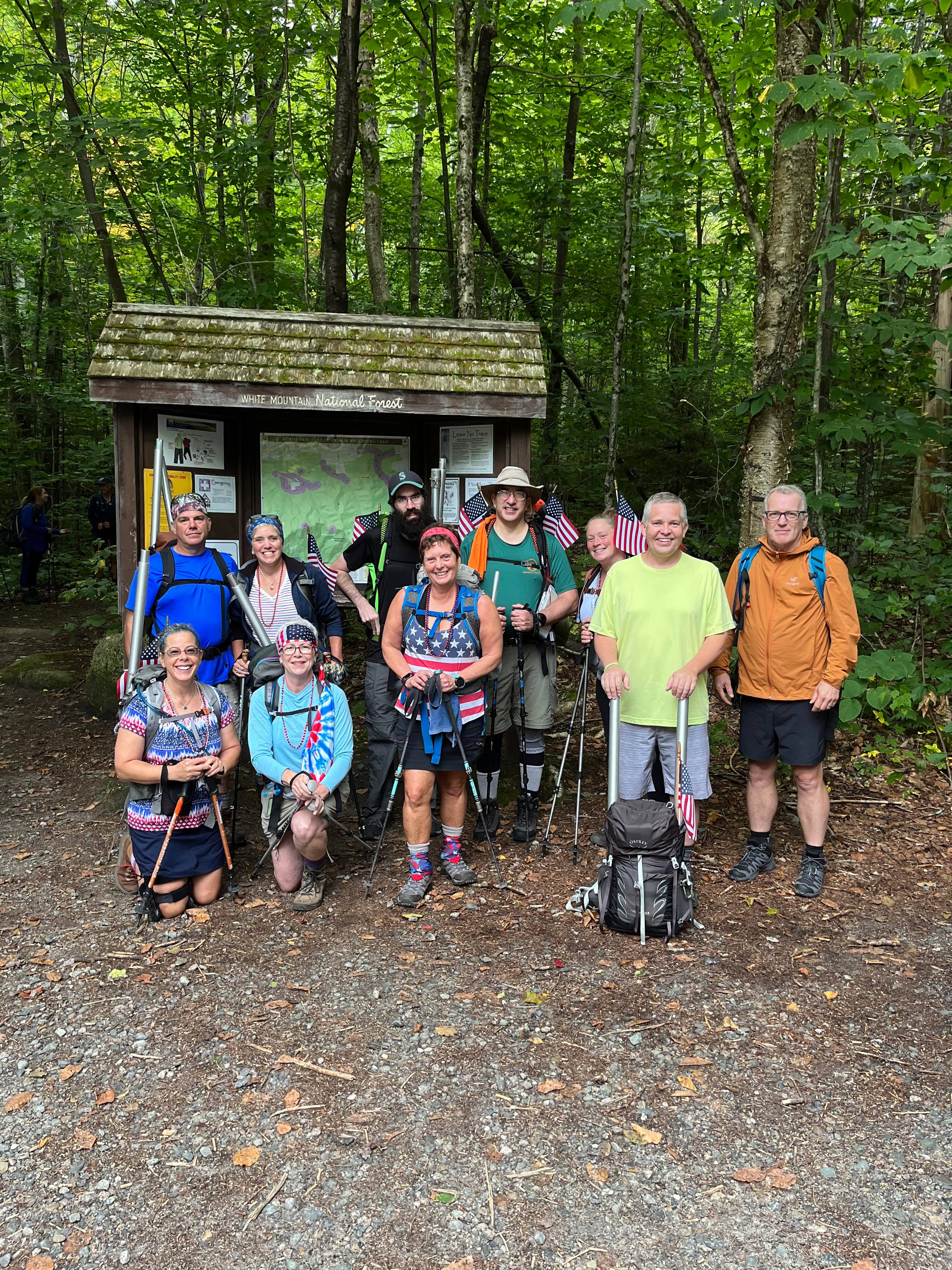
The traditional trailhead photo
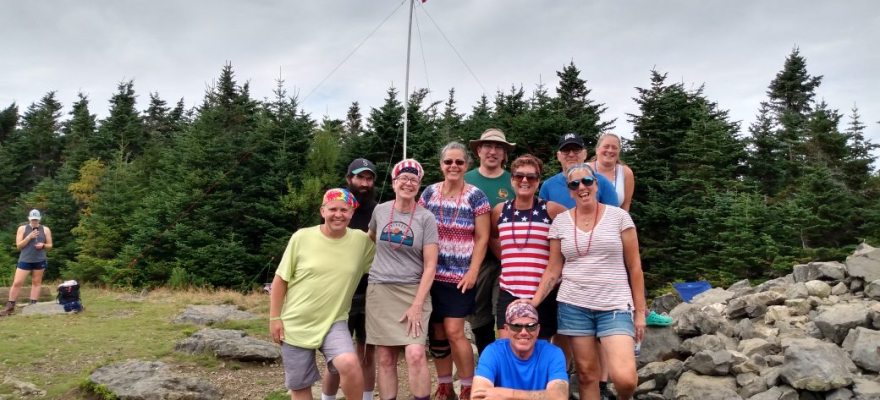
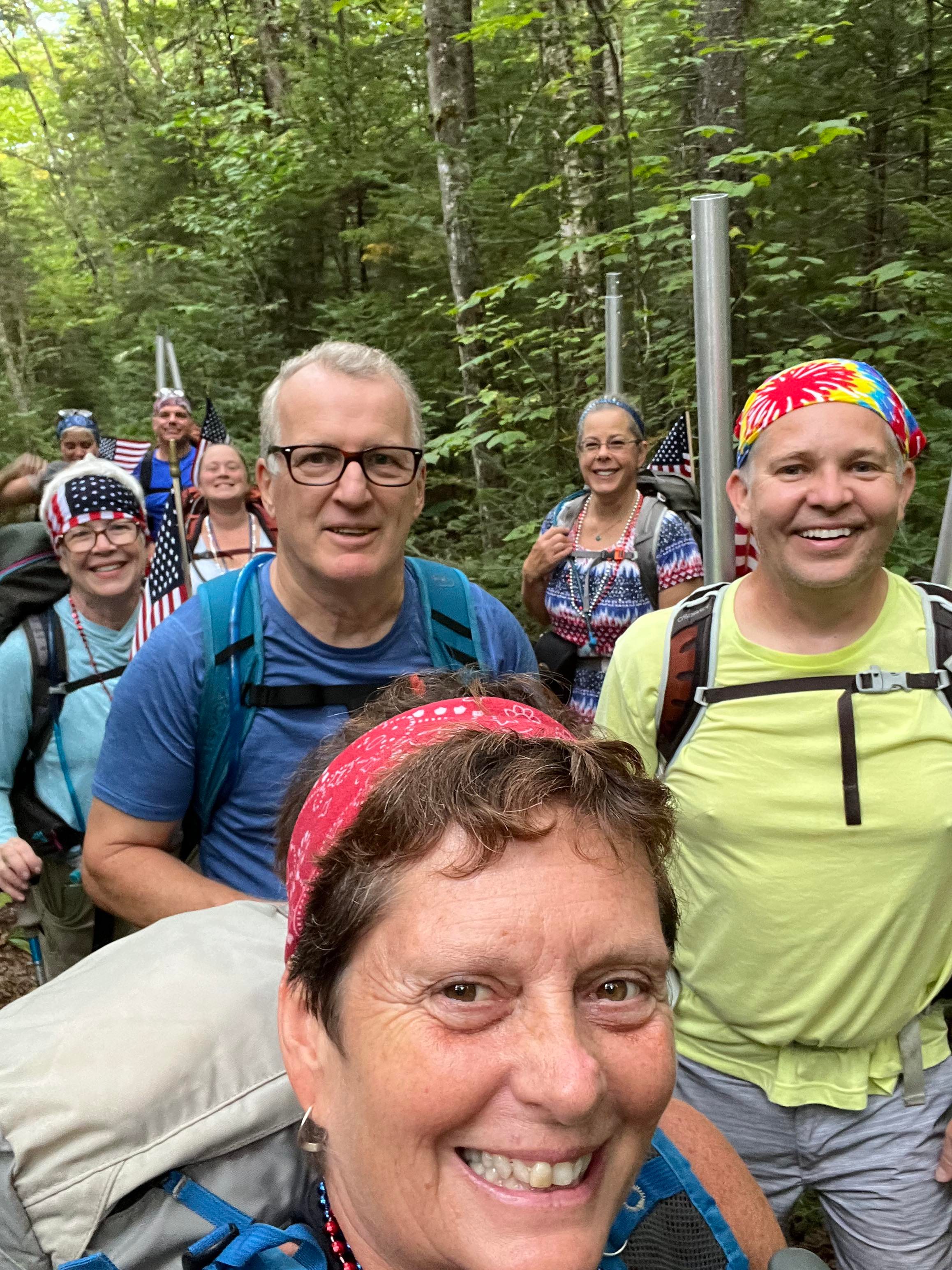
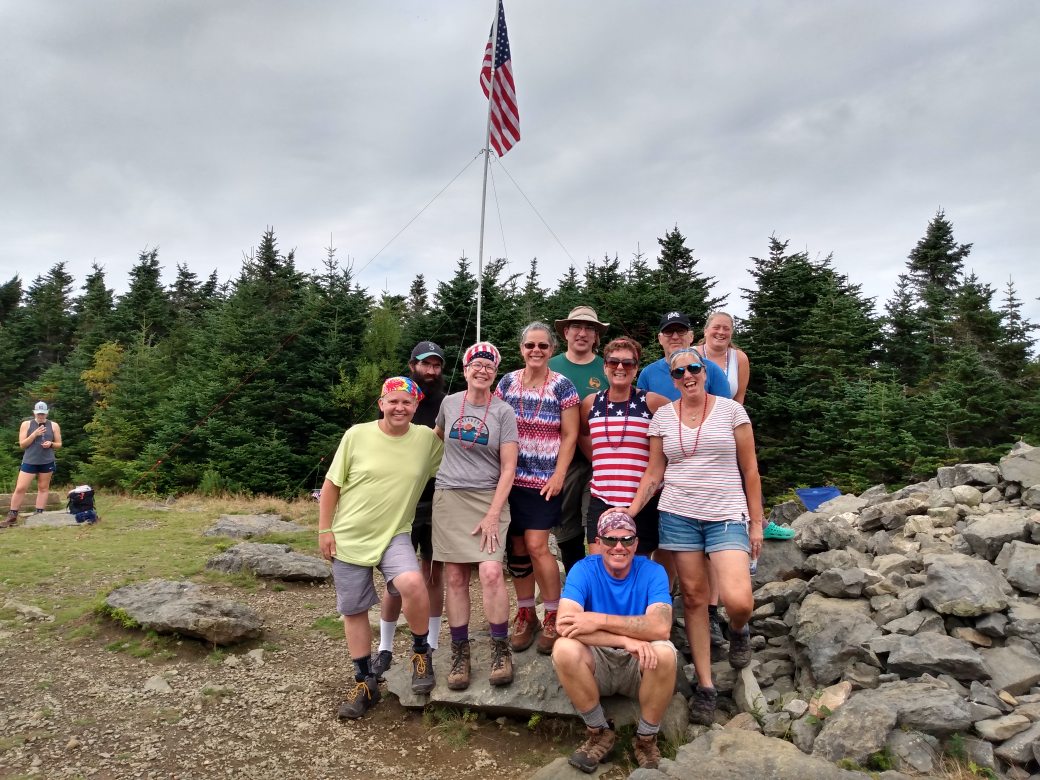
The ten people in our group have been doing this hike together for many years. We start out the hike with a group photo. I like to say that we do this incase someone gets lost and we have a photo of them. Since we were doing a trial that was not on any maps, the name of the trail or the mountain was not on the trailhead information board.
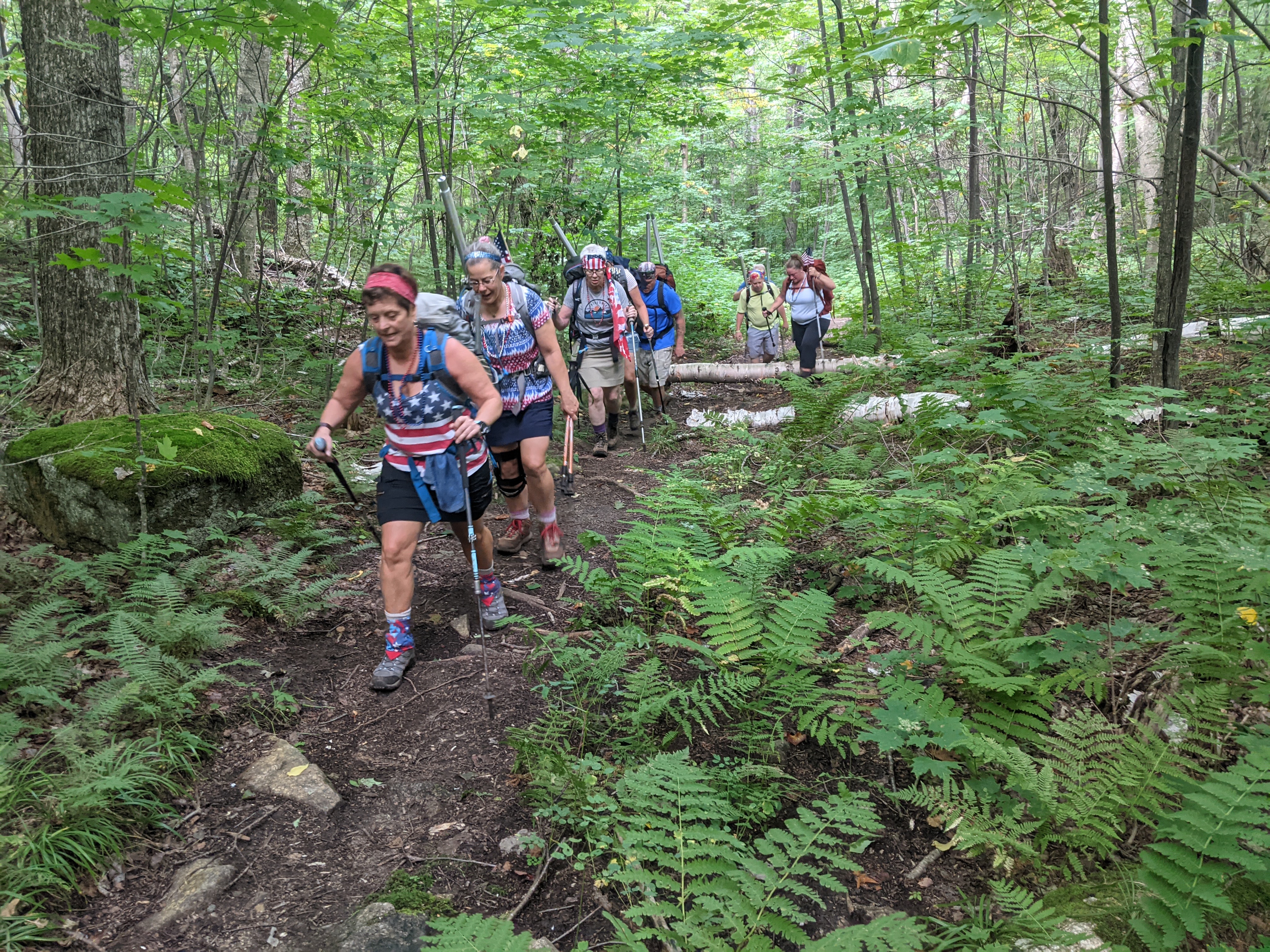
The group of use stayed together for the hike. As I stated in the opening statements, this was an easy trail. We gave ourselves four hours to reach the summit and set up our flag. It took up two and a half hours hiking very slowly so we would not reach the summit to early.
Group photo on the accent. Taken by a member of the group. My son and I are in the lead.
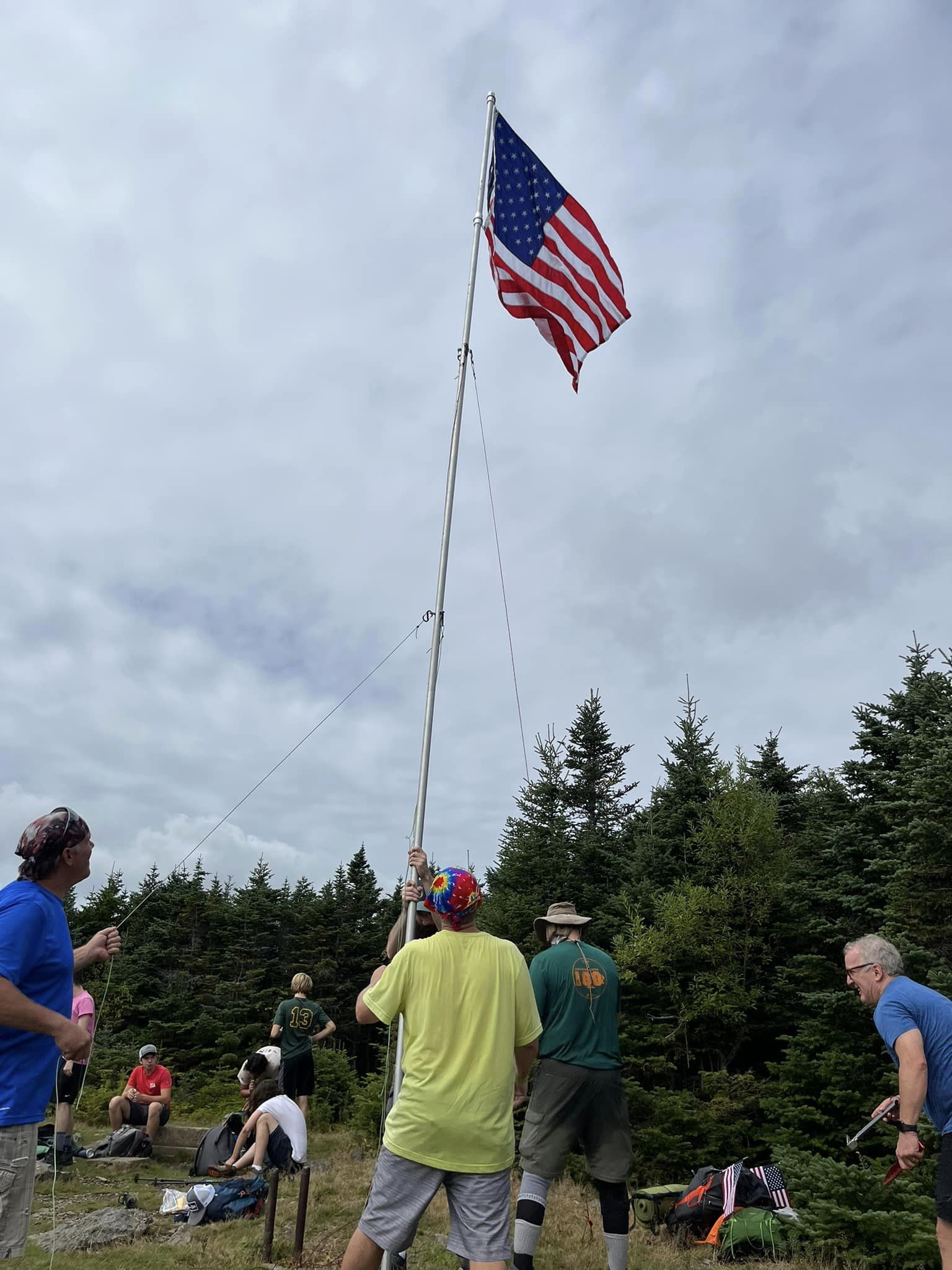
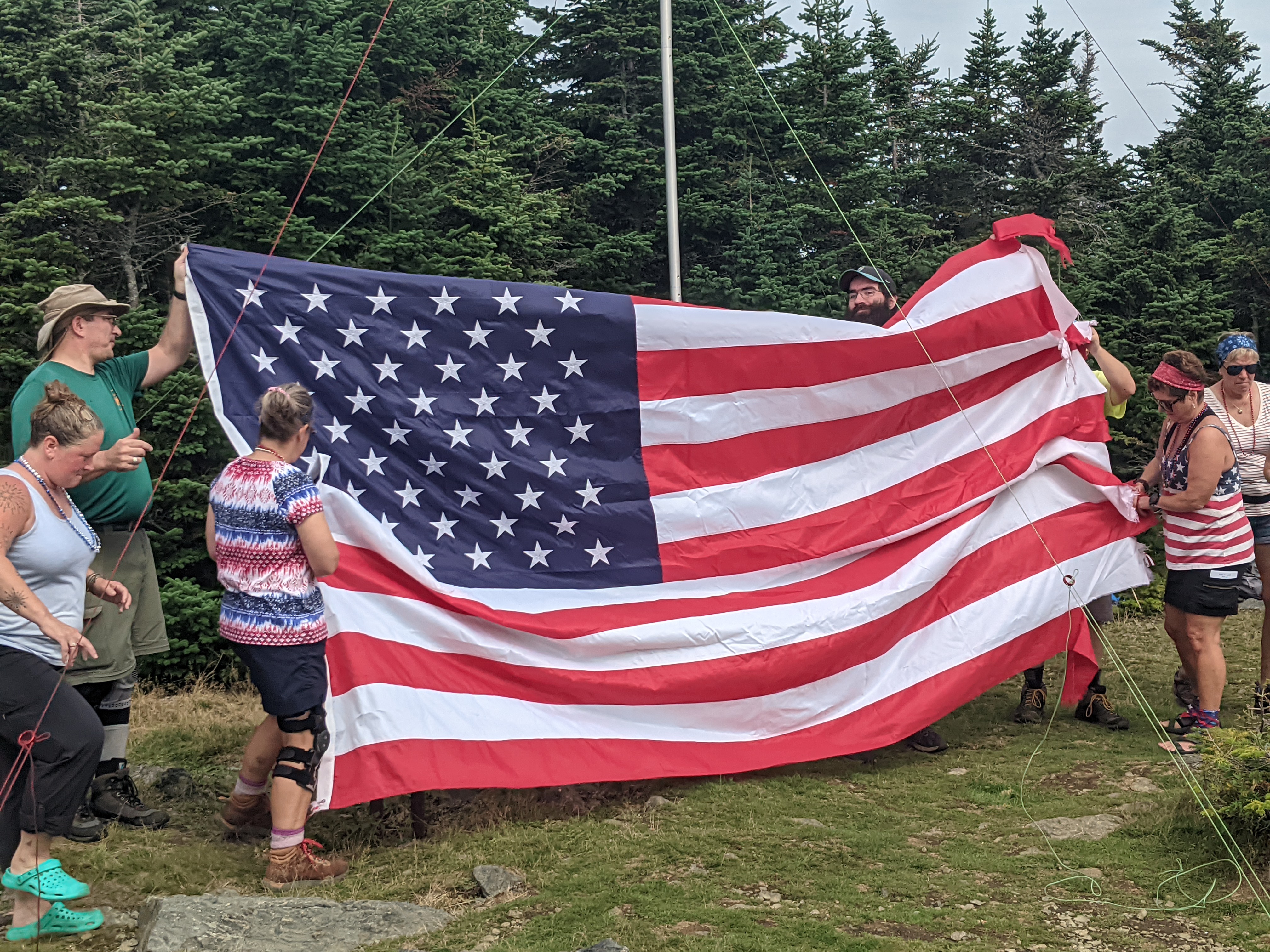
At the summit we worked together to set up our flag. Mount Hale has a wide-open summit, so we had plenty of room to set up the flag. Some of the summits are tight, and most have some room. There is no view of the neighboring mountains from the summit, just on the hike up.
Setting up the flag on a humid day. My son is holding the pole. I am in the green shirt.Securing the flag
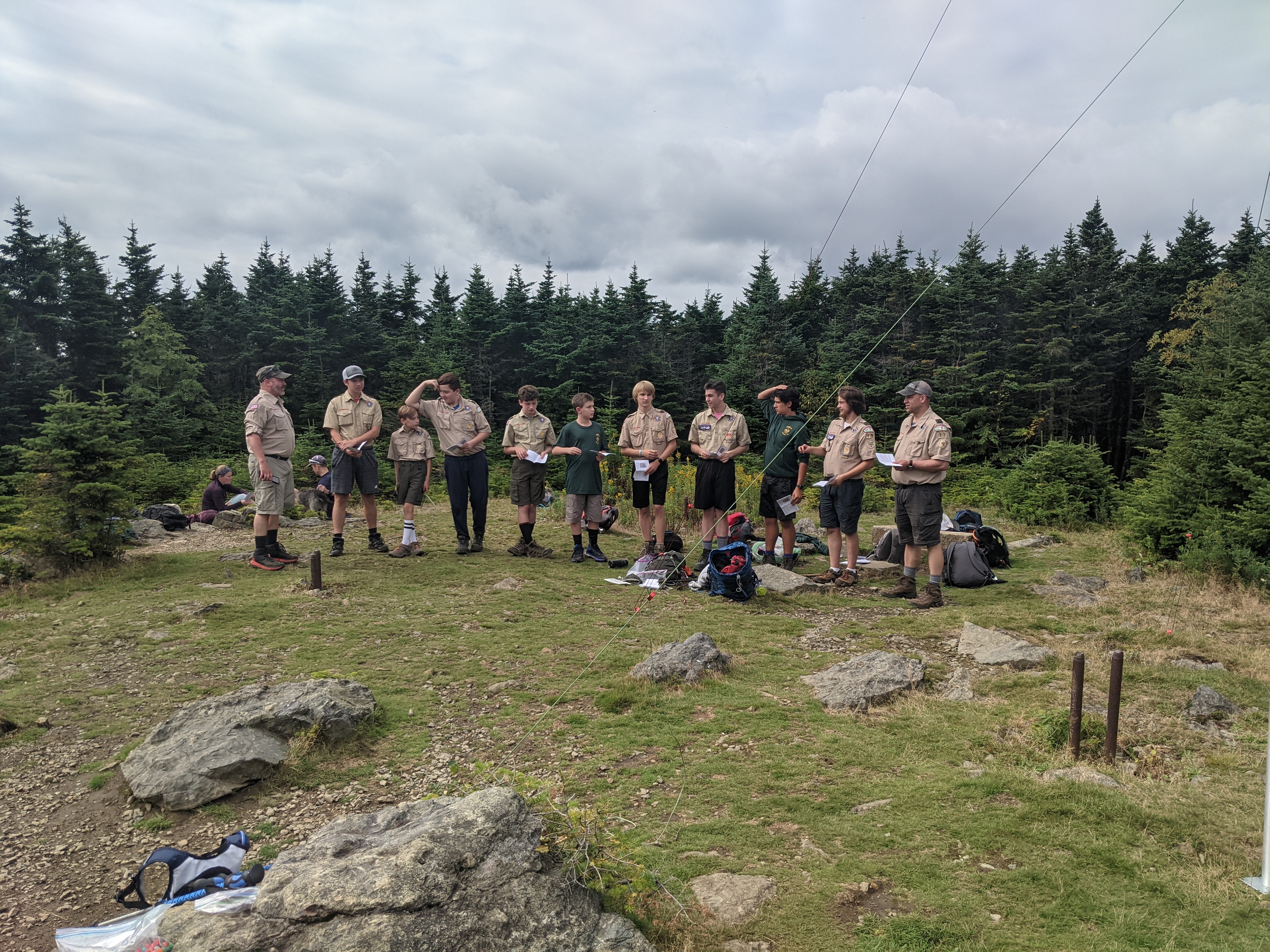
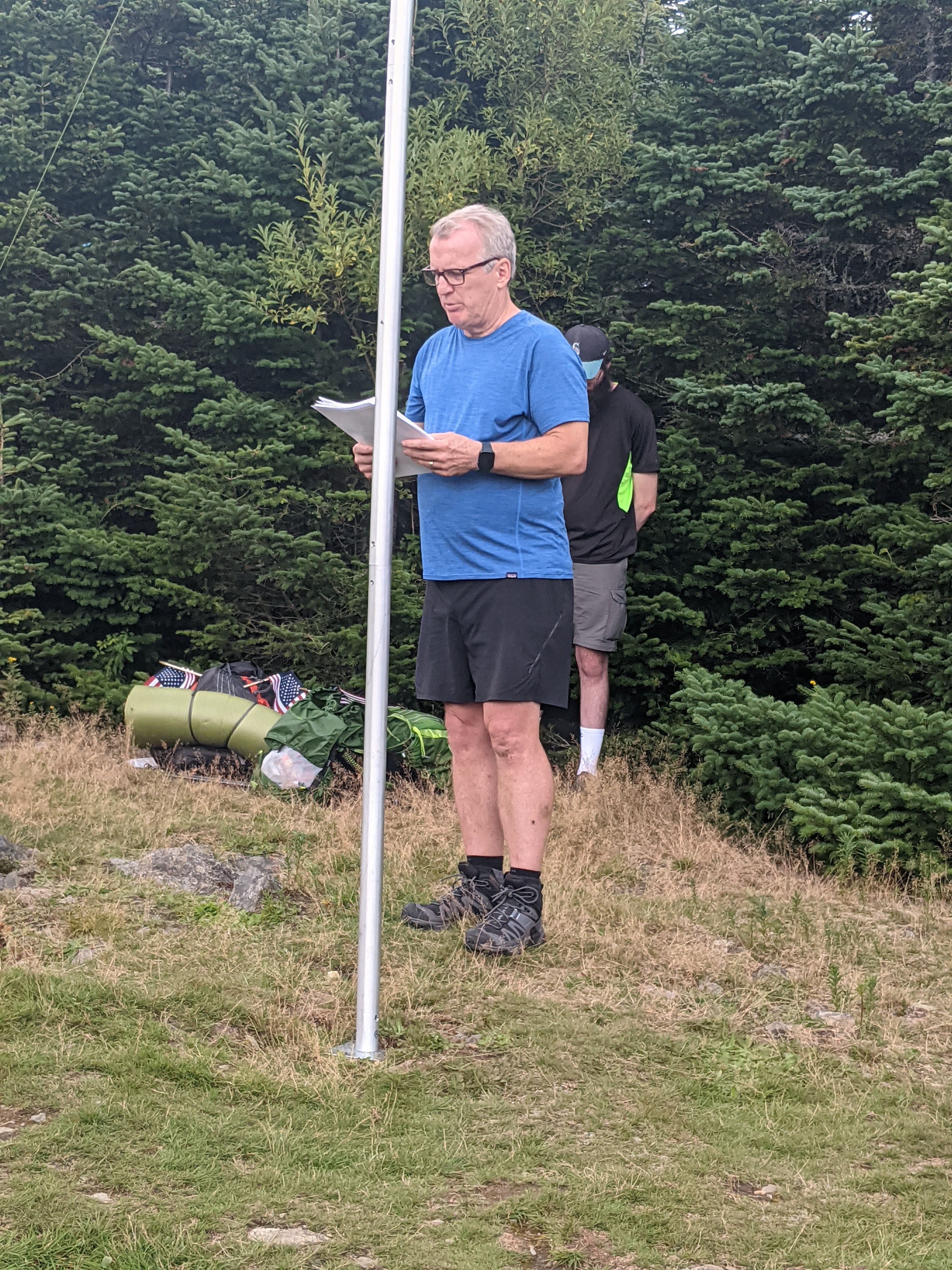
Once on the summit, we had a moving tribute by Boy Scout Troop 13 from Pepperell, MA and by a member of our group. Our group has been taking one or two names of the victims from each site and talking about what they did prior to that memorable day.
Boy Scout TroupOur group’s tribute with my son bowing his head in the background
We flew our flag from noon until 2 p.m. and the hiked down. It is always a great honor to be part of this tribute. Looking forward to the hike next year.
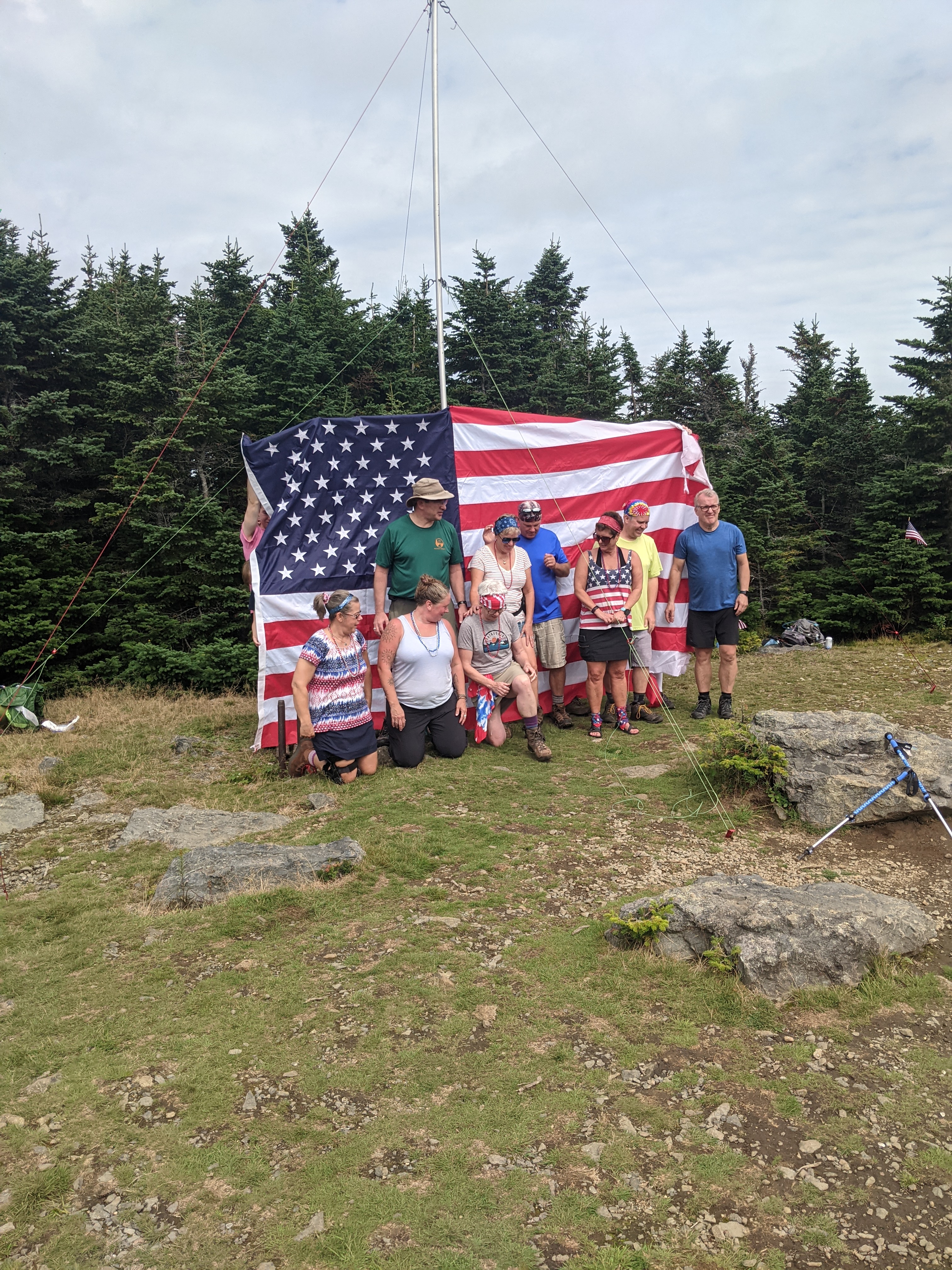
All ready to be displayed
If you in the area and up for a hike, please join me.
Group photo on summitSpreading out a flagGroup photo in front of a flag flown at the company I work at
“I don’t trust words. I trust pictures.” — Gilles Peress
Thank you for all the new views and likes from last week, it helps keep me inspired.
Here are a few mountains that I have seen over the last few years.
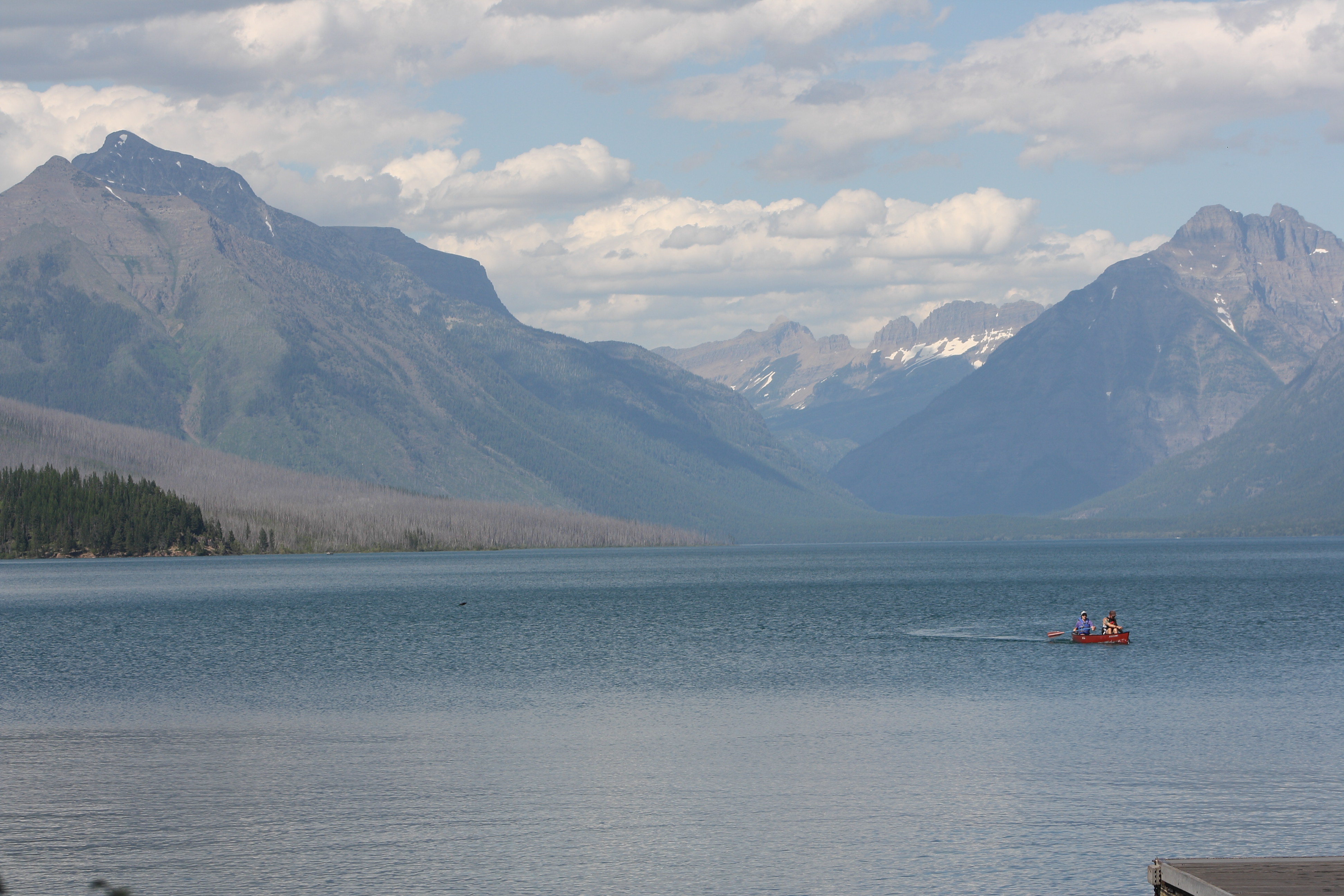
Sunday, 08/28/2022: Posted photo — Lake McDonald.
My first view at Glacier National Park in Montana. This was the start of my northern national park tour though the United States and Canada.
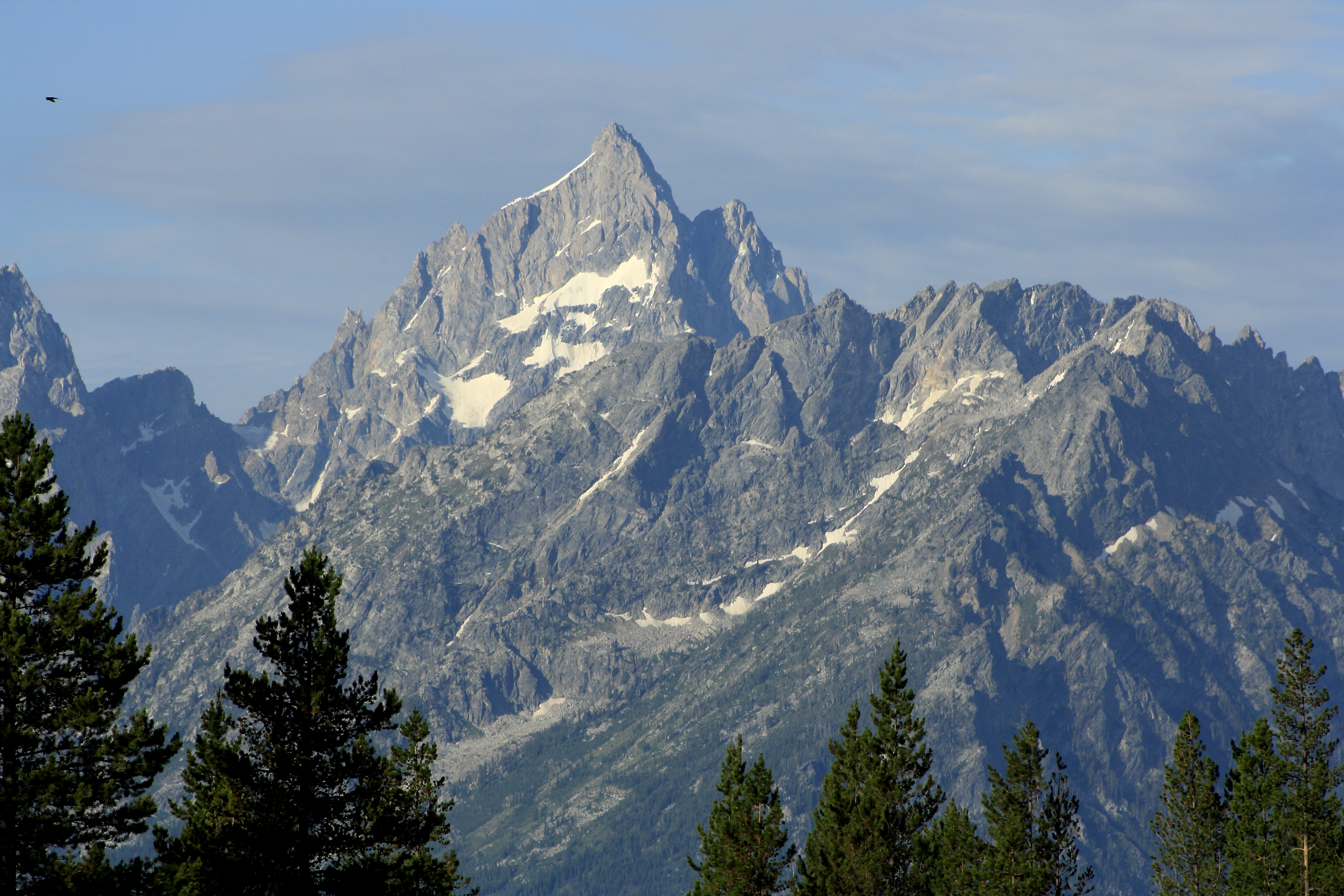
Monday, 08/29/2022: Posted photo — Camp View.
Here is the mountain view from our campsite in Glacier National Park. What a great view to start the day.
Tuesday, 08/30/2022: Posted photo — Lost Lake.
One of the destinations in our hiking adventures in Glacier National Park. We did some hiking along mountain goats and sheep. Most of the hike was in the snow. This hike took place in June.
This is the blue hour view from out campsite in Waterton Lakes National Park in Alberta Canada. A great place to camp with great views and many prairie dogs.
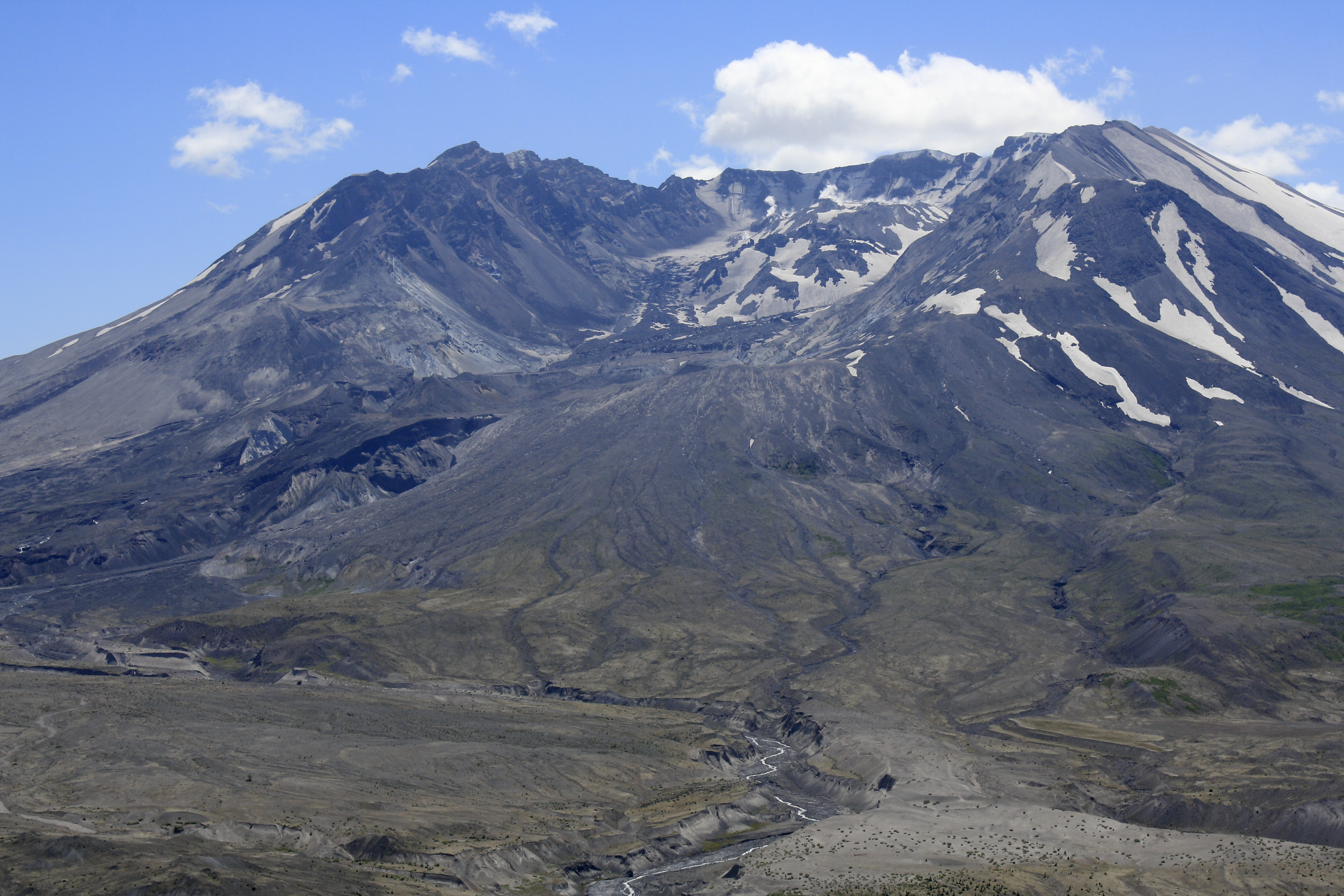
Thursday, 09/01/2022: Posted photo — Mount St. Helens.
I have visited Mount St. Helens three times over the last ten years. There has been a noticeable growth in the crater and in the forest around the mountain. It is very impressive to go from the dense forest around the mountain into the blast zone. The trees in the blast zone look like they are from the game pick up sticks, all facing away from the blast.
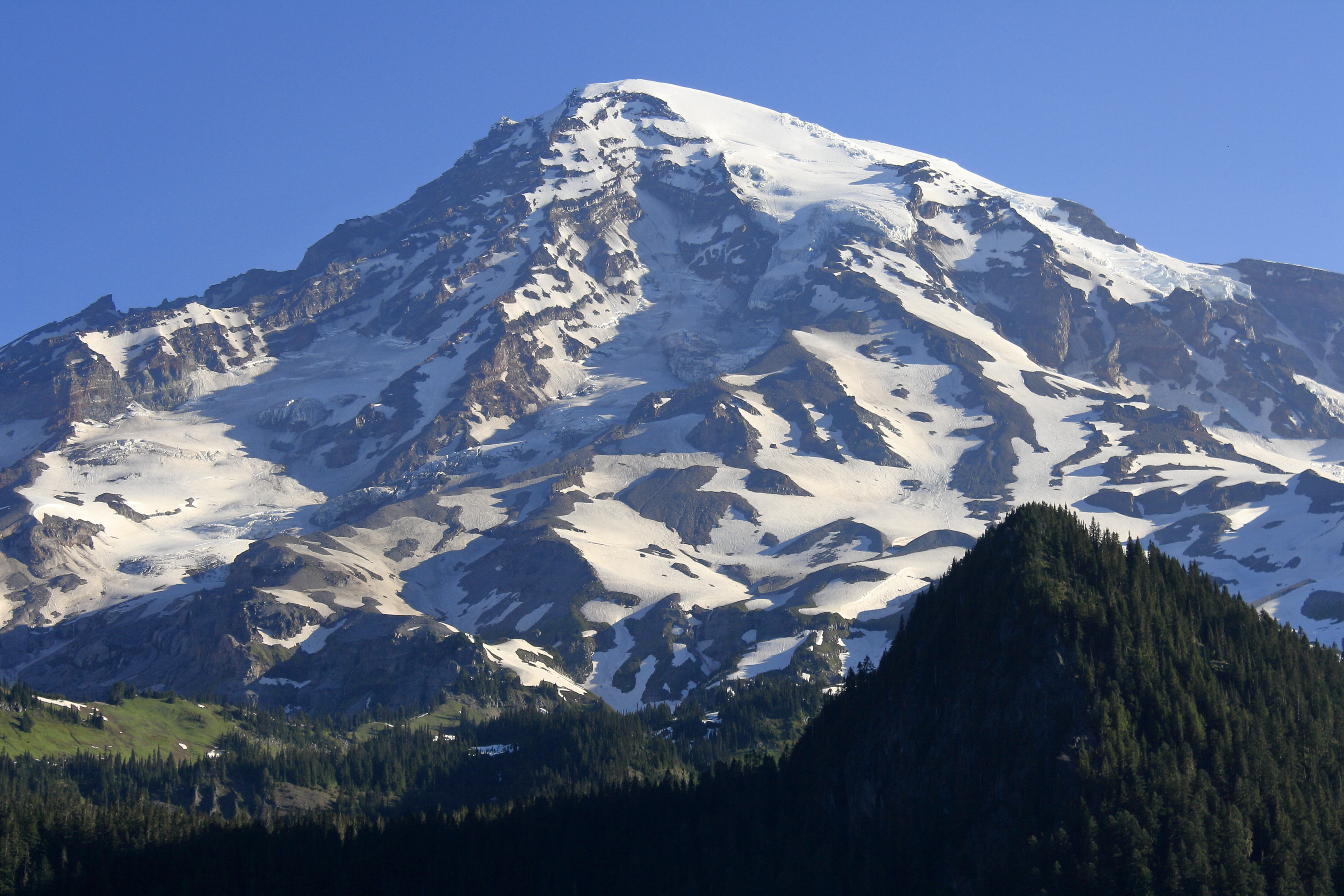
Friday, 09/02/2022: Post photo — Mount Rainier.
This has been the most impressive mountain I have seen so far. We did a few hikes on the mountain. Never to the summit, just middle elevation hikes on the snow and glaciers.
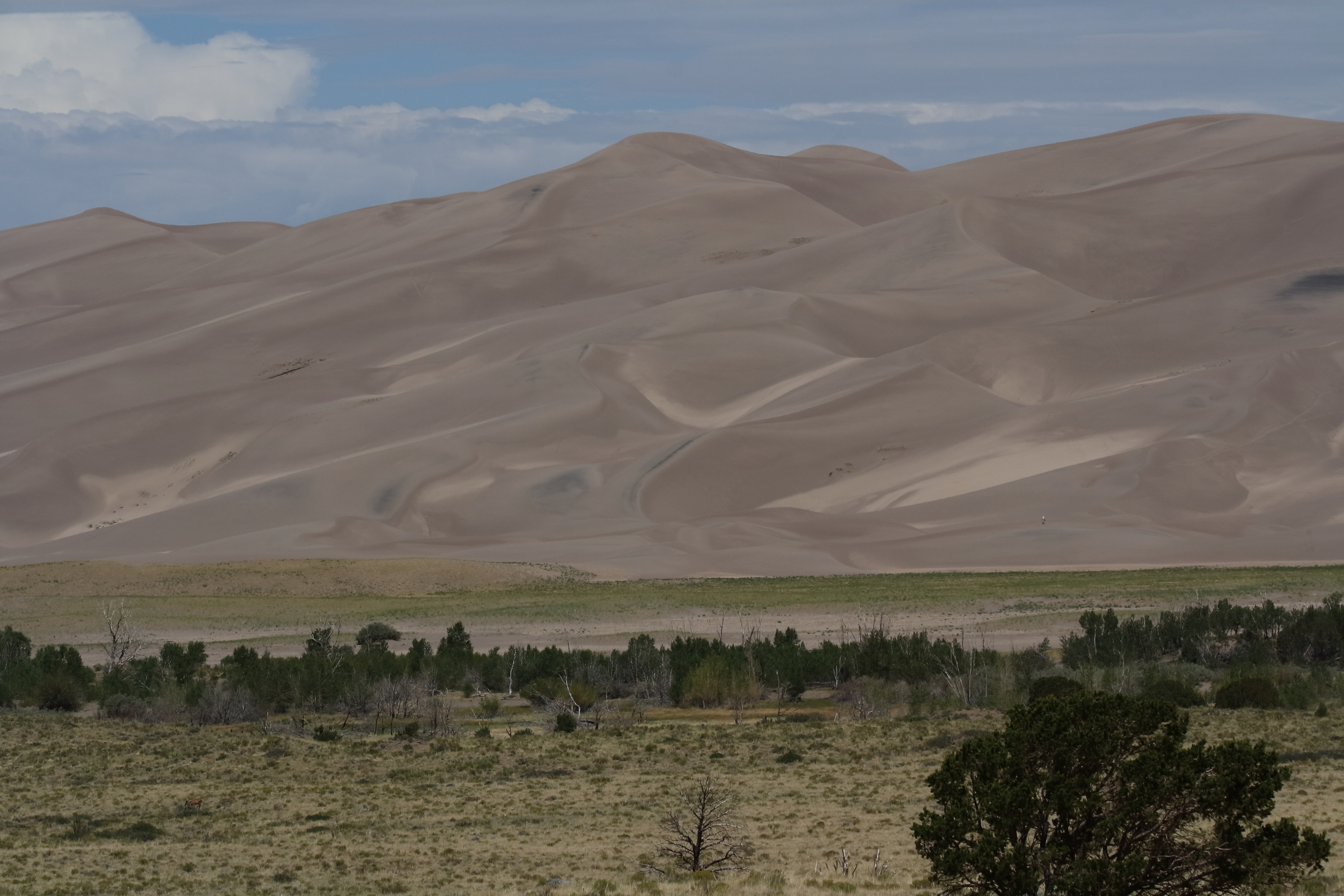
Saturday, 09/03/2022: Post photo — Mountain of Sand.
This is a different type of mountain. A mountain of sand in Great Sand Dunes National Park and Preserve in Colorado. This mountain keeps moving due to the weather. The sand is hot, and it feels like you are in the middle of a desert when you are hiking on the dunes.