Photographic Thoughts — 10/31/2021 to 11/06/2021

“I love the people I photograph. I mean, they’re my friends. I’ve never met most of them or I don’t know them at all, yet through my images I live with them.” — Bruce Gilden

Thank you for all the new views and likes from last week, it helps keep me inspired.

Sunday, 10/31/2021: Posted photo — Bells.

Settings: Samsung SM-G930V (Galaxy S7), ISO 320, f/1.7, 1/10 s, 4 mm

These are the bells that are rung at Saint Denis Church. I rang the bells this week since the deacon was on vacation. Brought me back to the days when I was and altar boy.
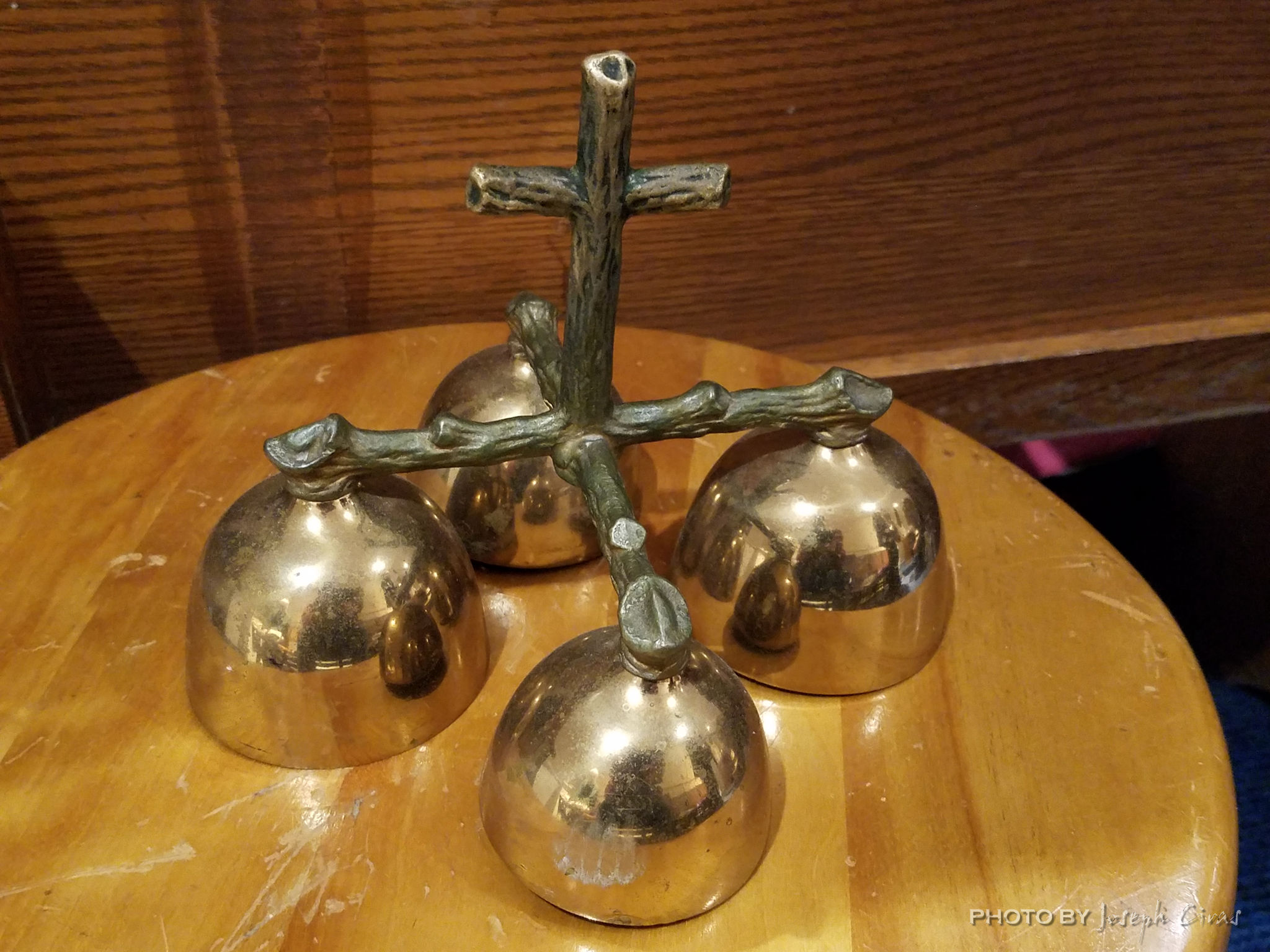
Bells were rung to alert the people to what they could not easily see or hear, so that they could attend to the important and solemn action at the altar. In the past, due to the architecture of a church, the people were physically separated from the altar by the choir — and in some cases a significant number of faithful were impeded from seeing the altar during Mass. So, a little before the consecration a server rings a bell as a signal to the faithful.

Monday, 11/01/2021: Posted photo — Pu’u’ula’ula.

Settings: Canon EOS 60D, ISO 100, f/9, 1/100 s, 32 mm.

Pu’u’ula’ula (Red Summit Hill) at Haleakalā National Park Makawao, HI on the island of Maui. This is the highest peak on the island at 10,023 feet. “The road to the cinder cone is paved and holds the world record for climbing to the highest elevation in the shortest distance. Starting from Kekaulike Avenue, the ascent is 34.11km (21.2 miles) long via 28 hairpin turns. Over this distance the elevation gain is 2.011 meters. The average gradient is 5.89%.” (https://www.dangerousroads.org/north-america/usa/3509-pu-u-ula-ula-red-hill.html) I did not mind the ride. I think the crazy people were the ones that rented bicycles and drove down the hill.

We attempted to get to the peak for sunrise since our initial plan was to spend the night on Maui. We had our tickets in hand to get into the park before it officially opened. Due to Hurricane Lane, we were only on Maui for one day since our cruise ship left Honolulu two days late due to the port being closed. We were able to drive up to the summit later in the day to take in the view. The view was wonderful. It was great to be above the clouds.

If you go to Maui, you should go to Haleakalā National Park for the sunrise. I hear it is spectacular.

Tuesday, 11/02/2021: Posted photo — Foliage Again.

Settings: Canon EOS 60D, ISO 100, f/7.1, 1/320 s, 32 mm.

I took a photo of these set of trees a few weeks ago. I did so since I liked the brightness of the sun against the past colors of the tree. We are now past the colorful foliage season and into the fall browns.

Before long, all those leaves will “fall”, and someone will need to rake them up. Fortunately, it will not be me since these trees are not on my property.

If you cannot tell, this photo was done with an HDR, or High Dynamic Range, process. This is a single photo that I made into an HDR photo. I took the photo and processed it by stepping up and stepping down the exposure to blend into an HDR photo. The proper way of creating a HDR photo is to take three or more consecutive shot with your camera at the different exposure levels and then blending them together. HDR is a technique used to reproduce a greater range of luminosity than that which is possible with standard photographic techniques. This is done when the lighting is not that great for a single photo.

Wednesday, 11/03/2021: Posted photo — Stacked Wood.

Settings: Canon EOS 60D, ISO 3200, f/7.1, 1/50 s, 42 mm.

We had two of the five cords of wood I ordered delivered to the house on Monday. My son did a great job stacking over a cord in the woodshed. I stacked the remaining wood in the woodshed last night. This stack of wood is what is remaining from last year’s supply. We have been burning some in the last weeks to get the chill out of the house. When we get into the burning season, we will be mixing the old with the new wood to get a more efficient heat output.

This photo is a yearly photo that I take of our wood. It serves as documentation to when wood was ordered each year. It just happened that this wood was delivered 364 days after my last wood delivery.
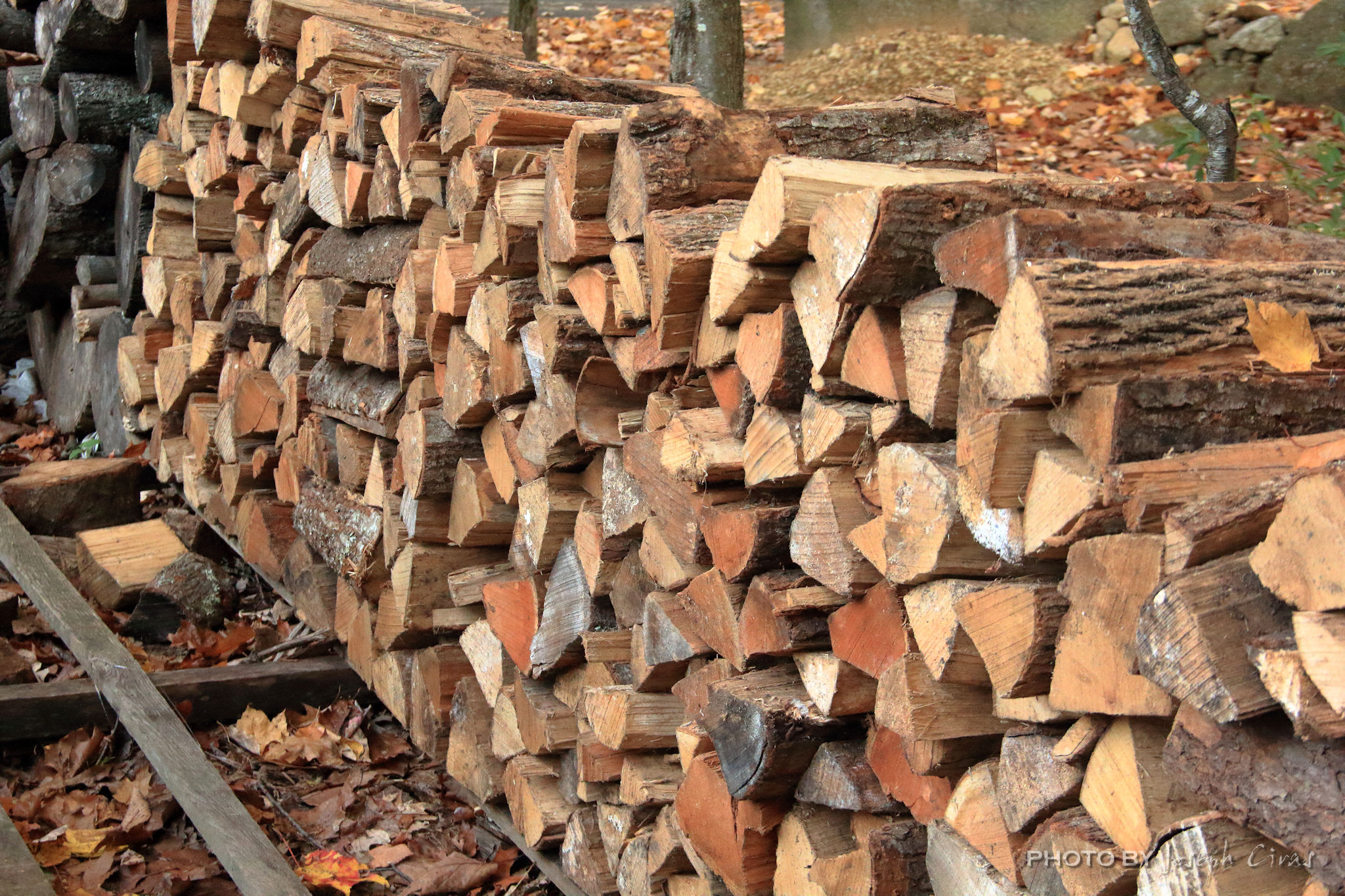
Three cords of wood will be delivered to the house sometime soon and I will all need to be stacked in the woodshed. My woodshed is designed to hold four cords. A cord of wood is four feet wide, 4 feet high, and eight feet long. It has a volume of 128 cubic feet. The wood that I get is cut at 18 inches long to fit in out wood stove.

Thursday, 11/04/2021: Posted photo — Orion.

Settings: Canon EOS 60D, ISO 3200, f/11, 15 s, 18 mm.

Orion is the brightest and most beautiful of the winter constellations. Some of its stars, including Betelgeuse and Rigel, are among the brightest stars.

Orion is clearly visible in the night sky from November to February. Orion is in the southwestern sky if you are in the Northern Hemisphere or the northwestern sky if you are in the Southern Hemisphere. It is best seen between latitudes 85 and minus 75 degrees. Its right ascension is 5 hours, and its declination is 5 degrees.

There are several versions of the myth of Orion, but one of the more common iterations is that Orion proclaimed himself to be the greatest hunter in the world, much to the dismay of Hera, the wife of Zeus. She had a scorpion kill him, and Zeus put Orion into the sky as consolation. In another version, Orion is blinded for raping Merope, a granddaughter of the god Dionysus. He has to travel East to seek the sun’s rays to recover his sight.” (https://www.space.com/16659-constellation-orion.html)

I saw Orion yesterday morning when I was going into work. Today I decided to take a photo of the constellation. I knew at the time that I took this photo that I would not be the best one of a constellation since I was going to take it in the parking lot at work. (For your information, this is the third constellation photo that I have taken.) Today is the new moon so the conditions would be better to take this photo. I should have taken it in a darker location. Look in the bottom near the center. You can see the belt clearly.
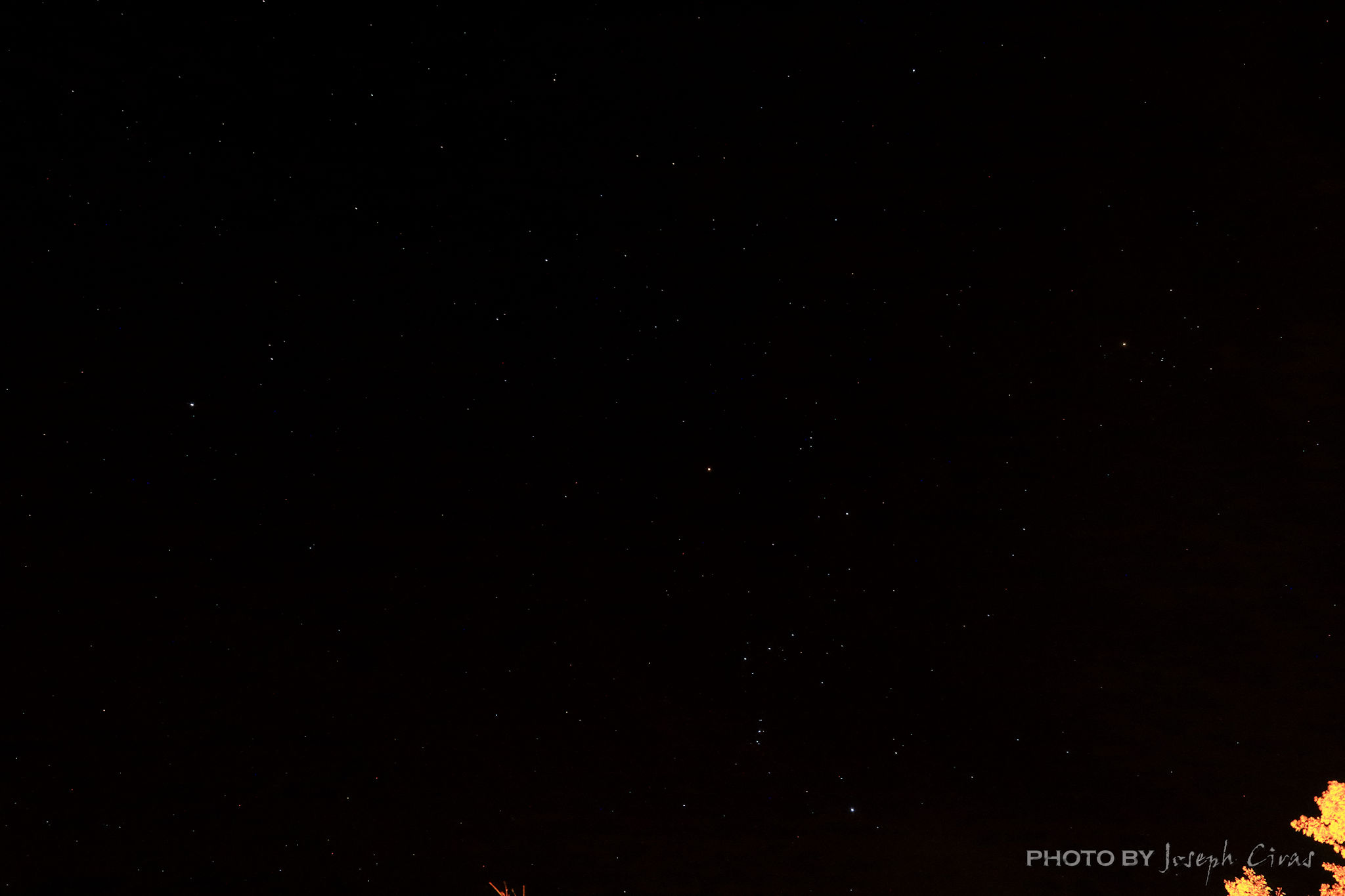
Looking at the setting for my shot, it seems that I did not change the aperture setting that I used from my last moon photo. The f/11 setting is too small. I should have used a setting of f/3.5 to get more light in my photo. With a larger aperture setting, I could have reduced my ISO value taking noise out of the photo.

Friday, 11/05/2021: Post photo — Mouse Eye View.

Settings: Canon EOS 60D, ISO 100, f/3.5, 1/13 s, 18 mm.
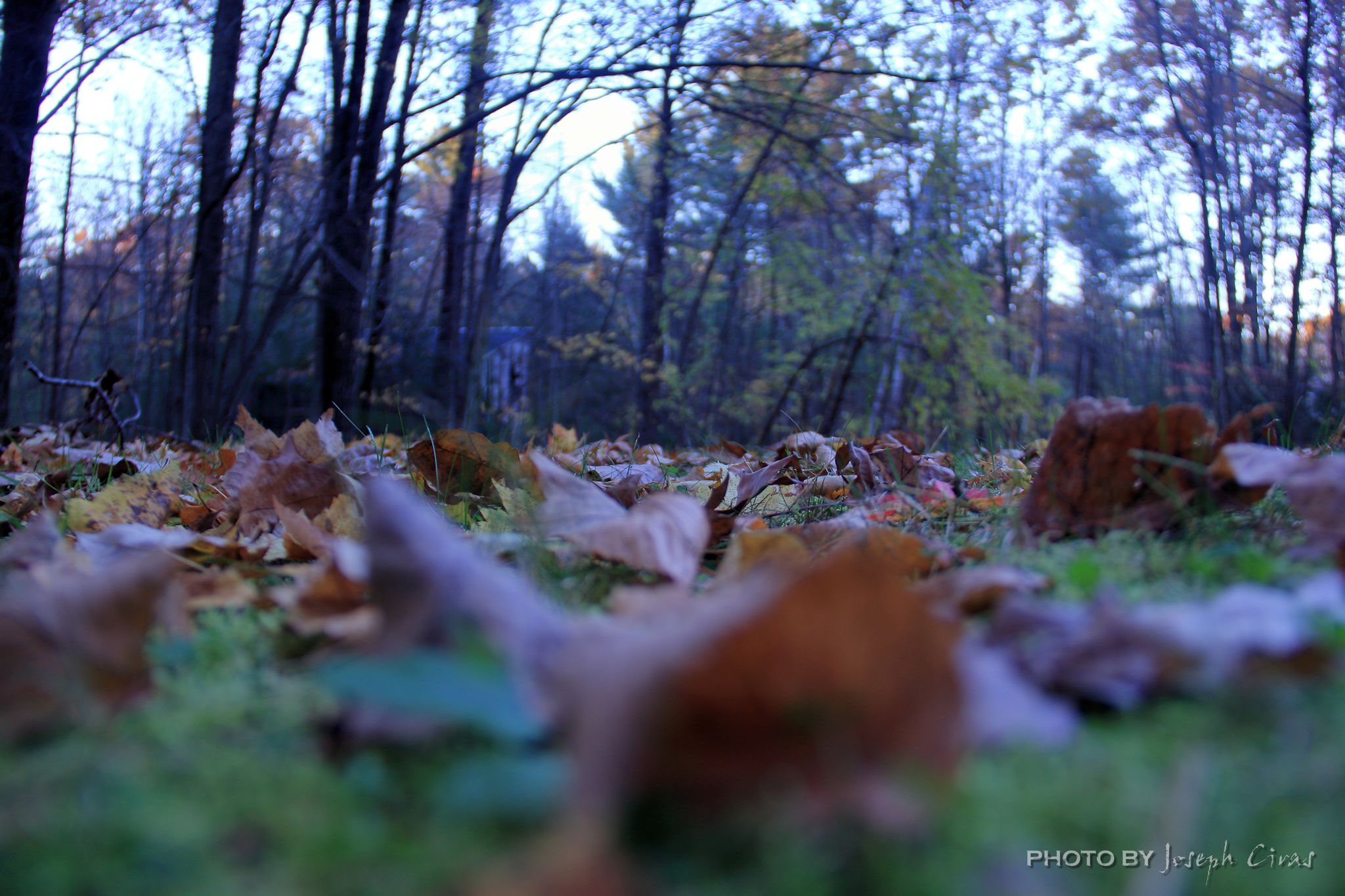
This is what our yard might look to a mouse. I put my camera down in our lawn and took this shot. I will be cleaning up these leaves soon. There are still more to fall, so I just wait a day or two.

Saturday, 11/06/2021: Post photo — TBD.

Settings: TBD.

I have not decided what to post today. Come back later today or tomorrow to see my updated post.

That is all for now. Until next week, be safe.

For more photo of other project I have work, visit my website: https://photobyjosephciras.weebly.com or visit me on Facebook at https://www.facebook.com/PhotobyJosephCiras/.
Photographic Thoughts — 10/24/2021 to 10/30/2021

“You can look at a picture for a week and never think of it again. You can also look at a picture for a second and think of it all your life.” — Joan Miro

Thank you for all the new views and likes from last week, it helps keep me inspired.

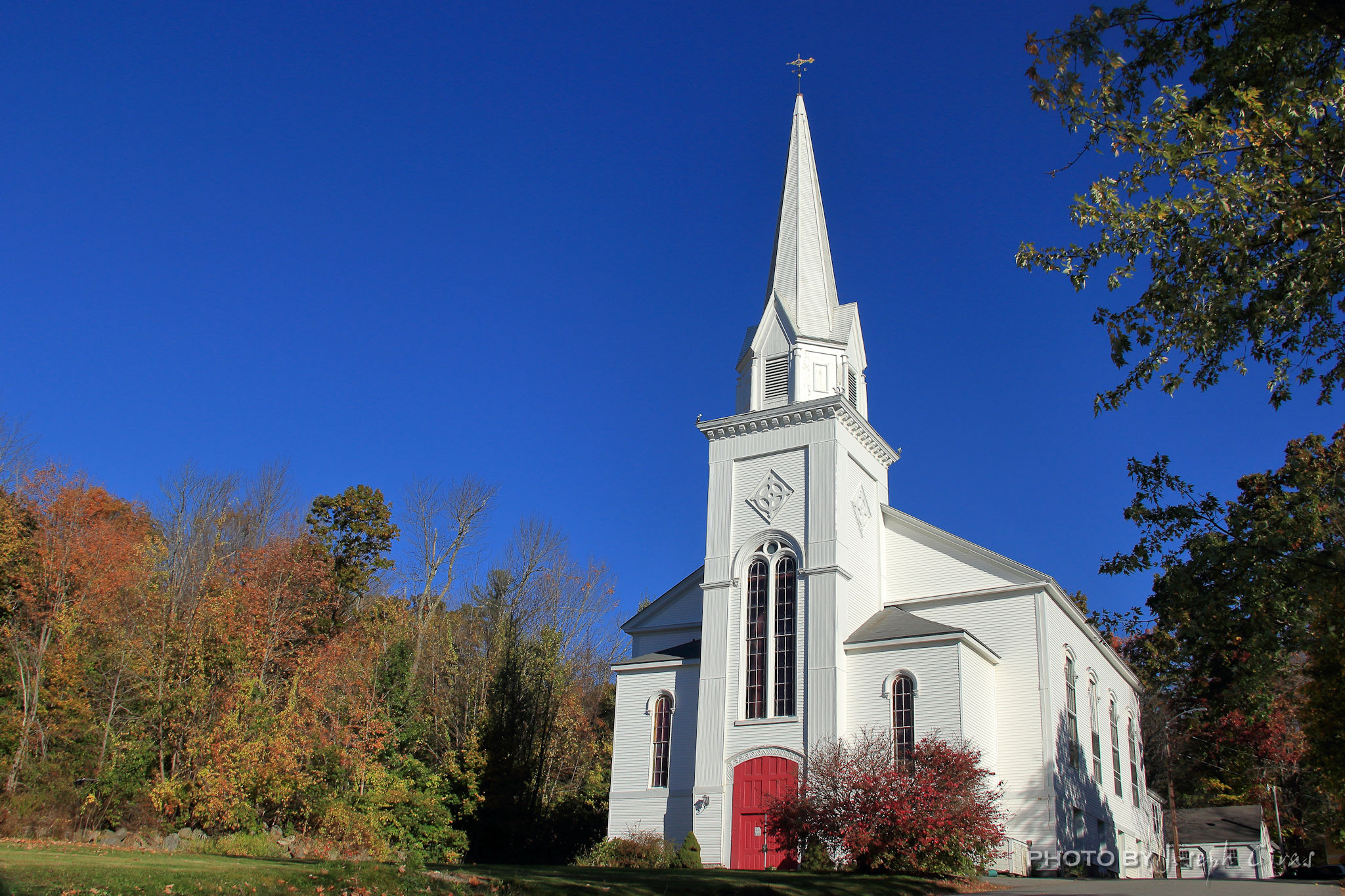
Sunday, 10/24/2021: Posted photo — Ashburnham Community Church.

Settings: Canon EOS 60D, ISO 100, f/7.1, 1/640 s, 18 mm.

The Ashburnham Community Church is now home to the New Dawn Arts Center.

Information off the New Dawn Arts Center website (www.newdawnarts.org). The church was constructed in 1834, the steeple houses a church bell cast by a former apprentice of Paul Revere, and the 1886 pipe organ was installed by Boston organ builder George Hutchings. The church was part of The Underground Railroad.

The Community Church was sold to the Arts Center a few months ago. The congregation of the church was getting smaller so they could not afford to keep the church in operation. The Arts Center is allowing the church to hold services there and all other outreach services are still running at the church, such as a food pantry.

New Dawn Arts Center at the Ashburnham Community Church

I just like the look of churches with their steeples and stained glass. When I was going to church, I was drawn to the contrasting white church and the clear blue sky. The foliage looked to be past, but it did show well in this photo. The church that I belong to is across the street from the Community Church. I have taken photo of this church before and will again since I like its architecture.

Monday, 10/25/2021: Posted photo — Mountain View.

Settings: Canon EOS 60D, ISO 100, f/6.3, 1/80 s, 39 mm.

What a great view from the summit today! As you can see, the summited was fogged in. I had to use my map and compass to find my way down part of the trail. Using a map and compass on Wachusett Mountain is not very common since the fog has not been this dense in a very long time and people look at me strangely when I use them in good weather. I could see the trail ahead of me tonight. I was just verifying the bearings at each trail junction just so I did not head back up the mountain. It was good practice for me.

Fog on the mountain

Over the past few months, I have been taken the bearings at each junction and verifying elevations and coordinate locations with my trail map program and with the paper trail map of the mountain. I am in the process of putting together a detailed map of the mountain to help new and experienced hikers. Map and compass skills are essential to survival. Using these tools on a well hiked mountain is great for learning this skill.

The error most people will make is not accounting for magnetic declination (14° West on Wachusett Mountain). Magnetic declination is the angle between true north and magnetic north. Remember “West is best and East is least.” You add the declination to your reading if the declination is to the West or subtract the declination from the reading if it is to the East. I can adjust my compass for declination prior to use so I do not have to do the math if I am in a dangerous situation. Not all compasses can be adjusted. I would suggest spending a little more money on a compass that can be adjusted. It could save your life. Remember to always practice this skill in a known location prior to any “big” hike. Do not rely on the GPS on your phone.

Tuesday, 10/26/2021: Posted photo — Flowers.

Settings: Samsung SM-G930V (Galaxy S7), ISO 80, f/1.7, 1/60 s, 4 mm

Part of the opening paragraph from the novel “Paul Clifford” by Edward Bulwer-Lytton states, “It was a dark and stormy night; the rain fell in torrents …” It was a dark and stormy day today. Heavy rain, high winds and fog were the norm. I was going to post the following photo for today, a photo of wet foliage.

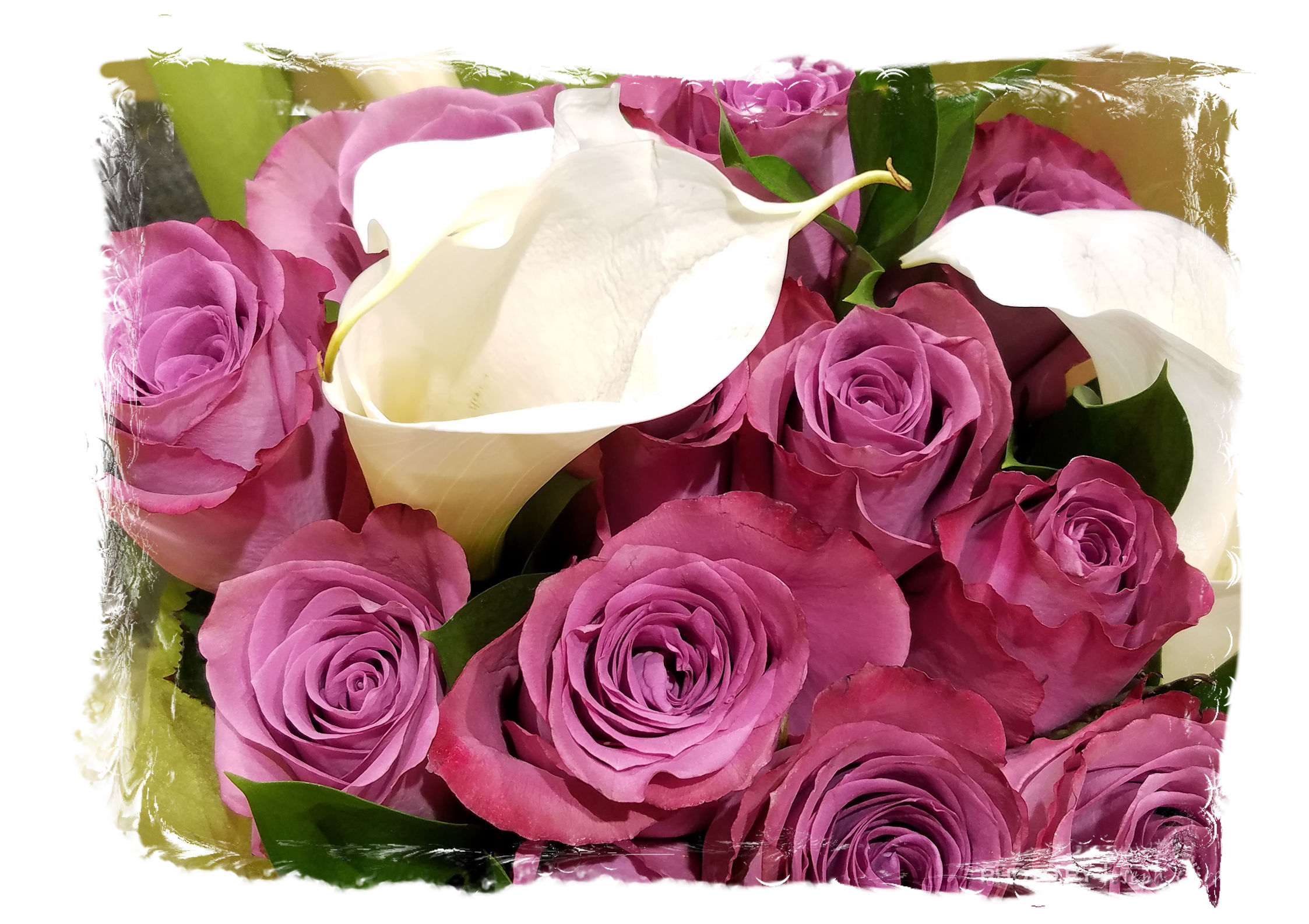
Bouquet to cheer up the day

I went grocery shopping before I posted my photo and saw the flowers that I posted. I thought of how flowers put smiles on people’s faces and wanted to brighten up this gloomy day. Here is another photo of some more flowers that I took today during my shopping trip to brighten your day.

Secondary post of flowers for the day
The photo that I did not post

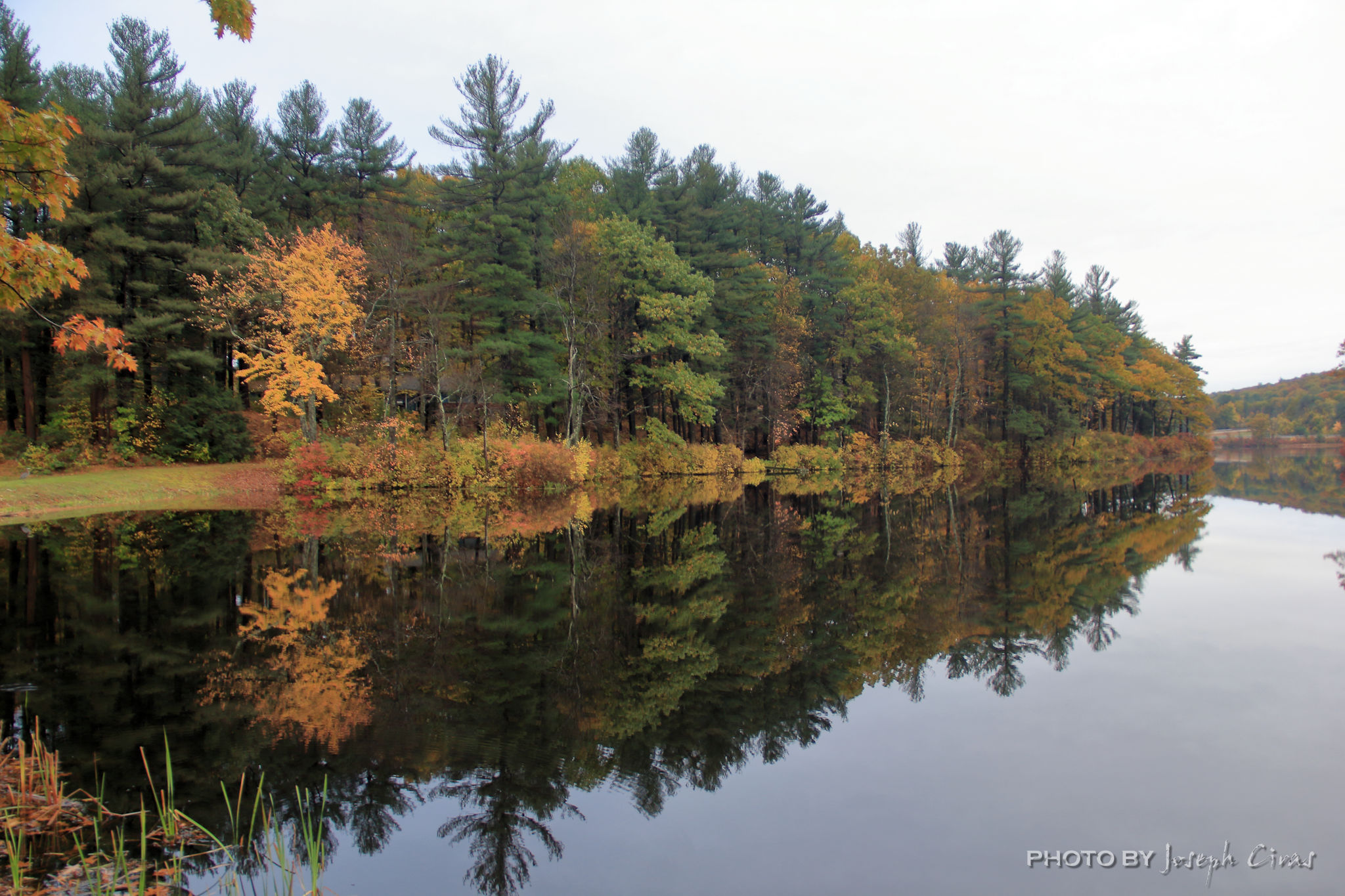
Wednesday, 10/27/2021: Posted photo — Reflection.

Settings: Canon EOS 60D, ISO 200, f/3.5, 1/25 s, 18 mm.

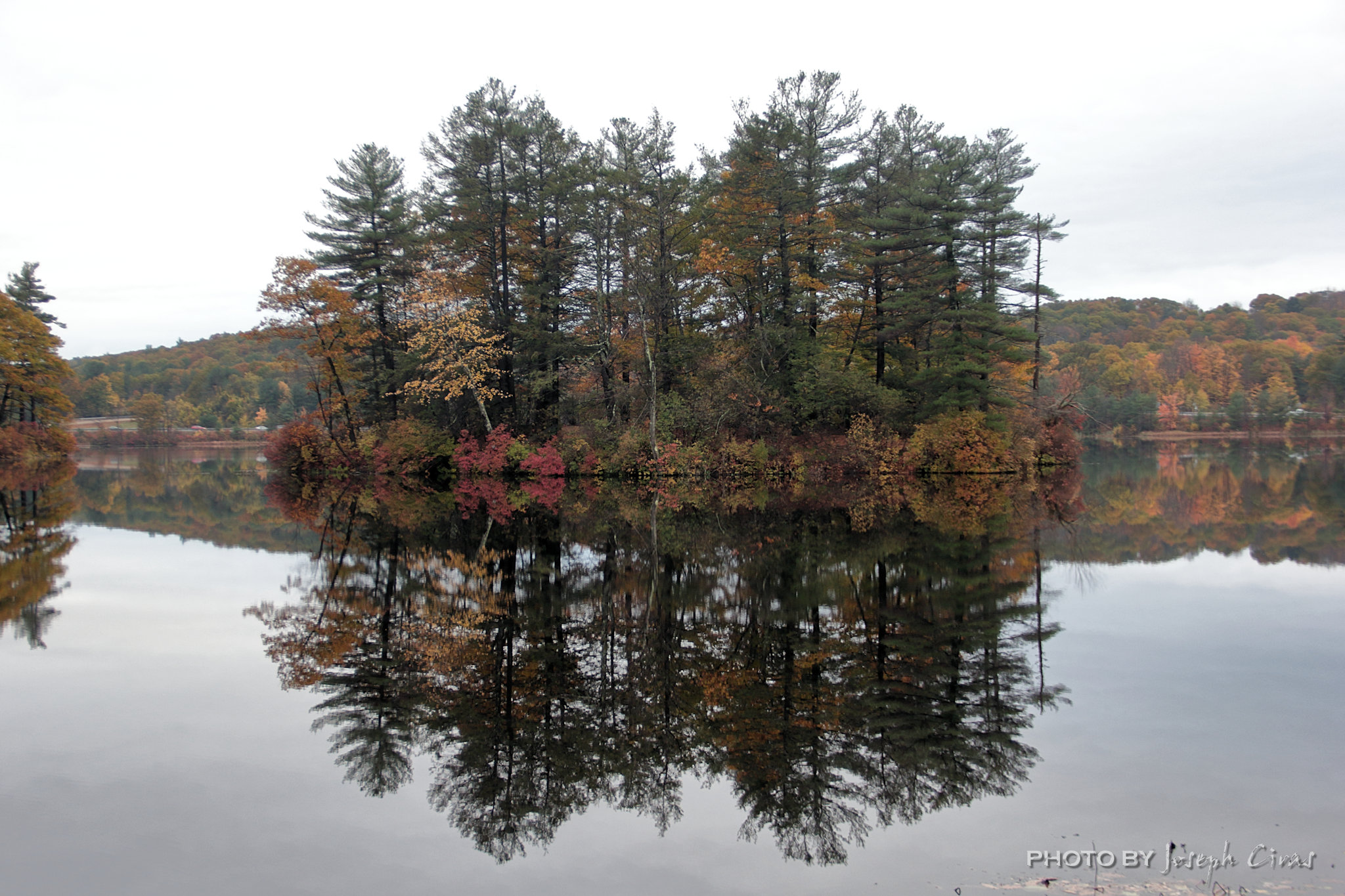
I was not intending to take this photo. I was intending to post a photo from either my trip to Alaska, or my trip to Hawaii, since the weather still is a little gloomy.

While on my way home from work, the reflection of the trees on Round Meadow Pond caught my eye. The lighting was iffy, but I made the quick decision to go to one of my favorite photographic locations and see if there was an opportunity for a reflection photo in the smooth water.

Reflections on the shoreline

I first took a photo of the island and its reflection. I did not quite like it lack leaves on the tree. It made the island look unattractive and scraggly. Then I took a photo of the trees along the shoreline. Trees along the shore usually take a good photo. I was happier with this photo. I was not excited about this photo, just happier than I was with the island photo.

The island shot I did not like

Sometimes it is better to post a bad photo from that day, then a good photo from the past for historical reference.

Thursday, 10/28/2021: Posted photo — Weather Front.

Settings: Canon EOS 60D, ISO 200, f/7.1, 1/800 s, 36 mm.

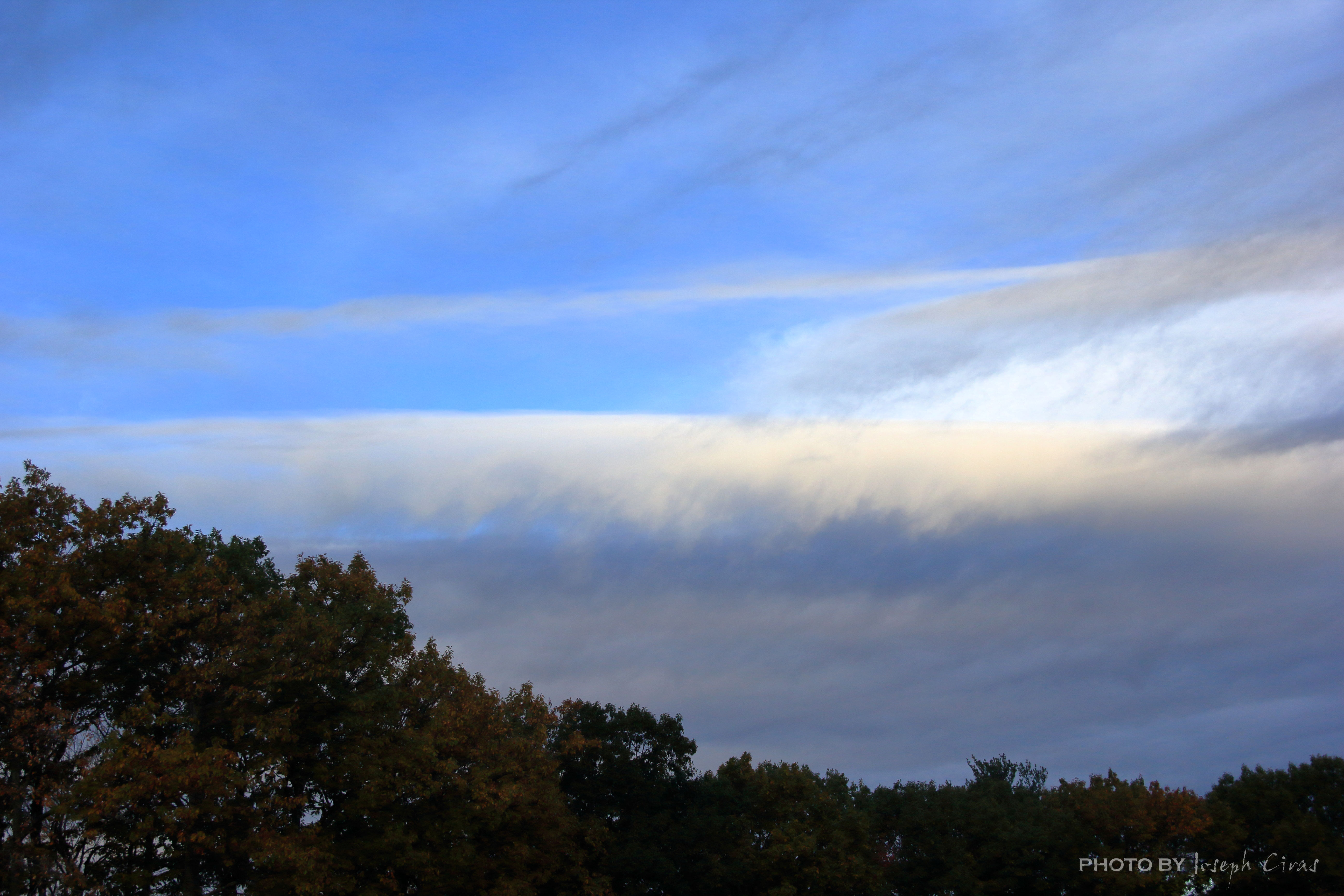
Weather front in the morning

A weather front is the transitional zone between two different air masses. An air mass a body of air with horizontally uniform temperature, humidity, and pressure. The high-pressure side of the front is the side with no clouds. In a high-pressure system, the warmer air is flowing downward. The low-pressure side of the front is the one with the clouds. In a low-pressure system, cold air is flowing upward causing condensation around dust particles in the sky, forming clouds and often precipitation. In this photo, the low-pressure system is moving out of the area. As the high-pressure system is moving in, the air temperature will be slightly higher that it was yesterday. A simple fact in physics is that if air pressure increases, the temperature must increase and if the air pressure decreases, the temperature will decrease. This explains why the air gets colder at higher altitudes, where pressure is lower.

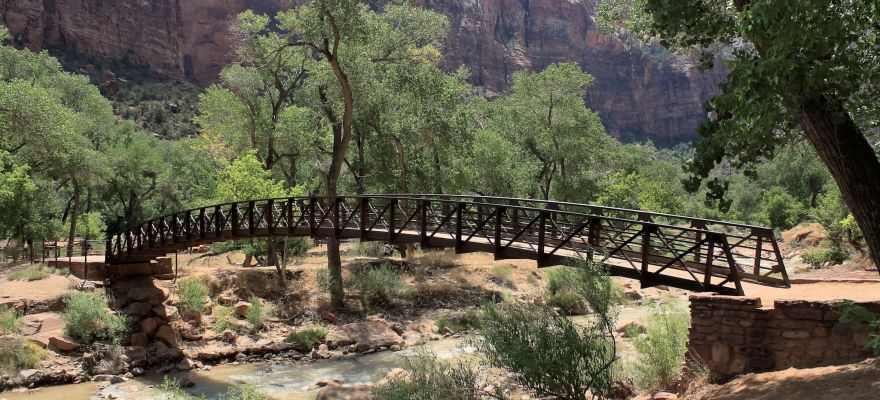
Friday, 10/29/2021: Post photo — Footbridge Over the Virgin River.

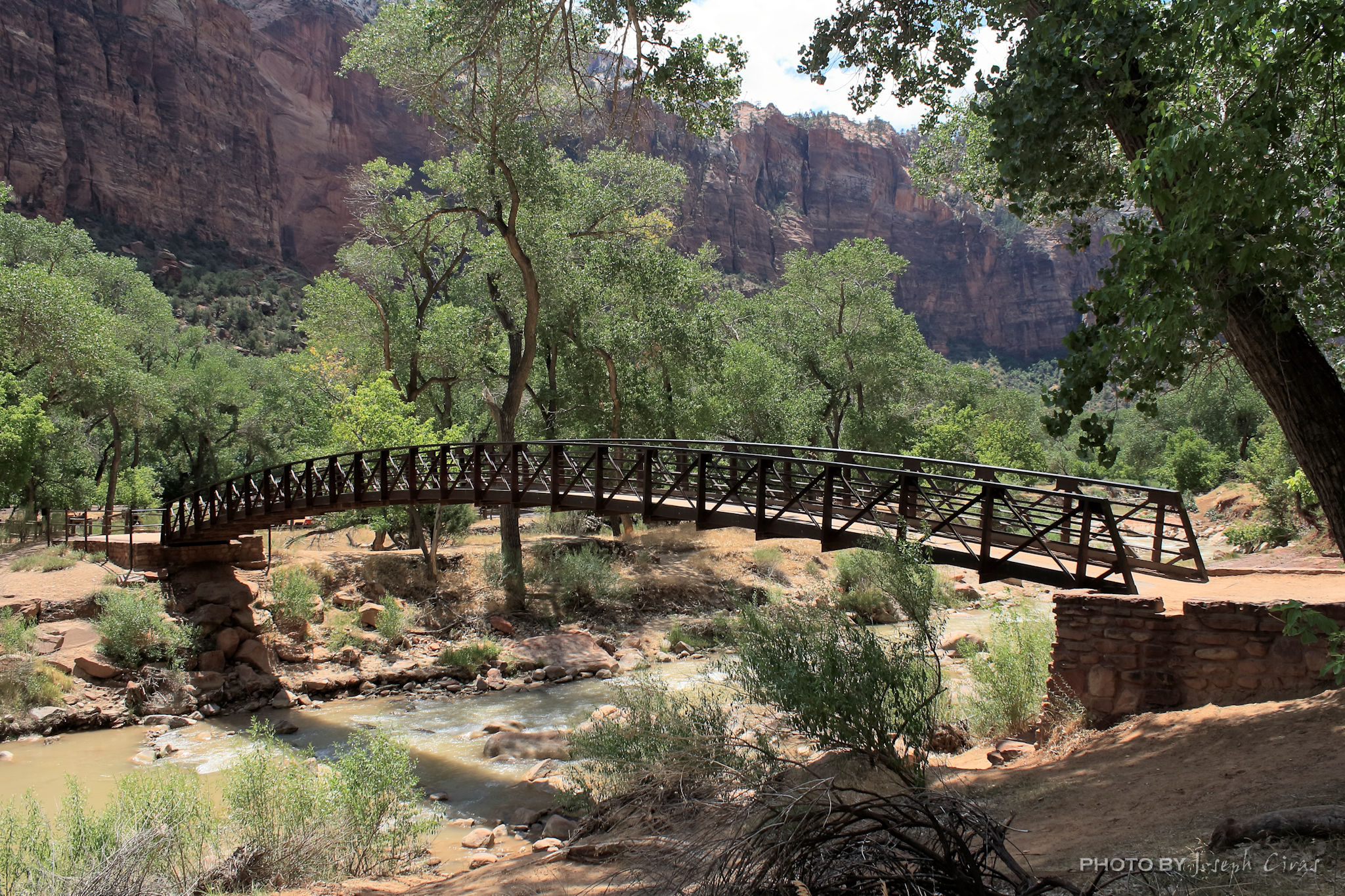
Settings: Canon EOS DIGITAL REBEL XS, ISO 200, f/9, 1/200 s, 18 mm.

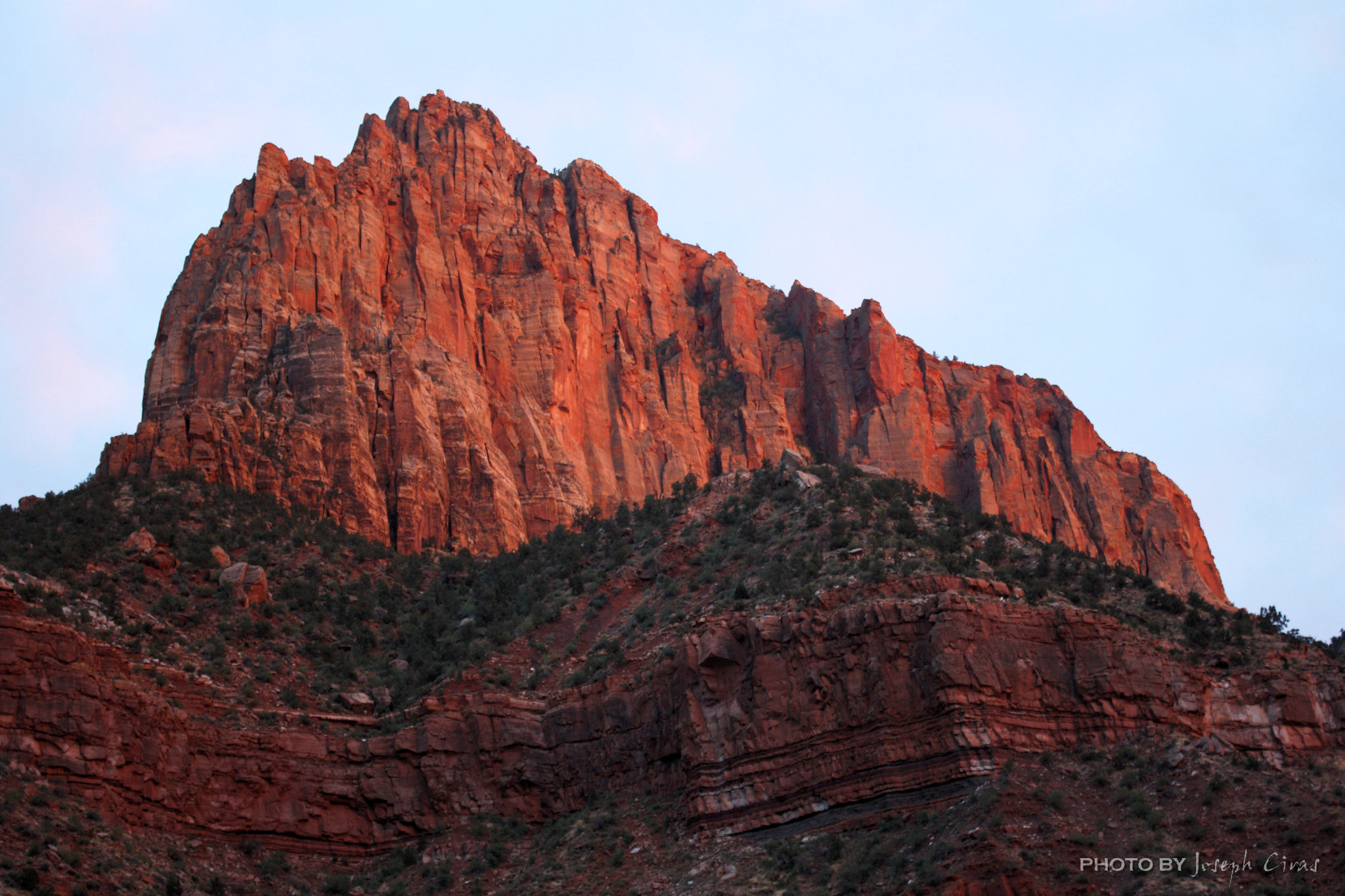
“In the summer of 1909, President of the United States William Taft declared the area as federally protected and officially named it Mukuntuweap National Monument, deciding to go with the Paiute name rather than the one chosen by Utah’s early pioneers. State residents were not pleased, to say the least, with President Taft passing over the name they had originally chosen for the area. In 1918, after almost a decade of grievances, the assistant director of the recently formed National Park Service, Horace Albright, changed the name of the park to Zion National Monument.” (https://zionnationalpark.com/zion-national-park/zion-national-park-history/)

Footbridge over the Virgin River in Zion National Park

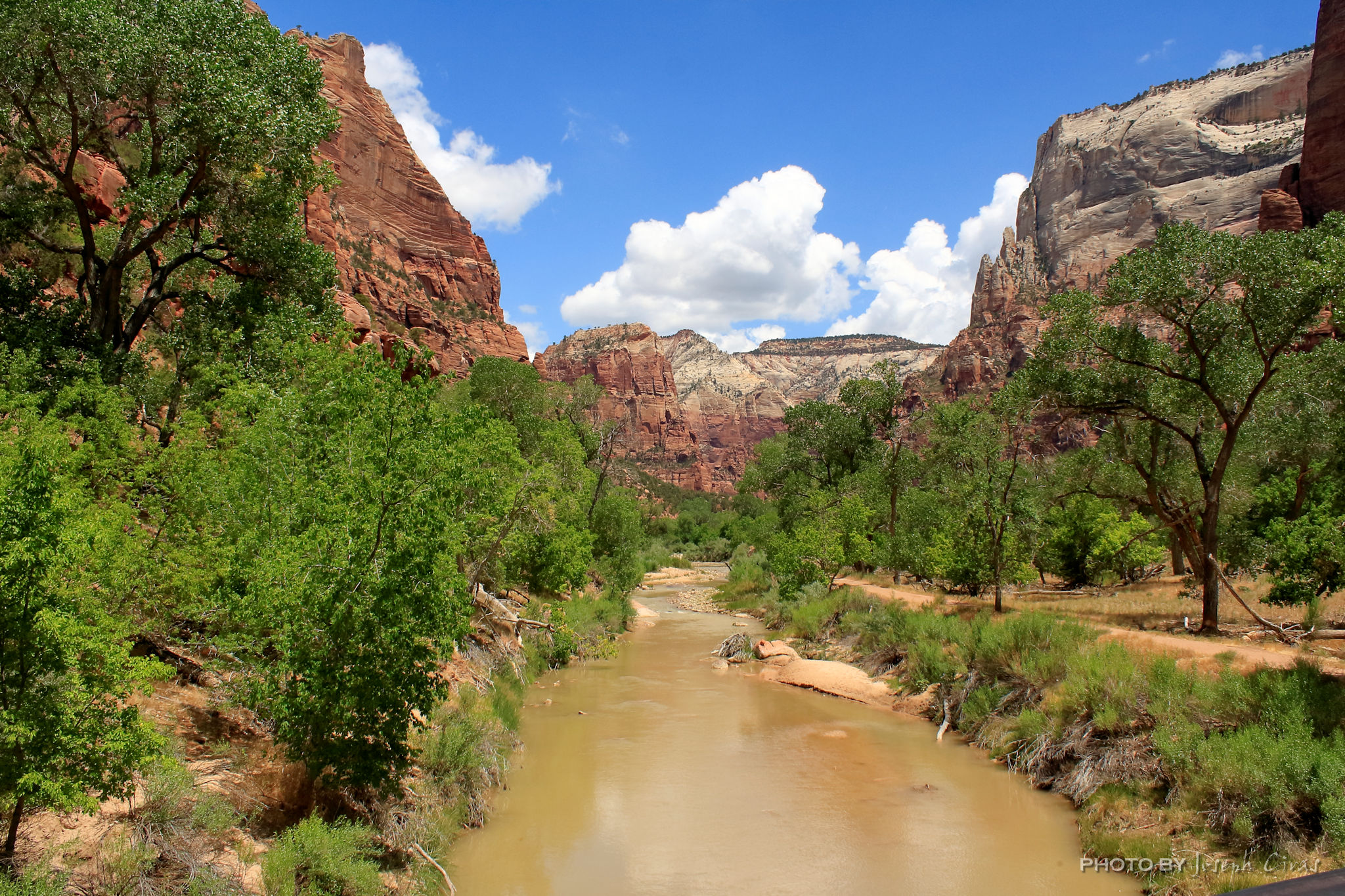
Here is some information about the Virgin River. The Virgin River and its tributaries run through Zion National Park causing the erosion that continues to carve and shape Zion National Park. The North Fork of the Virgin River begins north of Zion National Park at Cascade Falls, near Cedar City, Utah, where it drains out of Navajo Lake in Dixie National Forest at 9,000 feet above sea level. The East Fork of the Virgin River originates above Long Valley in western Kane County, Utah. Both the North and East Forks of the Virgin River run through the park and empty into Lake Mead at about 1,000 feet above sea level, where it joins the Colorado River.

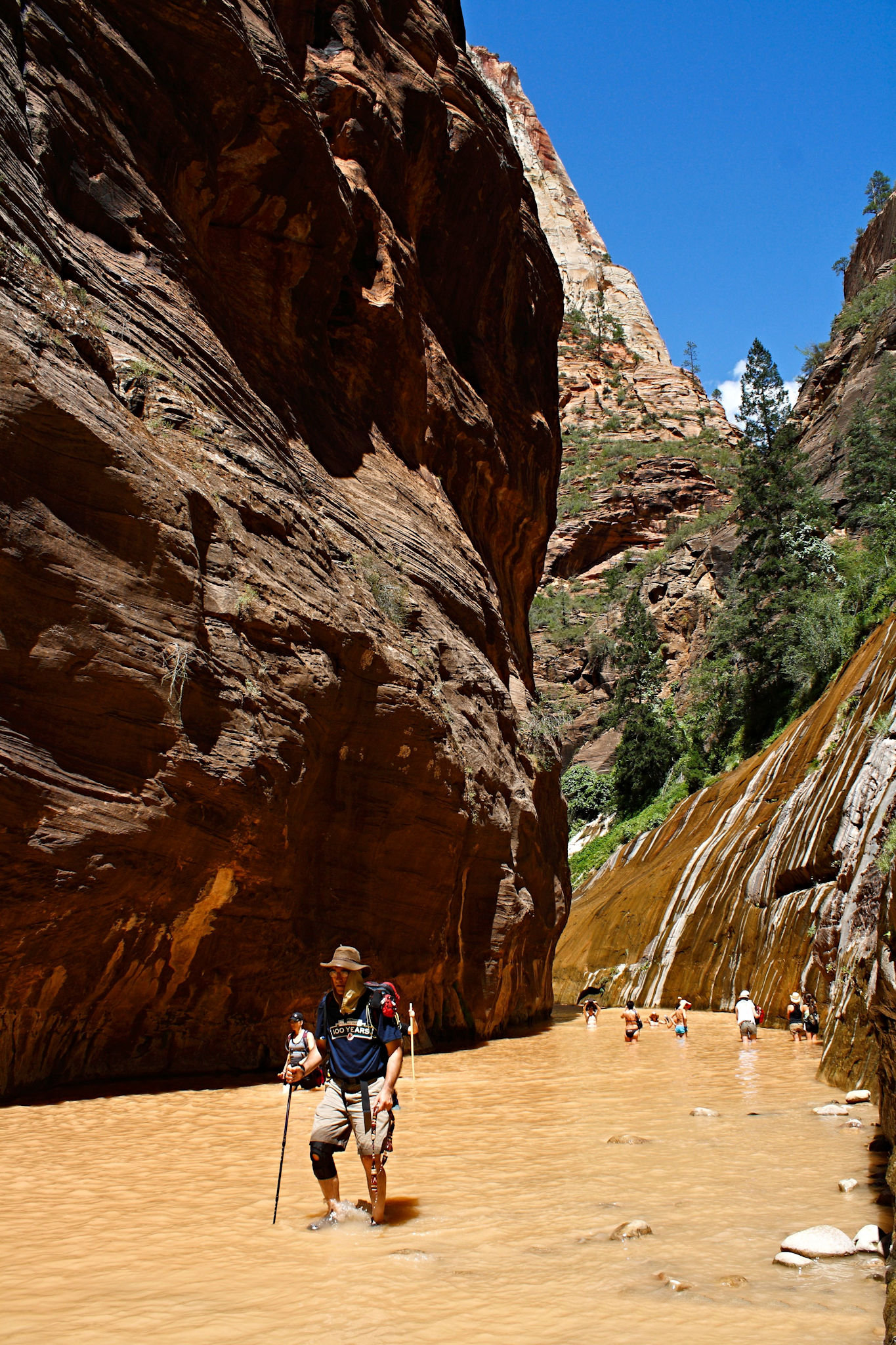
Our time at Zion National Park included camping and hiking. We also had one of the better star filled night skies on our trip. One of the hikes we did was in The Narrows. A great place to hike in the heat of the summer. The Narrows is the narrowest section of Zion Canyon. The gorge has walls up to a thousand feet tall and the Virgin River is just twenty to thirty feet wide in some locations. The hike through The Narrows requires hiking in the Virgin River. The river when we hiked was a milky color so you did not know how deep the water would be in your next step. You need to be very careful of flash flooding in The Narrows since there is little to no room of escape due the height of the gorge walls.

Saturday, 10/30/2021: Post photo — Maple Leaf.

Settings: Canon EOS 60D, ISO 200, f/5.6, 1/60 s, 100 mm.

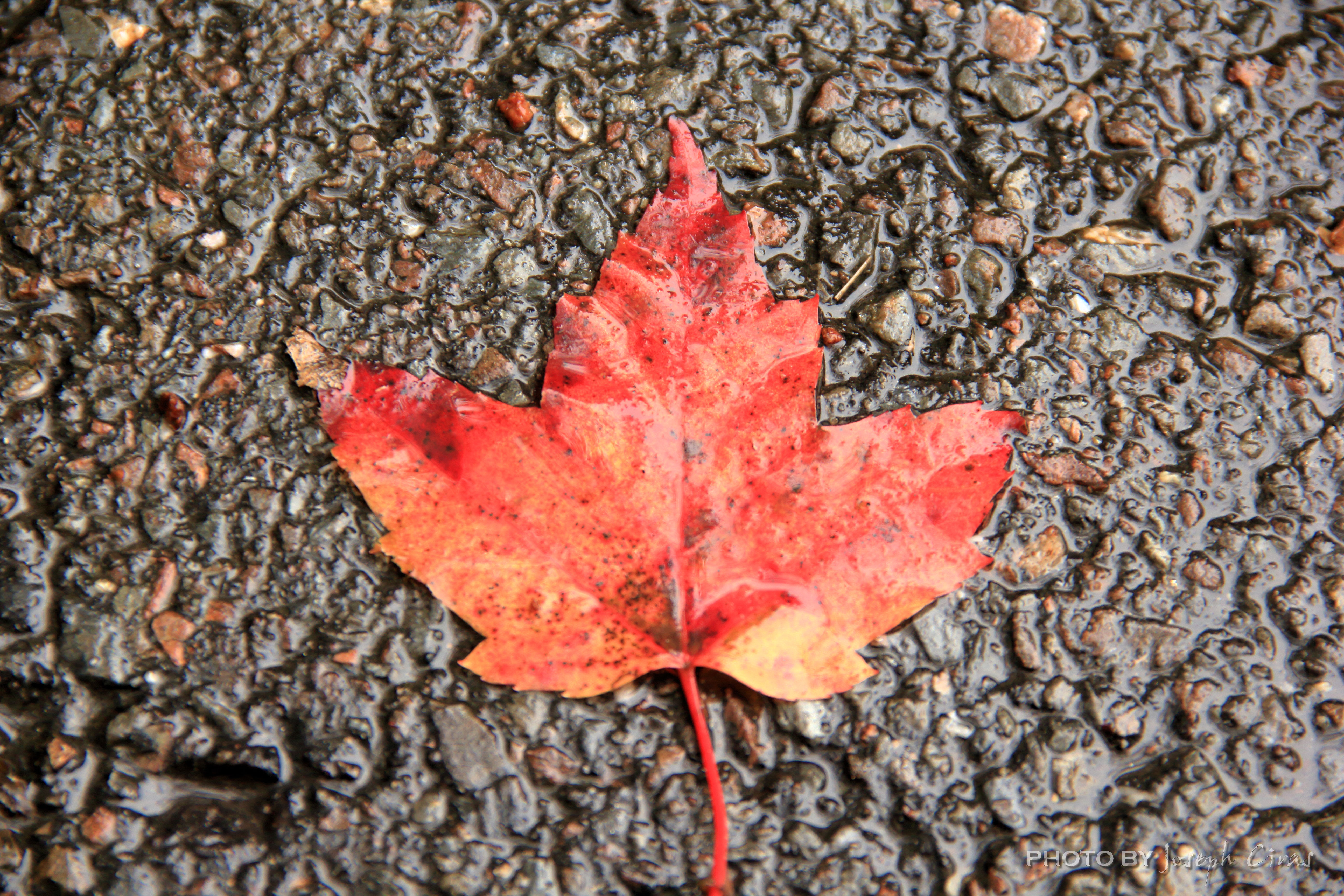
Last week an oak leaf, today it is a maple leaf. A sugar maple leaf to be precise.

Sugar maple leaf in our driveway

More rain today. I took this photo in my driveway while I was on my way to do some shopping.

Once again, a short and sweet Saturday post.

That is all for now. Until next week, be safe.

For more photo of other project I have work, visit my website: https://photobyjosephciras.weebly.com or visit me on Facebook at https://www.facebook.com/PhotobyJosephCiras/.
Photographic Thoughts — 10/17/2021 to 10/23/2021

“I think good dreaming is what leads to good photographs.” — Wayne Miller

Thank you for all the new views and likes from last week, it helps keep me inspired.

Sunday, 10/17/2021: Posted photo — Gear Shifter.

Settings: Canon EOS 60D, ISO 200, f/5.6, 1/160 s, 135 mm.

Not much to say about today’s photo. I have not taken an abstract, or still life, photo in a while so I took a photo of the gear shifter in one of our cars.

For your information, the “B” of the shifter is for breaking. It is an electronic means for mimicking engine braking in a traditional transmission.

Monday, 10/18/2021: Posted photo — Ready to Hike.

Settings: Samsung SM-G930V (Galaxy S7), ISO 200, f/1.7, 1/16 s, 4 mm

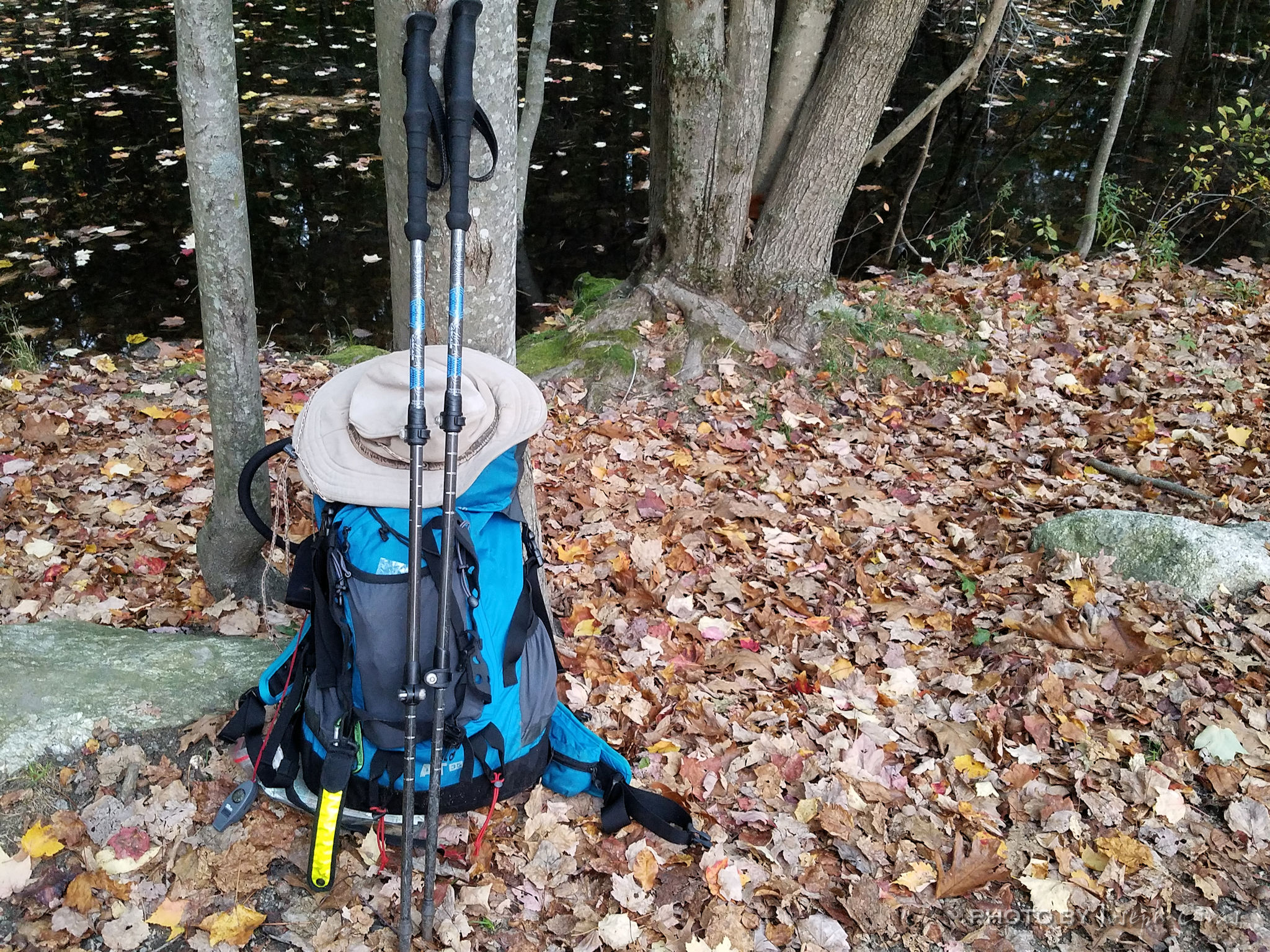
Monday night is my main hiking night. There is a hiking group that I joined a few months ago that I hike with on Mondays, and I try not to miss a hike. I call this group a group of hikers that like to socialize versus another group that I call a social group that hikes. I do not hike with the social group very often. Only when I need a hike for the week.

I set a goal this year to hike 100 peaks. I set the same goal last year, but I fell well short of that goal last year due to COVID an the many people that were on the peaks. I did not want to hike with a great number of people because they just did not follow any protocols. Last year I took many hikes along the Mid State Trail since there is a trailhead about a quarter mile from my house. I obtained my goal of 100 peaks earlier in the year, so I am just adding on to my peak count. Next year’s goal is to finish my 48 four-thousand-foot mountains in New Hampshire. That is an achievable goal, weather permitting.

I took this photo at the start of tonight’s hike. I did not take any photos for myself yet today and took this photo. The group was hiking around sunset time and I was hoping to get a photo of the sunset. Unfortunately, I did not get a sunset photo tonight since the group was still on the trail in the woods at the time of sunset. We made it to the summit between Nautical twilight and Astronomical twilight.

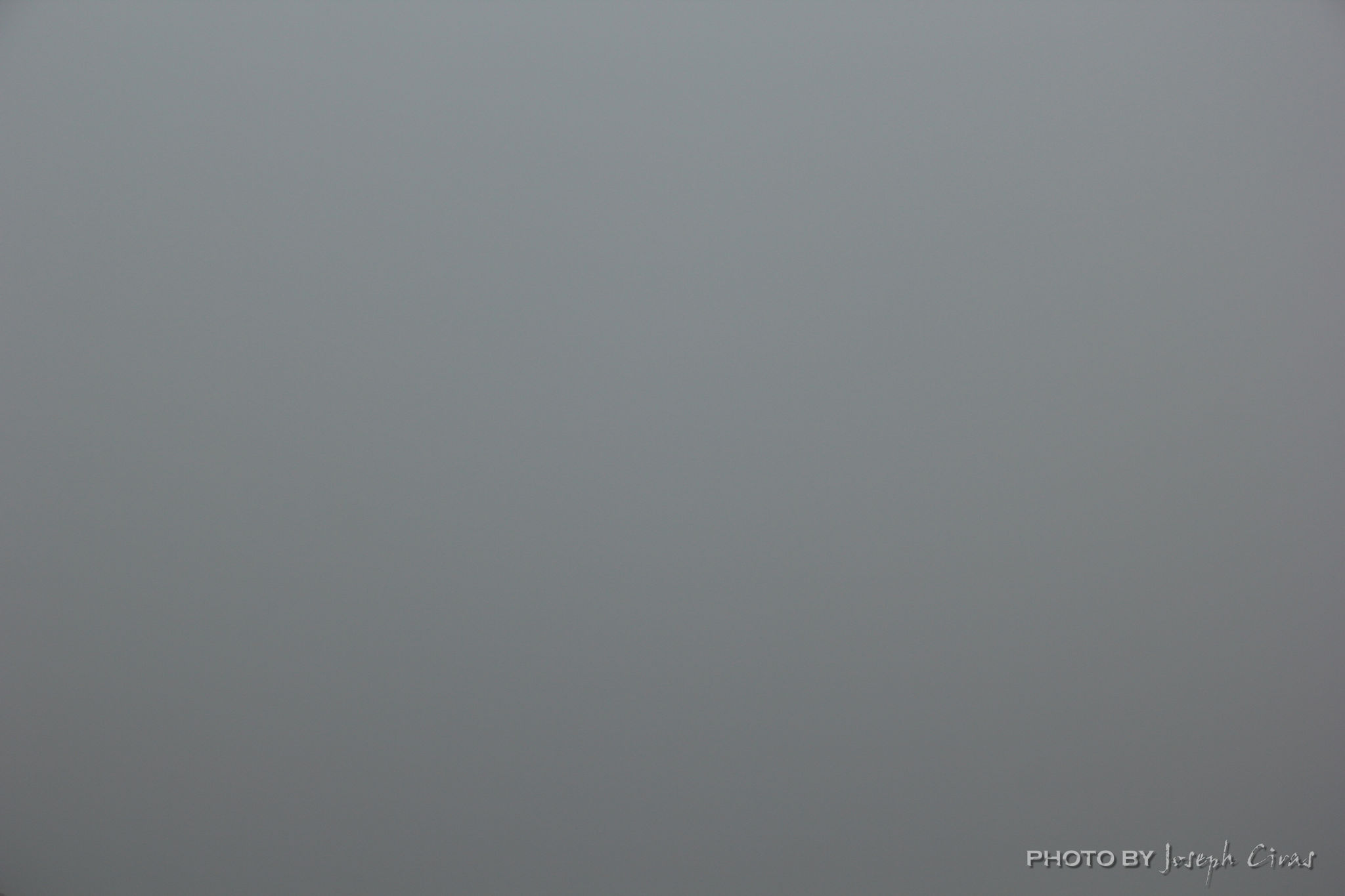
Tuesday, 10/19/2021: Posted photo — Blue Sky.

Settings: Canon EOS 60D, ISO 100, f/7.1, 1/320 s, 52 mm.

I did not realize that today’s information would be so educational.

What a beautiful blue sky we had today. Why is the sky blue? It has to do with wavelengths of light. Here is some information that has been backed up by NASA (https://spaceplace.nasa.gov/blue-sky/en/).

As white light passes through our atmosphere, tiny air molecules cause it to ‘scatter’. The scattering caused by these tiny air molecules (known as Rayleigh scattering) increases as the wavelength of light decreases. Violet and blue light have the shortest wavelengths and red light has the longest. Therefore, blue light is scattered more than red light and the sky appears blue during the day. When the Sun is low in the sky during sunrise and sunset, the light must travel further through the Earth’s atmosphere. We don’t see the blue light because it gets scattered away, but the red light isn’t scattered very much – so the sky appears red.

Now, why did I take this photo. I liked the blue sky and I wanted to do my periodic senor check for dust.

A camera’s sensor dictates the quality of the images it can produce — the larger the sensor, the higher the image quality. Bigger image sensors have bigger pixels, which means better low-light performance, reduced noise, good dynamic range, and the ability to obtain more information.

You can quickly spot dust on your camera’s sensor by doing the following:

  1. Set your camera on Aperture Priority Mode.
  2. Set your metering mode to Matrix/Evaluative Metering.
  3. Set your camera ISO to the lowest number such as ISO 100.
  4. Turn off Auto ISO.
  5. Turn off autofocus and set your lens on manual focus.
  6. Set your aperture to the largest number available for your lens. For example, the minimum aperture on my Canon 60D is f/22, so I set my aperture to f/22.
  7. If you are outside, point your camera up at the clear blue sky and take a picture (purpose of his post). If you are indoors, find plain white paper, zoom in all the way so that the paper fits the whole frame, then make sure that the lens is completely out of focus and take a picture. If you are in front of a computer, open a text editor such as Notepad, maximize it to the screen and then get as close to the monitor as possible so that only the white color is visible in the frame. Make sure that your focus is way off (completely out of focus) – that way only dust particles will be visible.
  8. Zoom in on the image (rear camera LCD), scroll from left to right and top to bottom all over the image and see if you can find any dark spots. Sometimes it is hard for me to see the dust in the LCD screen, so I look for dust when I zoom into the photo on my computer.
  9. If you cannot see any, your sensor is clean. If you see dark spots like in the above example, then your sensor has dust on it.
  10. If you see dust, you can either purchase a senor cleaning kit (if you are brave enough to clean your sensor, I am) or send your camera out to get your sensor professionally cleaned.

Enough for the education. Thank you for reading today’s information and hope that you learned something this week.

Wednesday, 10/20/2021: Posted photo — Hunter’s Moon.

Settings: Canon EOS 60D, ISO 125, f/11, 1/125 s, 300 mm.

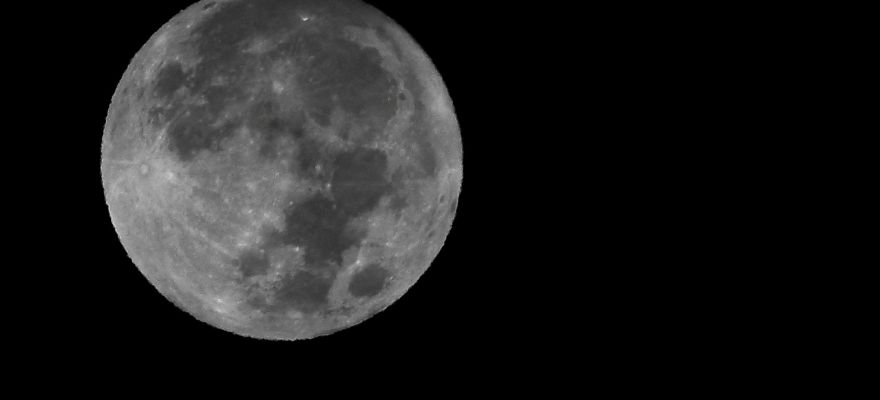
Once again, I am posting a photo of the full moon. This one is handheld, and I used the Loony 11 rule to capture it. I can never take enough photos of the moon. It is very difficult to capture because it is moving so fast, and it is very bright. Some people criticize my moon photos since they are just photos of the moon with nothing in the foreground. I challenge those people to show me their moon photos. I have been taking photos of the moon for over 12 years and am still experimenting with my settings. The moon is my primary subject matter, and I am still learning how to do it. I did mean to ramble on and to criticize others. It just upsets me when people criticize my photos and do not give me any tips to improve. Sorry for that.

This is October’s full moon. The name of this moon is the Hunter’s Moon. According to popular belief, the moon was named the Hunter’s Moon because it signaled the time to go hunting in preparation for cold winter months.

This chart shows the initial settings for using the Loony 11 rule.

Moon PhaseLight from the MoonAperture ValueISOShutter Speed
Full MoonMoon is 100% litf/111001/100 second
Half MoonMoon reflects off less light – about 50% compared to full moonf/81001/100 second
Quarter MoonMoon reflects off even lesser light – about 25% compared to full moonf/5.61001/100 second
Thin Crescent MoonVery less light reflected off the moonf/41001/100 second
Fully Eclipsed MoonMoon is shadowedf/2.81001/100 second

Enjoy my moon photos, there will be more.

Thursday, 10/21/2021: Posted photo — Wachusett Mountain from Echo Lake.

Settings: Canon EOS 60D, ISO 400, f/7.1, 1/30 s, 18 mm.

Today was my biweekly hike with colleagues from work. It was a wonderful day for a hike.

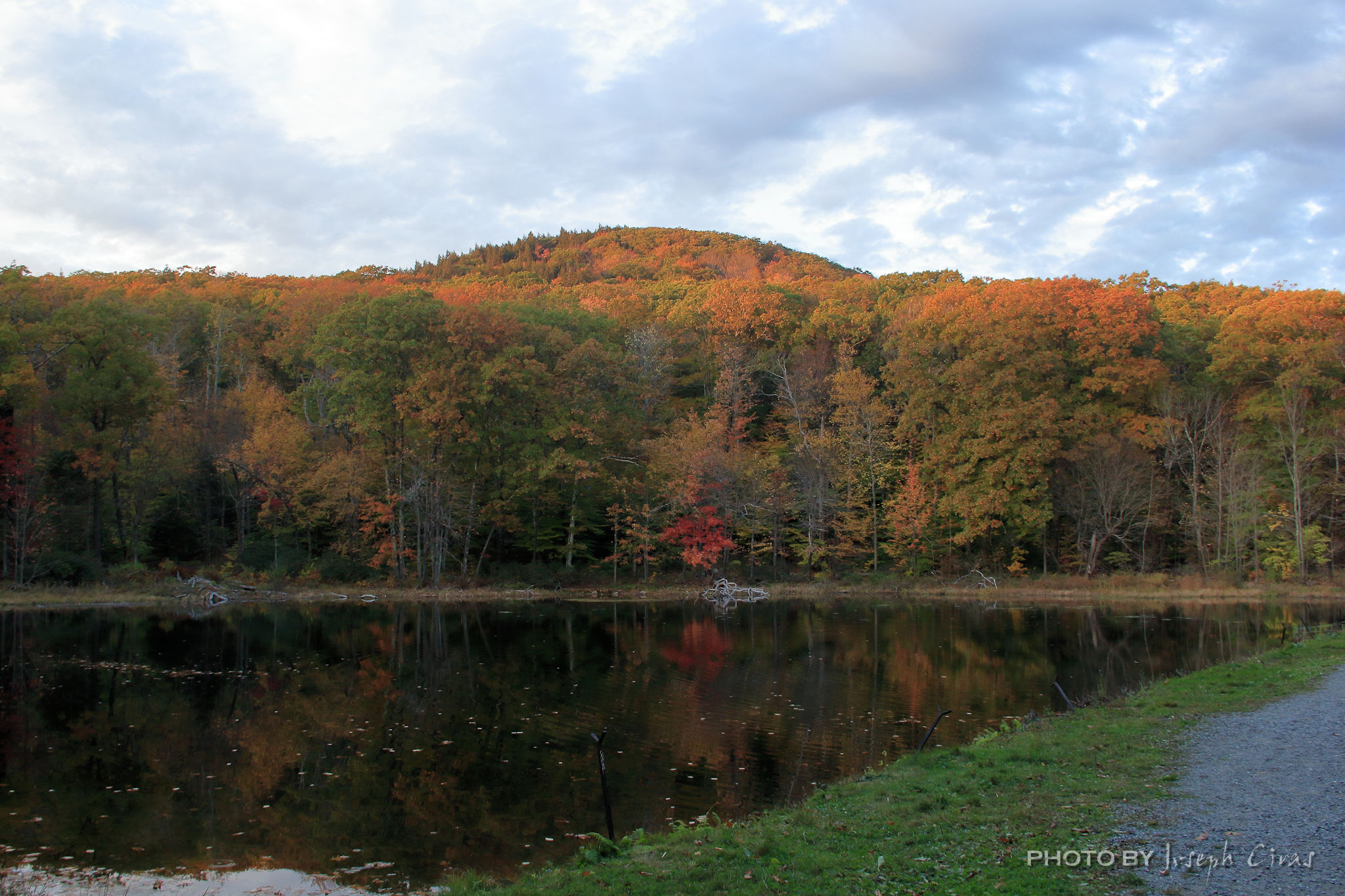
We started the hike about a half hour before sunset and I took a trail that I was faster to summit. We did not make the summit at sunset. The hike normally takes about 45 minutes to complete to get to the summit and we hiked as fast a safely possible. Before the hike, I thought about changing the trail we hiked to a quicker way up the mountain. The trial was already choosing and Hike Safe and Leave No Trace both say that once a route was picked, you should not veer from the plan. On the way to the summit, the trail passed Echo Lake along the Echo Lake Trail and I saw this great view of the side of the mountain. The light was hitting the mountain in a way that I wanted to stop and take this photo.

The hill is not the summit of the mountain but the intersection of two or the trails, High Meadow Trail and Jack Frost Trail. I like the foliage on the hill in the background and Echo Lake on the foreground.

Friday, 10/22/2021: Post photo — Yew.

Settings: Canon EOS 60D, ISO 100, f/5.6, 1/320 s, 113 mm.

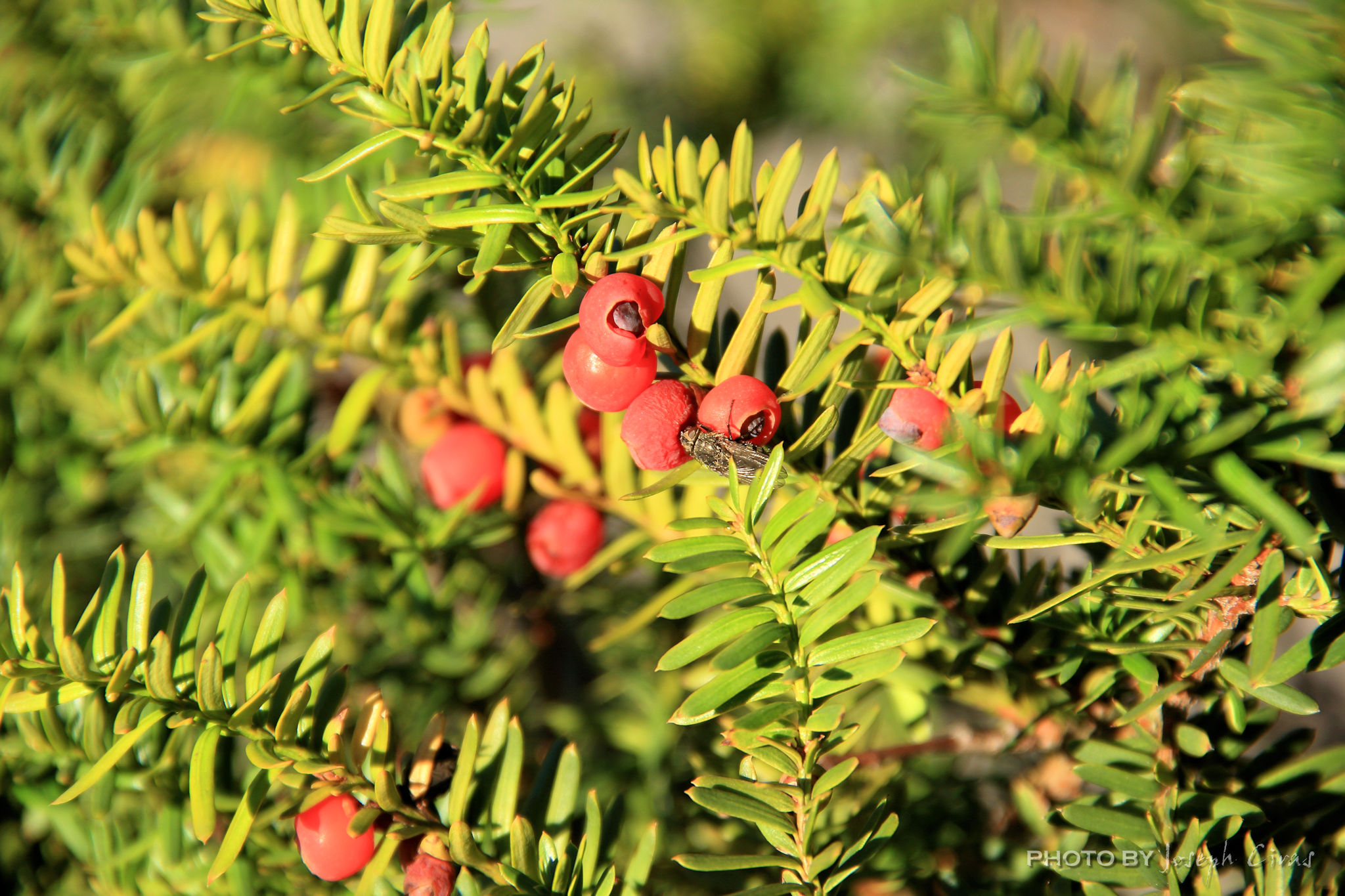
This Yew is at the entrance to work. I keep passing it and wanting to take a photo of it. Today I did. Here is some information about the Common Yew.

The Common Yew is an ornamental tree. While they are considered conifers, yew trees and shrubs don’t produce typical cones but rather modified versions of cones that look more like small red fruit. The taxine alkaloids contained in yew berries, needles or bark are poisonous. The lethal dose for an adult is reported to be 50 g of yew needles. Patients who ingest a lethal dose frequently die due to cardiogenic shock.

Saturday, 10/23/2021: Post photo — Oak.

Settings: Canon EOS 60D, ISO 100, f/5.6, 1/50 s, 92 mm.

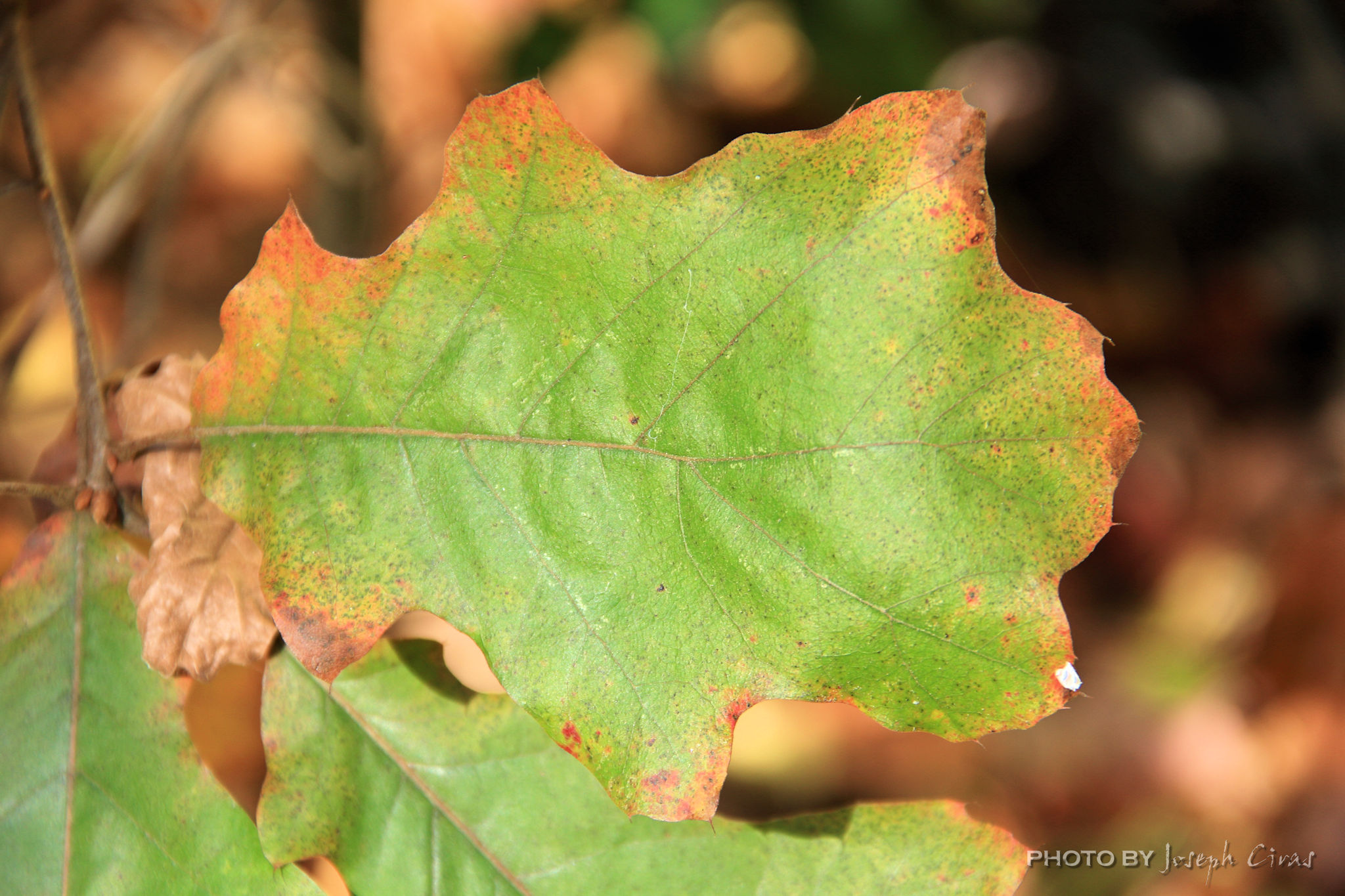
Peak time for foliage: The color and intensity change quickly, but your best bet to see peak colors is from mid-October to early November. This oak leaf is past peak along with most of the other foliage in my area. I took this photo today when I was raking my lawn today.

That is all for now. Until next week, be safe.

For more photo of other project I have work, visit my website: https://photobyjosephciras.weebly.com or visit me on Facebook at https://www.facebook.com/PhotobyJosephCiras/.
Photographic Thoughts — 10/10/2021 to 10/16/2021

“Today everything exists to end in a photograph.” — Susan Sontag

Thank you for all the new views and likes from last week, it helps keep me inspired.

Sunday, 10/10/2021: Posted photo — Lakeside.

Settings: Canon EOS 60D, ISO 400, f/7.1, 1/125 s, 32 mm.

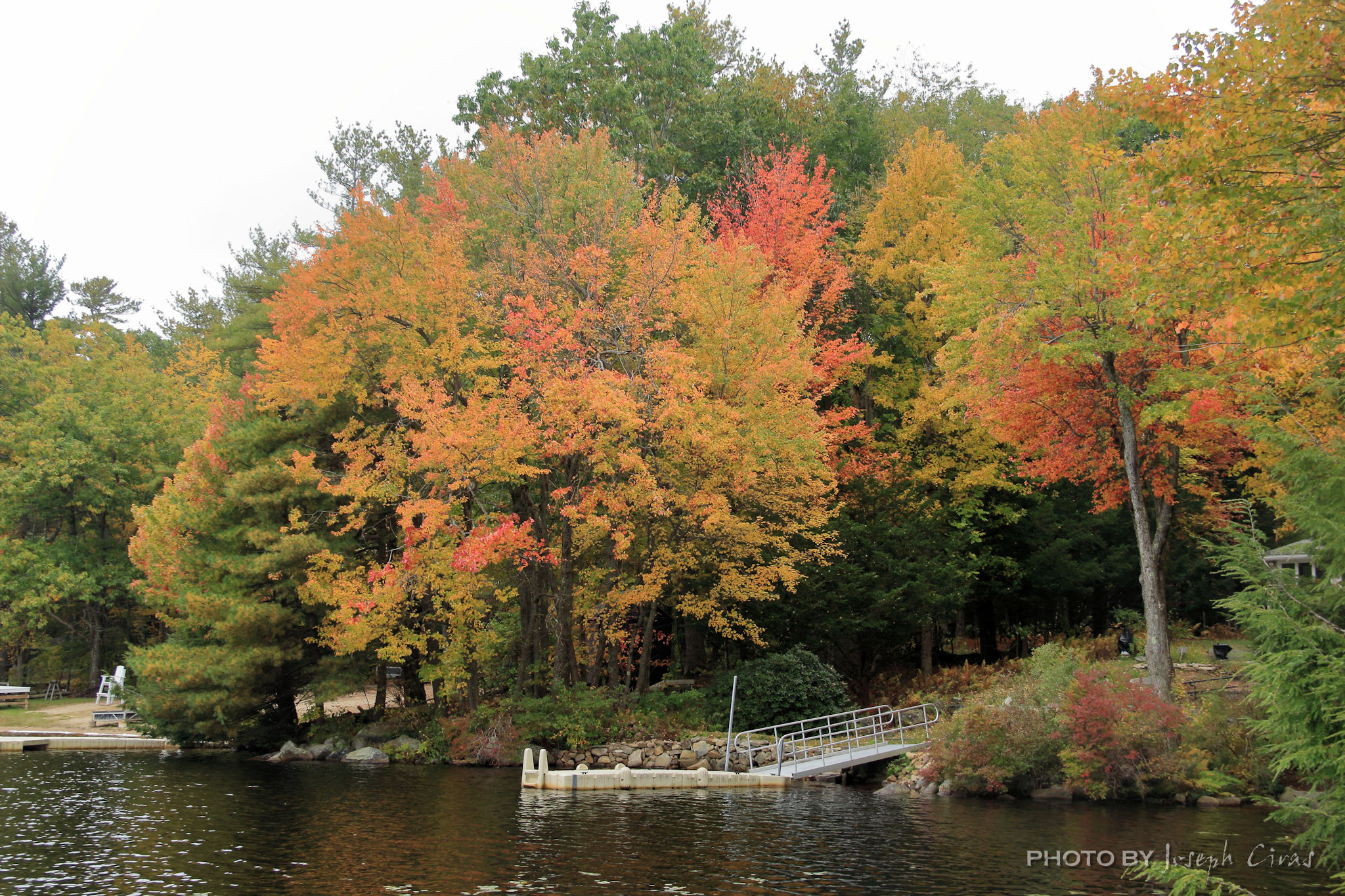
Today we took the dock out of the water at the cottage. The water was cold when first going into it, and then it did not feel so bad. We need to go into the water to lift part of the dock off its foundation to bring it in. Many years ago, the tires on the bottle of the support legs on the dock fell off so we manually need to lift the dock out of the water.

Before the dock was removed, I went out on it to enjoy the foliage from out in the water. I took this photo shortly before the dock was removed from the water.

The day is always a fun filled day with family and friends.

Monday, 10/11/2021: Posted photo — Trees in the Sun.

Settings: Canon EOS 60D, ISO 100, f/7.1, 1/125 s, 50 mm.

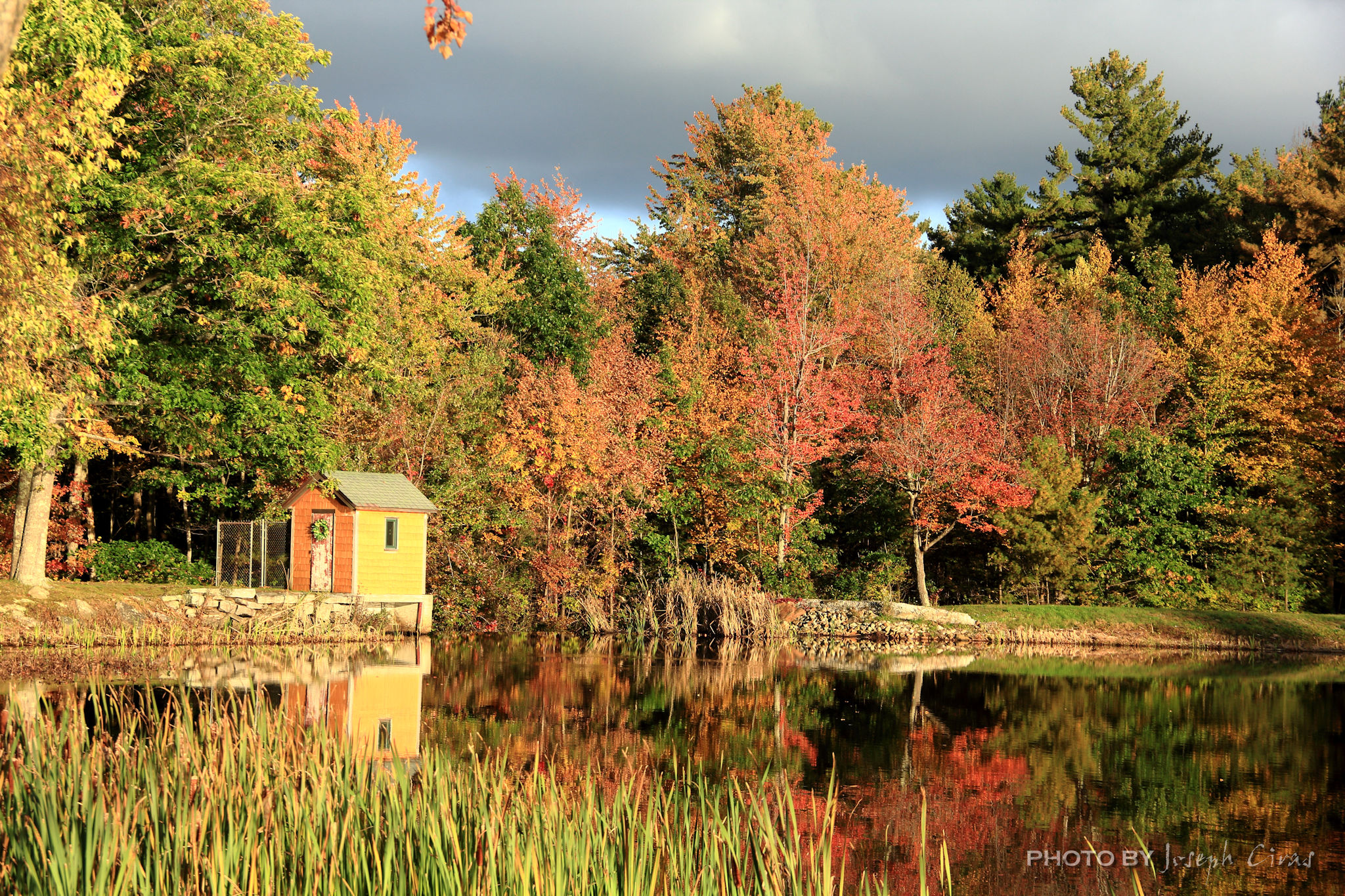
This is the backside, or inlet side, of the falls at Round Meadow Pond. You have seen a few photos of the water flowing over the dam since that is one of my favorite spots to photograph. I took this photo because of the bright colors of the foliage, and I liked the way the light was reflecting off the trees.

Tuesday, 10/12/2021: Posted photo — More Foliage.

Settings: Canon EOS 60D, ISO 100, f/7.1, 1/160 s, 50 mm.

Not much to say about this photo. The foliage is starting to get to peak in this area, so I am taking as many foliage photos as I can.

One thing I can say about this photo, and my other foliage photos, is that they look very bright. The histogram looks good for these photos, but the photos look bright when viewing on some screens. It might be because I use calibrate monitors to edit my photos and the other monitors are not calibrated.

Time to do some research into this issue. Maybe I should get one or two of them printed to see how the colors come out.

Wednesday, 10/13/2021: Posted photo — Morning Dew.

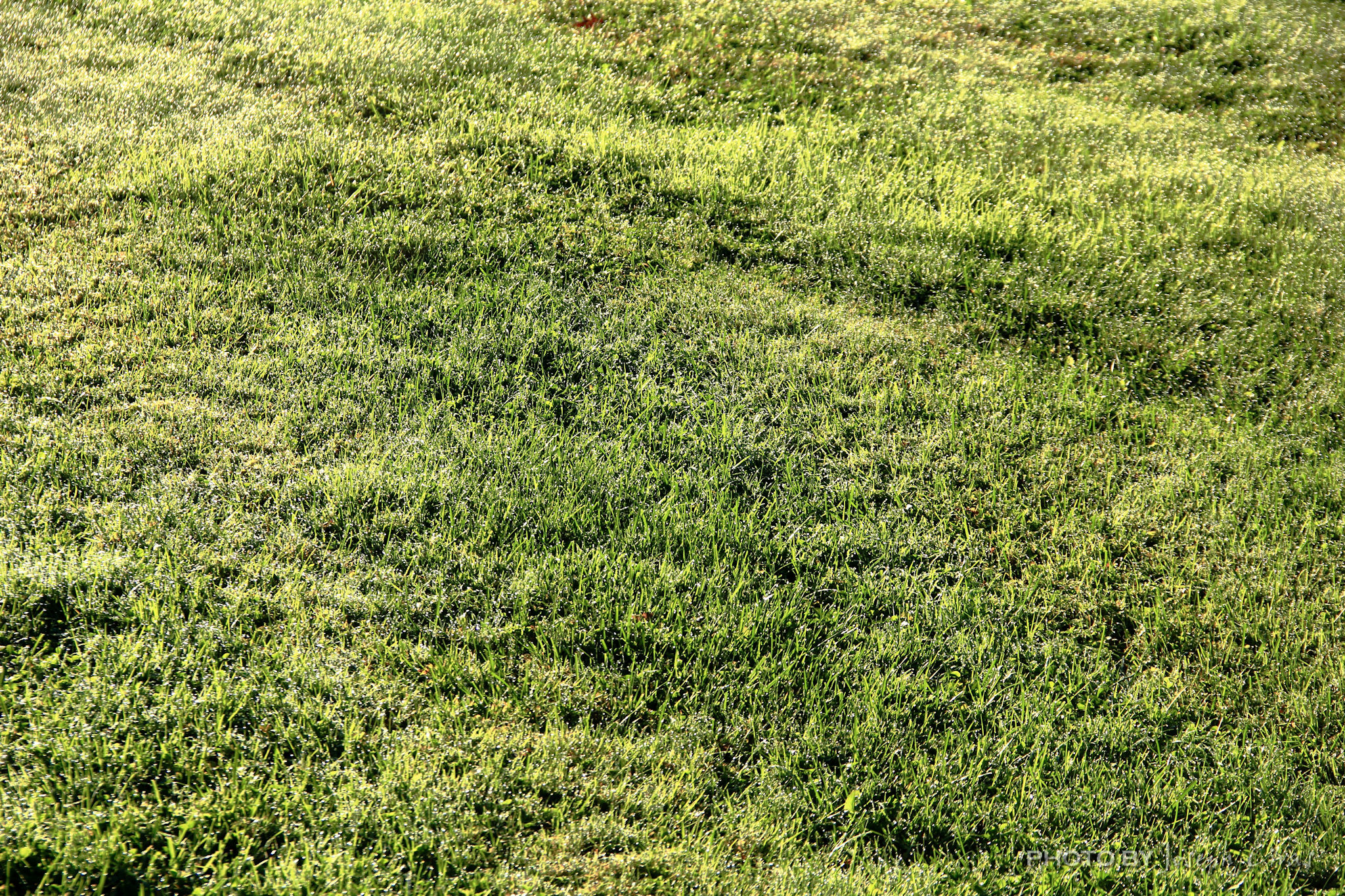
Settings: Canon EOS 60D, ISO 100, f/7.1, 1/250 s, 72 mm.

I was going to post another foliage photos today but decided to post a photo of the morning dew. This photo was meant to show the dew and to break up my trend of foliage photos. Too much of a good thing is not always good.

I attempted to capture the light off the dew on the grass. Please leave a comment to let me know how well I captured the light and to give me some tips to improve.

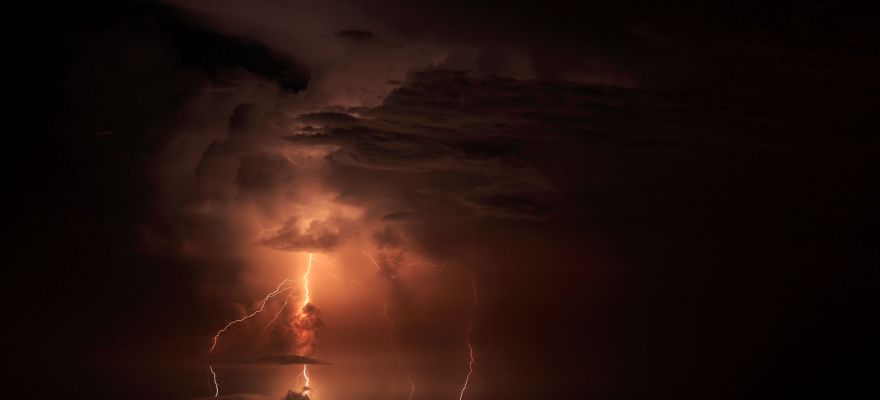
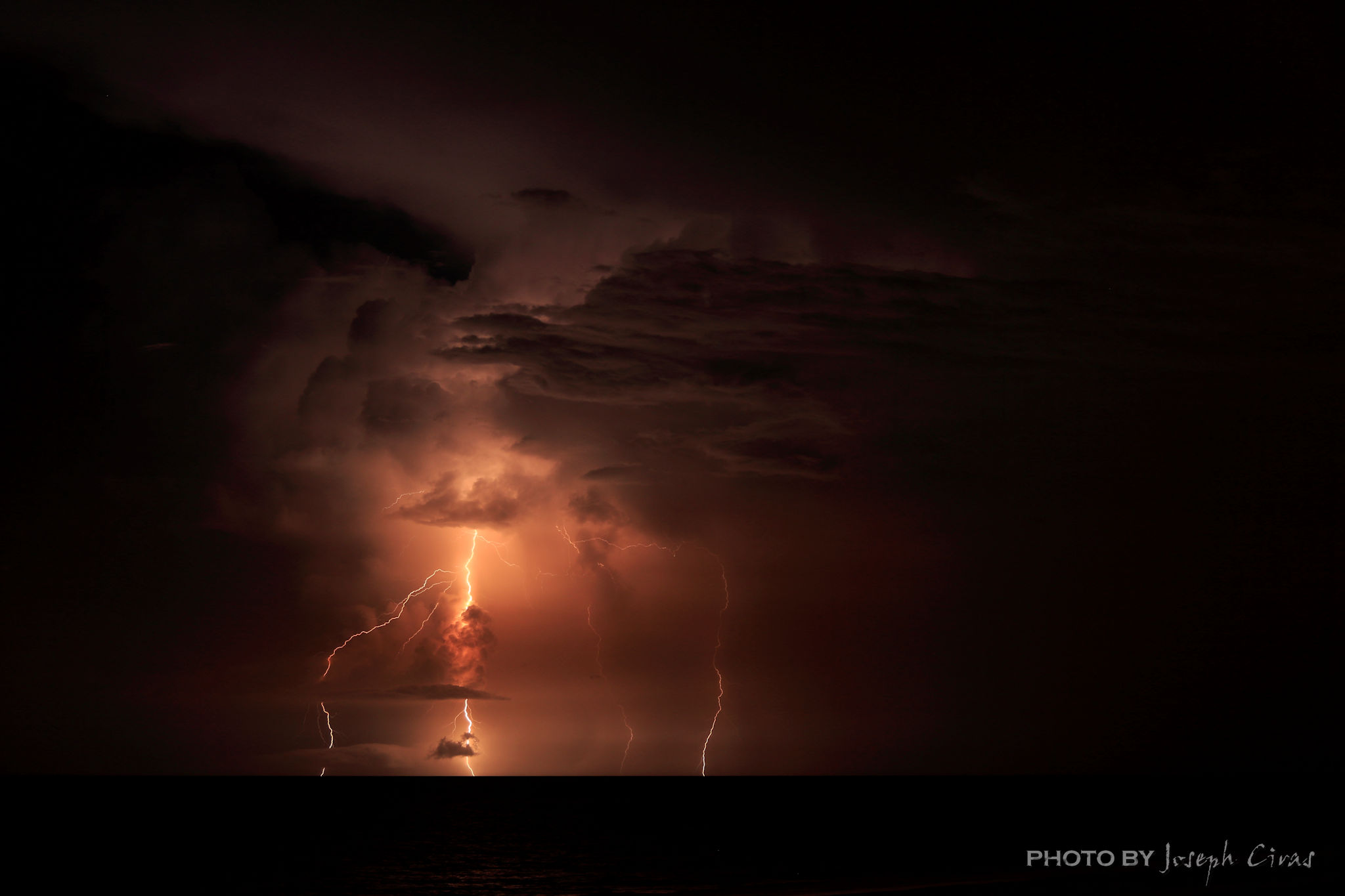
Thursday, 10/14/2021: Posted photo — Lightning at Sea.

Settings: Canon EOS 60D, ISO 100, f/5.6, 15 s, 48 mm.

15 second exposure looking out to see in Jacksonville Beach, FL a few years ago.

During a past vacation, my family rented a condominium on Jacksonville Beach. My wife has relatives that live in both Jacksonville Beach and Neptune Beach, so we travel to the area relatively often. Most of the time we rent a house or condo not on the beach.

A common occurrence in Florida is a storm out to sea at night. It is such a great sight to see the lightning in the distance. On this night, I decided to put my camera on my tripod, set the exposure time to 15 seconds, to capture the storm. After looking at the photos, my only regret was that I did not leave my shutter open for 30 seconds.

There will always be another trip back to the beach.

Here are a few camera settings for photographing daytime and nighttime lightning that I have picked up over the years:

Camera settings tips for photographing daytime lightning photos:

  • Set up camera on a sturdy tripod.
  • Turn off any image stabilization you might have. If image stabilization is on, the camera will think it is moving when the shutter engages, even though there is not camera movement.
  • Focus camera lens on infinity or on an object in the distance.
  • Set the aperture of the lens to f/16 or smaller. This will close the iris inside the lens, allowing a longer shutter speed to be used.
  • Set ISO to lowest it will go, for example use ISO 100.
  • Take a test exposure using the slowest shutter speed allowed to see if the image is exposed correctly and your focus is correct.
  • Set your camera on manual or bulb.
  • Use a remote timer/intervalometer to fire the shutter continuously.

Here is an example of a daytime lightning photo. This photo was handheld since the storm arrived quickly. For your information, we did not hike down into the Grand Canyon that day.

Camera settings for photographing night-time lightning

  • Set up camera on a sturdy tripod.
  • Turn off any image stabilization you might have. If image stabilization is on, the camera will think it is moving when the shutter engages, even though there is not camera movement.
  • Focus camera lens on infinity or on an object in the distance.
  • Set the aperture of the lens to a medium value, such as f/5.6 or f/8. This will allow a longer shutter speed by bringing in more light and improve image quality at the same time by allowing the use of a lower ISO value.
  • Set ISO to lowest it will go, for example set your is to ISO 100. You may have to increase your ISO to ISO 200–ISO 400 depending on the lighting in the area. I prefer my ISO set at ISO 100 for all my lightning shots.
  • Set your camera on manual or bulb.
  • Set the shutter speed to between 5 and 20 seconds. You can set it up to 30 seconds if you are in a dark area.
  • Take a test shot to see if the scene is exposed correctly, remembering that if a strike does happen in the field of view it could light up the scene considerably, depending on how big the strike looks in the photo.
  • Use a remote timer/intervalometer to fire the shutter continuously.

Friday, 10/15/2021: Post photo — Clouds.

Settings: Canon EOS 60D, ISO 200, f/7.1, 1/1250 s, 37 mm.

Today I am posting a photo of a cloud. I took many photos today, but this one was the only one that I liked.

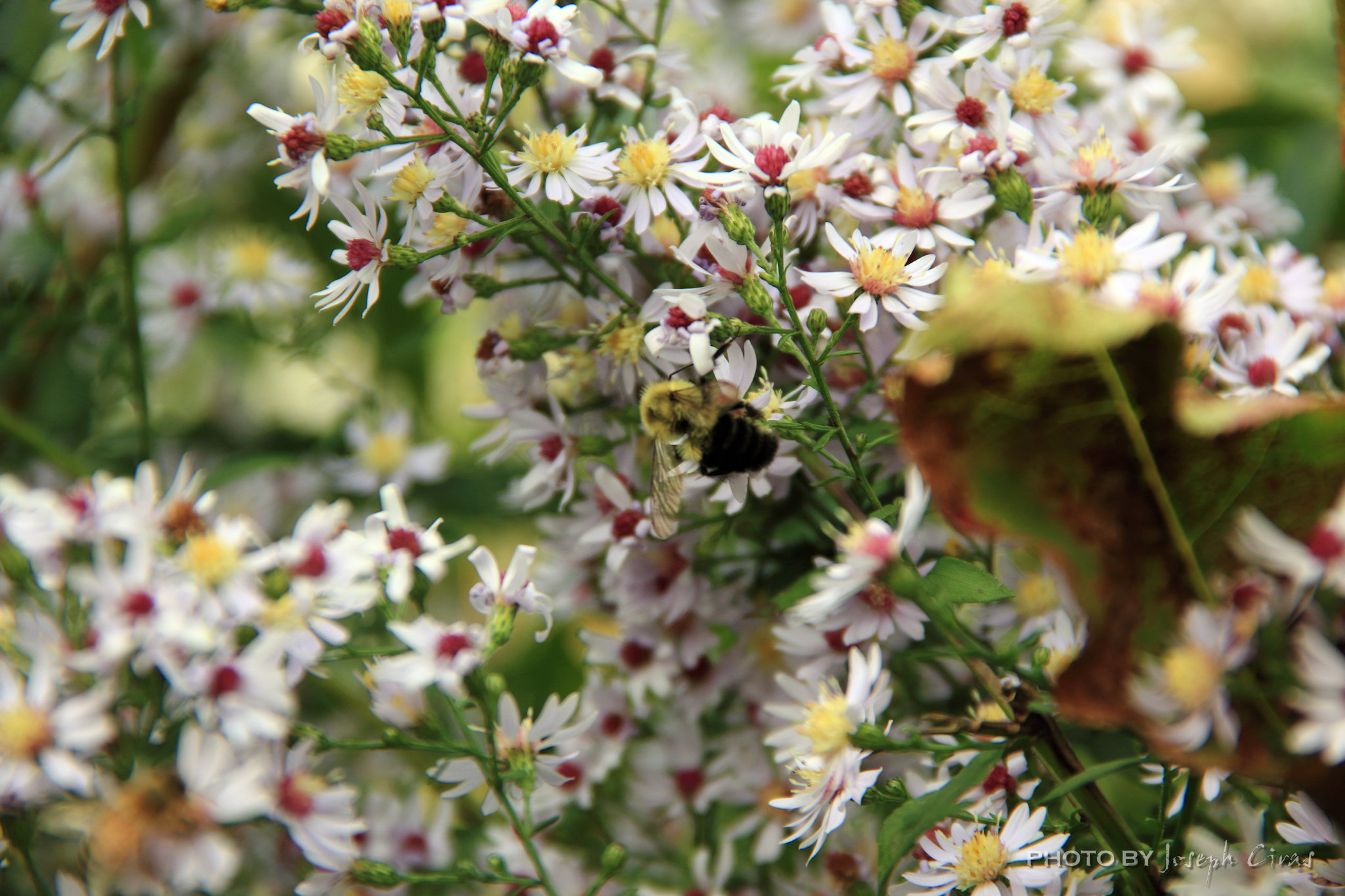
Saturday, 10/16/2021: Post photo — Aster.

Settings: Canon EOS 60D, ISO 200, f/5.6, 1/320 s, 106 mm.

I went to my mother’s house today to make sure everything was fine at the house. I also collected some of the wood from the tree that fell on her house about a year ago to bring home to burn. Earlier in the day, I took photos at Leominster State Forest. I went hiking at Leominster State Forest last night and went back today to get some more photos. I will be posting the photos I took in this blog for you to see what I did not post for my 365 project.

When I was at her house, I noticed a lot of asters. I also saw that there was an abundant number of bees flying around the asters. What a great photo opportunity. The aster flowers (Aster spp.) add color to the autumn landscape while offering beauty with little work when caring for asters.

That is all for now. Until next week, be safe.

For more photo of other project I have work, visit my website: https://photobyjosephciras.weebly.com/ or visit me on Facebook at https://www.facebook.com/PhotobyJosephCiras/.

Photographic Thoughts — 09/26/2021 to 10/02/2021

“I wish that all of nature’s magnificence, the emotion of the land, the living energy of place could be photographed.” — Annie Leibovitz

Thank you for all the new views and likes from last week, it helps keep me inspired.

Quick posts this week.

Sunday, 09/26/2021: Posted photo — What is It.

Settings: Canon EOS 60D, ISO 800, f/5.6, 1/13 s, 67 mm.

When I posted this photo, I did not expect someone to identify the object as quickly as they did. This is not a common item. Only people that have seen this object before could possibly identify it. I was surprised when someone knew what it was within an hour of my post. It happened to be on the first guess!

The object is the foot pedals of an organ. This is the organ at my church. I played the organ for many years when I was younger. I have not played on for a great while.

I will have to post a harder photo next time.

Monday, 09/27/2021: Posted photo — Vacancy.

Settings: Canon EOS 60D, ISO 1600, f/5, 1/50 s, 55 mm.

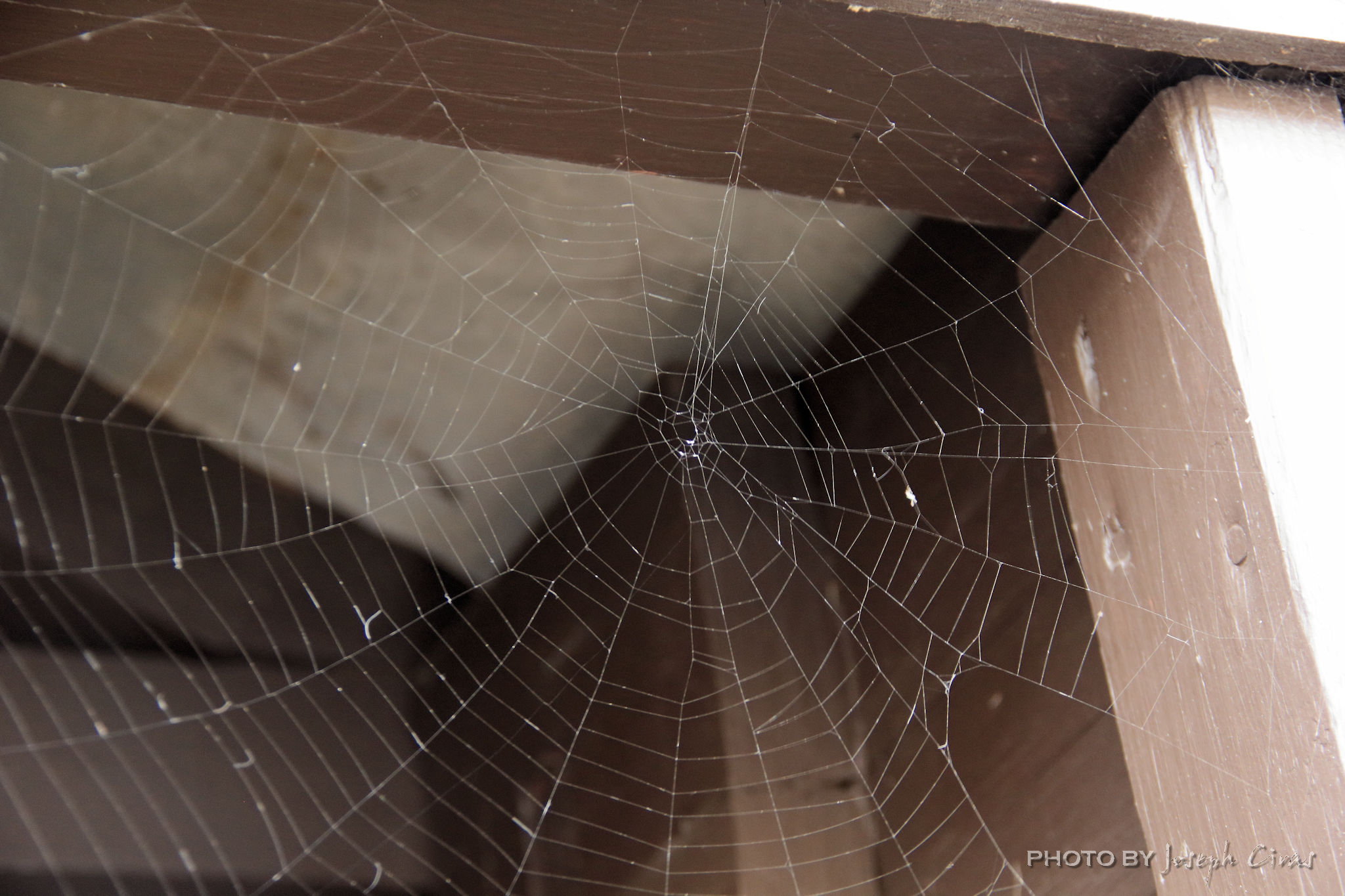
The previous occupant of this web has vacated the property.

Occasionally I see a great spider web at this location. I took this photo before the web was destroyed by the wind.

Tuesday, 09/28/2021: Posted photo — Wet Seasoned Wood.

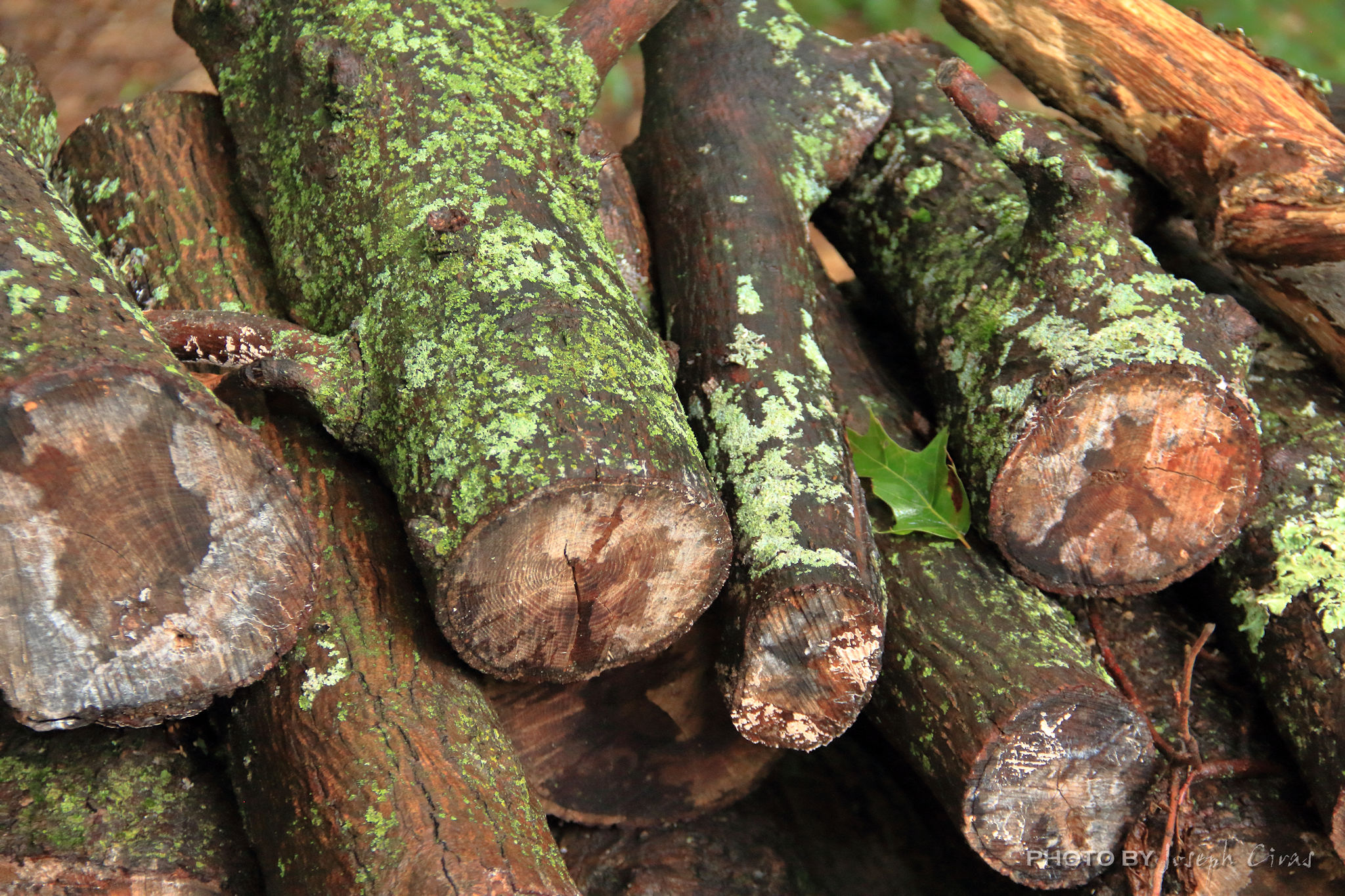
Settings: Canon EOS 60D, ISO 1600, f/5.6, 1/6 s, 62 mm.

Quick photo Tuesday.

I needed a photo for today and looked at the wood pile as I was getting out of my car after work.

Wednesday, 09/29/2021: Posted photo — Third Quarter.

Settings: Canon EOS 60D, ISO 200, f/16, 1/125 s, 300 mm.

Handheld photo of the third quarter of the moon. I took this photo about three hours after the official time of the third quarter.

The eight phases of the Moon in order are (according to NASA):

  • New Moon: This is the invisible phase of the Moon, with the illuminated side of the Moon facing the Sun and the night side facing Earth.
  • Waxing Crescent: This silver sliver of a Moon occurs when the illuminated half of the Moon faces mostly away from Earth, with only a tiny portion visible to us from our planet.
  • First Quarter: The Moon is now a quarter of the way through its monthly journey, and you see half of its illuminated side.
  • Waxing Gibbous: Now most of the Moon’s dayside has come into view, and the Moon appears brighter in the sky.
  • Full Moon: This is as close as we come to seeing the Sun’s illumination of the entire day side of the Moon (so, technically, this would be the real half moon).
  • Waning Gibbous: As the Moon begins its journey back toward the Sun, the opposite side of the Moon now reflects the Moon’s light.
  • Last Quarter: The Moon looks like its half illuminated from the perspective of Earth, but really, you’re seeing half of the half of the Moon that’s illuminated by the Sun ― or a quarter.
  • Waning Crescent: The Moon is nearly back to the point in its orbit where its dayside directly faces the Sun, and all that we see from our perspective is a thin curve.

Thursday, 09/30/2021: Posted photo — Color.

Settings: Canon EOS 60D, ISO 400, f/7.1, 1/400 s, 50 mm.

The colors of the leaves on the trees are starting to turn. This seems later than normal this year. Could be because of all the rain we have received over the summer.

Friday, 10/01/2021: Post photo — Starlight.

Settings: Canon EOS 60D, ISO 400, f/5.6, 1/50 s, 290 mm.

Sol. The nearest star to the earth.

I have been looking for my solar filter for a while. There was a partial solar eclipse a few months ago and could not find it. I was looking for a framed photo to bring to my uncle for his birthday last week and found it amongst my photos.

I took it out today and took a photo of the sun.

Saturday, 10/02/2021: Post photo — Angels.

Settings: Canon EOS 60D, ISO 400, f/13, 1/500 s, 52 mm.

I went to visit my parents today at the cemetery. They are buried next to the clergy section of the cemetery. When I looked over to the clergy section, I saw these angels under a tree. Looking at what is on the sign, it seems that there are other’s in the cemetery.

I liked the foliage next to the monument, so I took this picture.

That is all for now. Until next week, be safe.

For more photo of other project I have work, visit my website: https://photobyjosephciras.weebly.com/ or visit me on Facebook at https://www.facebook.com/PhotobyJosephCiras/.

COVID is real! Be safe out there, keep your social distance, and remember to always wear your mask and wash your hands. Get your vaccine!

Photographic Thoughts — 09/05/2021 to 09/11/2021

“Beauty can be seen in all things, seeing and composing the beauty is what separates the snapshot from the photograph.” — Matt Hardy

Thank you for all the new views and likes from last week, it helps keep me inspired.

Sunday, 09/05/2021: Posted photo — Angel.

Settings: Canon EOS 60D, ISO 200, f/7.1, 1/100 s, 67 mm.

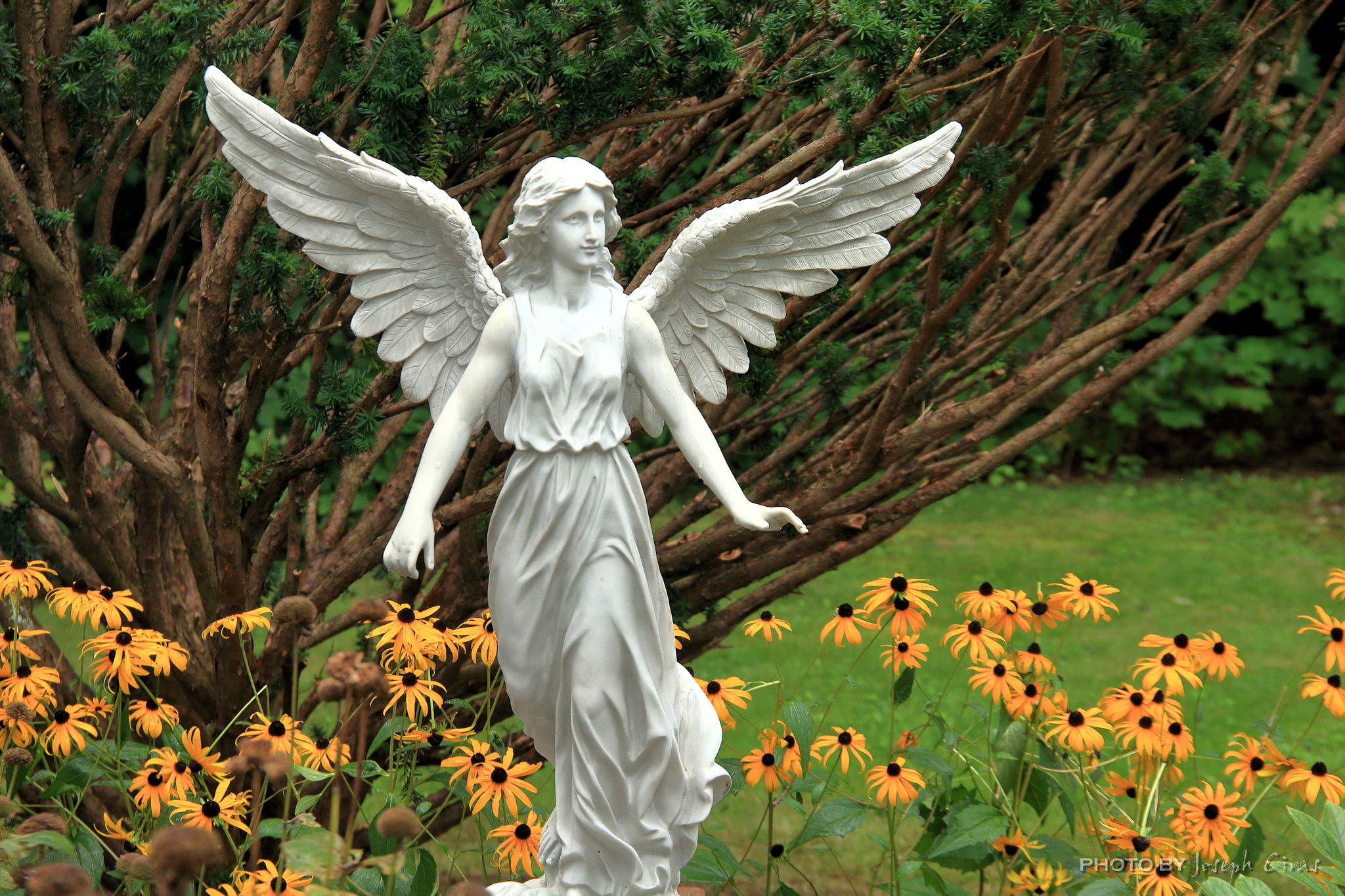
This is a statue in the flower garden near the rectory of the church I attend. I have never noticed this angel before, so the new priest could have put it in. It is a welcome addition to the grounds.

I like the black-eye Susan’s that blanket the statue making the statue stand out.

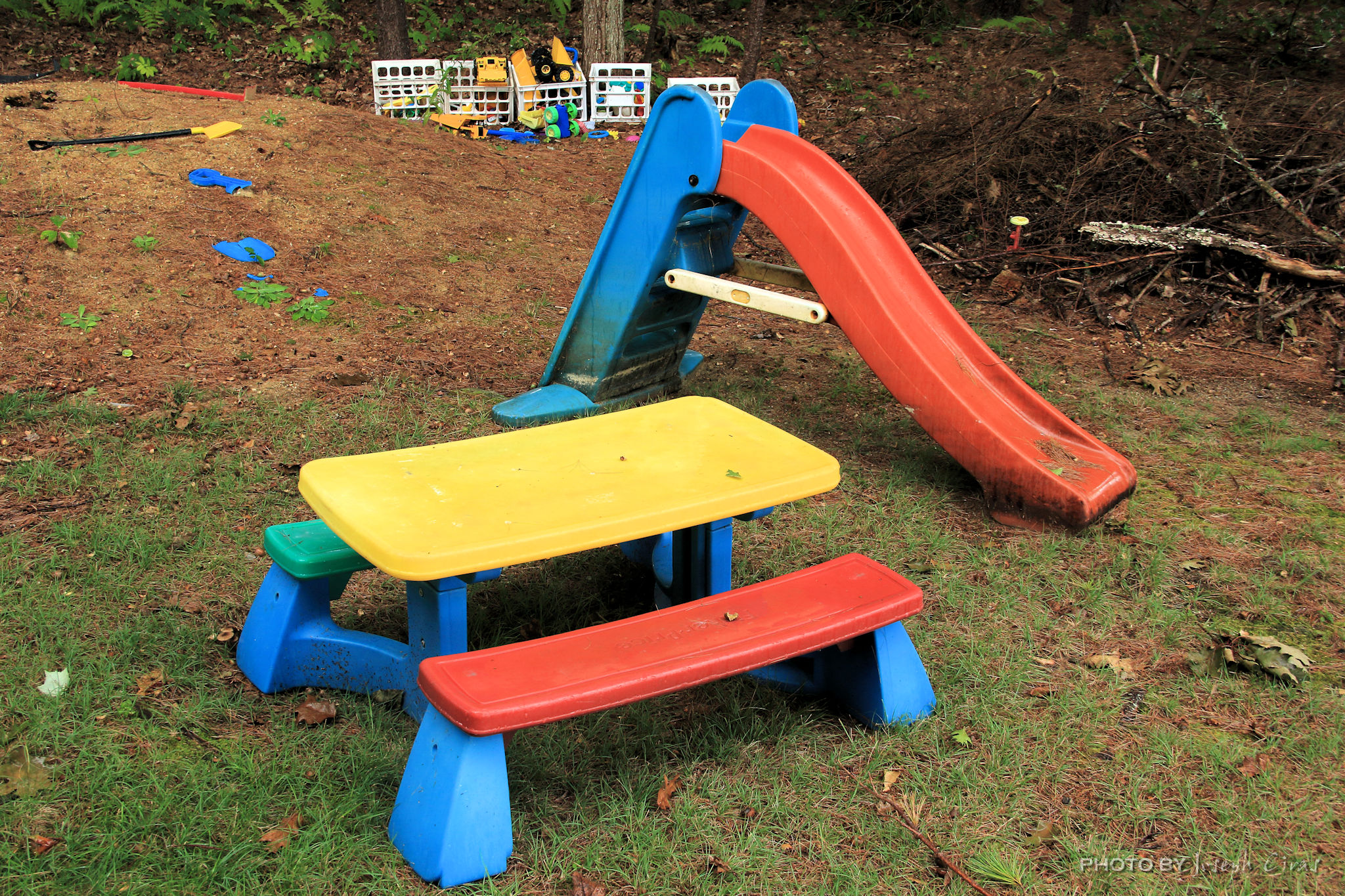
Monday, 09/06/2021: Posted photo — Playthings.

Settings: Canon EOS 60D, ISO 200, f/7.1, 1/60 s, 24 mm.

Today is a holiday, Labor Day. Labor Day is an annual celebration of workers and their achievements, originated during one of American labor history’s most dismal chapters. “In the wake of this massive unrest and to repair ties with American workers, Congress passed an act making Labor Day a legal holiday in the District of Columbia and the territories. On June 28, 1894, President Grover Cleveland signed it into law.” according to the History Channel.

Even though today is a holiday, I still planned on going on my Monday night hike. My in-laws called me and wanted to know if I wanted to go to the cottage to visit and to have some food. I only had a couple of hours between the call and the hike, so I went over. I noticed a new picnic table for my grandniece and liked the color contrast with the wet ground. The slide in this photo was in the water for many years, until she wanted to play on it. We took it out of the water and cleaned it the best that we could for her to play on.

Tuesday, 09/07/2021: Posted photo — Cannon.

Settings: Canon EOS 60D, ISO 100, f/7.1, 1/125 s, 25mm.

This cannon at the Westminster town common. The plaque states: “Dedicated to the memory of all the men and women from Westminster who have served their country in time of war and peace.” This cannon is not on display year-round.

I ran a few errands today and drove by town common on the way back looking for something to photograph. I saw the cannon and took this photo. The town common is being cleaned up with old trees being removed and new trees being planted.

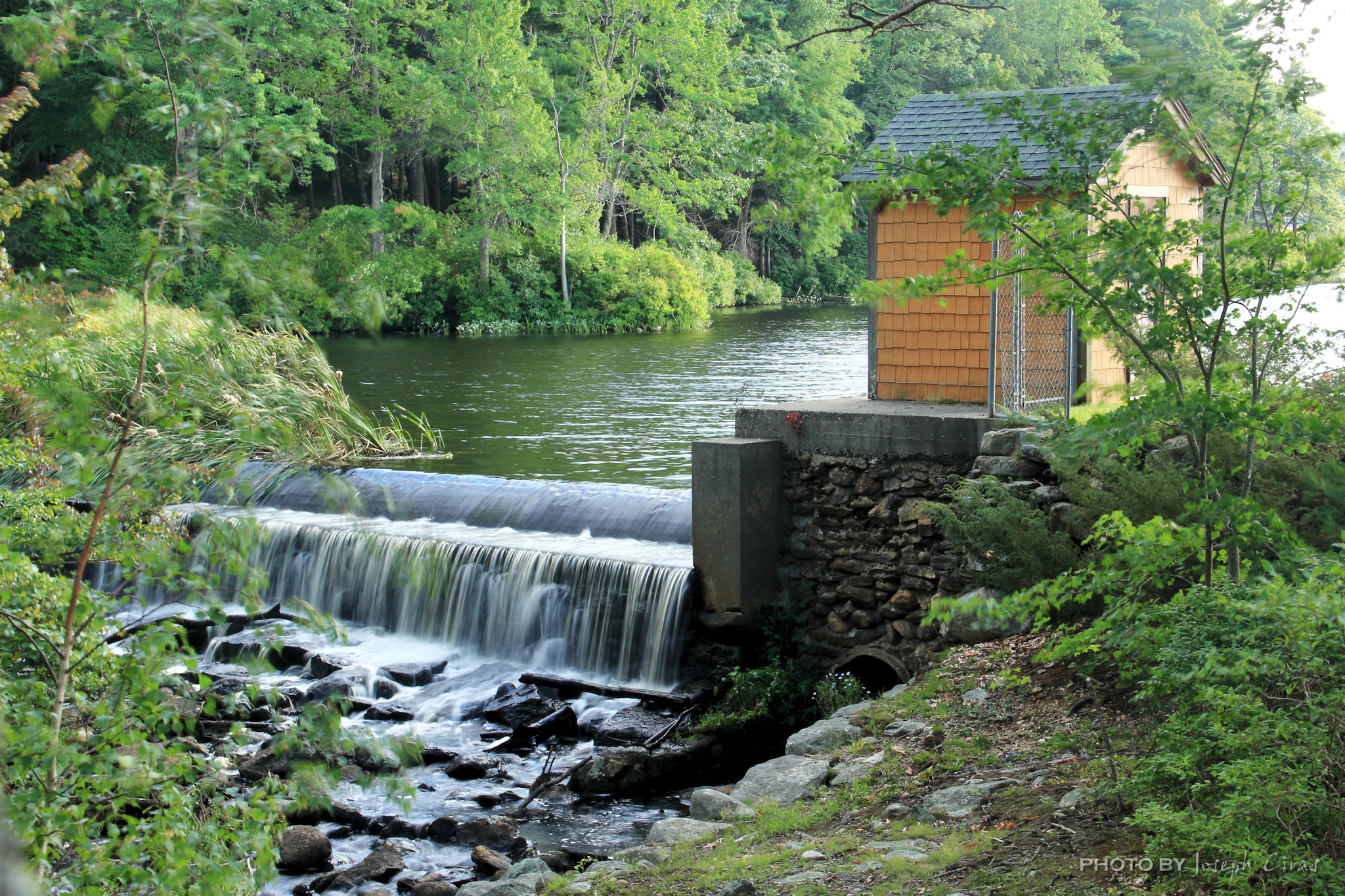
Wednesday, 09/08/2021: Posted photo — Handheld Falls.

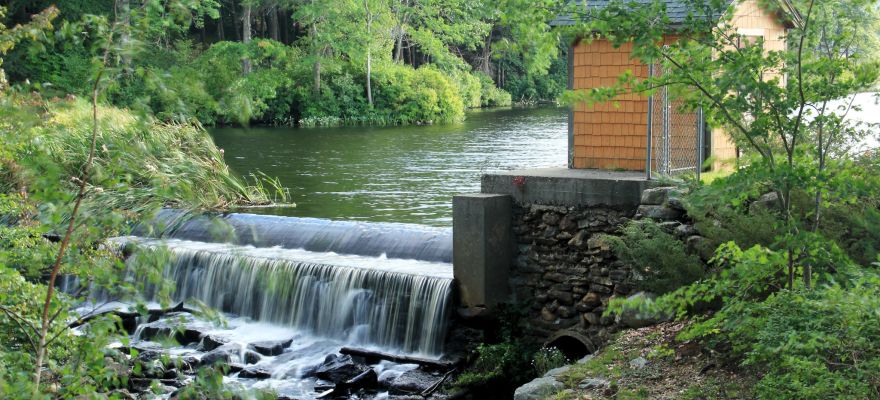
Settings: Canon EOS 60D, ISO 100, f/20, 1/4 s, 36 mm.

It was getting late today, and I was trying to decide what to photograph today. As I have stated many times in my blogs, I take photos of items during the day and decide later what photo to post. When I drove by one of my favorite locations to photograph, I wanted to test out how steady my hand can be. I practice long exposure photography a few times a month. During some of my hikes, I see flowing water and need to practice holding still while taking photos.

I did take many other photos today and liked this one the best. This is one of my favorite spots to photograph and it is one of the favorite locations for people looking at my photos.

Thursday, 09/09/2021: Posted photo — That Time of Year.

Settings: Canon EOS 60D, ISO 400, f/7.1, 1/15 s, 135 mm.

Some trees are changing, some trees are not changing. Our sugar maple is one of the first trees on our property to change colors in the fall. Because of changes in the length of daylight and changes in temperature, leaves stop their food-making process. The chlorophyll breaks down, the green color disappears, and the yellow to orange colors become visible.

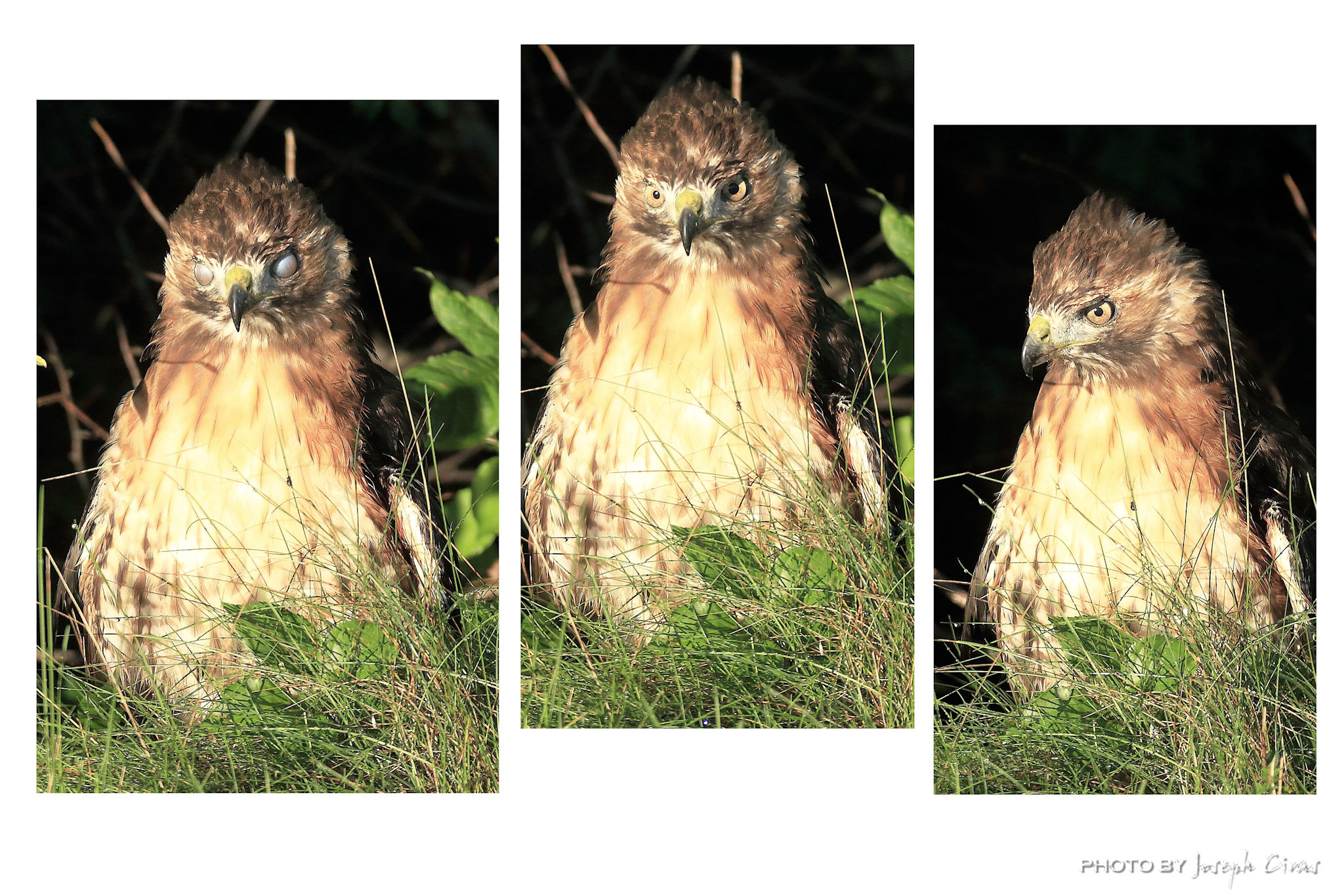
Friday, 09/10/2021: Post photo — Red-Tailed Hawk.

Settings: Canon EOS 60D, ISO 800, f/5.6, 1/800 s, 135 mm.

This morning this red-tailed hawk was spotted on campus at work. First, we thought it was a rabbit and then an owl. I took my camera out to get a closer look at it and to photograph it. I was surprised to see that it was a red-tailed hawk. The hawk did not move from its position and allowed me to walk very close to it. I kept my eyes open and was very alert that the mother of this hawk could have been around, and I did not want to be attacked by her. It did not look like it was injured but it stayed in the same location for over an hour. Someone saw it walk across the lawn so I could have been injured.

I took many photos if it and like these the best. I did not know what one to post so I made a collage out of them to post as one photo. I liked the look of the closed eyes showing its eyelids and I like the profile of the hawk.

Saturday, 09/11/2021: Post photo — Flags on the 48.

Settings: Canon EOS 60D, ISO 800, f/7.1, 1/500 s, 18 mm.

Not much room on Mount Willey for a group photo. Here is the group squeezed into the overlook for a photo. This hike was for the annual Flags on the 48 event.

“We in the hiking community continue to honor the deceased with a tribute: flying the American flag atop all 48 four-thousand foot and higher mountains in New Hampshire on the Saturday closest to September 11. By demonstrating our steadfast unity in this challenging endeavor, we also hope to express our unwavering support to the families, friends, and communities whose losses are beyond comprehension and whose suffering we remember in our hearts.” — Flags on the 48 website.

I have been doing the Flags for the last 10 years mostly with the same core of people. There are two of us that have been doing if for all 10 years with various other people joining us. Out of all the people in this photo, nine of them have been hiking with us for several years. This group has not done the same peak twice.

A member of our group does a great tribute to all that passed away from that day 20 years ago to the day of the hike. The names are placed at the base of our flag.

Thank you again for having faith and my abilities. Now I need to go through the photo and pick some out.

That is all for now. Until next week, be safe.

For more photo of other project I have work, visit my website: https://photobyjosephciras.weebly.com/ or visit me on Facebook at https://www.facebook.com/PhotobyJosephCiras/.
COVID is real! Be safe out there, keep your social distance, and remember to always wear your mask and wash your hands. Get your vaccine!