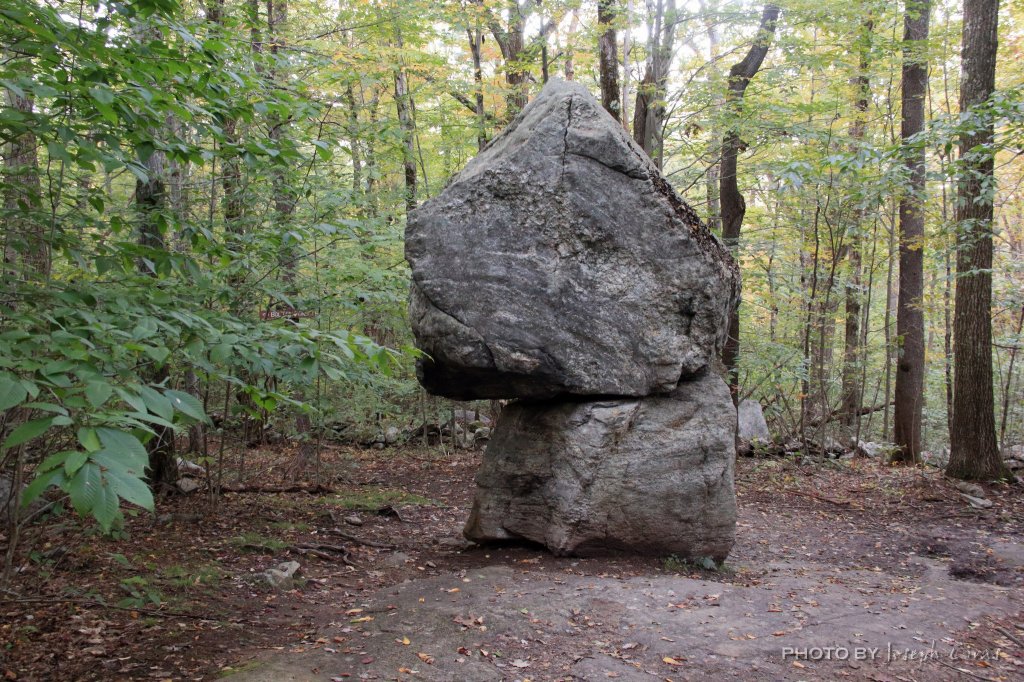
Photographic Thoughts — 04/07/2024 to 04/13/2024

“An eclipse is one phenomenon that is actually more impressive from the ground.” — Leroy Chiao

This week’s blog will feature photos of one of nature’s wonders, a total solar eclipse.

Sunday, 04/07/2024: Posted photo — Moose.

Today was a travel day to Houlton ME to see the eclipse. We were looking to go to either western Ohio, northern New York, or Vermont to see the eclipse. We have relatives and friends in those areas. Looking at the weather for tomorrow’s eclipse, it was decided to head to Houlton ME. There is a Walmart in Houlton. Since we saw the last total solar eclipse seven years ago in a Walmart in TN, we thought it would be a good idea to go to one in Houlton. Walmart had a big open space and there would be many people. We also though we could sleep in the parking lot. This did not happen, we slept in a rest area on the way. Houlton ME was predicted to have the best weather in the country along the path of totality. It did not disappoint.
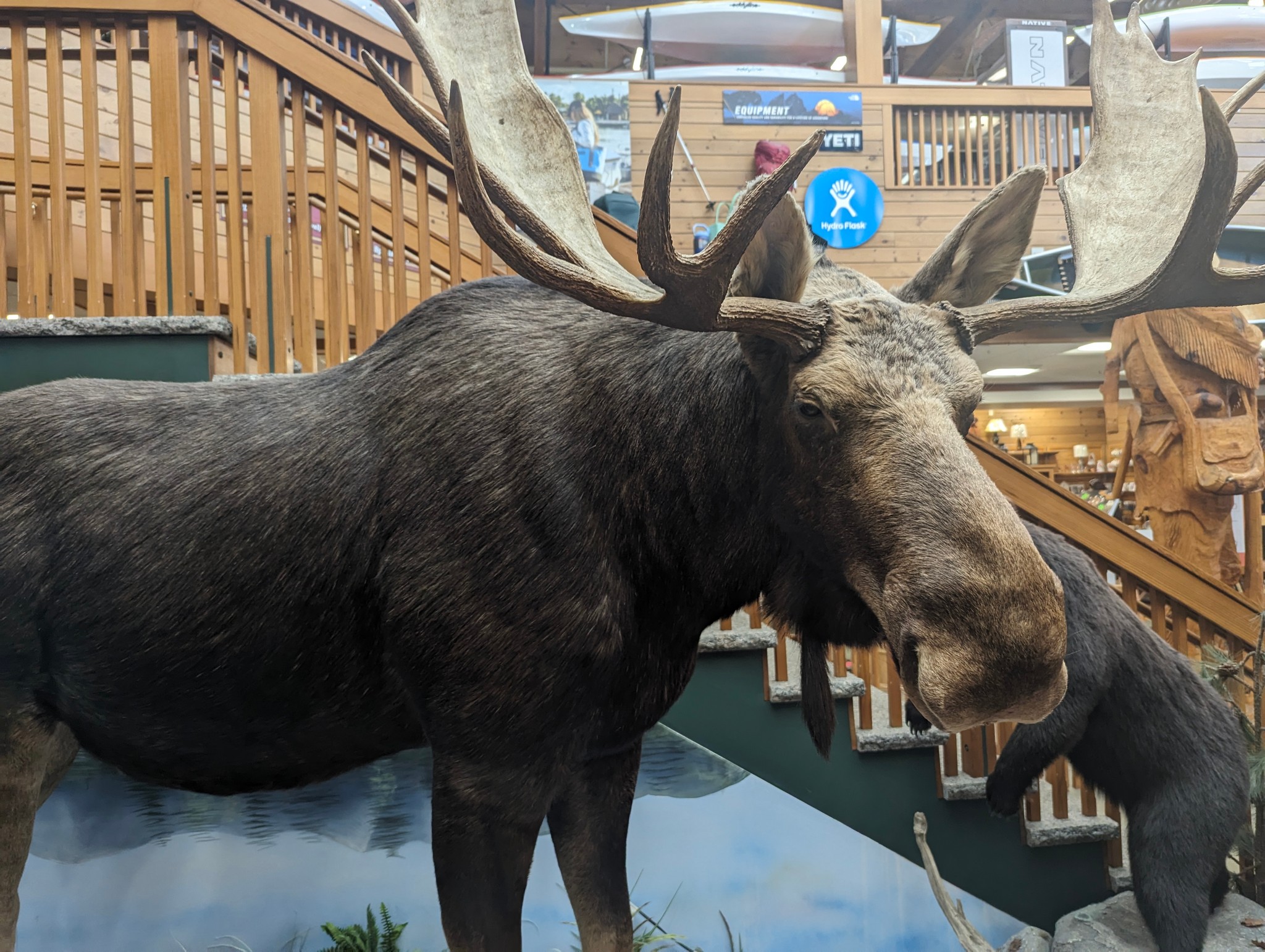
This moose is at the Kittery Trading Post. We stopped in Kittery to get candy and to go to the Trading Post. I needed another fuel can for my camping stove. If the weather was cold, we were going to have hot chocolate while we waited, and I did not want to run out of fuel. We also stopped in Freeport to go to LL Bean. We shop the outlet store and did not go to the main campus this trip.

The ride to ME was uneventful. There were signs in both NH and ME warning people about the traffic and not to stop on the side of the road to see the eclipse. We did not see many vehicles on the road.

Monday, 04/08/2024: Posted photo — Sundog.

While waiting for the eclipse, I saw a sundog and took a photo of it with my cell phone. I adjusted by camera setting for the eclipse and did not want to change them.
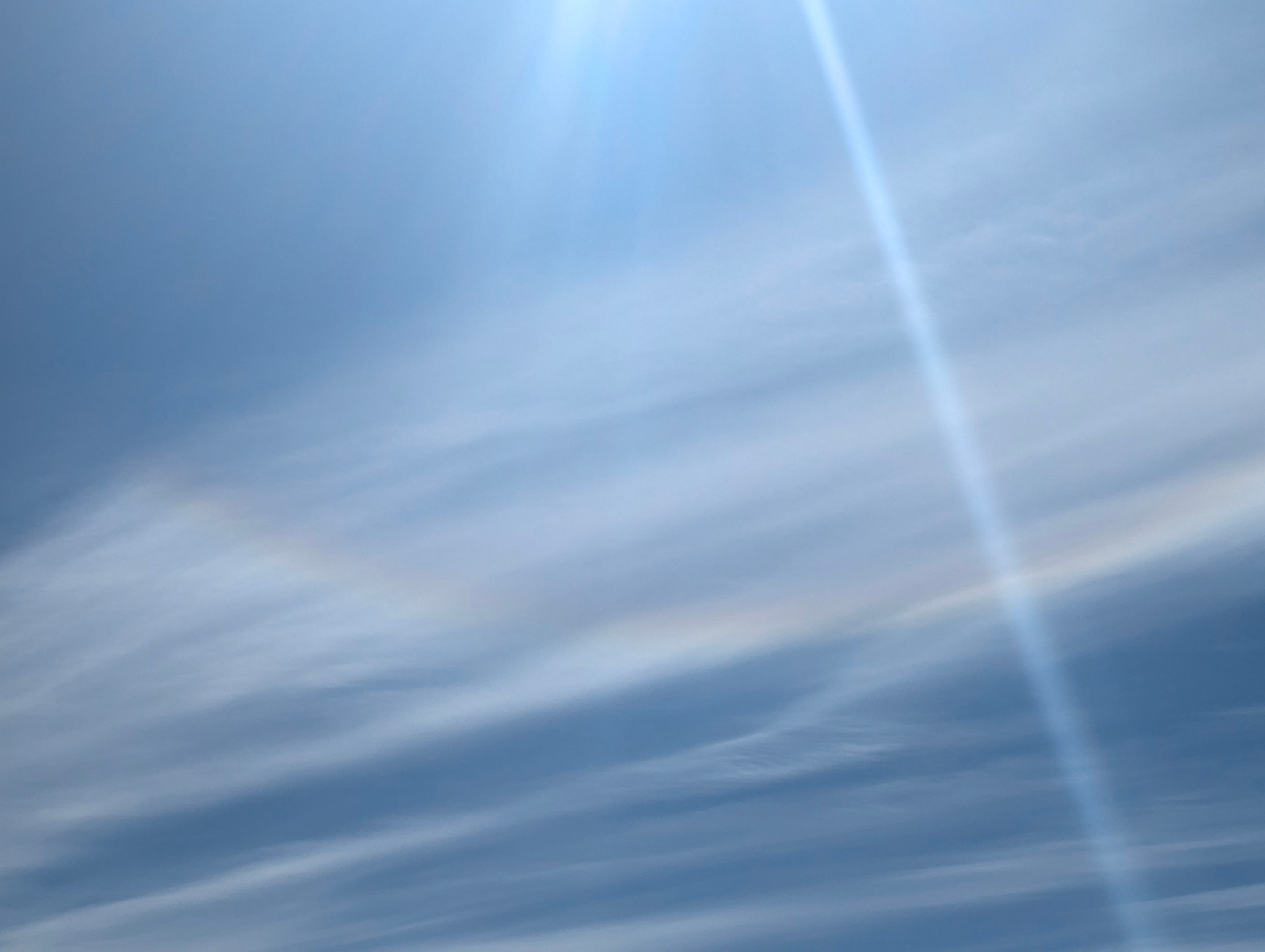
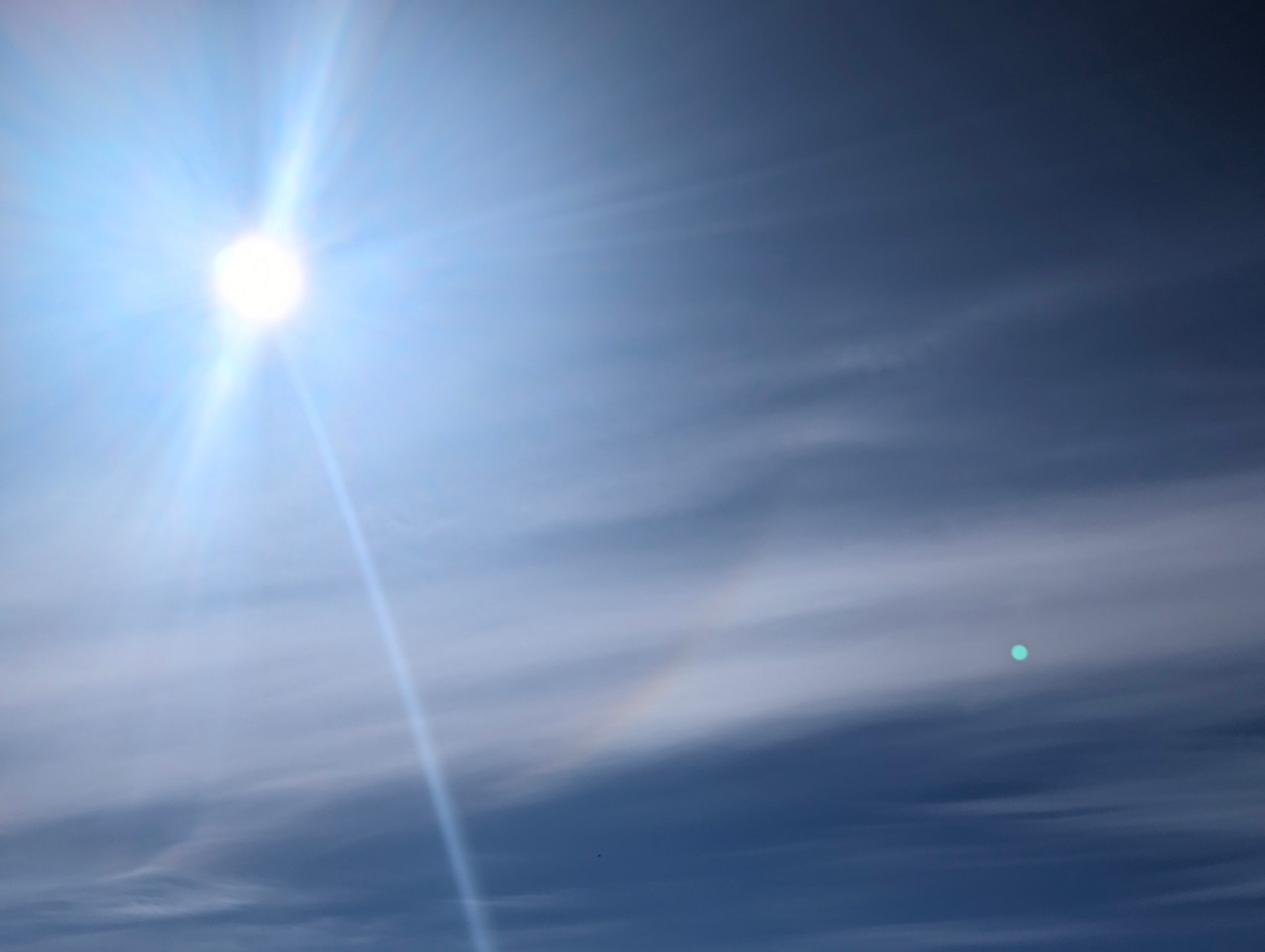
Sundogs are colored spots of light that develop due to the refraction of light through ice crystals. They are located approximately 22 degrees either left, right, or both, from the sun, depending on where the ice crystals are present. This sundog was in the little clouds there were.

Tuesday, 04/09/2024: Posted photo — Second Contact.

Second contact is the start of totality. First contact is when the eclipse starts, second is the start of totality, third is when totality ends, and fourth is when the eclipse ends. Between first contact and second contact, a special solar filter needs to be put on your camera. It is the same type of filter that are in solar glasses.
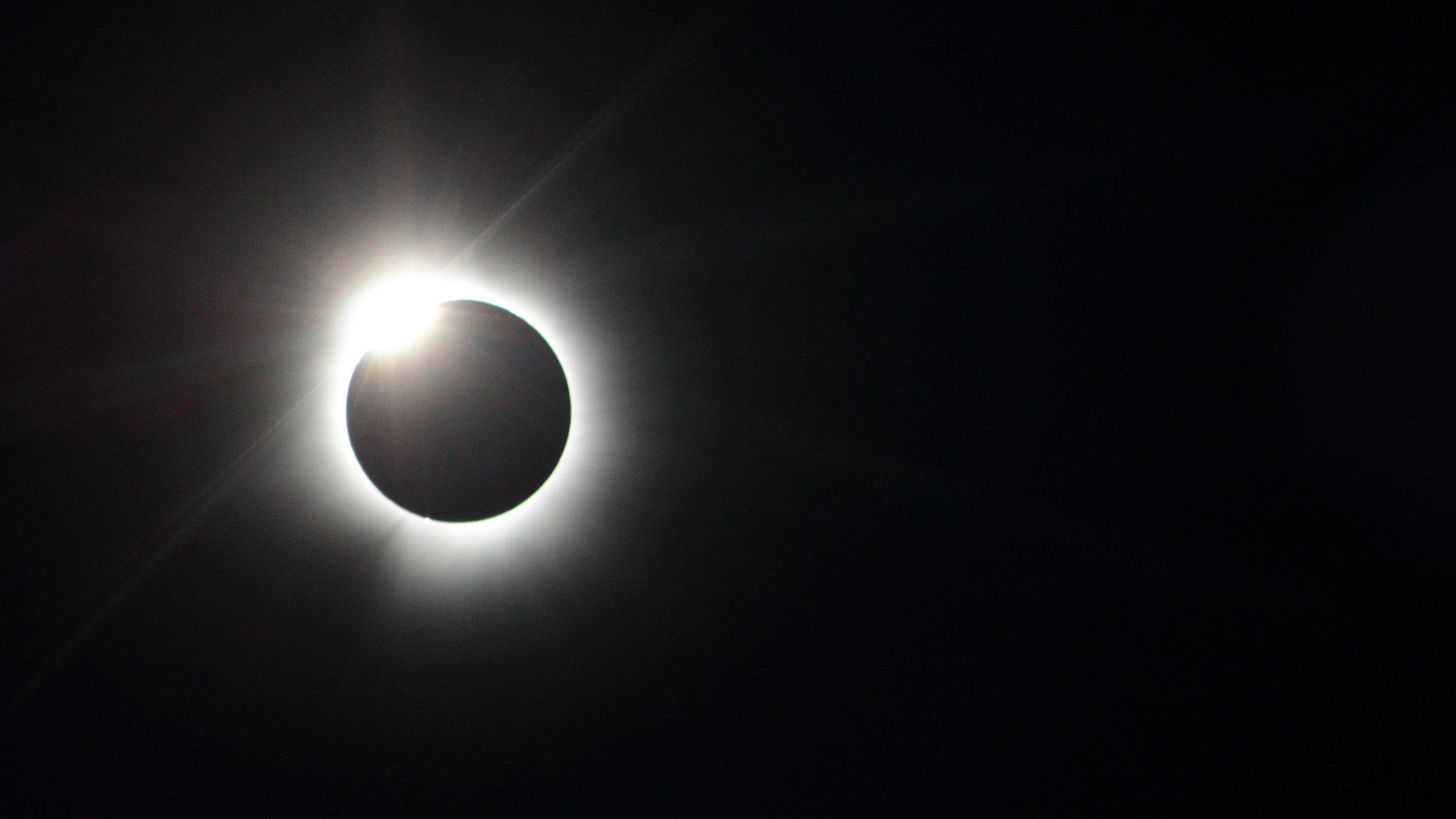
Just before totality, a single bright spot will remain, resembling a diamond in a ring. I missed taking a photo of this phenomenon during the eclipse seven years ago and was fully prepared for it this time.

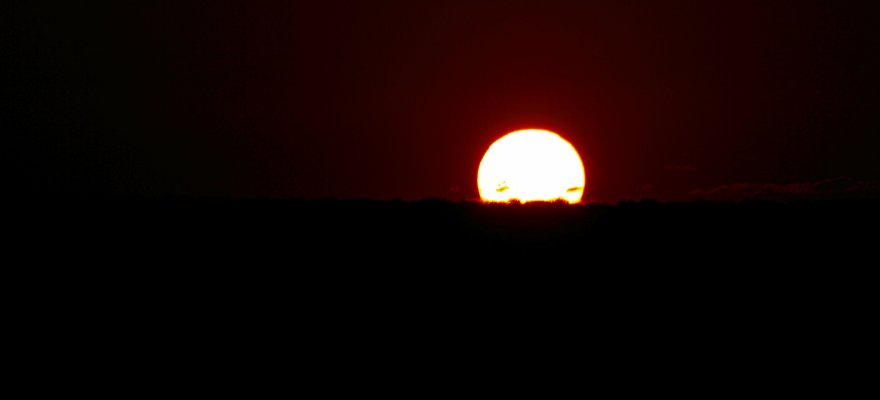
Wednesday, 04/10/2024: Posted photo — Totality or Maximum Eclipse.

Totality lasted 3 minutes and 18 seconds in Houlton. It was very close to the maximum totality line. Three minutes and 18 seconds is not a long time, but it was worth it. Looking at the horizon and seeing sunset/sunrise. Seeing Jupiter and Venus on either side of the eclipse was another bonus. I was looking for comet 12P/Pons-Brooks near the eclipse but it was too bright to see.

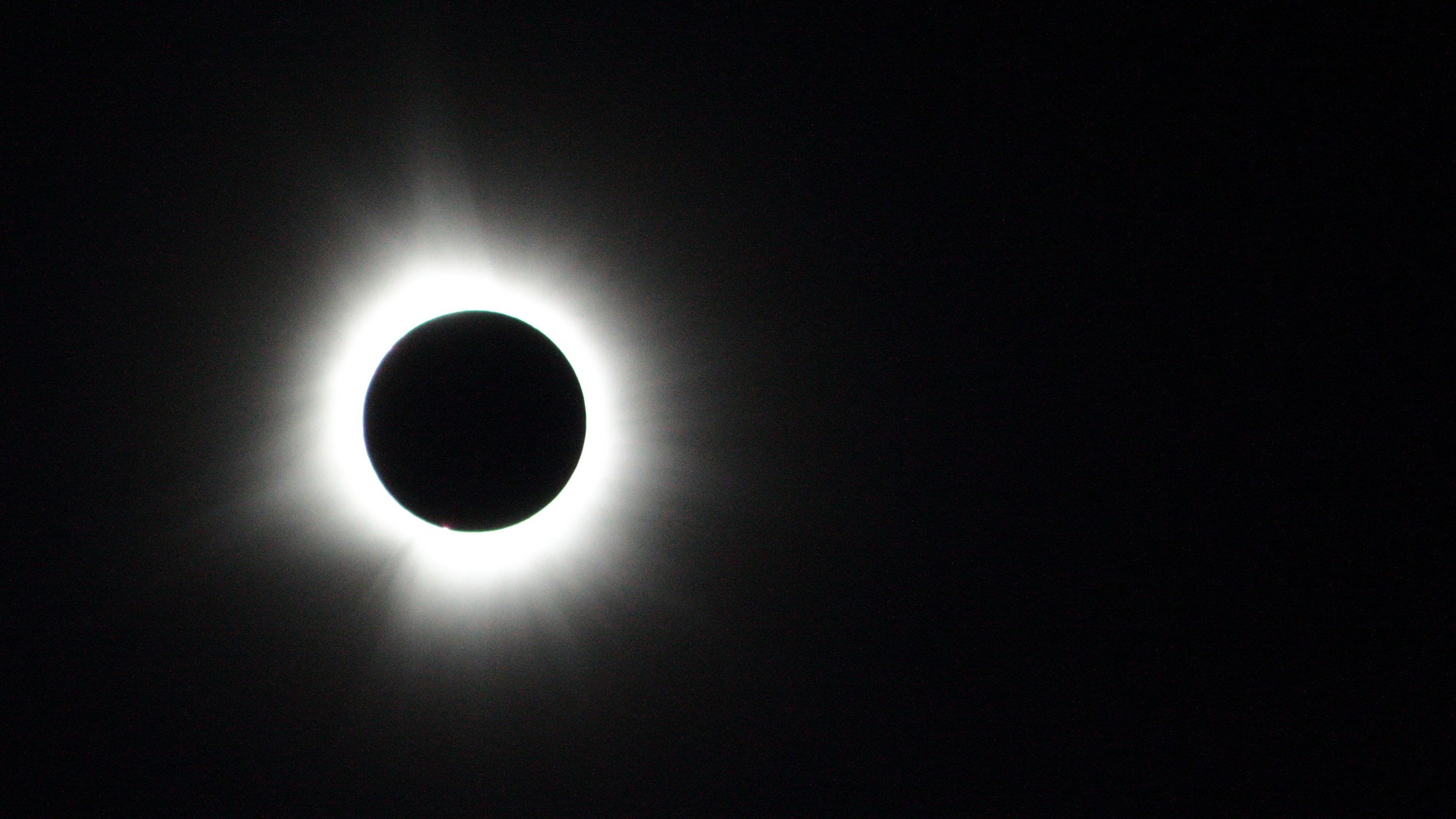
Here are a few photos of totality. Unlike seven years ago in TN, the sky was cloud free and the eclipse as spectacular.

Thursday, 04/11/2024: Posted photo — Third Contact.

This is Baily’s beads just as third contact starts, or totality ends. During the last few seconds before totality, the crescent Sun breaks up to form Baily’s beads (those are typically only visible through a telescope with a solar filter attached). At the end of totality, this sequence happens in the reverse order, starting with Baily’s beads until the returning burst of sunlight becomes too bright to view with the naked eye. I also missed this during the eclipse seven years ago and did not want to miss it again.
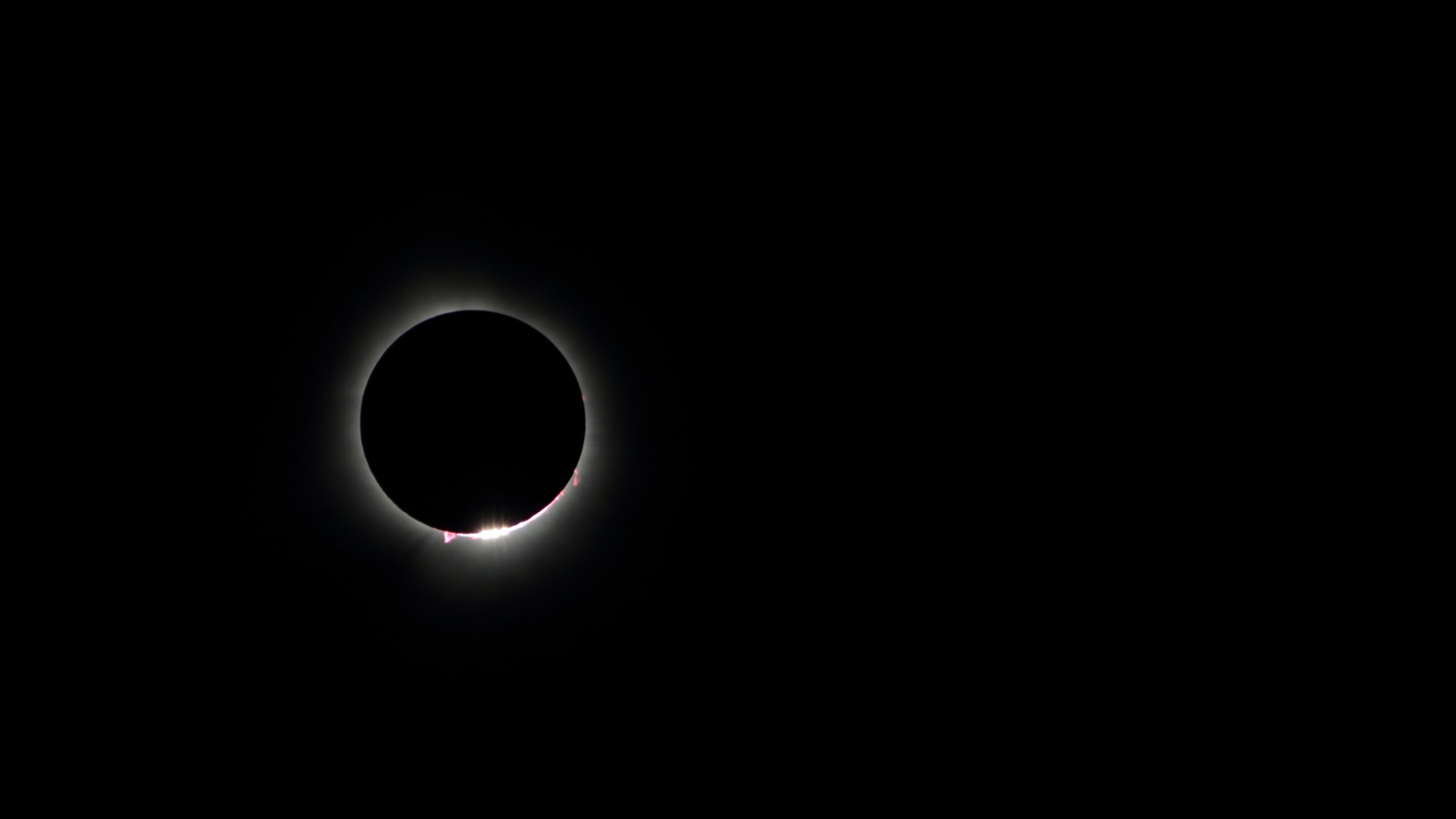
When looking at this photo, you can see some solar prominences. Though they look like they could be made of fire, they are eruptions of plasma, known as coronal mass ejections (CMEs). They are a hot gas made of electrically charged hydrogen and helium, extending outward from the sun’s surface.

Friday, 04/12/2024: Post photo — Collage.

Here is a composite photo of different phases of the eclipse.

The timing for these photos were taken from the Partial Phase Images area in my Solar Eclipse Timer app. This was a great app to use since it gave verbal instructions and information on what was happening during the eclipse. It would tell you want to look for on ground level and it would count down to the different contacts.

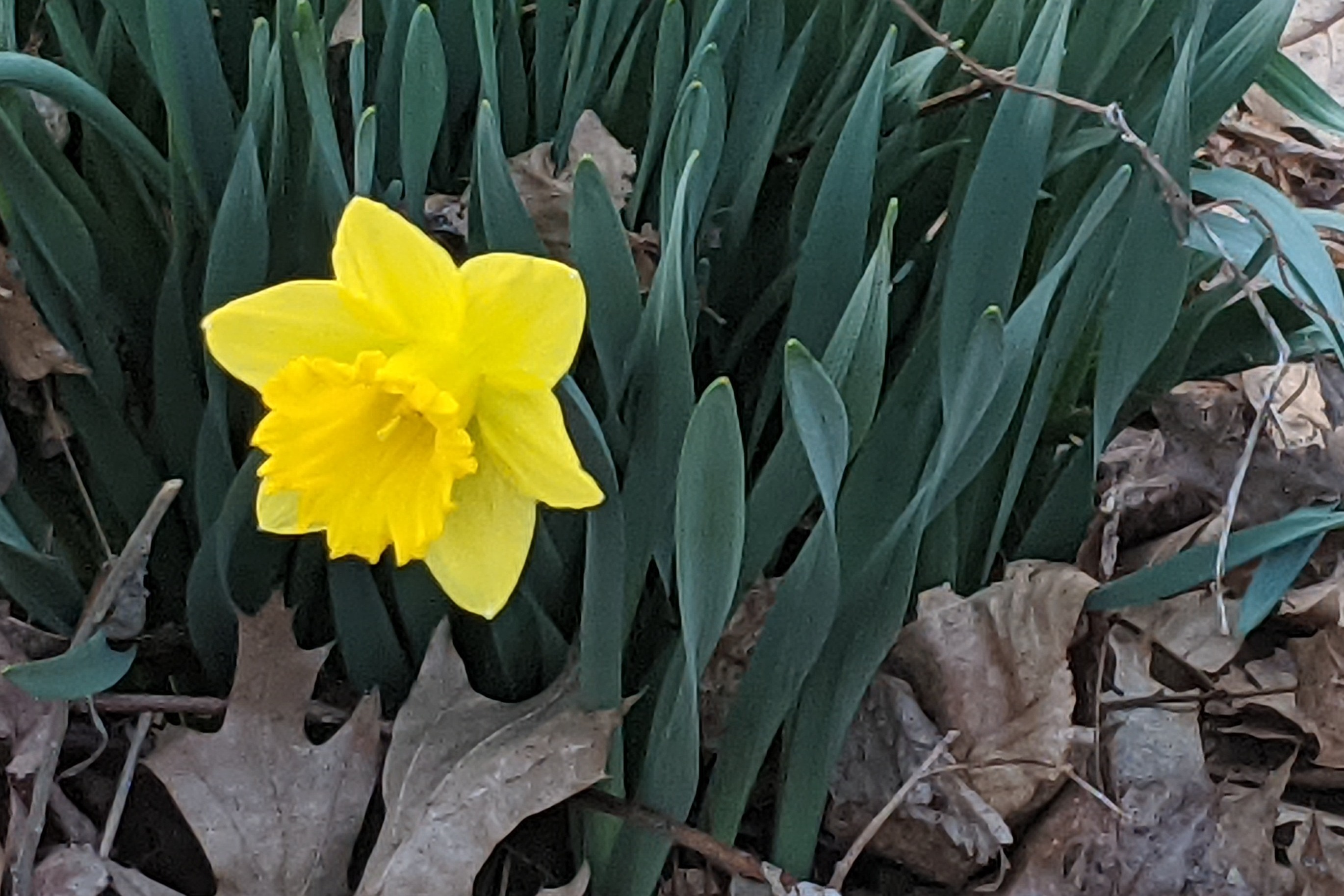
Saturday, 04/13/2024: Post photo — Daffodil.

The daffodils are starting to bloom in our yard. This is a sign of spring. The cold and damp weather did not stop their growth.

That is all for now. Until next week, be safe.

Photographic Thoughts — 03/17/2024 to 03/23/2024

“Once you learn to care, you can record images with your mind or on film. There is no difference between the two.” — Anonymous

Random photos of the week. Not my best week of photos.

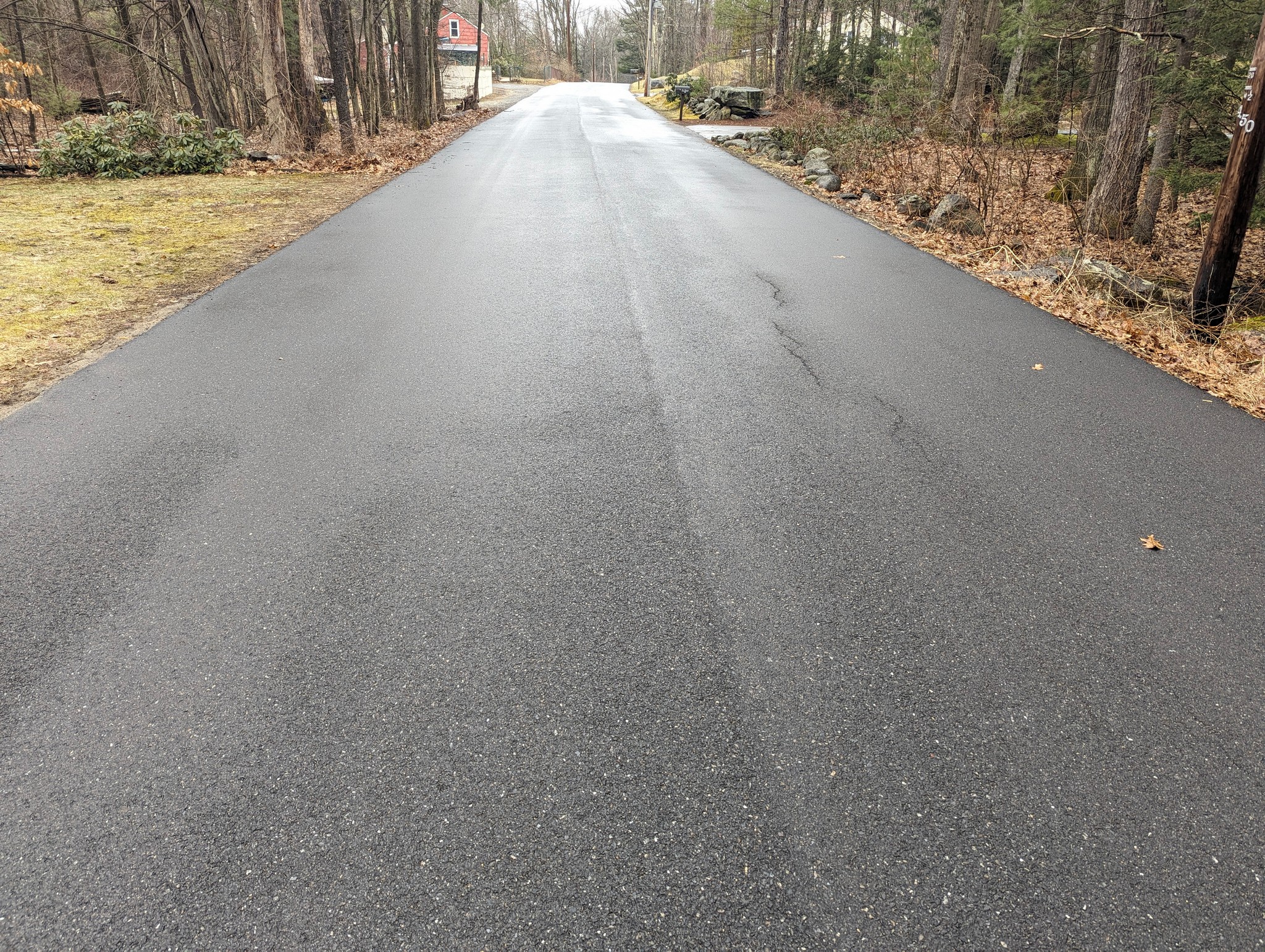
Sunday, 03/17/2024: Posted photo — Wet Road.

The subject of my weekly photo project this week was road. As with most weeks lately, I had full intention to take another photo for this project and time flew by. I am finding it more difficult to do this weekly project that it was to do the daily project.

This is a photo looking down my street from our driveway. The water on the road gives this photo my character that if the road were dry.

Monday, 03/18/2024: Posted photo — Boundary.

There are two Massachusetts State Parks withing 10 minutes of our house.

The 3,000-acre Wachusett Mountain State Reservation offers plenty of natural and recreational opportunities. And Leominster State Forest that has hiking, mountain biking, rock climbing and fishing. Both locations have segments of the 95-mile Midstate Trail in them and I hike and snowshoe in them, depending on the season. Leominster State Forest is flatter and easier to snowshoe in, and I have rock climbed the Crow Hill Ledges often when I was younger.

You have seen many posts from me about my hiking Wachusett Mountain and not many about my adventures in the Leominster State Forest. I will have to post more about those hikes.

Tuesday, 03/19/2024: Posted photo — First Day of Spring.

Today is the first day of spring, the vernal equinox. This was the earliest that the vernal equinox occurred across the contiguous United States in 128 years. Why was it the earliest that the vernal equinox occurred across the contiguous United States in 128 years.  According to space.com, there are two specific reasons for this: 1) The quadrennial intervention of leap year often causes a slight variation of the date, and 2) Daylight saving time (DST).

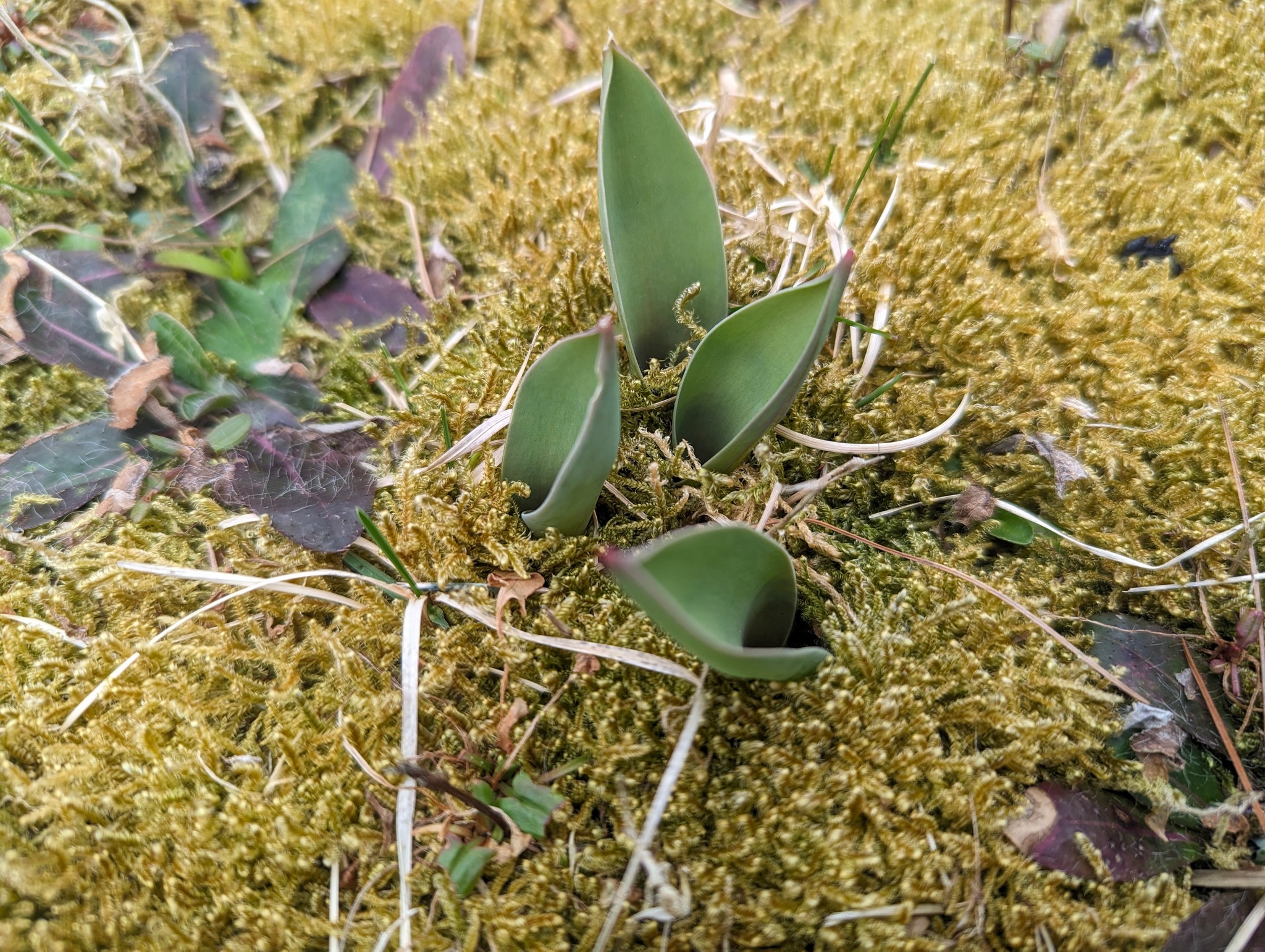
These are tulips that are starting to break through the soil at our house. I was looking to take photos of crocus, but have not seen any this year.

Wednesday, 03/20/2024: Posted photo — Are you Looking at Me.

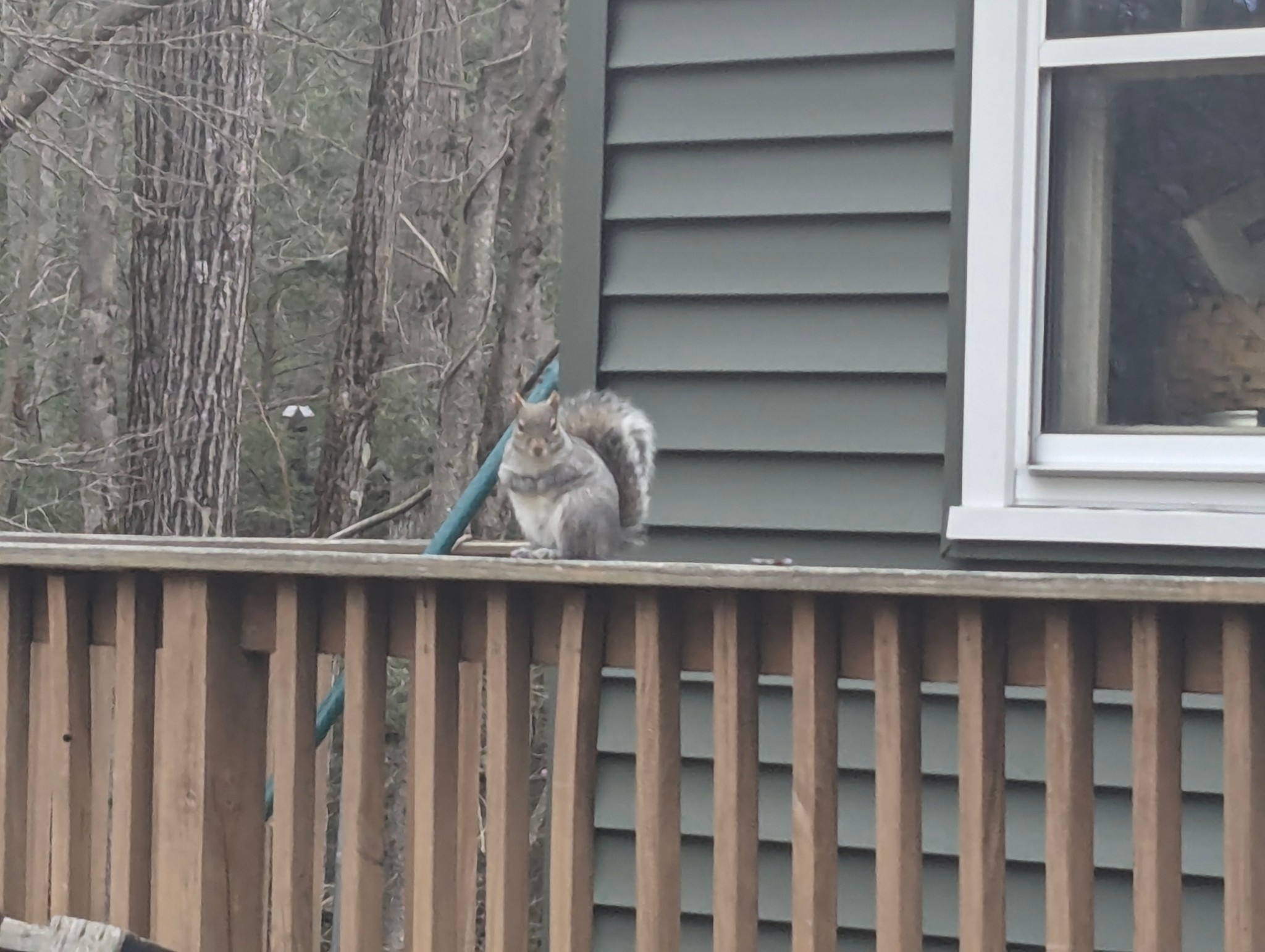
I came home from work today and saw this squirrel just looking at me. I took out my phone to take it photo expecting it to run away, but it just stayed there.

Sorry about the quality of this photo.

Thursday, 03/21/2024: Posted photo — Combinations.

One of my co-workers heard a story about a state running out of license plates numbers in a particular state so he wanted to know how many combinations of six digits there are. I sent this problem to my son, a mathematician, and these are his calculations.

He did the calculations with (36) six-character plates (26 letters and 10 numbers) and with five character with the last digit indicating the month of registration, as it is done here in Massachusetts. There are other special cases that he did not calculate.

Friday, 03/22/2024: Post photo — Good Morning.

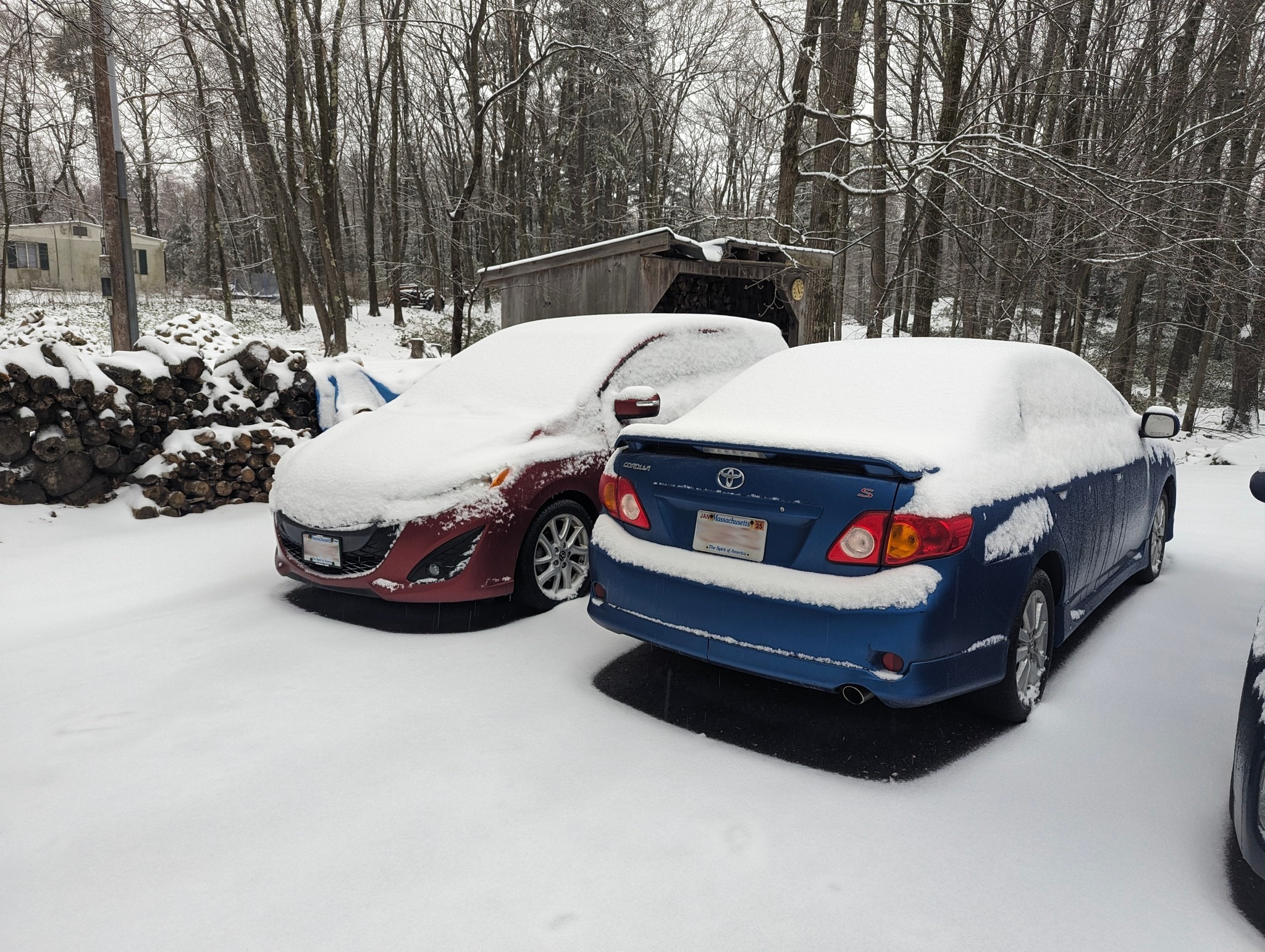
Some snow and ice on family vehicles. Taken in the future (Saturday morning, not today)

Saturday, 03/23/2024: Post photo — Snow and Ice.

Woke up to snow and ice. This weather was expected. I had to run some errands in the morning and the roads were bad. I saw a few cars that have drive off the road. Some people are just invincible.

That is all for now. Until next week, be safe.

Photographic Thoughts — 03/03/2024 to 03/09/2024

“The camera makes you forget you’re there. It’s not like you are hiding but you forget, you are just looking so much.” — Annie Leibovitz

Here are some mountains that I have seen during my travels.

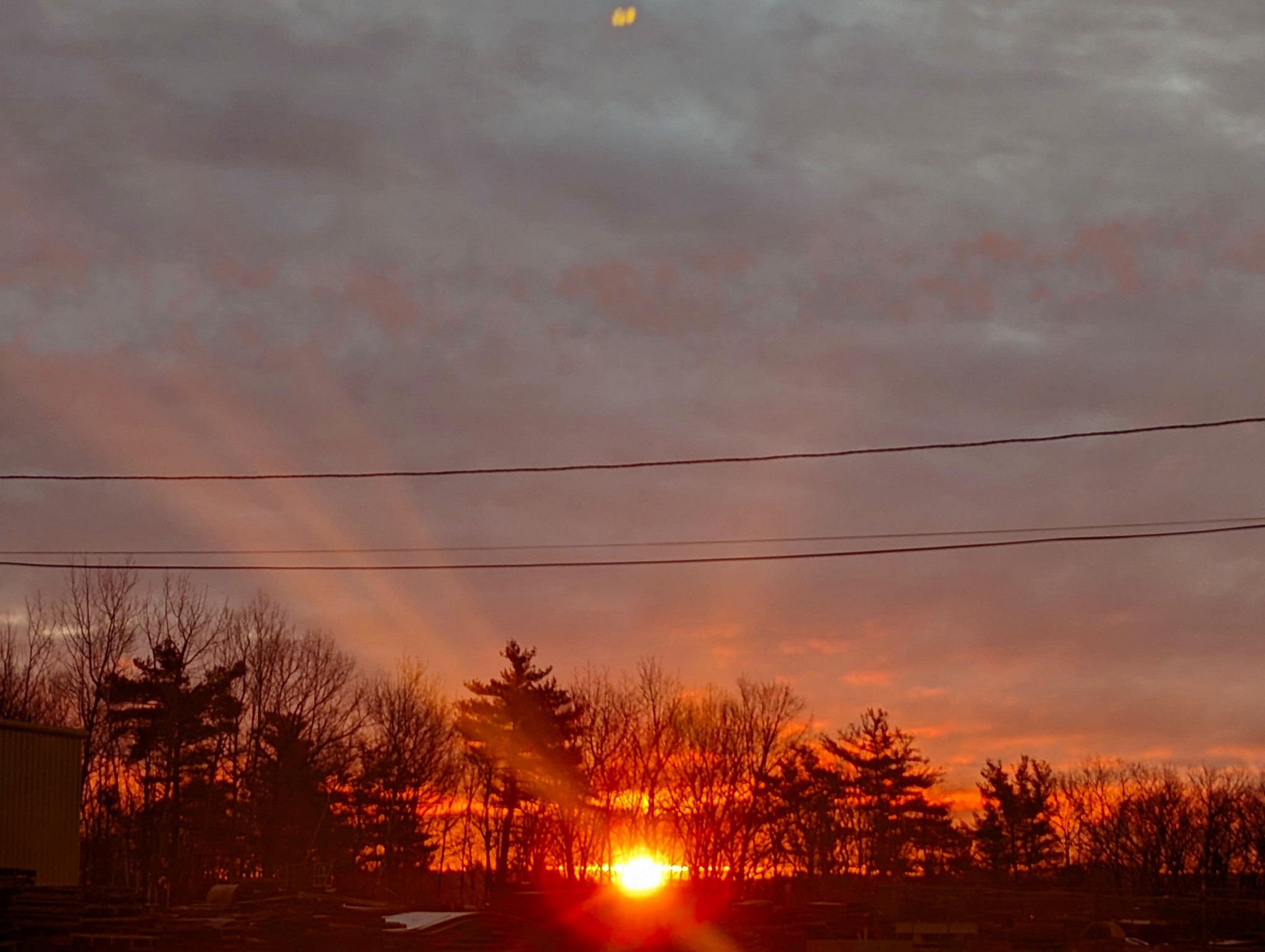
Sunday, 03/03/2024: Posted photo — Sunrise.

A wonderful sunrise. Took this photo on Monday morning and not on Sunday. I was busy on Sunday with a birthday celebration from a member of my family.

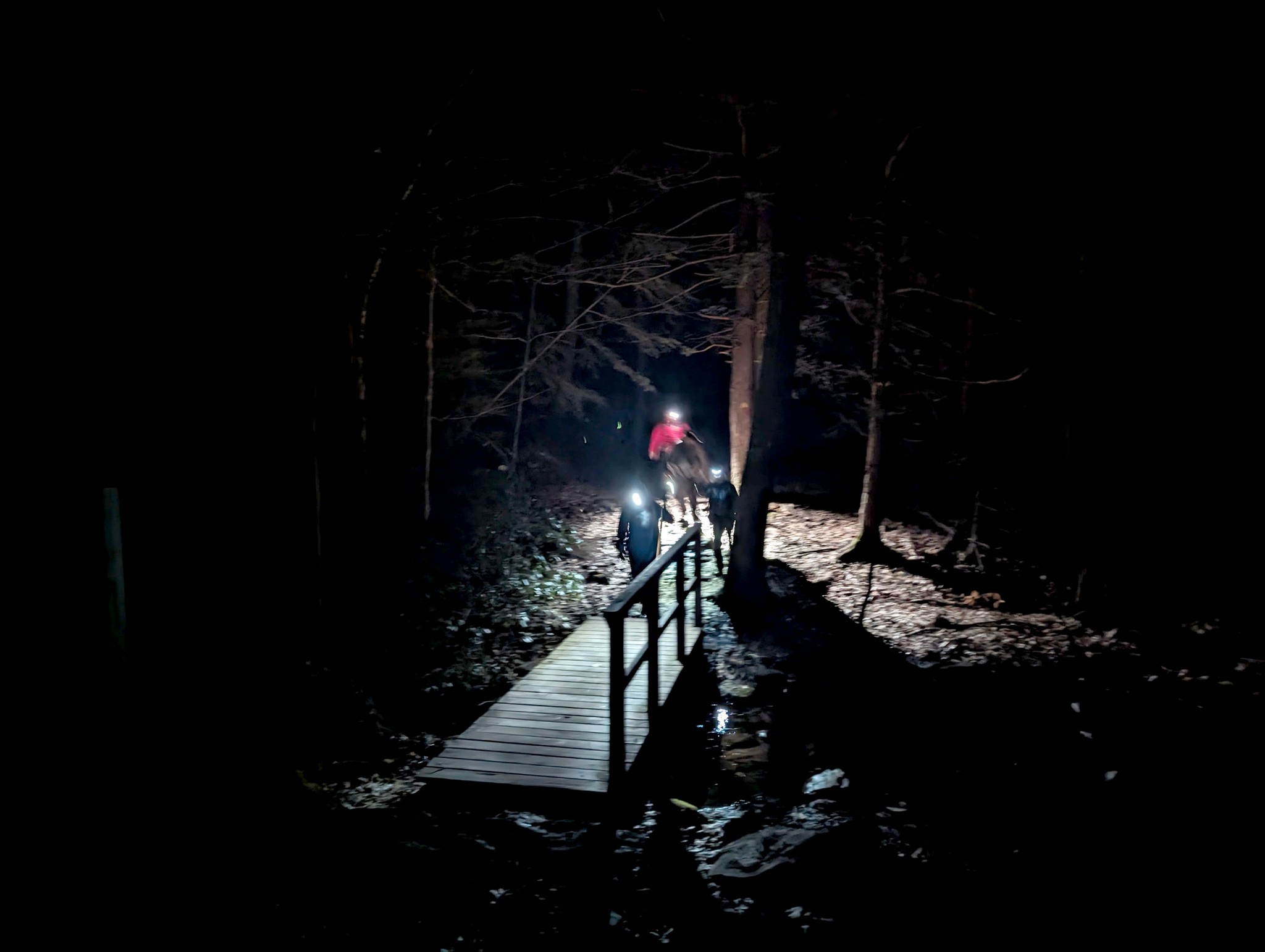
Monday, 03/04/2024: Posted photo — Night Hike.

I lead the Monday night hike this week. As the weather is getting better, more people are hiking on Monday nights. We have had 2–4 people on hikes during the winter, tonight we had seven. More people are expected due to the warmer weather and it being lighter at night. Time for some sunsets!

Tuesday, 03/05/2024: Posted photo — Stream.

With the snow melt and the rain we have had recently, the streams on the mountain are running. This is a photo from tonight’s night hike. Again, I did not realize that my headlight had a blue tint to it.

Wednesday, 03/06/2024: Posted photo — Bouquet.

A bouquet of flower that I took while food shopping this week.

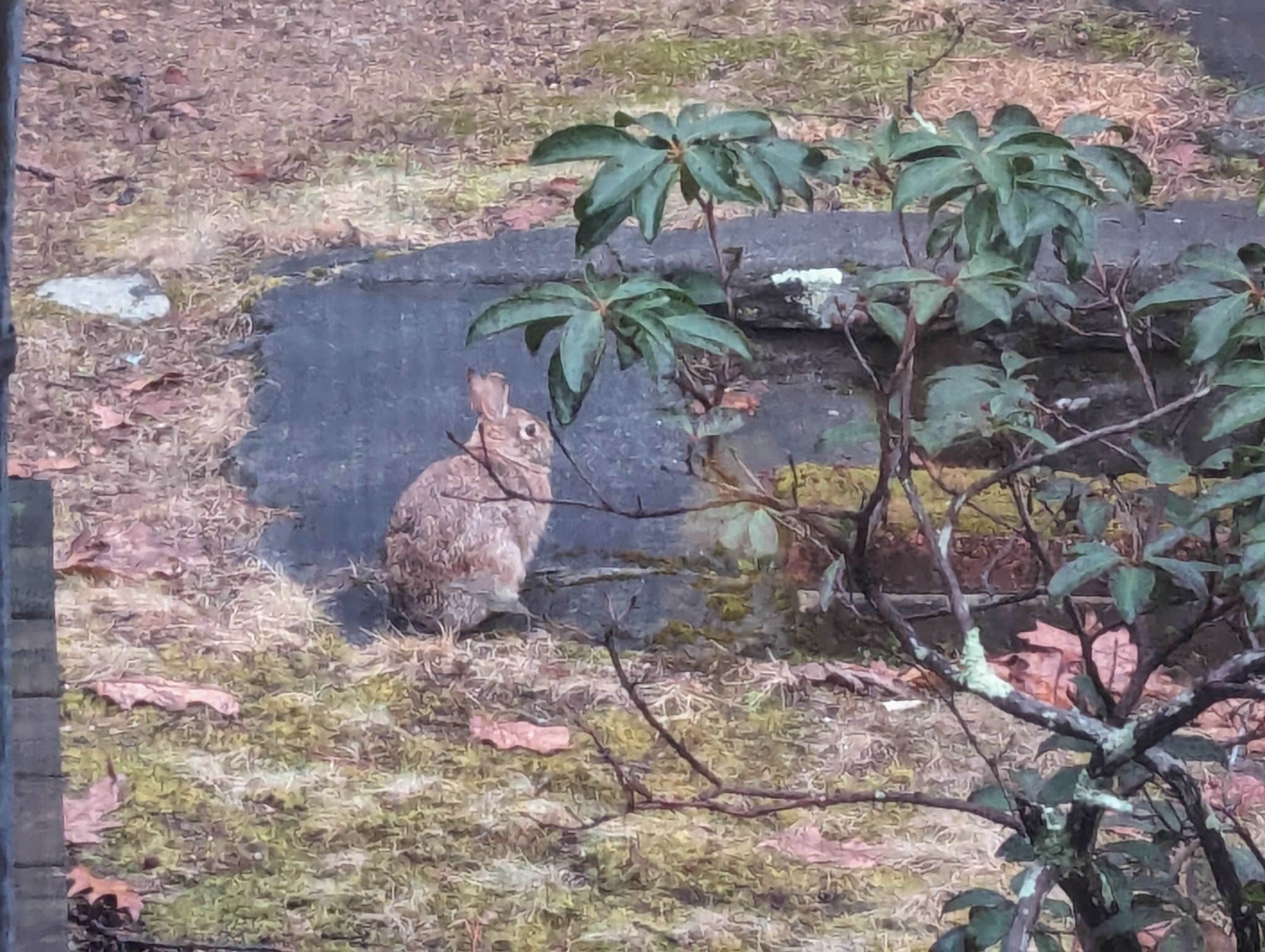
Thursday, 03/07/2024: Posted photo — Rabbit.

The rabbit that lives on our property has been seen for the first time this year. I have seen rabbit prints in the snow during, but this is the first time I have seen it. Glad to see it made it through the wet, cold winter.

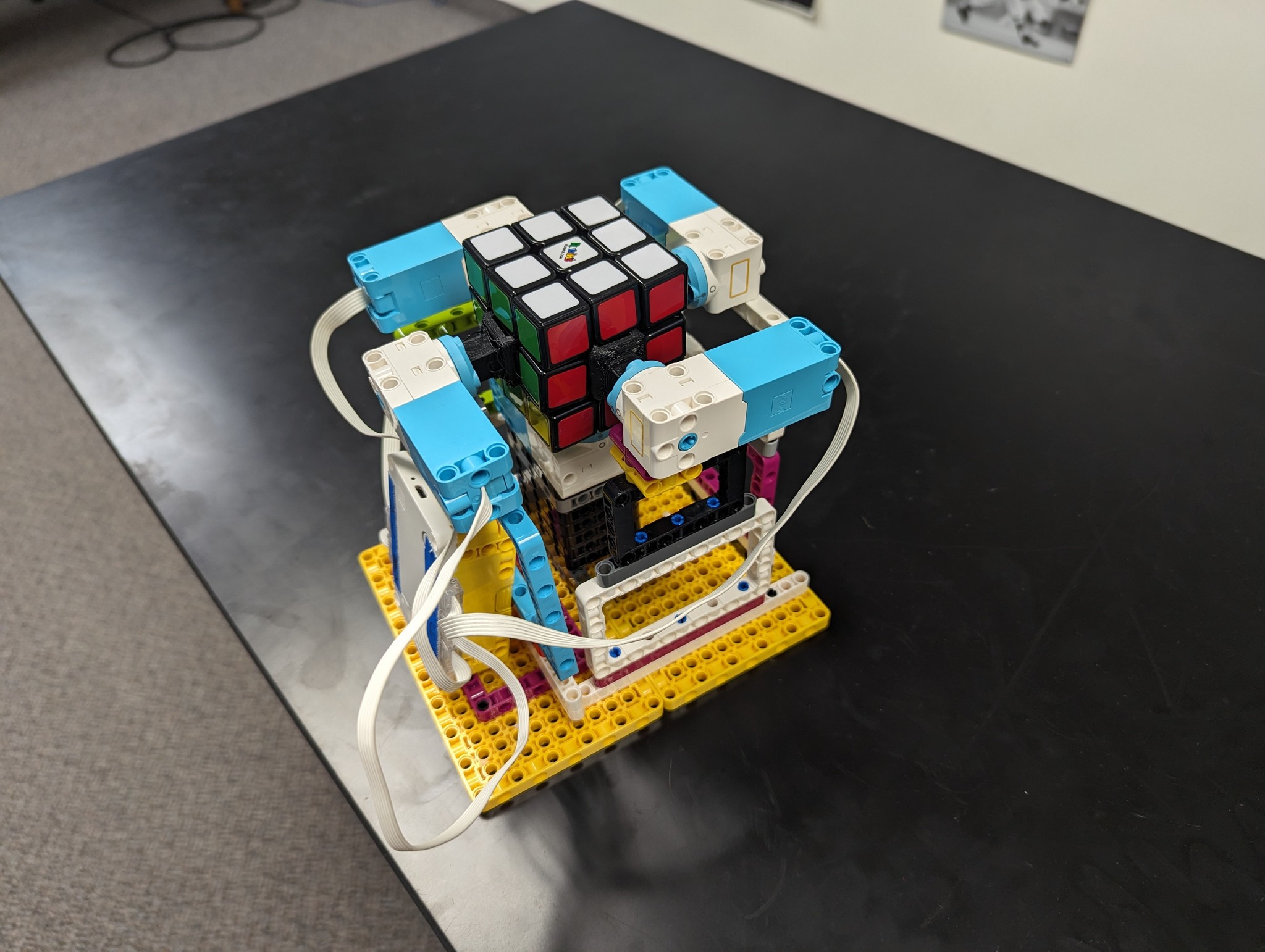
Friday, 03/08/2024: Post photo — Cube Solving Robot.

I help the robotics team at my high school alma mater. They were practicing their judging speech for the state championships and showed us that they have designed a robot that will mix up a cube to create a pixel for a mosaic that will be making. They did this through a STEM (Science, Technology, Engineering and Math education program) that they started. This is the first STEM Rubik’s project in the country and they are sponsored by Rubik. I know a couple of the robotics team members from the speed cubing community. Here is a video of the robot: https://youtu.be/Id_YpwkuKww?si=U987aegensWYtoMc. It is long but it give you an idea of how these two cubers programmed the robot.

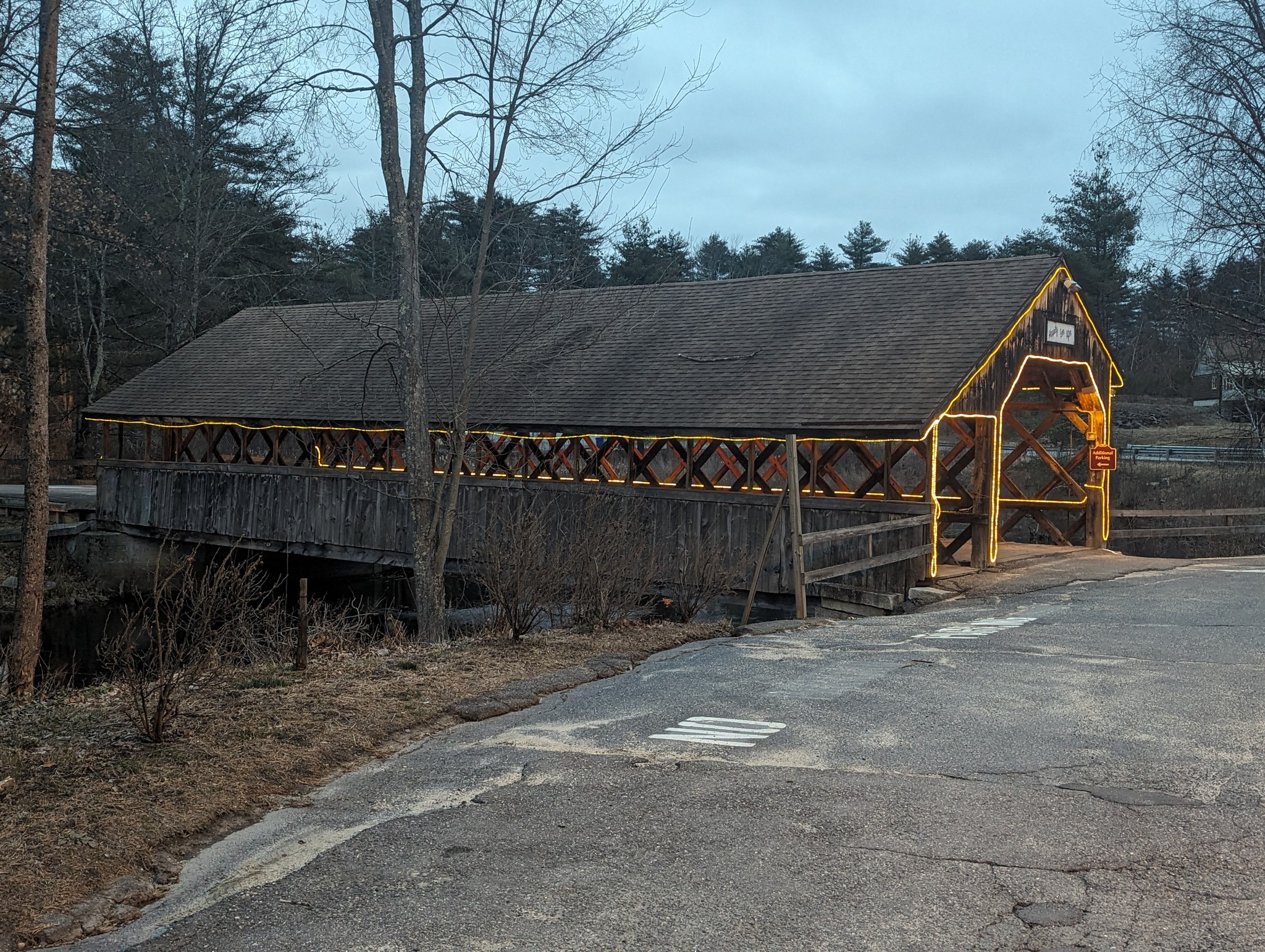
Saturday, 03/09/2024: Post photo — Covered Bridge.

This covered bridge is at the Bull Run Restaurant.

I attended Don White’s Annual Birthday Show at the Bull Run with some old college friends. It was not about the show, it was about connecting with people you spent a lot of time with earlier in your life and just getting together very sporadically over the years. The show was interesting, and the company was great. Will I remember who performed or what they sang, probably not. I will remember going out with some old friends.

When I was younger, people would tell me not to take family and friends for granted. As I get older, I understand what they mean. Thank you Chris for taking this group photo to keep the memories alive.

That is all for now. Until next week, be safe.
Photographic Thoughts — 02/18/2024 to 02/24/2024

“To me, photography is an art of observation. It’s about finding something interesting in an ordinary place… I’ve found it has little to do with the things you see and everything to do with the way you see them.” — Elliott Erwitt

Here are some mountains that I have seen during my travels.

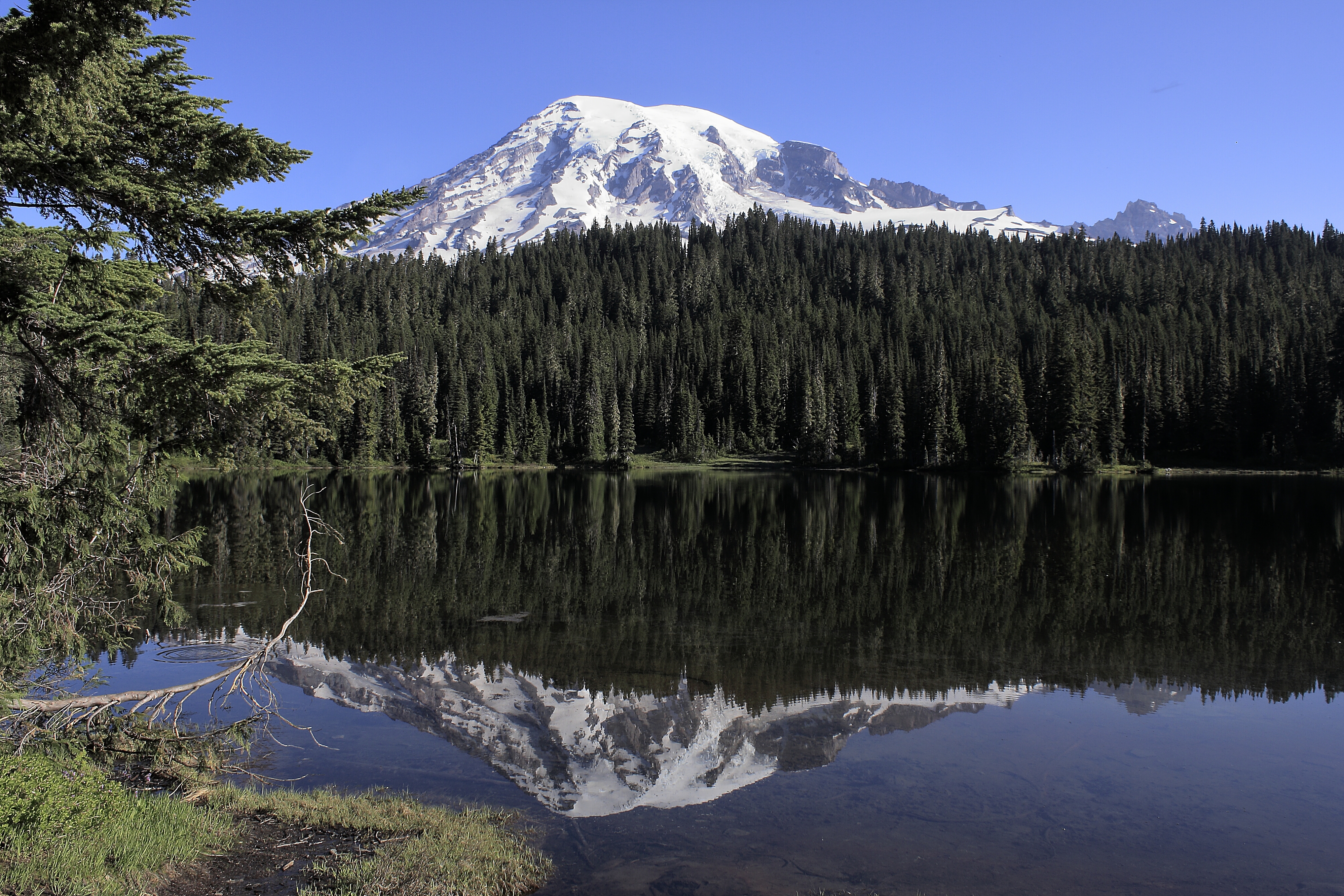
Sunday, 02/18/2024: Posted photo — Reflection Lakes.

Mount Rainier National Park, Washington

There were many great views of the mountain in the park. Took this photo was in the morning when the water was calm. There was someone sleeping in a hammock just outside the frame of this photo.

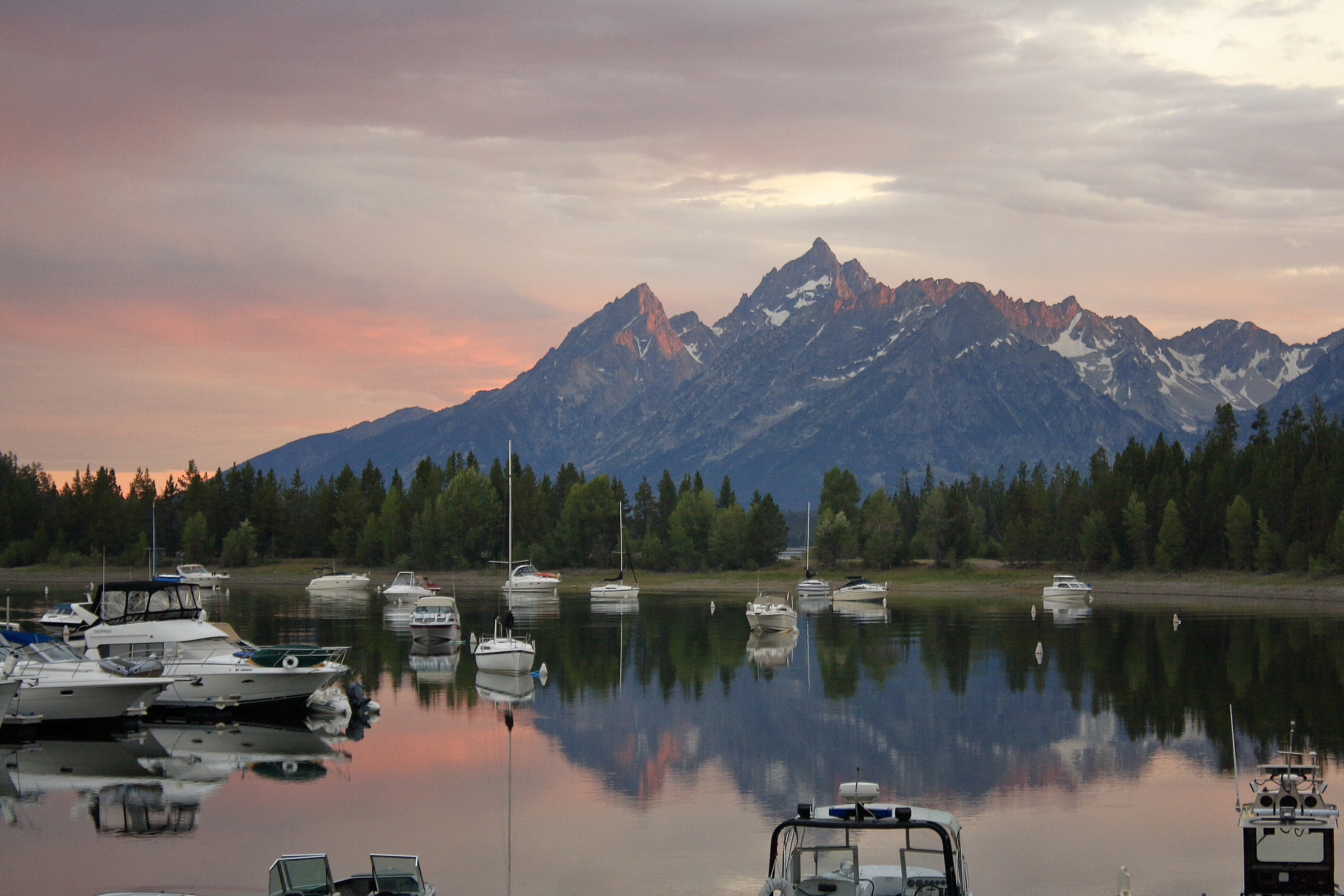
Monday, 02/19/2024: Posted photo — Grand Teton National Park.

Grand Teton National Park, Wyoming

The Tetons are great and majestic mountains. Took this one just after sunset in the golden hour.

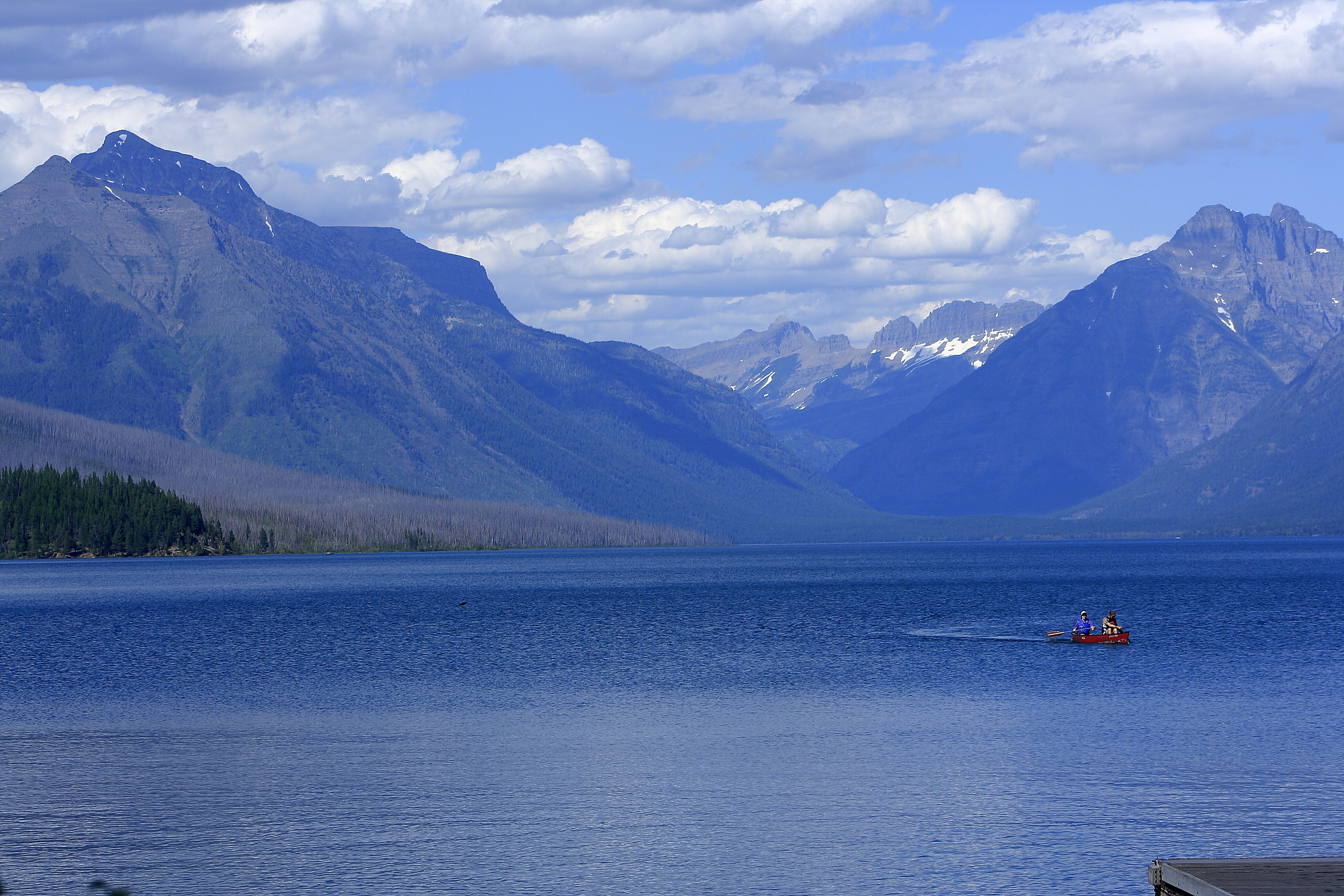
Tuesday, 02/20/2024: Posted photo — Lake McDonald.

Glacier National Park, Montana

This was my first view of Glacier National Park. We did some hiking with a mountain goat and her children on this trip.

Wednesday, 02/21/2024: Posted photo — Prince of Wales Hotel Waterton Lake.

Waterton – Glacier International Peace Park, Alberta

When we arrived at the park, the ranger saw that I had a camera. She told me of the spot to take this photo. It was up a private road used just by the rangers.

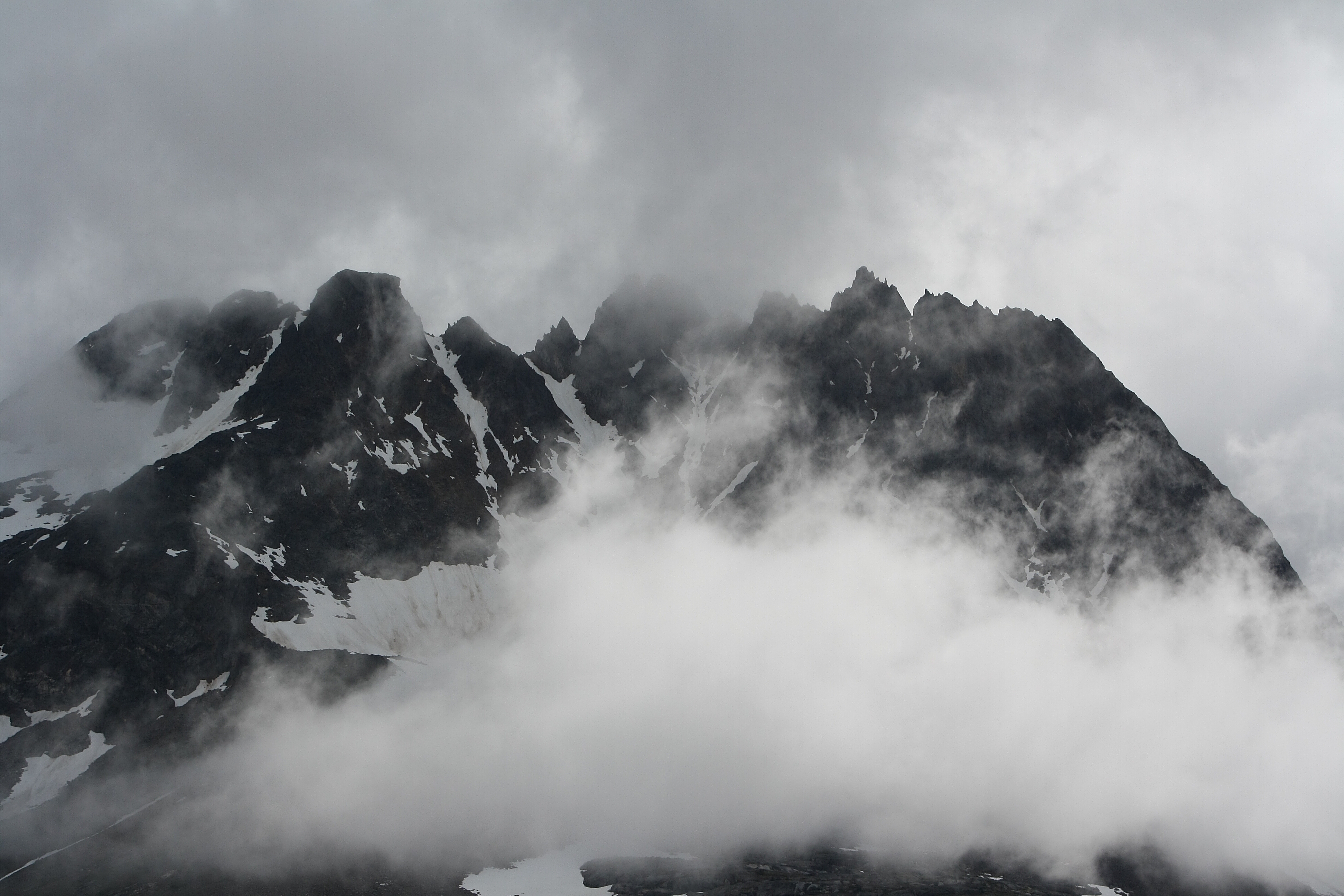
Thursday, 02/22/2024: Posted photo — Along the White Pass Yukon Route Railway.

Alaska

We took a ride on the White Pass Railroad on our trip to Alaska. We did go into the Yukon to turn around. This is one of the mountains along the way. This photo is in color.

Friday, 02/23/2024: Post photo — Lake Louise.

Banff National Park, Alberta

I did not know that Lake Louise was a famous lake. We just stopped in to take in the views. It was crowded when we arrived in the morning and was very crowded in the afternoon when we continued our journey.

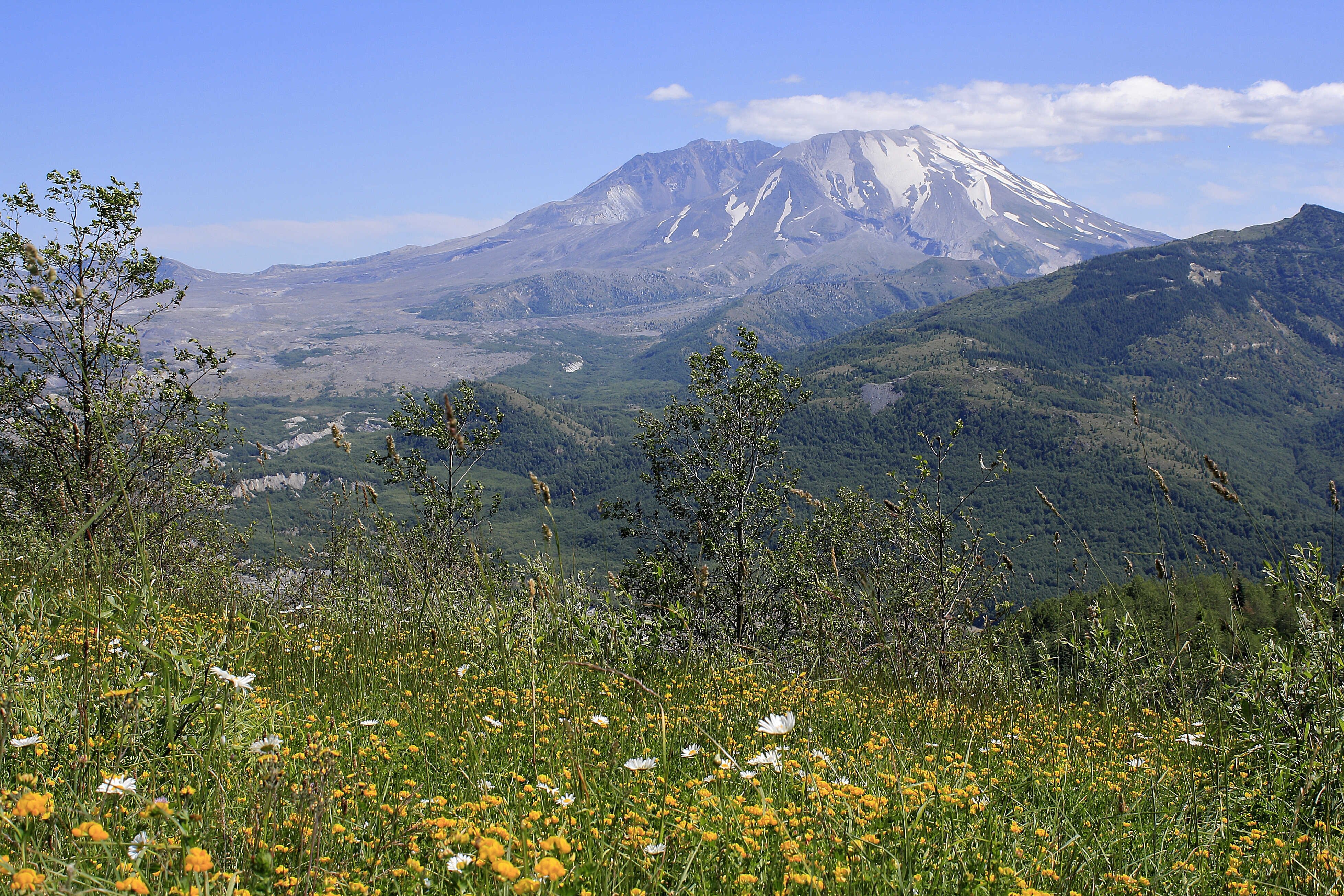
Saturday, 02/24/2024: Post photo — Mount St Helens National Volcanic Monument.

Washington

Been to Mount St Helens many times since it erupted on May 18, 1980. I am amazed with the way nature is recovering. The first time I went there was ten years after the eruption and there were still logs floating in Spirit Lake.

That is all for now. Until next week, be safe.
Photographic Thoughts — 11/19/2023 to 11/25/2023

“Once you learn to care, you can record images with your mind or on film. There is no difference between the two.” — Anonymous

Thank you for all the new views and likes from last week, it helps keep me inspired.

Sunday, 11/19/2023: Posted photo — Moxie.

Distinctively Different since 1884. Moxie is the oldest continually produced soft drink in the United States. It is a New England tradition. Moxie was designated as the official soft drink of the State of Maine in 2005.

I like Moxie. Most of my friends and family do not like the taste. We had Moxie when I was younger since my father also liked it. “Live your Life with a little Moxie.”

Monday, 11/20/2023: Posted photo — Stars.

Today would have been my father’s 101 birthday. Miss you dad.

Nice hike tonight. The temperature was cool, and the air was brisk. Hiking keeps you warm and if you dress properly, you stay warm.

When the group was at the summit, I put my phone on a handrail and took a photo of the sky.

Tuesday, 11/21/2023: Posted photo — Compass.

During my map and compass course, I talked about the difference between a fixed declination compass and an adjustable declination compass. I have been putting together my slides for the advanced map and compass class and took a photo of the two of my compasses. The fixed declination compass (Suunto A-10) has the declination scale in the North while the adjustable declination compass (Suunto M-3) has the declination scale in the South.

I am also discussing the principle of back bearing. Back bearing is the way to backtrack to find your way back to your original location. The fixed declination compass is taking a back bearing without taking into account magnetic declination.

Wednesday, 11/22/2023: Posted photo — Flowers.

During my shopping trip, I took another photo of flowers. Always good to take photos of flowers when there is more darkness than light during the day.

Thursday, 11/23/2023: Posted photo — Desert.

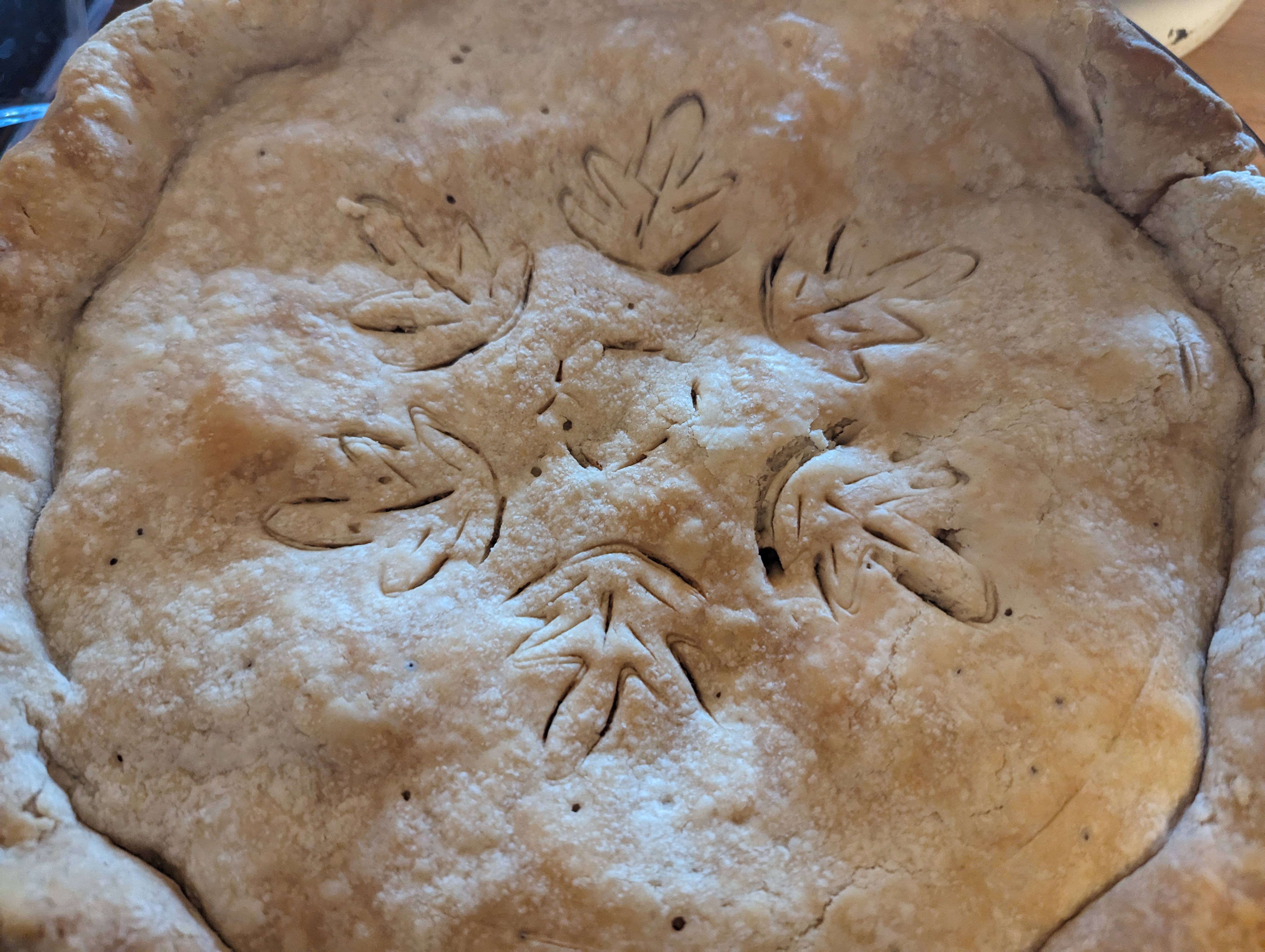
Today is Thanksgiving Day. On this day we give thanks to what we have, have family gatherings, and large meals that include desert. This year we had a small dinner with my family my niece and here husband (one of my son’s friends). After dinner we invited the family over to our house for dessert.

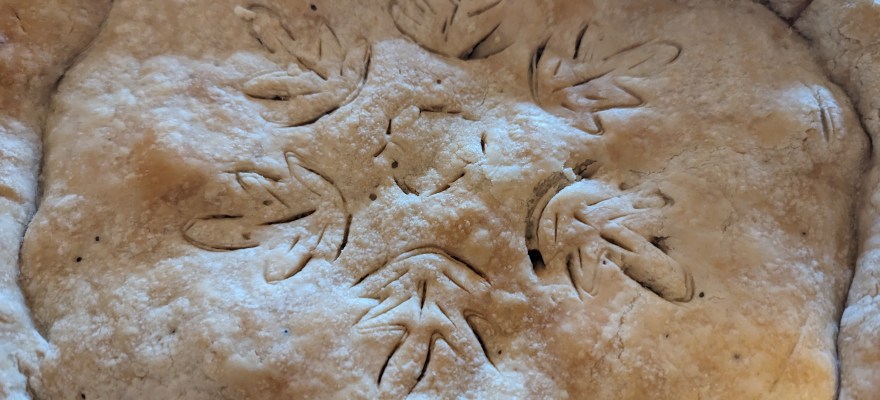
Here are photos of a traditional apple pie, a wonderful chocolate and peanut butter pie, and the frosting on a pumpkin and chocolate chip cake. These desserts go well with ice cream and homemade whipped cream.

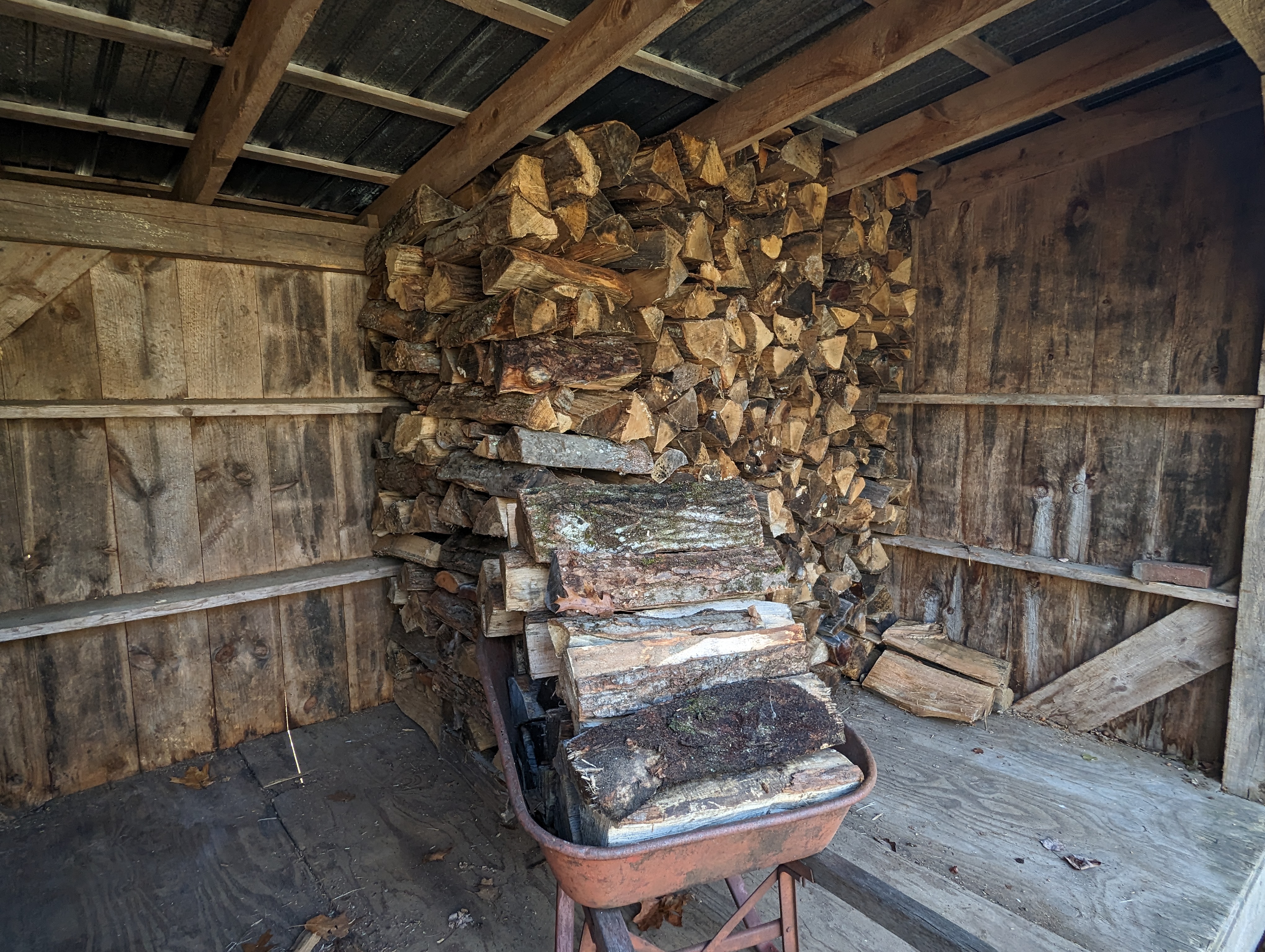
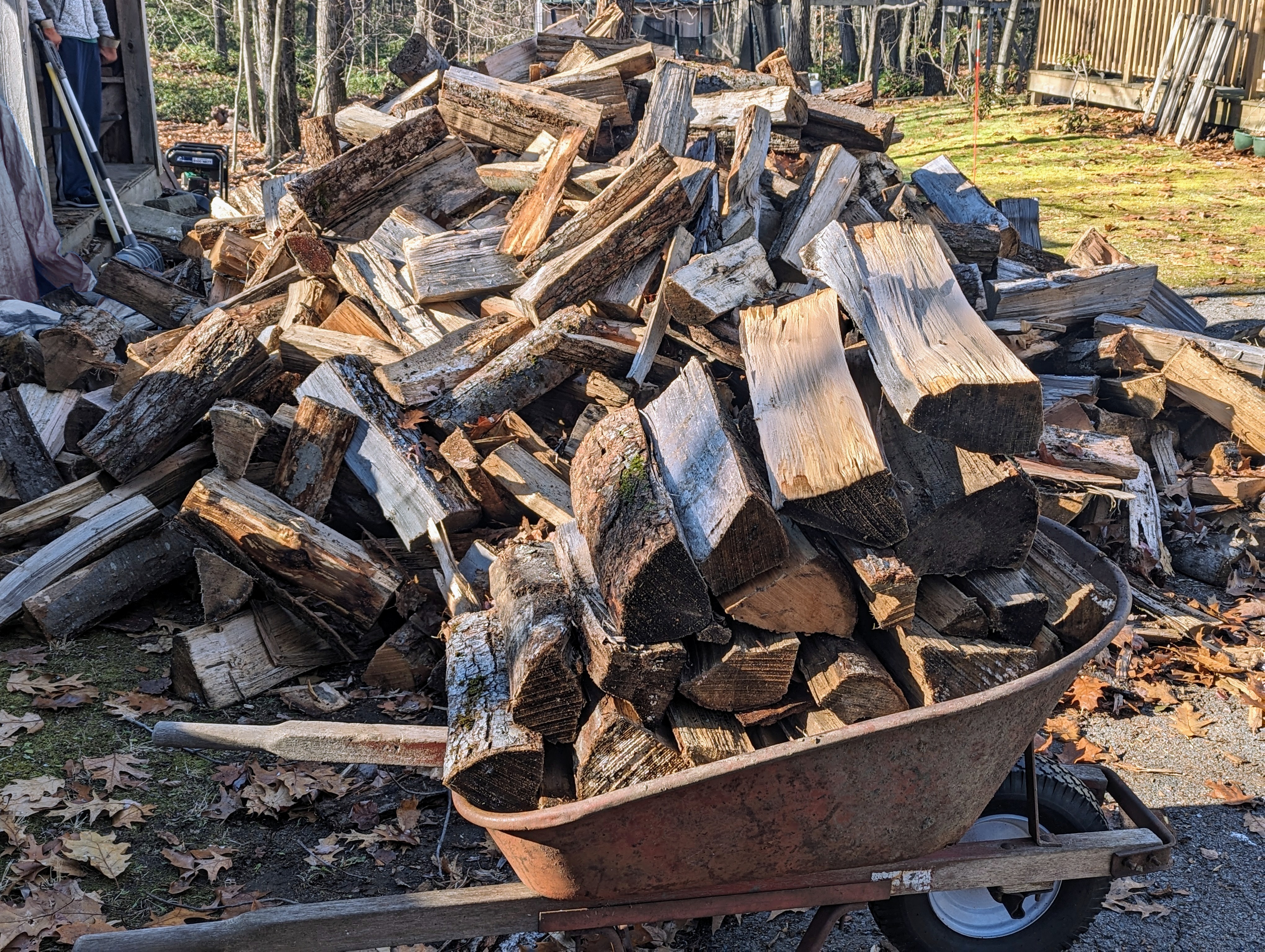
Friday, 11/24/2023: Post photo — Wood Delivery.

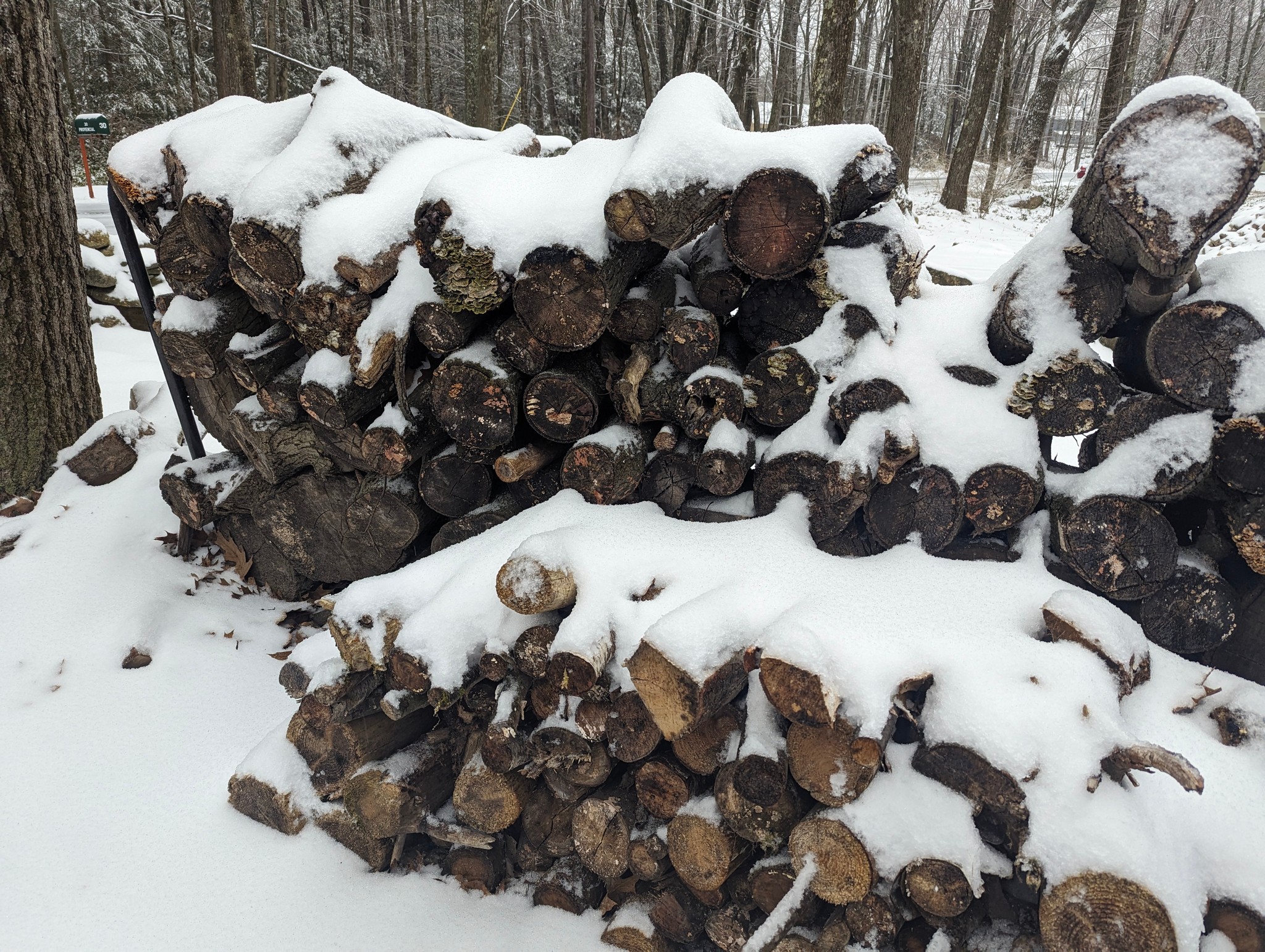
This morning we received the first of two wood deliveries. The normal length of wood we order was flooded out due to all the rain we had this summer, so we needed to purchase some wood that is longer than we do and some shorter. We received two cords of the longer pieces this morning and had them stacked in our woodshed by early afternoon. Firewood is sold by a measurement called a “cord.” A cord must equal 128 cubic feet.

In the next week or so, I will be ordering the three cords of shorter wood for us to stack in our woodshed. The woodshed can only handle four cords, so we will have to stack some outside the shed in our uncovered racks.

Saturday, 11/25/2023: Post photo — Book.

Was out blowing leaves today since the leaves were dry. Some of the leaves were, and still are, frozen to the ground. What does this have to do with the book photo? Well, I needed a photo for today and I am still putting together my advanced map reading course for the spring. This is one of the best books to get to learn navigation. I have been using it for many years now.

That is all for now. Until next week, be safe.

Photographic Thoughts — 05/07/2023 to 05/13/2023

“Your first 10,000 photographs are your worst.” — Henri Cartier-Bresson

Random thoughts and ideas for this week.

I have a flower of day this week. I am attempting to change the format of this blog to have one or more educational items per day to make reading my blog more interesting.

Sunday, 05/07/2023: Posted photo — Pyx.

A pyx is vessel containing the consecrated bread used in the service of Holy Communion. Although pyxes were made in various shapes, the most common form was that of a small cylindrical box fitted with a cover, which is generally conical. The pyx in this photo is the one that I use every week to give Holy Communion to the choir.

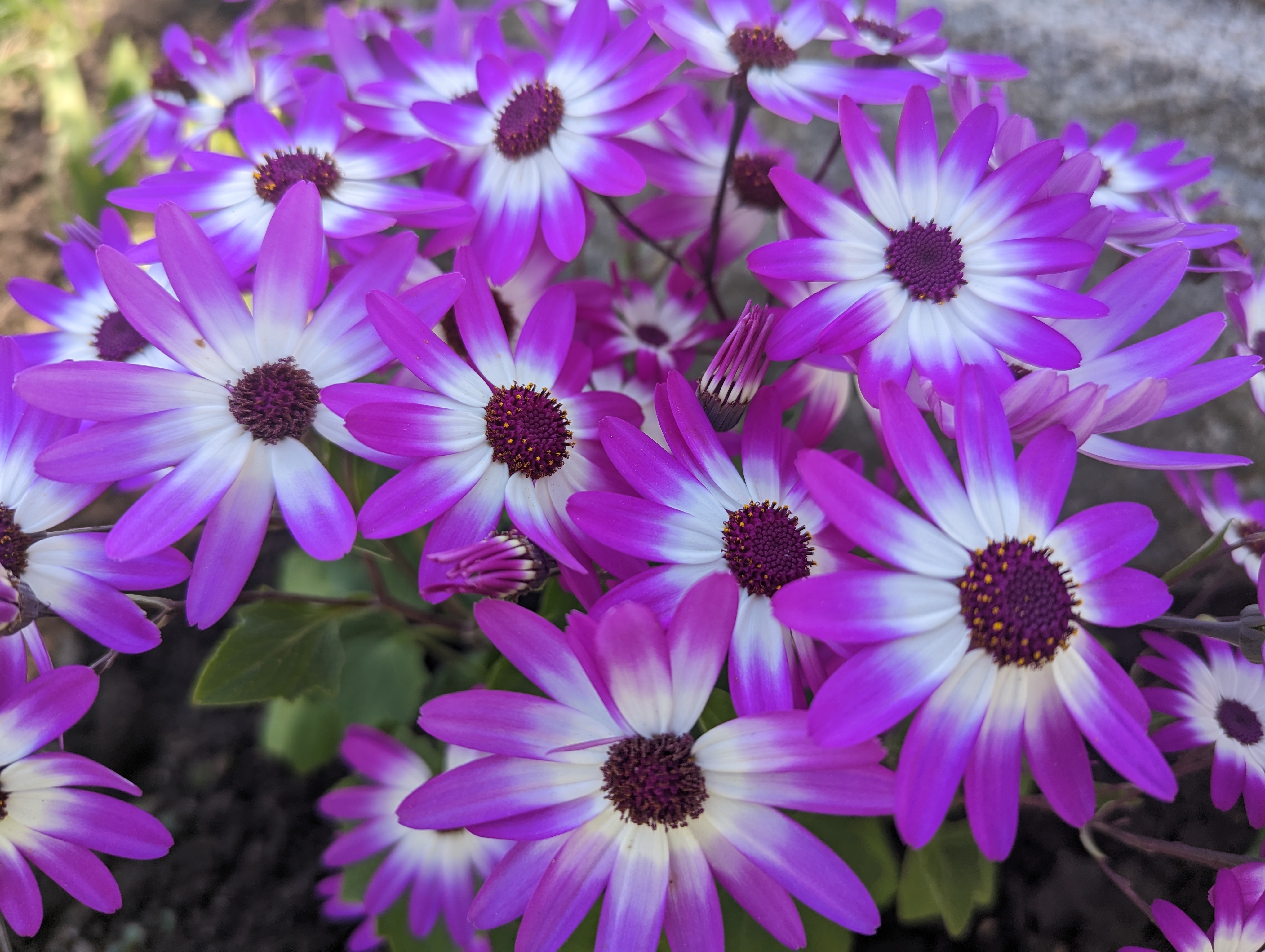
Flower of the day: Pericallis

Pericallis senetti provides daisy-like blooms in early spring when the weather is cool. They produce vibrant blues, magentas, violets, and can be bi-colored. They can tolerate low temperatures but are sensitive to frost. These are located outside our church.

Monday, 05/08/2023: Posted photo — On the Trail.

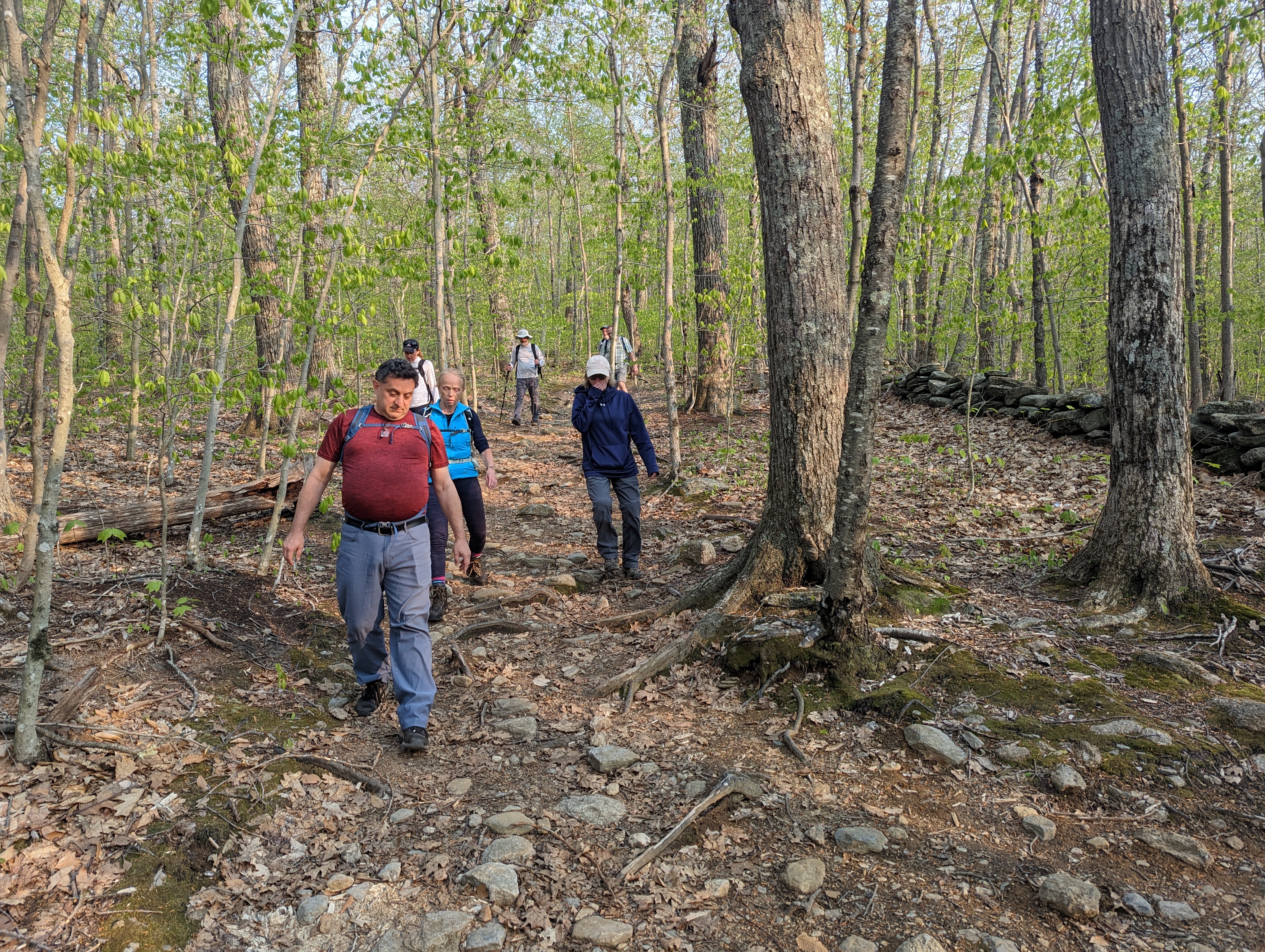
What would Monday night be without a hike? Don’t know. Every Monday that I hike does not happen is a disappointment. The good thing about missing a Monday night hike is that I can spend more time with my family. Today was a wonderful day to hike. The temperature was in the goldilocks zone, not to hot and not to cold. The black bugs were not bothering me as much as other members of the hiking group.

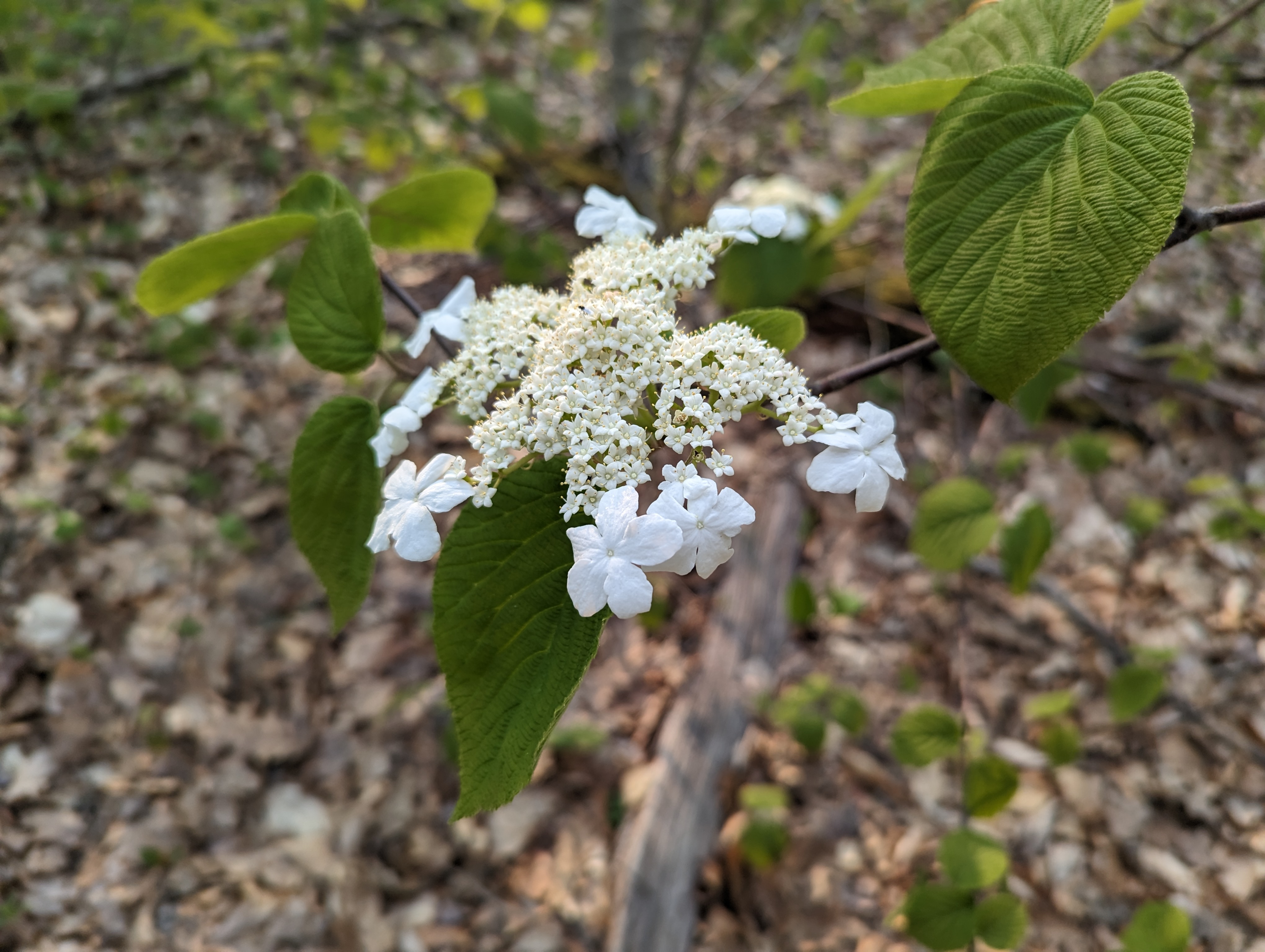
Flower of the day: Hobblebush

“Viburnum lantanoides, hobblebush (also known as moosebush, witch-withy, witch-hobble, witch-tangle and tangle legs) can grow more than ten feet tall, and often at least as wide, in its sprawling, errant, fashion. Branches extend outward, arch and descend, re-rooting where they touch the ground, forming a small copse. This lissome habit is most evident in winter when the hobblebush is leafless and the shrub’s structure can be traced. What appears to be a solitary shrub is usually an aggregate of clonal offspring called ramets.” https://wildseedproject.net/2015/06/viburnum-lantanoides-hobblebush-adoxaceae/

Tuesday, 05/09/2023: Posted photo — Abstract Rabbit.

Came home from shopping tonight and saw this rabbit in our yard. I took out my phone to take this photo. I took this photo from a distance so that I did not disturb the rabbit. It looks like my camera went into the digital zoom range causing this abstract effect. You can see the tree debris that I still need to clean up in this photo.

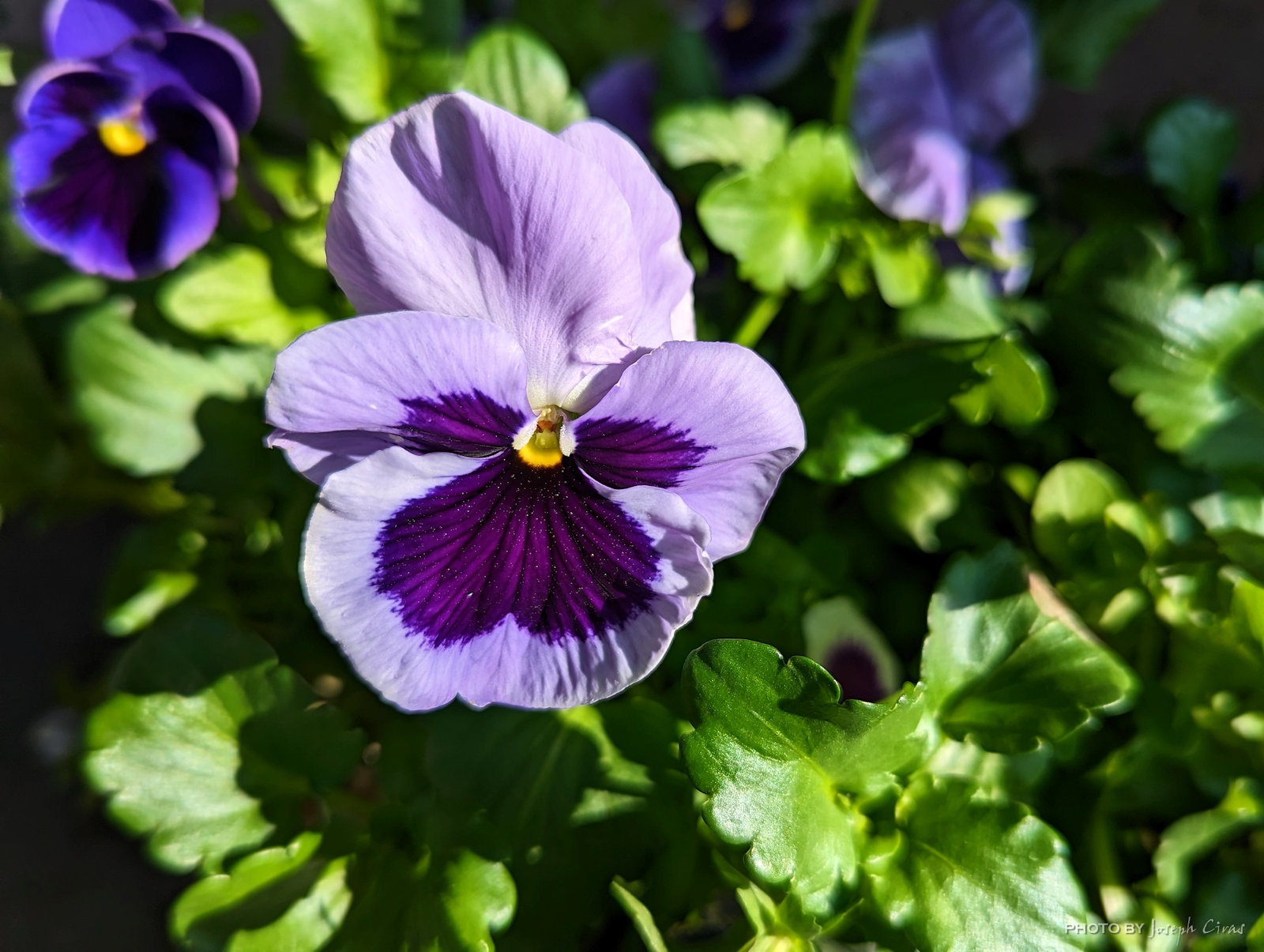
Flower of the day: Pansy

Pansies are the cheerful flowers with upturned “faces.” They love cool weather and are popular to grow in spring and fall. They’re also edible, adding color to salads, drinks, and cakes. Here’s how to plant pansies and keep them growing and blooming.

Wednesday, 05/10/2023: Posted photo — Start of Third Leg.

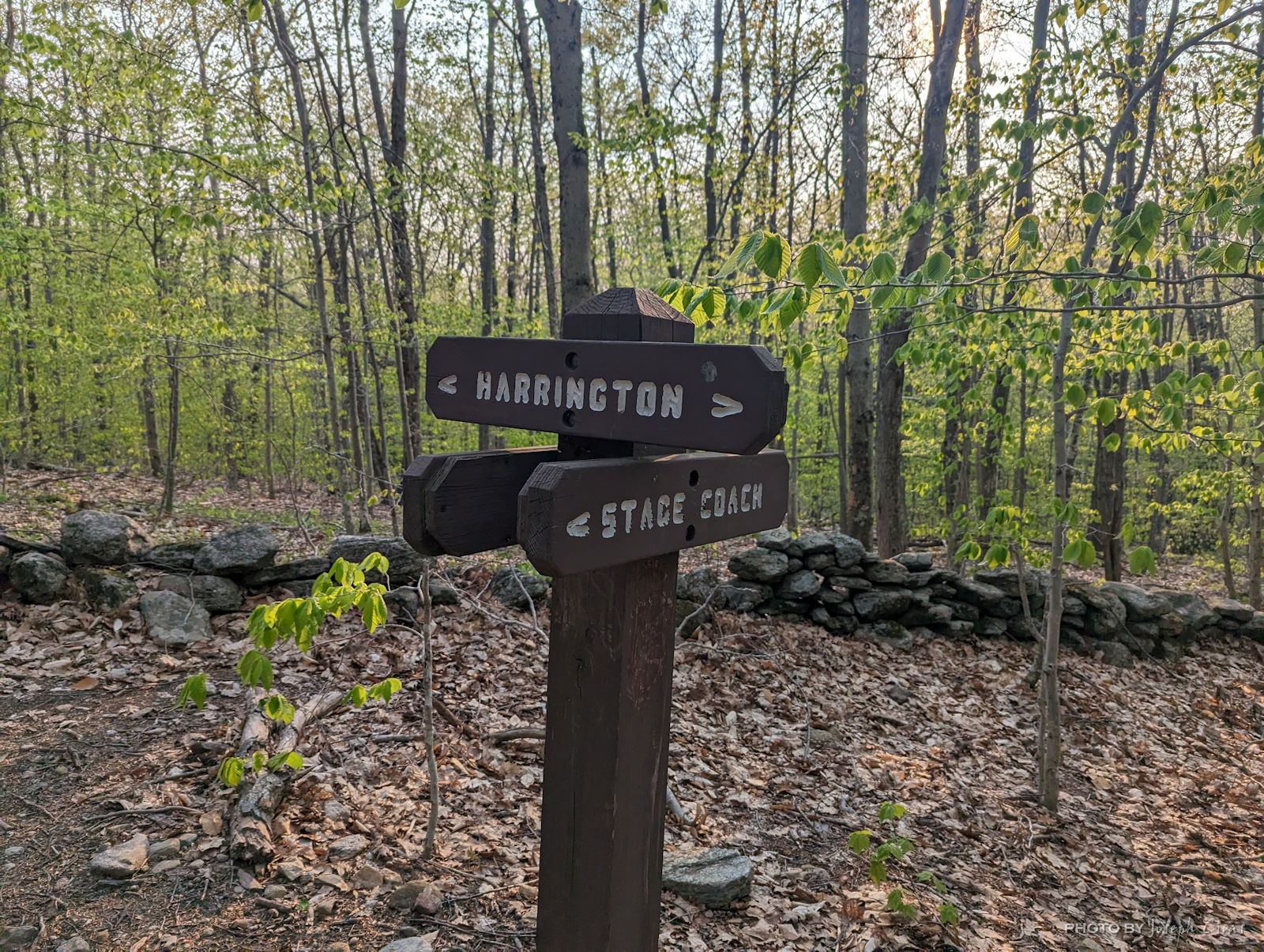
I am leading a mystery hike in a few weeks. The group is meeting at a trailhead, and I am giving them direction at trail junctions. The directions will only consist of bearings and distances. This is the location of the third leg of my trip.

If you are in the area and would like to join me, sign up for the trip on this web page: https://activities.outdoors.org/search/index.cfm/action/details/id/144329. You do not need to be an AMC member to join the hike.

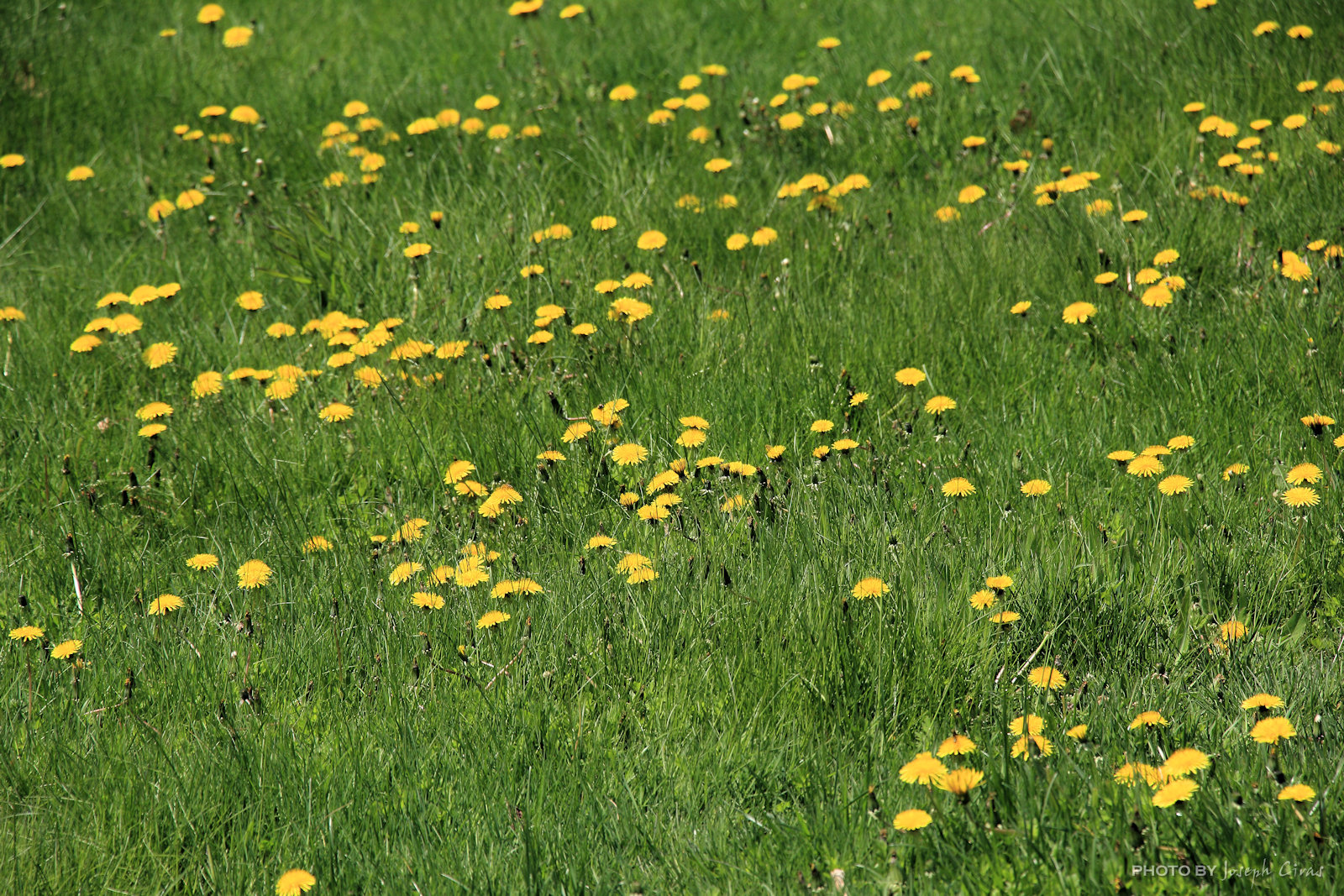
Flower of the day: Dandelions

To show the benefits of the once-beloved plant, here are items you might not know about dandelions.

  • Dandelions have deep roots in history throughout the ages.
  • Dandelions were world-famous for their beauty.
  • Dandelions are a green and growing first aid kit.
  • Dandelions are more nutritious than most of the vegetables in your garden.
  • Dandelions are good for your lawn.
  • Dandelions are masters of survival.
  • Dandelions are among the most expensive items in the grocery store.
  • Herbicides used on lawns to kill dandelions take a terrible toll on wildlife.
  • But there’s a safer way to have a dandelion-free lawn.

To learn more, go to https://www.mofga.org/resources/weeds/ten-things-you-might-not-know-about-dandelions/.

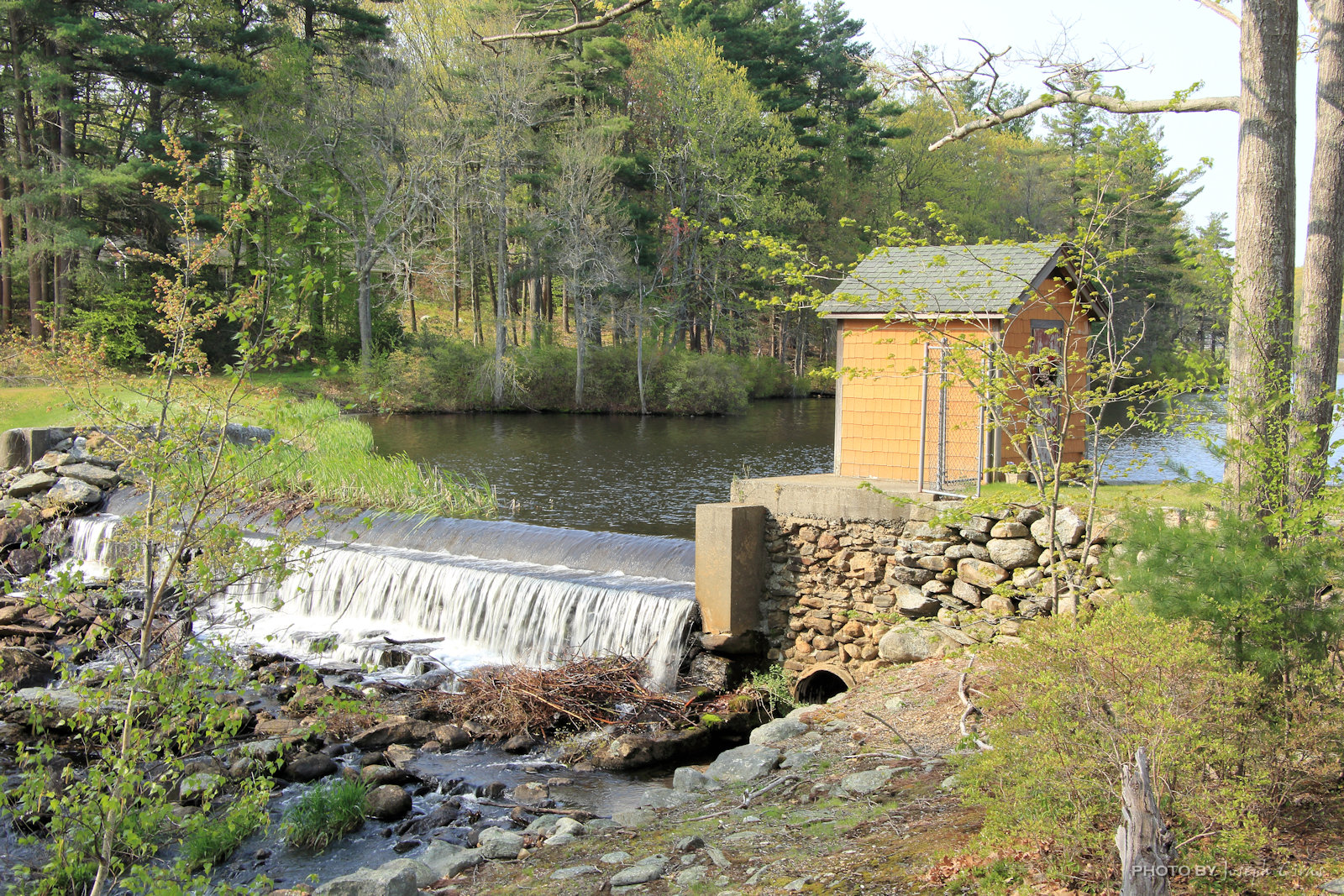
Thursday, 05/11/2023: Posted photo — Dam at Round Meadow Pond.

Here is a photo of the dam at Round Meadow Pond. This is a location that I photograph often.

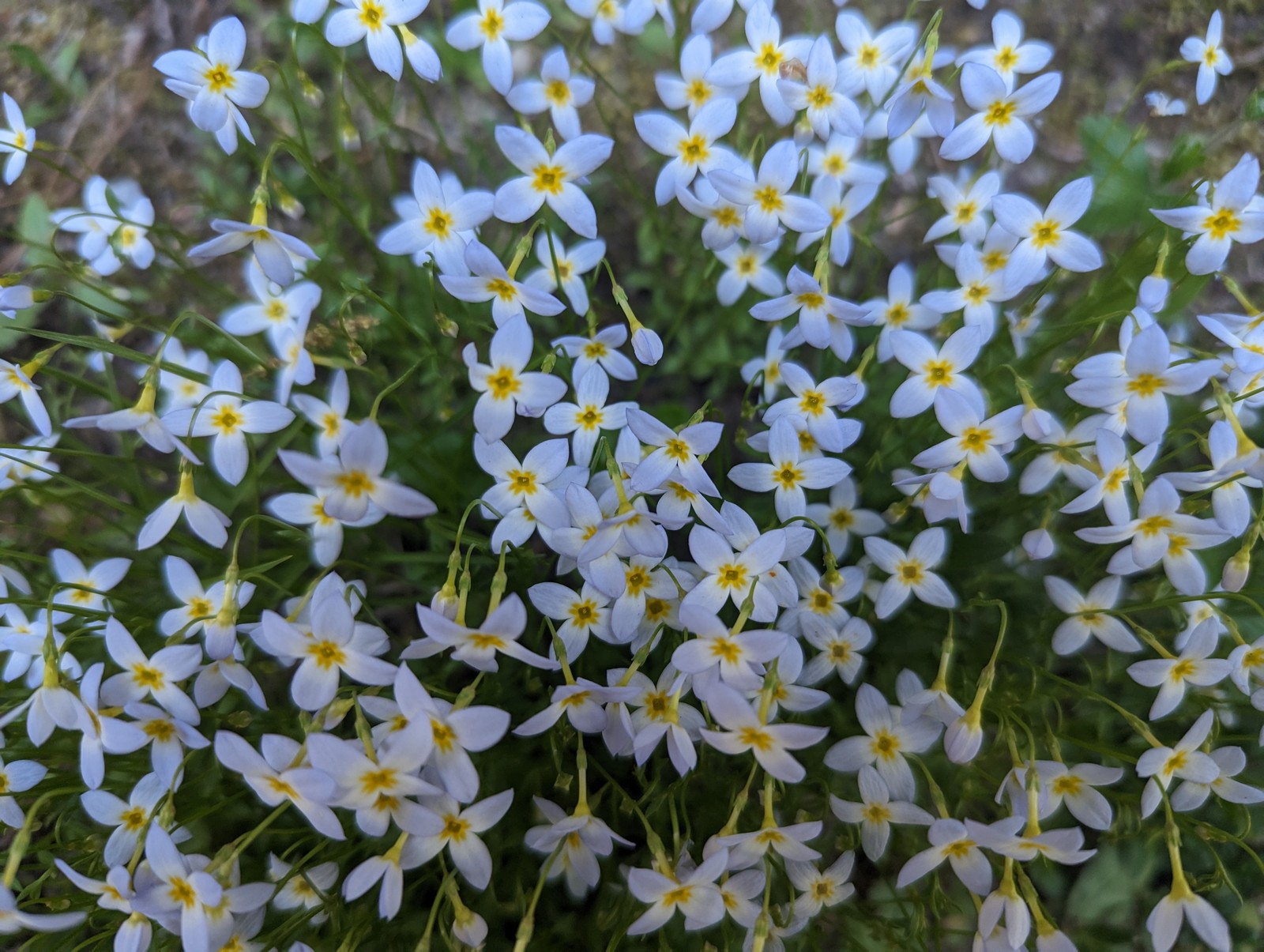
Flower of the day: Bluets

Common bluets produce both nectar and pollen. Their short flower tubes make their nectar accessible to our short-tongued native bees. Quite a few species of native bees including small carpenter bees and some of our sweat bees will visit common bluets. Several of our smaller species of early butterflies will also visit common bluets.

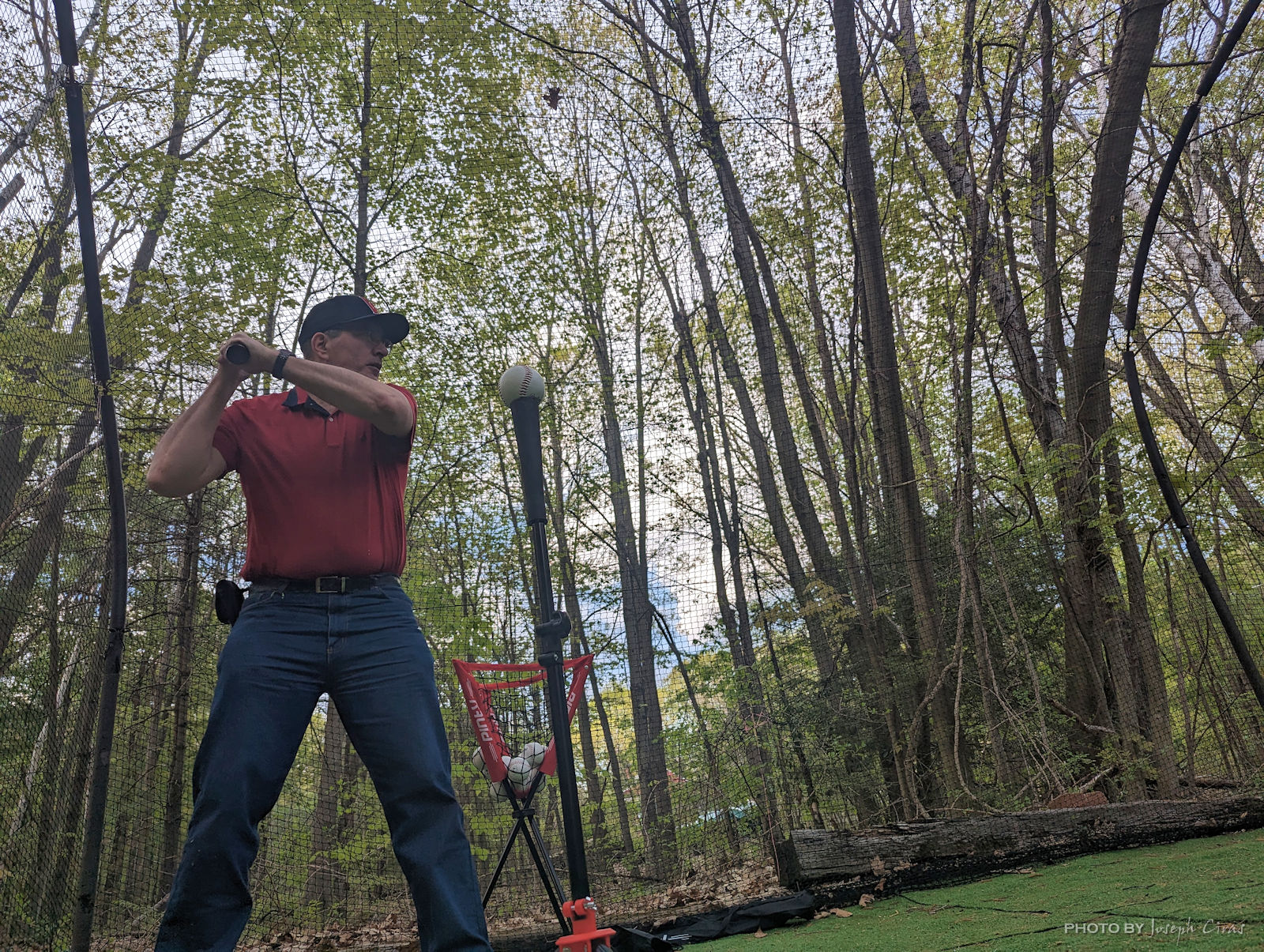
Friday, 05/12/2023: Post photo — Hitting Off the Tee.

My son purchased a hitting tee for the junior high baseball team he coached. I did some hitting practice. Have not swung a bat in a while. I swung the old way with two hands on the bat as Ted Williams did. He attempted to coach me by having me remove my top hand off the bat as the modern hitters do. I like the old way of hitting.

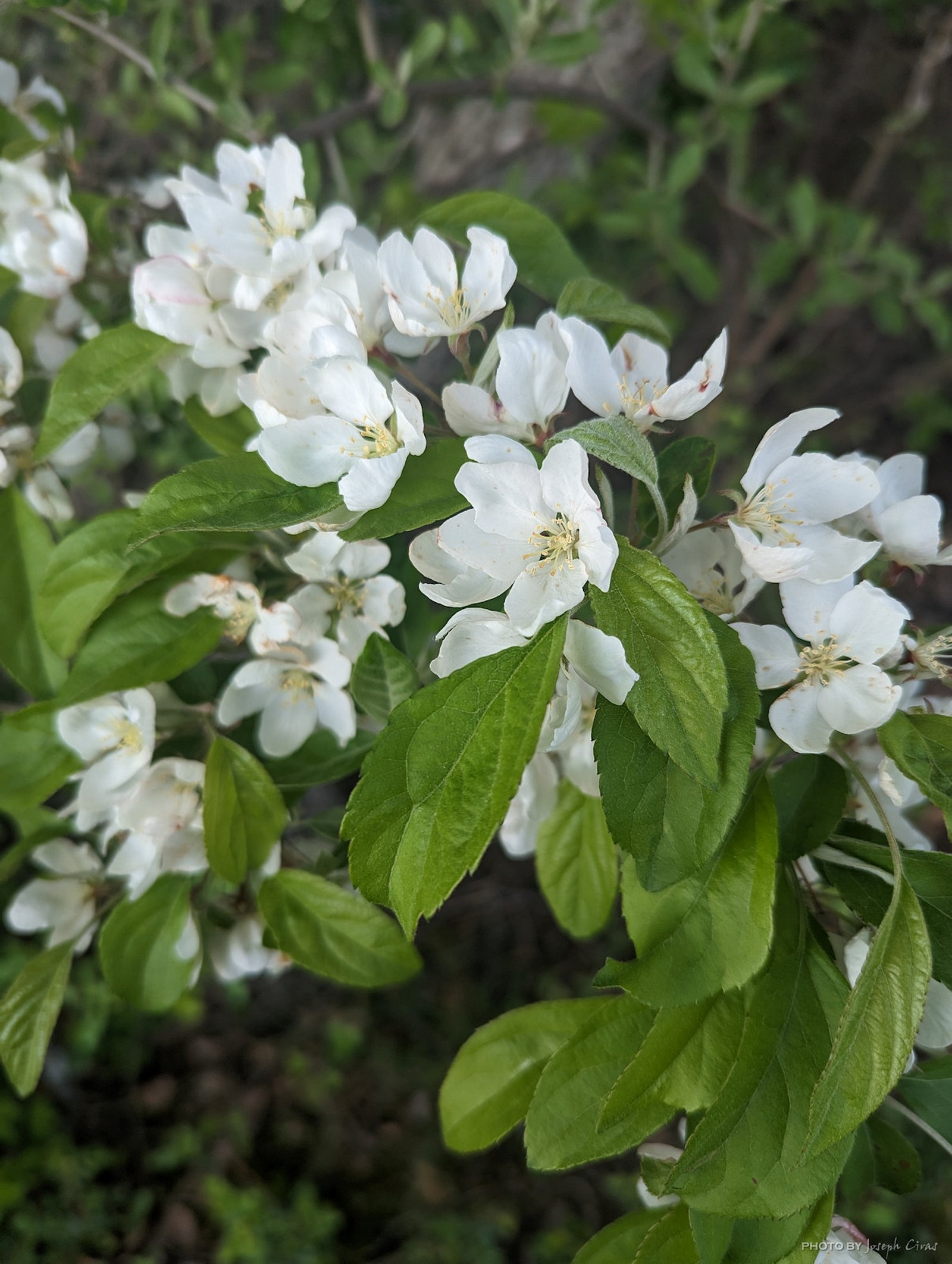
Flower of the day: Malus baccata (Siberian crab apple)

Siberian crab apple inhabits northerly areas of New England, although certain cultivars grow as far south as Florida. The tree produces white-pink, non-hairy (glabrous) flowers in spring along glabrous branches. With a pleasing, rounded crown, abundant flowers and small, edible fruits, this crabapple has been introduced widely as an ornamental tree.

Saturday, 05/13/2023: Post photo — Lilac.

I have a photo challenge this week that is titled detail. Chances. Details are having your eyes instinctively lock on to a small part of the image before looking at the whole picture. I attempted this by putting a mononuclear on my cell phone and taking this photo.

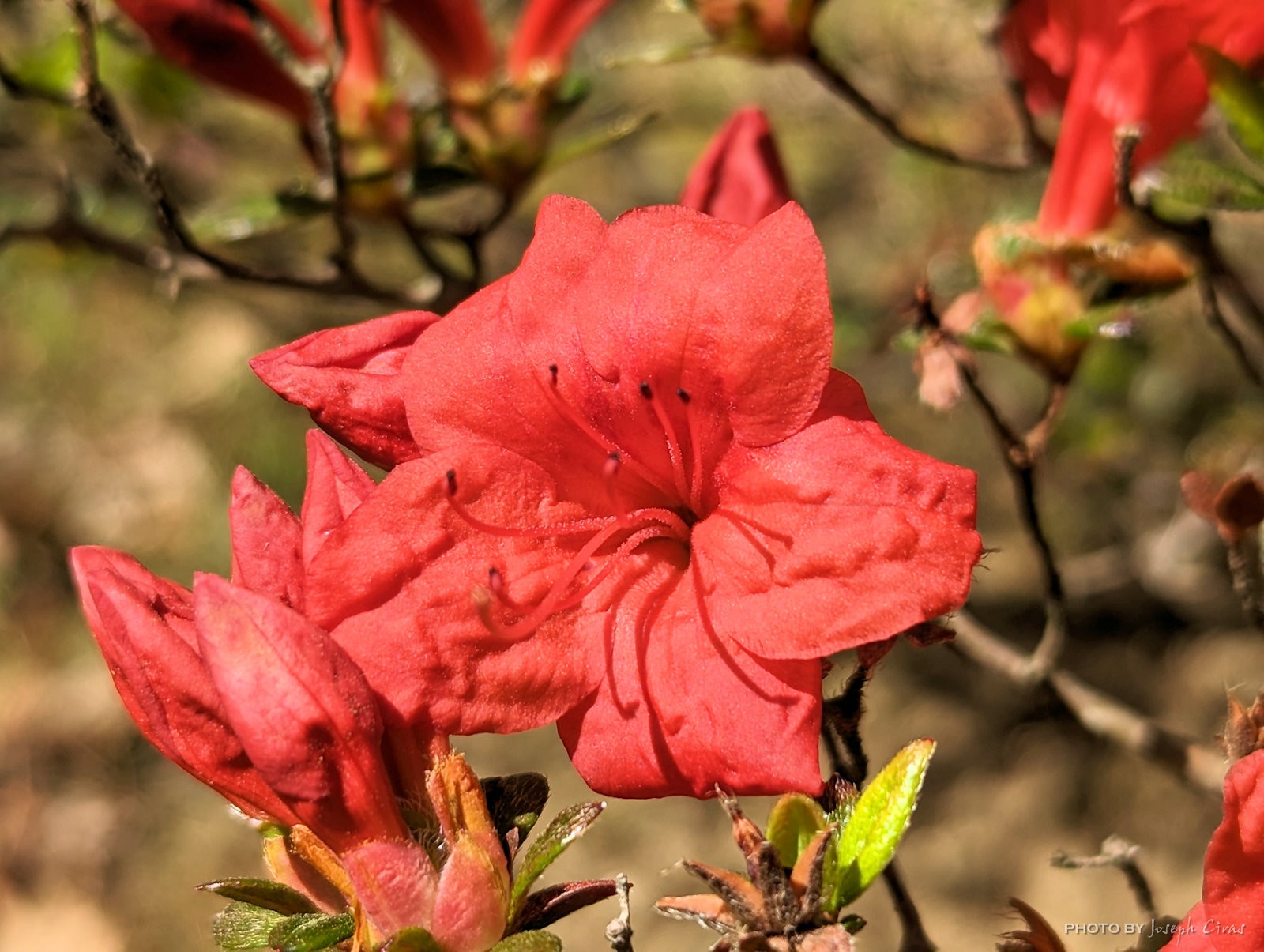
Flower of the day: Azaleas

Azaleas are typically deciduous while other rhododendrons are evergreen. Azalea flowers are funnel-shaped, somewhat two-lipped, and often fragrant. These azaleas in our yard have survived the last heavy snow that fell. The bush was heavily loaded with snow. There is still a large area of the bush that has not yet bloomed.

For more photo of other projects I have work, visit my website: https://photobyjosephciras.weebly.com or visit me on Facebook at https://www.facebook.com/PhotobyJosephCiras/.

Photographic Thoughts — 04/10/2022 to 04/15/2022

“We are making photographs to understand what our lives mean to us.” — Ralph Hattersley

Thank you for all the new views and likes from last week, it helps keep me inspired.

Happy and blessed Easter Sunday to your all. Here are my thought from last week. This week’s post has somethings new and somethings old.

Sunday, 04/10/2022: Posted photo — Daffodil.

Settings: Google Pixel 2, ISO 37, f/1.8, 1/125 s, 4 mm.

Sign of spring, our daffodils are blooming. I have not gotten out of the house much these last few months. Was able to get out today to walk around our yard. Nice to see plants flowering. We do have more daffodils and tulip in front of our house that I have been watching as I walk from the car to inside the house. I have not noticed any crocus this year. I must have been inside when they were blooming.

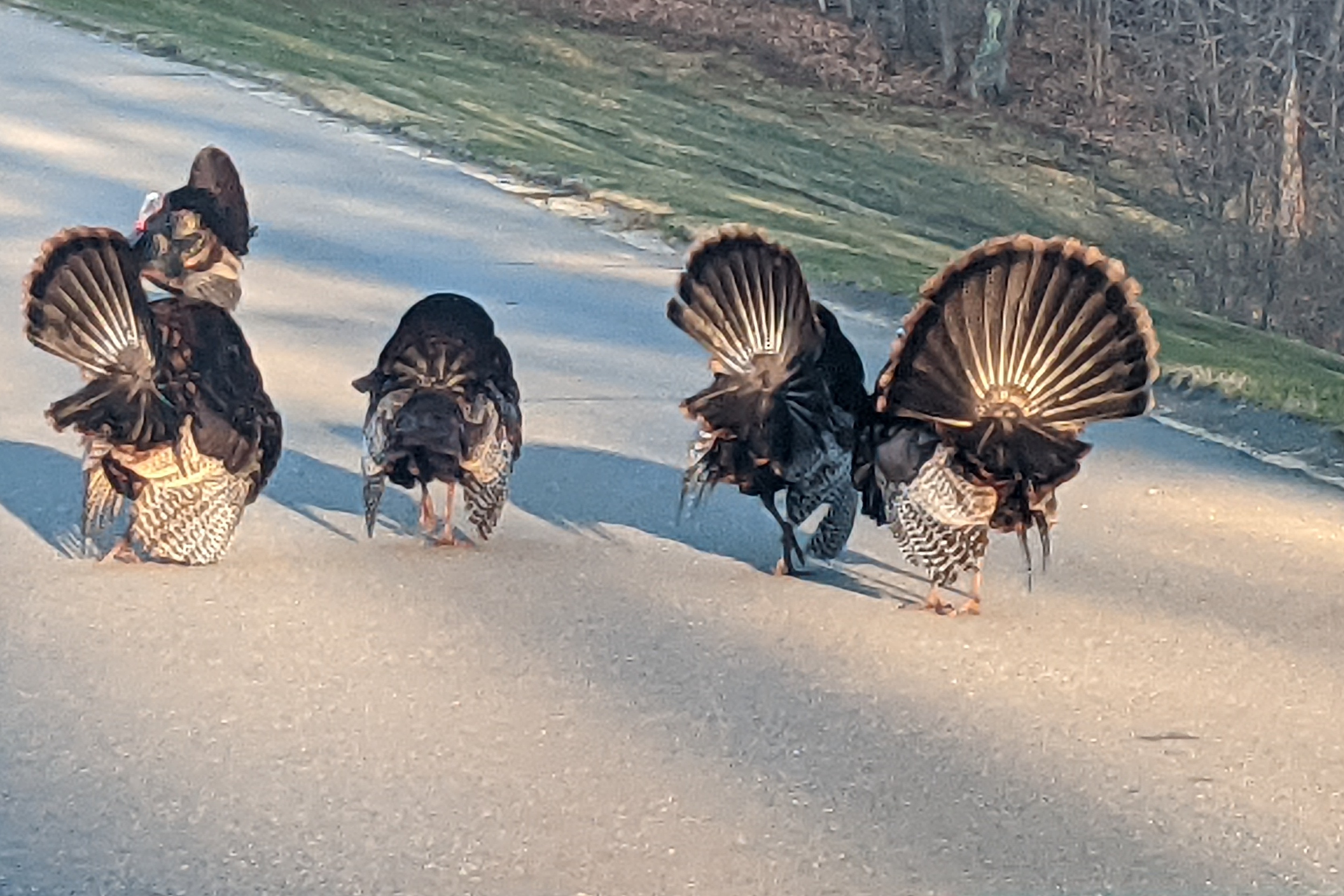
Monday, 04/11/2022: Posted photo — Roadblock.

Settings: Google Pixel 2, ISO 62, f/1.8, 1/198 s, 4 mm.

The turkeys are back. On my way into work, we ran into this rafter of turkeys. I am still not driving so I took this photo from the passenger seat.

Tuesday, 04/12/2022: Posted photo — The Cause of My Pain.

Settings: Google Pixel 2, ISO 251, f/1.8, 1/120 s, 4 mm.

I have not looked at my microspikes since my accident. There were put in the back seat of my car when one of my hiking companions drove my car back to my house. I just left them there since the car was not used that often. My car has a manual transmission, so I am not able to shift since I cannot use my left foot for the clutch. We are trading in my car for one with an automatic transmission so I can drive myself to work.

I took out my microspikes to see if they were broken. The first one I looked at had a stick embedded in one of the spikes. The was why I went down, no spike available to grip the ice! What a freak accident. I am glad that I know what happened and happy that it was not an equipment malfunction.

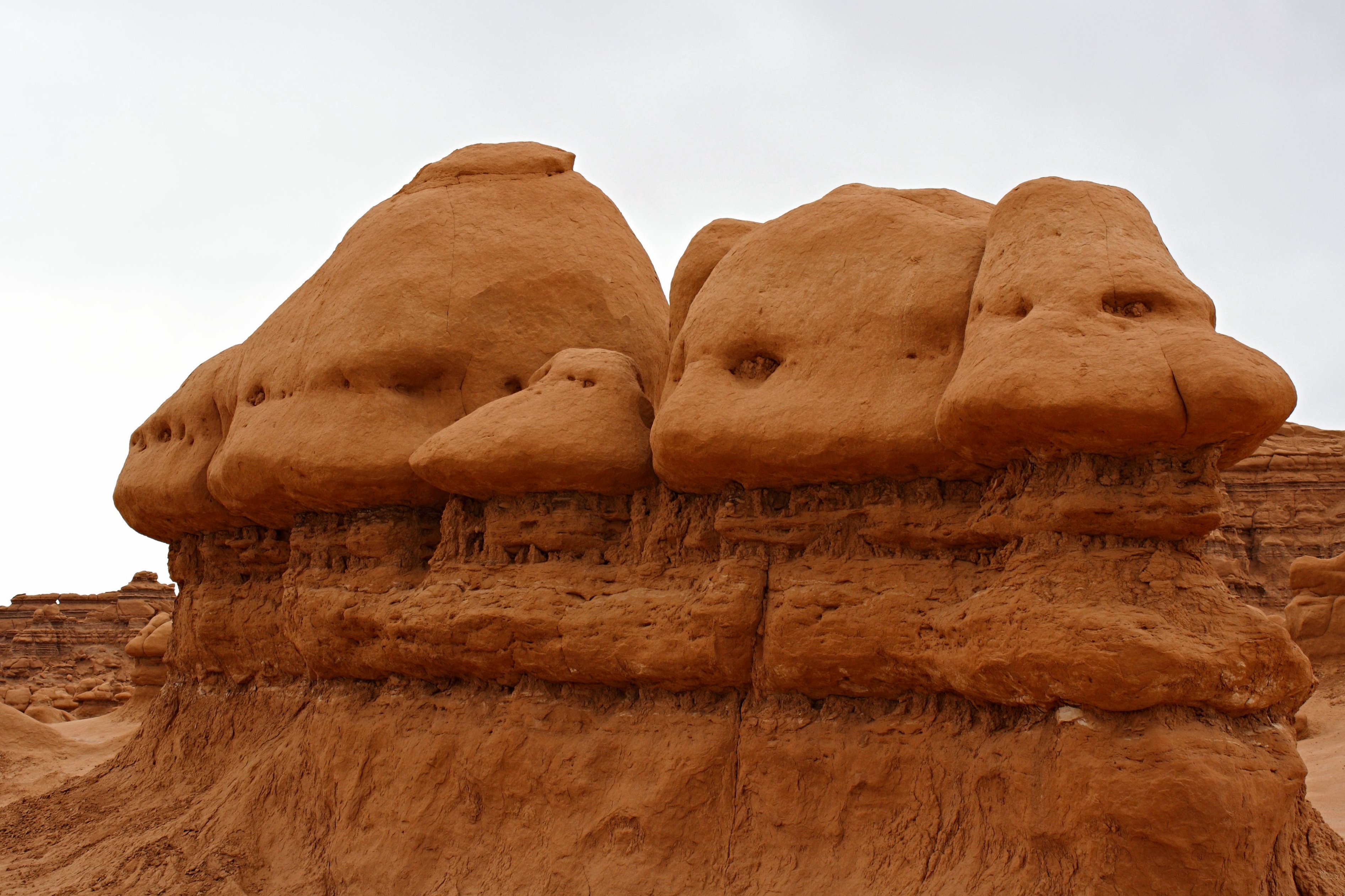
Wednesday, 04/13/2022: Posted photo — Hoodoos.

Settings: Canon EOS DIGITAL REBEL XS, ISO 200, f/8, 1/160 s, 37 mm.

These are hoodoos in Goblin Valley State Park. Goblin Valley State Park is in Green River, UT. Goblin Valley was the set for the movie “Galaxy Quest”, one of our favorite movies. We were surprised that we were able to into the goblins, which we did, and we reenacted some scenes from the movie. The park features thousands of hoodoos, referred to locally as goblins, which are formations of mushroom-shaped rock pinnacles, some as tall as several yards.

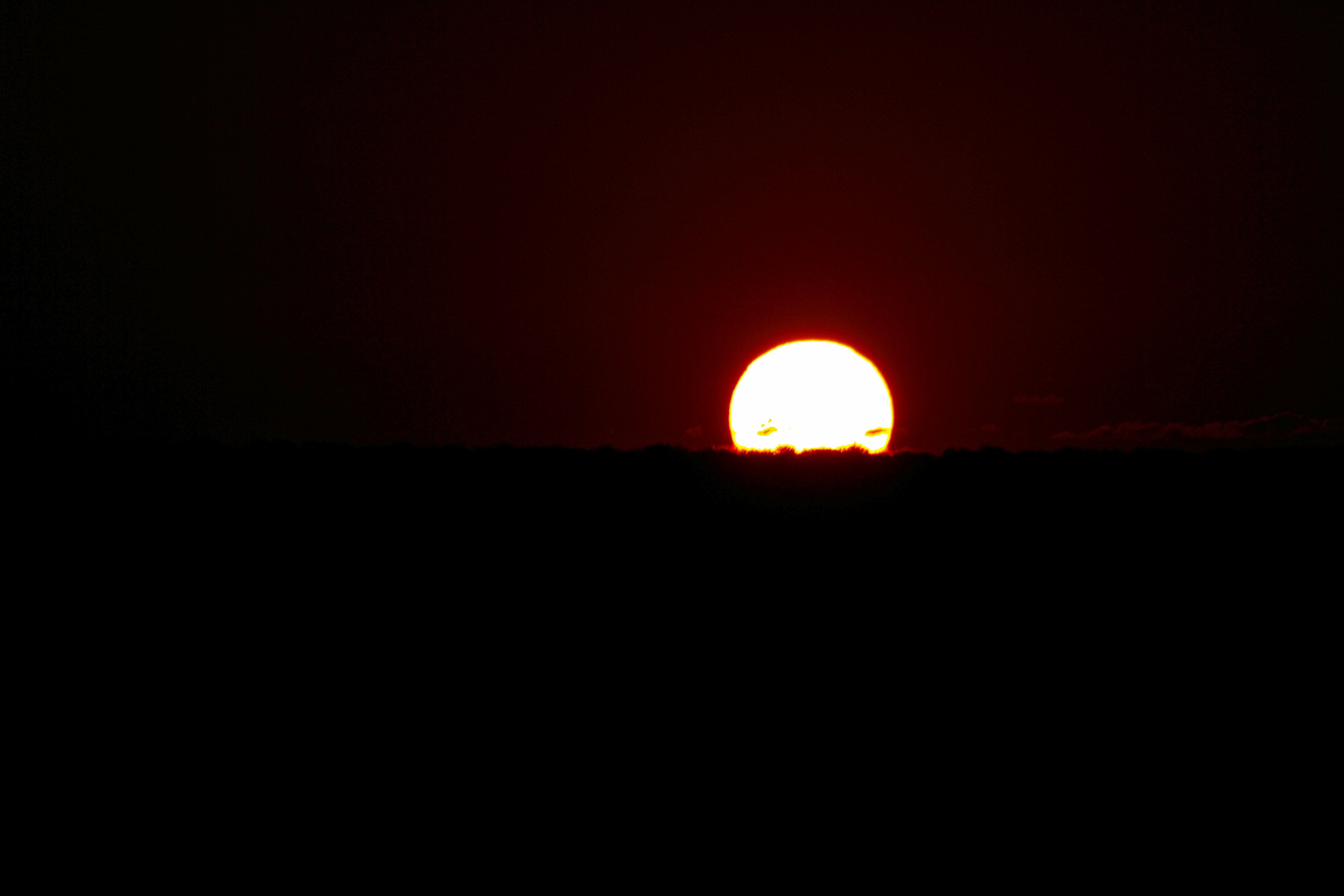
Thursday, 04/14/2022: Posted photo — Sunrise.

Settings: Canon EOS DIGITAL REBEL XS, ISO 200, f/16, 1/2000 s, 300 mm.

This is the sunrise from Goblin Valley. We had a wonderful dark sky night and a great sunrise.

Friday, 04/15/2022: Post photo — Delicate Arch.

Settings: Canon EOS DIGITAL REBEL XS, ISO 100, f/5.6, 1/200 s, 300 mm.

This is as close as we were to Delicate Arch in Arches National Park. Delicate Arch is a 52-foot-tall freestanding natural arch. What you do not see is the drop off just after the arch. Delicate Arch stands at the edge of a cliff. We arrived in the park late and did not do the hike out to the arch. We did other hikes in the park the couple of days we were there. The longest hike was about a 10-mile hike in extremely hot weather. We followed the rule of at least one gallon of water per person per day. I carried the water and my wife and son carried other supplies during our hike.

Saturday, 04/16/2022: Post photo — Upper Slot Canyon.

Settings: Canon EOS DIGITAL REBEL XS, ISO 640, f/3.5, 1/25 s, 18 mm.

We found Antelope Slot Canyon by accident. We were looking for grocery stores in the area as we were traveling between the north and south rim of the Grand Canyon. We saw pickup truck that had Antelope Slot Canyon on then. My wife had a friend that went to a canyon in that area that looked like a great stop for us. We did some research and found out the canyon was Antilope Slot Canyon. We arrived in Page, AZ midday to the upper slot canyon was the only place we could get tickets. I know of others that have gone to lower slot and they also looked impressive. Need to go back to visit.

For those of you who know the area, we did not go to Horseshoe Bend since we were just camping at Goosenecks State Park a few nights before.

That is all for now. Until next week, be safe.
For more photo of other project I have work, visit my website: https://photobyjosephciras.weebly.com or visit me on Facebook at https://www.facebook.com/PhotobyJosephCiras/.

Photographic Thoughts — 10/24/2021 to 10/30/2021

“You can look at a picture for a week and never think of it again. You can also look at a picture for a second and think of it all your life.” — Joan Miro

Thank you for all the new views and likes from last week, it helps keep me inspired.

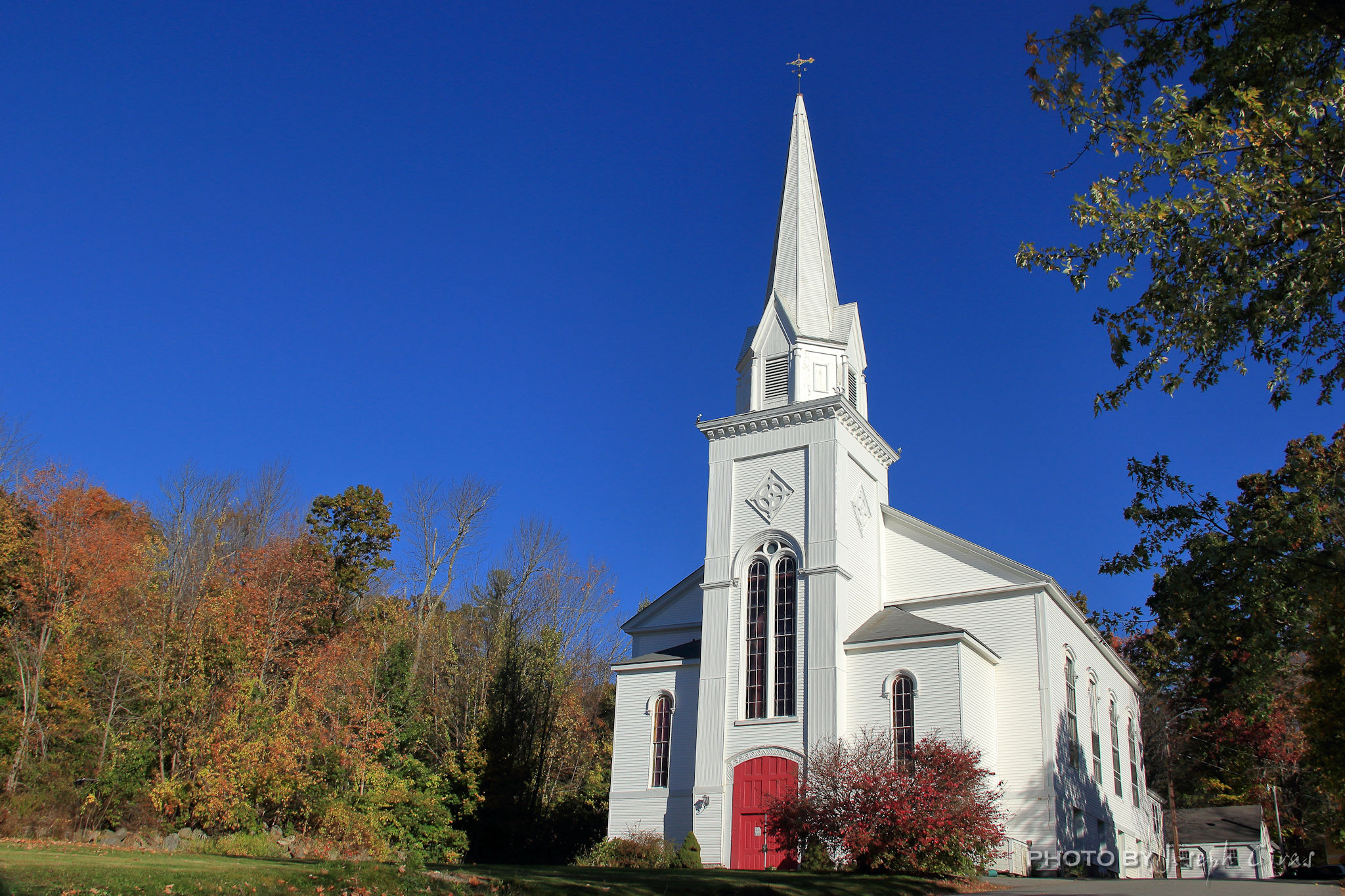
Sunday, 10/24/2021: Posted photo — Ashburnham Community Church.

Settings: Canon EOS 60D, ISO 100, f/7.1, 1/640 s, 18 mm.

The Ashburnham Community Church is now home to the New Dawn Arts Center.

Information off the New Dawn Arts Center website (www.newdawnarts.org). The church was constructed in 1834, the steeple houses a church bell cast by a former apprentice of Paul Revere, and the 1886 pipe organ was installed by Boston organ builder George Hutchings. The church was part of The Underground Railroad.

The Community Church was sold to the Arts Center a few months ago. The congregation of the church was getting smaller so they could not afford to keep the church in operation. The Arts Center is allowing the church to hold services there and all other outreach services are still running at the church, such as a food pantry.

New Dawn Arts Center at the Ashburnham Community Church

I just like the look of churches with their steeples and stained glass. When I was going to church, I was drawn to the contrasting white church and the clear blue sky. The foliage looked to be past, but it did show well in this photo. The church that I belong to is across the street from the Community Church. I have taken photo of this church before and will again since I like its architecture.

Monday, 10/25/2021: Posted photo — Mountain View.

Settings: Canon EOS 60D, ISO 100, f/6.3, 1/80 s, 39 mm.

What a great view from the summit today! As you can see, the summited was fogged in. I had to use my map and compass to find my way down part of the trail. Using a map and compass on Wachusett Mountain is not very common since the fog has not been this dense in a very long time and people look at me strangely when I use them in good weather. I could see the trail ahead of me tonight. I was just verifying the bearings at each trail junction just so I did not head back up the mountain. It was good practice for me.

Fog on the mountain

Over the past few months, I have been taken the bearings at each junction and verifying elevations and coordinate locations with my trail map program and with the paper trail map of the mountain. I am in the process of putting together a detailed map of the mountain to help new and experienced hikers. Map and compass skills are essential to survival. Using these tools on a well hiked mountain is great for learning this skill.

The error most people will make is not accounting for magnetic declination (14° West on Wachusett Mountain). Magnetic declination is the angle between true north and magnetic north. Remember “West is best and East is least.” You add the declination to your reading if the declination is to the West or subtract the declination from the reading if it is to the East. I can adjust my compass for declination prior to use so I do not have to do the math if I am in a dangerous situation. Not all compasses can be adjusted. I would suggest spending a little more money on a compass that can be adjusted. It could save your life. Remember to always practice this skill in a known location prior to any “big” hike. Do not rely on the GPS on your phone.

Tuesday, 10/26/2021: Posted photo — Flowers.

Settings: Samsung SM-G930V (Galaxy S7), ISO 80, f/1.7, 1/60 s, 4 mm

Part of the opening paragraph from the novel “Paul Clifford” by Edward Bulwer-Lytton states, “It was a dark and stormy night; the rain fell in torrents …” It was a dark and stormy day today. Heavy rain, high winds and fog were the norm. I was going to post the following photo for today, a photo of wet foliage.

Bouquet to cheer up the day

I went grocery shopping before I posted my photo and saw the flowers that I posted. I thought of how flowers put smiles on people’s faces and wanted to brighten up this gloomy day. Here is another photo of some more flowers that I took today during my shopping trip to brighten your day.

Secondary post of flowers for the day
The photo that I did not post

Wednesday, 10/27/2021: Posted photo — Reflection.

Settings: Canon EOS 60D, ISO 200, f/3.5, 1/25 s, 18 mm.

I was not intending to take this photo. I was intending to post a photo from either my trip to Alaska, or my trip to Hawaii, since the weather still is a little gloomy.

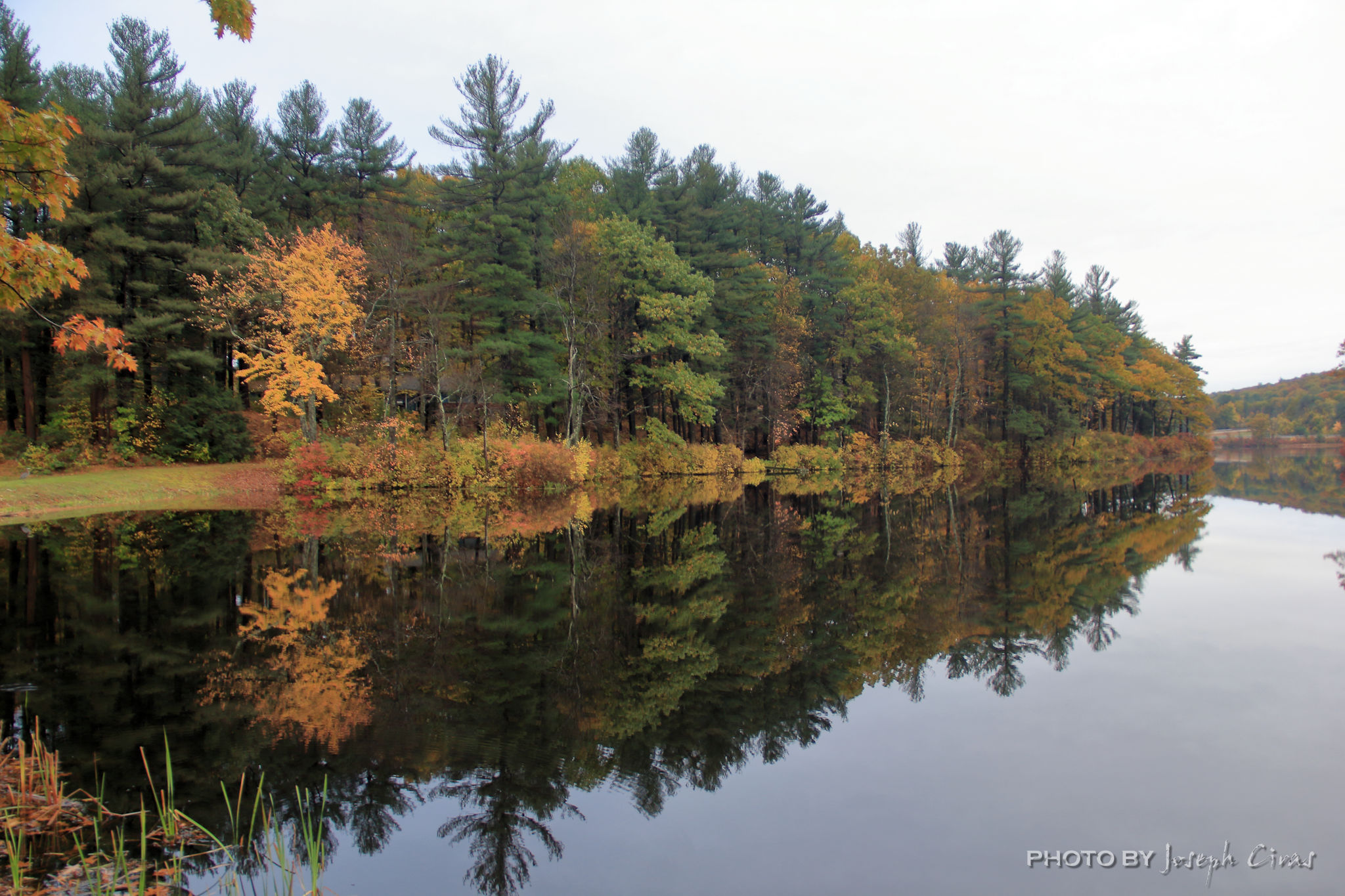
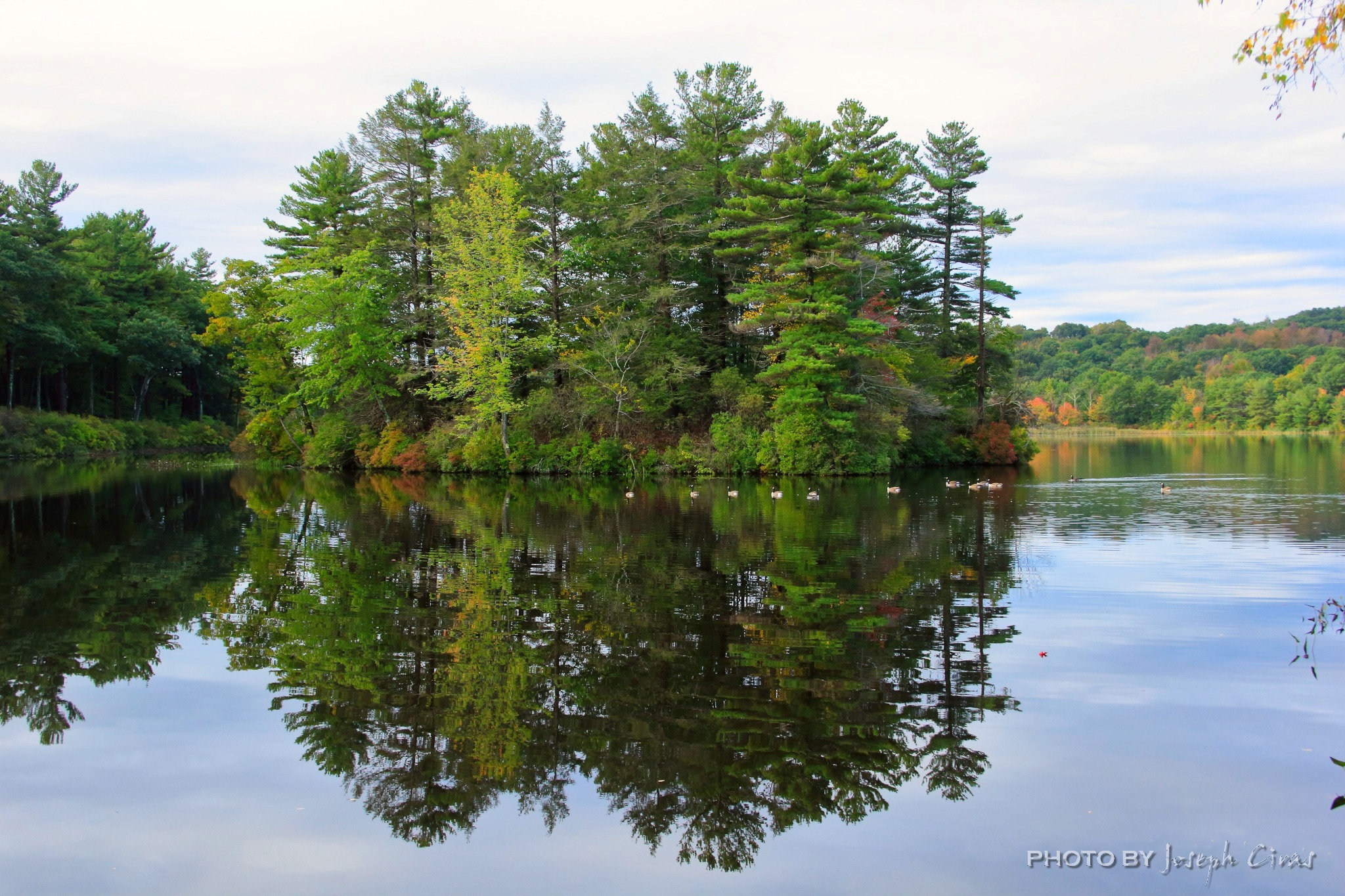
While on my way home from work, the reflection of the trees on Round Meadow Pond caught my eye. The lighting was iffy, but I made the quick decision to go to one of my favorite photographic locations and see if there was an opportunity for a reflection photo in the smooth water.

Reflections on the shoreline

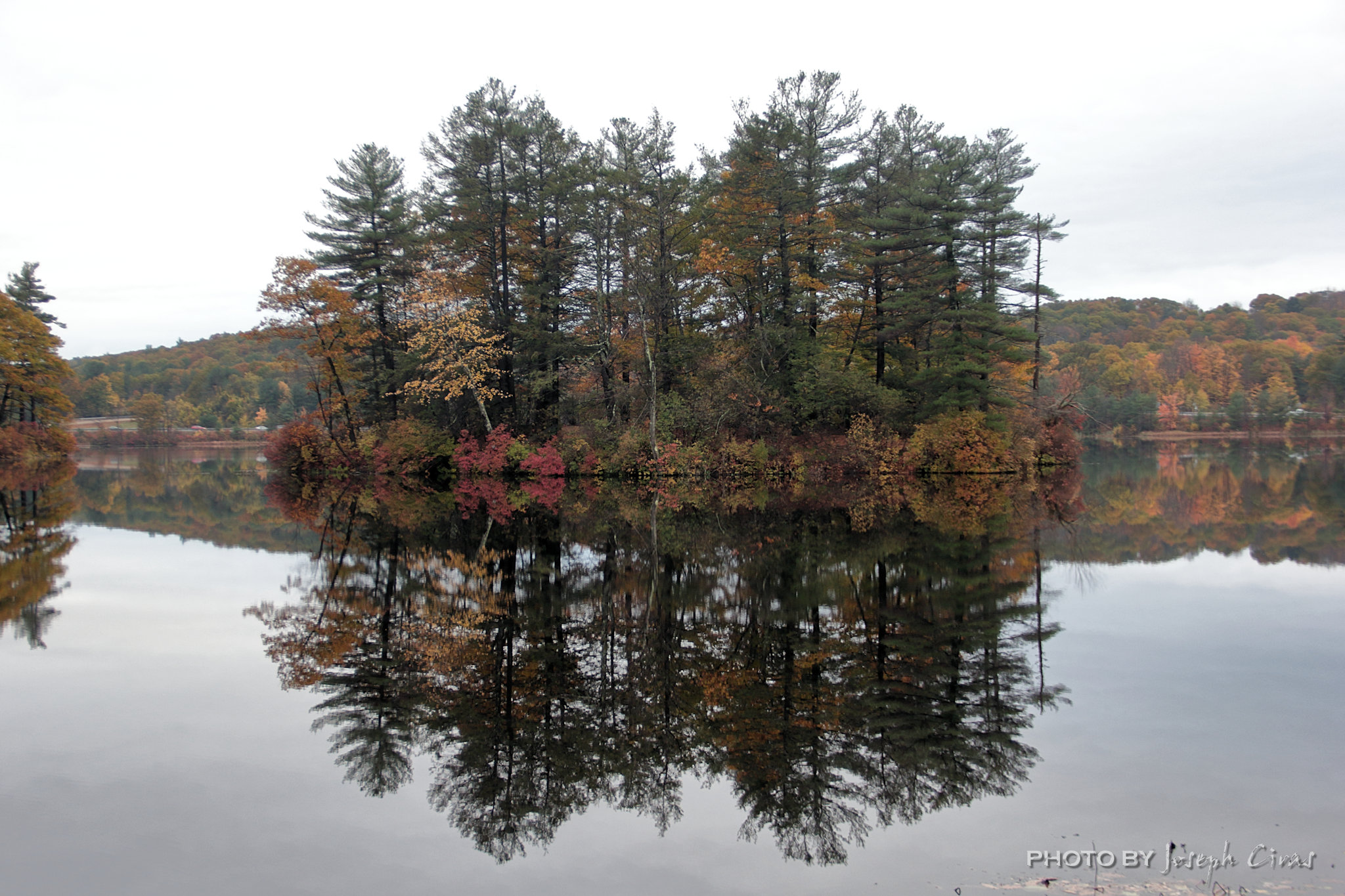
I first took a photo of the island and its reflection. I did not quite like it lack leaves on the tree. It made the island look unattractive and scraggly. Then I took a photo of the trees along the shoreline. Trees along the shore usually take a good photo. I was happier with this photo. I was not excited about this photo, just happier than I was with the island photo.

The island shot I did not like

Sometimes it is better to post a bad photo from that day, then a good photo from the past for historical reference.

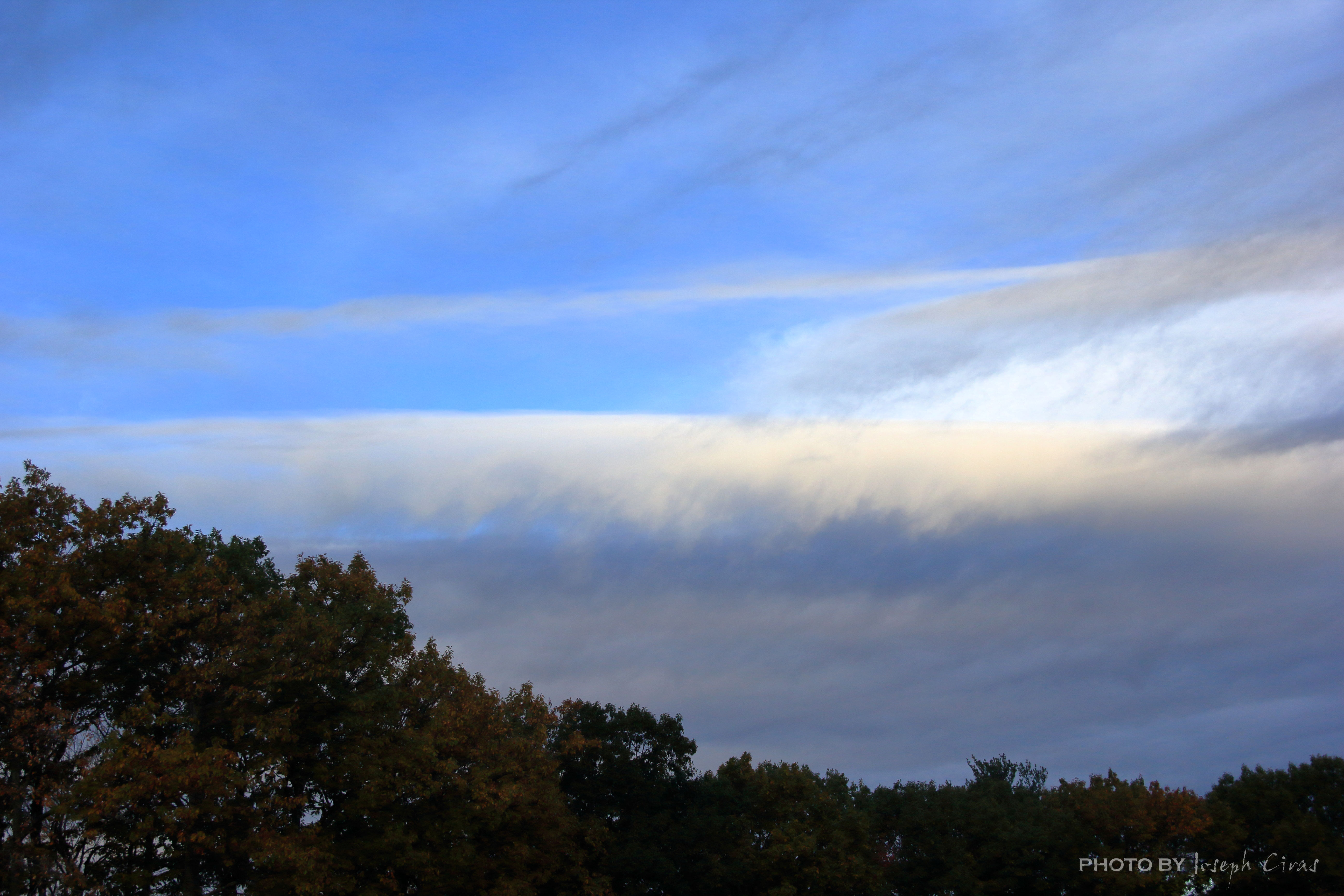
Thursday, 10/28/2021: Posted photo — Weather Front.

Settings: Canon EOS 60D, ISO 200, f/7.1, 1/800 s, 36 mm.

Weather front in the morning

A weather front is the transitional zone between two different air masses. An air mass a body of air with horizontally uniform temperature, humidity, and pressure. The high-pressure side of the front is the side with no clouds. In a high-pressure system, the warmer air is flowing downward. The low-pressure side of the front is the one with the clouds. In a low-pressure system, cold air is flowing upward causing condensation around dust particles in the sky, forming clouds and often precipitation. In this photo, the low-pressure system is moving out of the area. As the high-pressure system is moving in, the air temperature will be slightly higher that it was yesterday. A simple fact in physics is that if air pressure increases, the temperature must increase and if the air pressure decreases, the temperature will decrease. This explains why the air gets colder at higher altitudes, where pressure is lower.

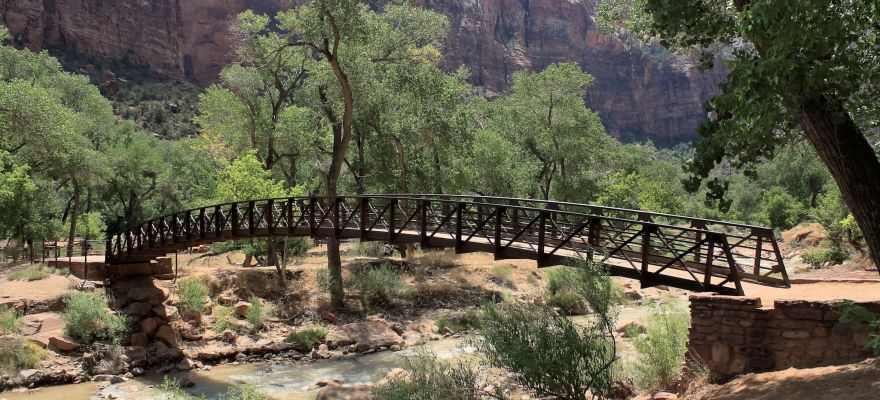
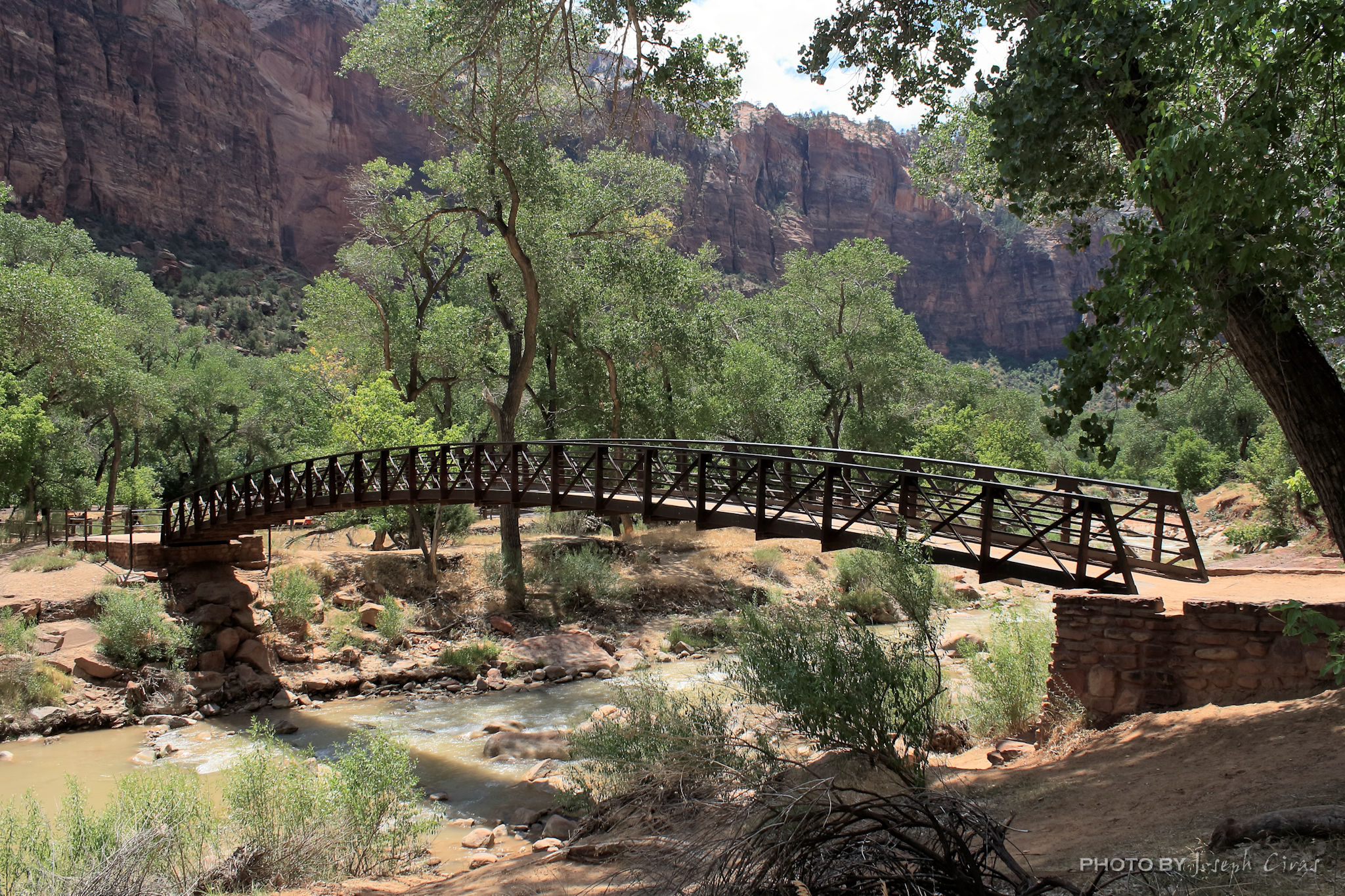
Friday, 10/29/2021: Post photo — Footbridge Over the Virgin River.

Settings: Canon EOS DIGITAL REBEL XS, ISO 200, f/9, 1/200 s, 18 mm.

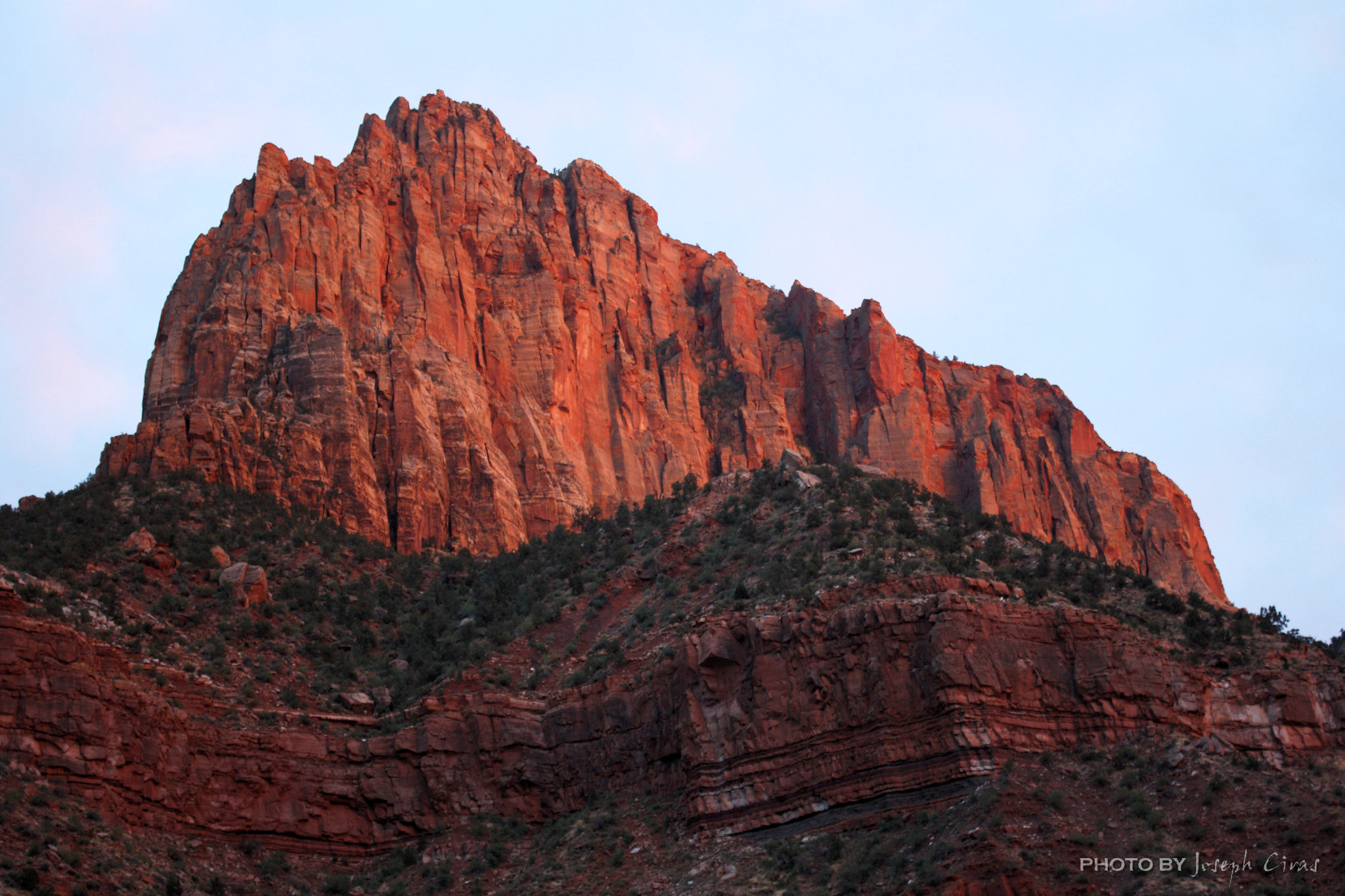
“In the summer of 1909, President of the United States William Taft declared the area as federally protected and officially named it Mukuntuweap National Monument, deciding to go with the Paiute name rather than the one chosen by Utah’s early pioneers. State residents were not pleased, to say the least, with President Taft passing over the name they had originally chosen for the area. In 1918, after almost a decade of grievances, the assistant director of the recently formed National Park Service, Horace Albright, changed the name of the park to Zion National Monument.” (https://zionnationalpark.com/zion-national-park/zion-national-park-history/)

Footbridge over the Virgin River in Zion National Park

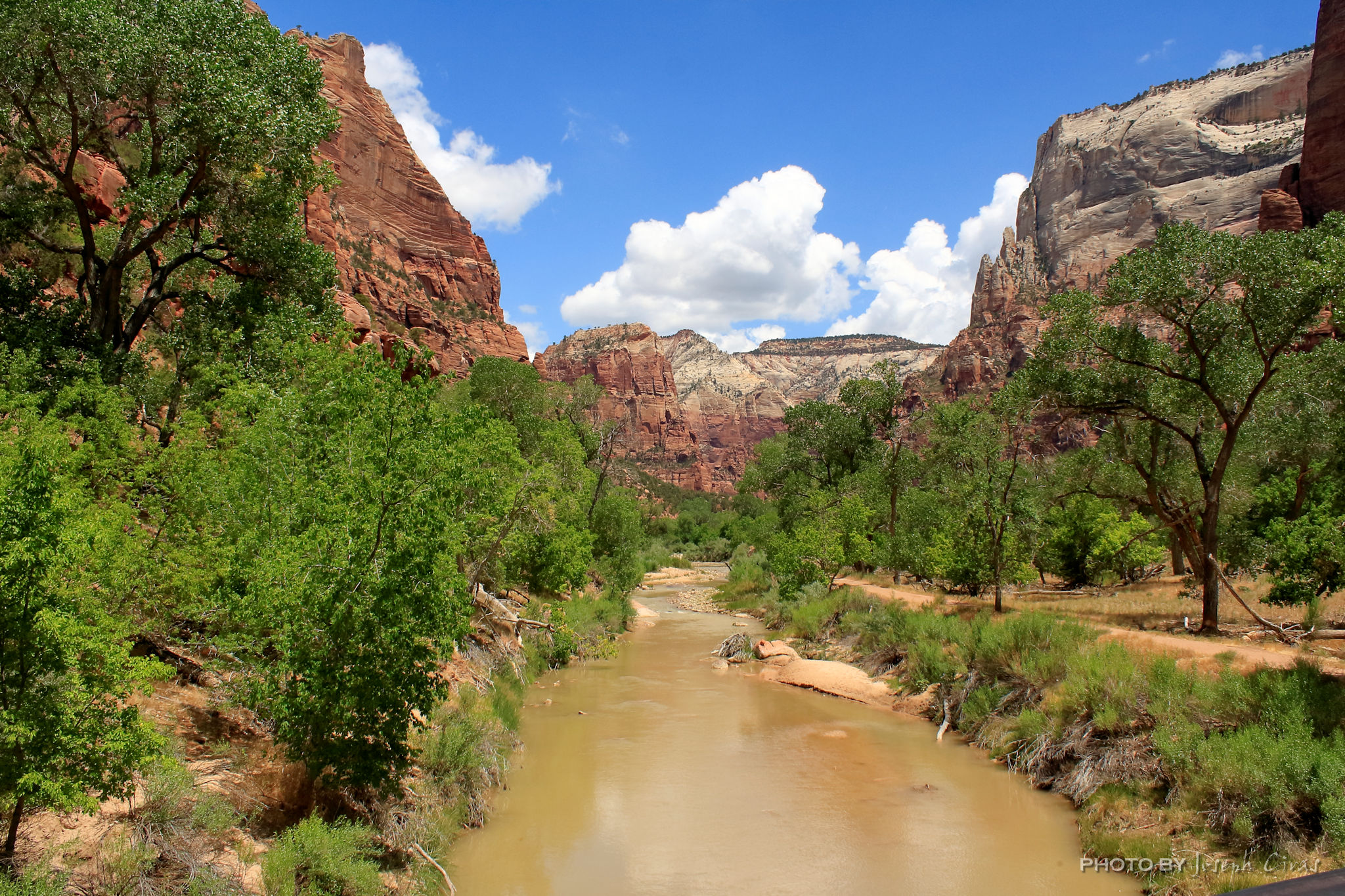
Here is some information about the Virgin River. The Virgin River and its tributaries run through Zion National Park causing the erosion that continues to carve and shape Zion National Park. The North Fork of the Virgin River begins north of Zion National Park at Cascade Falls, near Cedar City, Utah, where it drains out of Navajo Lake in Dixie National Forest at 9,000 feet above sea level. The East Fork of the Virgin River originates above Long Valley in western Kane County, Utah. Both the North and East Forks of the Virgin River run through the park and empty into Lake Mead at about 1,000 feet above sea level, where it joins the Colorado River.

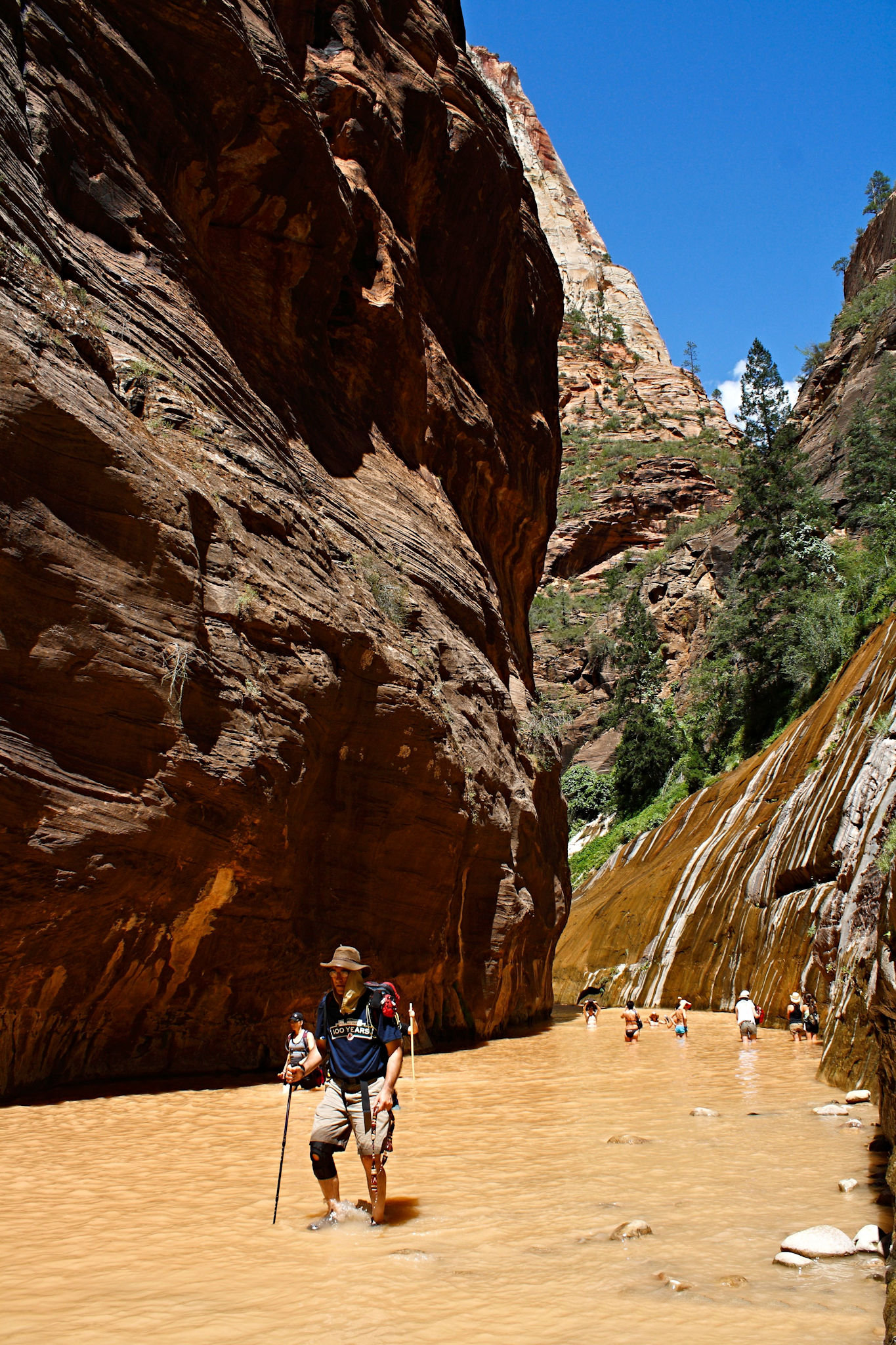
Our time at Zion National Park included camping and hiking. We also had one of the better star filled night skies on our trip. One of the hikes we did was in The Narrows. A great place to hike in the heat of the summer. The Narrows is the narrowest section of Zion Canyon. The gorge has walls up to a thousand feet tall and the Virgin River is just twenty to thirty feet wide in some locations. The hike through The Narrows requires hiking in the Virgin River. The river when we hiked was a milky color so you did not know how deep the water would be in your next step. You need to be very careful of flash flooding in The Narrows since there is little to no room of escape due the height of the gorge walls.

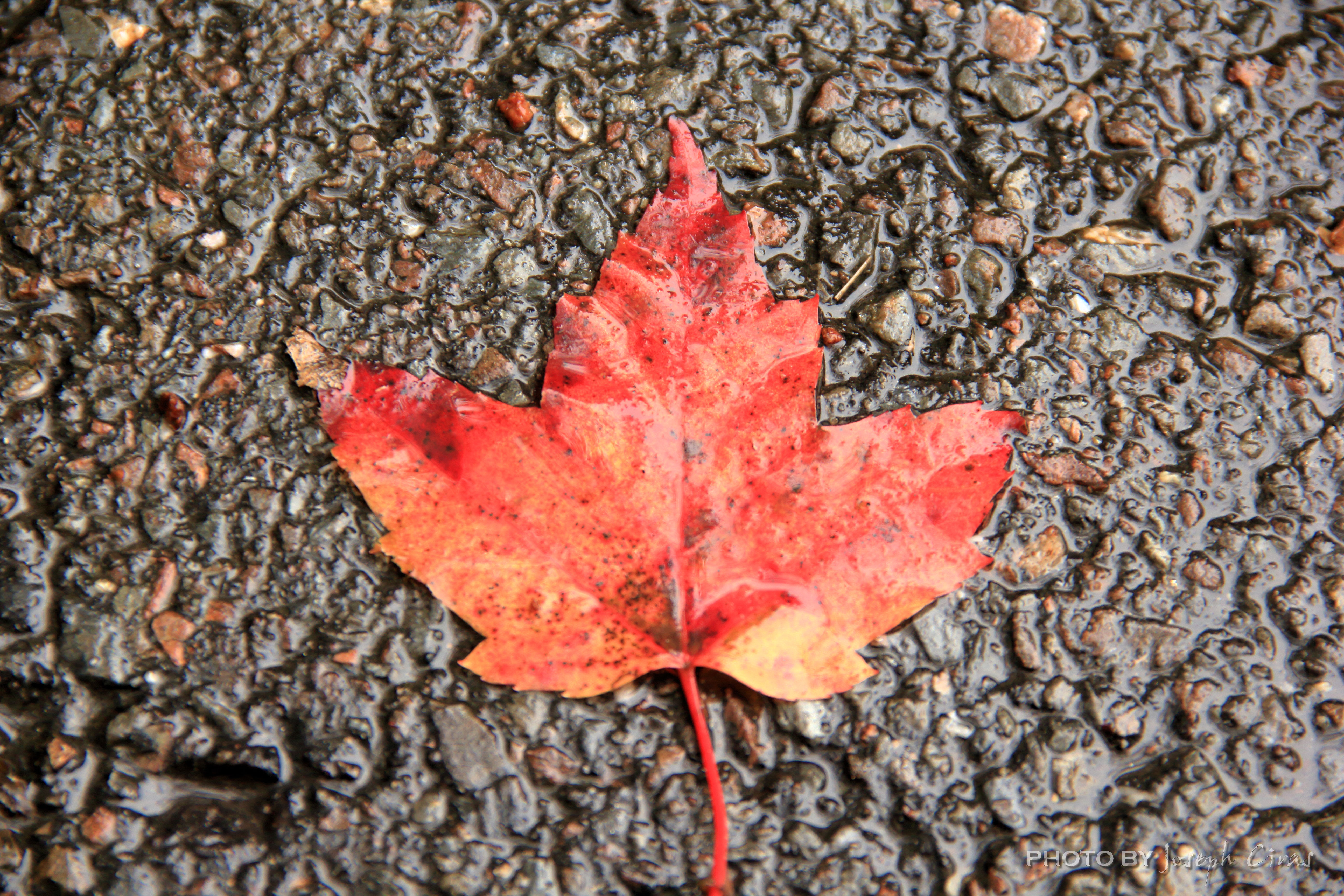
Saturday, 10/30/2021: Post photo — Maple Leaf.

Settings: Canon EOS 60D, ISO 200, f/5.6, 1/60 s, 100 mm.

Last week an oak leaf, today it is a maple leaf. A sugar maple leaf to be precise.

Sugar maple leaf in our driveway

More rain today. I took this photo in my driveway while I was on my way to do some shopping.

Once again, a short and sweet Saturday post.

That is all for now. Until next week, be safe.

For more photo of other project I have work, visit my website: https://photobyjosephciras.weebly.com or visit me on Facebook at https://www.facebook.com/PhotobyJosephCiras/.

Photographic Thoughts — 10/10/2021 to 10/16/2021

“Today everything exists to end in a photograph.” — Susan Sontag

Thank you for all the new views and likes from last week, it helps keep me inspired.

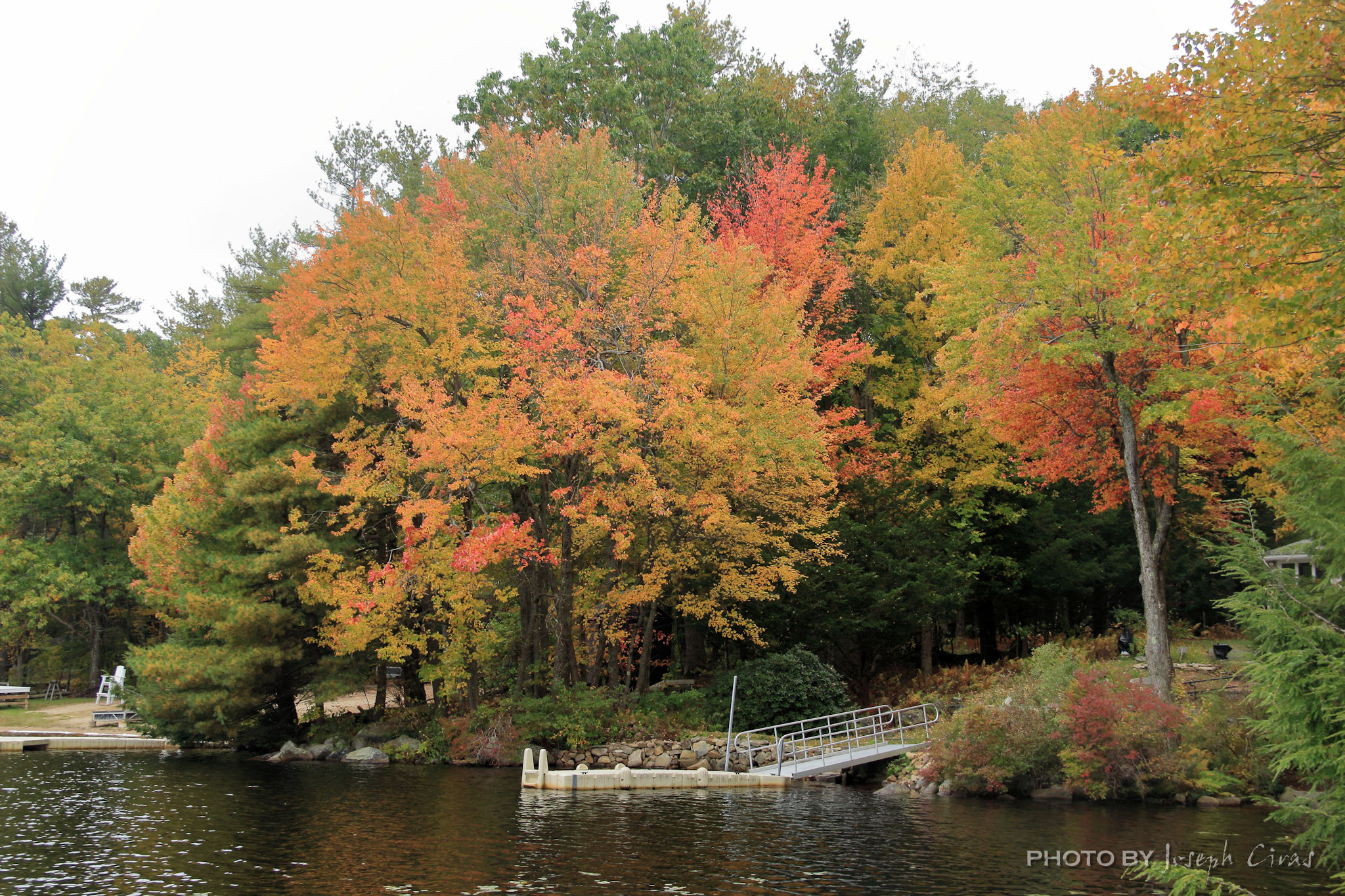
Sunday, 10/10/2021: Posted photo — Lakeside.

Settings: Canon EOS 60D, ISO 400, f/7.1, 1/125 s, 32 mm.

Today we took the dock out of the water at the cottage. The water was cold when first going into it, and then it did not feel so bad. We need to go into the water to lift part of the dock off its foundation to bring it in. Many years ago, the tires on the bottle of the support legs on the dock fell off so we manually need to lift the dock out of the water.

Before the dock was removed, I went out on it to enjoy the foliage from out in the water. I took this photo shortly before the dock was removed from the water.

The day is always a fun filled day with family and friends.

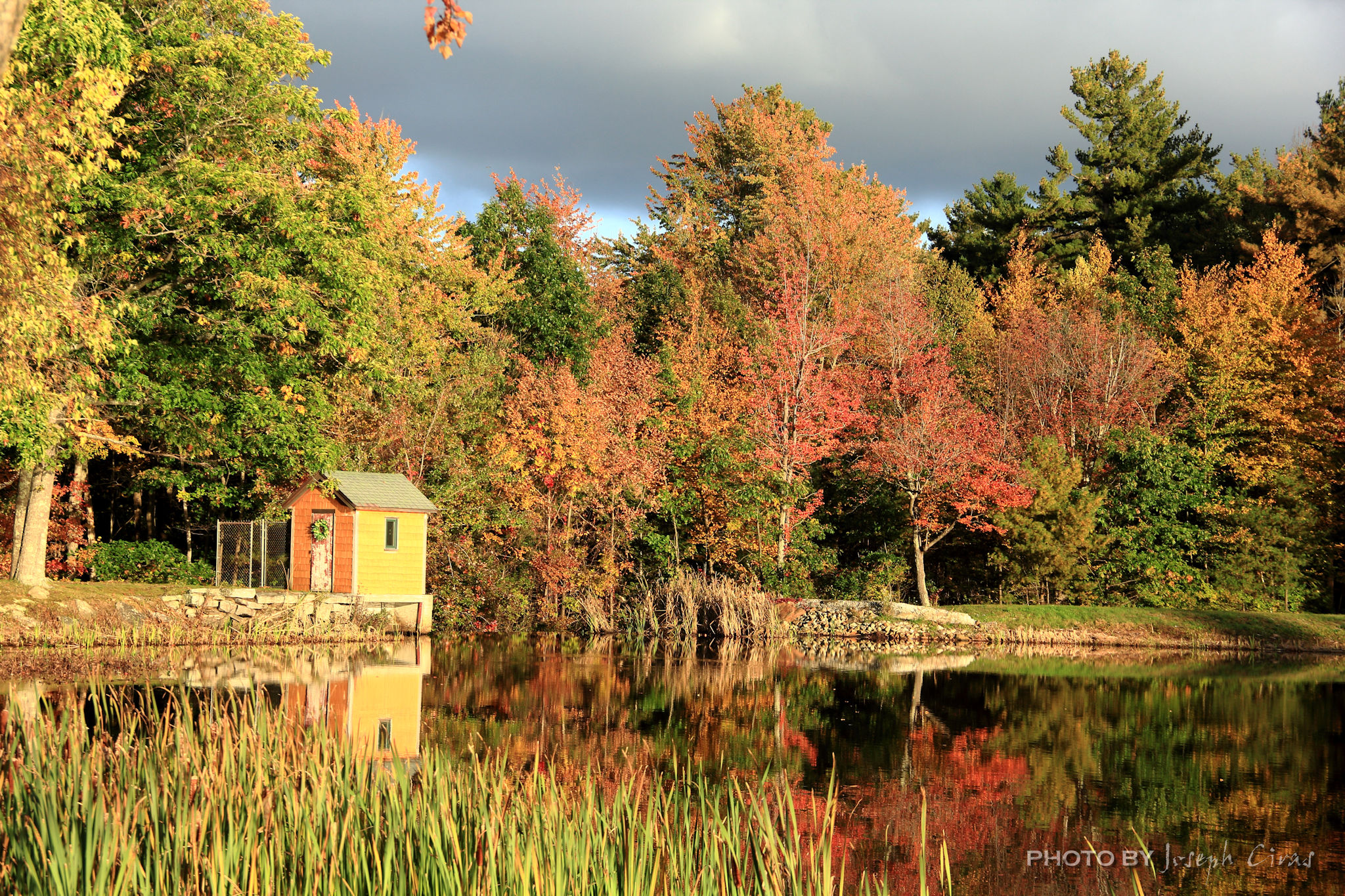
Monday, 10/11/2021: Posted photo — Trees in the Sun.

Settings: Canon EOS 60D, ISO 100, f/7.1, 1/125 s, 50 mm.

This is the backside, or inlet side, of the falls at Round Meadow Pond. You have seen a few photos of the water flowing over the dam since that is one of my favorite spots to photograph. I took this photo because of the bright colors of the foliage, and I liked the way the light was reflecting off the trees.

Tuesday, 10/12/2021: Posted photo — More Foliage.

Settings: Canon EOS 60D, ISO 100, f/7.1, 1/160 s, 50 mm.

Not much to say about this photo. The foliage is starting to get to peak in this area, so I am taking as many foliage photos as I can.

One thing I can say about this photo, and my other foliage photos, is that they look very bright. The histogram looks good for these photos, but the photos look bright when viewing on some screens. It might be because I use calibrate monitors to edit my photos and the other monitors are not calibrated.

Time to do some research into this issue. Maybe I should get one or two of them printed to see how the colors come out.

Wednesday, 10/13/2021: Posted photo — Morning Dew.

Settings: Canon EOS 60D, ISO 100, f/7.1, 1/250 s, 72 mm.

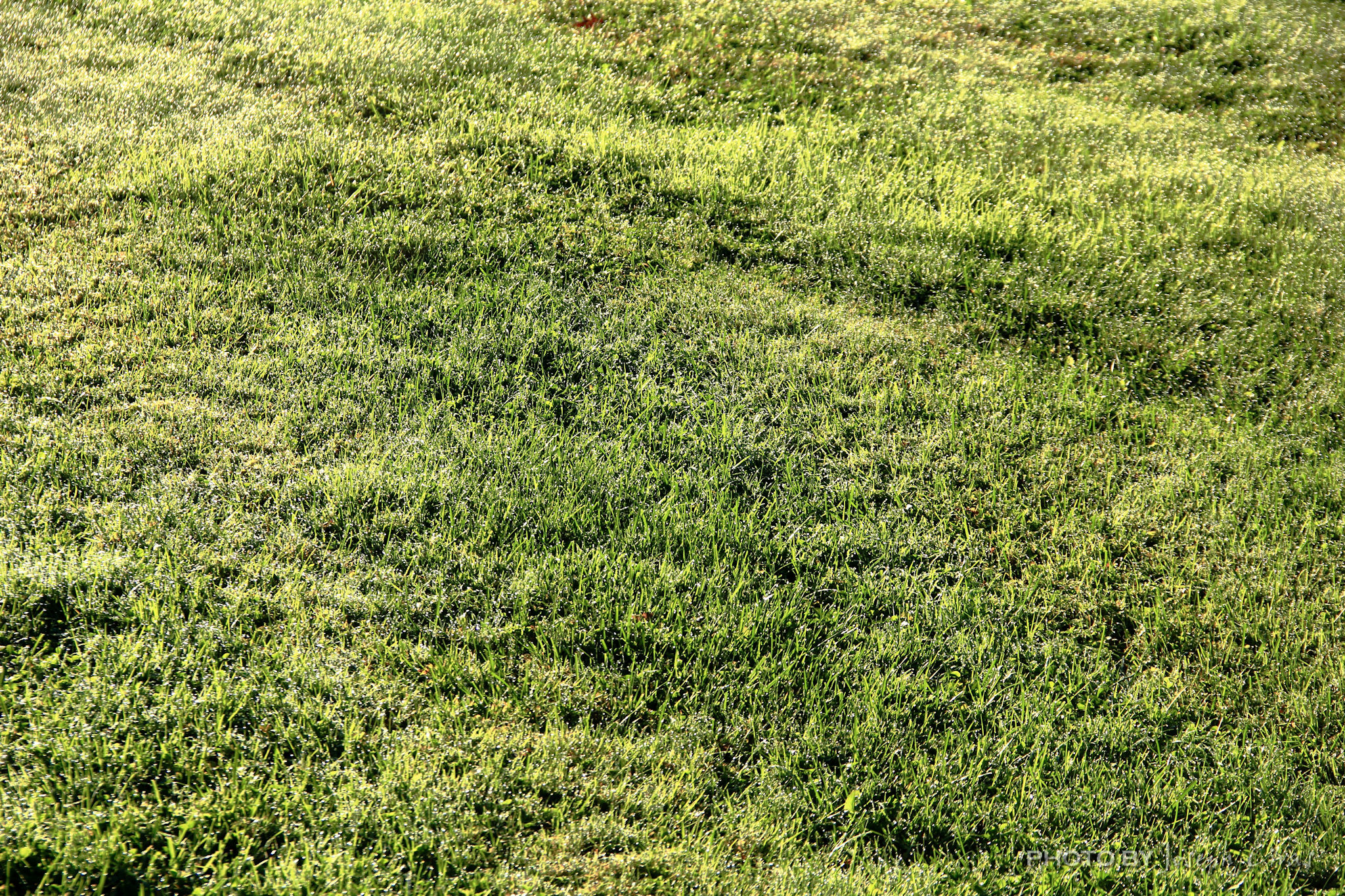
I was going to post another foliage photos today but decided to post a photo of the morning dew. This photo was meant to show the dew and to break up my trend of foliage photos. Too much of a good thing is not always good.

I attempted to capture the light off the dew on the grass. Please leave a comment to let me know how well I captured the light and to give me some tips to improve.

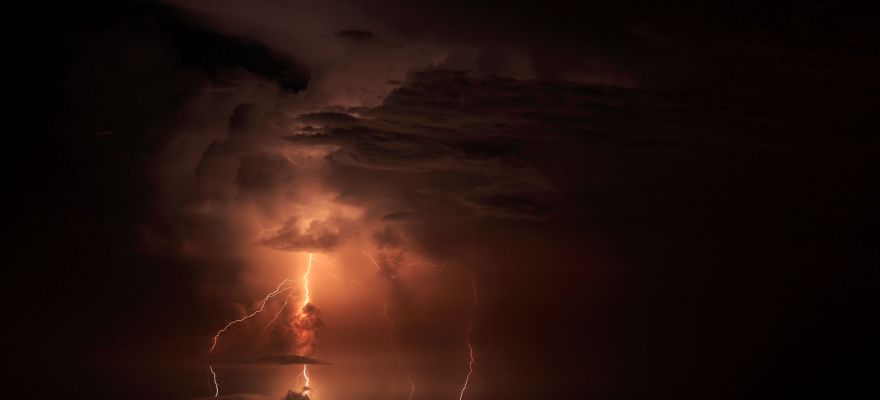
Thursday, 10/14/2021: Posted photo — Lightning at Sea.

Settings: Canon EOS 60D, ISO 100, f/5.6, 15 s, 48 mm.

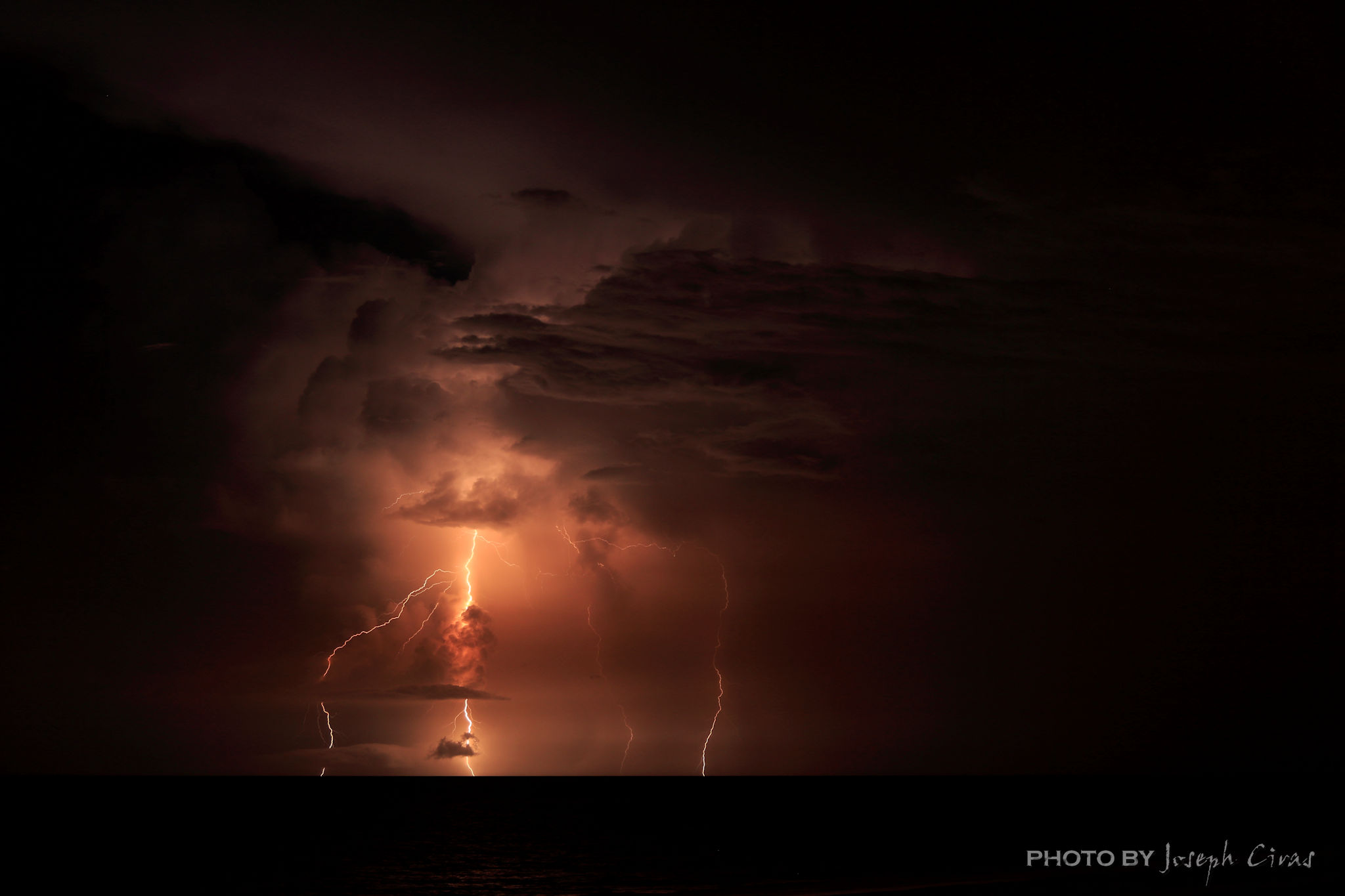
15 second exposure looking out to see in Jacksonville Beach, FL a few years ago.

During a past vacation, my family rented a condominium on Jacksonville Beach. My wife has relatives that live in both Jacksonville Beach and Neptune Beach, so we travel to the area relatively often. Most of the time we rent a house or condo not on the beach.

A common occurrence in Florida is a storm out to sea at night. It is such a great sight to see the lightning in the distance. On this night, I decided to put my camera on my tripod, set the exposure time to 15 seconds, to capture the storm. After looking at the photos, my only regret was that I did not leave my shutter open for 30 seconds.

There will always be another trip back to the beach.

Here are a few camera settings for photographing daytime and nighttime lightning that I have picked up over the years:

Camera settings tips for photographing daytime lightning photos:

  • Set up camera on a sturdy tripod.
  • Turn off any image stabilization you might have. If image stabilization is on, the camera will think it is moving when the shutter engages, even though there is not camera movement.
  • Focus camera lens on infinity or on an object in the distance.
  • Set the aperture of the lens to f/16 or smaller. This will close the iris inside the lens, allowing a longer shutter speed to be used.
  • Set ISO to lowest it will go, for example use ISO 100.
  • Take a test exposure using the slowest shutter speed allowed to see if the image is exposed correctly and your focus is correct.
  • Set your camera on manual or bulb.
  • Use a remote timer/intervalometer to fire the shutter continuously.

Here is an example of a daytime lightning photo. This photo was handheld since the storm arrived quickly. For your information, we did not hike down into the Grand Canyon that day.

Camera settings for photographing night-time lightning

  • Set up camera on a sturdy tripod.
  • Turn off any image stabilization you might have. If image stabilization is on, the camera will think it is moving when the shutter engages, even though there is not camera movement.
  • Focus camera lens on infinity or on an object in the distance.
  • Set the aperture of the lens to a medium value, such as f/5.6 or f/8. This will allow a longer shutter speed by bringing in more light and improve image quality at the same time by allowing the use of a lower ISO value.
  • Set ISO to lowest it will go, for example set your is to ISO 100. You may have to increase your ISO to ISO 200–ISO 400 depending on the lighting in the area. I prefer my ISO set at ISO 100 for all my lightning shots.
  • Set your camera on manual or bulb.
  • Set the shutter speed to between 5 and 20 seconds. You can set it up to 30 seconds if you are in a dark area.
  • Take a test shot to see if the scene is exposed correctly, remembering that if a strike does happen in the field of view it could light up the scene considerably, depending on how big the strike looks in the photo.
  • Use a remote timer/intervalometer to fire the shutter continuously.

Friday, 10/15/2021: Post photo — Clouds.

Settings: Canon EOS 60D, ISO 200, f/7.1, 1/1250 s, 37 mm.

Today I am posting a photo of a cloud. I took many photos today, but this one was the only one that I liked.

Saturday, 10/16/2021: Post photo — Aster.

Settings: Canon EOS 60D, ISO 200, f/5.6, 1/320 s, 106 mm.

I went to my mother’s house today to make sure everything was fine at the house. I also collected some of the wood from the tree that fell on her house about a year ago to bring home to burn. Earlier in the day, I took photos at Leominster State Forest. I went hiking at Leominster State Forest last night and went back today to get some more photos. I will be posting the photos I took in this blog for you to see what I did not post for my 365 project.

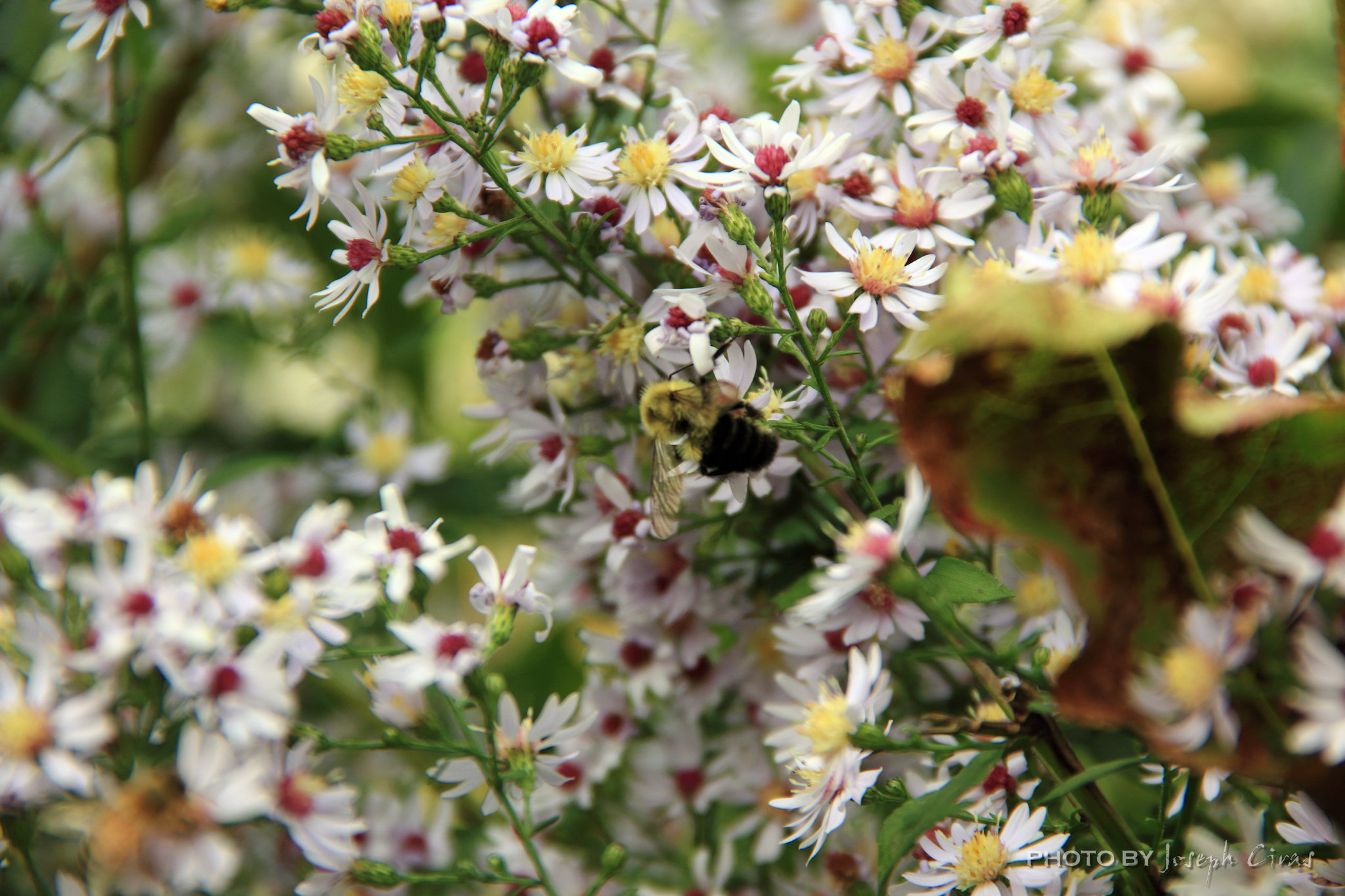
When I was at her house, I noticed a lot of asters. I also saw that there was an abundant number of bees flying around the asters. What a great photo opportunity. The aster flowers (Aster spp.) add color to the autumn landscape while offering beauty with little work when caring for asters.

That is all for now. Until next week, be safe.
For more photo of other project I have work, visit my website: https://photobyjosephciras.weebly.com/ or visit me on Facebook at https://www.facebook.com/PhotobyJosephCiras/.

Photographic Thoughts — 10/03/2021 to 10/09/2021

“I never have taken a picture I’ve intended. They’re always better or worse.” — Diane Arbus

Thank you for all the new views and likes from last week, it helps keep me inspired.

Sunday, 10/03/2021: Posted photo — Reflection in the Fog.

Settings: Canon EOS 60D, ISO 400, f/7.1, 1/80 s, 113 mm.

Driving into church this morning, I notice fog off the lakes in the area. The location of this photo is one in which I take many practice photos. It is a difficult location to take a photo since I needed to stop on the edge of a busy road.

My initial thought on this photo was to get a picture of the mist rising from the surface of the lake with the foliage behind it. When I arrived at this location, the mist was thicker than I would like. I did see the reflections of the trees on the water and thought that that would take a good photo.

Monday, 10/04/2021: Posted photo — Western Tanager.

Settings: Canon EOS DIGITAL REBEL XS, ISO 200, f/6.3, 1/320 s, 300 mm.

Fact from All About Birds: “The oldest Western Tanager on record—a male originally banded in Nevada in 1965—had lived at least 6 years and 11 months by the time he was recaptured and rereleased during banding operations in Oregon in 1971.”

We were walking the north rim at Grand Canyon National Park when I spotted this male Western Tanager in a conifer tree. The color contrast between the bird and the tree caught my eye.

The range of the Western Tanger is the western parts for the United States, Canada, and Mexico.

Again, from All About Birds: “A clear look at a male Western Tanager is like looking at a flame: an orange-red head, brilliant yellow body, and coal-black wings, back and tail. Females and immatures are a somewhat dimmer yellow-green and blackish. These birds live in open woods all over the West, particularly among evergreens, where they often stay hidden in the canopy. Nevertheless, they’re a quintessential woodland denizen in summertime, where they fill the woods with their short, burry song and low, chuckling call notes.” (https://www.allaboutbirds.org/guide/Western_Tanager/overview)

Tuesday, 10/05/2021: Posted photo — The Gathering.

Settings: Canon EOS 60D, ISO 3200, f/7.1, 1/100 s, 135 mm.

On my way home from work today I saw this rafter of turkey. I have seen them many times before on the property and did not feel the need to photograph them. Today was different.

When I was approaching them today, it looked like it was a group of workers getting ready to clock out of work and were planning what they were going to do tonight. Just the way they were gather in pairs and it looked like they were talking to each other.

Also, I thought it would be a good picture to take.

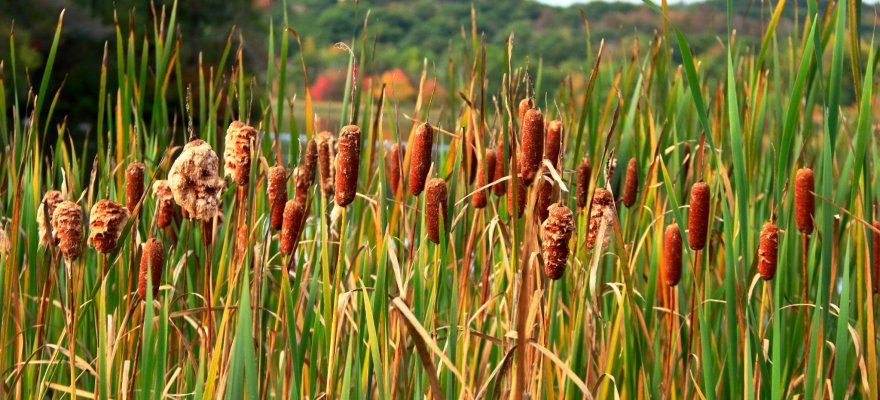
Wednesday, 10/06/2021: Posted photo — Cattails.

Settings: Canon EOS 60D, ISO 800, f/5, 1/800 s, 52 mm.

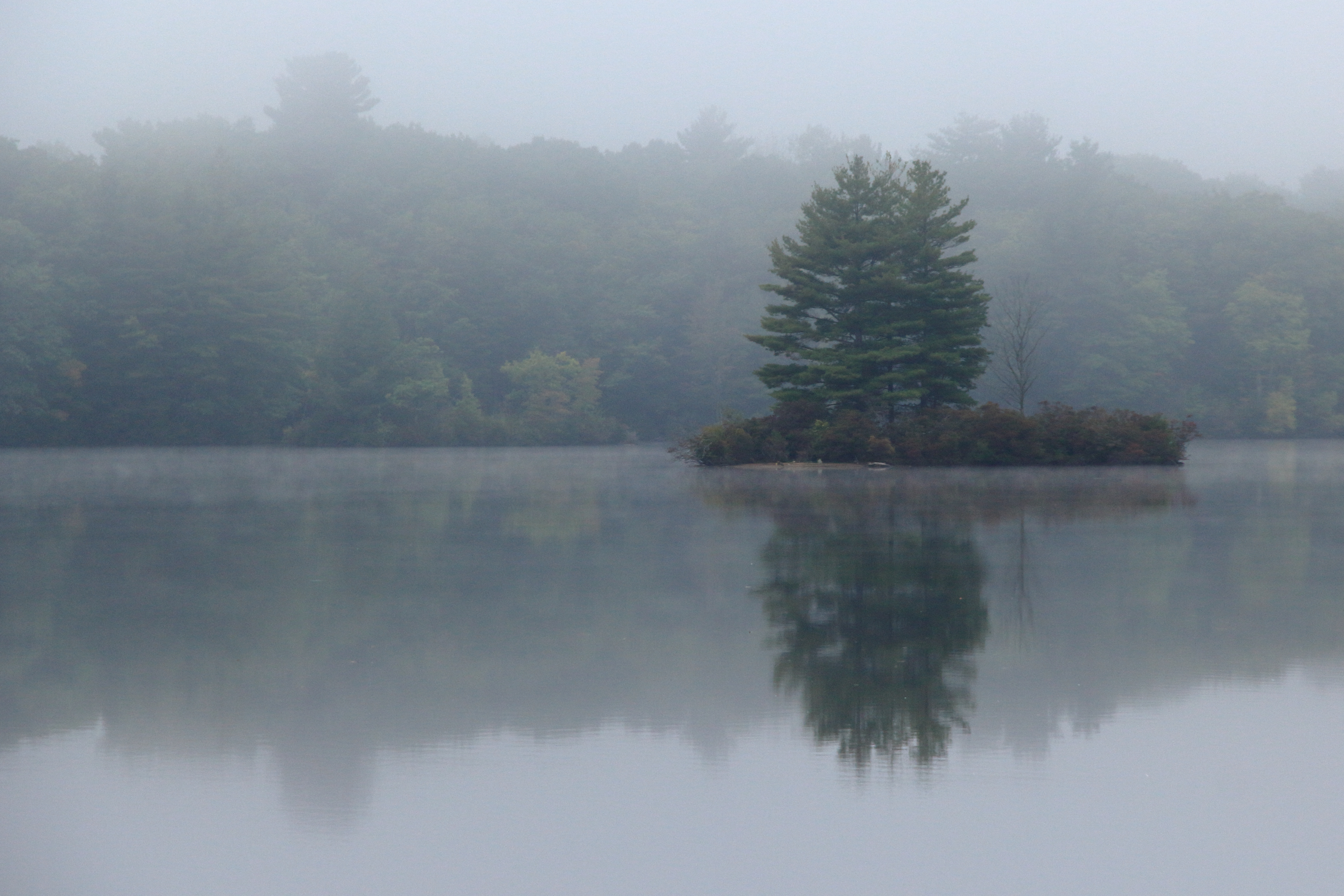
I had a choice of photos to post today — a photo of an island or a photo of cattails. I decided on the cattails for the photo to put in my 365 project because I liked it just a little bit better than the photo of the island. I will be posting both in this blog for you to compare.

Cattails are a type of aquatic plant, approximately 5-10 feet tall. These plants have long, slender, branchless, and upward-growing leaves and a distinguishable brown, cylindrical flowering head at their apex. The grow around ponds and other wetland areas.

What is the difference between a pond and a lake? Here is something I found in my research: “To help determine the difference, both the depth and surface area must be considered. Lakes are normally much deeper than ponds and have a larger surface area. All the water in a pond is in the photic zone, meaning ponds are shallow enough to allow sunlight to reach the bottom. This causes plants (sometimes too many) to grow at the bottom of ponds as well as on their surface. However, sunlight can’t reach the bottom of all areas of lakes. Lakes have aphotic zones, which are deep areas of water that receive no sunlight, preventing plants from growing.” (https://lakes.grace.edu/ponds-vs-lakes-whats-the-difference/)

I took the cattail photo with a shallow depth of field (DOF) to blur the background and the make the cattails “pop”. As you can tell by this photo, the cattails are starting to spread their seeds.

Here is the photo of the island that I took and did not like as much as the cattail photo.

Thursday, 10/07/2021: Posted photo — Sunset Through Trees.

Settings: Canon EOS 60D, ISO 100, f/5.6, 1/160 s, 100 mm.

After a week and a half, I was back on the hiking trail today. It felt good to get back. I hiked 4.3 miles on Wachusett Mountain after work with some colleagues. I took a series of photos along the way to determine what one to post. I decided on this sunset photo. I had another sunset photo that I took from the summit, but I accidently deleted it. Rookie mistake.

The other choices of photos were a glacial erratic called Balanced Rock or a burl on a tree at a trail junction. Just a reminder that a glacial erratic is glacially deposited rock differing from the size and type of rock native to the area in which it rests. And a burl is a strange-looking collection of tree cells, which are called callus tissue. Normally, callus tissue is formed by a tree in response to an environmental injury such as a pruning cut, disease, or insect damage. If you have a piece of wooden furniture, such as an end table, it was most likely made with a burl.

These are the photos that I did not post for my 365 project.

Friday, 10/08/2021: Post photo — Pareidolia.

Settings: Canon EOS 60D, ISO 100, f/10, 1/250 s, 21 mm.

Pareidolia is the defined by Merriam-Webster as the tendency to perceive a specific, often meaningful image in a random or ambiguous visual pattern. I have posted about this tendency in the past.

Today I am posting a photo of a cloud. I see a couple items in this photo. I see an opera singer hitting a high note and I also see a ships figurehead. It is amazing how one can see an object when one is not there.

What to you see? Do you see what I see, due to the power of suggestion, or do you see something else. Please respond in the comment section.

Saturday, 10/09/2021: Post photo — Iris Bouquet.

Settings: Samsung SM-G930V (Galaxy S7), ISO 100, f/1.7, 1/60 s, 4 mm

From The Old Farmer’s Almanac: “The tall, beautiful iris, named after the Greek goddess who rode rainbows, comes in many magical colors. Despite its divine origins, this June bloomer is rugged, reliable, and easy to grow. Learn all about planting, growing, and caring for iris flowers.” (https://www.almanac.com/plant/irises)

Today was a shopping day from me. Saw this iris bouquet in one of the stores that I shopped. I like the colors.

Saturday’s posts are normally short because of the time between I take the photo and the time that I post my blog.

That is all for now. Until next week, be safe.

For more photo of other project I have work, visit my website: https://photobyjosephciras.weebly.com/ or visit me on Facebook at https://www.facebook.com/PhotobyJosephCiras/.