“The picture that you took with your camera is the imagination you want to create with reality.” — Scott Lorenzo
Thank you for all the new views and likes from last week. It helps keep me going. Enjoy my blog post!
Please answer the question posed in one of my days. I would like an opinion on how you like this blog and how I can improve it. Leave a comment below or on my Facebook page.
Enjoy this week’s rambling mind of a mechanical engineer and photographer.
Sunday, 05/16/2021: Posted photo — Stained Glass.
Settings: Samsung SM-G930V (Galaxy S7), ISO 50, f/1.7, 1/415 s, 4 mm
From the Stained Glass Association of America: “Stained glass possesses an aura of mystery and romance. It is the interplay between light and color that sparks the imagination. It is one of the most unchanged crafts, still taking, as it did centuries ago, time and patience, and an appreciation for color and line design.”
The term stained glass refers to colored glass as a material and to works created from it. Throughout its thousand-year history, the term has been applied almost exclusively to the windows of churches and other significant religious buildings. Although traditionally made in flat panels and used as windows, the creations of modern stained glass artists also include three-dimensional structures and sculpture.
From Classroom website: “Stained glass windows play games with the light in many modern churches. The tradition of making those windows goes back a long way. As early as the fourth century, colored glass was used to ornament church windows, though it was not until the 12th century that making stained glass became an art form like sculpture or painting. Yet stained glass was not just a decoration. It was a way of communicating scenes and episodes from the Bible to everybody — including those unable to read.
Ultimately, the most important reason that stained glass windows remain a staple in churches even now is a matter of the Bible, not beauty. Stained glass was not merely attractive, it created an ethereal experience with a material object, glass, making the earthly into the divine. More important, stained glass was useful for a practical reason. In the medieval period, many church-goers were illiterate. The intricate scenes depicted in stained glass were not just decorations; they were ways of delivering religious messages to all viewers, even those who could not read the Bible for themselves. Stained glass embedded religious beliefs into the very walls.”
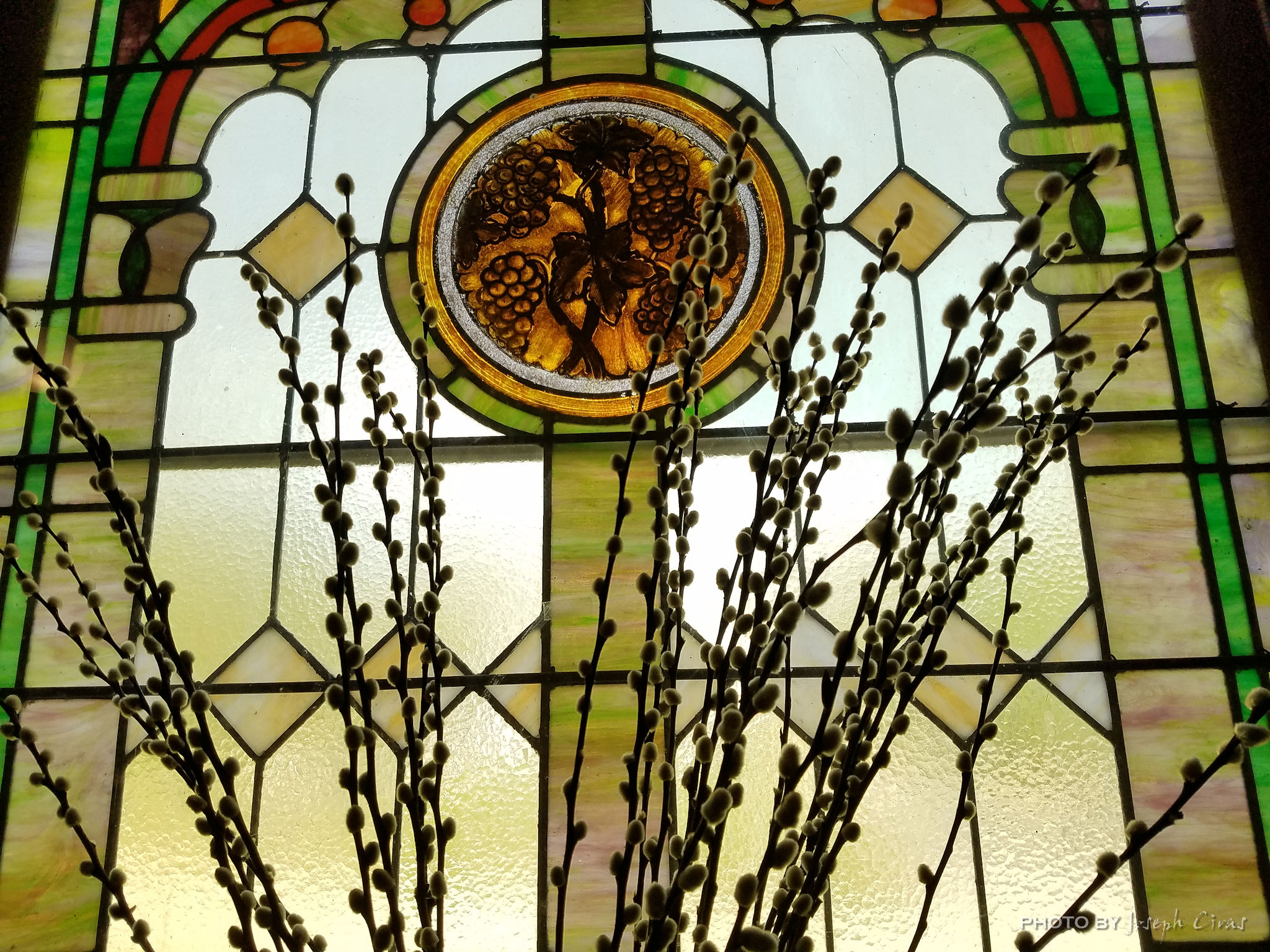
The stained glass in this photo is in the foyer of St. Denis Church. I liked the light coming through the window. There was also a vase with pussy willows in front of the window. In Chinese tradition, the white blossoms of the pussy willow resemble silk represents the coming of prosperity.
Monday, 05/17/2021: Posted photo — Cloud.
Settings: Canon EOS 60D, ISO 100, f/7.1, 1/800 s, 18 mm
I hiked with a different group today. This was the first time I hiked with this group. I am looking for a group of hikers that socialize and not a social group that hikes. After one hike, this group meets my needs. They still socialize but they keep up a good pace and are stronger hikers that the group that I joined a couple of weeks ago. This group hikes earlier in the evening, which is better for me.
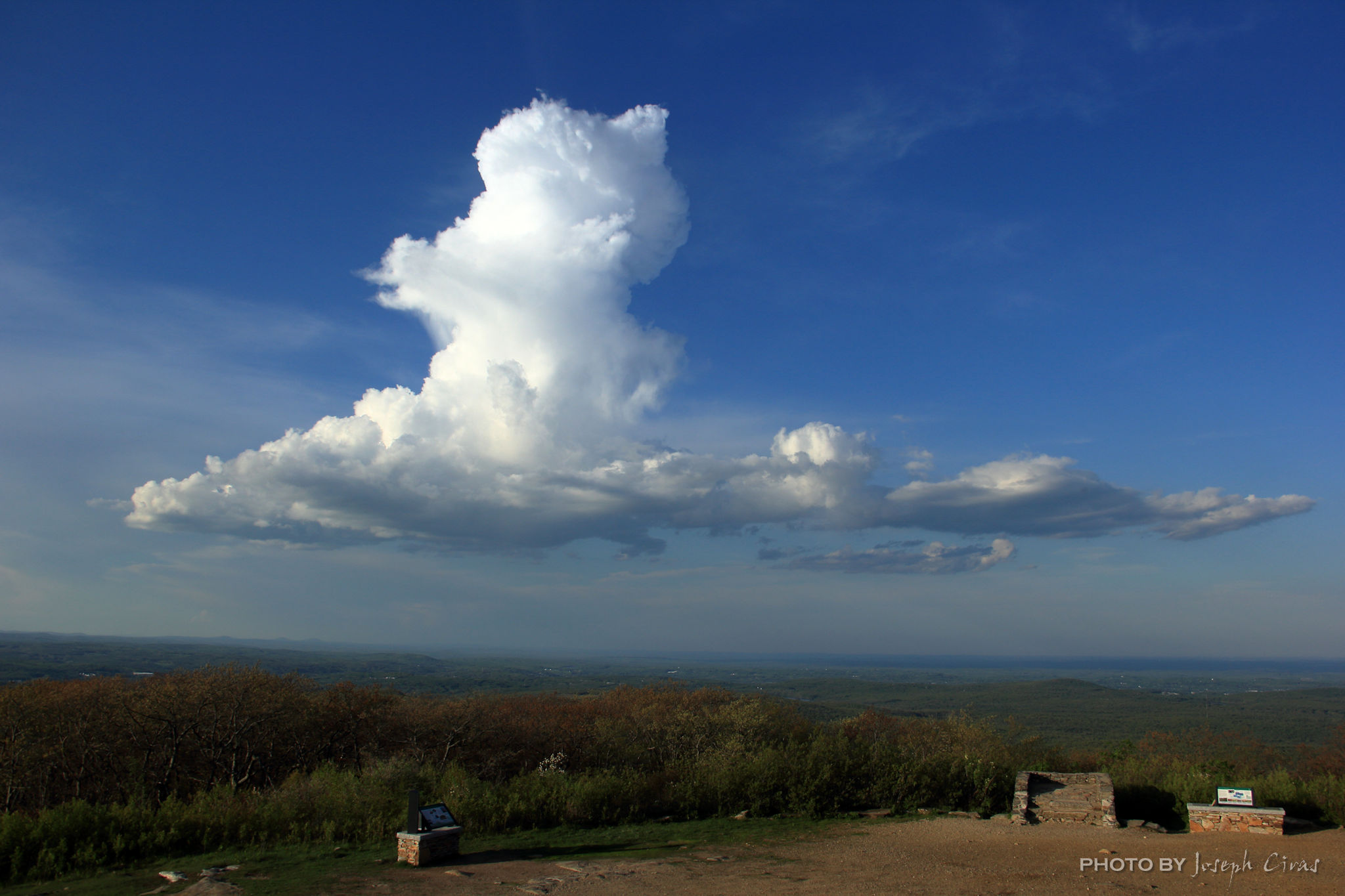
Today it was warmer that it has been in the past and there was rain around the summit. This is a cloud that was forming near the summit of the mountain. I had to keep my eye on its growth since it was developing into a thunderhead, or cumulonimbus cloud. I enjoy watching a thunderhead grow. Once the anvil forms, it is time to get off the summit. This cloud did not fully develop and was still interesting to watch grow.
Tuesday, 05/18/2021: Posted photo — Seeds.
Settings: Canon EOS 60D, ISO 2000, f/5.6, 1/200 s, 135 mm.

A dandelion seed is a tiny seed that rides on the wind. “A dandelion seed is the plant’s mature fruit, known as a cypsela to botanists, and its parachute-like structure is known as a pappus. The pappus develops as the calyx of each floret dries and matures, so it serves two important roles for the plant.” (West Coast Seeds) The seeds can be carried away as far as 5 miles from their original location. Other methods of travel include rain runoff and sticking to clothing and animal fur.
It is so interesting to see how many things a dandelion is used for. To me, they are just a weed that is in my lawn. This year they seem to be more abundant than in past years.
I liked photographing the cotton like puff of a dandelion seeds because I can practice macro photography and/or practice the use of different aperture settings on my camera.
Wednesday, 05/19/2021: Posted photo — I Have My Eyes on You.
Settings: Canon EOS 60D, ISO 3200, f/7.1, 1/160 s, 135 mm.
Once again, I was greeted by wildlife on my way into work today. This time it was a deer. There were four at the edge of the woods. Shortly after this, there were six running down the driveway. Over the years at work, I have seen deer, moose, turkey, black bear, red foxes, great blue herrings, ducks, and snapping turtles on the campus of where I work. I have not seen the snapping turtle for a few years, so I am somewhat concerned if it is still alive. There were two that I would see laying eggs next to the driveway that I would photograph every year. I know they were the same turtles since they have distinctive markings on their shell.
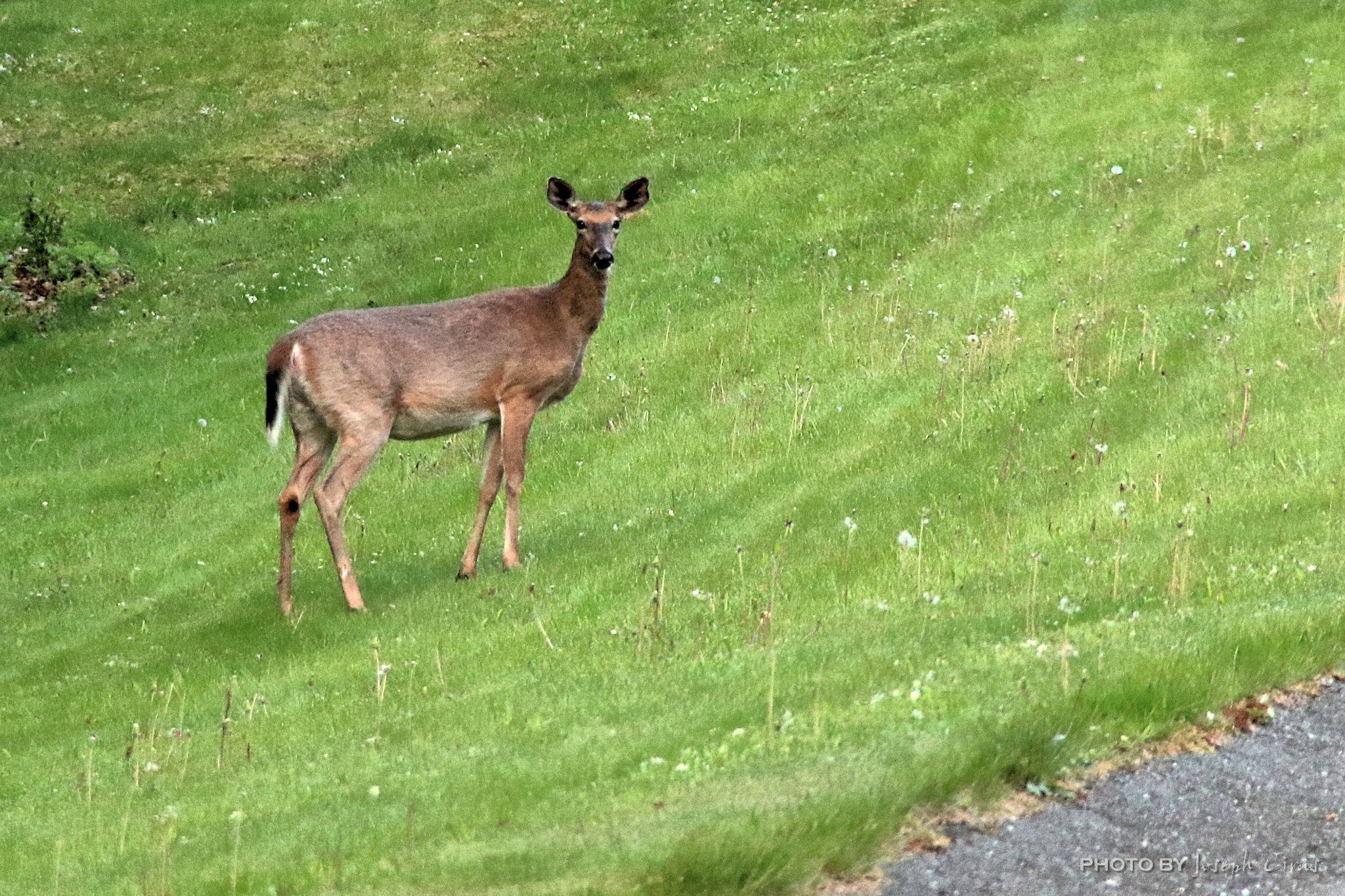
I like the quietness of my place of employment.
Thursday, 05/20/2021: Posted photo — Pink Azalea.
Settings: Canon EOS 60D, ISO 200, f/5.6, 1/80 s, 135 mm.
Last Saturday I posted a photo of some red azalea plants. As a reminder, I stated that azaleas are flowering shrubs in the genus Rhododendron. I noted that we also have pink azalea plants that bloom after the red ones. This week the pink azaleas are blooming.

For this photo, I used a script that I wrote in Paint Shop Pro to duplicate the Dave Hill look as closely as possible. Do not know how to explain this technique clearly. Just search the internet for the Dave Hill look and see for yourself.
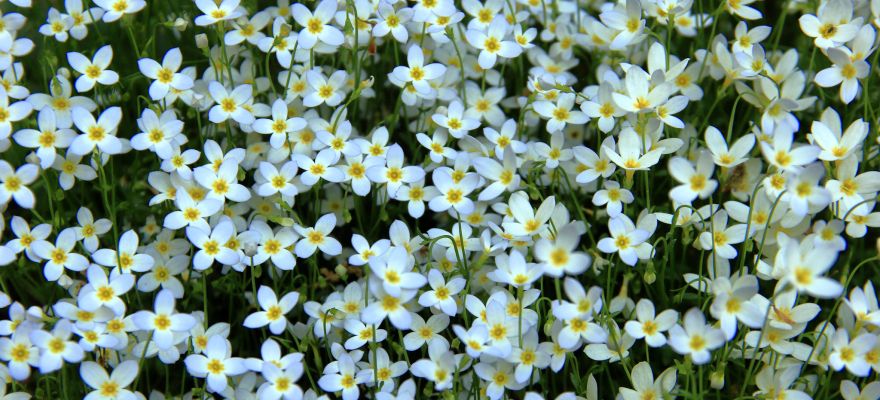
Friday, 05/21/2021: Post photo — Bluets.
Settings: Canon EOS 60D, ISO 100, f/7.1, 1/60 s, 62 mm.
From the Lady Bird Johnson Wildflower Center:
“Azure Bluet, Quaker Ladies, Bluets
Rubiaceae (Madder Family)
Synonym(s): Hedyotis caerulea, Houstonia caerulea var. faxonorum
USDA Symbol: hoca4
USDA Native Status: L48 (N), CAN (N), SPM (I)
This small, delicate perennial is found growing in compact tufts, 8 in. high. The plants may cover broad expanses. Tiny flowers are pale blue with yellow centers, tubular, four-lobed, solitary, and terminal. Spatula-shaped leaves occur in basal rosettes. Stem leaves are small, and the stems are unbranched.
This lovely, delicate, flowering plant is often found in striking patches of light blue. The Star Violet (H. pusilla), to 4” (10 cm) high, has a tiny purple flower and occurs in fields and open woods from South Dakota east to Maryland and south to Florida and Texas. A tall southern species, 6–16” (15–40 cm) high, Large Houstonia (H. purpurea), has 3–5, ribbed, opposite, ovate leaves, and white or pink flowers. It occurs from Nebraska northeast to Maine and south to Florida and Texas. These and certain other Houstonia species have sometimes been placed in the genus Hedyotis.”
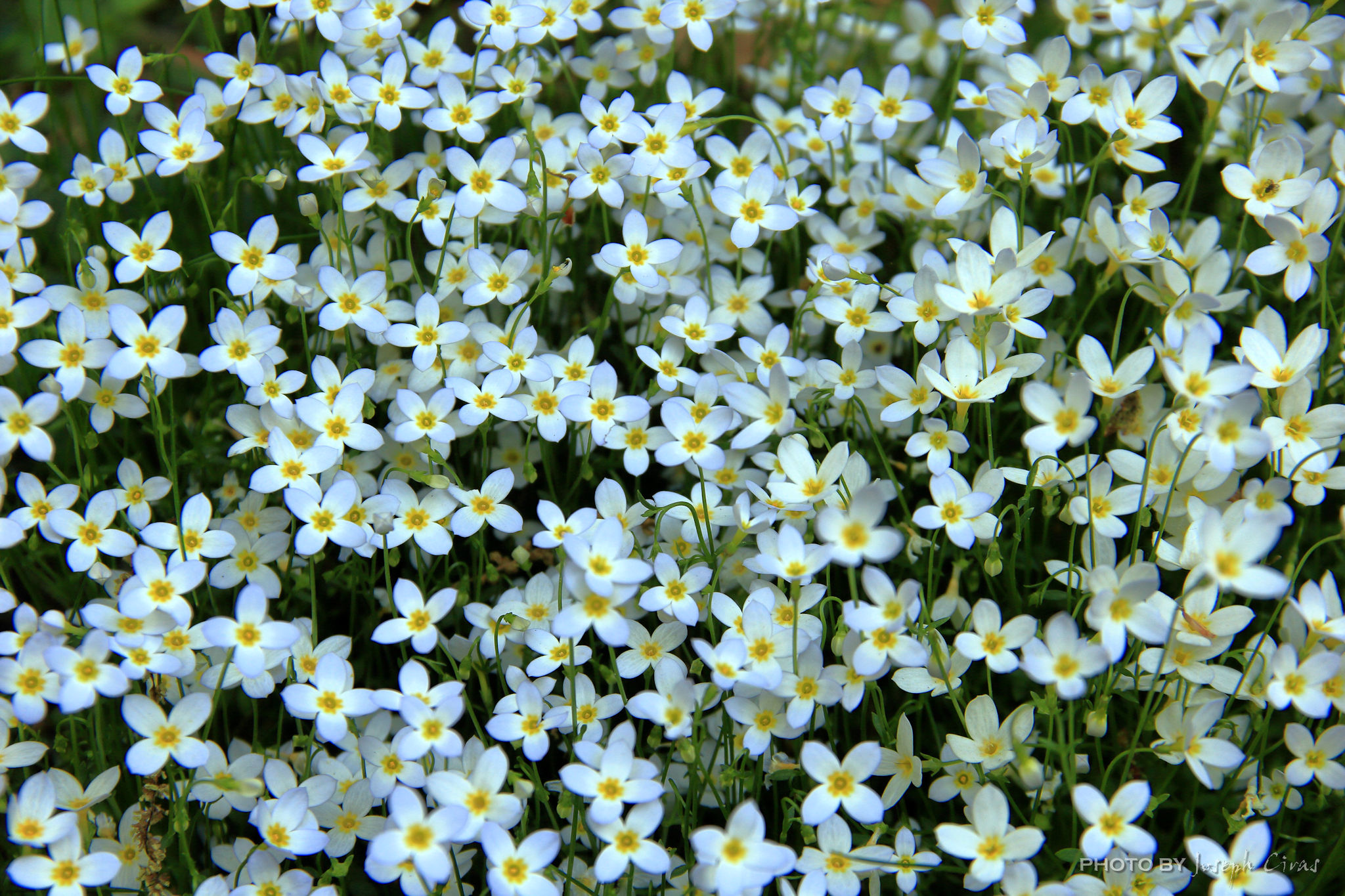
These bluets are in our yard. Well, they were there until I mowed the lawn this evening. They are such a delicate flower to look at.
Question: Do you think that I copy too much information off the internet and not put my own thoughts into some of the items in this blog or do you like the history and educational information that I post?
Saturday, 05/22/2021: Post photo — Pop Art.
Settings: Canon EOS 60D, ISO 3200, f/4, 1/8 s, 28 mm.
50 years ago, you give a teenager a paint brush and ask him to paint what he wanted in a room, this is what happens. Here are some interesting artwork that still hang on basement/cellar walls at my mother’s house. We when over there today to do some cleanup. These photos are to keep as memories of this artwork before the walls come down.
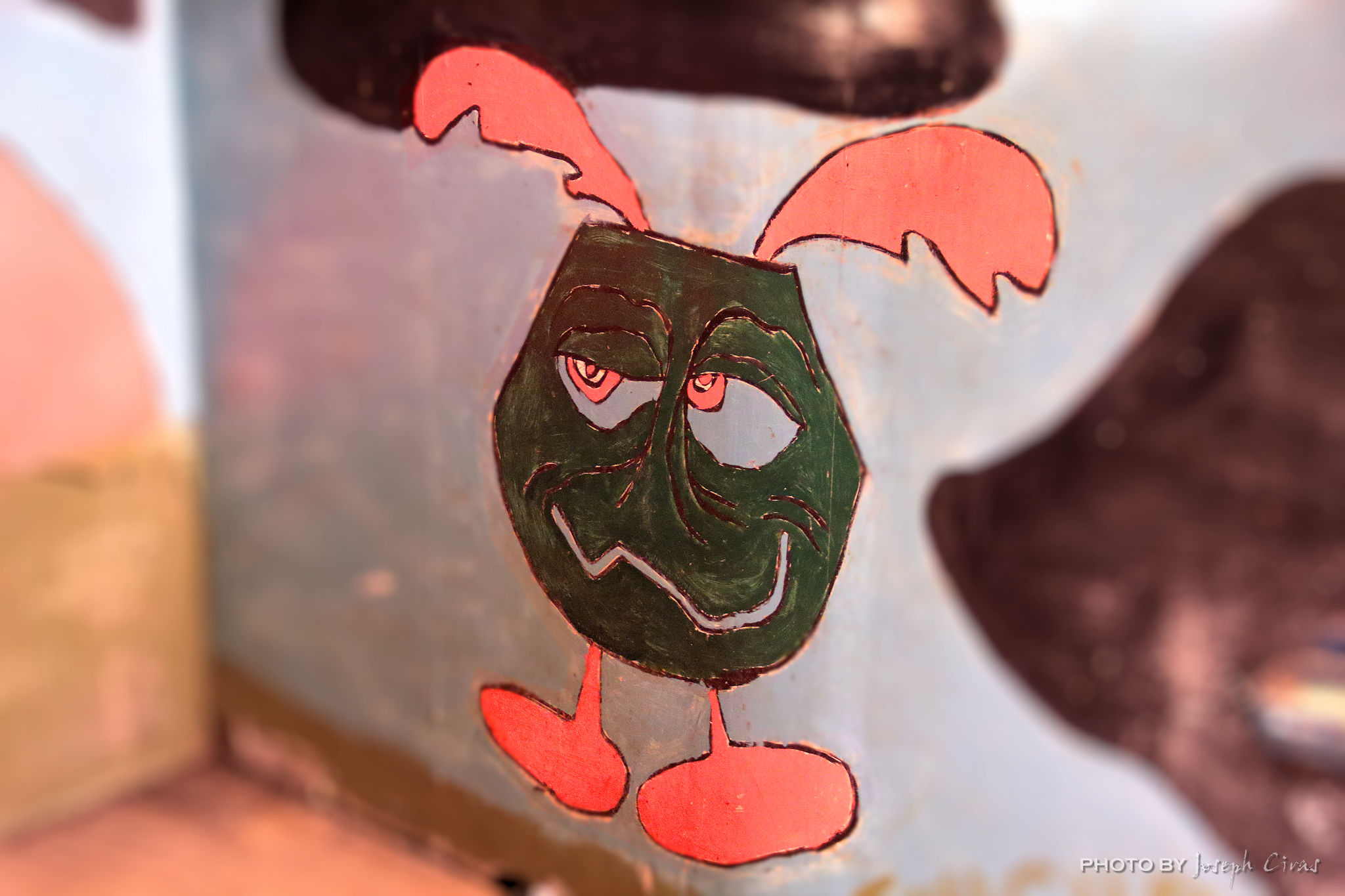
I am very tired, so I am not writing much for today. Here are a couple more pieces of art.
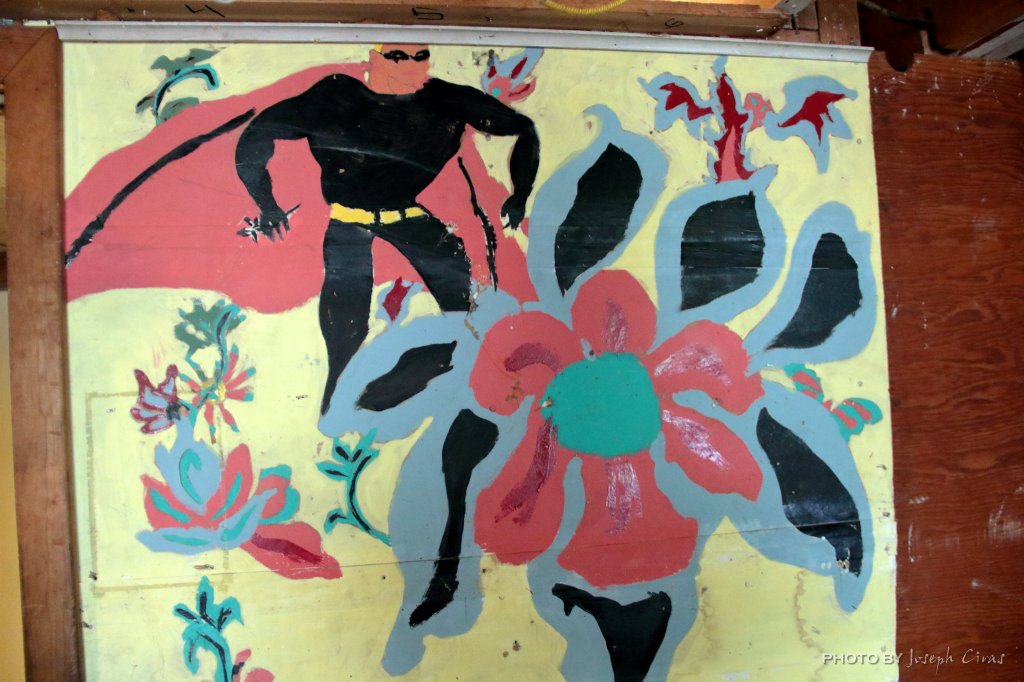
Superman? 
Those eyes!

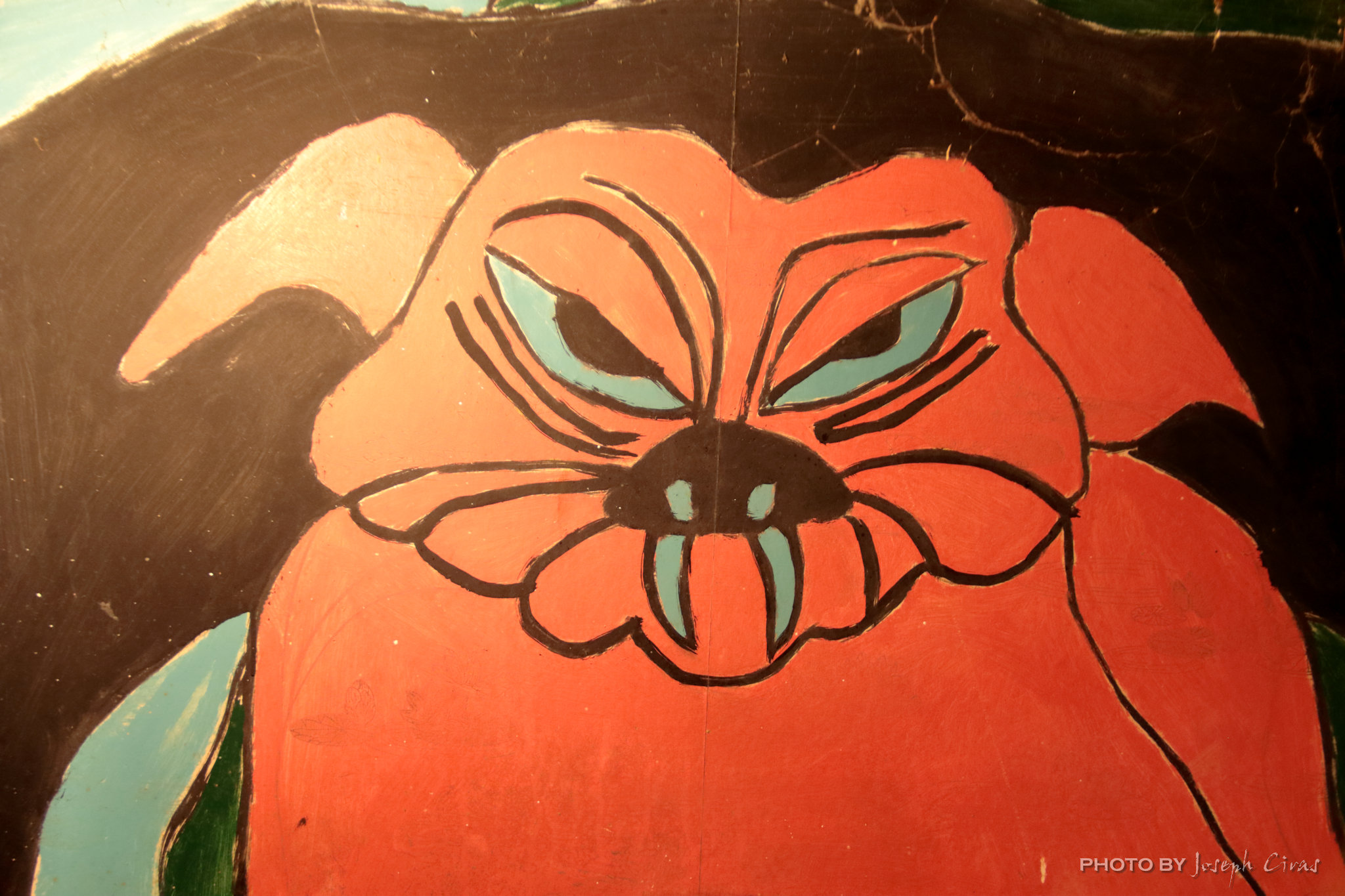
That is all for now. Until next week, be safe.
For more photo of other project I have work, visit my website: https://photobyjosephciras.weebly.com/ or visit me on Facebook at https://www.facebook.com/PhotobyJosephCiras/.
COVID is real! Be safe out there, keep your social distance, and remember to always wear your mask and wash your hands.

 Photo by Joseph Ciras