“What I like about photographs is that they capture a moment that’s gone forever, impossible to reproduce.” — Karl Lagerfeld
In memory of Pearl Harbor Day, I will be posting photos from my last trip to Hawaii.
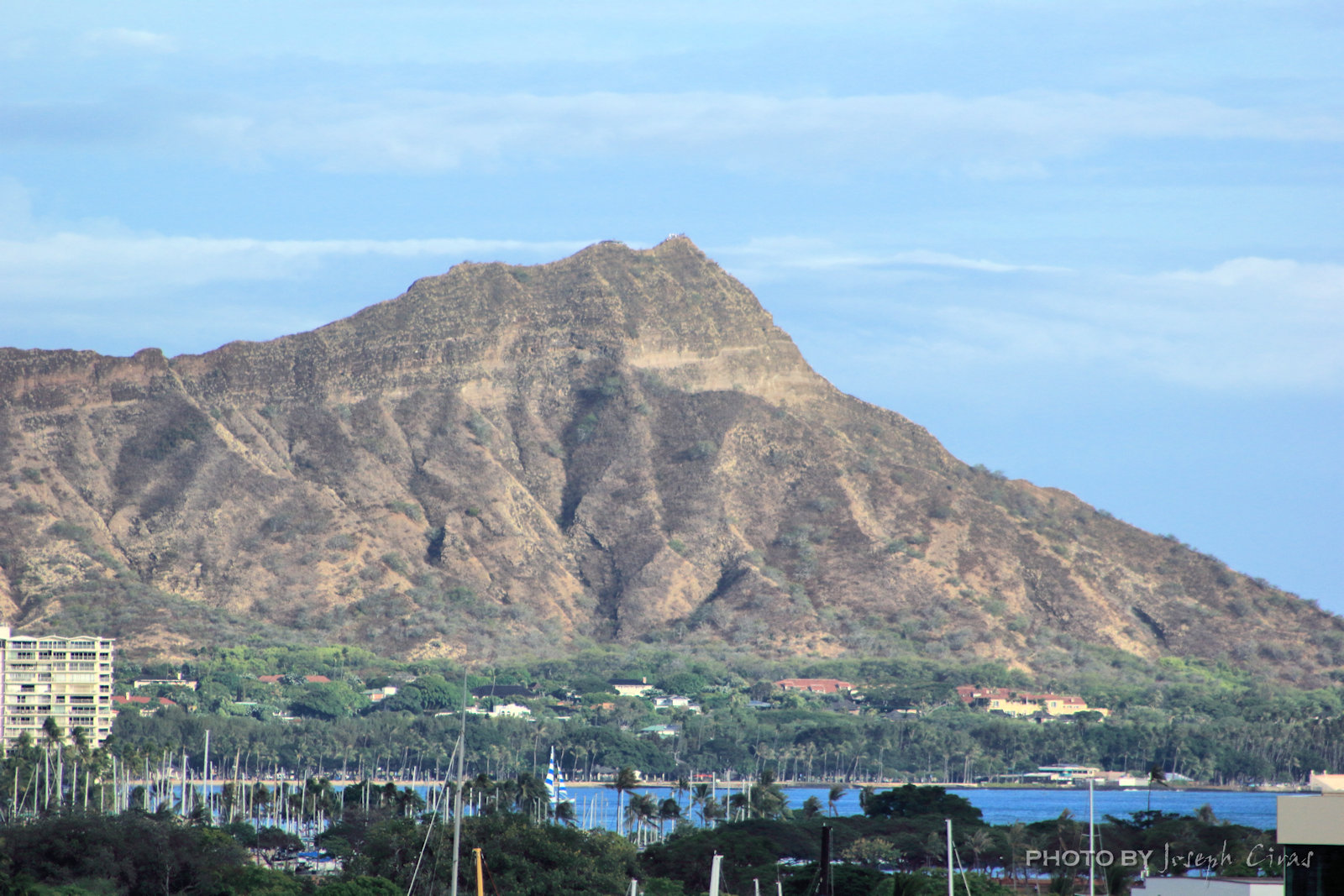
Sunday, 12/03/2023: Posted photo — Diamond Head.
“The unique profile of Diamond Head (Lē’ahi) sits prominently near the eastern edge of Waikiki’s coastline. Hawaii’s most recognized landmark is known for its historic hiking trail, stunning coastal views, and military history. Diamond Head State Monument encompasses over 475 acres, including the interior and outer slopes of the crater.”
“The Rainbow Falls are a broad waterfall in the Wailuku river that is conveniently located within Hilo town. They are very easy to visit and you’ll have a high chance of seeing rainbows if you visit somewhat early in the day (perhaps even before breakfast).”
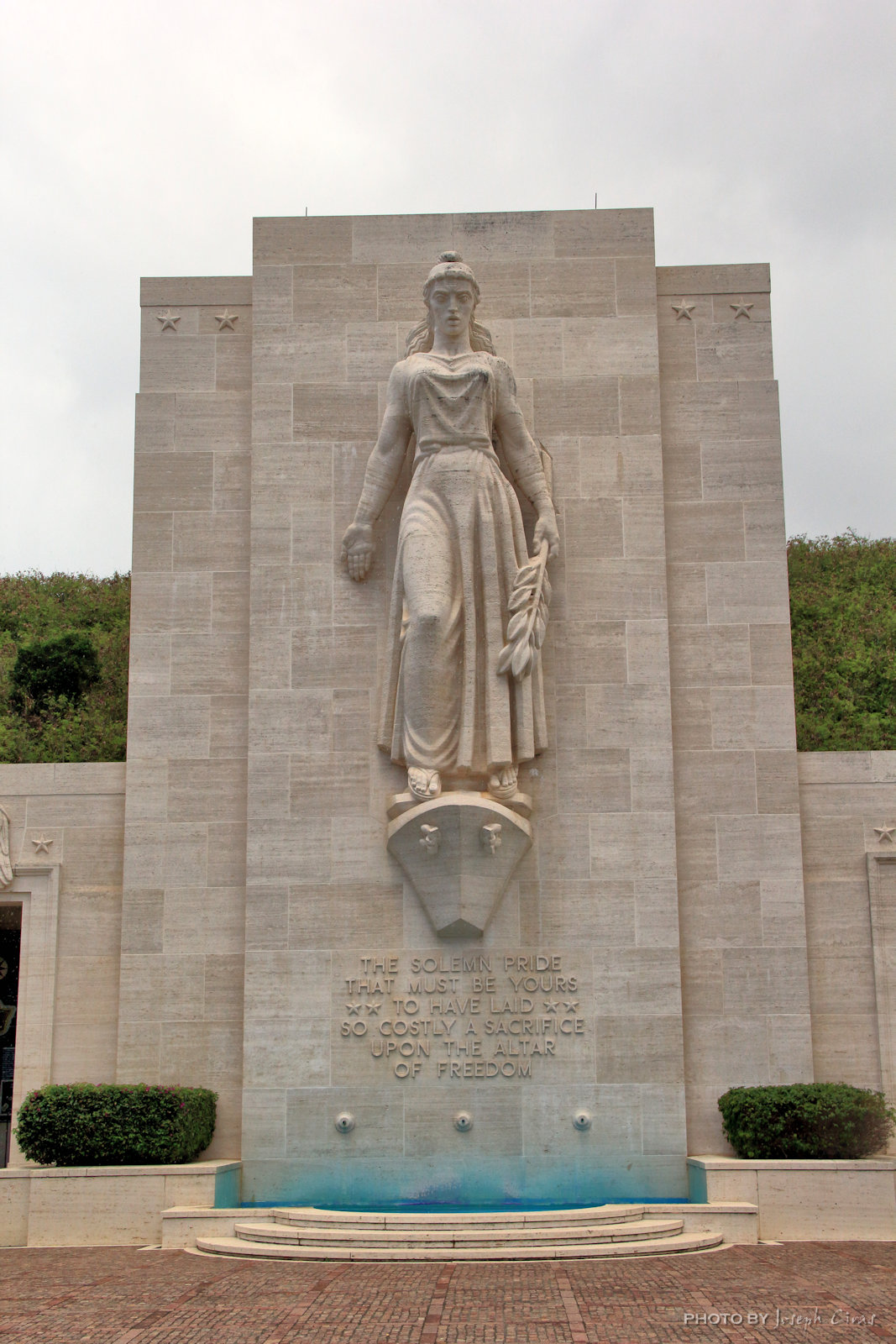
Tuesday, 12/05/2023: Posted photo — National Memorial Cemetery.
“Few national cemeteries can compete with the dramatic natural setting of the National Memorial Cemetery of the Pacific. The “Punchbowl” was formed some 75,000 to 100,000 years ago during the Honolulu period of secondary volcanic activity. A crater resulted from the ejection of hot lava through cracks in the old coral reefs which, at the time, extended to the foot of the Koolau Mountain Range.”
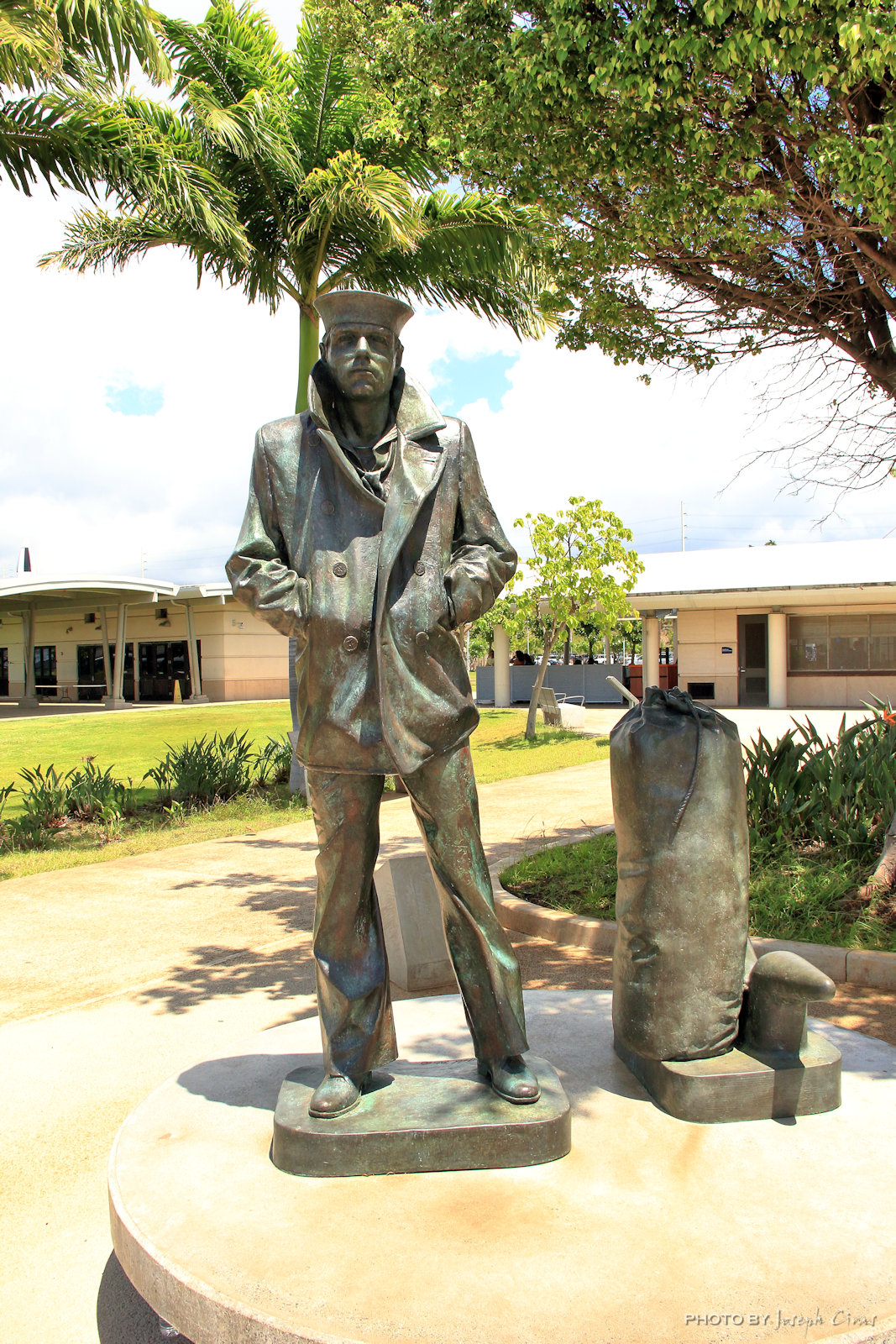
My father served in WWII in the US Navy. He had a uniform just like this. I used his duffle bag for a hockey bag when I was young.
Friday, 12/08/2023: Post photo — USS Arizona.
This is one of the most visited historic sites in the United States. “Other highly-visited historic sites include the Washington Monument, the Lincoln Memorial, the Jefferson Memorial, and the Tomb of the Unknown Soldier in Washington D.C., along with Mount Rushmore in South Dakota, and Castillo de San Marcos in St Augustine Florida.
The Pearl Harbor Visitor Center is operated by the National Park Service and is free to the public. It includes a museum with exhibits about World War II, an outdoor walkway with numerous historical plaques and signage explaining the attack, and a theater that shows a video of actual footage and events from the attack which is viewed before boarding the boat which takes visitors out to the memorial.”
“Located on Ford Island and in line with the Arizona Memorial along battleship row, the Battleship Missouri (USS Missouri (BB-63)) towers over its dock some 216 feet high. It is accessible only by shuttle from the Pearl Harbor Visitor Center or on our tour vehicles. The island is a military installation so the public is unable to drive onto it without special passes.”
“A portrait is not made in the camera but on either side of it.” — Edward Steichen
Thank you for all the new views and likes from last week, it helps keep me inspired.
Sunday, 10/15/2023: Posted photo — Chopping Maul.
I went out to chop some wood this afternoon and used both my axe and my maul. This is a photo of my maul. When I was chopping the wood, I had the idea for today’s photo. I wanted to let people know the difference between an axe and a maul.
An axe and maul are primarily distinguished by the fact that an axe is lightweight, has a sharper cutting edge, and has a shorter handle. A maul’s blunt, hammer-like edge is used alone or in conjunction with a wedge to pry open wood that has been cut. Sometimes I use a wedge with my axe. Using the axe with the maul is better since the maul has a better splitting action. If I need to wedge with the maul, I will hit it with the axe.
I do have a hydraulic log splitter. I have not used it in a few years since the gas line needs to be repaired and I have not had a good opportunity to fix it. I may have to bring it to a repair shop. Some of the wood that I am splitting have knots, and it is not easy to use a maul or an axe to split wood that has knots.
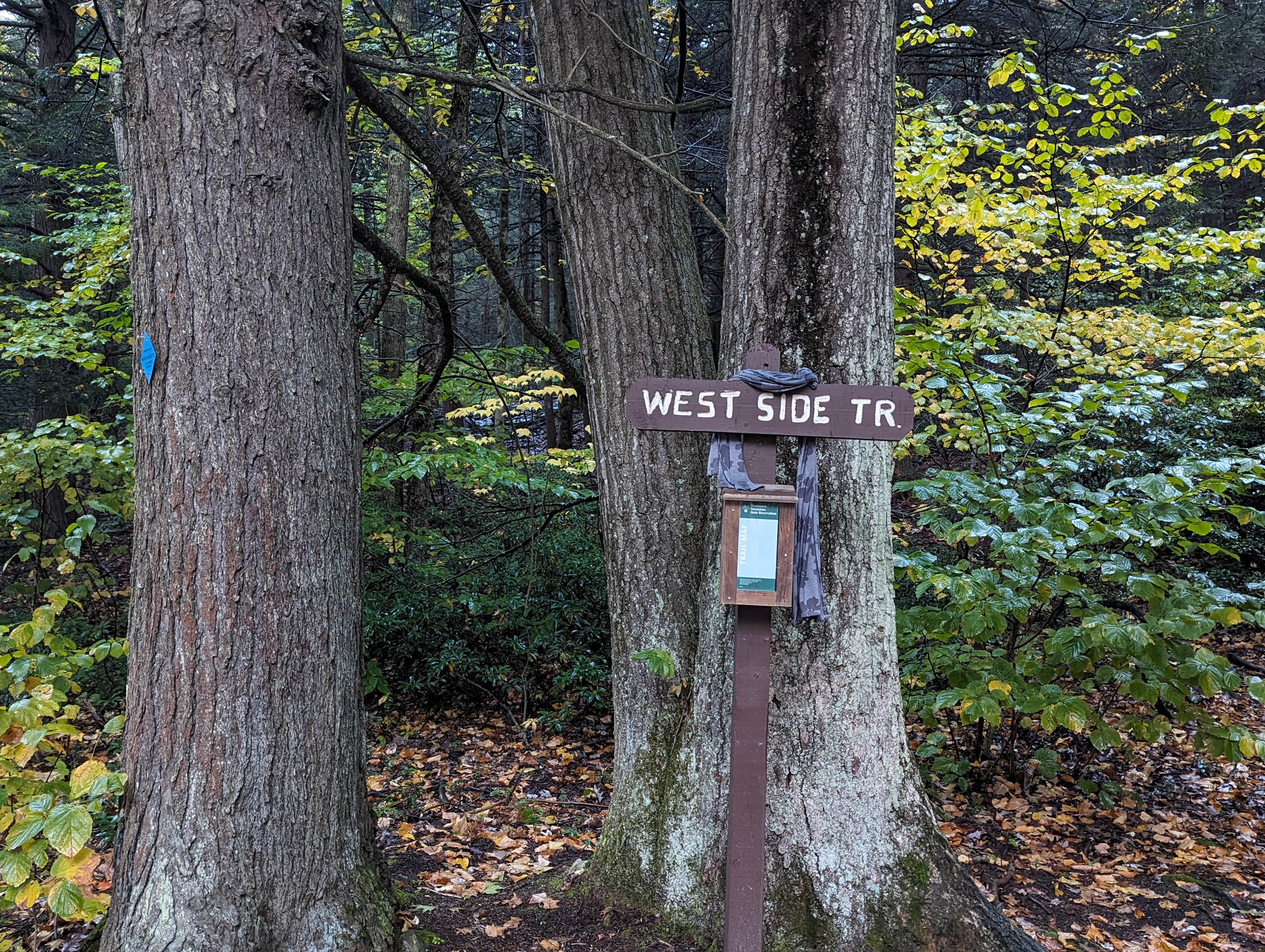
Monday, 10/16/2023: Posted photo — West Side Trailhead.
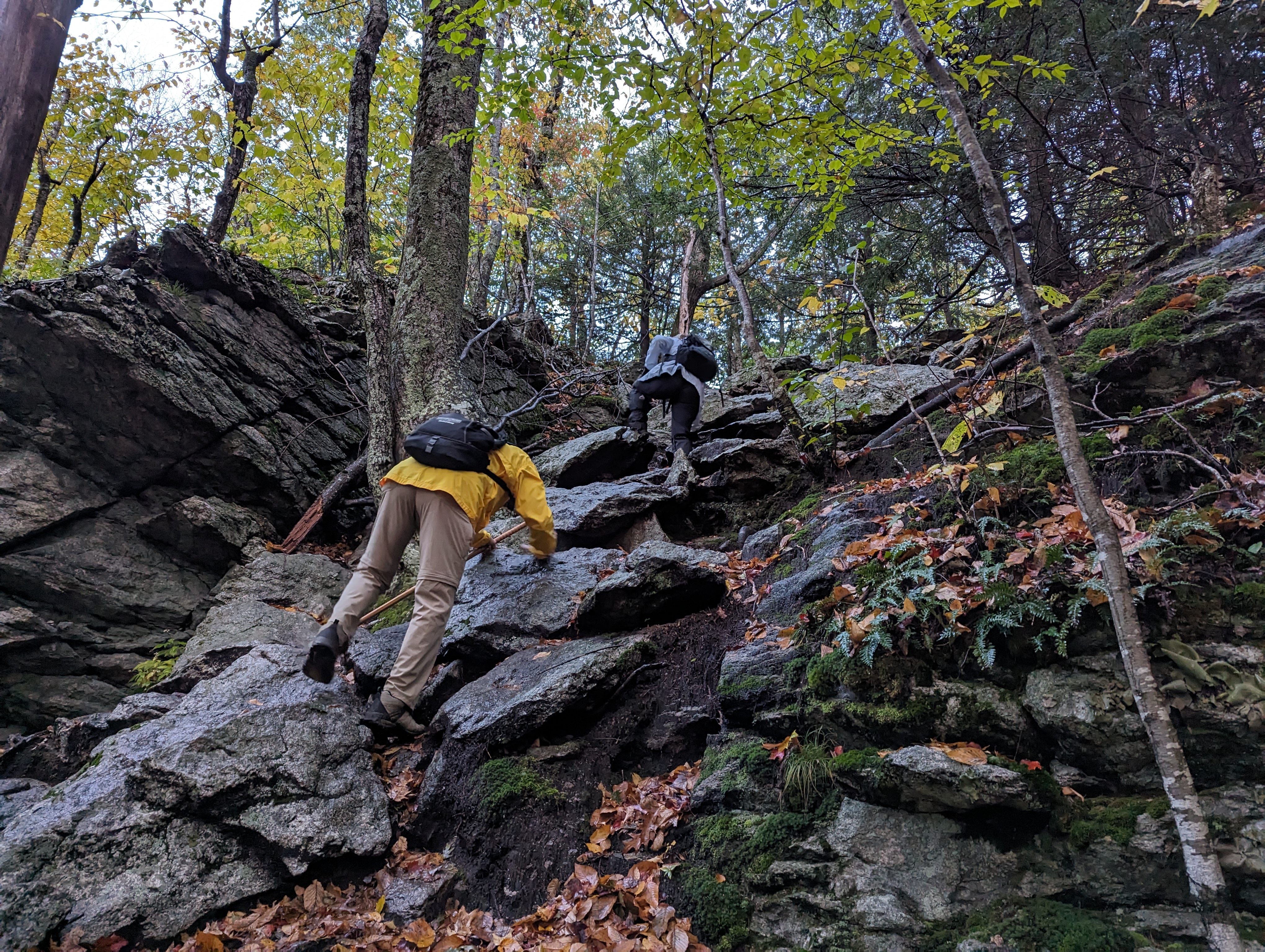
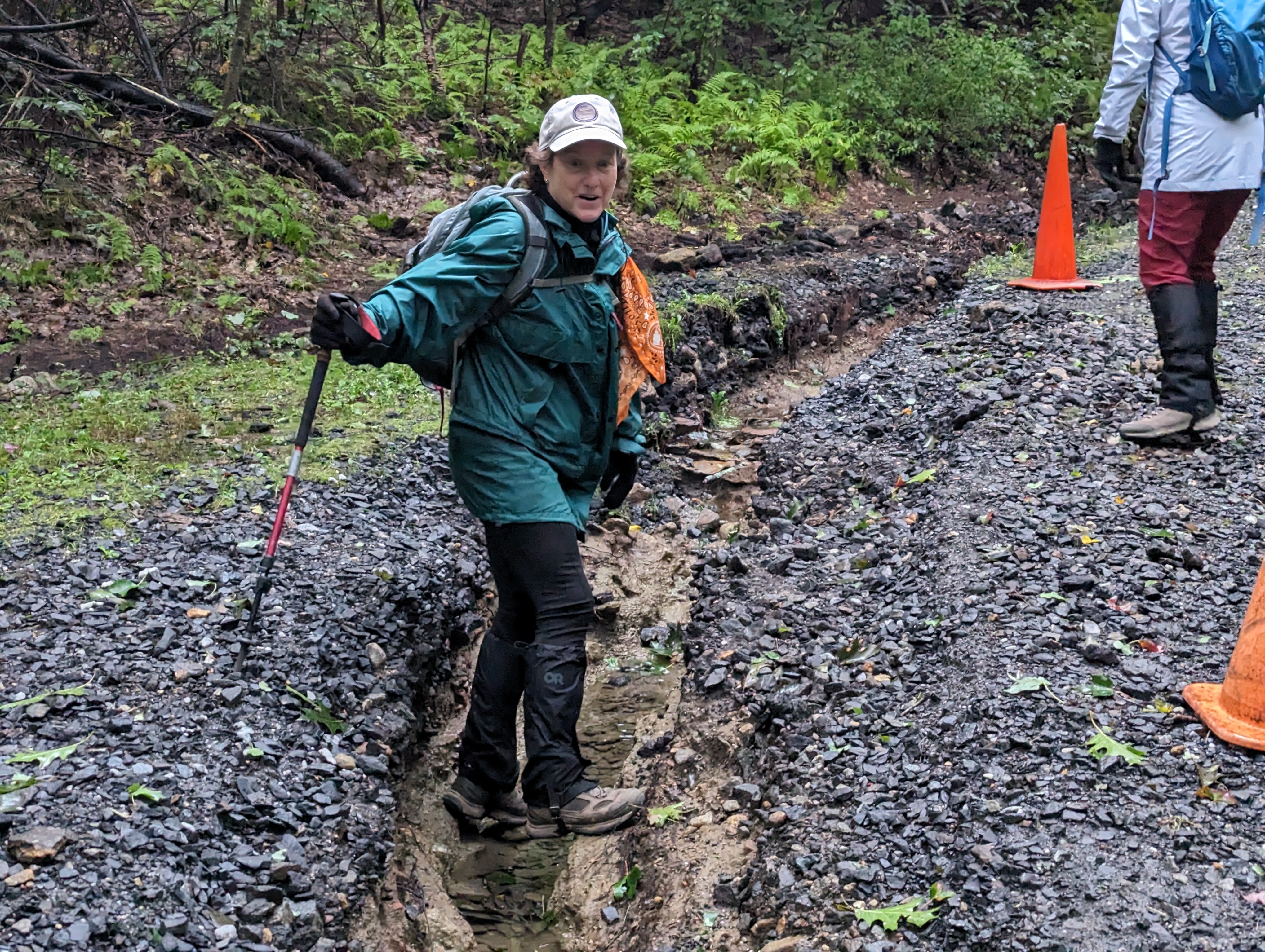
Tonight, for my hike, I decided to lead the group up a different trail. We have been using the same trailhead for weeks now and I wanted to mix it up a little. The West Side Trail is on what I call the back of the mountain. It is away from where most people hike. There is a rock scramble not to far in from the trailhead. It was a little more difficult to go up today since it was wet from the rain that fell earlier in the day. I decide to do a loop on the way down the mountain to avoid this section of the trail. Rain, wet leaves, and wet rocks are a safety hazard at night.
Tuesday, 10/17/2023: Posted photo — Flowers.
I have posted in the past the meaning of color in flowers. It has been a while so here is a reminder.
Red flowers: associated with feelings of true love and passion, they can also be used to convey respect, desire, and courage. Yellow flowers: are associated with spreading happiness and joy. They can also symbolize friendship. Pink flowers: are also a symbol of love, though they can also mean happiness, gentleness, and femininity. Orange flowers: are known to symbolize feelings of excitement and enthusiasm. White flowers: range in meaning from purity and innocence to sympathy. Blue flowers: are said to symbolize tranquility and peace. Purple flowers: symbolize success and even royalty, although feelings of admiration and tradition may also come through in purple flowers. Lavender flowers: typically symbolize grace, elegance, and youth. Green flowers: are associated with rebirth and renewal. Additionally, green can also symbolize good health, good fortune, and youthfulness.
Wednesday, 10/18/2023: Posted photo — Direction.
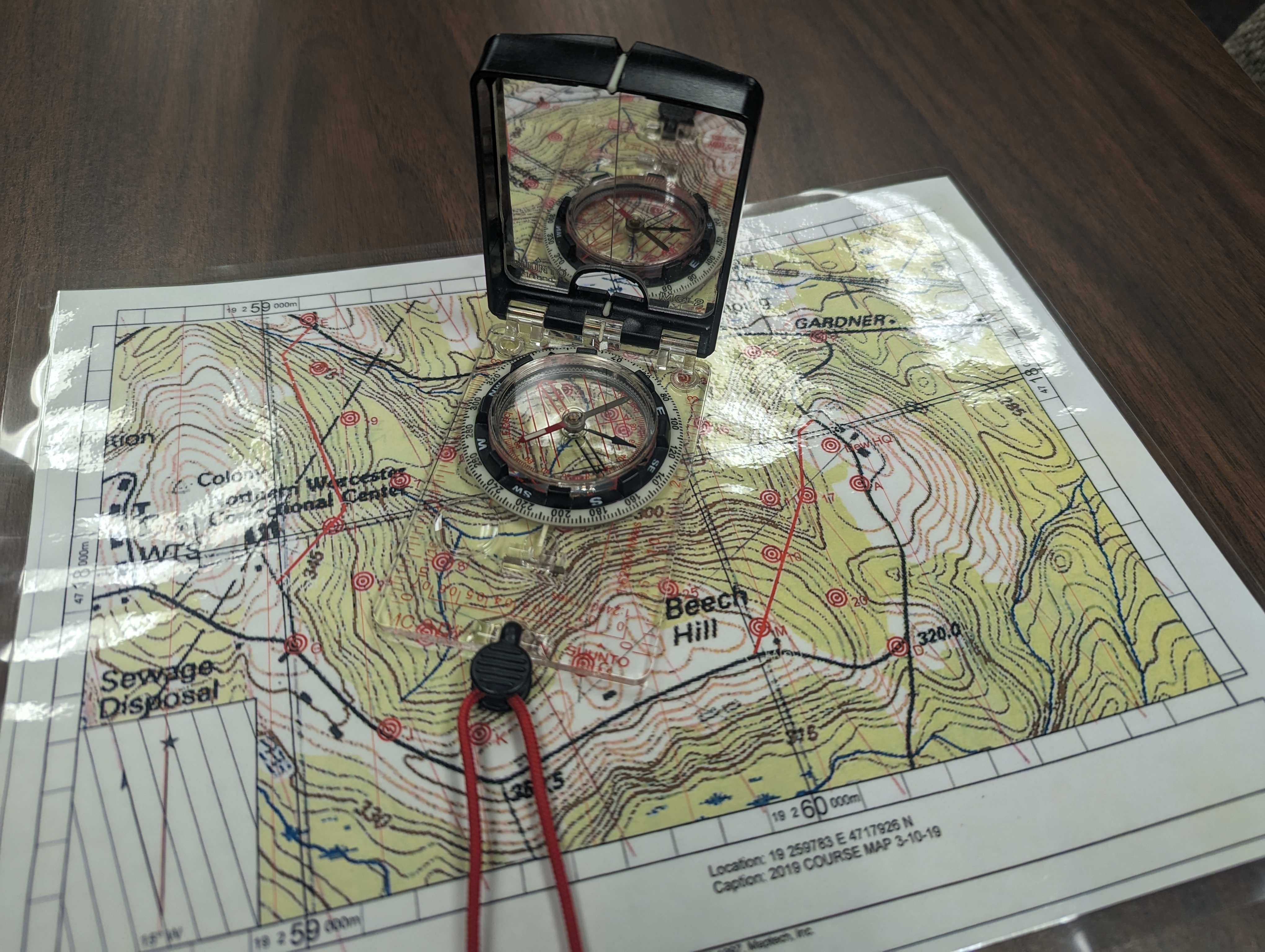
What direction am I going? How do I get from point A to point B? To answer these questions, I use a compass with a map. Many people, including very experienced hikers, do not know how to use a map and compass. The setup for this photo is the map of an orienteering course in my area that I have used for training.
I will be teaching a basic navigation class in a couple of weeks at Wachusett Mountain. After the class, I will test the student’s skills on a hike. We will plan out the hike during the course and then use it on the trail. There will be a few obstacles and a field test along the way. In the spring, I will be teaching an advanced navigational course using the orienteering course.
Here are the 10 Essentials.
1. Navigation: Map, compass, and GPS system 2. Sun Protection: Sunglasses, sunscreen, and hat 3. Insulation: Jacket, hat, gloves, and rain shell 4. Illumination: Flashlight, lanterns, and headlamp 5. First-aid supplies: First aid kit 6. Fire: Matches, lighter, and fire starters 7. Repair Kit & Tools: Duct tape, knife, and scissors 8. Nutrition: Extra food 9. Hydration: Water and water treatment supplies 10. Emergency Shelter: tent and tarp
Having these items with you will keep you prepared. Knowing how to use them could save your life.
Thursday, 10/19/2023: Posted photo — Close to Peak.
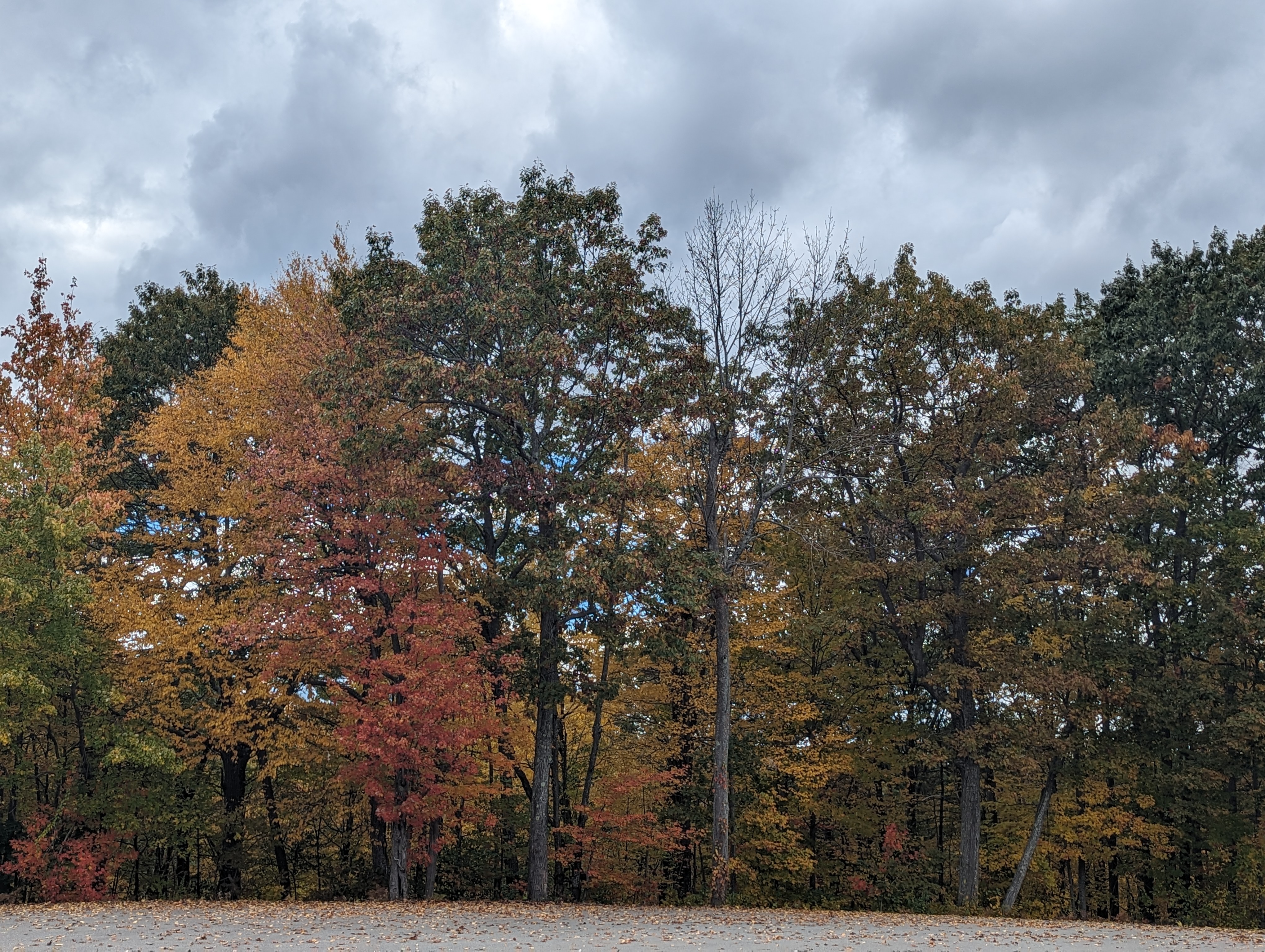
The foliage is getting close to peak in this area. I attempted to get a photo with the sun on the leaves, but it was not out very long today. Peak season means the time when most leaf have changed color.
Leaves can change their color from as early as mid-September all the way through early November. Typically, the second and third week of October are the peak times, but it shifts depending on where you live and your local weather conditions.
Foliage starts to change in the northern-tier states out West and in the Midwest by late September. By October 4, the leaves in some areas will be past their prime.
Much of New England as well as the Pacific Northwest, will be at or near peak fall color by October 11.
A little further south in the Blue Ridge Mountains, mid-October is when the leaves are near or at peak.
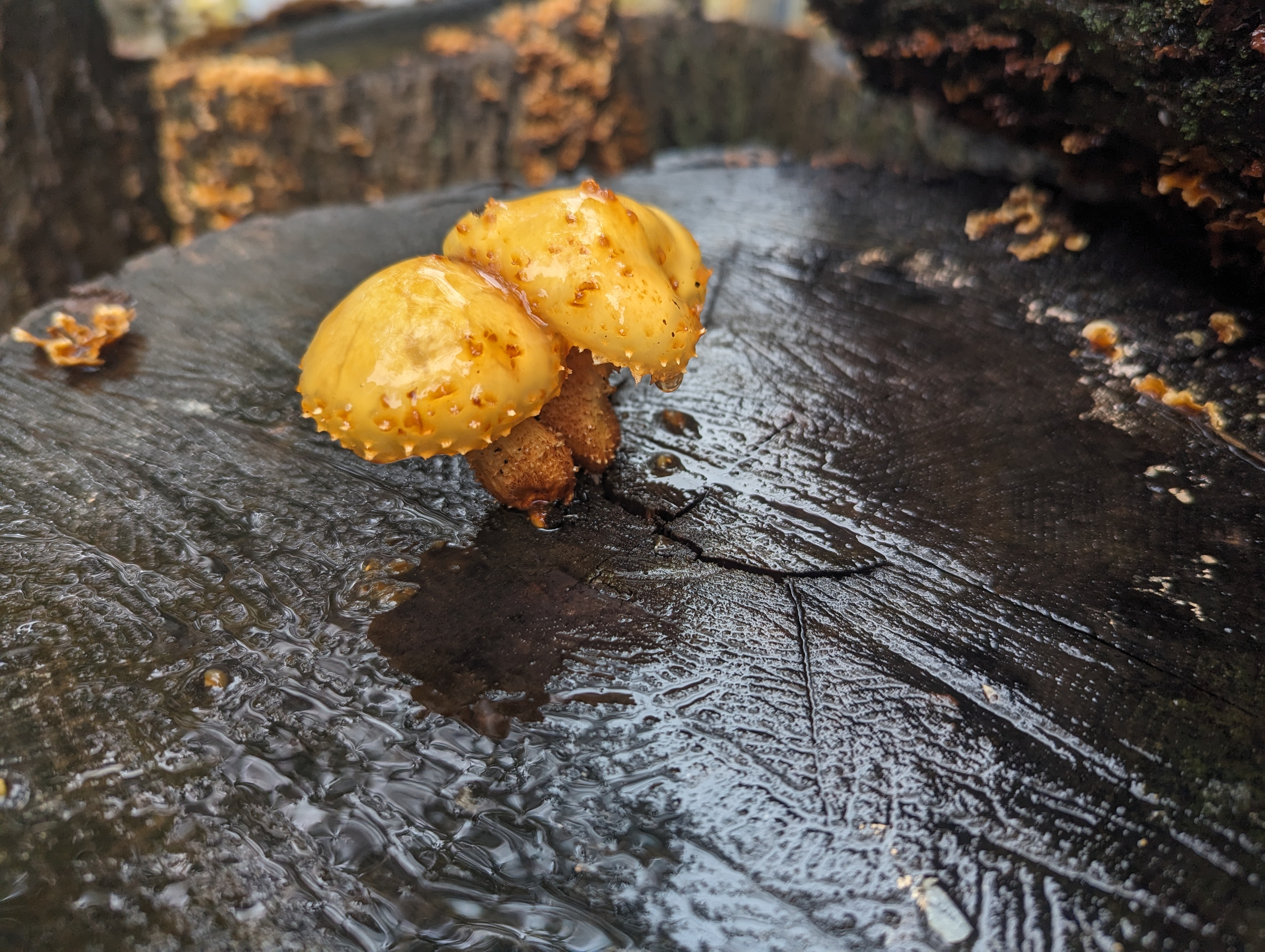
Friday, 10/20/2023: Post photo — Mushroom of a Stump.
Since June we have had about 65 days of rain. It is raining today. With all the rain comes fungus in the form of mushrooms. Even though I hike, I do not like mushrooms, and I cannot tell you the edible types versus the non-edible types.
Some good rules apply for avoiding poisonous mushrooms if you are a novice that I found online:
Avoid mushrooms with white gills, a skirt or ring on the stem and a bulbous or sack like base called a volva. You may be missing out on some good edible fungi, but it means you will be avoiding the deadly members of the Amanita family.
Avoid mushrooms with red on the cap or stem. Again, you will be missing out on some good mushrooms but more importantly you won’t be picking poisonous ones.
Finally, don’t consume any mushrooms unless you are 100% sure of what they are.
Saturday, 10/21/2023: Post photo — Nature’s Elements.
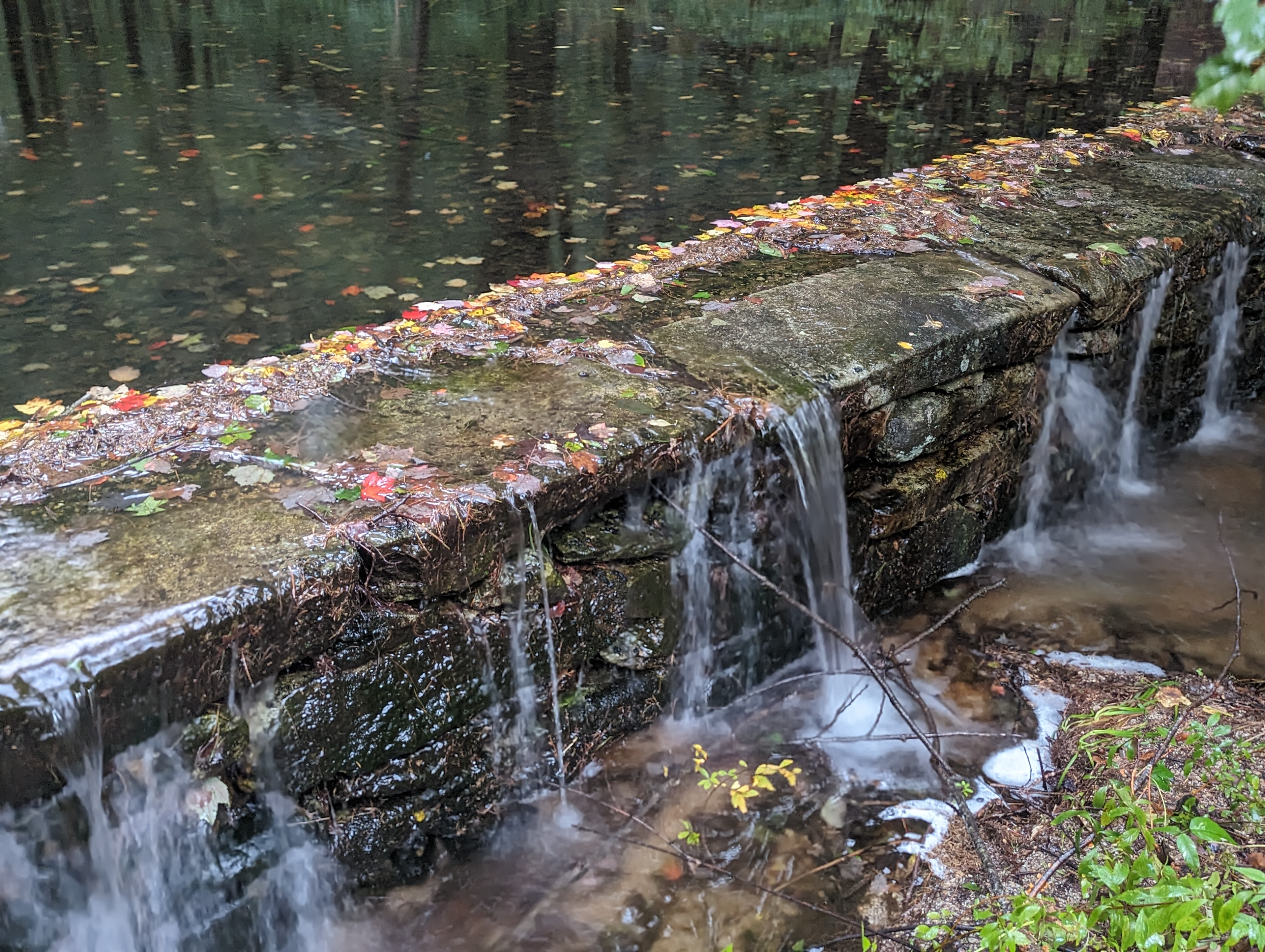
Here is a photo I took today in the Leominster State Forest. I have posted photos of this lonely tree in the past. This photo shows the foliage, rain, and fog. This is how most of our summer and fall has gone so far, very wet this year.
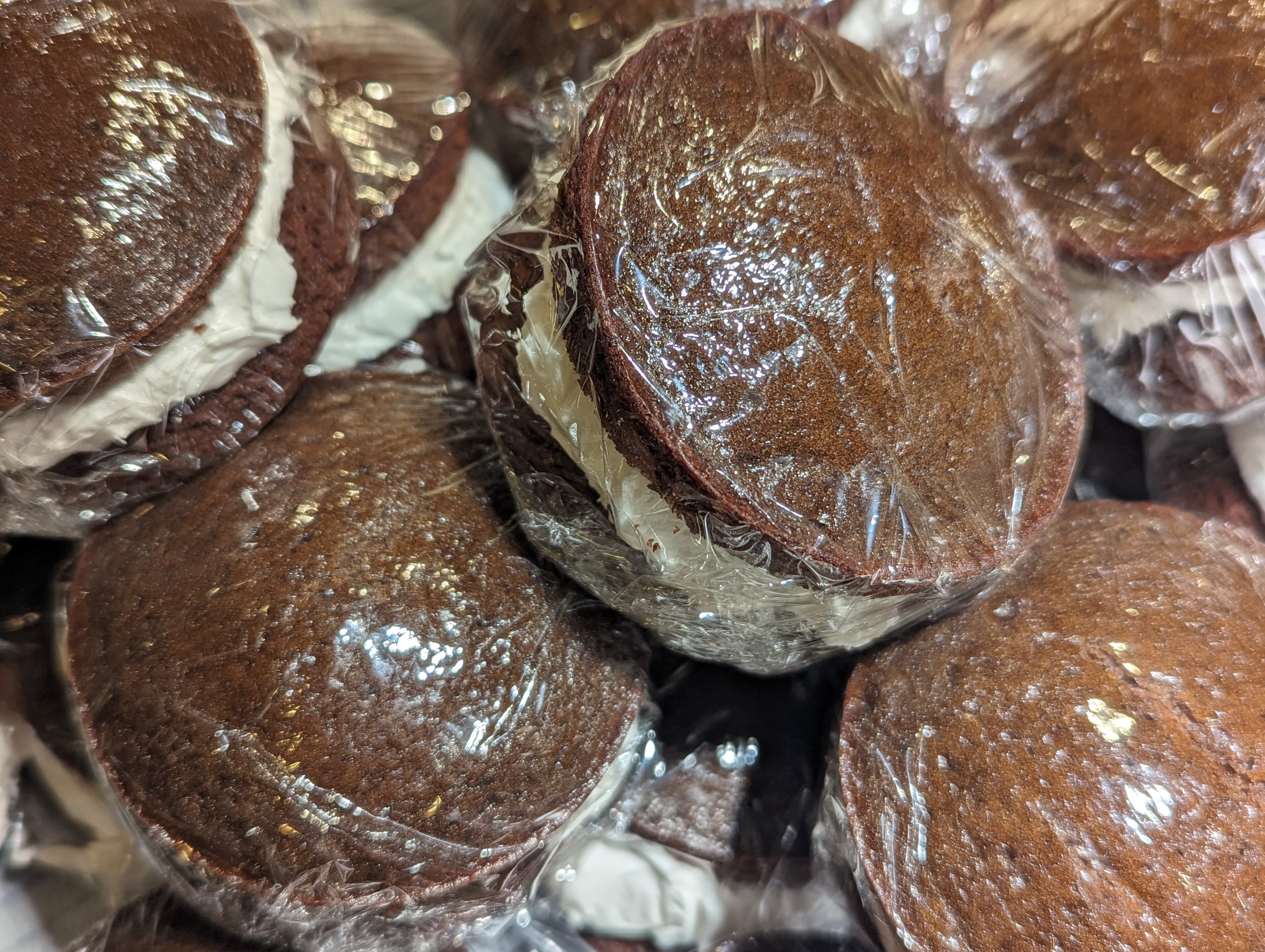
Some of the Whoopie Pies made for our church bazaar.
Thursday, 09/28/2023: Posted photo — Rose.
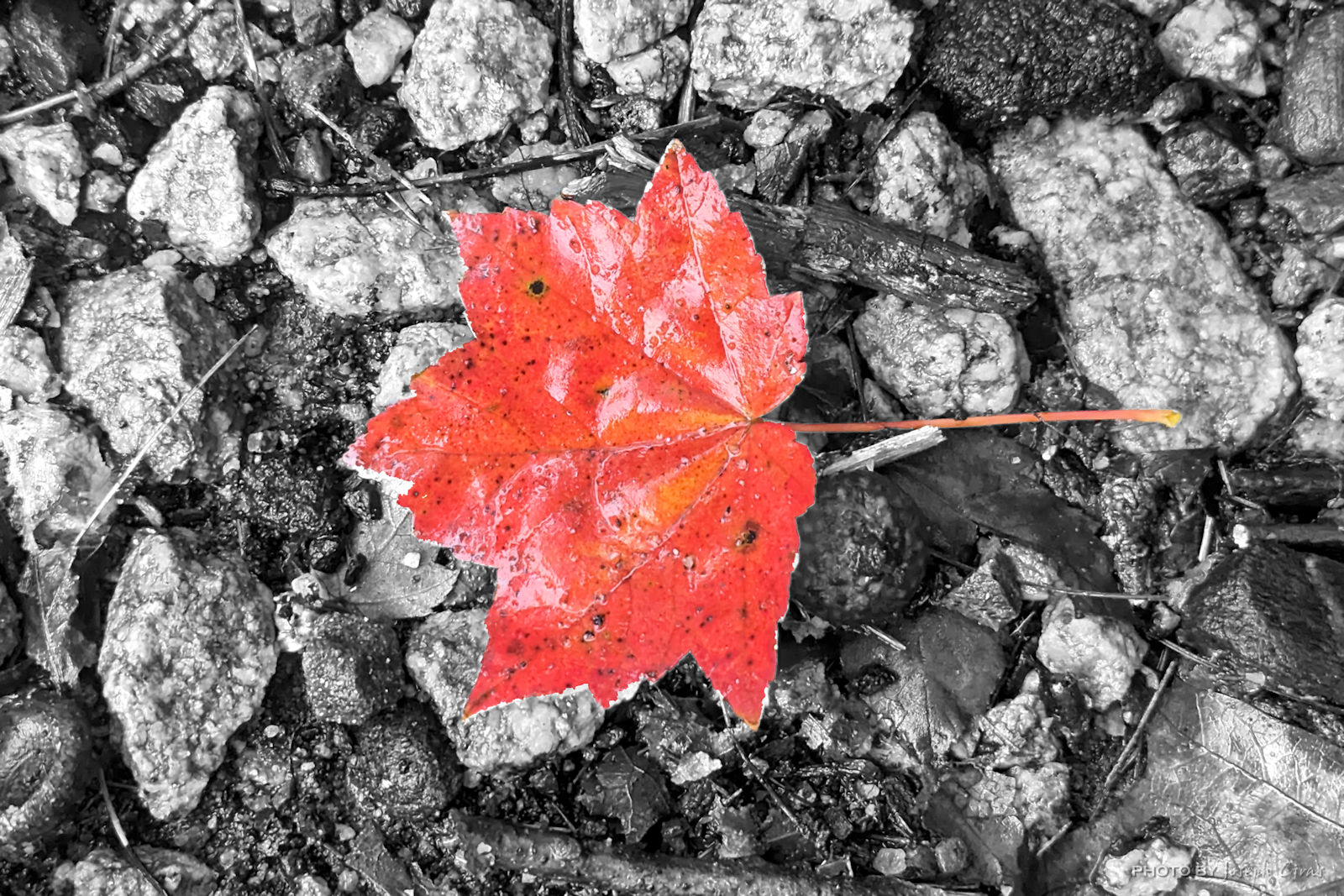
I took this photo today to use for my other photo projects. The subject of this week’s project is red. I was going to do a selective color of the red. Instead, I used this photo.
Friday, 09/29/2023: Post photo — Discussion.
The ladies having a discussion during my Monday night hike. The rain stopped just in time for our hike.
Saturday, 09/30/2023: Post photo — Fall Fest.
Fall Fest is an Appalachian Mountain Club (AMC) event. It was held by be Western Mass Chapter of the AMC. I am a leader/member for the Worcester Chapter of the AMC. I was there to teach people how to navigate using a map and compass.
“I never have taken a picture I’ve intended. They’re always better or worse.” — Diane Arbus
Thank you for all the new views and likes from last week, it helps keep me inspired.
This is a re-post blog.
Sunday, 09/17/2023: Posted photo — Reflection in the Fog.
Settings: Canon EOS 60D, ISO 400, f/7.1, 1/80 s, 113 mm.
Driving into church this morning, I notice fog off the lakes in the area. The location of this photo is one in which I take many practice photos. It is a difficult location to take a photo since I needed to stop on the edge of a busy road.
My initial thought on this photo was to get a picture of the mist rising from the surface of the lake with the foliage behind it. When I arrived at this location, the mist was thicker than I would like. I did see the reflections of the trees on the water and thought that that would take a good photo.
Monday, 09/18/2023: Posted photo — Western Tanager.
Settings: Canon EOS DIGITAL REBEL XS, ISO 200, f/6.3, 1/320 s, 300 mm.
Fact from All About Birds: “The oldest Western Tanager on record—a male originally banded in Nevada in 1965—had lived at least 6 years and 11 months by the time he was recaptured and rereleased during banding operations in Oregon in 1971.”
We were walking the north rim at Grand Canyon National Park when I spotted this male Western Tanager in a conifer tree. The color contrast between the bird and the tree caught my eye.
The range of the Western Tanger is the western parts for the United States, Canada, and Mexico.
Again, from All About Birds: “A clear look at a male Western Tanager is like looking at a flame: an orange-red head, brilliant yellow body, and coal-black wings, back and tail. Females and immatures are a somewhat dimmer yellow-green and blackish. These birds live in open woods all over the West, particularly among evergreens, where they often stay hidden in the canopy. Nevertheless, they’re a quintessential woodland denizen in summertime, where they fill the woods with their short, burry song and low, chuckling call notes.” (https://www.allaboutbirds.org/guide/Western_Tanager/overview)
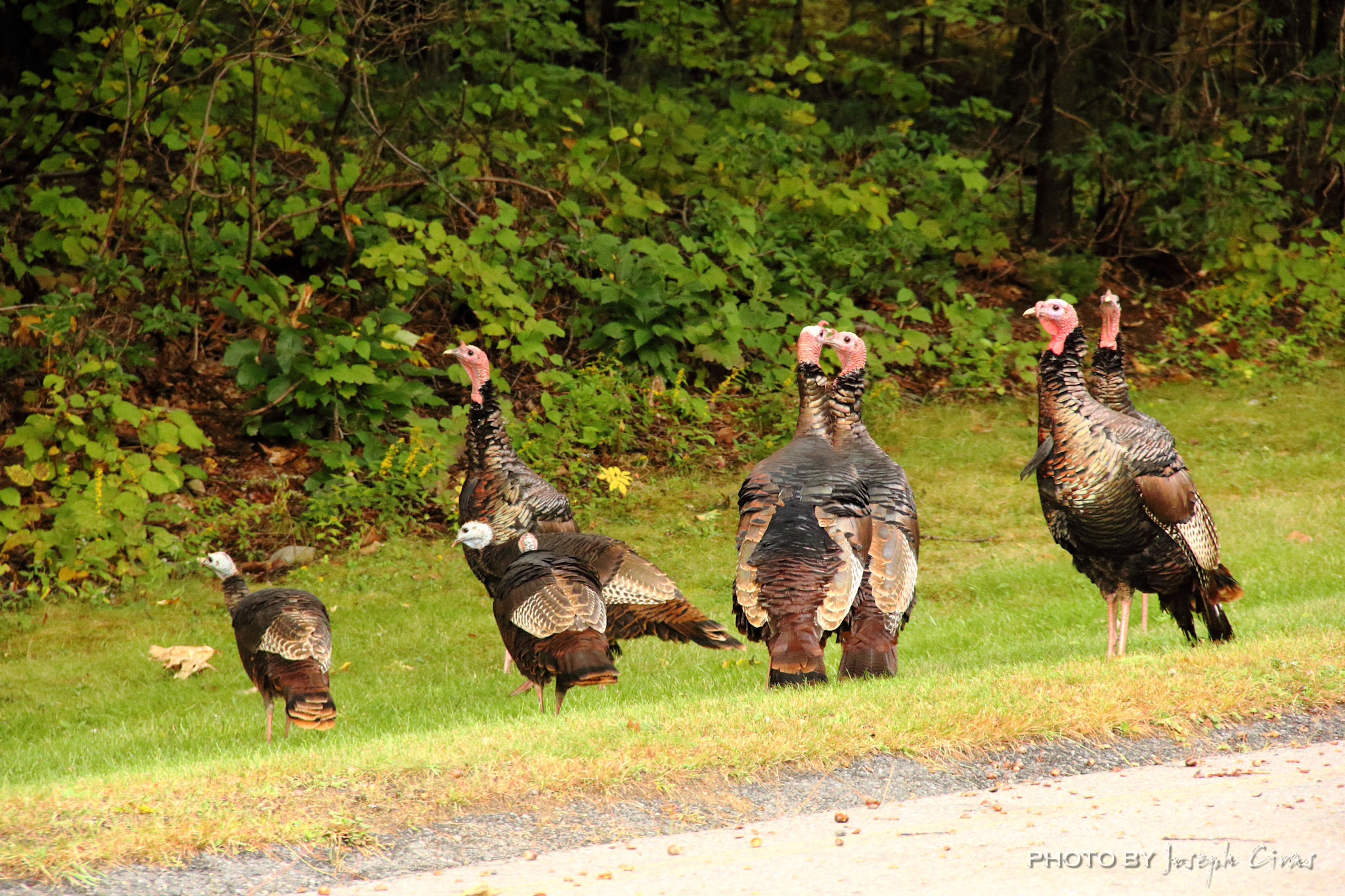
Tuesday, 09/19/2023: Posted photo — The Gathering.
Settings: Canon EOS 60D, ISO 3200, f/7.1, 1/100 s, 135 mm.
On my way home from work today I saw this rafter of turkey. I have seen them many times before on the property and did not feel the need to photograph them. Today was different.
When I was approaching them today, it looked like it was a group of workers getting ready to clock out of work and were planning what they were going to do tonight. Just the way they were gather in pairs and it looked like they were talking to each other.
Also, I thought it would be a good picture to take.
Wednesday, 09/20/2023: Posted photo — Cattails.
Settings: Canon EOS 60D, ISO 800, f/5, 1/800 s, 52 mm.
I had a choice of photos to post today — a photo of an island or a photo of cattails. I decided on the cattails for the photo to put in my 365 project because I liked it just a little bit better than the photo of the island. I will be posting both in this blog for you to compare.
Cattails are a type of aquatic plant, approximately 5-10 feet tall. These plants have long, slender, branchless, and upward-growing leaves and a distinguishable brown, cylindrical flowering head at their apex. The grow around ponds and other wetland areas.
What is the difference between a pond and a lake? Here is something I found in my research: “To help determine the difference, both the depth and surface area must be considered. Lakes are normally much deeper than ponds and have a larger surface area. All the water in a pond is in the photic zone, meaning ponds are shallow enough to allow sunlight to reach the bottom. This causes plants (sometimes too many) to grow at the bottom of ponds as well as on their surface. However, sunlight can’t reach the bottom of all areas of lakes. Lakes have aphotic zones, which are deep areas of water that receive no sunlight, preventing plants from growing.” (https://lakes.grace.edu/ponds-vs-lakes-whats-the-difference/)
I took the cattail photo with a shallow depth of field (DOF) to blur the background and the make the cattails “pop”. As you can tell by this photo, the cattails are starting to spread their seeds.
Here is the photo of the island that I took and did not like as much as the cattail photo.
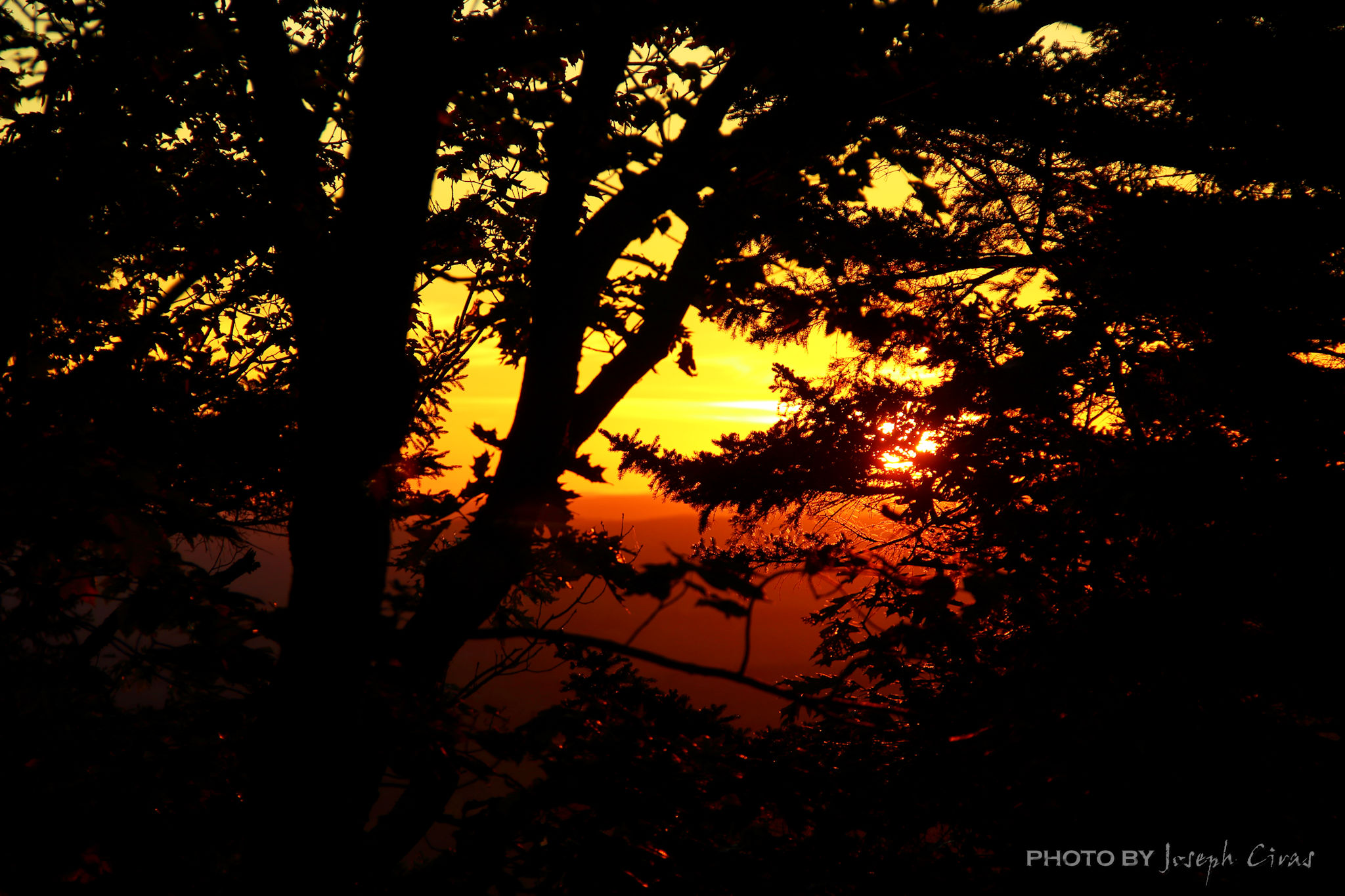
Thursday, 09/21/2023: Posted photo — Sunset Through Trees.
Settings: Canon EOS 60D, ISO 100, f/5.6, 1/160 s, 100 mm.
After a week and a half, I was back on the hiking trail today. It felt good to get back. I hiked 4.3 miles on Wachusett Mountain after work with some colleagues. I took a series of photos along the way to determine what one to post. I decided on this sunset photo. I had another sunset photo that I took from the summit, but I accidentally deleted it. Rookie mistake.
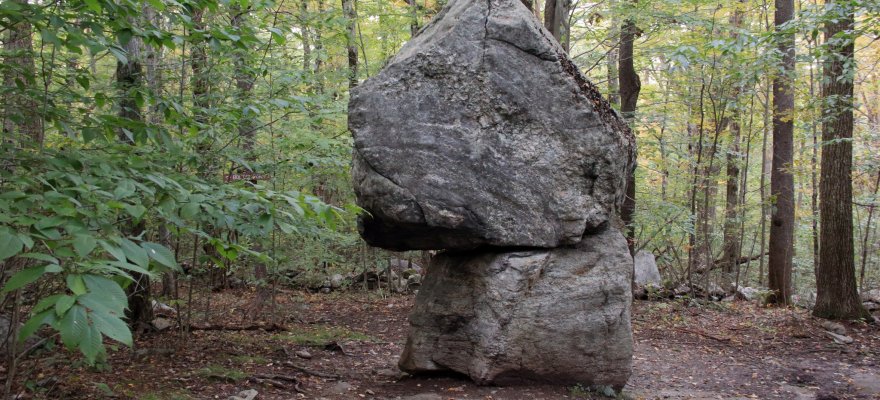
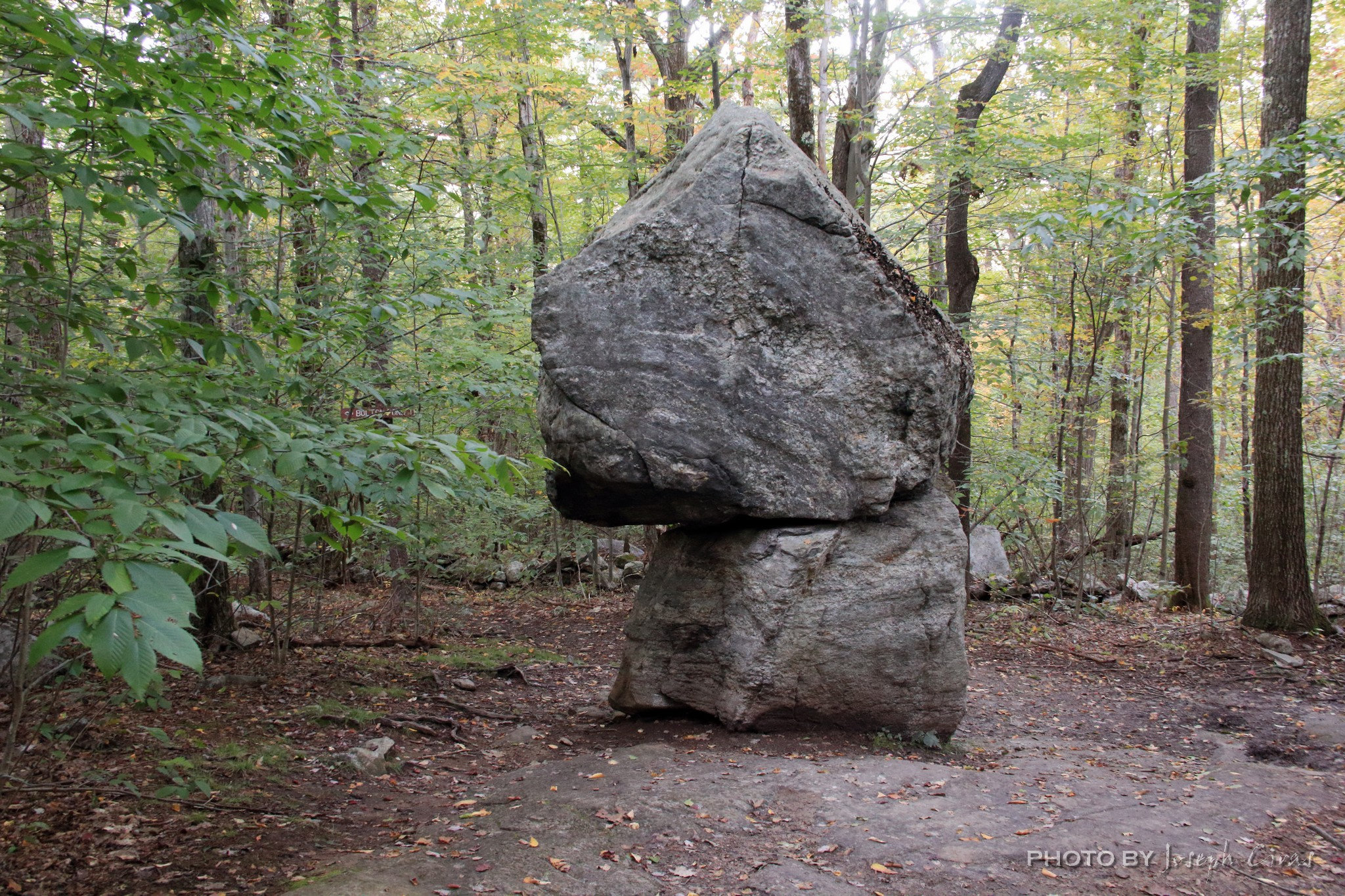
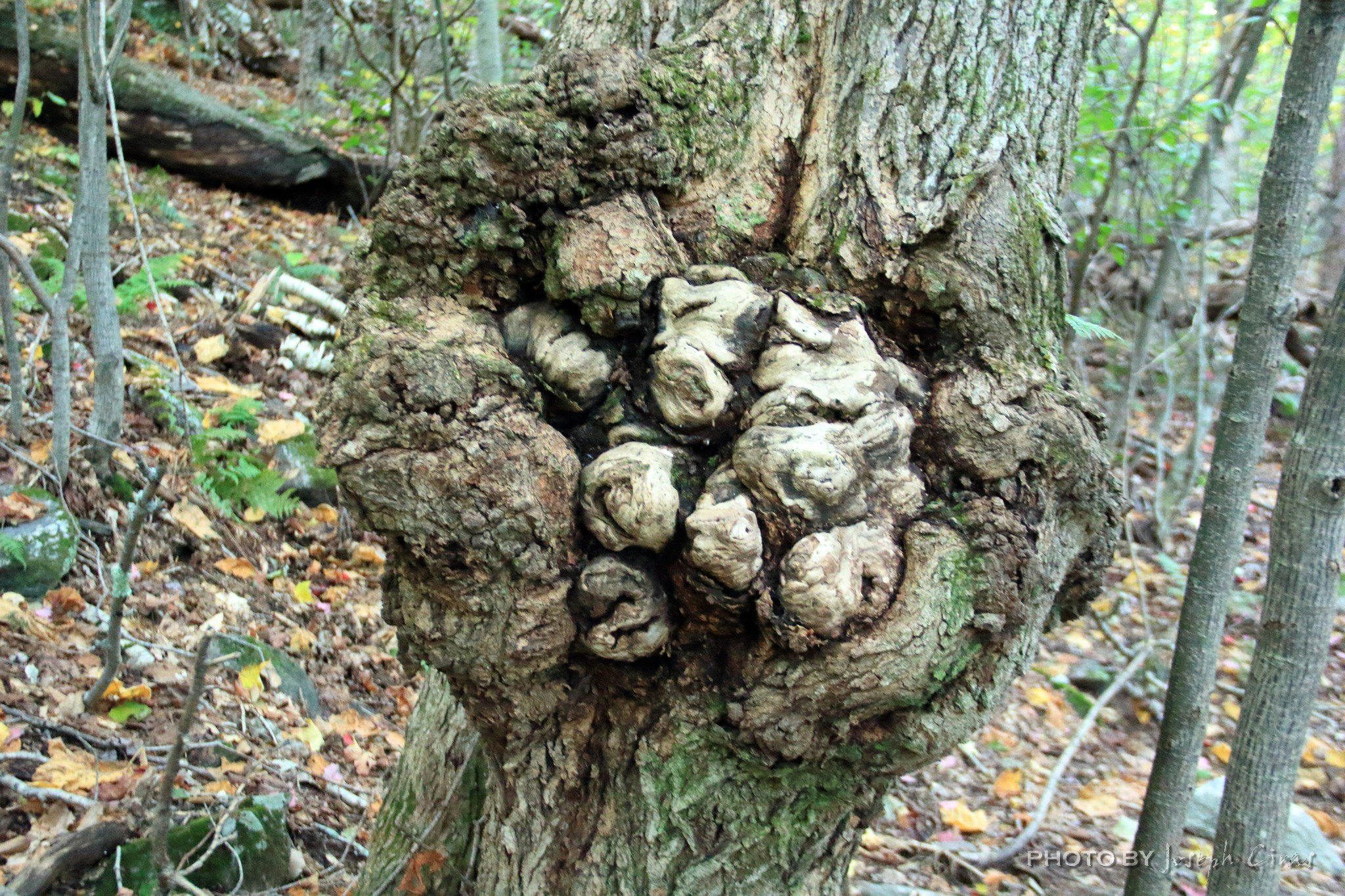
The other choices of photos were a glacial erratic called Balanced Rock or a burl on a tree at a trail junction. Just a reminder that a glacial erratic is glacially deposited rock differing from the size and type of rock native to the area in which it rests. And a burl is a strange-looking collection of tree cells, which are called callus tissue. Normally, callus tissue is formed by a tree in response to an environmental injury such as a pruning cut, disease, or insect damage. If you have a piece of wooden furniture, such as an end table, it was most likely made with a burl.
These are the photos that I did not post for my 365 project.
Friday, 09/22/2023: Post photo — Pareidolia.
Settings: Canon EOS 60D, ISO 100, f/10, 1/250 s, 21 mm.
Pareidolia is the defined by Merriam-Webster as the tendency to perceive a specific, often meaningful image in a random or ambiguous visual pattern. I have posted about this tendency in the past.
Today I am posting a photo of a cloud. I see a couple items in this photo. I see an opera singer hitting a high note and I also see a ships figurehead. It is amazing how one can see an object when one is not there.
What to you see? Do you see what I see, due to the power of suggestion, or do you see something else. Please respond in the comment section.
Saturday, 09/23/2023: Post photo — Iris Bouquet.
Settings: Samsung SM-G930V (Galaxy S7), ISO 100, f/1.7, 1/60 s, 4 mm
From The Old Farmer’s Almanac: “The tall, beautiful iris, named after the Greek goddess who rode rainbows, comes in many magical colors. Despite its divine origins, this June bloomer is rugged, reliable, and easy to grow. Learn all about planting, growing, and caring for iris flowers.” (https://www.almanac.com/plant/irises)
“Taking pictures is like tiptoeing into the kitchen late at night and stealing Oreo cookies.” — Diane Arbus
Thank you for all the new views and likes from last week, it helps keep me inspired.
This post is a re-post. People liked this post so I am uploading it again so that some new followers can enjoy its content.
Animals from past vacations.
Sunday, 08/06/2023: Posted photo — Prairie Dog.
One of the campsites we were camped, was a remote campground in Badlands National Park. In this campground and the surrounding area, there USGA was doing a study on Prairie Dogs. These were some that were near my tent.
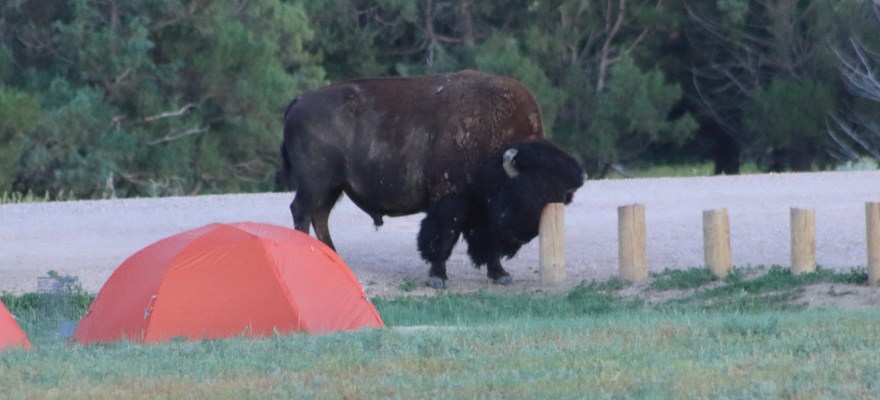
Monday, 08/07/2023: Posted photo — Camping Bison.
In the same campground, there was a bison that used the site markers as scratching posts. This bison also showed up in the morning. The remote campground had only 10 sites. All eyes were on the bison. People did come out of these tents as the bison moved away.
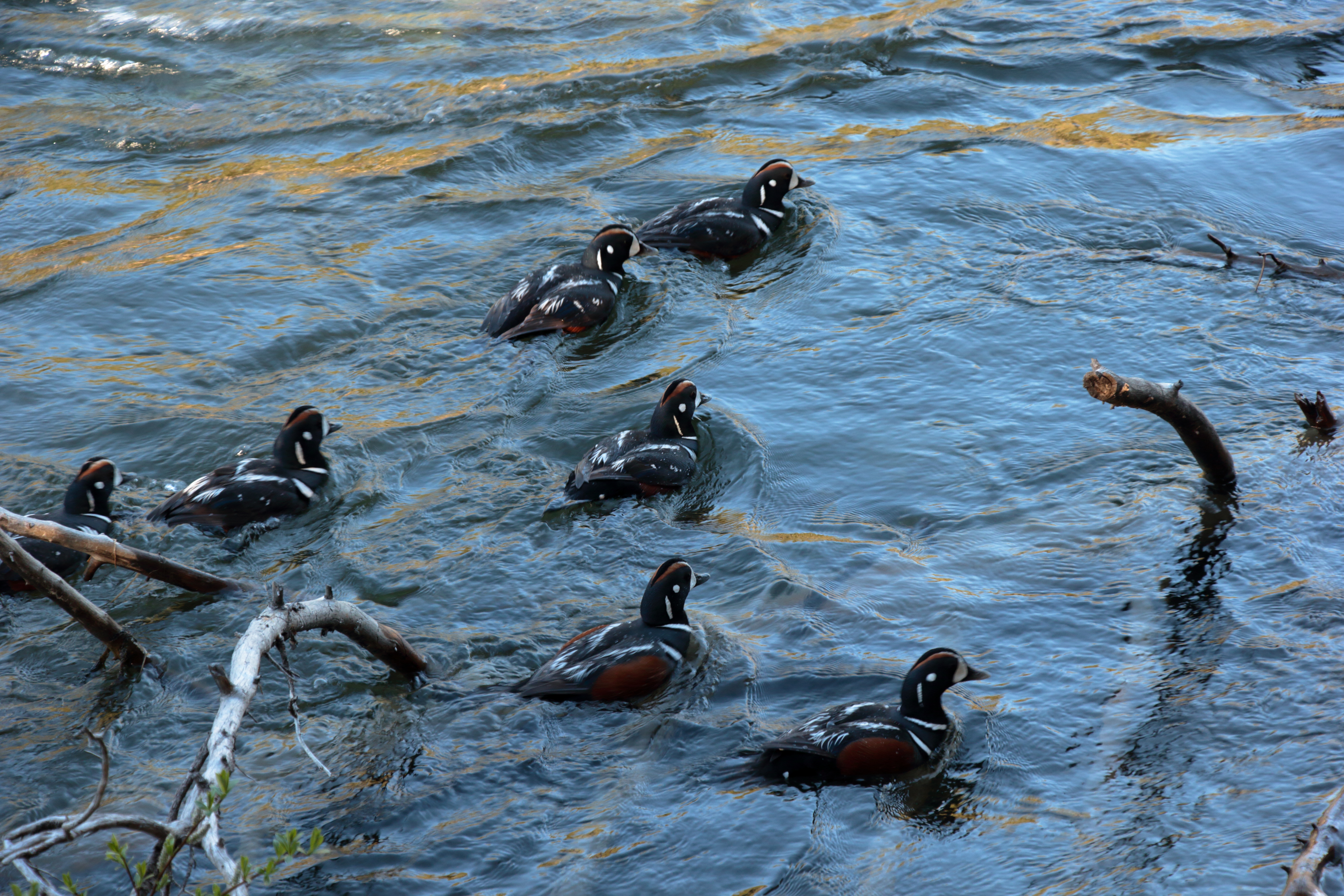
Tuesday, 08/08/2023: Posted photo — Ducks.
These ducks were in one of the rivers at Yellowstone National Park. I did look up the type of ducks these are but did not write it down.
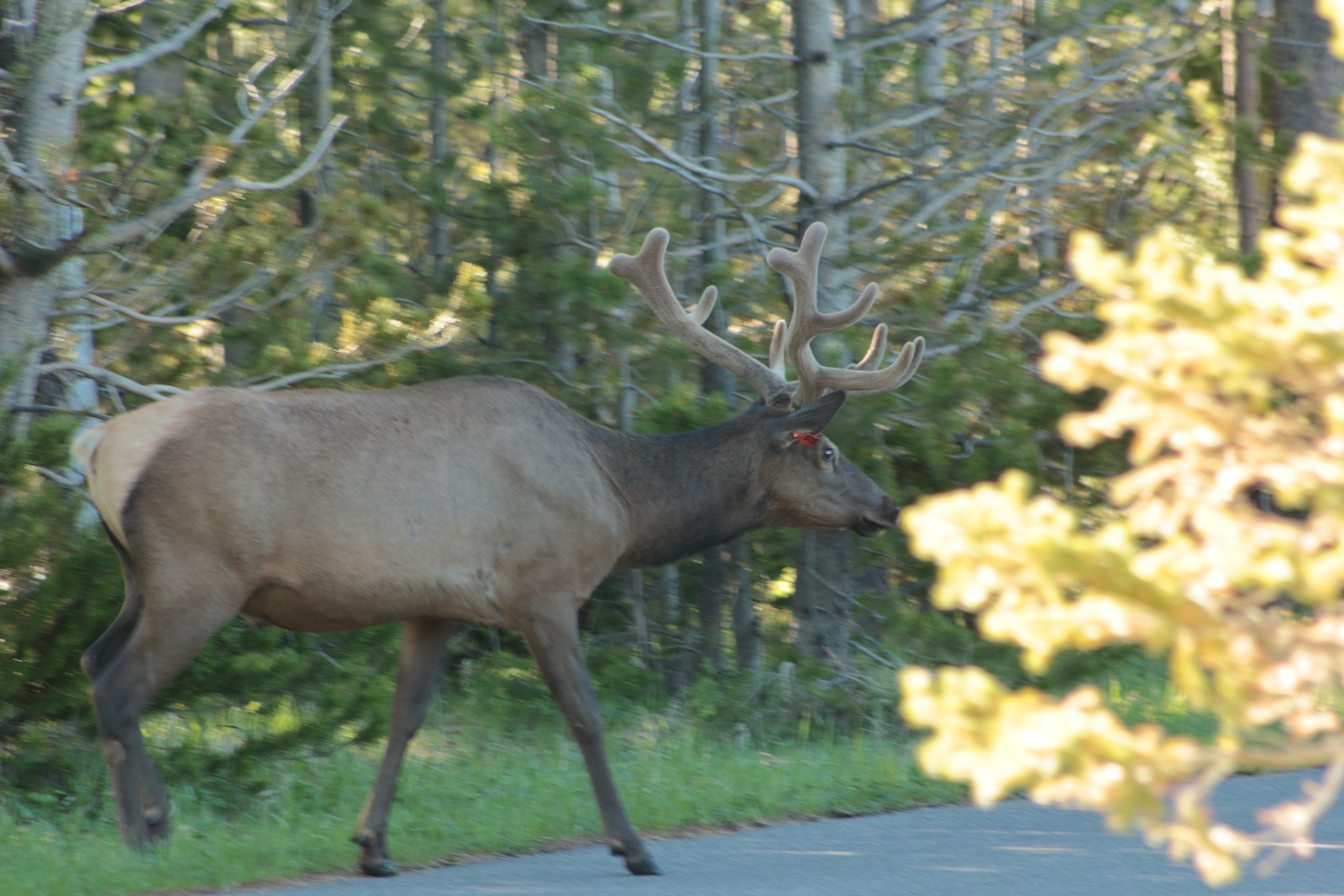
Wednesday, 08/09/2023: Posted photo — Elk.
This elk came to visit us at the first campground we had in Yellowstone.
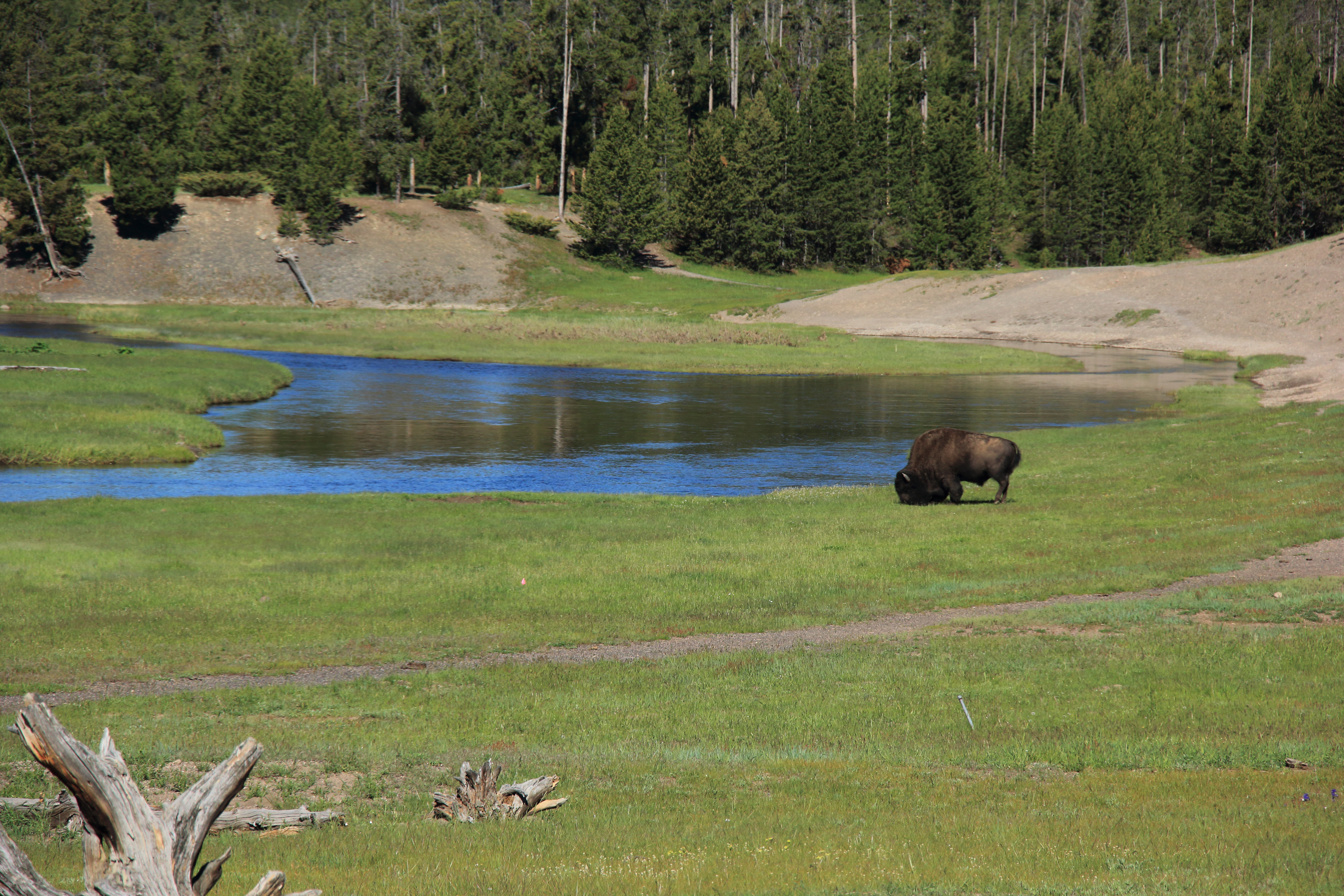
Thursday, 08/10/2023: Posted photo — Bison by River.
At the second campground in Yellowstone, we took a walk in the morning and saw this bison by the river. There was a plaque at this location that stated that this was the exact location that the idea to make Yellowstone a national park was born.
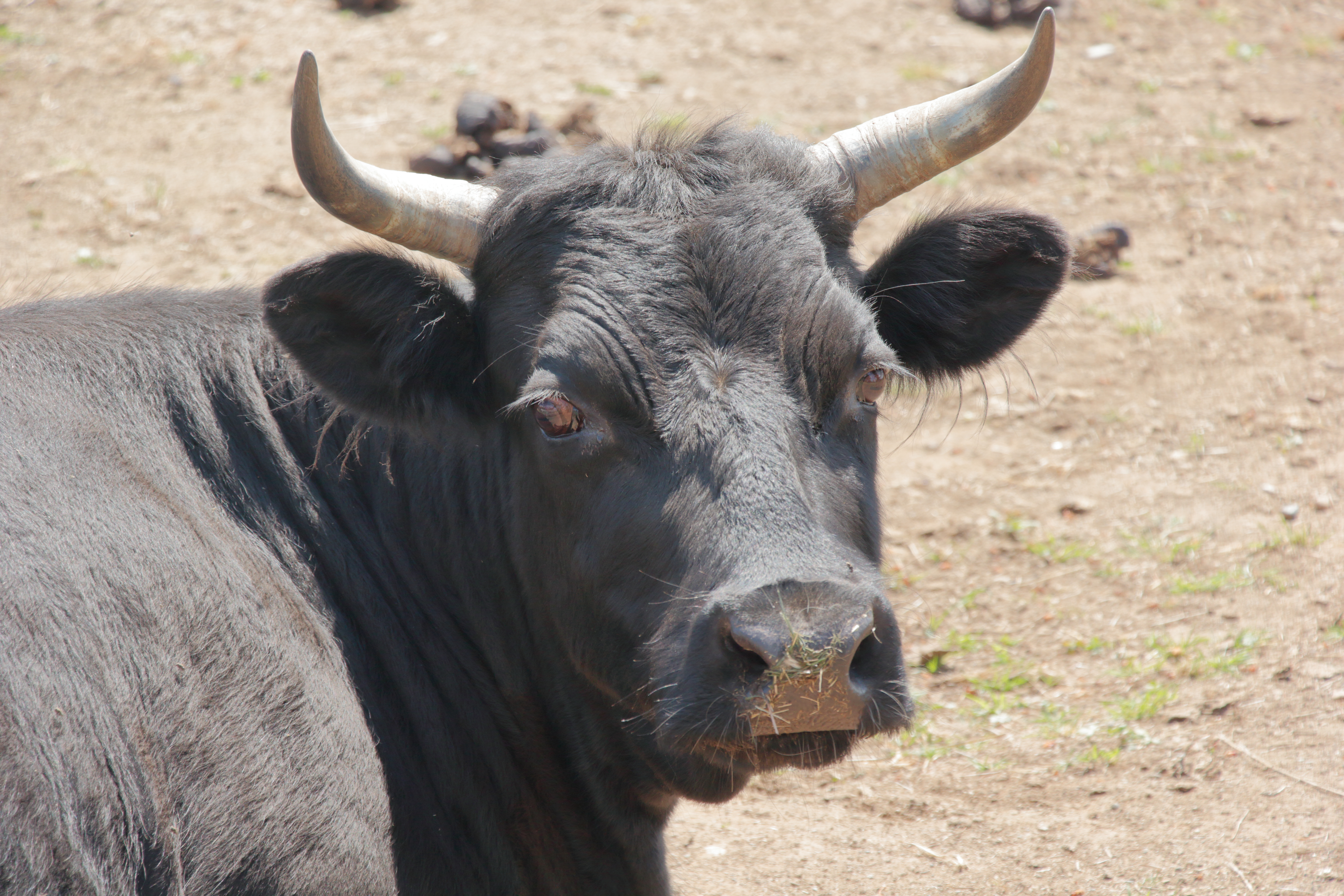
Friday, 08/11/2023: Post photo — Mini Cow.
One of my sister-in-law’s animals.
Saturday, 06/25/2022: Post photo — Feasting Bald Eagle.
This Bald Eagle just caught a fish, brought it to the top of this tree, and had its dinner.
“If you want to be a better photographer, stand in front of more interesting stuff.” — Jim Richardson
Thank you for all the new views and likes from last week, it helps keep me inspired.
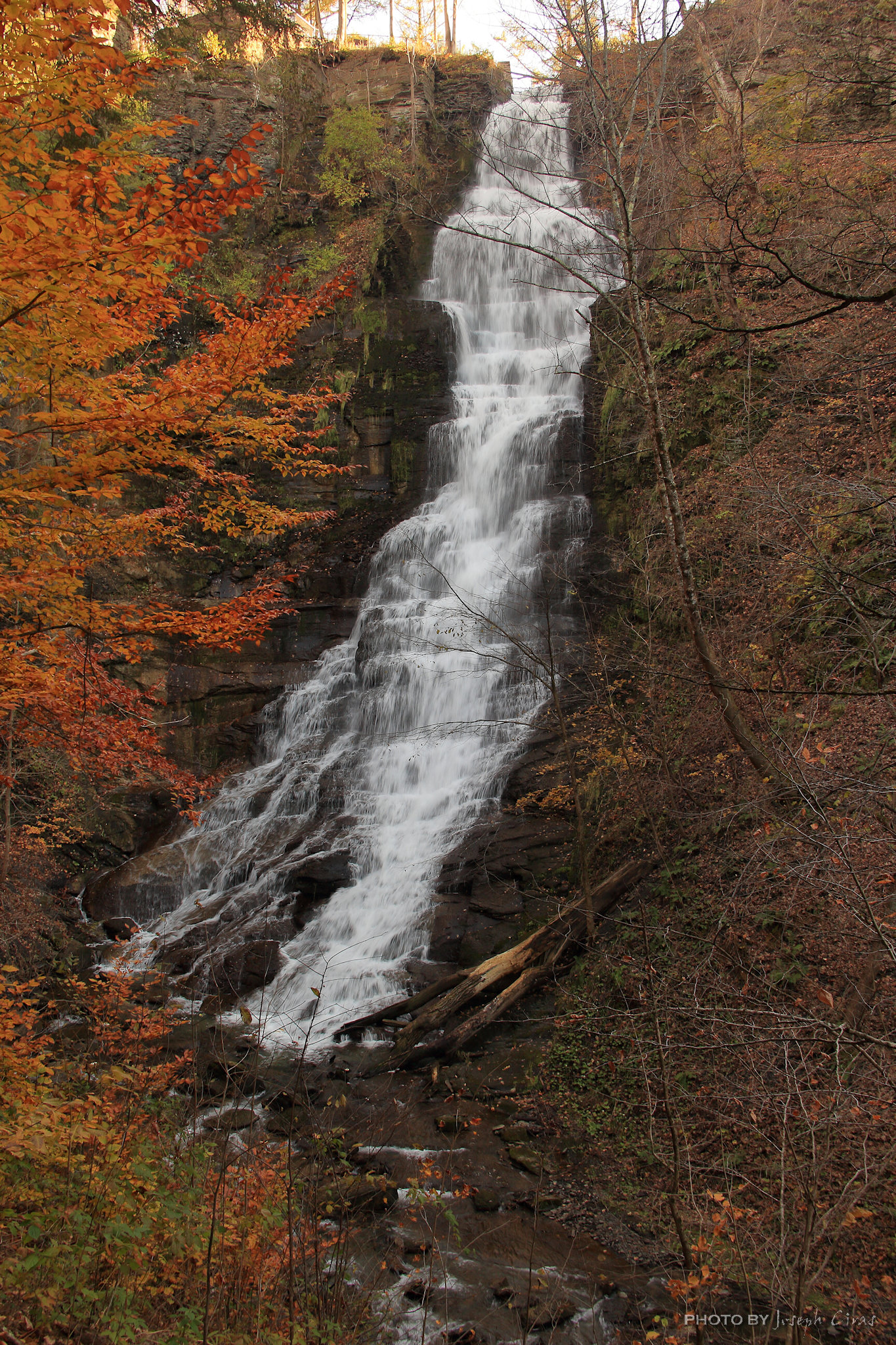
Sunday, 07/02/2023: Posted photo — Pratt’s Falls.
Settings: Canon EOS 60D, ISO 100, f/7.1, 1/15 s, 22 mm.
Pratt’s Falls, a 137 ft ribbon or cascade style waterfall located in Manlius, NY. The site was originally a sawmill and was the site of Onondaga County’s first mill operation in 1796. The hike out to the falls is only a half mile long (one-mile round trip) and could be step for some. There are stairs that take you down to the lower viewing location.
Photo tip of the week — Lessons learned from taking waterfall photos.
Set you camera to manual with a slow shutter speed. I use between 1/4 sec to 10 sec depending on the lighting.
Set your aperture to a value between f/16 and f/22. I sometimes open up, or close up, my aperture depending on the light and how I am taking the photo (with a tripod or handheld).
Use a tripod with image stabilization off. If you do not have a tripod, find a tree or other object to hold yourself steady.
Turn you ISO to the lowest setting. I use ISO 100 for my shots.
Use a ND filter if you have one. I use from a ND3 to a ND10, depending on the lighting.
Take time to get your composition the way you would like to have it. Try both portrait and landscape photos of the falls.
Pick a focal point, such as a rock or a tree near the falls. It is difficult to focus on the water.
Lighting is important. Take your photo in the morning or in the evening when the light is not on the waterfall. If it is on the waterfall, use the appropriate ND filter.
Use a remote, or your camera’s timer, for your shot to cut down on camera shake.
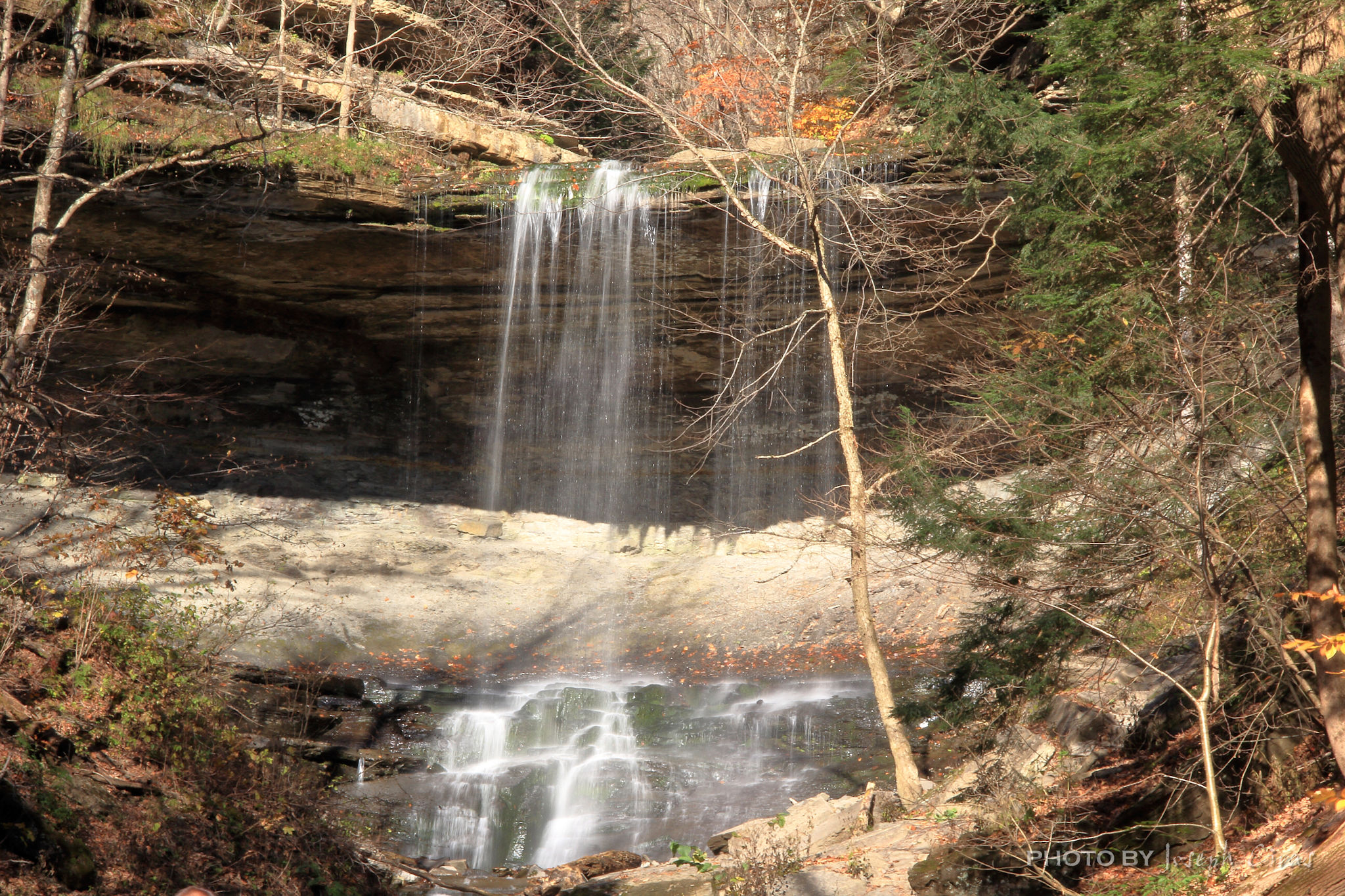
Monday, 07/03/2023: Posted photo — Tinkers Falls.
Settings: Canon EOS 60D, ISO 100, f/32, 1/6 s, 79 mm.
Tinkers Falls in the Labrador Hollow Unique Area and is about 50 feet tall. The Labrador Hollow Unique Area is a 1,474-acre (5.97 km2) conservation area located in Cortland and Onondaga counties, New York, and was the first property to be designated as a Unique Area by New York. A unique area, according to the state New York Department of Environmental Conservation, is “land owned by the state that was acquired due to its special natural beauty, wilderness character, or for its geological, ecological or historical significance.”
When I took the photo of these falls, I did not use my tripod. I was practicing my handheld long exposure photography. I was either leaning against a tree, sitting on a log, or using long exposure breathing techniques. The hike to these falls is very short, only about a quarter mile, and the trail is relatively flat.
Bonus photo tip — how to breathe and hold your camera for long exposures.
The way you hold your camera can have a big effect on the amount of blur caused by your own movement. Hold the camera with two hands close to your body and make sure your feet are shoulder-width apart. Being conscious of your breathing can further minimize shake. Inhale or exhale and then take a gentle half breath in and hold it there in a relaxed way.
Tuesday, 07/04/2023: Posted photo — Peas.
Settings: Samsung SM-G930V (Galaxy S7), ISO 125, f/1.7, 1/60 s, 4 mm
A pea is a cultivated climbing vine having compound leaves and edible seeds enclosed in a green, elongated pod. The seed of this plant is used as a vegetable.
I often wonder who the first person was to eat peas and how they knew that they could open the pod to get the seeds out.
You can look up the health benefits yourself for details on each of these benefits.
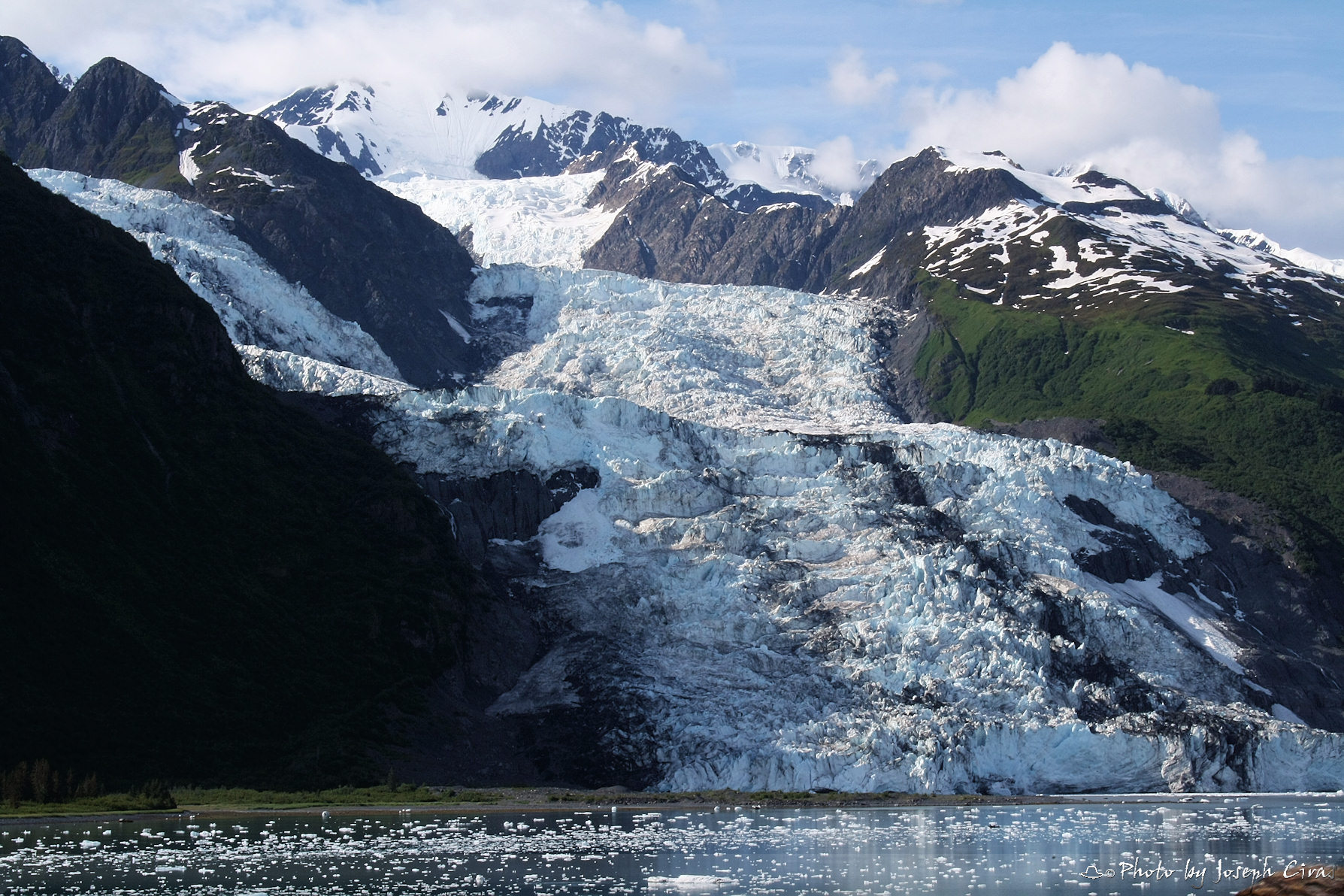
Wednesday, 07/05/2023: Posted photo — Bryn Mawr Glacier.
Settings: Canon EOS DIGITAL REBEL XS, ISO 200, f/25, 1/30 s, 48 mm.
Bryn Mawr Glacier flows southeast for about 4.5 miles (7 km) to Harvard Arm of College Fjord in northwestern Prince William Sound, about 45 miles west of Valdez and 44 miles northeast of Whittier, Alaska (61° 15′ 13″ N, 147° 49′ 29″ W). As you travel into College Fjord, the glaciers on the left are named for women’s colleges and those on the right are named for men’s colleges. The names are Amherst, Barnard, Bryn Mawr, Harvard, Smith, Vassar, and Yale). Harvard Glacier is the biggest – its face is a mile and a half across.
Alaska is such an amazing place to visit. The landscape keeps getting better and better as we headed north from Vancouver on our cruise. Here are a few more photos taken in College Fjord.
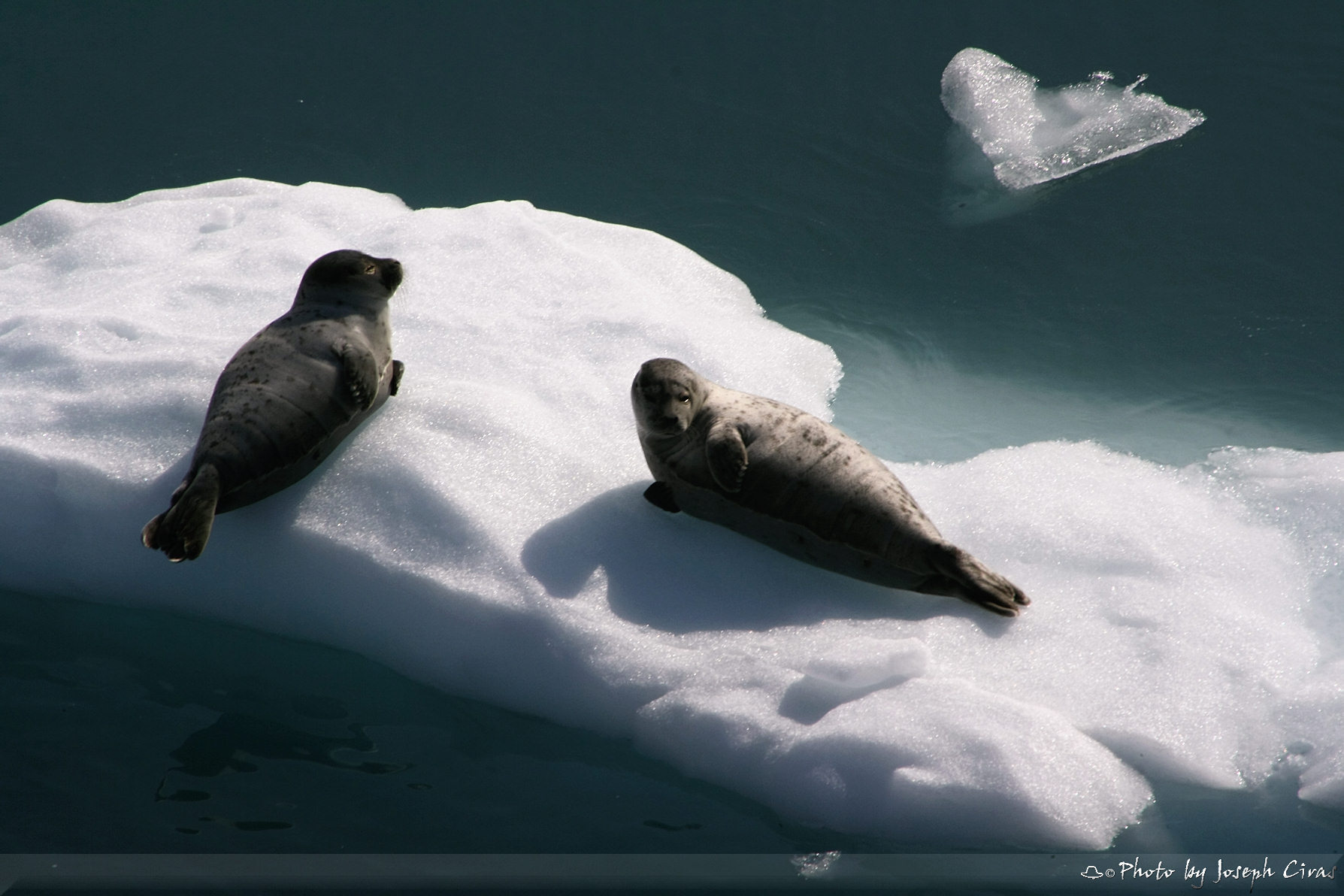
Thursday, 07/06/2023: Posted photo — Just Floating.
Settings: Canon EOS DIGITAL REBEL XS, ISO 200, f/25, 1/30 s, 48 mm.
Here are a couple of seals that were just floating on a small iceberg. Look at the heartberg floating with them.
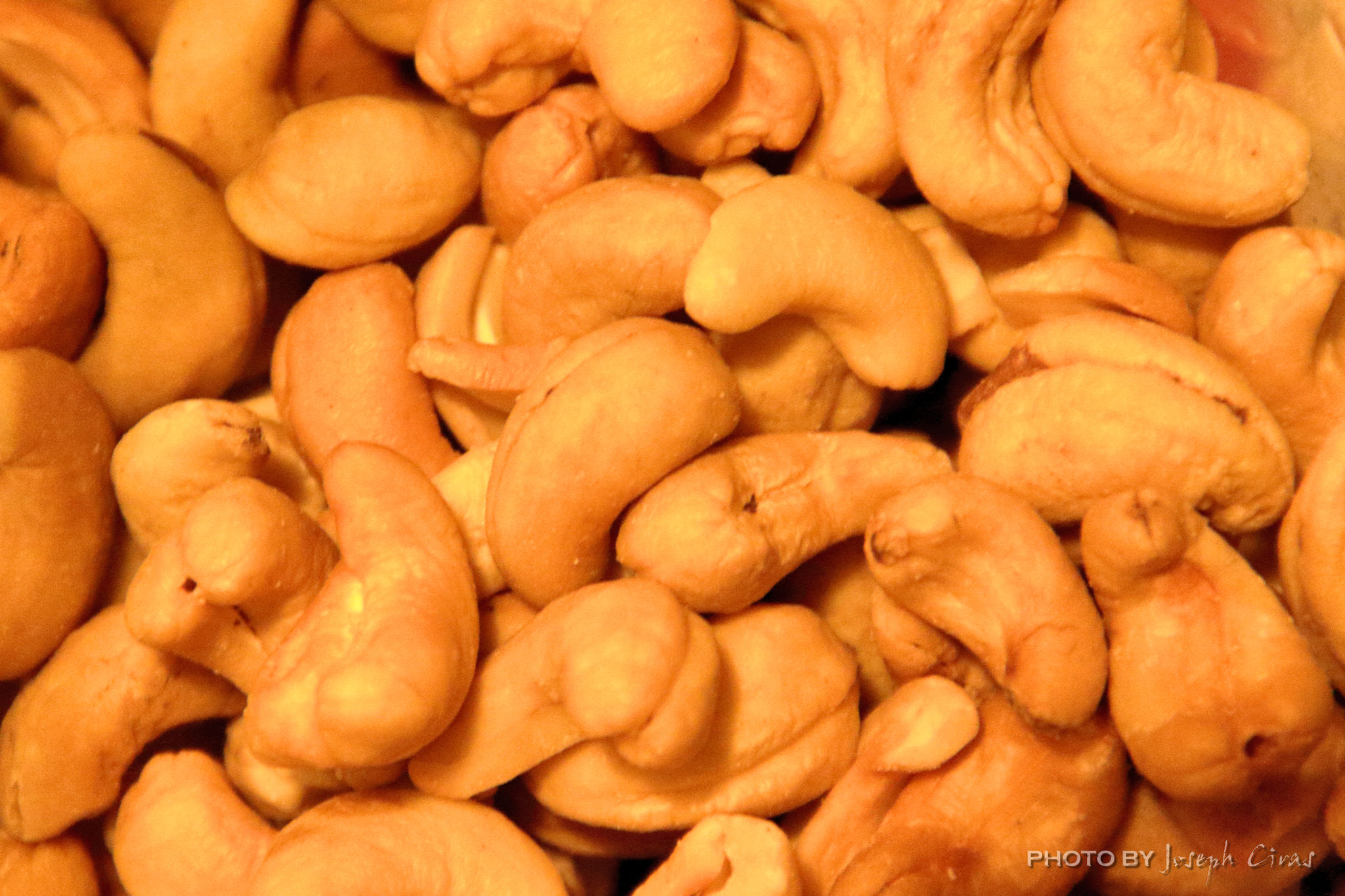
Friday, 07/07/2023: Post photo — Cashews.
Settings: Canon EOS 60D, ISO 3200, f/5.6, 1/20 s, 106 mm.
Cashews are low in sugar and rich in fiber, heart-healthy fats, and plant protein. They’re also a good source of copper, magnesium, and manganese — nutrients important for energy production, brain health, immunity, and bone health.
I needed a photo; I had some cashews in the house, so I took this photo.
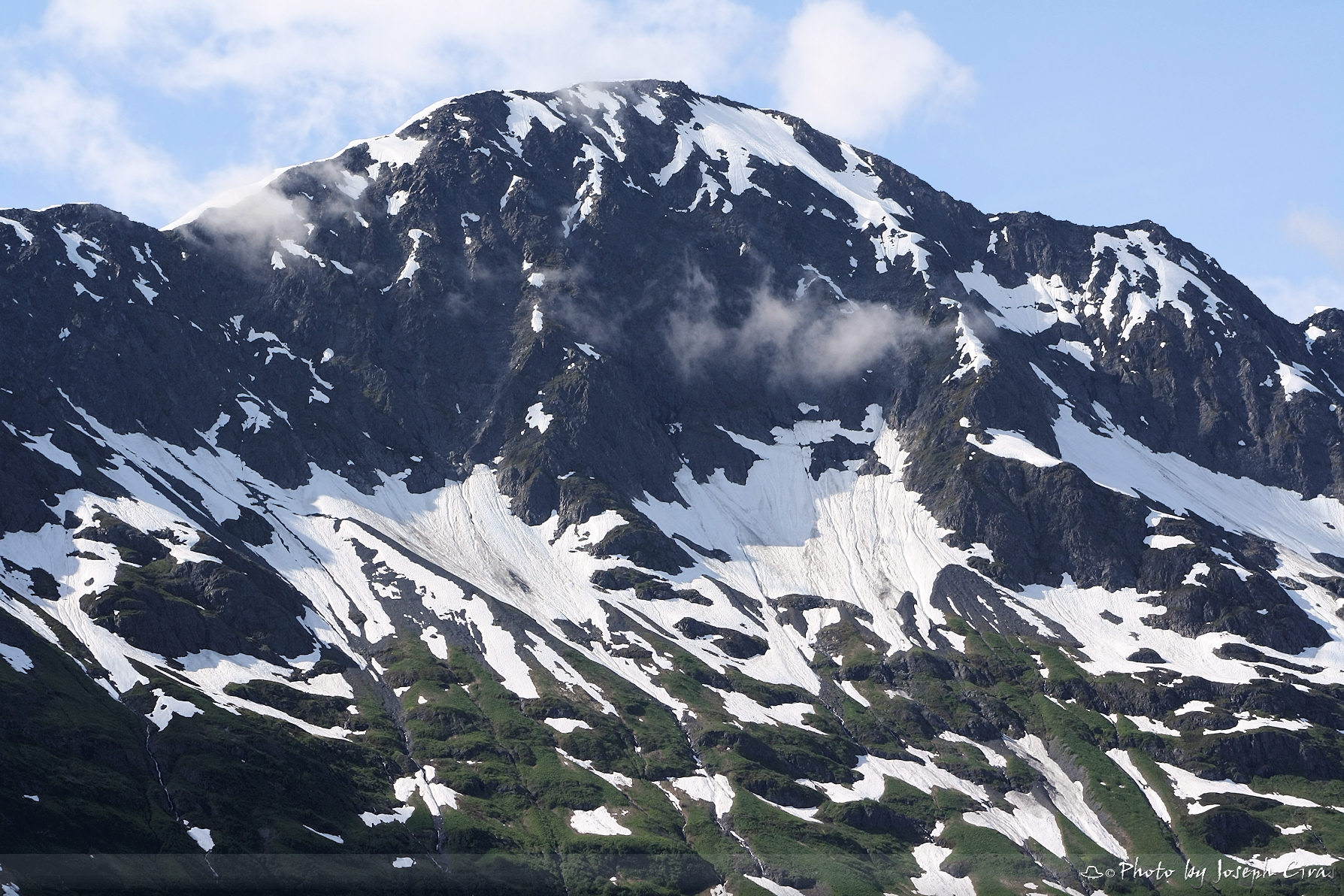
Saturday, 07/08/2023: Post photo — Just a Mountain in Alaska.
Settings: Canon EOS DIGITAL REBEL XS, ISO 200, f/25, 1/30 s, 48 mm.
To finish of this week, I am posting a photo of another mountain that we saw in Alaska. I just love the mountains in Alaska.
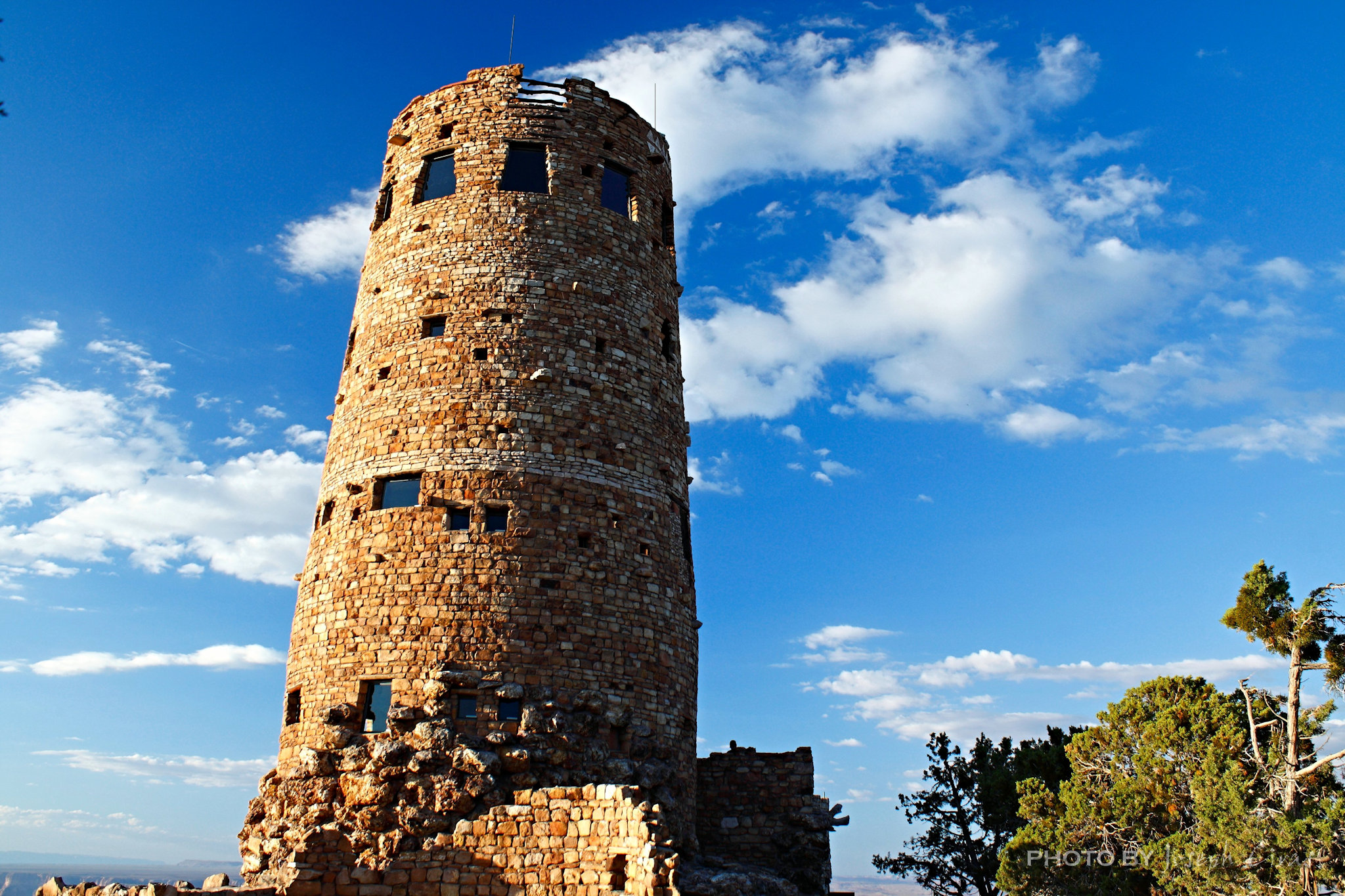
Settings: Canon EOS DIGITAL REBEL XS, ISO 200, f/5.6, 1/100 s, 20 mm.
Desert View Watchtower, South Rim Grand Canyon National Park.
We arrived at the South Rim of the Grand Canyon just before sunset. We spent the last couple of nights camping and hiking along the North Rim of the Grand Canyon and would be spending time on the South Rim. I have been to the Canyon before, but never from this entrance.
From the National Parks Service: “A National Historic Landmark, the Watchtower was constructed in 1932.The design by Mary Colter, is based on the architecture of the Ancestral Puebloan people of the Southwest. This particular tower was patterned after those found at Hovenweep and the Round Tower of Mesa Verde.”
We have been to Hovenweep and to Mesa Verde and agree with that statement.
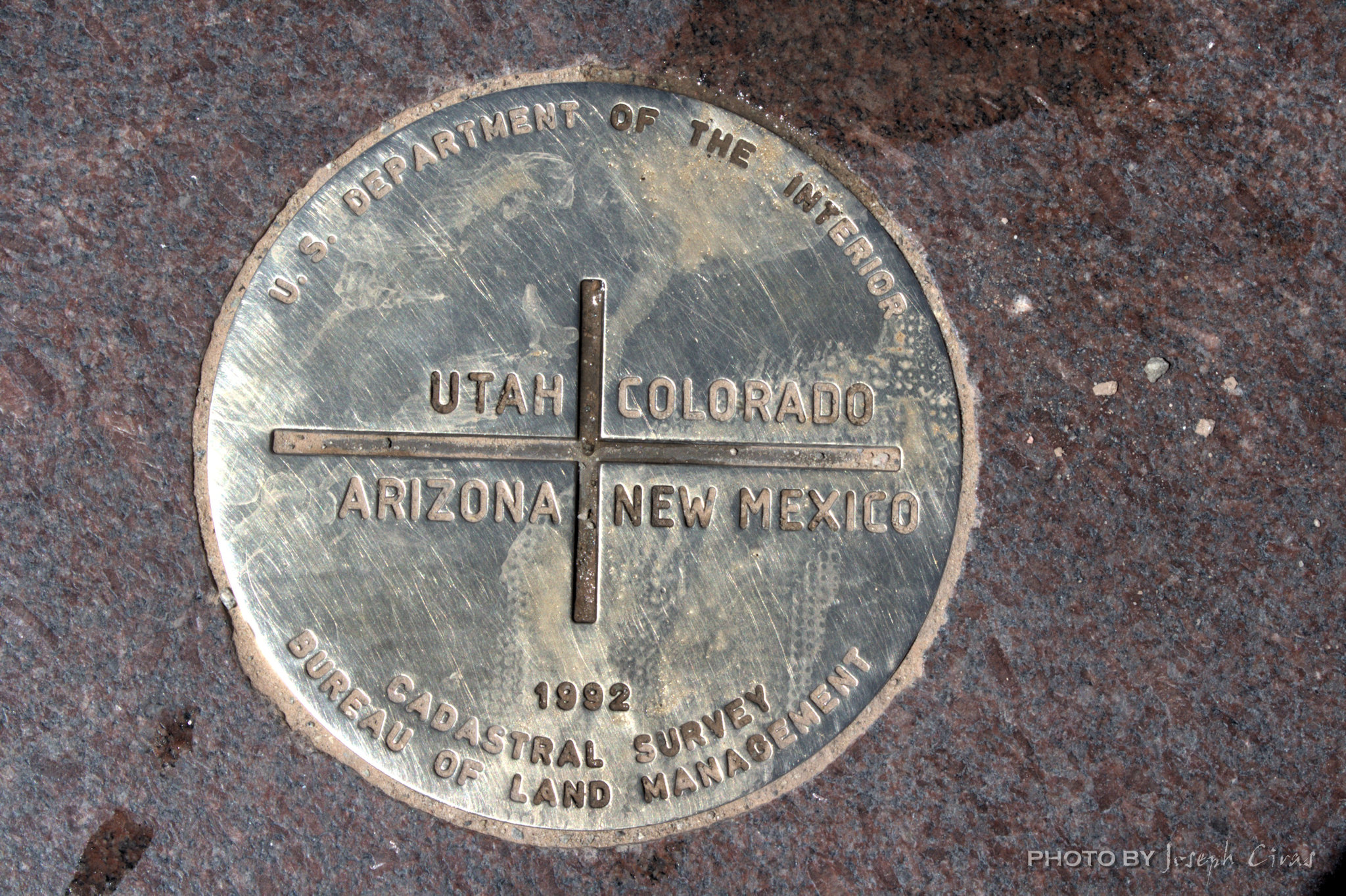
Settings: Canon EOS DIGITAL REBEL XS, ISO 200, f/16, 1/400 s, 49 mm.
The Four Corners Monument marks the quadripoint in the Southwestern United States where the states of Arizona, Colorado, New Mexico, and Utah meet. It is the only point in the United States shared by four states.
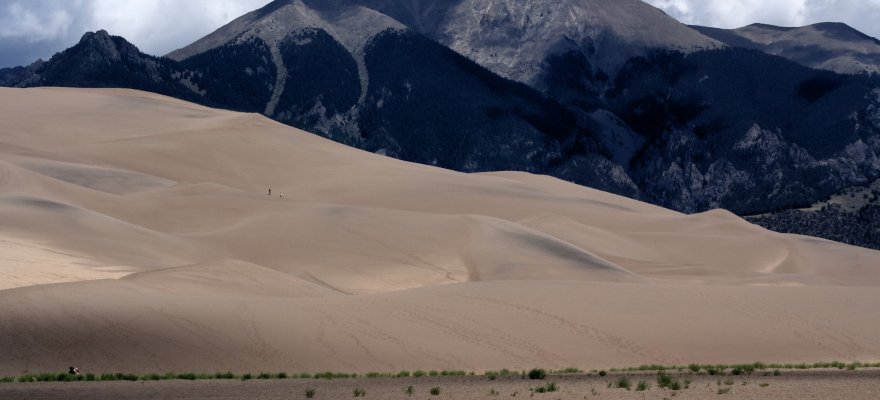
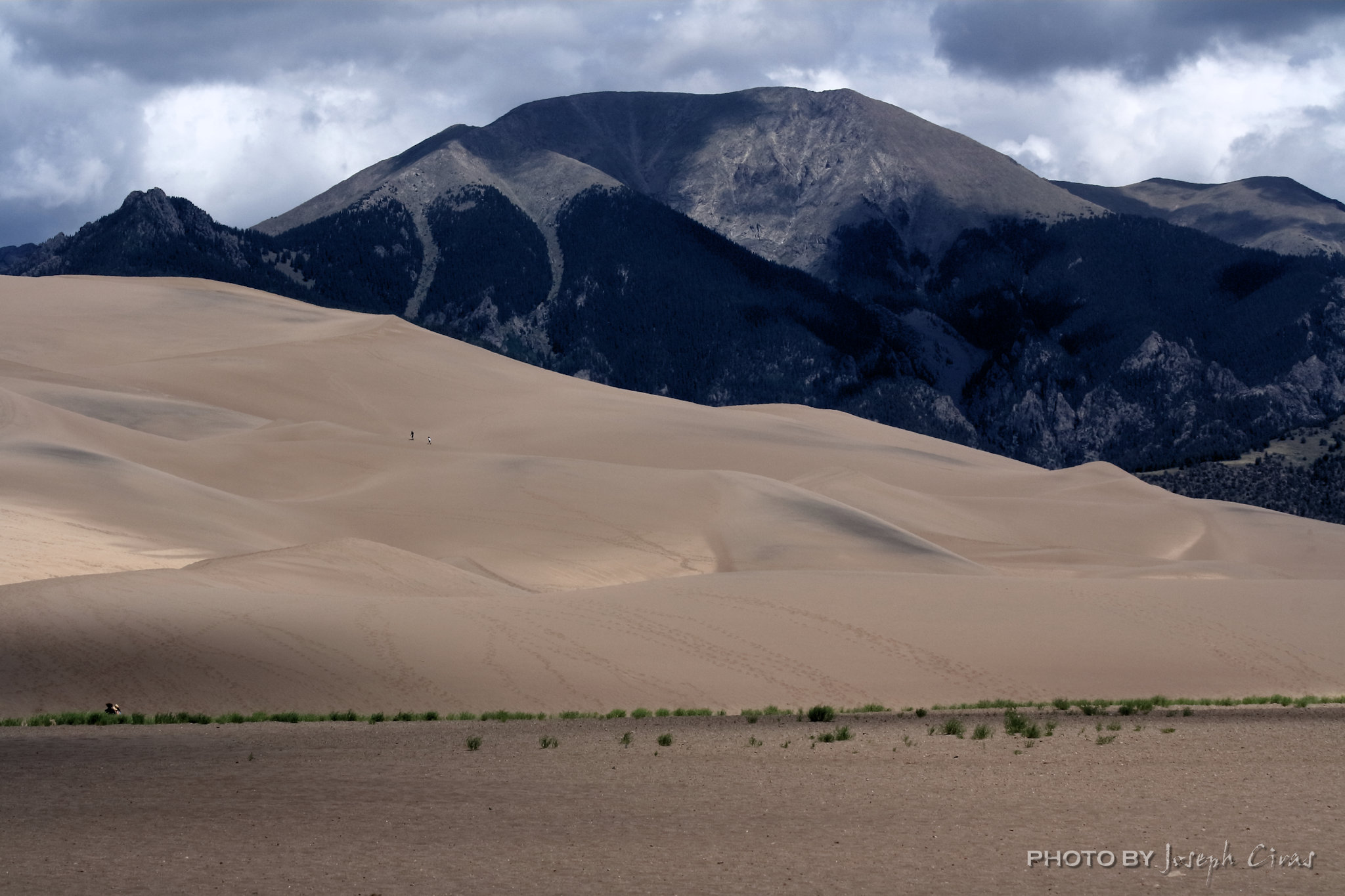
Tuesday, 06/27/2023: Posted photo — Great Sand Dunes National Park and Preserve.
Settings: Canon EOS DIGITAL REBEL XS, ISO 200, f/13, 1/800 s, 90 mm.
Great Sand Dunes National Park and Preserve, Mosca, CO.
One of the amazing things about the Great Sand Dunes is that you can see them from miles away. As you turn off the main road and head towards the dunes, they are right in front of you. We spent the day hiking the dunes pretending we were in a desert. When you look at this photo, you see a couple of dots in the sand. Those are people. The sand was hot. According to Park Service, the sand surface can reach 150 degrees F (65 degrees C) on a summer afternoon or drop to minus 20 degrees F (minus 29 degrees C) on a winter night. It was close to the 150 degrees when we were walking on the sand.
From the National Parks Service: “The tallest dunes in North America are the centerpiece in a diverse landscape of grasslands, wetlands, forests, alpine lakes, and tundra. Great Sand Dunes National Park is a complex geologic story going back millions of years. Intense volcanic activity built the San Juan mountain range to the west of the modern day dunes and tectonic activity raised the Sangre de Cristo Mountains to the north and east.”
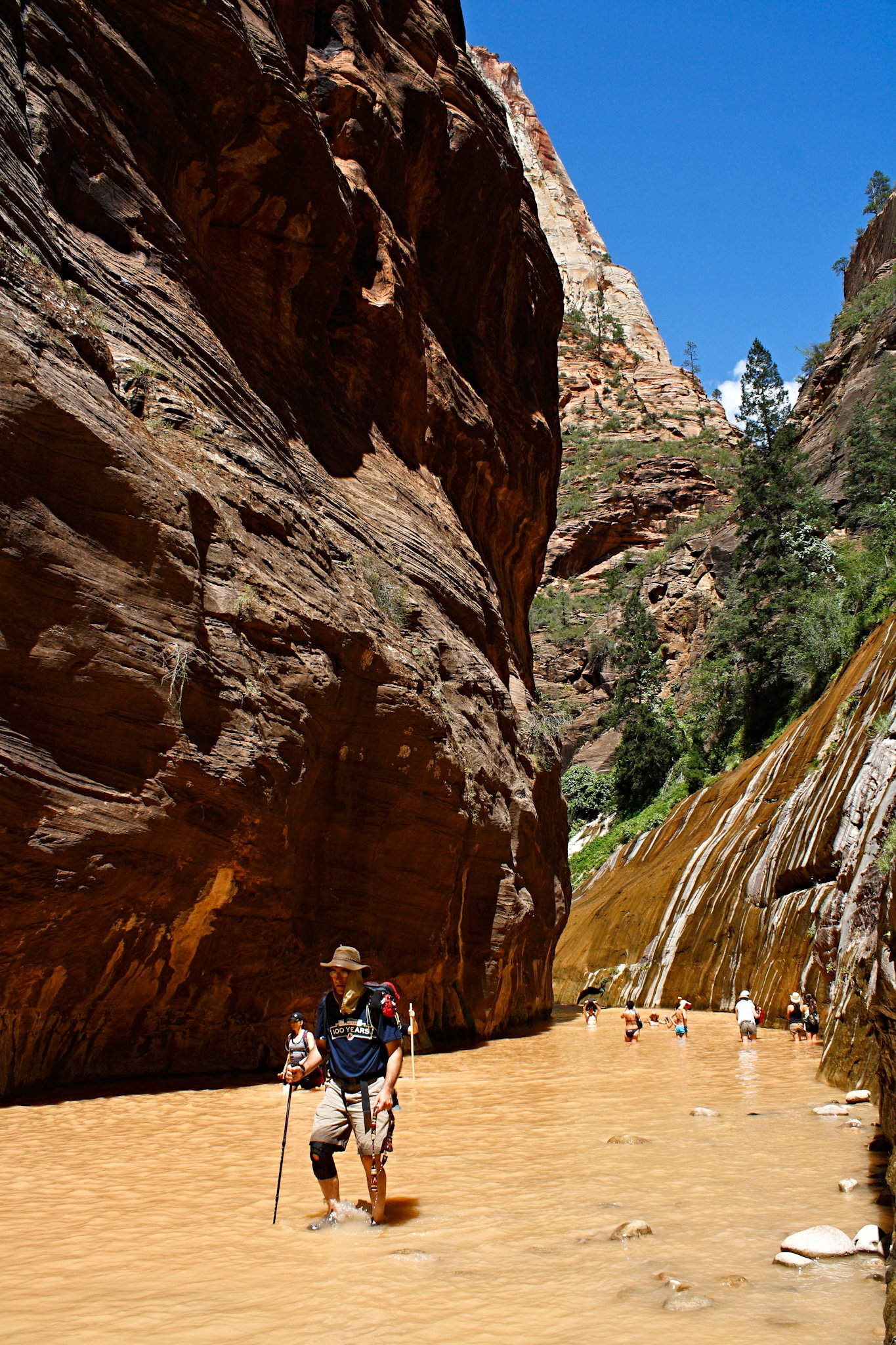
Wednesday, 06/28/2023: Posted photo — Hiking the Narrows.
Settings: Canon EOS DIGITAL REBEL XS, ISO 200, f/9, 1/2050 s, 18 mm.
Zion National Park Springdale, UT.
This is a photo my wife took of me as we were hiking the Narrows in Zion National Park. It was a refreshing hike on a hot summer day. When you hike the Narrows, you need to be very aware of the weather. Because it is so narrow, there is no escape route if there happens to be a flash flood.
From the National Parks Service: “The Narrows is the narrowest section of Zion Canyon. This gorge, with walls a thousand feet tall and the river sometimes just twenty to thirty feet wide, is one of the most popular areas in Zion National Park. You can see The Narrows by hiking along the paved, wheelchair accessible Riverside Walk for one mile from the Temple of Sinawava. If you wish to see more, you will be walking in the Virgin River. This can involve wading upstream for just a few minutes or it can be an all day hike.”
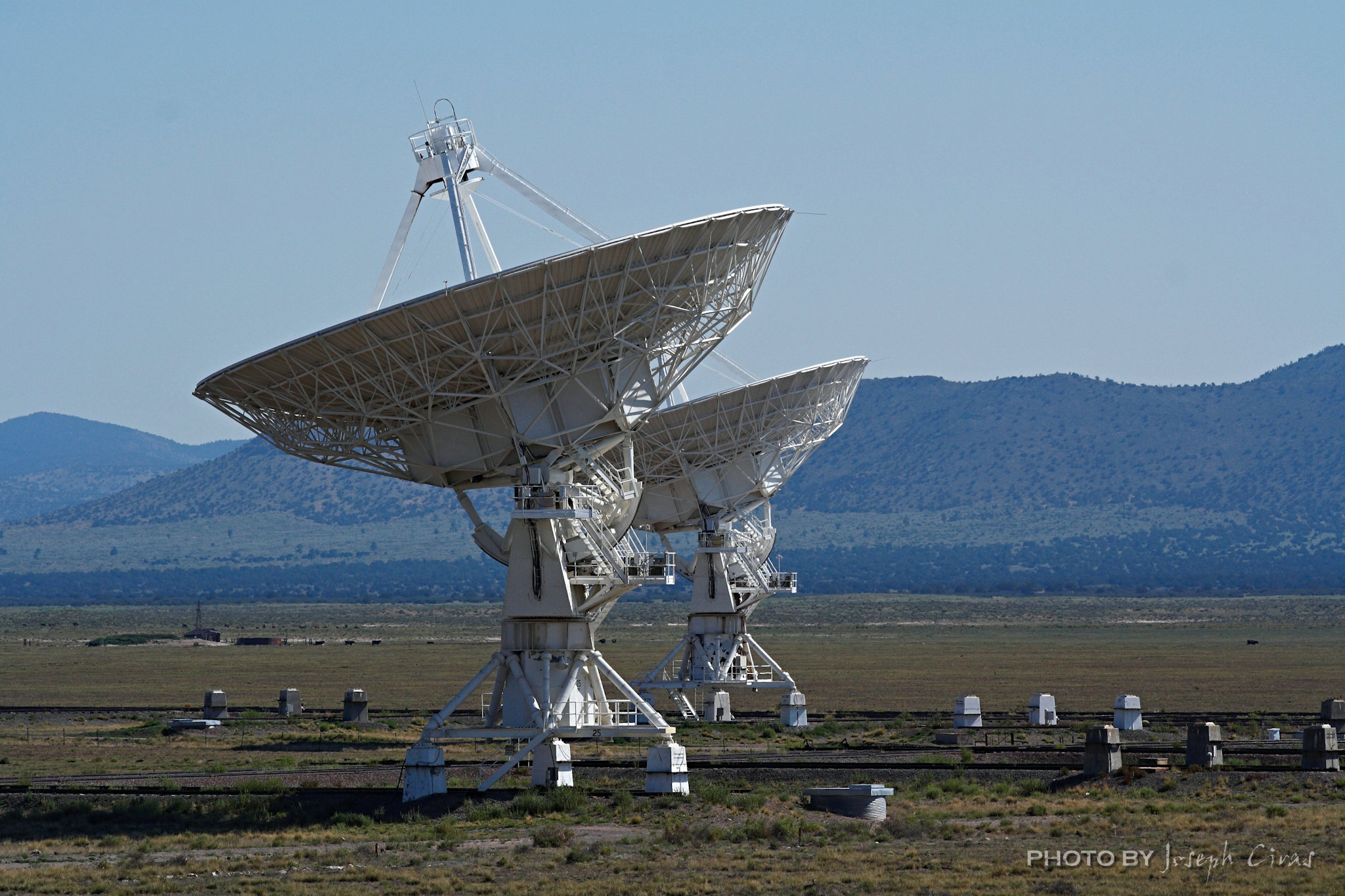
Thursday, 06/29/2023: Posted photo — NRAO Very Large Array.
Settings: Canon EOS DIGITAL REBEL XS, ISO 200, f/10, 1/800 s, 165 mm.
NRAO Very Large Array, Magdalena, NM.
One of the most interesting places to visit. As you can see from the description below, the array can be very large. When we visited, there were 26 radio antennas pointing in one direction and one pointing in an opposite direction. We thought that was strange. They told up that the odd one was scanning the sky.
“The Very Large Array, one of the world’s premier astronomical radio observatories, consists of 27 radio antennas in a Y-shaped configuration on the Plains of San Agustin fifty miles west of Socorro, New Mexico. Each antenna is 25 meters (82 feet) in diameter. The data from the antennas is combined electronically to give the resolution of an antenna 36 km (22 miles) across, with the equivalent sensitivity of a dish 130 meters (422 feet) in diameter.” — http://www.vla.nrao.edu/
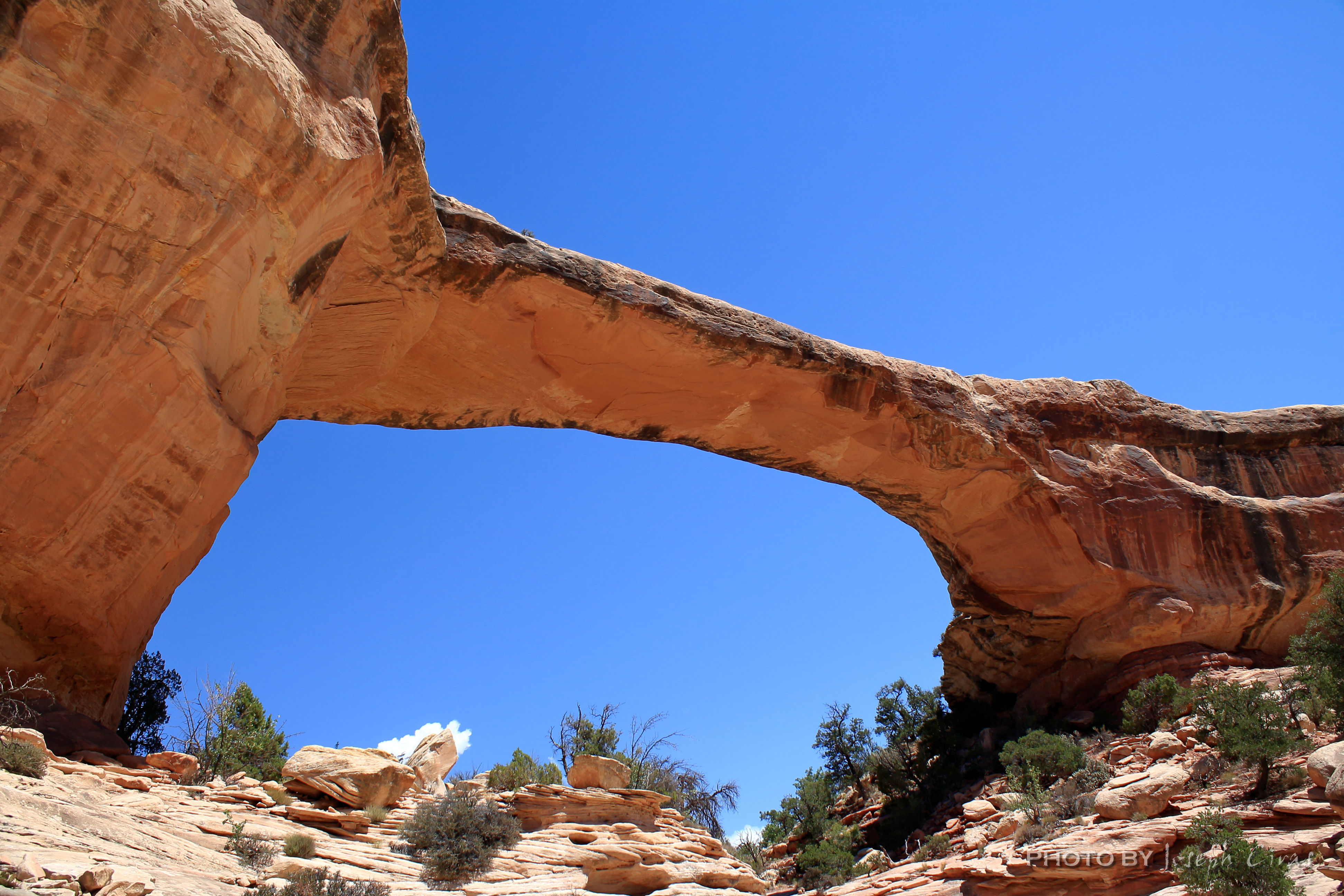
Friday, 06/30/2023: Post photo — Owachamo Bridge.
Settings: Canon EOS DIGITAL REBEL XS, ISO 100, f/7.1, 1/125 s, 18 mm.
Owachamo Bridge, Natural Bridges National Monument, UT.
Owachomo is the smallest and thinnest of the three natural bridges in the National Monument and is commonly thought to be the oldest. We had a great hike out to the bridge.
We like to travel to the lesser know parks. These parks are lesser know mostly because of location. They are not close to any major city or town. We like to say it is great to have a park to ourselves.
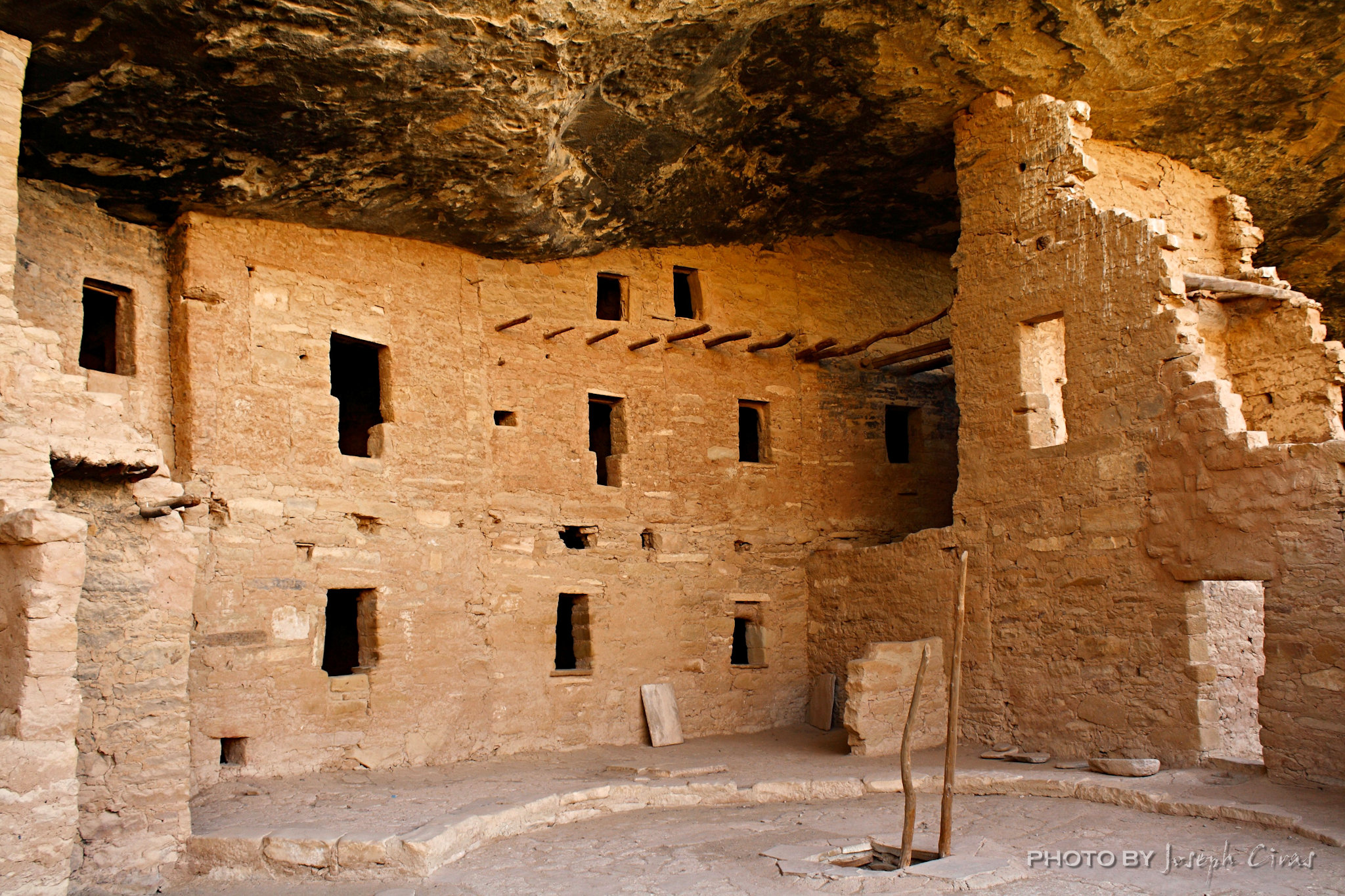
Saturday, 07/01/2023: Post photo — Spruce Tree House.
Settings: Canon EOS DIGITAL REBEL XS, ISO 200, f/5, 1/50 s, 20 mm.
Spruce Tree House, Mesa Verde National Park, CO.
From the National Park Service: “Spruce Tree House, the third largest cliff dwelling (Cliff Palace and Long House are larger), was constructed between about 1211 and 1278 CE by the ancestors of the Pueblo peoples of the Southwest. The dwelling contains about 130 rooms and 8 kivas (kee-vahs), or ceremonial chambers, built into a natural alcove measuring 216 feet (66 meters) at greatest width and 89 feet (27 meters) at its greatest depth. It is thought to have been home for about 60 to 80 people.”
We were lucky enough to get to the park prior to 2012 during one of our northern National Park tours. We were able to explore the Spruce Tree House. We went into some of the rooms and into the kivas. Due to the unstable cliff about the Spruce Tree House, the entire site was closed to the public in October 2015. We have visited the park since then since I have a relative that works at the park. We were able to obtain permits to do some backcountry hiking with my relative guide to some dwellings that are off limits to the public.
“Taking pictures is like tiptoeing into the kitchen late at night and stealing Oreo cookies.” — Diane Arbus
Thank you for all the new views and likes from last week, it helps keep me inspired.
This week is full of sunrises and sunsets.
Sunday, 06/18/2023: Posted photo — Sunrise at the Beach.
On one of my past vacations, I took a sunrise walk on the beach with my camera. During the walk, I saw this great sunrise. I stopped and took this photo.
I just loved the way the sunrise looked as we walked to the beach. I timed it to get the bird in the photo.
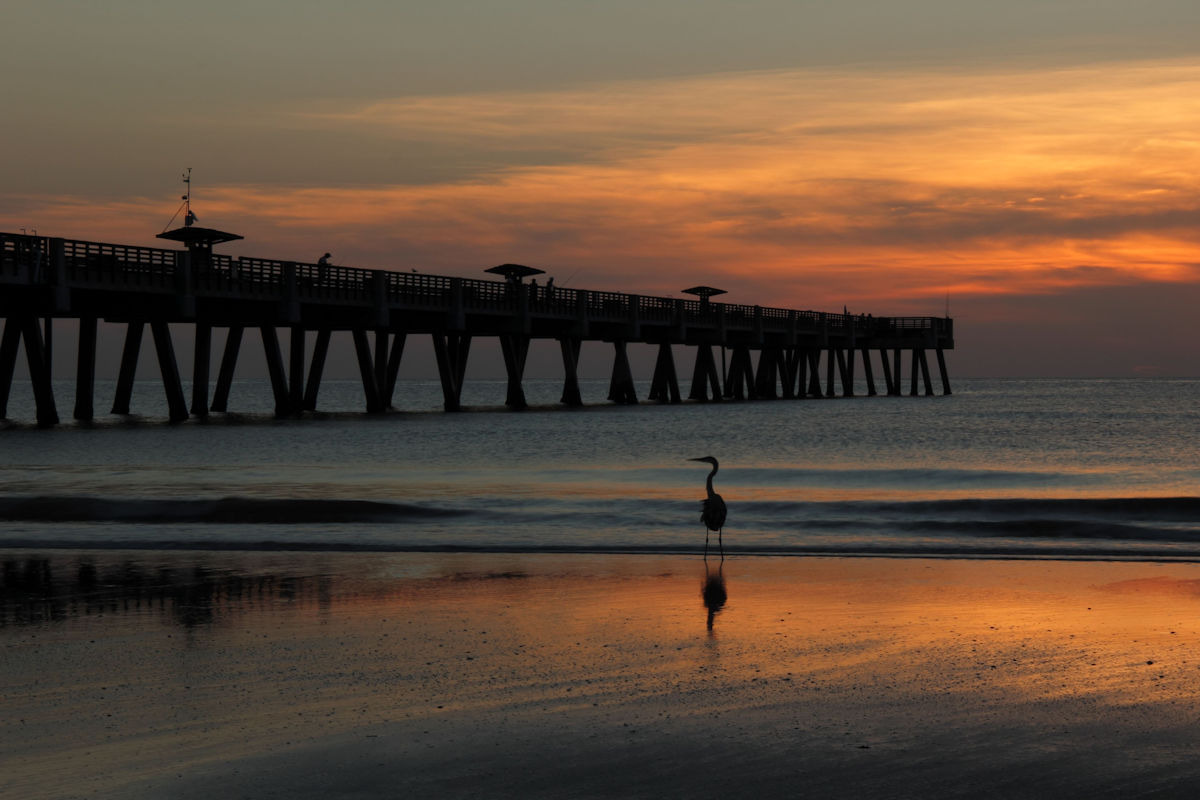
Tuesday, 06/20/2023: Posted photo — Sunrise at the Pier.
One of my trips to Jacksonville Beach Florida, I took another sunrise walk. I saw this heron near the shore and near the pier. I just loved the silhouette of the bird, so I took this shot.
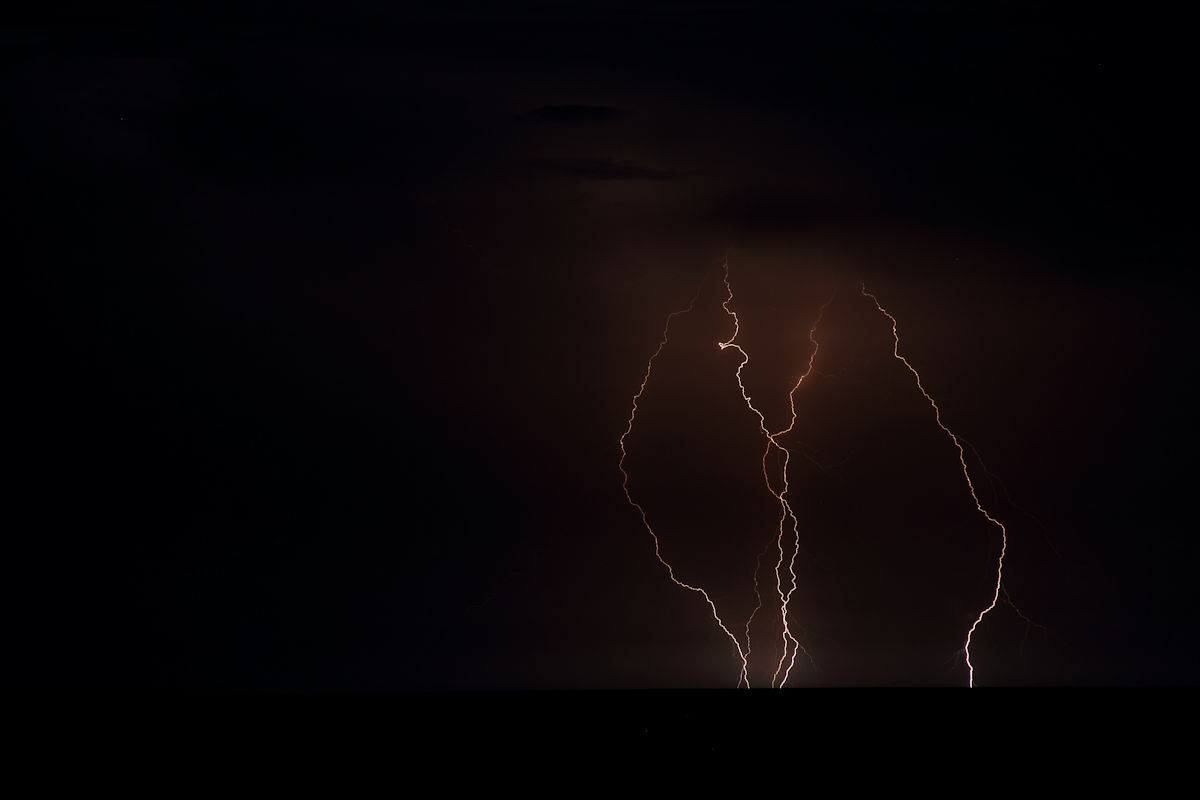
Wednesday, 06/21/2023: Posted photo — Lightning at Sea.
We had a condo on the beach and there was a storm at sea. I set my camera on my tripod and set the timer for 15 second. I liked the way this photo came out but was disappointed that I did not set my timer at 30 seconds.
Thursday, 06/22/2023: Posted photo — Sunrise on Wachusett.
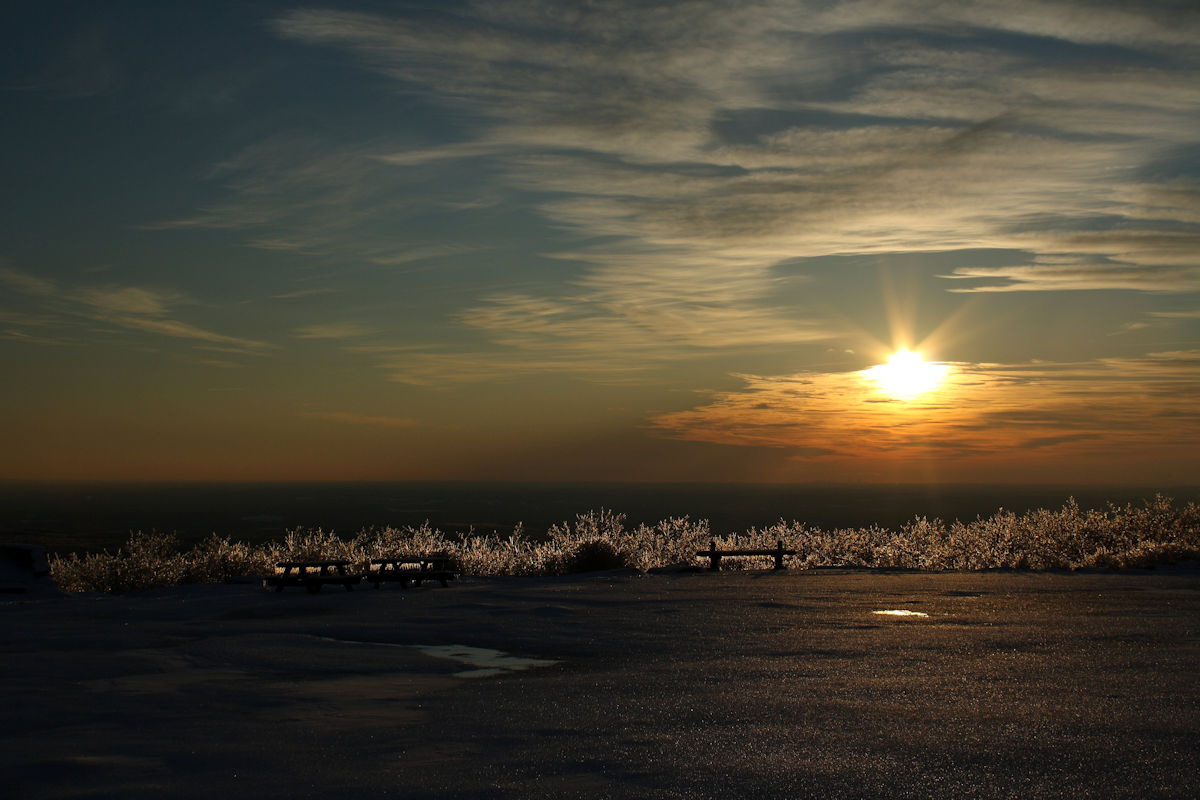
Moring winter hike up Wachusett Mountain for sunrise. There was a small coating of ice on the summit. The sunshine on the ice took a great photo.
Friday, 06/23/2023: Post photo — Sunset at the Cape.
One thing my wife and I do is have a weekend away on Cape Cod during the off season. This was one of the sunsets we saw.
Saturday, 06/24/2023: Post photo — Sunset on Wachusett.
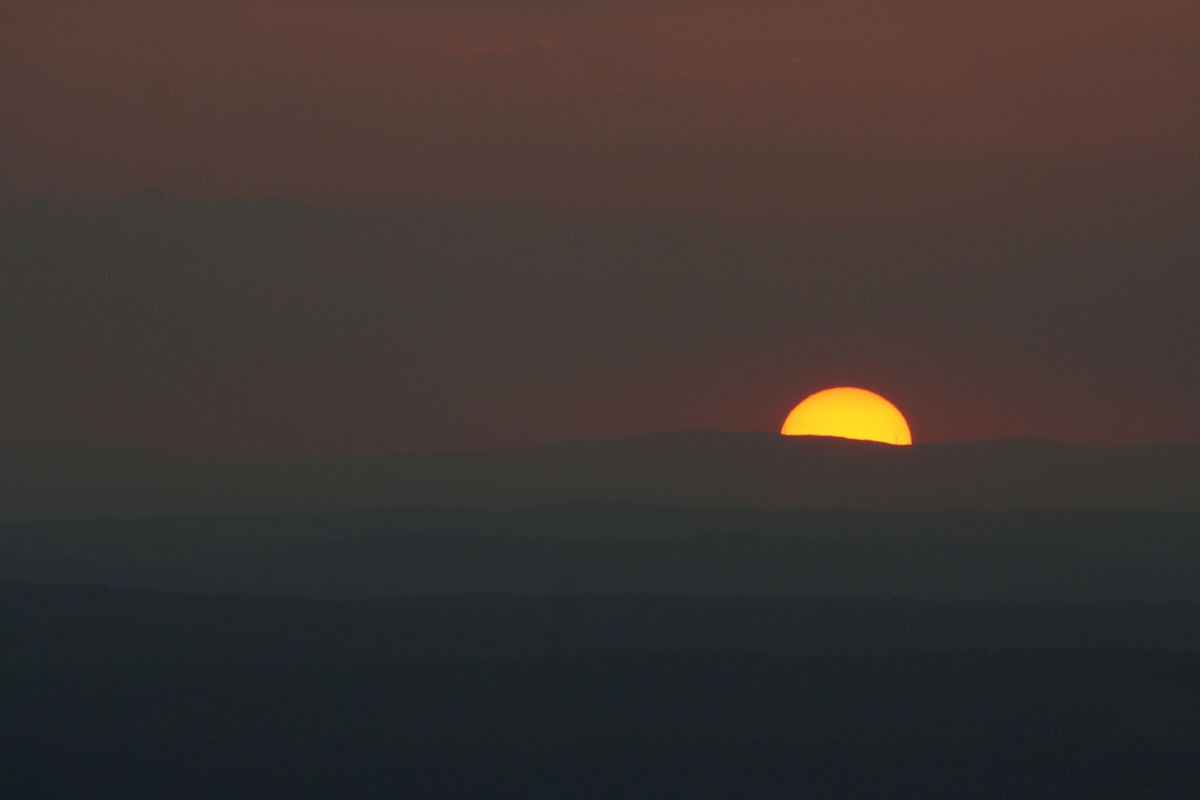
Here is a pleasant sunset from the summit of Wachusett Mountain.
“The best thing about a picture is that it never changes, even when the people in it do.” — Andy Warhol
Thank you for all the new views and likes from last week, it helps keep me inspired.
Phots from Yellowstone National Park.
Sunday, 06/11/2023: Posted photo — Old Faithful.
They call it Old “Almost” Faithful. Old Faithful goes off plus or minus a half hour from its scheduled time based on the height of its last eruption. Still wonderful to see.
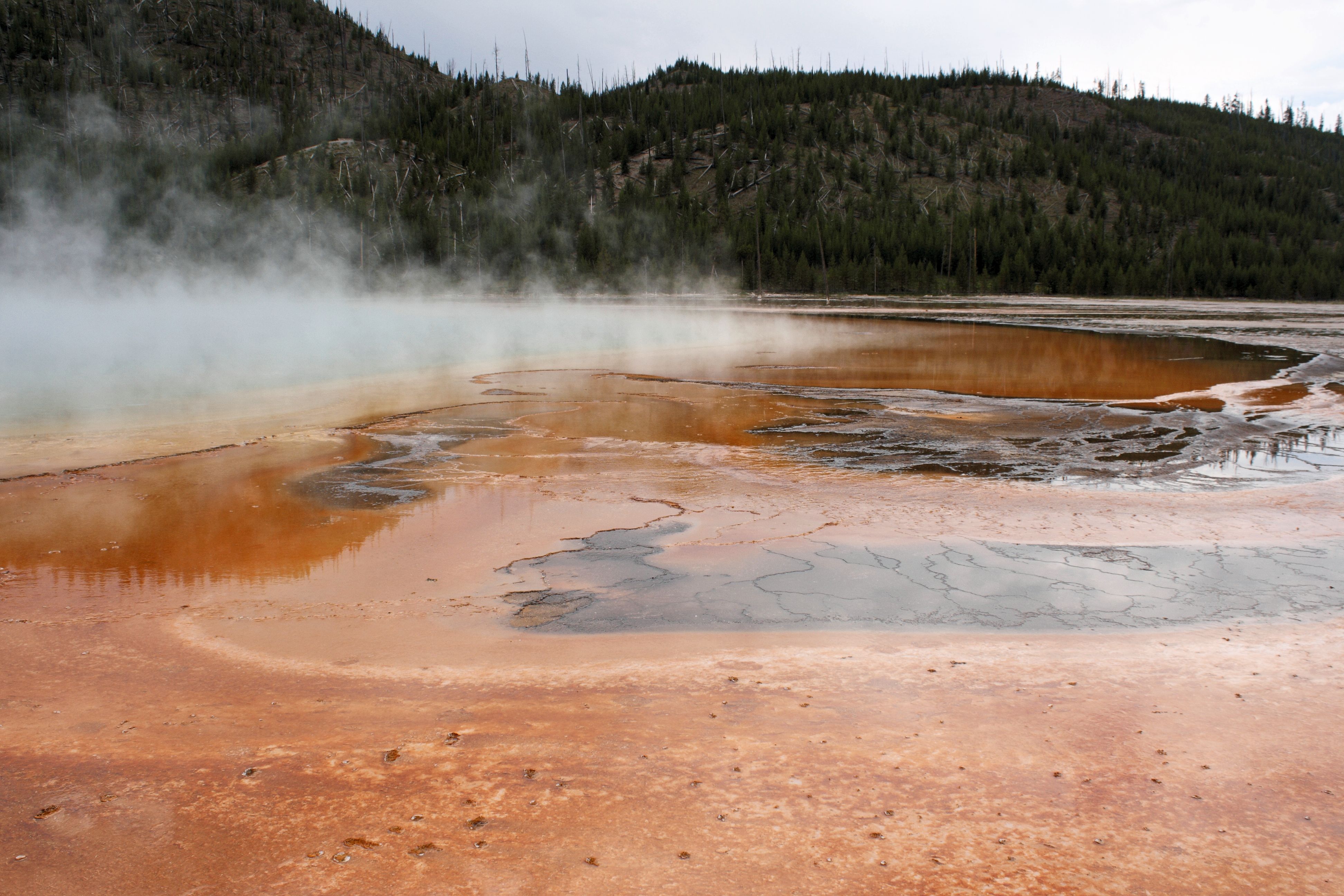
Grand Prismatic Spring is one of more than 10,000 thermal features in Yellowstone.
Tuesday, 06/13/2023: Posted photo — Moose.
A female moose seen along the road. One of many different forms of wildlife found in the park.
Wednesday, 06/14/2023: Posted photo — Hot Springs.
Mammoth Hot Springs. One of the areas in the northern part of the park. This is the area that received the most flooding.
Thursday, 06/15/2023: Posted photo — Formation.
This is one of the formations caused by the sulfur in the hot springs.
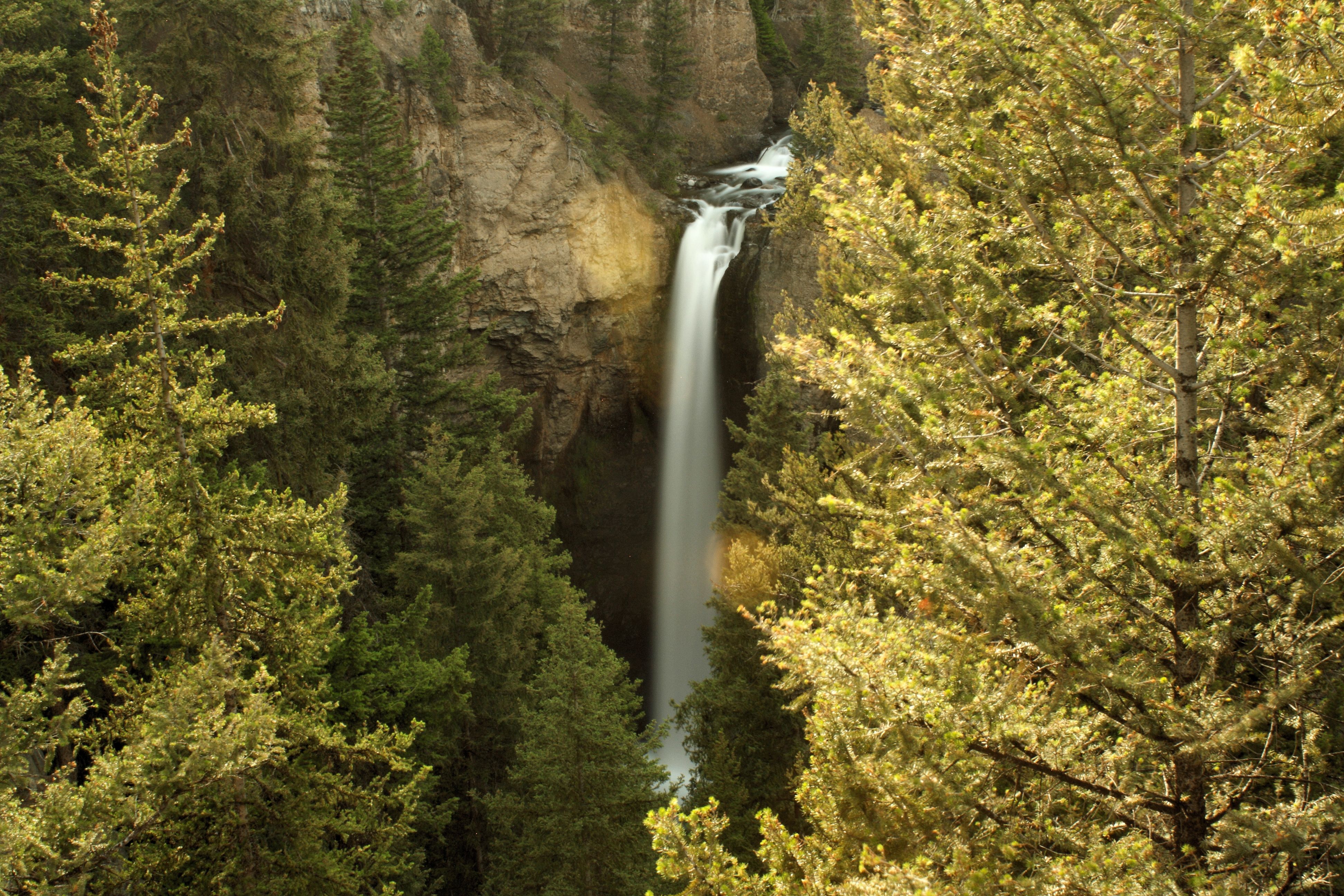
Friday, 06/16/2023: Post photo — Tower Falls.
A spectacular waterfall in the part. Tower Fall is a beautiful, accessible waterfall in Yellowstone located in the northeastern part of Yellowstone near Tower Junction, the fall plunges a stunning 132 feet.
Saturday, 06/17/2023: Post photo — Bison.
Imagine seeing this by the side of the road. Such a docile looking animal. Not very docile and very fast. The people that get attacked by the bison get to close.