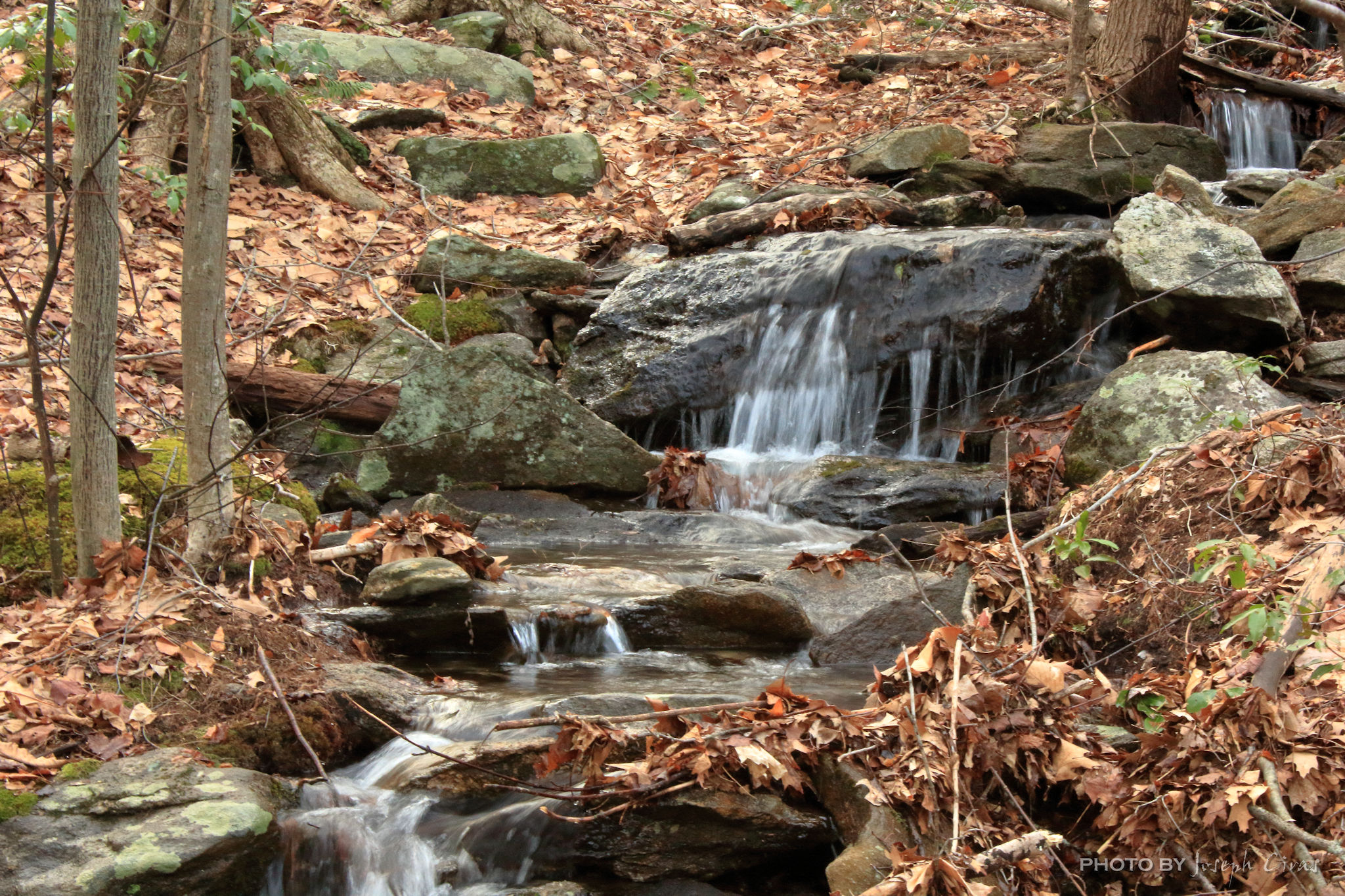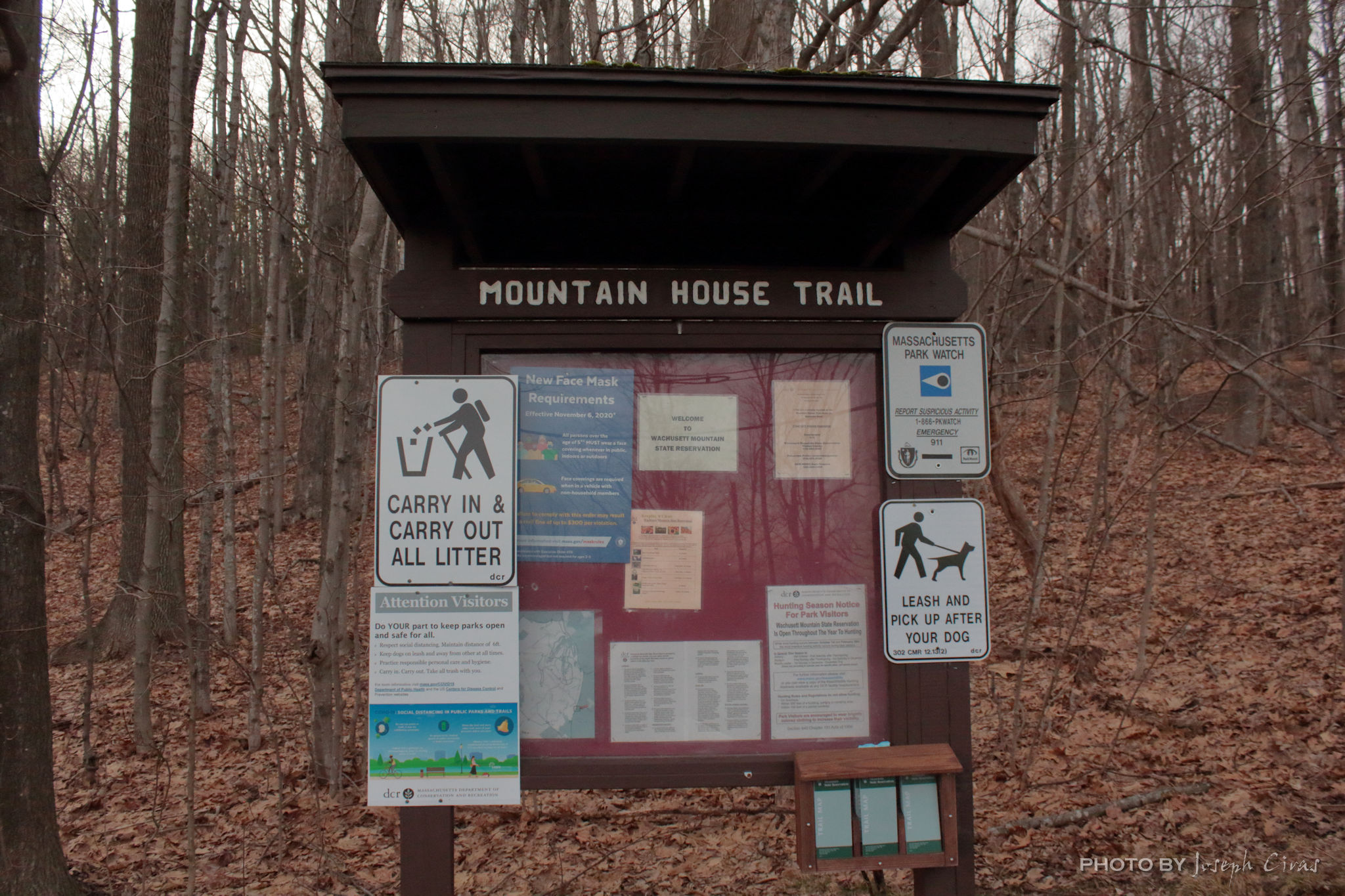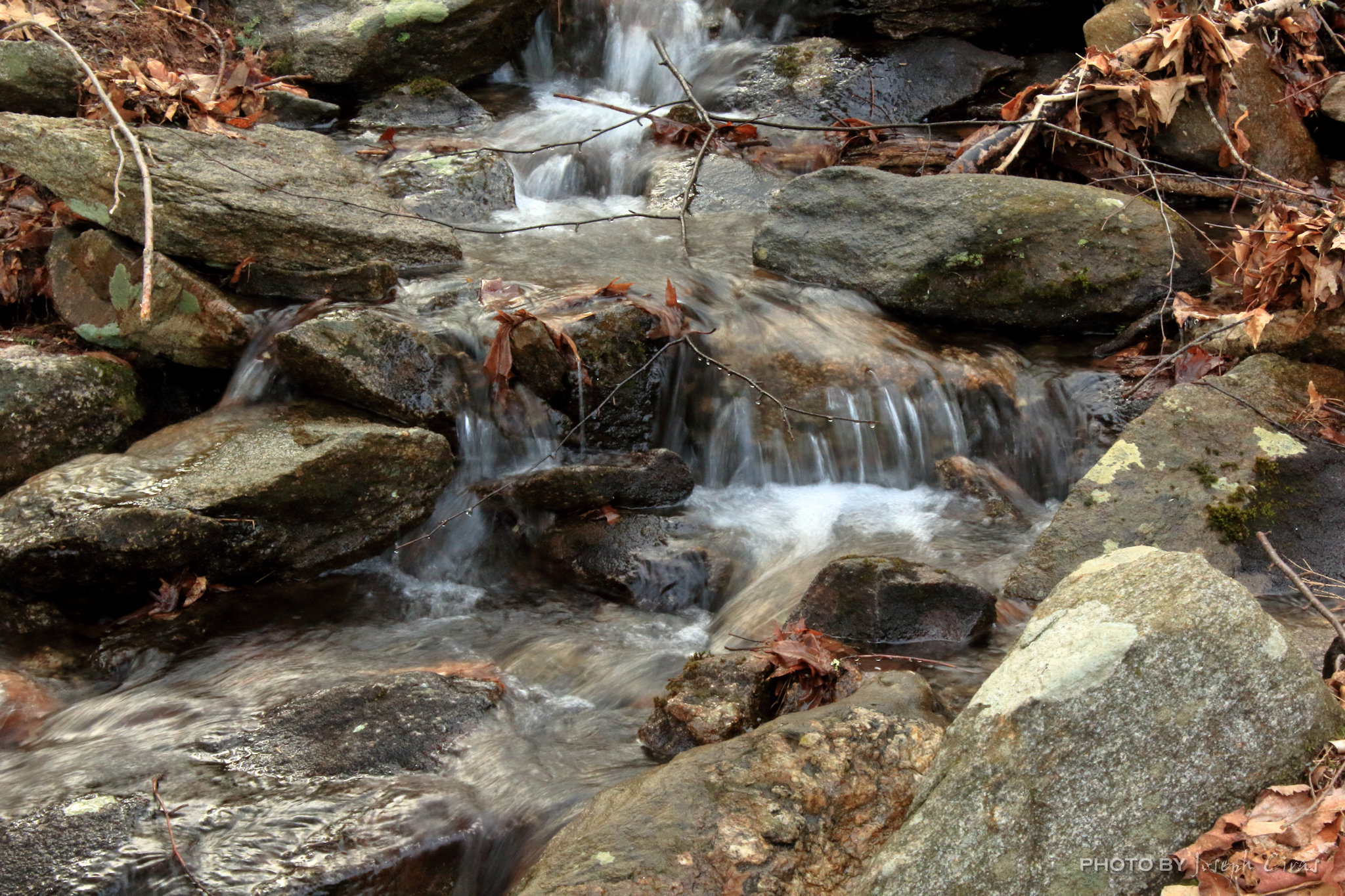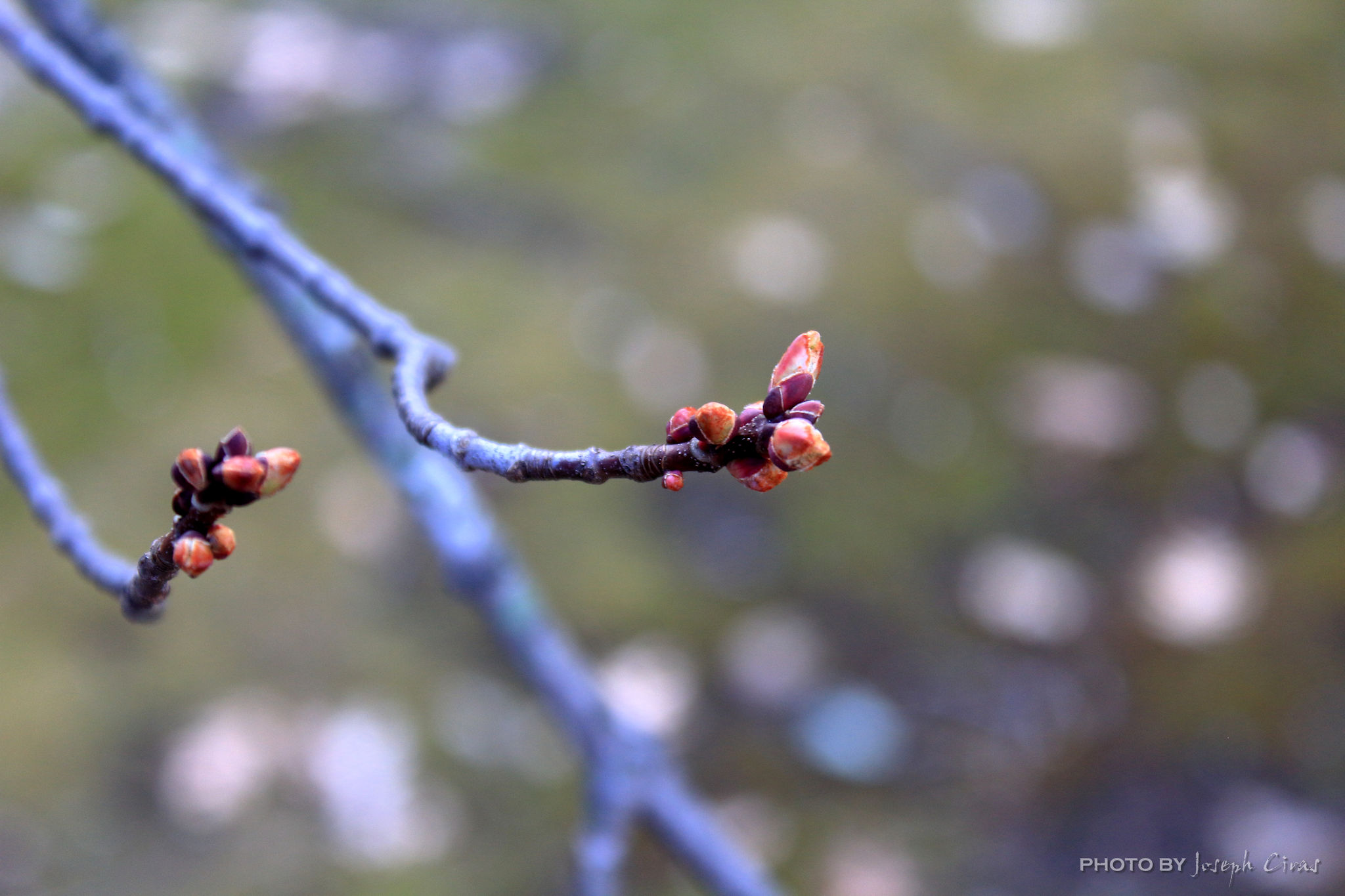
Photographic Thoughts — 05/02/2021 to 05/08/2021

“Taking pictures is like tiptoeing into the kitchen late at night and stealing Oreo cookies.” — Diane Arbus

Thank you for all the new views and likes from last week. It helps keep me going. Enjoy my blog post!

Enjoy this week’s rambling mind of a mechanical engineer and photographer.

Sunday, 05/02/2021: Posted photo — Seeds.

Settings: Canon EOS 60D, ISO 200, f/5.6, 1/1600 s, 62 mm

These are the pods of one of the sweet birches, or cheery birch, trees in our yard. This is a wonderful time of year when the trees and flowers are starting to bloom. They bloom later in our area because of elevation. Some locations, such as Worcester and Boston, have their trees and plants in full bloom.

Sweet birch pods

Information section of this blog. There are four Common Birch Species according to the Treehuggers website. The four most common birch species in North America are:

Paper birch (Betula papyrifera): Also known as canoe birch, silver birch, or white birch, this is the species more widely recognized as the iconic birch. In its native environment, it can be found in forest borders across the northern and central U.S. Its bark is dark when the tree is young, but quickly develops the characteristic bright white bark that peels so readily in thick layers that it was once used to make bark canoes. The species grows to about 60 feet tall but is relatively short-lived. It is susceptible to borer insects and is no longer used widely in landscape design due to its susceptibility to damage.

River birch (Betula nigra): Sometimes called black birch, this species has a much darker trunk than the paper birch, but still has the characteristic flaky surface. In its native environment, it is common to the eastern third of the U.S. Its trunk has a much rougher, coarser appearance than most of the other birches, and it is bigger than the paper birch, sometimes growing to 80 feet or more. It prefers moist soil, and although short-lived, it is relatively immune to most diseases. It is a common choice in residential landscape design.

Yellow birch (Betula alleghaniensis): This tree is native to forests of the northeast U.S. and is also known as the swamp birch since it is often found in marshy areas. It is the largest of the birches, easily growing to 100 feet in height. It has silvery-yellow bark that peels in very thin layers. Its bark does not have the thick layers seen in paper birches nor the very rough texture seen in river birches.

Sweet birch (Betula lenta): This species, also known in some areas as the cherry birch, is native to the eastern U.S., especially the Appalachian region. Growing to 80 feet, its bark is dark in color, but unlike the dark river birch, the skin is relatively tight and smooth, with deep vertical scores. From a distance, the impression is of a smooth, silver bark marked by irregular vertical black lines.

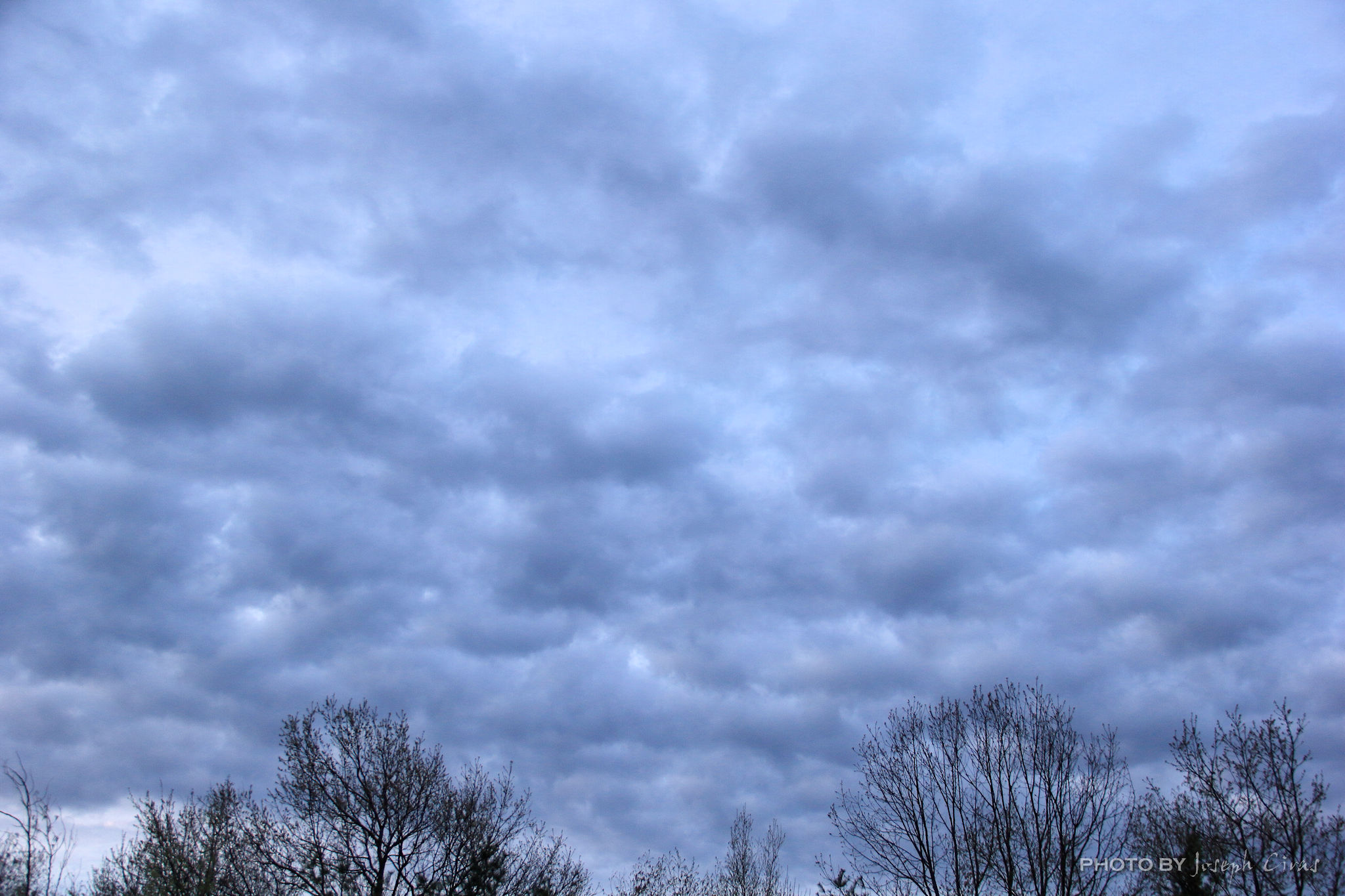
Monday, 05/03/2021: Posted photo — Clouds.

Settings: Canon EOS 60D, ISO 200, f/4, 1/125 s, 25 mm.

Here are some clouds I saw this morning before the rain. I liked the texture and colors in the clouds, so I took the photo. Here is a little information about clouds.
Clouds

While it is true that clouds contain water, they are not made of water vapor. If they were, you would not be able to see them. The air around us is partially made up of invisible water vapor. The cooler air causes the water droplets to start to stick to things like bits of dust, ice, or sea salt. It is only when that water vapor cools and condenses into liquid water droplets or solid ice crystals that visible clouds form. Clouds are important for many reasons. Rain and snow are two of those reasons. At night, clouds reflect heat and keep the ground warmer. During the day, clouds make shade that can keep us cooler.

Tuesday, 05/04/2021: Posted photo — Maple Growth.

Settings: Canon EOS 60D, ISO 400, f/7.1, 1/160 s, 106 mm.

Like the photo I took on Sunday, trees are budding in our yard. These are the leaves on one of the many sugar maples in our year. I have posted photos of these trees in the fall with their colorful leaves and during the winter/spring with they are tapped to make maple syrup.

How do I know this is a sugar maple and not a red maple? What is the difference between a sugar maple and a red maple? A Red maple has red twigs and buds (and red leaves in the fall and red flowers in the spring). The leaves of sugar maple, on the other hand, generally turn yellow or golden in the fall, and sugar maples have brown twigs and buds.

Sugar maple leaves starting to bud

The look great when they are in bloom. They do not look so great when I must rake the leaves in the fall. I would not have it any other way. I enjoy living in an area with many trees.

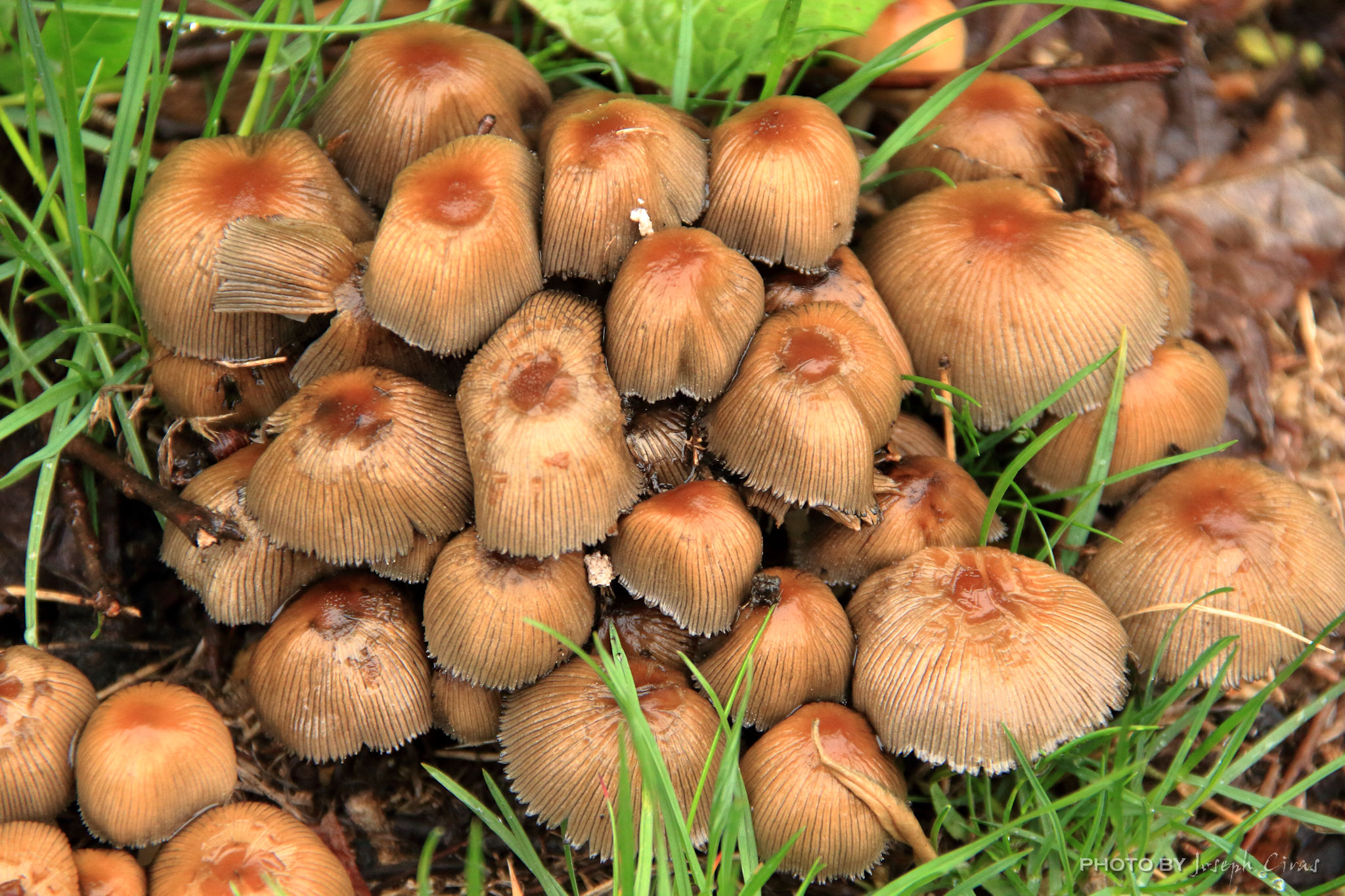
Wednesday, 05/05/2021: Posted photo — Mushrooms.

Settings: Canon EOS 60D, ISO 1000, f/5.6, 1/125 s, 100 mm.

These are mushroom that grew almost overnight due to the rain in recent days. I just like the clustering of them.

Although mushrooms are classified as vegetables, technically they are not plants, but part of the kingdom called fungi. Mushrooms are low in calories, have virtually no fat and no cholesterol, and are very low in sodium. Fungus, plural fungi, any of about 144,000 known species of organisms of the kingdom Fungi, which includes the yeasts, rusts, smuts, mildews, molds, and mushrooms. There are also many funguslike organisms, including slime molds and oomycetes (water molds), that do not belong to kingdom Fungi but are often called fungi. Mushrooms with white gills are often poisonous. So are those with a ring around the stem and those with a volva. Because the volva is often underground, it is important to dig around the base of a mushroom to look for it. Mushrooms with a red color on the cap or stem are also either poisonous or strongly hallucinogenic.
Mushrooms after the rains

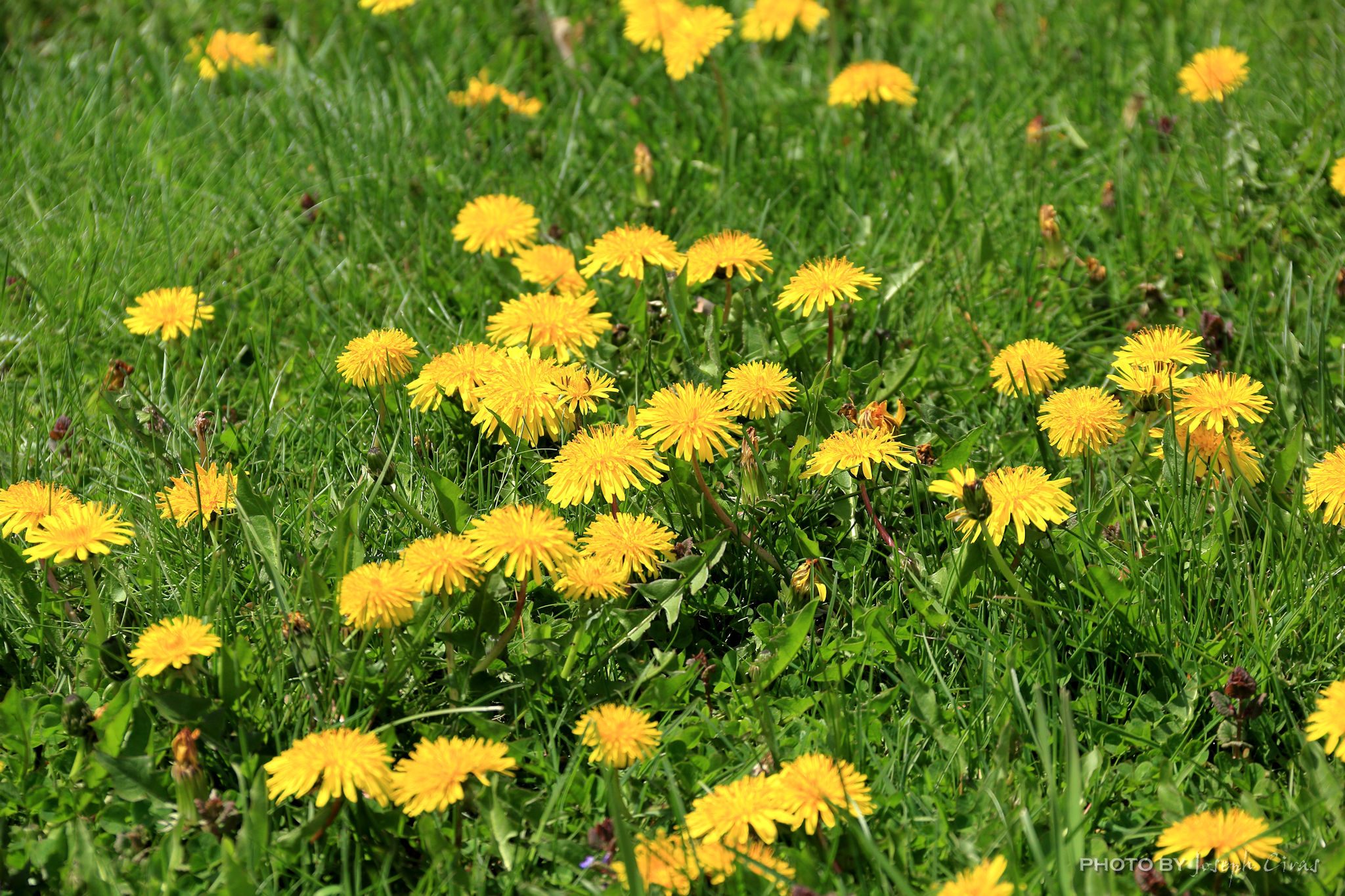
Thursday, 05/06/2021: Posted photo — Dandelions.

Settings: Canon EOS 60D, ISO 100, f/7.1, 1/320 s, 87 mm.

Dandelion is a plant with yellow flowers. Taraxacum officinale is the most common variety of this plant, and it grows in many parts of the world. Botanists consider dandelions to be herbs. People use the leaves, stem, flower, and root of the dandelion for medicinal purposes.

There are five ways to eat dandelions according to Michigan State University:

  1. Dandelion green salad: This is the simplest way to use dandelion greens. Simply pick young greens (older ones are more bitter) and add them to a tossed salad. While you can make a salad out of just the dandelion greens, it tends to be too bitter for many people, especially kids.
  2. Sauteed greens: Cooking dandelions eliminates some of the bitterness. First boil the greens for about 5 minutes, then transfer to a pan with hot olive oil and garlic, and sauté for 3-5 minutes. Eat as is or add to other dishes like pasta or scrambled eggs.
  3. Dandelion fritters: Collect flower heads and wash them. Then batter in a flour, egg, and milk batter mix. Add to a pan with hot oil and cook until brown, just like pancakes. Serve with a drizzle of honey or applesauce.
  4. Baking with dandelion petals: The petals of the flower are extremely versatile. Collect flower heads and then remove the petals from the heads. These can be stored in a plastic bag in the freezer for longer keeping. Add petals to just about anything you can bake like muffins, bread, cookies, or quiche. They can also be added to things like hamburgers. The amount to use varies on your personal liking. Try adding a cup of petals to the mix the next time you make muffins or burgers.
  5. Dandelion root coffee/tea: This by far the most labor-intensive use of dandelion but some say it is worth the effort. Collect and wash dandelion roots. Chop or food process the roots and dry in a food dehydrator or the oven at 250 degrees Fahrenheit until thoroughly dry. Once dry, roast them in the oven at 350 F until they turn brown (but not burnt). Put roots and water in a pan and bring to boil (2 Tbs root to 16 oz water), then simmer for 20 minutes. Strain and drink.

People either use chemicals to kill them or they pull up the dandelions to get them off their lawns. According to Bob Vila, to dig up the dandelions, as any plant is more easily pulled from the ground if the soil is moist, first use the watering can to dampen the soil around the dandelion, and wait a few minutes for the moisture to settle in. Then, work a weeding knife down along the base of the dandelion in two or three places. Push the soil away from the root of the plant by wiggling the knife. Finally, grasp the base of the plant between your fingers and gently pull. If it still feels stuck, work the weeding knife around some more, and then gently pull out the entire taproot with the dandelion.

Here is a way to kill dandelions without using chemicals. Simply pouring vinegar over the dandelions changes the acidity in the soil for long enough to kill the weeds. For a faster punch, mix pickling vinegar with boiling water in equal parts for your dandelion killer. Pickling vinegar has more acid that distilled white vinegar, so it makes a more effective herbicide.
Dandelion

There is much information in this week’s blog. Wonder if I will be keeping it up for the remainder of the week.

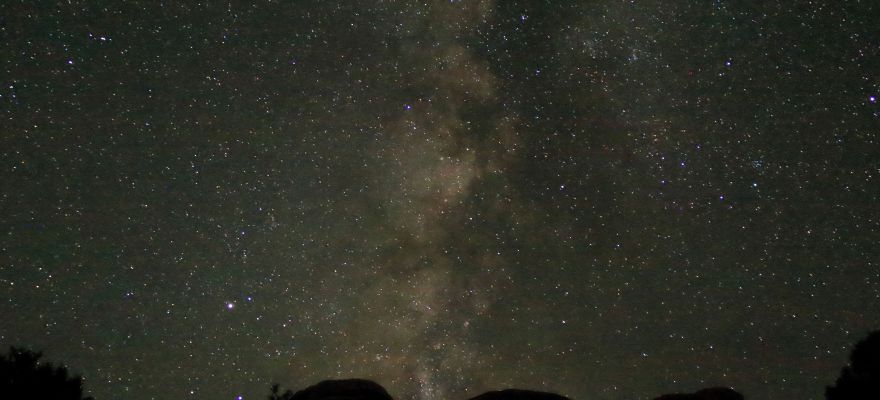
Friday, 05/07/2021: Post photo — Milky Way.

Settings: Canon EOS 60D, ISO 3200, f/3.5, 1/20 s, 18 mm.

These are some of the first “good” photos that I have taken of the Milky Way. The vertical Milky Way was taken at the Needles section of Canyonland National Park. This was the first photo of the Milky Way that I liked. I learned much about my settings and techniques while taking this photo. I made may rookie errors, such as incorrect camera settings and not taking a series of photos to stake. The Needles section of Canyonland National Park is one of the dark sky areas in the Unites States. This photo was taken very early in the morning, 2 a.m., after the moon had set. The second, or diagonal photo, was taken last year when we were observing the Comet Neowise.

The Milky Way is the galaxy that contains our Solar System, with the name describing the galaxy’s appearance from Earth: a hazy band of light seen in the night sky formed from stars that cannot be individually distinguished by the naked eye.

The Milky Way from Canyonlands National Park

This photo has been included in my blog at the request of another blogger. Thank you for the request. Posting this photo is incentive for me to get out and make the adjustments to my camera settings and post processing to get a better photo of the Milky Way. As with my moon photos, I need to get out and practice more.
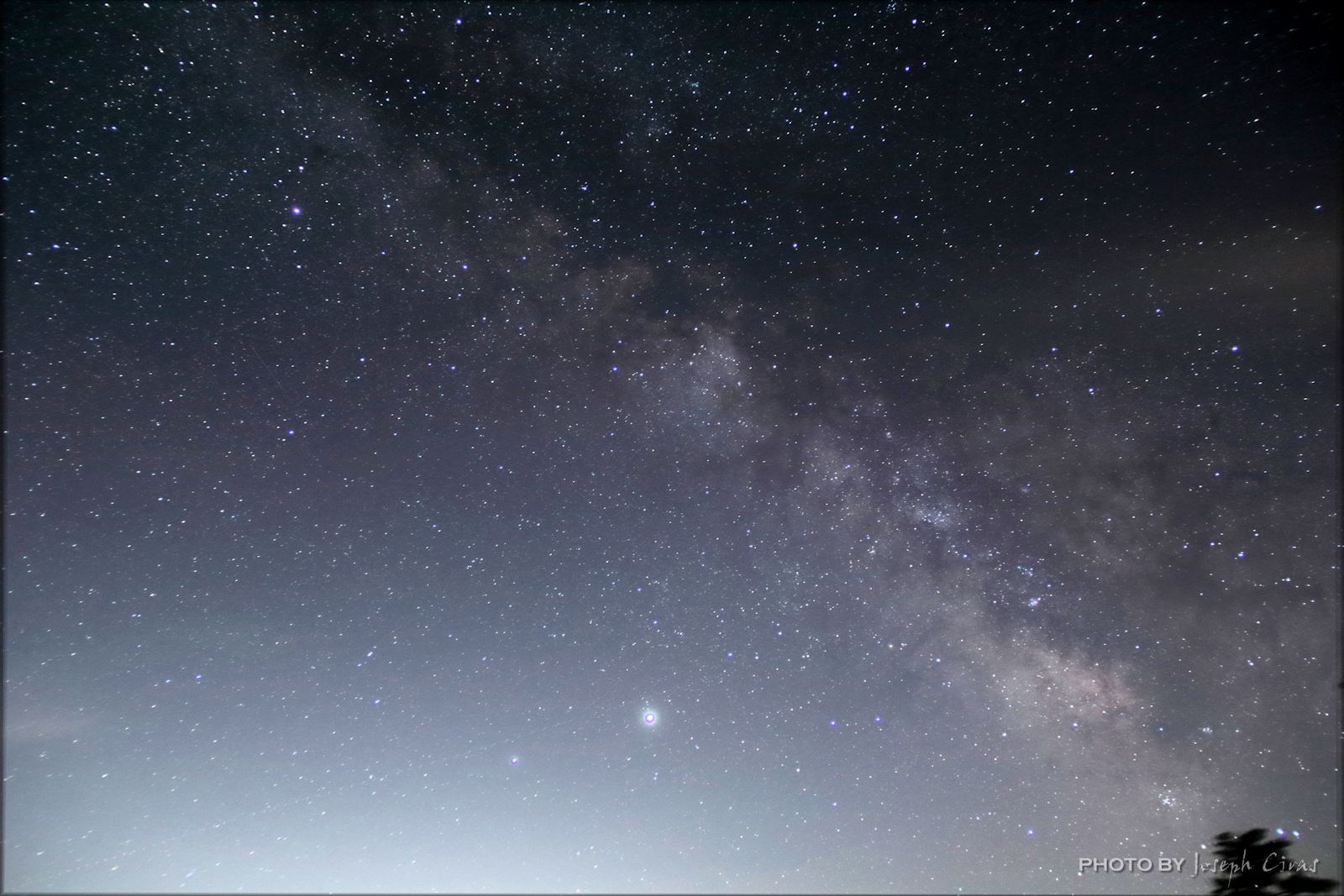
Milky Way during my comet observation

Quick starting camera setting: ISO 2500, Shutter Speed 25 sec, and Aperture f/2.8 (or as wide as possible). A good steady tripod and a dark sky are also needed. There are many websites and books on how to photograph the Milky Way. And as a reminder when your camera is on a tripod, turn off image stabilization, or vibration stabilization, on your camera. With these settings on your photos will not be in focus.

Saturday, 05/08/2021: Post photo — Double Falls.

Settings: Canon EOS 60D, ISO 100, f/22, 1/10 s, 18 mm.

These falls are located at the end of Snows Millpond and lead into Whitman River. The building above the falls is a papermill. There are still a few papermills operating in the nearby town.

Snows Millpond is a reservoir located just 2.8 miles from Fitchburg. Fishermen will find a variety of fish including largemouth bass and others here. Alternate names for this reservoir include Snow Mill Pond and Snows Mill Pond.

Double falls

The Whitman River is an 8.4-mile-long (13.5 km) river in Massachusetts that flows through Ashburnham, Westminster, and Fitchburg. It arises from Lake Wampanoag in Ashburnham, travels through a couple of ponds in Westminster, and ultimately joins Phillips Brook in Fitchburg to form the North Nashua River. The North Nashua River flows 19.9 miles (32.0 km), generally southeastward, past Fitchburg and joins the South Nashua River, about 5 miles (8.0 km) below its issuance from the Wachusett Reservoir, to form the Nashua River. The Nashua River is 37.5 miles (60.4 km) long and is a tributary of the Merrimack River. The Merrimack River is a 117-mile-long (188 km) river that rises at the confluence of the Pemigewasset and Winnipesaukee rivers in Franklin, New Hampshire, flows southward into Massachusetts, and then flows northeast until it empties into the Gulf of Maine at Newburyport.

That is all for now. Until next week, be safe.

For more photo of other project I have work, visit my website: https://photobyjosephciras.weebly.com/ or visit me on Facebook at https://www.facebook.com/PhotobyJosephCiras/.

COVID is real! Be safe out there, keep your social distance, and remember to always wear your mask and wash your hands.
Photographic Thoughts—04/25/2021 to 05/01/2021

“It’s one thing to make a picture of what a person looks like, it’s another thing to make a portrait of who they are.” — Paul Caponigro

Thank you for all the new views and likes from last week. It helps keep me going. Enjoy my blog post!

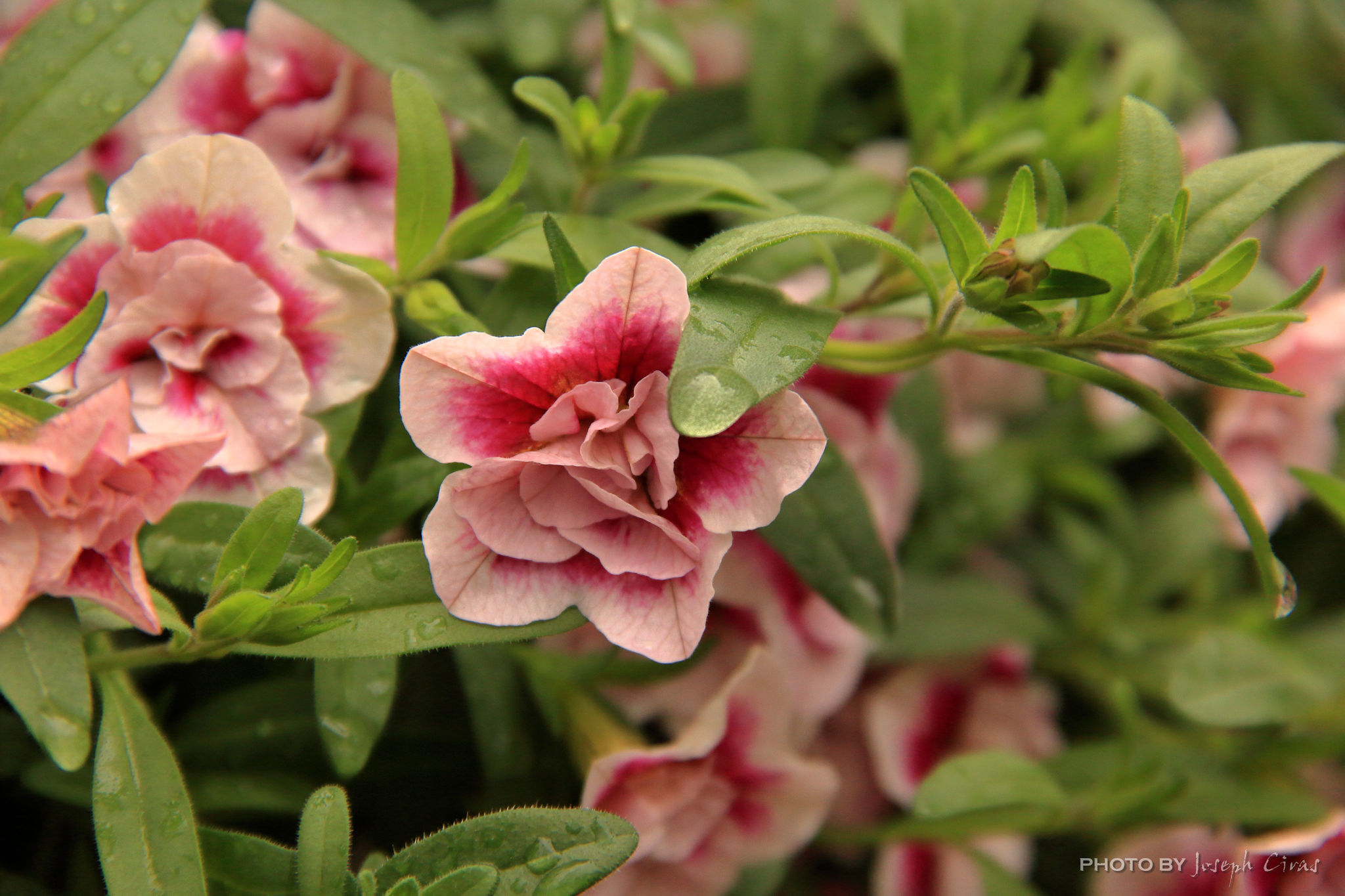
Sunday, 04/25/2021: Posted photo—Flower to be Named Later.

Settings: Canon EOS 60D, ISO 400, f/7.1, 1/250 s, 135 mm

The name of the flower is … Calibrachoa.

Calibrachoa, commonly called million bells or trailing petunia, is a tender perennial that produces mounds of foliage, growing only 3 to 9 inches (7.5-23 cm.) tall, along trailing stems and flowers in shades of violet, blue, pink, red, magenta, yellow, bronze and white. Introduced in the early 1990s, all cultivars of Calibrachoa are hybrids with the original species native to South America. They are prolific bloomers from spring to frost.

Calibrachoa

These calibrachoa were purchased as part of a Relay for Life (RFL) fundraiser. They are in a hanger and will be kept in the hanger outside. RFL is a fundraising event sponsored by the American Cancer Society to raise money for cancer research.

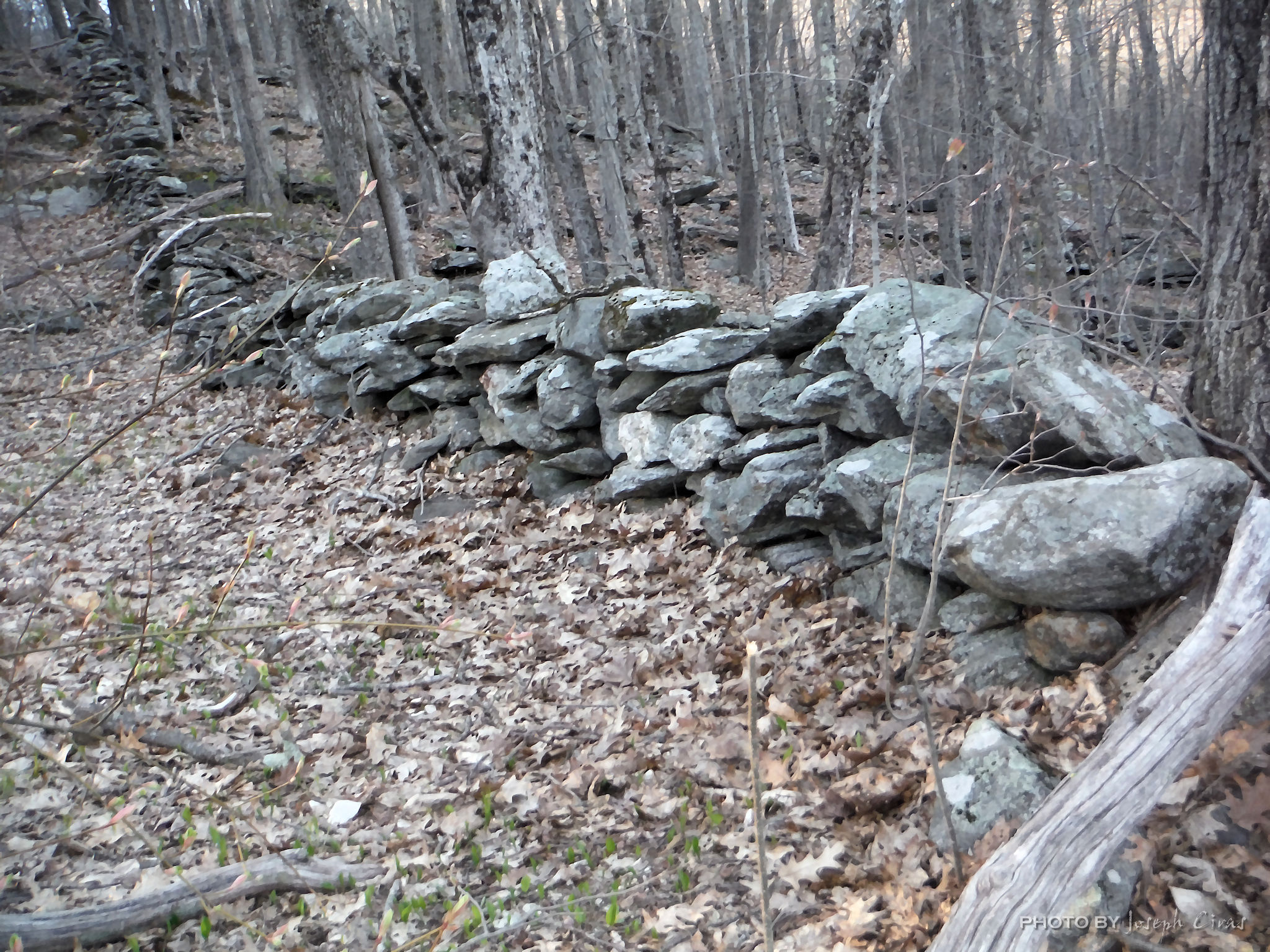
Monday, 04/26/2021: Posted photo—Stone Wall.

Settings: FUGIFILM FinePix XP70, ISO 200, f/4.4, 1/58 s, 8 mm.

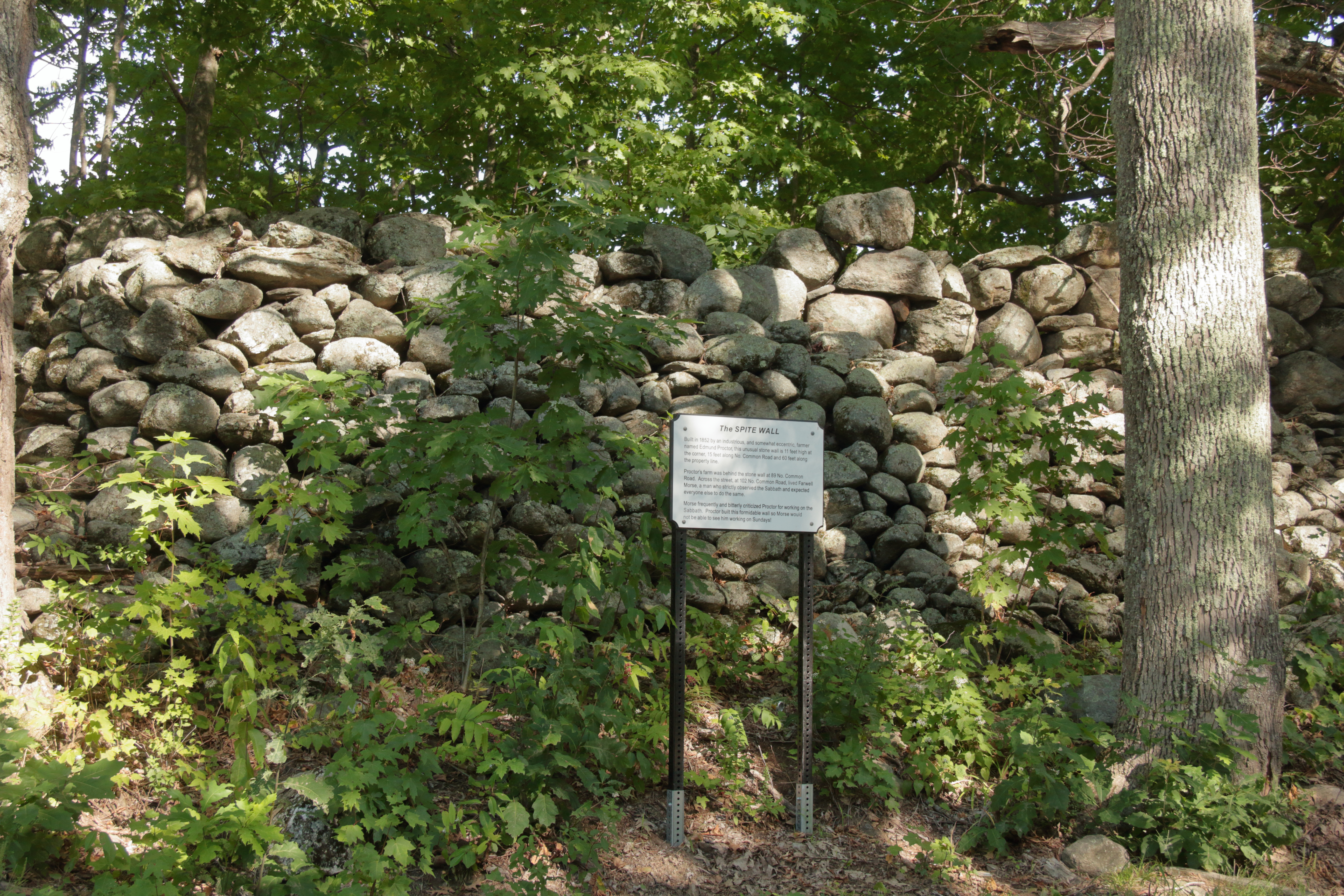
The wall in this photo is on Bicentennial Trail on Wachusett Mountain. It is one of many field stone walls that I have passed while hiking in New England.

Stone Wall in the woods

Paraphrasing from Atlas Obscura: “Walk into a patch of forest in New England, and chances are you will—almost literally—stumble across a stone wall. Thigh-high, perhaps, it is cobbled together with stones of various shapes and sizes, with splotches of lichen and spongy moss instead of mortar. Most of the stones are what are called “two-handers”—light enough to lift, but not with just one hand. The wall winds down a hill and out of sight. According to Robert Thorson, a landscape geologist at University of Connecticut, these walls are “damn near everywhere” in the forests of rural New England. He estimates that there are more than 100,000 miles of old, disused stone walls out there, or enough to circle the globe four times.

Wall-building peaked in the mid-1800s when, Thorson estimates, there were around 240,000 miles of them in New England. That amounts to roughly 400 million tons of stone, or enough to build the Great Pyramid of Giza—more than 60 times over.”

New England’s first farmers of European descent found themselves plowing soil strewn with rocks left behind by glaciers. So, stone by stone, they stacked the rocks into waist-high walls. Some say these walls helped win the American Revolution, and they later inspired Robert Frost’s poem “Mending Wall.” Each year frost heaves pushed still more stones to the surface, which some of those early farmers said was the work of the devil. Generations later, farmers returned time and again to repair the walls as the years went by.

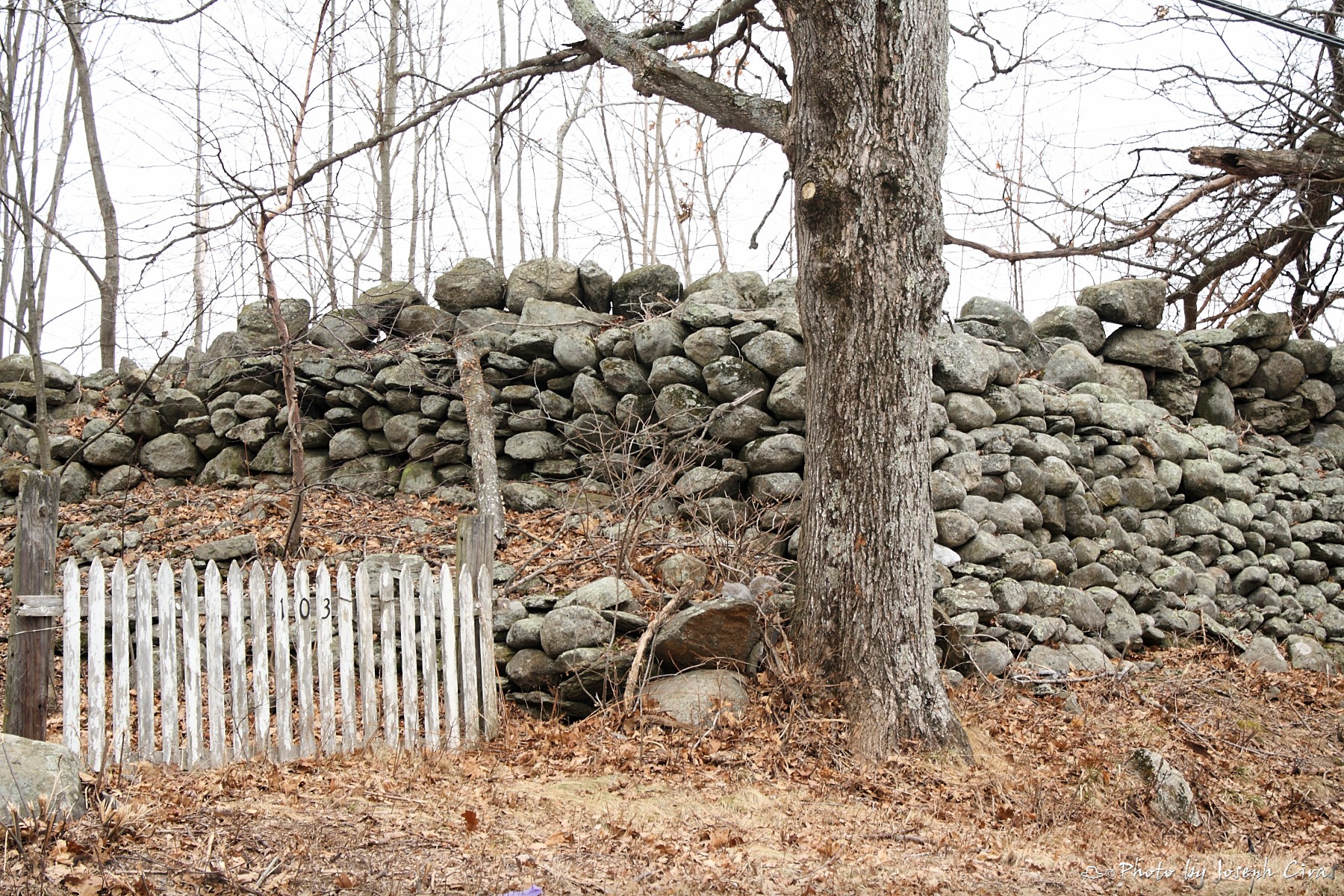
Here is a little history about a wall in my hometown that was posted in a local newspaper. I have posted a photo of this wall in the past and I will post it here again.

“Edmund Proctor moved to a farm in Westminster in 1852. He continued the farm there and lived in his house on the side of North Common road for the rest of his life. But, as true for most things, his life on the farm was not without conflict.

His nearest neighbor, Farwell Morse, lived across the street. The two houses were close, so close both neighbors could hear and see what the other was doing all day.

Upon discovering Edmund Proctor working on his farm one Sunday, Farwell Morse was astonished. Morse did not want to hear his neighbor working, not to mention yelling, on Sunday. Morse told Proctor of his objection and asked that he stop swearing at his oxen while working on his farmland. Morse thought that was that.

But this was not the end for Edmund Proctor. So firmly fixed in his beliefs, Proctor was resolved to keep working on Sunday, whether his neighbor liked it or not.

So, Proctor built a wall. A wall made of stones- the tallest of its type in Massachusetts. His barricade was directly in front of his house and blocked him from view of Morse. He kept piling stones on his wall until the day he died in 1880, when he was 71 years old.

His decades-lasting project became known as “The Spite Wall,” a suitable name for the enormous barrier stubbornly hiding the land behind it. At almost 11 feet tall, Proctor’s Spite Wall is still visible today.

There is no known response of what Morse thought of his neighbor’s blatant stand against Morse’s beliefs. But we can imagine how shocked he might have been.”

Tuesday, 04/27/2021: Posted photo—Bright Morning Sky.

Settings: Canon EOS 60D, ISO 400, f/7.1, 1/40 s, 106 mm.

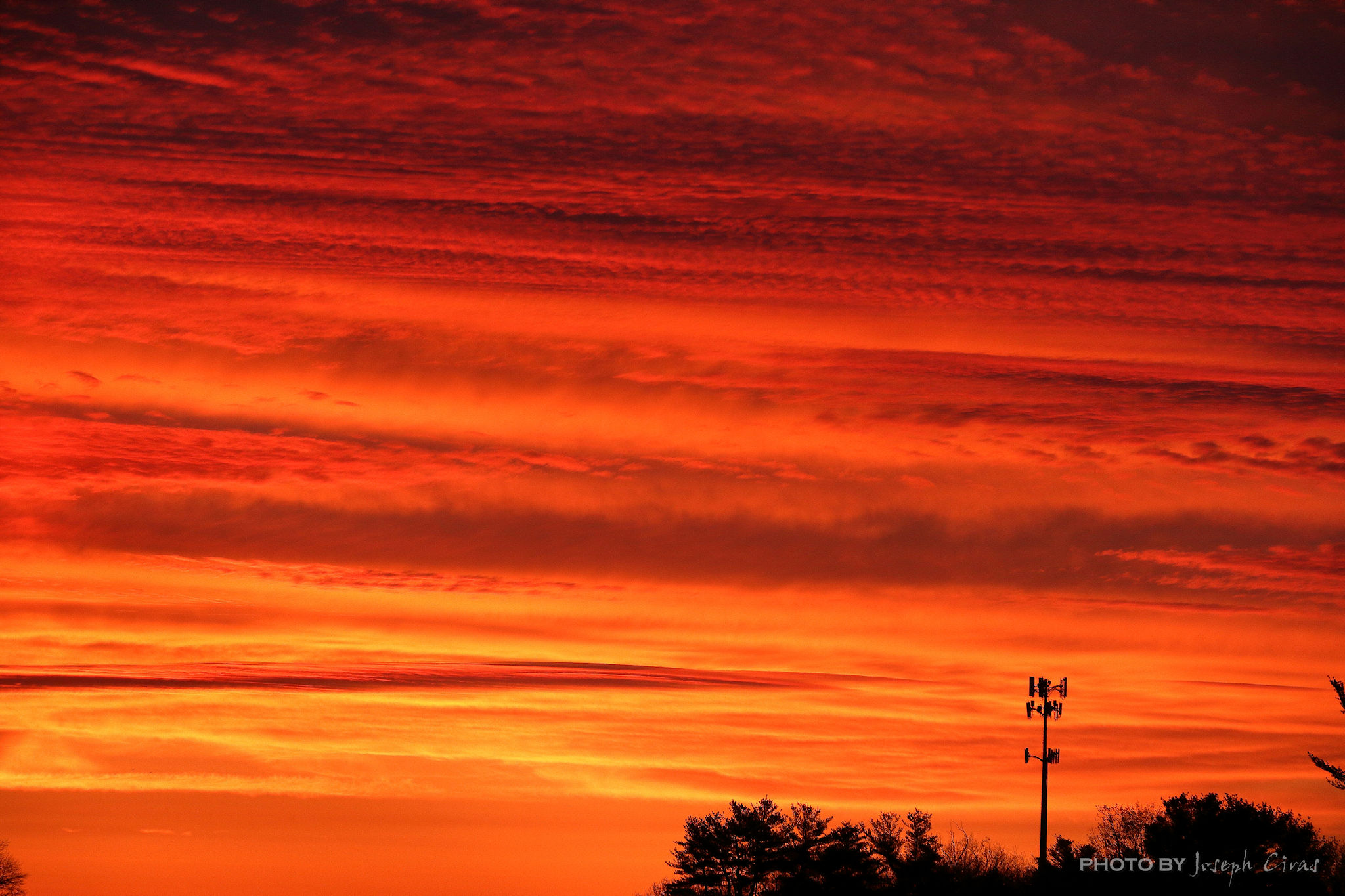
Today’s photo is about being at the right place at the right time. Saw this sky on my drive into work. I had to stop and take a photo of it before the colors were gone.

Wonderful bright morning sky

Wednesday, 04/28/2021: Posted photo—COVID Vaccine.

Settings: Samsung SM-G930V (Galaxy S7), ISO 160, f/1.7, 1/60 s, 4 mm.

Short and sweet today. Revieved my second COVID vaccine shot today. Tired with a slight headache. Two week and I will be almost fully vaccinated.

Vaccination sticker

Get your vaccine!

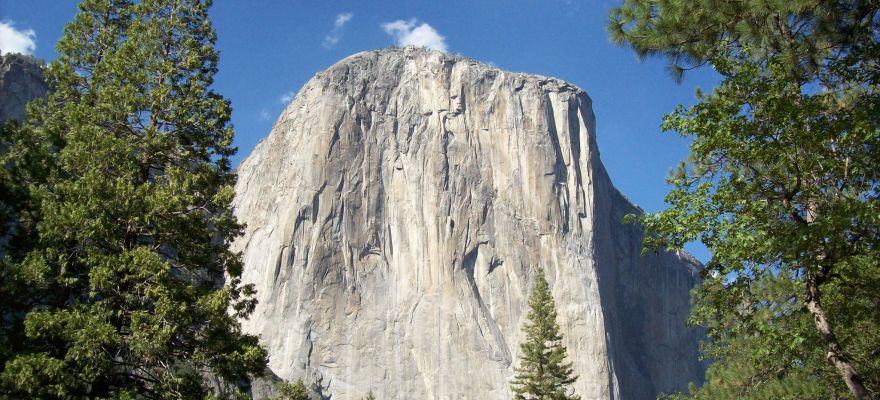
Thursday, 04/29/2021: Posted photo—El Capitan.

Settings: KODAK EASYSHARE C613, ISO 80, f/4.8, 1/434 s, 6 mm.

El Capitan, also known as El Cap, is a vertical rock formation in Yosemite National Park, located on the north side of Yosemite Valley, near its western end. The granite monolith is about 3,000 feet from base to summit along its tallest face and is a popular objective for rock climbers. It was one of the last wonders we saw in the park. We spent most of our visit exploring around Yosemite Village.

El Capitan

Yosemite is my favorite National Park. The Grand Canyon is a very close second. If I could have two favorites these would be the two. Looking at the rock face, my family and I see many faces on the cliff. If you look closely, can you see them?

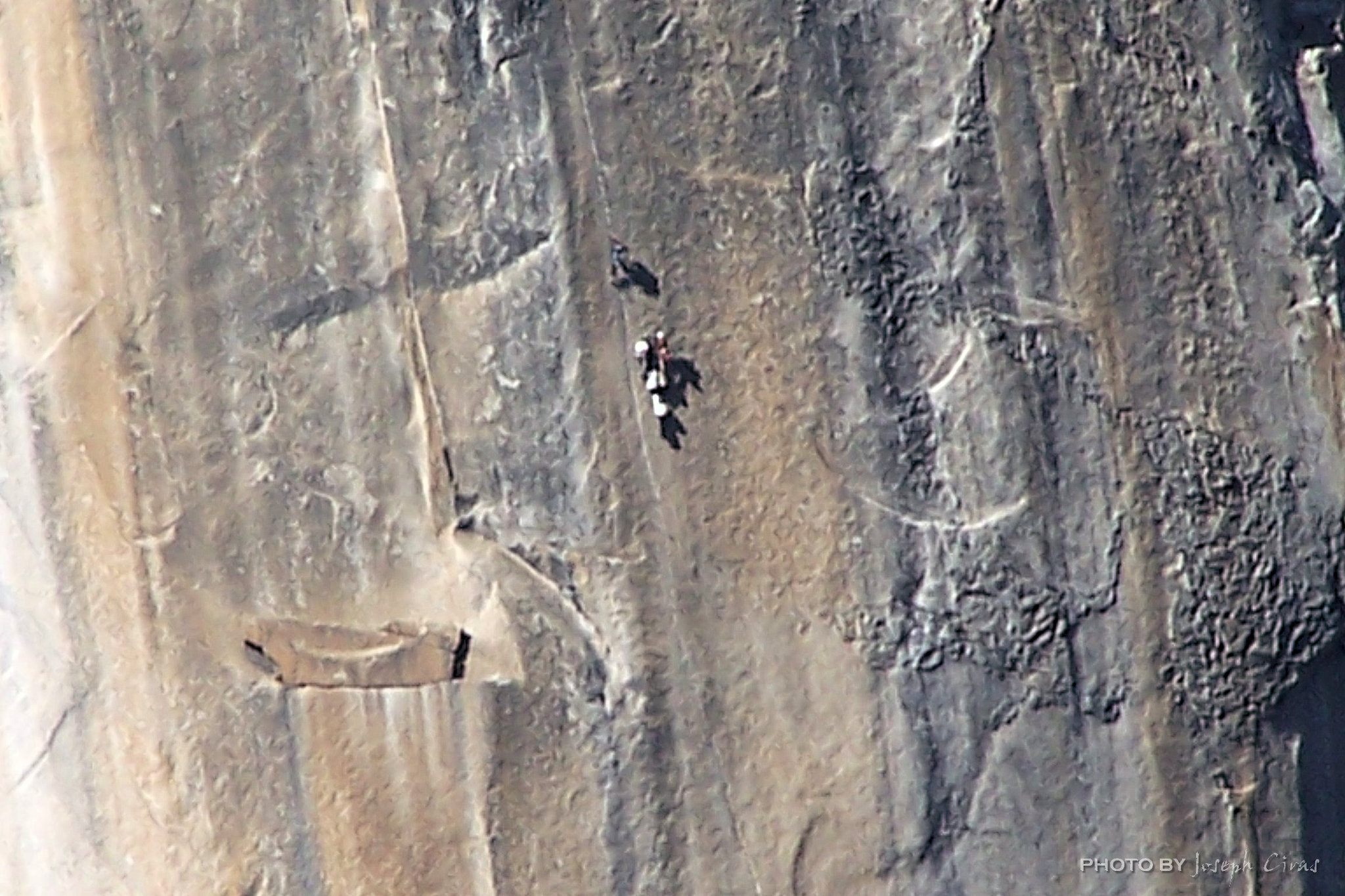
Here is a photo of some climbers looking like they are setting up their sleeping hammock for the night.

Getting ready to hang out for the night

Friday, 04/30/2021: Post photo—Roadblock.

Settings: FUJIFILM FinePix XP70, ISO 200, f/4.9, 1/90 s, 16 mm

This is the second time this week that I have been stopped by a rafter of turkeys. This time the tom was stopping traffic as his family crossed the road.

Turkey roadblock

I was on my way to hike a route that I did last week to measure its mileage. Last week my phone died when on this route and I wanted to verify the mileage that my mapping program gave me for the route. They were both the same.

Saturday, 05/01/2021: Post photo—Hobblebush.

Settings: Samsung SM-G930V (Galaxy S7), ISO 50, f/1.7, 1/4240 s, 4 mm.

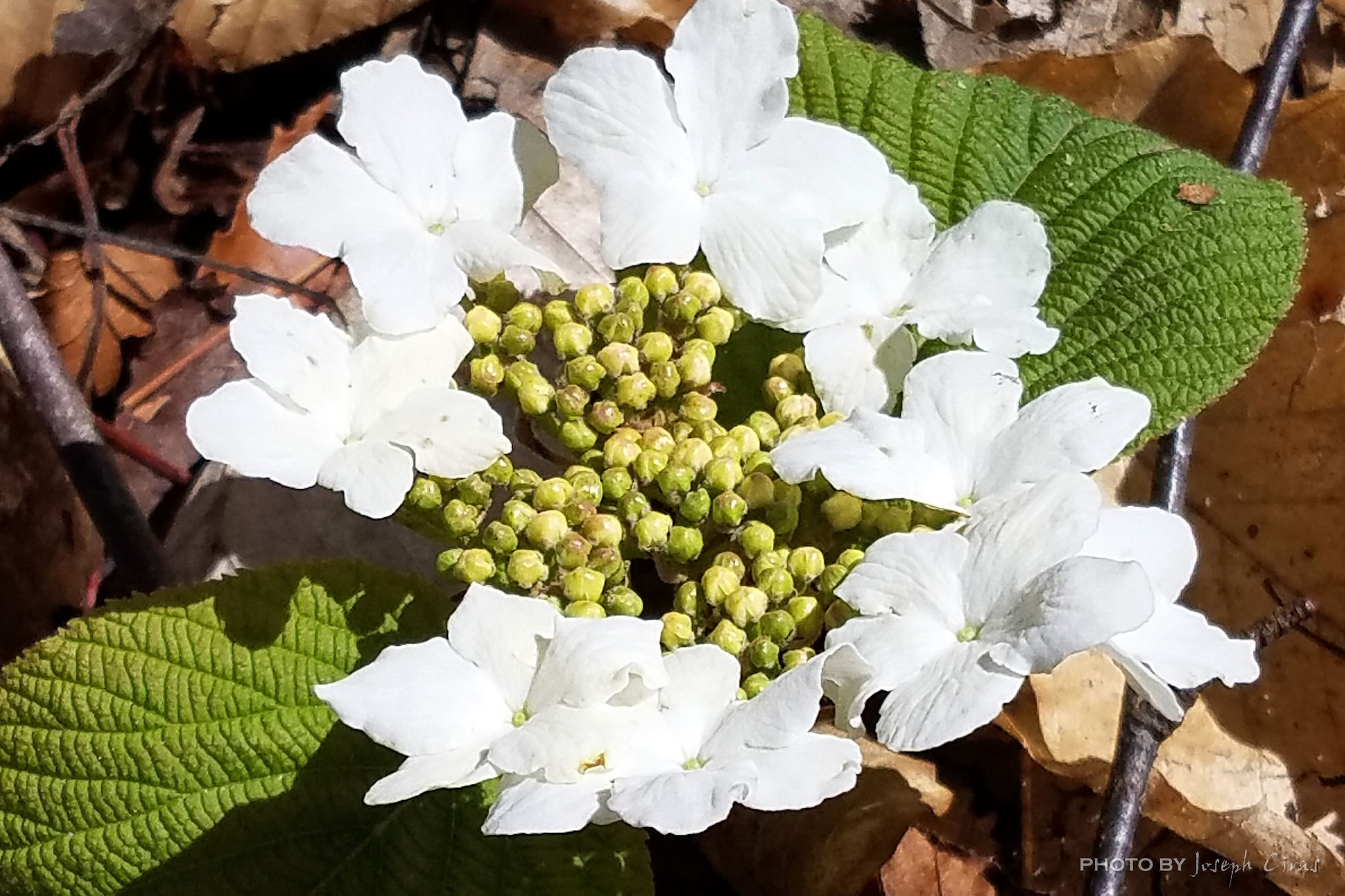
Hobblebush is a 6-12 ft., open, straggling shrub, often with pendulous outer branches which root where they touch the ground. Flat-topped clusters of white flowers have a lacy effect similar to some hydrangeas and contrast well with the medium green foliage. Berries change from red to blue. The fall foliage is usually bright red. This shrub has fragrant, flat-topped clusters of small, white flowers, the outer flowers larger than the inner ones.

Hobblebush along the trail

This straggly shrub has beautiful bronze-red or purple- pin autumn coloration and is used by wildlife for food and cover. Its branches often bend and take root, tripping or “hobbling” passers-by; hence its common name.

This one is on Harrington Trail on Wachusett Mountain. Identified it with my Seek app. Sorry for the photo being washed out. I took it with my cell phone quickly as I passed by it.

For more photo of other project I have work, visit my website: https://photobyjosephciras.weebly.com/ or visit me on Facebook at https://www.facebook.com/PhotobyJosephCiras/.

COVID is real! Be safe out there, keep your social distance, and remember to always wear your mask and wash your hands.
Photographic Thoughts—04/04/2021 to 04/10/2021

“You don’t take a photograph. You ask quietly to borrow it.” — Unknown

Thank you for all the new views and likes from last week. It helps keep me going. Enjoy my blog post!

Sunday, 04/04/2021: Posted photo—Easter Mass.

Settings: Samsung SM-G930V, ISO 125, f/1.7, 1/60 s, 4 mm

Easter Sunday is one of the most festive events among Christians worldwide. It commemorates Jesus Christ’s resurrection from death, as written in the Christian bible. Easter Sunday commemorates Jesus’ resurrection from death.

Holy Week is most definitely a very sacred time of the year. It is the time that we will commemorate and remember the last week of Jesus’ life on this earth. Holy Week starts out with Palm Sunday. On this day, the crowds welcomed Jesus by waving palm branches and shouting praise to Him. These are the days leading up to the great Easter Feast.  Especially important for Catholics is the Easter Triduum. This is the three days just before Easter. On Holy Thursday, we reenact the Lord’s Last Supper, which He shared with His apostles on the night He was betrayed and arrested. On Good Friday, the day of the crucifixion and death of our Lord, we have the veneration of the Cross. Holy Saturday is a vigil, we keep watch for the expectant rising of Our Savior. Then comes the glory of Easter Sunday when He rose from the dead.

Easter Sunday changes every year. It is the first Sunday after the first full moon after the spring equinox. The earliest possible date for Easter is March 22 and the latest possible date for Easter is April 25. Easter can never come as early as March 21 because of ecclesiastical rules in which the vernal equinox has a fixed date of March 21. This is what happened last year.

St. Denis Church dressed up for Easter Sunday

This is a photo of St. Denis Church prior to Easter Mass looking down from the choir loft. Happy and blessed Easter to all.

Monday, 04/05/2021: Posted photo—Brenizer Method.

Settings: Canon EOS 60D, ISO 100, f/7.1, 1/160 s to 1/1600 s, 34 mm (16 photos).

The Brenizer Method, sometimes referred to as Bokeh Panorama or Bokehrama, is a photographic technique characterized by the creation of a digital image exhibiting a shallow depth of field in tandem with a wide angle of view. The Brenizer Method is named after wedding photographer, Ryan Brenizer. He invented the method (but did not name it) and made it popular by using it with his wedding clients, and teaching others how to do it as well. This is a method of stitching together a series of photos taken in a particular pattern.

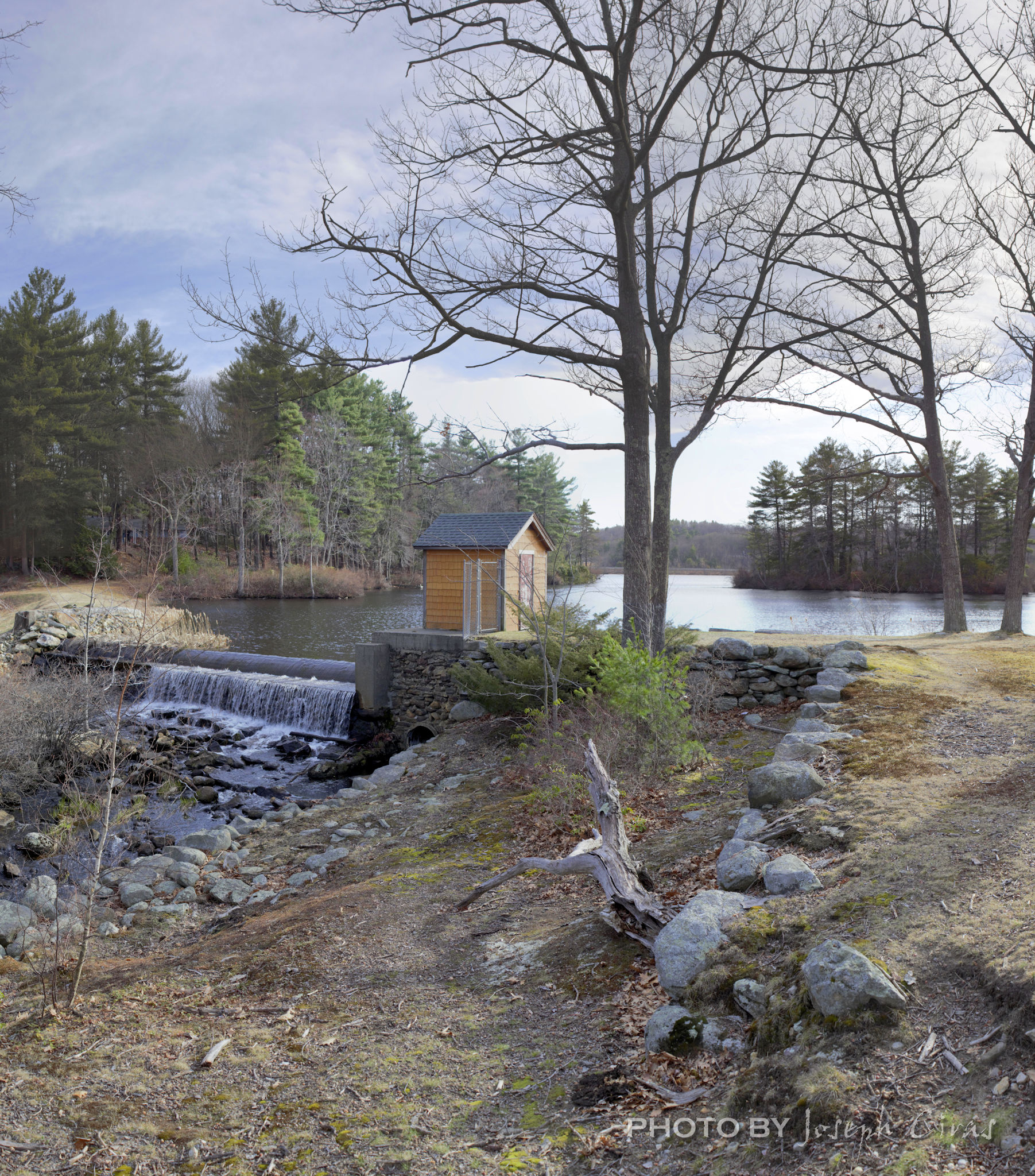
Brenizer stack of the dam at Round Meadow Pond in Westminster

This photo is a series of 16 photos that I stitch together. I used this technique today since it has been a while since I used it. As time goes on, I look at my old photos and tell myself to get pack to practice techniques. This is a great location to practice different photographic techniques.

Tuesday, 04/06/2021: Posted photo—What is it.

Settings: Canon EOS 60D, ISO 1600, f/5.6, 1/160 s, 55 mm.

Occasionally I like to post a photo to see if someone can guess what it is. Today is one of those days. I saw this object and wanted to do such a photo. I thought that this one would be easier than most of them. I was not. Some people were close with their guess and second guessed themselves. These are always a fun challenge.

What is this object?

What is the object? It is a stack of Styrofoam cups. I took this photo since I like the way the grains in the Styrofoam looked. As done with many things, such as Coke or Duck tape or Scotch tape, we use a trademarked name as a general description of a product. Styrofoam is a trademarked brand of closed-cell extruded polystyrene foam, or XPS. This foam is also referred to as “Blue Board” and is used for building insulation, thermal insulation, and water barriers. Styrofoam is owned and manufactured by The Dow Chemical Company.

Wednesday, 04/07/2021: Posted photo—First Daffodil.

Settings: Canon EOS 60D, ISO 160, f/7.1, 1/80 s, 55 mm

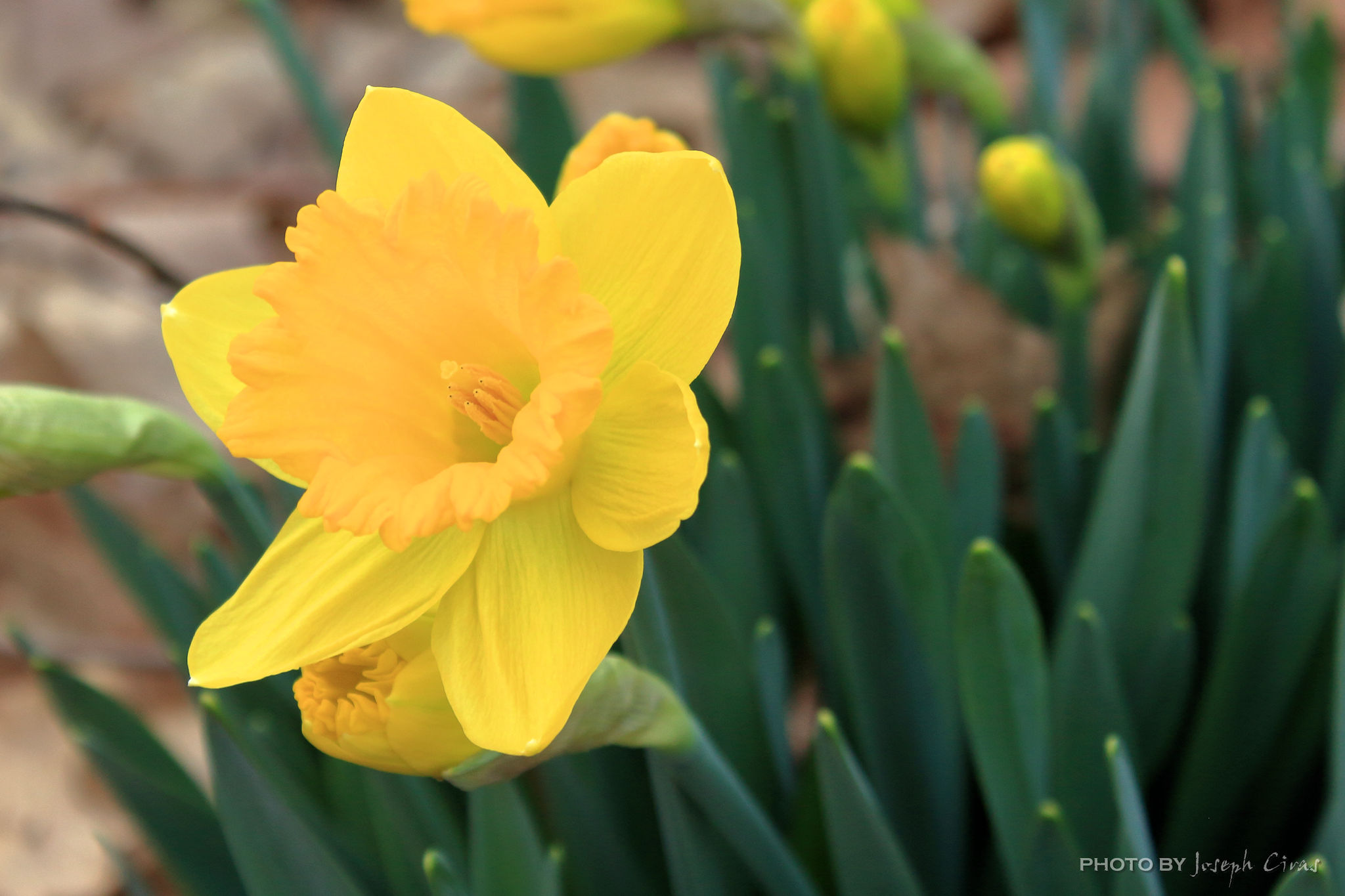
This is one of the first signs that spring has arrived. The daffodils in our yard are starting to bloom. I have been watching the flower sprout over the last few days and today was the first time that I have seen it flower. We have multiple patches of daffodils in our yard. This year there seems to be many more blooming than in past years. Maybe someone that reads this can tell me why this is the case.

Daffodils are a fall-planted bulb, so plant them in autumn and they will bloom in late winter or early spring. The traditional daffodil flower may be a showy yellow or white, with six petals and a trumpet-shape central corona, but many cultivated varieties (“cultivars”) exist today.

First daffodil of the year

Thursday, 04/08/2021: Posted photo—Roses.

Settings: Canon EOS 60D, ISO 400, f/7.1, 1/100 s, 64 mm

“The Presence of the Rose by Angela Morgan

From out imprisoning petals—velvet, red—
Thy soul slips forth in fragrance wondrous sweet—
A silent subtle presence—never fled,
That makes thy mastery over me complete.”

During my visit with my mother today, she wanted me to water all her flowers and plants. She has been getting flowers from many people over the past few weeks. I had already taken photos of different subjects to post today and then I saw these roses. I asked her who gave them to her, and she could not remember. Flowers are a favorite subject of mine throughout the spring, summer, and fall seasons because of their colors and textures.

Roses for a sweet lady

No matter how old you are, your mother is your mother, so listen to her and be kind and helpful to her. My mother is 95 years old and still treats us as her young children.

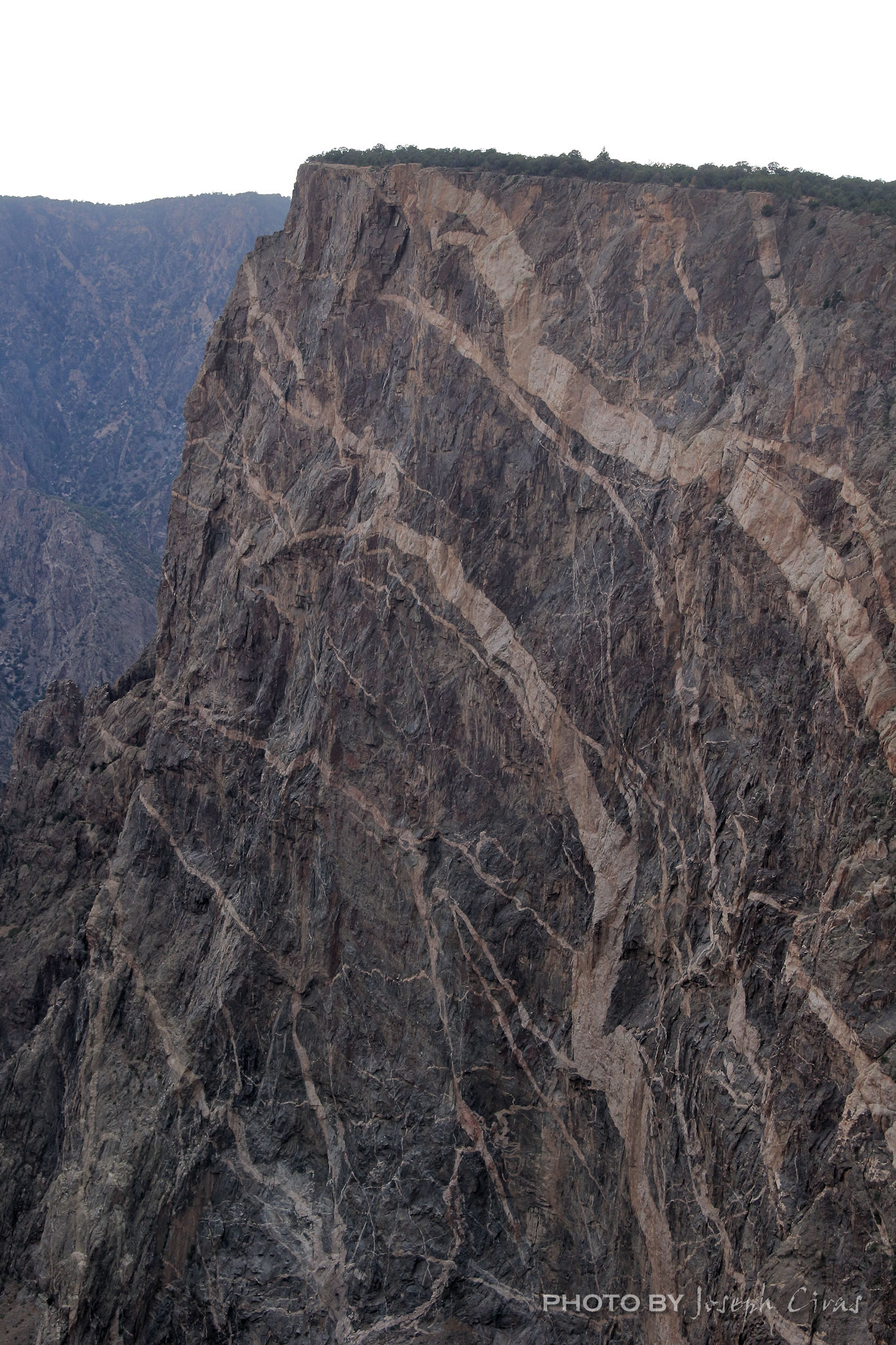
Friday, 04/09/2021: Post photo—Painted Wall.

Settings: Canon EOS 60D, ISO 400, f/8, 1/125 s, 39 mm

Black Canyon of the Gunnison National Park is a park I never heard about before visiting. It is a small park, but one that should be explored. We camped at the park and did some hiking around the rim of the canyon. Night skies were dark and the sound of the Gunnison River running through the canyon was very relaxing.

Some facts from the Uncover Colorado website:

  1. The Gunnison River drops an average of 43 feet per mile through the canyon, SIX times more than the Colorado River through the Grand Canyon.
  2. Colorado’s biggest cliff is the Black Canyon’s Painted Wall. Standing 2,250 feet tall from river to rim, Black Canyon’s Painted Wall is the tallest cliff in Colorado and the third tallest in the lower 48, after El Cap and Notch Peak. For comparison, the Washington Monument stands at a measly 555 feet and the Empire State Building stands at just 1,250 feet.
  3. Black Canyon gets its name because some parts of the gorge receive only 33 total minutes of sunlight per day.
  4. It has some of the world’s oldest exposed rock. the rocks exposed at the bottom of the canyon are nearly 2 billion years old, dating from the Precambrian era.
  5. It is the least-visited national park in Colorado, and one of the lesser visited parks overall.
Painted Wall at Black Canyon of the Gunnison National Park

Explore the National Parks. I have been to only 30 of the 59 National Parks and would like to get out and see more of them. In total, I have been to 87 other National Monuments, National Historical Parks, and other entities of the national park system.

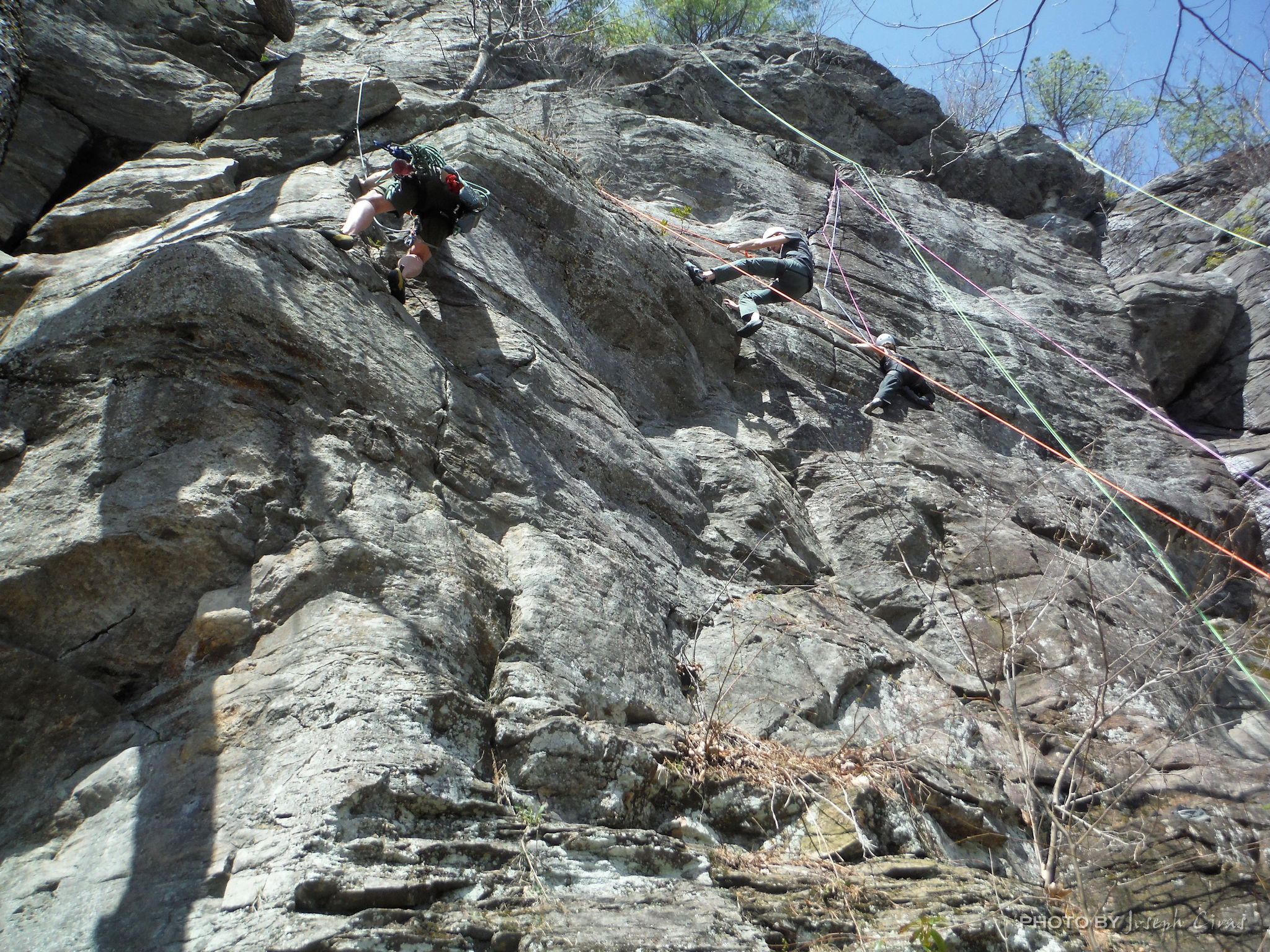
Saturday, 04/10/2021: Post photo—Rock Climbing.

Settings: FinePix XP70, ISO 100, f/4.1, 1/420 s, 6 mm.

The Crow Hills, located in Massachusetts’ Leominster State Forest 2.5 miles northeast of Mount Wachusett, are a single monadnock with a twin summit, 1,234 feet and 1,220 feet, and a high eastern cliff. The hills are a popular rock climbing, bouldering, and hiking destination. In my younger years I did some rock climbing there myself.

Rock climbing on Crow Hills

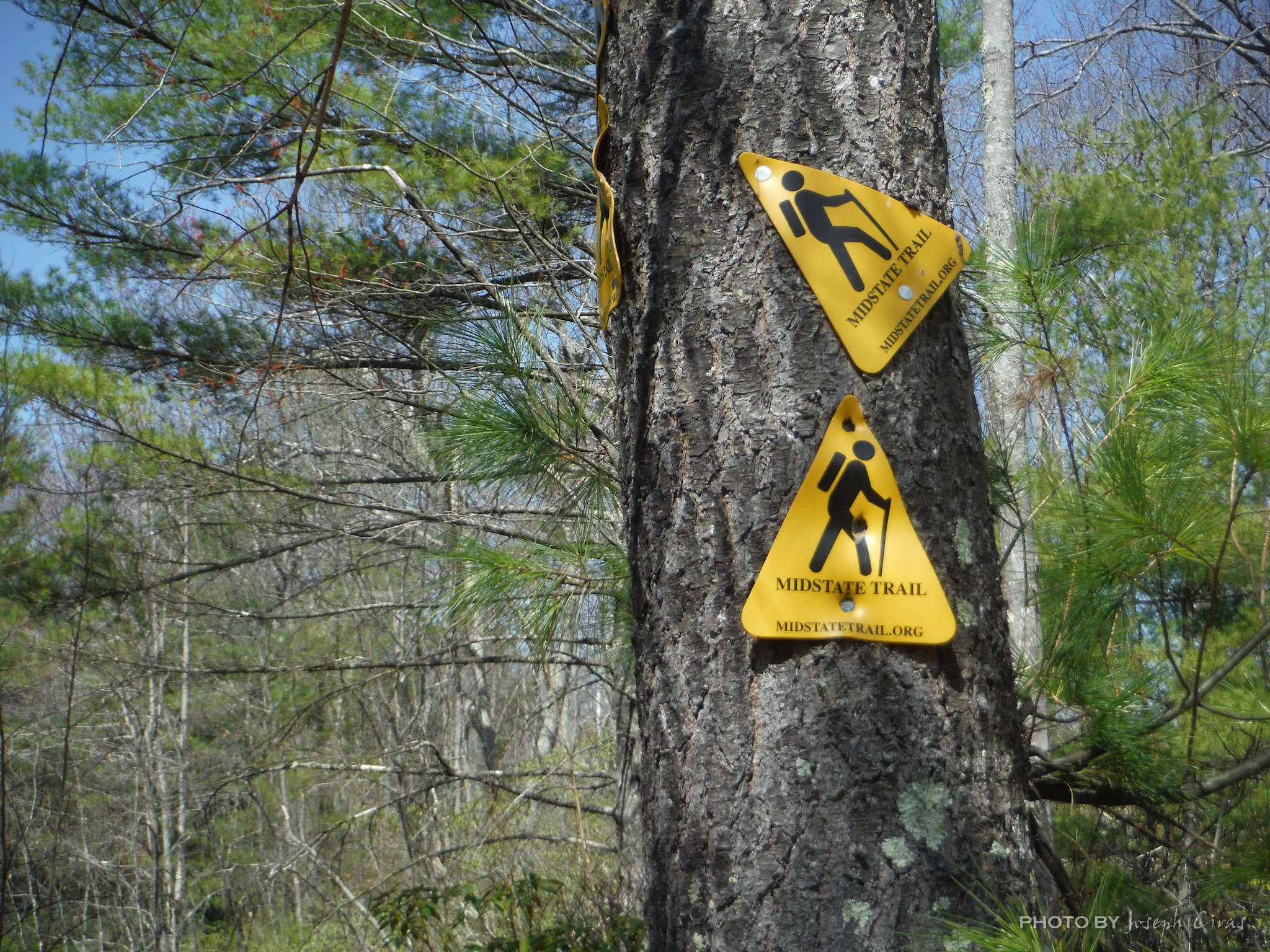
To get to the Crow Hills, I hiked the Midstate Trail. Round trip from my house to the cliffs is about eight miles. It was a great day for a hike. I stayed away from Wachusett Mountain today since it is overcrowded. My son and his friend hiked earlier today, mid-morning, and told me to say away because of all the people. On a nice day, such as today, people with no experience are out hiking making it not very enjoyable. Everyone has to start out sometime, I know, but because of COVID people are taking too many risks on the mountain.

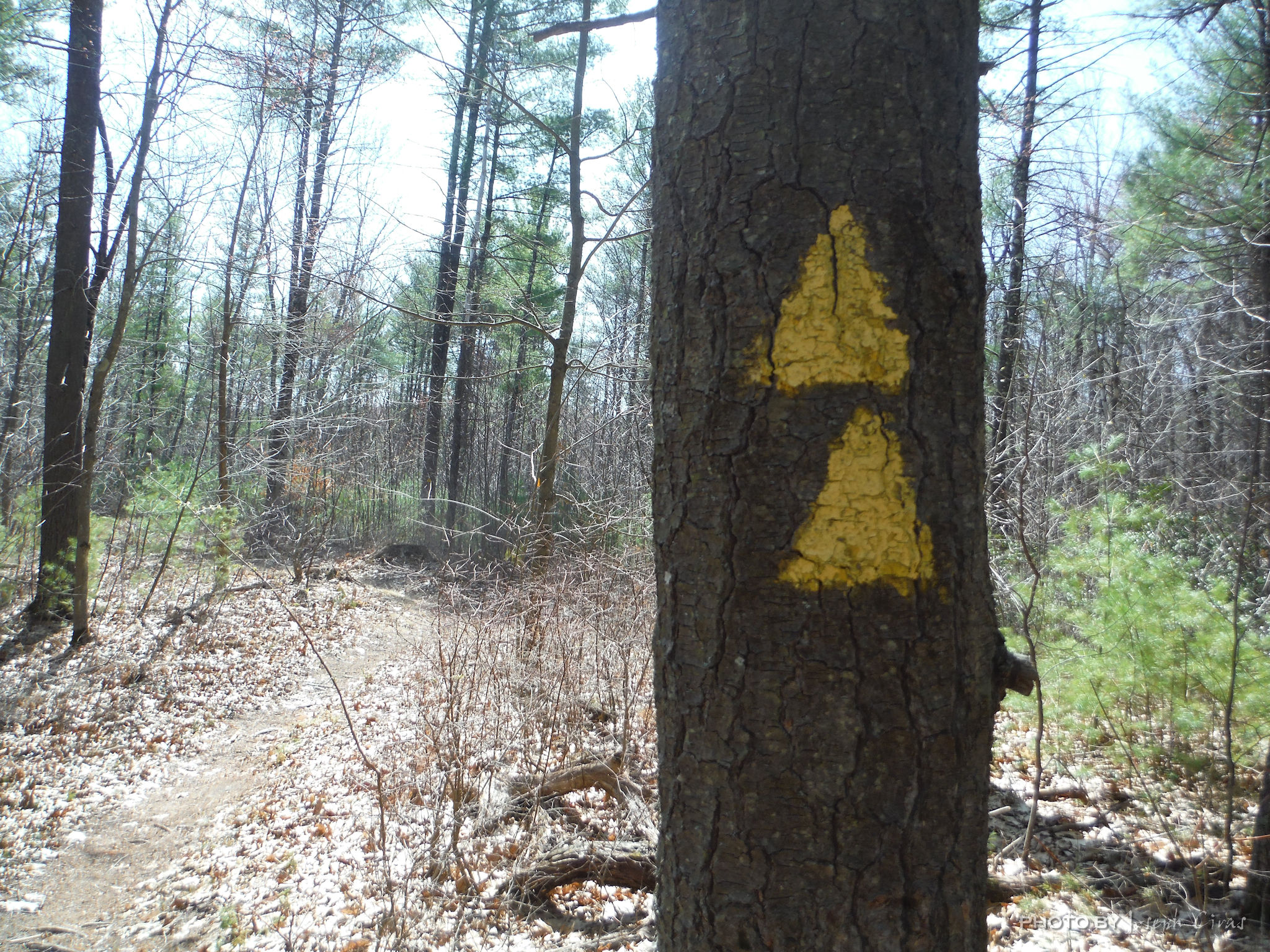
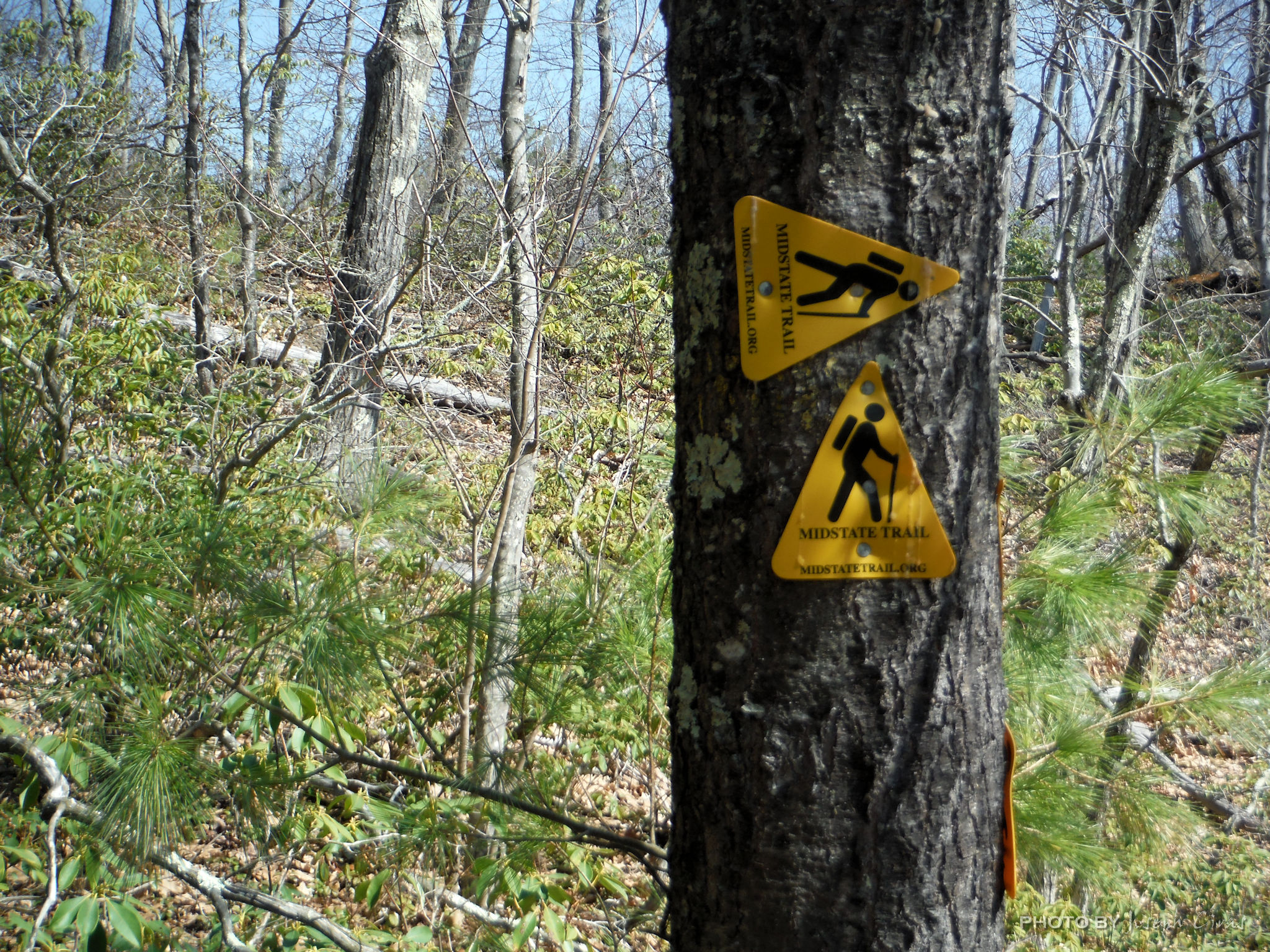
On the trail there are trail markers. Now here is a short lesson on trail markers. First of all, they mark the trail. They tell you when to go straight or when the trail turns. If there are two makers in the same direction on top of themselves, go straight. If there is a marker pointing to the right, turn right. If there is a marker pointing to the left, turn left. Simple as that. Markers are very useful if you are not familiar with the trail. Just look for the next marker. A Leave No Trace principle is to travel and camp on durable surfaces. This means if the trail is through a mud puddle, go through that mud puddle. Lesson over.

Here are some photos of the different trail markings that I encountered during my hike today.

For more photo of other project I have work, visit my website: https://photobyjosephciras.weebly.com/ or visit me on Facebook at https://www.facebook.com/PhotobyJosephCiras/.

COVID is real! Be safe out there, keep your social distance, and remember to always wear your mask and wash your hands.
Photographic Thoughts—03/21/2021 to 03/27/2021

“A thing that you see in my pictures is that I was not afraid to fall in love with these people.” — Annie Leibovitz

Thank you for all the new views and likes from last week. It helps keep me going. Enjoy my blog post!

Sunday, 03/21/2021: Posted photo—Puppy Love.

Settings: Canon EOS 60D, ISO 400, f/7.1, 1/20 s, 24 mm

Meet Brownie. Brownie was given to my mother back in the late 1940’s. My father won this at a carnival, and she has sleep with it ever since. Brownie is in great condition for being over 70 years old. My mother was telling me all about how my father won it for her and how people are amazed of Brownies condition. She attempted to wipe one of the white spots off Brownie’s eyes, so I had to tell her that these were the dog’s pupils. She just laughed and we continued talking about her life.

Brownie the puppy

Keep family close.

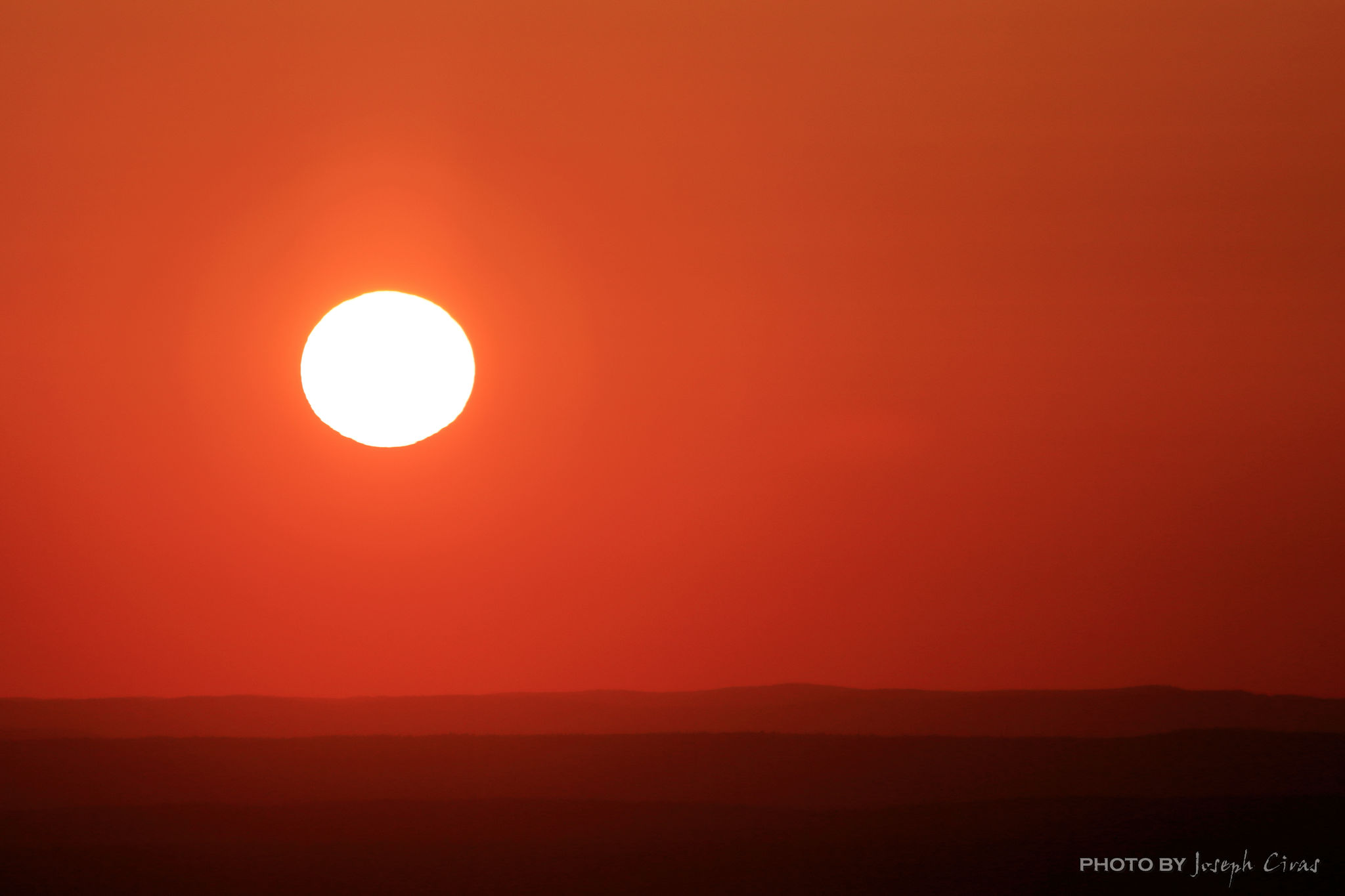
Monday, 03/22/2021: Posted photo—Sunset.

Settings: Canon EOS 60D, 2SO 100, f/6.3, 1/8000 s, 300 mm.

I needed to go on a hike today to clear my mind and to contemplate on the good life my mother is living. She holds family close and enjoys it when people are over. She complains about it sometime, but she truly appreciates it. Hiking is a great way to get in touch with nature and to think about life. If you are hiking alone, or with others, your mind is attuned with nature and natural wonders and helps you know about what is and is not important.

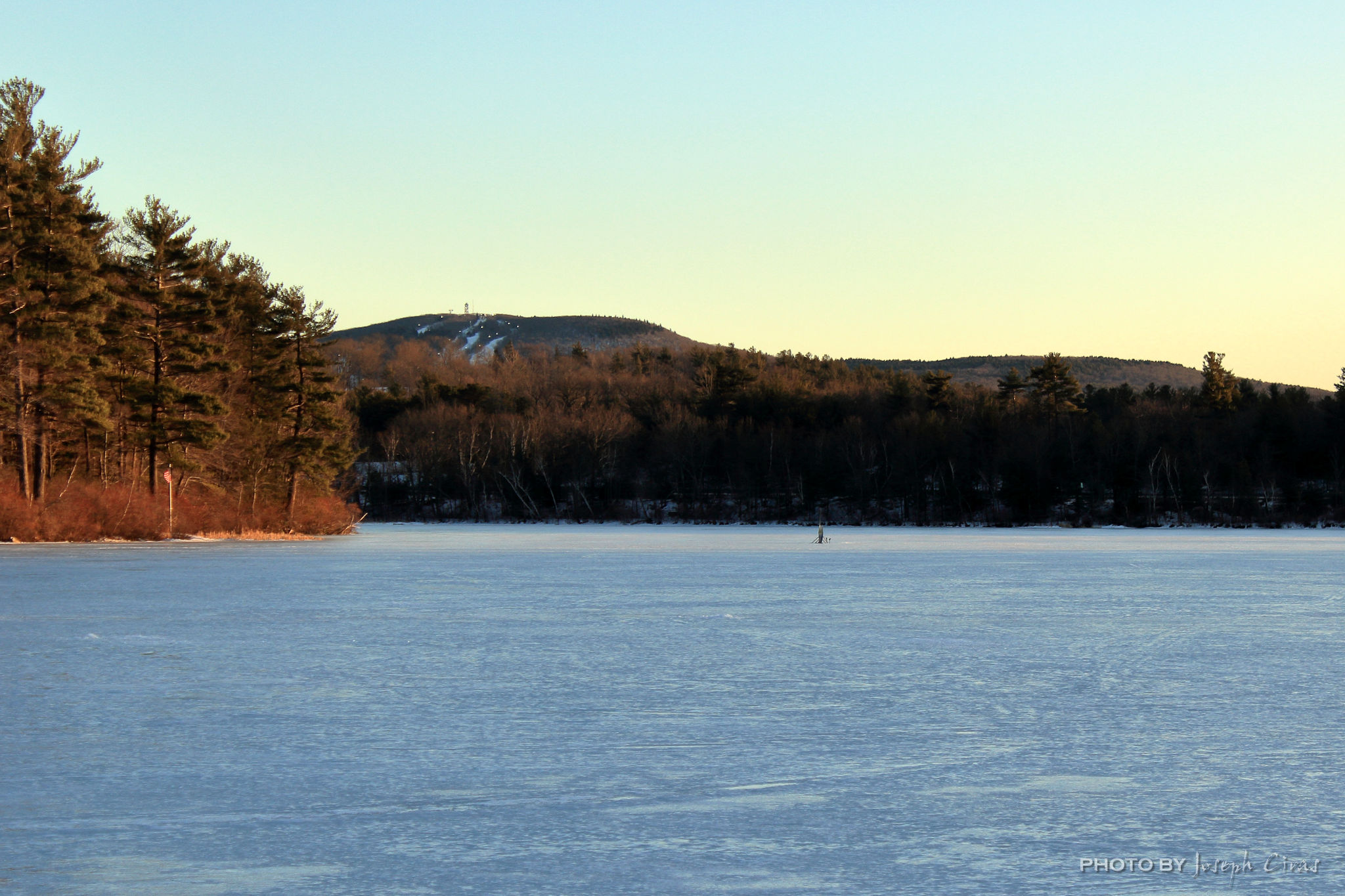
Sunset from Wachusett Mountain

Getting to the summit before sunset was the goal of this hike. I made it with plenty of time to spare. There is a ski area on Wachusett Mountain, and it was open. At about the time if sunset, the summit was crowded, so I left before sunset was complete.

Every sunset is different and wonderful in its own way.

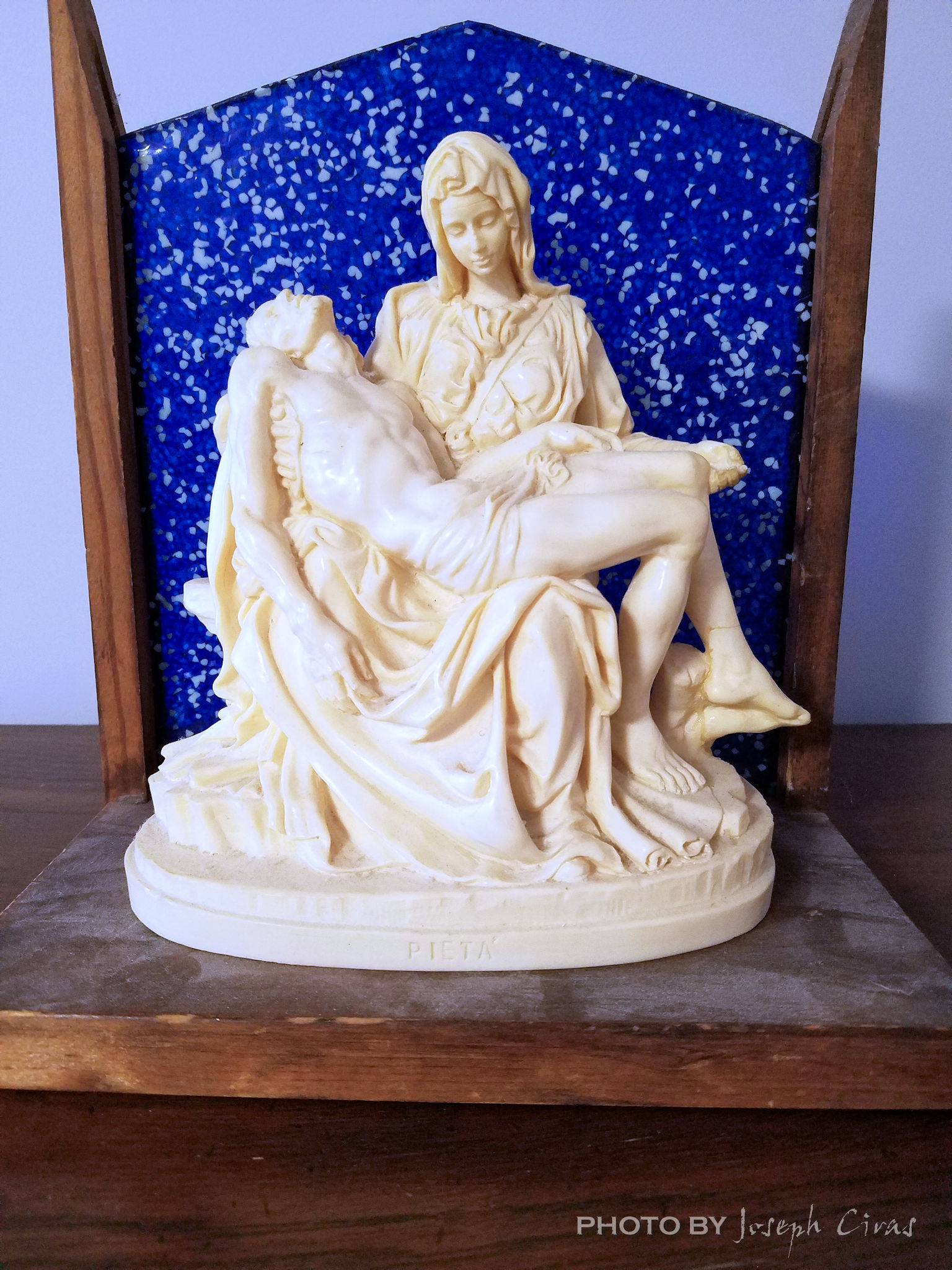
Tuesday, 03/23/2021: Posted photo—Pietà.

Settings: Samsung SM-G930V, ISO 200, f/1.7, 1/17 s, 4 mm.

The Pietà (“the Pity”; 1498–1499) is a work of Renaissance sculpture by Michelangelo Buonarroti, housed in St. Peter’s Basilica in Vatican City. It is the first of several works of the same theme by the artist. It is the only piece Michelangelo ever signed. This famous work of art depicts the body of Jesus on the lap of his mother Mary after the Crucifixion.

This has been with my mother for many years, at least 60 years. I was disappointed last year because I was going to the Basilica in Vatican City for the ordination of a family member, and I wanted to see this work in person. COVID stopped that from happening. Someday I will go to Vatican City and see this work.

Pietà by Michelangelo

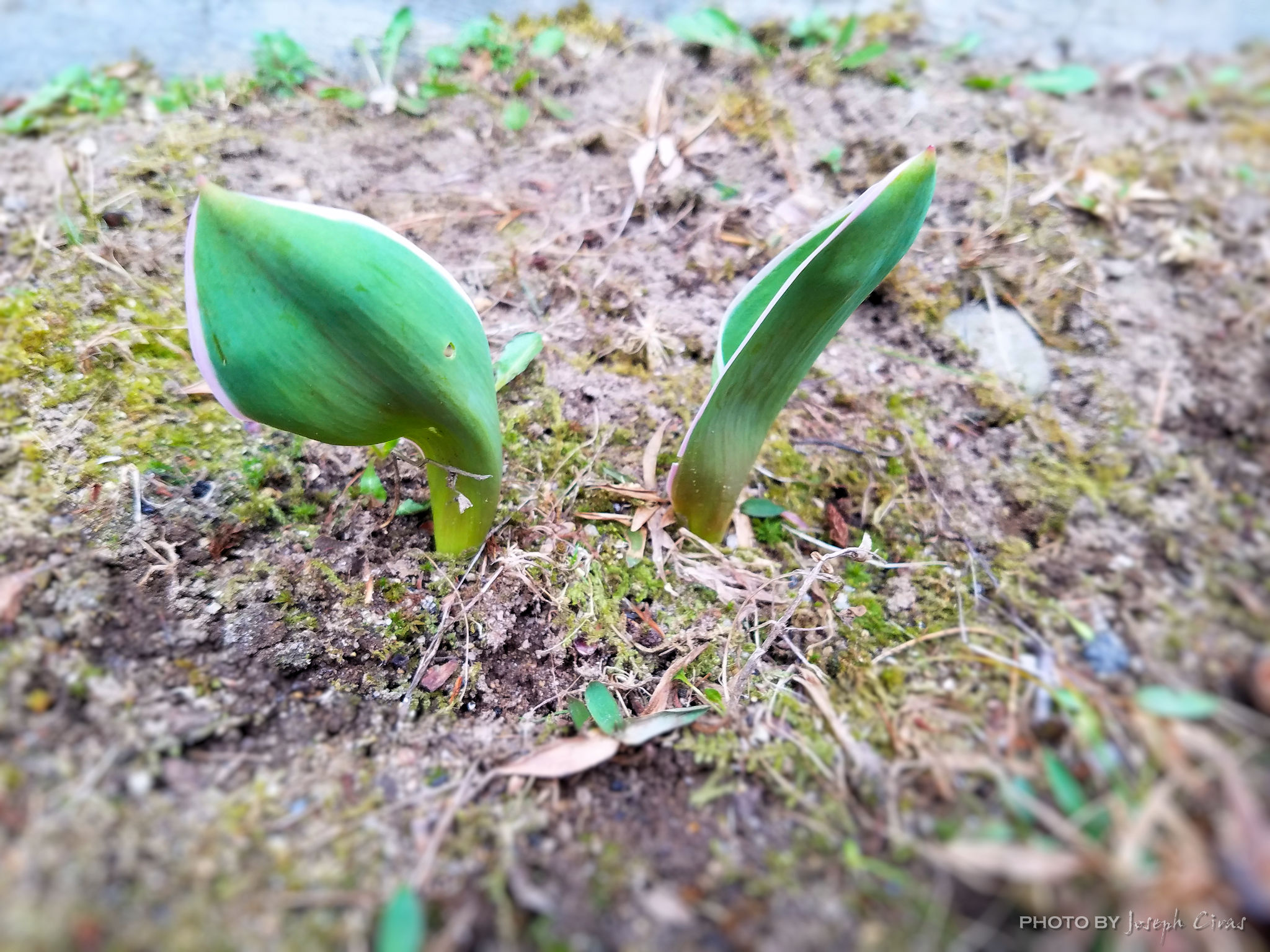
Wednesday, 03/24/2021: Posted photo—New Growth.

Settings: Samsung SM-G930V, ISO 100, f/1.7, 1/60 s, 4 mm.

Tulips are starting to bloom, just in time for Easter. We have tulip that bloom every year at this time, and I noticed that they broke soil today. Tulips form a genus of spring-blooming perennial herbaceous bulbiferous geophytes. The flowers are usually large, showy, and brightly colored, generally red, pink, yellow, or white. These tulips are pink in color. Once they bloom, I will post photos of them.

Tulips

Now I am waiting on the crocus to bloom. The normally bloom before the tulip. Like everything else, life is different this year.

Thursday, 03/25/2021: Posted photo—Stream.

Settings: Canon EOS 60D, ISO 1600, f/22, 1/10 s, 55 mm

Today I went on a hike with my son and his friend. We decided to do a longer hike today on Wachusett Mountain that we normally do on a weekday since the sun out up longer. We started the hike at our normal time, giving us over an hour to get to the summit. The normal trail will get us to the summit is less than an hour, so we decided on a longer hike. We hike on Bicentennial Trail in the opposite direction we normally hike it. Bicentennial has a trail that bisects it and we normally to left at the intersection and today we went right. There are a few seasonal streams along the trail, and the streams were flowing due to the rain earlier in the day and the snow melt on the mountain. I was thinking about a photo and saw this stream and took a handheld, semi-long exposure photo.

Stream along the trail

Here is a photo from the trailhead and another photo of the stream.

Mountain House Trailhead
Flowing water on Bicentennial Trail

Friday, 03/26/2021: Post photo—Sugar Maple.

Settings: Canon EOS 60D, ISO 320, f/5.6, 1/100 s, 55 mm

The sugar maple is one of America’s most-loved trees. In fact, more states have claimed it as their state tree than any other single species—for New York, West Virginia, Wisconsin, and Vermont, the maple tree stands alone.

Sugar Maple blossom

These are the buds from one of the sugar maples in our yard. They are currently being tapped by our neighbor to make maple syrup. More photos of this tree will occur as the leaves get larger.

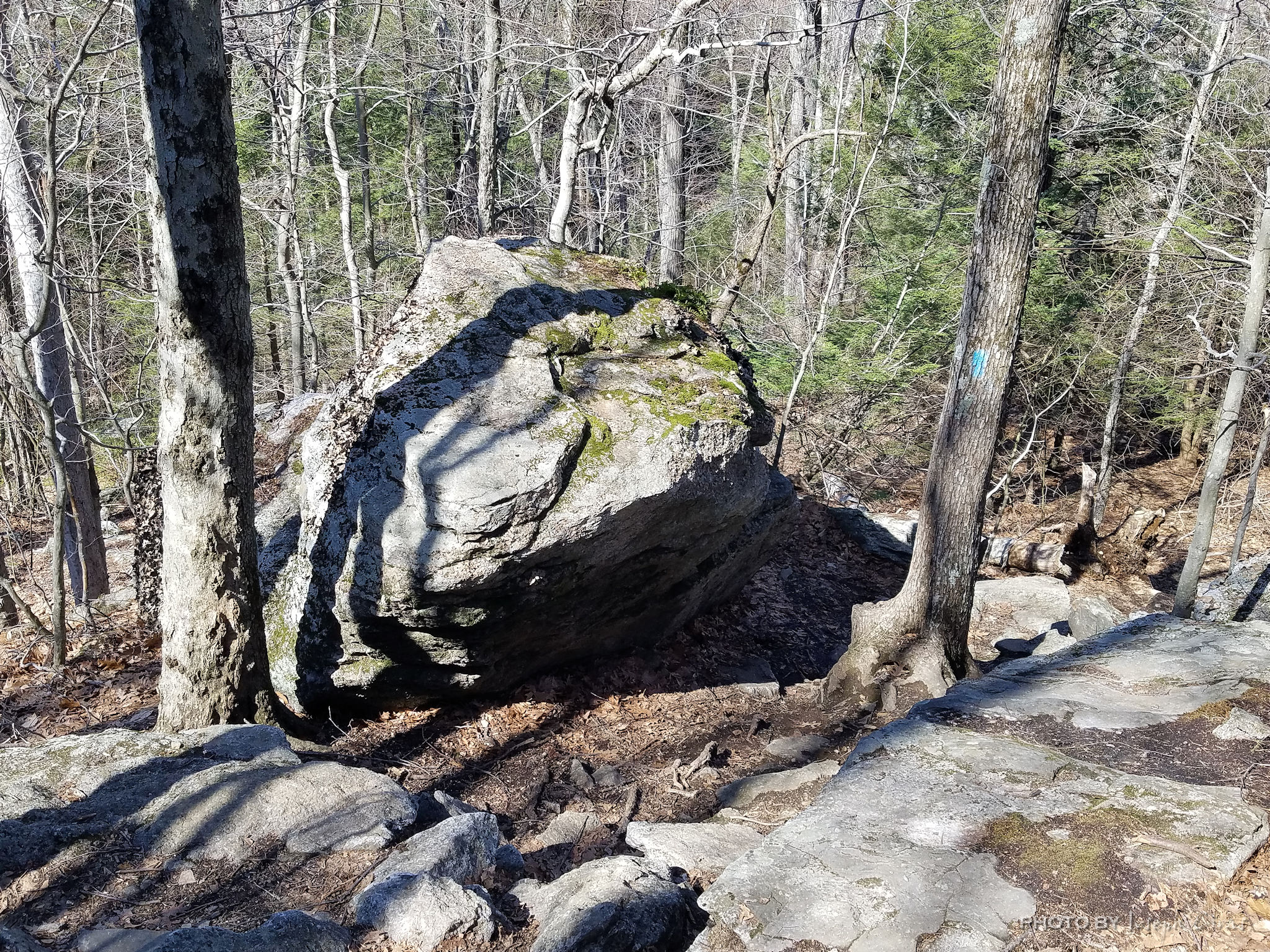
Saturday, 03/27/2021: Post photo—Glacial Erratic.

Settings: Samsung SM-G930V, ISO 50, f/1.7, 1/810 s, 4 mm.

Wachusett Mountain is one of the oldest mountains in the world. The rocks are estimated to be 250 million years old. It is a metamorphic rock monadnock. In its youth, it was over 20,000 feet tall. Today it is only 2,006 feet tall. It has been through ice ages. Wachusett means “Near the mountain” or “Mountain place” in the language of the Natick Indians. A band of old growth forest along rock ledges 500 feet (150 m) below the summit supports trees from 150 to 370 years old. Covering 220 acres (89 ha), it is the largest known old growth forest east of the Connecticut River in Massachusetts.

Scientists have recorded five significant ice ages throughout the Earth’s history: the Huronian (2.4-2.1 billion years ago), Cryogenian (850-635 million years ago), Andean-Saharan (460-430 million years ago), Karoo (360-260 million years ago) and Quaternary (2.6 million years ago -present). Approximately a dozen major glaciations have occurred over the past 1 million years, the largest of which peaked 650,000 years ago and lasted for 50,000 years. The most recent glaciation period, often known simply as the “Ice Age,” reached peak conditions some 18,000 years ago before giving way to the interglacial Holocene epoch 11,700 years ago.

Glacial Erratic on Wachusett Mountain

Glacial erratics are stones and rocks that were transported by a glacier, and then left behind after the glacier melted. Erratics can be carried for hundreds of kilometers and can range in size from pebbles to large boulders. Scientists sometimes use erratics to help determine ancient glacier movement.

Wachusett Mountain and throughout New England there are many glacial erratics.

For more photo of other project I have work, visit my website: https://photobyjosephciras.weebly.com/ or visit me on Facebook at https://www.facebook.com/PhotobyJosephCiras/.

COVID is real! Be safe out there, keep your social distance, and remember to always wear your mask and wash your hands.
Photographic Thoughts—02/28/2021 to 03/06/2021

“In photography there is a reality so subtle that it becomes more real than reality.” — Alfred Stieglitz

Thank you for all the new views and likes from last week. It helps keep me going. Enjoy my blog post!

Sunday, 02/28/2021: Posted photo—Winter Hike.

Settings: FujiFilm FinePix XP70, ISO 100, f/4.6, 1/60 s, 10 mm

Some people think that I am crazy hiking year-round. I have been hiking year-round for many years now and I enjoy hiking in the off seasons. I like hiking with few people around, less bugs, and fewer rocks to contend with. I consider the off season to be after the foliage and before the ground dries after the spring thaw. Winter hiking has its own challenges. These challenges include snow, ice, cold weather, snowy weather, short daylight periods, and trailheads that you need to snowshoe to get to.

Today, like many other days this year, I hiked with my son and one of his friends. We have been attempting to hike three times a week. Sometimes my son and his friend do not meet that goal. I obtain this goal more times than not. Today we summited once, and I wanted to summit again to keep on pace to summit 100 times by the end of the year. We were on our assent and we came to a trail junction. I wanted to summit again, and they did not. So, we set up a challenge. I will summit again and then attempt to beat them back to the trailhead. The section of trail that I ascended is very steep and icy and they took a safe way down. I summited and made my way down another steep and icy trail. On the descent I ran into a few people that were not prepared for winter hiking on ice and snow. They did not have any microspikes and were only hiking in boot. I had to watch them as they ascended steep inclines. I stayed back to help if any one of them fell. Because of this, my son and his friend made it back to the trailhead a few minutes before me.

Hike distance totals: me—3.5 miles, the kids half my age —3.2 mile. I almost made it back before them after giving them about a half a mile head start. They only had to descend, and I had to ascend and then descend. For your information, after two months, I have 20 out of my 100 summits completed.

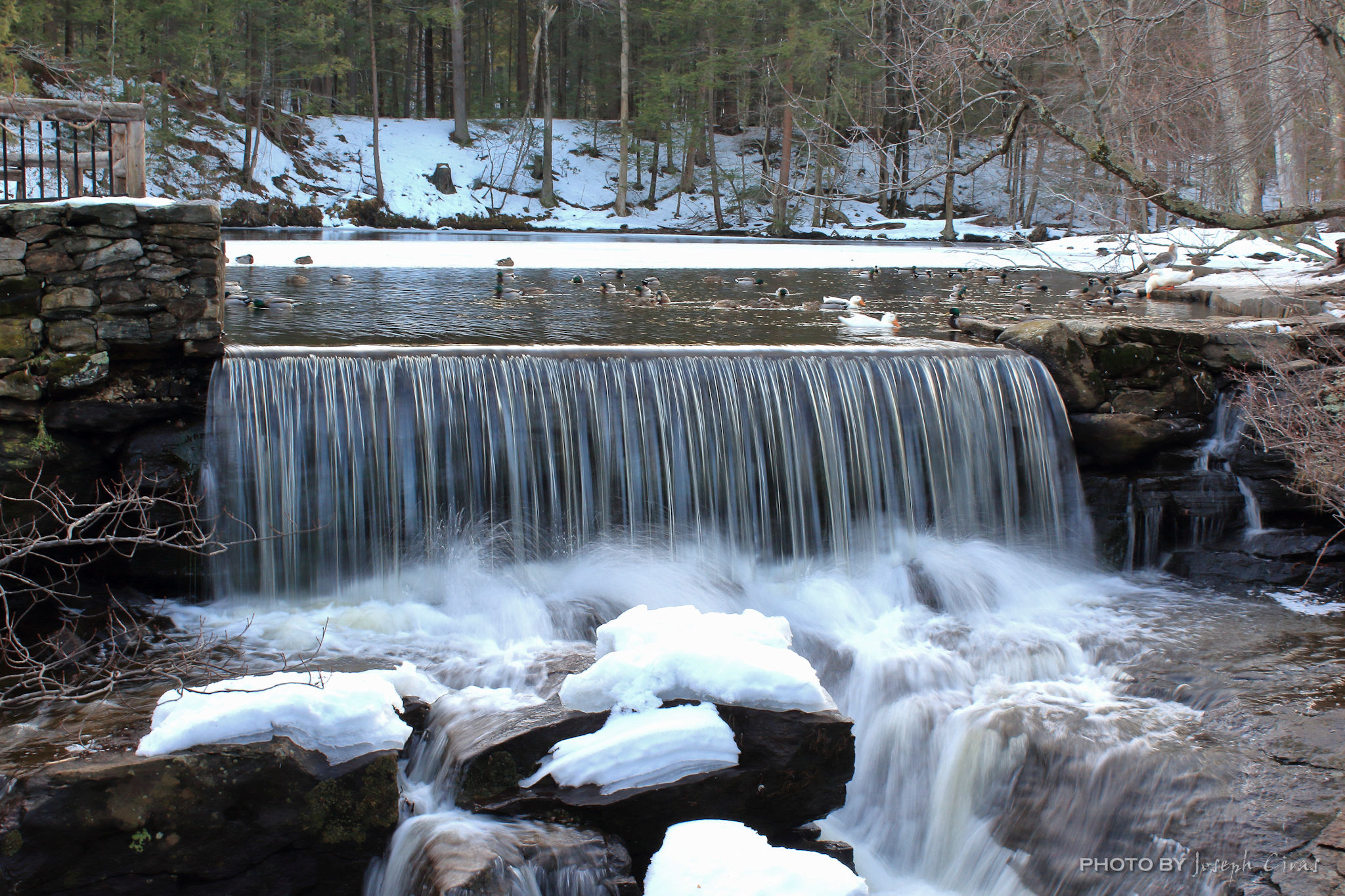
Monday, 03/01/2021: Posted photo—Falls at the Old Mill.

Settings: Canon EOS 60D, ISO 200, f/11, 1/10 s, 32 mm.

Last week at this time, I posted a photo of the falls at Round Meadow Pond. Today I traveled about a quarter mile down the road to The 1761 Old Mill Restaurant. The Old Mill has a duck pond that I like to use as a shooting location to photograph ducks and geese when there is daylight after work. I also will photograph the waterfall and the covered bridges that are on the property. I stop in on Mondays since the restaurant is closed and the ducks and geese are easier to photograph.

As you can see by this photo, the ducks and geese are in the pond year-round. They are fed well when the restaurant is open. There is a duck feeder on the side of the pond in which people can purchase food for the ducks and geese. When I go on Mondays, they gather around me looking for food.

From their webpage: “The Old Mill, from its earliest beginning, has served a useful purpose in the community. Originally a sawmill where logs were processed for the new homes of the neighborhood, the Old Mill and its whirling saw sang a song of progress and industry through five generations of ownership in the same family (the Foster Family), before its wheels were stilled and it fell into disrepair.

Today, the Old Mill is noted for tempting foods served in a setting of rare charm. Voices of diners mingle with the merry music of water rushing gaily over the mill dam as it dances its way to the sea. Thus, the Old Mill is reborn — its attractive vistas doubled in splendor by their reflection in the mill pond. It has become a shrine to the epicure for its delicious food … to the art lover for its rustic beauty.”

It is wonderful to have great locations to photograph so close to home.

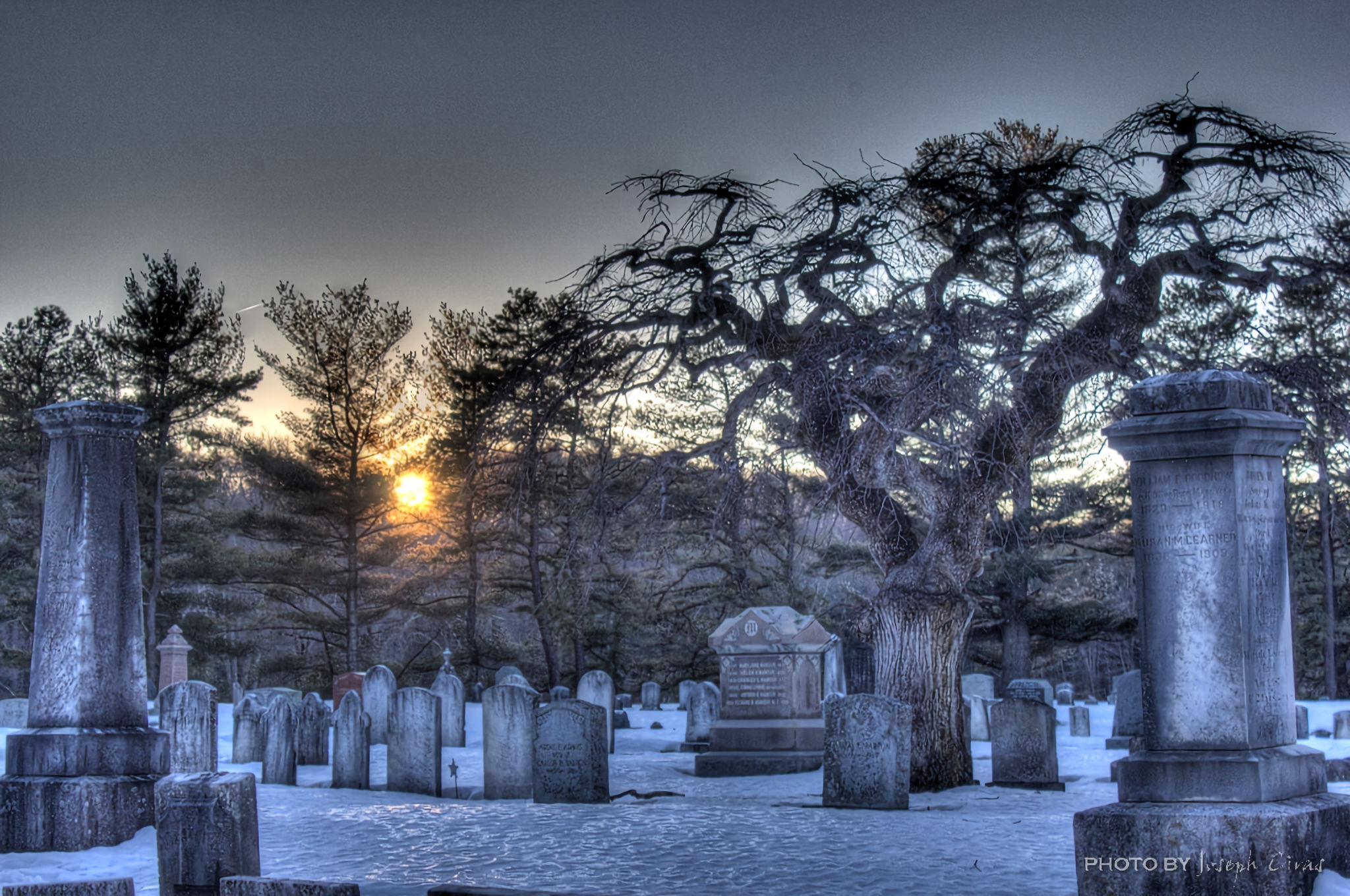
Tuesday, 03/02/2021: Posted photo—Sunset at the Cemetery.

Settings: Canon EOS 60D, ISO 400, f/7.1, 1/125 s, 45 mm.

The tree in this photo is one of my favorite trees to photograph. I do it often but do not post a photo of it often. It looks like a great tree to have in a cemetery, very spooky at night because of its willowing branches.

I took an alternative way home from work today to check out how this tree looked in the winter. The alternative way was not any longer for me to get home and it gave me this photo opportunity. I was looking for a different location to take a photo of the sunset. When I was approaching this location in the cemetery, I saw the sun setting behind the trees. I positioned myself to a better look of the setting sun and liked the way this scene was composed.

Since the light was low, I decided to take bracketed shots of this tree to make it into a High Dynamic  Range (HDR) photo. I bracketed this photo at -2, 0, and +2. When I was processing the photo in the Photomatix software, I went through the different tones and decided on the painterly tone. I liked the feeling of this photo once processed. Someone commented that this looks like a scene from a horror movie. I agree with that statement.

Wednesday, 03/03/2021: Posted photo—National Anthem.

Settings: Canon EOS 60D, ISO 100, f/7.1, 1/1250 s, 55 mm.

On this day in 1931, President Herbert Hoover signed a bill designating “The Star-Spangled Banner” as the official national anthem of the United States. The anthem had been recognized for official use by the United States Navy in 1889, and by President Woodrow Wilson in 1916. Francis Scott Key had written the lyrics in a poem in 1814 during the British siege of Fort McHenry in Baltimore Harbor. On April 15, 1929, Rep. John Linthicum (D-Md.) (1867-1932) introduced legislation that would make the song the national anthem.

The first time it is recorded that the song was played at a baseball game was on May 15, 1862, at the Union Grounds in Brooklyn, NY. The baseball game was led off by a band concert that included the tune.

On September 5, 1918 at Comiskey Park, the Boston Red Sox and Chicago Cubs were playing the opening game of the World Series, which started earlier than usual due to World War I. During the 7th-inning stretch, a military band played “The Star Spangled Banner” and Fred Thomas, a player for the Boston Red Sox, on leave from the Navy, snapped to attention. From then on, the song has been played at every World Series game, every season opener, and whenever a band is present to play it. The custom of playing it before every game began during World War II, when the installation of public address systems made it practical.

Until 1931, there was no officially proclaimed anthem of the United States, however, the song “Hail Columbia!” was used quite often in the capacity of a national anthem. “Hail Columbia!” is used today in the United States as an entrance song for the Vice President (much like “Hail to the Chief” is for the President.)

That is your history lesson for the week.

Thursday, 03/04/2021: Posted photo—See You Tonight.

Settings: Canon EOS 60D, ISO 100, f/7.1, 1/125 s, 55 mm.

People have asked me why I hike at night. People have asked me why I hike in the winter. I hike at night just to listen to nature and I hike in the winter because of the solitude. While I hike, I like to think about the day, week, month, or year and I usually have a song stuck in my head for the entire hike. Yes, a song in my head for the entire hike, whether it is a two-mile hike or a 15-mile hike.

I hike after getting bad news, such as a family member passing. I do a longer memorial hike every year on the anniversary of a passing. I hike after good news and I hike after no news at all. I have set a goal for myself to summit mountains 100 times this year. I may have noted that a few times in the past. Wachusett Mountain will be my main mountain to hike since it is so close to my house. It may not be very tall at 2,006 feet at its current age (it was over 20,000 feet when it was young) but some of the trails can be very challenging and are good training trails for hiking in the White Mountains in New Hampshire. Three times a week I take the short drive to one of the various trailheads and hike. Tonight, was one of those night that I hike.

It is still very icy on the trails. There are more rocks being exposed yet the trails are still challenging. This was the second time I summitted in three days and I did notice a change in the trail conditions. There was also less ice on the summit because of the high winds. The trails themselves are still very dangerous and you still need microspike to hike them.

Get out there and enjoy nature and the mountains.

Friday, 03/05/2021: Post photo—Collection Time.

Settings: Canon EOS 60D, ISO 400, f/7.1, 1/50 s, 32 mm

The Massachusetts maple production season usually starts in mid/late February in the eastern part of the state and at the lower elevations in the western parts of the state. At higher elevations in western Massachusetts boiling may not start until the first week in March, or later in cold years. The season lasts 4–6 weeks, all depending on the weather. Most all producers are done boiling by mid-April when the nighttime temperatures remain above freezing and the tree buds begin to swell.

The tree’s sap flow mechanisms depend on temperatures which alternate back and forth past the freezing point (32 degrees F). The best sap flows come when nighttime temperatures are in the low 20s and daytime temperatures are in the 40s. The longer it stays below freezing at night, the longer the sap will run during the warm day to follow. If the weather gets too cold and stays cold, sap flow will stop. If the weather gets too warm and stays warm, sap flow will stop. The cold weather at night allows the tree to cool down and absorb moisture from the ground via the roots. During the day, the tree warms up, the tree’s internal pressure builds up, and the sap will run from a taphole or even a broken twig or branch. For good sap production, maple producers must have the alternating warm/cold temperatures. Therefore, it is so impossible to predict the outcome of the maple crop from year to year.

It always surprises me when my neighbor taps our trees and other trees around his property. It seems to be earlier each year, but it is not. He starts in March, just after we have had a few very cold evenings. He goes out every night during sap season, collects his buckets, and makes his syrup. He purchased a new evaporator a few years ago that makes it easier to make the syrup. He gives us some and he sells some at the church fair in the fall.

HOW TO DO IT

  1. Be sure your trees are maples. A tree should be at least 12” in diameter for one tap hole and bucket. Trees more than 24” in diameter can have two taps.
  2. Drill the hole 2” deep at a convenient height. Look for unblemished bark and do not bore directly over or under a former tap hole or closer than 4” from the side of an old tap hole. The hole should be straight into the tree, parallel with the ground.
  3. Drive the spout in so that it is tight and cannot be pulled out by hand, but do not over-drive and split the tree.
  4. Hang your bucket or container on the hook of the spout if it is a purchased one, or, if you have made your own, fashion a length of wire to serve as a hanger. Be sure to cover the bucket to keep out rain, snow, and foreign material.
  5. Make sure your fireplace is ready, wood at hand, and pan ready for the sap.
  6. When you have enough in your buckets to fill your pan for boiling, you are ready for the fire. Do not fill your pan to the top as it will boil over. As the water boils away keep adding more sap to the pan. Do not have less than an inch in the pan or it may burn down. You can pour the cold sap right into the boiling sap. It will take a lot of boiling to get it to syrup as it takes about 10 gallons of sap to make one quart of maple syrup. A chimney of brick or stove pipe (4 to 6 feet long) on your arch or fireplace will be helpful in keeping the smoke away from the boiling sap so that the syrup will not darken or have an off taste from the smoke.
  7. Do not leave an accumulation of sap in the collecting buckets, especially in warm weather. Sap is like milk and will sour if left in the sun. Try to keep the sap in storage as cold as possible. Boil it as soon as you can.
  8. Finished maple syrup will be 7° F above the temperature of boiling water at your elevation. Your syrup or candy thermometer will tell you this. If you have a larger operation you may get a syrup hydrometer and testing cup which will tell you when the syrup is done. The cup will require two or three cupful’s of syrup in order to make the test. Proper syrup will weigh at least 11 pounds per gallon. Do not get it beyond 11-1/4 pounds per gallon or it may form crystals in the bottom of the storage container.
  9. Pour the hot syrup through a felt syrup filter or a special strainer as carried by equipment dealers. If you have neither one, a double layer of outing flannel may be used, or you may put the syrup in a container and let it cool for 12 hours or more. Sediment will settle to the bottom of the container and the clearer syrup may be carefully poured off. This syrup should then be reheated to at least 180° F or almost to boiling before it is poured into containers for final storage.
  10. Pour the hot syrup into the clean, sterile canning jars and seal. Fill them full so that very little air remains in the jar. If laid on the side while cooling a better seal will result.
  11. Store syrup in a cool place. A freezer is ideal. Properly prepared syrup will not freeze, and a poor seal will not be as important when stored in a freezer.

Soon I will have fresh maple syrup from my trees on my pancakes, waffles, sausages, ice cream, or anything else the will taste good with fresh homemade maple syrup.

Saturday, 03/06/2021: Post photo—Trail.

Settings: Canon EOS 60D, ISO 100, f/7.1, 1/400 s, 21 mm

Today I went on a leisurely 4.1 mile hike on Wachusett Mountain. This was my third hike on the mountain this week. Today’s goal was one of distance and checking out trail conditions more than it was attempting another quick summit. I hiked on a different one of the difficult trails since it was daytime and I had plenty of time to do this hike. The trail did not disappoint with the difficult section, being steep and very, very icy. As I was ascending, I kept telling myself to trust my experience and my equipment. That the top of the steep incline, I was asked by a couple of women about the trail conditions, I told them, and they wisely decided to take a safer way down. It is better to ascend a step icy trail than it is to decent a step icy trail.

Today’s photo was taken along the Harrington Trail. The Harrington Trail is also a part of the Midstate Trail. The Midstate Trail is marked with the yellow triangles.

Tomorrow is another day, another week, and another hike.

For more photo of other project I have work, visit my website: https://photobyjosephciras.weebly.com/ or visit me on Facebook at https://www.facebook.com/PhotobyJosephCiras/.

COVID is real! Be safe out there, keep your social distance, and remember to always wear your mask and wash your hands.
Photographic Thoughts—02/21/2021 to 02/28/2021

“When I have a camera in my hand, I know no fear” — Alfred Eisenstaedt

Thank you for all the new views and likes from last week. It helps keep me going. Enjoy my blog post!

Sunday 02/21/2021: Posted photo—Lemons.

Settings: Samsung SM-G930V (Galaxy S7), ISO 50, f/1.7, 1/293 s, 4 mm

A lemon is an acid fruit that is botanically a many-seeded pale yellow oblong berry produced by a small thorny citrus tree and that has a rind from which an aromatic oil is extracted.
Why do we call defective cars lemons? This is what I found “While defective cars were called lemons by most people in 1960, an ad from Volkswagen cemented the term in our vocabulary. The ad featured a Volkswagen Beetle with the word lemon below the car. The ad is highlighting Volkswagen’s rigorous testing process but that image of a bad car being a lemon stuck.” — grubblawgroup.com

Lemons

“Lemons contain a high amount of vitamin C, soluble fiber, and plant compounds that give them a number of health benefits. Lemons may aid weight loss and reduce your risk of heart disease, anemia, kidney stones, digestive issues, and cancer.” — Healthline.com

Today I went food shopping for my 95-year-old mother for the first time is a few months. She is back in her house after being relocated for a few months during renovations. A tree fell on her house and the house needed to be repaired. I took this photo just in case I was not able to take another on during the day since we were moving her back in and I did not know how long that was going to take.

Monday 02/22/2021: Posted photo—Falls During a Storm.

Settings: Canon EOS 60D, ISO 800, f/7.1, 1/50 s, 29 mm.

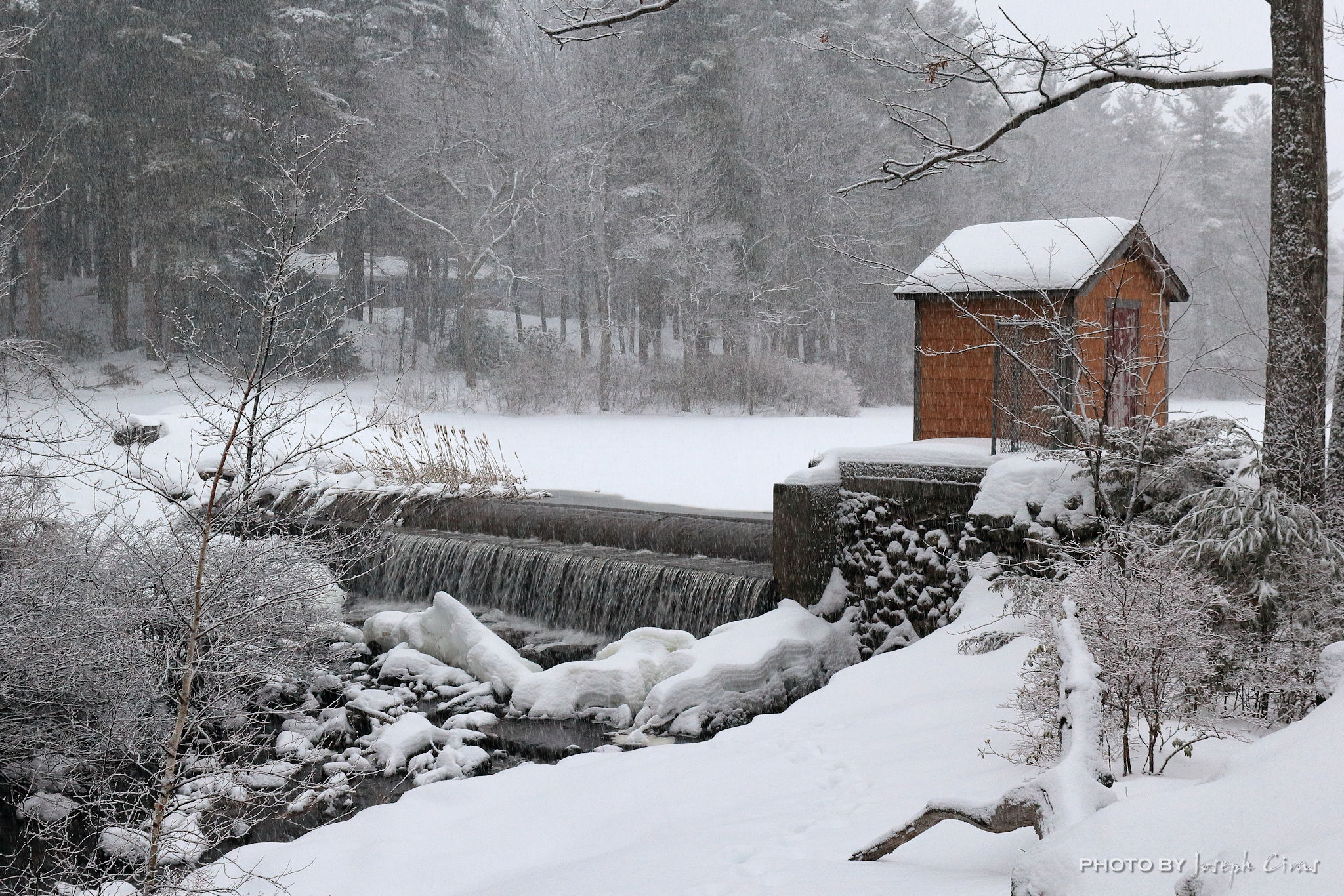
We are in a snow pattern here in north central Massachusetts. It is a Monday, and it is snowing. On my way back from work I wanted to take a photo of something snowy. Not much was catching my attention and then I say the gate house at Round Meadow Pond. I knew that there would be a great photo of the dam in the storm, so I took a little detour and took this photo. I think it captures well the four inches of new snow that we received. I like the way the snow almost washes out the dam giving the impression that I am in the middle of a storm, which I was.

Dam at Round Meadow Pond

Tuesday 02/23/2021: Posted photo—A Web of Birch Branches.

Settings: Canon EOS 60D, ISO 100, f/5.6, 1/2000 s, 29 mm.

Don’t the branches on these birch trees look like a tangled spider web? Let your imagination run wild and you may see the same thing I see.

Birch Branches

A birch tree is a slender, fast-growing tree that has thin bark (often peeling) and bears catkins. There are several trees that bear catkins in winter or in spring (before the leaves). A catkin is a cluster of unisexual flowers that have no petals. On wind pollinated trees, most catkins are long and thin and hang down below the shoot. Birch trees grow chiefly in north temperate regions, some reaching the northern limit of tree growth.

Wednesday 02/24/2021: Posted photo—What is It.

Settings: Canon EOS 60D, ISO 3200, f/5.6, 1/15 s, 55 mm.

It has been a while since I posted a photo for people to guess what it is. This one, like most of the photo of this type I post, was easy to solve. It is a cluster of straws used to stir coffee or tea. The photo is very graining because I did not realize how high my ISO was set. This is a heavily cropped photo.

Guess the item

I also to this type of photo occasionally to see how many people look at and comment on my photos. I know that I have many more people looking at my photos than the numbers show.

Thursday 02/25/2021: Posted photo—Waxing Gibbous Moon.

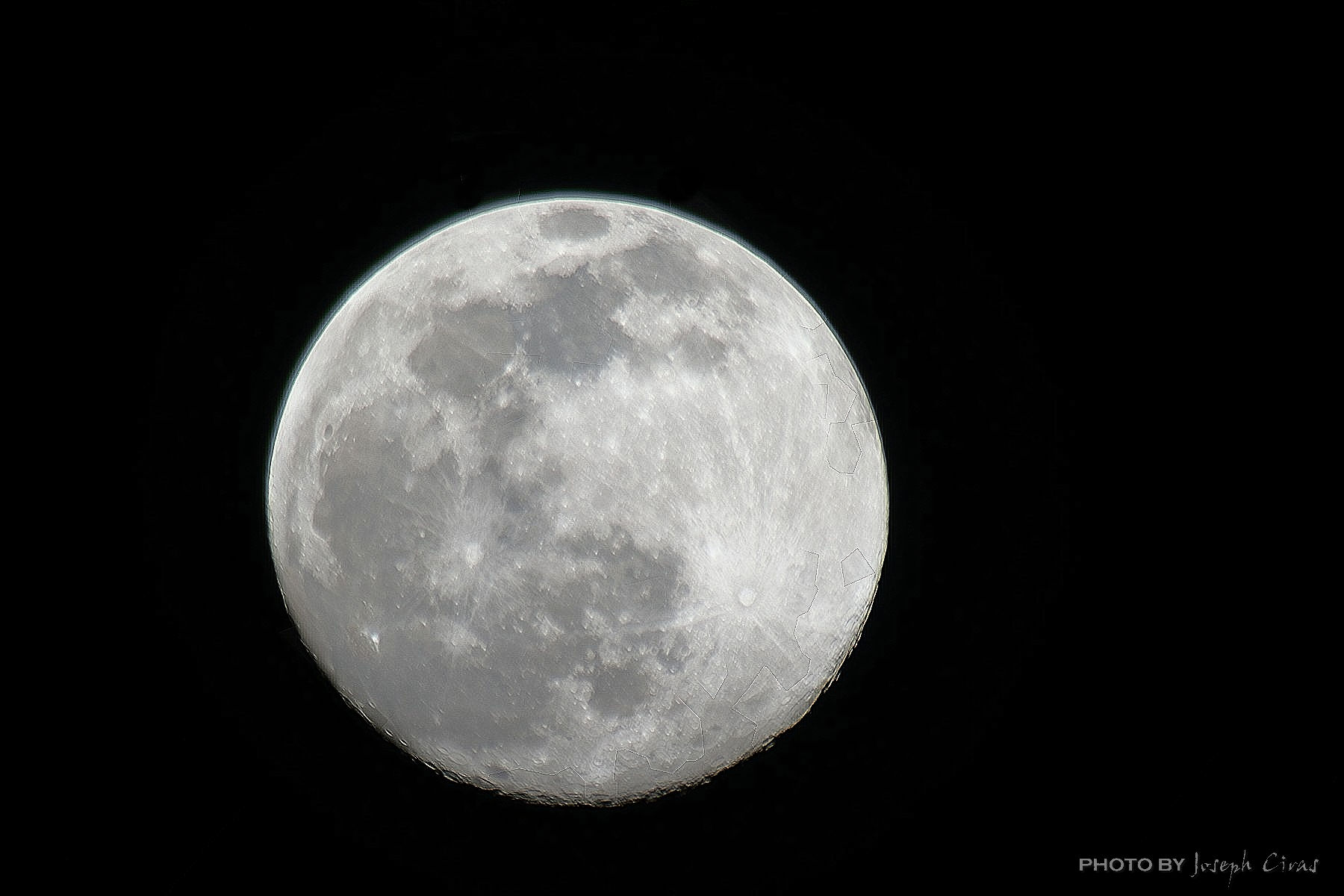
Settings: Canon EOS 60D, ISO 200, f/11.5, 1/125 s, 1350 mm.

The Snow Moon will occur on February 27 at 3:17 a.m. Before the moon is full is a gibbous moon. The moon at 97.6% tonight, not full. This photo is a stack of 31 shots. Why 31 you ask? I must have hit the counter on my intervalometer since I only wanted 30 shots. I kept the extra one. An intervalometer is a shutter release that automatically triggers the shutter, usually at timed intervals.

Waxing Gibbous moon

The eight Moon phases:

  1. New: We cannot see the Moon when it is a new moon.
  2. Waxing Crescent: In the Northern Hemisphere, we see the waxing crescent phase as a thin crescent of light on the right.
  3. First Quarter: We see the first quarter phase as a half moon.
  4. Waxing Gibbous: The waxing gibbous phase is between a half moon and full moon. Waxing means it is getting bigger.
  5. Full: We can see the Moon completely illuminated during full moons.
  6. Waning Gibbous: The waning gibbous phase is between a half moon and full moon. Waning means it is getting smaller.
  7. Third Quarter: We see the third quarter moon as a half moon, too. It is the opposite half as illuminated in the first quarter moon.
  8. Waning Crescent: In the Northern Hemisphere, we see the waning crescent phase as a thin crescent of light on the left.

Friday 02/26/2021: Post photo—Mount Rushmore.

Settings: Canon EOS DIGITAL REBEL XS, ISO 100, f/6.3, 1/250 s, 135 mm

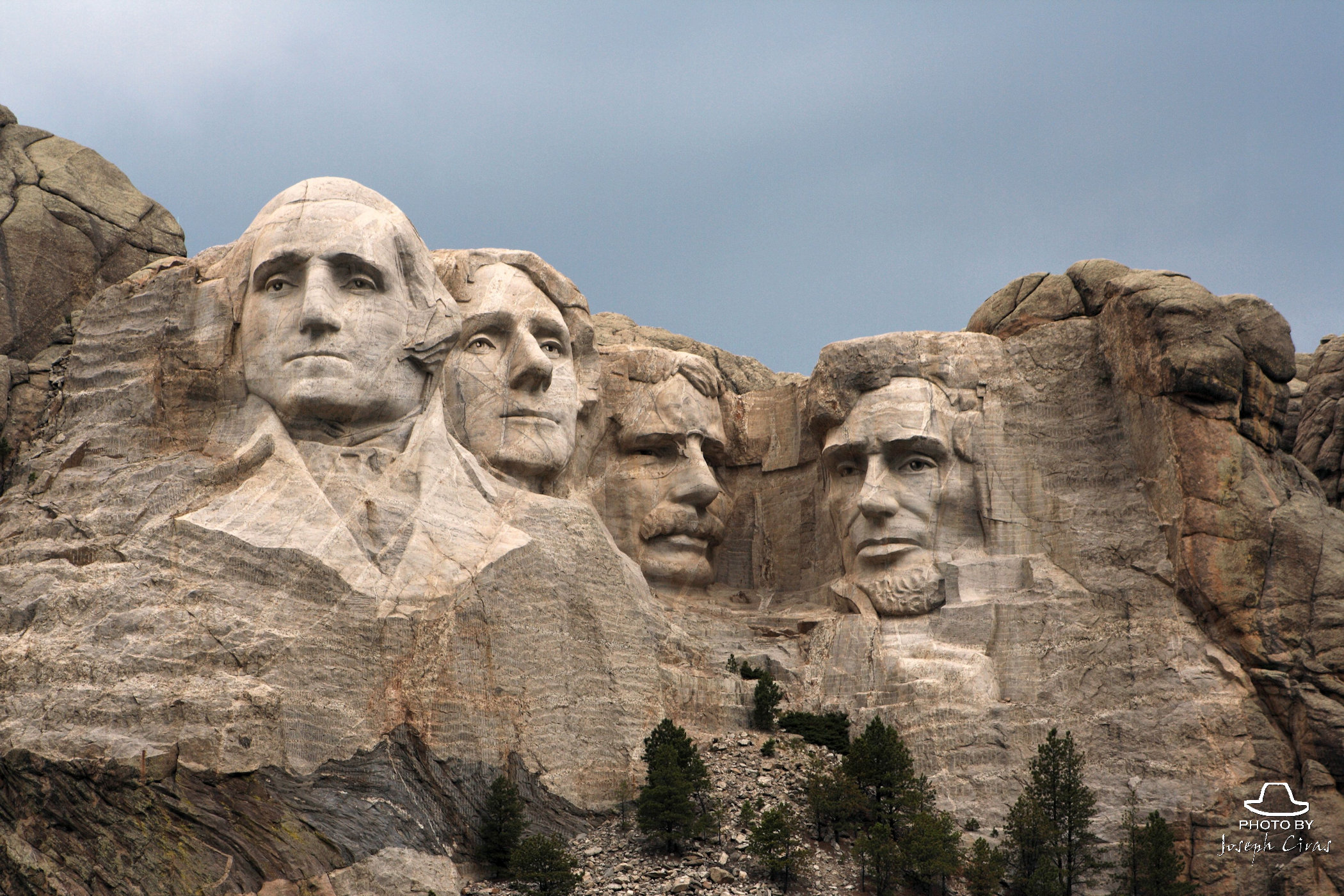
This photo was ranked in the top 20% of landscape photos by the Pixoto community in 2013. Pixoto is the world’s largest free photo contest site with hundreds of active free photo contests every day. When we visited Mount Rushmore, one of the last living carvers was there telling stories about how the figures were carved.

Mount Rushmore

Gutzon Borglum carved George Washington, Thomas Jefferson, Theodore Roosevelt, and Abraham Lincoln on Mount Rushmore. He selected these four presidents because from his perspective, they represented the most important events in the history of the United States.

George Washington, First President of the United States. Born 1732, died 1799. Washington led the colonists in the American Revolutionary War to win independence from Great Britain.

Thomas Jefferson, Third President of the United States. Born 1743, died 1826. Jefferson was the primary author of the Declaration of Independence, a document which inspires democracies around the world.

Theodore Roosevelt, 26th President of the United States. Born 1858, died 1919. Roosevelt provided leadership when America experienced rapid economic growth as it entered the 20th Century.

Abraham Lincoln, 16th President of the United States. Born 1809, died 1865. Lincoln held the nation together during its greatest trial, the Civil War. Lincoln believed his most sacred duty was the preservation of the union.

These four-president looked after the country and our freedom first and did not look after themself to get votes. Their actions were good for the country first and their political future last. Only good, trustworthy, respectable presidents are carved.

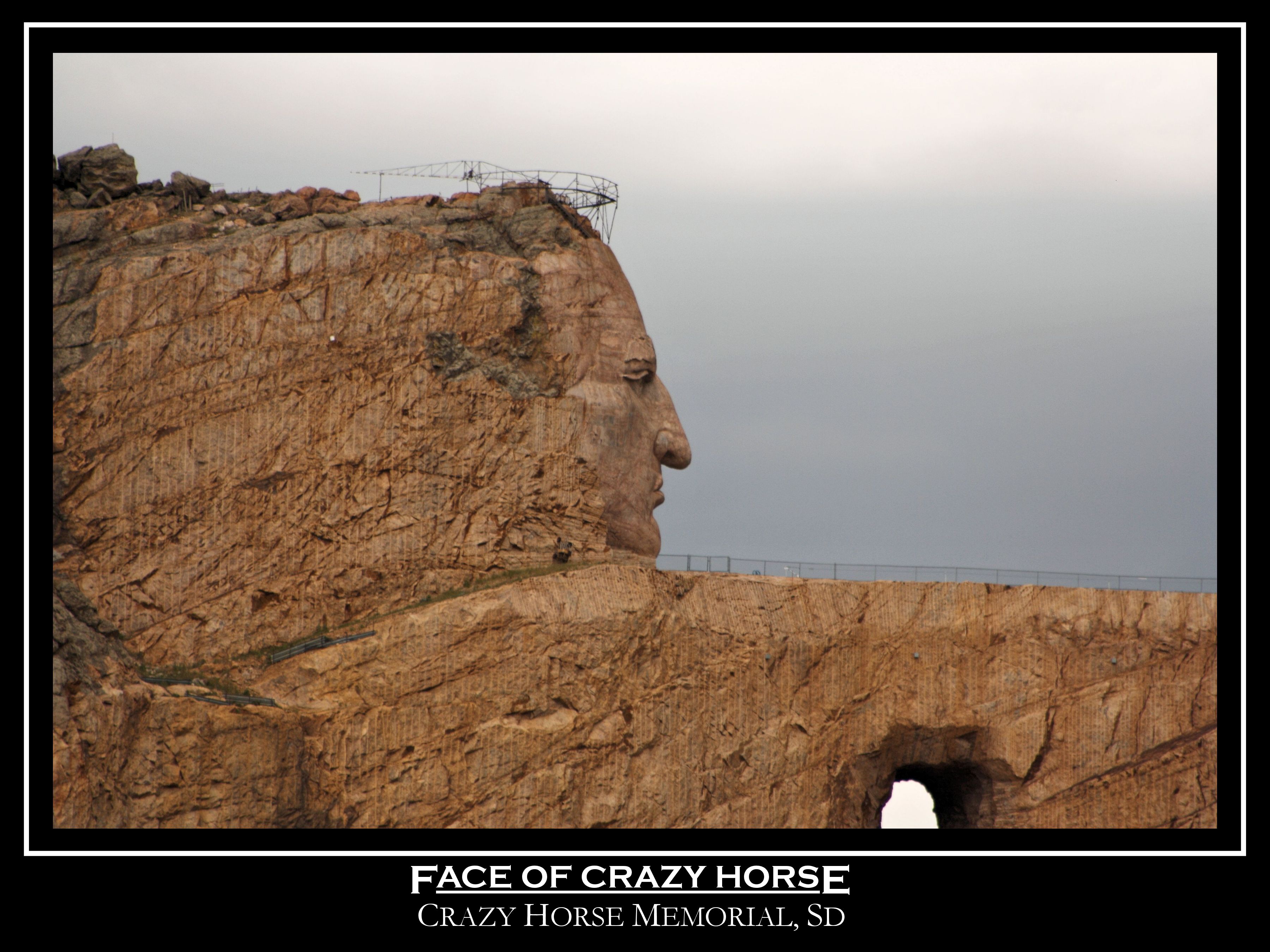
Gutzon Borglum also started to carve another mountain down the road from Mount Rushmore to honor Crazy Horse. Crazy Horse is the world’s largest mountain carving located in the Black Hills of South Dakota. It is considered The Eighth Wonder of the World in progress. Crazy Horse or Tasunke Witco was born as a member of the Oglala Lakota on Rapid Creek about 40 miles northeast of Thunderhead Mt. (now Crazy Horse Mountain) in c. 1840. It was a time when cultures clashed, and land became an issue of deadly contention and traditional Native ways were threatened and oppressed. Crazy Horse responded by putting the needs of his people above his own, which would forever embed him and his legacy in American History. He was killed at Fort Robinson, Nebraska, by a soldier around midnight on September 5, 1877.

Saturday 02/27/2021: Post photo—Mouse Tracks in the Snow.

Settings: Canon EOS 60D, ISO 400, f/5.6, 1/400 s, 55 mm

Mouse paw prints are usually less than half an inch long. The rodents’ front feet have four toes, while their back feet have five. Their footsteps run in parallel lines, and sometimes their tails will create drag marks.

Mouse Tracks without a tail line

These tracks are around from and going away from our woodshed. This is a typical place for mice to hang out. I have not captured any in our house this year. At this time last year, I was clearing out traps almost daily.

For more photo of other project I have work, visit my website: https://photobyjosephciras.weebly.com/ or visit me on Facebook at https://www.facebook.com/PhotobyJosephCiras/.

COVID is real! Be safe out there, keep your social distance, and remember to always wear your mask and wash your hands.