“It’s one thing to make a picture of what a person looks like, it’s another thing to make a portrait of who they are.” — Paul Caponigro
Thank you for all the new views and likes from last week. It helps keep me going. Enjoy my blog post!
Sunday, 04/25/2021: Posted photo—Flower to be Named Later.
Settings: Canon EOS 60D, ISO 400, f/7.1, 1/250 s, 135 mm
The name of the flower is … Calibrachoa.
Calibrachoa, commonly called million bells or trailing petunia, is a tender perennial that produces mounds of foliage, growing only 3 to 9 inches (7.5-23 cm.) tall, along trailing stems and flowers in shades of violet, blue, pink, red, magenta, yellow, bronze and white. Introduced in the early 1990s, all cultivars of Calibrachoa are hybrids with the original species native to South America. They are prolific bloomers from spring to frost.
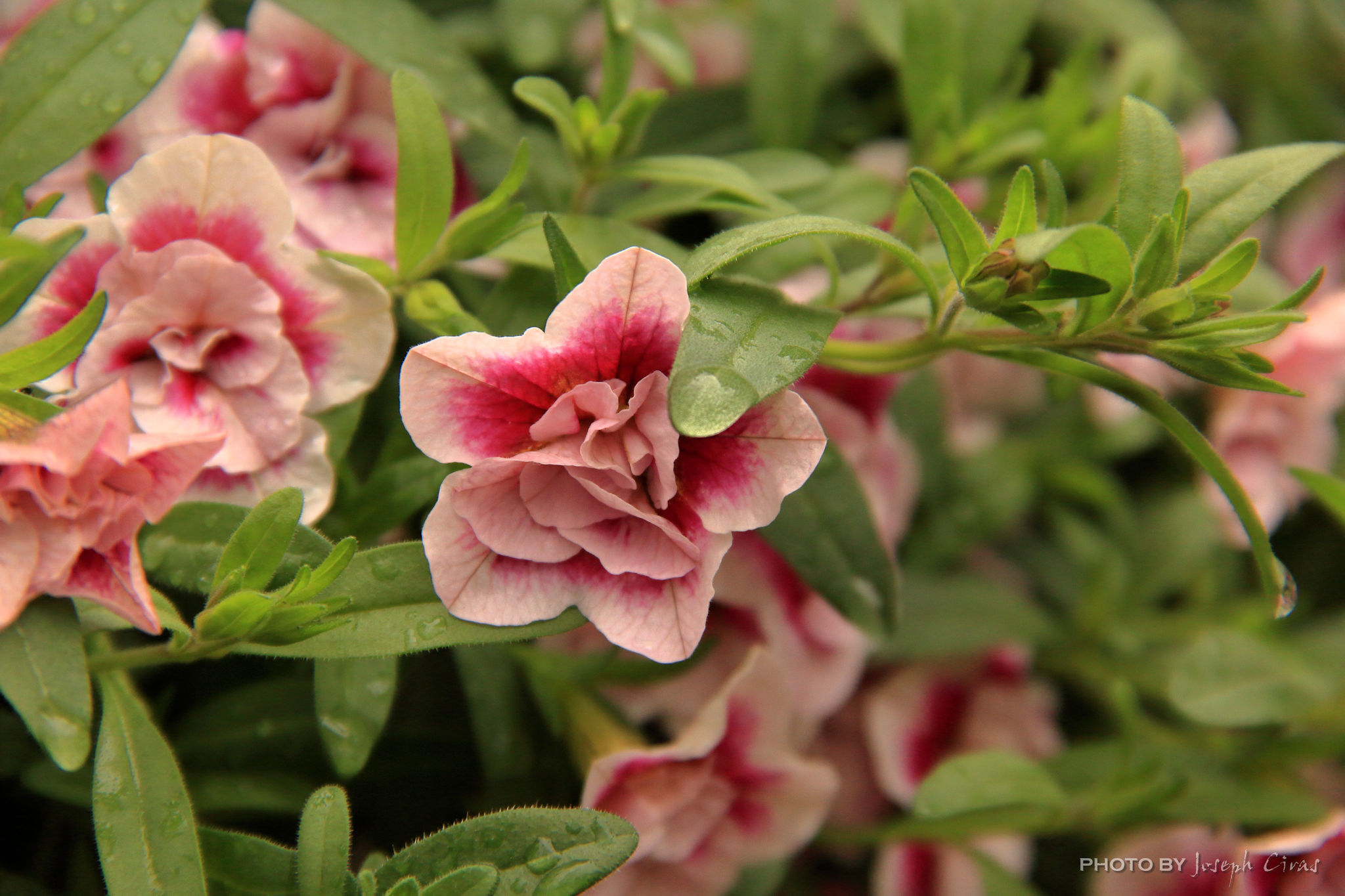
These calibrachoa were purchased as part of a Relay for Life (RFL) fundraiser. They are in a hanger and will be kept in the hanger outside. RFL is a fundraising event sponsored by the American Cancer Society to raise money for cancer research.
Monday, 04/26/2021: Posted photo—Stone Wall.
Settings: FUGIFILM FinePix XP70, ISO 200, f/4.4, 1/58 s, 8 mm.
The wall in this photo is on Bicentennial Trail on Wachusett Mountain. It is one of many field stone walls that I have passed while hiking in New England.
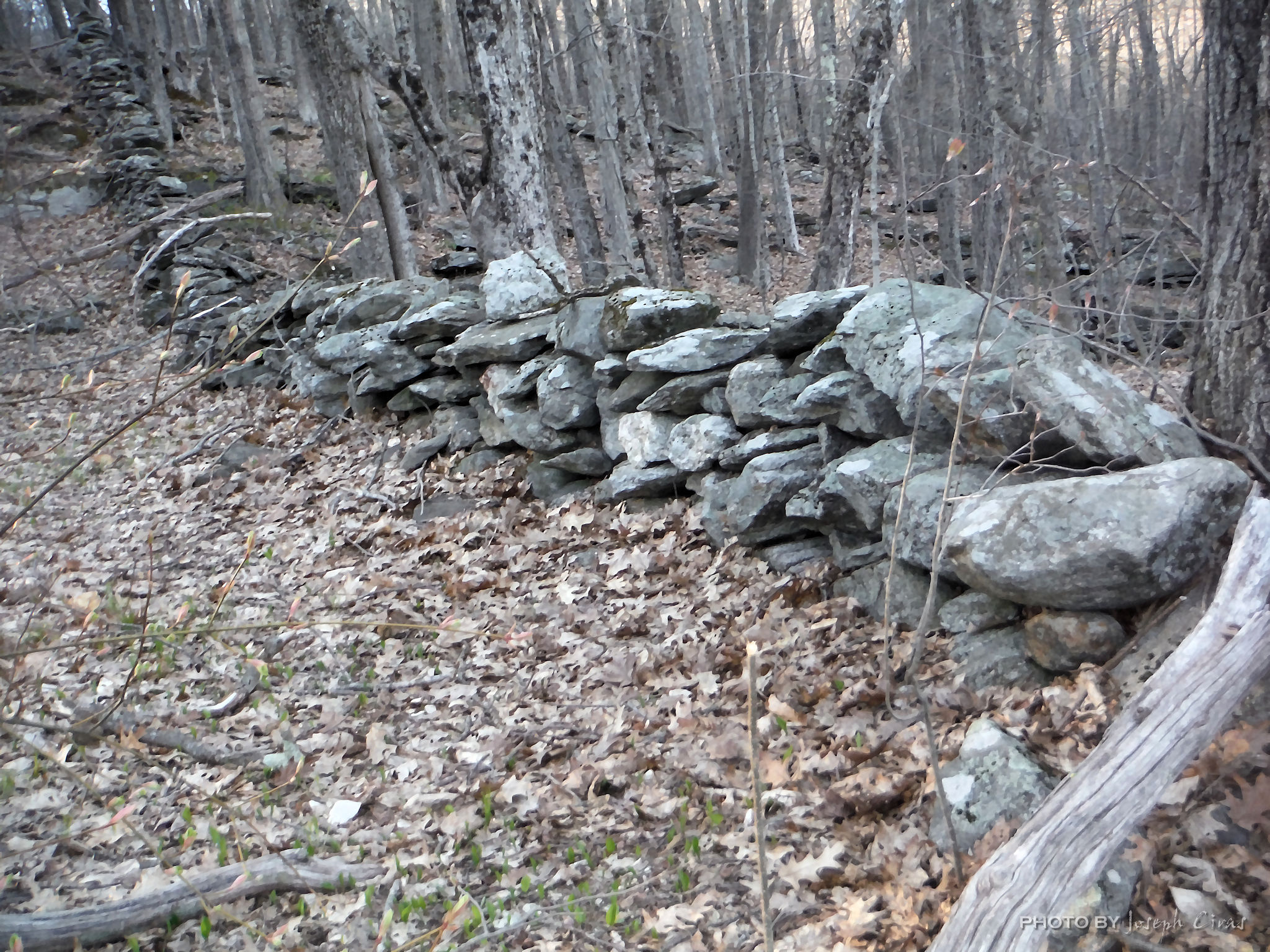
Paraphrasing from Atlas Obscura: “Walk into a patch of forest in New England, and chances are you will—almost literally—stumble across a stone wall. Thigh-high, perhaps, it is cobbled together with stones of various shapes and sizes, with splotches of lichen and spongy moss instead of mortar. Most of the stones are what are called “two-handers”—light enough to lift, but not with just one hand. The wall winds down a hill and out of sight. According to Robert Thorson, a landscape geologist at University of Connecticut, these walls are “damn near everywhere” in the forests of rural New England. He estimates that there are more than 100,000 miles of old, disused stone walls out there, or enough to circle the globe four times.
Wall-building peaked in the mid-1800s when, Thorson estimates, there were around 240,000 miles of them in New England. That amounts to roughly 400 million tons of stone, or enough to build the Great Pyramid of Giza—more than 60 times over.”
New England’s first farmers of European descent found themselves plowing soil strewn with rocks left behind by glaciers. So, stone by stone, they stacked the rocks into waist-high walls. Some say these walls helped win the American Revolution, and they later inspired Robert Frost’s poem “Mending Wall.” Each year frost heaves pushed still more stones to the surface, which some of those early farmers said was the work of the devil. Generations later, farmers returned time and again to repair the walls as the years went by.
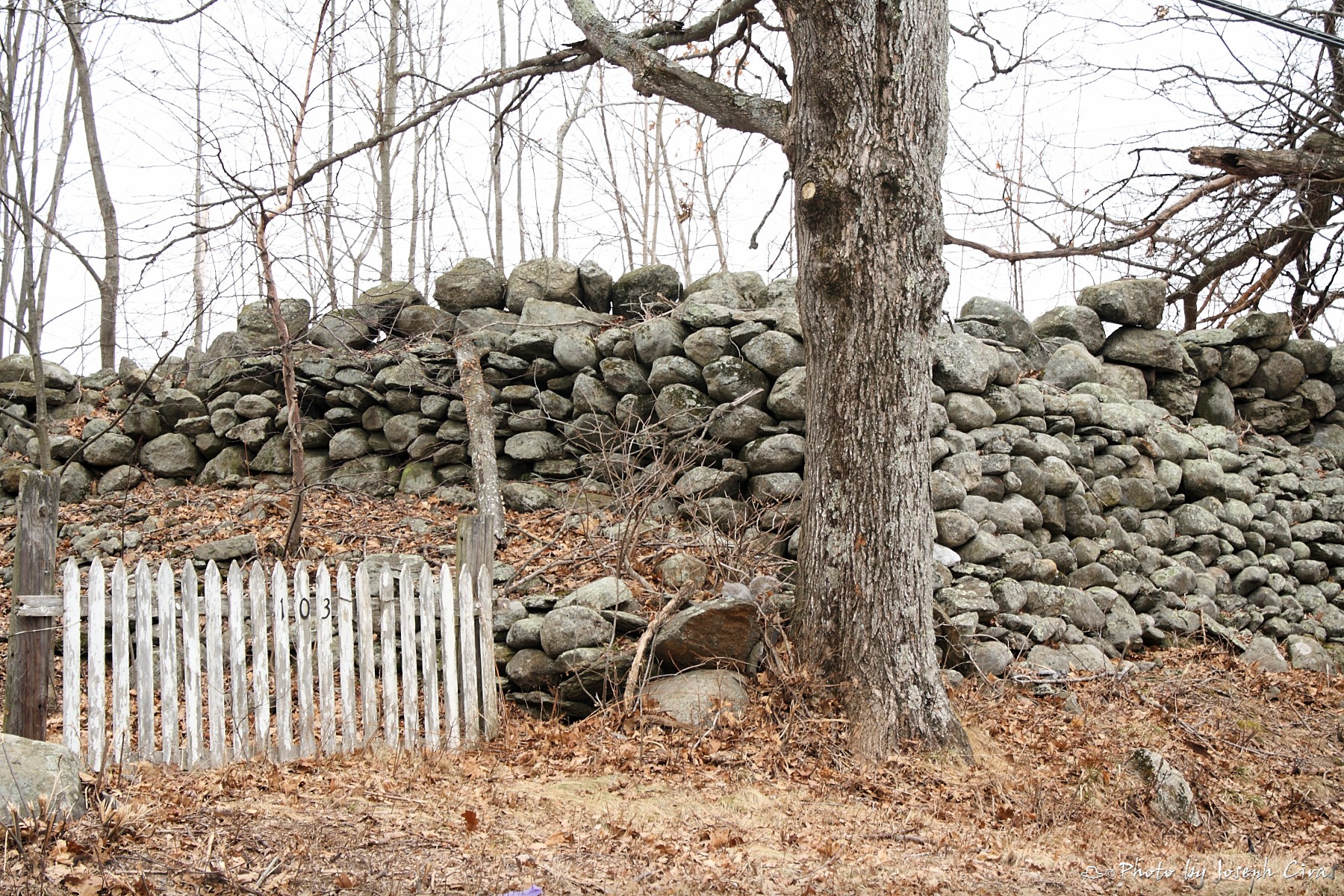
Here is a little history about a wall in my hometown that was posted in a local newspaper. I have posted a photo of this wall in the past and I will post it here again.

Sign at Spite Wall 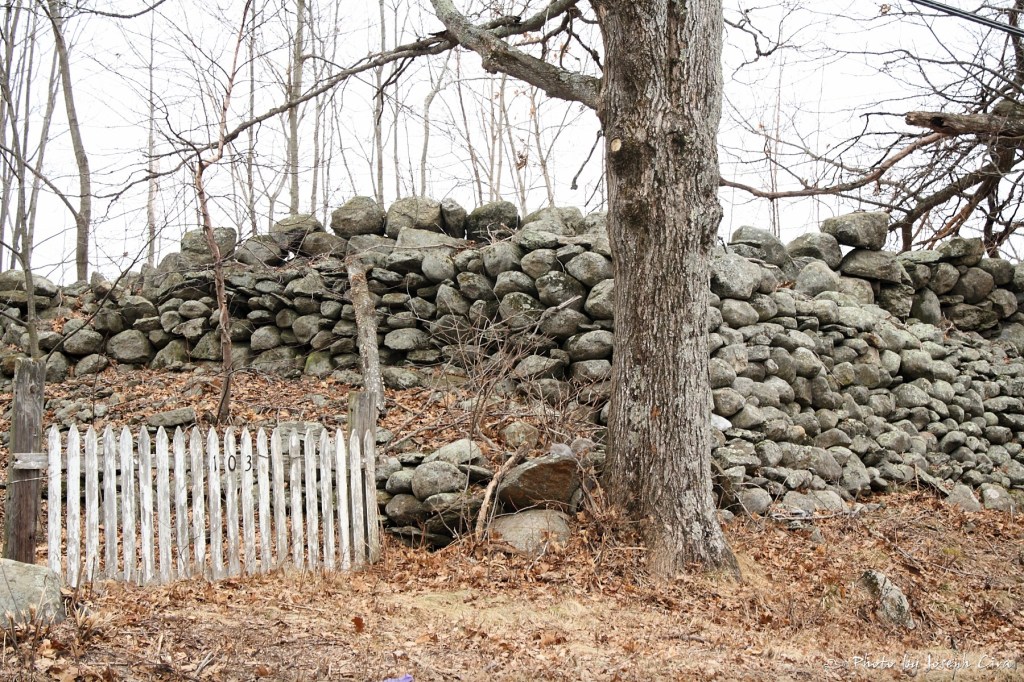
Spite Wall
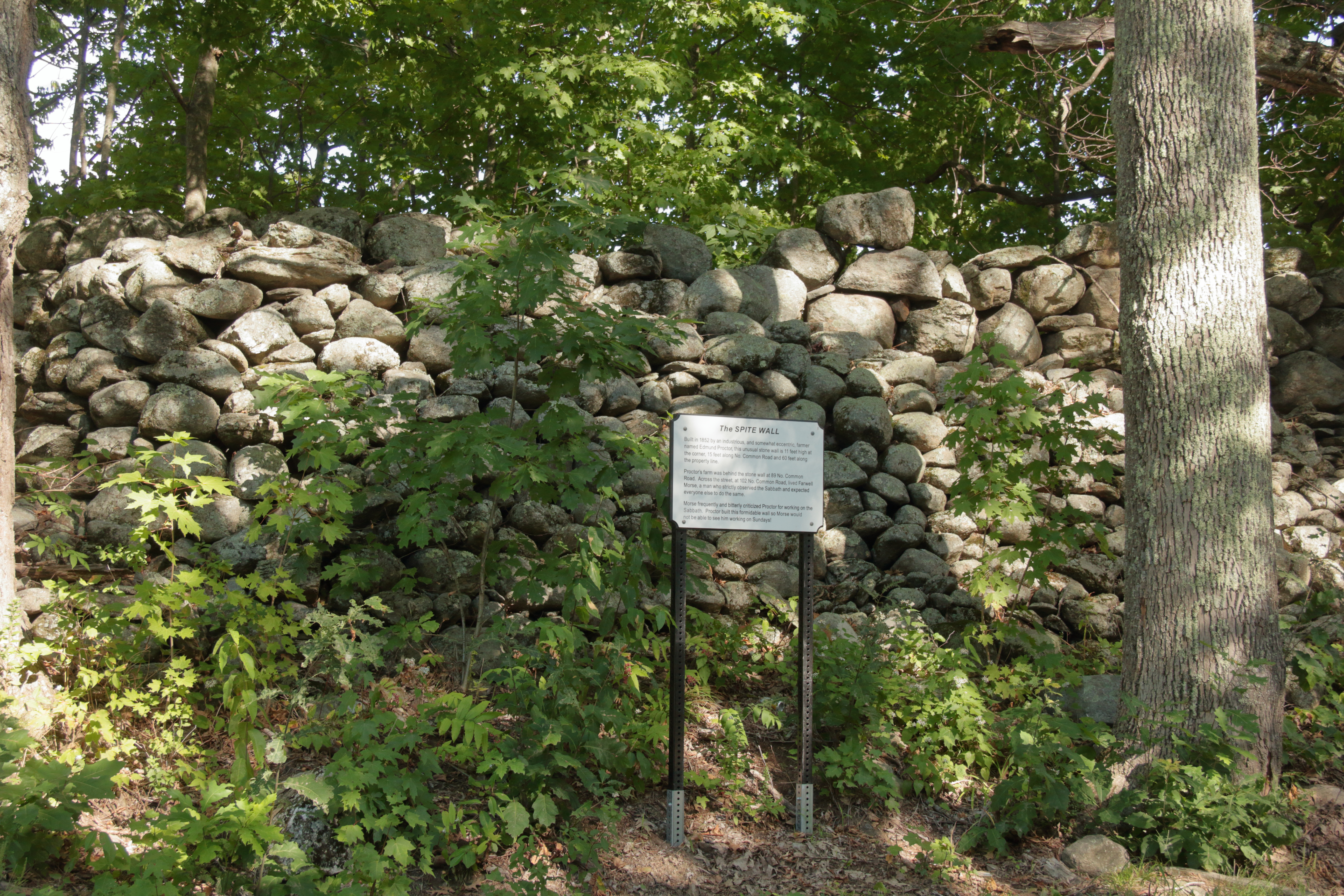
“Edmund Proctor moved to a farm in Westminster in 1852. He continued the farm there and lived in his house on the side of North Common road for the rest of his life. But, as true for most things, his life on the farm was not without conflict.
His nearest neighbor, Farwell Morse, lived across the street. The two houses were close, so close both neighbors could hear and see what the other was doing all day.
Upon discovering Edmund Proctor working on his farm one Sunday, Farwell Morse was astonished. Morse did not want to hear his neighbor working, not to mention yelling, on Sunday. Morse told Proctor of his objection and asked that he stop swearing at his oxen while working on his farmland. Morse thought that was that.
But this was not the end for Edmund Proctor. So firmly fixed in his beliefs, Proctor was resolved to keep working on Sunday, whether his neighbor liked it or not.
So, Proctor built a wall. A wall made of stones- the tallest of its type in Massachusetts. His barricade was directly in front of his house and blocked him from view of Morse. He kept piling stones on his wall until the day he died in 1880, when he was 71 years old.
His decades-lasting project became known as “The Spite Wall,” a suitable name for the enormous barrier stubbornly hiding the land behind it. At almost 11 feet tall, Proctor’s Spite Wall is still visible today.
There is no known response of what Morse thought of his neighbor’s blatant stand against Morse’s beliefs. But we can imagine how shocked he might have been.”
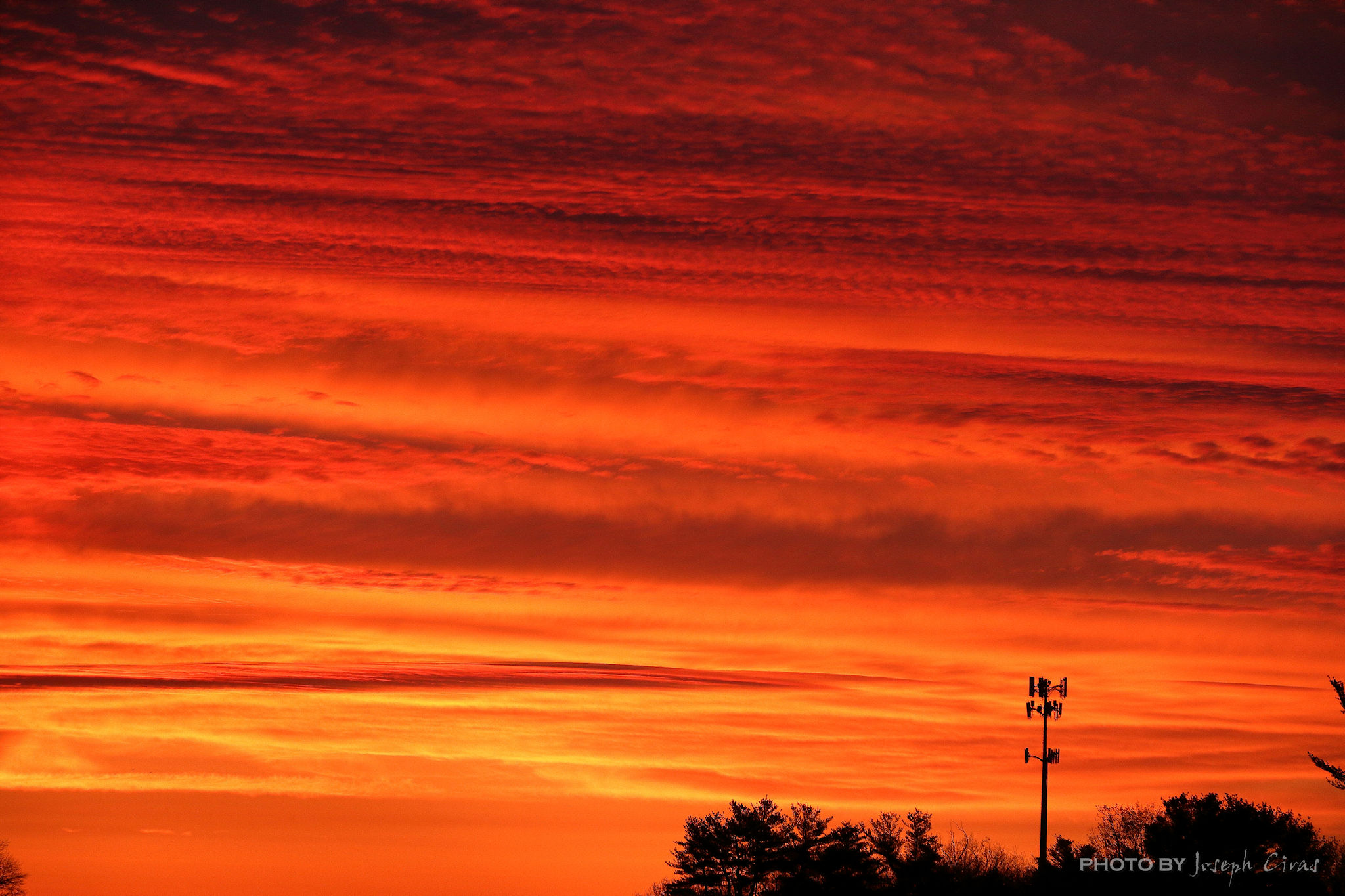
Tuesday, 04/27/2021: Posted photo—Bright Morning Sky.
Settings: Canon EOS 60D, ISO 400, f/7.1, 1/40 s, 106 mm.
Today’s photo is about being at the right place at the right time. Saw this sky on my drive into work. I had to stop and take a photo of it before the colors were gone.
Wednesday, 04/28/2021: Posted photo—COVID Vaccine.
Settings: Samsung SM-G930V (Galaxy S7), ISO 160, f/1.7, 1/60 s, 4 mm.
Short and sweet today. Revieved my second COVID vaccine shot today. Tired with a slight headache. Two week and I will be almost fully vaccinated.

Get your vaccine!
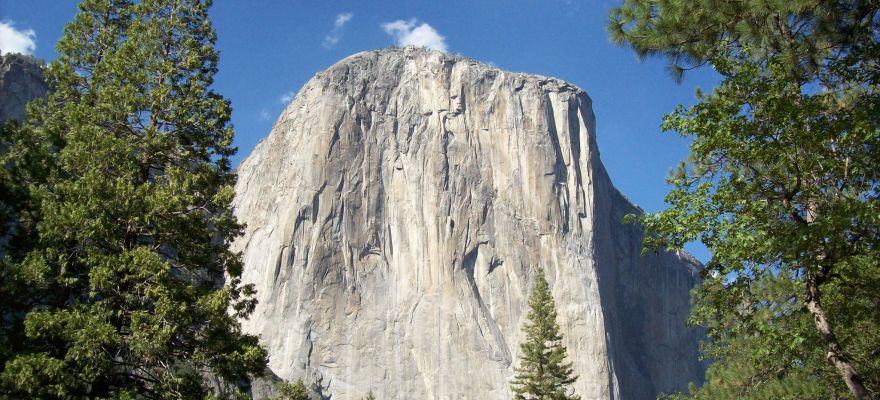
Thursday, 04/29/2021: Posted photo—El Capitan.
Settings: KODAK EASYSHARE C613, ISO 80, f/4.8, 1/434 s, 6 mm.
El Capitan, also known as El Cap, is a vertical rock formation in Yosemite National Park, located on the north side of Yosemite Valley, near its western end. The granite monolith is about 3,000 feet from base to summit along its tallest face and is a popular objective for rock climbers. It was one of the last wonders we saw in the park. We spent most of our visit exploring around Yosemite Village.

Yosemite is my favorite National Park. The Grand Canyon is a very close second. If I could have two favorites these would be the two. Looking at the rock face, my family and I see many faces on the cliff. If you look closely, can you see them?
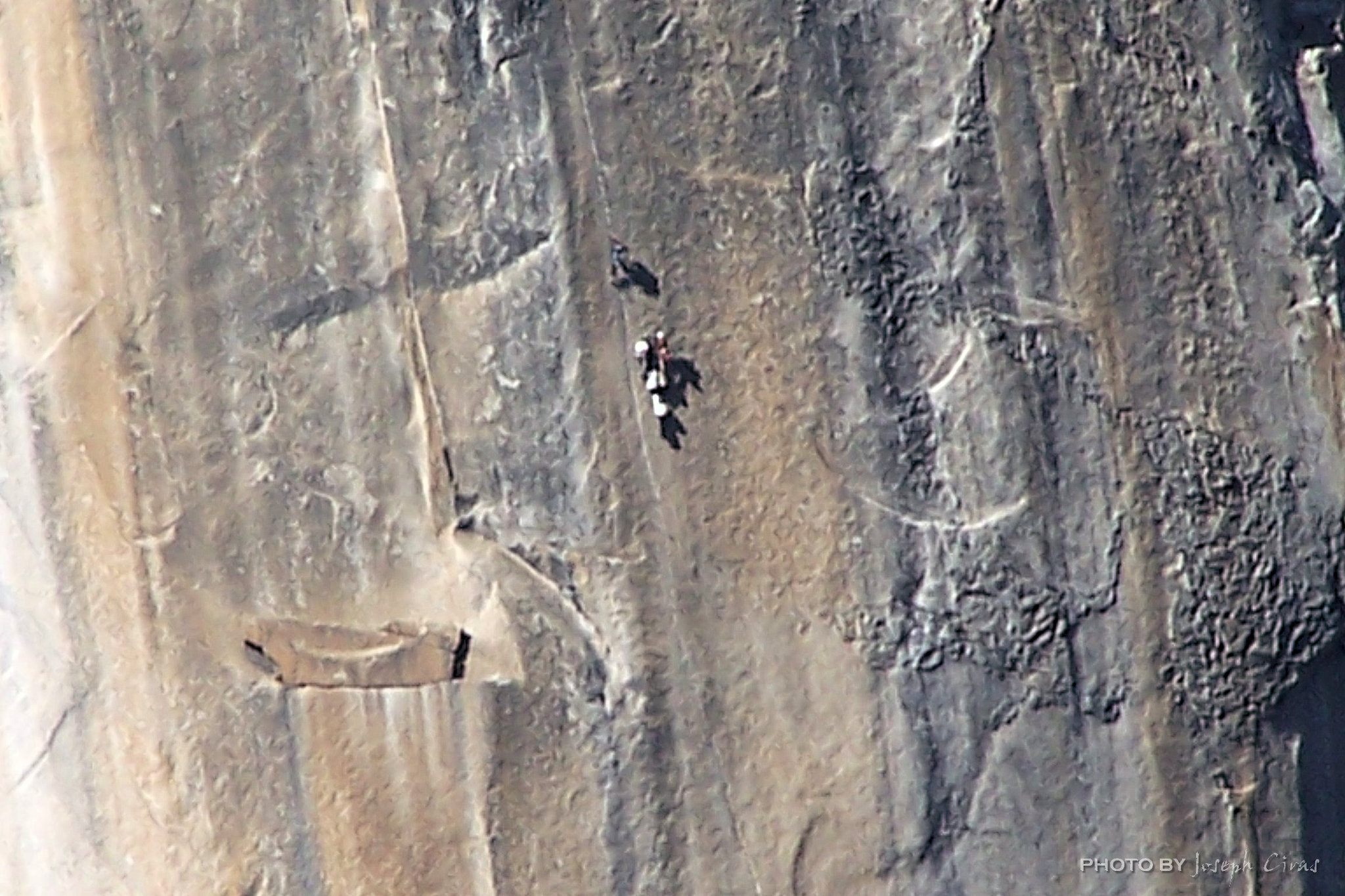
Here is a photo of some climbers looking like they are setting up their sleeping hammock for the night.
Friday, 04/30/2021: Post photo—Roadblock.
Settings: FUJIFILM FinePix XP70, ISO 200, f/4.9, 1/90 s, 16 mm
This is the second time this week that I have been stopped by a rafter of turkeys. This time the tom was stopping traffic as his family crossed the road.

I was on my way to hike a route that I did last week to measure its mileage. Last week my phone died when on this route and I wanted to verify the mileage that my mapping program gave me for the route. They were both the same.
Saturday, 05/01/2021: Post photo—Hobblebush.
Settings: Samsung SM-G930V (Galaxy S7), ISO 50, f/1.7, 1/4240 s, 4 mm.
Hobblebush is a 6-12 ft., open, straggling shrub, often with pendulous outer branches which root where they touch the ground. Flat-topped clusters of white flowers have a lacy effect similar to some hydrangeas and contrast well with the medium green foliage. Berries change from red to blue. The fall foliage is usually bright red. This shrub has fragrant, flat-topped clusters of small, white flowers, the outer flowers larger than the inner ones.
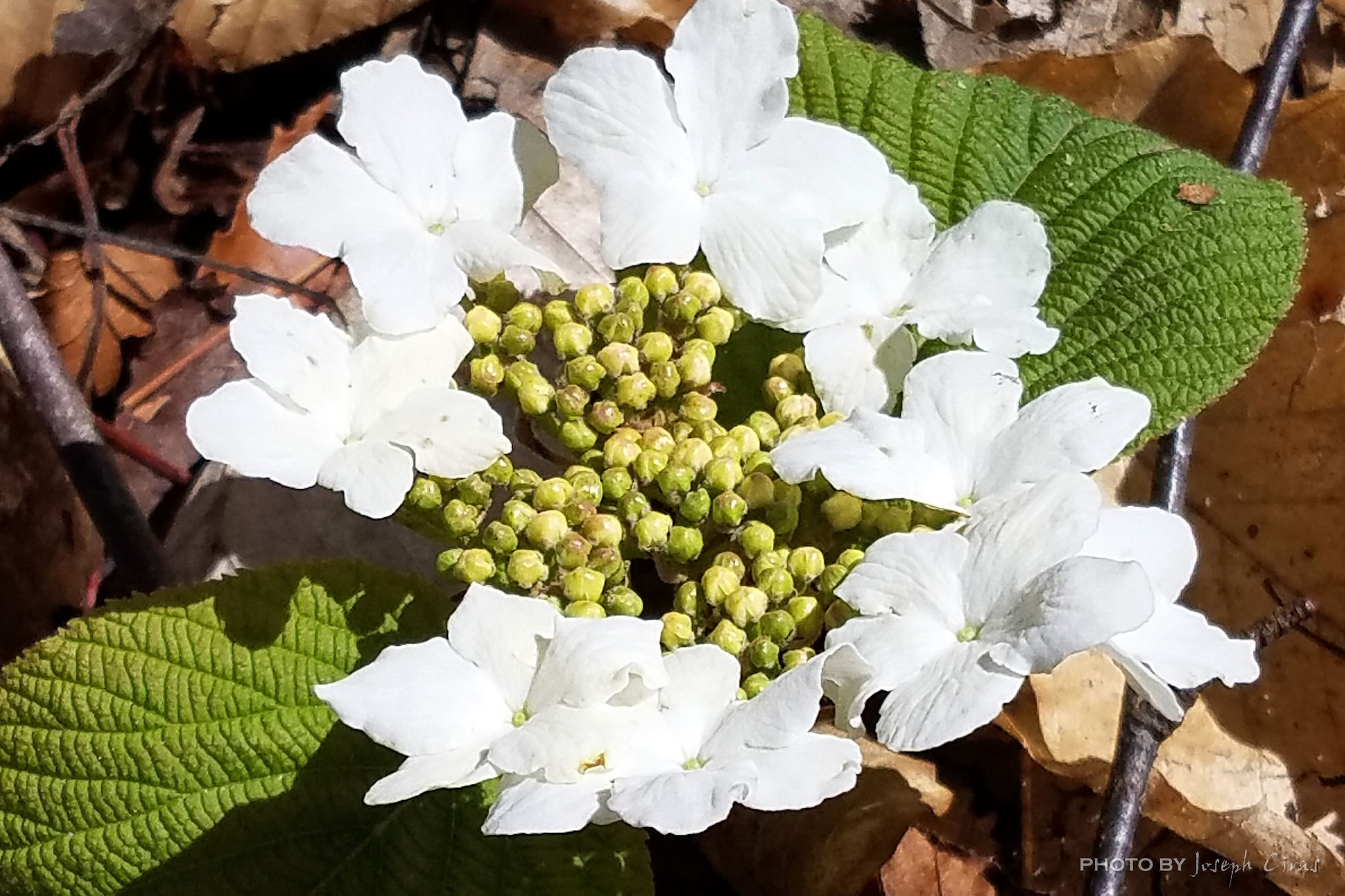
This straggly shrub has beautiful bronze-red or purple- pin autumn coloration and is used by wildlife for food and cover. Its branches often bend and take root, tripping or “hobbling” passers-by; hence its common name.
This one is on Harrington Trail on Wachusett Mountain. Identified it with my Seek app. Sorry for the photo being washed out. I took it with my cell phone quickly as I passed by it.
For more photo of other project I have work, visit my website: https://photobyjosephciras.weebly.com/ or visit me on Facebook at https://www.facebook.com/PhotobyJosephCiras/.
COVID is real! Be safe out there, keep your social distance, and remember to always wear your mask and wash your hands.
 Photo by Joseph Ciras