Photographic Thoughts — 01/23/2022 to 01/29/2022

“It’s weird that photographers spend years or even a whole lifetime, trying to capture moments that added together, don’t even amount to a couple of hours.” — James Lalropui Keivom

Thank you for all the new views and likes from last week, it helps keep me inspired.

Sunday, 01/23/2022: Posted photo — Music.

Settings: Google Pixel 2, ISO 252, f/1.8, 1/120 s, 4 mm.

Psalm 23, The Lord is my shepherd…

This is best known psalm out of the 150 psalms in the Bible. There are five books and four literary styles in the psalms. The styles are hymns, prayers of thanksgiving and petition, religious lyrics, and didactic psalms. You can go online or ask your religious leader for more information on the psalms.

Songs, or hymns, at mass are used to enhance the service. I played the organ/keyboard during Mass when I was in college. My family still plays and sings in the choir during Mass today. A good song will lift your spirits.

I did not intend to use this photo today. I used it because it was one of the only photos that I took and it was the one that I liked the best.

Monday, 01/24/2022: Posted photo — Dusting of Snow.

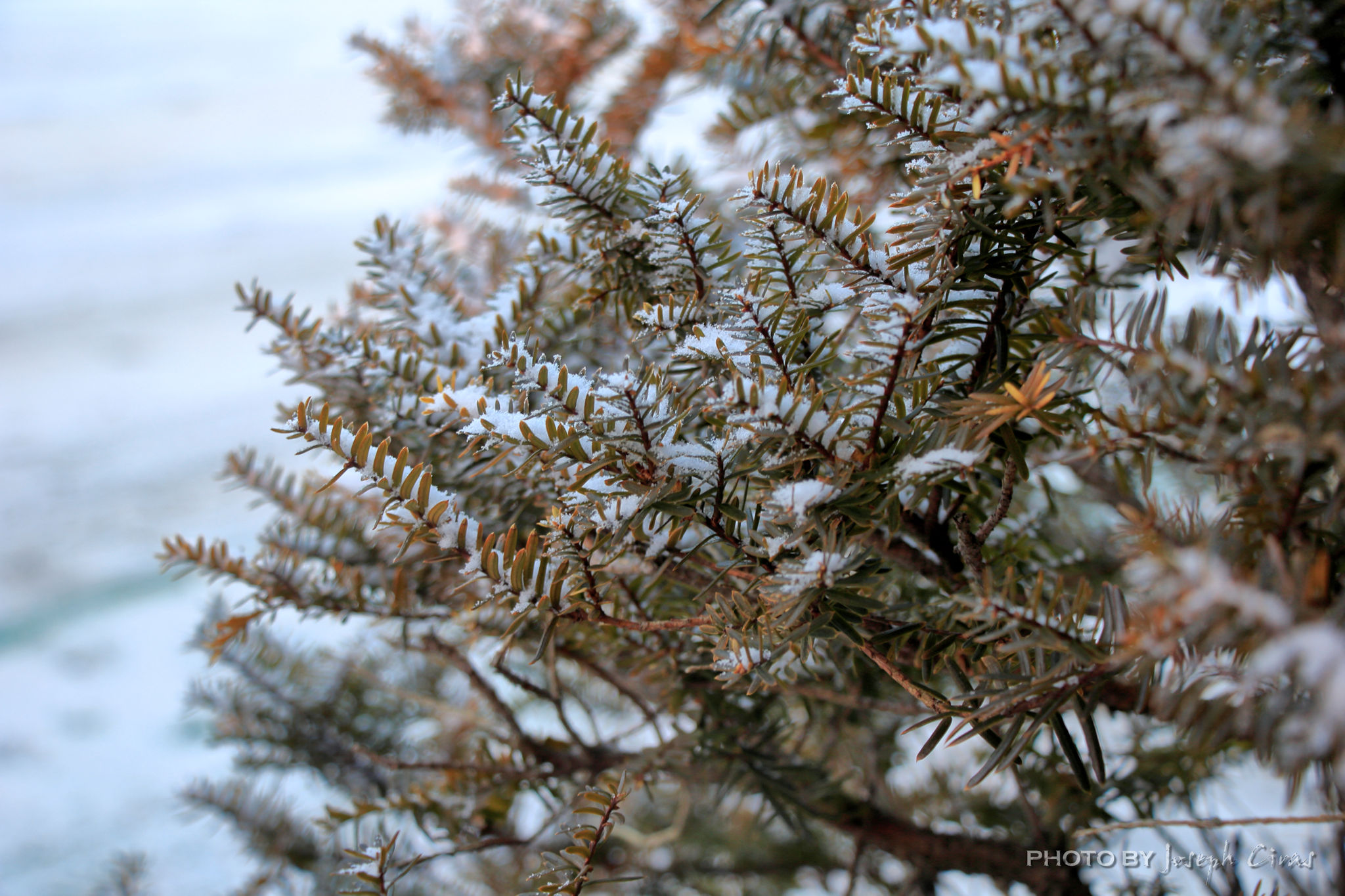
Settings: Canon EOS 60D, ISO 100, f/5, 1/15 s, 50 mm.

Last week we received heavy and wet snow. This week we received a dusting of snow.

In taking this photo, I was practicing depth of field (DOF) in my photos. I am in my 13 year of taking photos every day and I still need on practicing various techniques so my photos are of my liking. I am my own worst critic.
I did go on a great hike tonight. This is my normal Monday night hike on Wachusett Mountain. The trails were in great shape from all the people that have been hiking after the last snowstorm. Microspikes are needed. Some people say no to microspikes since there is no exposed ice on the trails. If I am leading a hike, I am requiring the use of microspikes, or other traction devices, since there is ice under the snow and the spikes give you better traction. I am cautions in a group situation.

Microspikes are great for hiking or in thick ice, nanospikes are good for walking the in areas where traction is needed, but they are not as aggressive as microspikes. I would not recommend the use of nonspikes while hiking since they do not have the grip you need on the snow or ice, or the inclines and declined on a hiking trail. A more aggressive means for traction is the use of crampons. I use my crampons in the higher elevations of the White Mountains, or on a very icy trail. When I hike in the winter, I carry two sets of microspikes: my inexpensive “rock” microspikes and my “good” microspikes and have my crampons with me. Occasionally I will also attach my snowshoes to my pack if there has been newly fallen snow and I know that trail that I will be hiking is an underutilized trail. The difference between my inexpensive “rock” microspikes and my “good” microspikes is the length of the spikes and the quality of the product.

Tuesday, 01/25/2022: Posted photo — Snow White.

Settings: Canon EOS 60D, ISO 800, f/36, 1/50 s, 93 mm.

Light dusting of snow received last night. This makes for a wonderful winter scene. When I was walking around yesterday, I was thinking of the challenge for the 52 frames project https://52frames.com/photographer/20931.  The challenge is for this week is to take a minimalistic photo. This is my first minimalistic photo of the week. Look for a different photo later in the week.

Wednesday, 01/26/2022: Posted photo — Colors.

Settings: Canon EOS 60D, ISO 100, f/7.1, 1/160 s, 115 mm.

Last week at this time, I posted a sunrise photo. Today I did the same.

I would like to talk about the colors in a sunrise/sunset. When the sun is low on the horizon during sunrises and sunsets, the sunlight travels through more of the atmosphere. Shorter wavelength colors (blues and violets) get scattered out. This leaves more of the longer wavelength colors like yellow, orange, and red. Therefore, sunrises often take on such colors. Some of the colors of a sunrise or sunset are #95382c, #141b24, #4f3c54, #223444, and #9c4a44 for the more technical people that read my post. Sunrises and sunsets are also in the 1000–2000 K range. Other base settings for sunrise and sunset photos are f/6–f/16 and a shutter speed of 1/500 s. I also like to take my photos one step underexposed to bring out the colors. Shoot RAW so values can be adjusted post process if required.

As always, practice sunrise and sunset photos to find out the best settings for your camera.

Thursday, 01/27/2022: Posted photo — Sky.

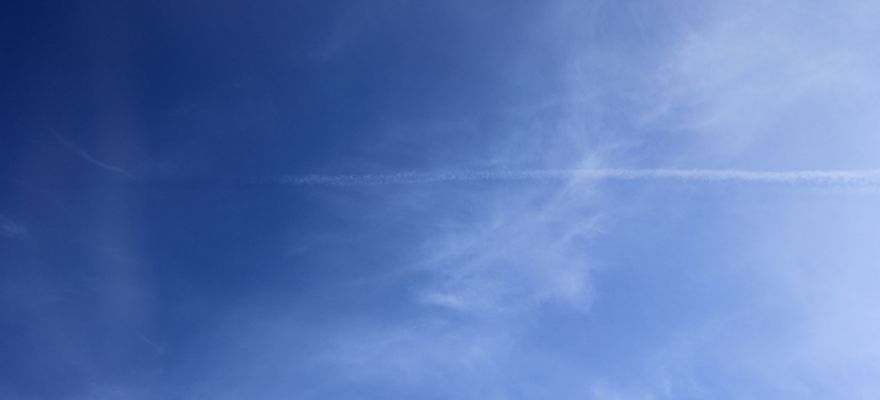
Settings: Canon EOS 60D, ISO 100, f/7.1, 1/640 s, 24 mm.

Here is another minimalistic photo for the week. I like this one better than the snow photo so this is the one that I may post for the 52 frames project.
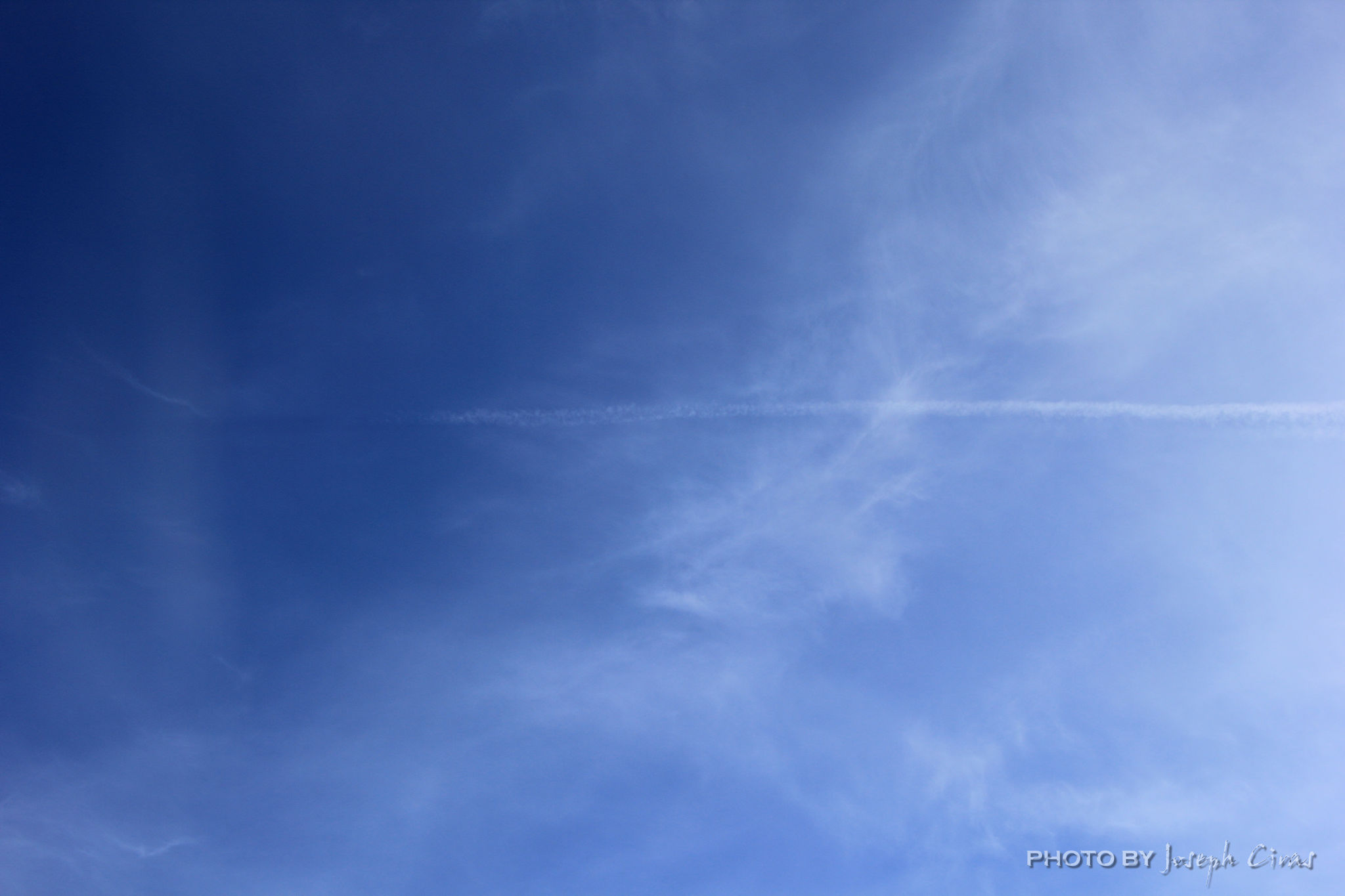
Some of the elements of minimalistic photography are simplicity, negative space, powerful composition, isolation, color, and lines and shapes. Minimalist photography shows the power of a simple solo object. In this case, it is the contrail against the blue sky.

Looking at the simplicity of this photo, my watermark may be taking away some of its impact. Need to think about that next time. There is a debate whether to watermark photos. It does take away from the aesthetic quality of some photos. I watermark the photos that I post and not the ones that I display in gallery showings or the ones that I sell.

Friday, 01/28/2022: Post photo — Hook.

Settings: Canon EOS 60D, ISO 100, f/5, 1/15 s, 62 mm.

I see a hook, a needlenose shark, or a stitch puller. What do you see? This is another pareidolia photo.

Today I am not writing much about this photo since I need to prepare our house for the snow storm that will happen tomorrow.

Saturday, 01/29/2022: Post photo — Looking Down the Street.

Settings: Canon EOS 60D, ISO 100, f/7.1, 1/80 s, 29 mm.

We received about 10 inches of snow out of today’s storm. It is much less than originally predicted. The storm moved out to sea, and we were on the outer edge of the storm.

I did go out every two hours today to shovel the snow. The first few times out there were a few inches of show to shovel. As the day went on, the shoveling was easier and quicker. Winter storm Kenan was another let down for us. Only 10 inches of snow. We are still waiting for the first big storm of the year.
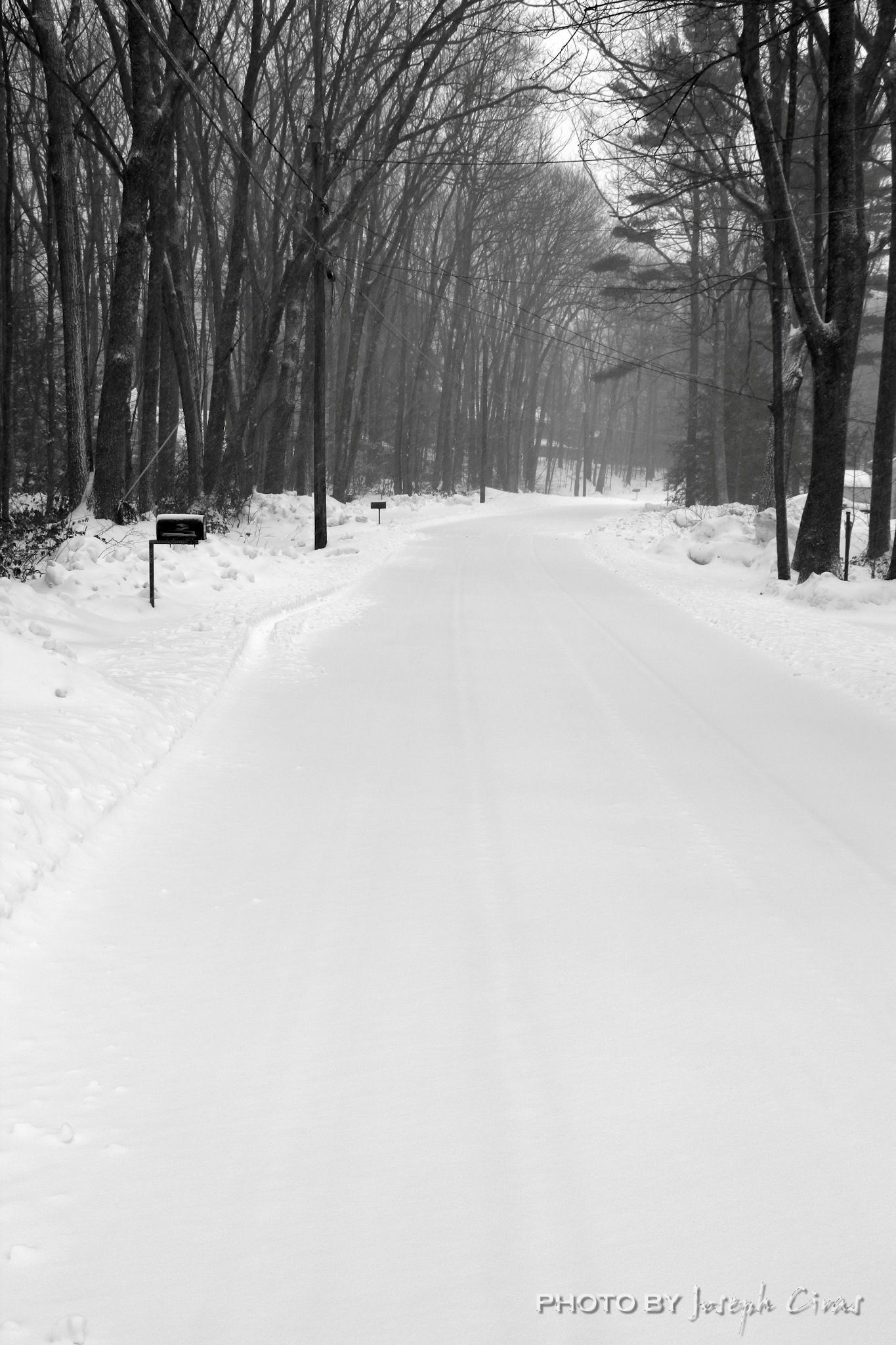
Kenan was a bomb cyclone. A bomb cyclone is a storm that undergoes bombogenesis. Bombogenesis is a rapid intensification of a low-pressure system in which we measure in millibars. The lower the pressure is, the stronger the storm.

That is all for now. Until next week, be safe.

For more photo of other project I have work, visit my website: https://photobyjosephciras.weebly.com or visit me on Facebook at https://www.facebook.com/PhotobyJosephCiras/.

My Weebly website is back up and running. I am looking of suggestions on how to make it look better.

Photographic Thoughts — 01/16/2022 to 01/22/2022

“Character, like a photograph, develops in darkness.” — Yousuf Karsh

Thank you for all the new views and likes from last week, it helps keep me inspired.

Sunday, 01/16/2022: Posted photo — It’s Cold Outside.

Settings: Canon EOS 60D, ISO 100, f/7.1, 1/30 s, 113 mm.

Last week I wrote about how cold it was in this area. Here is a photo of this morning’s temperature. As you can see, it is still cold in this area. The temperature will warm up tomorrow since we are expecting eight inches of snow. Looks like I will be snowshoeing to work tomorrow.

From AccuWeather:

A question meteorologist get asked all the time during the cold winter months is “can it ever be too cold to snow”? Well, the short answer is no.

The ingredients for snow are:

1. A temperature profile that allows snow to reach the surface
2. Saturated air
3. Enough lifting of that saturated air to allow snow to develop aloft and fall to reach the surface

The phrase “it’s too cold to snow” probably originated as a misapplication of the relationship between temperature and the maximum amount of water vapor that can be in the air. When temperature decreases, the maximum capacity of water vapor that can be in the air decreases. Therefore, the colder it gets the less water vapor there will be in the air.

Monday, 01/17/2022: Posted photo — My Commute.

Settings: Google Pixel 2, ISO 186, f/1.8, 1/60 s, 4 mm.

It snowed last night, and it was snowing during my morning commute. I like to say that my commute took longer that usual to get to work. What normally takes me five minutes, took me 45 minutes. It is much safer for me to walk to work in the snow than it is for me to drive in the snow. A little more than half of my hike is on the Midstate Trail. It is nice to live so close to a trail junction or trailhead.

During my three mile hike to work, I may see one or two cars and a half dozen plows. On my way home from work, there will be some more cars, depending on the road conditions. People stay home from work when it is snowing. The funny thing about that is that I live in north central Massachusetts, in a snowy part of New England, so people should be used to driving in the snow.

I did not go on my normal Monday night hike on Wachusett Mountain today. If I were to hike it, I would have to leave work a little early, take the three mile, 45 minute hike home; get in my car; and then hike three to four more miles on the mountain.

Walking generally occurs on flat paths, while hiking often occurs in areas of high elevation. It can include hills and mountains. Some people think of hiking as anything that has above a 500 foot change in elevation.

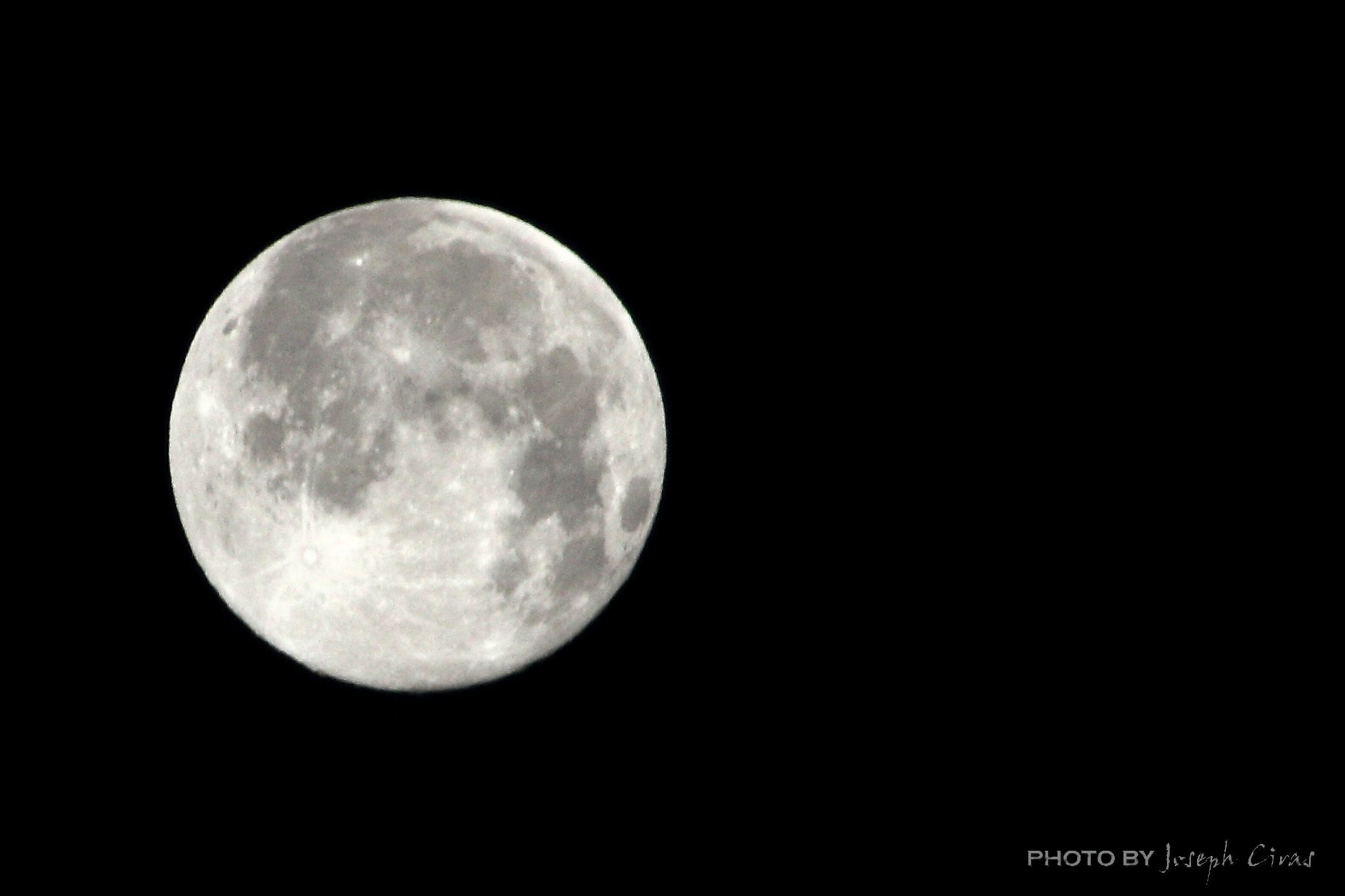
Tuesday, 01/18/2022: Posted photo — Moon — Handheld Practice.

Settings: Canon EOS 60D, ISO 100, f/16, 1/250 s, 300 mm.

The full moon was yesterday. It was snowing yesterday so I did not have the opportunity to do my full moon without a headlamp nighttime hike on Wachusett Mountain. As written yesterday, I walked to and from work because of the weather.

This morning I saw the moon and wanted to take a photo of it for this month.

From the Old Farmer’s Almanac: “It’s thought that January’s full Moon came to be known as the Wolf Moon because wolves were more likely to be heard howling at this time. It was traditionally believed that wolves howled due to hunger during winter, but we know today that wolves howl for different reasons. Howling and other wolf vocalizations are generally used to define territory, locate pack members, reinforce social bonds, and coordinate hunting.”

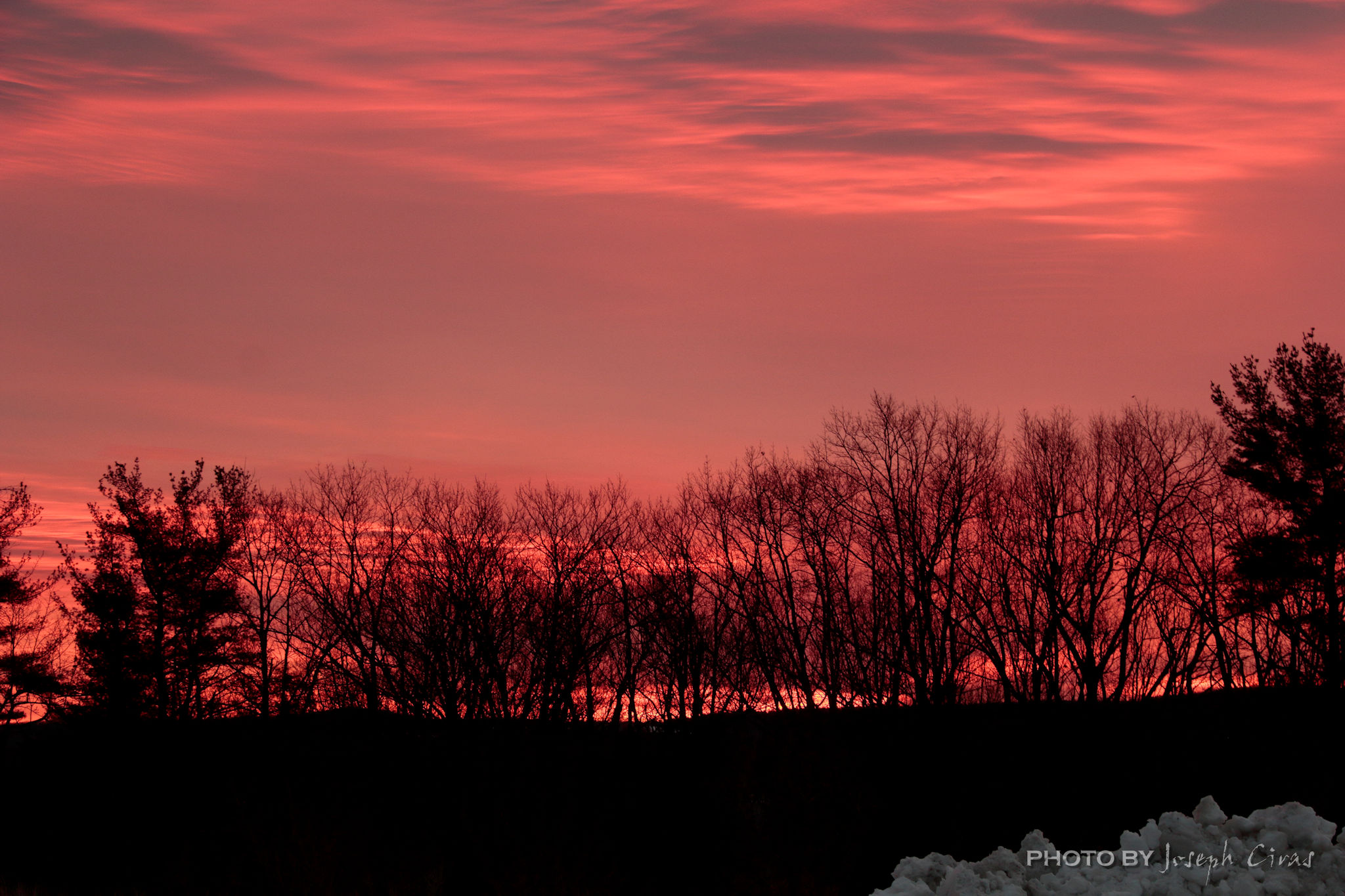
Wednesday, 01/19/2022: Posted photo — Sunrise.

Settings: Canon EOS 60D, ISO 200, f/7.1, 1/30 s, 50 mm.

The sky caught my eye this morning, so I took a photo of it. The photo itself will explain why. What great colors. Too bad a photo does not do it justice.

Thursday, 01/20/2022: Posted photo — Aialik Glacier.

Settings: Canon EOS DIGITAL REBEL XS, ISO 200, f/11, 1/640 s, 75 mm.

The Aialik Glacier is a glacier in the Kenai Peninsula Borough of Alaska. It drains into Aialik Bay. Part of Kenai Fjords National Park, it drains the Harding Icefield. Aialik Glacier, a little over 15 miles from Seward, is the largest glacier in Aialik Bay.

Icefields are expanses of glacial ice flowing in multiple directions. Like ice caps, icefields usually cover less than 50,000 square kilometers (19,300 square miles), so they are much smaller than the ice sheets blanketing Greenland and Antarctica. In contrast to ice caps, icefields are interrupted by peaks of the underlying mountain ridges, and those mountains influence the flow of the icefield.

This is one of the amazing sites in Alaska.

Friday, 01/21/2022: Post photo — Morning View.

Settings: Canon EOS 60D, ISO 100, f/7.1, 1/160 s, 101 mm.

What a great view this morning. As I walk around, I am seeing the sunrise more since the sun is rising earlier in the day. The colors this week on the sunrises have been spectacular.

Saturday, 01/22/2022: Post photo — Colors.

Settings: Google Pixel 2, ISO 124, f/1.8, 1/125 s, 4 mm.

I am posting to another website weekly, https://52frames.com/photographer/20931. This week’s theme is Complementary Colors. I had to go to the store today to get somethings to repair my roof and took this photo of the color samples. There are many sets of Complementary Colors in this shot.

That is all for now. Until next week, be safe.

For more photo of other project I have work, visit my website: https://photobyjosephciras.weebly.com or visit me on Facebook at https://www.facebook.com/PhotobyJosephCiras/.

My Weebly website is back up and running. I am looking of suggestions on how to make it look better.

Photographic Thoughts — 09/19/2021 to 09/25/2021

“You don’t take a photograph, you make it.” — Ansel Adams

Thank you for all the new views and likes from last week, it helps keep me inspired.

Sunday, 09/19/2021: Posted photo — Trail Marker.

Settings: Canon EOS 60D, ISO 200, f/7.1, 1/25 s, 31 mm.

This is an old trail marker on Wachusett Mountain. There are a few trails on the mountain that have the trail name carved into stone. When I see these markings, I wonder how long it took for someone to carve the marking.

I took this photo to show how the trails were marked many years ago.

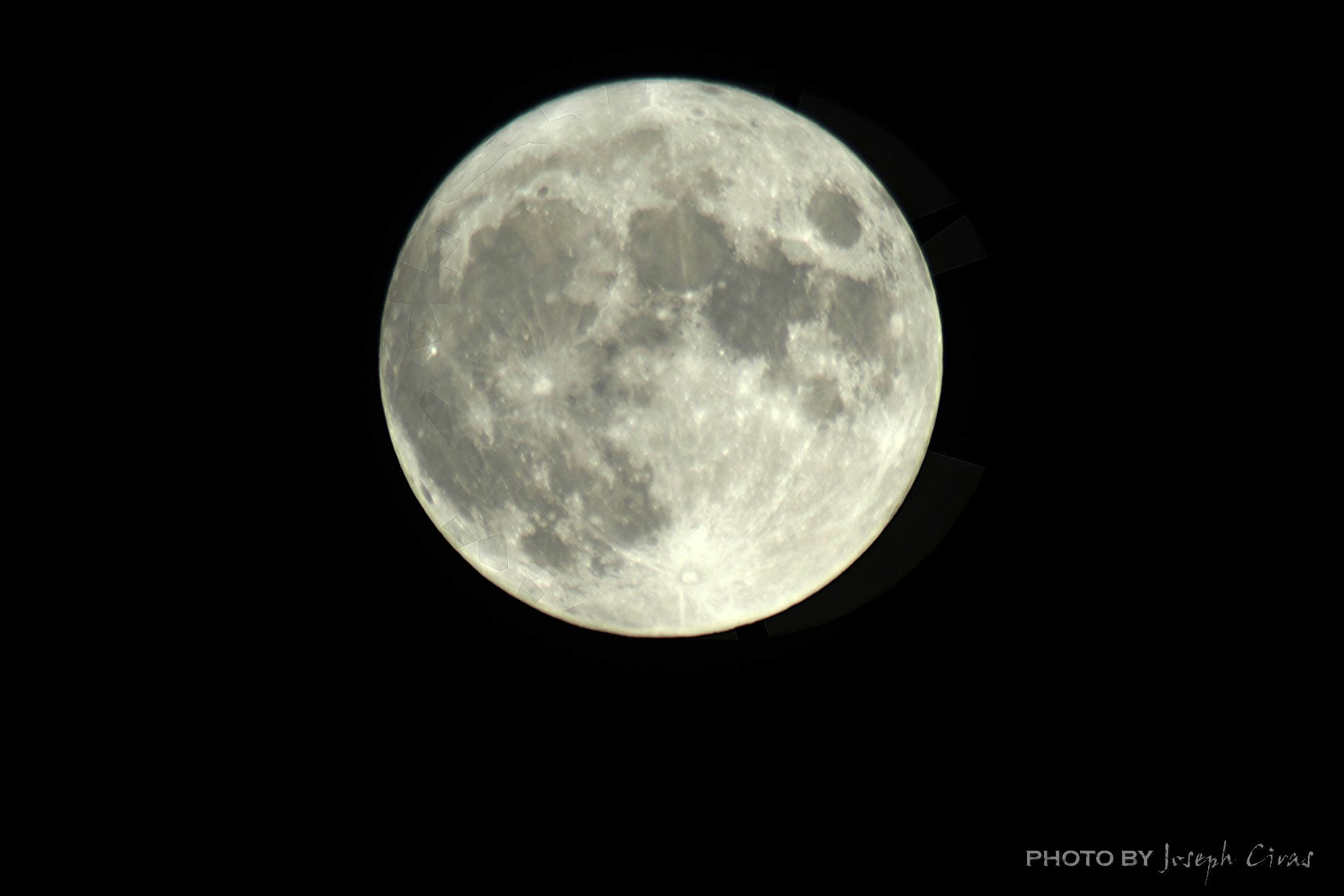
Monday, 09/20/2021: Posted photo — Harvest Moon.

Settings: Canon EOS 60D, ISO 100, f/13, 1/100 s, 1250 mm.

I take many moon photos. The moon is my primary subject matter and is very difficult to photograph. Many have tried but have not gotten a good photo since the moon is very bright and is moving very fast. I have taken hundreds of moon photos and decided to change my setting slightly for this photo.

For this photo, I changed the focal length of this moon photo to 1250 mm to see if I could get a better focus on this subject.

From space.com: “Traditionally, this designation goes to the full moon that occurs closest to the autumnal (fall) equinox — which is most often in September. On average, October Harvest Moons come at three-year intervals, although the time frame can be quite variable, and there can be situations where as many as eight years can elapse (the next such example will come between 2020 and 2028).

At the peak of the harvest, farmers can work into the night by the light of this moon. Usually, the full Moon rises an average of 50 minutes later each night, but for the few nights around the Harvest Moon, the moon seems to rise at nearly the same time each night: just 25 to 30 minutes later across the U.S., and only 10 to 20 minutes later for much of Canada and Europe. Corn, pumpkins, squash, beans, and wild rice — indigenous staples in North America — are ready for gathering.”

Tuesday, 09/21/2021: Posted photo — Wachusett Mountain.

Settings: Canon EOS 60D, ISO 200, f/7.1, 1/250 s, 79 mm.

Today I needed a quick photo, so I took a photo of Wachusett Mountain over Round Meadow Pond.

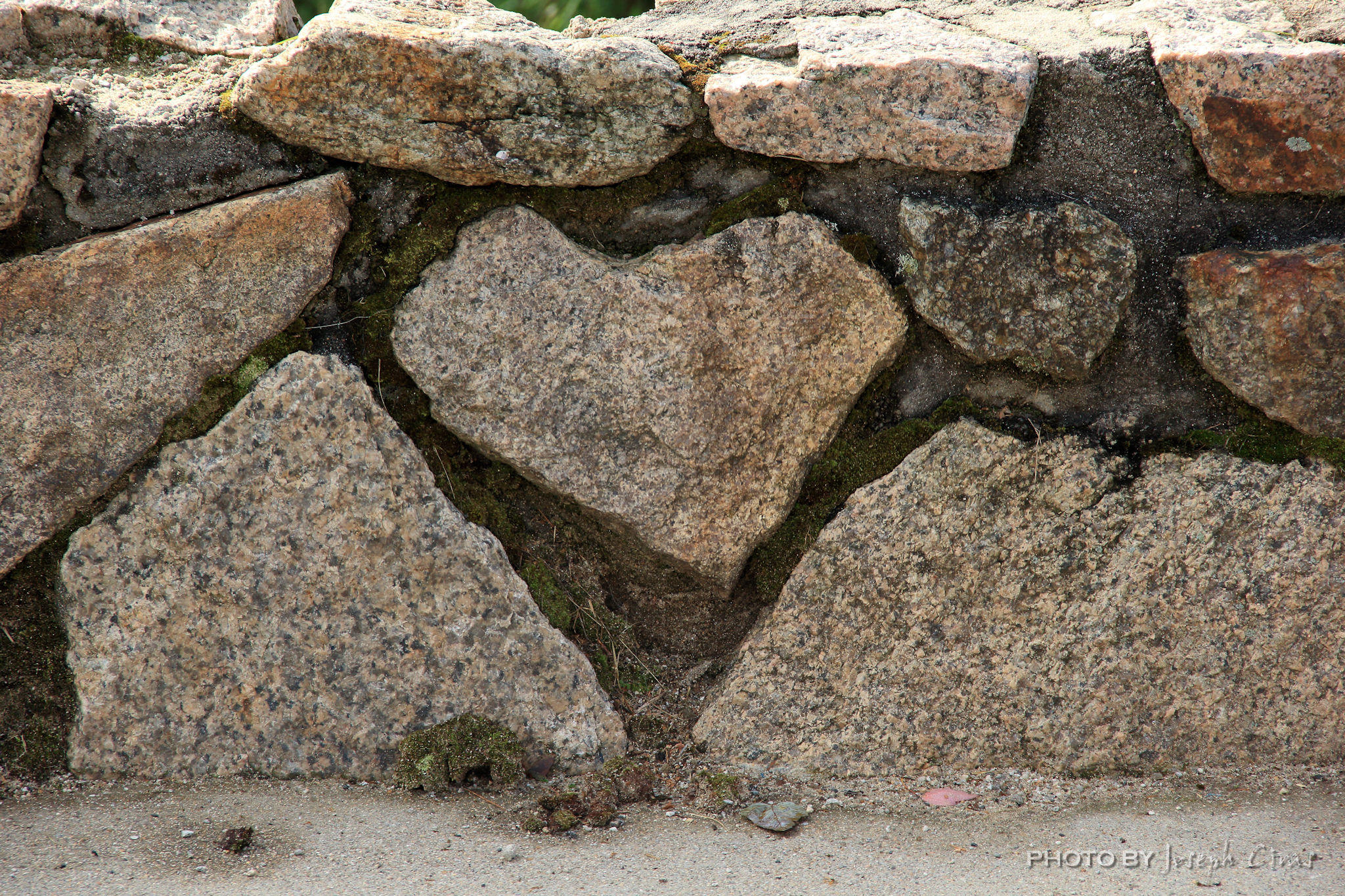
Wednesday, 09/22/2021: Posted photo — Heart.

Settings: Canon EOS 60D, ISO 200, f/7.1, 1/250 s, 135 mm.

People see items in ordinary item in the strangest places. This weekend I saw this rock looking like a hike at the trailhead of the Hancock’s in the White Mountains.

Seeing familiar objects or patterns in otherwise random or unrelated objects or patterns is called pareidolia. It’s a form of apophenia, which is a more general term for the human tendency to seek patterns in random information.

Thursday, 09/23/2021: Posted photo — Mushroom.

Settings: Canon EOS 60D, ISO 3200, f/7.1, 1/30 s, 87 mm.

Have you noticed that there are many more mushrooms this year then in the past? At least here in north central Massachusetts and in the mountains of New Hampshire. The photo I took today was on one of the trails on Wachusett Mountain. I took this photo on my way to the summit. I was planning on taking a sunset photo tonight but there was cloud cover at the summit. I was happy that I took this photo so I would have something to post today.

Friday, 09/24/2021: Post photo — Abstract Painting.

Settings: Canon EOS 60D, ISO 400, f/7.1, 1/8 s, 31 mm.

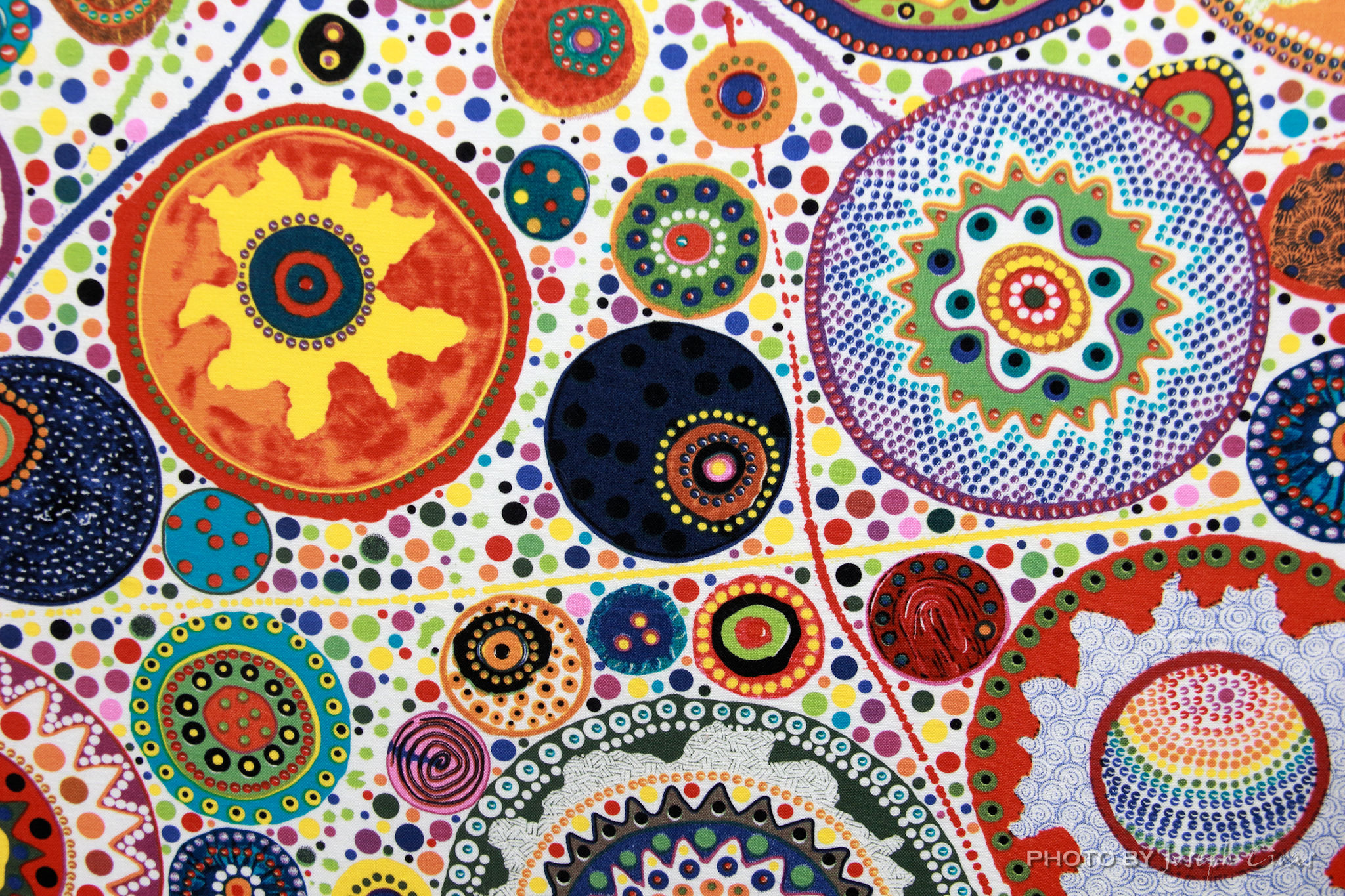
Abstract art is art that does not attempt to represent an accurate depiction of a visual reality but instead use shapes, colors, forms, and gestural marks to achieve its effect. Abstract art is made up of six basic elements: Line, Texture, Shape, Form, Color, and Value. You can go online to find more about these elements.

Saturday, 09/25/2021: Post photo — FaceTime with Daughter.

Settings: Canon EOS 60D, ISO 400, f/5, 1/100 s, 57 mm.

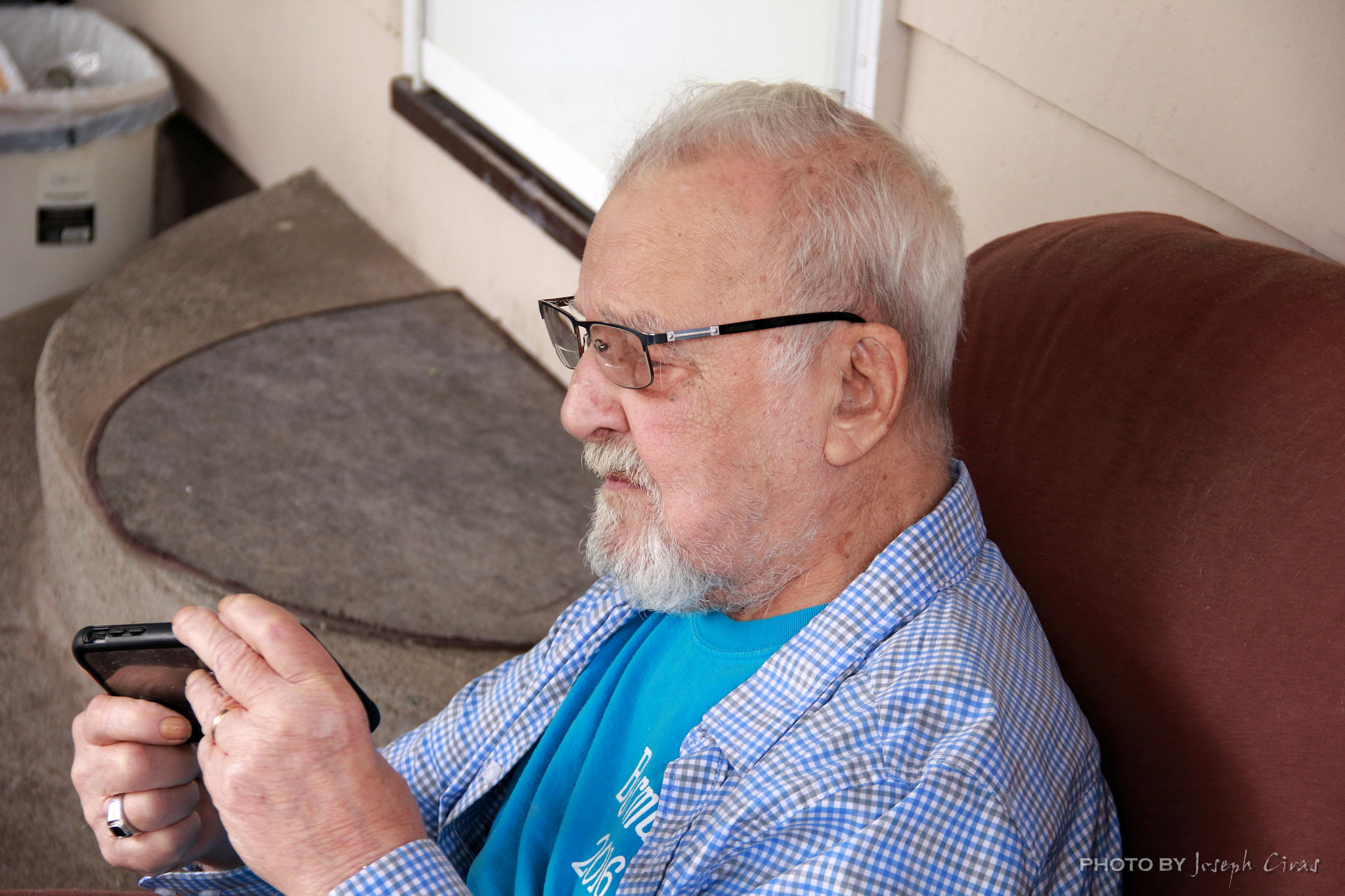
My uncle turned 92 years old this week. We had a party for him this afternoon.

During the party, his daughter from Maine called him to FaceTime. He was figuring out how to talk to her. It was difficult to hear them on the phone due to all the noise from the party.

That is all for now. Until next week, be safe.

For more photo of other project I have work, visit my website: https://photobyjosephciras.weebly.com/ or visit me on Facebook at https://www.facebook.com/PhotobyJosephCiras/.

COVID is real! Be safe out there, keep your social distance, and remember to always wear your mask and wash your hands. Get your vaccine!