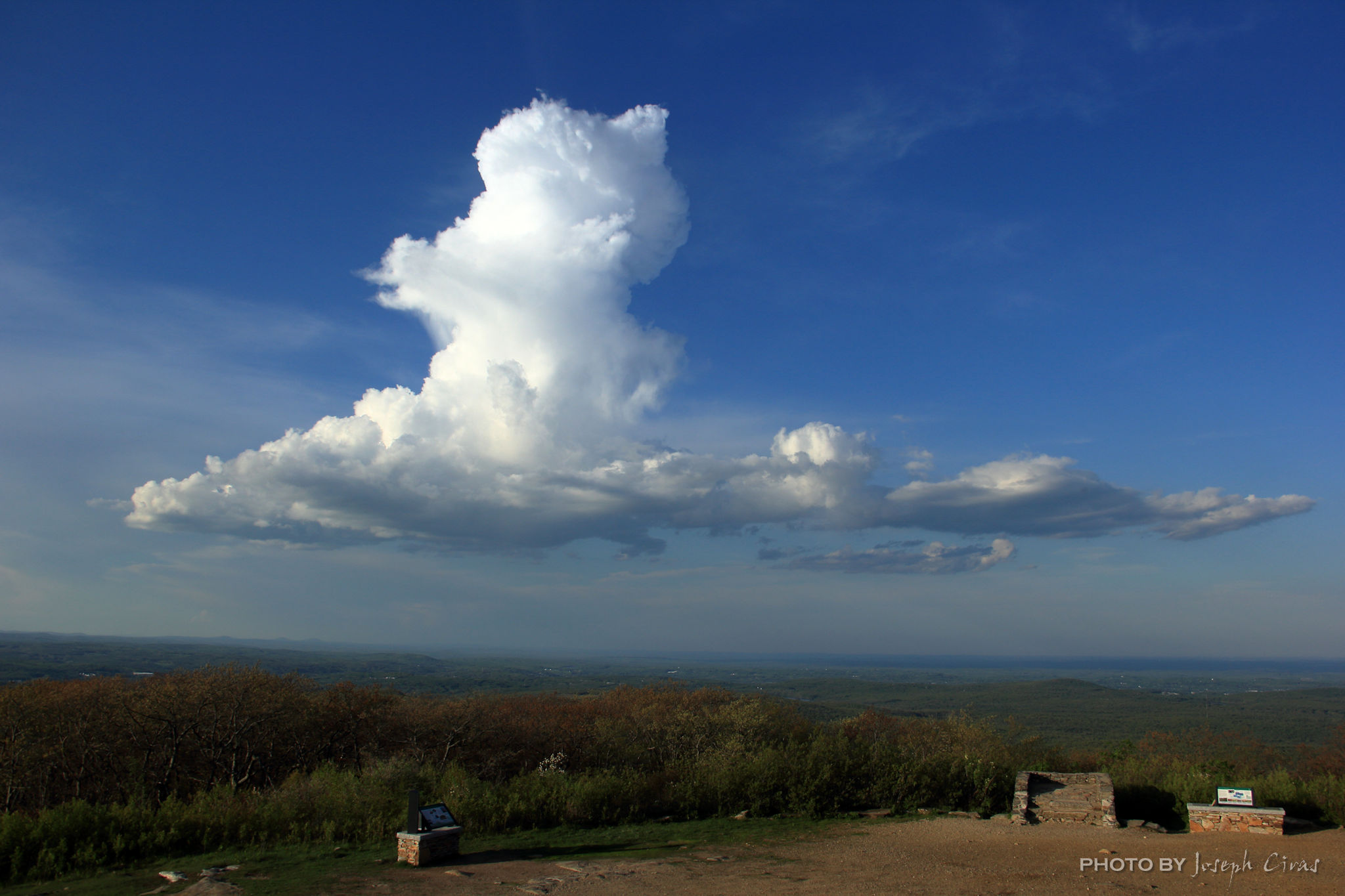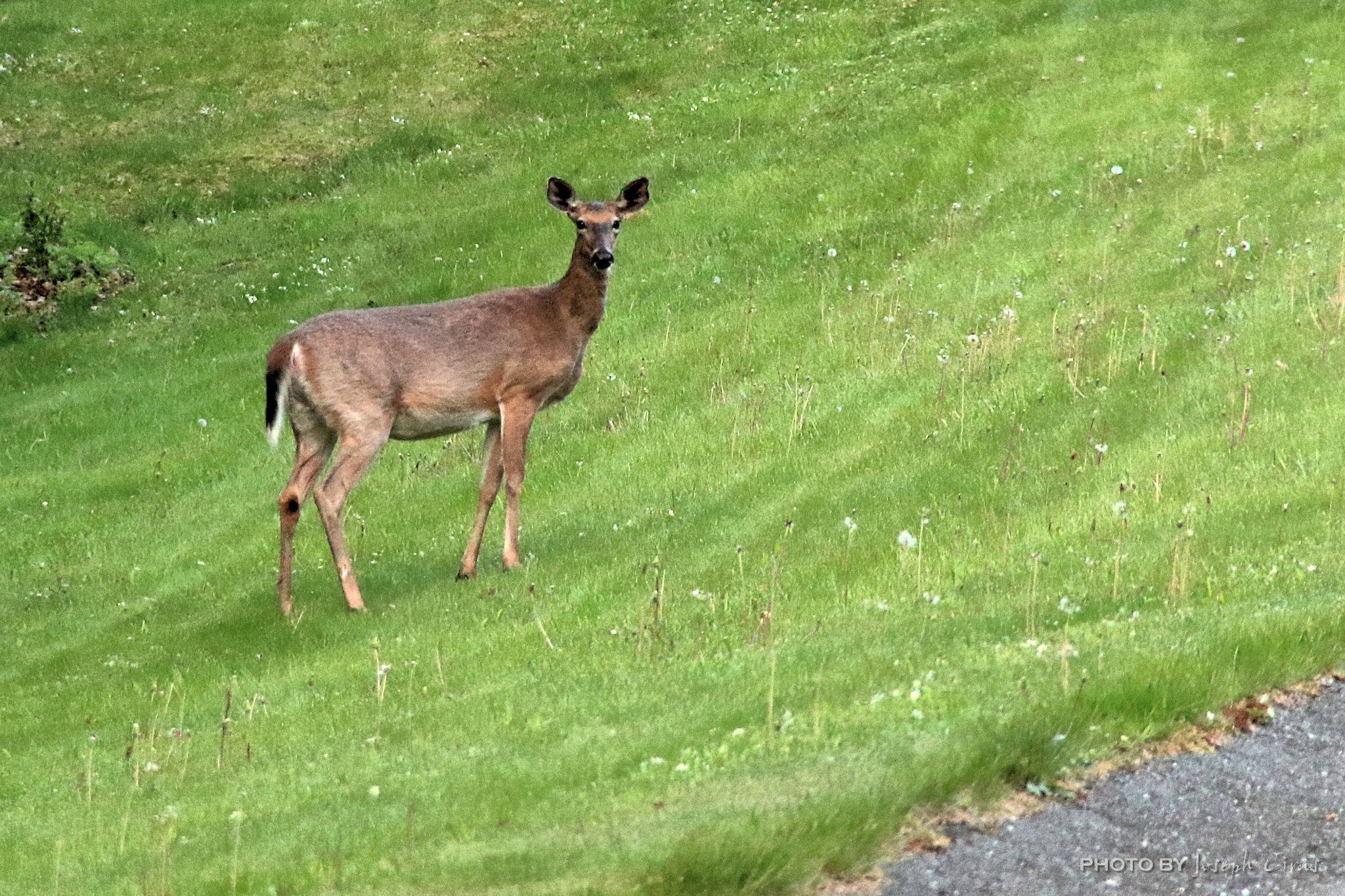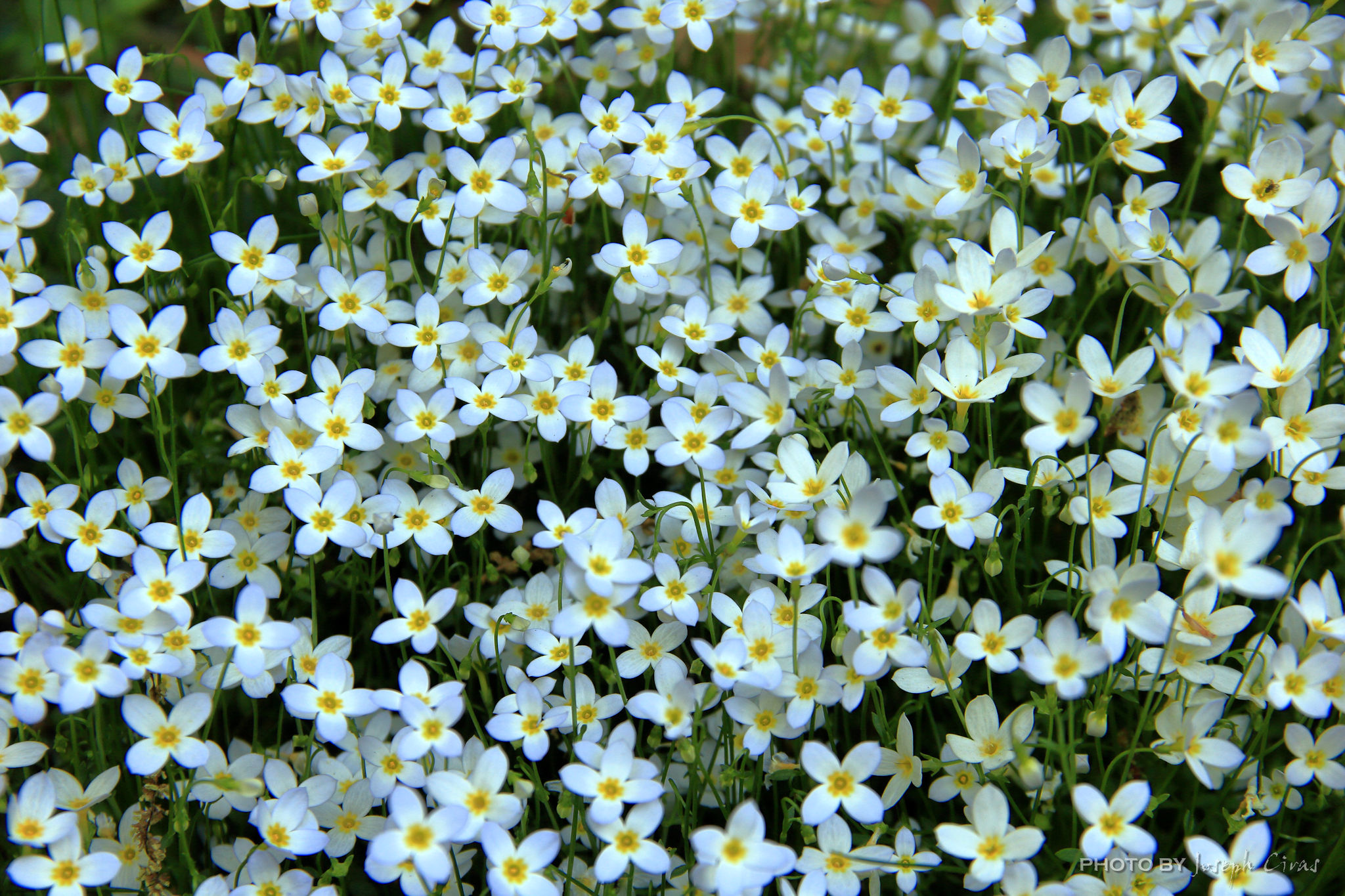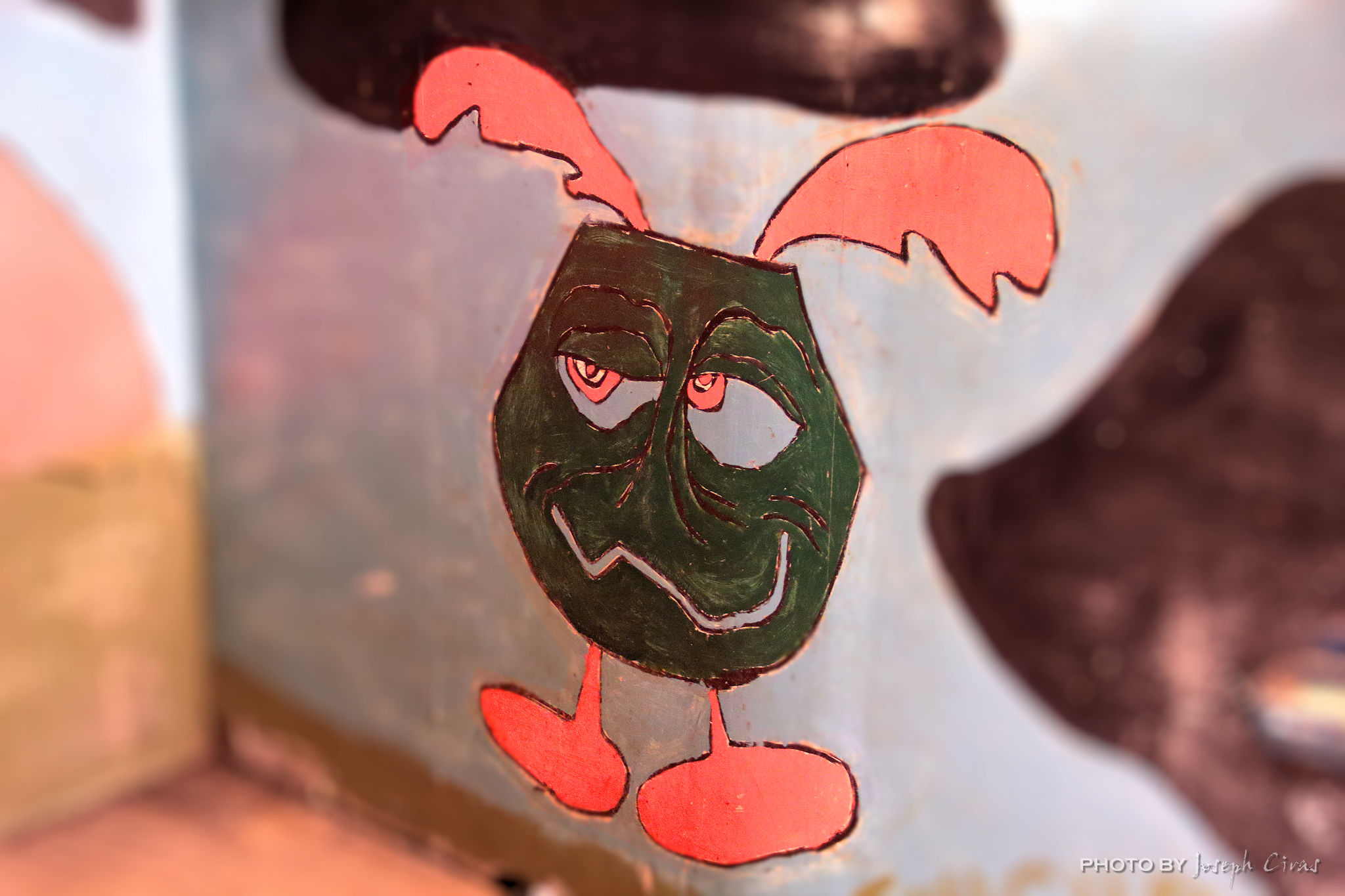
Photographic Thoughts — 06/13/2021 to 06/19/2021

“I don’t trust words. I trust pictures.” — Gilles Peress

Thank you for all the new views and likes from last week, it helps keep me inspired.

Enjoy this week’s rambling mind of a mechanical engineer and photographer.

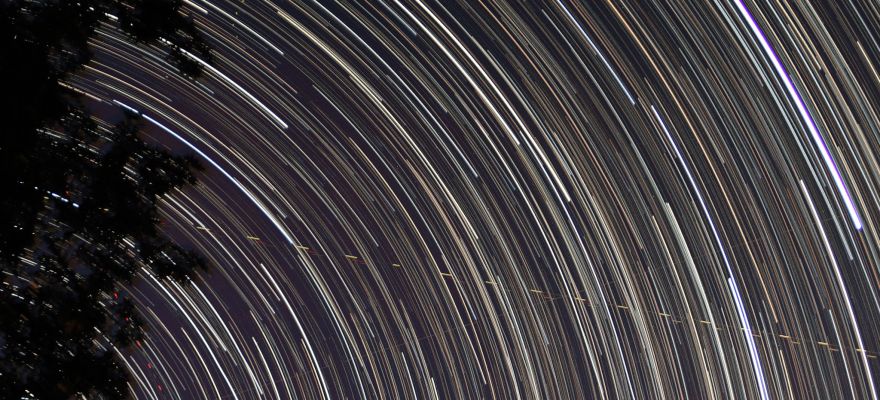
Sunday, 06/13/2021: Posted photo — Star Trails.

Settings: Canon EOS 60D, ISO 1600, f/3.5, 16 s, 18 mm.

This photo is a stacked composite of 399 sixteen second exposed photos. It has been a while since I took a star trail photo. There are two different methods for taking star trails: one is by taking multiple shots and stacking them, the other is by doing long exposure shot. I have done star trails both ways. The longest exposer I took was a 45-minute exposure at Craters of the Moon National Monument and Reserve in Idaho a few years ago. The sky was very, very dark at this park. So dark, you had a difficult time seeing your outstretched hand. I the area I live, staking is the best way of doing star trails.

Here is how I prepare for my star trail photos. I setup my camera before I go to bed pointing in a northerly direction. Then when it gets to astronomical twilight, I turn the camera on to start taking photos and then go to bed.

Here are some definitions for your and my reference. All angles are the position of the Sun to the horizon:

  • Nighttime (below -18°)
  • Morning twilights (from -18° to 0°)
    • Astronomical Twilight (from -18° to -12°)
    • Nautical Twilight (from -12° to -6°)
    • Civil twilight (from -6° to 0°)
  • Morning magic hours
    • Blue hour (from -6° to -4°)
    • Golden hour (from -4° to 6°)
  • Daytime (above 6°)
  • Evening magic hours
    • Golden hour (from 6° to -4°)
    • Blue hour (from -4° to -6°)
  • Evening twilights (from 0° to -18°)
    • Civil twilight (from 0° to -6°)
    • Nautical Twilight (from -6° to -12°)
    • Astronomical Twilight (from -12° to -18°)
  • Nighttime (below -18°)

Why 16 seconds? Sixteen seconds is based on the aperture, pixel density, and focal length (NPF) rule. This considers the megapixels of your camera to make the stars still. With my camera and settings, a shot of 15.17 s or less will not show moment in the stars if you zoom into the picture. It is not necessary for star trails, but I use this rule for Milky Way shots. The better-known rule is the 500 rule. This is the classic rule for making the star stand still.

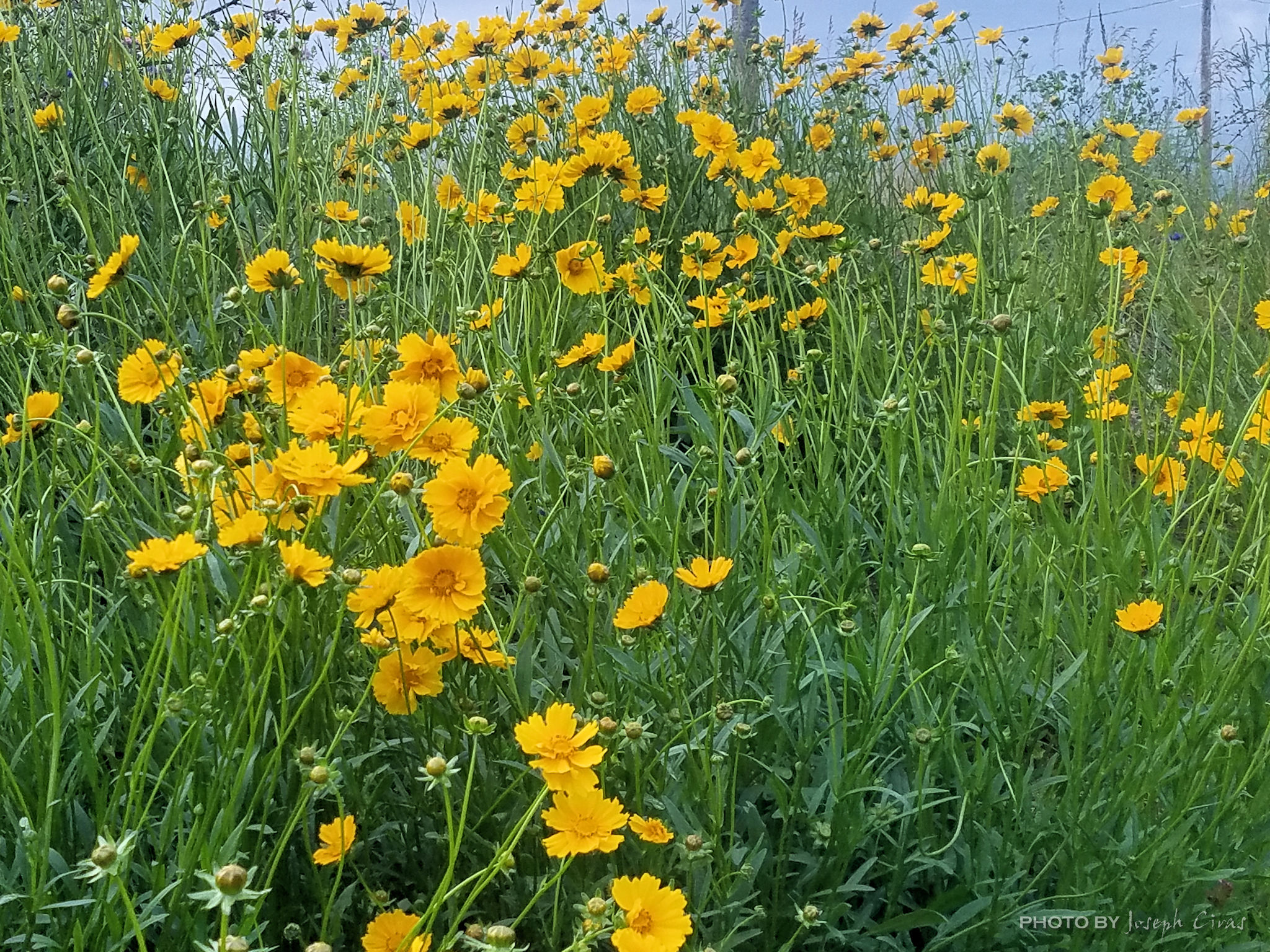
Monday, 06/14/2021: Posted photo — Sweet-Williams.

Settings: Samsung SM-G930V (Galaxy S7), ISO 50, f/1.7, 1/171 s, 4 mm

“Sweet William is an irresistible, colorful, biennial flower. It grows for two years, blooming in the second year. Native to Europe, this colorful, compact plant is grown all over the U.S.

Sweet William varieties include perennials and biennials. The perennials are often grown as biennials. Plants grow 7-18 inches tall, depending upon variety. Flowers blooms are produced in clusters in the spring. Colors include white, red, pink, crimson, scarlet, purple, and bi-colors.

The compact size of Sweet Williams make them great for containers and pots. Try them in a windowsill or vertical planter. In flower beds, put these small plants at the front of the garden. Despite their small size, they make good cut flowers. All they need for indoor splendor, is a small vase.

The Raging Name Debate — There is much debate over who Sweet William was named for. The list of honorees includes: William the Conqueror, Saint William of York, and Prince William Augustus, the Duke of Cumberland.

Plant Height: 12”–24”

How to Grow Sweet William Annual Flowers. For a better flower garden, follow The Gardener’s Network. (gardenersnet.com).

These Sweet-Williams were in a flower patch near one of the parking lots at the Wachusett Mountain ski area. I passed them on my way to my Monday night hike and stopped to take a photo of them on my way back from my hike. I did not have my DSLR with me, so I took this with my cellphone. I do not like the quality of this photo. Then again, I do not like many of my cellphone photos.

Here are some more photos of that flower patch.
Tuesday, 06/15/2021: Posted photo — Monkey HDR.

Settings: Canon EOS 60D, ISO 1600, f/5.6, 1/13 s, 52 mm.

This monkey is a trinket in my mother’s china cabinet. The definition of a trinket is a small ornament or item of jewelry that is of little value. The trinkets in my mother’s collection have emotional and sentimental value.

A china cabinet is a piece of dining room furniture, usually with glass fronts and sides, used to hold and display porcelain dinnerware. Her china cabinet is filled with unicorn trinkets and other trinkets that she has collected over the years with my father. He good china and silverware are also located in the cabinet.

This cabinet was “no-touch” in our house when I was younger. With six brothers, she did not want any of the items broken. We were able to go into the cabinet when company was coming over.

I edited this photo with as a High Dynamic Range (HDR) photo because the light was bad in the room, and I wanted to save this photo. It was one of the only photos I took today, and it was of the best quality.

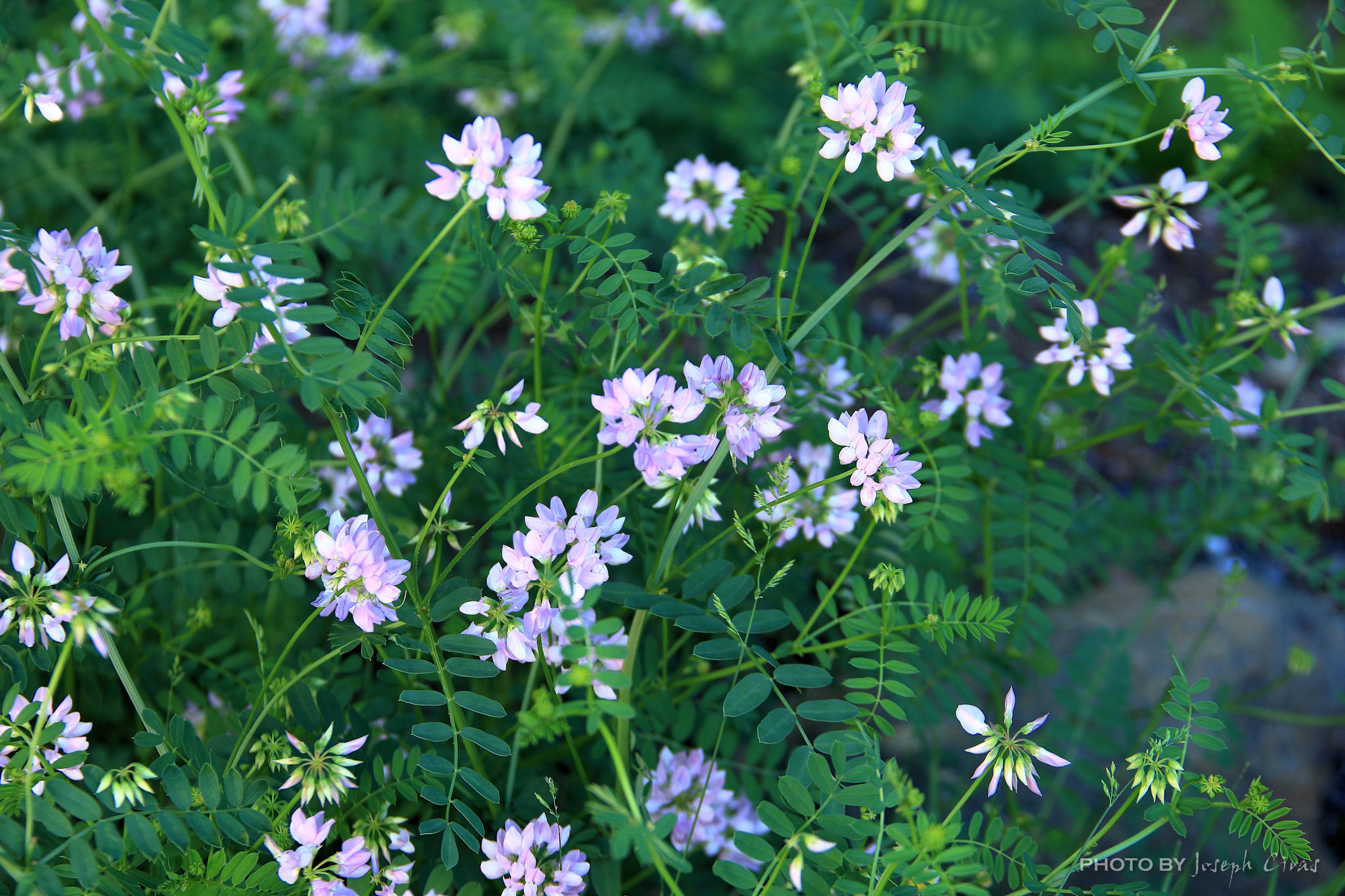
Wednesday, 06/16/2021: Posted photo — Wildflowers.

Settings: Canon EOS 60D, ISO 100, f/5.6, 1/20 s, 52 mm.

These flowers are called purple crown vetch. According to my Seek app, Securigera varia (synonym Coronilla varia), commonly known as crownvetch or purple crown vetch, is a low-growing legume vine. It is native to Africa, Asia and Europe and is commonly used throughout the United States and Canada for erosion control, roadside planting and soil rehabilitation. It has become an invasive species in many states of the US.
binary comment

These were on a roadside. I passed them during one of my walks today. As written many times in different ones of my blogs, I take many photos during the day and pick out one to post.

Here is another photo I took today. My niece purchased these cookies for a party that did not happened today. She brought them to my mother’s house for all the aids to enjoy.

Thursday, 06/17/2021: Posted photo — Cookies.

Settings: N/A.

Some cookies left by one of my nieces at my mother’s house. She was going to have a party at work that did not happen. I do not know why. All I know is that there are many cookies around to be eaten.

Friday, 06/18/2021: Post photo — Feather.

Settings: N/A.

Some poor bird lost its feather. I took this photo since I was getting ready to travel from my vacation (holiday) and needed a quick photo.

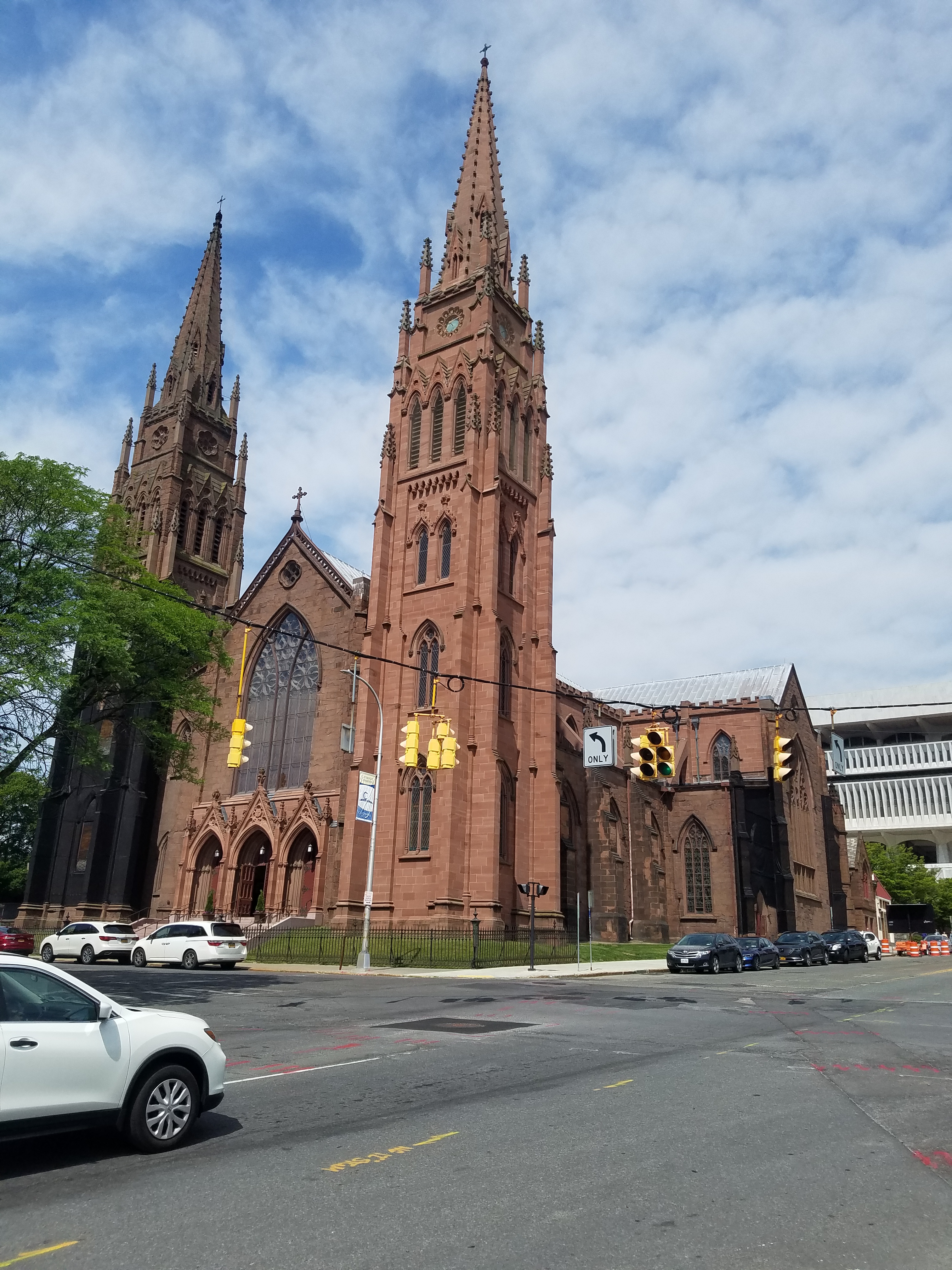
Saturday, 06/19/2021: Post photo — Ordination or Holy Orders.

Settings: Samsung SM-G930V (Galaxy S7), ISO 200, f/1.7, 1/24 s, 4 mm

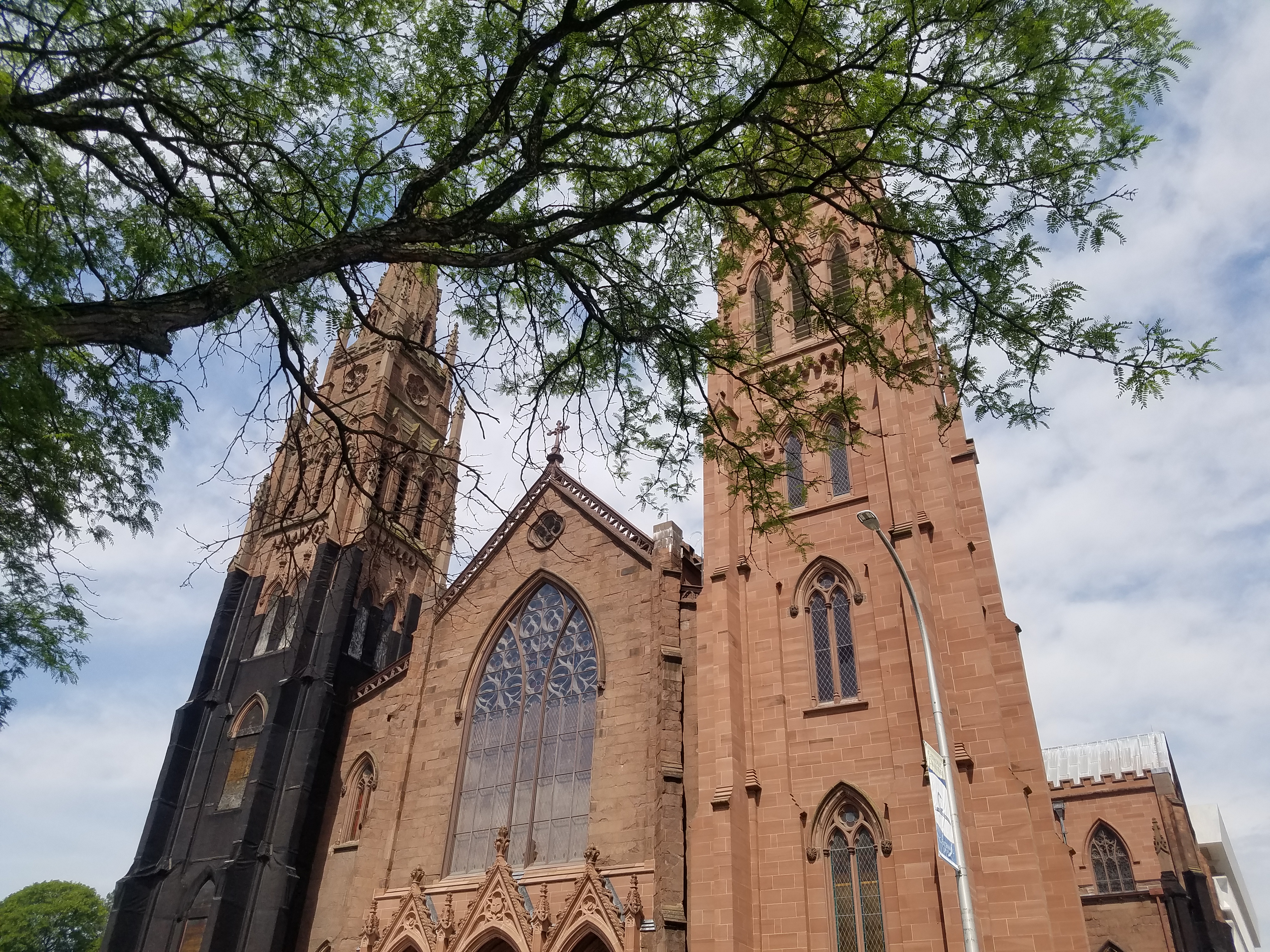
My wife’s cousin’s son was ordained a priest today for the Roman Catholic Diocese of Albany NY. We were invited ordination to the deaconate last year in Rome that did not happen due to COVID. We had planned to go to this ordination and glad that we could attend. Congratulation Fr. Matt Duclos!

Here are some more photos from the day.

I am not sure when I will post my blogs for the next two weeks due to commitments. I will see if I can post a partial blog later in the week and follow up with an update to that blog.

That is all for now. Until next week, be safe.

For more photo of other project I have work, visit my website: https://photobyjosephciras.weebly.com/ or visit me on Facebook at https://www.facebook.com/PhotobyJosephCiras/.

COVID is real! Be safe out there, keep your social distance, and remember to always wear your mask and wash your hands. Get your vaccine!
Photographic Thoughts — 06/06/2021 to 06/12/2021

“Essentially what photography is life lit up.” — Sam Abell

Thank you for all the new views and likes from last week. It helps keep me going. Enjoy my blog post!

Enjoy this week’s rambling mind of a mechanical engineer and photographer.

Sunday, 06/06/2021: Posted photo — Cross.

Settings: Samsung SM-G930V (Galaxy S7), ISO 50, f/1.7, 1/415 s, 4 mm

This carving of a cross on the backrest of one of the chairs in the choir loft at church. Taken today since I needed a photo. I took this one just in case I did not have the opportunity to take another one today.

If you go to my post “Photographic Thoughts—03/14/2021 to 03/20/2021” you will be able to read my explanation on the difference between a cross and a crucifix.

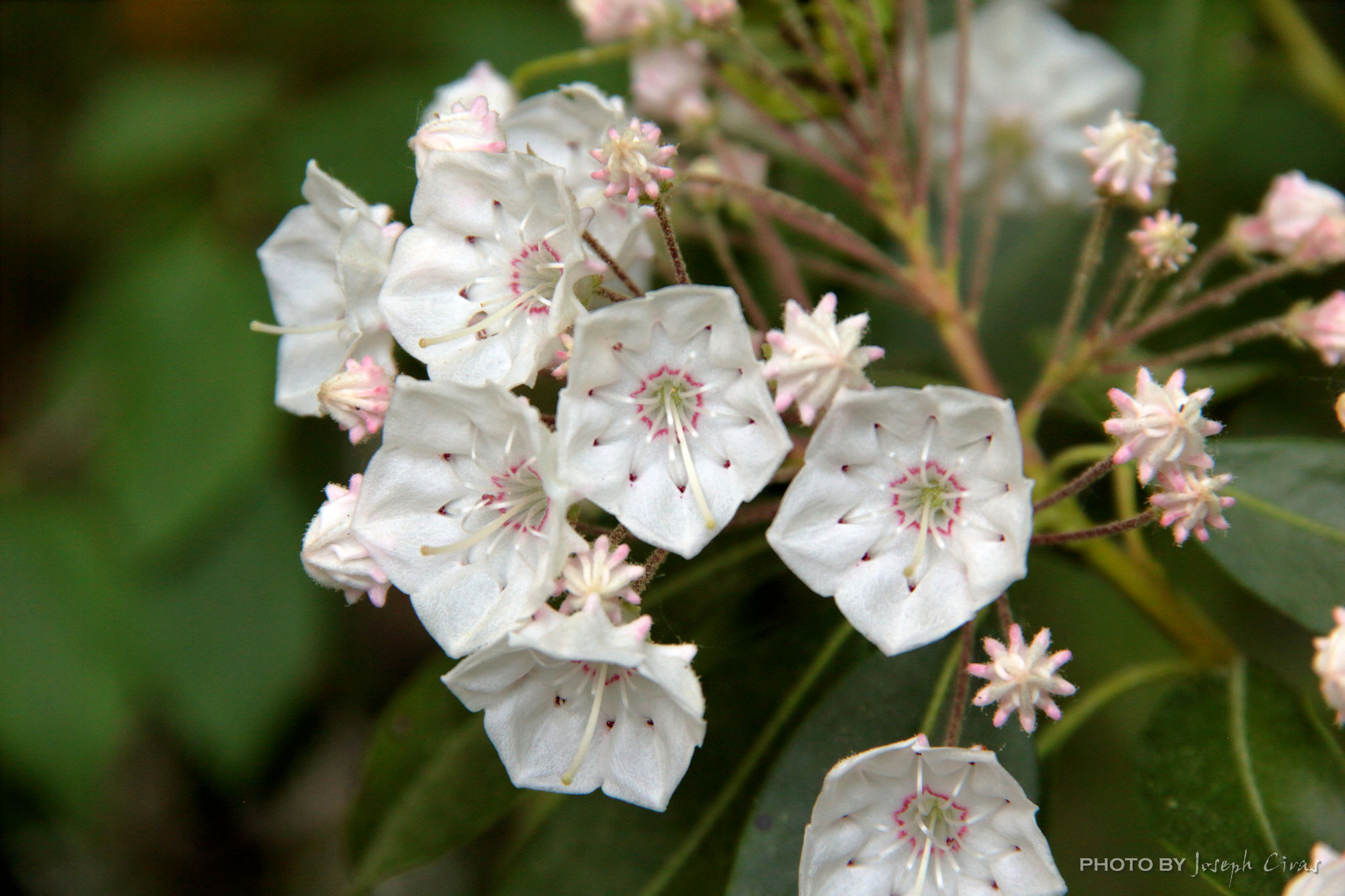
Monday, 06/07/2021: Posted photo — Mountain Laurel.

Settings: Canon EOS 60D, ISO 400, f/7.1, 1/320 s, 135 mm

“Mountain laurel (Kalmia latifolia) is flowering broadleaf evergreen shrub with a gnarly, multi-stemmed growth habit. It has beautiful spring blooms, and its elliptical, glossy deep-green leaves (resembling those of rhododendrons) and gnarled stems make it attractive in all seasons. This shade-loving shrub produces clusters of rose, pink, or white flowers with purple markings in late May to early June.” — The Spruce website

The mountain laurel in this photo is from a shrub that we transplanted many years ago. I am amazed about how hardy mountain laurels are. This shrub has taken a beating over the years and is still blooming.

One of the items that impress people is how delicate the flower is on this shrub. We have white and pink mountain laurel in our yard and in the neighborhood. The white ones bloom first, then the rose, then the pink.

Tuesday, 06/08/2021: Posted photo — Daisies.

Settings: Canon EOS 60D, ISO 400, f/7.1, 1/320 s, 48 mm.

“Daisies are a popular choice for gardens—and for good reason. Bright, cheerful, and easy to grow, the flowers are readily identifiable and are mainstays of cottage gardens and classic perennial borders alike. The common name “daisy” is applied to a large handful of species among several genera within the huge Asteraceae family of plants, a group known for blooms that are flat and disc-shaped, with petals that form rays projecting outward from a central hub. The family also includes chrysanthemums, zinnias, asters, and sunflowers as well as a number of common weeds, such as dandelions. However, the daisy species that’s best for your flower garden depends on several factors. A daisy that’s perfect for one growing zone might be a total pest in another.” — The Spruce website

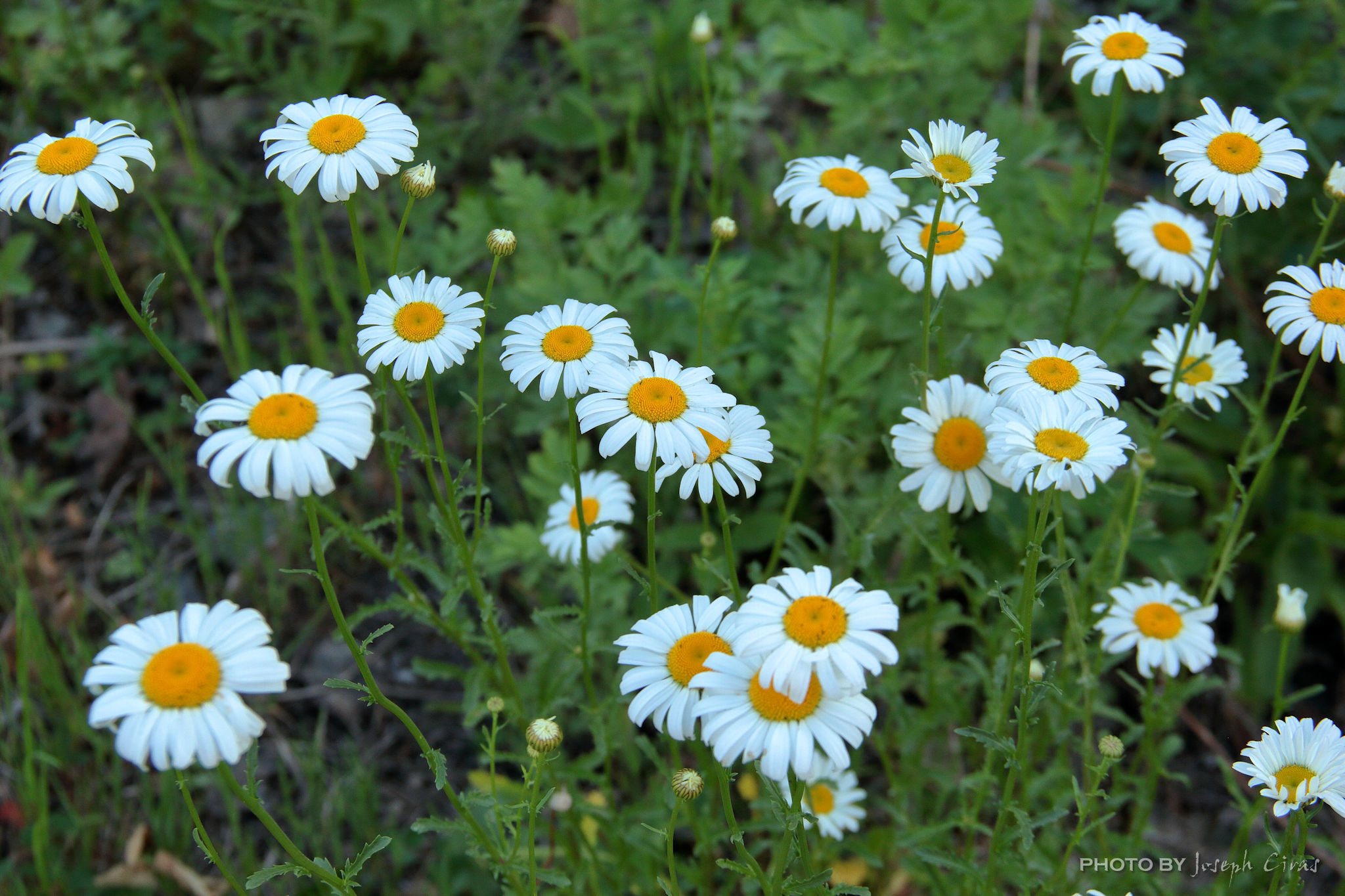
There are daisies growing in many locations in this area. I spotted these on the side of the road during one of my walks. The daisy symbolizes purity and innocence, and it can also stand for new beginnings. The meaning of the flower is “loyal love”.

Wednesday, 06/09/2021: Posted photo — Multiflora Rose.

Settings: Canon EOS 60D, ISO 100, f/7.1, 1/400 s, 75 mm.

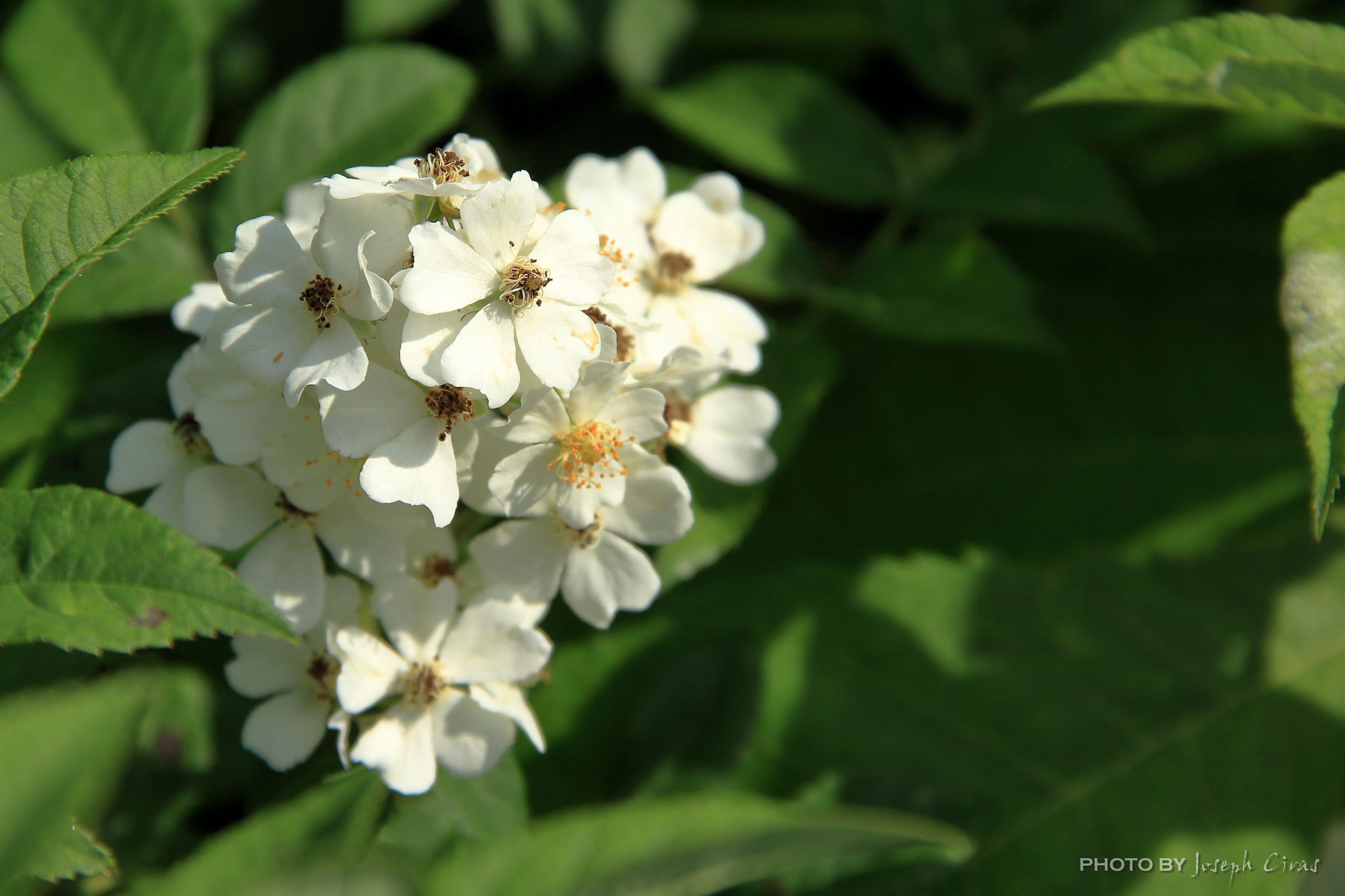
Multiflora rose (Rosa multiflora), an invasive species, is a deciduous shrub with white flowers and red fruit. Brought here from Asia, it was planted as wildlife food, and also as a living fence, due to its dense growth and sharp thorns. It can grow to 10 feet high or more, and is typically wider than it is tall.

It forms dense thickets in fields and field edges, crowding out other species. It also grows in open wetlands and in forests where canopy openings occur. — Massachusetts Audubon Society

The multiflora rose in this photo is at my mother’s house. I like it because of the contrasting colors between the white and the green. An invasive species is an introduced organism that negatively alters its new environment. Although their spread can have beneficial aspects, invasive species adversely affect the invaded habitats and bioregions, causing ecological, environmental, and/or economic damage.

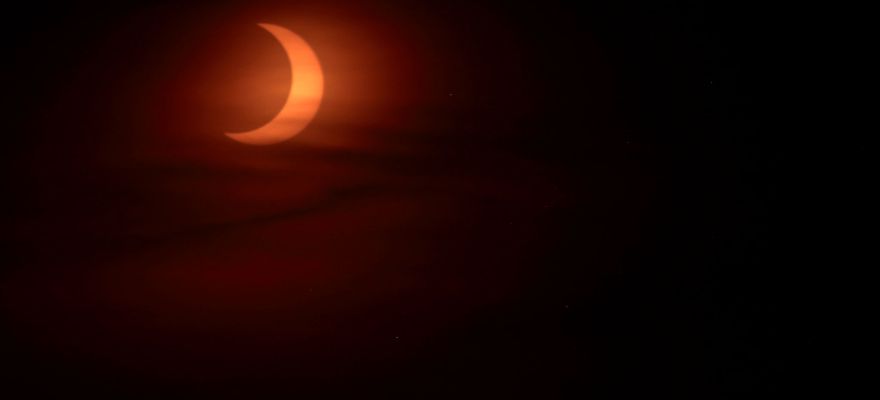
Thursday, 06/10/2021: Posted photo — Partial Solar Eclipse.

Settings: Canon EOS 60D, ISO 400, f/9, 2 s, 300 mm.

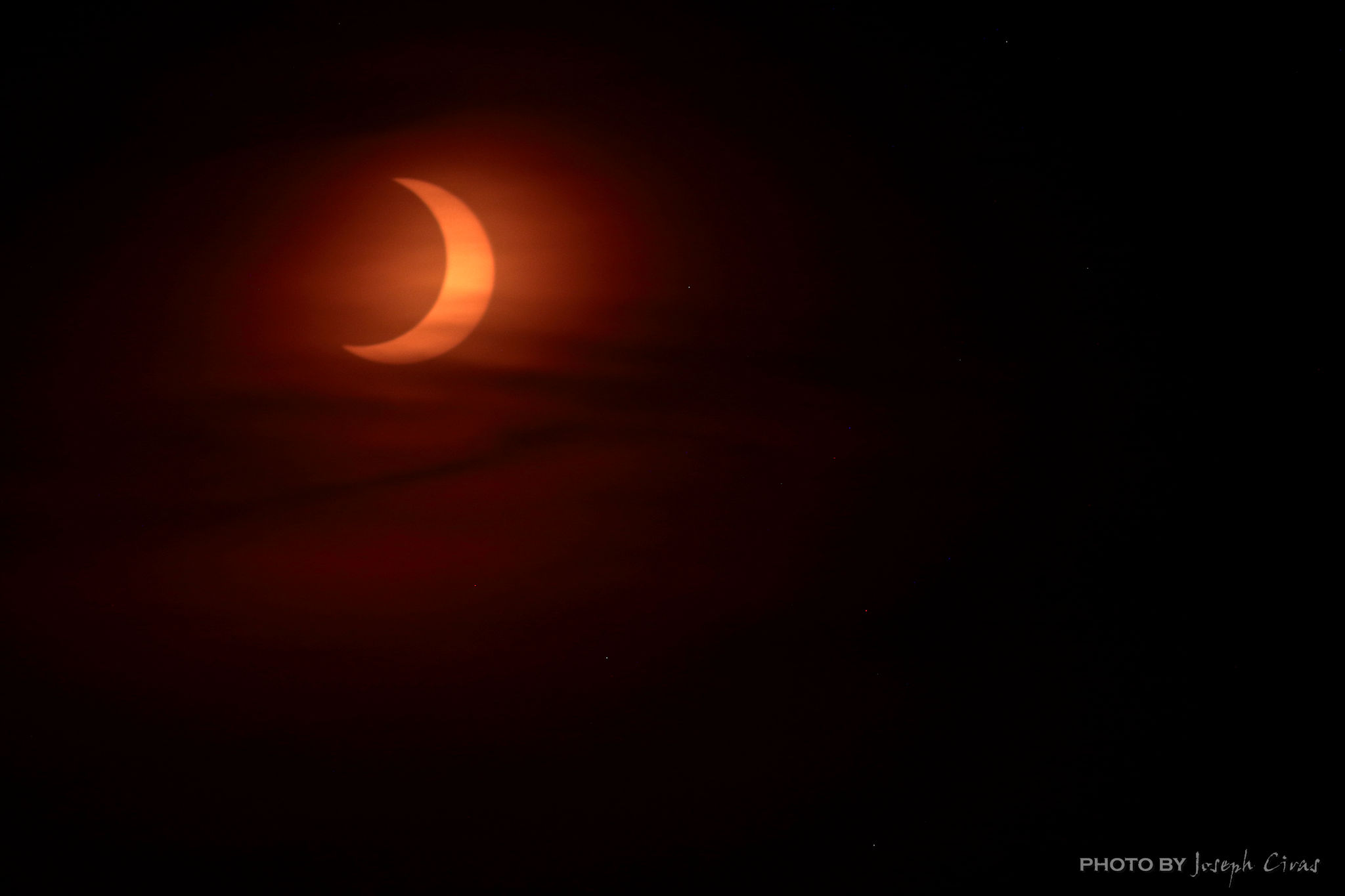
Here is the best photo of this morning’s partial solar eclipse. I think the clouds give it character.

“During a partial solar eclipse, the Moon, the Sun and Earth don’t align in a perfectly straight line, and the Moon casts only the outer part of its shadow, the penumbra, on Earth. From our perspective, this looks like the Moon has taken a bite out of the Sun.

Solar eclipses occur 2–5 times a year and they are usually named for their darkest, or maximum, point. Both total and annular solar eclipses are seen as partial eclipses from the areas on Earth that are outside the Moon’s inner shadows, the umbra or antumbra, but inside the penumbra (outer shadow).” — Time and Date website

I took many photos of the eclipse this morning. Most of them were not in focus. This was the best one. I have a special solar filter for my lens. Without the special filter, the sensor in my camera could have burned out. I purchased this filter when my family went to see the total solar eclipse a few years ago. Solar filters are constructed to not only sufficiently dim the sunlight, but they also protect your eyes and equipment from non-visible IR and UV radiation.

One word of advice — if you are taking a photo of an eclipse, it is not good to stand on a bridge. I noticed during some of my longer exposure shots that the camera was shaking slightly due to the traffic under the bridge and the occasional vehicle traveling over the bridge.

Friday, 06/11/2021: Post photo — Hope.

Settings: Canon EOS 60D, ISO 200, f/4.5, 15 s, 18 mm.

Hope. We made the work “hope” out of luminaria for Relay for Life. Relay for Life (RFL) is a fundraiser for the American Cancer Society. My family has been participating in the RFL for many years.

The RFL is normally held at a local college. Due to the pandemic, it has been held at home for the last two years. If you notice, each letter of hope has a different color in it to have it stand out better in the photo.

Everyone knows someone who has been touched with cancer. If you would like to donate, contact me in the comments below and I will send you a link to our team.

Saturday, 06/12/2021: Post photo — Markers.

Settings: Canon EOS 60D, ISO 3200, f/5.6, 1/40 s, 100 mm

Today is the second day for Relay for Life at home and I wanted to take a quick photo before I went on my hike and then fell asleep. I saw the markers that we used to write on the luminary bags and liked the arrangement of colors.

For your information, here are the meanings of the different colors.

Red: The color of passion and energy.

Orange: The color of enthusiasm and emotion.

Yellow: The color of happiness and optimism.

Green: The color of harmony and health.

Turquoise: The color of calmness and clarity.

Blue: The color of trust and loyalty.

Purple: The color of spirituality and imagination.

Pink: The color of love and compassion.

Brown: The color of stability and reliability.

Black: The color of power and sophistication.

Gray: The color of compromise and control.

White: The color of purity and innocence.

I am not sure when I will post my blogs for the next two weeks due to commitments. I will see if I can post a partial blog later in the week and follow up with an update to that blog.

That is all for now. Until next week, be safe.

For more photo of other project I have work, visit my website: https://photobyjosephciras.weebly.com/ or visit me on Facebook at https://www.facebook.com/PhotobyJosephCiras/.

COVID is real! Be safe out there, keep your social distance, and remember to always wear your mask and wash your hands. Get your vaccine!
Photographic Thoughts — 05/23/2021 to 05/29/2021

“A tear contains an ocean. A photographer is aware of the tiny moments in a person’s life that reveal greater truths.” — Anonymous

Thank you for all the new views and likes from last week. It helps keep me going. Enjoy my blog post!

Enjoy this week’s rambling mind of a mechanical engineer and photographer.

Sunday, 05/23/2021: Posted photo — Get Out of my Tree.

Settings: Canon EOS 60D, ISO 200, f/5.6, 1/80 s, 135 mm

The photo I posted today was of two squirrels that were running around in our yard. These were two of five squirrels that were chasing after each other, knocking each other off trees, trying to hide from each other, and fighting each other. Most squirrels mate twice a year, once during the summertime and once towards the end of wintertime or early springtime. When one female is ready to mate, males will either chase after her or they will complete for the right to mate with her. What I was seeing was the competition to mate with her. There was one female squirrel on another tree watching the activity. Boys will be boys. It is very interesting to see nature at work.

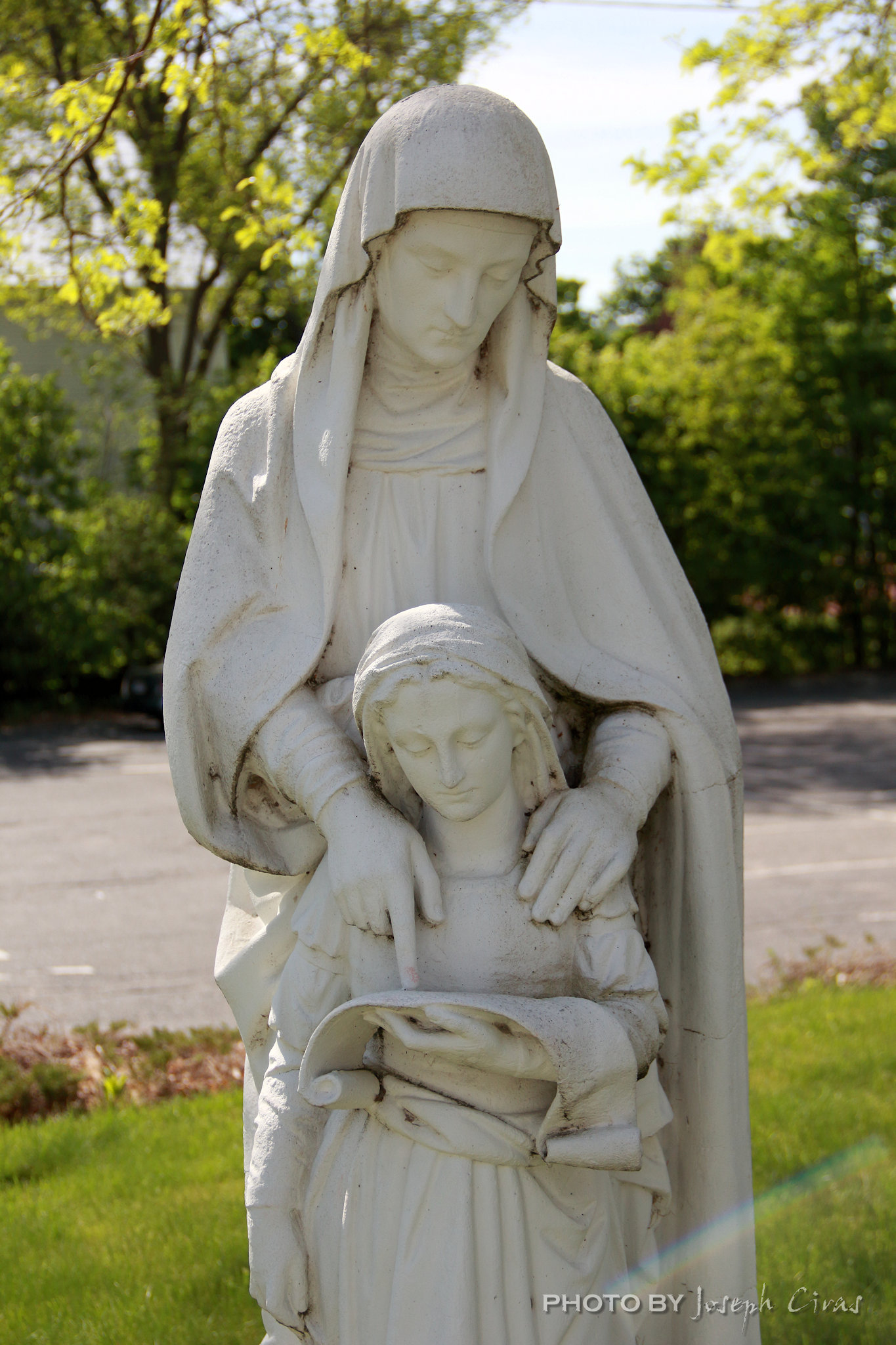
A photo that I almost posted was at the other end of the spectrum. It was a photo of a statue of St. Anne reading to Mary. This statue was in front of St. Denis’ sister church that was in town. St. Anne’s church was torn down due to safety concerns a few years ago.  “St. Anne is the patron saint of unmarried women, housewives, women in labor, grandmothers, childless people, equestrians, lacemakers, miners, the poor, and seamstresses. The most well-known patronage of St. Anne is that of grandmothers. Certainly, as the mother of the Virgin Mary and the grandmother of Jesus Christ, St. Anne was a woman of great virtue and love.

St. Anne is often shown seated with a book on her lap. The child Mary stands against her, eager to listen. This depiction of St. Anne is a small explanation of what we know of this holy woman. God entrusted to St. Anne the task of raising Our Lady in a holy and virtuous home, and from a very young age Mary looked to St. Anne to learn about God and how He works in the lives of those who love and serve Him.” — Catholic Saint Metals, (https://catholicsaintmedals.com/saints/st-anne/)

Monday, 05/24/2021: Posted photo — Buttercups.

Settings: Canon EOS 60D, ISO 100, f/7.1, 1/400 s, 69 mm

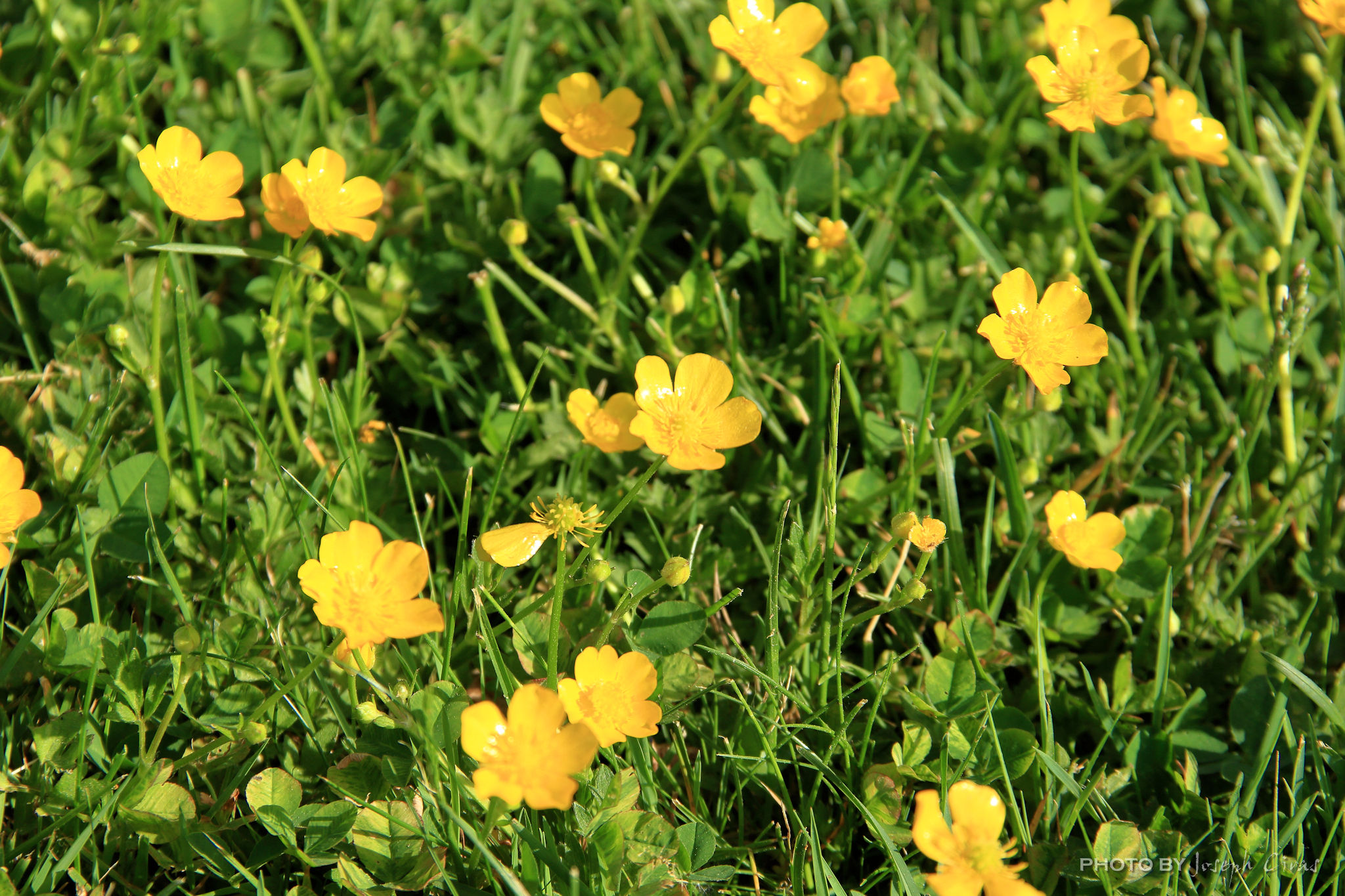
Buttercup is a type of herbaceous plant that belongs to the Ranunculaceae family. There are nearly 2000 species of buttercups that mostly inhabit northern hemisphere. Buttercups are usually found in cold and temperate regions. They prefer moist habitats and live in the fields, meadows, near the roads, in the woodlands, swamps and bogs. Buttercups are widely distributed and abundant in the wild. Some species of buttercups are rare and endangered due to habitat destruction and introduction of new, invasive plant species. Reflexive properties of buttercup flowers are applied in children’s game aimed to determine fondness for the butter. If yellow reflection appears on the skin after placing buttercup under the chin – then child likes to eat butter. Signs of intoxication appear immediately after ingestion of the plant. They include bloody diarrhea, excessive salivation, colic and blistering of the intestines. They have acrid taste, so even animals cannot eat them fresh. (https://www.softschools.com/facts/plants/buttercup_facts)

These buttercups are in the lawn near were I park my car at work. I took this photo on my way home from work before tonight’s hike. I took this photo just in case I did not take any photos during my hike. On my hike, I just hiked with the group of hikers I met last week. Great to go hiking with a group of hikers that socialize and not a social group that hikes.

Tuesday, 05/25/2021: Posted photo — Rhododendron.

Settings: Canon EOS 60D, ISO 100, f/7.1, 1/200 s, 92 mm.

Short and sweet. We have a red rhododendron that blooms after our azaleas. They are such wonderful plants that attract bumble bees and other insects.

Wednesday, 05/26/2021: Posted photo — Pants.

Settings: Canon EOS 60D, ISO 400, f/7.1, 1/60 s, 35 mm.

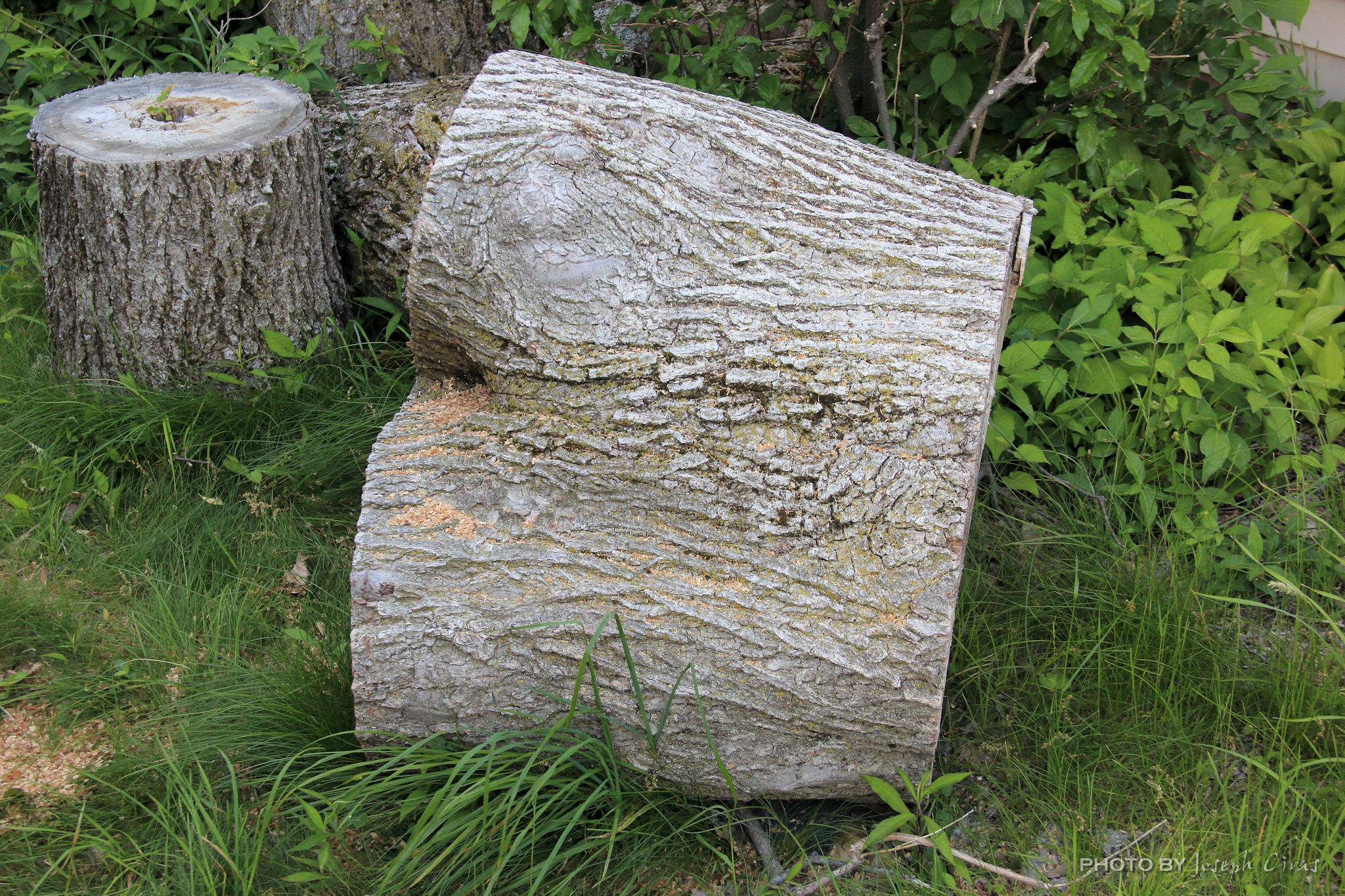
Pants for Groot perhaps? Groot is a fictional character appearing in American comic books published by Marvel Comics. Created by Stan Lee, Larry Lieber and Jack Kirby, the character first appeared in Tales to Astonish #13. He is a man made out of wood.

Thursday, 05/27/2021: Posted photo — Rabbit.

Settings: Canon EOS 60D, ISO 3200, f/5.6, 1/50 s, 135 mm.

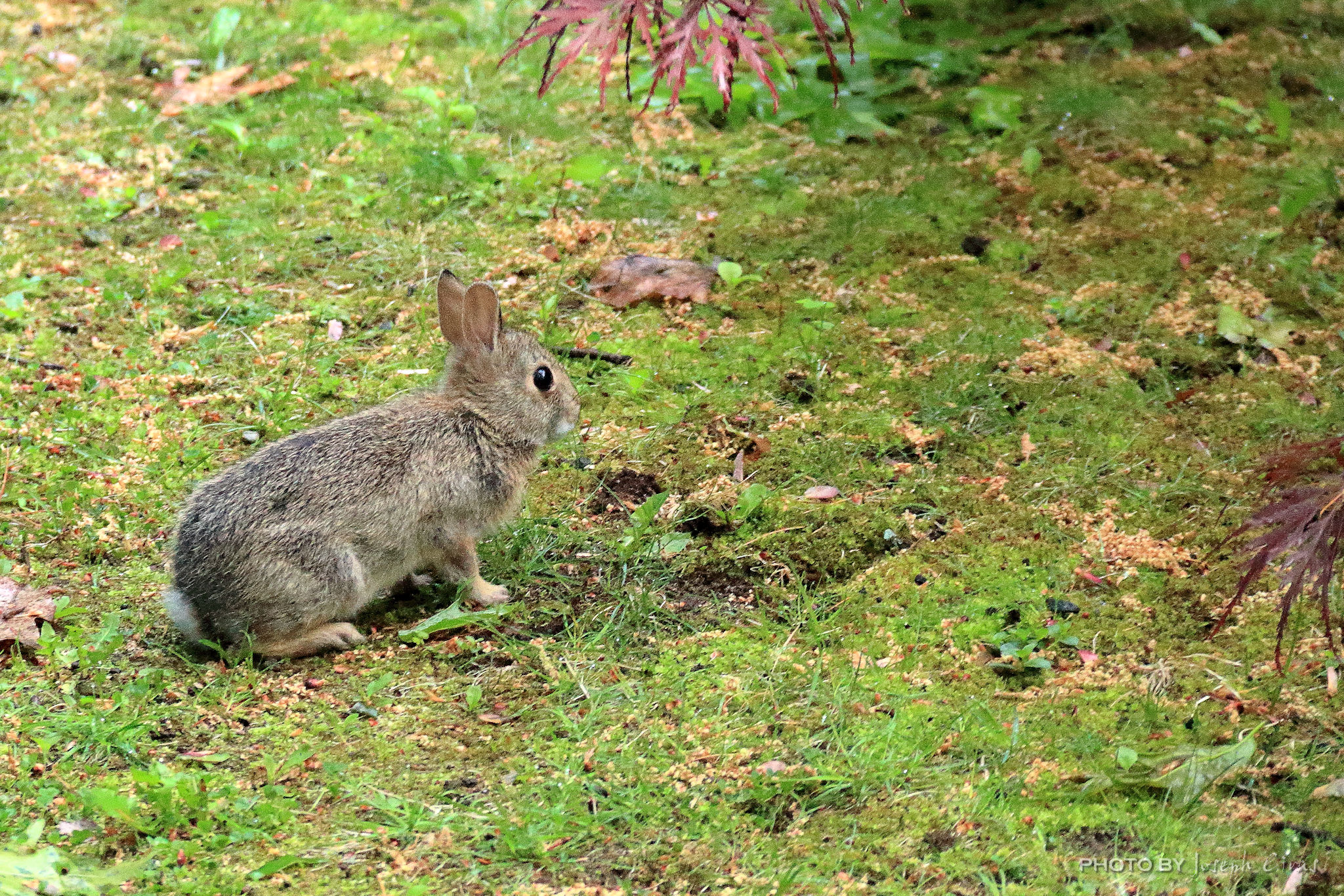
Imagine our two-year-old grandniece’s excitement every time this rabbit came out from under our deck. “There it is!!” She was so excited that she would run toward the rabbit and then it would hide. She would then sit down next to our son and wait and get excited repeatedly.

The wonders of youth. Why do we have to lose it?

Friday, 05/28/2021: Post photo — Clouds.

Settings: Canon EOS 60D, ISO 100, f/7.1, 1/250 s, 18 mm.

Needed a quick photo today since I was traveling north to go hiking. Took this one in the morning before the rains came in.

binary comment

Saturday, 05/29/2021: Post photo — Hiking.

Settings: FUGIFILM FinePix XP70, ISO 100, f/6.2, 1/240 s, 5 mm.

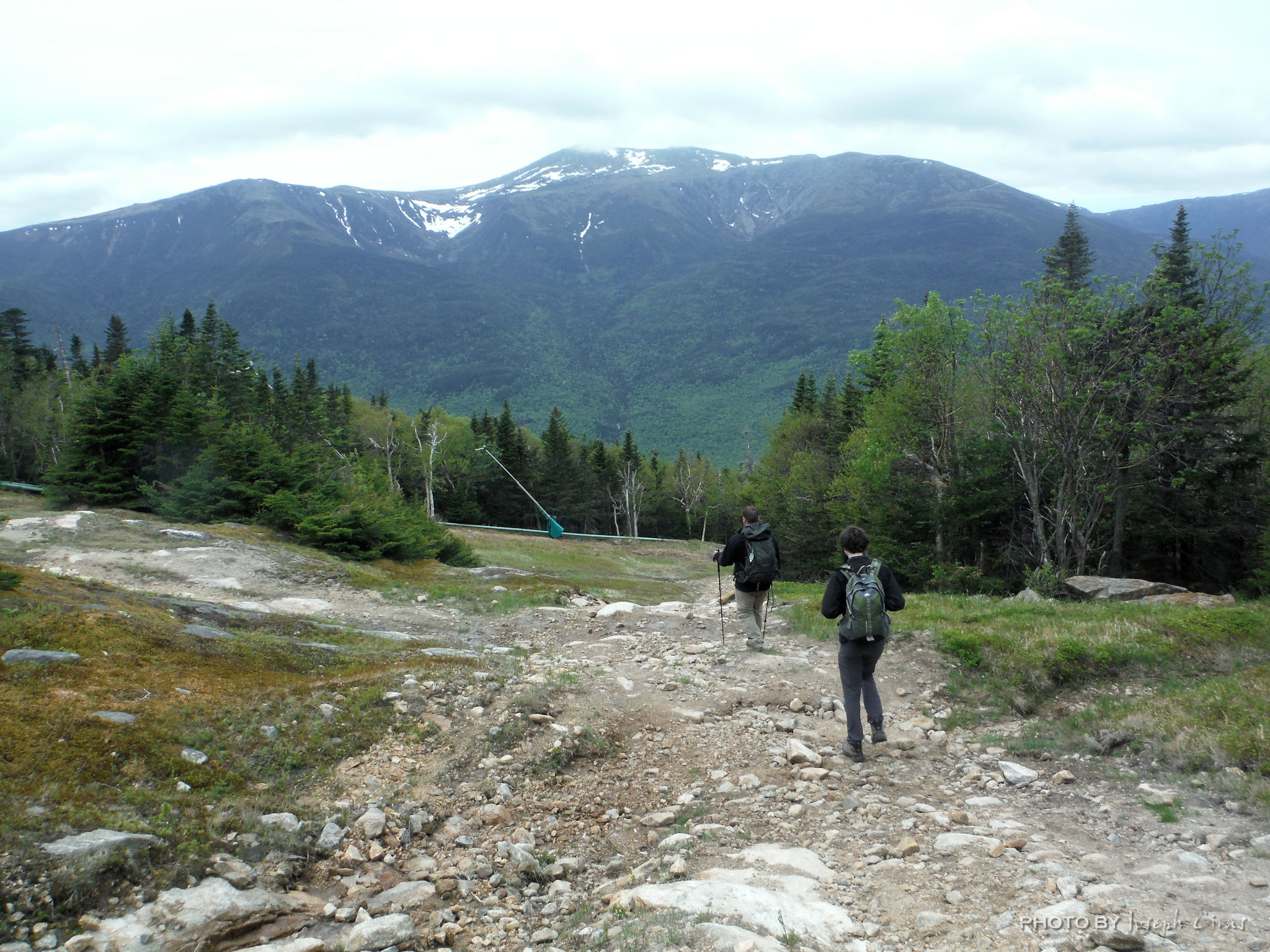
My son and his friend hiking in NH. This is from Wildcat D looking towards Mount Washington.

Hiking down the trail. Mount Washington in the distance

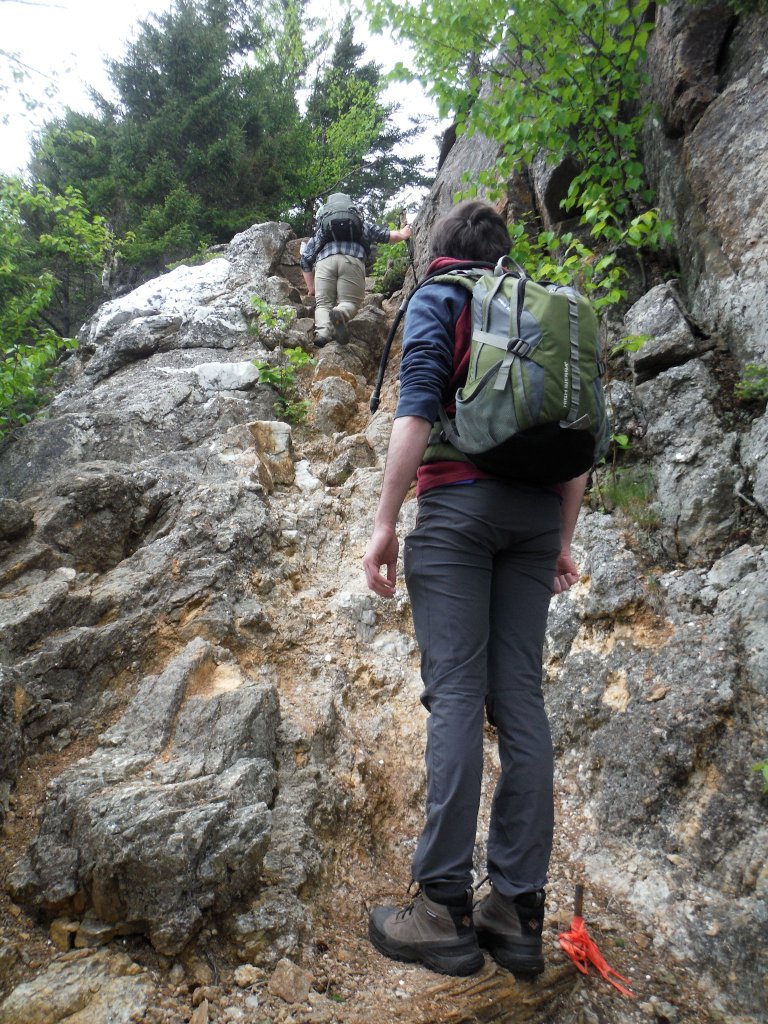
Five 4000-foot mountains, two official 4000 footers, wet river crossing to start the hike, 1600 feet of vertical gain in less than one-half mile, and hiking with your son and one of his friends. It was a great day. I feel in the river to start the hike. Not a great way to start, but I recovered quickly. Lucky, I brought a second pair of socks to change into. The first pair did not get very wet since I had on a good pair of hiking boots. I have my warm cloths on since the temperature was not to get above freezing in the mountains, so the wetness did not affect my hike.

That is all for now. Until next week, be safe.

For more photo of other project I have work, visit my website: https://photobyjosephciras.weebly.com/ or visit me on Facebook at https://www.facebook.com/PhotobyJosephCiras/.

COVID is real! Be safe out there, keep your social distance, and remember to always wear your mask and wash your hands.

Photographic Thoughts — 05/16/2021 to 05/22/2021

“The picture that you took with your camera is the imagination you want to create with reality.” — Scott Lorenzo

Thank you for all the new views and likes from last week. It helps keep me going. Enjoy my blog post!

Please answer the question posed in one of my days. I would like an opinion on how you like this blog and how I can improve it. Leave a comment below or on my Facebook page.

Enjoy this week’s rambling mind of a mechanical engineer and photographer.

Sunday, 05/16/2021: Posted photo — Stained Glass.

Settings: Samsung SM-G930V (Galaxy S7), ISO 50, f/1.7, 1/415 s, 4 mm

From the Stained Glass Association of America: “Stained glass possesses an aura of mystery and romance. It is the interplay between light and color that sparks the imagination. It is one of the most unchanged crafts, still taking, as it did centuries ago, time and patience, and an appreciation for color and line design.”

The term stained glass refers to colored glass as a material and to works created from it. Throughout its thousand-year history, the term has been applied almost exclusively to the windows of churches and other significant religious buildings. Although traditionally made in flat panels and used as windows, the creations of modern stained glass artists also include three-dimensional structures and sculpture.

From Classroom website: “Stained glass windows play games with the light in many modern churches. The tradition of making those windows goes back a long way. As early as the fourth century, colored glass was used to ornament church windows, though it was not until the 12th century that making stained glass became an art form like sculpture or painting. Yet stained glass was not just a decoration. It was a way of communicating scenes and episodes from the Bible to everybody — including those unable to read.

Ultimately, the most important reason that stained glass windows remain a staple in churches even now is a matter of the Bible, not beauty. Stained glass was not merely attractive, it created an ethereal experience with a material object, glass, making the earthly into the divine. More important, stained glass was useful for a practical reason. In the medieval period, many church-goers were illiterate. The intricate scenes depicted in stained glass were not just decorations; they were ways of delivering religious messages to all viewers, even those who could not read the Bible for themselves. Stained glass embedded religious beliefs into the very walls.”

Stained glass window

The stained glass in this photo is in the foyer of St. Denis Church. I liked the light coming through the window. There was also a vase with pussy willows in front of the window. In Chinese tradition, the white blossoms of the pussy willow resemble silk represents the coming of prosperity.

Monday, 05/17/2021: Posted photo — Cloud.

Settings: Canon EOS 60D, ISO 100, f/7.1, 1/800 s, 18 mm

I hiked with a different group today. This was the first time I hiked with this group. I am looking for a group of hikers that socialize and not a social group that hikes. After one hike, this group meets my needs. They still socialize but they keep up a good pace and are stronger hikers that the group that I joined a couple of weeks ago. This group hikes earlier in the evening, which is better for me.

What do you see in this cloud formation

Today it was warmer that it has been in the past and there was rain around the summit. This is a cloud that was forming near the summit of the mountain. I had to keep my eye on its growth since it was developing into a thunderhead, or cumulonimbus cloud. I enjoy watching a thunderhead grow. Once the anvil forms, it is time to get off the summit. This cloud did not fully develop and was still interesting to watch grow.

Tuesday, 05/18/2021: Posted photo — Seeds.

Settings: Canon EOS 60D, ISO 2000, f/5.6, 1/200 s, 135 mm.

Dandelion seeds

A dandelion seed is a tiny seed that rides on the wind. “A dandelion seed is the plant’s mature fruit, known as a cypsela to botanists, and its parachute-like structure is known as a pappus. The pappus develops as the calyx of each floret dries and matures, so it serves two important roles for the plant.” (West Coast Seeds) The seeds can be carried away as far as 5 miles from their original location. Other methods of travel include rain runoff and sticking to clothing and animal fur.

It is so interesting to see how many things a dandelion is used for. To me, they are just a weed that is in my lawn. This year they seem to be more abundant than in past years.

I liked photographing the cotton like puff of a dandelion seeds because I can practice macro photography and/or practice the use of different aperture settings on my camera.

Wednesday, 05/19/2021: Posted photo — I Have My Eyes on You.

Settings: Canon EOS 60D, ISO 3200, f/7.1, 1/160 s, 135 mm.

Once again, I was greeted by wildlife on my way into work today. This time it was a deer. There were four at the edge of the woods. Shortly after this, there were six running down the driveway. Over the years at work, I have seen deer, moose, turkey, black bear, red foxes, great blue herrings, ducks, and snapping turtles on the campus of where I work. I have not seen the snapping turtle for a few years, so I am somewhat concerned if it is still alive. There were two that I would see laying eggs next to the driveway that I would photograph every year. I know they were the same turtles since they have distinctive markings on their shell.

Doe keeping an eye on me

I like the quietness of my place of employment.

Thursday, 05/20/2021: Posted photo — Pink Azalea.

Settings: Canon EOS 60D, ISO 200, f/5.6, 1/80 s, 135 mm.

Last Saturday I posted a photo of some red azalea plants. As a reminder, I stated that azaleas are flowering shrubs in the genus Rhododendron. I noted that we also have pink azalea plants that bloom after the red ones. This week the pink azaleas are blooming.

Pink azalea bush

For this photo, I used a script that I wrote in Paint Shop Pro to duplicate the Dave Hill look as closely as possible. Do not know how to explain this technique clearly. Just search the internet for the Dave Hill look and see for yourself.

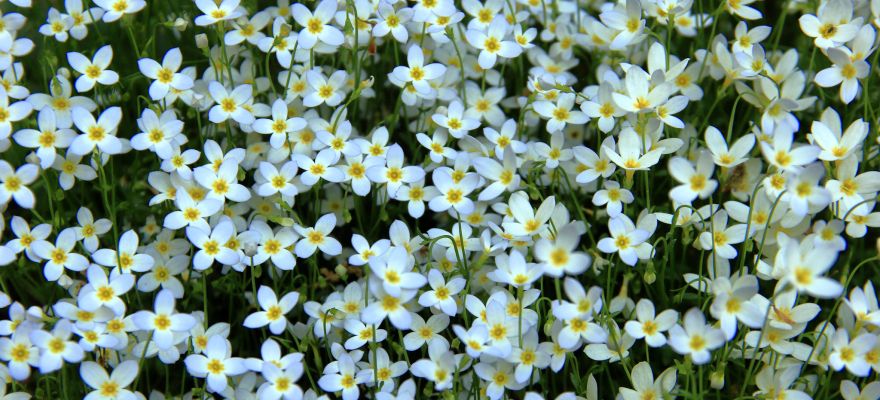
Friday, 05/21/2021: Post photo — Bluets.

Settings: Canon EOS 60D, ISO 100, f/7.1, 1/60 s, 62 mm.

From the Lady Bird Johnson Wildflower Center:

“Azure Bluet, Quaker Ladies, Bluets

Rubiaceae (Madder Family)

Synonym(s): Hedyotis caerulea, Houstonia caerulea var. faxonorum

USDA Symbol: hoca4

USDA Native Status: L48 (N), CAN (N), SPM (I)

This small, delicate perennial is found growing in compact tufts, 8 in. high. The plants may cover broad expanses. Tiny flowers are pale blue with yellow centers, tubular, four-lobed, solitary, and terminal. Spatula-shaped leaves occur in basal rosettes. Stem leaves are small, and the stems are unbranched.

This lovely, delicate, flowering plant is often found in striking patches of light blue. The Star Violet (H. pusilla), to 4” (10 cm) high, has a tiny purple flower and occurs in fields and open woods from South Dakota east to Maryland and south to Florida and Texas. A tall southern species, 6–16” (15–40 cm) high, Large Houstonia (H. purpurea), has 3–5, ribbed, opposite, ovate leaves, and white or pink flowers. It occurs from Nebraska northeast to Maine and south to Florida and Texas. These and certain other Houstonia species have sometimes been placed in the genus Hedyotis.”

Bluets

These bluets are in our yard. Well, they were there until I mowed the lawn this evening. They are such a delicate flower to look at.

Question: Do you think that I copy too much information off the internet and not put my own thoughts into some of the items in this blog or do you like the history and educational information that I post?

Saturday, 05/22/2021: Post photo — Pop Art.

Settings: Canon EOS 60D, ISO 3200, f/4, 1/8 s, 28 mm.

50 years ago, you give a teenager a paint brush and ask him to paint what he wanted in a room, this is what happens. Here are some interesting artwork that still hang on basement/cellar walls at my mother’s house. We when over there today to do some cleanup. These photos are to keep as memories of this artwork before the walls come down.

Pop art

I am very tired, so I am not writing much for today. Here are a couple more pieces of art.

That is all for now. Until next week, be safe.

For more photo of other project I have work, visit my website: https://photobyjosephciras.weebly.com/ or visit me on Facebook at https://www.facebook.com/PhotobyJosephCiras/.

COVID is real! Be safe out there, keep your social distance, and remember to always wear your mask and wash your hands.

Photographic Thoughts—04/11/2021 to 04/17/2021

“Photography for me is not looking, it’s feeling. If you can’t feel what you’re looking at, then you’re never going to get others to feel anything when they look at your pictures.” — Don McCullin

Thank you for all the new views and likes from last week. It helps keep me going. Enjoy my blog post!

Sunday, 04/11/2021: Posted photo—Lesser Periwinkle.

Settings: Canon EOS 60D, ISO 250, f/7.1, 1/160 s, 100 mm

Vinca minor (Lesser Periwinkle) is a vigorous, evergreen mat-forming perennial with glossy dark green leaves and large lavender blue flowers from mid-spring to early summer. Borne over a long period, they continue to flower intermittently throughout summer into fall and are valuable for enlivening dark areas.

This lesser periwinkle lives in the front yard of my mother’s house. The flower caught my eye yesterday when I visited her. Today, when I went back to visit, I took a photo of it before going into the house. I just like the contrast of the purple against the green grass or the dirt.

Monday, 04/12/2021: Posted photo—Radio Relay Station.

Settings: FUJIFILM FinePix XP70, ISO 100, f/8, 1/420 s, 12 mm.

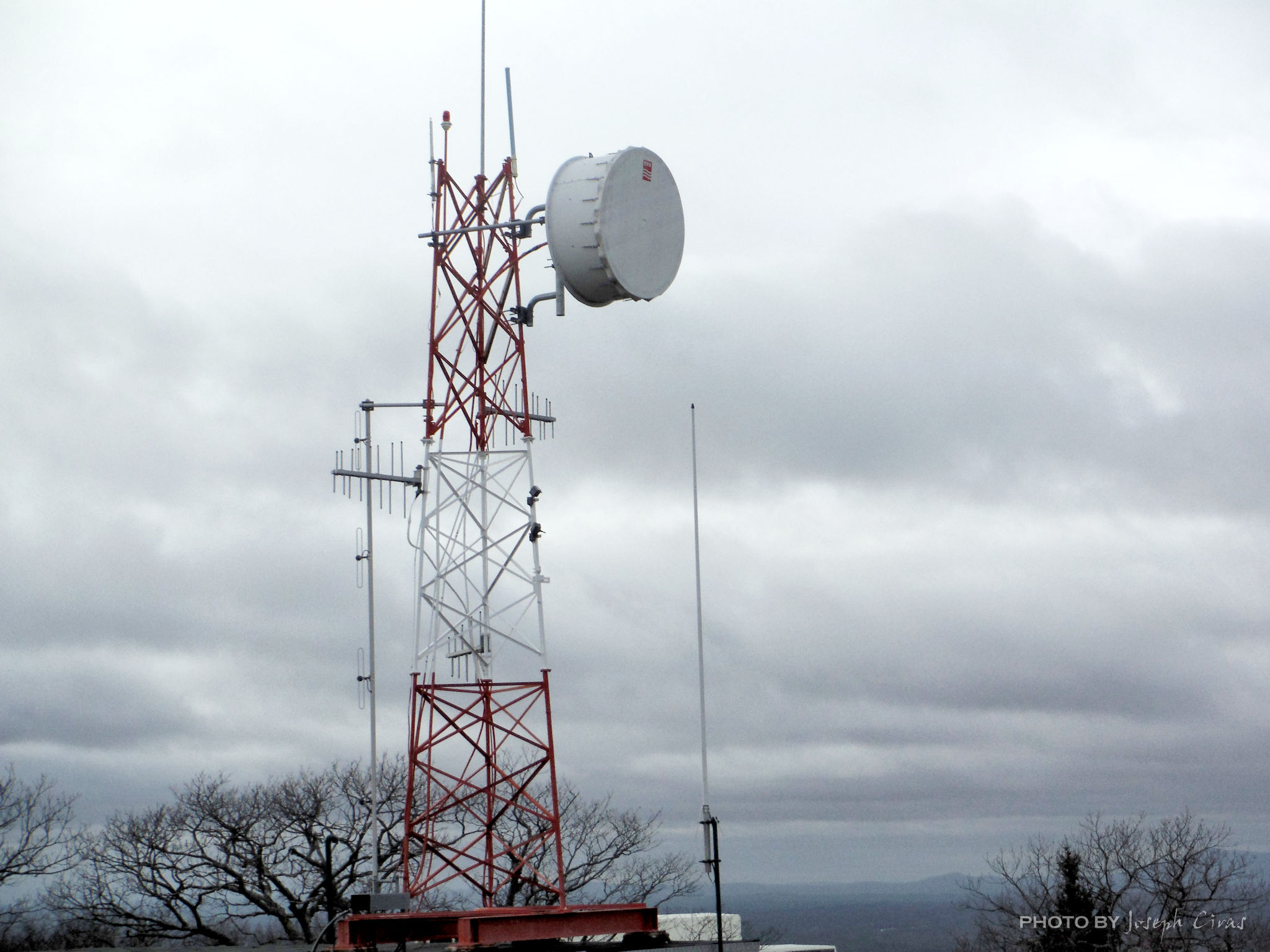
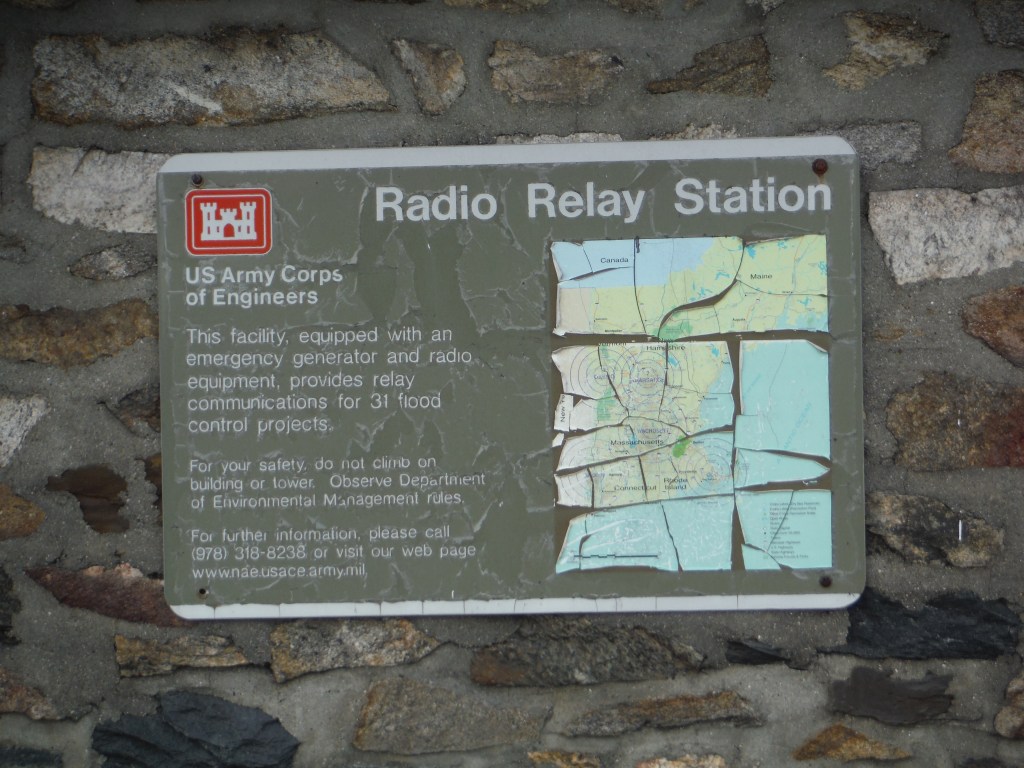
Wachusett Mountain is the highest point in Massachusetts east of the Connecticut River. It is a good location for communication towers, fire watch towers, and radio relay stations.

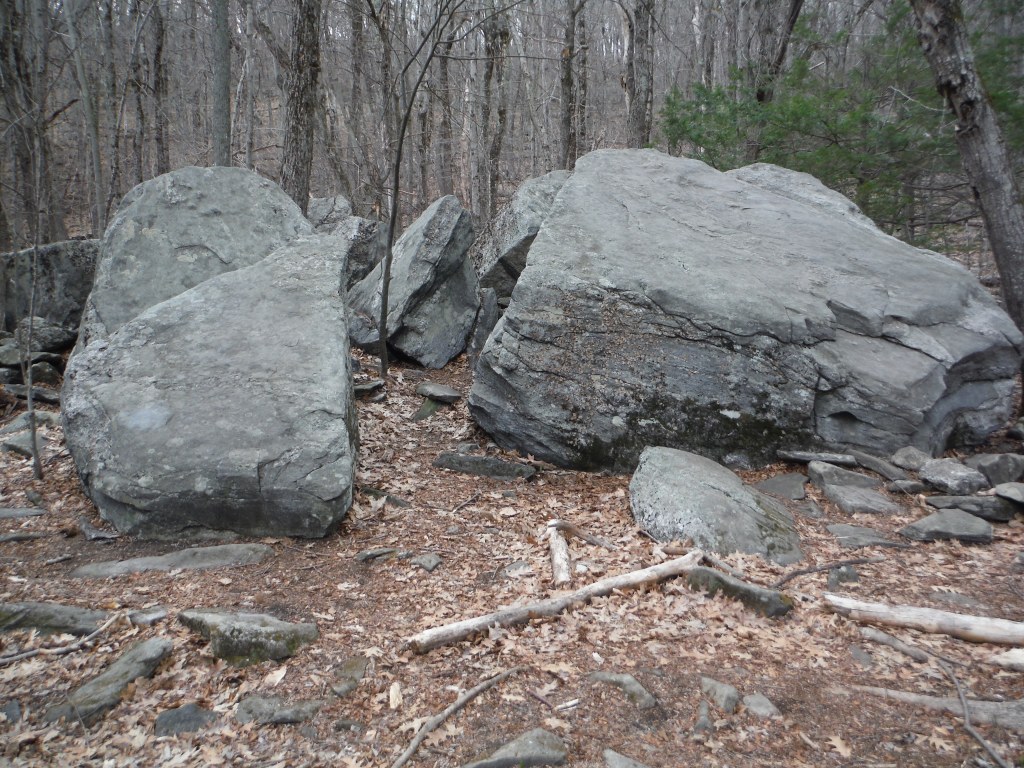
This Radio Relay Station was installed by the US Army Corps of Engineers. It is equipped with an emergency generator and radio equipment and provides relay communications for 31 flood control projects in the area. I have added a couple other photos from tonight’s hike. One shows a small boulder field that is on the trail, one show both antennas on the Radio Relay Station, and the other photo is of the sign attached to the Radio Relay Station.

As part of my photo project, I take photo of different objects. Sometimes for no reason at all. Sometimes they are impulsive photos. This one was an impulsive photo.

Tuesday, 04/13/2021: Posted photo—Sugar Plum Fairies.

Settings: Canon EOS 60D, ISO 3200, f/5.6, 1/160 s, 44 mm.

From the Story Behind the Nutcracker: “Ironically, the Sugar Plum Fairy is not found in the original E.T.A. Hoffman story Nutcracker and Mouse King or in Alexandre’s Dumas’s The Tale of the Nutcracker, the retelling on which the ballet’s first libretto was based. Additionally, during the era in which The Nutcracker ballet was developed, the term “sugar plum” referred not only to a specific sweet, but, as author Samira Kawash points out, was also “the universal signifier everything sweet and delectable and lovely.” She further explains that the actual “sugar plums” of those days were, in fact, mostly sugar and no plum. They were treats in the category of “comfit”– candy created by layering sugar coating over a seed or nut center. She cites Jordan Almonds as a modern-day parallel. So, with a name that refers to anything and everything sweet and wonderful in the world, it makes sense then that the Sugar Plum Fairy is chosen to rule the Land of Sweets while the Prince is away in Tchaikovsky’s The Nutcracker.”

I have not seen the ballet so I cannot comment on it. One of my nephews dance and my mother-in-law took him to see it in Boston a few years ago. He enjoyed it very much.

These Sugar Plum Fairies are on a music box that my mother has in her special hutch. It is in the hutch along with all her unicorn figurines and other little figurines in trinkets. She also keeps the good china that is only to be used when company comes over in this hutch. This is a hutch that we were not to touch when we were little.

Wednesday, 04/14/2021: Posted photo—Garden of Gethsemane.

Settings: Canon EOS 60D, ISO 1600, f/5.6, 1/13 s, 24 mm

The Garden of Gethsemane is where Jesus prayed on the night of His betrayal and arrest (Mark 14:32-50). According to the record in Luke, Jesus’ despair in Gethsemane was so deep that He sweat drops of blood (Luke 44-22:43). “Then Jesus came with them to a place called Gethsemane, and said to His disciples, “Sit here while I go over there and pray.” And He took with Him Peter and the two sons of Zebedee, and began to be grieved and distressed.” (Matthew 37-26:36)

This three-dimensional painting is on my mother’s mantle. She has many religious icons and symbols around the house. I do not know whose Rosary that is, but it has been with this painting for as long as I remember.

I look at this painting every time I visit her and kept meaning to take a photograph of it. Today I finally did. I have been looking online to find out the origin and history behind the image and cannot find a good match. If anyone can help me out, please put it in the comment section.

Thursday, 04/15/2021: Posted photo—Summit in the Clouds.

Settings: FUJIFILM FinePix XP70, ISO 100, f/4.4, 1/70 s, 8 mm.

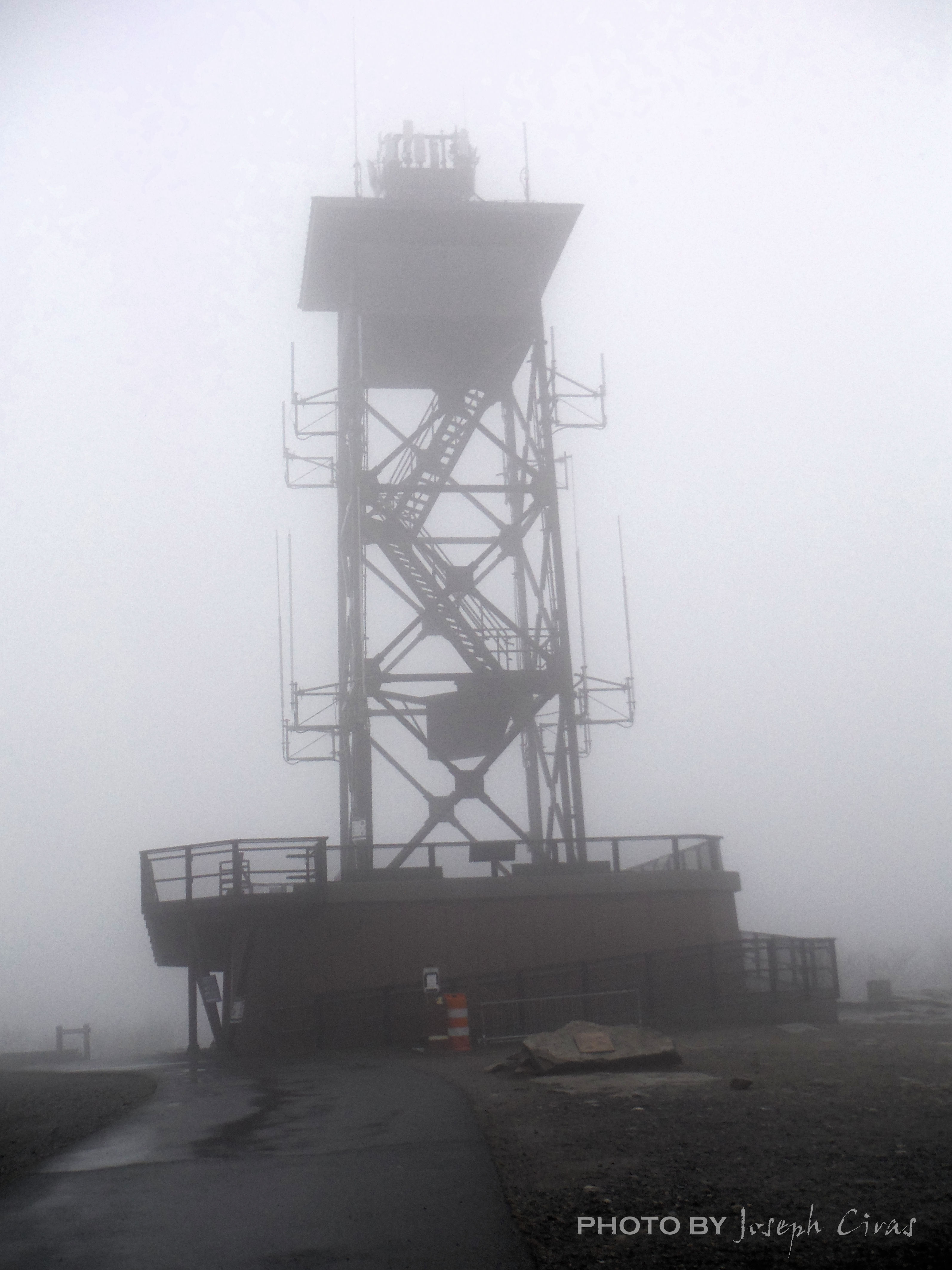
Last month I posted a photo of this fire watch tower and gave a little history of it. Tonight, I hiked up to it in the rain. The summit was in the low-lying clouds and it was wet. I wanted to take this photo to show the conditions on the summit.

The hike itself was good. The trails on the route I took were slippery and wet, but I was ready for the weather and the conditions. I was the only person hiking today. I did see a trail runner, but no other hikers. Trail running must have been interesting on the wet rocks and mud.

We are expecting five to seven inches of snow tonight into tomorrow. The current plan is to post some snow photos tomorrow. We will have to wait and see if that happens.

Friday, 04/16/2021: Post photo—Staghorn Sumac.

Settings: Canon EOS 60D, ISO 400, f/8, 1/125 s, 39 mm

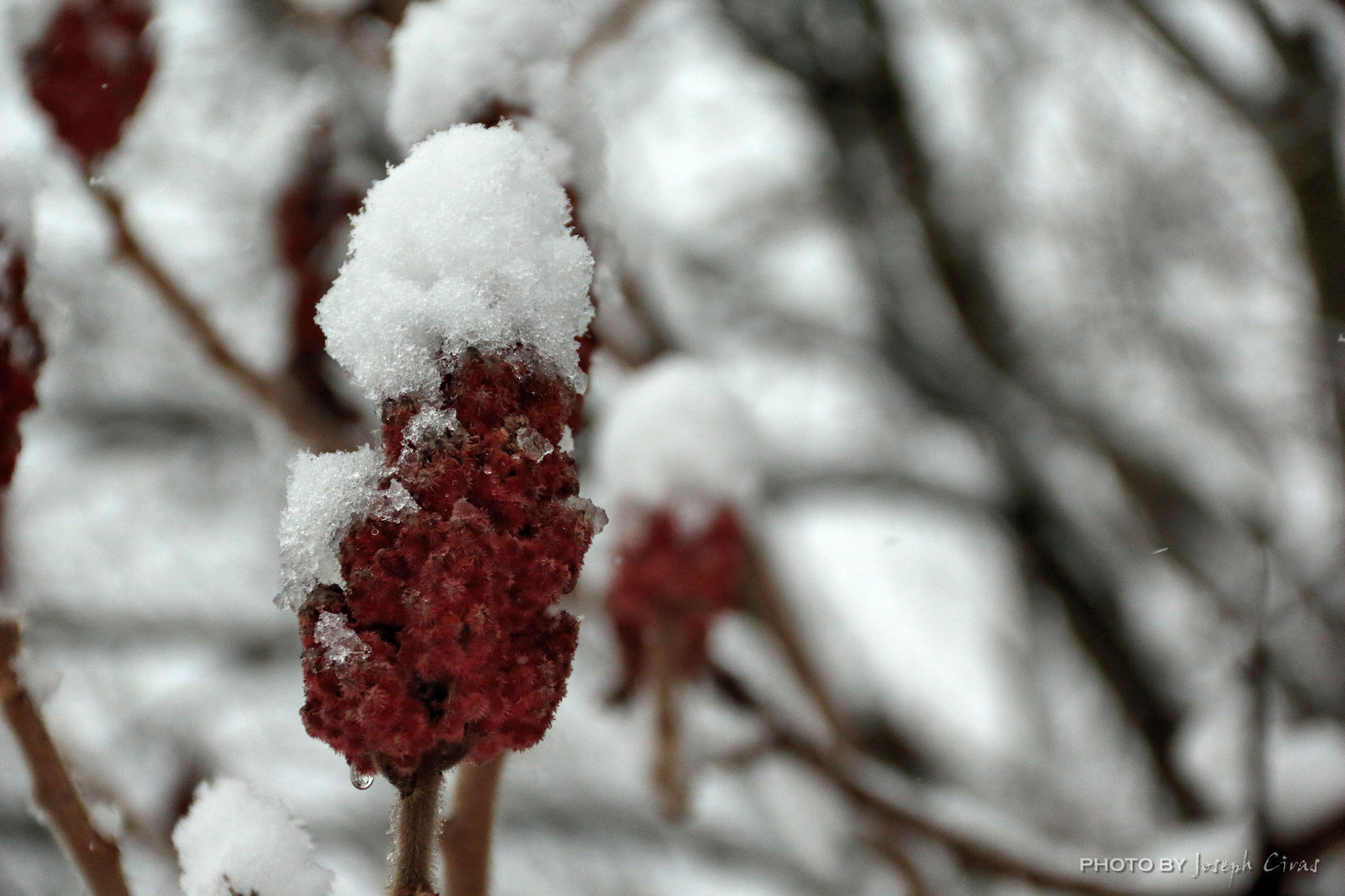
From the Farmer’s Almanac: “The staghorn sumac is a 15-30 feet, colony-forming, deciduous shrub with crooked, leaning trunks, picturesque branches, and velvety twigs. Large, bright green, pinnately-compound leaves become extremely colorful in early fall. Staghorn sumac is often used in mass plantings, for naturalizing, or on steep slopes. Its open habit and hairy stems resemble horns on a male deer, giving staghorn sumac its name. It is one of the last plants to leaf out in the spring with bright green leaves that change to an attractive yellow, orange, and scarlet in fall. Ground, dried sumac berries taste great as a spice rub for lamb, fish and chicken. These berries are also used as a salad topping, and you can include them in your favorite dressings. Middle Eastern chefs use sumac as a topping for fattoush salad, and are often sprinkled on hummus to add both color and a zesty flavor.”

I see these sumacs often and like the contrast of the red against the white snow.

As I was writing this, I noticed that this was the second time that I used the words “like the contrast” as a reason to take a photo.

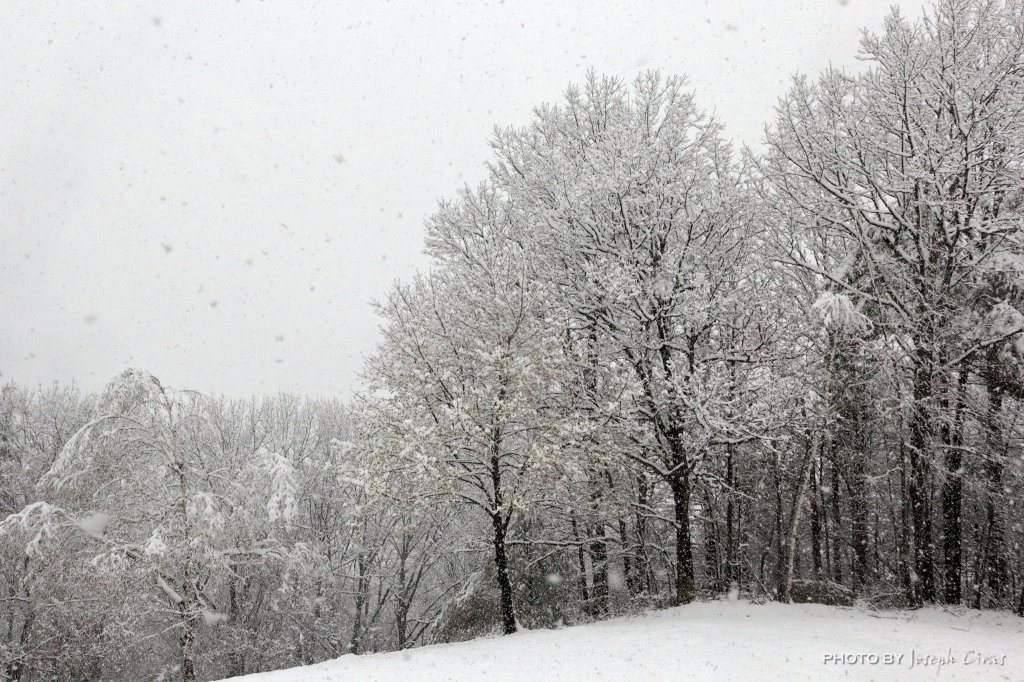
Here are a couple more photos from today’s snow storm.

Saturday, 04/17/2021: Post photo—Trail Junction.

Settings: FUJIFILM FinePix XP70, ISO 100, f/8, 1/250 s, 10 mm.

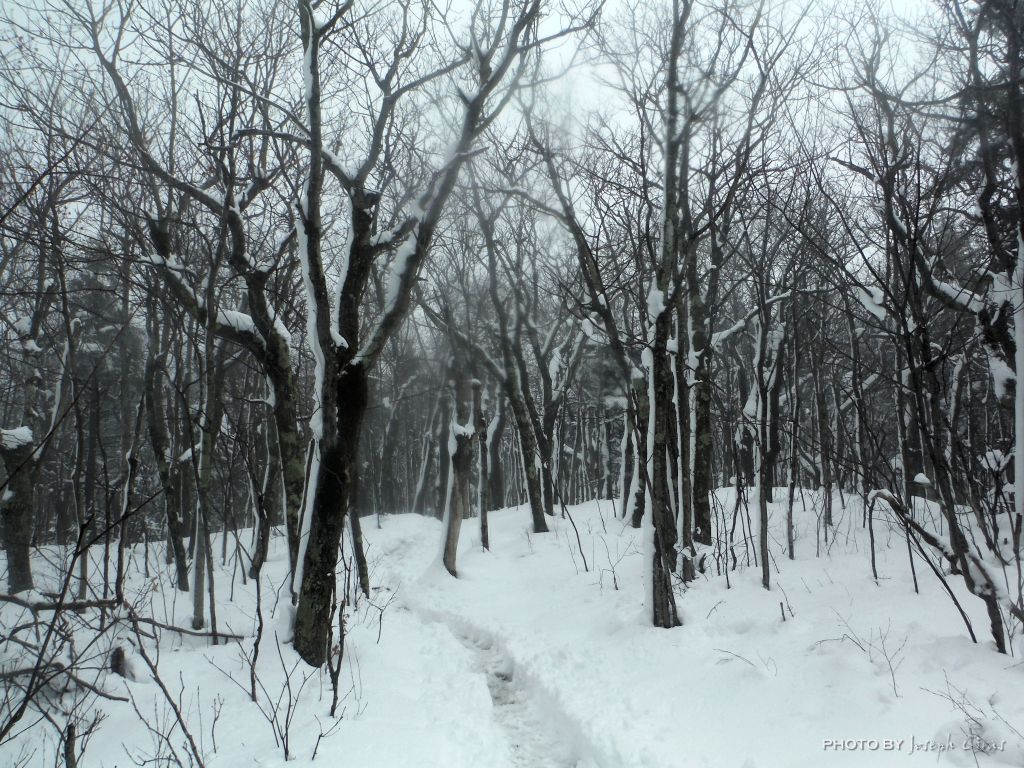
Today I went out on a hike earlier in the day than I normally do since I am going to visit my mother later in the day. Yesterday we received about 6-10 inches of snow. I hiked on the mountain today in the snow since I know that there would be fewer people hiking today. The snow was sticky and microspikes were needed. I have not much to say today.

Here are more photos of my hike.

For more photo of other project I have work, visit my website: https://photobyjosephciras.weebly.com/ or visit me on Facebook at https://www.facebook.com/PhotobyJosephCiras/.

COVID is real! Be safe out there, keep your social distance, and remember to always wear your mask and wash your hands.

Photographic Thoughts—04/04/2021 to 04/10/2021

“You don’t take a photograph. You ask quietly to borrow it.” — Unknown

Thank you for all the new views and likes from last week. It helps keep me going. Enjoy my blog post!

Sunday, 04/04/2021: Posted photo—Easter Mass.

Settings: Samsung SM-G930V, ISO 125, f/1.7, 1/60 s, 4 mm

Easter Sunday is one of the most festive events among Christians worldwide. It commemorates Jesus Christ’s resurrection from death, as written in the Christian bible. Easter Sunday commemorates Jesus’ resurrection from death.

Holy Week is most definitely a very sacred time of the year. It is the time that we will commemorate and remember the last week of Jesus’ life on this earth. Holy Week starts out with Palm Sunday. On this day, the crowds welcomed Jesus by waving palm branches and shouting praise to Him. These are the days leading up to the great Easter Feast.  Especially important for Catholics is the Easter Triduum. This is the three days just before Easter. On Holy Thursday, we reenact the Lord’s Last Supper, which He shared with His apostles on the night He was betrayed and arrested. On Good Friday, the day of the crucifixion and death of our Lord, we have the veneration of the Cross. Holy Saturday is a vigil, we keep watch for the expectant rising of Our Savior. Then comes the glory of Easter Sunday when He rose from the dead.

Easter Sunday changes every year. It is the first Sunday after the first full moon after the spring equinox. The earliest possible date for Easter is March 22 and the latest possible date for Easter is April 25. Easter can never come as early as March 21 because of ecclesiastical rules in which the vernal equinox has a fixed date of March 21. This is what happened last year.

St. Denis Church dressed up for Easter Sunday

This is a photo of St. Denis Church prior to Easter Mass looking down from the choir loft. Happy and blessed Easter to all.

Monday, 04/05/2021: Posted photo—Brenizer Method.

Settings: Canon EOS 60D, ISO 100, f/7.1, 1/160 s to 1/1600 s, 34 mm (16 photos).

The Brenizer Method, sometimes referred to as Bokeh Panorama or Bokehrama, is a photographic technique characterized by the creation of a digital image exhibiting a shallow depth of field in tandem with a wide angle of view. The Brenizer Method is named after wedding photographer, Ryan Brenizer. He invented the method (but did not name it) and made it popular by using it with his wedding clients, and teaching others how to do it as well. This is a method of stitching together a series of photos taken in a particular pattern.

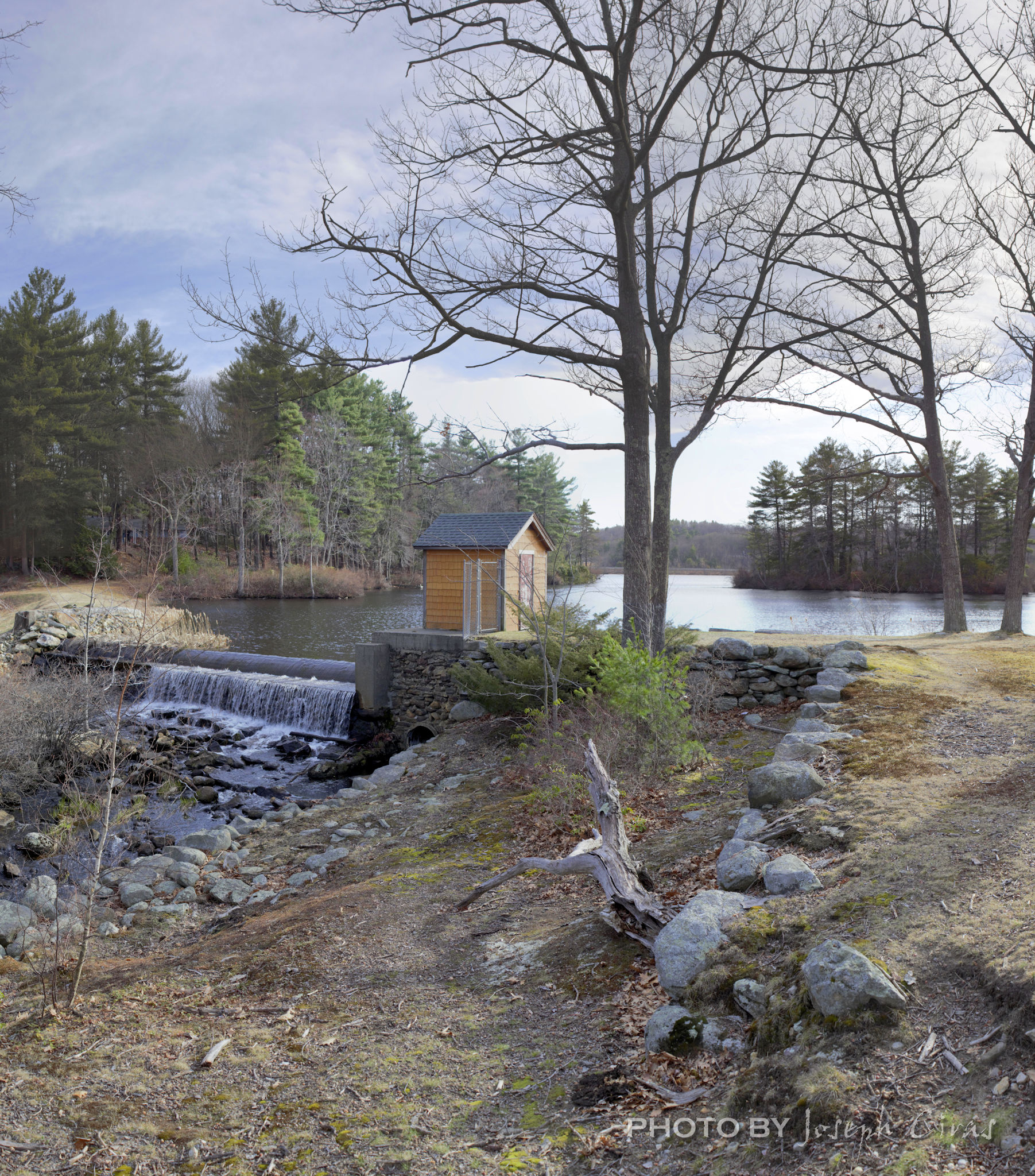
Brenizer stack of the dam at Round Meadow Pond in Westminster

This photo is a series of 16 photos that I stitch together. I used this technique today since it has been a while since I used it. As time goes on, I look at my old photos and tell myself to get pack to practice techniques. This is a great location to practice different photographic techniques.

Tuesday, 04/06/2021: Posted photo—What is it.

Settings: Canon EOS 60D, ISO 1600, f/5.6, 1/160 s, 55 mm.

Occasionally I like to post a photo to see if someone can guess what it is. Today is one of those days. I saw this object and wanted to do such a photo. I thought that this one would be easier than most of them. I was not. Some people were close with their guess and second guessed themselves. These are always a fun challenge.

What is this object?

What is the object? It is a stack of Styrofoam cups. I took this photo since I like the way the grains in the Styrofoam looked. As done with many things, such as Coke or Duck tape or Scotch tape, we use a trademarked name as a general description of a product. Styrofoam is a trademarked brand of closed-cell extruded polystyrene foam, or XPS. This foam is also referred to as “Blue Board” and is used for building insulation, thermal insulation, and water barriers. Styrofoam is owned and manufactured by The Dow Chemical Company.

Wednesday, 04/07/2021: Posted photo—First Daffodil.

Settings: Canon EOS 60D, ISO 160, f/7.1, 1/80 s, 55 mm

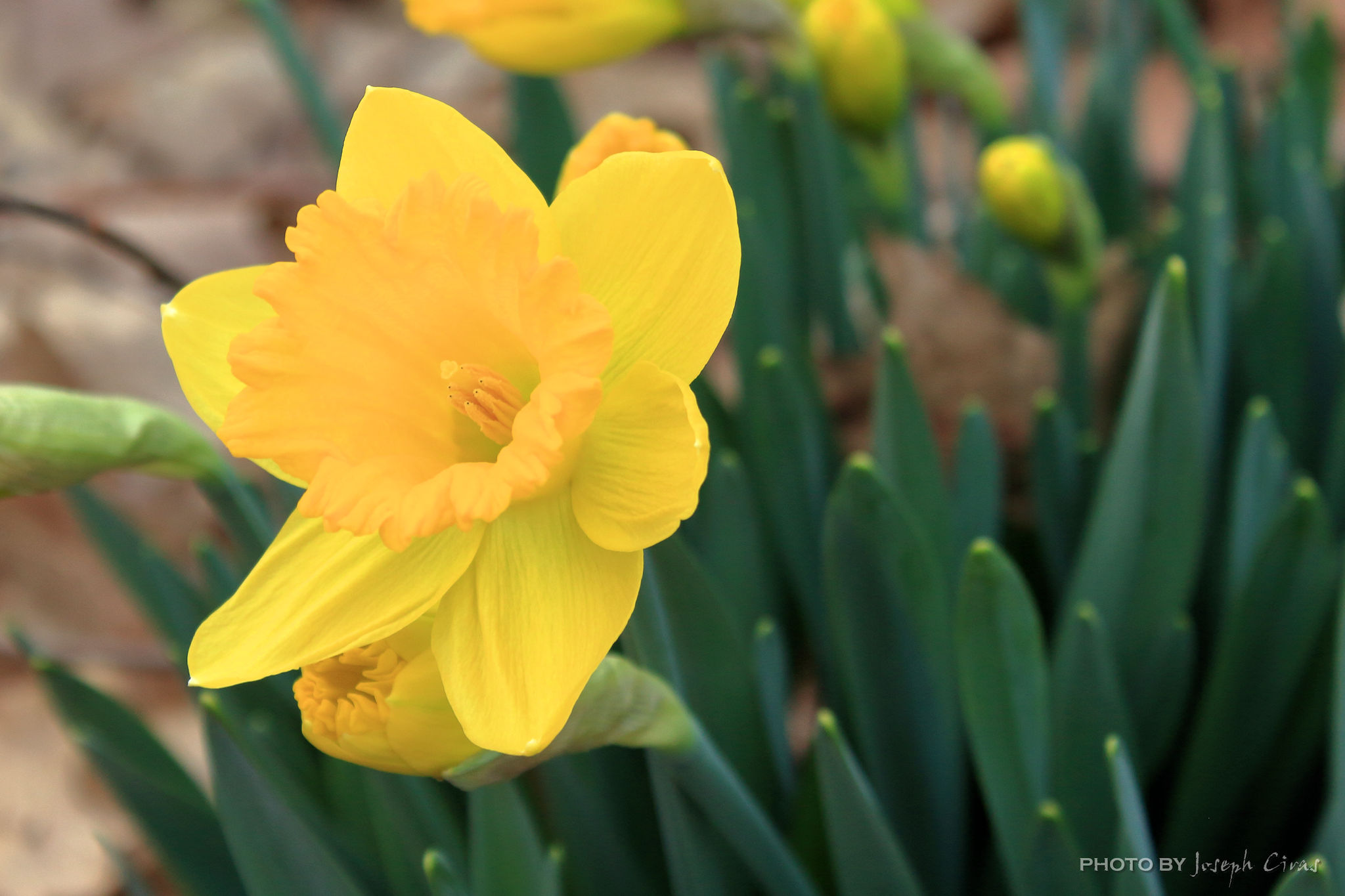
This is one of the first signs that spring has arrived. The daffodils in our yard are starting to bloom. I have been watching the flower sprout over the last few days and today was the first time that I have seen it flower. We have multiple patches of daffodils in our yard. This year there seems to be many more blooming than in past years. Maybe someone that reads this can tell me why this is the case.

Daffodils are a fall-planted bulb, so plant them in autumn and they will bloom in late winter or early spring. The traditional daffodil flower may be a showy yellow or white, with six petals and a trumpet-shape central corona, but many cultivated varieties (“cultivars”) exist today.

First daffodil of the year

Thursday, 04/08/2021: Posted photo—Roses.

Settings: Canon EOS 60D, ISO 400, f/7.1, 1/100 s, 64 mm

“The Presence of the Rose by Angela Morgan

From out imprisoning petals—velvet, red—
Thy soul slips forth in fragrance wondrous sweet—
A silent subtle presence—never fled,
That makes thy mastery over me complete.”

During my visit with my mother today, she wanted me to water all her flowers and plants. She has been getting flowers from many people over the past few weeks. I had already taken photos of different subjects to post today and then I saw these roses. I asked her who gave them to her, and she could not remember. Flowers are a favorite subject of mine throughout the spring, summer, and fall seasons because of their colors and textures.

Roses for a sweet lady

No matter how old you are, your mother is your mother, so listen to her and be kind and helpful to her. My mother is 95 years old and still treats us as her young children.

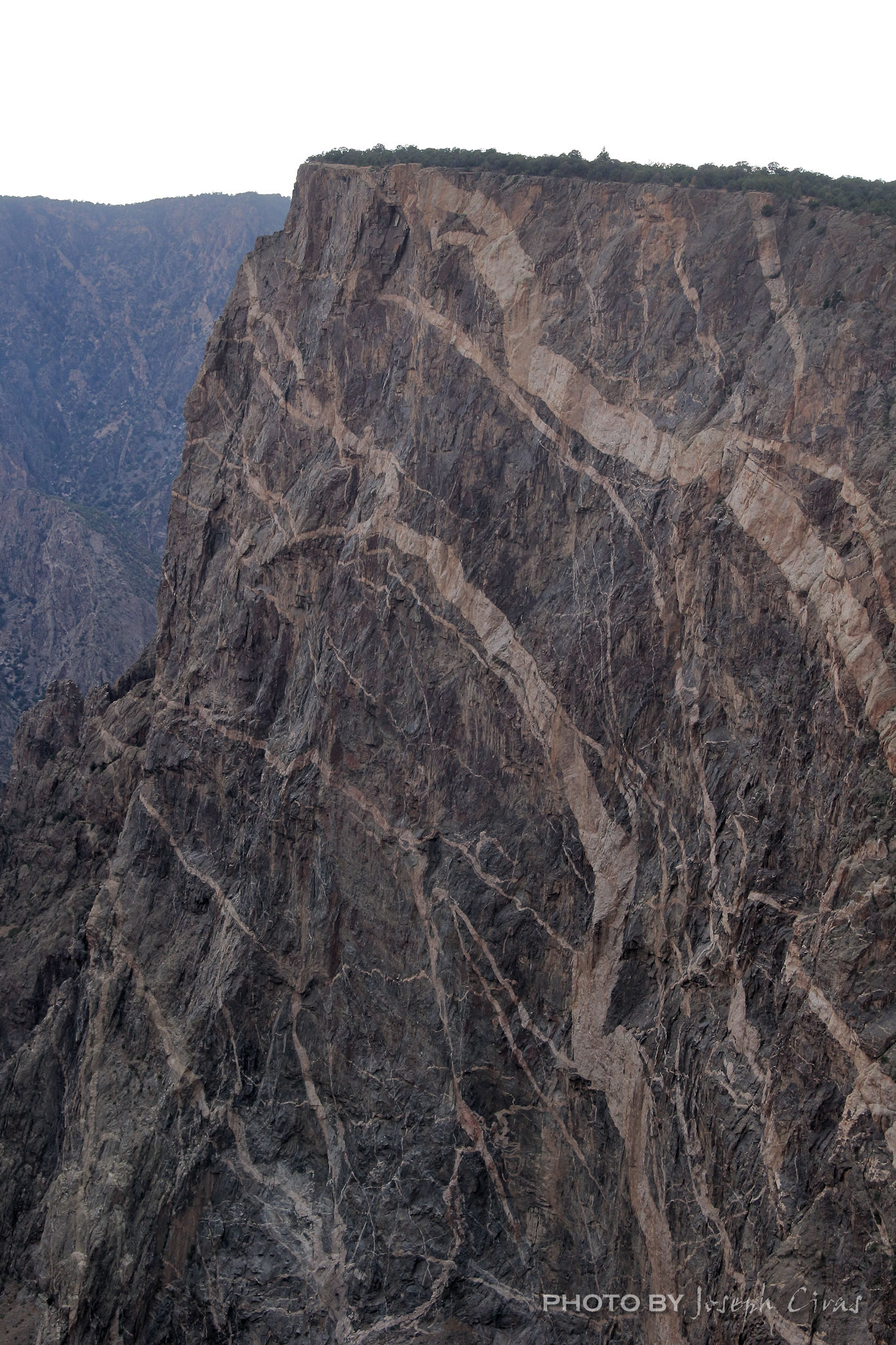
Friday, 04/09/2021: Post photo—Painted Wall.

Settings: Canon EOS 60D, ISO 400, f/8, 1/125 s, 39 mm

Black Canyon of the Gunnison National Park is a park I never heard about before visiting. It is a small park, but one that should be explored. We camped at the park and did some hiking around the rim of the canyon. Night skies were dark and the sound of the Gunnison River running through the canyon was very relaxing.

Some facts from the Uncover Colorado website:

  1. The Gunnison River drops an average of 43 feet per mile through the canyon, SIX times more than the Colorado River through the Grand Canyon.
  2. Colorado’s biggest cliff is the Black Canyon’s Painted Wall. Standing 2,250 feet tall from river to rim, Black Canyon’s Painted Wall is the tallest cliff in Colorado and the third tallest in the lower 48, after El Cap and Notch Peak. For comparison, the Washington Monument stands at a measly 555 feet and the Empire State Building stands at just 1,250 feet.
  3. Black Canyon gets its name because some parts of the gorge receive only 33 total minutes of sunlight per day.
  4. It has some of the world’s oldest exposed rock. the rocks exposed at the bottom of the canyon are nearly 2 billion years old, dating from the Precambrian era.
  5. It is the least-visited national park in Colorado, and one of the lesser visited parks overall.
Painted Wall at Black Canyon of the Gunnison National Park

Explore the National Parks. I have been to only 30 of the 59 National Parks and would like to get out and see more of them. In total, I have been to 87 other National Monuments, National Historical Parks, and other entities of the national park system.

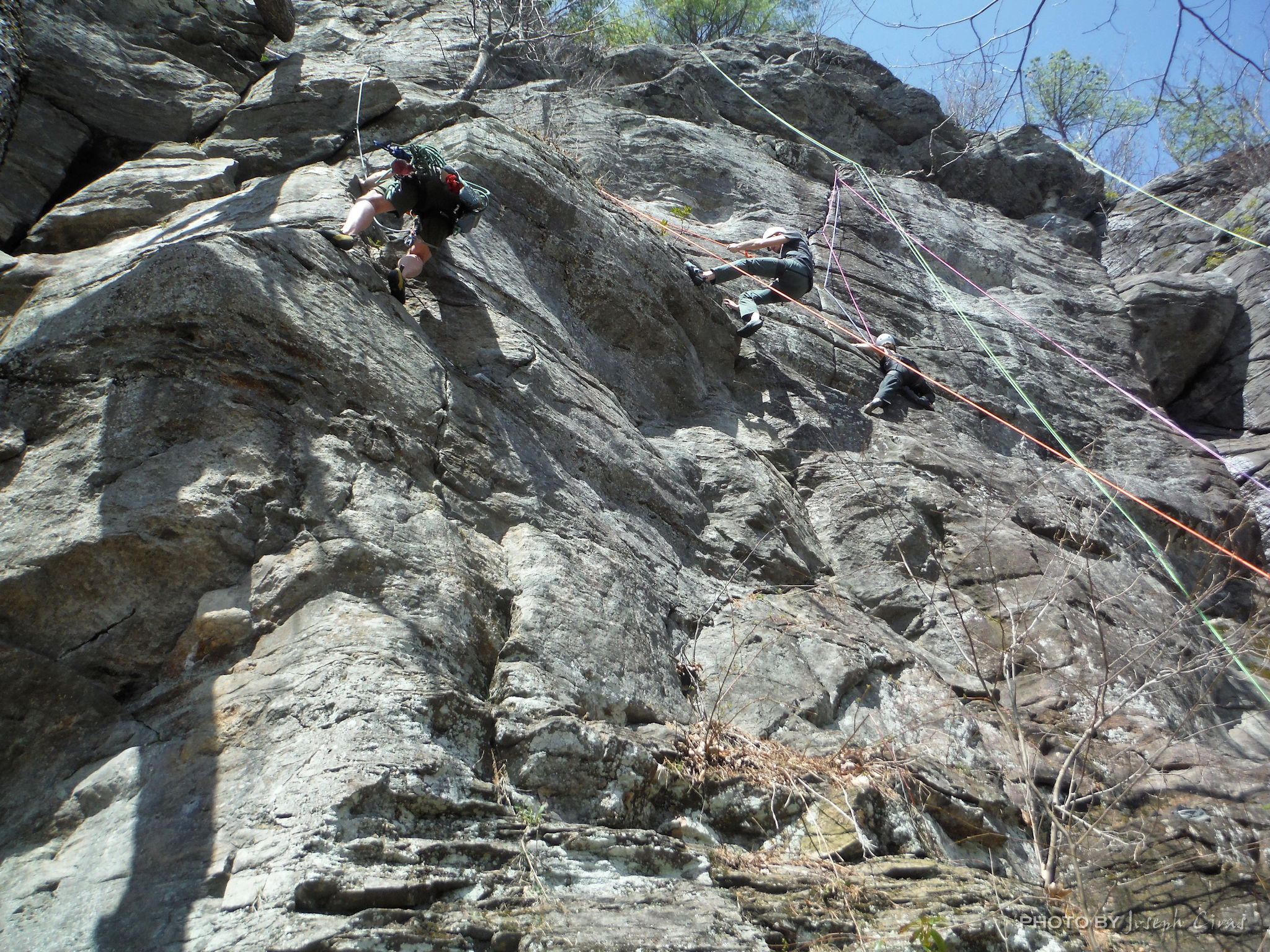
Saturday, 04/10/2021: Post photo—Rock Climbing.

Settings: FinePix XP70, ISO 100, f/4.1, 1/420 s, 6 mm.

The Crow Hills, located in Massachusetts’ Leominster State Forest 2.5 miles northeast of Mount Wachusett, are a single monadnock with a twin summit, 1,234 feet and 1,220 feet, and a high eastern cliff. The hills are a popular rock climbing, bouldering, and hiking destination. In my younger years I did some rock climbing there myself.

Rock climbing on Crow Hills

To get to the Crow Hills, I hiked the Midstate Trail. Round trip from my house to the cliffs is about eight miles. It was a great day for a hike. I stayed away from Wachusett Mountain today since it is overcrowded. My son and his friend hiked earlier today, mid-morning, and told me to say away because of all the people. On a nice day, such as today, people with no experience are out hiking making it not very enjoyable. Everyone has to start out sometime, I know, but because of COVID people are taking too many risks on the mountain.

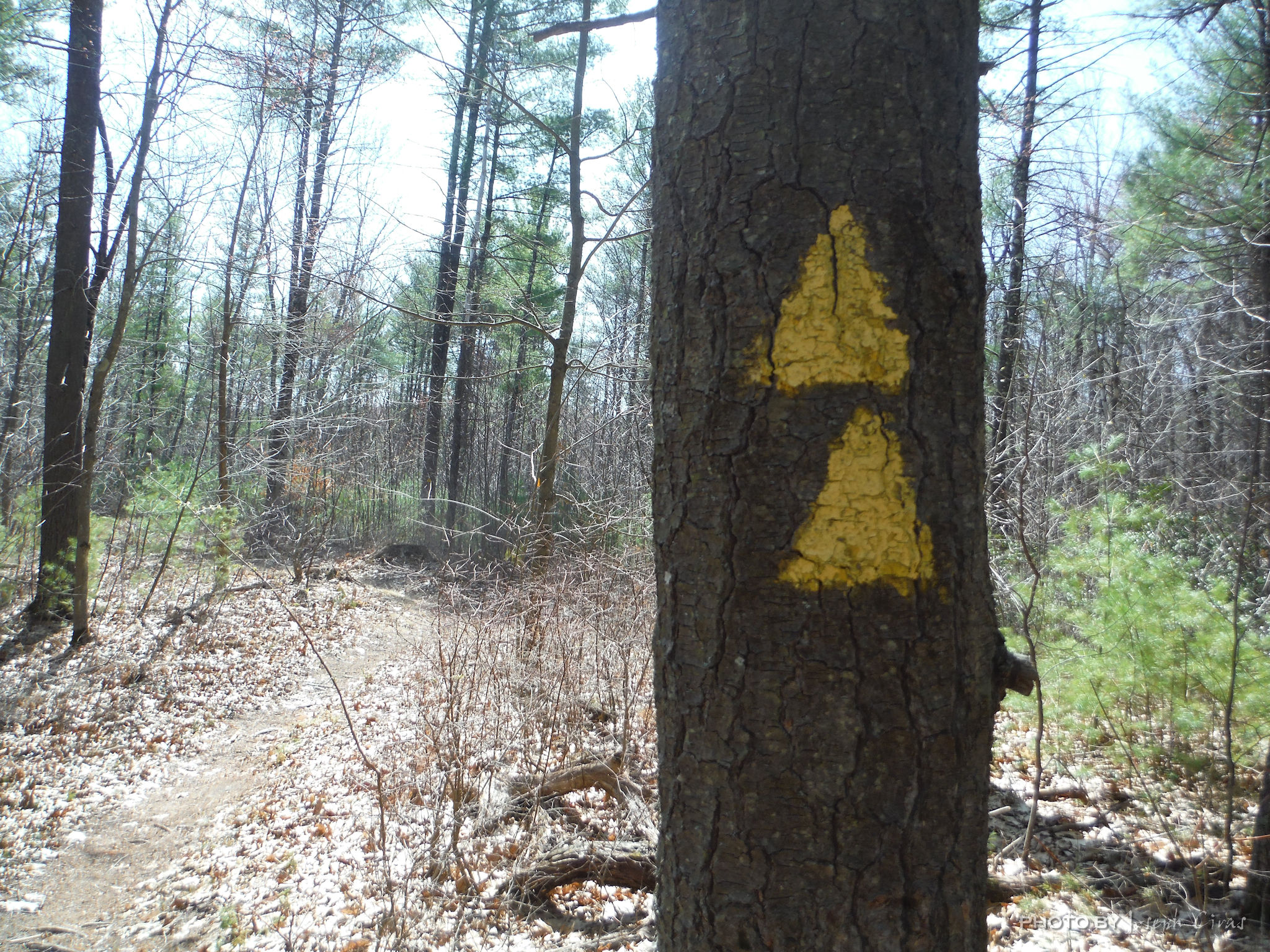
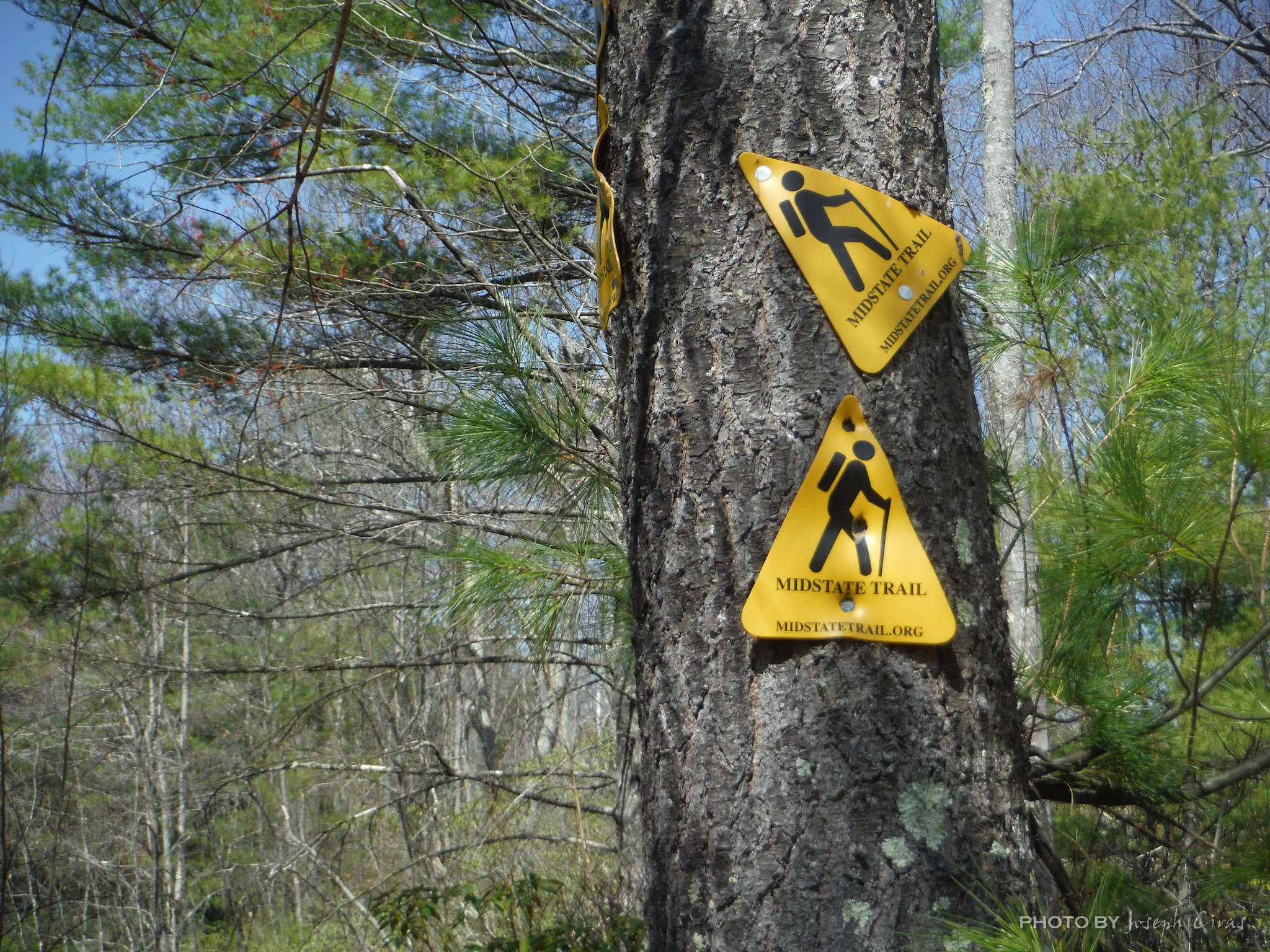
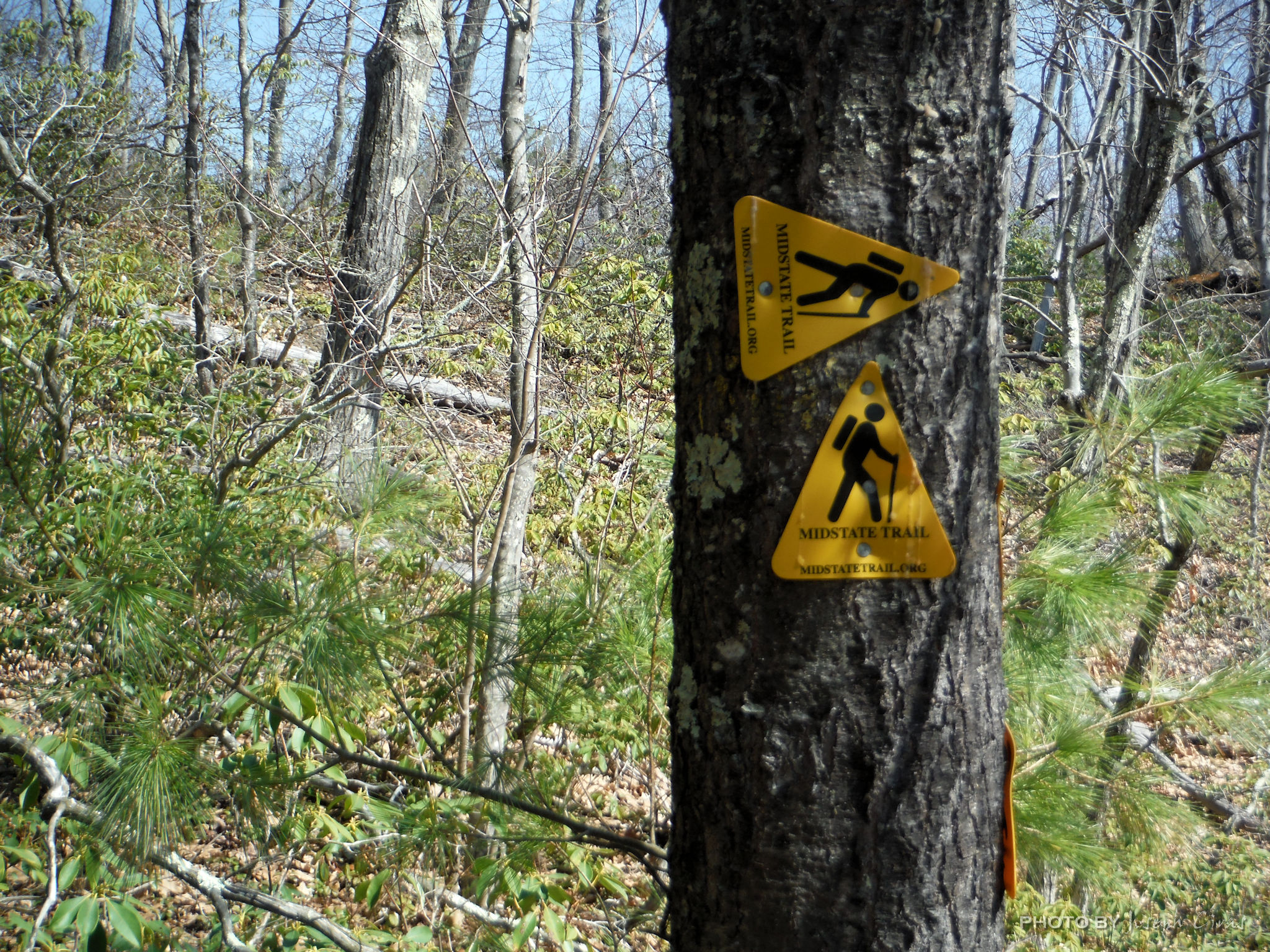
On the trail there are trail markers. Now here is a short lesson on trail markers. First of all, they mark the trail. They tell you when to go straight or when the trail turns. If there are two makers in the same direction on top of themselves, go straight. If there is a marker pointing to the right, turn right. If there is a marker pointing to the left, turn left. Simple as that. Markers are very useful if you are not familiar with the trail. Just look for the next marker. A Leave No Trace principle is to travel and camp on durable surfaces. This means if the trail is through a mud puddle, go through that mud puddle. Lesson over.

Here are some photos of the different trail markings that I encountered during my hike today.

For more photo of other project I have work, visit my website: https://photobyjosephciras.weebly.com/ or visit me on Facebook at https://www.facebook.com/PhotobyJosephCiras/.

COVID is real! Be safe out there, keep your social distance, and remember to always wear your mask and wash your hands.

Photographic Thoughts—03/21/2021 to 03/27/2021

“A thing that you see in my pictures is that I was not afraid to fall in love with these people.” — Annie Leibovitz

Thank you for all the new views and likes from last week. It helps keep me going. Enjoy my blog post!

Sunday, 03/21/2021: Posted photo—Puppy Love.

Settings: Canon EOS 60D, ISO 400, f/7.1, 1/20 s, 24 mm

Meet Brownie. Brownie was given to my mother back in the late 1940’s. My father won this at a carnival, and she has sleep with it ever since. Brownie is in great condition for being over 70 years old. My mother was telling me all about how my father won it for her and how people are amazed of Brownies condition. She attempted to wipe one of the white spots off Brownie’s eyes, so I had to tell her that these were the dog’s pupils. She just laughed and we continued talking about her life.

Brownie the puppy

Keep family close.

Monday, 03/22/2021: Posted photo—Sunset.

Settings: Canon EOS 60D, 2SO 100, f/6.3, 1/8000 s, 300 mm.

I needed to go on a hike today to clear my mind and to contemplate on the good life my mother is living. She holds family close and enjoys it when people are over. She complains about it sometime, but she truly appreciates it. Hiking is a great way to get in touch with nature and to think about life. If you are hiking alone, or with others, your mind is attuned with nature and natural wonders and helps you know about what is and is not important.

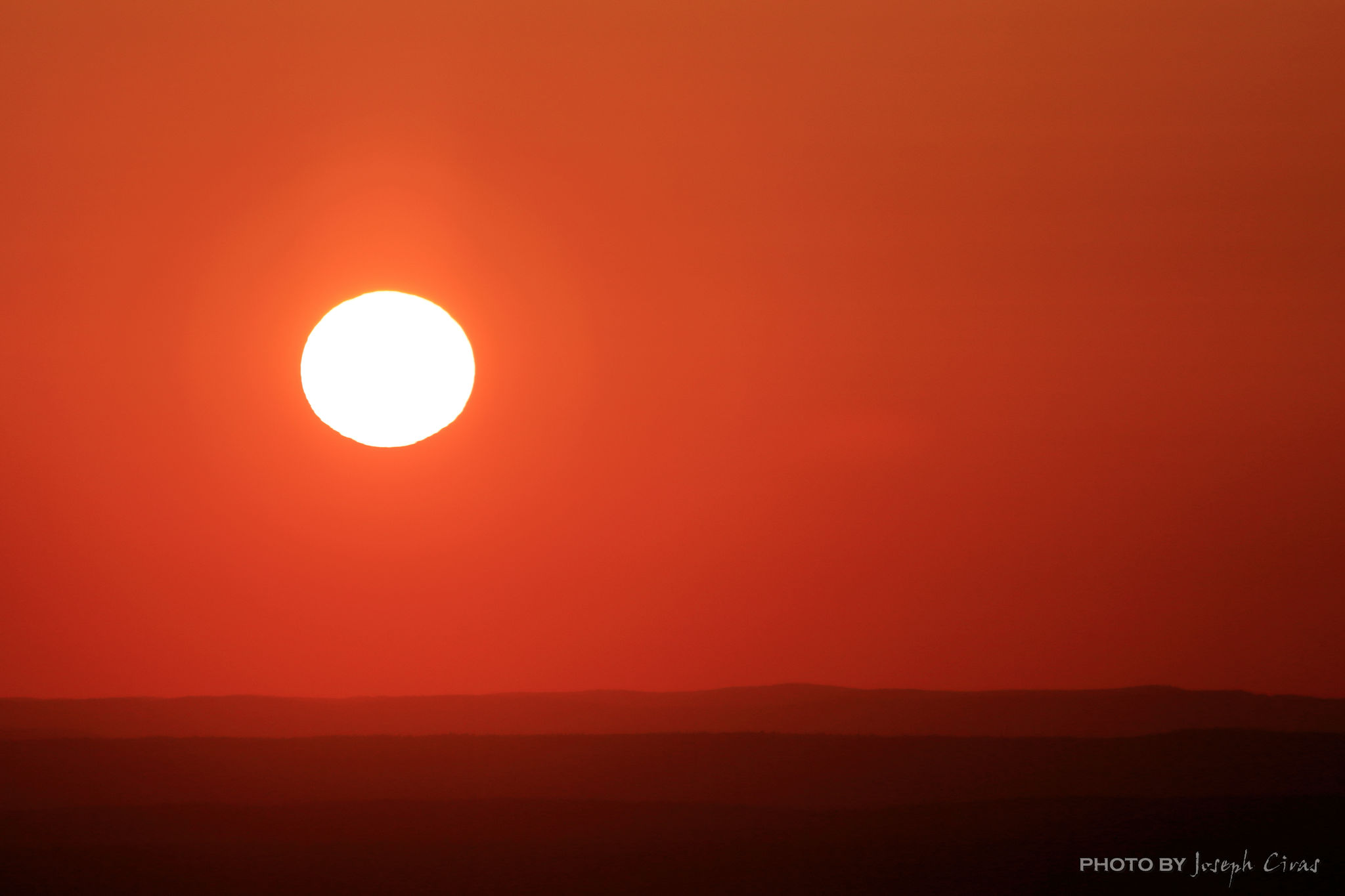
Sunset from Wachusett Mountain

Getting to the summit before sunset was the goal of this hike. I made it with plenty of time to spare. There is a ski area on Wachusett Mountain, and it was open. At about the time if sunset, the summit was crowded, so I left before sunset was complete.

Every sunset is different and wonderful in its own way.

Tuesday, 03/23/2021: Posted photo—Pietà.

Settings: Samsung SM-G930V, ISO 200, f/1.7, 1/17 s, 4 mm.

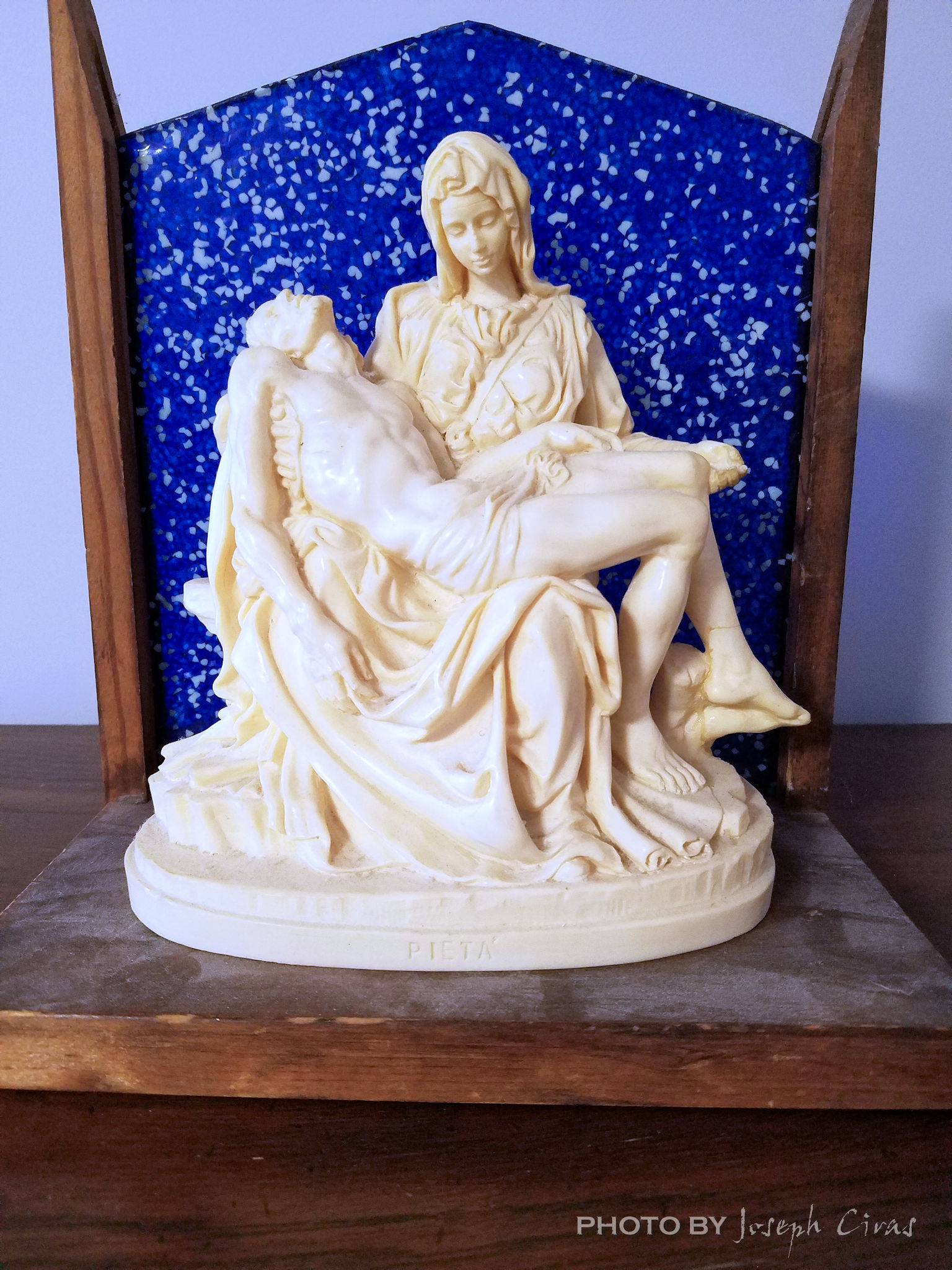
The Pietà (“the Pity”; 1498–1499) is a work of Renaissance sculpture by Michelangelo Buonarroti, housed in St. Peter’s Basilica in Vatican City. It is the first of several works of the same theme by the artist. It is the only piece Michelangelo ever signed. This famous work of art depicts the body of Jesus on the lap of his mother Mary after the Crucifixion.

This has been with my mother for many years, at least 60 years. I was disappointed last year because I was going to the Basilica in Vatican City for the ordination of a family member, and I wanted to see this work in person. COVID stopped that from happening. Someday I will go to Vatican City and see this work.

Pietà by Michelangelo

Wednesday, 03/24/2021: Posted photo—New Growth.

Settings: Samsung SM-G930V, ISO 100, f/1.7, 1/60 s, 4 mm.

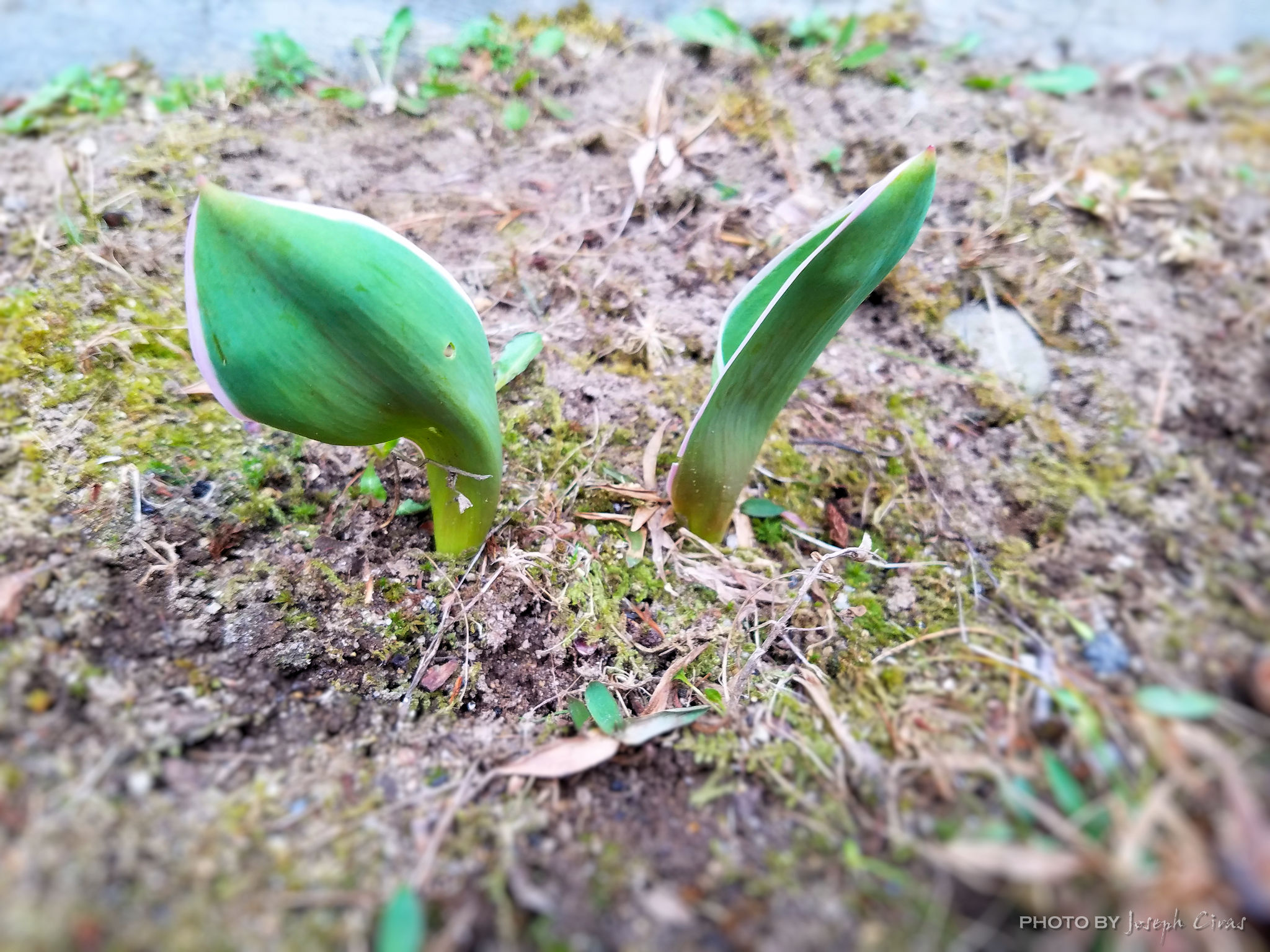
Tulips are starting to bloom, just in time for Easter. We have tulip that bloom every year at this time, and I noticed that they broke soil today. Tulips form a genus of spring-blooming perennial herbaceous bulbiferous geophytes. The flowers are usually large, showy, and brightly colored, generally red, pink, yellow, or white. These tulips are pink in color. Once they bloom, I will post photos of them.

Tulips

Now I am waiting on the crocus to bloom. The normally bloom before the tulip. Like everything else, life is different this year.

Thursday, 03/25/2021: Posted photo—Stream.

Settings: Canon EOS 60D, ISO 1600, f/22, 1/10 s, 55 mm

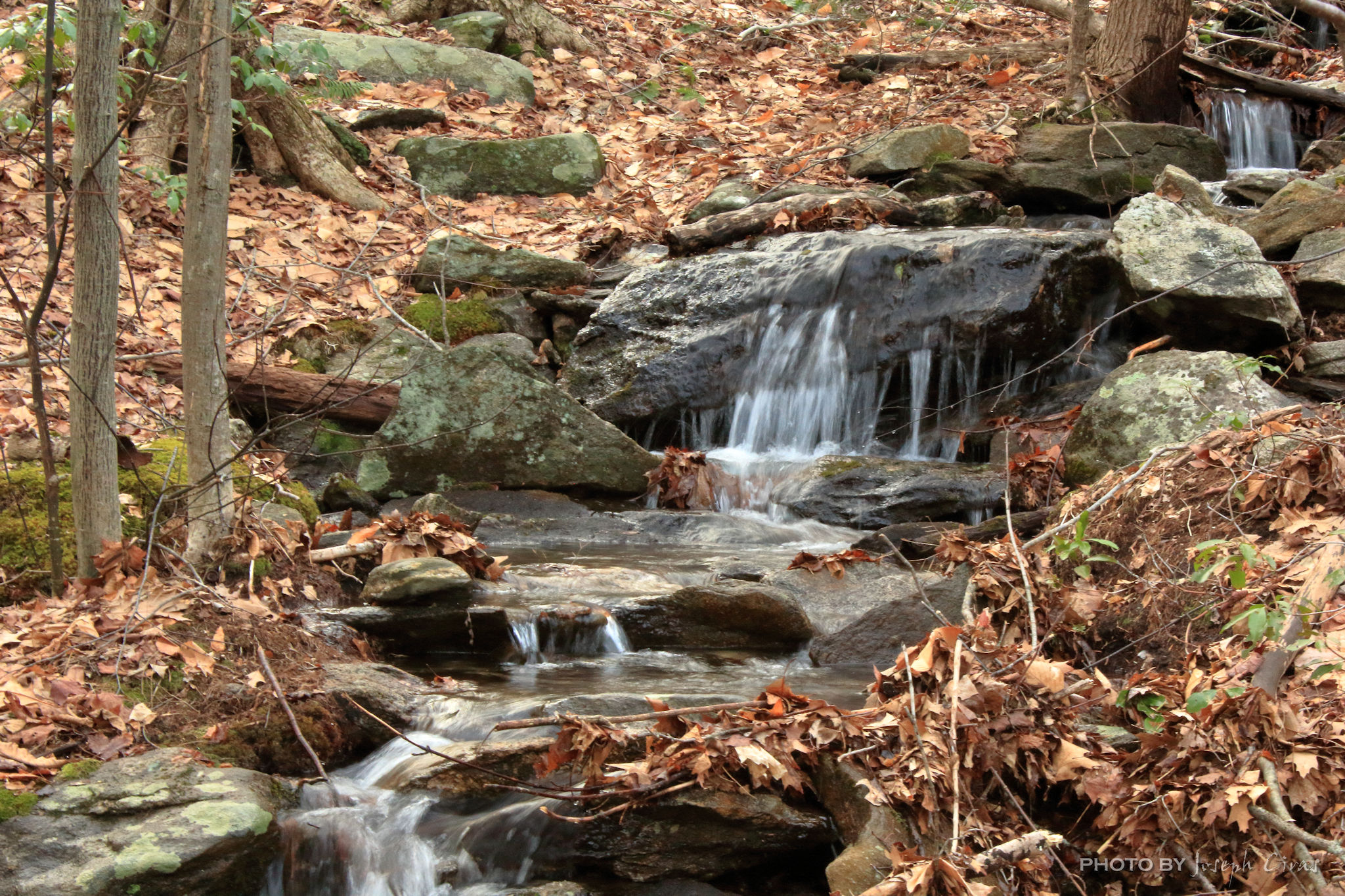
Today I went on a hike with my son and his friend. We decided to do a longer hike today on Wachusett Mountain that we normally do on a weekday since the sun out up longer. We started the hike at our normal time, giving us over an hour to get to the summit. The normal trail will get us to the summit is less than an hour, so we decided on a longer hike. We hike on Bicentennial Trail in the opposite direction we normally hike it. Bicentennial has a trail that bisects it and we normally to left at the intersection and today we went right. There are a few seasonal streams along the trail, and the streams were flowing due to the rain earlier in the day and the snow melt on the mountain. I was thinking about a photo and saw this stream and took a handheld, semi-long exposure photo.

Stream along the trail

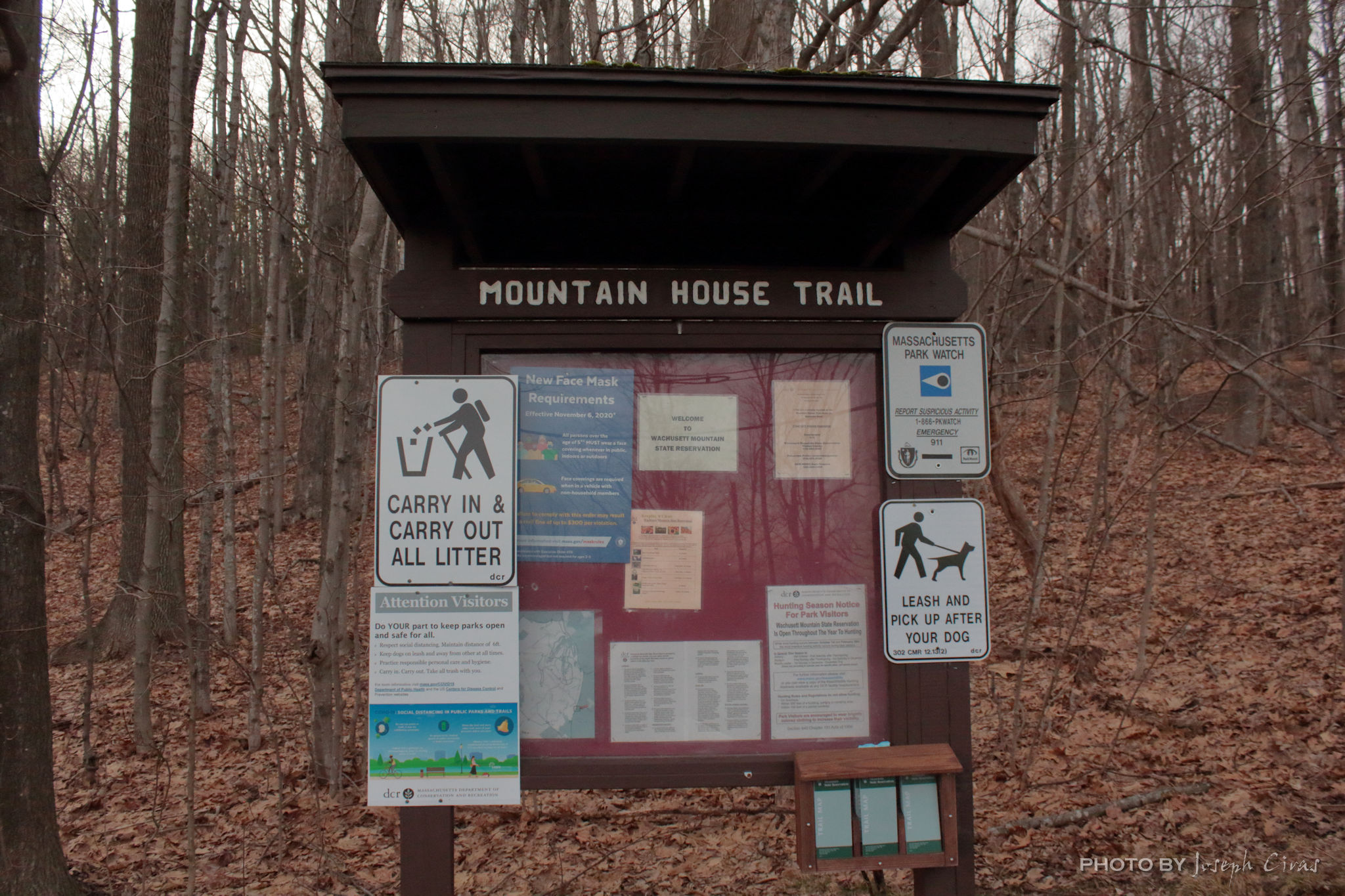
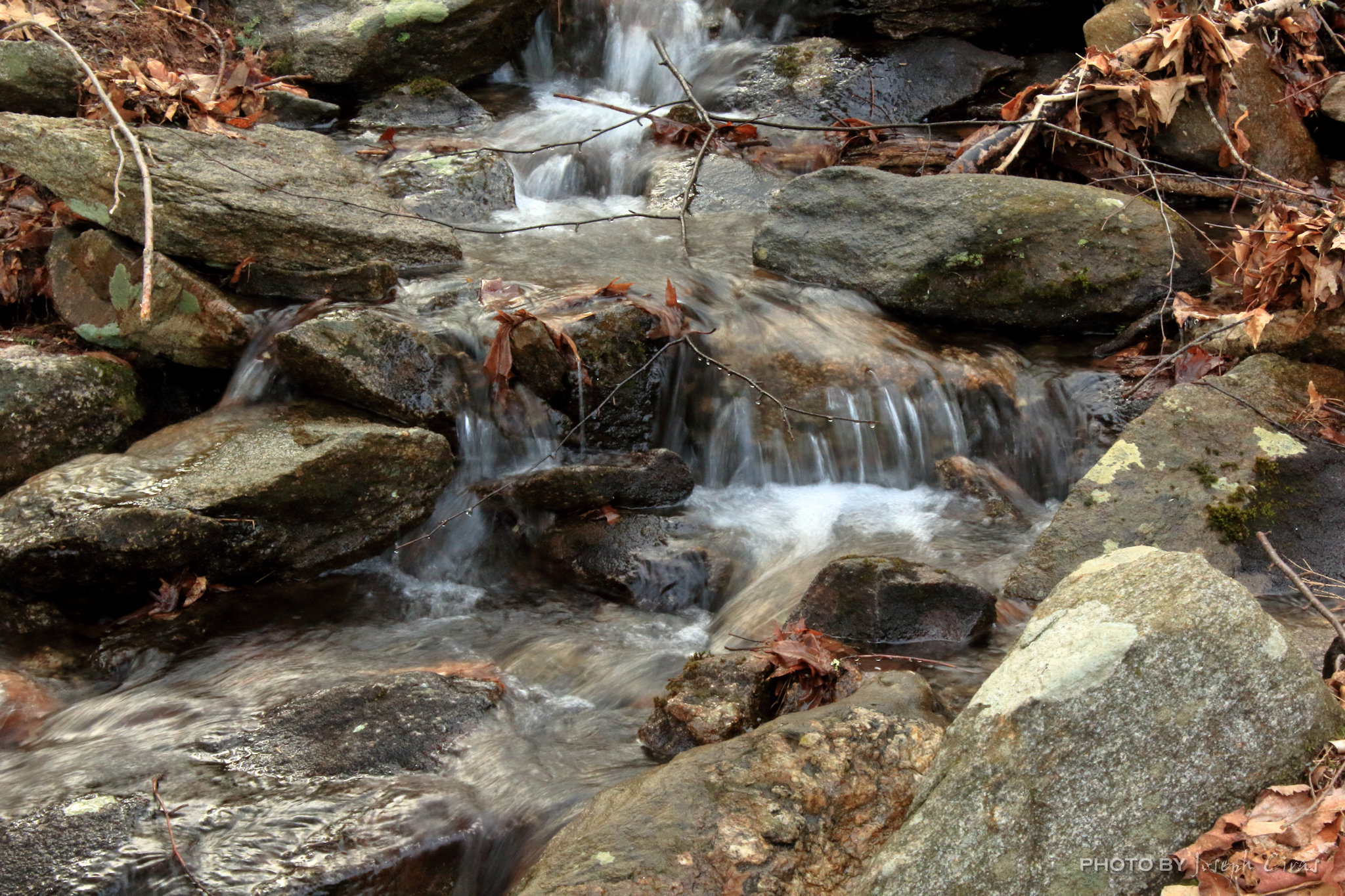
Here is a photo from the trailhead and another photo of the stream.

Mountain House Trailhead
Flowing water on Bicentennial Trail

Friday, 03/26/2021: Post photo—Sugar Maple.

Settings: Canon EOS 60D, ISO 320, f/5.6, 1/100 s, 55 mm

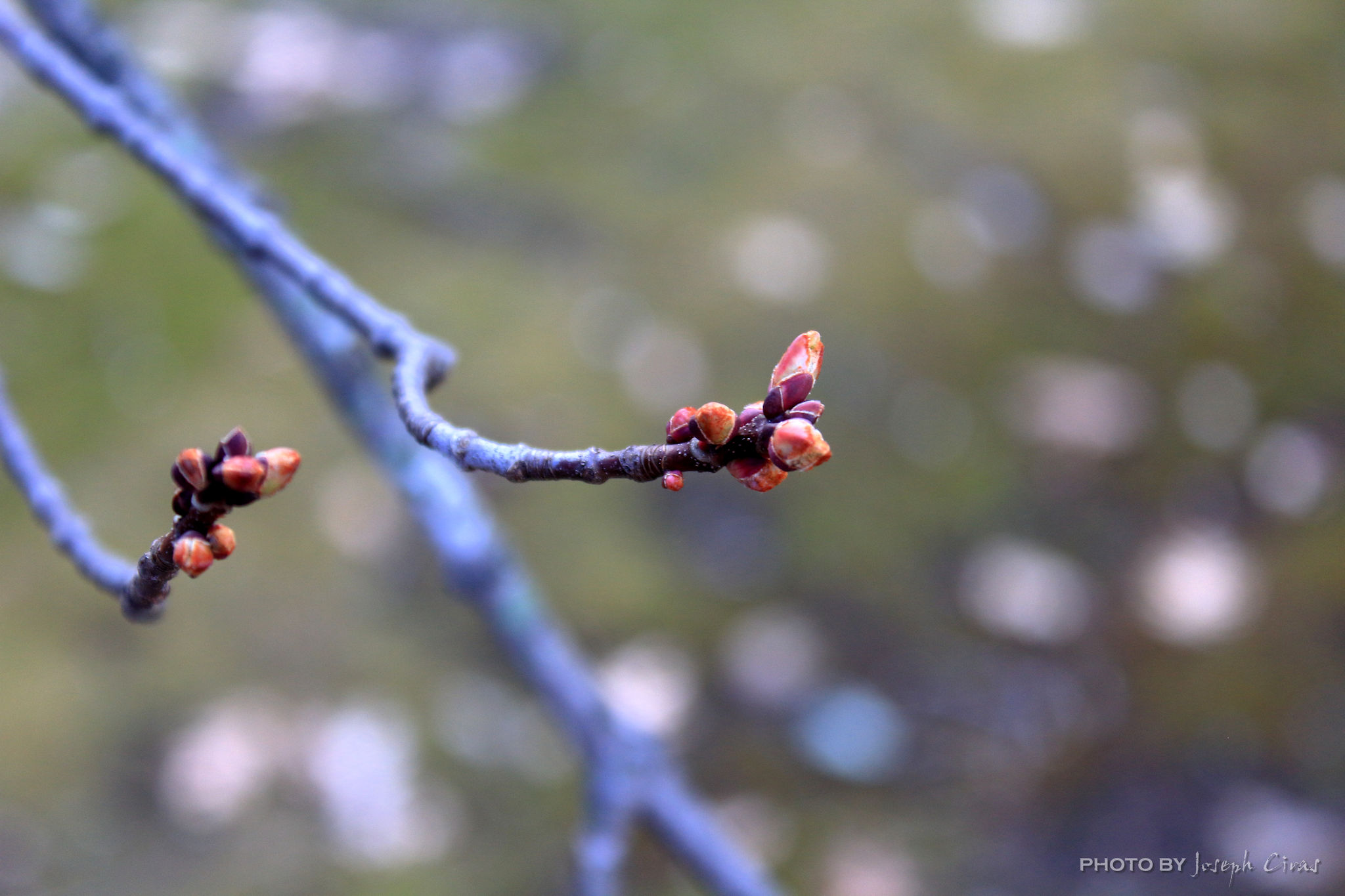
The sugar maple is one of America’s most-loved trees. In fact, more states have claimed it as their state tree than any other single species—for New York, West Virginia, Wisconsin, and Vermont, the maple tree stands alone.

Sugar Maple blossom

These are the buds from one of the sugar maples in our yard. They are currently being tapped by our neighbor to make maple syrup. More photos of this tree will occur as the leaves get larger.

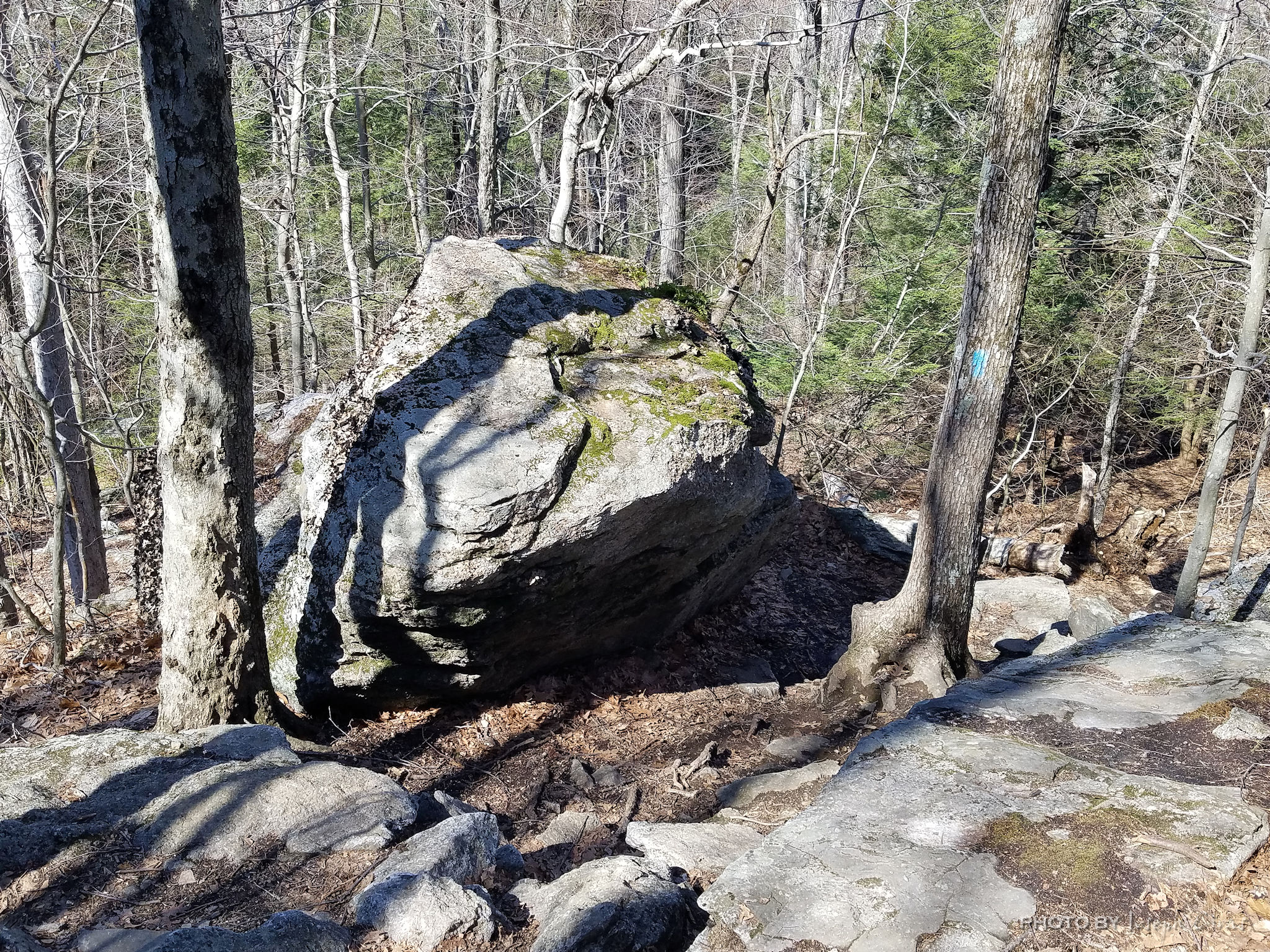
Saturday, 03/27/2021: Post photo—Glacial Erratic.

Settings: Samsung SM-G930V, ISO 50, f/1.7, 1/810 s, 4 mm.

Wachusett Mountain is one of the oldest mountains in the world. The rocks are estimated to be 250 million years old. It is a metamorphic rock monadnock. In its youth, it was over 20,000 feet tall. Today it is only 2,006 feet tall. It has been through ice ages. Wachusett means “Near the mountain” or “Mountain place” in the language of the Natick Indians. A band of old growth forest along rock ledges 500 feet (150 m) below the summit supports trees from 150 to 370 years old. Covering 220 acres (89 ha), it is the largest known old growth forest east of the Connecticut River in Massachusetts.

Scientists have recorded five significant ice ages throughout the Earth’s history: the Huronian (2.4-2.1 billion years ago), Cryogenian (850-635 million years ago), Andean-Saharan (460-430 million years ago), Karoo (360-260 million years ago) and Quaternary (2.6 million years ago -present). Approximately a dozen major glaciations have occurred over the past 1 million years, the largest of which peaked 650,000 years ago and lasted for 50,000 years. The most recent glaciation period, often known simply as the “Ice Age,” reached peak conditions some 18,000 years ago before giving way to the interglacial Holocene epoch 11,700 years ago.

Glacial Erratic on Wachusett Mountain

Glacial erratics are stones and rocks that were transported by a glacier, and then left behind after the glacier melted. Erratics can be carried for hundreds of kilometers and can range in size from pebbles to large boulders. Scientists sometimes use erratics to help determine ancient glacier movement.

Wachusett Mountain and throughout New England there are many glacial erratics.

For more photo of other project I have work, visit my website: https://photobyjosephciras.weebly.com/ or visit me on Facebook at https://www.facebook.com/PhotobyJosephCiras/.

COVID is real! Be safe out there, keep your social distance, and remember to always wear your mask and wash your hands.

Photographic Thoughts—03/14/2021 to 03/20/2021

“We are making photographs to understand what our lives mean to us.” — Ralph Hattersley

Thank you for all the new views and likes from last week. It helps keep me going. Enjoy my blog post!

This week’s post will be a little shorter than last week’s post. I will explain why later in this month.

Sunday, 03/14/2021: Posted photo—Crucifix.

Settings: Samsung SM-G930V, ISO 200, f/1.7, 1/11 s, 4 mm

This is a crucifix in the back of St. Denis Church. It is hanging on a cork board near all the religious paraphernalia. There are prayer cards, rosaries, pray books, and other items for anyone to take with them.

The difference between Cross and Crucifix is that Cross is a cross-shaped item without a symbol or figure of Jesus on the same, while Crucifix is a Cross with Jesus depicted or engraved on the same. The cross signifies acceptance of death or suffering and sacrifice. The crucifix is the symbol of Christianity and reminds every one of the death and resurrection of Christ. It serves as a reminder of God’s sacrifice of his only Son so that humanity may have salvation.

Crucifix

This week will be a hard week for me. You will know why in later posts.

Keep family close and reconcile any differenced you have.

Monday, 03/15/2021: Posted photo—Ducks.

Settings: Canon EOS 60D, ISO 100, f/7.1, 1/40 s, 55 mm.

This photo looks like the two ducks have a chaperon.

Ducks being watched by a chaperon

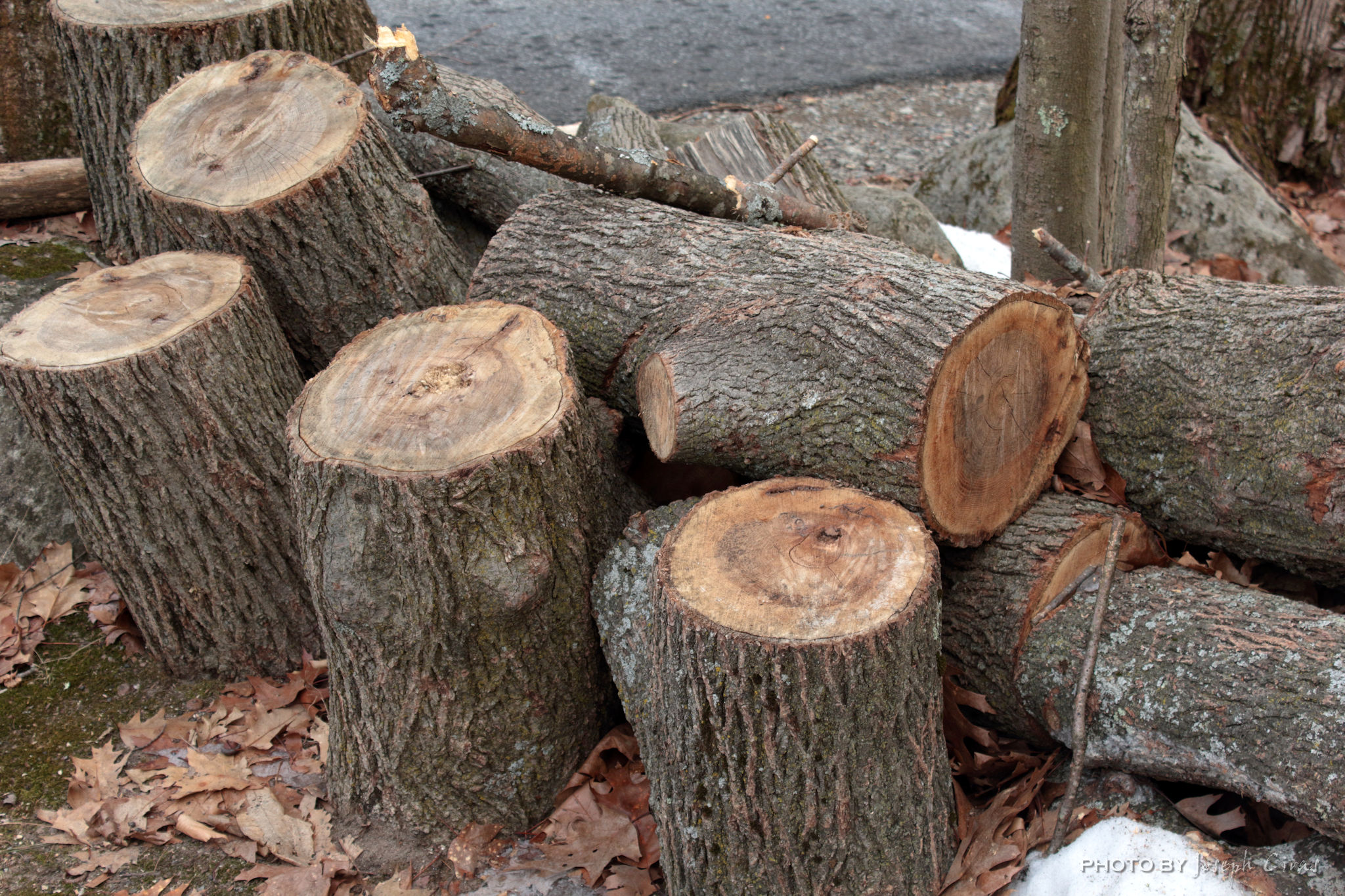
Tuesday, 03/16/2021: Posted photo—Wood Piles.

Settings: Canon EOS 60D, ISO 400, f/7.1, 1/80 s, 41 mm.

Things are getting a little crazy around here. I have not been able to write my blog or get out to do much photography this week. I took this photo when I came home from work and before I went to visit my mother.

Beech being seasoned in our yard

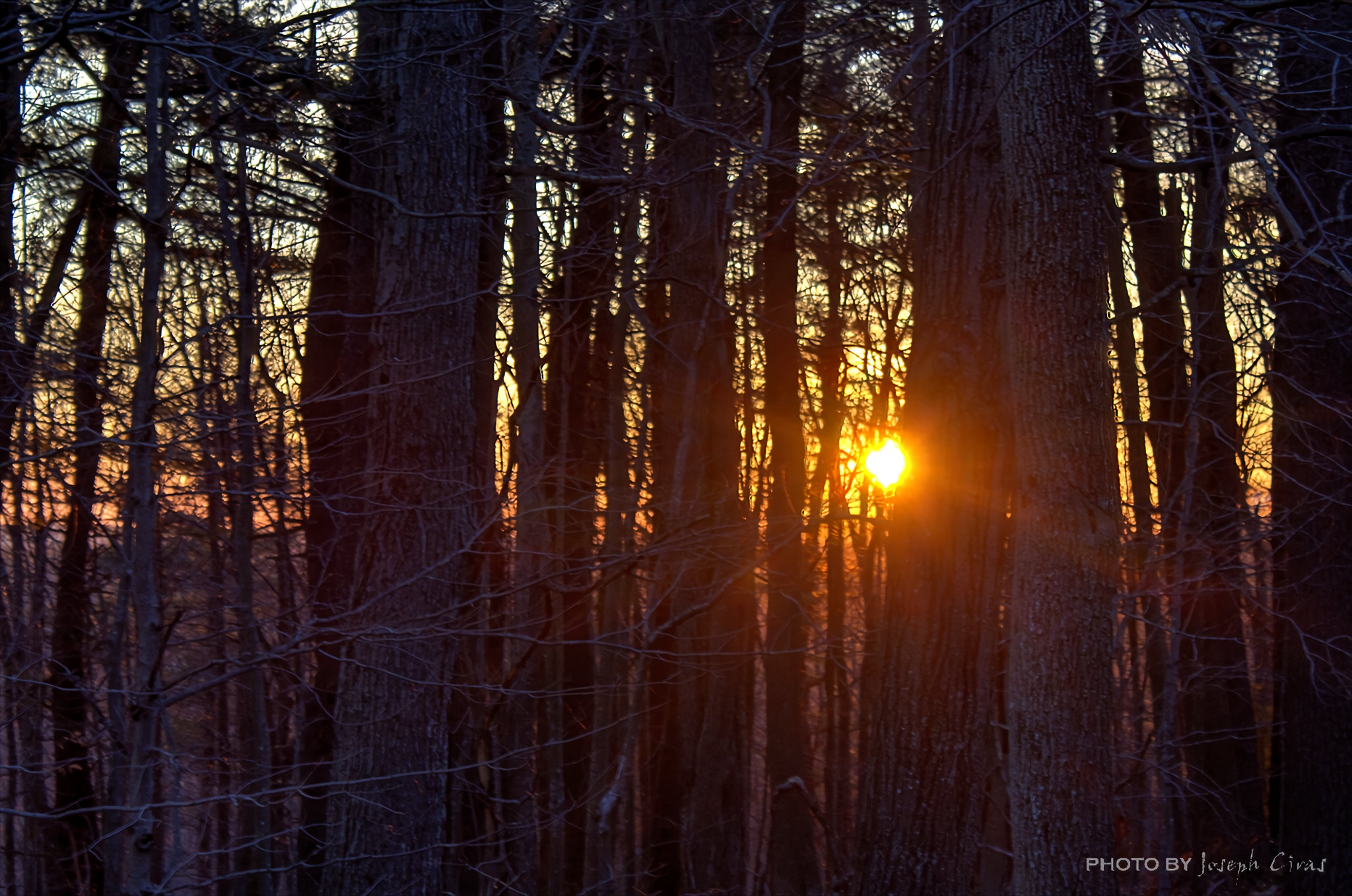
This is also one of those days when I took a photo early in the day and decided not to post it. Here is the photo of the sunrise I took and was planning on posting.

Sunrise through the trees

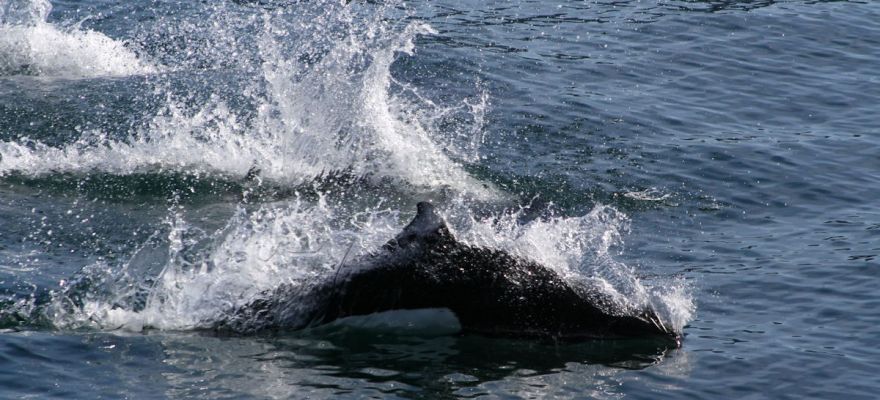
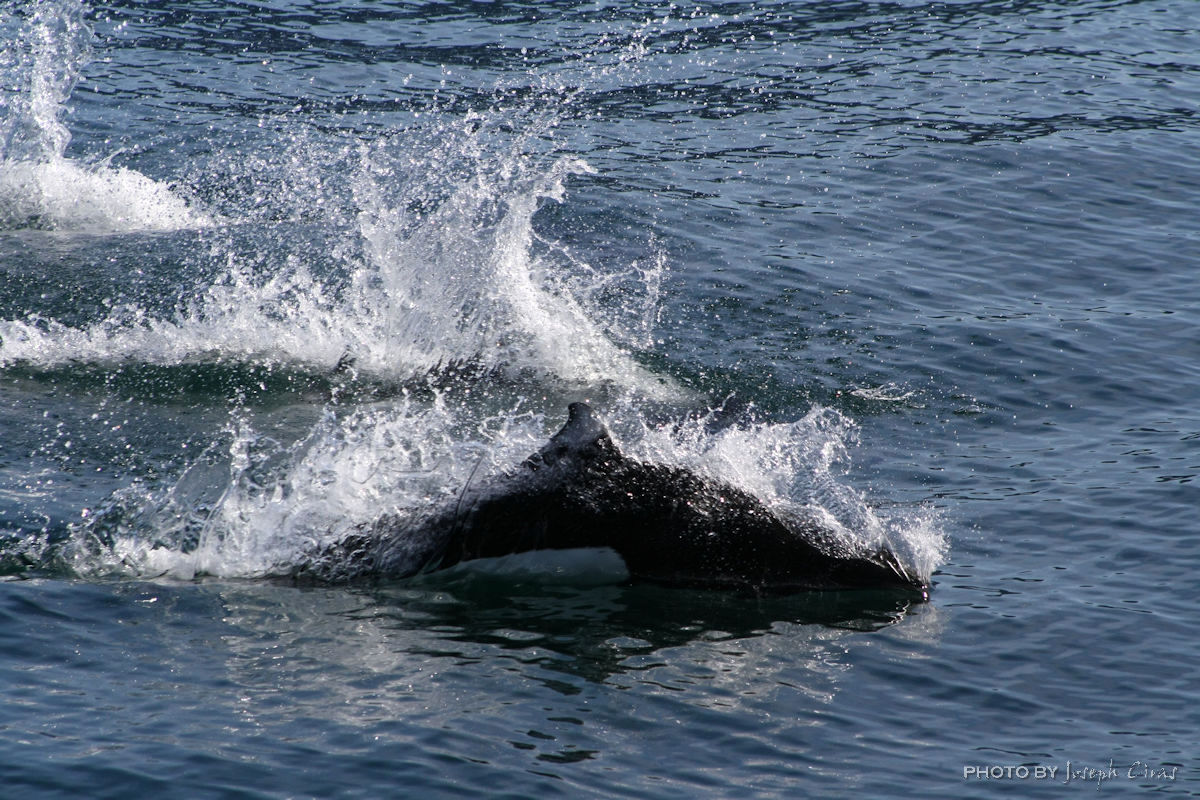
Wednesday, 03/17/2021: Posted photo—Dall’s Porpoise.

Settings: Canon EOS DIGITAL REBEL XS, ISO 400, f/11, 1/1000 s, 210 mm.

Dall’s porpoises are common in the North Pacific Ocean and can be found off the U.S. West Coast from California to the Bering Sea in Alaska. These porpoises are considered the fastest swimmers among small cetaceans, reaching speeds of 34 miles per hour over short distances.

Dall’s porpoises playing with the boat

This one is from a trip to Kenai Fjords National Park, Kenai Peninsula Borough, Alaska. The porpoises liked jumping over the bow of the boat.

Thursday, 03/18/2021: Posted photo—Unicorn World.

Settings: Canon EOS 60D, ISO 2000, f/4.5, 1/50 s, 37 mm

My mother likes unicorns. Here are some from her collection.

Unicorns

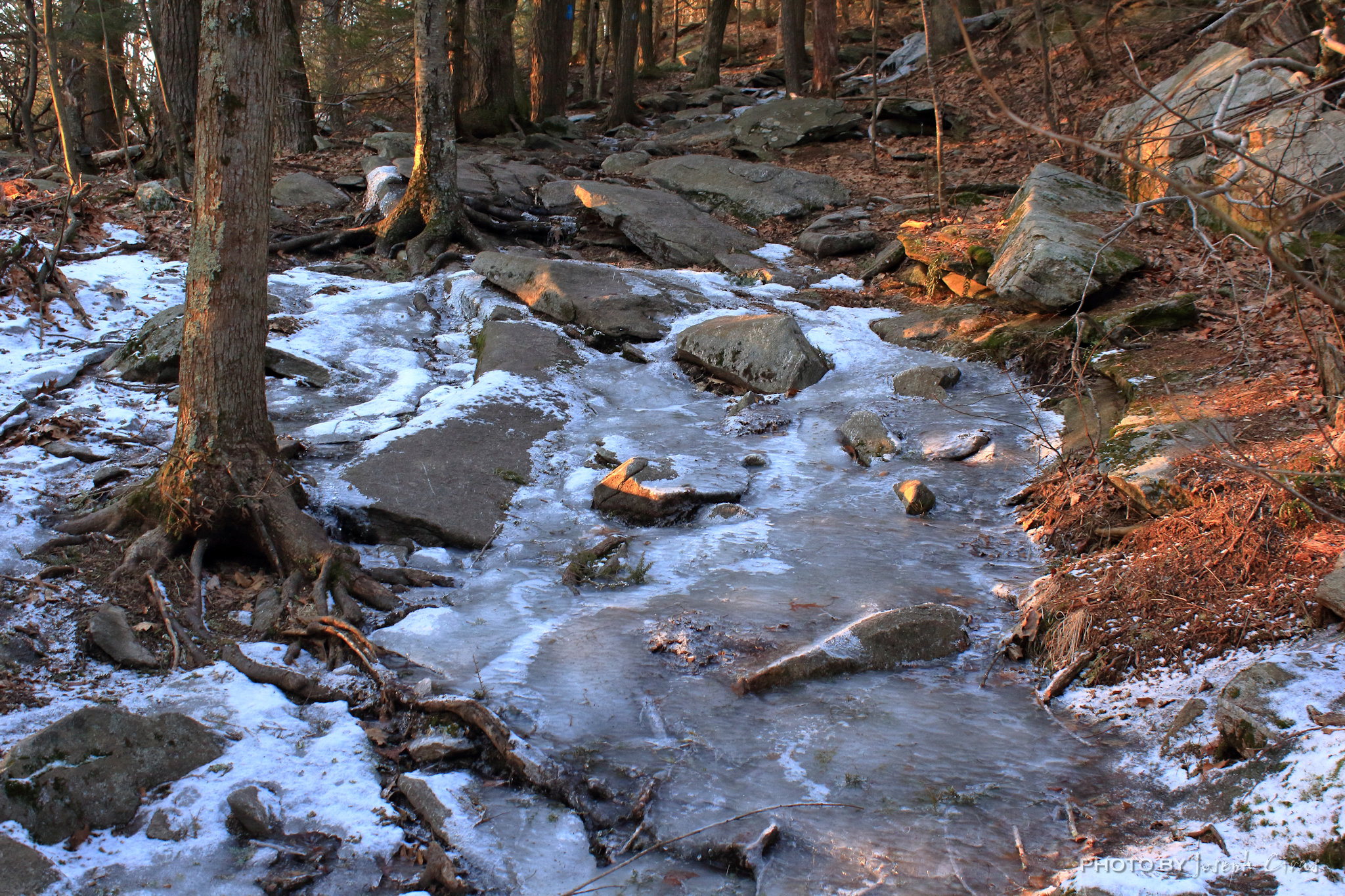
Friday, 03/19/2021: Post photo—Jack Frost Trail.

Settings: Canon EOS 60D, ISO 640, f/7.1, 1/30 s, 25 mm

I went on a hike tonight with my son. I need to take a hike and clear my mind of all the activity of the week. Hiking is a good way to contemplate life and how wonderful a life you have with family. Every family member is special and is appreciated, whether you tell that to them.

Jack Frost living up to its name

Here is a photo that I took from the summit to end my day.

Sunset

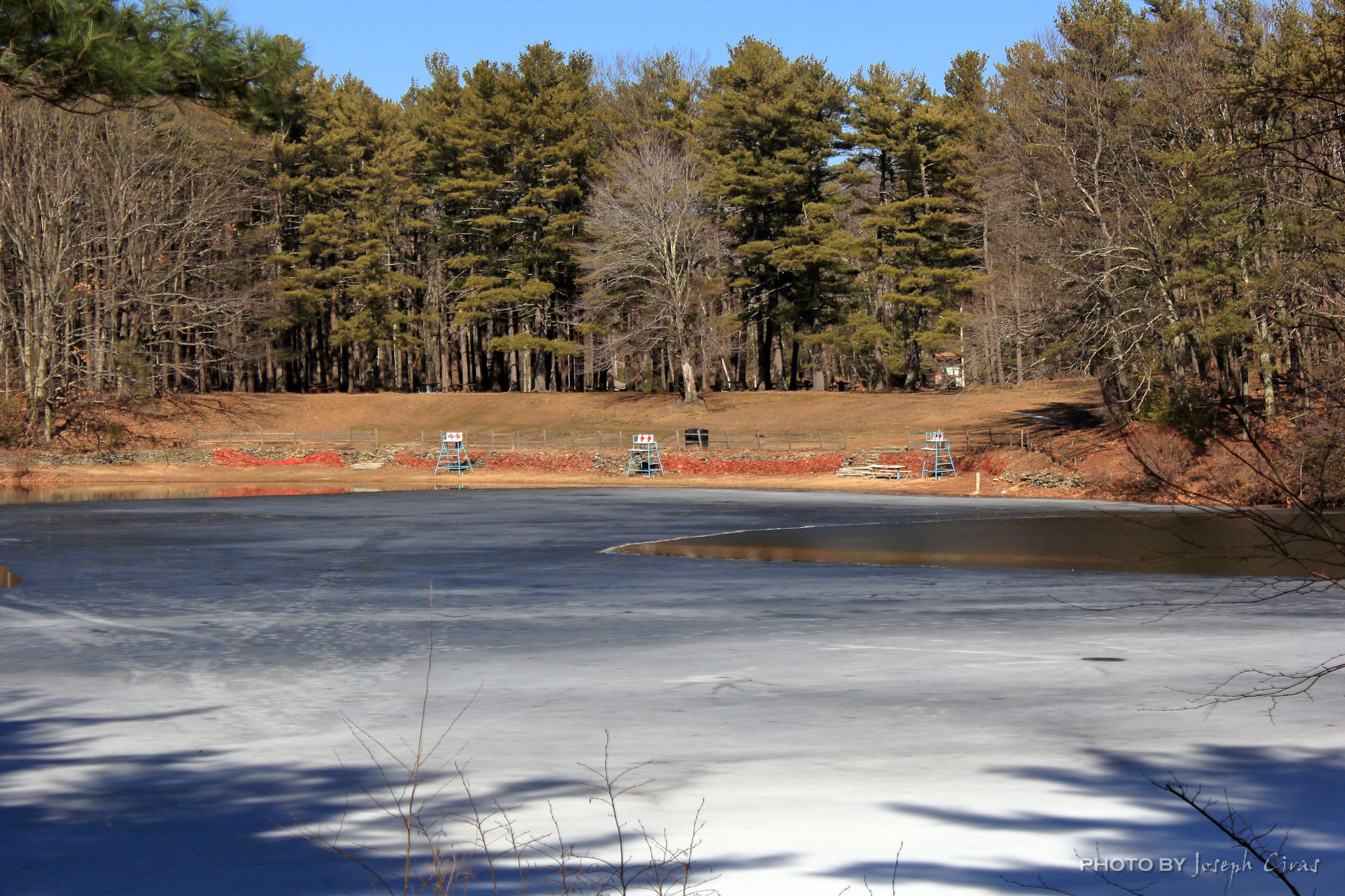
Saturday, 03/20/2021: Post photo—Beach Time.

Settings: Canon EOS 60D, ISO 100, f/7.1, 1/800 s, 55 mm

Another day, another trip down to see family. Today was a better day for the family. It is one of those days we will talk about for a while. This is a photo of the beach at Leominster State Forest.

Lifeguard chars next to a frozen beach

For more photo of other project I have work, visit my website: https://photobyjosephciras.weebly.com/ or visit me on Facebook at https://www.facebook.com/PhotobyJosephCiras/.

COVID is real! Be safe out there, keep your social distance, and remember to always wear your mask and wash your hands.

Photographic Thoughts—02/14/2021 to 02/20/2021

“If you are out there shooting, things will happen for you. If you’re not out there, you’ll only hear about it.” — Jay Maisel

Thank you for all the new views and likes from last week. It helps keep me going. Enjoy my blog post!

Sunday 02/14/2021: Posted photo—Snow on Swing.

Settings: Samsung SM-G930V (Galaxy S7), ISO 50, f/1.7, 1/198 s, 4 mm

It in St. Valentine’s Day today. “St. Valentine is the patron saint of love, young people, and happy marriages. He died in 269. Saint Valentine, officially known as Saint Valentine of Rome, is a third-century Roman saint widely celebrated on February 14 and commonly associated with ‘courtly love.’

Although not much of St. Valentine’s life is reliably known, and whether or not the stories involve two different saints by the same name is also not officially decided, it is highly agreed that St. Valentine was martyred and then buried on the Via Flaminia to the north of Rome.

In 1969, the Roman Catholic Church removed St. Valentine from the General Roman Calendar, because so little is known about him. However, the church still recognizes him as a saint, listing him in the February 14 spot of Roman Martyrolgy.” — Catholic Online

I did not post a photo about St. Valentine’s Day today. Too many people on the site in which I do my photo project did and I wanted to be different.

We are currently in a snow cycle. If it snows on a Tuesday, it will snow every Tuesday for a few weeks before changing days. I went out snowshoeing on our property and like the look of the snow on the swings. This is not the greatest photo of snow on swings that I have taken, but it will be a memory of this day for future reference.

One of the swings in our back yard

Monday 02/15/2021: Posted photo—Hiking Buddies.

Settings: Canon EOS DIGITAL REBEL XS, ISO 100, f/9, 1/125 s, 50 mm.

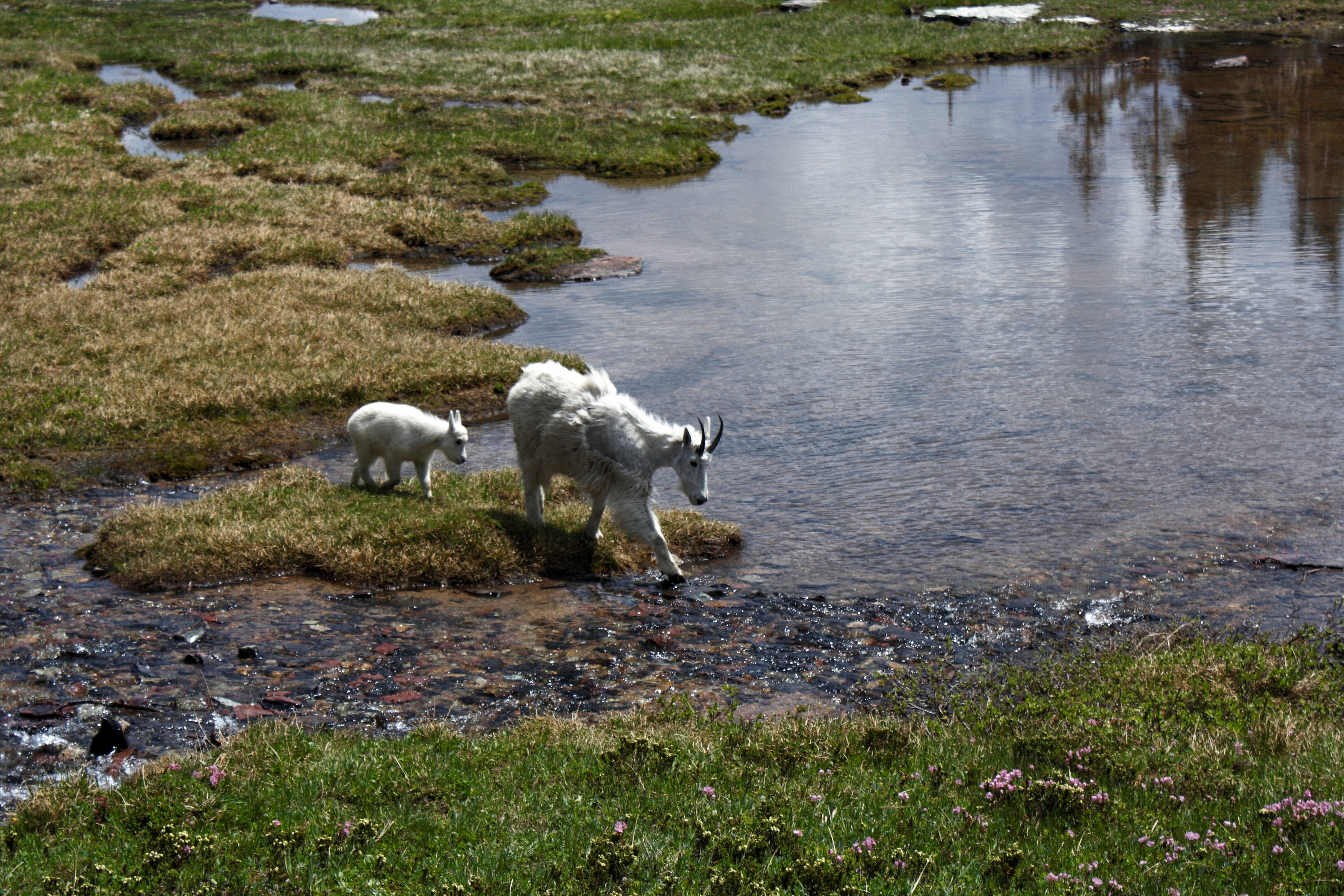
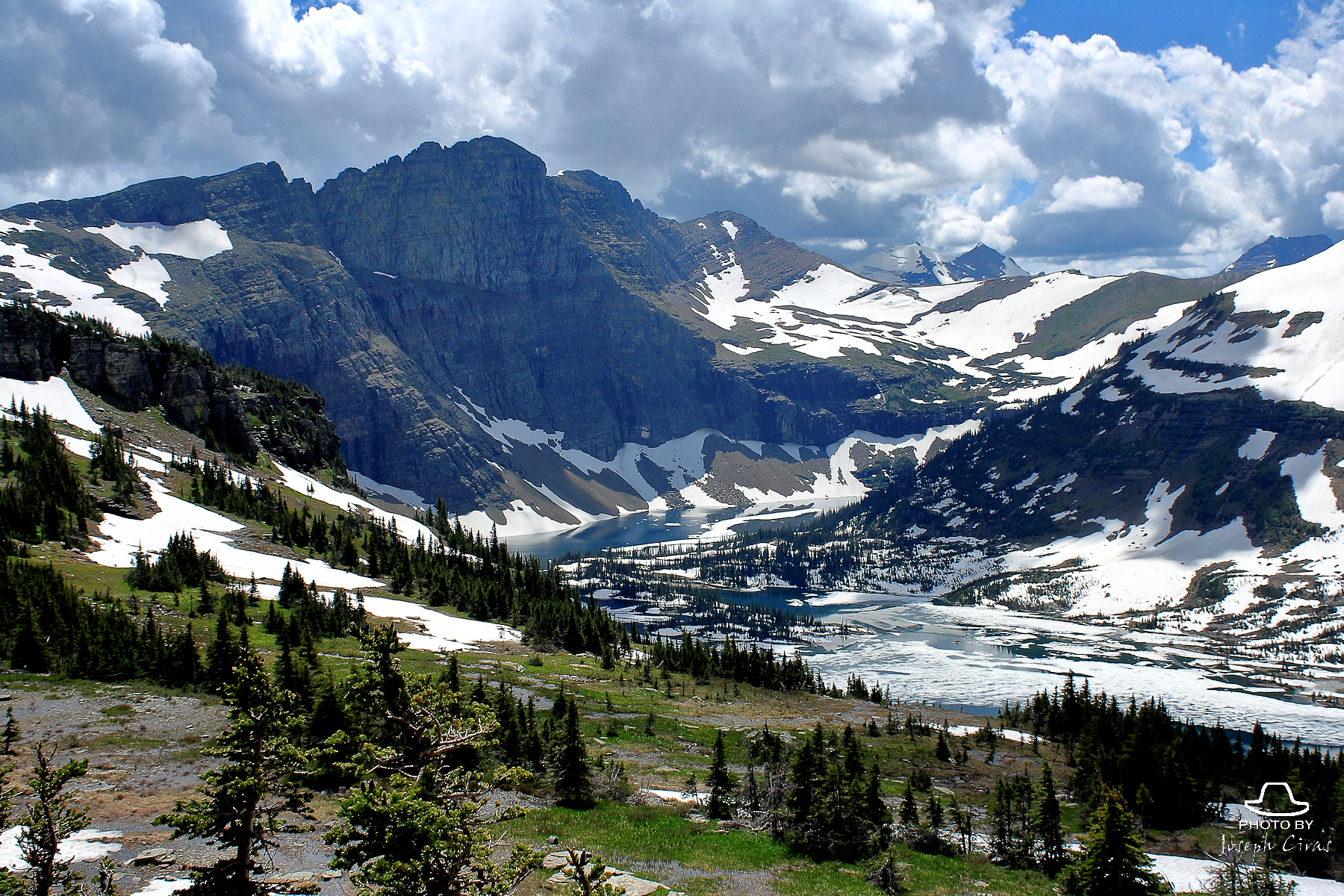
Lost Lake is a relatively small mountain lake located near the much larger Saint Mary Lake in Montana. Despite the name, Lost Lake is very easy to find. It is just off the famous Going-to-the-Sun Road in Glacier National Park.

We hiked along the Lost Lake Trail in Glacier National Park, part of the time with these travel companions. The trail is a 2.8-mile (4.5-kilometer) loop trail that begins and ends at the same trailhead, or segments can be done as there-and-back. The trail had a deep covering of snow at some locations. Something you cannot tell from this photo. One of the great things about national parks is that wild animals can be wild. Most people respect the animals, and they respect most people.

Mountain Goat Hiking Companions

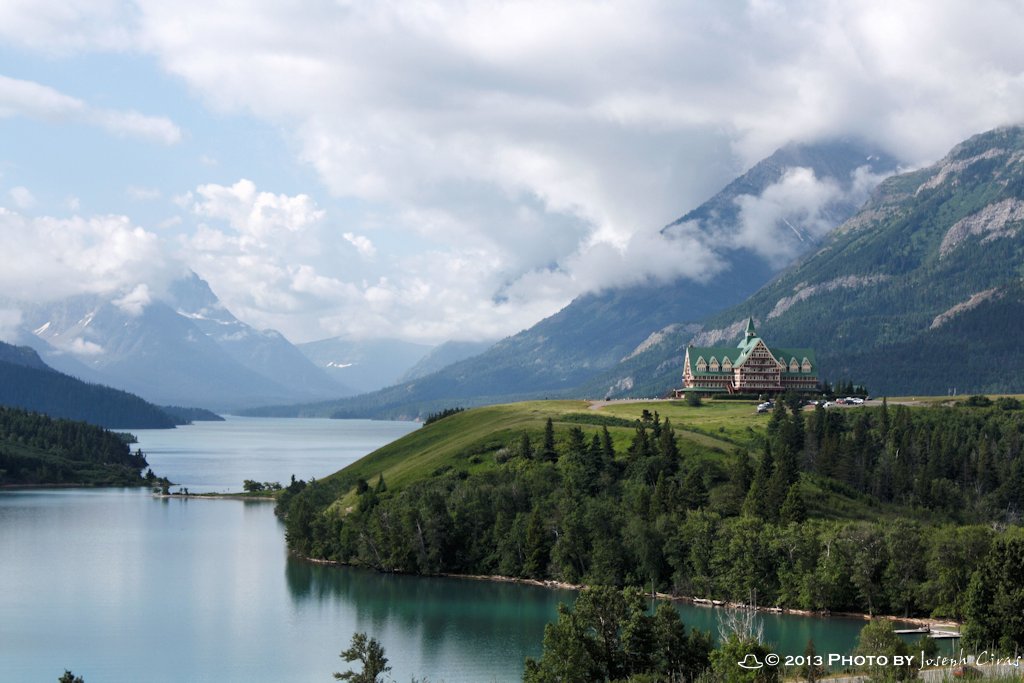
We were on our way to Waterton Lakes National Park in Canada as part of our northern national park tour a few years ago.

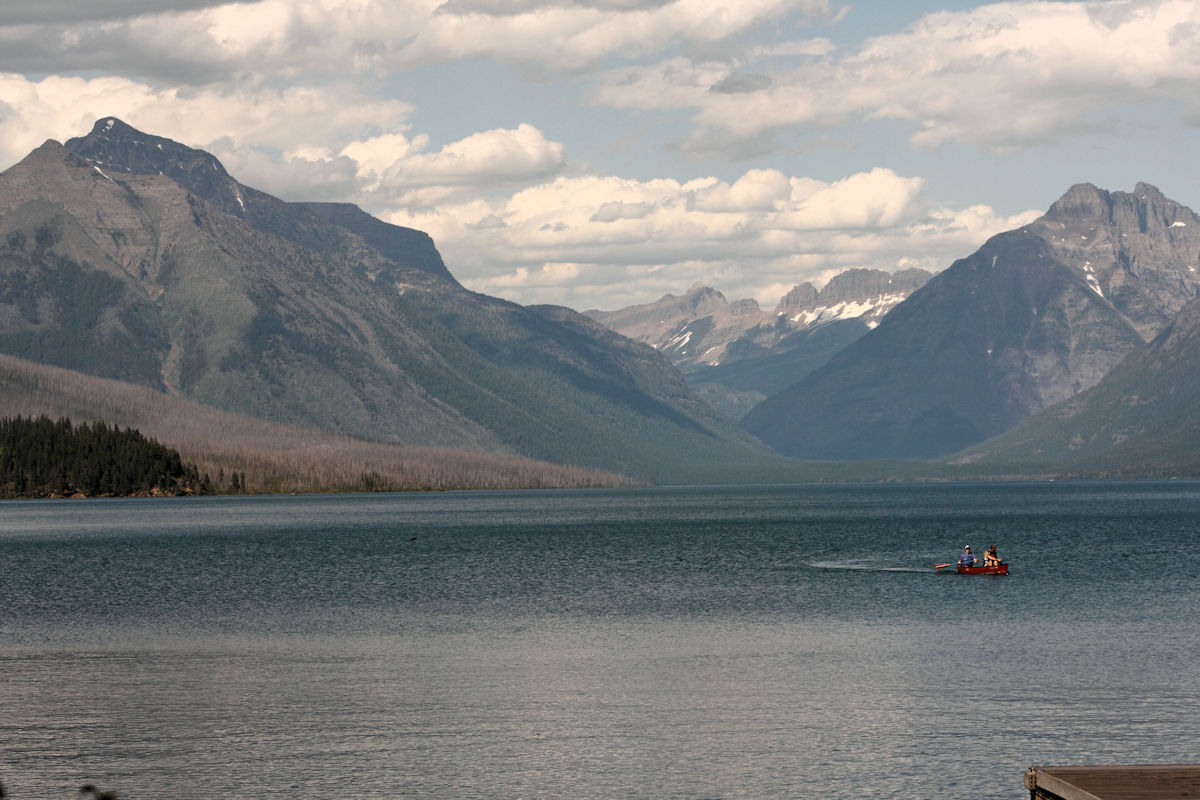
Here are a couple more photos from Glacier National Park for your enjoyment.

Lost Lake, Glacier National Park
Lake McDonald, Glacier National Park
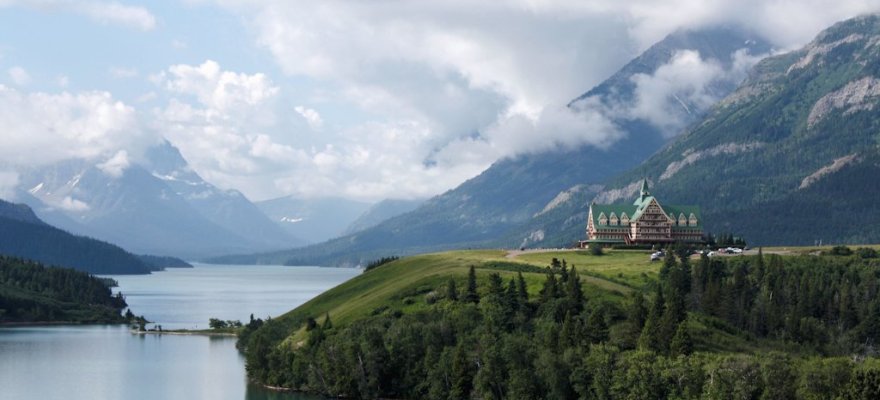
Prince of Wales Hotel, Waterton Lakes National Park

Tuesday 02/16/2021: Posted photo—Ice.

Settings: Canon EOS 60D, ISO 100, f/5.6, 1/30 s, 55 mm.

Today was an interesting day. When I was going to my car this morning to start it up, the ground looked like it was just wet. One step on our walkway and found out it was ice. I did not fall, my foot slipped out a little from under me. I gingerly walked to my car to start it and then to the woodshed to get some salt to place on the walkway and driveway. When I started my car, I took out my “junk” microspikes to walk on the ice and to put the salt down safely. I drove to work carefully and keep my microspikes on when I walked from my car to into the office.

Many other people in the office were surprised by the ice. I most cases, it was a very thin layer of black ice. The roads were not bad since they were treated well. I was thinking on my way to work that it is a good thing that I have my snow tires on in these conditions. If it were earlier in the season, late November, or early December, I may not have changed out my tires and would not be able to make it up the hill to work.

One good thing about the ice, and being a photographer and outdoors person, is that the ice forms a great layer on trees and bushes. Not great in most cases because ice buildup could lead to power outages as it did in the Winter of 2008, but wonderful to look at.

Bush covered with ice

Today’s photo is one of ice buildup on a conifer bush. I hope you enjoy.

Now it is time to clean up the mess the rain and freezing rain has left behind. Need to destroy some ice dams on my roof so that water does not get into my house.

Wednesday 02/17/2021: Posted photo—Winter at Dusk.

Settings: Canon EOS 60D, ISO 200, f/7, 1/99 s, 55 mm.

Wachusett Mountain from Round Meadow Pond.

As noted in a previous post, there is more sunlight in the evening now. On my way home from work, I stopped by to see how the mountain looked at this time of day. I did not know if it would be too dark to take this photo. It was not, so I took this photo.

Wachusett Mountain from Round Meadow Pond a dusk

It had to be a fast photo today because I needed to get home for Ash Wednesday mass. Ash Wednesday is a solemn reminder of human mortality and the need for reconciliation with God and marks the beginning of the penitential Lenten season.

Thursday 02/18/2021: Posted photo—Snowshoes.

Settings: Samsung SM-G930V (Galaxy S7), ISO 160, f/1.7, 1/30 s, 4 mm

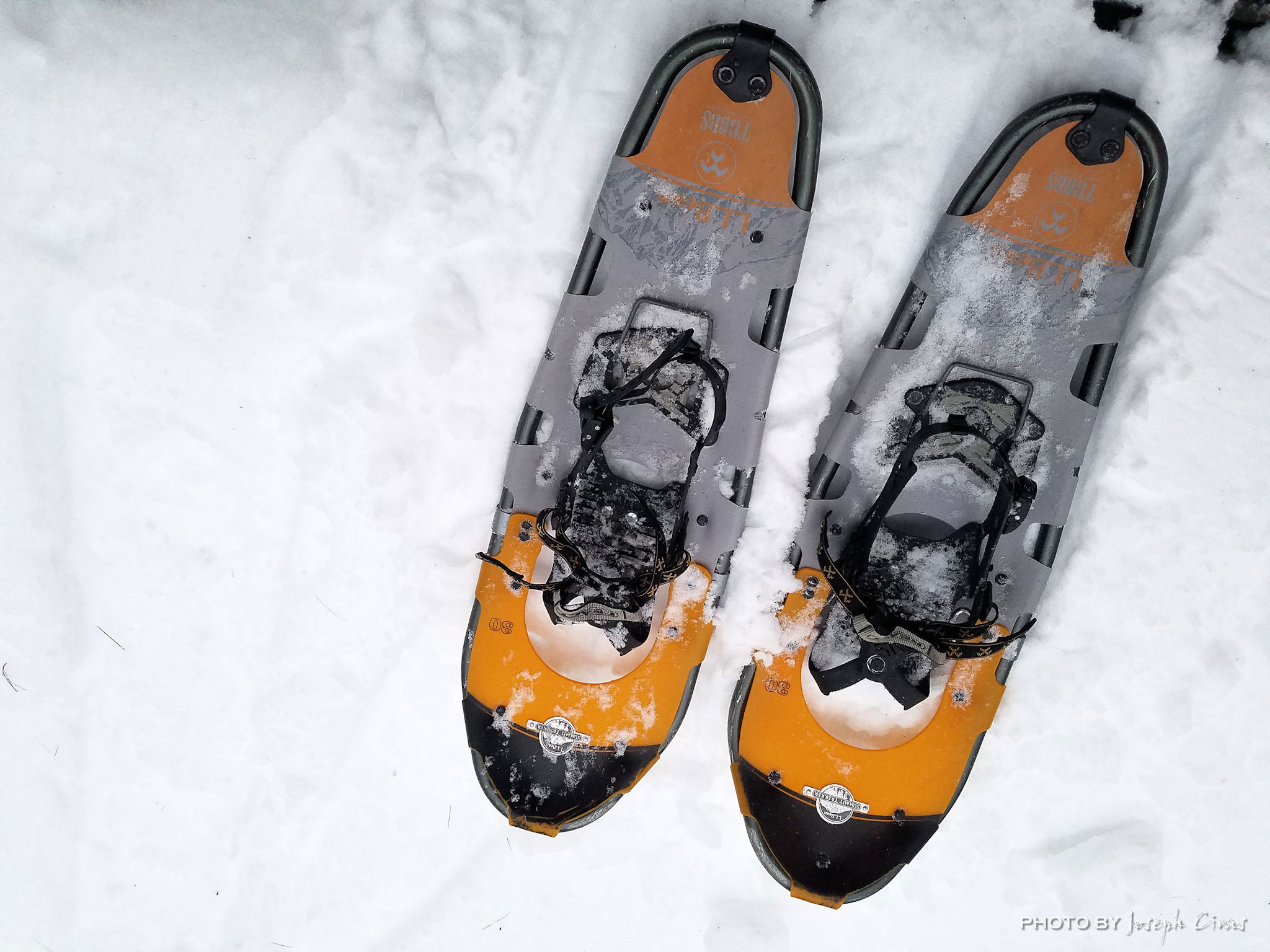
“Snowshoeing is known to have been practiced in present-day central Asia about 6,000 years ago. It is believed that as these ancestors to the Inuits and Native Americans, migrated from Asia to North America, they brought the snowshoes with them, which were modified slabs of wood. It was not too long before this evolved into the white ash framed snowshoes with the raw hide lacing that we associate with snowshoeing today.

Until the 1970’s, snowshoes were used primarily for employment and survival rather than recreation, and the primary materials utilized in the construction were wood (white ash) and rawhide. The wooden snowshoes are generally categorized in three different styles or shapes. The oval shaped bear paw was designed for use in forested conditions where maneuverability was most important. The truly long (46+ inches) Yukon snowshoe was developed for traversing deep powder-covered open areas, common in the Northwest. The beavertail seemed to take advantage of the best features of both the bear paw and the Yukon, and has been utilized in all types of snow conditions.” — United States Snowshoe Association

My well traveled snowshoes

These snowshoes have many miles on them and have made me travel safety over many mountains. They are considered backcountry snowshoes. Many hikers have smaller, lighter, snowshoes, but I need these snowshoes for my weight. If I were to have the smaller, lighter snowshoes, I would need to have outriggers on them when I am using them in fluffy, deep snow.

Friday 02/19/2021: Post photo—Footprint in the Snow.

Settings: Canon EOS 60D, ISO 100, f/7.1, 1/640 s, 55 mm

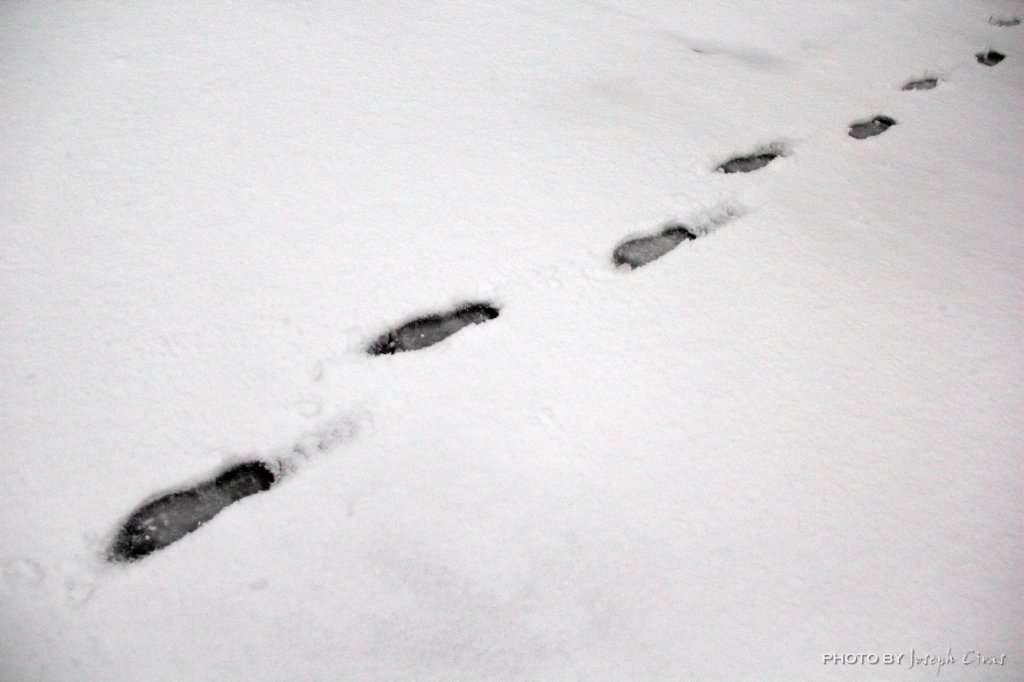
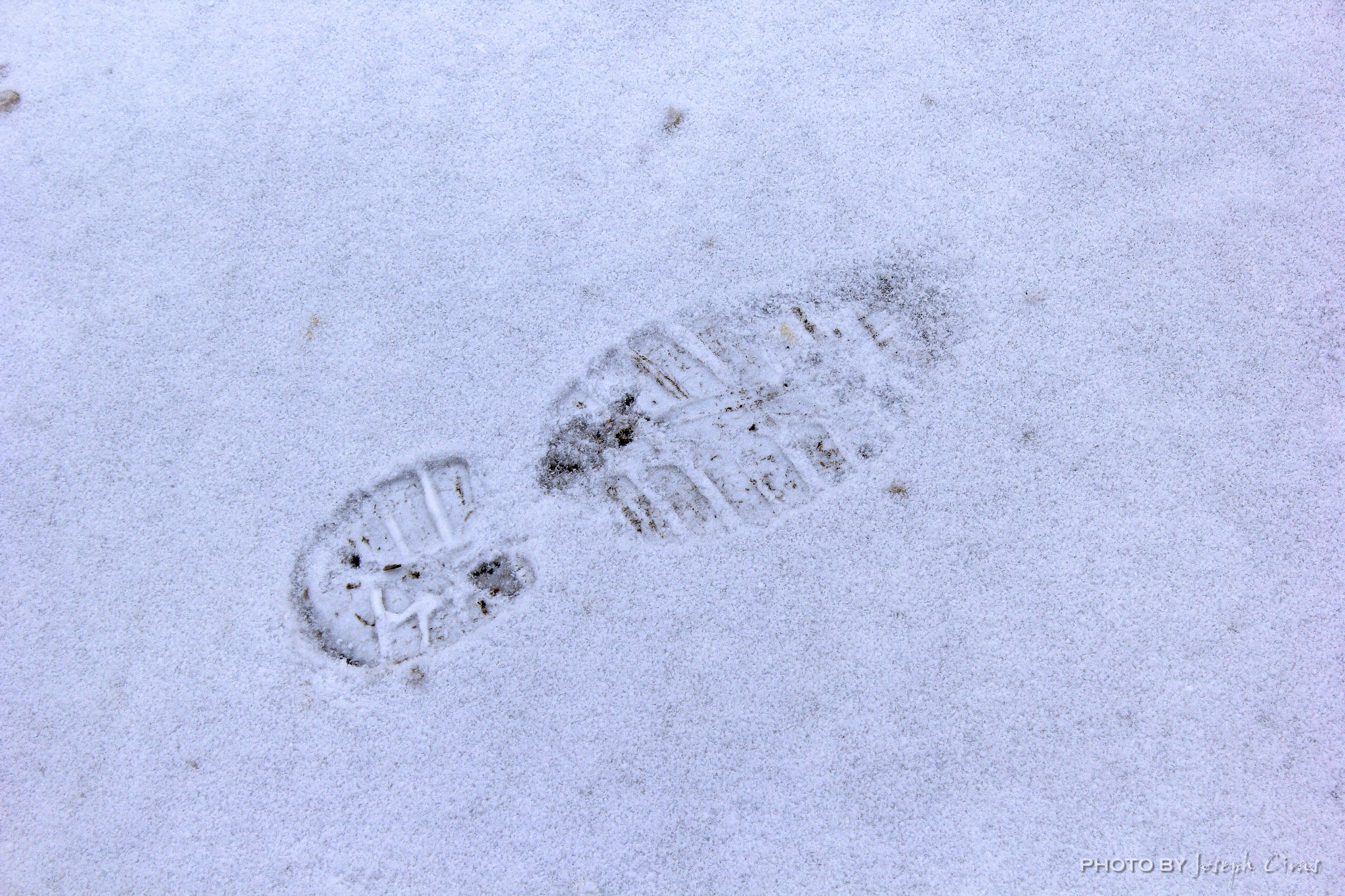
Needed a photo. Dusting of snow on a cleared driveway. One foot. One photo.

My footprint

“For I found her when the snow was on the ground. I traced her little footprints in the snow. I found her little footprints in the snow, Lord. I bless that happy day that Nellie lost her way. For I found her when the snow was on the ground. I dropped in to see her, she was a big round moon.” — Bill Monroe – Footprints In The Snow

Saturday 02/20/2021: Post photo—Application.

Settings: Samsung SM-G930V ( S7), ISO 64, f/1.7, 1/60 s, 4 mm

Servicemens Readjustment Act (1944)

While World War II was still being fought, the Department of Labor estimated that, after the war, 15 million men and women who had been serving in the armed services would be unemployed. To reduce the possibility of postwar depression brought on by widespread unemployment, the National Resources Planning Board, a White House agency, studied postwar manpower needs as early as 1942 and in June 1943 recommended a series of programs for education and training. The American Legion designed the main features of what became the Serviceman’s Readjustment Act and pushed it through Congress. The bill unanimously passed both chambers of Congress in the spring of 1944. President Franklin D. Roosevelt signed it into law on June 22, 1944, just days after the D-day invasion of Normandy.

American Legion publicist Jack Cejnar called it “the GI Bill of Rights,” as it offered Federal aid to help veterans adjust to civilian life in the areas of hospitalization, purchase of homes and businesses, and especially, education. This act provided tuition, subsistence, books and supplies, equipment, and counseling services for veterans to continue their education in school or college.

This is a copy of my father’s application for Servicemens Readjustment Act. He served in the Navy in World War II from 11/30/43 to 02/26/46 as a Fireman First Class.

My father’s application for the GI Bill

My father used the money from the GI Bill to purchase the house that my mother still lives in.

Usual statement: That is all for this week. Hope you enjoyed my thoughts and constructive criticism is always wanted. I do not take criticism personally, just an opportunity to better my photography and writing skills.

For more photo of other project I have work, visit my website: https://photobyjosephciras.weebly.com/ or visit me on Facebook at https://www.facebook.com/PhotobyJosephCiras/.

Photographic Thoughts—01/31/2021 to 02/06/2021

“Photograph takes an instant out of time, altering life by holding it still.” — Dorothea Lange

Thank you for all the new views and likes from last week. It helps keep me going. Enjoy my blog post!

Sunday 01/31/2021: Posted photo—Mount Flume.

Settings: Canon EOS 60D, ISO 100, f/7.1, 1/320 s, 55 mm.

Today I went hiking with an old college roommate. We hiked together last year for the first time in a long time. This was the second time we hiked together and the first time in the winter. On the accent, I as faster then he was. On the descent, he was faster than I was. On the descent, I am a cautious hiker, especially in the snow. The hike was about 11 miles long and took us about 8 hours to complete.

When we started the hike, it was -4° F at the trailhead and the snow was very crisp. The temperature rose to about 18° F on the decent. On the decent the snow was softer and more slippery. I wore my microspikes on the accent and my crampons on the descent. If you stepped off the trail, you sank into about 2 feet of snow.

It was a wonderful hike, and I am looking forward to more hikes with this college friend.

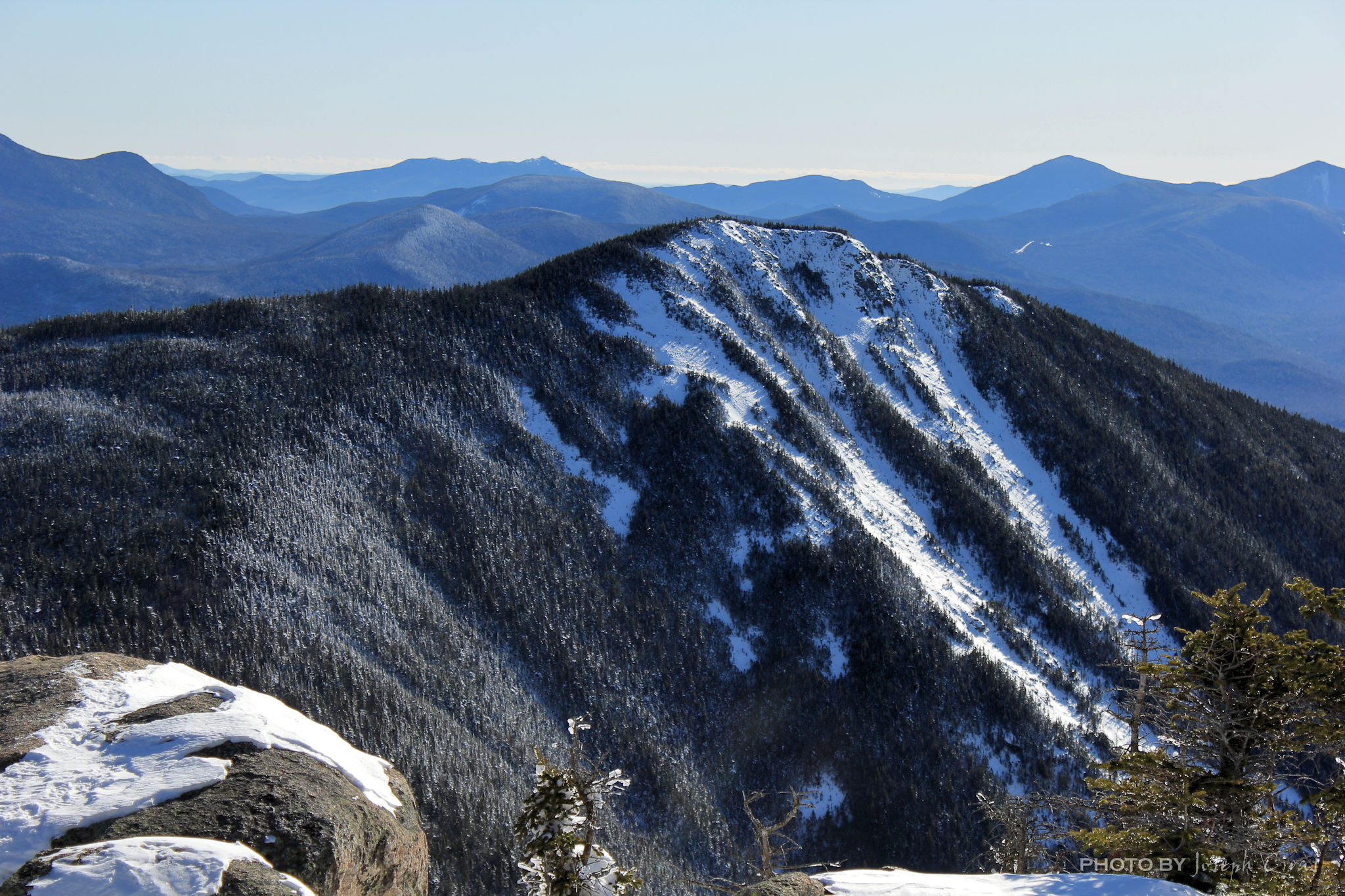
We did two mountains on this hike. The first one we summited was Mount Liberty.  Mount Liberty is a 4,459-foot-high mountain in the White Mountains of New Hampshire. Overlooking Franconia Notch, it is part of Franconia Ridge, the second highest mountain group in the Whites after the Presidential Range. The second mountain we summited was the one in this photo, Mount Flume. Mount Flume is the southernmost and shortest of the five peaks on the very popular Franconia Ridge. The Flume Slide — a rockslide through the trees which you will need to climb up — is shown in this photo. The rock here is very solid and angular with good holds even in the rain. The slide lasts for 0.7 miles after which you will reach the Franconia Ridge Trail junction just 0.1 miles south of the Mount Flume summit. The general rule is that you never go down the slide, only up it. It is very difficult to climb in good weather and impossible to climb in the winter.

Monday 02/01/2021: Posted photo—Mounts Lafayette and Lincoln.

Settings: Canon EOS 60D, ISO 100, f/7.1.0, 1/640 s, 55 mm.

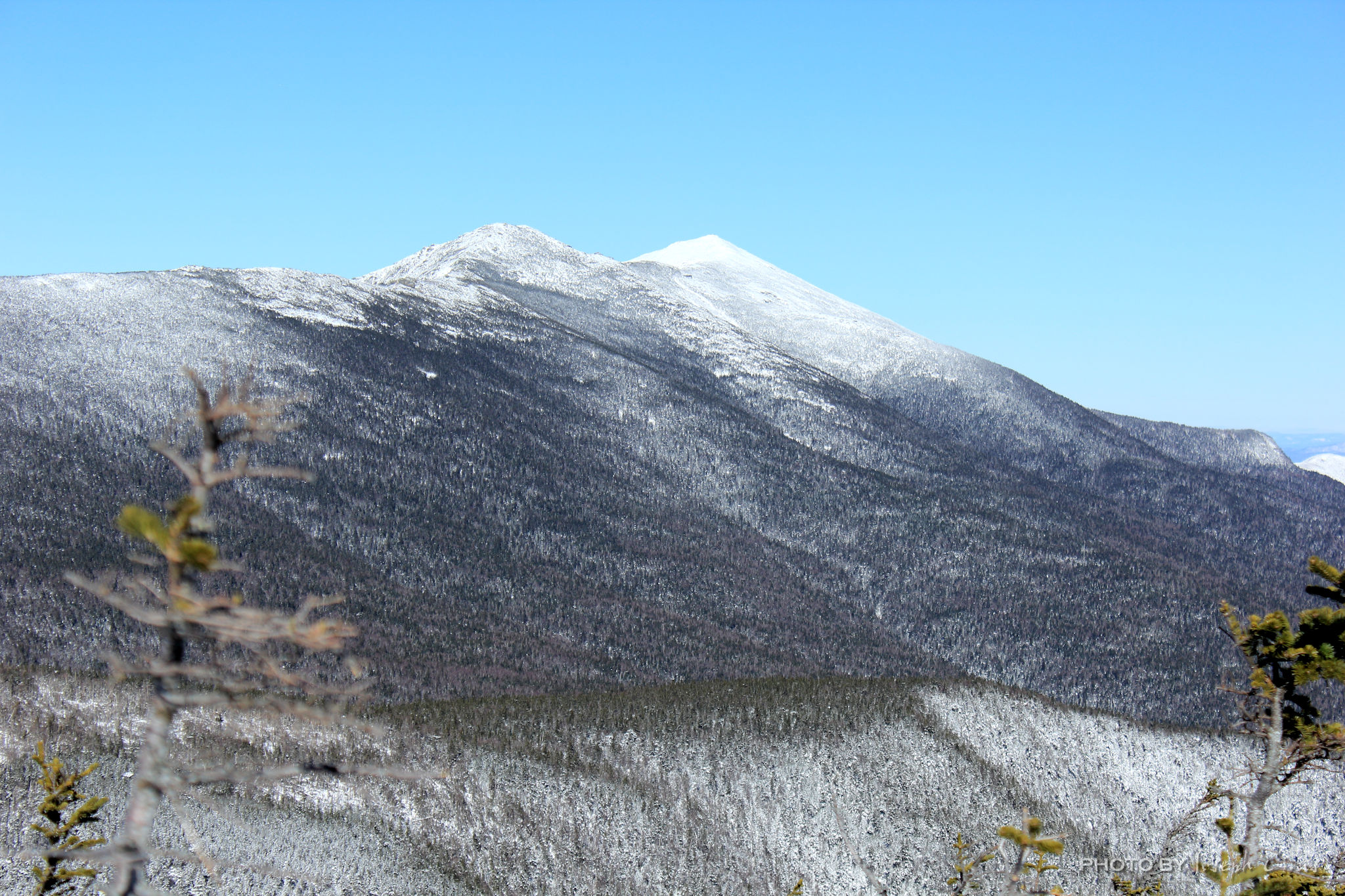
Mount Lafayette is a 5,249-foot mountain at the northern end of the Franconia Range. This is one of the mountains that I have climbed in the past during the spring. Mount Lincoln is a 5,089-foot mountain in the Franconia Range. I also have summited this mountain in the past. I took these photos during yesterday’s hike up Mount Liberty and Mount Flume.

I was not able to get out today to take a new photo, so I posted a photo taken yesterday.

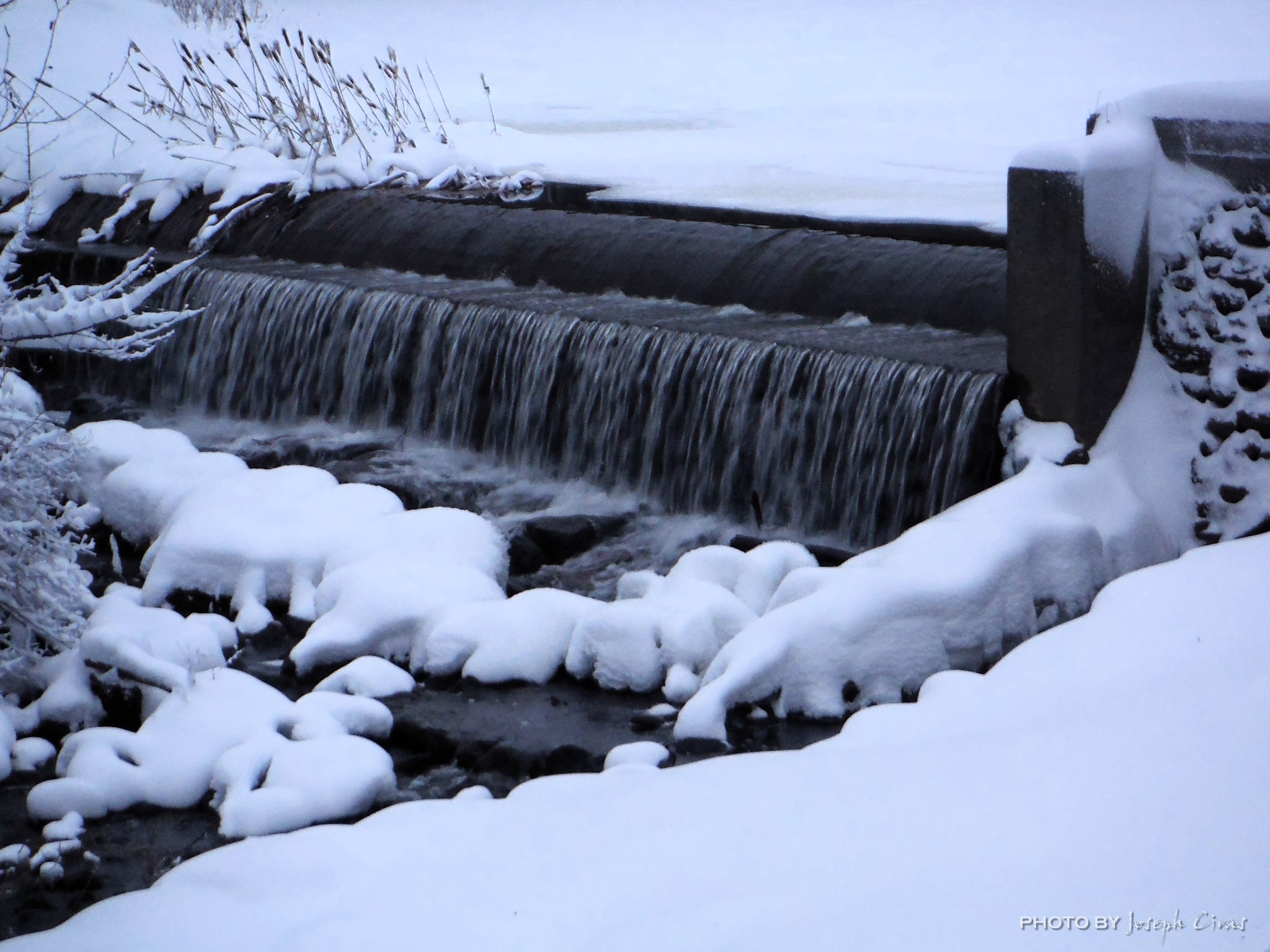
Tuesday 02/02/2021: Posted photo—Falls Under the Snow.

Settings: FinePix XP70, ISO 400, f/4.9, 1/30 s, 18 mm.

If hiking 11 miles on Sunday was not enough, I snowshoed into work today. It was a shot 3-mile hike in the morning and a 2.5-mile hike after work. I took the safe route to work and broke trail on the way home. During my afternoon hike, I passed the dam at Round Meadow Pond and took this photo. If you have been following me for a while, you know that I photograph this place often. We received 19 inches of new snow overnight and it was a wonderful hike home in the woods along the Midstate Trail.

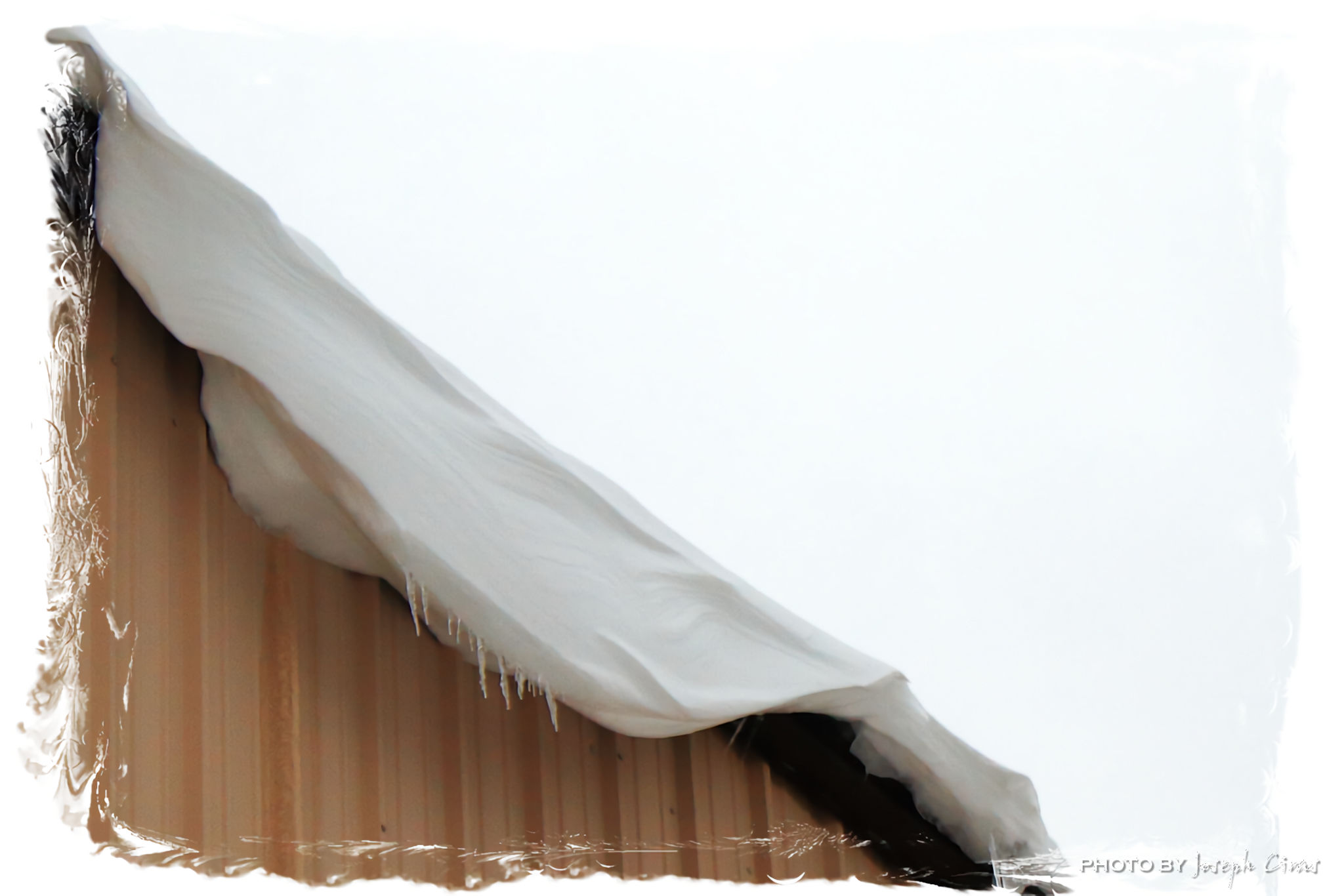
Wednesday 02/03/2021: Posted photo—Hanging On.

Settings: Canon EOS 60D, ISO 200, f/5.6, 1/500 s, 55 mm.

One of the effects of a large amount of snow is snowdrifts on buildings. This is a drift hanging off a building waiting to fall. This was up on the building for a few days because the weather was cold and we have little to no wind.

binary comment

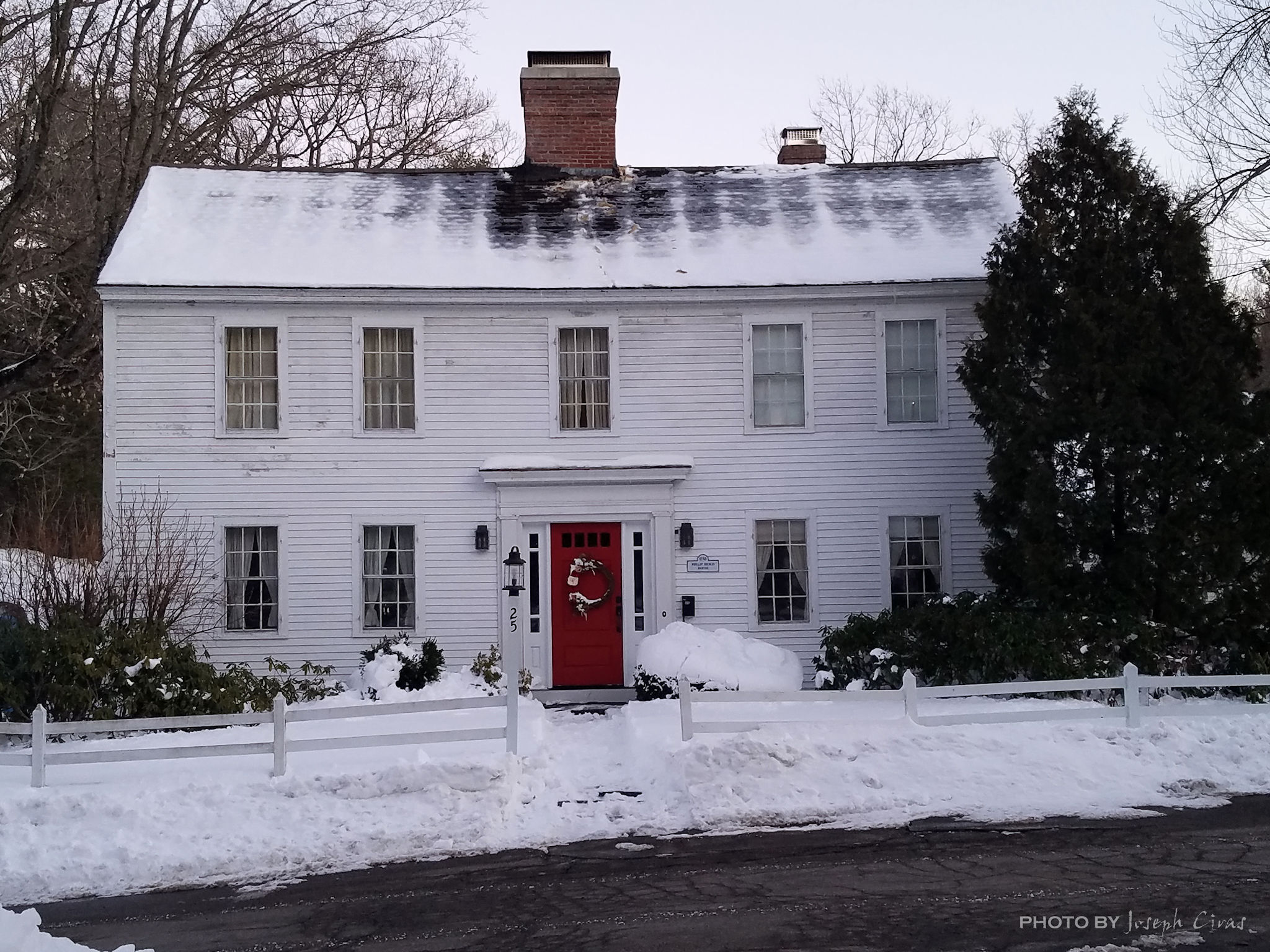
Thursday 02/04/2021: Posted photo—1759 Philip Bemis House.

Settings: Samsung SM-G930V (Galaxy S7), ISO 80, f/1.7, 1/60 s, 4 mm.

This is one of the historic housed in town. I pass it on my way to Round Meadow Pond and have photographed this house in the past. Today I decided to take a photo of it since it called to me when I was on my way to photograph the falls.

It is getting lighter every day after work so I will be taken more nature photos in the future.

Friday 02/04/2021: Post photo—Red Sunrise.

Settings: Canon EOS 60D, ISO 200, f/7.1, 1/50 s, 51 mm

The sunrise caught my eyes at work today. I was going to drop something off is someone’s office I noticed the red sky. I walked quickly back to my desk to get my camera, went up to a window and took this shot.

Every sunrise is different.

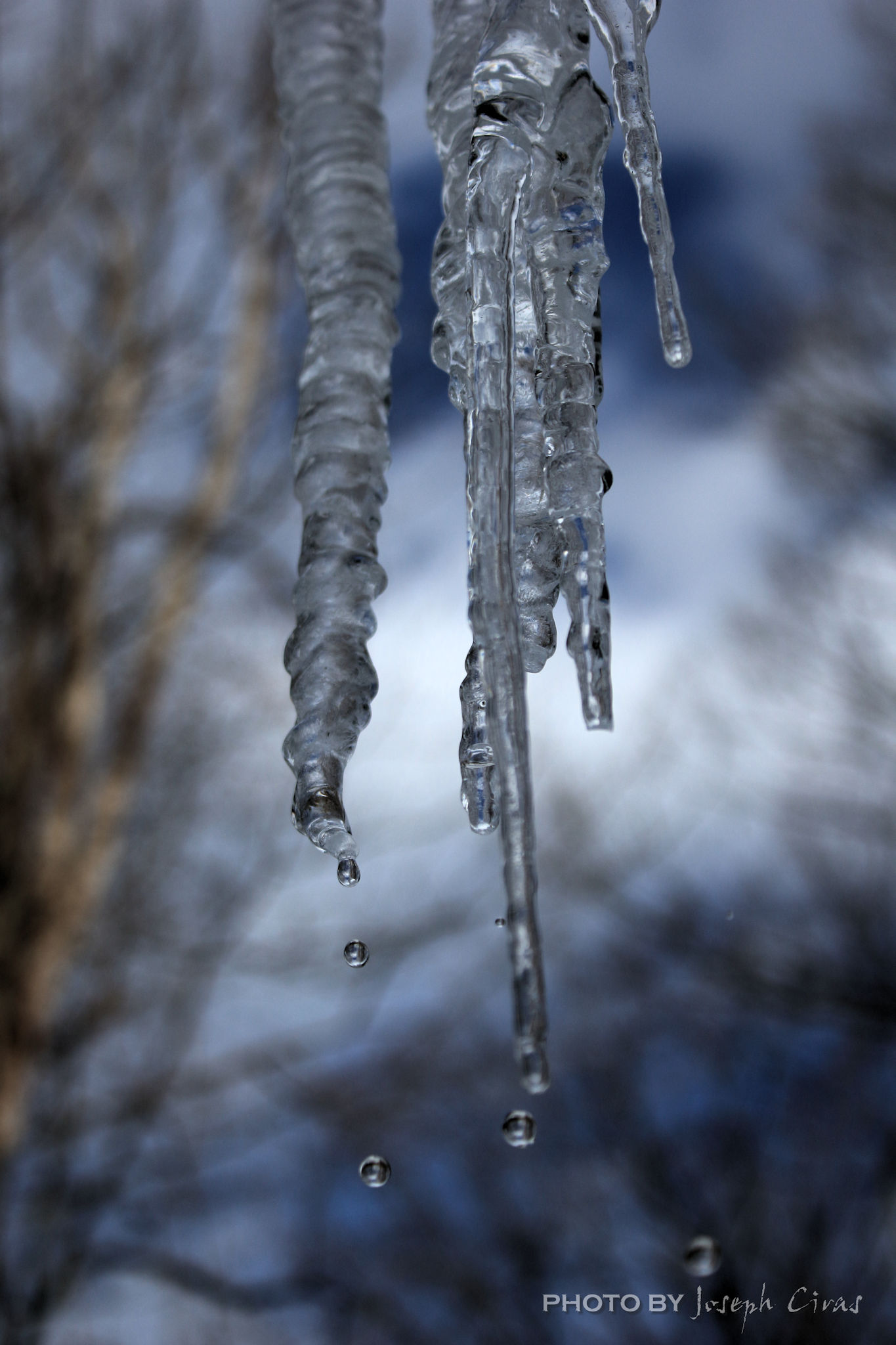
Saturday 02/06/2021: Post photo—Droplets.

Settings: Canon EOS 60D, ISO 200, f/5.6, 1/2500 s, 46 mm

Icicles are melting fast around here. After a cold week, we had a warm day today and things are melting. The water was almost running off the icicles so I took out my camera and took this shot.

Usual statement: That is all for this week. Hope you enjoyed my thoughts and constructive criticism is always wanted. I do not take criticism personally, just an opportunity to better my photography and writing skills.

For more photo of other project I have work, visit my website: https://photobyjosephciras.weebly.com/ or visit me on Facebook at https://www.facebook.com/PhotobyJosephCiras/.

Be safe out there, keep your social distance, and remember to always wear your mask.