
“A photograph is a secret about a secret. The more it tells you the less you know.” — Diane Arbus
Events over this past week.
Sunday, 11/06/2022: Posted photo — Butternut Squash.
“What is butternut squash? Technically, a fruit, butternut squash is a type of winter squash that grows on a vine. It is long and oval in shape with a bell-bottom, yellow-orange, hard outer skin covering the inner orange flesh and seeds.” https://www.bbcgoodfood.com/howto/guide/health-benefits-butternut-squash

Monday, 11/07/2022: Posted photo — Bananas.
“Bananas are both a fruit and not a fruit. While the banana plant is colloquially called a banana tree, it’s actually an herb distantly related to ginger, since the plant has a succulent tree stem, instead of a wood one. The yellow thing you peel and eat is, in fact, a fruit because it contains the seeds of the plant.” https://www.medicalnewstoday.com/articles/271157

Tuesday, 11/08/2022: Posted photo — Cucumbers.

“Cucumbers are a member of the gourd, or cucurbitaceae, family of plants. People often eat them in savory dishes, such as salad and pickles.” https://www.healthline.com/nutrition/is-cucumber-a-fruit
Wednesday, 11/09/2022: Posted photo — Ginger Root.
“Although often referred to as ginger root, ginger actually comes from the rhizome (underground stem) of Zingiber officinale, a tropical flowering plant from the same family as cardamom and turmeric.” https://www.hopkinsmedicine.org/health/wellness-and-prevention/ginger-benefits

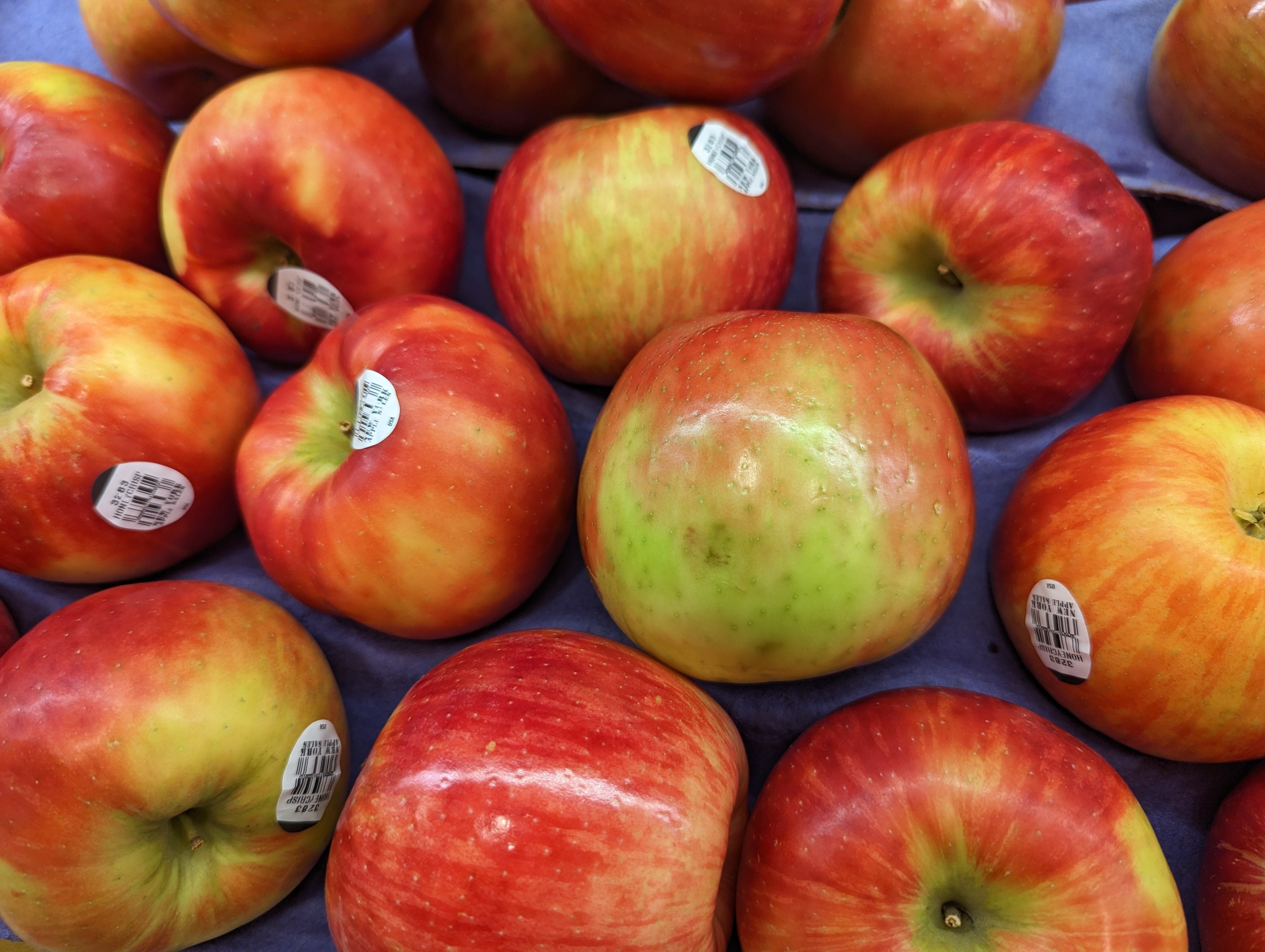
Thursday, 11/10/2022: Posted photo — Honeycrisp.
“Honeycrisp, or Honey Crisp, is a modern apple variety, developed in the 1960s and introduced to the market in the 1990s – sometimes trademarked as Honeycrunch. It is increasingly available in supermarkets. Honeycrisp comes from a long line of apples developed by the University of Minnesota from the 1930s onwards. One of the objectives of this breeding programme has been to develop varieties which can tolerate the bitter cold of winters in some parts of the USA, and most plantings have been in the northern USA, including New England, Minnesota and Washington State.” https://www.orangepippin.com/varieties/apples/honey-crisp
Friday, 11/11/2022: Post photo — Peas.
“Peas are the green seed pod or small spheres inside the pod of the pea plant (Pisum sativum). While often eaten as a vegetable, botanically, the pod is a fruit since it comes from a flower and contains seeds. The whole pods and the seeds inside them are eaten of some varieties, such as snow and snap peas. For garden peas (also called sweet peas), the seeds are removed from the pod, which is discarded.” https://www.thespruceeats.com/what-are-peas-and-what-can-you-do-with-them-4774699

Saturday, 11/12/2022: Post photo — Red Pepper.
“Red pepper—also called bell pepper, red bell pepper, capsicum, or sweet pepper—has a mildly sweet yet earthy taste. These peppers are fully mature versions of the more bitter green bell peppers.

The red pepper is a variety of Capsicum annuum, a family that also includes cultivars like jalapeño, cayenne pepper, chili pepper, and a few other hot peppers. While you’ll see other types of peppers that are red in color, only the red bell pepper is colloquially known as “red pepper.” https://www.webmd.com/diet/health-benefits-red-pepper
That is all for now. Until next week, be safe.
For more photo of other projects I have work, visit my website: https://photobyjosephciras.weebly.com or visit me on Facebook at https://www.facebook.com/PhotobyJosephCiras/.
 Photo by Joseph Ciras