“Photography for me is not looking, it’s feeling. If you can’t feel what you’re looking at, then you’re never going to get others to feel anything when they look at your pictures.” — Don McCullin
Thank you for all the new views and likes from last week. It helps keep me going. Enjoy my blog post!
Sunday, 04/11/2021: Posted photo—Lesser Periwinkle.
Settings: Canon EOS 60D, ISO 250, f/7.1, 1/160 s, 100 mm
Vinca minor (Lesser Periwinkle) is a vigorous, evergreen mat-forming perennial with glossy dark green leaves and large lavender blue flowers from mid-spring to early summer. Borne over a long period, they continue to flower intermittently throughout summer into fall and are valuable for enlivening dark areas.
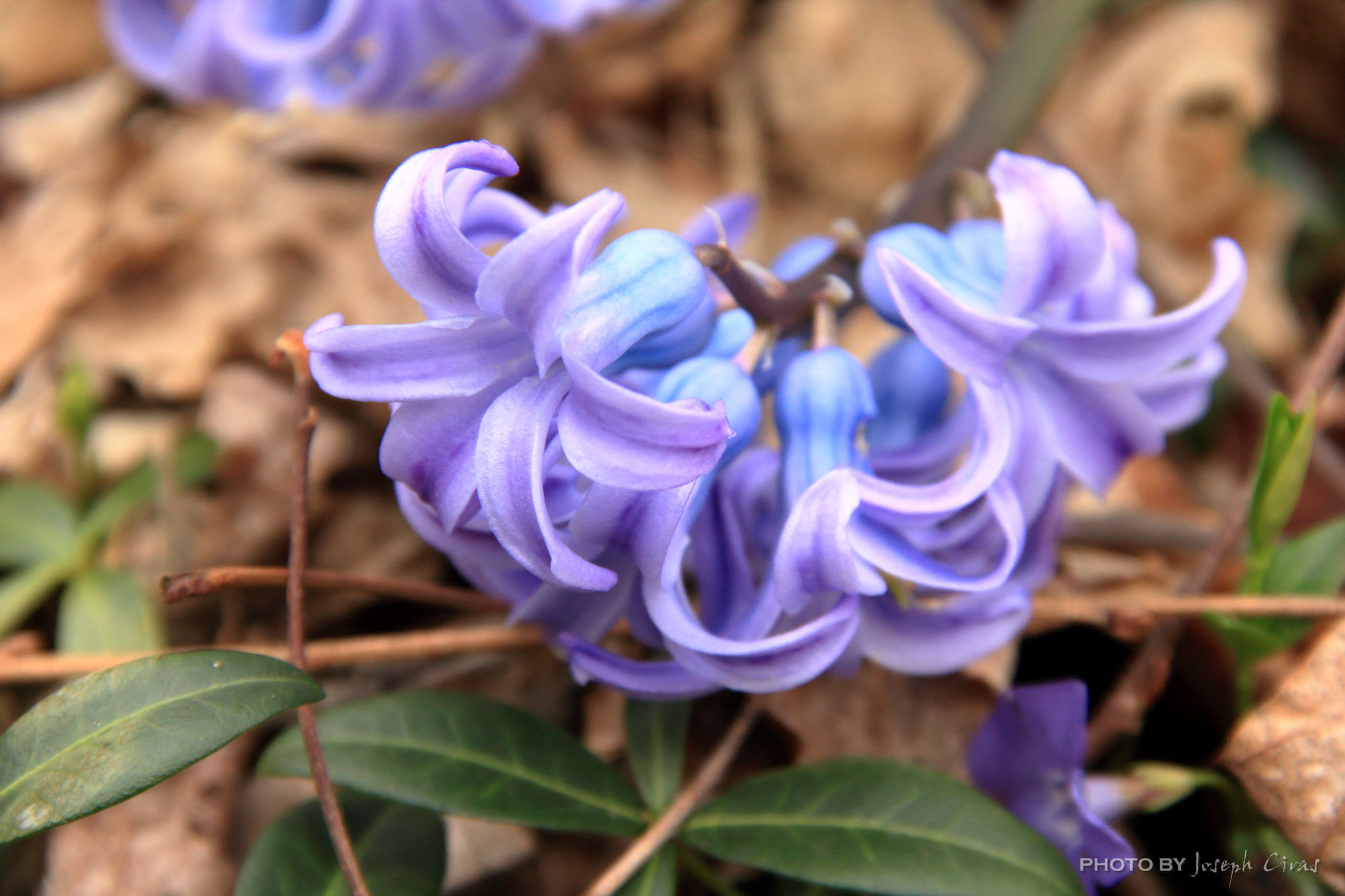
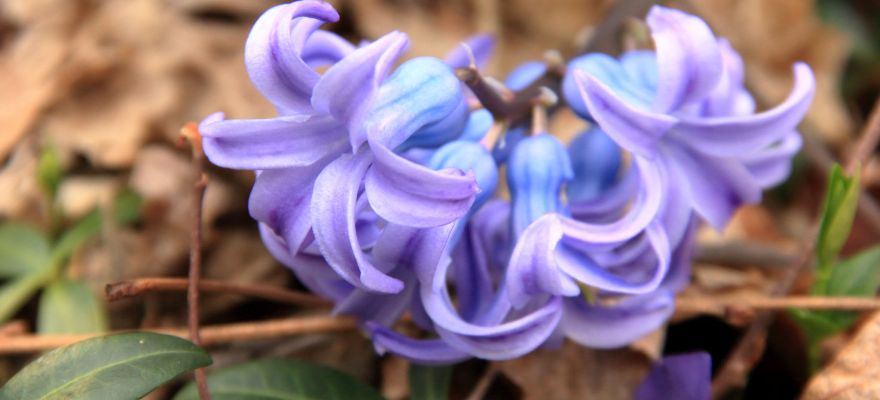
This lesser periwinkle lives in the front yard of my mother’s house. The flower caught my eye yesterday when I visited her. Today, when I went back to visit, I took a photo of it before going into the house. I just like the contrast of the purple against the green grass or the dirt.
Monday, 04/12/2021: Posted photo—Radio Relay Station.
Settings: FUJIFILM FinePix XP70, ISO 100, f/8, 1/420 s, 12 mm.
Wachusett Mountain is the highest point in Massachusetts east of the Connecticut River. It is a good location for communication towers, fire watch towers, and radio relay stations.
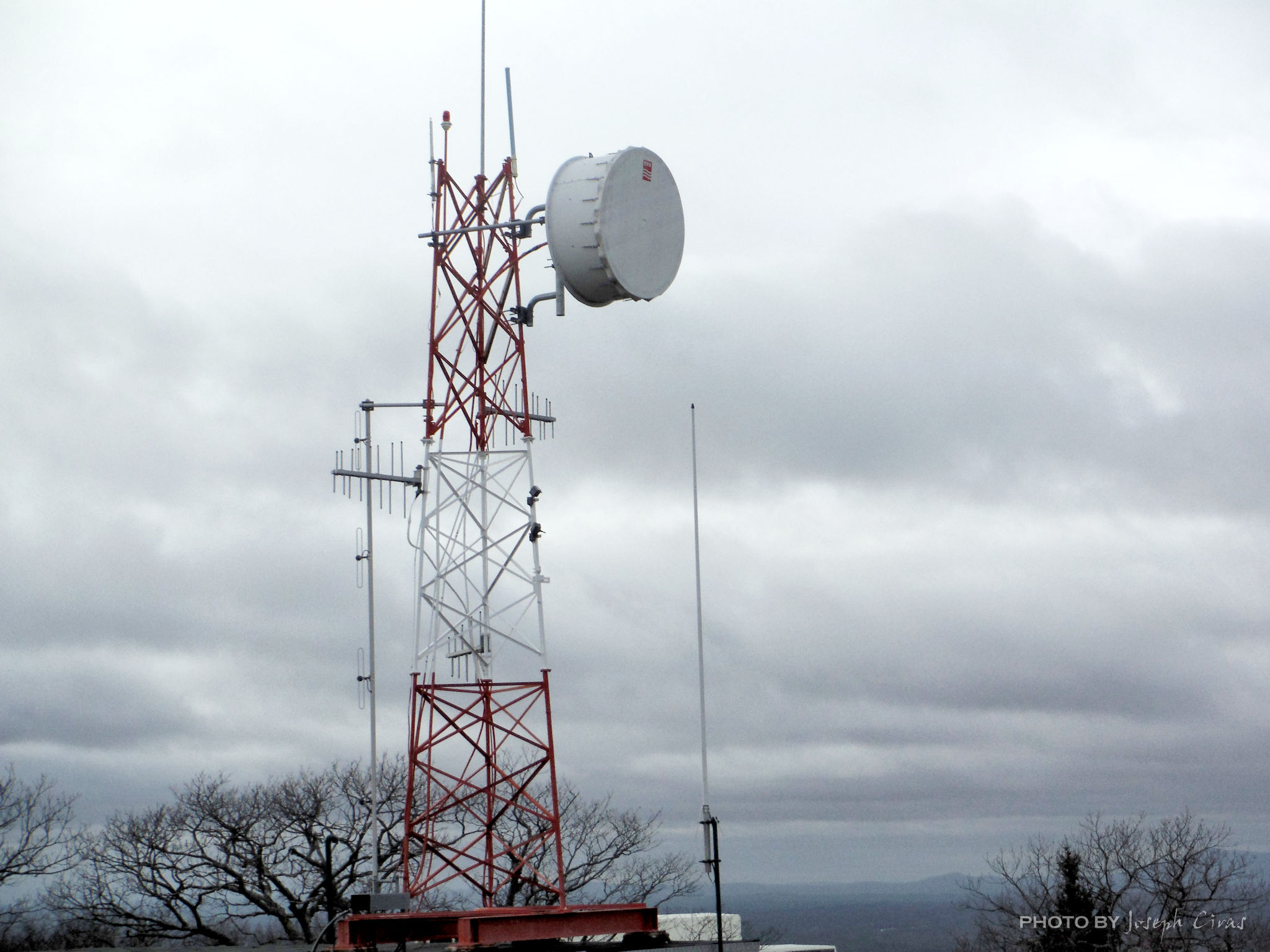
This Radio Relay Station was installed by the US Army Corps of Engineers. It is equipped with an emergency generator and radio equipment and provides relay communications for 31 flood control projects in the area. I have added a couple other photos from tonight’s hike. One shows a small boulder field that is on the trail, one show both antennas on the Radio Relay Station, and the other photo is of the sign attached to the Radio Relay Station.
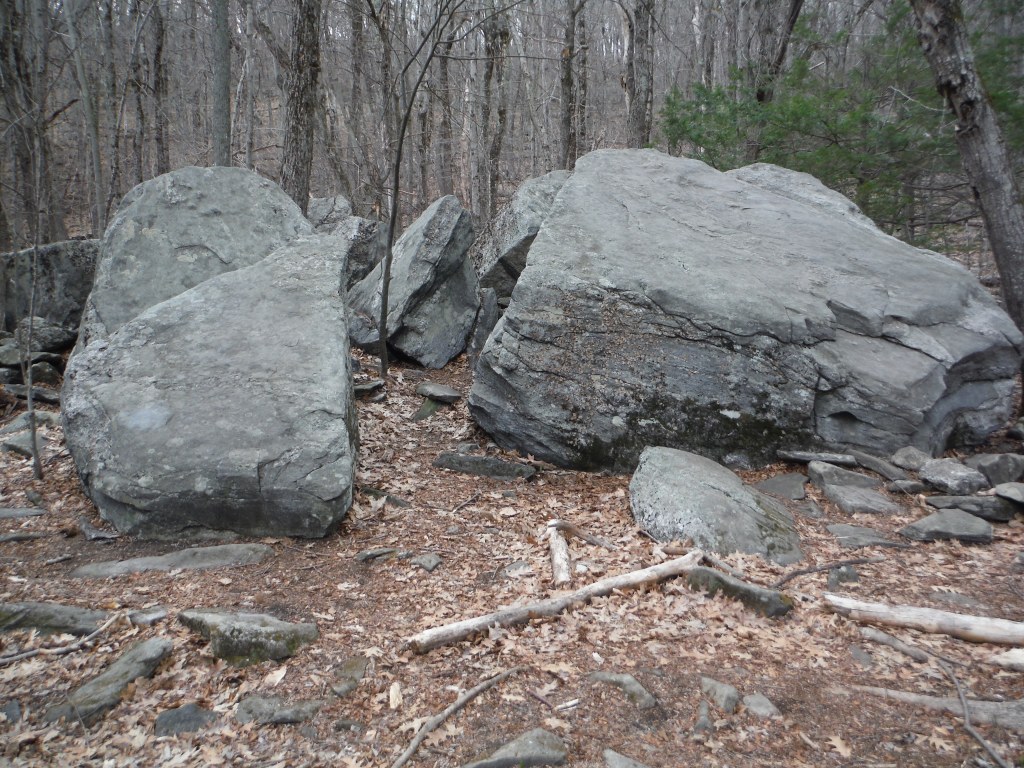

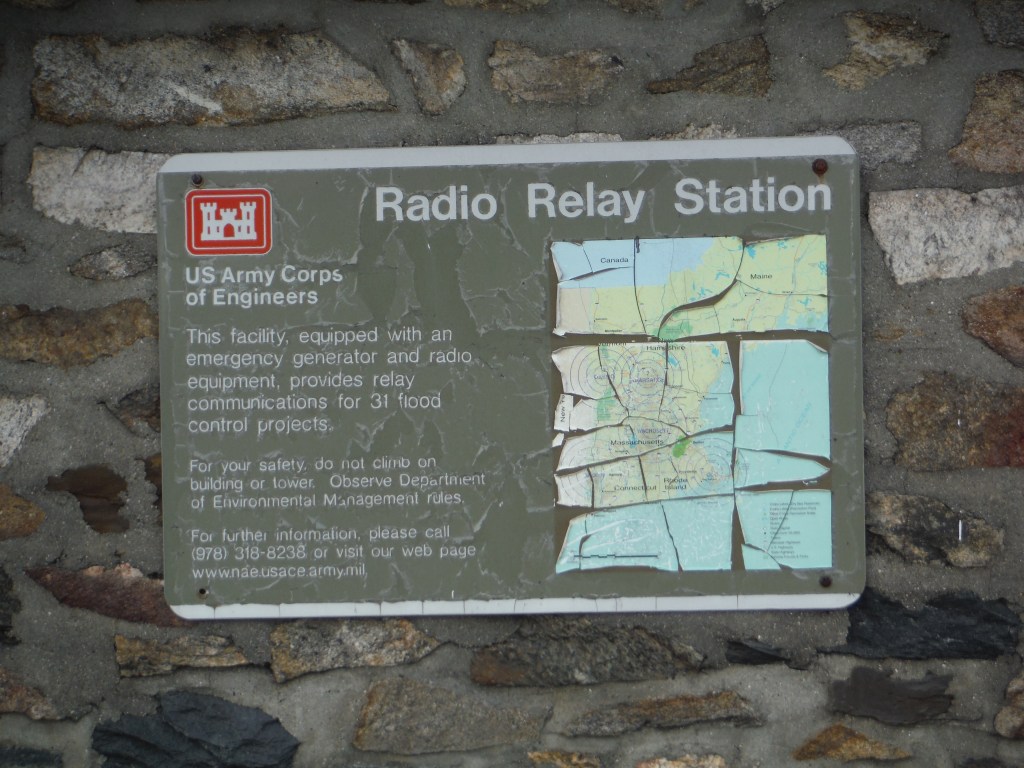
As part of my photo project, I take photo of different objects. Sometimes for no reason at all. Sometimes they are impulsive photos. This one was an impulsive photo.
Tuesday, 04/13/2021: Posted photo—Sugar Plum Fairies.
Settings: Canon EOS 60D, ISO 3200, f/5.6, 1/160 s, 44 mm.
From the Story Behind the Nutcracker: “Ironically, the Sugar Plum Fairy is not found in the original E.T.A. Hoffman story Nutcracker and Mouse King or in Alexandre’s Dumas’s The Tale of the Nutcracker, the retelling on which the ballet’s first libretto was based. Additionally, during the era in which The Nutcracker ballet was developed, the term “sugar plum” referred not only to a specific sweet, but, as author Samira Kawash points out, was also “the universal signifier everything sweet and delectable and lovely.” She further explains that the actual “sugar plums” of those days were, in fact, mostly sugar and no plum. They were treats in the category of “comfit”– candy created by layering sugar coating over a seed or nut center. She cites Jordan Almonds as a modern-day parallel. So, with a name that refers to anything and everything sweet and wonderful in the world, it makes sense then that the Sugar Plum Fairy is chosen to rule the Land of Sweets while the Prince is away in Tchaikovsky’s The Nutcracker.”
I have not seen the ballet so I cannot comment on it. One of my nephews dance and my mother-in-law took him to see it in Boston a few years ago. He enjoyed it very much.

These Sugar Plum Fairies are on a music box that my mother has in her special hutch. It is in the hutch along with all her unicorn figurines and other little figurines in trinkets. She also keeps the good china that is only to be used when company comes over in this hutch. This is a hutch that we were not to touch when we were little.
Wednesday, 04/14/2021: Posted photo—Garden of Gethsemane.
Settings: Canon EOS 60D, ISO 1600, f/5.6, 1/13 s, 24 mm
The Garden of Gethsemane is where Jesus prayed on the night of His betrayal and arrest (Mark 14:32-50). According to the record in Luke, Jesus’ despair in Gethsemane was so deep that He sweat drops of blood (Luke 44-22:43). “Then Jesus came with them to a place called Gethsemane, and said to His disciples, “Sit here while I go over there and pray.” And He took with Him Peter and the two sons of Zebedee, and began to be grieved and distressed.” (Matthew 37-26:36)
This three-dimensional painting is on my mother’s mantle. She has many religious icons and symbols around the house. I do not know whose Rosary that is, but it has been with this painting for as long as I remember.

I look at this painting every time I visit her and kept meaning to take a photograph of it. Today I finally did. I have been looking online to find out the origin and history behind the image and cannot find a good match. If anyone can help me out, please put it in the comment section.
Thursday, 04/15/2021: Posted photo—Summit in the Clouds.
Settings: FUJIFILM FinePix XP70, ISO 100, f/4.4, 1/70 s, 8 mm.
Last month I posted a photo of this fire watch tower and gave a little history of it. Tonight, I hiked up to it in the rain. The summit was in the low-lying clouds and it was wet. I wanted to take this photo to show the conditions on the summit.
The hike itself was good. The trails on the route I took were slippery and wet, but I was ready for the weather and the conditions. I was the only person hiking today. I did see a trail runner, but no other hikers. Trail running must have been interesting on the wet rocks and mud.
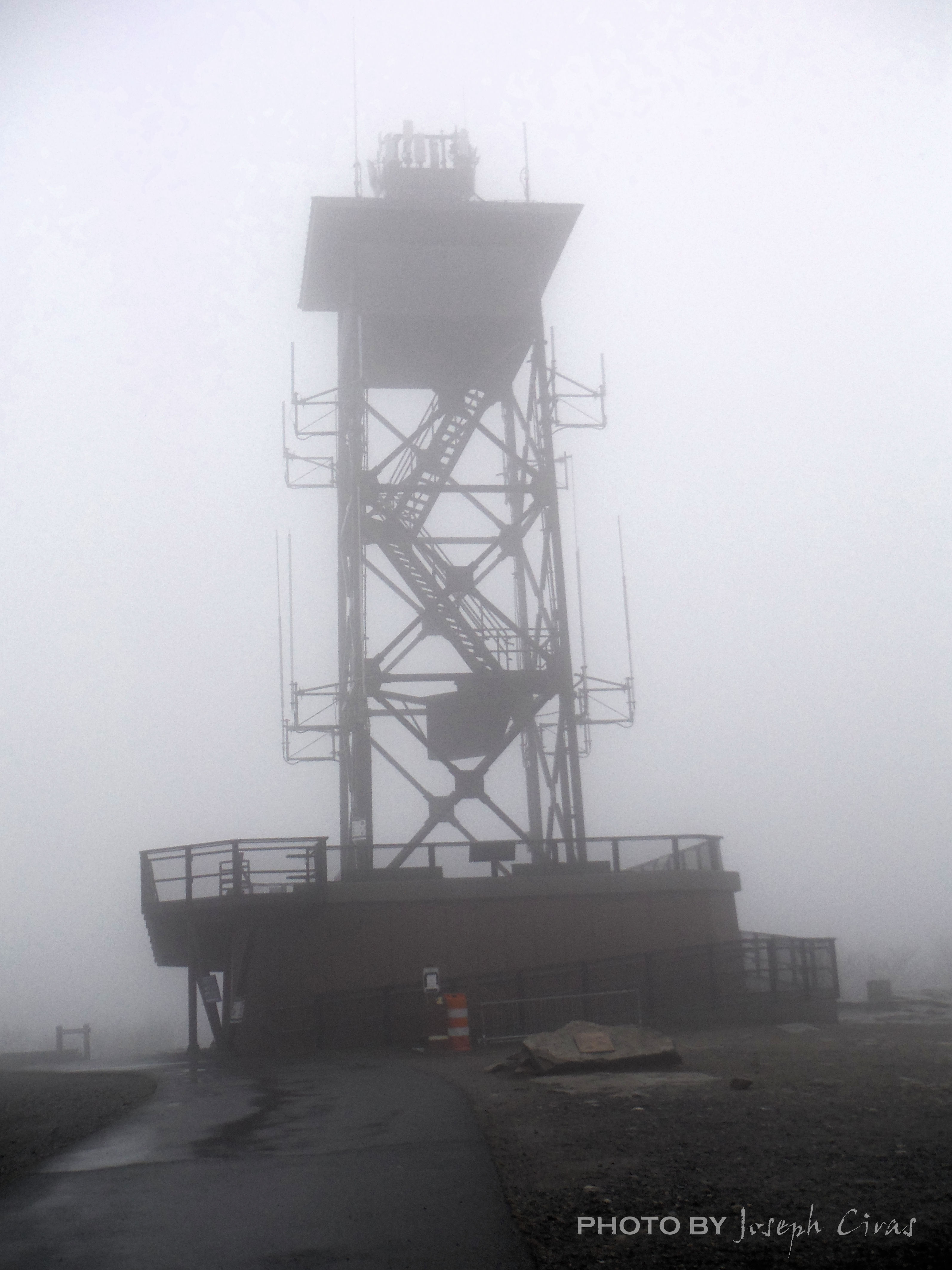
We are expecting five to seven inches of snow tonight into tomorrow. The current plan is to post some snow photos tomorrow. We will have to wait and see if that happens.
Friday, 04/16/2021: Post photo—Staghorn Sumac.
Settings: Canon EOS 60D, ISO 400, f/8, 1/125 s, 39 mm
From the Farmer’s Almanac: “The staghorn sumac is a 15-30 feet, colony-forming, deciduous shrub with crooked, leaning trunks, picturesque branches, and velvety twigs. Large, bright green, pinnately-compound leaves become extremely colorful in early fall. Staghorn sumac is often used in mass plantings, for naturalizing, or on steep slopes. Its open habit and hairy stems resemble horns on a male deer, giving staghorn sumac its name. It is one of the last plants to leaf out in the spring with bright green leaves that change to an attractive yellow, orange, and scarlet in fall. Ground, dried sumac berries taste great as a spice rub for lamb, fish and chicken. These berries are also used as a salad topping, and you can include them in your favorite dressings. Middle Eastern chefs use sumac as a topping for fattoush salad, and are often sprinkled on hummus to add both color and a zesty flavor.”
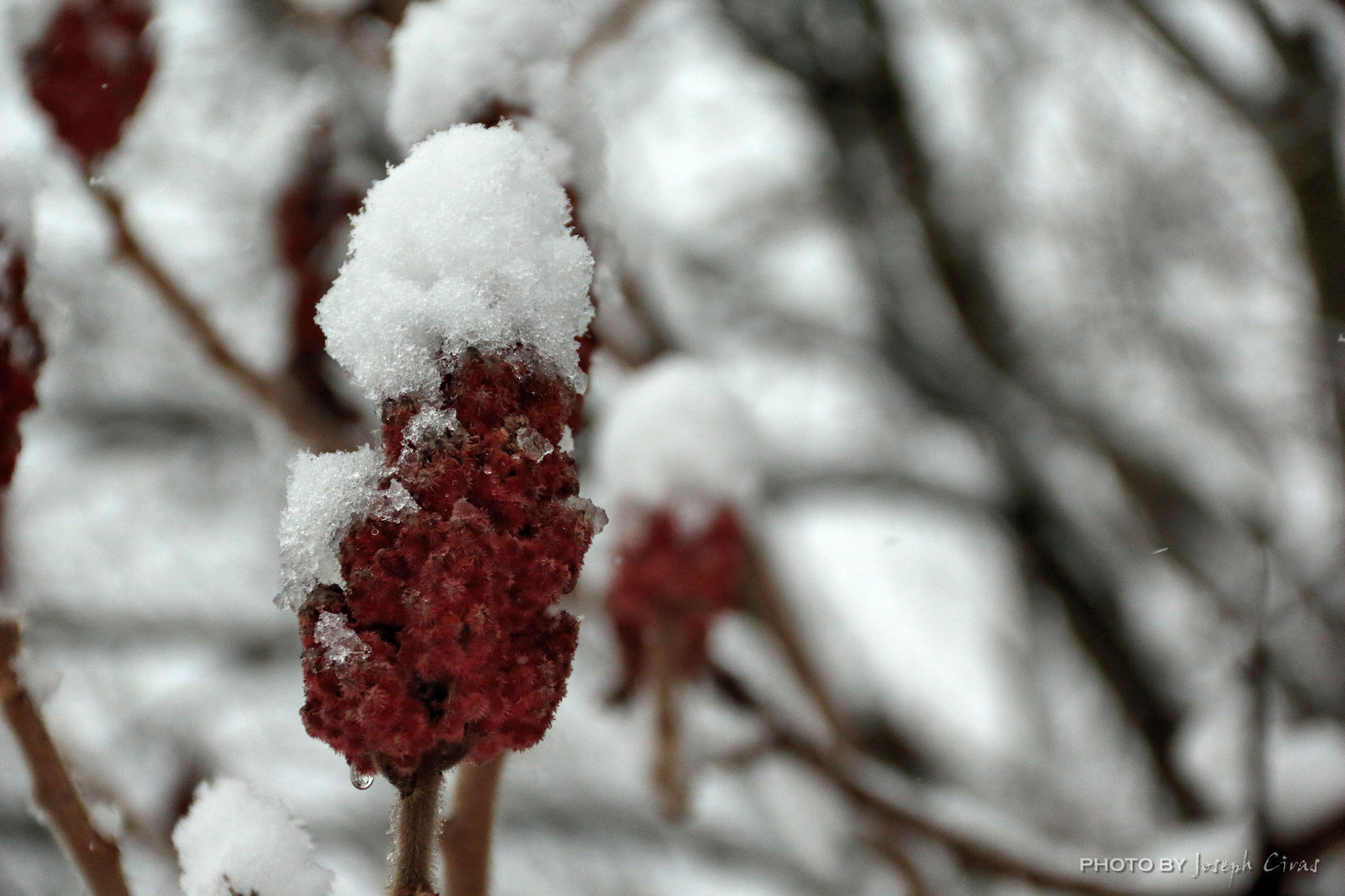
I see these sumacs often and like the contrast of the red against the white snow.
As I was writing this, I noticed that this was the second time that I used the words “like the contrast” as a reason to take a photo.
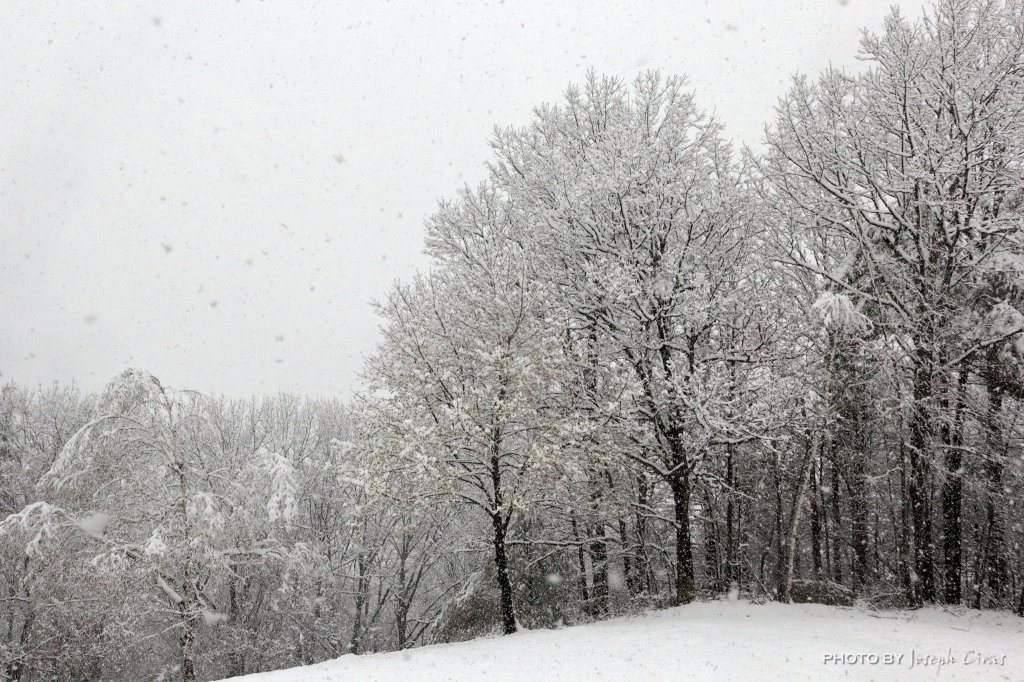
Here are a couple more photos from today’s snow storm.


Saturday, 04/17/2021: Post photo—Trail Junction.
Settings: FUJIFILM FinePix XP70, ISO 100, f/8, 1/250 s, 10 mm.
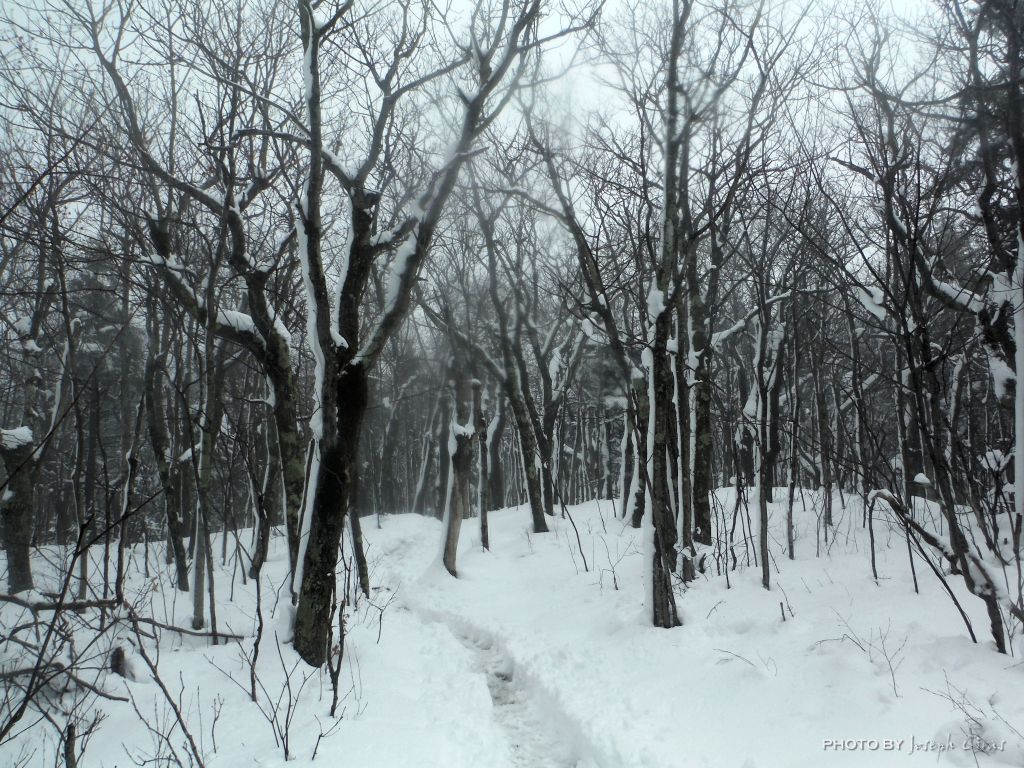
Today I went out on a hike earlier in the day than I normally do since I am going to visit my mother later in the day. Yesterday we received about 6-10 inches of snow. I hiked on the mountain today in the snow since I know that there would be fewer people hiking today. The snow was sticky and microspikes were needed. I have not much to say today.

Here are more photos of my hike.


For more photo of other project I have work, visit my website: https://photobyjosephciras.weebly.com/ or visit me on Facebook at https://www.facebook.com/PhotobyJosephCiras/.
COVID is real! Be safe out there, keep your social distance, and remember to always wear your mask and wash your hands.
 Photo by Joseph Ciras