“A thing that you see in my pictures is that I was not afraid to fall in love with these people.” — Annie Leibovitz
Thank you for all the new views and likes from last week. It helps keep me going. Enjoy my blog post!
Sunday, 03/21/2021: Posted photo—Puppy Love.
Settings: Canon EOS 60D, ISO 400, f/7.1, 1/20 s, 24 mm
Meet Brownie. Brownie was given to my mother back in the late 1940’s. My father won this at a carnival, and she has sleep with it ever since. Brownie is in great condition for being over 70 years old. My mother was telling me all about how my father won it for her and how people are amazed of Brownies condition. She attempted to wipe one of the white spots off Brownie’s eyes, so I had to tell her that these were the dog’s pupils. She just laughed and we continued talking about her life.
Brownie the puppy
Keep family close.
Monday, 03/22/2021: Posted photo—Sunset.
Settings: Canon EOS 60D, 2SO 100, f/6.3, 1/8000 s, 300 mm.
I needed to go on a hike today to clear my mind and to contemplate on the good life my mother is living. She holds family close and enjoys it when people are over. She complains about it sometime, but she truly appreciates it. Hiking is a great way to get in touch with nature and to think about life. If you are hiking alone, or with others, your mind is attuned with nature and natural wonders and helps you know about what is and is not important.
Sunset from Wachusett Mountain
Getting to the summit before sunset was the goal of this hike. I made it with plenty of time to spare. There is a ski area on Wachusett Mountain, and it was open. At about the time if sunset, the summit was crowded, so I left before sunset was complete.
Every sunset is different and wonderful in its own way.
Tuesday, 03/23/2021: Posted photo—Pietà.
Settings: Samsung SM-G930V, ISO 200, f/1.7, 1/17 s, 4 mm.
The Pietà (“the Pity”; 1498–1499) is a work of Renaissance sculpture by Michelangelo Buonarroti, housed in St. Peter’s Basilica in Vatican City. It is the first of several works of the same theme by the artist. It is the only piece Michelangelo ever signed. This famous work of art depicts the body of Jesus on the lap of his mother Mary after the Crucifixion.
This has been with my mother for many years, at least 60 years. I was disappointed last year because I was going to the Basilica in Vatican City for the ordination of a family member, and I wanted to see this work in person. COVID stopped that from happening. Someday I will go to Vatican City and see this work.
Pietà by Michelangelo
Wednesday, 03/24/2021: Posted photo—New Growth.
Settings: Samsung SM-G930V, ISO 100, f/1.7, 1/60 s, 4 mm.
Tulips are starting to bloom, just in time for Easter. We have tulip that bloom every year at this time, and I noticed that they broke soil today. Tulips form a genus of spring-blooming perennial herbaceous bulbiferous geophytes. The flowers are usually large, showy, and brightly colored, generally red, pink, yellow, or white. These tulips are pink in color. Once they bloom, I will post photos of them.
Tulips
Now I am waiting on the crocus to bloom. The normally bloom before the tulip. Like everything else, life is different this year.
Thursday, 03/25/2021: Posted photo—Stream.
Settings: Canon EOS 60D, ISO 1600, f/22, 1/10 s, 55 mm
Today I went on a hike with my son and his friend. We decided to do a longer hike today on Wachusett Mountain that we normally do on a weekday since the sun out up longer. We started the hike at our normal time, giving us over an hour to get to the summit. The normal trail will get us to the summit is less than an hour, so we decided on a longer hike. We hike on Bicentennial Trail in the opposite direction we normally hike it. Bicentennial has a trail that bisects it and we normally to left at the intersection and today we went right. There are a few seasonal streams along the trail, and the streams were flowing due to the rain earlier in the day and the snow melt on the mountain. I was thinking about a photo and saw this stream and took a handheld, semi-long exposure photo.
Stream along the trail
Here is a photo from the trailhead and another photo of the stream.
Mountain House TrailheadFlowing water on Bicentennial Trail
Friday, 03/26/2021: Post photo—Sugar Maple.
Settings: Canon EOS 60D, ISO 320, f/5.6, 1/100 s, 55 mm
The sugar maple is one of America’s most-loved trees. In fact, more states have claimed it as their state tree than any other single species—for New York, West Virginia, Wisconsin, and Vermont, the maple tree stands alone.
Sugar Maple blossom
These are the buds from one of the sugar maples in our yard. They are currently being tapped by our neighbor to make maple syrup. More photos of this tree will occur as the leaves get larger.
Saturday, 03/27/2021: Post photo—Glacial Erratic.
Settings: Samsung SM-G930V, ISO 50, f/1.7, 1/810 s, 4 mm.
Wachusett Mountain is one of the oldest mountains in the world. The rocks are estimated to be 250 million years old. It is a metamorphic rock monadnock. In its youth, it was over 20,000 feet tall. Today it is only 2,006 feet tall. It has been through ice ages. Wachusett means “Near the mountain” or “Mountain place” in the language of the Natick Indians. A band of old growth forest along rock ledges 500 feet (150 m) below the summit supports trees from 150 to 370 years old. Covering 220 acres (89 ha), it is the largest known old growth forest east of the Connecticut River in Massachusetts.
Scientists have recorded five significant ice ages throughout the Earth’s history: the Huronian (2.4-2.1 billion years ago), Cryogenian (850-635 million years ago), Andean-Saharan (460-430 million years ago), Karoo (360-260 million years ago) and Quaternary (2.6 million years ago -present). Approximately a dozen major glaciations have occurred over the past 1 million years, the largest of which peaked 650,000 years ago and lasted for 50,000 years. The most recent glaciation period, often known simply as the “Ice Age,” reached peak conditions some 18,000 years ago before giving way to the interglacial Holocene epoch 11,700 years ago.
Glacial Erratic on Wachusett Mountain
Glacial erratics are stones and rocks that were transported by a glacier, and then left behind after the glacier melted. Erratics can be carried for hundreds of kilometers and can range in size from pebbles to large boulders. Scientists sometimes use erratics to help determine ancient glacier movement.
Wachusett Mountain and throughout New England there are many glacial erratics.
“We are making photographs to understand what our lives mean to us.” — Ralph Hattersley
Thank you for all the new views and likes from last week. It helps keep me going. Enjoy my blog post!
This week’s post will be a little shorter than last week’s post. I will explain why later in this month.
Sunday, 03/14/2021: Posted photo—Crucifix.
Settings: Samsung SM-G930V, ISO 200, f/1.7, 1/11 s, 4 mm
This is a crucifix in the back of St. Denis Church. It is hanging on a cork board near all the religious paraphernalia. There are prayer cards, rosaries, pray books, and other items for anyone to take with them.
The difference between Cross and Crucifix is that Cross is a cross-shaped item without a symbol or figure of Jesus on the same, while Crucifix is a Cross with Jesus depicted or engraved on the same. The cross signifies acceptance of death or suffering and sacrifice. The crucifix is the symbol of Christianity and reminds every one of the death and resurrection of Christ. It serves as a reminder of God’s sacrifice of his only Son so that humanity may have salvation.
Crucifix
This week will be a hard week for me. You will know why in later posts.
Keep family close and reconcile any differenced you have.
Monday, 03/15/2021: Posted photo—Ducks.
Settings: Canon EOS 60D, ISO 100, f/7.1, 1/40 s, 55 mm.
This photo looks like the two ducks have a chaperon.
Ducks being watched by a chaperon
Tuesday, 03/16/2021: Posted photo—Wood Piles.
Settings: Canon EOS 60D, ISO 400, f/7.1, 1/80 s, 41 mm.
Things are getting a little crazy around here. I have not been able to write my blog or get out to do much photography this week. I took this photo when I came home from work and before I went to visit my mother.
Beech being seasoned in our yard
This is also one of those days when I took a photo early in the day and decided not to post it. Here is the photo of the sunrise I took and was planning on posting.
Settings: Canon EOS DIGITAL REBEL XS, ISO 400, f/11, 1/1000 s, 210 mm.
Dall’s porpoises are common in the North Pacific Ocean and can be found off the U.S. West Coast from California to the Bering Sea in Alaska. These porpoises are considered the fastest swimmers among small cetaceans, reaching speeds of 34 miles per hour over short distances.
Dall’s porpoises playing with the boat
This one is from a trip to Kenai Fjords National Park, Kenai Peninsula Borough, Alaska. The porpoises liked jumping over the bow of the boat.
Thursday, 03/18/2021: Posted photo—Unicorn World.
Settings: Canon EOS 60D, ISO 2000, f/4.5, 1/50 s, 37 mm
My mother likes unicorns. Here are some from her collection.
Unicorns
Friday, 03/19/2021: Post photo—Jack Frost Trail.
Settings: Canon EOS 60D, ISO 640, f/7.1, 1/30 s, 25 mm
I went on a hike tonight with my son. I need to take a hike and clear my mind of all the activity of the week. Hiking is a good way to contemplate life and how wonderful a life you have with family. Every family member is special and is appreciated, whether you tell that to them.
Jack Frost living up to its name
Here is a photo that I took from the summit to end my day.
Sunset
Saturday, 03/20/2021: Post photo—Beach Time.
Settings: Canon EOS 60D, ISO 100, f/7.1, 1/800 s, 55 mm
Another day, another trip down to see family. Today was a better day for the family. It is one of those days we will talk about for a while. This is a photo of the beach at Leominster State Forest.
“There is one thing the photograph must contain, the humanity of the moment.” —Robert Frank
Thank you for all the new views and likes from last week. It helps keep me going. Enjoy my blog post!
This week’s post will be short. I will explain why later in this month.
Sunday, 03/07/2021: Posted photo—Reference Mark 8.
Settings: Canon EOS 60D, ISO 100, f/7.1, 1/500 s, 55 mm
This was my fifth hike in seven days on Wachusett Mountain. Just as last Sunday, I hiked with my son and two of his friends this time. This was a shorter hike than I did on Saturday for no reason. I did take the kids, young adults, up one of the more difficult trails on the mountain. The steep part of Jack Frost Trail was pure ice with no snow cover. I took this trail on Saturday and wanted to see how they would handle it today. They only did it once, I did it twice. Like last week, I wanted to challenge myself to get to the trailhead before them. I knew that they would get there first this week since, when I established the challenge, they only have a flat trail to hike and I had to go back up the steep, icy trail and then back down the other side. They arrived at the trailhead about ten minutes before I did. Still a fun day and they like the challenge.
Reference mark on the summit of Wachusett Mountain
This photo is of a National Geodetic Survey (NGS) reference mark. A reference mark differs from a benchmark in that reference marks point to benchmark. There are three reference marks on the summit of Wachusett Mountain. There used to be four but one of them must have been removed when they were putting in the new watch tower. Either that or I have not been able to find it yet. A benchmark can either show location or elevation. A benchmark for location can be a random point determined by the surveyor or it could be something permanent in nature such as the corner of a concrete pad or a survey monument. A benchmark for elevation can be given a random elevation number or the exact number of feet above sea level can be determined.
One of my rules is that you are not on the summit of a mountain until you touch the benchmark. If there is not benchmark, they I need to look at my map and/or GPS device to estimate the location of the summit.
Monday, 03/08/2021: Posted photo—Walkway.
Settings: Canon EOS 60D, ISO 400, f/14, 1/10 s, 40 mm.
The walkways at the Old Mill Restaurant are covered walkways. They are very picturesque year-round but especially this time of year with snow on the rocks and the water gently flowing under the walkways.
This photo is not as easy to take as you would think. There is a busy road that goes in front of the restaurant, so you must time your shot not to have any vehicles in it. You also need to walk down to the stream to get the correct angle for the shot. That is not an issue during most of the year. Today I had to walk on icy snow to get into position. Not a problem for me but could be a problem for some.
A covered walkway at the Old Mill Restaurant
A covered bridge, or a covered walkway, is a timber-truss bridge with a roof, decking, and siding, which in most covered bridges, or walkways, create an almost complete enclosure. The purpose of the covering is to protect the wooden structural members from the weather. “The first long covered bridge in America, with a 55-meter (180-foot) center span, was built by Timothy Palmer, a Massachusetts millwright, over the Schuylkill River at Philadelphia in 1806. Covered timber-truss bridges soon spanned rivers from Maine to Florida and rapidly spread westward. There is no evidence of timber-truss bridges, with or without covering, in the ancient world, but the 13th-century sketchbook of the French architect Villard de Honnecourt depicts a species of truss bridge, and the Italian Andrea Palladio’s “Treatise on Architecture” (1570) describes four designs.” — Encyclopedia Britannica.
Tuesday, 03/09/2021: Posted photo—Cirrus Clouds.
Settings: Canon EOS 60D, ISO 400, f/7.1, 1/400 s, 47 mm.
Cirrus Clouds (“Delicate cloud streaks”)
Typical Altitude: 16,500–45,000 ft Precipitation: None that reaches ground Composition: Ice crystals Formation: Fall streaks of ice crystals in upper troposphere winds.
Cirrus Clouds or contrails?
Cirrus clouds are the highest of all clouds and are composed entirely of ice crystals. Cirrus clouds are precipitating clouds, although the ice crystals evaporate high above the earth’s surface. The crystals, caught in 100–150 mph winds, create wisps of cloud.
This morning I saw four well defined “x’s” in the sky and thought that this would be a good photograph. The white was a wonderful contrast to the morning blue sky. These cloud formations do not last very long because of the high winds that form them.
Some people think these are contrails. The condensation trail left behind jet aircrafts are called contrails. Contrails form when hot humid air from jet exhaust mixes with environmental air of low vapor pressure and low temperature. The mixing is a result of turbulence generated by the engine exhaust. I am not sure about that, so I am sticking with calling them Cirrus clouds.
Wednesday, 03/10/2021: Posted photo—Watch Tower.
Settings: Samsung SM-G930V, ISO 200, f/1.7, 1/18 s, 4 mm.
On February 27, 2014 this new 80-foot steel fire tower was installed on the summit of the Wachusett Mountain state reservation in Princeton. The structure replaces the old tower which was built in 1966.
I cannot believe it has been so many years since it was open. I still remember when they were constructing it. We would hike to the summit and watch it being built over a few months.
The new watchtower on the summit of Wachusett Mountain
Here is a photo of the old watch tower in the winter.
The old watchtower in winter on the summit of Wachusett Mountain
Settings: KODAK DC3200 DIGITAL CAMERA, n/a, f/3.6, 1/90 s, n/a mm.
This was one of the very first travel photos I have taken. I took this photo on my first of three trips to Denmark. Kolding is a Danish seaport located at the head of Kolding Fjord in the Region of Southern Denmark. It is the seat of Kolding Municipality. It is a transportation, commercial, and manufacturing center, and has numerous industrial companies, principally geared towards shipbuilding.
One thing I like about this photo is that you can see the age of the building. If you look at the side walls, they are warped due to the age of the building and the material that was used to make it.
House in downtown Kolding Denmark
One day I will go back to Denmark with my family. Great place to visit.
Friday, 03/12/2021: Post photo— Two Summits.
Settings: Samsung SM-G930V, ISO 200, f/7.1, 1/13 s, 4 mm
On Sunday, I wrote about the difference between reference marks and benchmarks. These are the two benchmarks on the summit of Wachusett Mountain. The one that looks like a plate is one of the original benchmarks that was moved during the construction of one of the hotels that were on the summit. The one with inside the triangle is the current Wachusett Reset benchmark. This is the benchmark to which the three reference marks point.
The old and new benchmarks on the summit of Wachusett Mountain
Saturday, 03/13/2021: Post photo—Gatehouse.
Settings: Canon EOS 60D, ISO 100, f/7.1, 1/320 s, 36 mm
A gatehouse outlet works or valve house for a dam is a structure housing sluice gates, valves, or pumps (in which case it is more accurately called a pumping station). Many gatehouses are strictly utilitarian, but especially in the nineteenth century, some were very elaborate.
Wyman Pond was constructed by the City of Fitchburg in1892 as a compensating reservoir to provide water to the mills downstream. It was rarely used and soon became a summer getaway for area residents. Trolleys ran right to the gatehouse for those wanting to spend an afternoon at Sunne’s Beach. Its popularity soon sprouted summer cottages all around the lake which now are mostly year-round homes.
I love the old architecture of this gatehouse. The stone walls and slate roof shows how it was constructed.
“In photography there is a reality so subtle that it becomes more real than reality.” — Alfred Stieglitz
Thank you for all the new views and likes from last week. It helps keep me going. Enjoy my blog post!
Sunday, 02/28/2021: Posted photo—Winter Hike.
Settings: FujiFilm FinePix XP70, ISO 100, f/4.6, 1/60 s, 10 mm
Some people think that I am crazy hiking year-round. I have been hiking year-round for many years now and I enjoy hiking in the off seasons. I like hiking with few people around, less bugs, and fewer rocks to contend with. I consider the off season to be after the foliage and before the ground dries after the spring thaw. Winter hiking has its own challenges. These challenges include snow, ice, cold weather, snowy weather, short daylight periods, and trailheads that you need to snowshoe to get to.
Today, like many other days this year, I hiked with my son and one of his friends. We have been attempting to hike three times a week. Sometimes my son and his friend do not meet that goal. I obtain this goal more times than not. Today we summited once, and I wanted to summit again to keep on pace to summit 100 times by the end of the year. We were on our assent and we came to a trail junction. I wanted to summit again, and they did not. So, we set up a challenge. I will summit again and then attempt to beat them back to the trailhead. The section of trail that I ascended is very steep and icy and they took a safe way down. I summited and made my way down another steep and icy trail. On the descent I ran into a few people that were not prepared for winter hiking on ice and snow. They did not have any microspikes and were only hiking in boot. I had to watch them as they ascended steep inclines. I stayed back to help if any one of them fell. Because of this, my son and his friend made it back to the trailhead a few minutes before me.
Hike distance totals: me—3.5 miles, the kids half my age —3.2 mile. I almost made it back before them after giving them about a half a mile head start. They only had to descend, and I had to ascend and then descend. For your information, after two months, I have 20 out of my 100 summits completed.
Monday, 03/01/2021: Posted photo—Falls at the Old Mill.
Settings: Canon EOS 60D, ISO 200, f/11, 1/10 s, 32 mm.
Last week at this time, I posted a photo of the falls at Round Meadow Pond. Today I traveled about a quarter mile down the road to The 1761 Old Mill Restaurant. The Old Mill has a duck pond that I like to use as a shooting location to photograph ducks and geese when there is daylight after work. I also will photograph the waterfall and the covered bridges that are on the property. I stop in on Mondays since the restaurant is closed and the ducks and geese are easier to photograph.
As you can see by this photo, the ducks and geese are in the pond year-round. They are fed well when the restaurant is open. There is a duck feeder on the side of the pond in which people can purchase food for the ducks and geese. When I go on Mondays, they gather around me looking for food.
From their webpage: “The Old Mill, from its earliest beginning, has served a useful purpose in the community. Originally a sawmill where logs were processed for the new homes of the neighborhood, the Old Mill and its whirling saw sang a song of progress and industry through five generations of ownership in the same family (the Foster Family), before its wheels were stilled and it fell into disrepair.
Today, the Old Mill is noted for tempting foods served in a setting of rare charm. Voices of diners mingle with the merry music of water rushing gaily over the mill dam as it dances its way to the sea. Thus, the Old Mill is reborn — its attractive vistas doubled in splendor by their reflection in the mill pond. It has become a shrine to the epicure for its delicious food … to the art lover for its rustic beauty.”
It is wonderful to have great locations to photograph so close to home.
Tuesday, 03/02/2021: Posted photo—Sunset at the Cemetery.
Settings: Canon EOS 60D, ISO 400, f/7.1, 1/125 s, 45 mm.
The tree in this photo is one of my favorite trees to photograph. I do it often but do not post a photo of it often. It looks like a great tree to have in a cemetery, very spooky at night because of its willowing branches.
I took an alternative way home from work today to check out how this tree looked in the winter. The alternative way was not any longer for me to get home and it gave me this photo opportunity. I was looking for a different location to take a photo of the sunset. When I was approaching this location in the cemetery, I saw the sun setting behind the trees. I positioned myself to a better look of the setting sun and liked the way this scene was composed.
Since the light was low, I decided to take bracketed shots of this tree to make it into a High Dynamic Range (HDR) photo. I bracketed this photo at -2, 0, and +2. When I was processing the photo in the Photomatix software, I went through the different tones and decided on the painterly tone. I liked the feeling of this photo once processed. Someone commented that this looks like a scene from a horror movie. I agree with that statement.
Settings: Canon EOS 60D, ISO 100, f/7.1, 1/1250 s, 55 mm.
On this day in 1931, President Herbert Hoover signed a bill designating “The Star-Spangled Banner” as the official national anthem of the United States. The anthem had been recognized for official use by the United States Navy in 1889, and by President Woodrow Wilson in 1916. Francis Scott Key had written the lyrics in a poem in 1814 during the British siege of Fort McHenry in Baltimore Harbor. On April 15, 1929, Rep. John Linthicum (D-Md.) (1867-1932) introduced legislation that would make the song the national anthem.
The first time it is recorded that the song was played at a baseball game was on May 15, 1862, at the Union Grounds in Brooklyn, NY. The baseball game was led off by a band concert that included the tune.
On September 5, 1918 at Comiskey Park, the Boston Red Sox and Chicago Cubs were playing the opening game of the World Series, which started earlier than usual due to World War I. During the 7th-inning stretch, a military band played “The Star Spangled Banner” and Fred Thomas, a player for the Boston Red Sox, on leave from the Navy, snapped to attention. From then on, the song has been played at every World Series game, every season opener, and whenever a band is present to play it. The custom of playing it before every game began during World War II, when the installation of public address systems made it practical.
Until 1931, there was no officially proclaimed anthem of the United States, however, the song “Hail Columbia!” was used quite often in the capacity of a national anthem. “Hail Columbia!” is used today in the United States as an entrance song for the Vice President (much like “Hail to the Chief” is for the President.)
That is your history lesson for the week.
Thursday, 03/04/2021: Posted photo—See You Tonight.
Settings: Canon EOS 60D, ISO 100, f/7.1, 1/125 s, 55 mm.
People have asked me why I hike at night. People have asked me why I hike in the winter. I hike at night just to listen to nature and I hike in the winter because of the solitude. While I hike, I like to think about the day, week, month, or year and I usually have a song stuck in my head for the entire hike. Yes, a song in my head for the entire hike, whether it is a two-mile hike or a 15-mile hike.
I hike after getting bad news, such as a family member passing. I do a longer memorial hike every year on the anniversary of a passing. I hike after good news and I hike after no news at all. I have set a goal for myself to summit mountains 100 times this year. I may have noted that a few times in the past. Wachusett Mountain will be my main mountain to hike since it is so close to my house. It may not be very tall at 2,006 feet at its current age (it was over 20,000 feet when it was young) but some of the trails can be very challenging and are good training trails for hiking in the White Mountains in New Hampshire. Three times a week I take the short drive to one of the various trailheads and hike. Tonight, was one of those night that I hike.
It is still very icy on the trails. There are more rocks being exposed yet the trails are still challenging. This was the second time I summitted in three days and I did notice a change in the trail conditions. There was also less ice on the summit because of the high winds. The trails themselves are still very dangerous and you still need microspike to hike them.
Get out there and enjoy nature and the mountains.
Friday, 03/05/2021: Post photo—Collection Time.
Settings: Canon EOS 60D, ISO 400, f/7.1, 1/50 s, 32 mm
The Massachusetts maple production season usually starts in mid/late February in the eastern part of the state and at the lower elevations in the western parts of the state. At higher elevations in western Massachusetts boiling may not start until the first week in March, or later in cold years. The season lasts 4–6 weeks, all depending on the weather. Most all producers are done boiling by mid-April when the nighttime temperatures remain above freezing and the tree buds begin to swell.
The tree’s sap flow mechanisms depend on temperatures which alternate back and forth past the freezing point (32 degrees F). The best sap flows come when nighttime temperatures are in the low 20s and daytime temperatures are in the 40s. The longer it stays below freezing at night, the longer the sap will run during the warm day to follow. If the weather gets too cold and stays cold, sap flow will stop. If the weather gets too warm and stays warm, sap flow will stop. The cold weather at night allows the tree to cool down and absorb moisture from the ground via the roots. During the day, the tree warms up, the tree’s internal pressure builds up, and the sap will run from a taphole or even a broken twig or branch. For good sap production, maple producers must have the alternating warm/cold temperatures. Therefore, it is so impossible to predict the outcome of the maple crop from year to year.
It always surprises me when my neighbor taps our trees and other trees around his property. It seems to be earlier each year, but it is not. He starts in March, just after we have had a few very cold evenings. He goes out every night during sap season, collects his buckets, and makes his syrup. He purchased a new evaporator a few years ago that makes it easier to make the syrup. He gives us some and he sells some at the church fair in the fall.
HOW TO DO IT
Be sure your trees are maples. A tree should be at least 12” in diameter for one tap hole and bucket. Trees more than 24” in diameter can have two taps.
Drill the hole 2” deep at a convenient height. Look for unblemished bark and do not bore directly over or under a former tap hole or closer than 4” from the side of an old tap hole. The hole should be straight into the tree, parallel with the ground.
Drive the spout in so that it is tight and cannot be pulled out by hand, but do not over-drive and split the tree.
Hang your bucket or container on the hook of the spout if it is a purchased one, or, if you have made your own, fashion a length of wire to serve as a hanger. Be sure to cover the bucket to keep out rain, snow, and foreign material.
Make sure your fireplace is ready, wood at hand, and pan ready for the sap.
When you have enough in your buckets to fill your pan for boiling, you are ready for the fire. Do not fill your pan to the top as it will boil over. As the water boils away keep adding more sap to the pan. Do not have less than an inch in the pan or it may burn down. You can pour the cold sap right into the boiling sap. It will take a lot of boiling to get it to syrup as it takes about 10 gallons of sap to make one quart of maple syrup. A chimney of brick or stove pipe (4 to 6 feet long) on your arch or fireplace will be helpful in keeping the smoke away from the boiling sap so that the syrup will not darken or have an off taste from the smoke.
Do not leave an accumulation of sap in the collecting buckets, especially in warm weather. Sap is like milk and will sour if left in the sun. Try to keep the sap in storage as cold as possible. Boil it as soon as you can.
Finished maple syrup will be 7° F above the temperature of boiling water at your elevation. Your syrup or candy thermometer will tell you this. If you have a larger operation you may get a syrup hydrometer and testing cup which will tell you when the syrup is done. The cup will require two or three cupful’s of syrup in order to make the test. Proper syrup will weigh at least 11 pounds per gallon. Do not get it beyond 11-1/4 pounds per gallon or it may form crystals in the bottom of the storage container.
Pour the hot syrup through a felt syrup filter or a special strainer as carried by equipment dealers. If you have neither one, a double layer of outing flannel may be used, or you may put the syrup in a container and let it cool for 12 hours or more. Sediment will settle to the bottom of the container and the clearer syrup may be carefully poured off. This syrup should then be reheated to at least 180° F or almost to boiling before it is poured into containers for final storage.
Pour the hot syrup into the clean, sterile canning jars and seal. Fill them full so that very little air remains in the jar. If laid on the side while cooling a better seal will result.
Store syrup in a cool place. A freezer is ideal. Properly prepared syrup will not freeze, and a poor seal will not be as important when stored in a freezer.
Soon I will have fresh maple syrup from my trees on my pancakes, waffles, sausages, ice cream, or anything else the will taste good with fresh homemade maple syrup.
Saturday, 03/06/2021: Post photo—Trail.
Settings: Canon EOS 60D, ISO 100, f/7.1, 1/400 s, 21 mm
Today I went on a leisurely 4.1 mile hike on Wachusett Mountain. This was my third hike on the mountain this week. Today’s goal was one of distance and checking out trail conditions more than it was attempting another quick summit. I hiked on a different one of the difficult trails since it was daytime and I had plenty of time to do this hike. The trail did not disappoint with the difficult section, being steep and very, very icy. As I was ascending, I kept telling myself to trust my experience and my equipment. That the top of the steep incline, I was asked by a couple of women about the trail conditions, I told them, and they wisely decided to take a safer way down. It is better to ascend a step icy trail than it is to decent a step icy trail.
Today’s photo was taken along the Harrington Trail. The Harrington Trail is also a part of the Midstate Trail. The Midstate Trail is marked with the yellow triangles.
Tomorrow is another day, another week, and another hike.


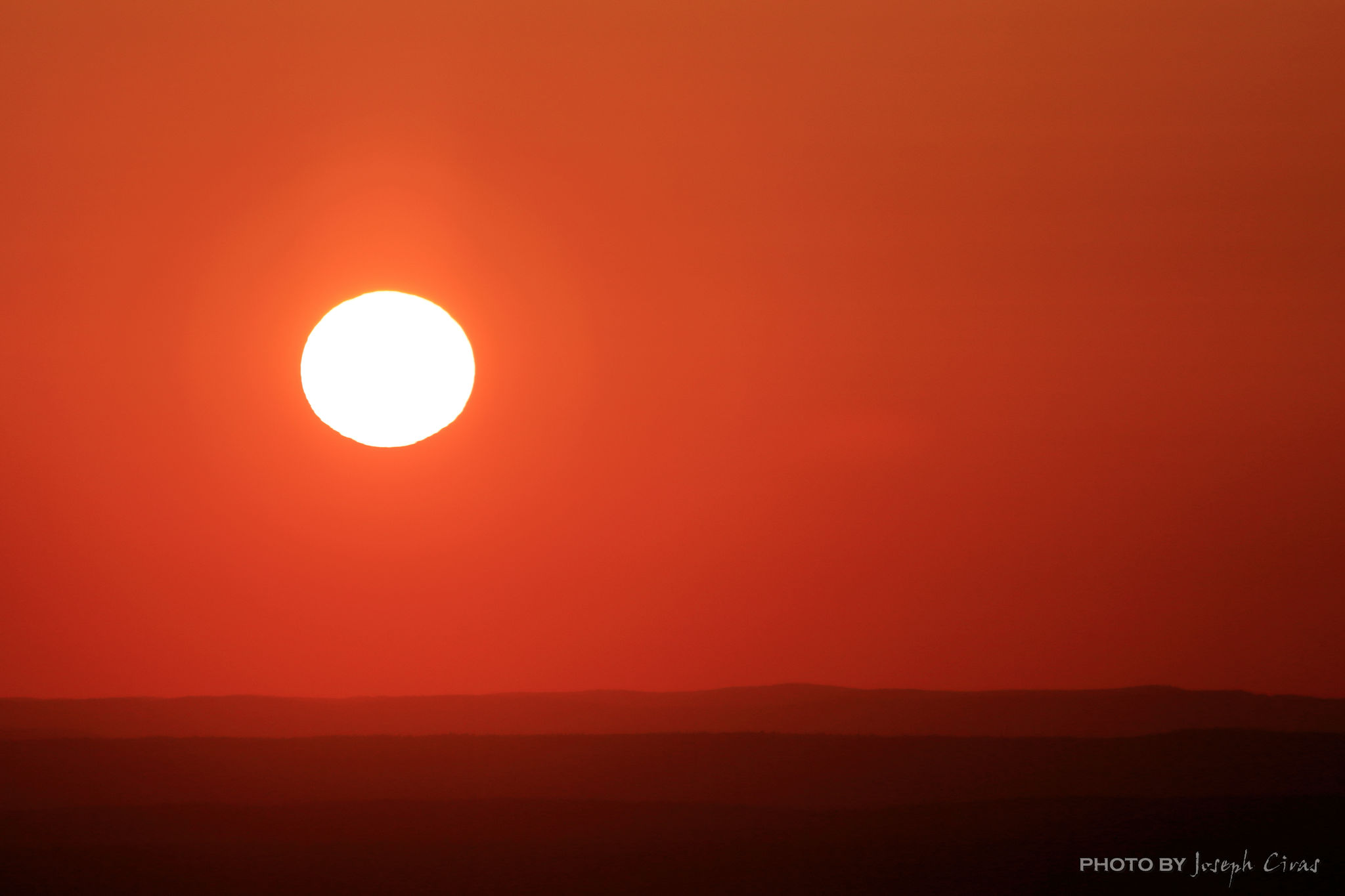
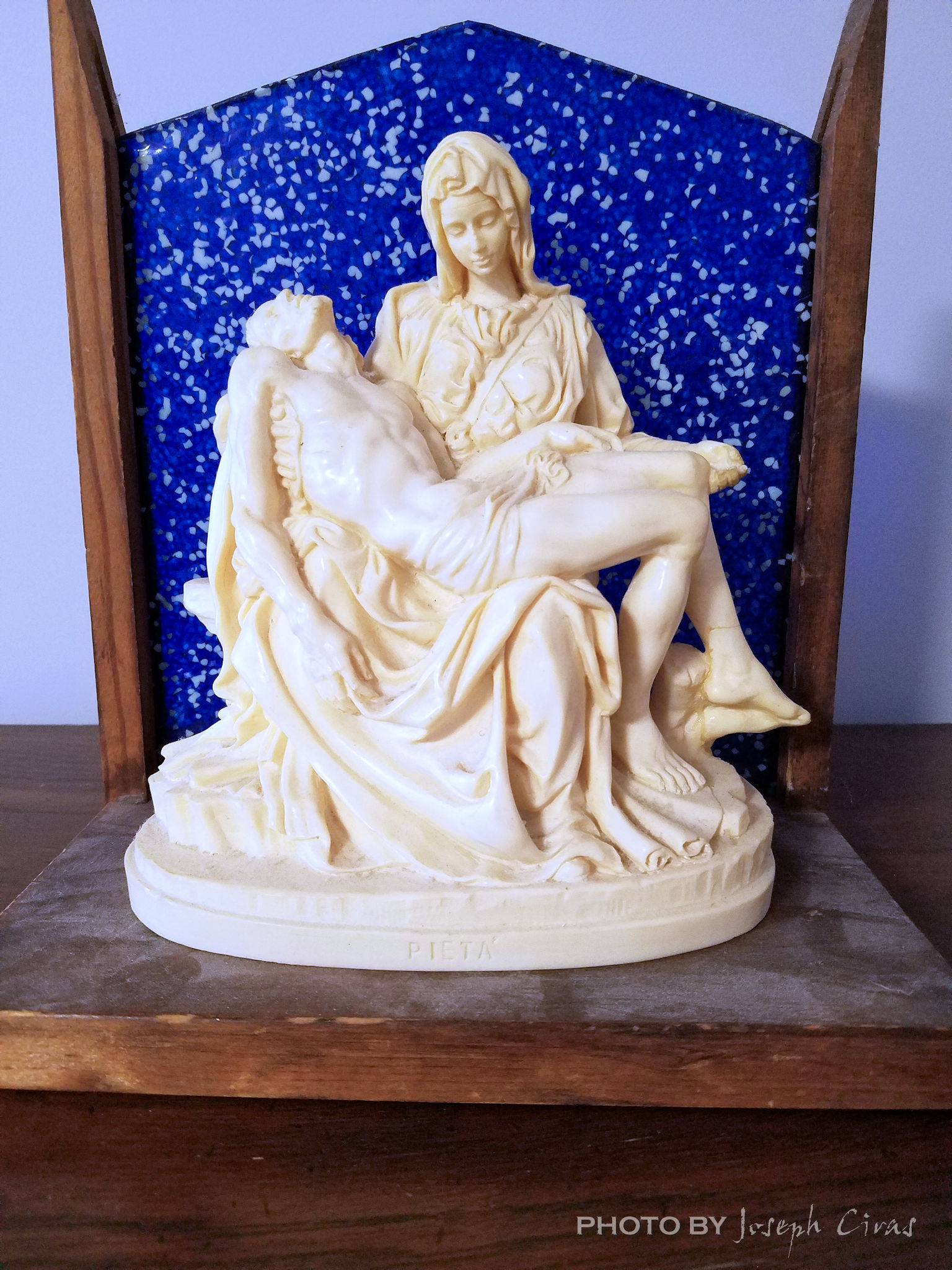
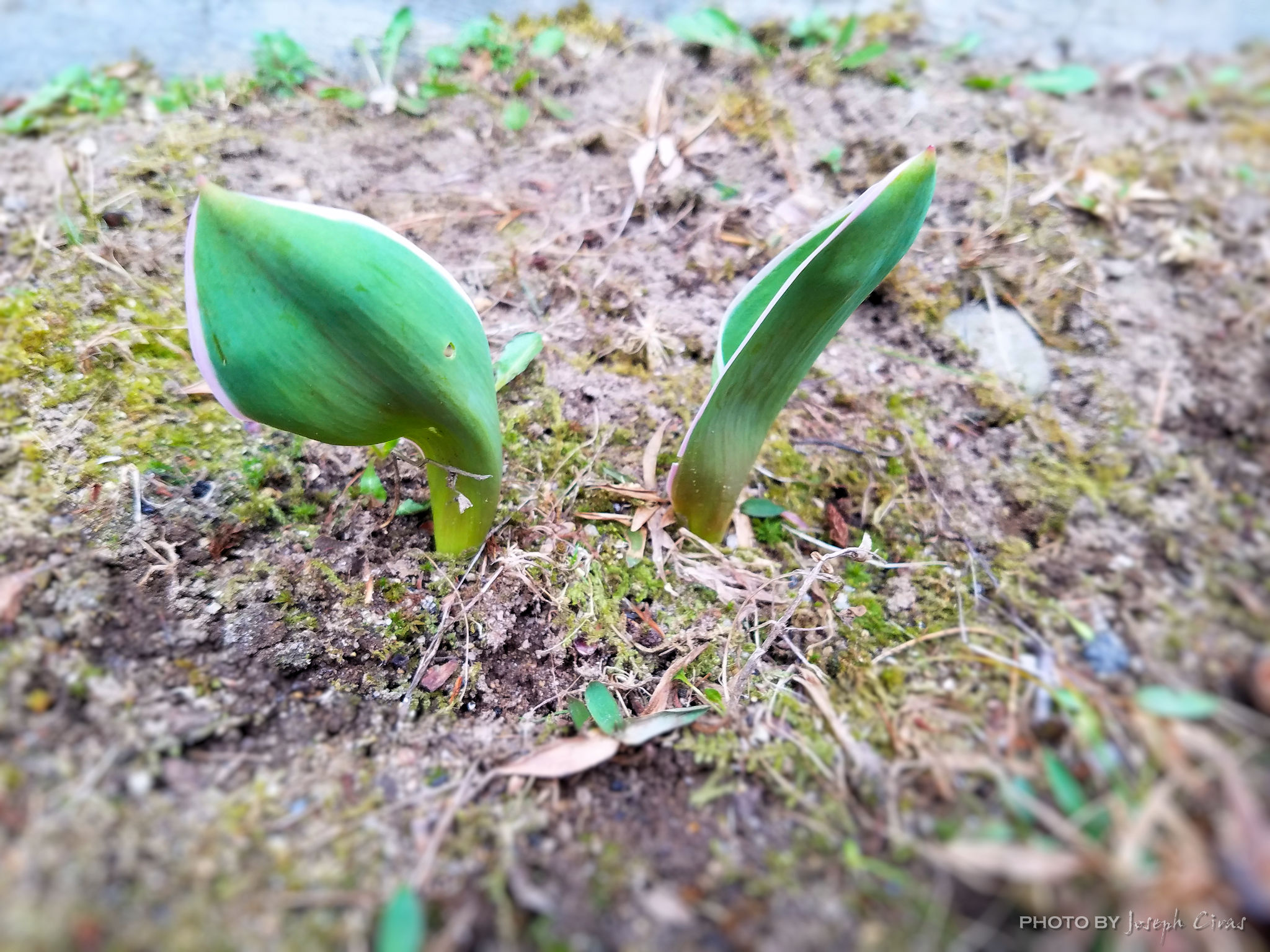
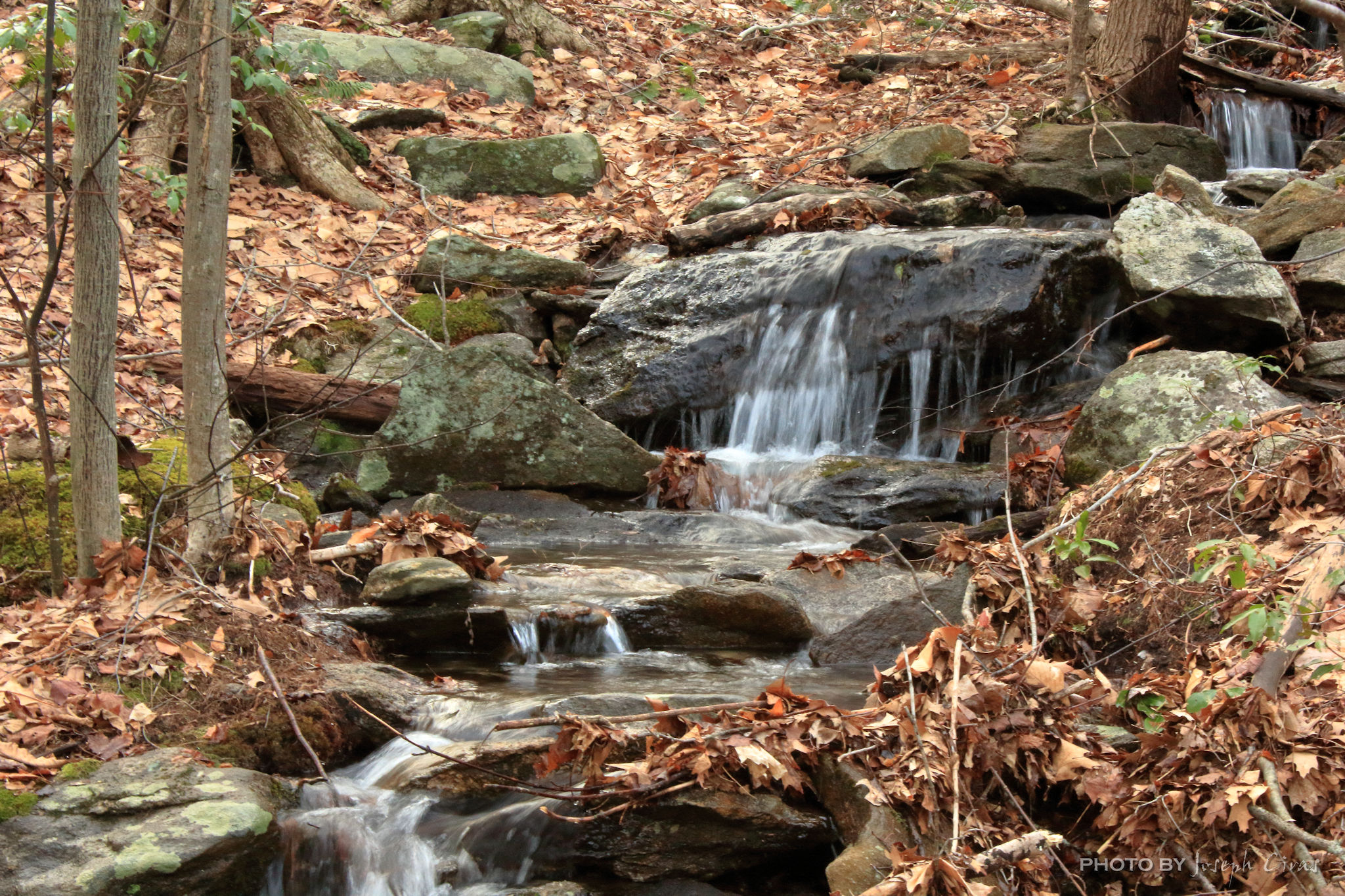
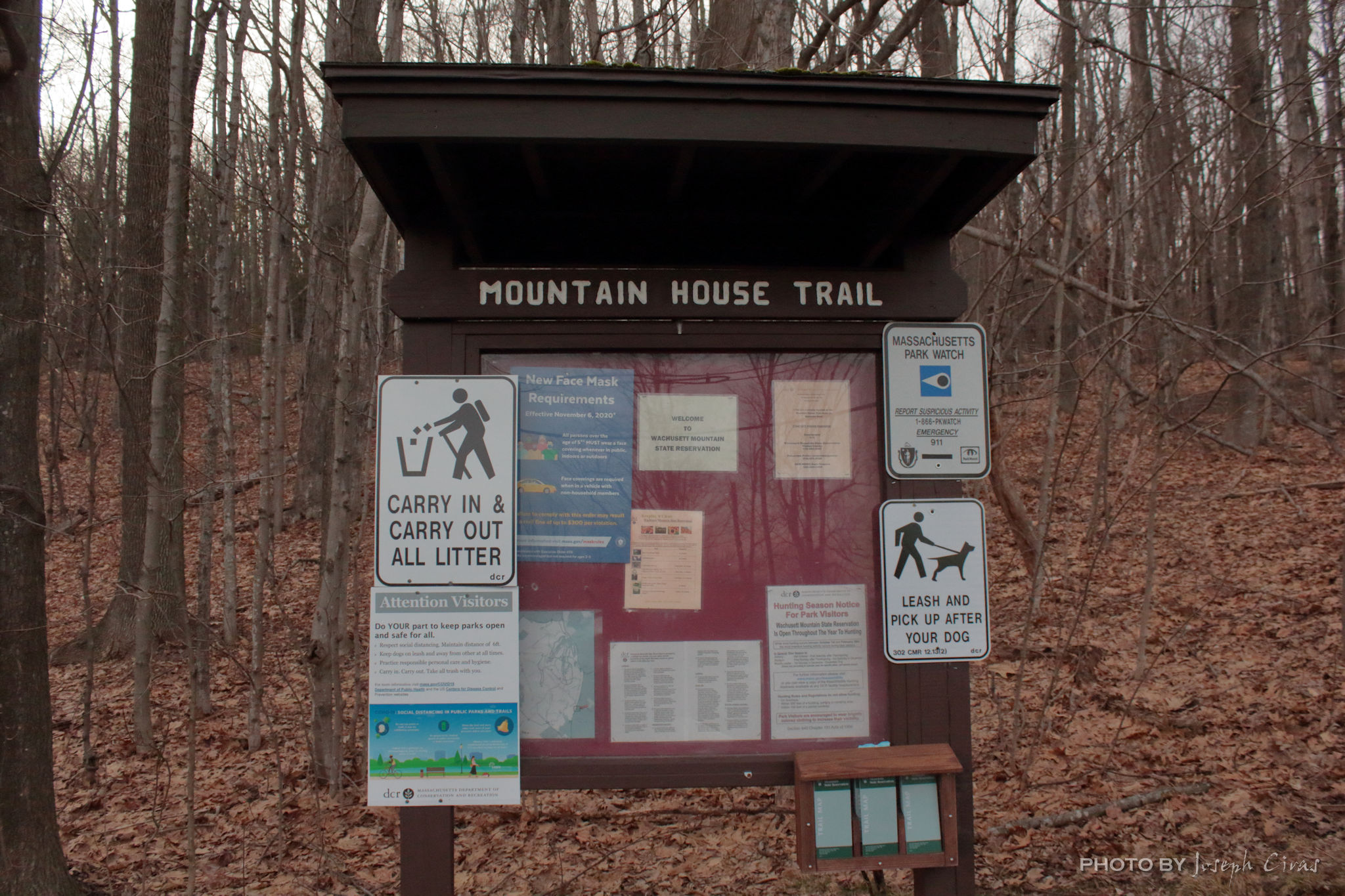
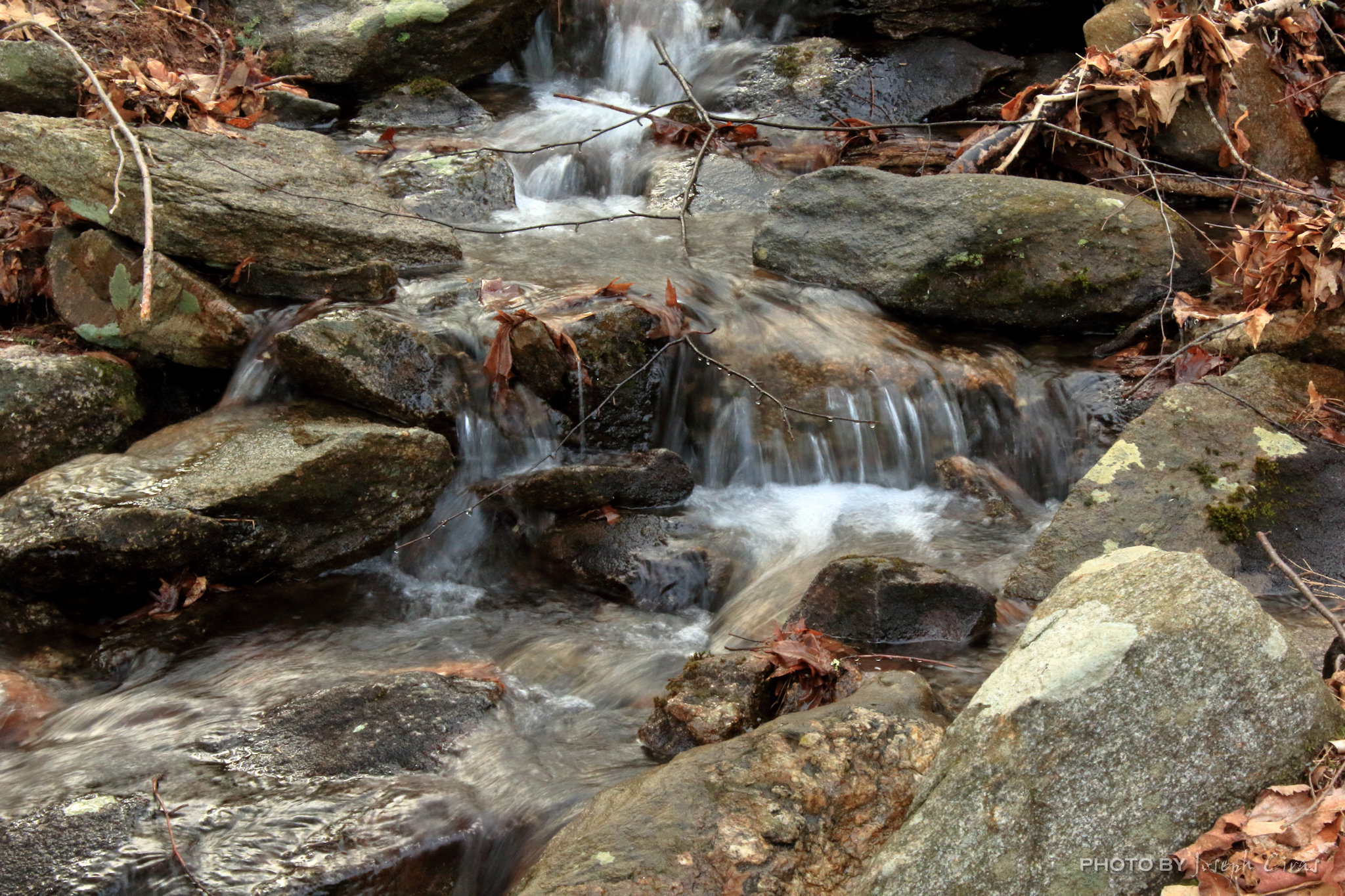
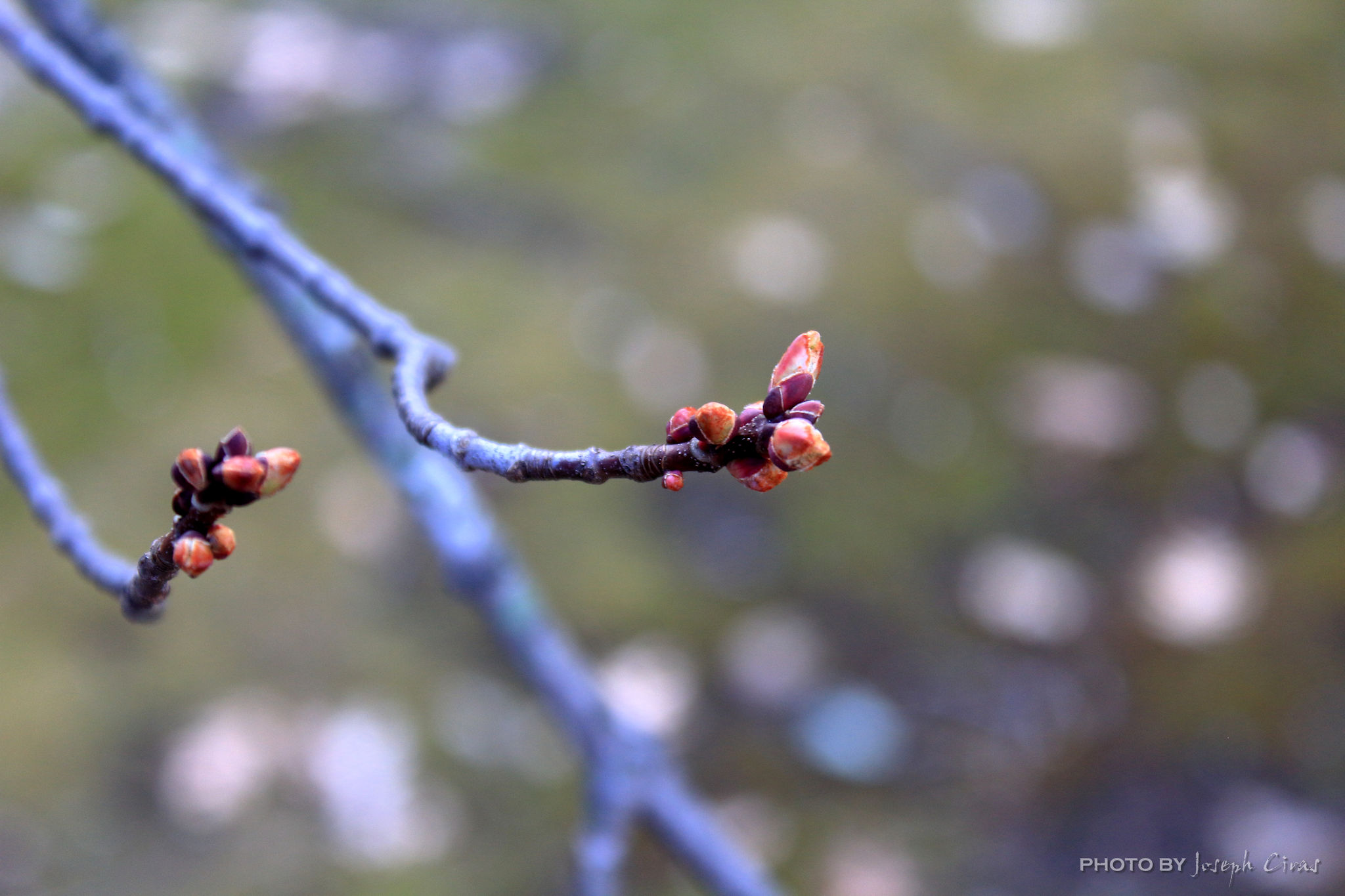
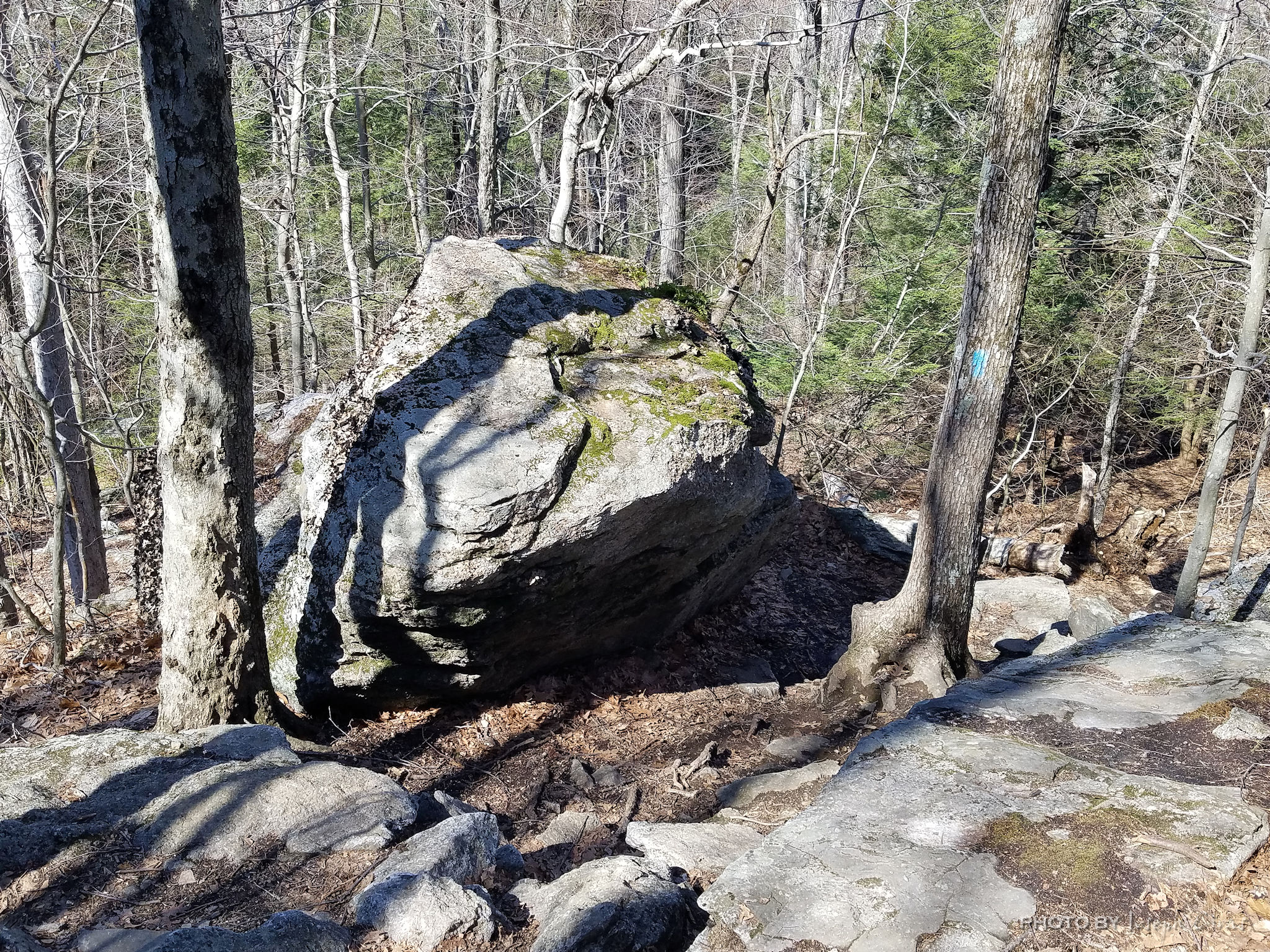
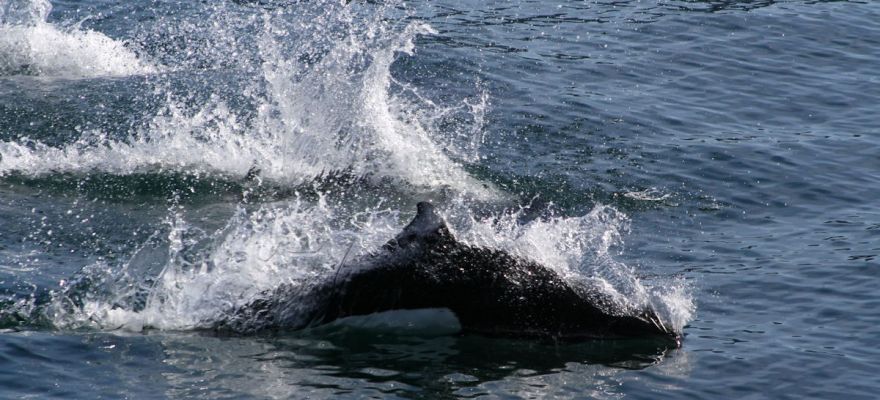


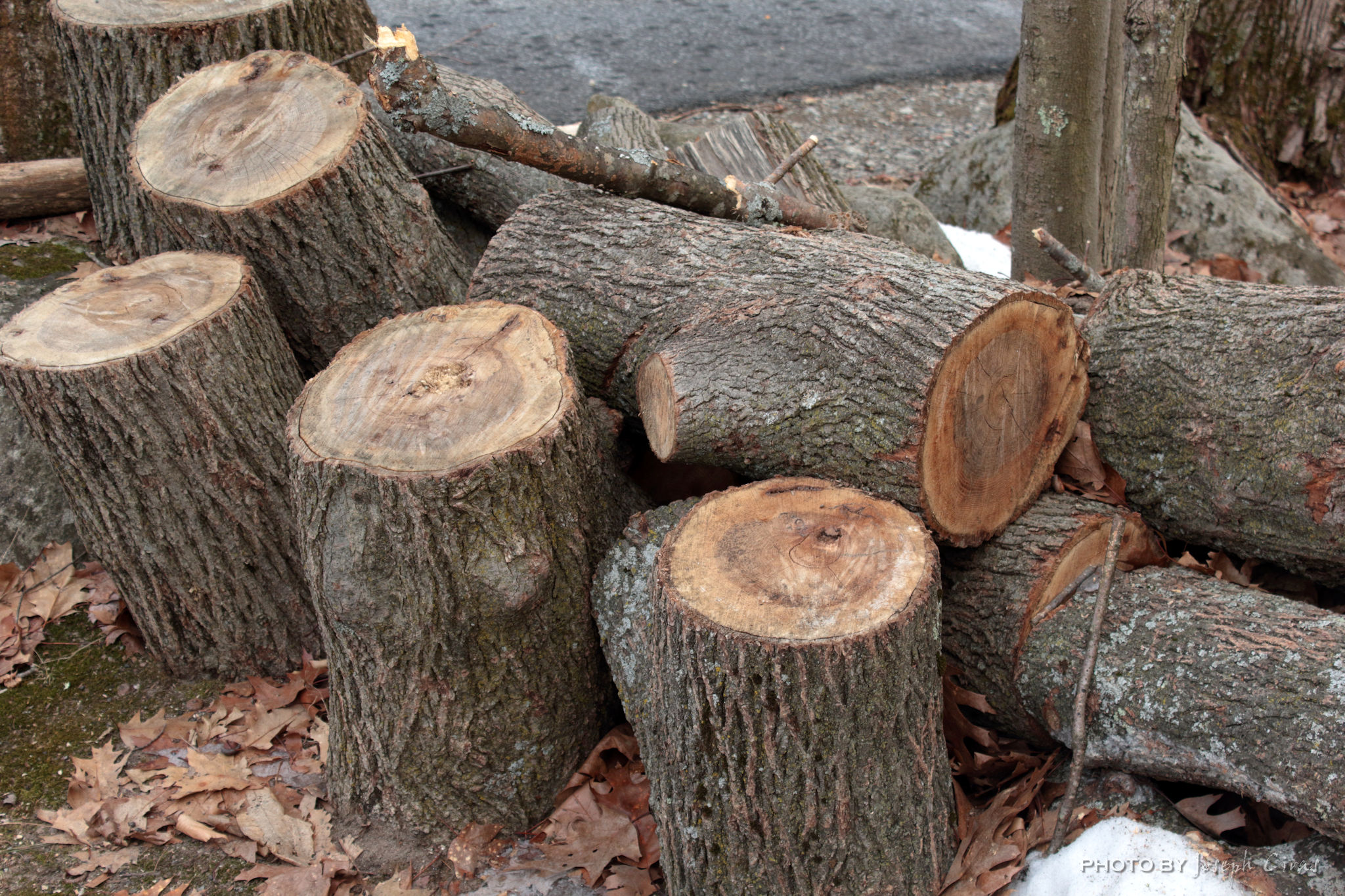
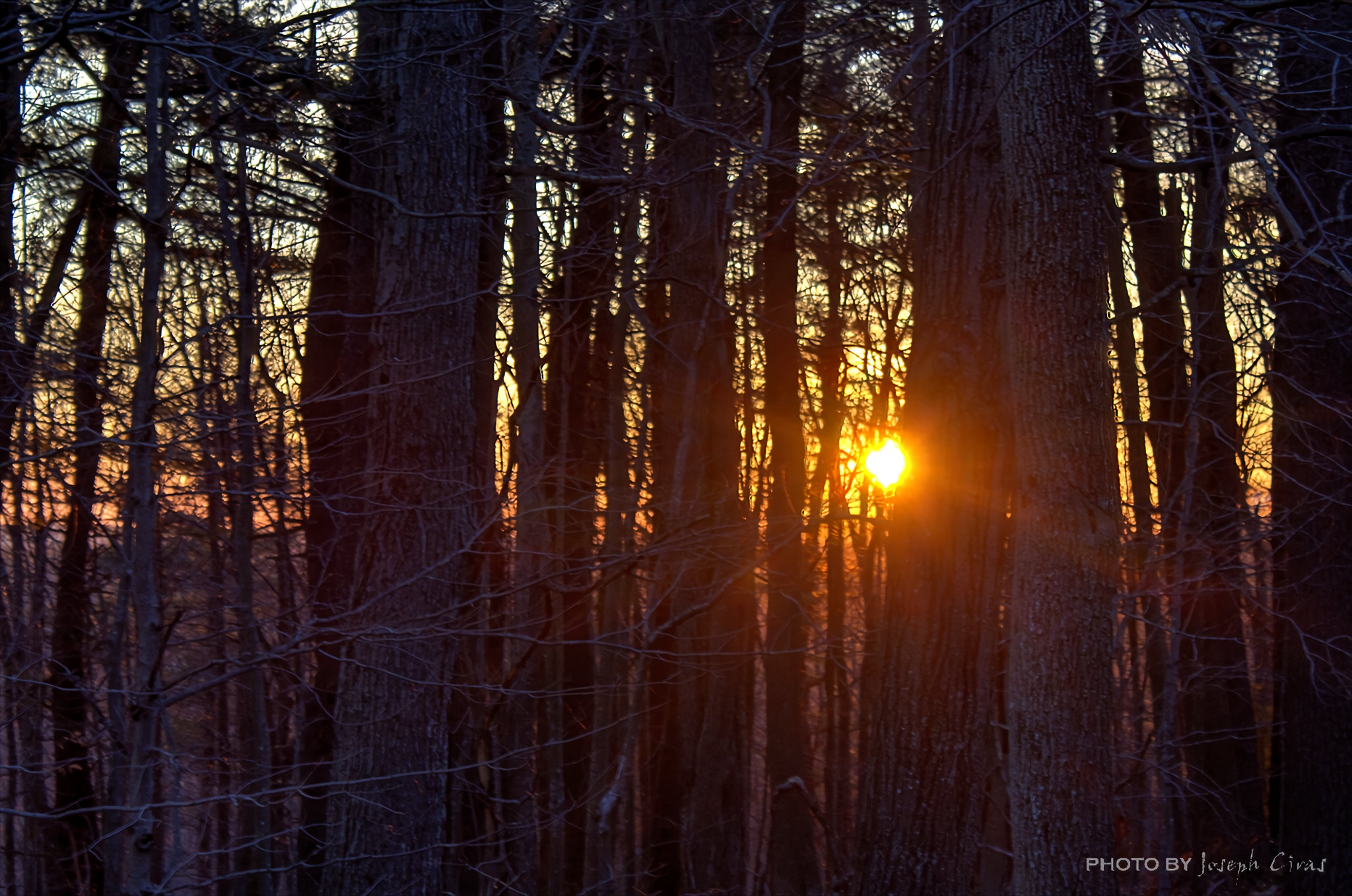
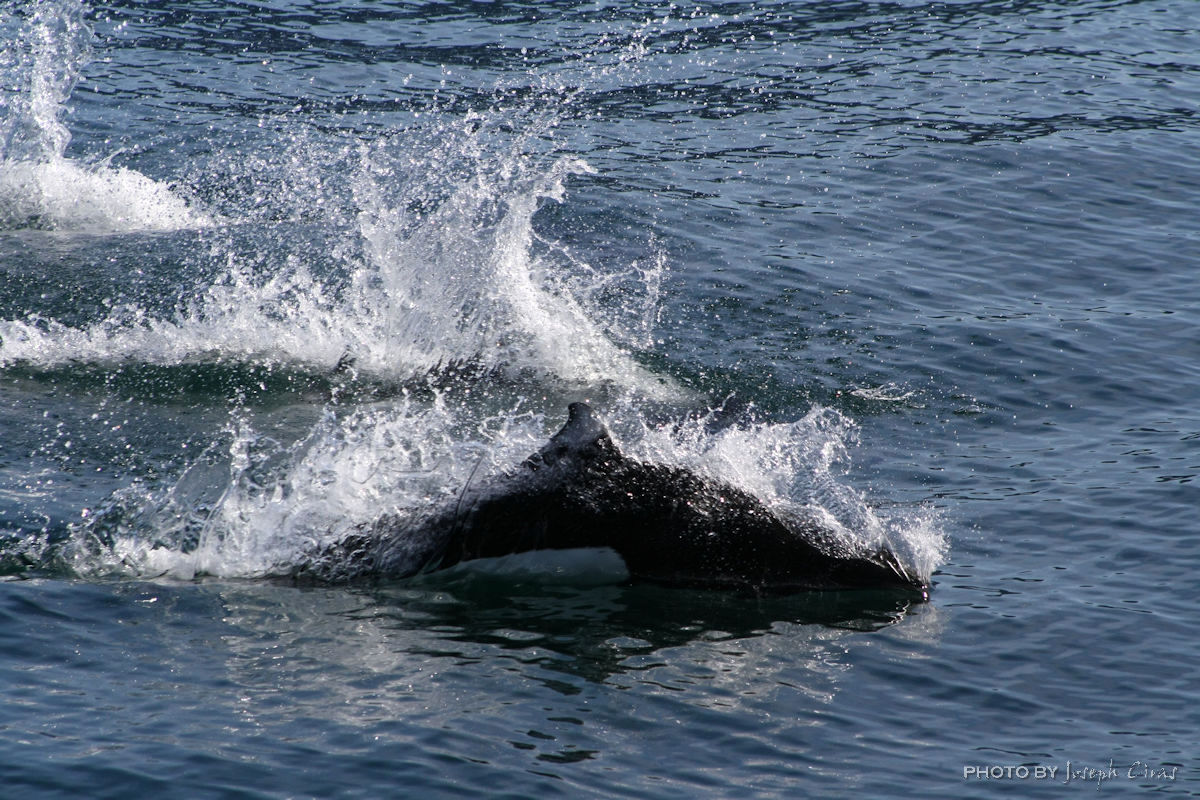

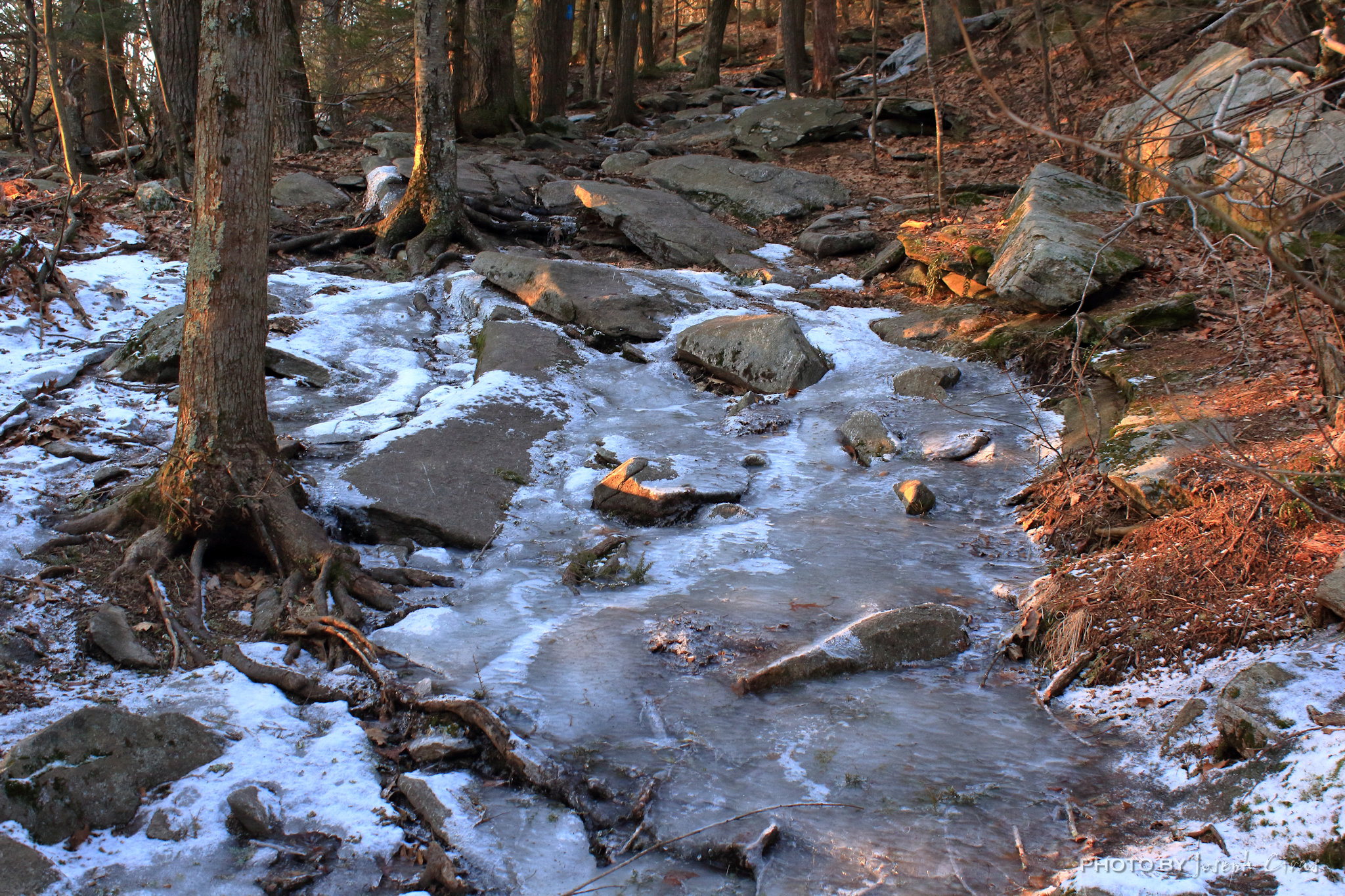

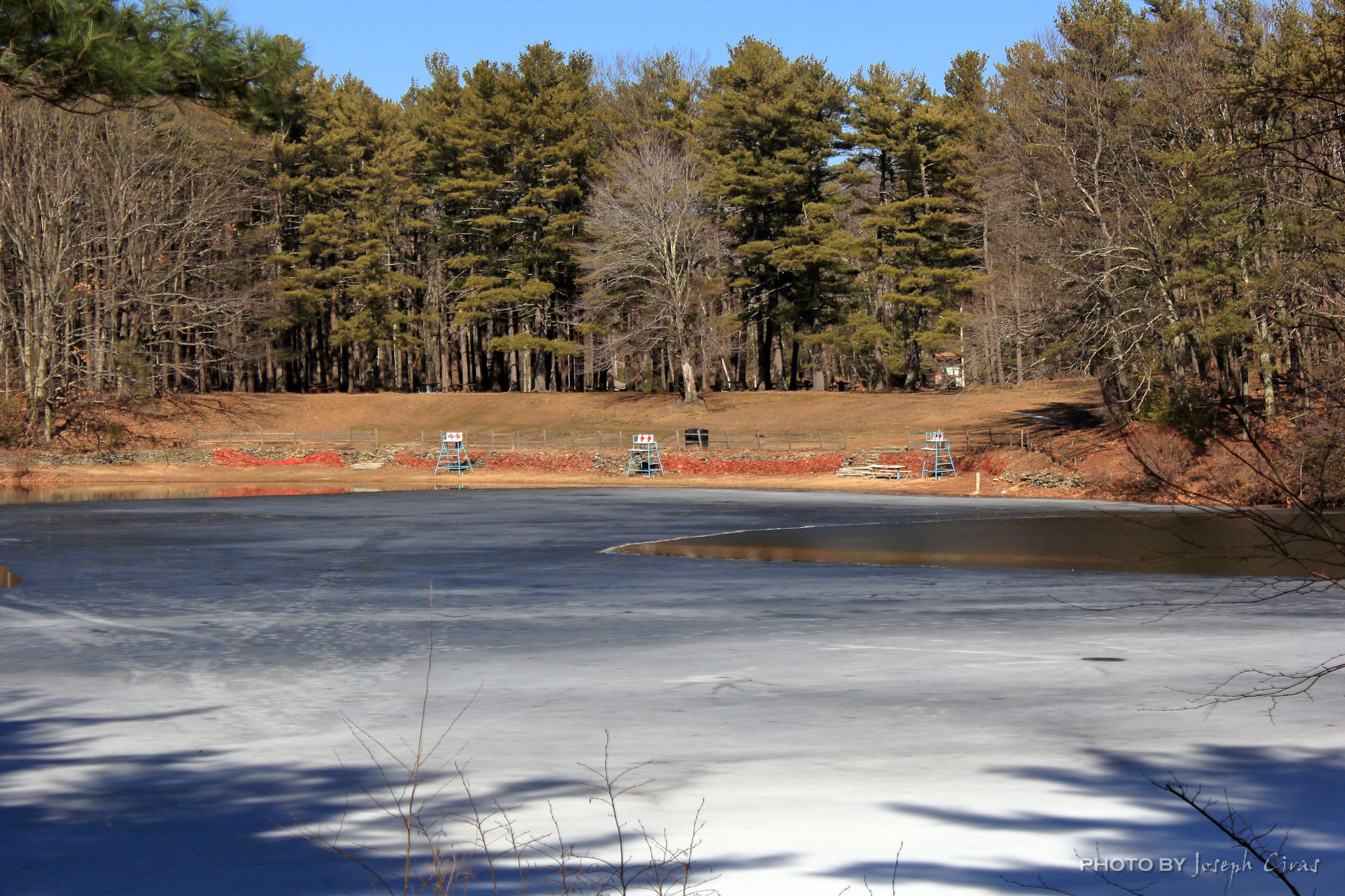
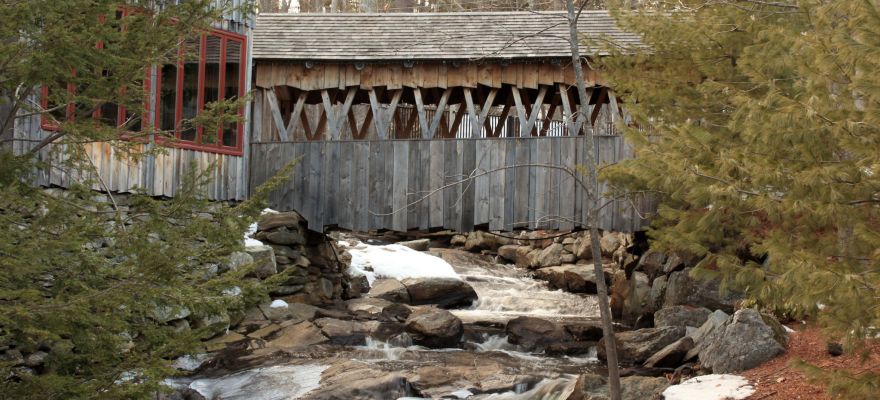


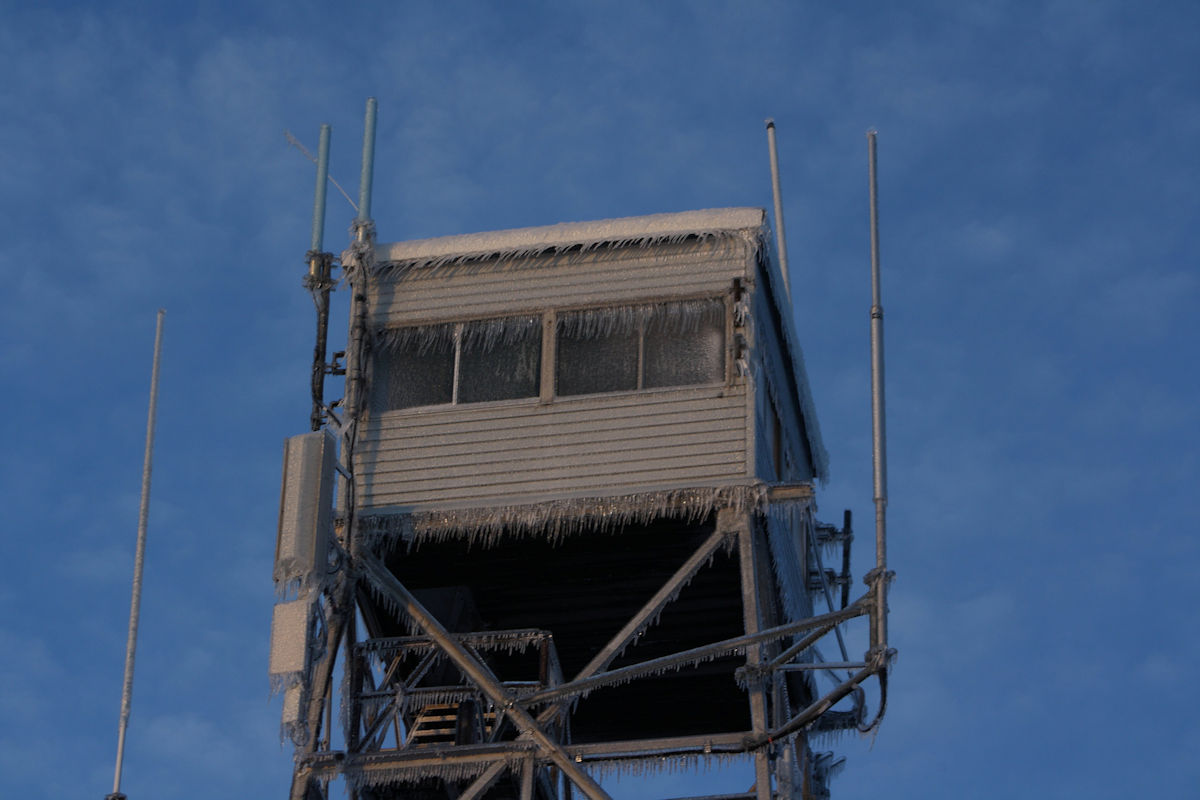

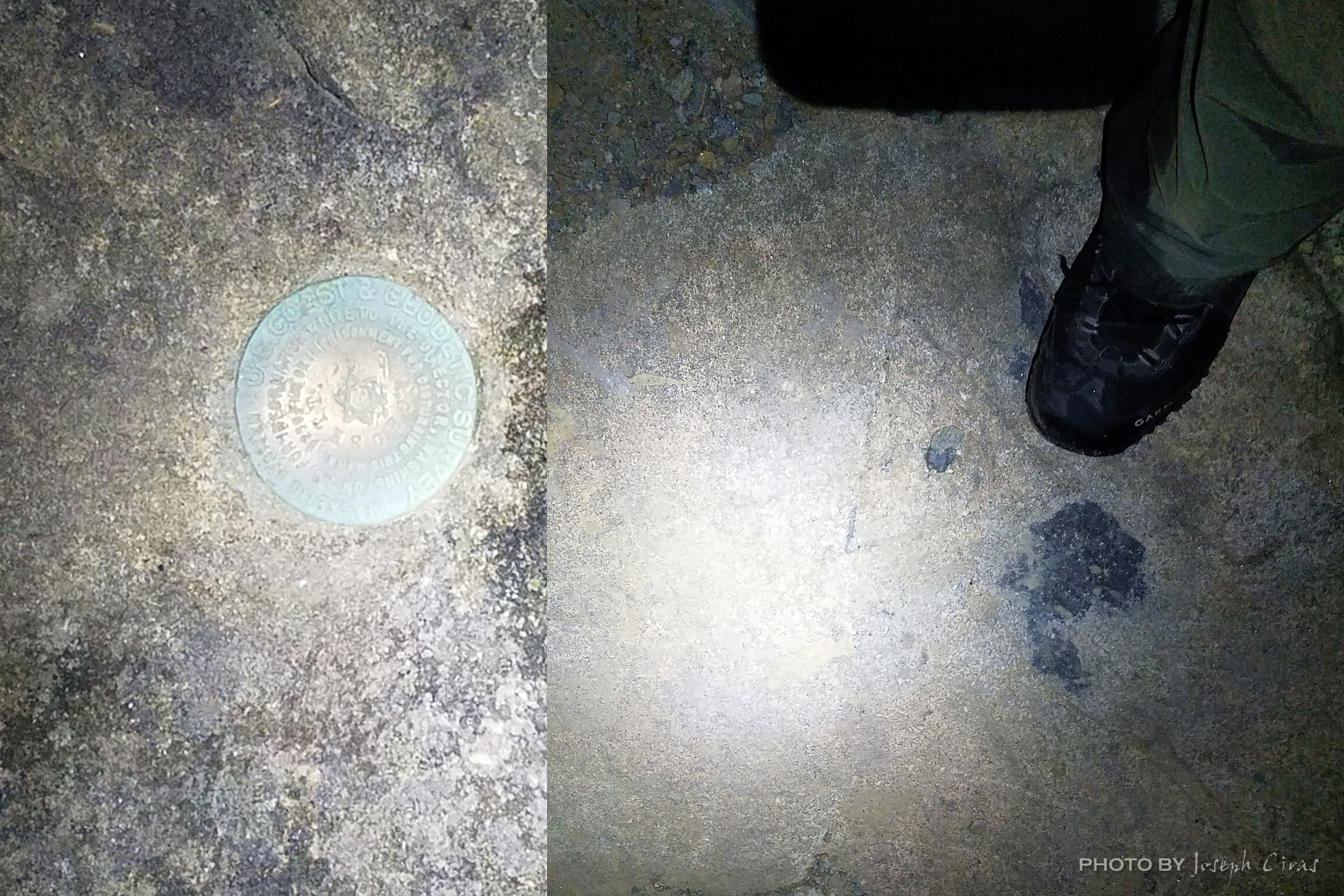
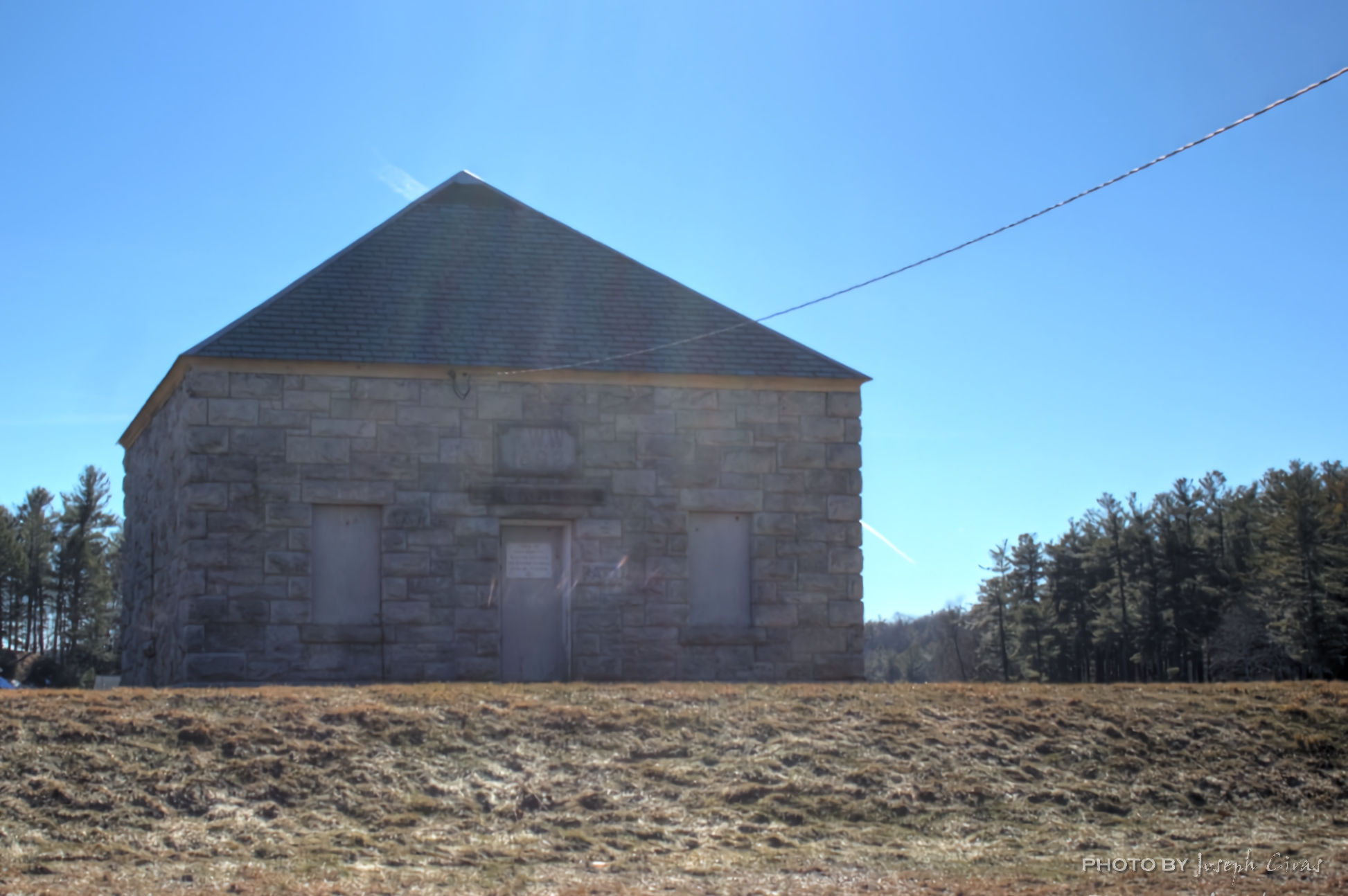

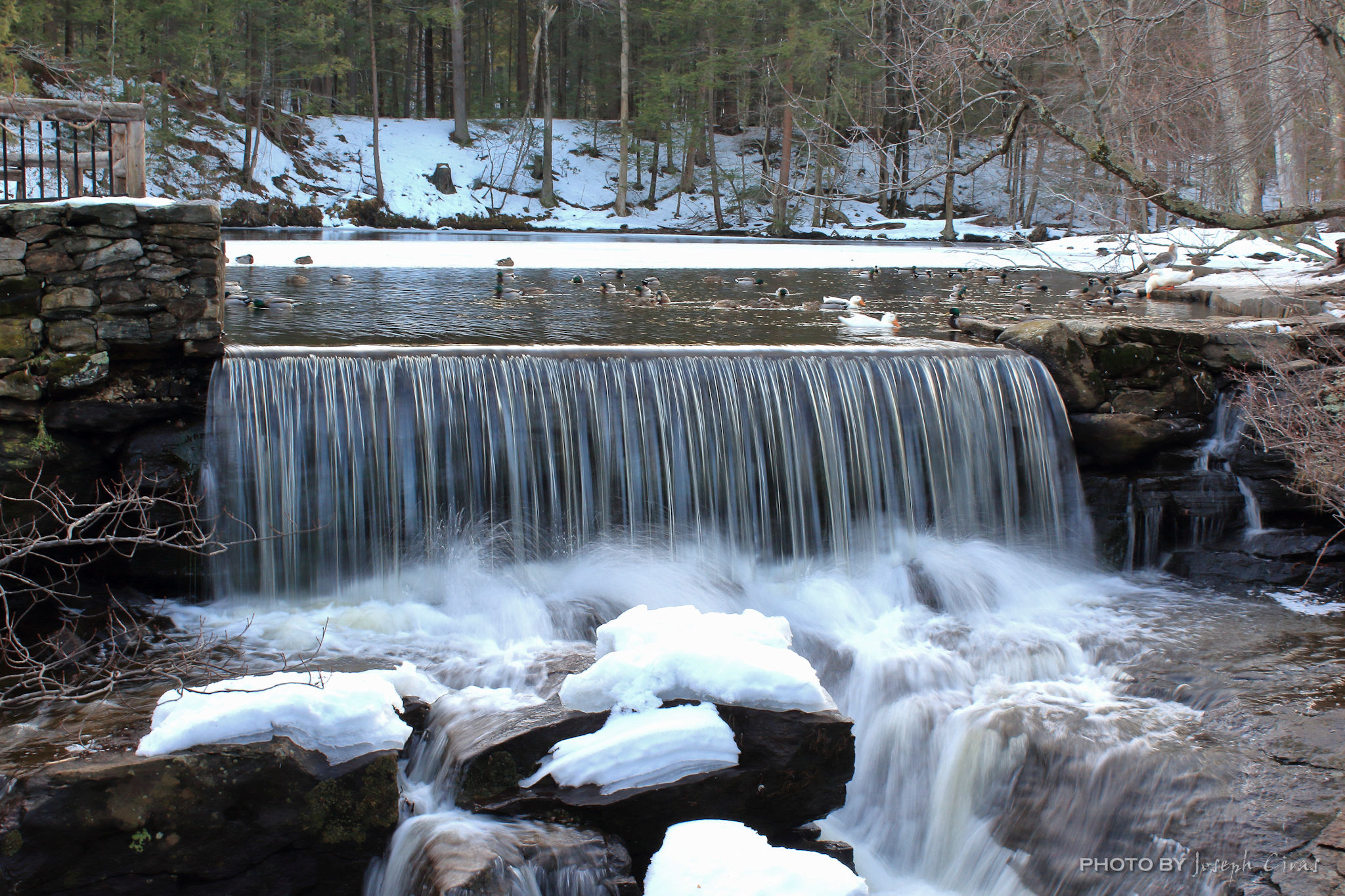
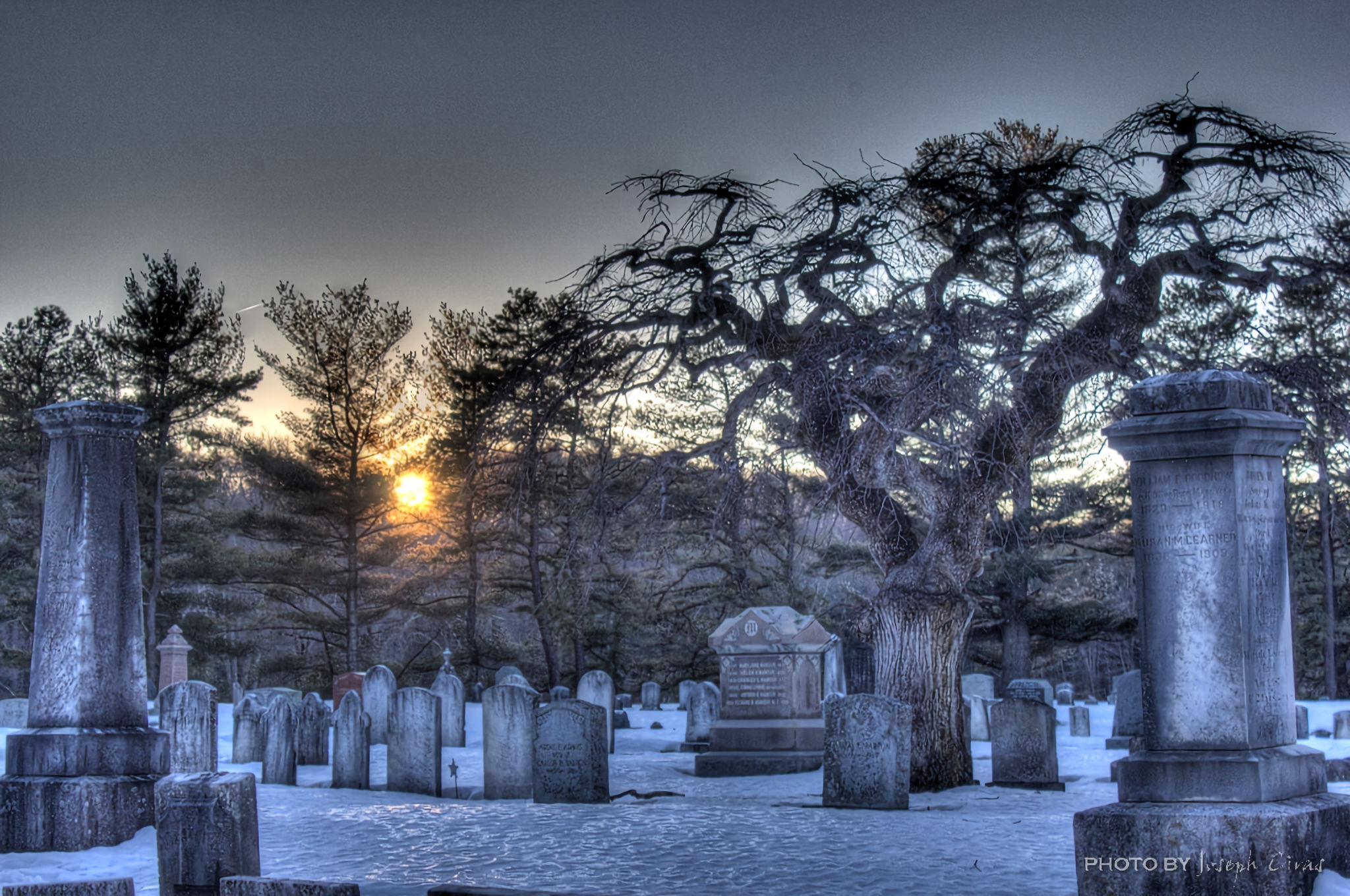

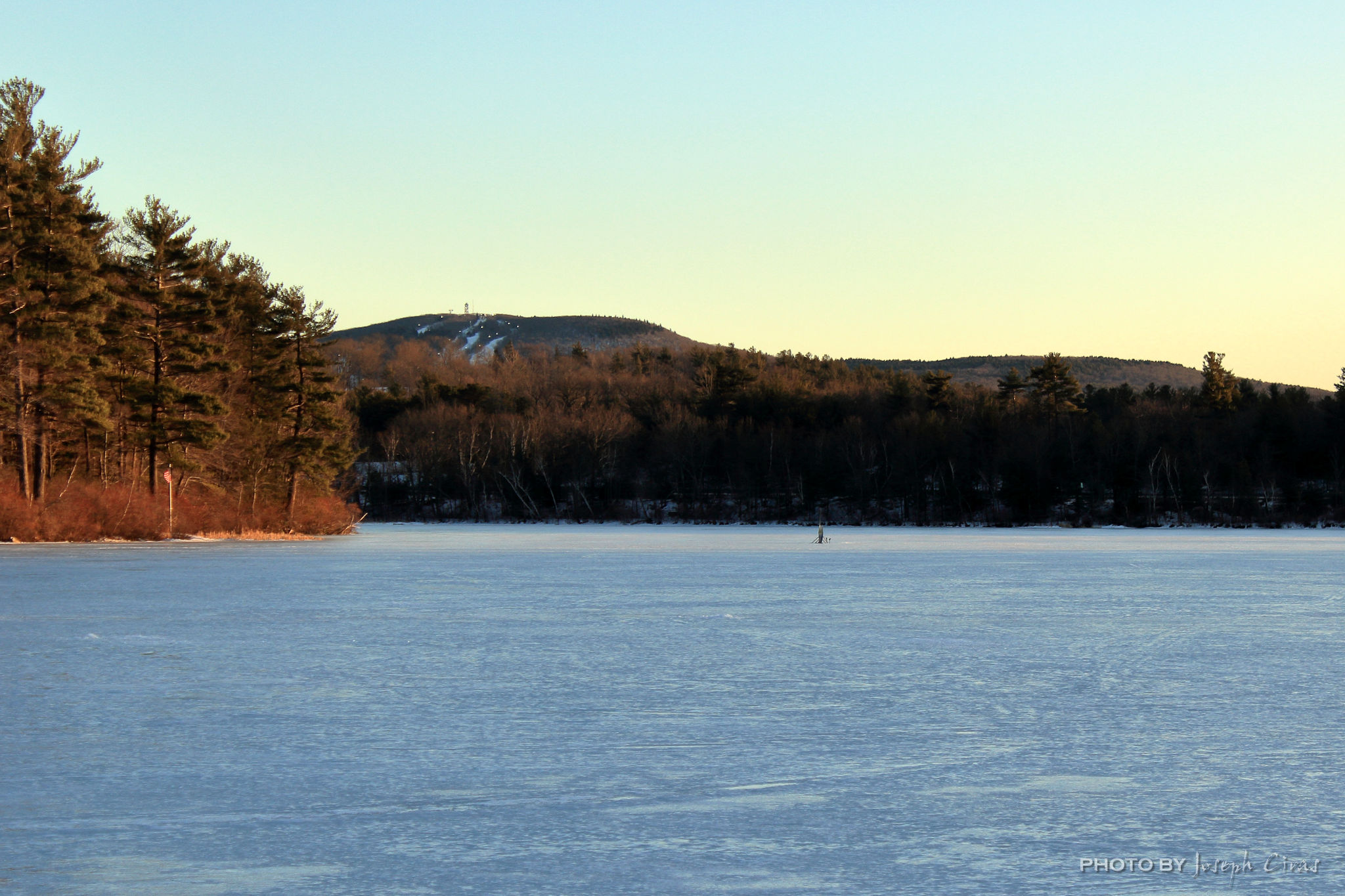


 Photo by Joseph Ciras